Rudrahridaya Upanishad
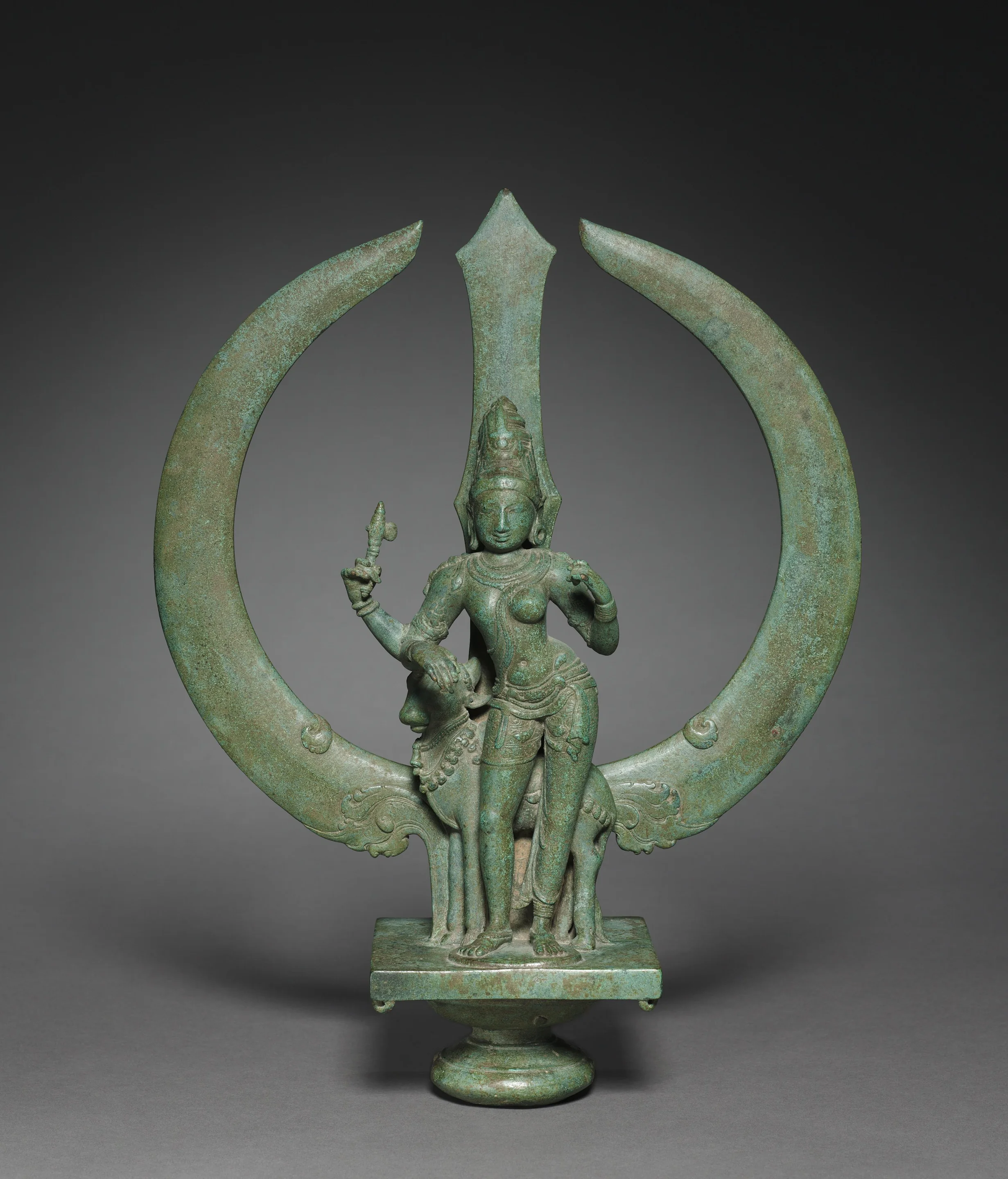
In the words of Pranav Ashar
How we renderThe heart of the Rudrahridaya
In brief
Shuka asks which god is in all the gods. Vyasa says: Rudra is the self of all the gods. Those who bow to Govinda bow to Shankara. Rudra and Uma are every pair in the world: man and woman, day and night, the sacrifice and the altar. All this appears as real, like a snake in a rope; knowing the imperishable, one is freed. Two birds sit in this body, the individual and the Lord; the individual eats the fruit, the Lord only witnesses; the difference between them is imagined by maya. Like space, the knower goes nowhere.
- Shiva and Vishnu are one
- Every pair is Rudra and Uma
- The snake in the rope
- The two birds
- Like space, going nowhere
Contents
हरिः ॐ ॥ हृदयं कुण्डली भस्मरुद्राक्षगणदर्शनम् । तारसारं महावाक्यं पञ्चब्रह्माग्निहोत्रकम् ॥ १॥
hariḥ oṃ || hṛdayaṃ kuṇḍalī bhasmarudrākṣagaṇadarśanam | tārasāraṃ mahāvākyaṃ pañcabrahmāgnihotrakam || 1||
Hari Om. The Heart; the Kundali; Ash; the Rudraksha; Ganapati; the Darshana; the Tarasara; the Great Sentence; the Panchabrahma; the Agnihotra.
Note //
A list of titles rather than a teaching: the Rudrahridaya ('Heart') and the Upanishads that follow it in the Adyar-lineage collection (Yogakundali, Bhasmajabala, Rudrakshajabala, Ganapati, Jabaladarshana, Tarasara, Mahavakya, Panchabrahma, Pranagnihotra). It looks like an index verse added by the compiler of the collection, but both editions number it 1, so it is kept, and the numbering of the dialogue starts at 2. Interpretive. Editions agree.
प्रणम्य शिरसा पादौ शुको व्यासमुवाच ह । को देवः सर्वदेवेषु कस्मिन्देवाश्च सर्वशः ॥ २॥ कस्य शुश्रूषणान्नित्यं प्रीता देवा भवन्ति मे । तस्य तद्वचनं श्रुत्वा प्रत्युवाच पिता शुकम् ॥ ३॥
praṇamya śirasā pādau śuko vyāsamuvāca ha | ko devaḥ sarvadeveṣu kasmindevāśca sarvaśaḥ || 2|| kasya śuśrūṣaṇānnityaṃ prītā devā bhavanti me | tasya tadvacanaṃ śrutvā pratyuvāca pitā śukam || 3||
Bowing his head to his father's feet, Shuka said to Vyasa: Which god is in all the gods? In whom are all the gods, entirely? By serving whom, always, are all the gods pleased with me? Hearing his words, the father answered Shuka:
Note //
Editions agree.
सर्वदेवात्मको रुद्रः सर्वे देवाः शिवात्मकाः । रुद्रस्य दक्षिणे पार्श्वे रविर्ब्रह्मा त्रयोऽग्नयः ॥ ४॥ वामपार्श्वे उमा देवी विष्णुः सोमोऽपि ते त्रयः । या उमा सा स्वयं विष्णुर्यो विष्णुः स हि चन्द्रमाः ॥ ५॥
sarvadevātmako rudraḥ sarve devāḥ śivātmakāḥ | rudrasya dakṣiṇe pārśve ravirbrahmā trayo'gnayaḥ || 4|| vāmapārśve umā devī viṣṇuḥ somo'pi te trayaḥ | yā umā sā svayaṃ viṣṇuryo viṣṇuḥ sa hi candramāḥ || 5||
Rudra is the self of all the gods; all the gods have Shiva as their self. On Rudra's right side are the sun, Brahma and the three fires; on his left side the goddess Uma, Vishnu and the moon: these three. She who is Uma is Vishnu himself, and he who is Vishnu is the moon.
Note //
The right side is the hot, solar side (sun, fire, Brahma); the left the cool, lunar side (moon, Uma, Vishnu). So Vishnu is placed on the side of the Goddess, as Shiva's other half. Editions agree.
ये नमस्यन्ति गोविन्दं ते नमस्यन्ति शङ्करम् । येऽर्चयन्ति हरिं भक्त्या तेऽर्चयन्ति वृषध्वजम् ॥ ६॥
ye namasyanti govindaṃ te namasyanti śaṅkaram | ye'rcayanti hariṃ bhaktyā te'rcayanti vṛṣadhvajam || 6||
Those who bow to Govinda bow to Shankara. Those who worship Hari with devotion worship the one whose banner is the bull.
Note //
Govinda and Hari are names of Vishnu; Shankara and 'the one whose banner is the bull' (vṛṣadhvaja) are names of Shiva. Editions agree.
ये द्विषन्ति विरूपाक्षं ते द्विषन्ति जनार्दनम् । ये रुद्रं नाभिजानन्ति ते न जानन्ति केशवम् ॥ ७॥
ye dviṣanti virūpākṣaṃ te dviṣanti janārdanam | ye rudraṃ nābhijānanti te na jānanti keśavam || 7||
Those who hate the three-eyed one hate Janardana. Those who do not know Rudra do not know Keshava.
Note //
Virupaksha ('of unusual eyes', the three-eyed) is Shiva; Janardana and Keshava are Vishnu. Editions agree.
रुद्रात्प्रवर्तते बीजं बीजयोनिर्जनार्दनः । यो रुद्रः स स्वयं ब्रह्मा यो ब्रह्मा स हुताशनः ॥ ८॥
rudrātpravartate bījaṃ bījayonirjanārdanaḥ | yo rudraḥ sa svayaṃ brahmā yo brahmā sa hutāśanaḥ || 8||
From Rudra comes the seed; Janardana, Vishnu, is the womb of the seed. He who is Rudra is Brahma himself; he who is Brahma is the fire.
Note //
Editions agree.
ब्रह्मविष्णुमयो रुद्र अग्नीषोमात्मकं जगत् । पुंलिङ्गं सर्वमीशानं स्त्रीलिङ्गं भगवत्युमा ॥ ९॥
brahmaviṣṇumayo rudra agnīṣomātmakaṃ jagat | puṃliṅgaṃ sarvamīśānaṃ strīliṅgaṃ bhagavatyumā || 9||
Rudra is made of Brahma and Vishnu; the world is fire and moon. All that is male is the Lord, Ishana; all that is female is the goddess Uma.
Note //
'Fire and moon' (agni-soma): the hot and the cool, the eater and the eaten, the two principles of which the world is woven. Editions: 'agnīṣomātmakaṃ' (Adyar collection) corrects 'agnīṣomātkaṃ' (sanskritdocuments.org). 'Rudra agnī...' without the expected sandhi is in both.
उमारुद्रात्मिकाः सर्वाः प्रजाः स्थावरजङ्गमाः । व्यक्तं सर्वमुमारूपमव्यक्तं तु महेश्वरम् ॥ १०॥
umārudrātmikāḥ sarvāḥ prajāḥ sthāvarajaṅgamāḥ | vyaktaṃ sarvamumārūpamavyaktaṃ tu maheśvaram || 10||
All creatures, moving and unmoving, are Uma and Rudra. All that is manifest is Uma's form; the unmanifest is the great Lord.
Note //
Uma is the power that appears as the world; Shiva is what does not appear. Editions: 'prajāḥ' (Adyar collection) corrects 'grajāḥ' (sanskritdocuments.org).
उमाशङ्करयोगो यः स योगो विष्णुरुच्यते । यस्तु तस्मै नमस्कारं कुर्याद्भक्तिसमन्वितः ॥ ११॥ आत्मानं परमात्मानमन्तरात्मानमेव च । ज्ञात्वा त्रिविधमात्मानं परमात्मानमाश्रयेत् ॥ १२॥
umāśaṅkarayogo yaḥ sa yogo viṣṇurucyate | yastu tasmai namaskāraṃ kuryādbhaktisamanvitaḥ || 11|| ātmānaṃ paramātmānamantarātmānameva ca | jñātvā trividhamātmānaṃ paramātmānamāśrayet || 12||
The union of Uma and Shankara: that union is called Vishnu. Whoever bows to him with devotion, knowing the self as threefold, the self, the inner self and the highest Self, should take refuge in the highest Self.
Note //
The second half of 11 has no main verb of its own and is read as running into 12. The three selves (named in 13): the outer self, the person; the inner self; the highest Self. The step is from bowing to a god to resting in the highest Self. Interpretive grouping. Editions agree.
अन्तरात्मा भवेद्ब्रह्मा परमात्मा महेश्वरः । सर्वेषामेव भूतानां विष्णुरात्मा सनातनः ॥ १३॥
antarātmā bhavedbrahmā paramātmā maheśvaraḥ | sarveṣāmeva bhūtānāṃ viṣṇurātmā sanātanaḥ || 13||
The inner self is Brahma; the highest Self is the great Lord; Vishnu is the everlasting self of all beings.
Note //
Editions agree.
अस्य त्रैलोक्यवृक्षस्य भूमौ विटपशाखिनः । अग्रं मध्यं तथा मूलं विष्णुब्रह्ममहेश्वराः ॥ १४॥
asya trailokyavṛkṣasya bhūmau viṭapaśākhinaḥ | agraṃ madhyaṃ tathā mūlaṃ viṣṇubrahmamaheśvarāḥ || 14||
Of this tree of the three worlds, its boughs and branches spread on the earth, the top, the middle and the root are Vishnu, Brahma and the great Lord.
Note //
The world as a tree, as in Katha 6.1 and Gita 15.1; here Shiva is the root. Editions agree.
कार्यं विष्णुः क्रिया ब्रह्मा कारणं तु महेश्वरः । प्रयोजनार्थं रुद्रेण मूर्तिरेका त्रिधा कृता ॥ १५॥
kāryaṃ viṣṇuḥ kriyā brahmā kāraṇaṃ tu maheśvaraḥ | prayojanārthaṃ rudreṇa mūrtirekā tridhā kṛtā || 15||
Vishnu is the effect, Brahma the action, the great Lord the cause. For the work to be done, Rudra made his one form threefold.
Note //
The three gods are one form divided by function, not three beings. Editions agree.
धर्मो रुद्रो जगद्विष्णुः सर्वज्ञानं पितामहः । श्रीरुद्र रुद्र रुद्रेति यस्तं ब्रूयाद्विचक्षणः ॥ १६॥ कीर्तनात्सर्वदेवस्य सर्वपापैः प्रमुच्यते । रुद्रो नर उमा नारी तस्मै तस्यै नमो नमः ॥ १७॥
dharmo rudro jagadviṣṇuḥ sarvajñānaṃ pitāmahaḥ | śrīrudra rudra rudreti yastaṃ brūyādvicakṣaṇaḥ || 16|| kīrtanātsarvadevasya sarvapāpaiḥ pramucyate | rudro nara umā nārī tasmai tasyai namo namaḥ || 17||
Rudra is dharma, Vishnu is the world, the Grandfather, Brahma, is all knowledge. The discerning one who calls him, 'Shri Rudra, Rudra, Rudra', is freed of every wrong by praising the god who is all. Rudra is man, Uma is woman: homage to him, homage to her.
Note //
The second half of 17 begins the litany of pairs that runs to 23: every pair in the world is Rudra and Uma. Editions agree.
रुद्रो ब्रह्मा उमा वाणी तस्मै तस्यै नमो नमः । रुद्रो विष्णुरुमा लक्ष्मीस्तस्मै तस्यै नमो नमः ॥ १८॥
rudro brahmā umā vāṇī tasmai tasyai namo namaḥ | rudro viṣṇurumā lakṣmīstasmai tasyai namo namaḥ || 18||
Rudra is Brahma, Uma is Speech: homage to him, homage to her. Rudra is Vishnu, Uma is Lakshmi: homage to him, homage to her.
Note //
Editions agree.
रुद्रः सूर्य उमा छाया तस्मै तस्यै नमो नमः । रुद्रः सोम उमा तारा तस्मै तस्यै नमो नमः ॥ १९॥
rudraḥ sūrya umā chāyā tasmai tasyai namo namaḥ | rudraḥ soma umā tārā tasmai tasyai namo namaḥ || 19||
Rudra is the sun, Uma the shade: homage to him, homage to her. Rudra is the moon, Uma the star: homage to him, homage to her.
Note //
Chhaya, 'shade', is the sun's wife in the myth; Tara, 'star', the moon's. Editions agree.
रुद्रो दिवा उमा रात्रिस्तस्मै तस्यै नमो नमः । रुद्रो यज्ञ उमा वेदिस्तस्मै तस्यै नमो नमः ॥ २०॥
rudro divā umā rātristasmai tasyai namo namaḥ | rudro yajña umā vedistasmai tasyai namo namaḥ || 20||
Rudra is day, Uma night: homage to him, homage to her. Rudra is the sacrifice, Uma the altar: homage to him, homage to her.
Note //
Editions agree.
रुद्रो वह्निरुमा स्वाहा तस्मै तस्यै नमो नमः । रुद्रो वेद उमा शास्त्रं तस्मै तस्यै नमो नमः ॥ २१॥
rudro vahnirumā svāhā tasmai tasyai namo namaḥ | rudro veda umā śāstraṃ tasmai tasyai namo namaḥ || 21||
Rudra is fire, Uma the offering-call, svāhā: homage to him, homage to her. Rudra is the Veda, Uma the teaching: homage to him, homage to her.
Note //
Editions: 'śāstraṃ' (Adyar collection) corrects 'śāstaṃ' (sanskritdocuments.org).
रुद्रो वृक्ष उमा वल्ली तस्मै तस्यै नमो नमः । रुद्रो गन्ध उमा पुष्पं तस्मै तस्यै नमो नमः ॥ २२॥
rudro vṛkṣa umā vallī tasmai tasyai namo namaḥ | rudro gandha umā puṣpaṃ tasmai tasyai namo namaḥ || 22||
Rudra is the tree, Uma the vine: homage to him, homage to her. Rudra is the fragrance, Uma the flower: homage to him, homage to her.
Note //
Editions agree.
रुद्रोऽर्थ अक्षरः सोमा तस्मै तस्यै नमो नमः । रुद्रो लिङ्गमुमा पीठं तस्मै तस्यै नमो नमः ॥ २३॥
rudro'rtha akṣaraḥ somā tasmai tasyai namo namaḥ | rudro liṅgamumā pīṭhaṃ tasmai tasyai namo namaḥ || 23||
Rudra is the meaning, Uma the word: homage to him, homage to her. Rudra is the linga, Uma its seat: homage to him, homage to her.
Note //
The first line is irregular in both editions ('rudro 'rtha akṣaraḥ somā'); it is read as 'rudro 'rthaḥ, akṣaraṃ sā umā', 'Rudra is the meaning, she, Uma, is the syllable (the word)', on the pattern of the other pairs. Pending review. The linga and its seat (pīṭha) are the emblem of Shiva and Shakti together. Editions agree.
सर्वदेवात्मकं रुद्रं नमस्कुर्यात्पृथक्पृथक् । एभिर्मन्त्रपदैरेव नमस्यामीशपार्वतीम् ॥ २४॥
sarvadevātmakaṃ rudraṃ namaskuryātpṛthakpṛthak | ebhirmantrapadaireva namasyāmīśapārvatīm || 24||
Let one bow to Rudra, the self of all the gods, in each form, one by one. With these very words of the mantra I bow to the Lord and to Parvati.
Note //
Editions: 'īśapārvatīm' (Adyar collection, the accusative the verb needs) over 'īśapārvatī' (sanskritdocuments.org).
यत्र यत्र भवेत्सार्धमिमं मन्त्रमुदीरयेत् । ब्रह्महा जलमध्ये तु सर्वपापैः प्रमुच्यते ॥ २५॥
yatra yatra bhavetsārdhamimaṃ mantramudīrayet | brahmahā jalamadhye tu sarvapāpaiḥ pramucyate || 25||
Wherever one may be, let one say this mantra, both together. Even one who has killed a Brahmin, saying it standing in water, is freed of every wrong.
Note //
'Sārdham', 'together', is taken as saying each pair together, him and her; it may also mean 'with the half-verse'. Pending review. The killing of a Brahmin was counted among the gravest wrongs in the law books of the time; the verse is the customary praise of a mantra's power to purify, as the text has it. Editions agree.
सर्वाधिष्ठानमद्वन्द्वं परं ब्रह्म सनातनम् । सच्चिदानन्दरूपं तदवाङ्मनसगोचरम् ॥ २६॥
sarvādhiṣṭhānamadvandvaṃ paraṃ brahma sanātanam | saccidānandarūpaṃ tadavāṅmanasagocaram || 26||
The of all, without a second, the highest Brahman, everlasting, being, light and bliss: that is beyond the reach of speech and mind.
तस्मिन्सुविदिते सर्वं विज्ञातं स्यादिदं शुक । तदात्मकत्वात्सर्वस्य तस्माद्भिन्नं नहि क्वचित् ॥ २७॥
tasminsuvidite sarvaṃ vijñātaṃ syādidaṃ śuka | tadātmakatvātsarvasya tasmādbhinnaṃ nahi kvacit || 27||
When that is truly known, Shuka, all this is known, because everything has it as its self. Nothing anywhere is other than it.
Note //
The question of Mundaka 1.1.3 and Chandogya 6.1.3: what, being known, makes all this known? Editions agree.
द्वे विद्ये वेदितव्ये हि परा चैवापरा च ते । तत्रापरा तु विद्यैषा ऋग्वेदो यजुरेव च ॥ २८॥ सामवेदस्तथाथर्ववेदः शिक्षा मुनीश्वर । कल्पो व्याकरणं चैव निरुक्तं छन्द एव च ॥ २९॥ ज्योतिषं च यथा नात्मविषया अपि बुद्धयः । अथैषा परमा विद्या ययात्मा परमाक्षरम् ॥ ३०॥
dve vidye veditavye hi parā caivāparā ca te | tatrāparā tu vidyaiṣā ṛgvedo yajureva ca || 28|| sāmavedastathātharvavedaḥ śikṣā munīśvara | kalpo vyākaraṇaṃ caiva niruktaṃ chanda eva ca || 29|| jyotiṣaṃ ca yathā nātmaviṣayā api buddhayaḥ | athaiṣā paramā vidyā yayātmā paramākṣaram || 30||
There are two knowledges to be known, the higher and the lower. Of these, the lower knowledge is this: the Rig Veda and the Yajur, the Sama Veda and the Atharva Veda, phonetics, lord of sages, ritual, grammar, the study of words and of metre, and astronomy; and so too every understanding whose object is not the Self. Now this is the highest knowledge: that by which the Self, the highest imperishable, is known.
Note //
Mundaka 1.1.4-5, nearly word for word; see the Mundaka page. The Rudrahridaya adds a line of its own: 'every understanding whose object is not the Self' is lower knowledge, even the Vedas. 'Is known' is supplied, as in the Mundaka ('yayā tad akṣaram adhigamyate'). Editions agree.
यत्तदद्रेश्यमग्राह्यमगोत्रं रूपवर्जितम् । अचक्षुःश्रोत्रमत्यर्थं तदपाणिपदं तथा ॥ ३१॥ नित्यं विभुं सर्वगतं सुसूक्ष्मं च तदव्ययम् । तद्भूतयोनिं पश्यन्ति धीरा आत्मानमात्मनि ॥ ३२॥
yattadadreśyamagrāhyamagotraṃ rūpavarjitam | acakṣuḥśrotramatyarthaṃ tadapāṇipadaṃ tathā || 31|| nityaṃ vibhuṃ sarvagataṃ susūkṣmaṃ ca tadavyayam | tadbhūtayoniṃ paśyanti dhīrā ātmānamātmani || 32||
That which cannot be seen, cannot be grasped, has no family and no form, no eyes or ears at all, no hands and no feet; everlasting, all-pervading, present everywhere, most subtle, unchanging: that source of beings the wise see as the Self, in themselves.
Note //
Mundaka 1.1.6, with 'the wise see as the Self, in themselves' (ātmānam ātmani) in place of the Mundaka's 'the wise see all round'. Editions agree.
यः सर्वज्ञः सर्वविद्यो यस्य ज्ञानमयं तपः । तस्मादत्रान्नरूपेण जायते जगदावलिः ॥ ३३॥
yaḥ sarvajñaḥ sarvavidyo yasya jñānamayaṃ tapaḥ | tasmādatrānnarūpeṇa jāyate jagadāvaliḥ || 33||
From the one who knows all, who knows everything, whose discipline is knowledge itself, from him the chain of the world is born here, in the form of food.
Note //
Mundaka 1.1.9. 'Food' is the world as what is enjoyed, the field of experience. Editions agree.
सत्यवद्भाति तत्सर्वं रज्जुसर्पवदास्थितम् । तदेतदक्षरं सत्यं तद्विज्ञाय विमुच्यते ॥ ३४॥
satyavadbhāti tatsarvaṃ rajjusarpavadāsthitam | tadetadakṣaraṃ satyaṃ tadvijñāya vimucyate || 34||
All this appears , standing as a snake stands on a rope. That imperishable is the real: knowing it, one is set free.
Note //
Verse 33: 'from the one who knows all, whose discipline is knowledge, the chain of the world is born as food' (Mundaka 1.1.9). 'As if real' (satyavat): the world is real as appearance, never on its own. Verse 35: 'the round of becoming ends by knowledge alone, not by action'. Editions agree.
ज्ञानेनैव हि संसारविनाशो नैव कर्मणा । श्रोत्रियं ब्रह्मनिष्ठं स्वगुरुं गच्छेद्यथाविधि ॥ ३५॥
jñānenaiva hi saṃsāravināśo naiva karmaṇā | śrotriyaṃ brahmaniṣṭhaṃ svaguruṃ gacchedyathāvidhi || 35||
The round of becoming ends by knowledge alone, never by action. So let one go, in the proper way, to one's own teacher, learned in the Veda, established in Brahman.
Note //
The teacher is both 'learned in the Veda' (śrotriya) and 'established in Brahman' (brahmaniṣṭha), as in Mundaka 1.2.12: one who knows the words and is what they mean. Editions agree.
गुरुस्तस्मै परां विद्यां दद्याद्ब्रह्मात्मबोधिनीम् । गुहायां निहितं साक्षादक्षरं वेद चेन्नरः ॥ ३६॥ छित्त्वाऽविद्यामहाग्रन्थिं शिवं गच्छेत्सनातनम् । तदेतदमृतं सत्यं तद्बोद्धव्यं मुमुक्षुभिः ॥ ३७॥
gurustasmai parāṃ vidyāṃ dadyādbrahmātmabodhinīm | guhāyāṃ nihitaṃ sākṣādakṣaraṃ veda cennaraḥ || 36|| chittvā'vidyāmahāgranthiṃ śivaṃ gacchetsanātanam | tadetadamṛtaṃ satyaṃ tadboddhavyaṃ mumukṣubhiḥ || 37||
The teacher should give him the highest knowledge, which awakens him to Brahman as the Self. If a person knows directly the imperishable hidden in the cave of the heart, he cuts the great knot of not-knowing and reaches Shiva, the everlasting. This is the deathless, the real. Those who seek freedom should come to know it.
Note //
Mundaka 2.1.10 speaks of the one 'hidden in the cave' and of 'cutting the knot of not-knowing'. 'Reaches' is not a journey; see verse 51. Editions: 'chittvā', 'mumukṣubhiḥ' (Adyar collection) correct 'chitvā', 'mumukṣibhiḥ' (sanskritdocuments.org).
धनुस्तारं शरो ह्यात्मा ब्रह्म तल्लक्ष्यमुच्यते । अप्रमत्तेन वेद्धव्यं शरवत्तन्मयो भवेत् ॥ ३८॥
dhanustāraṃ śaro hyātmā brahma tallakṣyamucyate | apramattena veddhavyaṃ śaravattanmayo bhavet || 38||
Om is the bow, the Self the arrow, Brahman is called the target. It is to be struck without wavering; like the arrow, become one with it.
Note //
Mundaka 2.2.4, with 'tāra' (the deliverer) for Om. Editions agree.
लक्ष्यं सर्वगतं चैव शरः सर्वगतो मुखः । वेद्धा सर्वगतश्चैव शिवलक्ष्यं न संशयः ॥ ३९॥
lakṣyaṃ sarvagataṃ caiva śaraḥ sarvagato mukhaḥ | veddhā sarvagataścaiva śivalakṣyaṃ na saṃśayaḥ || 39||
The target is everywhere, the arrow is everywhere, and its point, the archer too is everywhere: the target is Shiva. There is no doubt.
Note //
The verse undoes the image it has just used. If target, arrow and archer are all everywhere, nothing travels from one to the other: they are one. 'Mukhaḥ', 'its point', is read with the arrow; the line is loose in both editions. Editions agree.
न तत्र चन्द्रार्कवपुः प्रकाशते न वान्ति वाताः सकला देवताश्च । स एष देवः कृतभावभूतः स्वयं विशुद्धो विरजः प्रकाशते ॥ ४०॥
na tatra candrārkavapuḥ prakāśate na vānti vātāḥ sakalā devatāśca | sa eṣa devaḥ kṛtabhāvabhūtaḥ svayaṃ viśuddho virajaḥ prakāśate || 40||
There the forms of moon and sun do not shine, the winds do not blow, nor do any of the gods. This god, who has become all that comes to be, pure in himself, without stain, shines.
Note //
Compare Katha 5.15 and Mundaka 2.2.10, 'there the sun does not shine'. 'Kṛta-bhāva-bhūtaḥ' is obscure in both editions; it is rendered 'who has become all that comes to be'. Pending review. Editions agree.
द्वौ सुपर्णौ शरीरेऽस्मिञ्जीवेशाख्यौ सह स्थितौ । तयोर्जीवः फलं भुङ्क्ते कर्मणो न महेश्वरः ॥ ४१॥
dvau suparṇau śarīre'smiñjīveśākhyau saha sthitau | tayorjīvaḥ phalaṃ bhuṅkte karmaṇo na maheśvaraḥ || 41||
Two birds sit together in this body, called the individual and the Lord. Of them, the individual eats the fruit of action; not the great Lord.
Note //
The image of Mundaka 3.1.1 and Shvetashvatara 4.6: two birds on one tree, one eating the fruit, the other watching. Editions: 'jīveśākhyau' (Adyar collection) corrects 'jīveśākṣyau' in sanskritdocuments.org.
केवलं साक्षिरूपेण विना भोगं महेश्वरः । प्रकाशते स्वयं भेदः कल्पितो मायया तयोः ॥ ४२॥
kevalaṃ sākṣirūpeṇa vinā bhogaṃ maheśvaraḥ | prakāśate svayaṃ bhedaḥ kalpito māyayā tayoḥ || 42||
The great Lord shines only as the witness, without enjoying. The difference between the two is by maya.
घटाकाशमठाकाशौ यथाकाशप्रभेदतः । कल्पितौ परमौ जीवशिवरूपेण कल्पितौ ॥ ४३॥
ghaṭākāśamaṭhākāśau yathākāśaprabhedataḥ | kalpitau paramau jīvaśivarūpeṇa kalpitau || 43||
As the space in a pot and the space in a house are as two by dividing space, so the highest is as two, in the form of the individual and Shiva.
Note //
The pot and the room are limiting conditions; space is one. So the individual and the Lord are one awareness with different limiting conditions. The second line is compressed: 'paramau ... kalpitau', 'the highest, imagined as two'. Editions: 'kalpitau' (sanskritdocuments.org) over 'kalpito' (Adyar collection), for the dual.
तत्त्वतश्च शिवः साक्षाच्चिज्जीवश्च स्वतः सदा । चिच्चिदाकारतो भिन्ना न भिन्ना चित्त्वहानितः ॥ ४४॥
tattvataśca śivaḥ sākṣāccijjīvaśca svataḥ sadā | ciccidākārato bhinnā na bhinnā cittvahānitaḥ || 44||
In truth, Shiva is awareness itself, and the individual too is always, by its own nature, awareness. Awareness is not different from what has the form of awareness; to be different, it would have to stop being awareness.
Note //
The argument of verses 44-46: two things can differ only by some feature; awareness as awareness has no feature but awareness, so there is nothing by which Shiva's awareness and the individual's could differ. The second line is compressed and is construed as 'cit cidākārato na bhinnā; bhinnā (ced), cittva-hāniḥ'. Interpretive. Editions agree.
चितश्चिन्न चिदाकाराद्भिद्यते जडरूपतः । भिद्यते चेज्जडो भेदश्चिदेका सर्वदा खलु ॥ ४५॥
citaścinna cidākārādbhidyate jaḍarūpataḥ | bhidyate cejjaḍo bhedaścidekā sarvadā khalu || 45||
Awareness is not divided from awareness by being awareness; it is divided only by an inert form. If it is divided, the division is inert; awareness is always one.
Note //
What divides is always on the side of the known, the body and mind, which are inert (jaḍa); the division belongs to them, not to the awareness that knows them. Editions: 'cidākārād' (Adyar collection) corrects 'cidākārad' (sanskritdocuments.org).
तर्कतश्च प्रमाणाच्च चिदेकत्वव्यवस्थितेः । चिदेकत्वपरिज्ञाने न शोचति न मुह्यति ॥ ४६॥
tarkataśca pramāṇācca cidekatvavyavasthiteḥ | cidekatvaparijñāne na śocati na muhyati || 46||
Since the oneness of awareness is settled by reasoning and by scripture, when one knows awareness as one, one does not grieve, one is not deluded.
अद्वैतं परमानन्दं शिवं याति तु केवलम् ॥ ४७॥
advaitaṃ paramānandaṃ śivaṃ yāti tu kevalam || 47||
Such a one goes to Shiva, without a second, the highest bliss, alone.
Note //
A half-verse in both editions. 'Alone' (kevalam), the reading of the Adyar collection; sanskritdocuments.org has 'kaivalam'. Either way Shiva is the Self without a second, not a place.
अधिष्ठानं समस्तस्य जगतः सत्यचिद्घनम् । अहमस्मीति निश्चित्य वीतशोको भवेन्मुनिः ॥ ४८॥
adhiṣṭhānaṃ samastasya jagataḥ satyacidghanam | ahamasmīti niścitya vītaśoko bhavenmuniḥ || 48||
'I am the of the whole world, the real, the mass of awareness': having made certain of this, the sage is free of sorrow.
Note //
'Ground' (adhiṣṭhāna) is the rope on which the snake appears: the reality that the world is superimposed on. Editions agree.
स्वशरीरे स्वयंज्योतिःस्वरूपं सर्वसाक्षिणम् । क्षीणदोषाः प्रपश्यन्ति नेतरे माययावृताः ॥ ४९॥
svaśarīre svayaṃjyotiḥsvarūpaṃ sarvasākṣiṇam | kṣīṇadoṣāḥ prapaśyanti netare māyayāvṛtāḥ || 49||
In their own bodies, those whose faults are worn away see the self-luminous, the witness of all. Others do not, covered over by maya.
Note //
Mundaka 3.1.5: 'those whose faults are worn away see him, within the body'. Editions agree.
एवंरूपपरिज्ञानं यस्यास्ति परयोगिनः । कुत्रचिद्गमनं नास्ति तस्य पूर्णस्वरूपिणः ॥ ५०॥
evaṃrūpaparijñānaṃ yasyāsti parayoginaḥ | kutracidgamanaṃ nāsti tasya pūrṇasvarūpiṇaḥ || 50||
For the highest yogi who knows his nature in this way, there is no going anywhere. His nature is the full.
Note //
Brihadaranyaka 4.4.6: 'his breaths do not depart; being Brahman, he goes to Brahman'. Editions: the compound 'evaṃrūpa-' as in the Adyar collection; sanskritdocuments.org separates the words.
आकाशमेकं सम्पूर्णं कुत्रचिन्नैव गच्छति । तद्वत्स्वात्मपरिज्ञानी कुत्रचिन्नैव गच्छति ॥ ५१॥
ākāśamekaṃ sampūrṇaṃ kutracinnaiva gacchati | tadvatsvātmaparijñānī kutracinnaiva gacchati || 51||
Space, one and full, goes nowhere at all. So the one who knows his own Self goes nowhere at all.
Note //
The knower does not 'go' to a higher world at death: there is nowhere for the all-pervading to go. The same verse is in the Pashupatabrahma. Editions agree.
स यो ह वै तत्परमं ब्रह्म यो वेद वै मुनिः । ब्रह्मैव भवति स्वस्थः सच्चिदानन्दमातृकः ॥ ५२॥ इत्युपनिषत् ॥
sa yo ha vai tatparamaṃ brahma yo veda vai muniḥ | brahmaiva bhavati svasthaḥ saccidānandamātṛkaḥ || 52|| ityupaniṣat ||
The sage who truly knows that highest Brahman becomes Brahman itself, resting in himself, nothing but being, light and bliss. This is the Upanishad.
Note //
Mundaka 3.2.9: 'whoever knows that highest Brahman becomes Brahman itself'. 'Nothing but being, light and bliss' renders 'saccidānanda-mātṛkaḥ', which may also mean 'having being, light and bliss as his mother'. The Adyar collection adds 'Hariḥ Om tat sat'. Editions agree.
No public-domain English translation exists for this text; the Sanskrit is shown.
The renderings on this page are shared under CC BY-NC 4.0, in the words of Pranav Ashar.