Rudraksha Upanishad
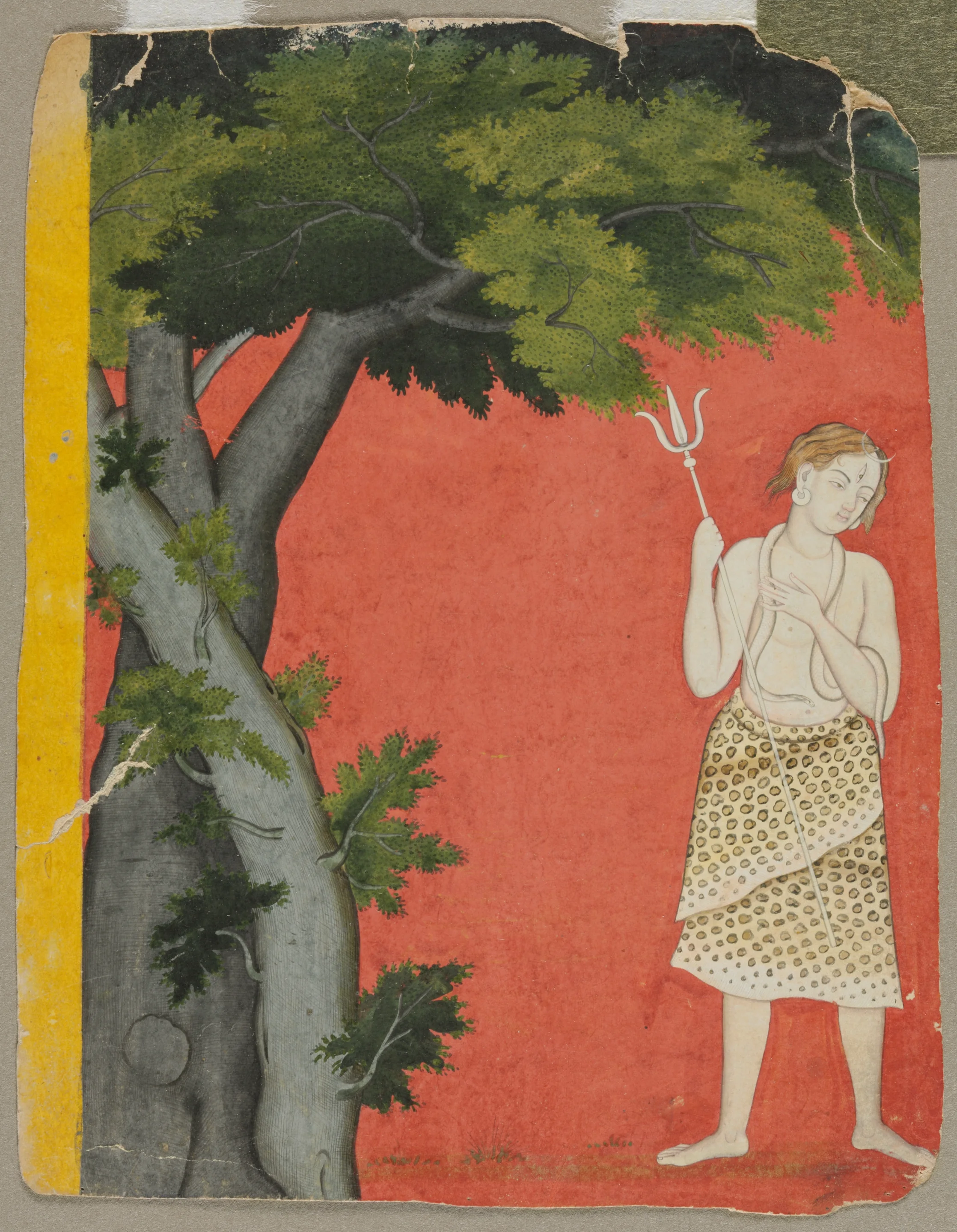
In the words of Pranav Ashar
How we renderThe heart of the Rudraksha
In brief
Bhusunda asks how the rudraksha arose. Kalagnirudra says: to destroy the three cities I closed my eyes; drops of water fell from them to the earth and became rudrakshas. The verses add that his eye stayed open for a thousand divine years, and the tears that fell grew into the great rudraksha trees, taking the form of things that stand still out of grace for devotees. In the closing prose section Kalagnirudra tells the sages: at the time of dissolution, having drawn all things in, Sadashiva closes the eye of dissolution, and from that eye the rudrakshas are born.
- Tears of compassion
- The eye of Rudra
- The closing eye of dissolution
- The bead as all the gods
- Grace taking the form of things
Contents
अथ हैनं कालाग्निरुद्रं भुसुण्डः पप्रच्छ कथं रुद्राक्षोत्पत्तिः । तद्धारणात्किं फलमिति । तं होवाच भगवान्कालाग्निरुद्रः । त्रिपुरवधार्थमहं निमीलिताक्षोऽभवम् । तेभ्यो जलबिन्दवो भूमौ पतितास्ते रुद्राक्षा जाताः । सर्वानुग्रहार्थाय तेषां नामोच्चारणमात्रेण दशगोप्रदानफलं दर्शनस्पर्शनाभ्यां द्विगुणं फलमत ऊर्ध्वं वक्तुं न शक्नोमि । तत्रैते श्लोका भवन्ति ।
atha hainaṃ kālāgnirudraṃ bhusuṇḍaḥ papraccha kathaṃ rudrākṣotpattiḥ | taddhāraṇātkiṃ phalamiti | taṃ hovāca bhagavānkālāgnirudraḥ | tripuravadhārthamahaṃ nimīlitākṣo'bhavam | tebhyo jalabindavo bhūmau patitāste rudrākṣā jātāḥ | sarvānugrahārthāya teṣāṃ nāmoccāraṇamātreṇa daśagopradānaphalaṃ darśanasparśanābhyāṃ dviguṇaṃ phalamata ūrdhvaṃ vaktuṃ na śaknomi | tatraite ślokā bhavanti |
Then Bhusunda asked Kalagnirudra: How did the rudraksha come to be? What comes of wearing it? The Lord Kalagnirudra said to him: To destroy the three cities I closed my eyes. From them drops of water fell to the earth, and they became the rudrakshas, for the good of all. Merely saying their name brings the fruit of giving ten cows; seeing and touching them, twice that. Beyond this I cannot say. On this there are these verses.
Note //
The opening prose. The 'three cities' (tripura) are the cities of the demons that Shiva burned with one arrow; in Shaiva reading they are the three bodies, or the three states of waking, dream and sleep. Editions: 'nāmoccāraṇa-mātreṇa' (sanskritdocuments.org) over 'nāmoccāra-mātreṇa' (Adyar), the same in meaning. Editions agree otherwise.
कस्मिंस्थितं तु किं नाम कथं वा धार्यते नरैः । कतिभेदमुखान्यत्र कैर्मन्त्रैर्धार्यते कथम् ॥
kasmiṃsthitaṃ tu kiṃ nāma kathaṃ vā dhāryate naraiḥ | katibhedamukhānyatra kairmantrairdhāryate katham ||
Where is it found, and what is it called? How is it to be worn? How many kinds and are there, and with what mantras is it worn, and how?
Note //
The questions the verses answer, in order. Editions agree.
दिव्यवर्षसहस्राणि चक्षुरुन्मीलितं मया । भूमावक्षिपुटाभ्यां तु पतिता जलबिन्दवः ॥
divyavarṣasahasrāṇi cakṣurunmīlitaṃ mayā | bhūmāvakṣipuṭābhyāṃ tu patitā jalabindavaḥ ||
For a thousand divine years my eye was held open, and from the lids drops of water fell to the earth.
Note //
The verse retelling of the story differs from the prose: there the eyes are closed, here held open. Both may be meant: the long gaze of compassion on the world, and the closing of the eye at its end (P3). Editions agree (the Adyar copy runs 'patitā jala-' together).
तत्राश्रुबिन्दवो जाता महारुद्राक्षवृक्षकाः । स्थावरत्वमनुप्राप्य भक्तानुग्रहकारणात् ॥
tatrāśrubindavo jātā mahārudrākṣavṛkṣakāḥ | sthāvaratvamanuprāpya bhaktānugrahakāraṇāt ||
There the drops of tears became the great rudraksha trees, out of grace for devotees.
Note //
'Taking on the state of things that stand still' (sthāvaratvam anuprāpya): grace becomes a tree, something rooted and lasting that anyone can reach. Editions agree.
भक्तानां धारणात्पापं दिवारात्रिकृतं हरेत् । लक्षं तु दर्शनात्पुण्यं कोटिस्तद्धारणाद्भवेत् ॥
bhaktānāṃ dhāraṇātpāpaṃ divārātrikṛtaṃ haret | lakṣaṃ tu darśanātpuṇyaṃ koṭistaddhāraṇādbhavet ||
Worn by devotees, it takes away the wrong done by day and by night. Seeing it brings a hundred thousand of merit; wearing it, ten million.
Note //
The figures of merit here and in the next verses are the text's way of saying 'beyond counting'. Editions agree.
तस्य कोटिशतं पुण्यं लभते धारणान्नरः । लक्षकोटिसहस्राणि लक्षकोटिशतानि च ॥
tasya koṭiśataṃ puṇyaṃ labhate dhāraṇānnaraḥ | lakṣakoṭisahasrāṇi lakṣakoṭiśatāni ca ||
By wearing it a man gains a hundred times ten million of merit; thousands of hundred-thousand-millions, and hundreds of hundred-thousand-millions,
Note //
The sentence runs on into the next verse. Editions agree.
तज्जपाल्लभते पुण्यं नरो रुद्राक्षधारणात् । धात्रीफलप्रमाणं यच्छ्रेष्ठमेतदुदाहृतम् ॥
tajjapāllabhate puṇyaṃ naro rudrākṣadhāraṇāt | dhātrīphalapramāṇaṃ yacchreṣṭhametadudāhṛtam ||
a man gains in merit from repetition with it, from wearing the rudraksha. One the size of an amalaka fruit is said to be the best;
Note //
'Repetition' (japa): counting the name or a mantra on the beads. The amalaka (dhātrī) is the Indian gooseberry. Editions agree.
बदरीफलमात्रं तु मध्यमं प्रोच्यते बुधैः । अधमं चणमात्रं स्यात्प्रक्रियैषा मयोच्यते ॥
badarīphalamātraṃ tu madhyamaṃ procyate budhaiḥ | adhamaṃ caṇamātraṃ syātprakriyaiṣā mayocyate ||
one the size of a jujube the wise call middling; one the size of a chickpea is the least. This is the method, as I tell it.
Note //
Editions agree.
ब्राह्मणाः क्षत्रिया वैश्याः शूद्राश्चेति शिवाज्ञया । वृथा जाताः पृथिव्यां तु तज्जातीयाः शुभाक्षकाः ॥
brāhmaṇāḥ kṣatriyā vaiśyāḥ śūdrāśceti śivājñayā | vṛthā jātāḥ pṛthivyāṃ tu tajjātīyāḥ śubhākṣakāḥ ||
By Shiva's command the good beads that sprang up on the earth of themselves are of the same four kinds as people: Brahmin, Kshatriya, Vaishya and Shudra.
Note //
This and the next two verses sort the beads by colour into the four classes of society, and assign each class its colour. They reflect the order of their time and are given here as the text has them, not as teaching. 'Of themselves' renders 'vṛthā', which may also mean 'at random'; the sense is uncertain. Editions agree.
श्वेतास्तु ब्राह्मणा ज्ञेयाः क्षत्रिया रक्तवर्णकाः । पीतास्तु वैश्या विज्ञेयाः कृष्णाः शूद्रा उदाहृताः ॥
śvetāstu brāhmaṇā jñeyāḥ kṣatriyā raktavarṇakāḥ | pītāstu vaiśyā vijñeyāḥ kṛṣṇāḥ śūdrā udāhṛtāḥ ||
The white are known as Brahmin, the red-coloured as Kshatriya, the yellow as Vaishya, the black are called Shudra.
Note //
See the note on 1.8. Editions agree.
ब्राह्मणो बिभृयाच्छ्वेतान्रक्तान्राजा तु धारयेत् । पीतान्वैश्यस्तु बिभृयात्कृष्णाञ्छूद्रस्तु धारयेत् ॥
brāhmaṇo bibhṛyācchvetānraktānrājā tu dhārayet | pītānvaiśyastu bibhṛyātkṛṣṇāñchūdrastu dhārayet ||
A Brahmin should wear white ones, a king red ones, a Vaishya yellow ones, a Shudra black ones.
Note //
See the note on 1.8. Editions: 'śvetān raktān rājā' (Adyar) over the misprint 'śvetātraktātrājā' (sanskritdocuments.org).
समाः स्निग्धा दृढाः स्थूलाः कण्टकैः संयुताः शुभाः । कृमिदष्टं भिन्नभिन्नं कण्टकैर्हीनमेव च ॥
samāḥ snigdhā dṛḍhāḥ sthūlāḥ kaṇṭakaiḥ saṃyutāḥ śubhāḥ | kṛmidaṣṭaṃ bhinnabhinnaṃ kaṇṭakairhīnameva ca ||
Beads that are even, smooth, firm and full, with their spikes, are good. One eaten by worms, one broken, one without spikes,
Note //
'Spikes' (kaṇṭaka): the raised points on the surface of the seed. The list of six faults runs into the next verse. Editions agree.
व्रणयुक्तमयुक्तं च षड्रुद्राक्षाणि वर्जयेत् । स्वयमेव कृतं द्वारं रुद्राक्षं स्यादिहोत्तमम् ॥
vraṇayuktamayuktaṃ ca ṣaḍrudrākṣāṇi varjayet | svayameva kṛtaṃ dvāraṃ rudrākṣaṃ syādihottamam ||
one with sores, one that does not hold together: these six kinds of rudraksha one should avoid. A rudraksha whose opening has formed of itself is the best;
Note //
'Does not hold together' renders 'ayukta', literally 'unjoined'; the exact fault is uncertain. 'Opening' (dvāra): the hole through which the bead is strung. Editions: 'ṣaḍ rudrākṣāṇi' (sanskritdocuments.org); Adyar 'ṣaḍrudrākṣā', the same in meaning.
यत्तु पौरुषयत्नेन कृतं तन्मध्यमं भवेत् । समान्स्निग्धान्दृढान्स्थूलान्क्षौमसूत्रेण धारयेत् ॥
yattu pauruṣayatnena kṛtaṃ tanmadhyamaṃ bhavet | samānsnigdhāndṛḍhānsthūlānkṣaumasūtreṇa dhārayet ||
one whose opening is made by human effort is middling. Even, smooth, firm and full beads one should wear on a thread of linen.
Note //
'Linen' renders 'kṣauma', cloth of flax or fine silk. Editions agree.
सर्वगात्रेण सौम्येन सामान्यानि विचक्षणः । निकषे हेमरेखाभा यस्य रेखा प्रदृश्यते ॥
sarvagātreṇa saumyena sāmānyāni vicakṣaṇaḥ | nikaṣe hemarekhābhā yasya rekhā pradṛśyate ||
The discerning may wear the ordinary ones gently, over the whole body. The bead which, rubbed on the touchstone, shows a line like a line of gold,
Note //
The first half is obscure; 'sarva-gātreṇa saumyena sāmānyāni' is rendered as it seems to run, and the reading is uncertain. The second half runs into the next verse. Editions agree.
तदक्षमुत्तमं विद्यात्तद्धार्यं शिवपूजकैः । शिखायामेकरुद्राक्षं त्रिशतं शिरसा वहेत् ॥
tadakṣamuttamaṃ vidyāttaddhāryaṃ śivapūjakaiḥ | śikhāyāmekarudrākṣaṃ triśataṃ śirasā vahet ||
know that bead as the best; those who worship Shiva should wear it. One should wear one rudraksha on the crown-lock, three hundred on the head,
Note //
Editions: 'tad akṣam uttamaṃ' (Adyar) over the misprint 'tad akṣam amuttamaṃ' (sanskritdocuments.org).
षट्त्रिंशतं गले दध्याद्बाहोः षोडश षोडश । मणिबन्धे द्वादशैव स्कन्धे पञ्चशतं वहेत् ॥
ṣaṭtriṃśataṃ gale dadhyādbāhoḥ ṣoḍaśa ṣoḍaśa | maṇibandhe dvādaśaiva skandhe pañcaśataṃ vahet ||
thirty-six at the throat, sixteen on each arm, twelve at the wrist, and five hundred on the shoulders.
Note //
The numbers are given as the text has them; they are ritual counts, not a practical rule. Editions: 'dadhyād bāhoḥ' (Adyar) over 'dadhyātbāhoḥ' (sanskritdocuments.org).
अष्टोत्तरशतैर्मालामुपवीतं प्रकल्पयेत् । द्विसरं त्रिसरं वापि सराणां पञ्चकं तथा ॥
aṣṭottaraśatairmālāmupavītaṃ prakalpayet | dvisaraṃ trisaraṃ vāpi sarāṇāṃ pañcakaṃ tathā ||
With a hundred and eight one should make a garland as a sacred thread. Two strands or three, or five strands,
Note //
The sentence runs into the next verse. Editions agree.
सराणां सप्तकं वापि बिभृयात्कण्ठदेशतः । मुकुटे कुण्डले चैव कर्णिकाहारकेऽपि वा ॥
sarāṇāṃ saptakaṃ vāpi bibhṛyātkaṇṭhadeśataḥ | mukuṭe kuṇḍale caiva karṇikāhārake'pi vā ||
or seven strands, one may wear at the throat; in a crown, in earrings, in ear-studs, or in a necklace,
Note //
Editions agree.
केयूरकटके सूत्रं कुक्षिबन्धे विशेषतः । सुप्ते पीते सदाकालं रुद्राक्षं धारयेन्नरः ॥
keyūrakaṭake sūtraṃ kukṣibandhe viśeṣataḥ | supte pīte sadākālaṃ rudrākṣaṃ dhārayennaraḥ ||
in armlets and bracelets, on a thread, and above all in a belt at the waist. Sleeping or drinking, at all times, one should wear the rudraksha.
Note //
Editions agree.
त्रिशतं त्वधमं पञ्चशतं मध्यममुच्यते । सहस्रमुत्तमं प्रोक्तमेवं भेदेन धारयेत् ॥
triśataṃ tvadhamaṃ pañcaśataṃ madhyamamucyate | sahasramuttamaṃ proktamevaṃ bhedena dhārayet ||
Three hundred is called the least, five hundred the middling, a thousand the best. So one should wear them by degree.
Note //
Editions agree.
शिरसीशानमन्त्रेण कण्ठे तत्पुरुषेण तु । अघोरेण गले धार्यं तेनैव हृदयेऽपि च ॥
śirasīśānamantreṇa kaṇṭhe tatpuruṣeṇa tu | aghoreṇa gale dhāryaṃ tenaiva hṛdaye'pi ca ||
On the head, with the Ishana mantra; at the throat, with the Tatpurusha; at the neck with the Aghora, and with the same at the heart.
Note //
Ishana, Tatpurusha, Aghora, Vamadeva and Sadyojata are the five faces of Shiva and the five mantras named for them, the 'five Brahmas' (1.23). Editions agree.
अघोरबीजमन्त्रेण करयोर्धारयेत्सुधीः । पञ्चाशदक्षग्रथितान्व्योमव्याप्यपि चोदरे ॥
aghorabījamantreṇa karayordhārayetsudhīḥ | pañcāśadakṣagrathitānvyomavyāpyapi codare ||
With the seed-mantra of Aghora the wise should wear them on the hands; and fifty beads strung together, on the belly, with the Vyomavyapi mantra.
Note //
'Vyomavyāpi', 'pervading space', is the name of a long Shaiva mantra. Editions agree.
पञ्च ब्रह्मभिरङ्गैश्च त्रिमाला पञ्च सप्त च । ग्रथित्वा मूलमन्त्रेण सर्वाण्यक्षाणि धारयेत् ॥
pañca brahmabhiraṅgaiśca trimālā pañca sapta ca | grathitvā mūlamantreṇa sarvāṇyakṣāṇi dhārayet ||
With the five Brahma mantras and the limb mantras, garlands of three, five and seven: stringing them with the root mantra, one should wear all the beads.
Note //
The 'root mantra' (mūla-mantra) of Shiva is the five-syllabled 'namaḥ śivāya'. Editions: 'aṅgaiś ca' (Adyar) over the misprint 'aṅgaiśaca' (sanskritdocuments.org).
अथ हैनं भगवन्तं कालाग्निरुद्रं भुसुण्डः पप्रच्छ रुद्राक्षाणां भेदेन यदक्षं यत्स्वरूपं यत्फलमिति । तत्स्वरूपं मुखयुक्तमरिष्टनिरसनं कामाभीष्टफलं ब्रूहीति होवाच । तत्रैते श्लोका भवन्ति ॥
atha hainaṃ bhagavantaṃ kālāgnirudraṃ bhusuṇḍaḥ papraccha rudrākṣāṇāṃ bhedena yadakṣaṃ yatsvarūpaṃ yatphalamiti | tatsvarūpaṃ mukhayuktamariṣṭanirasanaṃ kāmābhīṣṭaphalaṃ brūhīti hovāca | tatraite ślokā bhavanti ||
Then Bhusunda asked the Lord Kalagnirudra: Of the kinds of rudraksha, which bead is of which nature, with which fruit? Tell me its nature by its , how it wards off harm, and what wished-for fruit it gives. On this there are these verses.
Note //
'Faces' (mukha, vaktra): the natural divisions running down the seed from end to end. Editions: 'bhusuṇḍaḥ' (Adyar) over the misprint 'bhusunḍaḥ' (sanskritdocuments.org).
एकवक्त्रं तु रुद्राक्षं परतत्त्वस्वरूपकम् । तद्धारणात्परे तत्त्वे लीयते विजितेन्द्रियः ॥
ekavaktraṃ tu rudrākṣaṃ paratattvasvarūpakam | taddhāraṇātpare tattve līyate vijitendriyaḥ ||
The rudraksha with one face is the very form of . Wearing it, one who has mastered the senses dissolves into .
Note //
The list of faces begins with the one, and the one is not a god among gods but the highest reality itself (para-tattva); its fruit is not a gain but dissolving into it. Everything that follows is that one, divided. Editions agree.
द्विवक्त्रं तु मुनिश्रेष्ठ चार्धनारीश्वरात्मकम् । धारणादर्धनारीशः प्रीयते तस्य नित्यशः ॥
dvivaktraṃ tu muniśreṣṭha cārdhanārīśvarātmakam | dhāraṇādardhanārīśaḥ prīyate tasya nityaśaḥ ||
The one with two , best of sages, is the Lord who is half woman. For one who wears it, the Lord who is half woman is always pleased.
Note //
Ardhanarishvara: Shiva joined with Shakti in one body, the two as one. Editions agree.
त्रिमुखं चैव रुद्राक्षमग्नित्रयस्वरूपकम् । तद्धारणाच्च हुतभुक्तस्य तुष्यति नित्यदा ॥
trimukhaṃ caiva rudrākṣamagnitrayasvarūpakam | taddhāraṇācca hutabhuktasya tuṣyati nityadā ||
The rudraksha with three is the form of the three fires. For one who wears it, Fire, the eater of offerings, is always content.
Note //
The three sacred fires of the Vedic household rite. Editions agree.
चतुर्मुखं तु रुद्राक्षं चतुर्वक्त्रस्वरूपकम् । तद्धारणाच्चतुर्वक्त्रः प्रीयते तस्य नित्यदा ॥
caturmukhaṃ tu rudrākṣaṃ caturvaktrasvarūpakam | taddhāraṇāccaturvaktraḥ prīyate tasya nityadā ||
The rudraksha with four is the form of the four-faced one. For one who wears it, the four-faced Brahma is always pleased.
Note //
Editions agree.
पञ्चवक्त्रं तु रुद्राक्षं पञ्चब्रह्मस्वरूपकम् । पञ्चवक्त्रः स्वयं ब्रह्म पुंहत्यां च व्यपोहति ॥
pañcavaktraṃ tu rudrākṣaṃ pañcabrahmasvarūpakam | pañcavaktraḥ svayaṃ brahma puṃhatyāṃ ca vyapohati ||
The rudraksha with five is the form of the five Brahmas. The five-faced one is Brahman itself; it takes away even the killing of a man.
Note //
The five Brahmas are the five faces of Shiva (see 1.21). Editions: 'puṃhatyāṃ ca' (sanskritdocuments.org); Adyar 'puṃhatyāca', a slip.
षड्वक्त्रमपि रुद्राक्षं कार्तिकेयाधिदैवतम् । तद्धारणान्महाश्रीः स्यान्महदारोग्यमुत्तमम् ॥
ṣaḍvaktramapi rudrākṣaṃ kārtikeyādhidaivatam | taddhāraṇānmahāśrīḥ syānmahadārogyamuttamam ||
The rudraksha with six has Kartikeya for its god. Wearing it, one has great fortune and great and excellent health.
Note //
Editions agree.
मतिविज्ञानसम्पत्तिशुद्धये धारयेत्सुधीः । विनायकाधिदैवं च प्रवदन्ति मनीषिणः ॥
mativijñānasampattiśuddhaye dhārayetsudhīḥ | vināyakādhidaivaṃ ca pravadanti manīṣiṇaḥ ||
The wise should wear it for the purity of mind, understanding and wealth. The learned say it also has Vinayaka for its god.
Note //
The six-faced bead is given a second god, Ganesha (Vinayaka), Kartikeya's brother. Editions agree.
सप्तवक्त्रं तु रुद्राक्षं सप्तमालाधिदैवतम् । तद्धारणान्महाश्रीः स्यान्महदारोग्यमुत्तमम् ॥
saptavaktraṃ tu rudrākṣaṃ saptamālādhidaivatam | taddhāraṇānmahāśrīḥ syānmahadārogyamuttamam ||
The rudraksha with seven has the seven for its gods. Wearing it, one has great fortune and great and excellent health.
Note //
Editions differ: Adyar 'saptamālādhidaivatam', 'the seven garlands for its god'; sanskritdocuments.org 'saptamādhidaivatam', a syllable short. The Adyar reading is adopted for the metre, but the intended gods are unclear; many read the seven Mothers (saptamātṛ). Rendered as 'the seven'. Pending review.
महती ज्ञानसम्पत्तिः शुचिर्धारणतः सदा । अष्टवक्त्रं तु रुद्राक्षमष्टमात्राधिदैवतम् ॥
mahatī jñānasampattiḥ śucirdhāraṇataḥ sadā | aṣṭavaktraṃ tu rudrākṣamaṣṭamātrādhidaivatam ||
From wearing it, ever pure, one has great wealth of knowing. The rudraksha with eight has the eight Mothers for its gods;
Note //
Editions agree.
वस्वष्टकप्रियं चैव गङ्गाप्रीतिकरं तथा । तद्धारणादिमे प्रीता भवेयुः सत्यवादिनः ॥
vasvaṣṭakapriyaṃ caiva gaṅgāprītikaraṃ tathā | taddhāraṇādime prītā bhaveyuḥ satyavādinaḥ ||
it is dear to the eight Vasus, and it pleases the Ganga. For one who wears it, these are pleased, and he speaks the truth.
Note //
'And he speaks the truth' takes 'satyavādinaḥ' with the wearer; it may also describe the gods, 'true to their word'. Editions agree.
नववक्त्रं तु रुद्राक्षं नवशक्त्यधिदैवतम् । तस्य धारणमात्रेण प्रीयन्ते नवशक्तयः ॥
navavaktraṃ tu rudrākṣaṃ navaśaktyadhidaivatam | tasya dhāraṇamātreṇa prīyante navaśaktayaḥ ||
The rudraksha with nine has the nine Powers for its gods. By merely wearing it, the nine Powers are pleased.
Note //
Editions agree.
दशवक्त्रं तु रुद्राक्षं यमदैवत्यमीरितम् । दर्शनाच्छान्तिजनकं धारणान्नात्र संशयः ॥
daśavaktraṃ tu rudrākṣaṃ yamadaivatyamīritam | darśanācchāntijanakaṃ dhāraṇānnātra saṃśayaḥ ||
The rudraksha with ten is said to have Yama for its god. Seeing it brings peace, and wearing it, without doubt.
Note //
Editions: 'yamadaivatyam īritam' and 'darśanāc chānti-janakam' (sanskritdocuments.org); the Adyar text has 'yamadaivatyamītiram' and 'daśāpraśāntijanakam', which may mean 'it calms the bad periods (daśā)'. Editions differ.
एकादशमुखं त्वक्षं रुद्रैकादशदैवतम् । तदिदं दैवतं प्राहुः सदा सौभाग्यवर्धनम् ॥
ekādaśamukhaṃ tvakṣaṃ rudraikādaśadaivatam | tadidaṃ daivataṃ prāhuḥ sadā saubhāgyavardhanam ||
The bead with eleven has the eleven Rudras for its gods. They say this god always increases good fortune.
Note //
Editions: 'tv akṣaṃ' (sanskritdocuments.org) over 'svakṣaṃ' (Adyar).
रुद्राक्षं द्वादशमुखं महाविष्णुस्वरूपकम् । द्वादशादित्यरूपं च बिभर्त्येव हि तत्परम् ॥
rudrākṣaṃ dvādaśamukhaṃ mahāviṣṇusvarūpakam | dvādaśādityarūpaṃ ca bibhartyeva hi tatparam ||
The rudraksha with twelve is the form of the great Vishnu, and the form of the twelve suns; one devoted to that highest wears it.
Note //
The last line is uncertain; 'bibharty eva hi tat-param' may mean 'one wholly devoted wears it' or 'it bears that highest'. Editions agree.
त्रयोदशमुखं त्वक्षं कामदं सिद्धिदं शुभम् । तस्य धारणमात्रेण कामदेवः प्रसीदति ॥
trayodaśamukhaṃ tvakṣaṃ kāmadaṃ siddhidaṃ śubham | tasya dhāraṇamātreṇa kāmadevaḥ prasīdati ||
The bead with thirteen grants wishes, grants powers, and is auspicious. By merely wearing it, Kama, the god of desire, is gracious.
Note //
Editions agree.
चतुर्दशमुखं चाक्षं रुद्रनेत्रसमुद्भवम् । सर्वव्याधिहरं चैव सर्वदारोग्यमाप्नुयात् ॥
caturdaśamukhaṃ cākṣaṃ rudranetrasamudbhavam | sarvavyādhiharaṃ caiva sarvadārogyamāpnuyāt ||
The bead with fourteen is born from the eye of Rudra itself. It takes away every illness; one gains health at all times.
Note //
Editions agree.
मद्यं मांसं च लशुनं पलाण्डुं शिग्रुमेव च । श्लेष्मातकं विड्वराहमभक्ष्यं वर्जयेन्नरः ॥
madyaṃ māṃsaṃ ca laśunaṃ palāṇḍuṃ śigrumeva ca | śleṣmātakaṃ viḍvarāhamabhakṣyaṃ varjayennaraḥ ||
Liquor and meat, garlic and onion, drumstick, the shleshmataka fruit, the village pig, and whatever is forbidden: one who wears it should avoid these.
Note //
Editions agree.
ग्रहणे विषुवे चैवमयने संक्रमेऽपि च । दर्शेषु पूर्णमासे च पूर्णेषु दिवसेषु च । रुद्राक्षधारणात्सद्यः सर्वपापैः प्रमुच्यते ॥
grahaṇe viṣuve caivamayane saṃkrame'pi ca | darśeṣu pūrṇamāse ca pūrṇeṣu divaseṣu ca | rudrākṣadhāraṇātsadyaḥ sarvapāpaiḥ pramucyate ||
At an eclipse, at the equinox, at the solstice, at the sun's passage into a sign, on new-moon days and at full moon, and on the full days: wearing the rudraksha then, one is freed at once from every wrong.
Note //
A verse of three lines. Editions agree.
रुद्राक्षमूलं तद्ब्रह्मा तन्नालं विष्णुरेव च । तन्मुखं रुद्र इत्याहुस्तद्बिन्दुः सर्वदेवताः ॥
rudrākṣamūlaṃ tadbrahmā tannālaṃ viṣṇureva ca | tanmukhaṃ rudra ityāhustadbinduḥ sarvadevatāḥ ||
The root of the rudraksha is Brahma, its stem is Vishnu, its face, they say, is Rudra, its dot is all the gods.
Note //
The last of the nineteen verses on the faces. The three gods of making, keeping and ending are found in one small seed: the bead holds the whole. Editions agree.
अथ कालाग्निरुद्रं भगवन्तं सनत्कुमारः पप्रच्छाधीहि भगवन्रुद्राक्षधारणविधिम् । तस्मिन्समये निदाघजडभरतदत्तात्रेयकात्यायनभरद्वाजकपिलवसिष्ठपिप्पलादादयश्च कालाग्निरुद्रं परिसमेत्योचुः । अथ कालाग्निरुद्रः किमर्थं भवतामागमनमिति होवाच । रुद्राक्षधारणविधिं वै सर्वे श्रोतुमिच्छामह इति । अथ कालाग्निरुद्रः प्रोवाच । रुद्रस्य नयनादुत्पन्ना रुद्राक्षा इति लोके ख्यायन्ते । अथ सदाशिवः संहारकाले संहारं कृत्वा संहाराक्षं मुकुलीकरोति । तन्नयनाज्जाता रुद्राक्षा इति होवाच । तस्माद्रुद्राक्षत्वमिति कालाग्निरुद्रः प्रोवाच ।
atha kālāgnirudraṃ bhagavantaṃ sanatkumāraḥ papracchādhīhi bhagavanrudrākṣadhāraṇavidhim | tasminsamaye nidāghajaḍabharatadattātreyakātyāyanabharadvājakapilavasiṣṭhapippalādādayaśca kālāgnirudraṃ parisametyocuḥ | atha kālāgnirudraḥ kimarthaṃ bhavatāmāgamanamiti hovāca | rudrākṣadhāraṇavidhiṃ vai sarve śrotumicchāmaha iti | atha kālāgnirudraḥ provāca | rudrasya nayanādutpannā rudrākṣā iti loke khyāyante | atha sadāśivaḥ saṃhārakāle saṃhāraṃ kṛtvā saṃhārākṣaṃ mukulīkaroti | tannayanājjātā rudrākṣā iti hovāca | tasmādrudrākṣatvamiti kālāgnirudraḥ provāca |
Then Sanatkumara asked the Lord Kalagnirudra: Teach me, Lord, the rule of wearing the rudraksha. At that time Nidagha, Jadabharata, Dattatreya, Katyayana, Bharadvaja, Kapila, Vasishtha, Pippalada and others gathered around Kalagnirudra and spoke. Kalagnirudra said: Why have you come? They said: We all wish to hear the rule of wearing the rudraksha. Then Kalagnirudra said: They are known in the world as rudrakshas because they were born from the eye of Rudra. At the time of dissolution, having drawn all things back, Sadashiva closes the eye of dissolution, as a flower closes. From that eye the rudrakshas are born, he said. That is why they are rudra-aksha, the eye of Rudra, so Kalagnirudra declared.
Note //
'Closes as a flower closes' renders 'mukulī-karoti', to make into a bud; the Adyar copy has the misprint 'mumulīkaroti'; sanskritdocuments.org and the parallel passage in the Brihajjabala (7) have 'mukulīkaroti'. What the sages came to hear is a rule of wearing; what they are given first is where the bead comes from: the seeing that withdraws all things into itself. Editions agree otherwise.
तद्रुद्राक्षे वाग्विषये कृते दशगोप्रदानेन यत्फलमवाप्नोति तत्फलमश्नुते । स एष भस्मज्योती रुद्राक्ष इति । तद्रुद्राक्षं करेण स्पृष्ट्वा धारणमात्रेण द्विसहस्रगोप्रदानफलं भवति । तद्रुद्राक्षे कर्णयोर्धार्यमाणे एकादशसहस्रगोप्रदानफलं भवति । एकादशरुद्रत्वं च गच्छति । तद्रुद्राक्षे शिरसि धार्यमाणे कोटिगोप्रदानफलं भवति । एतेषां स्थानानां कर्णयोः फलं वक्तुं न शक्यमिति होवाच । य इमां रुद्राक्षजाबालोपनिषदं नित्यमधीते बालो वा युवा वा वेद स महान्भवति । स गुरुः सर्वेषां मन्त्राणामुपदेष्टा भवति एतैरेव होमं कुर्यात् । एतैरेवार्चनम् । तथा रक्षोघ्नं मृत्युतारकं गुरुणा लब्धं कण्ठे बाहौ शिखायां वा बध्नीत । सप्तद्वीपवती भूमिर्दक्षिणार्थं नावकल्पते । तस्माच्छ्रद्धया यां काञ्चिद्गां दद्यात्सा दक्षिणा भवति । य इमामुपनिषदं ब्राह्मणः सायमधीयानो दिवसकृतं पापं नाशयति । मध्याह्नेऽधीयानः षड्जन्मकृतं पापं नाशयति । सायं प्रातः प्रयुञ्जानोऽनेकजन्मकृतं पापं नाशयति । षट्सहस्रलक्षगायत्रीजपफलमवाप्नोति । ब्रह्महत्यासुरापानस्वर्णस्तेयगुरुदारगमनतत्संयोगपातकेभ्यः पूतो भवति । सर्वतीर्थफलमश्नुते । पतितसंभाषणात्पूतो भवति । पङ्क्तिशतसहस्रपावनो भवति । शिवसायुज्यमवाप्नोति । न च पुनरावर्तते न च पुनरावर्तत इत्योंसत्यमित्युपनिषत् ॥
tadrudrākṣe vāgviṣaye kṛte daśagopradānena yatphalamavāpnoti tatphalamaśnute | sa eṣa bhasmajyotī rudrākṣa iti | tadrudrākṣaṃ kareṇa spṛṣṭvā dhāraṇamātreṇa dvisahasragopradānaphalaṃ bhavati | tadrudrākṣe karṇayordhāryamāṇe ekādaśasahasragopradānaphalaṃ bhavati | ekādaśarudratvaṃ ca gacchati | tadrudrākṣe śirasi dhāryamāṇe koṭigopradānaphalaṃ bhavati | eteṣāṃ sthānānāṃ karṇayoḥ phalaṃ vaktuṃ na śakyamiti hovāca | ya imāṃ rudrākṣajābālopaniṣadaṃ nityamadhīte bālo vā yuvā vā veda sa mahānbhavati | sa guruḥ sarveṣāṃ mantrāṇāmupadeṣṭā bhavati etaireva homaṃ kuryāt | etairevārcanam | tathā rakṣoghnaṃ mṛtyutārakaṃ guruṇā labdhaṃ kaṇṭhe bāhau śikhāyāṃ vā badhnīta | saptadvīpavatī bhūmirdakṣiṇārthaṃ nāvakalpate | tasmācchraddhayā yāṃ kāñcidgāṃ dadyātsā dakṣiṇā bhavati | ya imāmupaniṣadaṃ brāhmaṇaḥ sāyamadhīyāno divasakṛtaṃ pāpaṃ nāśayati | madhyāhne'dhīyānaḥ ṣaḍjanmakṛtaṃ pāpaṃ nāśayati | sāyaṃ prātaḥ prayuñjāno'nekajanmakṛtaṃ pāpaṃ nāśayati | ṣaṭsahasralakṣagāyatrījapaphalamavāpnoti | brahmahatyāsurāpānasvarṇasteyagurudāragamanatatsaṃyogapātakebhyaḥ pūto bhavati | sarvatīrthaphalamaśnute | patitasaṃbhāṣaṇātpūto bhavati | paṅktiśatasahasrapāvano bhavati | śivasāyujyamavāpnoti | na ca punarāvartate na ca punarāvartata ityoṃsatyamityupaniṣat ||
When the rudraksha is merely spoken of, one gains the fruit of giving ten cows. This is the rudraksha, the light of the ash. Touching it with the hand and wearing it brings the fruit of giving two thousand cows; worn at the ears, of eleven thousand, and one becomes the eleven Rudras; worn on the head, of ten million cows. Of these places, the fruit of the ears cannot be told, he said. One who studies this Rudrakshajabala Upanishad daily, child or youth, and knows it, becomes great. He becomes a teacher, one who imparts all mantras. With these one should make the fire offering; with these, the worship. And the bead that guards against harm and carries one across death, received from the teacher, one should tie at the throat, the arm or the crown-lock. The earth with its seven continents would not be enough as the teacher's fee; so whatever cow one gives with faith becomes the fee. A Brahmin who studies this Upanishad in the evening destroys the wrong done in the day; studying at midday, the wrong done in six births; using it evening and morning, the wrong done in many births. He gains the fruit of repeating the Gayatri six thousand hundred-thousand times. He is made pure of killing a Brahmin, of drinking liquor, of stealing gold, of going to the teacher's wife, and of keeping company with those who do these. He gains the fruit of every holy place. He is made pure of speaking with the fallen. He purifies a hundred thousand of those he sits with. He reaches union with Shiva. He does not return; he does not return. Om, this is the truth. So the Upanishad.
Note //
'The light of the ash' (bhasma-jyotiḥ) ties the bead to the sacred ash of the Bhasmajabala, its companion text. 'With these' (etaiḥ) refers to the beads. 'He purifies a hundred thousand of those he sits with' renders 'paṅkti-śata-sahasra-pāvanaḥ', one who sanctifies the row of diners he eats with. Editions: 'yāṃ kāñcid' (sanskritdocuments.org); Adyar 'yāṅkāñcid', the same. Editions agree otherwise.
No public-domain English translation exists for this text; the Sanskrit is shown.
The renderings on this page are shared under CC BY-NC 4.0, in the words of Pranav Ashar.