Tripura Upanishad
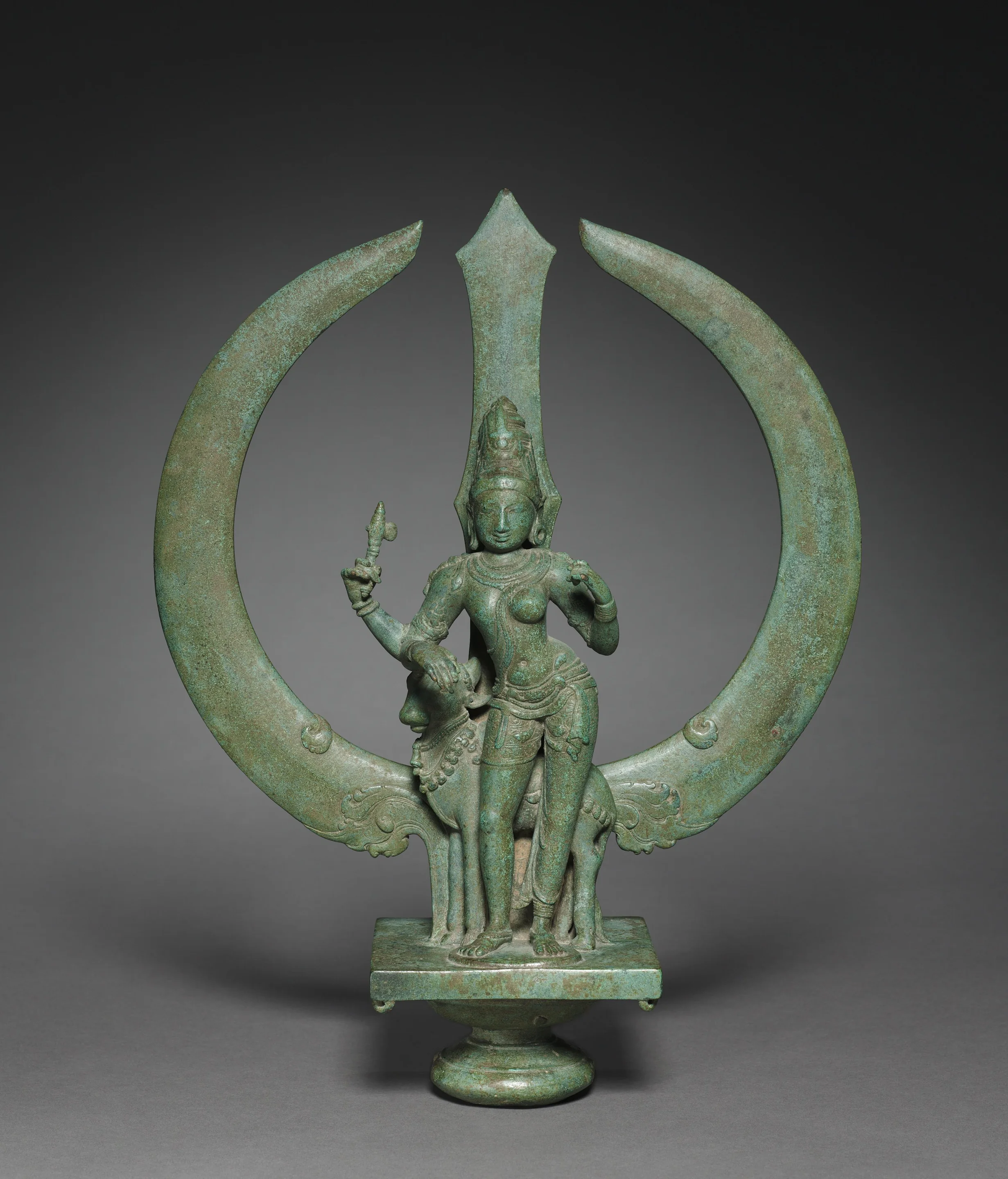
In the words of Pranav Ashar
How we renderThe heart of the Tripura
In brief
The three cities contain the imperishable letters; over them presides the ageless, ancient one. The text then describes the nine wombs and nine wheels of the Shri Chakra, the goddess's many names and her mantra, and the worship by which her devotees reach 'the highest abode, of Tripura'. Near the end it states the relation at the centre of the whole cult: the Goddess (Bhaga, power) and the Lord (Kama, the desiring one) are equal in rank, equal in being, equal in strength. When contraction falls away and the mind goes beyond itself, Shiva becomes the form of all.
- The three cities
- Power and its Lord as equals
- The womb of the world
- Beyond the mind
- The form of all
ॐ तिस्रः पुरास्त्रिपथा विश्वचर्षणा अत्राकथा अक्षराः संनिविष्टाः । अधिष्ठायैना अजरा पुराणी महत्तरा महिमा देवतानाम् ॥ १॥
oṃ tisraḥ purāstripathā viśvacarṣaṇā atrākathā akṣarāḥ saṃniviṣṭāḥ | adhiṣṭhāyainā ajarā purāṇī mahattarā mahimā devatānām || 1||
Om. The three cities, the three paths, watched over by the one who sees all: in them the imperishable letters are set. Presiding over them is the ageless, ancient one, greater than great, the greatness of the gods.
Note //
'The three cities' (tripura) are read in the tradition as the three states, waking, dream and sleep, the three bodies, or the three worlds; the goddess Tripura is what presides over all three. 'Imperishable letters' (akṣarāḥ): the syllables of her mantra, and the imperishable itself. The word 'atrākathā' (sanskritdocuments.org) or 'annākathā' (Adyar collection) is obscure and not rendered; the Adyar collection also prints 'puras' for 'purās'. Pending review.
नवयोनीर्नवचक्राणि दधिरे नवैव योगा नव योगिन्यश्च । नवानां चक्रा अधिनाथाः स्योना नव मुद्रा नव भद्रा महीनाम् ॥ २॥
navayonīrnavacakrāṇi dadhire navaiva yogā nava yoginyaśca | navānāṃ cakrā adhināthāḥ syonā nava mudrā nava bhadrā mahīnām || 2||
They hold nine wombs, nine wheels; nine are the unions, and nine the yoginis. Of the nine wheels the lords are kind; nine are the seals, nine the blessings of the worlds.
Note //
The Shri Chakra: its nine triangles ('wombs') and its nine enclosures ('wheels'), each with its presiding yogini, its lord and its mudra (hand-gesture of worship), as the tradition reads it. Editions: 'navayonīḥ', accusative plural, the object of 'they hold' (Adyar collection), over 'navayoniḥ' (sanskritdocuments.org and github.com/sanskrit/raw_etexts); 'nava mudrā nava bhadrā' (sanskritdocuments.org, raw_etexts) over the reverse order (Adyar).
एका सा आसीत्प्रथमा सा नवासीदासोनविंशादासोनत्रिंशात् । चत्वारिंशादथ तिस्रः समिधा उशतीरिव मातरो मा विशन्तु ॥ ३॥
ekā sā āsītprathamā sā navāsīdāsonaviṃśādāsonatriṃśāt | catvāriṃśādatha tisraḥ samidhā uśatīriva mātaro mā viśantu || 3||
She was one, the first; she became nine; then up to nineteen, up to twenty-nine; then forty and three. Like kindling into fire, like mothers eager for their own, may they enter me.
Note //
The one Goddess becoming the many triangles of the Shri Chakra, which has forty-three in all; the counting is read as the triangles added round by round, a reading that is tentative. Whatever the count, the movement is from one to many, and the prayer is that the many return into the worshipper as fuel enters fire. Editions: 'ekā sā' (sanskritdocuments.org, raw_etexts) over 'ekā sa' (Adyar); 'āsonatriṃśāt' (Adyar, raw_etexts) over 'āsonatriṃśat'. Pending review.
ऊर्ध्वज्वलज्ज्वलनं ज्योतिरग्रे तमो वै तिरश्चीनमजरं तद्रजोऽभूत् । आनन्दनं मोदनं ज्योतिरिन्दोरेता उ वै मण्डला मण्डयन्ति ॥ ४॥
ūrdhvajvalajjvalanaṃ jyotiragre tamo vai tiraścīnamajaraṃ tadrajo'bhūt | ānandanaṃ modanaṃ jyotirindoretā u vai maṇḍalā maṇḍayanti || 4||
First, the light of fire, blazing upward; then darkness, lying across, ageless: that became the middle space. Gladdening, delighting, the light of the moon. These adorn the circles.
Note //
Read as the three lights of the Shri Vidya tradition, fire, sun and moon, placed in the circles of the chakra: fire rising, the dark band across, the moon's cooling light. The middle line is obscure, and the identification of 'darkness... the middle space' with the sun is the commentators', not the text's. Editions: 'tiraścīnam' (Adyar) over 'tiraśścīnam' (sanskritdocuments.org, raw_etexts, a misprint). Pending review.
यास्तिस्रो रेखाः सदनानि भूस्त्रीस्त्रिविष्टपास्त्रिगुणास्त्रिप्रकाराः । एतत्त्रयं पूरकं पूरकाणां मन्त्री प्रथते मदनो मदन्या ॥ ५॥
yāstisro rekhāḥ sadanāni bhūstrīstriviṣṭapāstriguṇāstriprakārāḥ | etattrayaṃ pūrakaṃ pūrakāṇāṃ mantrī prathate madano madanyā || 5||
The three lines are the dwellings: the earth, threefold; the three heavens, the three qualities, the three kinds. This triad fills all that fills. In it the one who holds the mantra spreads out, the Lover with his Beloved.
Note //
The three lines of the outer square of the Shri Chakra, read as the three worlds and the three gunas. 'The Lover with his Beloved' (madano madanyā): Kama and his power, the pair of verse 14. Editions: the Adyar collection and raw_etexts read 'yās tisro... bhūs trīs... etat trayam... pūrakāṇāṃ mantrī', given here; sanskritdocuments.org prints 'tisraś ca... bhūmes... etat puram... pūrakāṇām atra' and gives the other reading in brackets. 'Bhūs trīs' is obscure. Pending review.
मदन्तिका मानिनी मङ्गला च सुभगा च सा सुन्दरी सिद्धिमत्ता । लज्जा मतिस्तुष्टिरिष्टा च पुष्टा लक्ष्मीरुमा ललिता लालपन्ती ॥ ६॥
madantikā māninī maṅgalā ca subhagā ca sā sundarī siddhimattā | lajjā matistuṣṭiriṣṭā ca puṣṭā lakṣmīrumā lalitā lālapantī || 6||
The Delighting One, the Proud One, the Auspicious One, the Fortunate One: she is the Beautiful One, rich in fulfilment; Modesty, Understanding, Contentment, the Beloved, the Well-nourished, Lakshmi, Uma, Lalita, the one who speaks sweetly.
Note //
Fifteen names of the Goddess and her powers, read by the commentators as one for each syllable of her fifteen-syllabled mantra (verse 8). Editions: 'subhagā' (sanskritdocuments.org, raw_etexts) over 'subhāgā' (Adyar collection).
इमां विज्ञाय सुधिया मदन्ती परिस्रुता तर्पयन्तः स्वपीठम् । नाकस्य पृष्ठे महतो वसन्ति परं धाम त्रैपुरं चाविशन्ति ॥ ७॥
imāṃ vijñāya sudhiyā madantī parisrutā tarpayantaḥ svapīṭham | nākasya pṛṣṭhe mahato vasanti paraṃ dhāma traipuraṃ cāviśanti || 7||
Knowing her with a clear mind, rejoicing, filling their own seat with , they live on the summit of the great heaven, and enter the highest abode, the abode of Tripura.
Note //
'Their own seat' (svapīṭha) is read inwardly as one's own body and self, where she is worshipped; 'the flowing drink' as in verse 15. Interpretive. Editions: 'sudhiyā', 'with a clear mind' (Adyar, raw_etexts), over 'sudhayā', 'with nectar' (sanskritdocuments.org); 'parisrutā' (Adyar) over 'parisṛtā'; 'mahataḥ' (Adyar, raw_etexts; needed for the metre) is missing in sanskritdocuments.org. 'Madantī' is singular in all three and is rendered loosely.
कामो योनिः कामकला वज्रपाणिर्गुहा हसा मातरिश्वाभ्रमिन्द्रः । पुनर्गुहा सकला मायया च पुरूच्येषा विश्वमातादिविद्या ॥ ८॥
kāmo yoniḥ kāmakalā vajrapāṇirguhā hasā mātariśvābhramindraḥ | punarguhā sakalā māyayā ca purūcyeṣā viśvamātādividyā || 8||
Desire, the womb, the digit of desire, the one with the thunderbolt in his hand, the cave, ha, sa, the wind, the cloud, Indra; the cave again, sa, ka, la, with Maya: this is she, reaching everywhere, the mother of all, the first knowledge.
Note //
The fifteen-syllabled mantra in code, as in Devi Upanishad 9: as the commentators read it, ka e ī la hrīm, ha sa ka ha la hrīm, sa ka la hrīm. 'The first knowledge' (ādividyā) is the mantra as the Goddess herself. Editions: 'purūcy eṣā', 'she reaching everywhere' (Adyar), over 'pūrūcy eṣā' (sanskritdocuments.org, raw_etexts); 'vajrapāṇiḥ' over 'vrajapāṇiḥ' (sanskritdocuments.org, a misprint); all print 'kāmakalā' where some read 'kamalā'.
षष्ठं सप्तममथ वह्निसारथिमस्या मूलत्रिकमादेशयन्तः । कथ्यं कविं कल्पकं काममीशं तुष्टुवांसो अमृतत्वं भजन्ते ॥ ९॥
ṣaṣṭhaṃ saptamamatha vahnisārathimasyā mūlatrikamādeśayantaḥ | kathyaṃ kaviṃ kalpakaṃ kāmamīśaṃ tuṣṭuvāṃso amṛtatvaṃ bhajante || 9||
Pointing out her root triad, the sixth, the seventh, and the charioteer of fire, and praising Kama the Lord, the one to be spoken of, the seer, the maker, they come to the deathless.
Note //
Obscure. 'The charioteer of fire' is the wind; the three are read by the commentators as hidden letters of the mantra, or its three sections (kūṭa). The point that survives is the end: praising the Lord, they reach what does not die. Editions: 'mūlatrikam ādeśayantaḥ' (Adyar) over 'mūlatrikramā deśayantaḥ' (sanskritdocuments.org) and 'mūlatrikramād eśayantaḥ' (raw_etexts). Pending review.
पुरं हन्त्रीमुखं विश्वमातू रवे रेखा स्वरमध्यं तदेषा । बृहत्तिथिर्दश पञ्च च नित्या सा षोडशी पुरमध्यं बिभर्ति ॥ १०॥
puraṃ hantrīmukhaṃ viśvamātū rave rekhā svaramadhyaṃ tadeṣā | bṛhattithirdaśa pañca ca nityā sā ṣoḍaśī puramadhyaṃ bibharti || 10||
The city, the face of the one who destroys, the line of the sun, of the mother of all, the middle of the vowels: that is she. The great lunar day: ten and five are the eternal ones, and she, the sixteenth, holds the centre of the city.
Note //
The fifteen Nitya goddesses, one for each lunar day, surround the Goddess as the sixteenth (Shodashi) at the centre of the chakra: she is in all the days and is the one in the middle that does not wax or wane. The first line is obscure and the rendering tentative. Editions: the first line follows the Adyar collection (raw_etexts is close, and sanskritdocuments.org gives it in brackets); sanskritdocuments.org's main text has 'triviṣṭapaṃ trimukhaṃ viśvamātur navarekhāḥ svaramadhyaṃ tad īḍe', 'the triple heaven, three-faced, of the mother of all, the nine lines, the middle of the vowels: that I praise'. In the second line 'nityā sā ṣoḍaśī' (sanskritdocuments.org) is preferred to 'nityā saṣoḍaśīkam' (Adyar) and 'saṣoḍakam' (raw_etexts). Pending review.
यद्वा मण्डलाद्वा स्तनबिम्बमेकं मुखं चाधस्त्रीणि गुहासदनानि । कामी कलां कामरूपां चिकित्वा नरो जायते कामरूपश्च कामः ॥ ११॥
yadvā maṇḍalādvā stanabimbamekaṃ mukhaṃ cādhastrīṇi guhāsadanāni | kāmī kalāṃ kāmarūpāṃ cikitvā naro jāyate kāmarūpaśca kāmaḥ || 11||
Or else, from the circle: the one point that is the face, the orbs of the breasts, and below, the three dwellings of the cave. Knowing this digit, desire in form, the one who desires becomes able to take any form, becomes Kama, desire itself.
Note //
The meditation on the 'digit of desire' (kāmakalā): a point for the face, two for the breasts, a triangle below, the Goddess pictured in the simplest geometry. The one who knows it becomes what he desired: the seeker and the sought are not two. Editions: 'kāmarūpāṃ cikitvā... kāmaḥ' (Adyar, raw_etexts, and the bracketed reading in sanskritdocuments.org) over 'kāmyarūpāṃ viditvā... kāmyaḥ'. Pending review.
परिस्रुतं झषमाजं फलं च भक्तानि योनीः सुपरिष्कृताश्च । निवेदयन्देवतायै महत्यै स्वात्मीकृते सुकृते सिद्धिमेति ॥ १२॥
parisrutaṃ jhaṣamājaṃ phalaṃ ca bhaktāni yonīḥ supariṣkṛtāśca | nivedayandevatāyai mahatyai svātmīkṛte sukṛte siddhimeti || 12||
Offering to the great Goddess , fish, meat and fruit, cooked foods, and the womb-gestures well prepared, when the rite is well done and made one's own Self, one reaches fulfilment.
Note //
The offerings of tantric worship, given plainly. 'Wombs' (yonīḥ) is read as the yoni-mudra, a gesture of the hands, as some commentators take it; others read it literally. 'Made one's own Self' (svātmīkṛte) is the key: the offering is complete when the offerer, the offered and the Goddess are known as one Self. Interpretive. Editions: 'jhaṣam ājam', fish and goat-meat (Adyar, raw_etexts, and the bracketed reading in sanskritdocuments.org), over 'jhaṣam ādyam'; 'supariṣkṛtāḥ' as in the Adyar collection and sanskritdocuments.org ('suparikṛtāḥ', raw_etexts). Pending review.
सृण्येव सितया विश्वचर्षणिः पाशेनैव प्रतिबध्नात्यभीकाम् । इषुभिः पञ्चभिर्धनुषा च विध्यत्यादिशक्तिररुणा विश्वजन्या ॥ १३॥
sṛṇyeva sitayā viśvacarṣaṇiḥ pāśenaiva pratibadhnātyabhīkām | iṣubhiḥ pañcabhirdhanuṣā ca vidhyatyādiśaktiraruṇā viśvajanyā || 13||
With the white goad, she who sees all; with the noose she binds desire; with five arrows and the bow she pierces: the first , red as dawn, mother of all that is born.
Note //
The four weapons of Lalita: the goad, the noose, the bow and the five flower-arrows. In the usual reading the noose is attachment, the goad is aversion, the bow is the mind and the arrows are the five objects of sense: the powers that bind are hers, and so are the powers that free. 'Abhīkām' is read as 'desire' (from abhīka, 'eager'). Editions agree.
भगः शक्तिर्भगवान्काम ईश उभा दाताराविह सौभगानाम् । समप्रधानौ समसत्त्वौ समोजौ तयोः शक्तिरजरा विश्वयोनिः ॥ १४॥
bhagaḥ śaktirbhagavānkāma īśa ubhā dātārāviha saubhagānām | samapradhānau samasattvau samojau tayoḥ śaktirajarā viśvayoniḥ || 14||
Bhaga, the , and the blessed Kama, the Lord: both are the givers of good fortune here. Equal in rank, equal in being, equal in strength, their , ageless, is the womb of the world.
Note //
Bhaga ('fortune', also the feminine source) is the Goddess as power (śakti); Kama ('desire') is the Lord as the one who wills. Their equality is the point. Editions: 'samasattvau' (Adyar collection) corrects 'samasatvau'.
परिस्रुता हविषा भावितेन प्रसङ्कोचे गलिते वैमनस्कः । शर्वः सर्वस्य जगतो विधाता धर्ता हर्ता विश्वरूपत्वमेति ॥ १५॥
parisrutā haviṣā bhāvitena prasaṅkoce galite vaimanaskaḥ | śarvaḥ sarvasya jagato vidhātā dhartā hartā viśvarūpatvameti || 15||
By the offering of , made holy by contemplation, when has melted away and one has gone , Sharva, the maker of the whole world, its keeper and dissolver, becomes the form of all.
Note //
'The flowing drink' (parisrut) is a ritual drink of tantric worship; later commentators read it inwardly as the nectar of bliss. 'Contraction' (saṅkoca) is the shrinking of awareness to a limited person; when it 'melts', the one beyond the mind (vaimanaska) is Shiva, who is all. The reading of the first line is pending review. Editions agree.
इयं महोपनिषत्त्रैपुर्या यामक्षरं परमो गीर्भिरीट्टे । एषर्ग्यजुः परमेतच्च सामायमथर्वेयमन्या च विद्या ॥ १६॥ ॐ ह्रीं ॐ ह्रीमित्युपनिषत् ॥
iyaṃ mahopaniṣattraipuryā yāmakṣaraṃ paramo gīrbhirīṭṭe | eṣargyajuḥ parametacca sāmāyamatharveyamanyā ca vidyā || 16|| oṃ hrīṃ oṃ hrīmityupaniṣat ||
This is the great Upanishad of Tripura, which the Highest praises with words as the imperishable. This is the Rig, the Yajus, the highest; this is the Saman, this the Atharva; and this is the other knowledge. Om hrim, Om hrim. This is the Upanishad.
Note //
'The other knowledge' (anyā vidyā) is read as the higher knowledge beyond the four Vedas, as in Mundaka 1.1.4-5. 'Hrīṃ' is the seed syllable of the Goddess. Editions: 'yām akṣaraṃ' (sanskritdocuments.org) and 'yām akṣayaṃ' (Adyar collection), same sense.
No public-domain English translation exists for this text; the Sanskrit is shown.
The renderings on this page are shared under CC BY-NC 4.0, in the words of Pranav Ashar.