Devi Upanishad
In the words of Pranav Ashar
How we renderThe heart of the Devi
In brief
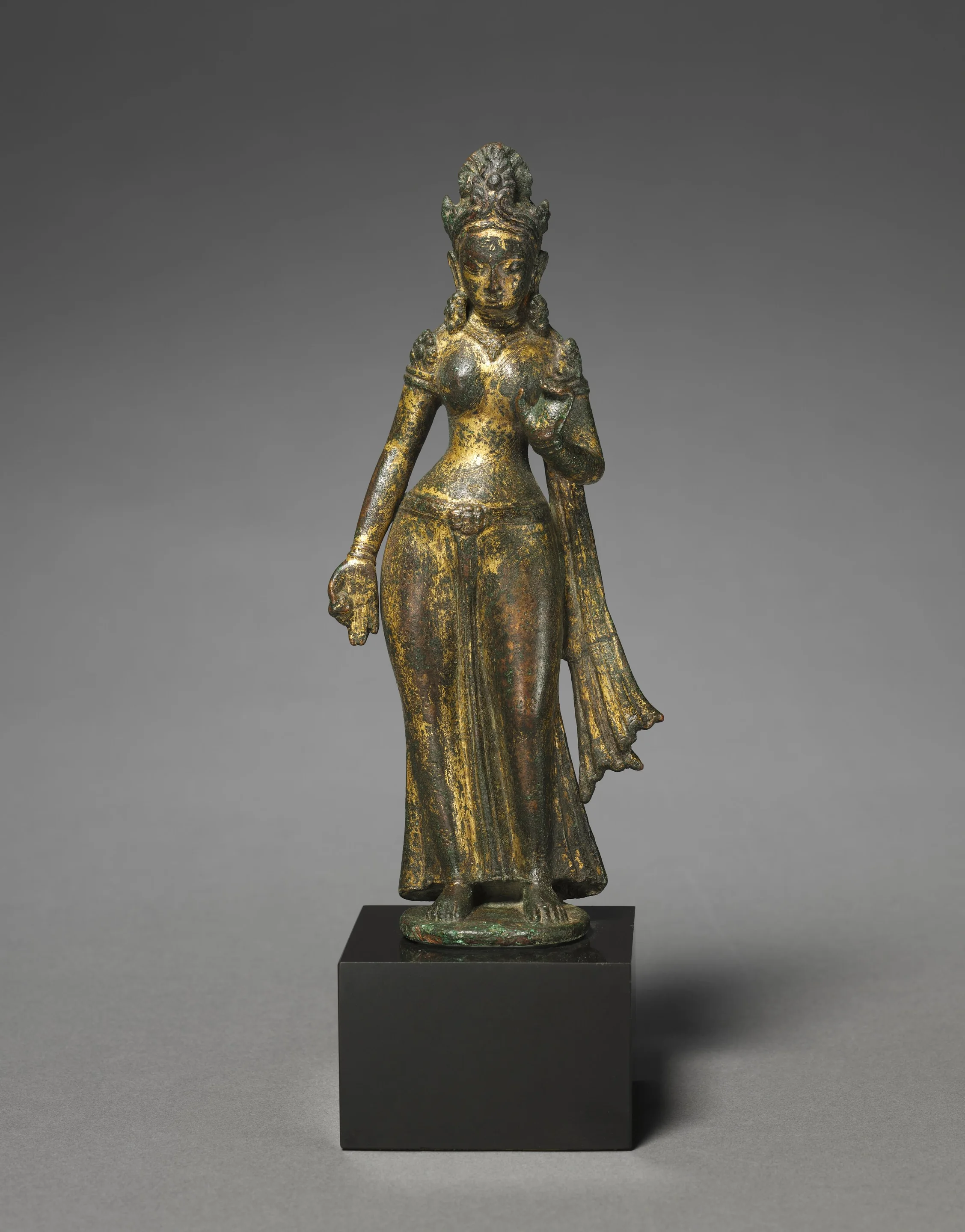
The gods ask the Goddess who she is. She says: 'I am of the nature of Brahman. I am bliss and not-bliss, knowledge and not-knowledge; Brahman and not-Brahman are both to be known. I am the Veda and not the Veda; knowledge and ignorance; the unborn and the born.' The gods bow to her and praise her as Durga. Her names say what she is: no one, not even Brahma, knows her nature, so she is unknowable; she alone is everywhere, so one; she alone takes every form, so not one. She is the witness of emptiness itself.
- Who are you?
- I am of the nature of Brahman
- Both sides of every pair
- Unknowable, endless, unborn
- One and not one
हरिः ॐ । सर्वे वै देवा देवीमुपतस्थुः । कासि त्वं महादेवि । साब्रवीदहं ब्रह्मस्वरूपिणी । मत्तः प्रकृतिपुरुषात्मकं जगच्छून्यं चाशून्यं च । अहमानन्दानानन्दाः विज्ञानाविज्ञाने अहम् । ब्रह्माब्रह्मणी वेदितव्ये । इत्याहाथर्वणी श्रुतिः ॥ १॥
hariḥ oṃ | sarve vai devā devīmupatasthuḥ | kāsi tvaṃ mahādevi | sābravīdahaṃ brahmasvarūpiṇī | mattaḥ prakṛtipuruṣātmakaṃ jagacchūnyaṃ cāśūnyaṃ ca | ahamānandānānandāḥ vijñānāvijñāne aham | brahmābrahmaṇī veditavye | ityāhātharvaṇī śrutiḥ || 1||
Hari Om. All the gods came to the Goddess and asked: 'Who are you, great Goddess?' She said: 'I am . From me comes the world, made of nature and spirit, the empty and the not-empty. I am bliss and not-bliss; knowledge and not-knowledge, I am. Brahman and not-Brahman are both to be known.' So says the Atharvan scripture.
Note //
The opening. 'Of the nature of Brahman' (brahmasvarūpiṇī). 'Brahman and not-Brahman are both to be known' (brahmābrahmaṇī veditavye): she is both the real and what appears; compare Atharvashiras 1, 'I am Brahman and not Brahman', and Mundaka 1.1.4, 'two knowledges are to be known'. Editions: 'brahmābrahmaṇī', the dual (Adyar collection, printed 'brahmā brahmaṇī'), over 'brahmā brahmaṇi' (sanskritdocuments.org); 'ātharvaṇī' (Adyar) over 'ātharvaṇi'. Pending review.
अहं पञ्चभूतान्यपञ्चभूतानि । अहमखिलं जगत् । वेदोऽहमवेदोऽहम् । विद्याहमविद्याहम् । अजाहमनजाहम् । अधश्चोर्ध्वं च तिर्यक्चाहम् ।
ahaṃ pañcabhūtānyapañcabhūtāni | ahamakhilaṃ jagat | vedo'hamavedo'ham | vidyāhamavidyāham | ajāhamanajāham | adhaścordhvaṃ ca tiryakcāham |
'I am the five elements, and what is not the elements. I am the whole world. I am the Veda, and not the Veda. I am knowledge, and ignorance. I am the unborn, and the born. I am below and above and across.'
Note //
The opening of verse 2, which goes on with the Devi Sukta of the Rig Veda (10.125.1-2): 'I move with the Rudras and the Vasus, with the Adityas and all the gods...'. 'Unborn and born' renders ajā anajā, read as 'unborn and not unborn'; it may also be 'she-goat and not she-goat', a play on Shvetashvatara 4.5. Editions agree.
अहं रुद्रेभिर्वसुभिश्चराम्यहमादित्यैरुत विश्वदेवैः । अहं मित्रावरुणावुभौ बिभर्म्यहमिन्द्राग्नी अहमश्विनावुभौ । अहं सोमं त्वष्टारं पूषणं भगं दधाम्यहम् । विष्णुमुरुक्रमं ब्रह्माणमुत प्रजापतिं दधामि । अहं दधामि द्रविणं हविष्मते सुप्राव्ये यजमानाय सुन्वते ॥ २॥
ahaṃ rudrebhirvasubhiścarāmyahamādityairuta viśvadevaiḥ | ahaṃ mitrāvaruṇāvubhau bibharmyahamindrāgnī ahamaśvināvubhau | ahaṃ somaṃ tvaṣṭāraṃ pūṣaṇaṃ bhagaṃ dadhāmyaham | viṣṇumurukramaṃ brahmāṇamuta prajāpatiṃ dadhāmi | ahaṃ dadhāmi draviṇaṃ haviṣmate suprāvye yajamānāya sunvate || 2||
'I move with the Rudras and the Vasus, with the Adityas and with all the gods. I hold up both Mitra and Varuna; I hold up Indra and Agni, and both the Ashvins. I hold up Soma, Tvashtar, Pushan and Bhaga; I hold up Vishnu of the wide stride, Brahma and Prajapati. I give wealth to the one who offers, who serves the rite with care, who presses the soma.'
Note //
The rest of verse 2, the Devi Sukta of the Rig Veda (10.125.1-2) in a form that differs from the Rig Veda in places (it adds Vishnu, Brahma and Prajapati, which are not in the hymn); the editions' form is kept. All the gods are held up by her: she is not one more god among them but what each of them stands on. Numbered 2b here because the opening of verse 2 is given as its own block. The Adyar collection closes its verse 1 at 'dadhāmy aham' and its verse 2 at 'sunvate'. Both editions mark the drawn-out final vowel of 'suprāvye' with a 3 (pluta), left out here. Editions agree.
अहं राष्ट्री सङ्गमनी वसूनामहं सुवे पितरमस्य मूर्धन्मम योनिरप्स्वन्तः समुद्रे । य एवं वेद स देवीपदमाप्नोति । ते देवा अब्रुवन् । नमो देव्यै महादेव्यै शिवायै सततं नमः । नमः प्रकृत्यै भद्रायै नियताः प्रणताः स्म ताम् ॥ ३॥
ahaṃ rāṣṭrī saṅgamanī vasūnāmahaṃ suve pitaramasya mūrdhanmama yonirapsvantaḥ samudre | ya evaṃ veda sa devīpadamāpnoti | te devā abruvan | namo devyai mahādevyai śivāyai satataṃ namaḥ | namaḥ prakṛtyai bhadrāyai niyatāḥ praṇatāḥ sma tām || 3||
'I am the queen, who gathers all treasures. I bring forth the father, at the summit of this world; my source is in the waters, in the ocean.' Whoever knows this reaches the state of the Goddess. Then the gods said: 'Bowing to the Goddess, the great Goddess, the gracious one, always bowing; bowing to nature, to the auspicious one, with minds held still, we bow to her.'
Note //
'Queen... ocean' is Rig Veda 10.125.3 and 7. 'I bring forth the father': even the origin of the world is born from her; she has no source outside herself, and 'the waters' and 'the ocean' are the deep from which the world comes. 'Nature' (prakṛti) is her name in the praise: what appears and the power to appear are both hers. Editions: 'ya evaṃ veda' (sanskritdocuments.org) over 'evaṃ veda' (Adyar collection, which drops the 'ya').
तामग्निवर्णां तपसा ज्वलन्तीं वैरोचनीं कर्मफलेषु जुष्टाम् । दुर्गां देवीं शरणमहं प्रपद्ये सुतरां नाशयते तमः ॥ ४॥
tāmagnivarṇāṃ tapasā jvalantīṃ vairocanīṃ karmaphaleṣu juṣṭām | durgāṃ devīṃ śaraṇamahaṃ prapadye sutarāṃ nāśayate tamaḥ || 4||
She is the colour of fire, blazing with her own heat, daughter of the sun, sought for the fruits of action. I go for refuge to the goddess Durga: she wholly destroys the darkness.
Note //
The first half is the Durga verse of the Mahanarayana Upanishad (and the Rig Veda supplement); there it ends 'sutarasi tarase namaḥ', 'you carry across well; bowing to you'. Here the line ends 'she wholly destroys the darkness', a play on 'sutarām' for 'sutarasi'. Durga is 'the one hard to approach', and also 'she who carries across what is hard to cross' (verse 18). Editions agree.
देवीं वाचमजनयन्त देवास्तां विश्वरूपाः पशवो वदन्ति । सा नो मन्द्रेषमूर्जं दुहाना धेनुर्वागस्मानुपसुष्टुतैतु ॥ ५॥
devīṃ vācamajanayanta devāstāṃ viśvarūpāḥ paśavo vadanti | sā no mandreṣamūrjaṃ duhānā dhenurvāgasmānupasuṣṭutaitu || 5||
The gods brought forth the goddess Speech; creatures of every form speak her. May she, Speech, the cow, yielding us delight, food and strength, come to us, well praised.
Note //
Rig Veda 8.100.11. Speech is the goddess in everyone who speaks: every creature's voice is hers. Editions: 'mandreṣam ūrjam' (Adyar collection and the Rig Veda) over 'mandreśam' (sanskritdocuments.org, a misprint).
कालरात्रिं ब्रह्मस्तुतां वैष्णवीं स्कन्दमातरम् । सरस्वतीमदितिं दक्षदुहितरं नमामः पावनां शिवाम् ॥ ६॥
kālarātriṃ brahmastutāṃ vaiṣṇavīṃ skandamātaram | sarasvatīmaditiṃ dakṣaduhitaraṃ namāmaḥ pāvanāṃ śivām || 6||
We bow to her: the night of time, praised by Brahma, the power of Vishnu, the mother of Skanda, Sarasvati, Aditi, the daughter of Daksha, the one who makes pure, the gracious one.
Note //
Her names gather all the goddesses: Kalaratri, the dark night in which all things end; Vaishnavi; Parvati as Skanda's mother; Sarasvati; Aditi, mother of the gods; Sati, Daksha's daughter. Editions agree.
महालक्ष्मीश्च विद्महे सर्वसिद्धिश्च धीमहि । तन्नो देवी प्रचोदयात् ॥ ७॥
mahālakṣmīśca vidmahe sarvasiddhiśca dhīmahi | tanno devī pracodayāt || 7||
We know her as the great Lakshmi; we meditate on her as every fulfilment. May the Goddess impel us.
Note //
A Gayatri of the Goddess, on the pattern of the Gayatri of Savitar. Other sources give it as 'mahālakṣmyai ca vidmahe sarvaśaktyai ca dhīmahi'; both editions read as printed here, and their form is kept. Editions agree.
अदितिर्ह्यजनिष्ट दक्ष या दुहिता तव । तां देवा अन्वजायन्त भद्रा अमृतबन्धवः ॥ ८॥
aditirhyajaniṣṭa dakṣa yā duhitā tava | tāṃ devā anvajāyanta bhadrā amṛtabandhavaḥ || 8||
Aditi was born, Daksha, she who is your daughter; after her the gods were born, the blessed ones, kin of the deathless.
Note //
Rig Veda 10.72.5. In the hymn Aditi is both Daksha's mother and his daughter: the source and what comes from it give birth to each other. Editions agree.
कामो योनिः कामकला वज्रपाणिर्गुहा हसा । मातरिश्वाभ्रमिन्द्रः पुनर्गुहा सकला मायया च पुनः कोशा विश्वमाता दिवि द्योम् ॥ ९॥
kāmo yoniḥ kāmakalā vajrapāṇirguhā hasā | mātariśvābhramindraḥ punarguhā sakalā māyayā ca punaḥ kośā viśvamātā divi dyom || 9||
Desire, the womb, the digit of desire, the one with the thunderbolt in his hand, the cave, ha, sa, the wind, the cloud, Indra, the cave again, sa, ka, la, with Maya, and again: this is the mother of all, the light in heaven.
Note //
The fifteen-syllable mantra of the Goddess (the Panchadashi of the Shri Vidya tradition), given in code, each word standing for a letter. As the commentators read it: desire is ka, the womb e, the digit of desire ī, the thunderbolt-holder la, the cave hrīm; then ha, sa, the wind ka, the cloud ha, Indra la, the cave hrīm; then sa, ka, la and Maya, hrīm. So: ka e ī la hrīm, ha sa ka ha la hrīm, sa ka la hrīm. Both editions print 'kāmakalā' where some read 'kamalā'; either is taken as ī. The end, 'punaḥ kośā viśvamātā divi dyom', is obscure; the rendering is tentative. Pending review.
एषात्मशक्तिः । एषा विश्वमोहिनी पाशाङ्कुशधनुर्बाणधरा । एषा श्रीमहाविद्या । य एवं वेद स शोकं तरति । नमस्ते अस्तु भगवति भवती मातरस्मान्पातु सर्वतः । सैषाष्टौ वसवः । सैषैकादश रुद्राः । सैषा द्वादशादित्याः । सैषा विश्वेदेवाः सोमपा असोमपाश्च । सैषा यातुधाना असुरा रक्षांसि पिशाचयक्षाः सिद्धाः । सैषा सत्त्वरजस्तमांसि । सैषा प्रजापतीन्द्रमनवः । सैषा ग्रहा नक्षत्रज्योतींषि कलाकाष्ठादिकालरूपिणी । तामहं प्रणौमि नित्यम् । तापापहारिणीं देवीं भुक्तिमुक्तिप्रदायिनीम् । अनन्तां विजयां शुद्धां शरण्यां शिवदां शिवाम् ॥ १०॥
eṣātmaśaktiḥ | eṣā viśvamohinī pāśāṅkuśadhanurbāṇadharā | eṣā śrīmahāvidyā | ya evaṃ veda sa śokaṃ tarati | namaste astu bhagavati bhavatī mātarasmānpātu sarvataḥ | saiṣāṣṭau vasavaḥ | saiṣaikādaśa rudrāḥ | saiṣā dvādaśādityāḥ | saiṣā viśvedevāḥ somapā asomapāśca | saiṣā yātudhānā asurā rakṣāṃsi piśācayakṣāḥ siddhāḥ | saiṣā sattvarajastamāṃsi | saiṣā prajāpatīndramanavaḥ | saiṣā grahā nakṣatrajyotīṃṣi kalākāṣṭhādikālarūpiṇī | tāmahaṃ praṇaumi nityam | tāpāpahāriṇīṃ devīṃ bhuktimuktipradāyinīm | anantāṃ vijayāṃ śuddhāṃ śaraṇyāṃ śivadāṃ śivām || 10||
She is . She is , holding noose and goad, bow and arrows. She is the great knowledge, Shri Vidya. Whoever knows this crosses over sorrow. Bowing to you, Lady: may you, mother, protect us on every side. She is the eight Vasus; she is the eleven Rudras; she is the twelve Adityas; she is all the gods, those who drink soma and those who do not; she is the sorcerers, the demons, the night-spirits, the ghouls, the yakshas, the perfected ones; she is clarity, passion and dullness; she is Prajapati, Indra and the Manus; she is the planets, the stars and the lights; she takes the form of time, its moments and its measures. Always I bow to her: the Goddess who takes away the burning of sorrow, who gives both enjoyment and freedom, endless, victorious, pure, the refuge, who gives good, the good itself.
Note //
'The power of the Self' (ātmaśakti): not a second thing beside the Self but the Self's own power to appear. She 'enchants the world', makes it taken for what it is not, and the same power, known, is 'the great knowledge': whoever knows this 'crosses over sorrow' (compare Chandogya 7.1.3, 'the knower of the Self crosses over sorrow'). She is the gods and the demons alike, the three gunas, and time itself: everything on both sides. Editions: 'bhavatī mātar' (Adyar collection; 'may you, mother, protect') over 'bhavati' (sanskritdocuments.org); 'yātudhānā' (Adyar) over 'yātudhānu' (sanskritdocuments.org, a misprint); 'kāṣṭhā' (sanskritdocuments.org) over 'kāṣṭā' (Adyar).
वियदाकारसंयुक्तं वीतिहोत्रसमन्वितम् । अर्धेन्दुलसितं देव्या बीजं सर्वार्थसाधकम् ॥ ११॥
viyadākārasaṃyuktaṃ vītihotrasamanvitam | ardhendulasitaṃ devyā bījaṃ sarvārthasādhakam || 11||
Space, joined with the vowel, with fire added, shining with the half-moon: this is the seed of the Goddess, which brings every aim to fulfilment.
Note //
The seed syllable hrīm, given in code: space is ha, fire (vītihotra) is ra, the vowel is ī, and the half-moon is the nasal ṃ. Both editions read 'viyad-ākāra', 'joined with the letter a'; the decoding needs ī, and 'viyad-īkāra' is the reading some give. The rendering follows the decoding. Pending review.
एवमेकाक्षरं मन्त्रं यतयः शुद्धचेतसः । ध्यायन्ति परमानन्दमया ज्ञानाम्बुराशयः ॥ १२॥
evamekākṣaraṃ mantraṃ yatayaḥ śuddhacetasaḥ | dhyāyanti paramānandamayā jñānāmburāśayaḥ || 12||
On this one-syllabled mantra the renouncers meditate, pure in mind, made of the highest bliss, oceans of knowledge.
Note //
The seed is for those who have renounced, and is meditated on by those already full: the practice and the fullness go together. Editions agree.
वाङ्माया ब्रह्मसूस्तस्मात्षष्ठं वक्त्रसमन्वितम् । सूर्यो वामश्रोत्रबिन्दुः संयुताष्टतृतीयकः ॥ १३॥
vāṅmāyā brahmasūstasmātṣaṣṭhaṃ vaktrasamanvitam | sūryo vāmaśrotrabinduḥ saṃyutāṣṭatṛtīyakaḥ || 13||
Speech, Maya, the one born of Brahma; then the sixth, joined with the face; the sun, the left ear and the point, joined with the third of the eighth;
Note //
Verses 13 and 14 give the nine-syllabled mantra of the Goddess in code: as the commentators read them, aim (speech), hrīm (Maya), klīm (born of Brahma, desire), then cā (the sixth consonant, ca, with the vowel ā, 'the face'), mum (the sun, ma, with the left ear, u, and the point, ṃ), ḍā (from the third of the eighth). Editions: both print 'vāṅmayā brahmabhūs' or 'brahmabhū tasmāt'; the commentators' reading 'vāṅ māyā brahmasūs' is followed, since the code needs Maya and 'born of Brahma'. 'Saṃyutāṣṭa-tṛtīyakaḥ' (Adyar collection, which keeps the metre) over 'saṃyutāṣṭaka-tṛtīyakaḥ' (sanskritdocuments.org). Pending review.
नारायणेन संयुक्तो वायुश्चाधरसंयुतः । विच्चे नवार्णकोऽर्णः स्यान्महदानन्ददायकः ॥ १४॥
nārāyaṇena saṃyukto vāyuścādharasaṃyutaḥ | vicce navārṇako'rṇaḥ syānmahadānandadāyakaḥ || 14||
the wind joined with Narayana, and joined with the lower lip; and vicce: this is the nine-syllabled mantra, which gives great bliss.
Note //
Narayana is ā, joined to ḍa; the wind is ya, with the lower lip, ai: yai. With vicce, the whole reads aim hrīm klīm cāmuṇḍāyai vicce, the nine-syllabled mantra (navārṇa) of the Goddess as Chamunda. The decoding is the commentators'; the text itself only gives the code. Editions agree.
हृत्पुण्डरीकमध्यस्थां प्रातःसूर्यसमप्रभाम् । पाशाङ्कुशधरां सौम्यां वरदाभयहस्तकाम् । त्रिनेत्रां रक्तवसनां भक्तकामदुघां भजे ॥ १५॥
hṛtpuṇḍarīkamadhyasthāṃ prātaḥsūryasamaprabhām | pāśāṅkuśadharāṃ saumyāṃ varadābhayahastakām | trinetrāṃ raktavasanāṃ bhaktakāmadughāṃ bhaje || 15||
I worship her who sits in the lotus of the heart, bright as the morning sun, holding noose and goad, gentle, her hands granting boons and banishing fear, three-eyed, dressed in red, the cow that yields what her devotees desire.
Note //
The meditation-form of the Goddess, placed in the heart: the form is pictured where the Self is said to be found. Editions agree.
नमामि त्वामहं देवीं महाभयविनाशिनीम् । महादुर्गप्रशमनीं महाकारुण्यरूपिणीम् ॥ १६॥
namāmi tvāmahaṃ devīṃ mahābhayavināśinīm | mahādurgapraśamanīṃ mahākāruṇyarūpiṇīm || 16||
I bow to you, Goddess, destroyer of great fear, who ends great hardships, whose form is great compassion.
Note //
'Great fear' is, in the Upanishads, the fear that comes from a second (Brihadaranyaka 1.4.2, 'from a second, fear arises'). Editions agree.
यस्याः स्वरूपं ब्रह्मादयो न जानन्ति तस्मादुच्यतेऽज्ञेया । यस्या अन्तो न विद्यते तस्मादुच्यतेऽनन्ता । यस्या ग्रहणं नोपलभ्यते तस्मादुच्यतेऽलक्ष्या । यस्या जननं नोपलभ्यते तस्मादुच्यतेऽजा । एकैव सर्वत्र वर्तते तस्मादुच्यत एका । एकैव विश्वरूपिणी तस्मादुच्यते नैका । अत एवोच्यतेऽज्ञेयानन्तालक्ष्याजैका नैकेति ।
yasyāḥ svarūpaṃ brahmādayo na jānanti tasmāducyate'jñeyā | yasyā anto na vidyate tasmāducyate'nantā | yasyā grahaṇaṃ nopalabhyate tasmāducyate'lakṣyā | yasyā jananaṃ nopalabhyate tasmāducyate'jā | ekaiva sarvatra vartate tasmāducyata ekā | ekaiva viśvarūpiṇī tasmāducyate naikā | ata evocyate'jñeyānantālakṣyājaikā naiketi |
Brahma and the others do not know her nature: so she is called the unknowable. She has no end: so she is called the endless. She cannot be grasped: so she is called the unmarked. Her birth is not found: so she is called the unborn. She alone is everywhere: so she is called the one. She alone takes every form: so she is called not-one. So she is called unknowable, endless, unmarked, unborn, one and not-one.
Note //
The prose before verse 17, explaining her names. 'Not-one' (naikā) completes 'one': the one reality appears as the many without ceasing to be one. Editions agree.
मन्त्राणां मातृका देवी शब्दानां ज्ञानरूपिणी । ज्ञानानां चिन्मयातीता शून्यानां शून्यसाक्षिणी ॥ १७॥
mantrāṇāṃ mātṛkā devī śabdānāṃ jñānarūpiṇī | jñānānāṃ cinmayātītā śūnyānāṃ śūnyasākṣiṇī || 17||
Of mantras, the Goddess is the mother, the letters; of words, the form of their meaning; of knowings, beyond them, made of awareness; of emptinesses, .
Note //
'Witness of emptiness' (śūnya-sākṣiṇī): even the experience of nothing at all is witnessed; the witness is not itself empty. Editions agree.
यस्याः परतरं नास्ति सैषा दुर्गा प्रकीर्तिता । दुर्गात्संत्रायते यस्माद्देवी दुर्गेति कथ्यते ॥ १८॥
yasyāḥ parataraṃ nāsti saiṣā durgā prakīrtitā | durgātsaṃtrāyate yasmāddevī durgeti kathyate || 18||
Nothing is beyond her: she is called Durga. Because she saves from what is hard to pass, the Goddess is called Durga.
Note //
Two meanings of the name: 'hard to reach', since nothing is beyond her, and 'she who carries across the hard places' (durga). Sanskritdocuments.org brackets the second line and the first line of verse 19 as found only in some manuscripts; the Adyar collection has them without brackets. Editions agree otherwise.
प्रपद्ये शरणं देवीं दुं दुर्गे दुरितं हर । तां दुर्गां दुर्गमां देवीं दुराचारविघातिनीम् । नमामि भवभीतोऽहं संसारार्णवतारिणीम् ॥ १९॥
prapadye śaraṇaṃ devīṃ duṃ durge duritaṃ hara | tāṃ durgāṃ durgamāṃ devīṃ durācāravighātinīm | namāmi bhavabhīto'haṃ saṃsārārṇavatāriṇīm || 19||
I go for refuge to the Goddess: dum, Durga, take away the wrong. Afraid of becoming, I bow to the goddess Durga, hard to reach, who strikes down wrong conduct, who carries across the ocean of becoming.
Note //
'Dum' is the seed syllable of Durga. The fear is 'fear of becoming' (bhava): what she carries across is not a danger in the world but the round of birth and death itself. Editions: sanskritdocuments.org brackets the first line (see verse 18); 'duṃ durge' (sanskritdocuments.org 'duṃdurge', Adyar 'dundurge').
इदमथर्वशीर्षं योऽधीते स पञ्चाथर्वशीर्षजपफलमवाप्नोति । इदमथर्वशीर्षमज्ञात्वा योऽर्चां स्थापयति । शतलक्षं प्रजप्त्वापि सोऽर्चासिद्धिं न विन्दति । शतमष्टोत्तरं चास्याः पुरश्चर्याविधिः स्मृतः ॥ २०॥
idamatharvaśīrṣaṃ yo'dhīte sa pañcātharvaśīrṣajapaphalamavāpnoti | idamatharvaśīrṣamajñātvā yo'rcāṃ sthāpayati | śatalakṣaṃ prajaptvāpi so'rcāsiddhiṃ na vindati | śatamaṣṭottaraṃ cāsyāḥ puraścaryāvidhiḥ smṛtaḥ || 20||
Whoever studies this Atharvashirsha gains the fruit of repeating the five Atharvashirshas. One who sets up an image without knowing this Atharvashirsha may repeat it ten million times and still not gain the fulfilment of the worship. A hundred and eight repetitions are the rule for its preparatory practice.
Note //
The fruits of recitation. 'The five Atharvashirshas' are the five hymns of that name, to Ganapati, Narayana, Shiva (Rudra), Surya and the Goddess. The sentence about the image follows the widely recited text, 'ajñātvā... na vindati', 'not knowing... does not gain', as in the parallel in the Ganapati Atharvashirsha; both editions here print 'jñātvā... ca vindati', 'knowing... gains', which does not fit 'even if he repeats it ten million times'. Editions: 'sa pañca-' (Adyar collection) over 'pañca-' (sanskritdocuments.org). Pending review.
दशवारं पठेद्यस्तु सद्यः पापैः प्रमुच्यते । महादुर्गाणि तरति महादेव्याः प्रसादतः ॥ २१॥
daśavāraṃ paṭhedyastu sadyaḥ pāpaiḥ pramucyate | mahādurgāṇi tarati mahādevyāḥ prasādataḥ || 21||
Whoever reads it ten times is freed from wrongs at once, and by the grace of the great Goddess crosses the greatest hardships.
Note //
Editions agree.
प्रातरधीयानो रात्रिकृतं पापं नाशयति । सायमधीयानो दिवसकृतं पापं नाशयति । तत्सायं प्रातः प्रयुञ्जानः पापोऽपापो भवति । निशीथे तुरीयसन्ध्यायां जप्त्वा वाक्सिद्धिर्भवति । नूतनप्रतिमायां जप्त्वा देवतासांनिध्यं भवति । प्राणप्रतिष्ठायां जप्त्वा प्राणानां प्रतिष्ठा भवति । भौमाश्विन्यां महादेवीसंनिधौ जप्त्वा महामृत्युं तरति । य एवं वेदेत्युपनिषत् ॥ २२॥
prātaradhīyāno rātrikṛtaṃ pāpaṃ nāśayati | sāyamadhīyāno divasakṛtaṃ pāpaṃ nāśayati | tatsāyaṃ prātaḥ prayuñjānaḥ pāpo'pāpo bhavati | niśīthe turīyasandhyāyāṃ japtvā vāksiddhirbhavati | nūtanapratimāyāṃ japtvā devatāsāṃnidhyaṃ bhavati | prāṇapratiṣṭhāyāṃ japtvā prāṇānāṃ pratiṣṭhā bhavati | bhaumāśvinyāṃ mahādevīsaṃnidhau japtvā mahāmṛtyuṃ tarati | ya evaṃ vedetyupaniṣat || 22||
Studying it in the morning, one destroys the wrong done in the night; studying it in the evening, the wrong done in the day. Using it evening and morning, the one who did wrong is free of wrong. Repeating it at midnight, the fourth twilight, one gains power of speech. Repeating it before a new image, the deity becomes present in it. Repeating it when the image is given life, the life-breaths are set in it. Repeating it before the great Goddess when Tuesday falls under the Ashvini star, one crosses the great death. Whoever knows this. This is the Upanishad.
Note //
'The great death' (mahāmṛtyu) is read here as the death that becoming itself is, crossed by knowing her, not only an untimely death; the text adds 'whoever knows this'. Interpretive. Editions: 'bhaumāśvinyām' (sanskritdocuments.org) over 'bhaumāśvibhyām' (Adyar collection). Both add 'Hari Om Tat Sat'.
No public-domain English translation exists for this text; the Sanskrit is shown.
The renderings on this page are shared under CC BY-NC 4.0, in the words of Pranav Ashar.