Skanda Upanishad
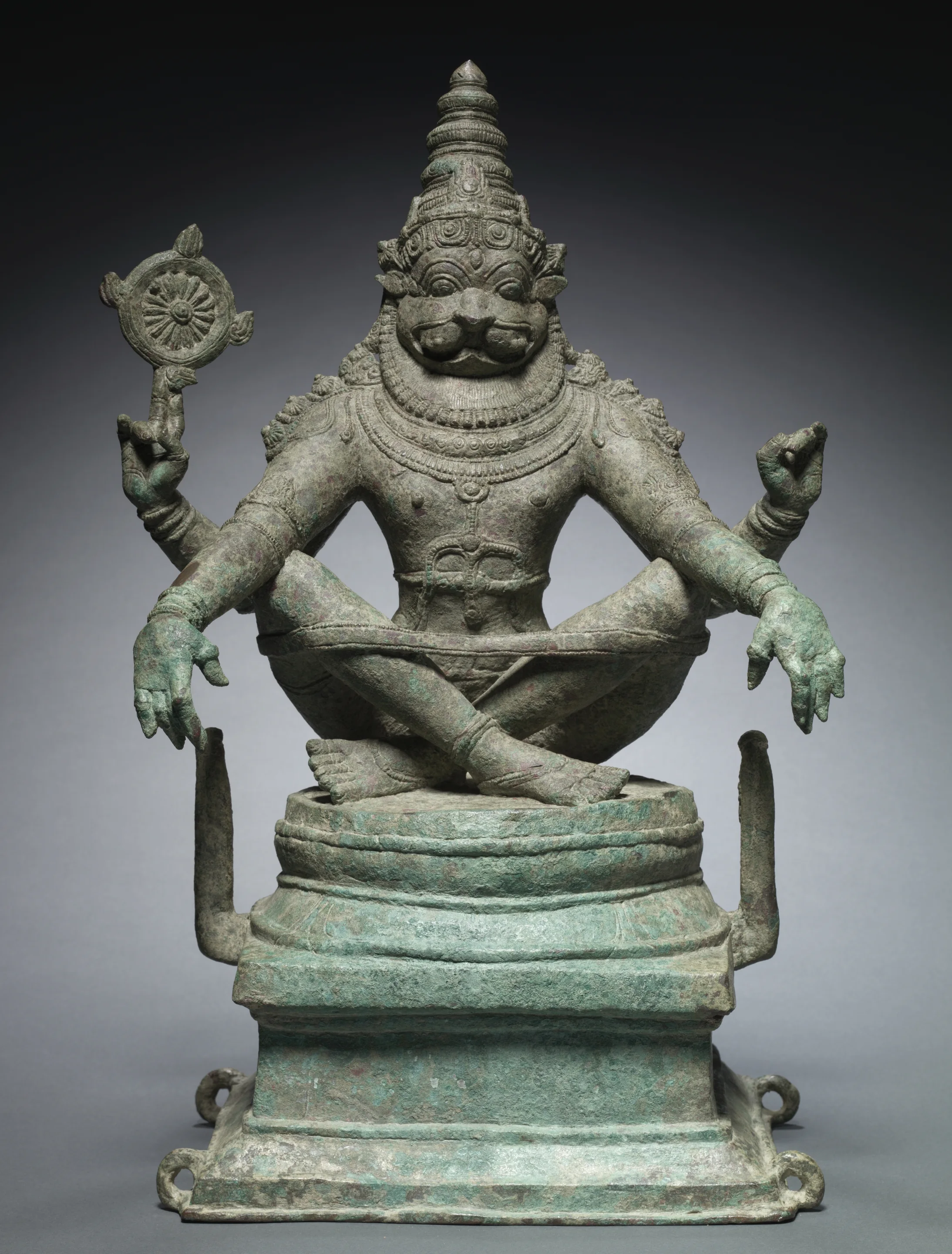
In the words of Pranav Ashar
How we renderThe heart of the Skanda
In brief
A short hymn of recognition, spoken in the first person: 'By a drop of your grace, Mahadeva, I am the unfailing; I am a mass of knowing; I am Shiva.' The truth does not shine as it is because the inner instrument puts on its display; when that falls away, only awareness remains. The living self is Shiva as rice in the husk is still rice. Shiva and Vishnu are each other's heart. The body is a temple, the self in it is Shiva, to be worshipped with 'I am he'.
- I am Shiva
- Awareness alone
- Rice in the husk
- Shiva and Vishnu as one heart
- The body as a temple
यत्रासंभवतां याति स्वातिरिक्तभिदाततिः । संविन्मात्रं परं ब्रह्म तत्स्वमात्रं विजृम्भते ॥
yatrāsaṃbhavatāṃ yāti svātiriktabhidātatiḥ | saṃvinmātraṃ paraṃ brahma tatsvamātraṃ vijṛmbhate ||
That in which the whole spread of difference, anything other than itself, becomes impossible: the highest Brahman, awareness alone, shines forth as nothing but itself.
Note //
A dedicatory verse from the commentator's tradition, placed before the peace invocation; it is not part of the numbered text.
अच्युतोऽस्मि महादेव तव कारुण्यलेशतः । विज्ञानघन एवास्मि शिवोऽस्मि किमतः परम् ॥ १॥
acyuto'smi mahādeva tava kāruṇyaleśataḥ | vijñānaghana evāsmi śivo'smi kimataḥ param || 1||
By a drop of your compassion, Mahadeva, I am the unfailing. I am a mass of knowing, nothing else. I am Shiva. What is beyond this?
Note //
'Unfailing' (achyuta) is a name of Vishnu, 'the one who does not fall'; in the first verse the speaker names himself with Vishnu's name and Shiva's together.
न निजं निजवद्भात्यन्तःकरणजृम्भणात् । अन्तःकरणनाशेन संविन्मात्रस्थितो हरिः ॥ २॥
na nijaṃ nijavadbhātyantaḥkaraṇajṛmbhaṇāt | antaḥkaraṇanāśena saṃvinmātrasthito hariḥ || 2||
One's own nature does not shine as it is, because of the show the puts on. When the comes to an end, Hari remains as awareness alone.
Note //
The inner instrument (antahkarana) is mind, intellect, memory and the I-claim. Its 'show' (jrimbhana, 'unfolding, yawning open') covers nothing; it only occupies attention.
संविन्मात्रस्थितश्चाहमजोऽस्मि किमतः परम् । व्यतिरिक्तं जडं सर्वं स्वप्नवच्च विनश्यति ॥ ३॥
saṃvinmātrasthitaścāhamajo'smi kimataḥ param | vyatiriktaṃ jaḍaṃ sarvaṃ svapnavacca vinaśyati || 3||
I too remain as awareness alone; I am unborn. What is beyond this? All that is inert, taken as separate, falls away like a dream.
Note //
'Taken as separate' (vyatirikta): what seems to exist apart from awareness ends like a dream on waking; as appearance in awareness, it is real as appearance, not on its own.
चिज्जडानां तु यो द्रष्टा सोऽच्युतो ज्ञानविग्रहः । स एव हि महादेवः स एव हि महाहरिः ॥ ४॥
cijjaḍānāṃ tu yo draṣṭā so'cyuto jñānavigrahaḥ | sa eva hi mahādevaḥ sa eva hi mahāhariḥ || 4||
The one who sees both the conscious and the inert is the unfailing, whose body is knowing. He alone is Mahadeva; he alone is the great Hari.
Note //
स एव हि ज्योतिषां ज्योतिः स एव परमेश्वरः । स एव हि परं ब्रह्म तद्ब्रह्माहं न संशयः ॥ ५॥
sa eva hi jyotiṣāṃ jyotiḥ sa eva parameśvaraḥ | sa eva hi paraṃ brahma tadbrahmāhaṃ na saṃśayaḥ || 5||
He alone is the light of lights; he alone is the highest Lord; he alone is the highest Brahman. I am that Brahman; there is no doubt.
Note //
'The light of lights' is from the Brihadaranyaka (4.4.16) and Mundaka (2.2.9).
जीवः शिवः शिवो जीवः स जीवः केवलः शिवः । तुषेण बद्धो व्रीहिः स्यात्तुषाभावेन तण्डुलः ॥ ६॥
jīvaḥ śivaḥ śivo jīvaḥ sa jīvaḥ kevalaḥ śivaḥ | tuṣeṇa baddho vrīhiḥ syāttuṣābhāvena taṇḍulaḥ || 6||
; Shiva is the living self; that living self is Shiva alone. Bound in its husk it is paddy; without the husk it is rice.
Note //
एवं बद्धस्तथा जीवः कर्मनाशे सदाशिवः । पाशबद्धस्तथा जीवः पाशमुक्तः सदाशिवः ॥ ७॥
evaṃ baddhastathā jīvaḥ karmanāśe sadāśivaḥ | pāśabaddhastathā jīvaḥ pāśamuktaḥ sadāśivaḥ || 7||
So the living self is bound; when action falls away, it is the eternal Shiva. Bound by the cord, it is the living self; freed from the cord, it is the eternal Shiva.
Note //
The 'cord' (pasha) is the bond of the Shaiva tradition: the bound soul is pashu, the Lord is pashupati. The image of paddy and rice shows that only the covering changes.
शिवाय विष्णुरूपाय शिवरूपाय विष्णवे । शिवस्य हृदयं विष्णुः विष्णोश्च हृदयं शिवः ॥ ८॥
śivāya viṣṇurūpāya śivarūpāya viṣṇave | śivasya hṛdayaṃ viṣṇuḥ viṣṇośca hṛdayaṃ śivaḥ || 8||
To Shiva, whose form is Vishnu, and to Vishnu, whose form is Shiva: Vishnu is the heart of Shiva, and Shiva is the heart of Vishnu.
Note //
यथा शिवमयो विष्णुरेवं विष्णुमयः शिवः । यथान्तरं न पश्यामि तथा मे स्वस्तिरायुषि ॥ ९॥
yathā śivamayo viṣṇurevaṃ viṣṇumayaḥ śivaḥ | yathāntaraṃ na paśyāmi tathā me svastirāyuṣi || 9||
As Vishnu is made of Shiva, so Shiva is made of Vishnu. As I see no gap between them, so may there be well-being in my life.
Note //
यथान्तरं न भेदाः स्युः शिवकेशवयोस्तथा । देहो देवालयः प्रोक्तः स जीवः केवलः शिवः ॥ १०॥
yathāntaraṃ na bhedāḥ syuḥ śivakeśavayostathā | deho devālayaḥ proktaḥ sa jīvaḥ kevalaḥ śivaḥ || 10||
As there is no gap between them, so there are no differences between Shiva and Keshava. The body is called a temple; the living self in it is Shiva alone.
Note //
त्यजेदज्ञाननिर्माल्यं सोऽहंभावेन पूजयेत् । अभेददर्शनं ज्ञानं ध्यानं निर्विषयं मनः । स्नानं मनोमलत्यागः शौचमिन्द्रियनिग्रहः ॥ ११॥
tyajedajñānanirmālyaṃ so'haṃbhāvena pūjayet | abhedadarśanaṃ jñānaṃ dhyānaṃ nirviṣayaṃ manaḥ | snānaṃ manomalatyāgaḥ śaucamindriyanigrahaḥ || 11||
Throw away ignorance, like yesterday's flowers, and worship him with . Seeing no division is knowledge. A mind without objects is meditation. Dropping the mind's dirt is the bath. Mastering the senses is purity.
Note //
Shared with the Maitreya Upanishad (2.1-2.2).
ब्रह्मामृतं पिबेद्भैक्षमाचरेद्देहरक्षणे । वसेदेकान्तिको भूत्वा चैकान्ते द्वैतवर्जिते । इत्येवमाचरेद्धीमान्स एवं मुक्तिमाप्नुयात् ॥ १२॥
brahmāmṛtaṃ pibedbhaikṣamācareddeharakṣaṇe | vasedekāntiko bhūtvā caikānte dvaitavarjite | ityevamācareddhīmānsa evaṃ muktimāpnuyāt || 12||
Drink the nectar of Brahman; beg food only to keep the body going; live alone, given to the One, in the solitude where there is no second. The wise who live like this reach freedom.
Note //
श्रीपरमधाम्ने स्वस्ति चिरायुष्यं नम इति । विरिञ्चिनारायणशङ्करात्मकं नृसिंह देवेश तव प्रसादतः । अचिन्त्यमव्यक्तमनन्तमव्ययं वेदात्मकं ब्रह्म निजं विजानते ॥ १३॥
śrīparamadhāmne svasti cirāyuṣyaṃ nama iti | viriñcinārāyaṇaśaṅkarātmakaṃ nṛsiṃha deveśa tava prasādataḥ | acintyamavyaktamanantamavyayaṃ vedātmakaṃ brahma nijaṃ vijānate || 13||
To the highest abode, glory: well-being, long life, and homage. By your grace, Narasimha, lord of gods, people know their own Brahman, which is Brahma, Narayana and Shankara, unthinkable, unmanifest, endless, undying, the very self of the Veda.
तद्विष्णोः परमं पदं सदा पश्यन्ति सूरयः । दिवीव चक्षुराततम् ॥ १४॥
tadviṣṇoḥ paramaṃ padaṃ sadā paśyanti sūrayaḥ | divīva cakṣurātatam || 14||
The wise always see that highest state of Vishnu, spread out like an eye in the sky.
Note //
Rig Veda 1.22.20, also in the Subala (6.2).
तद्विप्रासो विपन्यवो जागृवांसः समिन्धते । विष्णोर्यत्परमं पदम् । इत्येतन्निर्वाणानुशासनमिति वेदानुशासनमिति वेदानुशासनमित्युपनिषत् ॥ १५॥
tadviprāso vipanyavo jāgṛvāṃsaḥ samindhate | viṣṇoryatparamaṃ padam | ityetannirvāṇānuśāsanamiti vedānuśāsanamiti vedānuśāsanamityupaniṣat || 15||
The awakened ones, singing its praise, set alight that highest state of Vishnu. This is the teaching of nirvana. This is the teaching of the Vedas, the teaching of the Vedas. This is the Upanishad.
Note //
The renderings on this page are shared under CC BY-NC 4.0, in the words of Pranav Ashar.