Brihadaranyaka Upanishad
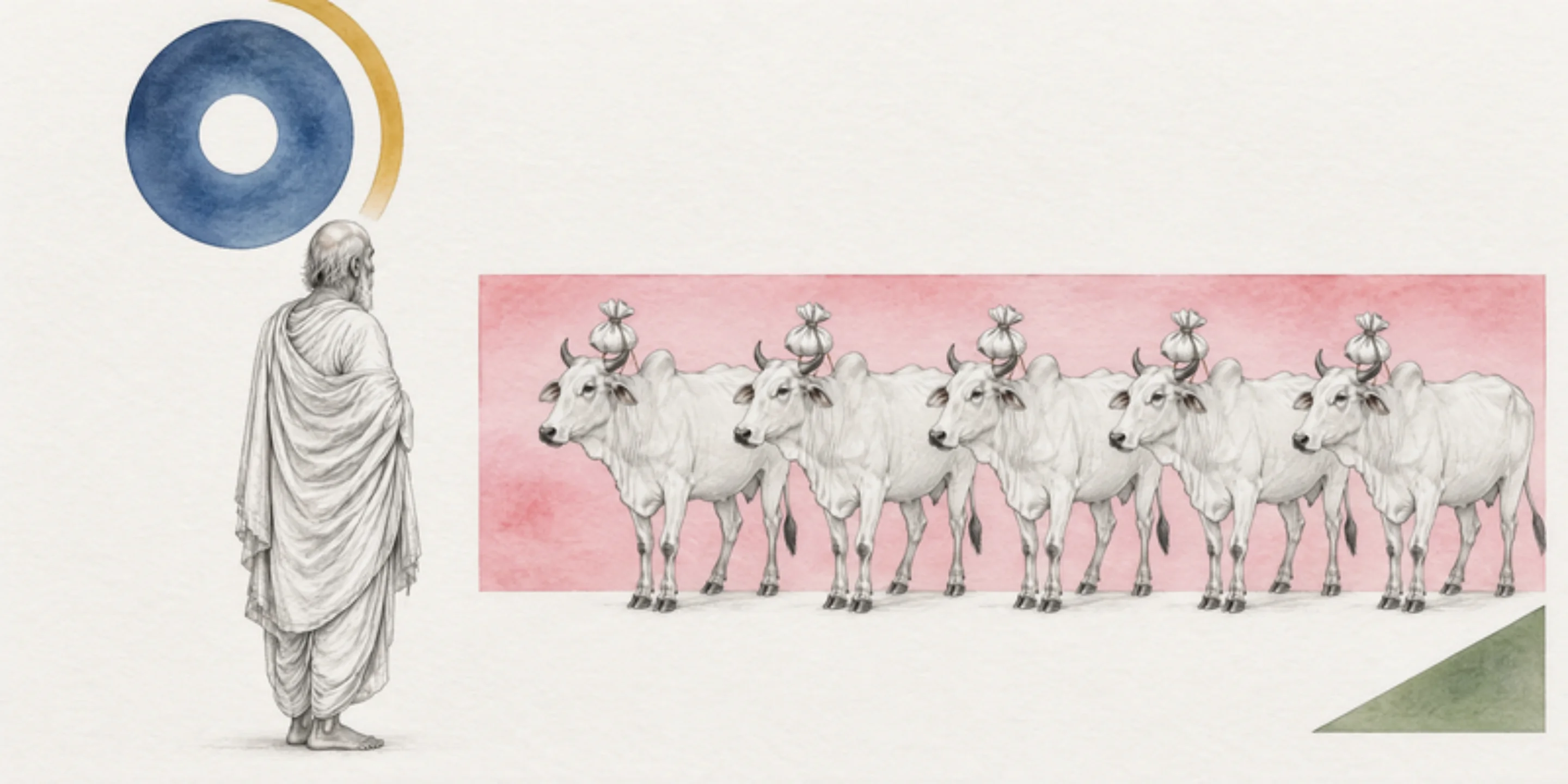
In the words of Pranav Ashar
How we renderThe heart of the Brihadaranyaka
In brief
The Brihadaranyaka begins with the cosmos as a sacrificial horse and with creation from Death. In the beginning there was only the Self, which looked around, saw nothing but itself, and said 'I am'; and whoever knows 'I am Brahman' becomes the all. Its teaching is 'not so, not so'. Yajnavalkya teaches Maitreyi that all is dear for the sake of the Self. At Janaka's court he answers every questioner: the Self within all is the seer of seeing that cannot be seen. As one desires, so one becomes; but one without desire, being Brahman goes to Brahman.
- I am Brahman
- Not so, not so
- The seer who cannot be seen
- The Self as its own light
- Desire and freedom from desire
Contents
- 1.1.1
- 1.1.2
- 1.2.1
- 1.2.2
- 1.2.3
- 1.2.4
- 1.2.5
- 1.2.6
- 1.2.7
- 1.3.1
- 1.3.2
- 1.3.3
- 1.3.4
- 1.3.5
- 1.3.6
- 1.3.7
- 1.3.8
- 1.3.9
- 1.3.10
- 1.3.11
- 1.3.12
- 1.3.13
- 1.3.14
- 1.3.15
- 1.3.16
- 1.3.17
- 1.3.18
- 1.3.19
- 1.3.20
- 1.3.21
- 1.3.22
- 1.3.23
- 1.3.24
- 1.3.25
- 1.3.26
- 1.3.27
- 1.3.28
- 1.4.1
- 1.4.2
- 1.4.3
- 1.4.4
- 1.4.5
- 1.4.6
- 1.4.7
- 1.4.8
- 1.4.9
- 1.4.10
- 1.4.11
- 1.4.12
- 1.4.13
- 1.4.14
- 1.4.15
- 1.4.16
- 1.4.17
- 1.5.1
- 1.5.2
- 1.5.3
- 1.5.4
- 1.5.5
- 1.5.6
- 1.5.7
- 1.5.8
- 1.5.9
- 1.5.10
- 1.5.11
- 1.5.12
- 1.5.13
- 1.5.14
- 1.5.15
- 1.5.16
- 1.5.17
- 1.5.18
- 1.5.19
- 1.5.20
- 1.5.21
- 1.5.22
- 1.5.23
- 1.6.1
- 1.6.2
- 1.6.3
- 2.1.1
- 2.1.2
- 2.1.3
- 2.1.4
- 2.1.5
- 2.1.6
- 2.1.7
- 2.1.8
- 2.1.9
- 2.1.10
- 2.1.11
- 2.1.12
- 2.1.13
- 2.1.14
- 2.1.15
- 2.1.16
- 2.1.17
- 2.1.18
- 2.1.19
- 2.1.20
- 2.2.1
- 2.2.2
- 2.2.3
- 2.2.4
- 2.3.1
- 2.3.2
- 2.3.3
- 2.3.4
- 2.3.5
- 2.3.6
- 2.4.1
- 2.4.2
- 2.4.3
- 2.4.4
- 2.4.5
- 2.4.6
- 2.4.7
- 2.4.8
- 2.4.9
- 2.4.10
- 2.4.11
- 2.4.12
- 2.4.13
- 2.4.14
- 2.5.1
- 2.5.2
- 2.5.3
- 2.5.4
- 2.5.5
- 2.5.6
- 2.5.7
- 2.5.8
- 2.5.9
- 2.5.10
- 2.5.11
- 2.5.12
- 2.5.13
- 2.5.14
- 2.5.15
- 2.5.16
- 2.5.17
- 2.5.18
- 2.5.19
- 2.6.1
- 2.6.2
- 2.6.3
- 3.1.1
- 3.1.2
- 3.1.3
- 3.1.4
- 3.1.5
- 3.1.6
- 3.1.7
- 3.1.8
- 3.1.9
- 3.1.10
- 3.2.1
- 3.2.2
- 3.2.3
- 3.2.4
- 3.2.5
- 3.2.6
- 3.2.7
- 3.2.8
- 3.2.9
- 3.2.10
- 3.2.11
- 3.2.12
- 3.2.13
- 3.3.1
- 3.3.2
- 3.4.1
- 3.4.2
- 3.5.1
- 3.6.1
- 3.7.1
- 3.7.2
- 3.7.3
- 3.7.4
- 3.7.5
- 3.7.6
- 3.7.7
- 3.7.8
- 3.7.9
- 3.7.10
- 3.7.11
- 3.7.12
- 3.7.13
- 3.7.14
- 3.7.15
- 3.7.16
- 3.7.17
- 3.7.18
- 3.7.19
- 3.7.20
- 3.7.21
- 3.7.22
- 3.7.23
- 3.8.1
- 3.8.2
- 3.8.3
- 3.8.4
- 3.8.5
- 3.8.6
- 3.8.7
- 3.8.8
- 3.8.9
- 3.8.10
- 3.8.11
- 3.8.12
- 3.9.1
- 3.9.2
- 3.9.3
- 3.9.4
- 3.9.5
- 3.9.6
- 3.9.7
- 3.9.8
- 3.9.9
- 3.9.10
- 3.9.11
- 3.9.12
- 3.9.13
- 3.9.14
- 3.9.15
- 3.9.16
- 3.9.17
- 3.9.18
- 3.9.19
- 3.9.20
- 3.9.21
- 3.9.22
- 3.9.23
- 3.9.24
- 3.9.25
- 3.9.26
- 3.9.27
- 3.9.28
- 4.1.1
- 4.1.2
- 4.1.3
- 4.1.4
- 4.1.5
- 4.1.6
- 4.1.7
- 4.2.1
- 4.2.2
- 4.2.3
- 4.2.4
- 4.3.1
- 4.3.2
- 4.3.3
- 4.3.4
- 4.3.5
- 4.3.6
- 4.3.7
- 4.3.8
- 4.3.9
- 4.3.10
- 4.3.11
- 4.3.12
- 4.3.13
- 4.3.14
- 4.3.15
- 4.3.16
- 4.3.17
- 4.3.18
- 4.3.19
- 4.3.20
- 4.3.21
- 4.3.22
- 4.3.23
- 4.3.24
- 4.3.25
- 4.3.26
- 4.3.27
- 4.3.28
- 4.3.29
- 4.3.30
- 4.3.31
- 4.3.32
- 4.3.33
- 4.3.34
- 4.3.35
- 4.3.36
- 4.3.37
- 4.3.38
- 4.4.1
- 4.4.2
- 4.4.3
- 4.4.4
- 4.4.5
- 4.4.6
- 4.4.7
- 4.4.8
- 4.4.9
- 4.4.10
- 4.4.11
- 4.4.12
- 4.4.13
- 4.4.14
- 4.4.15
- 4.4.16
- 4.4.17
- 4.4.18
- 4.4.19
- 4.4.20
- 4.4.21
- 4.4.22
- 4.4.23
- 4.4.24
- 4.4.25
- 4.5.1
- 4.5.2
- 4.5.3
- 4.5.4
- 4.5.5
- 4.5.6
- 4.5.7
- 4.5.8
- 4.5.9
- 4.5.10
- 4.5.11
- 4.5.12
- 4.5.13
- 4.5.14
- 4.5.15
- 4.6.1
- 4.6.2
- 4.6.3
- 5.1.1
- 5.2.1
- 5.2.2
- 5.2.3
- 5.3.1
- 5.4.1
- 5.5.1
- 5.5.2
- 5.5.3
- 5.5.4
- 5.6.1
- 5.7.1
- 5.8.1
- 5.9.1
- 5.10.1
- 5.11.1
- 5.12.1
- 5.13.1
- 5.13.2
- 5.13.3
- 5.13.4
- 5.14.1
- 5.14.2
- 5.14.3
- 5.14.4
- 5.14.5
- 5.14.6
- 5.14.7
- 5.14.8
- 5.15.1
- 6.1.1
- 6.1.2
- 6.1.3
- 6.1.4
- 6.1.5
- 6.1.6
- 6.1.7
- 6.1.8
- 6.1.9
- 6.1.10
- 6.1.11
- 6.1.12
- 6.1.13
- 6.1.14
- 6.2.1
- 6.2.2
- 6.2.3
- 6.2.4
- 6.2.5
- 6.2.6
- 6.2.7
- 6.2.8
- 6.2.9
- 6.2.10
- 6.2.11
- 6.2.12
- 6.2.13
- 6.2.14
- 6.2.15
- 6.2.16
- 6.3.1
- 6.3.2
- 6.3.3
- 6.3.4
- 6.3.5
- 6.3.6
- 6.3.7
- 6.3.8
- 6.3.9
- 6.3.10
- 6.3.11
- 6.3.12
- 6.3.13
- 6.4.1
- 6.4.2
- 6.4.3
- 6.4.4
- 6.4.5
- 6.4.6
- 6.4.7
- 6.4.8
- 6.4.9
- 6.4.10
- 6.4.11
- 6.4.12
- 6.4.13
- 6.4.14
- 6.4.15
- 6.4.16
- 6.4.17
- 6.4.18
- 6.4.19
- 6.4.20
- 6.4.21
- 6.4.22
- 6.4.23
- 6.4.24
- 6.4.25
- 6.4.26
- 6.4.27
- 6.4.28
- 6.5.1
- 6.5.2
- 6.5.3
- 6.5.4
उषा वा अश्वस्य मेध्यस्य शिरः । सूर्यश्चक्षुर्वातः प्राणो व्यात्तमग्निर्वैश्वानरः संवत्सर आत्माऽश्वस्य मेध्यस्य । द्यौः पृष्ठमन्तरिक्षमुदरं पृथिवी पाजस्यं दिशः पार्श्वे अवान्तरदिशः पर्शव ऋतवोऽङ्गानि मासाश्चार्धमासाश्च पर्वाण्यहोरात्राणि प्रतिष्ठा नक्षत्राण्यस्थीनि नभो मांसान्यूवध्यं सिकताः सिन्धवो गुदा यकृच्च क्लोमानश्च पर्वता ओषधयश्च वनस्पतयश्च लोमान्युद्यन्पूर्वार्धो निम्लोचञ्जघनार्धो यद्विजृम्भते तद्विद्योतते यद्विधूनुते तत्स्तनयति यन्मेहति तद्वर्षति वागेवास्य वाक् ॥ १॥
uṣā vā aśvasya medhyasya śiraḥ | sūryaścakṣurvātaḥ prāṇo vyāttamagnirvaiśvānaraḥ saṃvatsara ātmā'śvasya medhyasya | dyauḥ pṛṣṭhamantarikṣamudaraṃ pṛthivī pājasyaṃ diśaḥ pārśve avāntaradiśaḥ parśava ṛtavo'ṅgāni māsāścārdhamāsāśca parvāṇyahorātrāṇi pratiṣṭhā nakṣatrāṇyasthīni nabho māṃsānyūvadhyaṃ sikatāḥ sindhavo gudā yakṛcca klomānaśca parvatā oṣadhayaśca vanaspatayaśca lomānyudyanpūrvārdho nimlocañjaghanārdho yadvijṛmbhate tadvidyotate yadvidhūnute tatstanayati yanmehati tadvarṣati vāgevāsya vāk || 1||
The dawn is the head of the horse fit for sacrifice; the sun its eye, the wind its breath, the universal fire its open mouth, the year the body of the sacrificial horse. The sky is its back, the middle air its belly, the earth its underbelly, the quarters its flanks, the in-between quarters its ribs, the seasons its limbs, the months and half-months its joints, days and nights its feet, the stars its bones, the clouds its flesh. The sand is the half-digested food in its stomach, the rivers its veins, the mountains its liver and lungs, plants and trees its hair. The rising sun is its forepart, the setting sun its hind part. When it yawns, there is lightning; when it shakes itself, there is thunder; when it urinates, there is rain. Its neigh is speech.
Note //
Shankara: this meditation of the horse as the cosmos is for those who cannot perform the horse-sacrifice; by knowing it, they gain its fruit. Understanding replaces the rite.
अहर्वा अश्वं पुरस्तान्महिमाऽन्वजायत तस्य पूर्वे समुद्रे योनी रात्रिरेनं पश्चान्महिमाऽन्वजायत तस्यापरे समुद्रे योनिरेतौ वा अश्वं महिमानावभितः सम्बभूवतुर्हयो भूत्वा देवानवहद् वाजी गन्धर्वानर्वाऽसुरानश्वो मनुष्यान् समुद्र एवास्य बन्धुः समुद्रो योनिः ॥ २॥
aharvā aśvaṃ purastānmahimā'nvajāyata tasya pūrve samudre yonī rātrirenaṃ paścānmahimā'nvajāyata tasyāpare samudre yoniretau vā aśvaṃ mahimānāvabhitaḥ sambabhūvaturhayo bhūtvā devānavahad vājī gandharvānarvā'surānaśvo manuṣyān samudra evāsya bandhuḥ samudro yoniḥ || 2||
The day was born as the vessel of greatness in front of the horse; its source is the eastern sea. The night was born as the vessel of greatness behind it; its source is the western sea. These two vessels arose on either side of the horse. As Haya it carried the gods, as Vajin the singers of the sky, as Arvan the demons, as Ashva men. The sea is its kin; the sea is its source.
Note //
'Vessel of greatness' (mahiman): the gold and silver cups set before and behind the horse in the rite.
नैवेह किंचनाग्र आसीन्मृत्युनैवेदमावृतमासीदशनाययाऽशनाया हि मृत्युस्तन्मनोऽकुरुताऽऽत्मन्वी स्यामिति । सोऽर्चन्नचरत्तस्यार्चत आपोऽजायन्तार्चते वै मे कमभूदिति । तदेवार्कस्यार्कत्वम् । कं ह वा अस्मै भवति य एवमेतदर्कस्यार्कत्वं वेद ॥ १॥
naiveha kiṃcanāgra āsīnmṛtyunaivedamāvṛtamāsīdaśanāyayā'śanāyā hi mṛtyustanmano'kurutā''tmanvī syāmiti | so'rcannacarattasyārcata āpo'jāyantārcate vai me kamabhūditi | tadevārkasyārkatvam | kaṃ ha vā asmai bhavati ya evametadarkasyārkatvaṃ veda || 1||
In the beginning there was nothing here at all. All this was covered by Death, by hunger, for hunger is death. Death made the mind, thinking: 'Let me have a self.' It went about praising, and as it praised (archat), the waters were born. 'As I praised, water (ka) came to me': that is why fire is called arka. Water comes to one who knows why fire is called arka.
Note //
'Death' here is Hiranyagarbha, the cosmic intelligence, called death because it is hunger, and hunger devours (Shankara). 'There was nothing': no name and form yet; not absolute non-being. 'Made the mind' (mano 'kuruta): Death creates the mind as its first product (Shankara); Hume reads 'made up his mind'. The edition's तदेवार्क्यस्यार्कत्वम् is read तदेवार्कस्यार्कत्वम्, as at the end of the verse.
आपो वा अर्कस्तद्यदपां शर आसीत्तत्समहन्यत । सा पृथिव्यभवत्तस्यामश्राम्यत्तस्य श्रान्तस्य तप्तस्य तेजो रसो निरवर्तताग्निः ॥ २॥
āpo vā arkastadyadapāṃ śara āsīttatsamahanyata | sā pṛthivyabhavattasyāmaśrāmyattasya śrāntasya taptasya tejo raso niravartatāgniḥ || 2||
The waters are arka. The froth of the waters thickened and became the earth. On it Death toiled; and from it, toiling and heated, its radiance, its essence came forth as fire.
Note //
The edition's अर्क is corrected to अर्कः.
स त्रेधाऽऽत्मानं व्यकुरुताऽऽदित्यं तृतीयं वायुं तृतीयं स एष प्राणस्त्रेधा विहितस्तस्य प्राची दिक्शिरोऽसौ चासौ चेर्मावथास्य प्रतीची दिक्पुच्छमसौ चासौ च सक्थ्यौ दक्षिणा चोदीची च पार्श्वे द्यौः पृष्ठमन्तरिक्षमुदरमियमुरः स एषोऽप्सु प्रतिष्ठितो यत्र क्व चैति तदेव प्रतितिष्ठत्येवं विद्वान् ॥ ३॥
sa tredhā''tmānaṃ vyakurutā''dityaṃ tṛtīyaṃ vāyuṃ tṛtīyaṃ sa eṣa prāṇastredhā vihitastasya prācī dikśiro'sau cāsau cermāvathāsya pratīcī dikpucchamasau cāsau ca sakthyau dakṣiṇā codīcī ca pārśve dyauḥ pṛṣṭhamantarikṣamudaramiyamuraḥ sa eṣo'psu pratiṣṭhito yatra kva caiti tadeva pratitiṣṭhatyevaṃ vidvān || 3||
It divided itself in three: fire one third, the sun one third, the wind one third. It is this breath, divided threefold. The east is its head; this quarter and that are its forelegs. The west is its tail; this quarter and that are its hind legs. South and north are its flanks, the sky its back, the middle air its belly, this earth its chest. It rests on the waters. One who knows this finds a footing wherever he goes.
Note //
The edition's दिक्षिरो and चेर्माव are corrected to दिक्शिरो and चेर्मौ.
सोऽकामयत द्वितीयो म आत्मा जायेतेति । स मनसा वाचं मिथुनं समभवदशनाया मृत्युस्तद्यद्रेत आसीत्स संवत्सरोऽभवत् । न ह पुरा ततः संवत्सर आस । तमेतावन्तं कालमबिभर्यावान्संवत्सरस्तमेतावतः कालस्य परस्तादसृजत । तं जातमभिव्याददात्स भाणकरोत्सैव वागभवत् ॥ ४॥
so'kāmayata dvitīyo ma ātmā jāyeteti | sa manasā vācaṃ mithunaṃ samabhavadaśanāyā mṛtyustadyadreta āsītsa saṃvatsaro'bhavat | na ha purā tataḥ saṃvatsara āsa | tametāvantaṃ kālamabibharyāvānsaṃvatsarastametāvataḥ kālasya parastādasṛjata | taṃ jātamabhivyādadātsa bhāṇakarotsaiva vāgabhavat || 4||
It desired: 'Let a second self be born to me.' Death, hunger, united with speech through the mind. What was the seed became the year; before that there was no year. It carried him as long as a year, and after that time brought him forth. When he was born, it opened its mouth to swallow him. He cried out, 'Bhan!' That became speech.
Note //
स ऐक्षत यदि वा इममभिमंस्ये कनीयोऽन्नं करिष्य इति । स तया वाचा तेनाऽऽत्मनेदं सर्वमसृजत यदिदं किञ्चर्चो यजूंषि सामानि छन्दांसि यज्ञान्प्रजाः पशून् । स यद्यदेवासृजत तत्तदत्तुमध्रियत । सर्वं वा अत्तीति तददितेरदितित्वम् । सर्वस्यैतस्यात्ता भवति सर्वमस्यान्नं भवति य एवमेतददितेरदितित्वं वेद ॥ ५॥
sa aikṣata yadi vā imamabhimaṃsye kanīyo'nnaṃ kariṣya iti | sa tayā vācā tenā''tmanedaṃ sarvamasṛjata yadidaṃ kiñcarco yajūṃṣi sāmāni chandāṃsi yajñānprajāḥ paśūn | sa yadyadevāsṛjata tattadattumadhriyata | sarvaṃ vā attīti tadaditeradititvam | sarvasyaitasyāttā bhavati sarvamasyānnaṃ bhavati ya evametadaditeradititvaṃ veda || 5||
It thought: 'If I kill him, I shall have less food.' With that speech and that self it brought forth all this, whatever there is: the verses, the formulas, the chants, the metres, the sacrifices, creatures and cattle. Whatever it brought forth, it set about eating. Because it eats (atti) everything, it is called Aditi. One who knows why Aditi is so called becomes the eater of all this; all this becomes his food.
Note //
सोऽकामयत भूयसा यज्ञेन भूयो यजेयेति । सोऽश्राम्यत्स तपोऽतप्यत । तस्य श्रान्तस्य तप्तस्य यशो वीर्यमुदक्रामत् । प्राणा वै यशो वीर्यम् । तत्प्राणेषूत्क्रान्तेषु शरीरं श्वयितुमध्रियत तस्य शरीर एव मन आसीत् ॥ ६॥
so'kāmayata bhūyasā yajñena bhūyo yajeyeti | so'śrāmyatsa tapo'tapyata | tasya śrāntasya taptasya yaśo vīryamudakrāmat | prāṇā vai yaśo vīryam | tatprāṇeṣūtkrānteṣu śarīraṃ śvayitumadhriyata tasya śarīra eva mana āsīt || 6||
It desired: 'Let me sacrifice again with a greater sacrifice.' It toiled; it practised austerity. From it, toiling and heated, renown and strength went out. The breaths are renown and strength. When the breaths had gone out, the body began to swell; but its mind was still in the body.
Note //
सोऽकामयत मेध्यं म इदं स्यादात्मन्व्यनेन स्यामिति । ततोऽश्वः समभवद्यदश्वत्तन्मेध्यमभूदिति । तदेवाश्वमेधस्याश्वमेधत्वम् । एष ह वा अश्वमेधं वेद य एनमेवं वेद । तमनवरुध्यैवामन्यत । तं संवत्सरस्य परस्तादात्मन आलभत । पशून्देवताभ्यः प्रत्यौहत् । तस्मात्सर्वदेवत्यं प्रोक्षितं प्राजापत्यमालभन्ते । एष ह वा अश्वमेधो य एष तपति तस्य संवत्सर आत्माऽयमग्निरर्कस्तस्येमे लोका आत्मानस्तावेतावर्काश्वमेधौ । सो पुनरेकैव देवता भवति मृत्युरेवाप पुनर्मृत्युं जयति नैनं मृत्युराप्नोति मृत्युरस्याऽऽत्मा भवत्येतासां देवतानामेको भवति ॥ ७॥
so'kāmayata medhyaṃ ma idaṃ syādātmanvyanena syāmiti | tato'śvaḥ samabhavadyadaśvattanmedhyamabhūditi | tadevāśvamedhasyāśvamedhatvam | eṣa ha vā aśvamedhaṃ veda ya enamevaṃ veda | tamanavarudhyaivāmanyata | taṃ saṃvatsarasya parastādātmana ālabhata | paśūndevatābhyaḥ pratyauhat | tasmātsarvadevatyaṃ prokṣitaṃ prājāpatyamālabhante | eṣa ha vā aśvamedho ya eṣa tapati tasya saṃvatsara ātmā'yamagnirarkastasyeme lokā ātmānastāvetāvarkāśvamedhau | so punarekaiva devatā bhavati mṛtyurevāpa punarmṛtyuṃ jayati nainaṃ mṛtyurāpnoti mṛtyurasyā''tmā bhavatyetāsāṃ devatānāmeko bhavati || 7||
It desired: 'Let this body of mine be fit for sacrifice; let me have a self through it.' Then it became a horse (ashva), because it had swollen (ashvat); it became fit for sacrifice (medhya). That is why the horse-sacrifice is called ashvamedha. One who knows it so truly knows the horse-sacrifice. It let the horse roam free, and after a year offered it to itself, and gave the other animals to the gods. So people offer to Prajapati the consecrated horse, which belongs to all the gods. The horse-sacrifice is that which shines up there, the sun; the year is its body. This fire is arka; these worlds are its body. These two are the fire and the horse-sacrifice. And they are one god again: Death. One who knows this conquers repeated death; death does not reach him; death becomes his own self; he becomes one with these gods.
Note //
The edition's अश्वमेधत्वं एष is divided अश्वमेधत्वम् । एष. 'Death becomes his own self': the meditator becomes one with Hiranyagarbha, the cosmic self (Shankara).
द्वया ह प्राजापत्या देवाश्चासुराश्च । ततः कानीयसा एव देवा ज्यायसा असुरास्त एषु लोकेष्वस्पर्धन्त । ते ह देवा ऊचुर्हन्तासुरान्यज्ञ उद्गीथेनात्ययामेति ॥ १॥
dvayā ha prājāpatyā devāścāsurāśca | tataḥ kānīyasā eva devā jyāyasā asurāsta eṣu lokeṣvaspardhanta | te ha devā ūcurhantāsurānyajña udgīthenātyayāmeti || 1||
There were two kinds of Prajapati's children, the gods and the demons. The gods were the younger, the demons the elder. They contended for these worlds. The gods said: 'Come, let us overcome the demons by the loud chant at the sacrifice.'
Note //
Shankara: the gods are the senses lit by the teaching; the demons are the same senses driven by their natural pull to objects; the demons are 'elder' because that pull is stronger and comes first.
ते ह वाचमूचुस्त्वं न उद्गायेति । तथेति । तेभ्यो वागुदगायद्यो वाचि भोगस्तं देवेभ्य आगायद्यत्कल्याणं वदति तदात्मने । ते विदुरनेन वै न उद्गात्राऽत्येष्यन्तीति । तमभिद्रुत्य पाप्मनाऽविध्यन्स यः स पाप्मा यदेवेदमप्रतिरूपं वदति स एव स पाप्मा ॥ २॥
te ha vācamūcustvaṃ na udgāyeti | tatheti | tebhyo vāgudagāyadyo vāci bhogastaṃ devebhya āgāyadyatkalyāṇaṃ vadati tadātmane | te viduranena vai na udgātrā'tyeṣyantīti | tamabhidrutya pāpmanā'vidhyansa yaḥ sa pāpmā yadevedamapratirūpaṃ vadati sa eva sa pāpmā || 2||
They said to speech, 'Sing for us.' 'So be it.' Speech sang for them. The good that is in speech it sang for the gods; the fine speaking it kept for itself. The demons knew: 'By this singer they will overcome us.' They rushed at it and pierced it with evil. That evil is this: when one says what is not right.
Note //
अथ ह प्राणमूचुस्त्वं न उद्गायेति । तथेति । तेभ्यः प्राण उदगायद्यः प्राणे भोगस्तं देवेभ्य आगायद्यत्कल्याणं जिघ्रति तदात्मने । ते विदुरनेन वै न उद्गात्राऽत्येष्यन्तीति । तमभिद्रुत्य पाप्मनाऽविध्यन्स यः स पाप्मा यदेवेदमप्रतिरूपं जिघ्रति स एव स पाप्मा ॥ ३॥
atha ha prāṇamūcustvaṃ na udgāyeti | tatheti | tebhyaḥ prāṇa udagāyadyaḥ prāṇe bhogastaṃ devebhya āgāyadyatkalyāṇaṃ jighrati tadātmane | te viduranena vai na udgātrā'tyeṣyantīti | tamabhidrutya pāpmanā'vidhyansa yaḥ sa pāpmā yadevedamapratirūpaṃ jighrati sa eva sa pāpmā || 3||
Then they said to smell, 'Sing for us.' 'So be it.' Smell sang for them. The good that is in smell it sang for the gods; the fine smelling it kept for itself. The demons knew: 'By this singer they will overcome us.' They rushed at it and pierced it with evil. That evil is this: when one smells what is not right.
Note //
अथ ह चक्षुरूचुस्त्वं न उद्गायेति । तथेति । तेभ्यश्चक्षुरुदगायद्यश्चक्षुषि भोगस्तं देवेभ्य आगायद्यत्कल्याणं पश्यति तदात्मने । ते विदुरनेन वै न उद्गात्राऽत्येष्यन्तीति । तमभिद्रुत्य पाप्मनाऽविध्यन्स यः स पाप्मा यदेवेदमप्रतिरूपं पश्यति स एव स पाप्मा ॥ ४॥
atha ha cakṣurūcustvaṃ na udgāyeti | tatheti | tebhyaścakṣurudagāyadyaścakṣuṣi bhogastaṃ devebhya āgāyadyatkalyāṇaṃ paśyati tadātmane | te viduranena vai na udgātrā'tyeṣyantīti | tamabhidrutya pāpmanā'vidhyansa yaḥ sa pāpmā yadevedamapratirūpaṃ paśyati sa eva sa pāpmā || 4||
Then they said to the eye, 'Sing for us.' 'So be it.' The eye sang for them. The good that is in the eye it sang for the gods; the fine seeing it kept for itself. The demons knew: 'By this singer they will overcome us.' They rushed at it and pierced it with evil. That evil is this: when one sees what is not right.
Note //
अथ ह श्रोत्रमूचुस्त्वं न उद्गायेति । तथेति । तेभ्यः श्रोत्रमुदगायद्यः श्रोत्रे भोगस्तं देवेभ्य आगायद्यत्कल्याणं शृणोति तदात्मने । ते विदुरनेन वै न उद्गात्राऽत्येष्यन्तीति । तमभिद्रुत्य पाप्मनाऽविध्यन्स यः स पाप्मा यदेवेदमप्रतिरूपं शृणोति स एव स पाप्मा ॥ ५॥
atha ha śrotramūcustvaṃ na udgāyeti | tatheti | tebhyaḥ śrotramudagāyadyaḥ śrotre bhogastaṃ devebhya āgāyadyatkalyāṇaṃ śṛṇoti tadātmane | te viduranena vai na udgātrā'tyeṣyantīti | tamabhidrutya pāpmanā'vidhyansa yaḥ sa pāpmā yadevedamapratirūpaṃ śṛṇoti sa eva sa pāpmā || 5||
Then they said to the ear, 'Sing for us.' 'So be it.' The ear sang for them. The good that is in the ear it sang for the gods; the fine hearing it kept for itself. The demons knew: 'By this singer they will overcome us.' They rushed at it and pierced it with evil. That evil is this: when one hears what is not right.
Note //
अथ ह मन ऊचुस्त्वं न उद्गायेति । तथेति । तेभ्यो मन उदगायद्यो मनसि भोगस्तं देवेभ्य आगायद्यत्कल्याणं सङ्कल्पयति तदात्मने । ते विदुरनेन वै न उद्गात्राऽत्येष्यन्तीति । तमभिद्रुत्य पाप्मनाऽविध्यन्स यः स पाप्मा यदेवेदमप्रतिरूपं सङ्कल्पयति स एव स पाप्मैवमु खल्वेता देवताः पाप्मभिरुपासृजन्नेवमेनाः पाप्मनाऽविध्यन् ॥ ६॥
atha ha mana ūcustvaṃ na udgāyeti | tatheti | tebhyo mana udagāyadyo manasi bhogastaṃ devebhya āgāyadyatkalyāṇaṃ saṅkalpayati tadātmane | te viduranena vai na udgātrā'tyeṣyantīti | tamabhidrutya pāpmanā'vidhyansa yaḥ sa pāpmā yadevedamapratirūpaṃ saṅkalpayati sa eva sa pāpmaivamu khalvetā devatāḥ pāpmabhirupāsṛjannevamenāḥ pāpmanā'vidhyan || 6||
Then they said to the mind, 'Sing for us.' 'So be it.' The mind sang for them. The good that is in the mind it sang for the gods; the fine imagining it kept for itself. The demons knew: 'By this singer they will overcome us.' They rushed at it and pierced it with evil. That evil is this: when one imagines what is not right. So they touched these gods with evils; so they pierced them with evil.
Note //
The edition's repeated पाप्मभिसुपासृजन् is removed.
अथ हेममासन्यं प्राणमूचुस्त्वं न उद्गायेति । तथेति । तेभ्य एष प्राण उदगायत्ते विदुरनेन वै न उद्गात्राऽत्येष्यन्तीति । तमभिद्रुत्य पाप्मनाविध्यन् । स यथाश्मानमृत्वा लोष्टो विध्वंसेतैवं हैव विध्वंसमाना विष्वञ्चो विनेशुस्ततो देवा अभवन्पराऽसुराः । भवत्यात्मना पराऽस्य द्विषन्भ्रातृव्यो भवति य एवं वेद ॥ ७॥
atha hemamāsanyaṃ prāṇamūcustvaṃ na udgāyeti | tatheti | tebhya eṣa prāṇa udagāyatte viduranena vai na udgātrā'tyeṣyantīti | tamabhidrutya pāpmanāvidhyan | sa yathāśmānamṛtvā loṣṭo vidhvaṃsetaivaṃ haiva vidhvaṃsamānā viṣvañco vineśustato devā abhavanparā'surāḥ | bhavatyātmanā parā'sya dviṣanbhrātṛvyo bhavati ya evaṃ veda || 7||
Then they said to this breath in the mouth, 'Sing for us.' 'So be it.' This breath sang for them. The demons knew: 'By this singer they will overcome us.' They rushed at it and tried to pierce it with evil. As a clod of earth striking a rock is shattered, so they were shattered and scattered and perished. Then the gods prospered and the demons were overcome. One who knows this prospers in himself, and the rival who hates him is overcome.
Note //
The breath kept nothing for itself; there was no 'I' in its singing for evil to grip.
ते होचुः क्व नु सोऽभूद्यो न इत्थमसक्तेत्ययमास्येऽन्तरिति सोऽयास्य आङ्गिरसोऽङ्गानां हि रसः ॥ ८॥
te hocuḥ kva nu so'bhūdyo na itthamasaktetyayamāsye'ntariti so'yāsya āṅgiraso'ṅgānāṃ hi rasaḥ || 8||
They said: 'Where is he who has held us together like this?' 'He is here within the mouth (asye).' So he is called Ayasya Angirasa, for he is the essence (rasa) of the limbs (anga).
Note //
सा वा एषा देवता दूर्नाम दूरं ह्यस्या मृत्युर्दूरं ह वा अस्मान्मृत्युर्भवति य एवं वेद ॥ ९॥
sā vā eṣā devatā dūrnāma dūraṃ hyasyā mṛtyurdūraṃ ha vā asmānmṛtyurbhavati ya evaṃ veda || 9||
This god is called Dur, 'far', for death is far from it. Death is far from one who knows this.
Note //
सा वा एषा देवतैतासां देवतानां पाप्मानं मृत्युमपहत्य यत्राऽऽसां दिशामन्तस्तद्गमयां चकार तदासां पाप्मनो विन्यदधात्तस्मान्न जनमियान्नान्तमियान्नेत्पाप्मानं मृत्युमन्ववायानीति ॥ १०॥
sā vā eṣā devataitāsāṃ devatānāṃ pāpmānaṃ mṛtyumapahatya yatrā''sāṃ diśāmantastadgamayāṃ cakāra tadāsāṃ pāpmano vinyadadhāttasmānna janamiyānnāntamiyānnetpāpmānaṃ mṛtyumanvavāyānīti || 10||
This god struck away the evil, the death, of these gods, and sent it to where the quarters end, and set their evils down there. So one should not go to those people, to the ends of the earth, lest one meet with evil, with death.
Note //
सा वा एषा देवतैतासां देवतानां पाप्मानं मृत्युमपहत्याथैना मृत्युमत्यवहत् ॥ ११॥
sā vā eṣā devataitāsāṃ devatānāṃ pāpmānaṃ mṛtyumapahatyāthainā mṛtyumatyavahat || 11||
Having struck away the evil, the death, of these gods, this god carried them beyond death.
Note //
स वै वाचमेव प्रथमामत्यवहत्सा यदा मृत्युमत्यमुच्यत सोऽग्निरभवत्सोऽयमग्निः परेण मृत्युमतिक्रान्तो दीप्यते ॥ १२॥
sa vai vācameva prathamāmatyavahatsā yadā mṛtyumatyamucyata so'gnirabhavatso'yamagniḥ pareṇa mṛtyumatikrānto dīpyate || 12||
First it carried speech beyond. When speech was freed from death, it became fire. This fire, having passed beyond death, blazes.
Note //
अथ प्राणमत्यवहत्स यदा मृत्युमत्यमुच्यत स वायुरभवत्सोऽयं वायुः परेण मृत्युमतिक्रान्तः पवते ॥ १३॥
atha prāṇamatyavahatsa yadā mṛtyumatyamucyata sa vāyurabhavatso'yaṃ vāyuḥ pareṇa mṛtyumatikrāntaḥ pavate || 13||
Then it carried smell beyond. When smell was freed from death, it became wind. This wind, having passed beyond death, blows.
Note //
अथ चक्षुरत्यवहत्तद्यदा मृत्युमत्यमुच्यत स आदित्योऽभवत्सोऽसावादित्यः परेण मृत्युमतिक्रान्तस्तपति ॥ १४॥
atha cakṣuratyavahattadyadā mṛtyumatyamucyata sa ādityo'bhavatso'sāvādityaḥ pareṇa mṛtyumatikrāntastapati || 14||
Then it carried the eye beyond. When the eye was freed from death, it became the sun. That sun, having passed beyond death, shines.
Note //
अथ श्रोत्रमत्यवहत्तद्यदा मृत्युमत्यमुच्यत ता दिशोऽभवंस्ता इमा दिशः परेण मृत्युमतिक्रान्ताः ॥ १५॥
atha śrotramatyavahattadyadā mṛtyumatyamucyata tā diśo'bhavaṃstā imā diśaḥ pareṇa mṛtyumatikrāntāḥ || 15||
Then it carried the ear beyond. When the ear was freed from death, it became the quarters. These quarters have passed beyond death.
Note //
अथ मनोऽत्यवहत्तद्यदा मृत्युमत्यमुच्यत स चन्द्रमा अभवत्सोऽसौ चन्द्रः परेण मृत्युमतिक्रान्तो भात्येवं ह वा एनमेषा देवता मृत्युमतिवहति य एवं वेद ॥ १६॥
atha mano'tyavahattadyadā mṛtyumatyamucyata sa candramā abhavatso'sau candraḥ pareṇa mṛtyumatikrānto bhātyevaṃ ha vā enameṣā devatā mṛtyumativahati ya evaṃ veda || 16||
Then it carried the mind beyond. When the mind was freed from death, it became the moon. That moon, having passed beyond death, shines. So this god carries beyond death one who knows this.
Note //
अथाऽऽत्मनेऽन्नाद्यमागायद्यद्धि किञ्चान्नमद्यतेऽनेनैव तदद्यत इह प्रतितिष्ठति ॥ १७॥
athā''tmane'nnādyamāgāyadyaddhi kiñcānnamadyate'nenaiva tadadyata iha pratitiṣṭhati || 17||
Then it sang food for itself, for whatever food is eaten is eaten by it alone, and it rests on that.
Note //
ते देवा अब्रुवन्नेतावद्वा इदं सर्वं यदन्नं तदात्मन आगासीरनु नोऽस्मिन्नन्न आभजस्वेति । ते वै माऽभिसंविशतेति । तथेति । तं समन्तं परिण्यविशन्त । तस्माद्यदनेनान्नमत्ति तेनैतास्तृप्यन्त्येवं ह वा एनं स्वा अभिसंविशन्ति भर्ता स्वानां श्रेष्ठः पुर एता भवत्यन्नादोऽधिपतिर्य एवं वेद । य उ हैवंविदं स्वेषु प्रति प्रतिर्बुभूषति न हैवालं भार्येभ्यो भवत्यथ य एवैतमनुभवति यो वैतमनु भार्यान्बुभूर्षति स हैवालं भार्येभ्यो भवति ॥ १८॥
te devā abruvannetāvadvā idaṃ sarvaṃ yadannaṃ tadātmana āgāsīranu no'sminnanna ābhajasveti | te vai mā'bhisaṃviśateti | tatheti | taṃ samantaṃ pariṇyaviśanta | tasmādyadanenānnamatti tenaitāstṛpyantyevaṃ ha vā enaṃ svā abhisaṃviśanti bhartā svānāṃ śreṣṭhaḥ pura etā bhavatyannādo'dhipatirya evaṃ veda | ya u haivaṃvidaṃ sveṣu prati pratirbubhūṣati na haivālaṃ bhāryebhyo bhavatyatha ya evaitamanubhavati yo vaitamanu bhāryānbubhūrṣati sa haivālaṃ bhāryebhyo bhavati || 18||
The gods said: 'All this is food, as much as there is, and you have sung it for yourself. Give us a share in this food.' 'Then enter into me.' 'So be it.' They entered into it from every side. So whatever food one eats through it, they are satisfied by it. In the same way his own people enter into one who knows this: he becomes their support, their best, their leader, an eater of food, their master. Whoever among his own people sets himself up against one who knows this is not able to support those who depend on him; but whoever follows him, and wishes to support his dependents in following him, is able to support them.
Note //
The edition's अब्रुवन्न् and प्रतिप्रतिर्बुभूषति are corrected to अब्रुवन् and प्रति प्रतिर्बुभूषति.
सोऽयास्य आङ्गिरसोऽङ्गानां हि रसः । प्राणो वा अङ्गानां रसः । प्राणो हि वा अङ्गानां रसस्तस्माद्यस्मात्कस्माच्चाङ्गात्प्राण उत्क्रामति तदेव तच्छुष्यत्येष हि वा अङ्गानां रसः ॥ १९॥
so'yāsya āṅgiraso'ṅgānāṃ hi rasaḥ | prāṇo vā aṅgānāṃ rasaḥ | prāṇo hi vā aṅgānāṃ rasastasmādyasmātkasmāccāṅgātprāṇa utkrāmati tadeva tacchuṣyatyeṣa hi vā aṅgānāṃ rasaḥ || 19||
It is Ayasya Angirasa, for it is the essence of the limbs. Breath is the essence of the limbs. Breath is indeed the essence of the limbs: from whatever limb breath departs, that limb withers. For it is the essence of the limbs.
Note //
एष उ एव बृहस्पतिर्वाग्वै बृहती तस्या एष पतिस्तस्मादु बृहस्पतिः ॥ २०॥
eṣa u eva bṛhaspatirvāgvai bṛhatī tasyā eṣa patistasmādu bṛhaspatiḥ || 20||
It is also Brihaspati. Speech is great (brihati), and it is speech's master (pati); so it is Brihaspati.
Note //
एष उ एव ब्रह्मणस्पतिर्वाग्वै ब्रह्म तस्या एष पतिस्तस्मादु ब्रह्मणस्पतिः ॥ २१॥
eṣa u eva brahmaṇaspatirvāgvai brahma tasyā eṣa patistasmādu brahmaṇaspatiḥ || 21||
It is also Brahmanaspati. Speech is the Vedic word (brahman), and it is speech's master; so it is Brahmanaspati.
Note //
एष उ एव साम वाग्वै सामैष सा चामश्चेति तत्साम्नः सामत्वम् । यद्वेव समः प्लुषिणा समो मशकेन समो नागेन सम एभिस्त्रिभिर्लोकैः समोऽनेन सर्वेण तस्माद्वेव सामाश्नुते साम्नः सायुज्यं सलोकतां य एवमेतत्साम वेद ॥ २२॥
eṣa u eva sāma vāgvai sāmaiṣa sā cāmaśceti tatsāmnaḥ sāmatvam | yadveva samaḥ pluṣiṇā samo maśakena samo nāgena sama ebhistribhirlokaiḥ samo'nena sarveṇa tasmādveva sāmāśnute sāmnaḥ sāyujyaṃ salokatāṃ ya evametatsāma veda || 22||
It is also the chant (saman). Speech is sa, this breath is ama: that is why the chant is called saman. Or because it is the same (sama) in a gnat, the same in a mosquito, the same in an elephant, the same in these three worlds, the same in all this: that is why it is saman. One who knows the chant so comes to share its being and its world.
Note //
एष उ वा उद्गीथः । प्राणो वा उत्प्राणेन हीदं सर्वमुत्तब्धम् । वागेव गीथोच्च गीथा चेति स उद्गीथः ॥ २३॥
eṣa u vā udgīthaḥ | prāṇo vā utprāṇena hīdaṃ sarvamuttabdham | vāgeva gīthocca gīthā ceti sa udgīthaḥ || 23||
It is also the loud chant (udgitha). Breath is ud, for all this is held up (uttabdha) by breath. Speech is githa, song. Ud and githa: that is udgitha.
Note //
तद्धापि ब्रह्मदत्तश्चैकितानेयो राजानं भक्षयन्नुवाचायं त्यस्य राजा मूर्धानं विपातयताद्यदितोऽयास्य आङ्गिरसोऽन्येनोदगायदिति । वाचा च ह्येव स प्राणेन चोदगायदिति ॥ २४॥
taddhāpi brahmadattaścaikitāneyo rājānaṃ bhakṣayannuvācāyaṃ tyasya rājā mūrdhānaṃ vipātayatādyadito'yāsya āṅgiraso'nyenodagāyaditi | vācā ca hyeva sa prāṇena codagāyaditi || 24||
So Brahmadatta Chaikitaneya, while drinking King Soma, said: 'May this king make my head fall off if Ayasya Angirasa sang the loud chant with anything other than this.' For he sang it with speech and with breath.
Note //
तस्य हैतस्य साम्नो यः स्वं वेद भवति हास्य स्वम् । तस्य वै स्वर एव स्वम् । तस्मादार्त्विज्यं करिष्यन्वाचि स्वरमिच्छेत तया वाचा स्वरसम्पन्नयाऽऽर्त्विज्यं कुर्यात्तस्माद्यज्ञे स्वरवन्तं दिदृक्षन्त एवाथो यस्य स्वं भवति । भवति हास्य स्वं य एवमेतत्साम्नः स्वं वेद ॥ २५॥
tasya haitasya sāmno yaḥ svaṃ veda bhavati hāsya svam | tasya vai svara eva svam | tasmādārtvijyaṃ kariṣyanvāci svaramiccheta tayā vācā svarasampannayā''rtvijyaṃ kuryāttasmādyajñe svaravantaṃ didṛkṣanta evātho yasya svaṃ bhavati | bhavati hāsya svaṃ ya evametatsāmnaḥ svaṃ veda || 25||
One who knows the wealth of this chant has wealth. Its wealth is tone. So one about to serve as a priest should want a good tone in his voice, and do the priestly work with a voice that has tone. So at a sacrifice people want to see a priest with a good voice, as one who has wealth. One who knows the wealth of the chant so has wealth.
Note //
तस्य हैतस्य साम्नो यः सुवर्णं वेद भवति हास्य सुवर्णम् । तस्य वै स्वर एव सुवर्णम् । भवति हास्य सुवर्णं य एवमेतत्साम्नः सुवर्णं वेद ॥ २६॥
tasya haitasya sāmno yaḥ suvarṇaṃ veda bhavati hāsya suvarṇam | tasya vai svara eva suvarṇam | bhavati hāsya suvarṇaṃ ya evametatsāmnaḥ suvarṇaṃ veda || 26||
One who knows the gold of this chant has gold. Its gold is tone. One who knows the gold of the chant so has gold.
Note //
A play on suvarna ('gold') and svara ('tone').
तस्य हैतस्य साम्नो यः प्रतिष्ठां वेद प्रति ह तिष्ठति । तस्य वै वागेव प्रतिष्ठा वाचि हि खल्वेष एतत्प्राणः प्रतिष्ठितो गीयतेऽन्न इत्यु हैक आहुः ॥ २७॥
tasya haitasya sāmno yaḥ pratiṣṭhāṃ veda prati ha tiṣṭhati | tasya vai vāgeva pratiṣṭhā vāci hi khalveṣa etatprāṇaḥ pratiṣṭhito gīyate'nna ityu haika āhuḥ || 27||
One who knows the support of this chant finds support. Its support is speech, for resting on speech this breath is sung. Some say: on food.
Note //
अथातः पवमानानामेवाभ्यारोहः । स वै खलु प्रस्तोता साम प्रस्तौति । स यत्र प्रस्तुयात्तदेतानि जपेदसतो मा सद्गमय तमसो मा ज्योतिर्गमय मृत्योर्माऽमृतं गमयेति । स यदाहासतो मा सद्गमयेति मृत्युर्वा असत्सदमृतं मृत्योर्माऽमृतं गमयामृतं मा कुर्वित्येवैतदाह । तमसो मा ज्योतिर्गमयेति मृत्युर्वै तमो ज्योतिरमृतं मृत्योर्मामृतं गमयामृतं मा कुर्वित्येवैतदाह । मृत्योर्मामृतं गमयेति नात्र तिरोहितमिवास्त्यथ यानीतराणि स्तोत्राणि तेष्वात्मनेऽन्नाद्यमागायेत्तस्मादु तेषु वरं वृणीत यं कामं कामयेत तम् । स एष एवंविदुद्गाताऽऽत्मने वा यजमानाय वा यं कामं कामयते तमागायति । तद्धैतल्लोकजिदेव न हैवालोक्यताया आशास्ति य एवमेतत्साम वेद ॥ २८॥
athātaḥ pavamānānāmevābhyārohaḥ | sa vai khalu prastotā sāma prastauti | sa yatra prastuyāttadetāni japedasato mā sadgamaya tamaso mā jyotirgamaya mṛtyormā'mṛtaṃ gamayeti | sa yadāhāsato mā sadgamayeti mṛtyurvā asatsadamṛtaṃ mṛtyormā'mṛtaṃ gamayāmṛtaṃ mā kurvityevaitadāha | tamaso mā jyotirgamayeti mṛtyurvai tamo jyotiramṛtaṃ mṛtyormāmṛtaṃ gamayāmṛtaṃ mā kurvityevaitadāha | mṛtyormāmṛtaṃ gamayeti nātra tirohitamivāstyatha yānītarāṇi stotrāṇi teṣvātmane'nnādyamāgāyettasmādu teṣu varaṃ vṛṇīta yaṃ kāmaṃ kāmayeta tam | sa eṣa evaṃvidudgātā''tmane vā yajamānāya vā yaṃ kāmaṃ kāmayate tamāgāyati | taddhaitallokajideva na haivālokyatāyā āśāsti ya evametatsāma veda || 28||
Now the chanting of the purifying hymns. The priest of the opening praise begins the chant; while he does, the patron should murmur: 'From the unreal lead me to the real. From darkness lead me to light. From death lead me to the deathless.' When he says, 'From the unreal lead me to the real', the unreal is death, the real is the deathless: he is saying, 'From death lead me to the deathless; make me deathless.' When he says, 'From darkness lead me to light', darkness is death, light is the deathless: he is saying, 'From death lead me to the deathless; make me deathless.' When he says, 'From death lead me to the deathless', there is nothing hidden there. Then in the other hymns the chanter may win food for himself by singing. So in them he may choose a boon, whatever he desires. A chanter who knows this wins by singing whatever he desires, for himself or for the patron. This knowledge wins worlds. One who knows the chant so need have no fear of being without a world.
आत्मैवेदमग्र आसीत्पुरुषविधः । सोऽनुवीक्ष्य नान्यदात्मनोऽपश्यत्सोऽहमस्मीत्यग्रे व्याहरत्ततोऽहन्नामाभवत् । तस्मादप्येतर्ह्यामन्त्रितोऽहमयमित्येवाग्र उक्त्वाऽथान्यन्नाम प्रब्रूते यदस्य भवति । स यत्पूर्वोऽस्मात्सर्वस्मात्सर्वान्पाप्मन औषत्तस्मात्पुरुषः । ओषति ह वै स तं योऽस्मात्पूर्वो बुभूषति य एवं वेद ॥ १॥
ātmaivedamagra āsītpuruṣavidhaḥ | so'nuvīkṣya nānyadātmano'paśyatso'hamasmītyagre vyāharattato'hannāmābhavat | tasmādapyetarhyāmantrito'hamayamityevāgra uktvā'thānyannāma prabrūte yadasya bhavati | sa yatpūrvo'smātsarvasmātsarvānpāpmana auṣattasmātpuruṣaḥ | oṣati ha vai sa taṃ yo'smātpūrvo bubhūṣati ya evaṃ veda || 1||
In the beginning this was the Self alone, in the shape of a person. Looking around, it saw nothing but itself. It said first, 'I am.' So it came to be called 'I'. That is why even now, when someone is called, he first says 'It is I', and then says whatever other name he has. Because, before all this, it burned up (aushat) all evils, it is called purusha, the person. One who knows this burns up whoever wants to be before him.
Note //
'The Self' here is Prajapati, the first embodied being, the cosmic person (Shankara). The section moves from him to the Self that is Brahman.
सोऽबिभेत्तस्मादेकाकी बिभेति । स हायमीक्षां चक्रे यन्मदन्यन्नास्ति कस्मान्नु बिभेमीति । तत एवास्य भयं वीयाय । कस्माद्ध्यभेष्यद्द्वितीयाद्वै भयं भवति ॥ २॥
so'bibhettasmādekākī bibheti | sa hāyamīkṣāṃ cakre yanmadanyannāsti kasmānnu bibhemīti | tata evāsya bhayaṃ vīyāya | kasmāddhyabheṣyaddvitīyādvai bhayaṃ bhavati || 2||
. That is why one who is is afraid. Then it : 'Since there is , what am I afraid of?' At that its fear . For what was there to fear? Fear comes from .
Note //
Shankara: fear came from ignorance, from the notion of a second; it went with the knowledge that there is none.
स वै नैव रेमे तस्मादेकाकी न रमते । स द्वितीयमैच्छत्स हैतावानास यथा स्त्रीपुमांसौ सम्परिष्वक्तौ । स इममेवाऽऽत्मानं द्वेधाऽपातयत्ततः पतिश्च पत्नी चाभवताम् । तस्मादिदमर्धबृगलमिव स्व इति ह स्माऽऽह याज्ञवल्क्यस्तस्मादयमाकाशः स्त्रिया पूर्यत एव । तां समभवत्ततो मनुष्या अजायन्त ॥ ३॥
sa vai naiva reme tasmādekākī na ramate | sa dvitīyamaicchatsa haitāvānāsa yathā strīpumāṃsau sampariṣvaktau | sa imamevā''tmānaṃ dvedhā'pātayattataḥ patiśca patnī cābhavatām | tasmādidamardhabṛgalamiva sva iti ha smā''ha yājñavalkyastasmādayamākāśaḥ striyā pūryata eva | tāṃ samabhavattato manuṣyā ajāyanta || 3||
It found no joy. That is why one who is alone finds no joy. It wanted a second. It became as large as a man and a woman in close embrace. It made this self fall into two, and from that came husband and wife. So, as Yajnavalkya used to say, each of us is like half of a split pea. That is why this space is filled by a woman. He united with her, and from that human beings were born.
Note //
सो हेयमीक्षां चक्रे कथं नु माऽऽत्मन एव जनयित्वा सम्भवति । हन्त तिरोऽसानीति । सा गौरभवदृषभ इतरस्तां समेवाभवत्ततो गावोऽजायन्त । वडवेतराऽभवदश्ववृष इतरो गर्दभीतरा गर्दभ इतरस्तां समेवाभवत्तत एकशफमजायत । अजेतराऽभवद्वस्त इतरोऽविरितरा मेष इतरस्तां समेवाभवत्ततोऽजावयोऽजायन्तैवमेव यदिदं किञ्च मिथुनमा पिपीलिकाभ्यस्तत्सर्वमसृजत ॥ ४॥
so heyamīkṣāṃ cakre kathaṃ nu mā''tmana eva janayitvā sambhavati | hanta tiro'sānīti | sā gaurabhavadṛṣabha itarastāṃ samevābhavattato gāvo'jāyanta | vaḍavetarā'bhavadaśvavṛṣa itaro gardabhītarā gardabha itarastāṃ samevābhavattata ekaśaphamajāyata | ajetarā'bhavadvasta itaro'viritarā meṣa itarastāṃ samevābhavattato'jāvayo'jāyantaivameva yadidaṃ kiñca mithunamā pipīlikābhyastatsarvamasṛjata || 4||
She thought: 'How can he unite with me, after bringing me forth from himself? Let me hide.' She became a cow; he became a bull and united with her, and from that cattle were born. She became a mare, he a stallion; she a she-ass, he a he-ass; he united with her, and from that the one-hoofed animals were born. She became a she-goat, he a he-goat; she a ewe, he a ram; he united with her, and from that goats and sheep were born. So he brought forth everything that comes in pairs, down to the ants.
Note //
सोऽवेदहं वाव सृष्टिरस्म्यहं हीदं सर्वमसृक्षीति । ततः सृष्टिरभवत्सृष्ट्यां हास्यैतस्यां भवति य एवं वेद ॥ ५॥
so'vedahaṃ vāva sṛṣṭirasmyahaṃ hīdaṃ sarvamasṛkṣīti | tataḥ sṛṣṭirabhavatsṛṣṭyāṃ hāsyaitasyāṃ bhavati ya evaṃ veda || 5||
He knew: 'I am this creation, for I brought all this forth.' So it is called creation. One who knows this comes to be in this creation of his.
Note //
अथेत्यभ्यमन्थत्स मुखाच्च योनेर्हस्ताभ्यां चाग्निमसृजत । तस्मादेतदुभयमलोमकमन्तरतोऽलोमका हि योनिरन्तरतः । तद्यदिदमाहुरमुं यजामुं यजेत्येकैकं देवमेतस्यैव सा विसृष्टिरेष उ ह्येव सर्वे देवाः । अथ यत्किञ्चेदमार्द्रं तद्रेतसोऽसृजत तदु सोमः । एतावद्वा इदं सर्वमन्नं चैवान्नादश्च सोम एवान्नमग्निरन्नादः । सैषा ब्रह्मणोऽतिसृष्टिर्यच्छ्रेयसो देवानसृजताथ यन्मर्त्यः सन्नमृतानसृजत तस्मादतिसृष्टिरतिसृष्ट्यां हास्यैतस्यां भवति य एवं वेद ॥ ६॥
athetyabhyamanthatsa mukhācca yonerhastābhyāṃ cāgnimasṛjata | tasmādetadubhayamalomakamantarato'lomakā hi yonirantarataḥ | tadyadidamāhuramuṃ yajāmuṃ yajetyekaikaṃ devametasyaiva sā visṛṣṭireṣa u hyeva sarve devāḥ | atha yatkiñcedamārdraṃ tadretaso'sṛjata tadu somaḥ | etāvadvā idaṃ sarvamannaṃ caivānnādaśca soma evānnamagnirannādaḥ | saiṣā brahmaṇo'tisṛṣṭiryacchreyaso devānasṛjatātha yanmartyaḥ sannamṛtānasṛjata tasmādatisṛṣṭiratisṛṣṭyāṃ hāsyaitasyāṃ bhavati ya evaṃ veda || 6||
Then he churned like this, and from his mouth, as from a womb, with his hands he brought forth fire. That is why both are hairless inside, for the womb is hairless inside. When people say, 'Sacrifice to this god, sacrifice to that god', each god is his creation, for he himself is all the gods. And whatever is moist he brought forth from seed: that is Soma. All this is just food and the eater of food: Soma is food, fire is the eater. This is Brahma's higher creation: he brought forth gods better than himself, and, being mortal, brought forth the deathless. So it is called the higher creation. One who knows this comes to be in this higher creation of his.
Note //
तद्धेदं तर्ह्यव्याकृतमासीत्तन्नामरूपाभ्यामेव व्याक्रियतासौ नामाऽयमिदंरूप इति । तदिदमप्येतर्हि नामरूपाभ्यामेव व्याक्रियतेऽसौ नामायमिदंरूप इति । स एष इह प्रविष्ट आ नखाग्रेभ्यो यथा क्षुरः क्षुरधानेऽवहितः स्याद्विश्वम्भरो वा विश्वम्भरकुलाये तं न पश्यन्त्यकृत्स्नो हि स प्राणन्नेव प्राणो नाम भवति वदन्वाक्पश्यंश्चक्षुः शृण्वञ्श्रोत्रं मन्वानो मनस्तान्यस्यैतानि कर्मनामान्येव । स योऽत एकैकमुपास्ते न स वेदाकृत्स्नो ह्येषोऽत एकैकेन भवत्यात्मेत्येवोपासीतात्र ह्येते सर्व एकं भवन्ति । तदेतत्पदनीयमस्य सर्वस्य यदयमात्माऽनेन ह्येतत्सर्वं वेद । यथा ह वै पदेनानुविन्देदेवं कीर्तिं श्लोकं विन्दते य एवं वेद ॥ ७॥
taddhedaṃ tarhyavyākṛtamāsīttannāmarūpābhyāmeva vyākriyatāsau nāmā'yamidaṃrūpa iti | tadidamapyetarhi nāmarūpābhyāmeva vyākriyate'sau nāmāyamidaṃrūpa iti | sa eṣa iha praviṣṭa ā nakhāgrebhyo yathā kṣuraḥ kṣuradhāne'vahitaḥ syādviśvambharo vā viśvambharakulāye taṃ na paśyantyakṛtsno hi sa prāṇanneva prāṇo nāma bhavati vadanvākpaśyaṃścakṣuḥ śṛṇvañśrotraṃ manvāno manastānyasyaitāni karmanāmānyeva | sa yo'ta ekaikamupāste na sa vedākṛtsno hyeṣo'ta ekaikena bhavatyātmetyevopāsītātra hyete sarva ekaṃ bhavanti | tadetatpadanīyamasya sarvasya yadayamātmā'nena hyetatsarvaṃ veda | yathā ha vai padenānuvindedevaṃ kīrtiṃ ślokaṃ vindate ya evaṃ veda || 7||
At that time this world was not yet formed. It took form by name and form: 'This one has this name and this form.' Even now it takes form by name and form: 'This one has this name and this form.' He entered into it, to the tips of the nails, as a razor lies in its case, or fire in the wood that holds it. People do not see him, for as they see him he is incomplete. Breathing, he is called breath; speaking, speech; seeing, the eye; hearing, the ear; thinking, the mind. These are only the names of his actions. One who meditates on any one of these does not know, for he is incomplete with only one of them. One should meditate on him as the Self, for in it all these become one. This Self is the trace of all this, for by it one knows all this, as one finds lost cattle by their footprints. One who knows this finds fame and praise.
Note //
The edition's स्याद् विश्वम्भरो and शृण्वञ्ह्रोत्रं are corrected; अकृत्स्नो हि सः is read अकृत्स्नो हि स. 'Entered' is a figure: the Self appears in each body as the one who breathes, speaks and sees, as the sun appears in each pot of water (Shankara).
तदेतत्प्रेयः पुत्रात्प्रेयो वित्तात्प्रेयोऽन्यस्मात्सर्वस्मादन्तरतरं यदयमात्मा । स योऽन्यमात्मनः प्रियं ब्रुवाणं ब्रूयात्प्रियं रोत्स्यतीतीश्वरो ह तथैव स्यादात्मानमेव प्रियमुपासीत । स य आत्मानमेव प्रियमुपास्ते न हास्य प्रियं प्रमायुकं भवति ॥ ८॥
tadetatpreyaḥ putrātpreyo vittātpreyo'nyasmātsarvasmādantarataraṃ yadayamātmā | sa yo'nyamātmanaḥ priyaṃ bruvāṇaṃ brūyātpriyaṃ rotsyatītīśvaro ha tathaiva syādātmānameva priyamupāsīta | sa ya ātmānameva priyamupāste na hāsya priyaṃ pramāyukaṃ bhavati || 8||
This Self is dearer than a son, dearer than wealth, dearer than anything else, for it is nearer. If someone calls something other than the Self dear, and another says to him, 'You will lose what you love', he may well be right. One should meditate on the Self alone as dear. For one who meditates on the Self alone as dear, what he loves will not perish.
Note //
The point is developed in Yajnavalkya's teaching to Maitreyi (2.4.5): all things are dear for the sake of the Self.
तदाहुर्यद्ब्रह्मविद्यया सर्वं भविष्यन्तो मनुष्या मन्यन्ते किमु तद्ब्रह्मावेद्यस्मात्तत्सर्वमभवदिति ॥ ९॥
tadāhuryadbrahmavidyayā sarvaṃ bhaviṣyanto manuṣyā manyante kimu tadbrahmāvedyasmāttatsarvamabhavaditi || 9||
People say: 'Since men think that by the knowledge of Brahman they will become all, what did Brahman know by which it became all?'
Note //
ब्रह्म वा इदमग्र आसीत्तदात्मानमेवावेदहं ब्रह्मास्मीति । तस्मात्तत्सर्वमभवत्तद्यो यो देवानां प्रत्यबुध्यत स एव तदभवत्तथर्षीणां तथा मनुष्याणाम् । तद्धैतत्पश्यन्नृषिर्वामदेवः प्रतिपेदेऽहं मनुरभवं सूर्यश्चेति । तदिदमप्येतर्हि य एवं वेदाहं ब्रह्मास्मीति स इदं सर्वं भवति तस्य ह न देवाश्चनाभूत्या ईशत आत्मा ह्येषां स भवत्यथ योऽन्यां देवतामुपास्तेऽन्योऽसावन्योऽहमस्मीति न स वेद । यथा पशुरेवं स देवानाम् । यथा ह वै बहवः पशवो मनुष्यं भुञ्ज्युरेवमेकैकः पुरुषो देवान्भुनक्त्येकस्मिन्नेव पशावादीयमानेऽप्रियं भवति किमु बहुषु तस्मादेषां तन्न प्रियं यदेतन्मनुष्या विद्युः ॥ १०॥
brahma vā idamagra āsīttadātmānamevāvedahaṃ brahmāsmīti | tasmāttatsarvamabhavattadyo yo devānāṃ pratyabudhyata sa eva tadabhavattatharṣīṇāṃ tathā manuṣyāṇām | taddhaitatpaśyannṛṣirvāmadevaḥ pratipede'haṃ manurabhavaṃ sūryaśceti | tadidamapyetarhi ya evaṃ vedāhaṃ brahmāsmīti sa idaṃ sarvaṃ bhavati tasya ha na devāścanābhūtyā īśata ātmā hyeṣāṃ sa bhavatyatha yo'nyāṃ devatāmupāste'nyo'sāvanyo'hamasmīti na sa veda | yathā paśurevaṃ sa devānām | yathā ha vai bahavaḥ paśavo manuṣyaṃ bhuñjyurevamekaikaḥ puruṣo devānbhunaktyekasminneva paśāvādīyamāne'priyaṃ bhavati kimu bahuṣu tasmādeṣāṃ tanna priyaṃ yadetanmanuṣyā vidyuḥ || 10||
In the beginning this was . : '.' Therefore it became all.Whoever among the gods became that; so too among the seers, so too among men. Seeing this, the seer understood: 'I was Manu, and the sun.' And even now, whoever knows this, '', becomes all this. Not even the gods can prevent it, for he becomes . But one who meditates on another god, thinking, '', does not know. He is to the gods. As many animals serve a man, so each man serves the gods. If even one animal is taken away, it is unpleasant; how much more if many are. So it does not please the gods that men should know this.
ब्रह्म वा इदमग्र आसीदेकमेव । तदेकं सन्न व्यभवत्तच्छ्रेयो रूपमत्यसृजत क्षत्रं यान्येतानि देवत्रा क्षत्राणीन्द्रो वरुणः सोमो रुद्रः पर्जन्यो यमो मृत्युरीशान इति । तस्मात्क्षत्रात्परं नास्ति तस्माद्ब्राह्मणः क्षत्रियमधस्तादुपास्ते राजसूये । क्षत्र एव तद्यशो दधाति सैषा क्षत्रस्य योनिर्यद्ब्रह्म । तस्माद्यद्यपि राजा परमतां गच्छति ब्रह्मैवान्तत उपनिश्रयति स्वां योनिम् । य उ एनं हिनस्ति स्वां स योनिमृच्छति । स पापीयान्भवति यथा श्रेयांसं हिंसित्वा ॥ ११॥
brahma vā idamagra āsīdekameva | tadekaṃ sanna vyabhavattacchreyo rūpamatyasṛjata kṣatraṃ yānyetāni devatrā kṣatrāṇīndro varuṇaḥ somo rudraḥ parjanyo yamo mṛtyurīśāna iti | tasmātkṣatrātparaṃ nāsti tasmādbrāhmaṇaḥ kṣatriyamadhastādupāste rājasūye | kṣatra eva tadyaśo dadhāti saiṣā kṣatrasya yoniryadbrahma | tasmādyadyapi rājā paramatāṃ gacchati brahmaivāntata upaniśrayati svāṃ yonim | ya u enaṃ hinasti svāṃ sa yonimṛcchati | sa pāpīyānbhavati yathā śreyāṃsaṃ hiṃsitvā || 11||
In the beginning this was Brahman, one only. Being one, it did not flourish. It brought forth a higher form, the ruling power, the rulers among the gods: Indra, Varuna, Soma, Rudra, Parjanya, Yama, Death, Ishana. So there is nothing higher than the ruling power, and at the royal consecration the Brahmin sits below the Kshatriya and gives his renown to the ruling power. Yet the priestly power is the source of the ruling power. So even when a king reaches the highest place, in the end he rests on the priestly power, his source. Whoever harms it harms his own source; he becomes worse, as one does who harms one better than himself.
Note //
स नैव व्यभवत्स विशमसृजत यान्येतानि देवजातानि गणश आख्यायन्ते वसवो रुद्रा आदित्या विश्वे देवा मरुत इति ॥ १२॥
sa naiva vyabhavatsa viśamasṛjata yānyetāni devajātāni gaṇaśa ākhyāyante vasavo rudrā ādityā viśve devā maruta iti || 12||
Still it did not flourish. It brought forth the people, the kinds of gods named in groups: the Vasus, the Rudras, the Adityas, the All-gods and the Maruts.
Note //
स नैव व्यभवत्स शौद्रं वर्णमसृजत पूषणमियं वै पूषेयं हीदं सर्वं पुष्यति यदिदं किञ्च ॥ १३॥
sa naiva vyabhavatsa śaudraṃ varṇamasṛjata pūṣaṇamiyaṃ vai pūṣeyaṃ hīdaṃ sarvaṃ puṣyati yadidaṃ kiñca || 13||
Still it did not flourish. It brought forth the class of servants, Pushan. This earth is Pushan, for it nourishes (pushyati) all this, whatever there is.
Note //
स नैव व्यभवत्तच्छ्रेयो रूपमत्यसृजत धर्मम् । तदेतत्क्षत्रस्य क्षत्रं यद्धर्मस्तस्माद्धर्मात्परं नास्त्यथो अबलीयान्बलीयांसमाशंसते धर्मेण यथा राज्ञैवम् । यो वै स धर्मः सत्यं वै तत्तस्मात्सत्यं वदन्तमाहुर्धर्मं वदतीति धर्मं वा वदन्तं सत्यं वदतीत्येतद्ध्येवैतदुभयं भवति ॥ १४॥
sa naiva vyabhavattacchreyo rūpamatyasṛjata dharmam | tadetatkṣatrasya kṣatraṃ yaddharmastasmāddharmātparaṃ nāstyatho abalīyānbalīyāṃsamāśaṃsate dharmeṇa yathā rājñaivam | yo vai sa dharmaḥ satyaṃ vai tattasmātsatyaṃ vadantamāhurdharmaṃ vadatīti dharmaṃ vā vadantaṃ satyaṃ vadatītyetaddhyevaitadubhayaṃ bhavati || 14||
Still it did not flourish. It brought forth a higher form: dharma. Dharma is the ruler of the ruler. So there is nothing higher than dharma. Through dharma the weak can prevail over the strong, as through a king. Dharma is truth. So of one who speaks the truth people say, 'He speaks dharma'; and of one who speaks dharma, 'He speaks the truth.' Both are the same.
Note //
तदेतद्ब्रह्म क्षत्रं विट् शूद्रस्तदग्निनैव देवेषु ब्रह्माभवद्ब्राह्मणो मनुष्येषु क्षत्रियेण क्षत्रियो वैश्येन वैश्यः शूद्रेण शूद्रस्तस्मादग्नावेव देवेषु लोकमिच्छन्ते ब्राह्मणे मनुष्येष्वेताभ्यां हि रूपाभ्यां ब्रह्माभवत् । अथ यो ह वा अस्माल्लोकात्स्वं लोकमदृष्ट्वा प्रैति स एनमविदितो न भुनक्ति यथा वेदो वाऽननूक्तोऽन्यद्वा कर्माकृतम् । यदि ह वा अप्यनेवंविन्महत्पुण्यं कर्म करोति तद्धास्यान्ततः क्षीयत एवाऽऽत्मानमेव लोकमुपासीत । स य आत्मानमेव लोकमुपास्ते न हास्य कर्म क्षीयतेऽस्माद्ध्येवाऽऽत्मनो यद्यत्कामयते तत्तत्सृजते ॥ १५॥
tadetadbrahma kṣatraṃ viṭ śūdrastadagninaiva deveṣu brahmābhavadbrāhmaṇo manuṣyeṣu kṣatriyeṇa kṣatriyo vaiśyena vaiśyaḥ śūdreṇa śūdrastasmādagnāveva deveṣu lokamicchante brāhmaṇe manuṣyeṣvetābhyāṃ hi rūpābhyāṃ brahmābhavat | atha yo ha vā asmāllokātsvaṃ lokamadṛṣṭvā praiti sa enamavidito na bhunakti yathā vedo vā'nanūkto'nyadvā karmākṛtam | yadi ha vā apyanevaṃvinmahatpuṇyaṃ karma karoti taddhāsyāntataḥ kṣīyata evā''tmānameva lokamupāsīta | sa ya ātmānameva lokamupāste na hāsya karma kṣīyate'smāddhyevā''tmano yadyatkāmayate tattatsṛjate || 15||
So there are the priestly power, the ruling power, the people and the servants. Among the gods Brahman became the priestly power as fire; among men, as the Brahmin; as the Kshatriya, the ruling power; as the Vaishya, the people; as the Shudra, the servants. So people seek a world among the gods in fire, and among men in the Brahmin, for in these two forms Brahman came to be. But one who leaves this world without having seen his own world, the Self, is not served by it, since it is unknown to him, like a Veda not studied or a deed not done. Even if one who does not know this does some great and good work, it is used up in the end. One should meditate on the Self alone as one's world. For one who meditates on the Self alone as his world, his work is never used up, for from this very Self he brings forth whatever he desires.
Note //
अथो अयं वा आत्मा सर्वेषां भूतानां लोकः स यज्जुहोति यद्यजते तेन देवानां लोकोऽथ यदनुब्रूते तेन ऋषीणामथ यत्पितृभ्यो निपृणाति यत्प्रजामिच्छते तेन पितृणामथ यन्मनुष्यान्वासयते यदेभ्योऽशनं ददाति तेन मनुष्याणामथ यत्पशुभ्यस्तृणोदकं विन्दति तेन पशूनां यदस्य गृहेषु श्वापदा वयांस्या पिपीलिकाभ्य उपजीवन्ति तेन तेषां लोको यथा ह वै स्वाय लोकायारिष्टिमिच्छेदेवं हैवंविदे सर्वदा सर्वाणि भूतान्यरिष्टिमिच्छन्ति । तद्वा एतद्विदितं मीमांसितम् ॥ १६॥
atho ayaṃ vā ātmā sarveṣāṃ bhūtānāṃ lokaḥ sa yajjuhoti yadyajate tena devānāṃ loko'tha yadanubrūte tena ṛṣīṇāmatha yatpitṛbhyo nipṛṇāti yatprajāmicchate tena pitṛṇāmatha yanmanuṣyānvāsayate yadebhyo'śanaṃ dadāti tena manuṣyāṇāmatha yatpaśubhyastṛṇodakaṃ vindati tena paśūnāṃ yadasya gṛheṣu śvāpadā vayāṃsyā pipīlikābhya upajīvanti tena teṣāṃ loko yathā ha vai svāya lokāyāriṣṭimicchedevaṃ haivaṃvide sarvadā sarvāṇi bhūtānyariṣṭimicchanti | tadvā etadviditaṃ mīmāṃsitam || 16||
This self is a world for all beings. When he makes offerings and sacrifices, he is a world for the gods; when he recites the Veda, for the seers; when he offers to the ancestors and wants offspring, for the ancestors; when he gives men shelter and food, for men; when he finds grass and water for animals, for animals; when beasts and birds, down to the ants, live in his house, he is their world. As one wishes one's own world to be unharmed, so all beings always wish no harm to one who knows this. This has been known and examined.
Note //
'Self' here is the householder, who supports all beings by his duties. The edition's अथ यत्प्रजामिच्छते is read यत्प्रजामिच्छते, as in the standard text.
आत्मैवेदमग्र आसीदेक एव । सोऽकामयत जाया मे स्यादथ प्रजायेयाथ वित्तं मे स्यादथ कर्म कुर्वीयेत्येतावान्वै कामो नेच्छंश्चनातो भूयो विन्देत्तस्मादप्येतर्ह्येकाकी कामयते जाया मे स्यादथ प्रजायेयाथ वित्तं मे स्यादथ कर्म कुर्वीयेति । स यावदप्येतेषामेकैकं न प्राप्नोत्यकृत्स्न एव तावन्मन्यते । तस्यो कृत्स्नता । मन एवास्याऽऽत्मा वाग्जाया प्राणः प्रजा चक्षुर्मानुषं वित्तं चक्षुषा हि तद्विन्दते श्रोत्रं दैवं श्रोत्रेण हि तच्छृणोत्यात्मैवास्य कर्माऽऽत्मना हि कर्म करोति । स एष पाङ्क्तो यज्ञः पाङ्क्तः पशुः पाङ्क्तः पुरुषः पाङ्क्तमिदं सर्वं यदिदं किञ्च । तदिदं सर्वमाप्नोति य एवं वेद ॥ १७॥
ātmaivedamagra āsīdeka eva | so'kāmayata jāyā me syādatha prajāyeyātha vittaṃ me syādatha karma kurvīyetyetāvānvai kāmo necchaṃścanāto bhūyo vindettasmādapyetarhyekākī kāmayate jāyā me syādatha prajāyeyātha vittaṃ me syādatha karma kurvīyeti | sa yāvadapyeteṣāmekaikaṃ na prāpnotyakṛtsna eva tāvanmanyate | tasyo kṛtsnatā | mana evāsyā''tmā vāgjāyā prāṇaḥ prajā cakṣurmānuṣaṃ vittaṃ cakṣuṣā hi tadvindate śrotraṃ daivaṃ śrotreṇa hi tacchṛṇotyātmaivāsya karmā''tmanā hi karma karoti | sa eṣa pāṅkto yajñaḥ pāṅktaḥ paśuḥ pāṅktaḥ puruṣaḥ pāṅktamidaṃ sarvaṃ yadidaṃ kiñca | tadidaṃ sarvamāpnoti ya evaṃ veda || 17||
In the beginning this was the self alone, one only. He desired: 'Let me have a wife, so that I may have offspring; let me have wealth, so that I may do the rites.' That is the whole of desire; even if one wanted more, one would not find it. So even now a man alone desires: 'Let me have a wife, so that I may have offspring; let me have wealth, so that I may do the rites.' As long as he has not gained each of these, he thinks himself incomplete. His completeness is this: the mind is his self, speech his wife, breath his offspring, the eye his human wealth, for by the eye one finds it, the ear his wealth of the gods, for by the ear one hears of it, the body his rite, for by the body one does the rites. The sacrifice is fivefold, the animal is fivefold, man is fivefold, all this is fivefold, whatever there is. One who knows this gains all this.
Note //
Shankara: this is a meditation for one who cannot renounce; it shows that desire is all of the same fivefold kind, and so prepares for giving it up.
यत्सप्तान्नानि मेधया तपसाऽजनयत्पिता । एकमस्य साधारणं द्वे देवानभाजयत् ॥ त्रीण्यात्मनेऽकुरुत पशुभ्य एकं प्रायच्छत् । तस्मिन्सर्वं प्रतिष्ठितं यच्च प्राणिति यच्च न ॥ कस्मात्तानि न क्षीयन्तेऽद्यमानानि सर्वदा । यो वै तामक्षितिं वेद सोऽन्नमत्ति प्रतीकेन स देवानपिगच्छति स ऊर्जमुपजीवतीति श्लोकाः ॥ १॥
yatsaptānnāni medhayā tapasā'janayatpitā | ekamasya sādhāraṇaṃ dve devānabhājayat || trīṇyātmane'kuruta paśubhya ekaṃ prāyacchat | tasminsarvaṃ pratiṣṭhitaṃ yacca prāṇiti yacca na || kasmāttāni na kṣīyante'dyamānāni sarvadā | yo vai tāmakṣitiṃ veda so'nnamatti pratīkena sa devānapigacchati sa ūrjamupajīvatīti ślokāḥ || 1||
There are these verses: 'When the Father brought forth seven foods by wisdom and by austerity, one he made common to all, two he gave to the gods, three he made for himself, one he gave to the animals. On that rests everything, what breathes and what does not. Why are they not used up, though they are always being eaten? One who knows their unfailingness eats food with his mouth, goes to the gods, and lives on strength.'
Note //
The edition's तस्मिन्त्सर्वं is written तस्मिन्सर्वं.
यत्सप्तान्नानि मेधया तपसाऽजनयत्पितेति मेधया हि तपसाऽजनयत्पिता । एकमस्य साधारणमितीदमेवास्य तत्साधारणमन्नं यदिदमद्यते । स य एतदुपास्ते न स पाप्मनो व्यावर्तते मिश्रं ह्येतत् । द्वे देवानभाजयदिति हुतं च प्रहुतं च तस्माद्देवेभ्यो जुह्वति च प्र च जुह्वत्यथो आहुर्दर्शपूर्णमासाविति । तस्मान्नेष्टियाजुकः स्यात् । पशुभ्य एकं प्रायच्छदिति तत्पयः । पयो ह्येवाग्रे मनुष्याश्च पशवश्चोपजीवन्ति । तस्मात्कुमारं जातं घृतं वैवाग्रे प्रतिलेहयन्ति स्तनं वाऽनुधापयन्त्यथ वत्सं जातमाहुरतृणाद इति । तस्मिन्सर्वं प्रतिष्ठितं यच्च प्राणिति यच्च नेति पयसि हीदं सर्वं प्रतिष्ठितं यच्च प्राणिति यच्च न । तद्यदिदमाहुः संवत्सरं पयसा जुह्वदप पुनर्मृत्युं जयतीति न तथा विद्याद्यदहरेव जुहोति तदहः पुनर्मृत्युमपजयत्येवं विद्वान्सर्वं हि देवेभ्योऽन्नाद्यं प्रयच्छति । कस्मात्तानि न क्षीयन्तेऽद्यमानानि सर्वदेति पुरुषो वा अक्षितिः स हीदमन्नं पुनः पुनर्जनयते । यो वै तामक्षितिं वेदेति पुरुषो वा अक्षितिः । स हीदमन्नं धिया धिया जनयते कर्मभिर्यद्धैतन्न कुर्यात्क्षीयेत ह । सोऽन्नमत्ति प्रतीकेनेति मुखं प्रतीकं मुखेनेत्येतत् । स देवानपिगच्छति स ऊर्जमुपजीवतीति प्रशंसा ॥ २॥
yatsaptānnāni medhayā tapasā'janayatpiteti medhayā hi tapasā'janayatpitā | ekamasya sādhāraṇamitīdamevāsya tatsādhāraṇamannaṃ yadidamadyate | sa ya etadupāste na sa pāpmano vyāvartate miśraṃ hyetat | dve devānabhājayaditi hutaṃ ca prahutaṃ ca tasmāddevebhyo juhvati ca pra ca juhvatyatho āhurdarśapūrṇamāsāviti | tasmānneṣṭiyājukaḥ syāt | paśubhya ekaṃ prāyacchaditi tatpayaḥ | payo hyevāgre manuṣyāśca paśavaścopajīvanti | tasmātkumāraṃ jātaṃ ghṛtaṃ vaivāgre pratilehayanti stanaṃ vā'nudhāpayantyatha vatsaṃ jātamāhuratṛṇāda iti | tasminsarvaṃ pratiṣṭhitaṃ yacca prāṇiti yacca neti payasi hīdaṃ sarvaṃ pratiṣṭhitaṃ yacca prāṇiti yacca na | tadyadidamāhuḥ saṃvatsaraṃ payasā juhvadapa punarmṛtyuṃ jayatīti na tathā vidyādyadahareva juhoti tadahaḥ punarmṛtyumapajayatyevaṃ vidvānsarvaṃ hi devebhyo'nnādyaṃ prayacchati | kasmāttāni na kṣīyante'dyamānāni sarvadeti puruṣo vā akṣitiḥ sa hīdamannaṃ punaḥ punarjanayate | yo vai tāmakṣitiṃ vedeti puruṣo vā akṣitiḥ | sa hīdamannaṃ dhiyā dhiyā janayate karmabhiryaddhaitanna kuryātkṣīyeta ha | so'nnamatti pratīkeneti mukhaṃ pratīkaṃ mukhenetyetat | sa devānapigacchati sa ūrjamupajīvatīti praśaṃsā || 2||
'When the Father brought forth seven foods by wisdom and by austerity': the Father did bring them forth by wisdom and austerity. 'One he made common to all': this food that is eaten is common to all. One who meditates on it alone is not freed from evil, for it is mixed. 'Two he gave to the gods': the offering and the gift, so people offer and give to the gods; or, some say, the new-moon and full-moon sacrifices; so one should not sacrifice for gain. 'One he gave to the animals': that is milk, for on milk men and animals first live. So a newborn child is first given ghee to lick or put to the breast; and a newborn calf is called 'not yet eating grass'. 'On that rests everything, what breathes and what does not': for on milk rests all this. People say that by offering milk for a year one overcomes repeated death. One should not think so: on the very day one offers, one who knows this overcomes repeated death, for he gives all his food to the gods. 'Why are they not used up, though always eaten?' The person is their unfailingness, for he brings forth this food again and again. 'One who knows their unfailingness': the person is their unfailingness, for he brings forth this food by his thoughts and his acts; if he did not, it would be used up. 'He eats food with his mouth': the mouth is meant. 'He goes to the gods, he lives on strength': this is praise.
Note //
त्रीण्यात्मनेऽकुरुतेति मनो वाचं प्राणं तान्यात्मनेऽकुरुतान्यत्रमना अभूवं नादर्शमन्यत्रमना अभूवं नाश्रौषमिति मनसा ह्येव पश्यति मनसा शृणोति । कामः सङ्कल्पो विचिकित्सा श्रद्धाऽश्रद्धा धृतिरधृतिर्ह्रीर्धीर्भीरित्येतत्सर्वं मन एव । तस्मादपि पृष्ठत उपस्पृष्टो मनसा विजानाति । यः कश्च शब्दो वागेव सैषा ह्यन्तमायत्तैषा हि न । प्राणोऽपानो व्यान उदानः समानोऽन इत्येतत्सर्वं प्राण एवैतन्मयो वा अयमात्मा वाङ्मयो मनोमयः प्राणमयः ॥ ३॥
trīṇyātmane'kuruteti mano vācaṃ prāṇaṃ tānyātmane'kurutānyatramanā abhūvaṃ nādarśamanyatramanā abhūvaṃ nāśrauṣamiti manasā hyeva paśyati manasā śṛṇoti | kāmaḥ saṅkalpo vicikitsā śraddhā'śraddhā dhṛtiradhṛtirhrīrdhīrbhīrityetatsarvaṃ mana eva | tasmādapi pṛṣṭhata upaspṛṣṭo manasā vijānāti | yaḥ kaśca śabdo vāgeva saiṣā hyantamāyattaiṣā hi na | prāṇo'pāno vyāna udānaḥ samāno'na ityetatsarvaṃ prāṇa evaitanmayo vā ayamātmā vāṅmayo manomayaḥ prāṇamayaḥ || 3||
'Three he made for himself': mind, speech and breath he made for himself. People say, 'My mind was elsewhere; I did not see. My mind was elsewhere; I did not hear.' For one sees with the mind, and hears with the mind. Desire, will, doubt, faith and lack of faith, steadiness and unsteadiness, shame, understanding and fear: all this is mind. So even when touched from behind, one knows it by the mind. Whatever sound there is, is speech; it serves to reach an end, but is not itself an end. The out-breath, the in-breath, the diffused breath, the rising breath, the balancing breath: all this is breath. This self is made of these: made of speech, made of mind, made of breath.
Note //
त्रयो लोका एत एव वागेवायं लोको मनोऽन्तरिक्षलोकः प्राणोऽसौ लोकः ॥ ४॥
trayo lokā eta eva vāgevāyaṃ loko mano'ntarikṣalokaḥ prāṇo'sau lokaḥ || 4||
These are the three worlds: speech is this world, mind the middle world, breath that world.
Note //
त्रयो वेदा एत एव वागेवर्ग्वेदो मनो यजुर्वेदः प्राणः सामवेदः ॥ ५॥
trayo vedā eta eva vāgevargvedo mano yajurvedaḥ prāṇaḥ sāmavedaḥ || 5||
These are the three Vedas: speech is the Rig Veda, mind the Yajur Veda, breath the Sama Veda.
Note //
देवाः पितरो मनुष्या एत एव वागेव देवा मनः पितरः प्राणो मनुष्याः ॥ ६॥
devāḥ pitaro manuṣyā eta eva vāgeva devā manaḥ pitaraḥ prāṇo manuṣyāḥ || 6||
These are the gods, the ancestors and men: speech is the gods, mind the ancestors, breath men.
Note //
पिता माता प्रजैत एव मन एव पिता वाङ्माता प्राणः प्रजा ॥ ७॥
pitā mātā prajaita eva mana eva pitā vāṅmātā prāṇaḥ prajā || 7||
These are father, mother and child: mind is the father, speech the mother, breath the child.
Note //
विज्ञातं विजिज्ञास्यमविज्ञातमेत एव यत्किञ्च विज्ञातं वाचस्तद्रूपं वाग्घि विज्ञाता वागेनं तद्भूत्वाऽवति ॥ ८॥
vijñātaṃ vijijñāsyamavijñātameta eva yatkiñca vijñātaṃ vācastadrūpaṃ vāgghi vijñātā vāgenaṃ tadbhūtvā'vati || 8||
These are the known, the to-be-known and the unknown. Whatever is known is a form of speech, for speech is what is known; speech, becoming that, protects him.
Note //
यत्किञ्च विजिज्ञास्यं मनसस्तद्रूपं मनो हि विजिज्ञास्यं मन एनं तद्भूत्वाऽवति ॥ ९॥
yatkiñca vijijñāsyaṃ manasastadrūpaṃ mano hi vijijñāsyaṃ mana enaṃ tadbhūtvā'vati || 9||
Whatever is to be known is a form of mind, for mind is what is to be known; mind, becoming that, protects him.
Note //
यत्किञ्चाविज्ञातं प्राणस्य तद्रूपं प्राणो ह्यविज्ञातः प्राण एनं तद्भूत्वाऽवति ॥ १०॥
yatkiñcāvijñātaṃ prāṇasya tadrūpaṃ prāṇo hyavijñātaḥ prāṇa enaṃ tadbhūtvā'vati || 10||
Whatever is unknown is a form of breath, for breath is unknown; breath, becoming that, protects him.
Note //
तस्यै वाचः पृथिवी शरीरं ज्योतीरूपमयमग्निस्तद्यावत्येव वाक्तावती पृथिवी तावानयमग्निः ॥ ११॥
tasyai vācaḥ pṛthivī śarīraṃ jyotīrūpamayamagnistadyāvatyeva vāktāvatī pṛthivī tāvānayamagniḥ || 11||
The earth is the body of speech; this fire is its form of light. As far as speech extends, so far extends the earth, so far this fire.
Note //
अथैतस्य मनसो द्यौः शरीरं ज्योतीरूपमसावादित्यस्तद्यावदेव मनस्तावती द्यौस्तावानसावादित्यस्तौ मिथुनं समैतां ततः प्राणोऽजायत । स इन्द्रः स एषोऽसपत्नो द्वितीयो वै सपत्नो नास्य सपत्नो भवति य एवं वेद ॥ १२॥
athaitasya manaso dyauḥ śarīraṃ jyotīrūpamasāvādityastadyāvadeva manastāvatī dyaustāvānasāvādityastau mithunaṃ samaitāṃ tataḥ prāṇo'jāyata | sa indraḥ sa eṣo'sapatno dvitīyo vai sapatno nāsya sapatno bhavati ya evaṃ veda || 12||
The sky is the body of mind; that sun is its form of light. As far as mind extends, so far extends the sky, so far that sun. The two united, and from that breath was born. It is Indra. It has no rival; a rival is a second. One who knows this has no rival.
Note //
अथैतस्य प्राणस्याऽऽपः शरीरं ज्योतीरूपमसौ चन्द्रस्तद्यावानेव प्राणस्तावत्य आपस्तावानसौ चन्द्रः । त एते सर्व एव समाः सर्वेऽनन्ताः । स यो हैतानन्तवत उपास्तेऽन्तवन्तं स लोकं जयत्यथ यो हैताननन्तानुपास्तेऽनन्तं स लोकं जयति ॥ १३॥
athaitasya prāṇasyā''paḥ śarīraṃ jyotīrūpamasau candrastadyāvāneva prāṇastāvatya āpastāvānasau candraḥ | ta ete sarva eva samāḥ sarve'nantāḥ | sa yo haitānantavata upāste'ntavantaṃ sa lokaṃ jayatyatha yo haitānanantānupāste'nantaṃ sa lokaṃ jayati || 13||
Water is the body of breath; that moon is its form of light. As far as breath extends, so far extend the waters, so far that moon. All these are equal; all are endless. One who meditates on them as having an end wins a world that has an end; one who meditates on them as endless wins an endless world.
Note //
स एष संवत्सरः प्रजापतिः षोडशकलस्तस्य रात्रय एव पञ्चदश कला ध्रुवैवास्य षोडशी कला । स रात्रिभिरेवा च पूर्यतेऽप च क्षीयते । सोऽमावास्यां रात्रिमेतया षोडश्या कलया सर्वमिदं प्राणभृदनुप्रविश्य ततः प्रातर्जायते । तस्मादेतां रात्रिं प्राणभृतः प्राणं न विच्छिन्द्यादपि कृकलासस्यैतस्या एव देवताया अपचित्यै ॥ १४॥
sa eṣa saṃvatsaraḥ prajāpatiḥ ṣoḍaśakalastasya rātraya eva pañcadaśa kalā dhruvaivāsya ṣoḍaśī kalā | sa rātribhirevā ca pūryate'pa ca kṣīyate | so'māvāsyāṃ rātrimetayā ṣoḍaśyā kalayā sarvamidaṃ prāṇabhṛdanupraviśya tataḥ prātarjāyate | tasmādetāṃ rātriṃ prāṇabhṛtaḥ prāṇaṃ na vicchindyādapi kṛkalāsasyaitasyā eva devatāyā apacityai || 14||
This Prajapati is the year, with sixteen parts. The nights are fifteen of his parts; the sixteenth part is steady. By the nights he waxes and wanes. On the new-moon night, with that sixteenth part, he enters all that breathes, and is born again the next morning. So on that night one should not take the life of any breathing thing, not even of a lizard, in honour of this god.
Note //
The edition's stray repeated अपचित्यै after the verse is removed; रात्रिभिरेवाऽऽ च पूर्यते ऽप is written रात्रिभिरेवा च पूर्यतेऽप.
यो वै स संवत्सरः प्रजापतिः षोडशकलोऽयमेव स योऽयमेवंवित्पुरुषस्तस्य वित्तमेव पञ्चदश कला आत्मैवास्य षोडशी कला । स वित्तेनैवा च पूर्यतेऽप च क्षीयते । तदेतन्नभ्यं यदयमात्मा प्रधिर्वित्तम् । तस्माद्यद्यपि सर्वज्यानिं जीयत आत्मना चेज्जीवति प्रधिनाऽगादित्येवाऽऽहुः ॥ १५॥
yo vai sa saṃvatsaraḥ prajāpatiḥ ṣoḍaśakalo'yameva sa yo'yamevaṃvitpuruṣastasya vittameva pañcadaśa kalā ātmaivāsya ṣoḍaśī kalā | sa vittenaivā ca pūryate'pa ca kṣīyate | tadetannabhyaṃ yadayamātmā pradhirvittam | tasmādyadyapi sarvajyāniṃ jīyata ātmanā cejjīvati pradhinā'gādityevā''huḥ || 15||
That Prajapati, the year with sixteen parts, is this person who knows this. His wealth is fifteen of his parts; his self is the sixteenth. By wealth he waxes and wanes. The self is the hub, wealth is the rim. So even if a man loses everything, as long as he lives in himself people say, 'He has lost only the rim.'
Note //
अथ त्रयो वाव लोका मनुष्यलोकः पितृलोको देवलोक इति । सोऽयं मनुष्यलोकः पुत्रेणैव जय्यो नान्येन कर्मणा कर्मणा पितृलोको विद्यया देवलोको देवलोको वै लोकानां श्रेष्ठस्तस्माद्विद्यां प्रशंसन्ति ॥ १६॥
atha trayo vāva lokā manuṣyalokaḥ pitṛloko devaloka iti | so'yaṃ manuṣyalokaḥ putreṇaiva jayyo nānyena karmaṇā karmaṇā pitṛloko vidyayā devaloko devaloko vai lokānāṃ śreṣṭhastasmādvidyāṃ praśaṃsanti || 16||
There are three worlds: the world of men, the world of the ancestors, and the world of the gods. The world of men is won only by a son, not by any other act; the world of the ancestors by rites; the world of the gods by knowledge. The world of the gods is the best of worlds; so people praise knowledge.
Note //
The edition's मनुष्यलोका is corrected to मनुष्यलोकः.
अथातः सम्प्रत्तिर्यदा प्रैष्यन्मन्यतेऽथ पुत्रमाह त्वं ब्रह्म त्वं यज्ञस्त्वं लोक इति । स पुत्रः प्रत्याहाहं ब्रह्माहं यज्ञोऽहं लोक इति । यद्वै किञ्चानूक्तं तस्य सर्वस्य ब्रह्मेत्येकता । ये वै के च यज्ञास्तेषां सर्वेषां यज्ञ इत्येकता । ये वै के च लोकास्तेषां सर्वेषां लोक इत्येकतैतावद्वा इदं सर्वमेतन्मा सर्वं सन्नयमितोऽभुनजदिति । तस्मात्पुत्रमनुशिष्टं लोक्यमाहुस्तस्मादेनमनुशासति । स यदैवंविदस्माल्लोकात्प्रैत्यथैभिरेव प्राणैः सह पुत्रमाविशति । स यद्यनेन किञ्चिदक्ष्णयाऽकृतं भवति तस्मादेनं सर्वस्मात्पुत्रो मुञ्चति । तस्मात्पुत्रो नाम । स पुत्रेणैवास्मिंल्लोके प्रतितिष्ठत्यथैनमेते दैवाः प्राणा अमृता आविशन्ति ॥ १७॥
athātaḥ samprattiryadā praiṣyanmanyate'tha putramāha tvaṃ brahma tvaṃ yajñastvaṃ loka iti | sa putraḥ pratyāhāhaṃ brahmāhaṃ yajño'haṃ loka iti | yadvai kiñcānūktaṃ tasya sarvasya brahmetyekatā | ye vai ke ca yajñāsteṣāṃ sarveṣāṃ yajña ityekatā | ye vai ke ca lokāsteṣāṃ sarveṣāṃ loka ityekataitāvadvā idaṃ sarvametanmā sarvaṃ sannayamito'bhunajaditi | tasmātputramanuśiṣṭaṃ lokyamāhustasmādenamanuśāsati | sa yadaivaṃvidasmāllokātpraityathaibhireva prāṇaiḥ saha putramāviśati | sa yadyanena kiñcidakṣṇayā'kṛtaṃ bhavati tasmādenaṃ sarvasmātputro muñcati | tasmātputro nāma | sa putreṇaivāsmiṃlloke pratitiṣṭhatyathainamete daivāḥ prāṇā amṛtā āviśanti || 17||
Now the handing over. When a man thinks he is about to die, he says to his son: 'You are the Veda; you are the sacrifice; you are the world.' The son answers: 'I am the Veda; I am the sacrifice; I am the world.' Whatever has been learned, all of it is one in 'the Veda'; whatever sacrifices there are, all are one in 'the sacrifice'; whatever worlds there are, all are one in 'the world'. All this is just so much. 'Being all this, he will support me from here.' So people say a son who has been taught is 'for the world', and so they teach him. When one who knows this leaves this world, he enters his son with these breaths. Whatever he has done amiss, his son frees him from all of it; that is why he is called a son. Through his son he stands firm in this world, and the deathless breaths of the gods enter him.
Note //
The edition's ऽहम् लोक, केच and अस्मिंॅल्लोके are corrected. Shankara: this rite is for the householder who has not renounced; the renunciant has no such need.
पृथिव्यै चैनमग्नेश्च दैवी वागाविशति । सा वै दैवी वाग्यया यद्यदेव वदति तत्तद्भवति ॥ १८॥
pṛthivyai cainamagneśca daivī vāgāviśati | sā vai daivī vāgyayā yadyadeva vadati tattadbhavati || 18||
From earth and fire the speech of the gods enters him. That is the speech of the gods by which whatever one says comes to be.
Note //
दिवश्चैनमादित्याच्च दैवं मन आविशति । तद्वै दैवं मनो येनाऽऽनन्द्येव भवत्यथो न शोचति ॥ १९॥
divaścainamādityācca daivaṃ mana āviśati | tadvai daivaṃ mano yenā''nandyeva bhavatyatho na śocati || 19||
From the sky and the sun the mind of the gods enters him. That is the mind of the gods by which one is joyful and does not grieve.
Note //
अद्भ्यश्चैनं चन्द्रमसश्च दैवः प्राण आविशति । स वै दैवः प्राणो यः सञ्चरंश्चासञ्चरंश्च न व्यथतेऽथो न रिष्यति । स एवंवित्सर्वेषां भूतानामात्मा भवति । यथैषा देवतैवं स यथैतां देवतां सर्वाणि भूतान्यवन्त्येवं हैवंविदं सर्वाणि भूतान्यवन्ति । यदु किञ्चेमाः प्रजाः शोचन्त्यमैवाऽऽसां तद्भवति पुण्यमेवामुं गच्छति न ह वै देवान्पापं गच्छति ॥ २०॥
adbhyaścainaṃ candramasaśca daivaḥ prāṇa āviśati | sa vai daivaḥ prāṇo yaḥ sañcaraṃścāsañcaraṃśca na vyathate'tho na riṣyati | sa evaṃvitsarveṣāṃ bhūtānāmātmā bhavati | yathaiṣā devataivaṃ sa yathaitāṃ devatāṃ sarvāṇi bhūtānyavantyevaṃ haivaṃvidaṃ sarvāṇi bhūtānyavanti | yadu kiñcemāḥ prajāḥ śocantyamaivā''sāṃ tadbhavati puṇyamevāmuṃ gacchati na ha vai devānpāpaṃ gacchati || 20||
From the waters and the moon the breath of the gods enters him. That is the breath of the gods which, moving or not moving, is not troubled and does not come to harm. One who knows this becomes the self of all beings. As this god is, so is he. As all beings protect this god, so all beings protect one who knows this. Whatever sorrow these creatures have stays with them; only good goes to him, for evil does not go to the gods.
Note //
अथातो व्रतमीमांसा । प्रजापतिर्ह कर्माणि ससृजे । तानि सृष्टान्यन्योऽन्येनास्पर्धन्त वदिष्याम्येवाहमिति वाग्दध्रे द्रक्ष्याम्यहमिति चक्षुः श्रोष्याम्यहमिति श्रोत्रम् । एवमन्यानि कर्माणि यथाकर्म । तानि मृत्युः श्रमो भूत्वोपयेमे तान्याप्नोत्तान्याप्त्वा मृत्युरवारुन्ध । तस्माच्छ्राम्यत्येव वाक्छ्राम्यति चक्षुः श्राम्यति श्रोत्रमथेममेव नाऽऽप्नोद्योऽयं मध्यमः प्राणस्तानि ज्ञातुं दध्रिरेऽयं वै नः श्रेष्ठो यः सञ्चरंश्चासञ्चरंश्च न व्यथतेऽथो न रिष्यति । हन्तास्यैव सर्वे रूपमसामेति । त एतस्यैव सर्वे रूपमभवंस्तस्मादेत एतेनाऽऽख्यायन्ते प्राणा इति । तेन ह वाव तत्कुलमाचक्षते यस्मिन्कुले भवति य एवं वेद । य उ हैवंविदा स्पर्धतेऽनुशुष्यत्यनुशुष्य हैवान्ततो म्रियत इत्यध्यात्मम् ॥ २१॥
athāto vratamīmāṃsā | prajāpatirha karmāṇi sasṛje | tāni sṛṣṭānyanyo'nyenāspardhanta vadiṣyāmyevāhamiti vāgdadhre drakṣyāmyahamiti cakṣuḥ śroṣyāmyahamiti śrotram | evamanyāni karmāṇi yathākarma | tāni mṛtyuḥ śramo bhūtvopayeme tānyāpnottānyāptvā mṛtyuravārundha | tasmācchrāmyatyeva vākchrāmyati cakṣuḥ śrāmyati śrotramathemameva nā''pnodyo'yaṃ madhyamaḥ prāṇastāni jñātuṃ dadhrire'yaṃ vai naḥ śreṣṭho yaḥ sañcaraṃścāsañcaraṃśca na vyathate'tho na riṣyati | hantāsyaiva sarve rūpamasāmeti | ta etasyaiva sarve rūpamabhavaṃstasmādeta etenā''khyāyante prāṇā iti | tena ha vāva tatkulamācakṣate yasminkule bhavati ya evaṃ veda | ya u haivaṃvidā spardhate'nuśuṣyatyanuśuṣya haivāntato mriyata ityadhyātmam || 21||
Now, an inquiry into the vow. Prajapati brought forth the active powers. Once brought forth, they competed with one another. Speech resolved, 'I will speak'; the eye, 'I will see'; the ear, 'I will hear'; and so each of the others, according to its function. Death, in the form of weariness, seized them; it took hold of them and held them back. So speech grows weary, the eye grows weary, the ear grows weary. But it did not take hold of this one, the breath in the middle. The others set out to know it, and said: 'This is the best of us, which, moving or not moving, is not troubled and does not come to harm. Come, let us all take its form.' They all took its form, so they are called by its name, 'breaths'. The family in which one who knows this is born is called by his name. Whoever competes with one who knows this dries up, and in the end dies. So much with regard to the self.
Note //
अथाधिदैवतं ज्वलिष्याम्येवाहमित्यग्निर्दध्रे तप्स्याम्यहमित्यादित्यो भास्याम्यहमिति चन्द्रमा एवमन्या देवता यथादैवतम् । स यथैषां प्राणानां मध्यमः प्राण एवमेतासां देवतानां वायुर्निम्लोचन्ति ह्यन्या देवता न वायुः । सैषाऽनस्तमिता देवता यद्वायुः ॥ २२॥
athādhidaivataṃ jvaliṣyāmyevāhamityagnirdadhre tapsyāmyahamityādityo bhāsyāmyahamiti candramā evamanyā devatā yathādaivatam | sa yathaiṣāṃ prāṇānāṃ madhyamaḥ prāṇa evametāsāṃ devatānāṃ vāyurnimlocanti hyanyā devatā na vāyuḥ | saiṣā'nastamitā devatā yadvāyuḥ || 22||
Now with regard to the gods. Fire resolved, 'I will burn'; the sun, 'I will give heat'; the moon, 'I will shine'; and so each of the other gods, according to its nature. As the middle breath is among the breaths, so is the wind among these gods. The other gods set; the wind does not. The wind is the god that never sets.
Note //
अथैष श्लोको भवति यतश्चोदेति सूर्योऽस्तं यत्र च गच्छतीति प्राणाद्वा एष उदेति प्राणेऽस्तमेति तं देवाश्चक्रिरे धर्मं स एवाद्य स उ श्व इति । यद्वा एतेऽमुर्ह्यध्रियन्त तदेवाप्यद्य कुर्वन्ति । तस्मादेकमेव व्रतं चरेत्प्राण्याच्चैवापान्याच्च नेन्मा पाप्मा मृत्युराप्नवदिति । यद्यु चरेत्समापिपयिषेत्तेनो एतस्यै देवतायै सायुज्यं सलोकतां जयति ॥ २३॥
athaiṣa śloko bhavati yataścodeti sūryo'staṃ yatra ca gacchatīti prāṇādvā eṣa udeti prāṇe'stameti taṃ devāścakrire dharmaṃ sa evādya sa u śva iti | yadvā ete'murhyadhriyanta tadevāpyadya kurvanti | tasmādekameva vrataṃ caretprāṇyāccaivāpānyācca nenmā pāpmā mṛtyurāpnavaditi | yadyu caretsamāpipayiṣetteno etasyai devatāyai sāyujyaṃ salokatāṃ jayati || 23||
There is this verse: 'From where the sun rises, and where it sets, on that the gods made their law; it is the same today and tomorrow.' The sun rises from breath and sets in breath. What the gods held to then, they do even today. So one should keep a single vow: breathe out and breathe in, thinking, 'Let not evil, death, take hold of me.' And if one keeps it, one should keep it to the end. By it one wins union with this god and a place in its world.
Note //
Katha Upanishad 2.1.9 has the first half of the verse.
त्रयं वा इदं नाम रूपं कर्म । तेषां नाम्नां वागित्येतदेषामुक्थमतो हि सर्वाणि नामान्युत्तिष्ठन्ति । एतदेषां सामैतद्धि सर्वैर्नामभिः सममेतदेषां ब्रह्मैतद्धि सर्वाणि नामानि बिभर्ति ॥ १॥
trayaṃ vā idaṃ nāma rūpaṃ karma | teṣāṃ nāmnāṃ vāgityetadeṣāmukthamato hi sarvāṇi nāmānyuttiṣṭhanti | etadeṣāṃ sāmaitaddhi sarvairnāmabhiḥ samametadeṣāṃ brahmaitaddhi sarvāṇi nāmāni bibharti || 1||
All this is threefold: name, form and action. Of names, speech is the source, for from it all names arise. It is their sameness, for it is the same in all names. It is their Brahman, for it upholds all names.
Note //
अथ रूपाणां चक्षुरित्येतदेषामुक्थमतो हि सर्वाणि रूपाण्युत्तिष्ठन्ति । एतदेषां सामैतद्धि सर्वै रूपैः समम् । एतदेषां ब्रह्मैतद्धि सर्वाणि रूपाणि बिभर्ति ॥ २॥
atha rūpāṇāṃ cakṣurityetadeṣāmukthamato hi sarvāṇi rūpāṇyuttiṣṭhanti | etadeṣāṃ sāmaitaddhi sarvai rūpaiḥ samam | etadeṣāṃ brahmaitaddhi sarvāṇi rūpāṇi bibharti || 2||
Of forms, the eye is the source, for from it all forms arise. It is their sameness, for it is the same in all forms. It is their Brahman, for it upholds all forms.
Note //
अथ कर्मणामात्मेत्येतदेषामुक्थमतो हि सर्वाणि कर्माण्युत्तिष्ठन्त्येतदेषां सामैतद्धि सर्वैः कर्मभिः समम् । एतदेषां ब्रह्मैतद्धि सर्वाणि कर्माणि बिभर्ति । तदेतत्त्रयं सदेकमयमात्माऽऽत्मो एकः सन्नेतत्त्रयम् । तदेतदमृतं सत्येन छन्नम् । प्राणो वा अमृतं नामरूपे सत्यं ताभ्यामयं प्राणश्छन्नः ॥ ३॥
atha karmaṇāmātmetyetadeṣāmukthamato hi sarvāṇi karmāṇyuttiṣṭhantyetadeṣāṃ sāmaitaddhi sarvaiḥ karmabhiḥ samam | etadeṣāṃ brahmaitaddhi sarvāṇi karmāṇi bibharti | tadetattrayaṃ sadekamayamātmā''tmo ekaḥ sannetattrayam | tadetadamṛtaṃ satyena channam | prāṇo vā amṛtaṃ nāmarūpe satyaṃ tābhyāmayaṃ prāṇaśchannaḥ || 3||
Of actions, the body is the source, for from it all actions arise. It is their sameness, for it is the same in all actions. It is their Brahman, for it upholds all actions. These three are one: this self. The self, being one, is these three. This is the deathless, covered by the true. Breath is the deathless; name and form are the true; by them this breath is covered.
Note //
'The true' (satya) here means the visible world of name and form, which is 'true' in the everyday sense; the deathless is hidden by it. Shankara reads 'breath' here as the cosmic breath, a step towards the Self of chapter 2. The edition's समं एतदेषां is divided समम् । एतदेषां.
ॐ दृप्तबालाकिर्हानूचानो गार्ग्य आस । स होवाचाजातशत्रुं काश्यं ब्रह्म ते ब्रवाणीति । स होवाचाजातशत्रुः सहस्रमेतस्यां वाचि दद्मो जनको जनक इति वै जना धावन्तीति ॥ १॥
oṃ dṛptabālākirhānūcāno gārgya āsa | sa hovācājātaśatruṃ kāśyaṃ brahma te bravāṇīti | sa hovācājātaśatruḥ sahasrametasyāṃ vāci dadmo janako janaka iti vai janā dhāvantīti || 1||
There was once Gargya, proud Balaki, a learned man. He said to Ajatashatru, king of Kashi, 'Let me tell you about Brahman.' Ajatashatru said: 'For those words I give you a thousand cows. People run about crying, "Janaka! Janaka!"'
Note //
Janaka, king of Videha, was famous for his generosity to the learned; Ajatashatru means that he too can reward wisdom.
स होवाच गार्ग्यो य एवासावादित्ये पुरुष एतमेवाहं ब्रह्मोपास इति । स होवाचाजातशत्रुर्मा मैतस्मिन्संवदिष्ठा अतिष्ठाः सर्वेषां भूतानां मूर्धा राजेति वा अहमेतमुपास इति । स य एतमेवमुपास्तेऽतिष्ठाः सर्वेषां भूतानां मूर्धा राजा भवति ॥ २॥
sa hovāca gārgyo ya evāsāvāditye puruṣa etamevāhaṃ brahmopāsa iti | sa hovācājātaśatrurmā maitasminsaṃvadiṣṭhā atiṣṭhāḥ sarveṣāṃ bhūtānāṃ mūrdhā rājeti vā ahametamupāsa iti | sa ya etamevamupāste'tiṣṭhāḥ sarveṣāṃ bhūtānāṃ mūrdhā rājā bhavati || 2||
Gargya said: 'The person in the sun: I meditate on him as Brahman.' Ajatashatru said: 'Do not speak to me of him! I meditate on him as the one who stands above all, the head and king of all beings. One who meditates on him so stands above all, and becomes the head and king of all beings.'
Note //
स होवाच गार्ग्यो य एवासौ चन्द्रे पुरुष एतमेवाहं ब्रह्मोपास इति । स होवाचाजातशत्रुर्मा मैतस्मिन्संवदिष्ठा बृहन्पाण्डरवासाः सोमो राजेति वा अहमेतमुपास इति । स य एतमेवमुपास्तेऽहरहर्ह सुतः प्रसुतो भवति नास्यान्नं क्षीयते ॥ ३॥
sa hovāca gārgyo ya evāsau candre puruṣa etamevāhaṃ brahmopāsa iti | sa hovācājātaśatrurmā maitasminsaṃvadiṣṭhā bṛhanpāṇḍaravāsāḥ somo rājeti vā ahametamupāsa iti | sa ya etamevamupāste'haraharha sutaḥ prasuto bhavati nāsyānnaṃ kṣīyate || 3||
Gargya said: 'The person in the moon: I meditate on him as Brahman.' Ajatashatru said: 'Do not speak to me of him! I meditate on him as the great, white-robed King Soma. One who meditates on him so has Soma pressed and pressed again for him day after day, and his food does not fail.'
Note //
स होवाच गार्ग्यो य एवासौ विद्युति पुरुष एतमेवाहं ब्रह्मोपास इति । स होवाचाजातशत्रुर्मा मैतस्मिन्संवदिष्ठास्तेजस्वीति वा अहमेतमुपास इति । स य एतमेवमुपास्ते तेजस्वी ह भवति तेजस्विनी हास्य प्रजा भवति ॥ ४॥
sa hovāca gārgyo ya evāsau vidyuti puruṣa etamevāhaṃ brahmopāsa iti | sa hovācājātaśatrurmā maitasminsaṃvadiṣṭhāstejasvīti vā ahametamupāsa iti | sa ya etamevamupāste tejasvī ha bhavati tejasvinī hāsya prajā bhavati || 4||
Gargya said: 'The person in lightning: I meditate on him as Brahman.' Ajatashatru said: 'Do not speak to me of him! I meditate on him as the radiant one. One who meditates on him so becomes radiant, and his children become radiant.'
Note //
स होवाच गार्ग्यो य एवायमाकाशे पुरुष एतमेवाहं ब्रह्मोपास इति । स होवाचाजातशत्रुर्मा मैतस्मिन्संवदिष्ठाः पूर्णमप्रवर्तीति वा अहमेतमुपास इति । स य एतमेवमुपास्ते पूर्यते प्रजया पशुभिर्नास्यास्माल्लोकात्प्रजोद्वर्तते ॥ ५॥
sa hovāca gārgyo ya evāyamākāśe puruṣa etamevāhaṃ brahmopāsa iti | sa hovācājātaśatrurmā maitasminsaṃvadiṣṭhāḥ pūrṇamapravartīti vā ahametamupāsa iti | sa ya etamevamupāste pūryate prajayā paśubhirnāsyāsmāllokātprajodvartate || 5||
Gargya said: 'The person in space: I meditate on him as Brahman.' Ajatashatru said: 'Do not speak to me of him! I meditate on him as the full and unmoving. One who meditates on him so is filled with offspring and cattle, and his line does not die out from this world.'
Note //
स होवाच गार्ग्यो य एवायं वायौ पुरुष एतमेवाहं ब्रह्मोपास इति । स होवाचाजातशत्रुर्मा मैतस्मिन्संवदिष्ठा इन्द्रो वैकुण्ठोऽपराजिता सेनेति वा अहमेतमुपास इति । स य एतमेवमुपास्ते जिष्णुर्हापराजिष्णुर्भवत्यन्यतस्त्यजायी ॥ ६॥
sa hovāca gārgyo ya evāyaṃ vāyau puruṣa etamevāhaṃ brahmopāsa iti | sa hovācājātaśatrurmā maitasminsaṃvadiṣṭhā indro vaikuṇṭho'parājitā seneti vā ahametamupāsa iti | sa ya etamevamupāste jiṣṇurhāparājiṣṇurbhavatyanyatastyajāyī || 6||
Gargya said: 'The person in the wind: I meditate on him as Brahman.' Ajatashatru said: 'Do not speak to me of him! I meditate on him as Indra the irresistible, the unconquered army. One who meditates on him so becomes victorious, unconquerable, a conqueror of his enemies.'
Note //
स होवाच गार्ग्यो य एवायमग्नौ पुरुष एतमेवाहं ब्रह्मोपास इति । स होवाचाजातशत्रुर्मा मैतस्मिन्संवदिष्ठा विषासहिरिति वा अहमेतमुपास इति । स य एतमेवमुपास्ते विषासहिर्ह भवति विषासहिर्हास्य प्रजा भवति ॥ ७॥
sa hovāca gārgyo ya evāyamagnau puruṣa etamevāhaṃ brahmopāsa iti | sa hovācājātaśatrurmā maitasminsaṃvadiṣṭhā viṣāsahiriti vā ahametamupāsa iti | sa ya etamevamupāste viṣāsahirha bhavati viṣāsahirhāsya prajā bhavati || 7||
Gargya said: 'The person in fire: I meditate on him as Brahman.' Ajatashatru said: 'Do not speak to me of him! I meditate on him as the forbearing one. One who meditates on him so becomes forbearing, and his children become forbearing.'
Note //
स होवाच गार्ग्यो य एवायमप्सु पुरुष एतमेवाहं ब्रह्मोपास इति । स होवाचाजातशत्रुर्मा मैतस्मिन्संवदिष्ठाः प्रतिरूप इति वा अहमेतमुपास इति । स य एतमेवमुपास्ते प्रतिरूपं हैवैनमुपगच्छति नाप्रतिरूपमथो प्रतिरूपोऽस्माज्जायते ॥ ८॥
sa hovāca gārgyo ya evāyamapsu puruṣa etamevāhaṃ brahmopāsa iti | sa hovācājātaśatrurmā maitasminsaṃvadiṣṭhāḥ pratirūpa iti vā ahametamupāsa iti | sa ya etamevamupāste pratirūpaṃ haivainamupagacchati nāpratirūpamatho pratirūpo'smājjāyate || 8||
Gargya said: 'The person in water: I meditate on him as Brahman.' Ajatashatru said: 'Do not speak to me of him! I meditate on him as the fitting one. One who meditates on him so receives what is fitting, not what is unfitting, and a fitting son is born to him.'
Note //
स होवाच गार्ग्यो य एवायमादर्शे पुरुष एतमेवाहं ब्रह्मोपास इति । स होवाचाजातशत्रुर्मा मैतस्मिन्संवदिष्ठा रोचिष्णुरिति वा अहमेतमुपास इति । स य एतमेवमुपास्ते रोचिष्णुर्ह भवति रोचिष्णुर्हास्य प्रजा भवत्यथो यैः सन्निगच्छति सर्वांस्तानतिरोचते ॥ ९॥
sa hovāca gārgyo ya evāyamādarśe puruṣa etamevāhaṃ brahmopāsa iti | sa hovācājātaśatrurmā maitasminsaṃvadiṣṭhā rociṣṇuriti vā ahametamupāsa iti | sa ya etamevamupāste rociṣṇurha bhavati rociṣṇurhāsya prajā bhavatyatho yaiḥ sannigacchati sarvāṃstānatirocate || 9||
Gargya said: 'The person in a mirror: I meditate on him as Brahman.' Ajatashatru said: 'Do not speak to me of him! I meditate on him as the shining one. One who meditates on him so becomes shining, and his children become shining, and he outshines all he meets.'
Note //
स होवाच गार्ग्यो य एवायं यन्तं पश्चाच्छब्दोऽनूदेत्येतमेवाहं ब्रह्मोपास इति । स होवाचाजातशत्रुर्मा मैतस्मिन्संवदिष्ठा असुरिति वा अहमेतमुपास इति । स य एतमेवमुपास्ते सर्वं हैवास्मिंल्लोक आयुरेति नैनं पुरा कालात्प्राणो जहाति ॥ १०॥
sa hovāca gārgyo ya evāyaṃ yantaṃ paścācchabdo'nūdetyetamevāhaṃ brahmopāsa iti | sa hovācājātaśatrurmā maitasminsaṃvadiṣṭhā asuriti vā ahametamupāsa iti | sa ya etamevamupāste sarvaṃ haivāsmiṃlloka āyureti nainaṃ purā kālātprāṇo jahāti || 10||
Gargya said: 'The sound that follows a man as he walks: I meditate on it as Brahman.' Ajatashatru said: 'Do not speak to me of it! I meditate on it as life. One who meditates on it so reaches his full span in this world, and breath does not leave him before his time.'
Note //
The edition's पश्चाछब्दो is corrected to पश्चाच्छब्दो.
स होवाच गार्ग्यो य एवायं दिक्षु पुरुष एतमेवाहं ब्रह्मोपास इति । स होवाचाजातशत्रुर्मा मैतस्मिन्संवदिष्ठा द्वितीयोऽनपग इति वा अहमेतमुपास इति । स य एतमेवमुपास्ते द्वितीयवान्ह भवति नास्माद्गणश्छिद्यते ॥ ११॥
sa hovāca gārgyo ya evāyaṃ dikṣu puruṣa etamevāhaṃ brahmopāsa iti | sa hovācājātaśatrurmā maitasminsaṃvadiṣṭhā dvitīyo'napaga iti vā ahametamupāsa iti | sa ya etamevamupāste dvitīyavānha bhavati nāsmādgaṇaśchidyate || 11||
Gargya said: 'The person in the quarters: I meditate on him as Brahman.' Ajatashatru said: 'Do not speak to me of him! I meditate on him as the companion who never leaves. One who meditates on him so has companions, and his people are never cut off from him.'
Note //
स होवाच गार्ग्यो य एवायं छायामयः पुरुष एतमेवाहं ब्रह्मोपास इति । स होवाचाजातशत्रुर्मा मैतस्मिन्संवदिष्ठा मृत्युरिति वा अहमेतमुपास इति । स य एतमेवमुपास्ते सर्वं हैवास्मिंल्लोक आयुरेति नैनं पुरा कालान्मृत्युरागच्छति ॥ १२॥
sa hovāca gārgyo ya evāyaṃ chāyāmayaḥ puruṣa etamevāhaṃ brahmopāsa iti | sa hovācājātaśatrurmā maitasminsaṃvadiṣṭhā mṛtyuriti vā ahametamupāsa iti | sa ya etamevamupāste sarvaṃ haivāsmiṃlloka āyureti nainaṃ purā kālānmṛtyurāgacchati || 12||
Gargya said: 'The person made of shadow: I meditate on him as Brahman.' Ajatashatru said: 'Do not speak to me of him! I meditate on him as death. One who meditates on him so reaches his full span in this world, and death does not come to him before his time.'
Note //
स होवाच गार्ग्यो य एवायमात्मनि पुरुष एतमेवाहं ब्रह्मोपास इति । स होवाचाजातशत्रुर्मा मैतस्मिन्संवदिष्ठा आत्मन्वीति वा अहमेतमुपास इति । स य एतमेवमुपास्त आत्मन्वी ह भवत्यात्मन्विनी हास्य प्रजा भवति । स ह तूष्णीमास गार्ग्यः ॥ १३॥
sa hovāca gārgyo ya evāyamātmani puruṣa etamevāhaṃ brahmopāsa iti | sa hovācājātaśatrurmā maitasminsaṃvadiṣṭhā ātmanvīti vā ahametamupāsa iti | sa ya etamevamupāsta ātmanvī ha bhavatyātmanvinī hāsya prajā bhavati | sa ha tūṣṇīmāsa gārgyaḥ || 13||
Gargya said: 'The person in the body: I meditate on him as Brahman.' Ajatashatru said: 'Do not speak to me of him! I meditate on him as the self-possessed. One who meditates on him so becomes self-possessed, and his children become self-possessed.' Gargya fell silent.
Note //
स होवाचाजातशत्रुरेतावन्नू३ इत्येतावद्धीति । नैतावता विदितं भवतीति । स होवाच गार्ग्य उप त्वा यानीति ॥ १४॥
sa hovācājātaśatruretāvannū3 ityetāvaddhīti | naitāvatā viditaṃ bhavatīti | sa hovāca gārgya upa tvā yānīti || 14||
Ajatashatru said: 'Is that all?' 'That is all.' 'With that much it is not known.' Gargya said, 'Let me come to you as a pupil.'
Note //
स होवाचाजातशत्रुः प्रतिलोमं चैतद्यद्ब्राह्मणः क्षत्रियमुपेयाद्ब्रह्म मे वक्ष्यतीति । व्येव त्वा ज्ञपयिष्यामीति । तं पाणावादायोत्तस्थौ । तौ ह पुरुषं सुप्तमाजग्मतुस्तमेतैर्नामभिरामन्त्रयांचक्रे बृहन्पाण्डरवासः सोम राजन्निति । स नोत्तस्थौ । तं पाणिनाऽऽपेषं बोधयांचकार । स होत्तस्थौ ॥ १५॥
sa hovācājātaśatruḥ pratilomaṃ caitadyadbrāhmaṇaḥ kṣatriyamupeyādbrahma me vakṣyatīti | vyeva tvā jñapayiṣyāmīti | taṃ pāṇāvādāyottasthau | tau ha puruṣaṃ suptamājagmatustametairnāmabhirāmantrayāṃcakre bṛhanpāṇḍaravāsaḥ soma rājanniti | sa nottasthau | taṃ pāṇinā''peṣaṃ bodhayāṃcakāra | sa hottasthau || 15||
Ajatashatru said: 'It is against the natural order that a Brahmin should come to a Kshatriya thinking, "He will teach me Brahman." But I will make it clear to you.' He took him by the hand and rose. They came to a man who was asleep. The king called to him by those names: 'Great, white-robed King Soma!' He did not get up. The king pressed him with his hand and woke him, and he got up.
Note //
स होवाचाजातशत्रुर्यत्रैष एतत्सुप्तोऽभूद्य एष विज्ञानमयः पुरुषः क्वैष तदाऽभूत्कुत एतदागादिति । तदु ह न मेने गार्ग्यः ॥ १६॥
sa hovācājātaśatruryatraiṣa etatsupto'bhūdya eṣa vijñānamayaḥ puruṣaḥ kvaiṣa tadā'bhūtkuta etadāgāditi | tadu ha na mene gārgyaḥ || 16||
Ajatashatru said: 'When this man was asleep, where was this person made of understanding, and where has he come back from?' Gargya did not know.
Note //
'The person made of understanding' (vijnanamaya purusha): the self as knower, distinct from the senses, which did not answer to its names while it slept.
स होवाचाजातशत्रुर्यत्रैष एतत्सुप्तोऽभूद्य एष विज्ञानमयः पुरुषस्तदेषां प्राणानां विज्ञानेन विज्ञानमादाय य एषोऽन्तर्हृदय आकाशस्तस्मिञ्छेते । तानि यदा गृह्णात्यथ हैतत्पुरुषः स्वपिति नाम । तद्गृहीत एव प्राणो भवति गृहीता वाग्गृहीतं चक्षुर्गृहीतं श्रोत्रं गृहीतं मनः ॥ १७॥
sa hovācājātaśatruryatraiṣa etatsupto'bhūdya eṣa vijñānamayaḥ puruṣastadeṣāṃ prāṇānāṃ vijñānena vijñānamādāya ya eṣo'ntarhṛdaya ākāśastasmiñchete | tāni yadā gṛhṇātyatha haitatpuruṣaḥ svapiti nāma | tadgṛhīta eva prāṇo bhavati gṛhītā vāggṛhītaṃ cakṣurgṛhītaṃ śrotraṃ gṛhītaṃ manaḥ || 17||
Ajatashatru said: 'When this man was asleep, this person made of understanding gathered the powers of knowing of the senses by its own knowing, and lay in the space within the heart. When it has gathered them in, the man is said to sleep. Then smell is gathered in, speech is gathered in, the eye is gathered in, the ear is gathered in, the mind is gathered in.
Note //
स यत्रैतत्स्वप्न्यया चरति ते हास्य लोकास्तदुतेव महाराजो भवत्युतेव महाब्राह्मण उतेवोच्चावचं निगच्छति । स यथा महाराजो जानपदान्गृहीत्वा स्वे जनपदे यथाकामं परिवर्तेतैवमेवैष एतत्प्राणान्गृहीत्वा स्वे शरीरे यथाकामं परिवर्तते ॥ १८॥
sa yatraitatsvapnyayā carati te hāsya lokāstaduteva mahārājo bhavatyuteva mahābrāhmaṇa utevoccāvacaṃ nigacchati | sa yathā mahārājo jānapadāngṛhītvā sve janapade yathākāmaṃ parivartetaivamevaiṣa etatprāṇāngṛhītvā sve śarīre yathākāmaṃ parivartate || 18||
When it moves about in dream, those are its worlds. It becomes a great king, as it were, or a great Brahmin, as it were; it goes high and low, as it were. As a great king takes his people with him and moves about his kingdom as he pleases, so this one takes the senses with it and moves about in its own body as it pleases.
Note //
The edition repeats the end of the verse after the verse number; the repetition is removed.
अथ यदा सुषुप्तो भवति यदा न कस्यचन वेद हिता नाम नाड्यो द्वासप्ततिः सहस्राणि हृदयात्पुरीततमभिप्रतिष्ठन्ते ताभिः प्रत्यवसृप्य पुरीतति शेते । स यथा कुमारो वा महाराजो वा महाब्राह्मणो वाऽतिघ्नीमानन्दस्य गत्वा शयीतैवमेवैष एतच्छेते ॥ १९॥
atha yadā suṣupto bhavati yadā na kasyacana veda hitā nāma nāḍyo dvāsaptatiḥ sahasrāṇi hṛdayātpurītatamabhipratiṣṭhante tābhiḥ pratyavasṛpya purītati śete | sa yathā kumāro vā mahārājo vā mahābrāhmaṇo vā'tighnīmānandasya gatvā śayītaivamevaiṣa etacchete || 19||
But when it is in deep sleep, when it knows nothing at all, then by the seventy-two thousand channels called hita, which run from the heart through the body, it slips back and lies in the body. As a young man, or a great king, or a great Brahmin might lie at rest, having reached the height of joy, so it lies there.
Note //
स यथोर्णनाभिस्तन्तुनोच्चरेद्यथाऽग्नेः क्षुद्रा विस्फुलिङ्गा व्युच्चरन्त्येवमेवास्मादात्मनः सर्वे प्राणाः सर्वे लोकाः सर्वे देवाः सर्वाणि भूतानि व्युच्चरन्ति । तस्योपनिषत्सत्यस्य सत्यमिति प्राणा वै सत्यं तेषामेष सत्यम् ॥ २०॥
sa yathorṇanābhistantunoccaredyathā'gneḥ kṣudrā visphuliṅgā vyuccarantyevamevāsmādātmanaḥ sarve prāṇāḥ sarve lokāḥ sarve devāḥ sarvāṇi bhūtāni vyuccaranti | tasyopaniṣatsatyasya satyamiti prāṇā vai satyaṃ teṣāmeṣa satyam || 20||
As a spider moves out along its thread, as small sparks fly up from a fire, so from this Self come out all breaths, all worlds, all gods, all beings. Its secret name is 'the truth of truth'. The breaths are the truth, and it is their truth.'
Note //
The edition's ऊर्णभिः, विष्फुलिङ्गा and the garbled repetition after व्युच्चरन्ति are corrected. 'The breaths are the truth' (satya): the world of the senses is true in the ordinary sense; the Self is what makes it true, and is not made true by anything (Shankara).
यो ह वै शिशुं साधानं सप्रत्याधानं सस्थूणं सदामं वेद सप्त ह द्विषतो भ्रातृव्यानवरुणद्धि । अयं वाव शिशुर्योऽयं मध्यमः प्राणस्तस्येदमेवाऽऽधानमिदं प्रत्याधानं प्राणः स्थूणाऽन्नं दाम ॥ १॥
yo ha vai śiśuṃ sādhānaṃ sapratyādhānaṃ sasthūṇaṃ sadāmaṃ veda sapta ha dviṣato bhrātṛvyānavaruṇaddhi | ayaṃ vāva śiśuryo'yaṃ madhyamaḥ prāṇastasyedamevā''dhānamidaṃ pratyādhānaṃ prāṇaḥ sthūṇā'nnaṃ dāma || 1||
One who knows the young one with its housing, its covering, its post and its rope keeps off his seven hateful rivals. The young one is the breath in the middle. Its housing is this body, its covering this head, its post the breath, its rope food.
Note //
तमेताः सप्ताक्षितय उपतिष्ठन्ते । तद्या इमा अक्षंल्लोहिन्यो राजयस्ताभिरेनं रुद्रोऽन्वायत्तोऽथ या अक्षन्नापस्ताभिः पर्जन्यो या कनीनका तयाऽऽदित्यो यत्कृष्णं तेनाग्निर्यच्छुक्लं तेनेन्द्रोऽधरयैनं वर्तन्या पृथिव्यन्वायत्ता द्यौरुत्तरया । नास्यान्नं क्षीयते य एवं वेद ॥ २॥
tametāḥ saptākṣitaya upatiṣṭhante | tadyā imā akṣaṃllohinyo rājayastābhirenaṃ rudro'nvāyatto'tha yā akṣannāpastābhiḥ parjanyo yā kanīnakā tayā''dityo yatkṛṣṇaṃ tenāgniryacchuklaṃ tenendro'dharayainaṃ vartanyā pṛthivyanvāyattā dyauruttarayā | nāsyānnaṃ kṣīyate ya evaṃ veda || 2||
Seven unfailing ones serve it. By the red lines in the eye Rudra is bound to it; by the water in the eye, the rain-god; by the pupil, the sun; by the dark part, fire; by the white, Indra; by the lower eyelid, the earth; by the upper, the sky. One who knows this never lacks food.
Note //
तदेष श्लोको भवति । अर्वाग्बिलश्चमस ऊर्ध्वबुध्नस्तस्मिन्यशो निहितं विश्वरूपम् । तस्याऽऽसत ऋषयः सप्त तीरे वागष्टमी ब्रह्मणा संविदानेति । अर्वाग्बिलश्चमस ऊर्ध्वबुध्न इतीदं तच्छिर एष ह्यर्वाग्बिलश्चमस ऊर्ध्वबुध्नः । तस्मिन्यशो निहितं विश्वरूपमिति प्राणा वै यशो निहितं विश्वरूपं प्राणानेतदाह । तस्याऽऽसत ऋषयः सप्त तीर इति प्राणा वा ऋषयः प्राणानेतदाह । वागष्टमी ब्रह्मणा संविदानेति वाग्घ्यष्टमी ब्रह्मणा संवित्ते ॥ ३॥
tadeṣa śloko bhavati | arvāgbilaścamasa ūrdhvabudhnastasminyaśo nihitaṃ viśvarūpam | tasyā''sata ṛṣayaḥ sapta tīre vāgaṣṭamī brahmaṇā saṃvidāneti | arvāgbilaścamasa ūrdhvabudhna itīdaṃ tacchira eṣa hyarvāgbilaścamasa ūrdhvabudhnaḥ | tasminyaśo nihitaṃ viśvarūpamiti prāṇā vai yaśo nihitaṃ viśvarūpaṃ prāṇānetadāha | tasyā''sata ṛṣayaḥ sapta tīra iti prāṇā vā ṛṣayaḥ prāṇānetadāha | vāgaṣṭamī brahmaṇā saṃvidāneti vāgghyaṣṭamī brahmaṇā saṃvitte || 3||
There is this verse: 'There is a bowl with its mouth below and its bottom above; in it is set renown of every form. On its rim sit seven seers; speech is the eighth, joined with the Vedic word.' 'A bowl with its mouth below and its bottom above': that is the head. 'In it is set renown of every form': the senses are that renown. 'On its rim sit seven seers': the senses are the seers. 'Speech is the eighth, joined with the Vedic word': for speech, the eighth, is joined with the Vedic word.
Note //
The edition's तच्छिरः एष and प्राणाणेतदाह are corrected.
इमावेव गोतमभरद्वाजावयमेव गोतमोऽयं भरद्वाज इमावेव विश्वामित्रजमदग्नी अयमेव विश्वामित्रोऽयं जमदग्निरिमावेव वसिष्ठकश्यपावयमेव वसिष्ठोऽयं कश्यपो वागेवात्रिर्वाचा ह्यन्नमद्यतेऽत्तिर्ह वै नामैतद्यदत्रिरिति । सर्वस्यात्ता भवति सर्वमस्यान्नं भवति य एवं वेद ॥ ४॥
imāveva gotamabharadvājāvayameva gotamo'yaṃ bharadvāja imāveva viśvāmitrajamadagnī ayameva viśvāmitro'yaṃ jamadagnirimāveva vasiṣṭhakaśyapāvayameva vasiṣṭho'yaṃ kaśyapo vāgevātrirvācā hyannamadyate'ttirha vai nāmaitadyadatririti | sarvasyāttā bhavati sarvamasyānnaṃ bhavati ya evaṃ veda || 4||
These two ears are Gotama and Bharadvaja: this is Gotama, this Bharadvaja. These two eyes are Vishvamitra and Jamadagni: this is Vishvamitra, this Jamadagni. These two nostrils are Vasishtha and Kashyapa: this is Vasishtha, this Kashyapa. Speech is Atri, for food is eaten by speech; Atri is really atti, 'eater'. One who knows this becomes the eater of all; all becomes his food.
Note //
द्वे वाव ब्रह्मणो रूपे मूर्तं चैवामूर्तं च मर्त्यं चामृतं च स्थितं च यच्च सच्च त्यच्च ॥ १॥
dve vāva brahmaṇo rūpe mūrtaṃ caivāmūrtaṃ ca martyaṃ cāmṛtaṃ ca sthitaṃ ca yacca sacca tyacca || 1||
Brahman has two forms: the formed and the formless, the mortal and the deathless, the still and the moving, the 'this' and the 'that'.
Note //
Sat and tyat: 'what is here', the visible, and 'what is yonder', the invisible; together satyam.
तदेतन्मूर्तं यदन्यद्वायोश्चान्तरिक्षाच्चैतन्मर्त्यमेतत्स्थितमेतत्सत् । तस्यैतस्य मूर्तस्यैतस्य मर्त्यस्यैतस्य स्थितस्यैतस्य सत एष रसो य एष तपति सतो ह्येष रसः ॥ २॥
tadetanmūrtaṃ yadanyadvāyoścāntarikṣāccaitanmartyametatsthitametatsat | tasyaitasya mūrtasyaitasya martyasyaitasya sthitasyaitasya sata eṣa raso ya eṣa tapati sato hyeṣa rasaḥ || 2||
The formed is whatever is other than wind and the middle air. It is mortal, it is still, it is 'this'. The essence of this formed, mortal, still 'this' is the sun that gives heat, for it is the essence of the 'this'.
Note //
The edition's एतत्स्थितं एतत्सत् is joined.
अथामूर्तं वायुश्चान्तरिक्षं चैतदमृतमेतद्यदेतत्त्यत् । तस्यैतस्यामूर्तस्यैतस्यामृतस्यैतस्य यत एतस्य त्यस्यैष रसो य एष एतस्मिन्मण्डले पुरुषस्त्यस्य ह्येष रस इत्यधिदैवतम् ॥ ३॥
athāmūrtaṃ vāyuścāntarikṣaṃ caitadamṛtametadyadetattyat | tasyaitasyāmūrtasyaitasyāmṛtasyaitasya yata etasya tyasyaiṣa raso ya eṣa etasminmaṇḍale puruṣastyasya hyeṣa rasa ityadhidaivatam || 3||
The formless is wind and the middle air. It is deathless, it is moving, it is 'that'. The essence of this formless, deathless, moving 'that' is the person in the orb of the sun, for he is the essence of the 'that'. So much with regard to the gods.
Note //
The edition's अमूर्तस्यै तस्य and रस । इत्यधिदैवतम् are corrected.
अथाध्यात्ममिदमेव मूर्तं यदन्यत्प्राणाच्च यश्चायमन्तरात्मन्नाकाश एतन्मर्त्यमेतत्स्थितमेतत्सत् । तस्यैतस्य मूर्तस्यैतस्य मर्त्यस्यैतस्य स्थितस्यैतस्य सत एष रसो यच्चक्षुः सतो ह्येष रसः ॥ ४॥
athādhyātmamidameva mūrtaṃ yadanyatprāṇācca yaścāyamantarātmannākāśa etanmartyametatsthitametatsat | tasyaitasya mūrtasyaitasya martyasyaitasya sthitasyaitasya sata eṣa raso yaccakṣuḥ sato hyeṣa rasaḥ || 4||
Now with regard to the self. The formed is whatever is other than breath and the space within the body. It is mortal, it is still, it is 'this'. The essence of this formed, mortal, still 'this' is the eye, for it is the essence of the 'this'.
Note //
अथामूर्तं प्राणश्च यश्चायमन्तरात्मन्नाकाश एतदमृतमेतद्यदेतत्त्यम् । तस्यैतस्यामूर्तस्यैतस्यामृतस्यैतस्य यत एतस्य त्यस्यैष रसो योऽयं दक्षिणेऽक्षन्पुरुषस्त्यस्य ह्येष रसः ॥ ५॥
athāmūrtaṃ prāṇaśca yaścāyamantarātmannākāśa etadamṛtametadyadetattyam | tasyaitasyāmūrtasyaitasyāmṛtasyaitasya yata etasya tyasyaiṣa raso yo'yaṃ dakṣiṇe'kṣanpuruṣastyasya hyeṣa rasaḥ || 5||
The formless is breath and the space within the body. It is deathless, it is moving, it is 'that'. The essence of this formless, deathless, moving 'that' is the person in the right eye, for he is the essence of the 'that'.
Note //
तस्य हैतस्य पुरुषस्य रूपम् । यथा माहारजनं वासो यथा पाण्ड्वाविकं यथेन्द्रगोपो यथाऽग्न्यर्चिर्यथा पुण्डरीकं यथा सकृद्विद्युत्तम् । सकृद्विद्युत्तेव ह वा अस्य श्रीर्भवति य एवं वेदाथात आदेशो नेति नेति न ह्येतस्मादिति नेत्यन्यत्परमस्त्यथ नामधेयं सत्यस्य सत्यमिति प्राणा वै सत्यं तेषामेष सत्यम् ॥ ६॥
tasya haitasya puruṣasya rūpam | yathā māhārajanaṃ vāso yathā pāṇḍvāvikaṃ yathendragopo yathā'gnyarciryathā puṇḍarīkaṃ yathā sakṛdvidyuttam | sakṛdvidyutteva ha vā asya śrīrbhavati ya evaṃ vedāthāta ādeśo neti neti na hyetasmāditi netyanyatparamastyatha nāmadheyaṃ satyasya satyamiti prāṇā vai satyaṃ teṣāmeṣa satyam || 6||
The form of this person is like a cloth dyed with saffron, like white wool, like , like a flame, like a white lotus, like a sudden flash of lightning. Like a sudden flash of lightning is the splendour of one who knows this. Now therefore the teaching: For there is nothing higher than this 'not so'. And its name is ''. The breaths are the truth, and it is their truth.
Note //
'Not so, not so' (neti neti): Shankara, the two 'not so's deny the two forms just described, the formed and the formless, as Brahman's own nature; what cannot be negated is the one to whom they appear. 'Nothing higher than this "not so"': there is no better way to point to it. The edition's वेदा थात is joined.
मैत्रेयीति होवाच याज्ञवल्क्य उद्यास्यन्वा अरेऽहमस्मात्स्थानादस्मि । हन्त तेऽनया कात्यायन्याऽन्तं करवाणीति ॥ १॥
maitreyīti hovāca yājñavalkya udyāsyanvā are'hamasmātsthānādasmi | hanta te'nayā kātyāyanyā'ntaṃ karavāṇīti || 1||
'Maitreyi,' said Yajnavalkya, 'I am about to leave this state of life. Come, let me make a settlement between you and Katyayani.'
Note //
Yajnavalkya is about to renounce and become a wandering monk.
सा होवाच मैत्रेयी यन्नु म इयं भगोः सर्वा पृथिवी वित्तेन पूर्णा स्यात्कथं तेनामृता स्यामिति । नेति होवाच याज्ञवल्क्यो यथैवोपकरणवतां जीवितं तथैव ते जीवितं स्यादमृतत्वस्य तु नाऽऽशाऽस्ति वित्तेनेति ॥ २॥
sā hovāca maitreyī yannu ma iyaṃ bhagoḥ sarvā pṛthivī vittena pūrṇā syātkathaṃ tenāmṛtā syāmiti | neti hovāca yājñavalkyo yathaivopakaraṇavatāṃ jīvitaṃ tathaiva te jīvitaṃ syādamṛtatvasya tu nā''śā'sti vitteneti || 2||
Maitreyi said: 'Sir, if this whole earth, full of wealth, were mine, would I be deathless by it?' 'No,' said Yajnavalkya. 'Your life would be like the life of the rich. But there is no hope of deathlessness through wealth.'
Note //
सा होवाच मैत्रेयी येनाहं नामृता स्यां किमहं तेन कुर्याम् । यदेव भगवान्वेद तदेव मे ब्रूहीति ॥ ३॥
sā hovāca maitreyī yenāhaṃ nāmṛtā syāṃ kimahaṃ tena kuryām | yadeva bhagavānveda tadeva me brūhīti || 3||
Maitreyi said: 'What should I do with what would not make me deathless? Tell me, sir, what you know.'
Note //
स होवाच याज्ञवल्क्यः प्रिया बतारे नः सती प्रियं भाषस एह्यास्स्व व्याख्यास्यामि ते । व्याचक्षाणस्य तु मे निदिध्यासस्वेति ॥ ४॥
sa hovāca yājñavalkyaḥ priyā batāre naḥ satī priyaṃ bhāṣasa ehyāssva vyākhyāsyāmi te | vyācakṣāṇasya tu me nididhyāsasveti || 4||
Yajnavalkya said: 'You have always been dear to me, and now you speak what is dear. Come, sit down; I will explain it to you. As I explain, reflect on it deeply.'
Note //
स होवाच न वा अरे पत्युः कामाय पतिः प्रियो भवत्यात्मनस्तु कामाय पतिः प्रियो भवति । न वा अरे जायायै कामाय जाया प्रिया भवत्यात्मनस्तु कामाय जाया प्रिया भवति । न वा अरे पुत्राणां कामाय पुत्राः प्रिया भवन्त्यात्मनस्तु कामाय पुत्राः प्रिया भवन्ति । न वा अरे वित्तस्य कामाय वित्तं प्रियं भवत्यात्मनस्तु कामाय वित्तं प्रियं भवति । न वा अरे ब्रह्मणः कामाय ब्रह्म प्रियं भवत्यात्मनस्तु कामाय ब्रह्म प्रियं भवति । न वा अरे क्षत्रस्य कामाय क्षत्रं प्रियं भवत्यात्मनस्तु कामाय क्षत्रं प्रियं भवति । न वा अरे लोकानां कामाय लोकाः प्रिया भवन्त्यात्मनस्तु कामाय लोकाः प्रिया भवन्ति । न वा अरे देवानां कामाय देवाः प्रिया भवन्त्यात्मनस्तु कामाय देवाः प्रिया भवन्ति । न वा अरे भूतानां कामाय भूतानि प्रियाणि भवन्त्यात्मनस्तु कामाय भूतानि प्रियाणि भवन्ति । न वा अरे सर्वस्य कामाय सर्वं प्रियं भवत्यात्मनस्तु कामाय सर्वं प्रियं भवति । आत्मा वा अरे द्रष्टव्यः श्रोतव्यो मन्तव्यो निदिध्यासितव्यो मैत्रेय्यात्मनो वा अरे दर्शनेन श्रवणेन मत्या विज्ञानेनेदं सर्वं विदितम् ॥ ५॥
sa hovāca na vā are patyuḥ kāmāya patiḥ priyo bhavatyātmanastu kāmāya patiḥ priyo bhavati | na vā are jāyāyai kāmāya jāyā priyā bhavatyātmanastu kāmāya jāyā priyā bhavati | na vā are putrāṇāṃ kāmāya putrāḥ priyā bhavantyātmanastu kāmāya putrāḥ priyā bhavanti | na vā are vittasya kāmāya vittaṃ priyaṃ bhavatyātmanastu kāmāya vittaṃ priyaṃ bhavati | na vā are brahmaṇaḥ kāmāya brahma priyaṃ bhavatyātmanastu kāmāya brahma priyaṃ bhavati | na vā are kṣatrasya kāmāya kṣatraṃ priyaṃ bhavatyātmanastu kāmāya kṣatraṃ priyaṃ bhavati | na vā are lokānāṃ kāmāya lokāḥ priyā bhavantyātmanastu kāmāya lokāḥ priyā bhavanti | na vā are devānāṃ kāmāya devāḥ priyā bhavantyātmanastu kāmāya devāḥ priyā bhavanti | na vā are bhūtānāṃ kāmāya bhūtāni priyāṇi bhavantyātmanastu kāmāya bhūtāni priyāṇi bhavanti | na vā are sarvasya kāmāya sarvaṃ priyaṃ bhavatyātmanastu kāmāya sarvaṃ priyaṃ bhavati | ātmā vā are draṣṭavyaḥ śrotavyo mantavyo nididhyāsitavyo maitreyyātmano vā are darśanena śravaṇena matyā vijñānenedaṃ sarvaṃ viditam || 5||
He said: 'It is not for that a husband is dear, but for the sake of the Self. It is not for the wife's sake that a wife is dear, but for the sake of the Self. It is not for the sons' sake that sons are dear, but for the sake of the Self. It is not for wealth's sake that wealth is dear, but for the sake of the Self. It is not for the priestly power's sake that it is dear, nor for 's sake that it is dear, but for the sake of the Self. It is not for the worlds' sake that the worlds are dear, nor for the gods' sake that the gods are dear, nor for the beings' sake that beings are dear, but for the sake of the Self. It is not for its own sake that , but for the sake of the Self.The Self, , is to be seen, to be heard, to be reflected on, . When the Self is seen, heard, reflected on and understood, .
Note //
'For the sake of the Self': not selfishness, but the recognition that the joy one finds in what one loves is the Self's own joy, which is all one ever loved (Shankara). 'To be heard, reflected on and meditated on' (shravana, manana, nididhyasana) became the classical description of the path of knowledge.
ब्रह्म तं परादाद्योऽन्यत्राऽऽत्मनो ब्रह्म वेद क्षत्रं तं परादाद्योऽन्यत्राऽऽत्मनः क्षत्रं वेद लोकास्तं परादुर्योऽन्यत्रात्मनो लोकान्वेद देवास्तं परादुर्योऽन्यत्रात्मनो देवान्वेद भूतानि तं परादुर्योऽन्यत्रात्मनो भूतानि वेद सर्वं तं परादाद्योऽन्यत्रात्मनः सर्वं वेदेदं ब्रह्मेदं क्षत्रमिमे लोका इमे देवा इमानि भूतानीदं सर्वं यदयमात्मा ॥ ६॥
brahma taṃ parādādyo'nyatrā''tmano brahma veda kṣatraṃ taṃ parādādyo'nyatrā''tmanaḥ kṣatraṃ veda lokāstaṃ parāduryo'nyatrātmano lokānveda devāstaṃ parāduryo'nyatrātmano devānveda bhūtāni taṃ parāduryo'nyatrātmano bhūtāni veda sarvaṃ taṃ parādādyo'nyatrātmanaḥ sarvaṃ vededaṃ brahmedaṃ kṣatramime lokā ime devā imāni bhūtānīdaṃ sarvaṃ yadayamātmā || 6||
The priestly power abandons anyone who thinks it is other than the Self. The ruling power abandons anyone who thinks it is other than the Self. The worlds abandon anyone who thinks they are other than the Self. The gods abandon anyone who thinks they are other than the Self. Beings abandon anyone who thinks they are other than the Self. Everything abandons anyone who thinks it is other than the Self. This priestly power, this ruling power, these worlds, these gods, these beings, all this is this Self.
Note //
स यथा दुन्दुभेर्हन्यमानस्य न बाह्याञ्छब्दाञ्छक्नुयाद्ग्रहणाय दुन्दुभेस्तु ग्रहणेन दुन्दुभ्याघातस्य वा शब्दो गृहीतः ॥ ७॥
sa yathā dundubherhanyamānasya na bāhyāñchabdāñchaknuyādgrahaṇāya dundubhestu grahaṇena dundubhyāghātasya vā śabdo gṛhītaḥ || 7||
As when a drum is beaten one cannot grasp the sounds by themselves, but by grasping the drum or the drummer the sound is grasped;
Note //
स यथा शङ्खस्य ध्मायमानस्य न बाह्याञ्छब्दाञ्छक्नुयाद्ग्रहणाय शङ्खस्य तु ग्रहणेन शङ्खध्मस्य वा शब्दो गृहीतः ॥ ८॥
sa yathā śaṅkhasya dhmāyamānasya na bāhyāñchabdāñchaknuyādgrahaṇāya śaṅkhasya tu grahaṇena śaṅkhadhmasya vā śabdo gṛhītaḥ || 8||
as when a conch is blown one cannot grasp the sounds by themselves, but by grasping the conch or the one who blows it the sound is grasped;
Note //
स यथा वीणायै वाद्यमानायै न बाह्याञ्छब्दाञ्छक्नुयाद्ग्रहणाय वीणायै तु ग्रहणेन वीणावादस्य वा शब्दो गृहीतः ॥ ९॥
sa yathā vīṇāyai vādyamānāyai na bāhyāñchabdāñchaknuyādgrahaṇāya vīṇāyai tu grahaṇena vīṇāvādasya vā śabdo gṛhītaḥ || 9||
as when a lute is played one cannot grasp the sounds by themselves, but by grasping the lute or the player the sound is grasped;
Note //
So all particular things, which cannot be grasped apart from their source, are grasped in grasping the Self (Shankara).
स यथाऽऽर्द्रैधाग्नेरभ्याहितात्पृथग्धूमा विनिश्चरन्त्येवं वा अरेऽस्य महतो भूतस्य निःश्वसितमेतद्यदृग्वेदो यजुर्वेदः सामवेदोऽथर्वाङ्गिरस इतिहासः पुराणं विद्या उपनिषदः श्लोकाः सूत्राण्यनुव्याख्यानानि व्याख्यानान्यस्यैवैतानि निःश्वसितानि ॥ १०॥
sa yathā''rdraidhāgnerabhyāhitātpṛthagdhūmā viniścarantyevaṃ vā are'sya mahato bhūtasya niḥśvasitametadyadṛgvedo yajurvedaḥ sāmavedo'tharvāṅgirasa itihāsaḥ purāṇaṃ vidyā upaniṣadaḥ ślokāḥ sūtrāṇyanuvyākhyānāni vyākhyānānyasyaivaitāni niḥśvasitāni || 10||
as from a fire laid with damp wood smoke of many kinds pours out, so, Maitreyi, from this great being has been breathed out the Rig Veda, the Yajur Veda, the Sama Veda, the Atharva, the epics, the old stories, the sciences, the Upanishads, the verses, the aphorisms, the explanations and the commentaries: all these are breathed out by it.
Note //
The edition's garbled repetition of the list is removed, and the verse is given as in the standard text.
स यथा सर्वासामपां समुद्र एकायनमेवं सर्वेषां स्पर्शानां त्वगेकायनमेवं सर्वेषां गन्धानां नासिकैकायनमेवं सर्वेषां रसानां जिह्वैकायनमेवं सर्वेषां रूपाणां चक्षुरेकायनमेवं सर्वेषां शब्दानां श्रोत्रमेकायनमेवं सर्वेषां सङ्कल्पानां मन एकायनमेवं सर्वासां विद्यानां हृदयमेकायनमेवं सर्वेषां कर्मणां हस्तावेकायनमेवं सर्वेषामानन्दानामुपस्थ एकायनमेवं सर्वेषां विसर्गाणां पायुरेकायनमेवं सर्वेषामध्वनां पादावेकायनमेवं सर्वेषां वेदानां वागेकायनम् ॥ ११॥
sa yathā sarvāsāmapāṃ samudra ekāyanamevaṃ sarveṣāṃ sparśānāṃ tvagekāyanamevaṃ sarveṣāṃ gandhānāṃ nāsikaikāyanamevaṃ sarveṣāṃ rasānāṃ jihvaikāyanamevaṃ sarveṣāṃ rūpāṇāṃ cakṣurekāyanamevaṃ sarveṣāṃ śabdānāṃ śrotramekāyanamevaṃ sarveṣāṃ saṅkalpānāṃ mana ekāyanamevaṃ sarvāsāṃ vidyānāṃ hṛdayamekāyanamevaṃ sarveṣāṃ karmaṇāṃ hastāvekāyanamevaṃ sarveṣāmānandānāmupastha ekāyanamevaṃ sarveṣāṃ visargāṇāṃ pāyurekāyanamevaṃ sarveṣāmadhvanāṃ pādāvekāyanamevaṃ sarveṣāṃ vedānāṃ vāgekāyanam || 11||
As the ocean is the meeting place of all waters, so the skin is the meeting place of all touches, the nose of all smells, the tongue of all tastes, the eye of all forms, the ear of all sounds, the mind of all intentions, the heart of all knowledge, the hands of all actions, the organ of generation of all pleasures, the organ of excretion of all that is let go, the feet of all paths, and speech of all the Vedas.
Note //
The edition's वदानां is read वेदानां, as in the standard text.
स यथा सैन्धवखिल्य उदके प्रास्त उदकमेवानुविलीयेत न हास्योद्ग्रहणायेव स्याद्यतो यतस्त्वाददीत लवणमेवैवं वा अर इदं महद्भूतमनन्तमपारं विज्ञानघन एवैतेभ्यो भूतेभ्यः समुत्थाय तान्येवानुविनश्यति न प्रेत्य संज्ञाऽस्तीत्यरे ब्रवीमीति होवाच याज्ञवल्क्यः ॥ १२॥
sa yathā saindhavakhilya udake prāsta udakamevānuvilīyeta na hāsyodgrahaṇāyeva syādyato yatastvādadīta lavaṇamevaivaṃ vā ara idaṃ mahadbhūtamanantamapāraṃ vijñānaghana evaitebhyo bhūtebhyaḥ samutthāya tānyevānuvinaśyati na pretya saṃjñā'stītyare bravīmīti hovāca yājñavalkyaḥ || 12||
As a lump of salt thrown into water dissolves in the water, and one cannot pick it out again, but wherever one takes from it, it is salt, so, Maitreyi, this great being, endless, boundless, is a mass of knowing alone. It rises up out of these elements, and vanishes again into them. After death there is no consciousness. This is what I say,' said Yajnavalkya.
Note //
The edition's garbled repetitions are removed. 'There is no consciousness' (na samjna asti): no particular consciousness of this and that, because there is no longer a second (2.4.14), not the end of the light by which anything is known (Shankara).
सा होवाच मैत्रेय्यत्रैव मा भगवानमूमुहन्न प्रेत्य संज्ञाऽस्तीति । स होवाच न वा अरेऽहं मोहं ब्रवीम्यलं वा अर इदं विज्ञानाय ॥ १३॥
sā hovāca maitreyyatraiva mā bhagavānamūmuhanna pretya saṃjñā'stīti | sa hovāca na vā are'haṃ mohaṃ bravīmyalaṃ vā ara idaṃ vijñānāya || 13||
Maitreyi said: 'Here, sir, you have bewildered me, saying that after death there is no consciousness.' He said: 'I am not saying anything bewildering, Maitreyi. This is enough for understanding.
Note //
The edition's अमूमुहद् न is joined as अमूमुहन्न.
यत्र हि द्वैतमिव भवति तदितर इतरं जिघ्रति तदितर इतरं पश्यति तदितर इतरं शृणोति तदितर इतरमभिवदति तदितर इतरं मनुते तदितर इतरं विजानाति । यत्र वा अस्य सर्वमात्मैवाभूत्तत्केन कं जिघ्रेत्तत्केन कं पश्येत्तत्केन कं शृणुयात्तत्केन कमभिवदेत्तत्केन कं मन्वीत तत्केन कं विजानीयात् । येनेदं सर्वं विजानाति तं केन विजानीयाद्विज्ञातारमरे केन विजानीयादिति ॥ १४॥
yatra hi dvaitamiva bhavati taditara itaraṃ jighrati taditara itaraṃ paśyati taditara itaraṃ śṛṇoti taditara itaramabhivadati taditara itaraṃ manute taditara itaraṃ vijānāti | yatra vā asya sarvamātmaivābhūttatkena kaṃ jighrettatkena kaṃ paśyettatkena kaṃ śṛṇuyāttatkena kamabhivadettatkena kaṃ manvīta tatkena kaṃ vijānīyāt | yenedaṃ sarvaṃ vijānāti taṃ kena vijānīyādvijñātāramare kena vijānīyāditi || 14||
For where there is , there one smells another, one sees another, one hears another, one speaks to another, one thinks of another, one knows another. But where everything has become one's own Self, then by what and whom should one smell, by what and whom should one see, by what and whom should one hear, by what and to whom should one speak, by what and of whom should one think, by what and whom should one know? By what should one know that by which one knows all this? By what, Maitreyi, should one know the knower?'
Note //
'Duality, as it were' (dvaitam iva): the 'as it were' marks duality as appearance. The knower cannot be an object of knowing, not because it is unknown, but because it is the knowing itself.
इयं पृथिवी सर्वेषां भूतानां मध्वस्यै पृथिव्यै सर्वाणि भूतानि मधु यश्चायमस्यां पृथिव्यां तेजोमयोऽमृतमयः पुरुषो यश्चायमध्यात्मं शारीरस्तेजोमयोऽमृतमयः पुरुषोऽयमेव स योऽयमात्मेदममृतमिदं ब्रह्मेदं सर्वम् ॥ १॥
iyaṃ pṛthivī sarveṣāṃ bhūtānāṃ madhvasyai pṛthivyai sarvāṇi bhūtāni madhu yaścāyamasyāṃ pṛthivyāṃ tejomayo'mṛtamayaḥ puruṣo yaścāyamadhyātmaṃ śārīrastejomayo'mṛtamayaḥ puruṣo'yameva sa yo'yamātmedamamṛtamidaṃ brahmedaṃ sarvam || 1||
This earth is honey for all beings, and all beings are honey for this earth. The radiant, deathless person in this earth, and the radiant, deathless person in the body: he is this Self. This is the deathless; this is Brahman; this is all.
Note //
'Honey' (madhu): what each enjoys and is nourished by; all things serve one another because they are one (Shankara). The edition's garbled अमृतमयस्पुरुषसयमेव is corrected.
इमा आपः सर्वेषां भूतानां मध्वासामपां सर्वाणि भूतानि मधु यश्चायमास्वप्सु तेजोमयोऽमृतमयः पुरुषो यश्चायमध्यात्मं रैतसस्तेजोमयोऽमृतमयः पुरुषोऽयमेव स योऽयमात्मेदममृतमिदं ब्रह्मेदं सर्वम् ॥ २॥
imā āpaḥ sarveṣāṃ bhūtānāṃ madhvāsāmapāṃ sarvāṇi bhūtāni madhu yaścāyamāsvapsu tejomayo'mṛtamayaḥ puruṣo yaścāyamadhyātmaṃ raitasastejomayo'mṛtamayaḥ puruṣo'yameva sa yo'yamātmedamamṛtamidaṃ brahmedaṃ sarvam || 2||
These waters are honey for all beings, and all beings are honey for these waters. The radiant, deathless person in these waters, and the radiant, deathless person in the seed: he is this Self. This is the deathless; this is Brahman; this is all.
Note //
अयमग्निः सर्वेषां भूतानां मध्वस्याग्नेः सर्वाणि भूतानि मधु यश्चायमस्मिन्नग्नौ तेजोमयोऽमृतमयः पुरुषो यश्चायमध्यात्मं वाङ्मयस्तेजोमयोऽमृतमयः पुरुषोऽयमेव स योऽयमात्मेदममृतमिदं ब्रह्मेदं सर्वम् ॥ ३॥
ayamagniḥ sarveṣāṃ bhūtānāṃ madhvasyāgneḥ sarvāṇi bhūtāni madhu yaścāyamasminnagnau tejomayo'mṛtamayaḥ puruṣo yaścāyamadhyātmaṃ vāṅmayastejomayo'mṛtamayaḥ puruṣo'yameva sa yo'yamātmedamamṛtamidaṃ brahmedaṃ sarvam || 3||
This fire is honey for all beings, and all beings are honey for this fire. The radiant, deathless person in this fire, and the radiant, deathless person in speech: he is this Self. This is the deathless; this is Brahman; this is all.
Note //
अयं वायुः सर्वेषां भूतानां मध्वस्य वायोः सर्वाणि भूतानि मधु यश्चायमस्मिन्वायौ तेजोमयोऽमृतमयः पुरुषो यश्चायमध्यात्मं प्राणस्तेजोमयोऽमृतमयः पुरुषोऽयमेव स योऽयमात्मेदममृतमिदं ब्रह्मेदं सर्वम् ॥ ४॥
ayaṃ vāyuḥ sarveṣāṃ bhūtānāṃ madhvasya vāyoḥ sarvāṇi bhūtāni madhu yaścāyamasminvāyau tejomayo'mṛtamayaḥ puruṣo yaścāyamadhyātmaṃ prāṇastejomayo'mṛtamayaḥ puruṣo'yameva sa yo'yamātmedamamṛtamidaṃ brahmedaṃ sarvam || 4||
This wind is honey for all beings, and all beings are honey for this wind. The radiant, deathless person in this wind, and the radiant, deathless person in the breath: he is this Self. This is the deathless; this is Brahman; this is all.
Note //
अयमादित्यः सर्वेषां भूतानां मध्वस्याऽऽदित्यस्य सर्वाणि भूतानि मधु यश्चायमस्मिन्नादित्ये तेजोमयोऽमृतमयः पुरुषो यश्चायमध्यात्मं चाक्षुषस्तेजोमयोऽमृतमयः पुरुषोऽयमेव स योऽयमात्मेदममृतमिदं ब्रह्मेदं सर्वम् ॥ ५॥
ayamādityaḥ sarveṣāṃ bhūtānāṃ madhvasyā''dityasya sarvāṇi bhūtāni madhu yaścāyamasminnāditye tejomayo'mṛtamayaḥ puruṣo yaścāyamadhyātmaṃ cākṣuṣastejomayo'mṛtamayaḥ puruṣo'yameva sa yo'yamātmedamamṛtamidaṃ brahmedaṃ sarvam || 5||
This sun is honey for all beings, and all beings are honey for this sun. The radiant, deathless person in this sun, and the radiant, deathless person in the eye: he is this Self. This is the deathless; this is Brahman; this is all.
Note //
इमा दिशः सर्वेषां भूतानां मध्वासां दिशां सर्वाणि भूतानि मधु यश्चायमासु दिक्षु तेजोमयोऽमृतमयः पुरुषो यश्चायमध्यात्मं श्रौत्रः प्रातिश्रुत्कस्तेजोमयोऽमृतमयः पुरुषोऽयमेव स योऽयमात्मेदममृतमिदं ब्रह्मेदं सर्वम् ॥ ६॥
imā diśaḥ sarveṣāṃ bhūtānāṃ madhvāsāṃ diśāṃ sarvāṇi bhūtāni madhu yaścāyamāsu dikṣu tejomayo'mṛtamayaḥ puruṣo yaścāyamadhyātmaṃ śrautraḥ prātiśrutkastejomayo'mṛtamayaḥ puruṣo'yameva sa yo'yamātmedamamṛtamidaṃ brahmedaṃ sarvam || 6||
These quarters are honey for all beings, and all beings are honey for these quarters. The radiant, deathless person in these quarters, and the radiant, deathless person in the ear, in the echo: he is this Self. This is the deathless; this is Brahman; this is all.
Note //
अयं चन्द्रः सर्वेषां भूतानां मध्वस्य चन्द्रस्य सर्वाणि भूतानि मधु यश्चायमस्मिंश्चन्द्रे तेजोमयोऽमृतमयः पुरुषो यश्चायमध्यात्मं मानसस्तेजोमयोऽमृतमयः पुरुषोऽयमेव स योऽयमात्मेदममृतमिदं ब्रह्मेदं सर्वम् ॥ ७॥
ayaṃ candraḥ sarveṣāṃ bhūtānāṃ madhvasya candrasya sarvāṇi bhūtāni madhu yaścāyamasmiṃścandre tejomayo'mṛtamayaḥ puruṣo yaścāyamadhyātmaṃ mānasastejomayo'mṛtamayaḥ puruṣo'yameva sa yo'yamātmedamamṛtamidaṃ brahmedaṃ sarvam || 7||
This moon is honey for all beings, and all beings are honey for this moon. The radiant, deathless person in this moon, and the radiant, deathless person in the mind: he is this Self. This is the deathless; this is Brahman; this is all.
Note //
इयं विद्युत्सर्वेषां भूतानां मध्वस्यै विद्युतः सर्वाणि भूतानि मधु यश्चायमस्यां विद्युति तेजोमयोऽमृतमयः पुरुषो यश्चायमध्यात्मं तैजसस्तेजोमयोऽमृतमयः पुरुषोऽयमेव स योऽयमात्मेदममृतमिदं ब्रह्मेदं सर्वम् ॥ ८॥
iyaṃ vidyutsarveṣāṃ bhūtānāṃ madhvasyai vidyutaḥ sarvāṇi bhūtāni madhu yaścāyamasyāṃ vidyuti tejomayo'mṛtamayaḥ puruṣo yaścāyamadhyātmaṃ taijasastejomayo'mṛtamayaḥ puruṣo'yameva sa yo'yamātmedamamṛtamidaṃ brahmedaṃ sarvam || 8||
This lightning is honey for all beings, and all beings are honey for this lightning. The radiant, deathless person in this lightning, and the radiant, deathless person in the body's radiance: he is this Self. This is the deathless; this is Brahman; this is all.
Note //
The edition's भूतानं is corrected to भूतानां.
अयं स्तनयित्नुः सर्वेषां भूतानां मध्वस्य स्तनयित्नोः सर्वाणि भूतानि मधु यश्चायमस्मिन्स्तनयित्नौ तेजोमयोऽमृतमयः पुरुषो यश्चायमध्यात्मं शाब्दः सौवरस्तेजोमयोऽमृतमयः पुरुषोऽयमेव स योऽयमात्मेदममृतमिदं ब्रह्मेदं सर्वम् ॥ ९॥
ayaṃ stanayitnuḥ sarveṣāṃ bhūtānāṃ madhvasya stanayitnoḥ sarvāṇi bhūtāni madhu yaścāyamasminstanayitnau tejomayo'mṛtamayaḥ puruṣo yaścāyamadhyātmaṃ śābdaḥ sauvarastejomayo'mṛtamayaḥ puruṣo'yameva sa yo'yamātmedamamṛtamidaṃ brahmedaṃ sarvam || 9||
This thunder is honey for all beings, and all beings are honey for this thunder. The radiant, deathless person in this thunder, and the radiant, deathless person in sound and tone: he is this Self. This is the deathless; this is Brahman; this is all.
Note //
अयमाकाशः सर्वेषां भूतानां मध्वस्याऽऽकाशस्य सर्वाणि भूतानि मधु यश्चायमस्मिन्नाकाशे तेजोमयोऽमृतमयः पुरुषो यश्चायमध्यात्मं हृद्याकाशस्तेजोमयोऽमृतमयः पुरुषोऽयमेव स योऽयमात्मेदममृतमिदं ब्रह्मेदं सर्वम् ॥ १०॥
ayamākāśaḥ sarveṣāṃ bhūtānāṃ madhvasyā''kāśasya sarvāṇi bhūtāni madhu yaścāyamasminnākāśe tejomayo'mṛtamayaḥ puruṣo yaścāyamadhyātmaṃ hṛdyākāśastejomayo'mṛtamayaḥ puruṣo'yameva sa yo'yamātmedamamṛtamidaṃ brahmedaṃ sarvam || 10||
This space is honey for all beings, and all beings are honey for this space. The radiant, deathless person in this space, and the radiant, deathless person in the space within the heart: he is this Self. This is the deathless; this is Brahman; this is all.
Note //
अयं धर्मः सर्वेषां भूतानां मध्वस्य धर्मस्य सर्वाणि भूतानि मधु यश्चायमस्मिन्धर्मे तेजोमयोऽमृतमयः पुरुषो यश्चायमध्यात्मं धार्मस्तेजोमयोऽमृतमयः पुरुषोऽयमेव स योऽयमात्मेदममृतमिदं ब्रह्मेदं सर्वम् ॥ ११॥
ayaṃ dharmaḥ sarveṣāṃ bhūtānāṃ madhvasya dharmasya sarvāṇi bhūtāni madhu yaścāyamasmindharme tejomayo'mṛtamayaḥ puruṣo yaścāyamadhyātmaṃ dhārmastejomayo'mṛtamayaḥ puruṣo'yameva sa yo'yamātmedamamṛtamidaṃ brahmedaṃ sarvam || 11||
This dharma is honey for all beings, and all beings are honey for this dharma. The radiant, deathless person in this dharma, and the radiant, deathless person in one's own dharma: he is this Self. This is the deathless; this is Brahman; this is all.
Note //
इदं सत्यं सर्वेषां भूतानां मध्वस्य सत्यस्य सर्वाणि भूतानि मधु यश्चायमस्मिन्सत्ये तेजोमयोऽमृतमयः पुरुषो यश्चायमध्यात्मं सात्यस्तेजोमयोऽमृतमयः पुरुषोऽयमेव स योऽयमात्मेदममृतमिदं ब्रह्मेदं सर्वम् ॥ १२॥
idaṃ satyaṃ sarveṣāṃ bhūtānāṃ madhvasya satyasya sarvāṇi bhūtāni madhu yaścāyamasminsatye tejomayo'mṛtamayaḥ puruṣo yaścāyamadhyātmaṃ sātyastejomayo'mṛtamayaḥ puruṣo'yameva sa yo'yamātmedamamṛtamidaṃ brahmedaṃ sarvam || 12||
This truth is honey for all beings, and all beings are honey for this truth. The radiant, deathless person in this truth, and the radiant, deathless person in one's own truthfulness: he is this Self. This is the deathless; this is Brahman; this is all.
Note //
इदं मानुषं सर्वेषां भूतानां मध्वस्य मानुषस्य सर्वाणि भूतानि मधु यश्चायमस्मिन्मानुषे तेजोमयोऽमृतमयः पुरुषो यश्चायमध्यात्मं मानुषस्तेजोमयोऽमृतमयः पुरुषोऽयमेव स योऽयमात्मेदममृतमिदं ब्रह्मेदं सर्वम् ॥ १३॥
idaṃ mānuṣaṃ sarveṣāṃ bhūtānāṃ madhvasya mānuṣasya sarvāṇi bhūtāni madhu yaścāyamasminmānuṣe tejomayo'mṛtamayaḥ puruṣo yaścāyamadhyātmaṃ mānuṣastejomayo'mṛtamayaḥ puruṣo'yameva sa yo'yamātmedamamṛtamidaṃ brahmedaṃ sarvam || 13||
This humankind is honey for all beings, and all beings are honey for this humankind. The radiant, deathless person in humankind, and the radiant, deathless person in one's own humanity: he is this Self. This is the deathless; this is Brahman; this is all.
Note //
अयमात्मा सर्वेषां भूतानां मध्वस्याऽऽत्मनः सर्वाणि भूतानि मधु यश्चायमस्मिन्नात्मनि तेजोमयोऽमृतमयः पुरुषो यश्चायमात्मा तेजोमयोऽमृतमयः पुरुषोऽयमेव स योऽयमात्मेदममृतमिदं ब्रह्मेदं सर्वम् ॥ १४॥
ayamātmā sarveṣāṃ bhūtānāṃ madhvasyā''tmanaḥ sarvāṇi bhūtāni madhu yaścāyamasminnātmani tejomayo'mṛtamayaḥ puruṣo yaścāyamātmā tejomayo'mṛtamayaḥ puruṣo'yameva sa yo'yamātmedamamṛtamidaṃ brahmedaṃ sarvam || 14||
This self is honey for all beings, and all beings are honey for this self. The radiant, deathless person in this self, and the radiant, deathless person who is the self: he is this Self. This is the deathless; this is Brahman; this is all.
Note //
स वा अयमात्मा सर्वेषां भूतानामधिपतिः सर्वेषां भूतानां राजा । तद्यथा रथनाभौ च रथनेमौ चाराः सर्वे समर्पिता एवमेवास्मिन्नात्मनि सर्वाणि भूतानि सर्वे देवाः सर्वे लोकाः सर्वे प्राणाः सर्व एत आत्मानः समर्पिताः ॥ १५॥
sa vā ayamātmā sarveṣāṃ bhūtānāmadhipatiḥ sarveṣāṃ bhūtānāṃ rājā | tadyathā rathanābhau ca rathanemau cārāḥ sarve samarpitā evamevāsminnātmani sarvāṇi bhūtāni sarve devāḥ sarve lokāḥ sarve prāṇāḥ sarva eta ātmānaḥ samarpitāḥ || 15||
This Self is the master of all beings, the king of all beings. As all the spokes are held together in the hub and the rim of a wheel, so in this Self all beings, all gods, all worlds, all breaths, all these selves are held together.
Note //
इदं वै तन्मधु दध्यङ्ङाथर्वणोऽश्विभ्यामुवाच । तदेतदृषिः पश्यन्नवोचत् । तद्वां नरा सनये दंस उग्रमाविष्कृणोमि तन्यतुर्न वृष्टिम् । दध्यङ् ह यन्मध्वाथर्वणो वामश्वस्य शीर्ष्णा प्र यदीमुवाचेति ॥ १६॥
idaṃ vai tanmadhu dadhyaṅṅātharvaṇo'śvibhyāmuvāca | tadetadṛṣiḥ paśyannavocat | tadvāṃ narā sanaye daṃsa ugramāviṣkṛṇomi tanyaturna vṛṣṭim | dadhyaṅ ha yanmadhvātharvaṇo vāmaśvasya śīrṣṇā pra yadīmuvāceti || 16||
This is the honey that Dadhyanc Atharvana taught the two Ashvins. Seeing it, the seer said: 'That great deed of yours, heroes, done for gain, I make known, as thunder makes known the rain: how Dadhyanc Atharvana told you the honey through the head of a horse.'
Note //
Rig Veda 1.116.12. The edition's repeated उवाच is removed and its दंस उग्रं आविष्कृणोमि and वां अश्वस्य are joined.
इदं वै तन्मधु दध्यङ्ङाथर्वणोऽश्विभ्यामुवाच । तदेतदृषिः पश्यन्नवोचत् । आथर्वणायाश्विनौ दधीचेऽश्व्यं शिरः प्रत्यैरयतम् । स वां मधु प्रवोचदृतायन्त्वाष्ट्रं यद्दस्रावपि कक्ष्यं वामिति ॥ १७॥
idaṃ vai tanmadhu dadhyaṅṅātharvaṇo'śvibhyāmuvāca | tadetadṛṣiḥ paśyannavocat | ātharvaṇāyāśvinau dadhīce'śvyaṃ śiraḥ pratyairayatam | sa vāṃ madhu pravocadṛtāyantvāṣṭraṃ yaddasrāvapi kakṣyaṃ vāmiti || 17||
This is the honey that Dadhyanc Atharvana taught the two Ashvins. Seeing it, the seer said: 'You fitted a horse's head on Dadhyanc Atharvana, and he, true to his word, taught you the honey of Tvashtri, the secret teaching, wonder-workers.'
Note //
Rig Veda 1.117.22.
इदं वै तन्मधु दध्यङ्ङाथर्वणोऽश्विभ्यामुवाच । तदेतदृषिः पश्यन्नवोचत् । पुरश्चक्रे द्विपदः पुरश्चक्रे चतुष्पदः । पुरः स पक्षी भूत्वा पुरः पुरुष आविशदिति । स वा अयं पुरुषः सर्वासु पूर्षु पुरिशयो नैनेन किंचनानावृतं नैनेन किंचनासंवृतम् ॥ १८॥
idaṃ vai tanmadhu dadhyaṅṅātharvaṇo'śvibhyāmuvāca | tadetadṛṣiḥ paśyannavocat | puraścakre dvipadaḥ puraścakre catuṣpadaḥ | puraḥ sa pakṣī bhūtvā puraḥ puruṣa āviśaditi | sa vā ayaṃ puruṣaḥ sarvāsu pūrṣu puriśayo nainena kiṃcanānāvṛtaṃ nainena kiṃcanāsaṃvṛtam || 18||
This is the honey that Dadhyanc Atharvana taught the two Ashvins. Seeing it, the seer said: 'He made bodies with two feet, he made bodies with four feet. Having become a bird, he entered the bodies first.' He is the person (purusha) who dwells in all the bodies (pur). There is nothing not covered by him, nothing not filled by him.
Note //
इदं वै तन्मधु दध्यङ्ङाथर्वणोऽश्विभ्यामुवाच । तदेतदृषिः पश्यन्नवोचत् । रूपंरूपं प्रतिरूपो बभूव तदस्य रूपं प्रतिचक्षणाय । इन्द्रो मायाभिः पुरुरूप ईयते युक्ता ह्यस्य हरयः शता दशेति । अयं वै हरयोऽयं वै दश च सहस्राणि बहूनि चानन्तानि च । तदेतद्ब्रह्मापूर्वमनपरमनन्तरमबाह्यमयमात्मा ब्रह्म सर्वानुभूरित्यनुशासनम् ॥ १९॥
idaṃ vai tanmadhu dadhyaṅṅātharvaṇo'śvibhyāmuvāca | tadetadṛṣiḥ paśyannavocat | rūpaṃrūpaṃ pratirūpo babhūva tadasya rūpaṃ praticakṣaṇāya | indro māyābhiḥ pururūpa īyate yuktā hyasya harayaḥ śatā daśeti | ayaṃ vai harayo'yaṃ vai daśa ca sahasrāṇi bahūni cānantāni ca | tadetadbrahmāpūrvamanaparamanantaramabāhyamayamātmā brahma sarvānubhūrityanuśāsanam || 19||
This is the honey that Dadhyanc Atharvana taught the two Ashvins. Seeing it, the seer said: 'He took the shape of every shape, and that shape of his is for making him known. Indra, by his powers of appearing, goes in many forms; his horses are yoked, ten hundred.' He is the horses; he is the tens and thousands, many and endless. This Brahman is without before or after, without inside or outside. This Self is Brahman, experiencing all. That is the teaching.
अथ वंशः पौतिमाष्यो गौपवनाद्गौपवनः पौतिमाष्यात्पौतिमाष्यो गौपवनाद्गौपवनः कौशिकात्कौशिकः कौण्डिन्यात्कौण्डिन्यः शाण्डिल्याच्छाण्डिल्यः कौशिकाच्च गौतमाच्च गौतमः ॥ १॥
atha vaṃśaḥ pautimāṣyo gaupavanādgaupavanaḥ pautimāṣyātpautimāṣyo gaupavanādgaupavanaḥ kauśikātkauśikaḥ kauṇḍinyātkauṇḍinyaḥ śāṇḍilyācchāṇḍilyaḥ kauśikācca gautamācca gautamaḥ || 1||
Now the line of teachers. Pautimashya received it from Gaupavana, Gaupavana from Pautimashya, Pautimashya from Gaupavana, Gaupavana from Kaushika, Kaushika from Kaundinya, Kaundinya from Shandilya, Shandilya from Kaushika and Gautama, Gautama
Note //
आग्निवेश्यादाग्निवेश्यः शाण्डिल्याच्चानभिम्लाताच्चानभिम्लात आनभिम्लातादानभिम्लात आनभिम्लातादानभिम्लातो गौतमाद्गौतमः सैतवप्राचीनयोग्याभ्यां सैतवप्राचीनयोग्यौ पाराशर्यात्पाराशर्यो भारद्वाजाद्भारद्वाजो भारद्वाजाच्च गौतमाच्च गौतमो भारद्वाजाद्भारद्वाजः पाराशर्यात्पाराशर्यो वैजवापायनाद्वैजवापायनः कौशिकायनेः कौशिकायनिः ॥ २॥
āgniveśyādāgniveśyaḥ śāṇḍilyāccānabhimlātāccānabhimlāta ānabhimlātādānabhimlāta ānabhimlātādānabhimlāto gautamādgautamaḥ saitavaprācīnayogyābhyāṃ saitavaprācīnayogyau pārāśaryātpārāśaryo bhāradvājādbhāradvājo bhāradvājācca gautamācca gautamo bhāradvājādbhāradvājaḥ pārāśaryātpārāśaryo vaijavāpāyanādvaijavāpāyanaḥ kauśikāyaneḥ kauśikāyaniḥ || 2||
from Agniveshya, Agniveshya from Shandilya and Anabhimlata, Anabhimlata from Anabhimlata, Anabhimlata from Anabhimlata, Anabhimlata from Gautama, Gautama from Saitava and Prachinayogya, they from Parasharya, Parasharya from Bharadvaja, Bharadvaja from Bharadvaja and Gautama, Gautama from Bharadvaja, Bharadvaja from Parasharya, Parasharya from Vaijavapayana, Vaijavapayana from Kaushikayani, Kaushikayani
Note //
The names are given as in the standard text; the edition's spelling of several (अग्निवेश्यः, अनभिम्लात) is corrected.
घृतकौशिकाद्घृतकौशिकः पाराशर्यायणात्पाराशर्यायणः पाराशर्यात्पाराशर्यो जातूकर्ण्याज्जातूकर्ण्य आसुरायणाच्च यास्काच्चासुरायणस्त्रैवणेस्त्रैवणिरौपजन्धनेरौपजन्धनिरासुरेरासुरिर्भारद्वाजाद्भारद्वाज आत्रेयादात्रेयो माण्टेर्माण्टिर्गौतमाद्गौतमो गौतमाद्गौतमो वात्स्याद्वात्स्यः शाण्डिल्याच्छाण्डिल्यः कैशोर्यात्काप्यात्कैशोर्यः काप्यः कुमारहारितात्कुमारहारितो गालवाद्गालवो विदर्भीकौण्डिन्याद्विदर्भीकौण्डिन्यो वत्सनपातो बाभ्रवाद्वत्सनपाद्बाभ्रवः पथः सौभरात्पन्थाः सौभरोऽयास्यादाङ्गिरसादयास्य आङ्गिरस आभूतेस्त्वाष्ट्रादाभूतिस्त्वाष्ट्रो विश्वरूपात्त्वाष्ट्राद्विश्वरूपस्त्वाष्ट्रोऽश्विभ्यामश्विनौ दधीच आथर्वणाद्दध्यङ्ङाथर्वणोऽथर्वणो दैवादथर्वा दैवो मृत्योः प्राध्वंसनान्मृत्युः प्राध्वंसनः प्रध्वंसनात्प्रध्वंसन एकर्षेरेकर्षिर्विप्रचित्तेर्विप्रचित्तिर्व्यष्टेर्व्यष्टिः सनारोः सनारुः सनातनात्सनातनः सनगात्सनगः परमेष्ठिनः परमेष्ठी ब्रह्मणो ब्रह्म स्वयम्भु ब्रह्मणे नमः ॥ ३॥
ghṛtakauśikādghṛtakauśikaḥ pārāśaryāyaṇātpārāśaryāyaṇaḥ pārāśaryātpārāśaryo jātūkarṇyājjātūkarṇya āsurāyaṇācca yāskāccāsurāyaṇastraivaṇestraivaṇiraupajandhaneraupajandhanirāsurerāsurirbhāradvājādbhāradvāja ātreyādātreyo māṇṭermāṇṭirgautamādgautamo gautamādgautamo vātsyādvātsyaḥ śāṇḍilyācchāṇḍilyaḥ kaiśoryātkāpyātkaiśoryaḥ kāpyaḥ kumārahāritātkumārahārito gālavādgālavo vidarbhīkauṇḍinyādvidarbhīkauṇḍinyo vatsanapāto bābhravādvatsanapādbābhravaḥ pathaḥ saubharātpanthāḥ saubharo'yāsyādāṅgirasādayāsya āṅgirasa ābhūtestvāṣṭrādābhūtistvāṣṭro viśvarūpāttvāṣṭrādviśvarūpastvāṣṭro'śvibhyāmaśvinau dadhīca ātharvaṇāddadhyaṅṅātharvaṇo'tharvaṇo daivādatharvā daivo mṛtyoḥ prādhvaṃsanānmṛtyuḥ prādhvaṃsanaḥ pradhvaṃsanātpradhvaṃsana ekarṣerekarṣirvipracittervipracittirvyaṣṭervyaṣṭiḥ sanāroḥ sanāruḥ sanātanātsanātanaḥ sanagātsanagaḥ parameṣṭhinaḥ parameṣṭhī brahmaṇo brahma svayambhu brahmaṇe namaḥ || 3||
from Ghritakaushika, Ghritakaushika from Parasharyayana, Parasharyayana from Parasharya, Parasharya from Jatukarnya, Jatukarnya from Asurayana and Yaska, Asurayana from Traivani, Traivani from Aupajandhani, Aupajandhani from Asuri, Asuri from Bharadvaja, Bharadvaja from Atreya, Atreya from Manti, Manti from Gautama, Gautama from Gautama, Gautama from Vatsya, Vatsya from Shandilya, Shandilya from Kaishorya Kapya, Kaishorya Kapya from Kumaraharita, Kumaraharita from Galava, Galava from Vidarbhi-Kaundinya, Vidarbhi-Kaundinya from Vatsanapat Babhrava, Vatsanapat Babhrava from Panthan Saubhara, Panthan Saubhara from Ayasya Angirasa, Ayasya Angirasa from Abhuti Tvashtra, Abhuti Tvashtra from Vishvarupa Tvashtra, Vishvarupa Tvashtra from the two Ashvins, the two Ashvins from Dadhyanc Atharvana, Dadhyanc Atharvana from Atharvan Daiva, Atharvan Daiva from Mrityu Pradhvamsana, Mrityu Pradhvamsana from Pradhvamsana, Pradhvamsana from Ekarshi, Ekarshi from Viprachitti, Viprachitti from Vyashti, Vyashti from Sanaru, Sanaru from Sanatana, Sanatana from Sanaga, Sanaga from Parameshthin, Parameshthin from Brahman. Brahman is self-existent. Homage to Brahman!
Note //
The edition's spelling of the list is corrected to the standard text throughout (for example आसुरासुरिः to आसुरेरासुरिः, आत्रेयादत्रेयो to आत्रेयादात्रेयो).
ॐ जनको ह वैदेहो बहुदक्षिणेन यज्ञेनेजे । तत्र ह कुरुपञ्चालानां ब्राह्मणा अभिसमेता बभूवुस्तस्य ह जनकस्य वैदेहस्य विजिज्ञासा बभूव कः स्विदेषां ब्राह्मणानामनूचानतम इति । स ह गवां सहस्रमवरुरोध दशदश पादा एकैकस्याः शृङ्गयोराबद्धा बभूवुः ॥ १॥
oṃ janako ha vaideho bahudakṣiṇena yajñeneje | tatra ha kurupañcālānāṃ brāhmaṇā abhisametā babhūvustasya ha janakasya vaidehasya vijijñāsā babhūva kaḥ svideṣāṃ brāhmaṇānāmanūcānatama iti | sa ha gavāṃ sahasramavarurodha daśadaśa pādā ekaikasyāḥ śṛṅgayorābaddhā babhūvuḥ || 1||
Janaka, king of Videha, held a sacrifice with lavish gifts for the priests. The Brahmins of Kuru and Panchala gathered there, and Janaka wanted to know which of them was the most learned. He penned up a thousand cows, and to the horns of each were tied ten pieces of gold.
Note //
'Pieces of gold': literally ten pādas, quarter-measures of gold, on each cow.
तान्होवाच ब्राह्मणा भगवन्तो यो वो ब्रह्मिष्ठः स एता गा उदजतामिति । ते ह ब्राह्मणा न दधृषुरथ ह याज्ञवल्क्यः स्वमेव ब्रह्मचारिणमुवाचैताः सौम्योदज सामश्रवा३ इति । ता होदाचकार । ते ह ब्राह्मणाश्चुक्रुधुः कथं नु नो ब्रह्मिष्ठो ब्रुवीतेत्यथ ह जनकस्य वैदेहस्य होताश्वलो बभूव । स हैनं पप्रच्छ त्वं नु खलु नो याज्ञवल्क्य ब्रह्मिष्ठोऽसी३ इति । स होवाच नमो वयं ब्रह्मिष्ठाय कुर्मो गोकामा एव वयं स्म इति । तं ह तत एव प्रष्टुं दध्रे होताश्वलः ॥ २॥
tānhovāca brāhmaṇā bhagavanto yo vo brahmiṣṭhaḥ sa etā gā udajatāmiti | te ha brāhmaṇā na dadhṛṣuratha ha yājñavalkyaḥ svameva brahmacāriṇamuvācaitāḥ saumyodaja sāmaśravā3 iti | tā hodācakāra | te ha brāhmaṇāścukrudhuḥ kathaṃ nu no brahmiṣṭho bruvītetyatha ha janakasya vaidehasya hotāśvalo babhūva | sa hainaṃ papraccha tvaṃ nu khalu no yājñavalkya brahmiṣṭho'sī3 iti | sa hovāca namo vayaṃ brahmiṣṭhāya kurmo gokāmā eva vayaṃ sma iti | taṃ ha tata eva praṣṭuṃ dadhre hotāśvalaḥ || 2||
He said to them: 'Honoured Brahmins, let the one among you who knows Brahman best drive these cows away.' The Brahmins did not dare. Then Yajnavalkya said to his own pupil: 'Samashravas, my dear, drive them off.' And he drove them off. The Brahmins were angry: 'How can he call himself the best of us?' Now Janaka had a priest named Ashvala. He asked: 'Yajnavalkya, are you really the one among us who knows Brahman best?' Yajnavalkya said: 'We bow to the one who knows Brahman best. We just want the cows.' At that, Ashvala the priest set out to question him.
Note //
याज्ञवल्क्येति होवाच यदिदं सर्वं मृत्युनाप्तं सर्वं मृत्युनाभिपन्नं केन यजमानो मृत्योराप्तिमतिमुच्यत इति । होत्रर्त्विजाग्निना वाचा वाग्वै यज्ञस्य होता । तद्येयं वाक् सोऽयमग्निः स होता सा मुक्तिः सातिमुक्तिः ॥ ३॥
yājñavalkyeti hovāca yadidaṃ sarvaṃ mṛtyunāptaṃ sarvaṃ mṛtyunābhipannaṃ kena yajamāno mṛtyorāptimatimucyata iti | hotrartvijāgninā vācā vāgvai yajñasya hotā | tadyeyaṃ vāk so'yamagniḥ sa hotā sā muktiḥ sātimuktiḥ || 3||
'Yajnavalkya,' he said, 'since all this is reached by death, overcome by death, how does the sacrificer get free of death's reach?' 'Through the hotri priest, through fire, through speech. Speech is the hotri of the sacrifice. This speech is fire; it is the hotri; it is freedom, and freedom beyond.'
Note //
The edition reads होत्रर्त्विजाऽइना, a garbling of होत्रर्त्विजाग्निना, 'by the hotri priest, by fire'; corrected.
याज्ञवल्क्येति होवाच यदिदं सर्वमहोरात्राभ्यामाप्तं सर्वमहोरात्राभ्यामभिपन्नं केन यजमानोऽहोरात्रयोराप्तिमतिमुच्यत इत्यध्वर्युणर्त्विजा चक्षुषादित्येन चक्षुर्वै यज्ञस्याध्वर्युस्तद्यदिदं चक्षुः सोऽसावादित्यः सोऽध्वर्युः सा मुक्तिः सातिमुक्तिः ॥ ४॥
yājñavalkyeti hovāca yadidaṃ sarvamahorātrābhyāmāptaṃ sarvamahorātrābhyāmabhipannaṃ kena yajamāno'horātrayorāptimatimucyata ityadhvaryuṇartvijā cakṣuṣādityena cakṣurvai yajñasyādhvaryustadyadidaṃ cakṣuḥ so'sāvādityaḥ so'dhvaryuḥ sā muktiḥ sātimuktiḥ || 4||
'Yajnavalkya,' he said, 'since all this is reached by day and night, overcome by day and night, how does the sacrificer get free of their reach?' 'Through the adhvaryu priest, through the eye, through the sun. The eye is the adhvaryu of the sacrifice. This eye is the sun yonder; it is the adhvaryu; it is freedom, and freedom beyond.'
Note //
याज्ञवल्क्येति होवाच यदिदं सर्वं पूर्वपक्षापरपक्षाभ्यामाप्तं सर्वं पूर्वपक्षापरपक्षाभ्यामभिपन्नं केन यजमानः पूर्वपक्षापरपक्षयोराप्तिमतिमुच्यत इत्युद्गात्रर्त्विजा वायुना प्राणेन प्राणो वै यज्ञस्योद्गाता । तद्योऽयं प्राणः स वायुः स उद्गाता सा मुक्तिः सातिमुक्तिः ॥ ५॥
yājñavalkyeti hovāca yadidaṃ sarvaṃ pūrvapakṣāparapakṣābhyāmāptaṃ sarvaṃ pūrvapakṣāparapakṣābhyāmabhipannaṃ kena yajamānaḥ pūrvapakṣāparapakṣayorāptimatimucyata ityudgātrartvijā vāyunā prāṇena prāṇo vai yajñasyodgātā | tadyo'yaṃ prāṇaḥ sa vāyuḥ sa udgātā sā muktiḥ sātimuktiḥ || 5||
'Yajnavalkya,' he said, 'since all this is reached by the waxing and waning halves of the month, overcome by them, how does the sacrificer get free of their reach?' 'Through the udgatri priest, through wind, through breath. Breath is the udgatri of the sacrifice. This breath is wind; it is the udgatri; it is freedom, and freedom beyond.'
Note //
याज्ञवल्क्येति होवाच यदिदमन्तरिक्षमनारम्बणमिव केनाक्रमेण यजमानः स्वर्गं लोकमाक्रमत इति ब्रह्मणर्त्विजा मनसा चन्द्रेण मनो वै यज्ञस्य ब्रह्मा । तद्यदिदं मनः सोऽसौ चन्द्रः स ब्रह्मा सा मुक्तिः सातिमुक्तिरित्यतिमोक्षा अथ सम्पदः ॥ ६॥
yājñavalkyeti hovāca yadidamantarikṣamanārambaṇamiva kenākrameṇa yajamānaḥ svargaṃ lokamākramata iti brahmaṇartvijā manasā candreṇa mano vai yajñasya brahmā | tadyadidaṃ manaḥ so'sau candraḥ sa brahmā sā muktiḥ sātimuktirityatimokṣā atha sampadaḥ || 6||
'Yajnavalkya,' he said, 'since the space between seems to have nothing to hold on to, by what ladder does the sacrificer climb to heaven?' 'Through the brahman priest, through the mind, through the moon. Mind is the brahman of the sacrifice. This mind is the moon yonder; it is the brahman; it is freedom, and freedom beyond.' So much for the freedoms. Now the correspondences.
Note //
The edition reads केनाऽऽक्रमेन; corrected to केनाक्रमेण.
याज्ञवल्क्येति होवाच कतिभिरयमद्यर्ग्भिर्होतास्मिन्यज्ञे करिष्यतीति । तिसृभिरिति । कतमास्तास्तिस्र इति । पुरोनुवाक्या च याज्या च शस्यैव तृतीया । किं ताभिर्जयतीति । यत्किञ्चेदं प्राणभृदिति ॥ ७॥
yājñavalkyeti hovāca katibhirayamadyargbhirhotāsminyajñe kariṣyatīti | tisṛbhiriti | katamāstāstisra iti | puronuvākyā ca yājyā ca śasyaiva tṛtīyā | kiṃ tābhirjayatīti | yatkiñcedaṃ prāṇabhṛditi || 7||
'Yajnavalkya,' he said, 'with how many verses will the hotri do his part in the sacrifice today?' 'With three.' 'Which three?' 'The introductory verse, the offering verse, and the hymn of praise as third.' 'What does he win with them?' 'Whatever here has breath.'
Note //
याज्ञवल्क्येति होवाच कत्ययमद्याध्वर्युरस्मिन्यज्ञ आहुतीर्होष्यतीति । तिस्र इति । कतमास्तास्तिस्र इति । या हुता उज्ज्वलन्ति या हुता अतिनेदन्ते या हुता अधिशेरते । किं ताभिर्जयतीति । या हुता उज्ज्वलन्ति देवलोकमेव ताभिर्जयति दीप्यत इव हि देवलोकः । या हुता अतिनेदन्ते पितृलोकमेव ताभिर्जयत्यतीव हि पितृलोकः । या हुता अधिशेरते मनुष्यलोकमेव ताभिर्जयत्यध इव हि मनुष्यलोकः ॥ ८॥
yājñavalkyeti hovāca katyayamadyādhvaryurasminyajña āhutīrhoṣyatīti | tisra iti | katamāstāstisra iti | yā hutā ujjvalanti yā hutā atinedante yā hutā adhiśerate | kiṃ tābhirjayatīti | yā hutā ujjvalanti devalokameva tābhirjayati dīpyata iva hi devalokaḥ | yā hutā atinedante pitṛlokameva tābhirjayatyatīva hi pitṛlokaḥ | yā hutā adhiśerate manuṣyalokameva tābhirjayatyadha iva hi manuṣyalokaḥ || 8||
'Yajnavalkya,' he said, 'how many offerings will the adhvaryu pour today?' 'Three.' 'Which three?' 'Those that blaze up when poured, those that roar when poured, those that sink down when poured.' 'What does he win with them?' 'With those that blaze up he wins the world of the gods, for the world of the gods seems to shine. With those that roar he wins the world of the fathers, for the world of the fathers seems to be beyond. With those that sink down he wins the world of men, for the world of men seems to lie below.'
Note //
The offerings are of oil, flesh and milk, which in the fire flare, hiss and settle. The link is a pun on 'ati', beyond: the offerings that 'roar beyond' (atinedante) win the world that is 'beyond' (atīva). Hume: 'the world of the fathers is over (ati), as it were'.
याज्ञवल्क्येति होवाच कतिभिरयमद्य ब्रह्मा यज्ञं दक्षिणतो देवताभिर्गोपायतीत्येकयेति । कतमा सैकेति । मन एवेत्यनन्तं वै मनोऽनन्ता विश्वे देवा अनन्तमेव स तेन लोकं जयति ॥ ९॥
yājñavalkyeti hovāca katibhirayamadya brahmā yajñaṃ dakṣiṇato devatābhirgopāyatītyekayeti | katamā saiketi | mana evetyanantaṃ vai mano'nantā viśve devā anantameva sa tena lokaṃ jayati || 9||
'Yajnavalkya,' he said, 'with how many gods does the brahman priest, sitting to the south, guard the sacrifice today?' 'With one.' 'Which one?' 'The mind. The mind is endless; the All-gods are endless; with it he wins an endless world.'
Note //
The edition reads मनो ंअन्ता; corrected to मनोऽनन्ता.
याज्ञवल्क्येति होवाच कत्ययमद्योद्गातास्मिन्यज्ञे स्तोत्रियाः स्तोष्यतीति । तिस्र इति । कतमास्तास्तिस्र इति । पुरोनुवाक्या च याज्या च शस्यैव तृतीया । कतमास्ता या अध्यात्ममिति । प्राण एव पुरोनुवाक्यापानो याज्या व्यानः शस्या । किं ताभिर्जयतीति । पृथिवीलोकमेव पुरोनुवाक्यया जयत्यन्तरिक्षलोकं याज्यया द्युलोकं शस्यया ततो ह होताश्वल उपरराम ॥ १०॥
yājñavalkyeti hovāca katyayamadyodgātāsminyajñe stotriyāḥ stoṣyatīti | tisra iti | katamāstāstisra iti | puronuvākyā ca yājyā ca śasyaiva tṛtīyā | katamāstā yā adhyātmamiti | prāṇa eva puronuvākyāpāno yājyā vyānaḥ śasyā | kiṃ tābhirjayatīti | pṛthivīlokameva puronuvākyayā jayatyantarikṣalokaṃ yājyayā dyulokaṃ śasyayā tato ha hotāśvala upararāma || 10||
'Yajnavalkya,' he said, 'how many hymns of praise will the udgatri sing today?' 'Three.' 'Which three?' 'The introductory verse, the offering verse, and the hymn of praise as third.' 'And which are they in the body?' 'The in-breath is the introductory verse, the out-breath the offering verse, the diffused breath the hymn of praise.' 'What does he win with them?' 'With the introductory verse he wins the earth, with the offering verse the space between, with the hymn of praise the sky.' Then Ashvala the priest fell silent.
Note //
अथ हैनं जारत्कारव आर्तभागः पप्रच्छ । याज्ञवल्क्येति होवाच कति ग्रहाः कत्यतिग्रहा इति । अष्टौ ग्रहा अष्टावतिग्रहा इति । ये तेऽष्टौ ग्रहा अष्टावतिग्रहाः कतमे त इति ॥ १॥
atha hainaṃ jāratkārava ārtabhāgaḥ papraccha | yājñavalkyeti hovāca kati grahāḥ katyatigrahā iti | aṣṭau grahā aṣṭāvatigrahā iti | ye te'ṣṭau grahā aṣṭāvatigrahāḥ katame ta iti || 1||
Then Artabhaga, of the line of Jaratkaru, questioned him. 'Yajnavalkya,' he said, 'how many graspers are there, and how many over-graspers?' 'Eight graspers and eight over-graspers.' 'Which are these eight graspers and eight over-graspers?'
Note //
A grasper (graha) is a sense that seizes its object; the over-grasper (atigraha) is the object, which in turn seizes the sense.
प्राणो वै ग्रहः । सोऽपानेनातिग्राहेण गृहीतोऽपानेन हि गन्धाञ्जिघ्रति ॥ २॥
prāṇo vai grahaḥ | so'pānenātigrāheṇa gṛhīto'pānena hi gandhāñjighrati || 2||
'Breath, the sense of smell, is a grasper. It is seized by the out-breath, smell, as over-grasper, for one smells odours with the out-breath.'
Note //
Here prāṇa is the sense of smell and apāna the odour drawn in (Shankara); Hume keeps 'out-breath (apāna)', 'for by the out-breath one smells an odour'.
वाग्वै ग्रहः । स नाम्नातिग्राहेण गृहीतो वाचा हि नामान्यभिवदति ॥ ३॥
vāgvai grahaḥ | sa nāmnātigrāheṇa gṛhīto vācā hi nāmānyabhivadati || 3||
'Speech is a grasper. It is seized by name as over-grasper, for with speech one speaks names.'
Note //
जिह्वा वै ग्रहः । स रसेनातिग्राहेण गृहीतो जिह्वया हि रसान्विजानाति ॥ ४॥
jihvā vai grahaḥ | sa rasenātigrāheṇa gṛhīto jihvayā hi rasānvijānāti || 4||
'The tongue is a grasper. It is seized by taste as over-grasper, for with the tongue one knows tastes.'
Note //
चक्षुर्वै ग्रहः । स रूपेणातिग्राहेण गृहीतश्चक्षुषा हि रूपाणि पश्यति ॥ ५॥
cakṣurvai grahaḥ | sa rūpeṇātigrāheṇa gṛhītaścakṣuṣā hi rūpāṇi paśyati || 5||
'The eye is a grasper. It is seized by form as over-grasper, for with the eye one sees forms.'
Note //
श्रोत्रं वै ग्रहः । स शब्देनातिग्राहेण गृहीतः श्रोत्रेण हि शब्दाञ्शृणोति ॥ ६॥
śrotraṃ vai grahaḥ | sa śabdenātigrāheṇa gṛhītaḥ śrotreṇa hi śabdāñśṛṇoti || 6||
'The ear is a grasper. It is seized by sound as over-grasper, for with the ear one hears sounds.'
Note //
मनो वै ग्रहः । स कामेनातिग्राहेण गृहीतो मनसा हि कामान्कामयते ॥ ७॥
mano vai grahaḥ | sa kāmenātigrāheṇa gṛhīto manasā hi kāmānkāmayate || 7||
'The mind is a grasper. It is seized by desire as over-grasper, for with the mind one desires desires.'
Note //
हस्तौ वै ग्रहः । स कर्मणातिग्राहेण गृहीतो हस्ताभ्यां हि कर्म करोति ॥ ८॥
hastau vai grahaḥ | sa karmaṇātigrāheṇa gṛhīto hastābhyāṃ hi karma karoti || 8||
'The hands are a grasper. They are seized by work as over-grasper, for with the hands one does work.'
Note //
त्वग्वै ग्रहः । स स्पर्शेनातिग्राहेण गृहीतस्त्वचा हि स्पर्शान्वेदयते । इत्येतेऽष्टौ ग्रहा अष्टावतिग्रहाः ॥ ९॥
tvagvai grahaḥ | sa sparśenātigrāheṇa gṛhītastvacā hi sparśānvedayate | ityete'ṣṭau grahā aṣṭāvatigrahāḥ || 9||
'The skin is a grasper. It is seized by touch as over-grasper, for with the skin one feels touches. These are the eight graspers and the eight over-graspers.'
Note //
The edition reads वेदयत; corrected to वेदयते.
याज्ञवल्क्येति होवाच यदिदं सर्वं मृत्योरन्नं का स्वित्सा देवता यस्या मृत्युरन्नमित्यग्निर्वै मृत्युः सोऽपामन्नमप पुनर्मृत्युं जयति ॥ १०॥
yājñavalkyeti hovāca yadidaṃ sarvaṃ mṛtyorannaṃ kā svitsā devatā yasyā mṛtyurannamityagnirvai mṛtyuḥ so'pāmannamapa punarmṛtyuṃ jayati || 10||
'Yajnavalkya,' he said, 'since all this is food for death, what god is there for whom death is food?' 'Fire is death; it is food for water. One who knows this overcomes death again.'
Note //
'Death again' (punarmṛtyu) is repeated dying, the dying again in each new life.
याज्ञवल्क्येति होवाच यत्रायं पुरुषो म्रियत उदस्मात्प्राणाः क्रामन्त्याहो३ नेति । नेति होवाच याज्ञवल्क्योऽत्रैव समवनीयन्ते स उच्छ्वयत्याध्मायत्याध्मातो मृतः शेते ॥ ११॥
yājñavalkyeti hovāca yatrāyaṃ puruṣo mriyata udasmātprāṇāḥ krāmantyāho3 neti | neti hovāca yājñavalkyo'traiva samavanīyante sa ucchvayatyādhmāyatyādhmāto mṛtaḥ śete || 11||
'Yajnavalkya,' he said, 'when a man dies, do his breaths go out of him, or not?' 'No,' said Yajnavalkya. 'They gather right here. He swells, he is puffed up; puffed up, the dead man lies.'
Note //
The edition reads अहो३ and उच्छ्वयत्याध्मायति आध्मातो; corrected to आहो३ and उच्छ्वयत्याध्मायत्याध्मातो.
याज्ञवल्क्येति होवाच यत्रायं पुरुषो म्रियते किमेनं न जहातीति । नामेत्यनन्तं वै नामानन्ता विश्वे देवा अनन्तमेव स तेन लोकं जयति ॥ १२॥
yājñavalkyeti hovāca yatrāyaṃ puruṣo mriyate kimenaṃ na jahātīti | nāmetyanantaṃ vai nāmānantā viśve devā anantameva sa tena lokaṃ jayati || 12||
'Yajnavalkya,' he said, 'when a man dies, what does not leave him?' 'His name. A name is endless; the All-gods are endless; with it he wins an endless world.'
Note //
याज्ञवल्क्येति होवाच यत्रास्य पुरुषस्य मृतस्याग्निं वागप्येति वातं प्राणश्चक्षुरादित्यं मनश्चन्द्रं दिशः श्रोत्रं पृथिवीं शरीरमाकाशमात्मौषधीर्लोमानि वनस्पतीन्केशा अप्सु लोहितं च रेतश्च निधीयते क्वायं तदा पुरुषो भवतीति । आहर सौम्य हस्तमार्तभागावामेवैतस्य वेदिष्यावो न नावेतत्सजन इति । तौ होत्क्रम्य मन्त्रयांचक्राते तौ ह यदूचतुः कर्म हैव तदूचतुरथ ह यत्प्रशशंसतुः कर्म हैव तत्प्रशशंसतुः पुण्यो वै पुण्येन कर्मणा भवति पापः पापेनेति । ततो ह जारत्कारव आर्तभाग उपरराम ॥ १३॥
yājñavalkyeti hovāca yatrāsya puruṣasya mṛtasyāgniṃ vāgapyeti vātaṃ prāṇaścakṣurādityaṃ manaścandraṃ diśaḥ śrotraṃ pṛthivīṃ śarīramākāśamātmauṣadhīrlomāni vanaspatīnkeśā apsu lohitaṃ ca retaśca nidhīyate kvāyaṃ tadā puruṣo bhavatīti | āhara saumya hastamārtabhāgāvāmevaitasya vediṣyāvo na nāvetatsajana iti | tau hotkramya mantrayāṃcakrāte tau ha yadūcatuḥ karma haiva tadūcaturatha ha yatpraśaśaṃsatuḥ karma haiva tatpraśaśaṃsatuḥ puṇyo vai puṇyena karmaṇā bhavati pāpaḥ pāpeneti | tato ha jāratkārava ārtabhāga upararāma || 13||
'Yajnavalkya,' he said, 'when a man has died, and his speech goes into fire, his breath into wind, his eye into the sun, his mind into the moon, his hearing into the quarters, his body into the earth, his self into space, the hairs of his body into plants, the hair of his head into trees, and his blood and seed are laid down in the waters, where is that man then?' 'Take my hand, Artabhaga, my dear. We two alone shall know of this; this is not for us in a crowd.' The two went aside and talked. What they spoke of was action; what they praised was action. One becomes good by good action, bad by bad. Then Artabhaga, of the line of Jaratkaru, fell silent.
Note //
'His self into space': ātmā here is the space within the body. The edition is garbled at 'Take my hand' (अहर सौम्य हस्तं आर्तभागेति होवाऽऽचावामेवैतस्य); given as in the standard text.
अथ हैनं भुज्युर्लाह्यायनिः पप्रच्छ । याज्ञवल्क्येति होवाच मद्रेषु चरकाः पर्यव्रजाम ते पतञ्चलस्य काप्यस्य गृहानैम तस्यासीद्दुहिता गन्धर्वगृहीता तमपृच्छाम कोऽसीति सोऽब्रवीत्सुधन्वाङ्गिरस इति । तं यदा लोकानामन्तानपृच्छामाथैनमब्रूम क्व पारिक्षिता अभवन्निति क्व पारिक्षिता अभवन्स त्वा पृच्छामि याज्ञवल्क्य क्व पारिक्षिता अभवन्निति ॥ १॥
atha hainaṃ bhujyurlāhyāyaniḥ papraccha | yājñavalkyeti hovāca madreṣu carakāḥ paryavrajāma te patañcalasya kāpyasya gṛhānaima tasyāsīdduhitā gandharvagṛhītā tamapṛcchāma ko'sīti so'bravītsudhanvāṅgirasa iti | taṃ yadā lokānāmantānapṛcchāmāthainamabrūma kva pārikṣitā abhavanniti kva pārikṣitā abhavansa tvā pṛcchāmi yājñavalkya kva pārikṣitā abhavanniti || 1||
Then Bhujyu Lahyayani questioned him. 'Yajnavalkya,' he said, 'we were wandering as students among the Madras, and came to the house of Patanchala Kapya. His daughter was possessed by a gandharva. We asked him, "Who are you?" He said, "Sudhanvan, of the line of Angiras." When we asked him about the ends of the worlds, we said to him, "Where did the descendants of Parikshit go?" Where did the descendants of Parikshit go? That is what I ask you, Yajnavalkya: where did the descendants of Parikshit go?'
Note //
The edition reads अपृच्छामाथैतदथैनमब्रूम; corrected to अपृच्छामाथैनमब्रूम. The descendants of Parikshit were royal performers of the horse sacrifice.
स होवाचोवाच वै सोऽगच्छन्वै ते तद्यत्राश्वमेधयाजिनो गच्छन्तीति । क्व न्वश्वमेधयाजिनो गच्छन्तीति । द्वात्रिंशतं वै देवरथाह्न्यान्ययं लोकस्तं समन्तं पृथिवी द्विस्तावत्पर्येति तां समन्तं पृथिवीं द्विस्तावत्समुद्रः पर्येति । तद्यावती क्षुरस्य धारा यावद्वा मक्षिकायाः पत्रं तावानन्तरेणाकाशस्तानिन्द्रः सुपर्णो भूत्वा वायवे प्रायच्छत्तान्वायुरात्मनि धित्वा तत्रागमयद्यत्राश्वमेधयाजिनोऽभवन्निति । एवमिव वै स वायुमेव प्रशशंस । तस्माद्वायुरेव व्यष्टिर्वायुः समष्टिः । अप पुनर्मृत्युं जयति य एवं वेद । ततो ह भुज्युर्लाह्यायनिरुपरराम ॥ २॥
sa hovācovāca vai so'gacchanvai te tadyatrāśvamedhayājino gacchantīti | kva nvaśvamedhayājino gacchantīti | dvātriṃśataṃ vai devarathāhnyānyayaṃ lokastaṃ samantaṃ pṛthivī dvistāvatparyeti tāṃ samantaṃ pṛthivīṃ dvistāvatsamudraḥ paryeti | tadyāvatī kṣurasya dhārā yāvadvā makṣikāyāḥ patraṃ tāvānantareṇākāśastānindraḥ suparṇo bhūtvā vāyave prāyacchattānvāyurātmani dhitvā tatrāgamayadyatrāśvamedhayājino'bhavanniti | evamiva vai sa vāyumeva praśaśaṃsa | tasmādvāyureva vyaṣṭirvāyuḥ samaṣṭiḥ | apa punarmṛtyuṃ jayati ya evaṃ veda | tato ha bhujyurlāhyāyanirupararāma || 2||
Yajnavalkya said: 'He told you, surely, that they went where those who offer the horse sacrifice go.' 'And where do those who offer the horse sacrifice go?' 'This world is as wide as thirty-two days' journey of the sun's chariot. The earth surrounds it on all sides, twice as wide. The ocean surrounds the earth on all sides, twice as wide. Between them is a space as fine as the edge of a razor or the wing of a fly. Indra, becoming a bird, gave them to the wind; the wind, placing them in itself, brought them to where those who had offered the horse sacrifice were.' So, in effect, he praised the wind. So wind is each thing apart, and wind is all things together. One who knows this overcomes death again. Then Bhujyu Lahyayani fell silent.
Note //
The edition reads ताꣳ समन्तं पृथिवी; corrected to पृथिवीं. Hume takes it the same way.
अथ हैनमुषस्तश्चाक्रायणः पप्रच्छ । याज्ञवल्क्येति होवाच यत्साक्षादपरोक्षाद्ब्रह्म य आत्मा सर्वान्तरस्तं मे व्याचक्ष्वेत्येष त आत्मा सर्वान्तरः । कतमो याज्ञवल्क्य सर्वान्तरः । यः प्राणेन प्राणिति स त आत्मा सर्वान्तरो योऽपानेनापानिति स त आत्मा सर्वान्तरो यो व्यानेन व्यानिति स त आत्मा सर्वान्तरो य उदानेनोदानिति स त आत्मा सर्वान्तर एष त आत्मा सर्वान्तरः ॥ १॥
atha hainamuṣastaścākrāyaṇaḥ papraccha | yājñavalkyeti hovāca yatsākṣādaparokṣādbrahma ya ātmā sarvāntarastaṃ me vyācakṣvetyeṣa ta ātmā sarvāntaraḥ | katamo yājñavalkya sarvāntaraḥ | yaḥ prāṇena prāṇiti sa ta ātmā sarvāntaro yo'pānenāpāniti sa ta ātmā sarvāntaro yo vyānena vyāniti sa ta ātmā sarvāntaro ya udānenodāniti sa ta ātmā sarvāntara eṣa ta ātmā sarvāntaraḥ || 1||
Then Ushasta Chakrayana questioned him. 'Yajnavalkya,' he said, 'explain to me the Brahman that is present and not hidden, the Self that is within all.' 'It is your Self, which is within all.' 'Which is within all, Yajnavalkya?' 'What breathes in with your in-breath is your Self, which is within all. What breathes out with your out-breath is your Self, which is within all. What breathes through with your diffused breath is your Self, which is within all. What breathes up with your up-breath is your Self, which is within all. This is your Self, which is within all.'
Note //
The edition reads ऊषस्त; the usual form is उषस्त, as in Chandogya 1.10.
स होवाचोषस्तश्चाक्रायणो यथा विब्रूयादसौ गौरसावश्व इत्येवमेवैतद्व्यपदिष्टं भवति यदेव साक्षादपरोक्षाद्ब्रह्म य आत्मा सर्वान्तरस्तं मे व्याचक्ष्वेति । एष त आत्मा सर्वान्तरः । कतमो याज्ञवल्क्य सर्वान्तरः । न दृष्टेर्द्रष्टारं पश्येर्न श्रुतेः श्रोतारं शृणुया न मतेर्मन्तारं मन्वीथा न विज्ञातेर्विज्ञातारं विजानीयाः । एष त आत्मा सर्वान्तरोऽतोऽन्यदार्तम् । ततो होषस्तश्चाक्रायण उपरराम ॥ २॥
sa hovācoṣastaścākrāyaṇo yathā vibrūyādasau gaurasāvaśva ityevamevaitadvyapadiṣṭaṃ bhavati yadeva sākṣādaparokṣādbrahma ya ātmā sarvāntarastaṃ me vyācakṣveti | eṣa ta ātmā sarvāntaraḥ | katamo yājñavalkya sarvāntaraḥ | na dṛṣṭerdraṣṭāraṃ paśyerna śruteḥ śrotāraṃ śṛṇuyā na matermantāraṃ manvīthā na vijñātervijñātāraṃ vijānīyāḥ | eṣa ta ātmā sarvāntaro'to'nyadārtam | tato hoṣastaścākrāyaṇa upararāma || 2||
Ushasta Chakrayana said: 'That is , "This is a cow, this is a horse." Explain to me the Brahman that is , the Self that is .' 'It is your Self, which is .' 'Which is , Yajnavalkya?' 'You cannot see . You cannot hear the hearer of hearing. You cannot think the thinker of thinking. You cannot know the knower of knowing.This is your Self, which is . Everything else is .' Then Ushasta Chakrayana .
Note //
'Suffering': ārta, what is afflicted, perishable. The edition reads शृणुया and होषस्तस्चाक्रायण; corrected to शृणुयाः and होषस्तश्चाक्रायण.
अथ हैनं कहोलः कौषीतकेयः पप्रच्छ । याज्ञवल्क्येति होवाच यदेव साक्षादपरोक्षाद्ब्रह्म य आत्मा सर्वान्तरस्तं मे व्याचक्ष्वेत्येष त आत्मा सर्वान्तरः । कतमो याज्ञवल्क्य सर्वान्तरः । योऽशनायापिपासे शोकं मोहं जरां मृत्युमत्येति । एतं वै तमात्मानं विदित्वा ब्राह्मणाः पुत्रैषणायाश्च वित्तैषणायाश्च लोकैषणायाश्च व्युत्थायाथ भिक्षाचर्यं चरन्ति । या ह्येव पुत्रैषणा सा वित्तैषणा या वित्तैषणा सा लोकैषणोभे ह्येते एषणे एव भवतः । तस्माद्ब्राह्मणः पाण्डित्यं निर्विद्य बाल्येन तिष्ठासेत् । बाल्यं च पाण्डित्यं च निर्विद्याथ मुनिः । अमौनं च मौनं च निर्विद्याथ ब्राह्मणः । स ब्राह्मणः केन स्याद्येन स्यात्तेनेदृश एव । अतोऽन्यदार्तम् । ततो ह कहोलः कौषीतकेय उपरराम ॥ १॥
atha hainaṃ kaholaḥ kauṣītakeyaḥ papraccha | yājñavalkyeti hovāca yadeva sākṣādaparokṣādbrahma ya ātmā sarvāntarastaṃ me vyācakṣvetyeṣa ta ātmā sarvāntaraḥ | katamo yājñavalkya sarvāntaraḥ | yo'śanāyāpipāse śokaṃ mohaṃ jarāṃ mṛtyumatyeti | etaṃ vai tamātmānaṃ viditvā brāhmaṇāḥ putraiṣaṇāyāśca vittaiṣaṇāyāśca lokaiṣaṇāyāśca vyutthāyātha bhikṣācaryaṃ caranti | yā hyeva putraiṣaṇā sā vittaiṣaṇā yā vittaiṣaṇā sā lokaiṣaṇobhe hyete eṣaṇe eva bhavataḥ | tasmādbrāhmaṇaḥ pāṇḍityaṃ nirvidya bālyena tiṣṭhāset | bālyaṃ ca pāṇḍityaṃ ca nirvidyātha muniḥ | amaunaṃ ca maunaṃ ca nirvidyātha brāhmaṇaḥ | sa brāhmaṇaḥ kena syādyena syāttenedṛśa eva | ato'nyadārtam | tato ha kaholaḥ kauṣītakeya upararāma || 1||
Then Kahola Kaushitakeya questioned him. 'Yajnavalkya,' he said, 'explain to me the Brahman that is present and not hidden, the Self that is within all.' 'It is your Self, which is within all.' 'Which is within all, Yajnavalkya?' 'That which is beyond hunger and thirst, grief and delusion, old age and death. Knowing this Self, Brahmins rise above the desire for sons, the desire for wealth, the desire for worlds, and live as wanderers on alms. For the desire for sons is the desire for wealth, and the desire for wealth is the desire for worlds; both are only desires. So let a Brahmin, having done with learning, live like a child. Having done with both childlikeness and learning, he becomes a sage. Having done with both silence and not-silence, he becomes a Brahmin.' 'How does that Brahmin live?' 'However he lives, he is just such a one. Everything else is .' Then Kahola Kaushitakeya fell silent.
Note //
'Live like a child' (bālyena tiṣṭhāset): Shankara takes bālya as the strength that comes from knowing the Self, Hume as childlikeness. 'However he lives, he is just such a one': whatever his conduct, he is a knower of Brahman. The edition repeats पप्रच्छ and adds य एवं वेद एवातोऽन्यदार्तम् at the end; both dropped as in the standard text.
अथ हैनं गार्गी वाचक्नवी पप्रच्छ । याज्ञवल्क्येति होवाच यदिदं सर्वमप्स्वोतं च प्रोतं च कस्मिन्नु खल्वाप ओताश्च प्रोताश्चेति । वायौ गार्गीति । कस्मिन्नु खलु वायुरोतश्च प्रोतश्चेति । अन्तरिक्षलोकेषु गार्गीति । कस्मिन्नु खल्वन्तरिक्षलोका ओताश्च प्रोताश्चेति । गन्धर्वलोकेषु गार्गीति । कस्मिन्नु खलु गन्धर्वलोका ओताश्च प्रोताश्चेति । आदित्यलोकेषु गार्गीति । कस्मिन्नु खल्वादित्यलोका ओताश्च प्रोताश्चेति । चन्द्रलोकेषु गार्गीति । कस्मिन्नु खलु चन्द्रलोका ओताश्च प्रोताश्चेति । नक्षत्रलोकेषु गार्गीति । कस्मिन्नु खलु नक्षत्रलोका ओताश्च प्रोताश्चेति । देवलोकेषु गार्गीति । कस्मिन्नु खलु देवलोका ओताश्च प्रोताश्चेति । इन्द्रलोकेषु गार्गीति । कस्मिन्नु खल्विन्द्रलोका ओताश्च प्रोताश्चेति । प्रजापतिलोकेषु गार्गीति । कस्मिन्नु खलु प्रजापतिलोका ओताश्च प्रोताश्चेति । ब्रह्मलोकेषु गार्गीति । कस्मिन्नु खलु ब्रह्मलोका ओताश्च प्रोताश्चेति । स होवाच गार्गि मातिप्राक्षीर्मा ते मूर्धा व्यपप्तदनतिप्रश्न्यां वै देवतामतिपृच्छसि गार्गि मातिप्राक्षीरिति । ततो ह गार्गी वाचक्नव्युपरराम ॥ १॥
atha hainaṃ gārgī vācaknavī papraccha | yājñavalkyeti hovāca yadidaṃ sarvamapsvotaṃ ca protaṃ ca kasminnu khalvāpa otāśca protāśceti | vāyau gārgīti | kasminnu khalu vāyurotaśca protaśceti | antarikṣalokeṣu gārgīti | kasminnu khalvantarikṣalokā otāśca protāśceti | gandharvalokeṣu gārgīti | kasminnu khalu gandharvalokā otāśca protāśceti | ādityalokeṣu gārgīti | kasminnu khalvādityalokā otāśca protāśceti | candralokeṣu gārgīti | kasminnu khalu candralokā otāśca protāśceti | nakṣatralokeṣu gārgīti | kasminnu khalu nakṣatralokā otāśca protāśceti | devalokeṣu gārgīti | kasminnu khalu devalokā otāśca protāśceti | indralokeṣu gārgīti | kasminnu khalvindralokā otāśca protāśceti | prajāpatilokeṣu gārgīti | kasminnu khalu prajāpatilokā otāśca protāśceti | brahmalokeṣu gārgīti | kasminnu khalu brahmalokā otāśca protāśceti | sa hovāca gārgi mātiprākṣīrmā te mūrdhā vyapaptadanatipraśnyāṃ vai devatāmatipṛcchasi gārgi mātiprākṣīriti | tato ha gārgī vācaknavyupararāma || 1||
Then Gargi Vachaknavi questioned him. 'Yajnavalkya,' she said, 'since all this is woven, warp and weft, on water, on what is water woven, warp and weft?' 'On wind, Gargi.' 'On what is wind woven?' 'On the worlds of the space between, Gargi.' 'On what are they woven?' 'On the worlds of the gandharvas, Gargi.' 'On what are they woven?' 'On the worlds of the sun, Gargi.' 'On what are they woven?' 'On the worlds of the moon, Gargi.' 'On what are they woven?' 'On the worlds of the stars, Gargi.' 'On what are they woven?' 'On the worlds of the gods, Gargi.' 'On what are they woven?' 'On the worlds of Indra, Gargi.' 'On what are they woven?' 'On the worlds of Prajapati, Gargi.' 'On what are they woven?' 'On the worlds of Brahma, Gargi.' 'On what are the worlds of Brahma woven, warp and weft?' He said: 'Gargi, do not ask too far, or your head will fall off. You are asking too far about a godhead beyond which one may not ask. Gargi, do not ask too far.' Then Gargi Vachaknavi fell silent.
Note //
The edition omits खलु in the gandharva question; supplied as in the standard text. What cannot be asked about is not hidden: it is the questioner's own ground, which no further 'on what?' can reach.
अथ हैनमुद्दालक आरुणिः पप्रच्छ । याज्ञवल्क्येति होवाच मद्रेष्ववसाम पतञ्चलस्य काप्यस्य गृहेषु यज्ञमधीयानास्तस्यासीद्भार्या गन्धर्वगृहीता तमपृच्छाम कोऽसीति सोऽब्रवीत्कबन्ध आथर्वण इति । सोऽब्रवीत्पतञ्चलं काप्यं याज्ञिकांश्च वेत्थ नु त्वं काप्य तत्सूत्रं येनायं च लोकः परश्च लोकः सर्वाणि च भूतानि संदृब्धानि भवन्तीति । सोऽब्रवीत्पतञ्चलः काप्यो नाहं तद्भगवन्वेदेति । सोऽब्रवीत्पतञ्चलं काप्यं याज्ञिकांश्च वेत्थ नु त्वं काप्य तमन्तर्यामिणं य इमं च लोकं परं च लोकं सर्वाणि च भूतानि योऽन्तरो यमयतीति । सोऽब्रवीत्पतञ्चलः काप्यो नाहं तं भगवन्वेदेति । सोऽब्रवीत्पतञ्चलं काप्यं याज्ञिकांश्च यो वै तत्काप्य सूत्रं विद्यात्तं चान्तर्यामिणमिति स ब्रह्मवित्स लोकवित्स देववित्स वेदवित्स भूतवित्स आत्मवित्स सर्वविदिति तेभ्योऽब्रवीत्तदहं वेद । तच्चेत्त्वं याज्ञवल्क्य सूत्रमविद्वांस्तं चान्तर्यामिणं ब्रह्मगवीरुदजसे मूर्धा ते विपतिष्यतीति । वेद वा अहं गौतम तत्सूत्रं तं चान्तर्यामिणमिति । यो वा इदं कश्चिद्ब्रूयाद्वेद वेदेति यथा वेत्थ तथा ब्रूहीति ॥ १॥
atha hainamuddālaka āruṇiḥ papraccha | yājñavalkyeti hovāca madreṣvavasāma patañcalasya kāpyasya gṛheṣu yajñamadhīyānāstasyāsīdbhāryā gandharvagṛhītā tamapṛcchāma ko'sīti so'bravītkabandha ātharvaṇa iti | so'bravītpatañcalaṃ kāpyaṃ yājñikāṃśca vettha nu tvaṃ kāpya tatsūtraṃ yenāyaṃ ca lokaḥ paraśca lokaḥ sarvāṇi ca bhūtāni saṃdṛbdhāni bhavantīti | so'bravītpatañcalaḥ kāpyo nāhaṃ tadbhagavanvedeti | so'bravītpatañcalaṃ kāpyaṃ yājñikāṃśca vettha nu tvaṃ kāpya tamantaryāmiṇaṃ ya imaṃ ca lokaṃ paraṃ ca lokaṃ sarvāṇi ca bhūtāni yo'ntaro yamayatīti | so'bravītpatañcalaḥ kāpyo nāhaṃ taṃ bhagavanvedeti | so'bravītpatañcalaṃ kāpyaṃ yājñikāṃśca yo vai tatkāpya sūtraṃ vidyāttaṃ cāntaryāmiṇamiti sa brahmavitsa lokavitsa devavitsa vedavitsa bhūtavitsa ātmavitsa sarvaviditi tebhyo'bravīttadahaṃ veda | taccettvaṃ yājñavalkya sūtramavidvāṃstaṃ cāntaryāmiṇaṃ brahmagavīrudajase mūrdhā te vipatiṣyatīti | veda vā ahaṃ gautama tatsūtraṃ taṃ cāntaryāmiṇamiti | yo vā idaṃ kaścidbrūyādveda vedeti yathā vettha tathā brūhīti || 1||
Then Uddalaka Aruni questioned him. 'Yajnavalkya,' he said, 'we were living among the Madras in the house of Patanchala Kapya, studying the sacrifice. His wife was possessed by a gandharva. We asked him, "Who are you?" He said, "Kabandha, of the line of Atharvan." He said to Patanchala Kapya and to us students of the sacrifice: "Do you know, Kapya, that thread by which this world and the other world and all beings are strung together?" Patanchala Kapya said, "I do not know it, sir." He said: "Do you know, Kapya, that who controls from within this world and the other world and all beings?" Patanchala Kapya said, "I do not know him, sir." He said: "One who knows that thread, Kapya, and that , knows Brahman, knows the worlds, knows the gods, knows the Vedas, knows beings, knows the Self, knows all." He told them this, and I know it. If you, Yajnavalkya, drive away the Brahmins' cows without knowing that thread and that , your head will fall off.' 'I do know that thread, Gautama, and that .' 'Anyone can say, "I know, I know." Tell us what you know.'
Note //
The edition reads याज्ञिकाꣳश्चः in one place; corrected.
स होवाच वायुर्वै गौतम तत्सूत्रं वायुना वै गौतम सूत्रेणायं च लोकः परश्च लोकः सर्वाणि च भूतानि संदृब्धानि भवन्ति तस्माद्वै गौतम पुरुषं प्रेतमाहुर्व्यस्रंसिषतास्याङ्गानीति वायुना हि गौतम सूत्रेण संदृब्धानि भवन्तीति । एवमेवैतद्याज्ञवल्क्यान्तर्यामिणं ब्रूहीति ॥ २॥
sa hovāca vāyurvai gautama tatsūtraṃ vāyunā vai gautama sūtreṇāyaṃ ca lokaḥ paraśca lokaḥ sarvāṇi ca bhūtāni saṃdṛbdhāni bhavanti tasmādvai gautama puruṣaṃ pretamāhurvyasraṃsiṣatāsyāṅgānīti vāyunā hi gautama sūtreṇa saṃdṛbdhāni bhavantīti | evamevaitadyājñavalkyāntaryāmiṇaṃ brūhīti || 2||
He said: 'Wind, Gautama, is that thread. By wind as a thread, Gautama, this world and the other world and all beings are strung together. So, Gautama, they say of a man who has died, "His limbs have come loose," for by wind as a thread, Gautama, they were strung together.' 'Just so, Yajnavalkya. Now tell of the inner ruler.'
Note //
यः पृथिव्यां तिष्ठन्पृथिव्या अन्तरो यं पृथिवी न वेद यस्य पृथिवी शरीरं यः पृथिवीमन्तरो यमयत्येष त आत्मान्तर्याम्यमृतः ॥ ३॥
yaḥ pṛthivyāṃ tiṣṭhanpṛthivyā antaro yaṃ pṛthivī na veda yasya pṛthivī śarīraṃ yaḥ pṛthivīmantaro yamayatyeṣa ta ātmāntaryāmyamṛtaḥ || 3||
He who dwells in the earth, yet is other than the earth, whom the earth does not know, whose body the earth is, who controls the earth from within: he is your Self, , the deathless.
Note //
योऽप्सु तिष्ठन्नद्भ्योऽन्तरो यमापो न विदुर्यस्यापः शरीरं योऽपोऽन्तरो यमयत्येष त आत्मान्तर्याम्यमृतः ॥ ४॥
yo'psu tiṣṭhannadbhyo'ntaro yamāpo na viduryasyāpaḥ śarīraṃ yo'po'ntaro yamayatyeṣa ta ātmāntaryāmyamṛtaḥ || 4||
He who dwells in the waters, yet is other than the waters, whom the waters do not know, whose body the waters are, who controls the waters from within: he is your Self, the inner ruler, the deathless.
Note //
योऽग्नौ तिष्ठन्नग्नेरन्तरो यमग्निर्न वेद यस्याग्निः शरीरं योऽग्निमन्तरो यमयत्येष त आत्मान्तर्याम्यमृतः ॥ ५॥
yo'gnau tiṣṭhannagnerantaro yamagnirna veda yasyāgniḥ śarīraṃ yo'gnimantaro yamayatyeṣa ta ātmāntaryāmyamṛtaḥ || 5||
He who dwells in fire, yet is other than fire, whom fire does not know, whose body fire is, who controls fire from within: he is your Self, the inner ruler, the deathless.
Note //
योऽन्तरिक्षे तिष्ठन्नन्तरिक्षादन्तरो यमन्तरिक्षं न वेद यस्यान्तरिक्षं शरीरं योऽन्तरिक्षमन्तरो यमयत्येष त आत्मान्तर्याम्यमृतः ॥ ६॥
yo'ntarikṣe tiṣṭhannantarikṣādantaro yamantarikṣaṃ na veda yasyāntarikṣaṃ śarīraṃ yo'ntarikṣamantaro yamayatyeṣa ta ātmāntaryāmyamṛtaḥ || 6||
He who dwells in the space between, yet is other than it, whom the space between does not know, whose body it is, who controls it from within: he is your Self, the inner ruler, the deathless.
Note //
यो वायौ तिष्ठन्वायोरन्तरो यं वायुर्न वेद यस्य वायुः शरीरं यो वायुमन्तरो यमयत्येष त आत्मान्तर्याम्यमृतः ॥ ७॥
yo vāyau tiṣṭhanvāyorantaro yaṃ vāyurna veda yasya vāyuḥ śarīraṃ yo vāyumantaro yamayatyeṣa ta ātmāntaryāmyamṛtaḥ || 7||
He who dwells in the wind, yet is other than the wind, whom the wind does not know, whose body the wind is, who controls the wind from within: he is your Self, the inner ruler, the deathless.
Note //
यो दिवि तिष्ठन्दिवोऽन्तरो यं द्यौर्न वेद यस्य द्यौः शरीरं यो दिवमन्तरो यमयत्येष त आत्मान्तर्याम्यमृतः ॥ ८॥
yo divi tiṣṭhandivo'ntaro yaṃ dyaurna veda yasya dyauḥ śarīraṃ yo divamantaro yamayatyeṣa ta ātmāntaryāmyamṛtaḥ || 8||
He who dwells in the sky, yet is other than the sky, whom the sky does not know, whose body the sky is, who controls the sky from within: he is your Self, the inner ruler, the deathless.
Note //
य आदित्ये तिष्ठन्नादित्यादन्तरो यमादित्यो न वेद यस्यादित्यः शरीरं य आदित्यमन्तरो यमयत्येष त आत्मान्तर्याम्यमृतः ॥ ९॥
ya āditye tiṣṭhannādityādantaro yamādityo na veda yasyādityaḥ śarīraṃ ya ādityamantaro yamayatyeṣa ta ātmāntaryāmyamṛtaḥ || 9||
He who dwells in the sun, yet is other than the sun, whom the sun does not know, whose body the sun is, who controls the sun from within: he is your Self, the inner ruler, the deathless.
Note //
यो दिक्षु तिष्ठन्दिग्भ्योऽन्तरो यं दिशो न विदुर्यस्य दिशः शरीरं यो दिशोऽन्तरो यमयत्येष त आत्मान्तर्याम्यमृतः ॥ १०॥
yo dikṣu tiṣṭhandigbhyo'ntaro yaṃ diśo na viduryasya diśaḥ śarīraṃ yo diśo'ntaro yamayatyeṣa ta ātmāntaryāmyamṛtaḥ || 10||
He who dwells in the quarters, yet is other than the quarters, whom the quarters do not know, whose body the quarters are, who controls the quarters from within: he is your Self, the inner ruler, the deathless.
Note //
यश्चन्द्रतारके तिष्ठंश्चन्द्रतारकादन्तरो यं चन्द्रतारकं न वेद यस्य चन्द्रतारकं शरीरं यश्चन्द्रतारकमन्तरो यमयत्येष त आत्मान्तर्याम्यमृतः ॥ ११॥
yaścandratārake tiṣṭhaṃścandratārakādantaro yaṃ candratārakaṃ na veda yasya candratārakaṃ śarīraṃ yaścandratārakamantaro yamayatyeṣa ta ātmāntaryāmyamṛtaḥ || 11||
He who dwells in the moon and stars, yet is other than them, whom the moon and stars do not know, whose body they are, who controls them from within: he is your Self, the inner ruler, the deathless.
Note //
य आकाशे तिष्ठन्नाकाशादन्तरो यमाकाशो न वेद यस्याकाशः शरीरं य आकाशमन्तरो यमयत्येष त आत्मान्तर्याम्यमृतः ॥ १२॥
ya ākāśe tiṣṭhannākāśādantaro yamākāśo na veda yasyākāśaḥ śarīraṃ ya ākāśamantaro yamayatyeṣa ta ātmāntaryāmyamṛtaḥ || 12||
He who dwells in space, yet is other than space, whom space does not know, whose body space is, who controls space from within: he is your Self, the inner ruler, the deathless.
Note //
यस्तमसि तिष्ठंस्तमसोऽन्तरो यं तमो न वेद यस्य तमः शरीरं यस्तमोऽन्तरो यमयत्येष त आत्मान्तर्याम्यमृतः ॥ १३॥
yastamasi tiṣṭhaṃstamaso'ntaro yaṃ tamo na veda yasya tamaḥ śarīraṃ yastamo'ntaro yamayatyeṣa ta ātmāntaryāmyamṛtaḥ || 13||
He who dwells in darkness, yet is other than darkness, whom darkness does not know, whose body darkness is, who controls darkness from within: he is your Self, the inner ruler, the deathless.
Note //
यस्तेजसि तिष्ठंस्तेजसोऽन्तरो यं तेजो न वेद यस्य तेजः शरीरं यस्तेजोऽन्तरो यमयत्येष त आत्मान्तर्याम्यमृत इत्यधिदैवतमथाधिभूतम् ॥ १४॥
yastejasi tiṣṭhaṃstejaso'ntaro yaṃ tejo na veda yasya tejaḥ śarīraṃ yastejo'ntaro yamayatyeṣa ta ātmāntaryāmyamṛta ityadhidaivatamathādhibhūtam || 14||
He who dwells in light, yet is other than light, whom light does not know, whose body light is, who controls light from within: he is your Self, the inner ruler, the deathless. So much with regard to the gods. Now with regard to beings.
Note //
The edition reads यमयत्य्स एष; corrected to यमयत्येष (also in 3.7.19).
यः सर्वेषु भूतेषु तिष्ठन्सर्वेभ्यो भूतेभ्योऽन्तरो यं सर्वाणि भूतानि न विदुर्यस्य सर्वाणि भूतानि शरीरं यः सर्वाणि भूतान्यन्तरो यमयत्येष त आत्मान्तर्याम्यमृत इत्यधिभूतमथाध्यात्मम् ॥ १५॥
yaḥ sarveṣu bhūteṣu tiṣṭhansarvebhyo bhūtebhyo'ntaro yaṃ sarvāṇi bhūtāni na viduryasya sarvāṇi bhūtāni śarīraṃ yaḥ sarvāṇi bhūtānyantaro yamayatyeṣa ta ātmāntaryāmyamṛta ityadhibhūtamathādhyātmam || 15||
He who dwells in all beings, yet is other than all beings, whom no being knows, whose body all beings are, who controls all beings from within: he is your Self, the inner ruler, the deathless. So much with regard to beings. Now with regard to the self.
Note //
यः प्राणे तिष्ठन्प्राणादन्तरो यं प्राणो न वेद यस्य प्राणः शरीरं यः प्राणमन्तरो यमयत्येष त आत्मान्तर्याम्यमृतः ॥ १६॥
yaḥ prāṇe tiṣṭhanprāṇādantaro yaṃ prāṇo na veda yasya prāṇaḥ śarīraṃ yaḥ prāṇamantaro yamayatyeṣa ta ātmāntaryāmyamṛtaḥ || 16||
He who dwells in the breath, yet is other than the breath, whom the breath does not know, whose body the breath is, who controls the breath from within: he is your Self, the inner ruler, the deathless.
Note //
यो वाचि तिष्ठन्वाचोऽन्तरो यं वाङ्न वेद यस्य वाक्शरीरं यो वाचमन्तरो यमयत्येष त आत्मान्तर्याम्यमृतः ॥ १७॥
yo vāci tiṣṭhanvāco'ntaro yaṃ vāṅna veda yasya vākśarīraṃ yo vācamantaro yamayatyeṣa ta ātmāntaryāmyamṛtaḥ || 17||
He who dwells in speech, yet is other than speech, whom speech does not know, whose body speech is, who controls speech from within: he is your Self, the inner ruler, the deathless.
Note //
यश्चक्षुषि तिष्ठंश्चक्षुषोऽन्तरो यं चक्षुर्न वेद यस्य चक्षुः शरीरं यश्चक्षुरन्तरो यमयत्येष त आत्मान्तर्याम्यमृतः ॥ १८॥
yaścakṣuṣi tiṣṭhaṃścakṣuṣo'ntaro yaṃ cakṣurna veda yasya cakṣuḥ śarīraṃ yaścakṣurantaro yamayatyeṣa ta ātmāntaryāmyamṛtaḥ || 18||
He who dwells in the eye, yet is other than the eye, whom the eye does not know, whose body the eye is, who controls the eye from within: he is your Self, the inner ruler, the deathless.
Note //
यः श्रोत्रे तिष्ठञ्छ्रोत्रादन्तरो यं श्रोत्रं न वेद यस्य श्रोत्रं शरीरं यः श्रोत्रमन्तरो यमयत्येष त आत्मान्तर्याम्यमृतः ॥ १९॥
yaḥ śrotre tiṣṭhañchrotrādantaro yaṃ śrotraṃ na veda yasya śrotraṃ śarīraṃ yaḥ śrotramantaro yamayatyeṣa ta ātmāntaryāmyamṛtaḥ || 19||
He who dwells in the ear, yet is other than the ear, whom the ear does not know, whose body the ear is, who controls the ear from within: he is your Self, the inner ruler, the deathless.
Note //
यो मनसि तिष्ठन्मनसोऽन्तरो यं मनो न वेद यस्य मनः शरीरं यो मनोऽन्तरो यमयत्येष त आत्मान्तर्याम्यमृतः ॥ २०॥
yo manasi tiṣṭhanmanaso'ntaro yaṃ mano na veda yasya manaḥ śarīraṃ yo mano'ntaro yamayatyeṣa ta ātmāntaryāmyamṛtaḥ || 20||
He who dwells in the mind, yet is other than the mind, whom the mind does not know, whose body the mind is, who controls the mind from within: he is your Self, the inner ruler, the deathless.
Note //
यस्त्वचि तिष्ठंस्त्वचोऽन्तरो यं त्वङ्न वेद यस्य त्वक्शरीरं यस्त्वचमन्तरो यमयत्येष त आत्मान्तर्याम्यमृतः ॥ २१॥
yastvaci tiṣṭhaṃstvaco'ntaro yaṃ tvaṅna veda yasya tvakśarīraṃ yastvacamantaro yamayatyeṣa ta ātmāntaryāmyamṛtaḥ || 21||
He who dwells in the skin, yet is other than the skin, whom the skin does not know, whose body the skin is, who controls the skin from within: he is your Self, the inner ruler, the deathless.
Note //
यो विज्ञाने तिष्ठन्विज्ञानादन्तरो यं विज्ञानं न वेद यस्य विज्ञानं शरीरं यो विज्ञानमन्तरो यमयत्येष त आत्मान्तर्याम्यमृतः ॥ २२॥
yo vijñāne tiṣṭhanvijñānādantaro yaṃ vijñānaṃ na veda yasya vijñānaṃ śarīraṃ yo vijñānamantaro yamayatyeṣa ta ātmāntaryāmyamṛtaḥ || 22||
He who dwells in understanding, yet is other than understanding, whom understanding does not know, whose body understanding is, who controls understanding from within: he is your Self, the inner ruler, the deathless.
Note //
The Madhyandina recension reads 'in the self' (ātman) here instead of 'in understanding'.
यो रेतसि तिष्ठन्रेतसोऽन्तरो यं रेतो न वेद यस्य रेतः शरीरं यो रेतोऽन्तरो यमयत्येष त आत्मान्तर्याम्यमृतोऽदृष्टो द्रष्टाश्रुतः श्रोतामतो मन्ताविज्ञातो विज्ञाता नान्योऽतोऽस्ति द्रष्टा नान्योऽतोऽस्ति श्रोता नान्योऽतोऽस्ति मन्ता नान्योऽतोऽस्ति विज्ञातैष त आत्मान्तर्याम्यमृतोऽतोऽन्यदार्तम् । ततो होद्दालक आरुणिरुपरराम ॥ २३॥
yo retasi tiṣṭhanretaso'ntaro yaṃ reto na veda yasya retaḥ śarīraṃ yo reto'ntaro yamayatyeṣa ta ātmāntaryāmyamṛto'dṛṣṭo draṣṭāśrutaḥ śrotāmato mantāvijñāto vijñātā nānyo'to'sti draṣṭā nānyo'to'sti śrotā nānyo'to'sti mantā nānyo'to'sti vijñātaiṣa ta ātmāntaryāmyamṛto'to'nyadārtam | tato hoddālaka āruṇirupararāma || 23||
He who dwells in , yet is other than , whom does not know, whose body is, who controls from within: he is your Self, , . He is , the unheard hearer, the unthought thinker, the unknown knower.There is seer than he, hearer than he, thinker than he, knower than he. He is your Self, , . Everything else is . Then Uddalaka Aruni fell silent.
Note //
The edition reads अविज्ञतो; corrected to अविज्ञातो.
अथ ह वाचक्नव्युवाच ब्राह्मणा भगवन्तो हन्ताहमिमं द्वौ प्रश्नौ प्रक्ष्यामि तौ चेन्मे वक्ष्यति न वै जातु युष्माकमिमं कश्चिद्ब्रह्मोद्यं जेतेति । पृच्छ गार्गीति ॥ १॥
atha ha vācaknavyuvāca brāhmaṇā bhagavanto hantāhamimaṃ dvau praśnau prakṣyāmi tau cenme vakṣyati na vai jātu yuṣmākamimaṃ kaścidbrahmodyaṃ jeteti | pṛccha gārgīti || 1||
Then Vachaknavi said: 'Honoured Brahmins, I will ask him two questions. If he answers them, none of you will ever beat him in talk about Brahman.' 'Ask, Gargi.'
Note //
सा होवाचाहं वै त्वा याज्ञवल्क्य यथा काश्यो वा वैदेहो वोग्रपुत्र उज्ज्यं धनुरधिज्यं कृत्वा द्वौ बाणवन्तौ सपत्नातिव्याधिनौ हस्ते कृत्वोपोत्तिष्ठेदेवमेवाहं त्वा द्वाभ्यां प्रश्नाभ्यामुपोदस्थां तौ मे ब्रूहीति । पृच्छ गार्गीति ॥ २॥
sā hovācāhaṃ vai tvā yājñavalkya yathā kāśyo vā vaideho vograputra ujjyaṃ dhanuradhijyaṃ kṛtvā dvau bāṇavantau sapatnātivyādhinau haste kṛtvopottiṣṭhedevamevāhaṃ tvā dvābhyāṃ praśnābhyāmupodasthāṃ tau me brūhīti | pṛccha gārgīti || 2||
She said: 'Yajnavalkya, as a warrior's son of Kashi or Videha might string his unstrung bow, take two arrows in his hand, sharp enough to pierce an enemy, and rise to face him, so I rise to face you with two questions. Answer them for me.' 'Ask, Gargi.'
Note //
सा होवाच यदूर्ध्वं याज्ञवल्क्य दिवो यदवाक्पृथिव्या यदन्तरा द्यावापृथिवी इमे यद्भूतं च भवच्च भविष्यच्चेत्याचक्षते कस्मिंस्तदोतं च प्रोतं चेति ॥ ३॥
sā hovāca yadūrdhvaṃ yājñavalkya divo yadavākpṛthivyā yadantarā dyāvāpṛthivī ime yadbhūtaṃ ca bhavacca bhaviṣyaccetyācakṣate kasmiṃstadotaṃ ca protaṃ ceti || 3||
She said: 'Yajnavalkya, that which is above the sky, that which is beneath the earth, that which is between sky and earth, that which they call past, present and future: on what is it woven, warp and weft?'
Note //
स होवाच यदूर्ध्वं गार्गि दिवो यदवाक्पृथिव्या यदन्तरा द्यावापृथिवी इमे यद्भूतं च भवच्च भविष्यच्चेत्याचक्षत आकाशे तदोतं च प्रोतं चेति ॥ ४॥
sa hovāca yadūrdhvaṃ gārgi divo yadavākpṛthivyā yadantarā dyāvāpṛthivī ime yadbhūtaṃ ca bhavacca bhaviṣyaccetyācakṣata ākāśe tadotaṃ ca protaṃ ceti || 4||
He said: 'Gargi, that which is above the sky, beneath the earth, between sky and earth, that which they call past, present and future, is woven, warp and weft, on space.'
Note //
सा होवाच नमस्तेऽस्तु याज्ञवल्क्य यो म एतं व्यवोचोऽपरस्मै धारयस्वेति । पृच्छ गार्गीति ॥ ५॥
sā hovāca namaste'stu yājñavalkya yo ma etaṃ vyavoco'parasmai dhārayasveti | pṛccha gārgīti || 5||
She said: 'I bow to you, Yajnavalkya, for you have answered that one for me. Brace yourself for the other.' 'Ask, Gargi.'
Note //
सा होवाच यदूर्ध्वं याज्ञवल्क्य दिवो यदवाक्पृथिव्या यदन्तरा द्यावापृथिवी इमे यद्भूतं च भवच्च भविष्यच्चेत्याचक्षते कस्मिंस्तदोतं च प्रोतं चेति ॥ ६॥
sā hovāca yadūrdhvaṃ yājñavalkya divo yadavākpṛthivyā yadantarā dyāvāpṛthivī ime yadbhūtaṃ ca bhavacca bhaviṣyaccetyācakṣate kasmiṃstadotaṃ ca protaṃ ceti || 6||
She said: 'Yajnavalkya, that which is above the sky, beneath the earth, between sky and earth, that which they call past, present and future: on what is it woven, warp and weft?'
Note //
The edition repeats आचक्षते; dropped.
स होवाच यदूर्ध्वं गार्गि दिवो यदवाक्पृथिव्या यदन्तरा द्यावापृथिवी इमे यद्भूतं च भवच्च भविष्यच्चेत्याचक्षत आकाश एव तदोतं च प्रोतं चेति । कस्मिन्नु खल्वाकाश ओतश्च प्रोतश्चेति ॥ ७॥
sa hovāca yadūrdhvaṃ gārgi divo yadavākpṛthivyā yadantarā dyāvāpṛthivī ime yadbhūtaṃ ca bhavacca bhaviṣyaccetyācakṣata ākāśa eva tadotaṃ ca protaṃ ceti | kasminnu khalvākāśa otaśca protaśceti || 7||
He said: 'Gargi, that which is above the sky, beneath the earth, between sky and earth, that which they call past, present and future, is woven, warp and weft, on space alone.' 'And on what is space woven, warp and weft?'
Note //
स होवाचैतद्वै तदक्षरं गार्गि ब्राह्मणा अभिवदन्त्यस्थूलमनण्वह्रस्वमदीर्घमलोहितमस्नेहमच्छायमतमोऽवाय्वनाकाशमसङ्गमचक्षुष्कमश्रोत्रमवागमनोऽतेजस्कमप्राणममुखममात्रमनन्तरमबाह्यं न तदश्नाति किंचन न तदश्नाति कश्चन ॥ ८॥
sa hovācaitadvai tadakṣaraṃ gārgi brāhmaṇā abhivadantyasthūlamanaṇvahrasvamadīrghamalohitamasnehamacchāyamatamo'vāyvanākāśamasaṅgamacakṣuṣkamaśrotramavāgamano'tejaskamaprāṇamamukhamamātramanantaramabāhyaṃ na tadaśnāti kiṃcana na tadaśnāti kaścana || 8||
He said: 'That, Gargi, is what the knowers of Brahman call the unchanging one. It is neither coarse nor fine, neither short nor long, not red like fire, not wet like water, without shadow, without darkness, without wind, without space, without attachment, without eye, without ear, without speech, without mind, without light, without breath, without mouth, without measure, without inside, without outside. It eats nothing, and nothing eats it.'
Note //
The edition reads तदक्षरऽ; corrected to तदक्षरं.
एतस्य वा अक्षरस्य प्रशासने गार्गि सूर्याचन्द्रमसौ विधृतौ तिष्ठत एतस्य वा अक्षरस्य प्रशासने गार्गि द्यावापृथिव्यौ विधृते तिष्ठत एतस्य वा अक्षरस्य प्रशासने गार्गि निमेषा मुहूर्ता अहोरात्राण्यर्धमासा मासा ऋतवः संवत्सरा इति विधृतास्तिष्ठन्त्येतस्य वा अक्षरस्य प्रशासने गार्गि प्राच्योऽन्या नद्यः स्यन्दन्ते श्वेतेभ्यः पर्वतेभ्यः प्रतीच्योऽन्या यां यां च दिशमन्वेतस्य वा अक्षरस्य प्रशासने गार्गि ददतो मनुष्याः प्रशंसन्ति यजमानं देवा दर्वीं पितरोऽन्वायत्ताः ॥ ९॥
etasya vā akṣarasya praśāsane gārgi sūryācandramasau vidhṛtau tiṣṭhata etasya vā akṣarasya praśāsane gārgi dyāvāpṛthivyau vidhṛte tiṣṭhata etasya vā akṣarasya praśāsane gārgi nimeṣā muhūrtā ahorātrāṇyardhamāsā māsā ṛtavaḥ saṃvatsarā iti vidhṛtāstiṣṭhantyetasya vā akṣarasya praśāsane gārgi prācyo'nyā nadyaḥ syandante śvetebhyaḥ parvatebhyaḥ pratīcyo'nyā yāṃ yāṃ ca diśamanvetasya vā akṣarasya praśāsane gārgi dadato manuṣyāḥ praśaṃsanti yajamānaṃ devā darvīṃ pitaro'nvāyattāḥ || 9||
'At the command of this unchanging one, Gargi, sun and moon stand held apart. At the command of this unchanging one, Gargi, sky and earth stand held apart. At the command of this unchanging one, Gargi, moments and hours, days and nights, half-months, months, seasons and years stand held apart. At the command of this unchanging one, Gargi, some rivers flow east from the snowy mountains, others west, each in its own direction. At the command of this unchanging one, Gargi, men praise those who give, the gods depend on the sacrificer, and the fathers on the ancestral offering.'
Note //
'Ancestral offering': darvī, the ladle used in offerings to the fathers.
यो वा एतदक्षरं गार्ग्यविदित्वास्मिंल्लोके जुहोति यजते तपस्तप्यते बहूनि वर्षसहस्राण्यन्तवदेवास्य तद्भवति यो वा एतदक्षरं गार्ग्यविदित्वास्माल्लोकात्प्रैति स कृपणोऽथ य एतदक्षरं गार्गि विदित्वास्माल्लोकात्प्रैति स ब्राह्मणः ॥ १०॥
yo vā etadakṣaraṃ gārgyaviditvāsmiṃlloke juhoti yajate tapastapyate bahūni varṣasahasrāṇyantavadevāsya tadbhavati yo vā etadakṣaraṃ gārgyaviditvāsmāllokātpraiti sa kṛpaṇo'tha ya etadakṣaraṃ gārgi viditvāsmāllokātpraiti sa brāhmaṇaḥ || 10||
'Gargi, whoever in this world, without knowing this unchanging one, offers oblations, sacrifices and practises austerity for many thousands of years, finds that it all comes to an end. Whoever leaves this world, Gargi, without knowing this unchanging one, is pitiable. But whoever leaves this world knowing this unchanging one is a Brahmin.'
Note //
The edition adds लोको भवति after तद्भवति; not in the standard text, dropped.
तद्वा एतदक्षरं गार्ग्यदृष्टं द्रष्टृ अश्रुतं श्रोतृ अमतं मन्तृ अविज्ञातं विज्ञातृ नान्यदतोऽस्ति द्रष्टृ नान्यदतोऽस्ति श्रोतृ नान्यदतोऽस्ति मन्तृ नान्यदतोऽस्ति विज्ञात्रेतस्मिन्नु खल्वक्षरे गार्ग्याकाश ओतश्च प्रोतश्चेति ॥ ११॥
tadvā etadakṣaraṃ gārgyadṛṣṭaṃ draṣṭṛ aśrutaṃ śrotṛ amataṃ mantṛ avijñātaṃ vijñātṛ nānyadato'sti draṣṭṛ nānyadato'sti śrotṛ nānyadato'sti mantṛ nānyadato'sti vijñātretasminnu khalvakṣare gārgyākāśa otaśca protaśceti || 11||
'This , , is ; unheard, but hears; unthought, but thinks; unknown, but knows. There is no other seer than this, no other hearer than this, no other thinker than this, no other knower than this. On this , , space is .'
Note //
The edition reads द्रष्टृश्रुतꣳ श्रोत्त्रमतं मन्त्रविज्ञातं ... विज्ञात्त्रेतस्मिन्नु, run together and garbled; given as in the standard text (द्रष्टृ अश्रुतं श्रोतृ अमतं मन्तृ ..., written with the vowels unjoined as is usual for these neuter forms).
सा होवाच ब्राह्मणा भगवन्तस्तदेव बहु मन्येध्वं यदस्मान्नमस्कारेण मुच्येध्वं न वै जातु युष्माकमिमं कश्चिद्ब्रह्मोद्यं जेतेति । ततो ह वाचक्नव्युपरराम ॥ १२॥
sā hovāca brāhmaṇā bhagavantastadeva bahu manyedhvaṃ yadasmānnamaskāreṇa mucyedhvaṃ na vai jātu yuṣmākamimaṃ kaścidbrahmodyaṃ jeteti | tato ha vācaknavyupararāma || 12||
She said: 'Honoured Brahmins, count yourselves lucky if you get away from him with a bow. None of you will ever beat him in talk about Brahman.' Then Vachaknavi fell silent.
Note //
अथ हैनं विदग्धः शाकल्यः पप्रच्छ कति देवा याज्ञवल्क्येति । स हैतयैव निविदा प्रतिपेदे यावन्तो वैश्वदेवस्य निविद्युच्यन्ते त्रयश्च त्री च शता त्रयश्च त्री च सहस्रेत्योमिति होवाच । कत्येव देवा याज्ञवल्क्येति । त्रयस्त्रिंशदित्योमिति होवाच । कत्येव देवा याज्ञवल्क्येति । षडित्योमिति होवाच । कत्येव देवा याज्ञवल्क्येति । त्रय इत्योमिति होवाच । कत्येव देवा याज्ञवल्क्येति । द्वावित्योमिति होवाच । कत्येव देवा याज्ञवल्क्येति । अध्यर्ध इत्योमिति होवाच । कत्येव देवा याज्ञवल्क्येति । एक इत्योमिति होवाच । कतमे ते त्रयश्च त्री च शता त्रयश्च त्री च सहस्रेति ॥ १॥
atha hainaṃ vidagdhaḥ śākalyaḥ papraccha kati devā yājñavalkyeti | sa haitayaiva nividā pratipede yāvanto vaiśvadevasya nividyucyante trayaśca trī ca śatā trayaśca trī ca sahasretyomiti hovāca | katyeva devā yājñavalkyeti | trayastriṃśadityomiti hovāca | katyeva devā yājñavalkyeti | ṣaḍityomiti hovāca | katyeva devā yājñavalkyeti | traya ityomiti hovāca | katyeva devā yājñavalkyeti | dvāvityomiti hovāca | katyeva devā yājñavalkyeti | adhyardha ityomiti hovāca | katyeva devā yājñavalkyeti | eka ityomiti hovāca | katame te trayaśca trī ca śatā trayaśca trī ca sahasreti || 1||
Then Vidagdha Shakalya questioned him. 'How many gods are there, Yajnavalkya?' He answered with the invocation itself: 'As many as are named in the invocation to the All-gods: three hundred and three, and three thousand and three.' 'Yes,' said Shakalya. 'But how many gods are there really, Yajnavalkya?' 'Thirty-three.' 'Yes. But how many really?' 'Six.' 'Yes. But how many really?' 'Three.' 'Yes. But how many really?' 'Two.' 'Yes. But how many really?' 'One and a half.' 'Yes. But how many really?' 'One.' 'Yes. Which are those three hundred and three, and three thousand and three?'
Note //
The edition reads याज्ञवल्क्येत्य्द्वावित्यो; corrected.
स होवाच महिमान एवैषामेते त्रयस्त्रिंशत्त्वेव देवा इति । कतमे ते त्रयस्त्रिंशदित्यष्टौ वसव एकादश रुद्रा द्वादशादित्यास्त एकत्रिंशदिन्द्रश्चैव प्रजापतिश्च त्रयस्त्रिंशाविति ॥ २॥
sa hovāca mahimāna evaiṣāmete trayastriṃśattveva devā iti | katame te trayastriṃśadityaṣṭau vasava ekādaśa rudrā dvādaśādityāsta ekatriṃśadindraścaiva prajāpatiśca trayastriṃśāviti || 2||
He said: 'Those are only their powers. There are just thirty-three gods.' 'Which are the thirty-three?' 'Eight Vasus, eleven Rudras, twelve Adityas: that makes thirty-one. Indra and Prajapati make thirty-three.'
Note //
कतमे वसव इत्यग्निश्च पृथिवी च वायुश्चान्तरिक्षं चादित्यश्च द्यौश्च चन्द्रमाश्च नक्षत्राणि चैते वसव एतेषु हीदं वसु सर्वं हितमिति तस्माद्वसव इति ॥ ३॥
katame vasava ityagniśca pṛthivī ca vāyuścāntarikṣaṃ cādityaśca dyauśca candramāśca nakṣatrāṇi caite vasava eteṣu hīdaṃ vasu sarvaṃ hitamiti tasmādvasava iti || 3||
'Which are the Vasus?' 'Fire, earth, wind, the space between, the sun, the sky, the moon and the stars. These are the Vasus, for in them all this wealth (vasu) is set. So they are called Vasus.'
Note //
कतमे रुद्रा इति । दशेमे पुरुषे प्राणा आत्मैकादशस्ते यदास्माच्छरीरान्मर्त्यादुत्क्रामन्त्यथ रोदयन्ति तद्यद्रोदयन्ति तस्माद्रुद्रा इति ॥ ४॥
katame rudrā iti | daśeme puruṣe prāṇā ātmaikādaśaste yadāsmāccharīrānmartyādutkrāmantyatha rodayanti tadyadrodayanti tasmādrudrā iti || 4||
'Which are the Rudras?' 'The ten breaths in a person, and the self as eleventh. When they leave this mortal body they make people weep (rud). Because they make people weep, they are called Rudras.'
Note //
कतम आदित्या इति । द्वादश वै मासाः संवत्सरस्यैत आदित्या एते हीदं सर्वमाददाना यन्ति ते यदिदं सर्वमाददाना यन्ति तस्मादादित्या इति ॥ ५॥
katama ādityā iti | dvādaśa vai māsāḥ saṃvatsarasyaita ādityā ete hīdaṃ sarvamādadānā yanti te yadidaṃ sarvamādadānā yanti tasmādādityā iti || 5||
'Which are the Adityas?' 'The twelve months of the year are the Adityas, for they go on, taking all this with them (ādadānāḥ). Because they go on taking all this with them, they are called Adityas.'
Note //
कतम इन्द्रः कतमः प्रजापतिरिति । स्तनयित्नुरेवेन्द्रो यज्ञः प्रजापतिरिति । कतमः स्तनयित्नुरित्यशनिरिति । कतमो यज्ञ इति । पशव इति ॥ ६॥
katama indraḥ katamaḥ prajāpatiriti | stanayitnurevendro yajñaḥ prajāpatiriti | katamaḥ stanayitnurityaśaniriti | katamo yajña iti | paśava iti || 6||
'Which is Indra, and which Prajapati?' 'Thunder is Indra; sacrifice is Prajapati.' 'Which is thunder?' 'The thunderbolt.' 'Which is sacrifice?' 'The animals.'
Note //
कतमे षडित्यग्निश्च पृथिवी च वायुश्चान्तरिक्षं चादित्यश्च द्यौश्चैते षडेते हीदं सर्वं षडिति ॥ ७॥
katame ṣaḍityagniśca pṛthivī ca vāyuścāntarikṣaṃ cādityaśca dyauścaite ṣaḍete hīdaṃ sarvaṃ ṣaḍiti || 7||
'Which are the six?' 'Fire, earth, wind, the space between, the sun and the sky. These are the six, for all this is these six.'
Note //
कतमे ते त्रयो देवा इतीम एव त्रयो लोका एषु हीमे सर्वे देवा इति । कतमौ तौ द्वौ देवावित्यन्नं चैव प्राणश्चेति । कतमोऽध्यर्ध इति योऽयं पवत इति ॥ ८॥
katame te trayo devā itīma eva trayo lokā eṣu hīme sarve devā iti | katamau tau dvau devāvityannaṃ caiva prāṇaśceti | katamo'dhyardha iti yo'yaṃ pavata iti || 8||
'Which are the three gods?' 'These three worlds, for in them are all the gods.' 'Which are the two gods?' 'Food and breath.' 'Which is the one and a half?' 'The one who blows here, the wind.'
Note //
तदाहुर्यदयमेक इवैव पवतेऽथ कथमध्यर्ध इति । यदस्मिन्निदं सर्वमध्यार्ध्नोत्तेनाध्यर्ध इति । कतम एको देव इति । प्राण इति स ब्रह्म त्यदित्याचक्षते ॥ ९॥
tadāhuryadayameka ivaiva pavate'tha kathamadhyardha iti | yadasminnidaṃ sarvamadhyārdhnottenādhyardha iti | katama eko deva iti | prāṇa iti sa brahma tyadityācakṣate || 9||
'They say: "Since the wind blows as one only, how is it one and a half?"' 'Because in it all this grew up (adhyārdhnot), it is one and a half (adhyardha).' 'Which is the one god?' 'Breath. It is Brahman; they call it "that" (tyat).'
Note //
The edition reads एक एव एक इवैव पवते ।आथ; corrected to एक इवैव पवतेऽथ.
पृथिव्येव यस्यायतनमग्निर्लोको मनो ज्योतिर्यो वै तं पुरुषं विद्यात्सर्वस्यात्मनः परायणं स वै वेदिता स्याद्याज्ञवल्क्य । वेद वा अहं तं पुरुषं सर्वस्यात्मनः परायणं यमात्थ । य एवायं शारीरः पुरुषः स एषः । वदैव शाकल्य तस्य का देवतेति । अमृतमिति होवाच ॥ १०॥
pṛthivyeva yasyāyatanamagnirloko mano jyotiryo vai taṃ puruṣaṃ vidyātsarvasyātmanaḥ parāyaṇaṃ sa vai veditā syādyājñavalkya | veda vā ahaṃ taṃ puruṣaṃ sarvasyātmanaḥ parāyaṇaṃ yamāttha | ya evāyaṃ śārīraḥ puruṣaḥ sa eṣaḥ | vadaiva śākalya tasya kā devateti | amṛtamiti hovāca || 10||
'Whoever knows that person whose abode is the earth, whose world is fire, whose light is the mind, the final support of every self, he would be a knower, Yajnavalkya.' 'I know that person, the final support of every self, of whom you speak. It is just this person in the body. But tell me, Shakalya: who is his god?' 'The deathless,' he said.
Note //
The edition repeats परायणं; dropped.
काम एव यस्यायतनं हृदयं लोको मनो ज्योतिर्यो वै तं पुरुषं विद्यात्सर्वस्यात्मनः परायणं स वै वेदिता स्याद्याज्ञवल्क्य । वेद वा अहं तं पुरुषं सर्वस्यात्मनः परायणं यमात्थ । य एवायं काममयः पुरुषः स एषः । वदैव शाकल्य तस्य का देवतेति । स्त्रिय इति होवाच ॥ ११॥
kāma eva yasyāyatanaṃ hṛdayaṃ loko mano jyotiryo vai taṃ puruṣaṃ vidyātsarvasyātmanaḥ parāyaṇaṃ sa vai veditā syādyājñavalkya | veda vā ahaṃ taṃ puruṣaṃ sarvasyātmanaḥ parāyaṇaṃ yamāttha | ya evāyaṃ kāmamayaḥ puruṣaḥ sa eṣaḥ | vadaiva śākalya tasya kā devateti | striya iti hovāca || 11||
'Whoever knows that person whose abode is desire, whose world is the heart, whose light is the mind, the final support of every self, he would be a knower, Yajnavalkya.' 'I know that person, the final support of every self, of whom you speak. It is just this person made of desire. But tell me, Shakalya: who is his god?' 'Women,' he said.
Note //
रूपाण्येव यस्यायतनं चक्षुर्लोको मनो ज्योतिर्यो वै तं पुरुषं विद्यात्सर्वस्यात्मनः परायणं स वै वेदिता स्याद्याज्ञवल्क्य । वेद वा अहं तं पुरुषं सर्वस्यात्मनः परायणं यमात्थ । य एवासावादित्ये पुरुषः स एषः । वदैव शाकल्य तस्य का देवतेति । सत्यमिति होवाच ॥ १२॥
rūpāṇyeva yasyāyatanaṃ cakṣurloko mano jyotiryo vai taṃ puruṣaṃ vidyātsarvasyātmanaḥ parāyaṇaṃ sa vai veditā syādyājñavalkya | veda vā ahaṃ taṃ puruṣaṃ sarvasyātmanaḥ parāyaṇaṃ yamāttha | ya evāsāvāditye puruṣaḥ sa eṣaḥ | vadaiva śākalya tasya kā devateti | satyamiti hovāca || 12||
'Whoever knows that person whose abode is forms, whose world is the eye, whose light is the mind, the final support of every self, he would be a knower, Yajnavalkya.' 'I know that person, the final support of every self, of whom you speak. It is just that person in the sun. But tell me, Shakalya: who is his god?' 'Truth,' he said.
Note //
आकाश एव यस्यायतनं श्रोत्रं लोको मनो ज्योतिर्यो वै तं पुरुषं विद्यात्सर्वस्यात्मनः परायणं स वै वेदिता स्याद्याज्ञवल्क्य । वेद वा अहं तं पुरुषं सर्वस्यात्मनः परायणं यमात्थ । य एवायं श्रौत्रः प्रातिश्रुत्कः पुरुषः स एषः । वदैव शाकल्य तस्य का देवतेति । दिश इति होवाच ॥ १३॥
ākāśa eva yasyāyatanaṃ śrotraṃ loko mano jyotiryo vai taṃ puruṣaṃ vidyātsarvasyātmanaḥ parāyaṇaṃ sa vai veditā syādyājñavalkya | veda vā ahaṃ taṃ puruṣaṃ sarvasyātmanaḥ parāyaṇaṃ yamāttha | ya evāyaṃ śrautraḥ prātiśrutkaḥ puruṣaḥ sa eṣaḥ | vadaiva śākalya tasya kā devateti | diśa iti hovāca || 13||
'Whoever knows that person whose abode is space, whose world is the ear, whose light is the mind, the final support of every self, he would be a knower, Yajnavalkya.' 'I know that person, the final support of every self, of whom you speak. It is just this person in hearing and in the echo. But tell me, Shakalya: who is his god?' 'The quarters,' he said.
Note //
तम एव यस्यायतनं हृदयं लोको मनो ज्योतिर्यो वै तं पुरुषं विद्यात्सर्वस्यात्मनः परायणं स वै वेदिता स्याद्याज्ञवल्क्य । वेद वा अहं तं पुरुषं सर्वस्यात्मनः परायणं यमात्थ । य एवायं छायामयः पुरुषः स एषः । वदैव शाकल्य तस्य का देवतेति । मृत्युरिति होवाच ॥ १४॥
tama eva yasyāyatanaṃ hṛdayaṃ loko mano jyotiryo vai taṃ puruṣaṃ vidyātsarvasyātmanaḥ parāyaṇaṃ sa vai veditā syādyājñavalkya | veda vā ahaṃ taṃ puruṣaṃ sarvasyātmanaḥ parāyaṇaṃ yamāttha | ya evāyaṃ chāyāmayaḥ puruṣaḥ sa eṣaḥ | vadaiva śākalya tasya kā devateti | mṛtyuriti hovāca || 14||
'Whoever knows that person whose abode is darkness, whose world is the heart, whose light is the mind, the final support of every self, he would be a knower, Yajnavalkya.' 'I know that person, the final support of every self, of whom you speak. It is just this person made of shadow. But tell me, Shakalya: who is his god?' 'Death,' he said.
Note //
रूपाण्येव यस्यायतनं चक्षुर्लोको मनो ज्योतिर्यो वै तं पुरुषं विद्यात्सर्वस्यात्मनः परायणं स वै वेदिता स्याद्याज्ञवल्क्य । वेद वा अहं तं पुरुषं सर्वस्यात्मनः परायणं यमात्थ । य एवायमादर्शे पुरुषः स एषः । वदैव शाकल्य तस्य का देवतेति । असुरिति होवाच ॥ १५॥
rūpāṇyeva yasyāyatanaṃ cakṣurloko mano jyotiryo vai taṃ puruṣaṃ vidyātsarvasyātmanaḥ parāyaṇaṃ sa vai veditā syādyājñavalkya | veda vā ahaṃ taṃ puruṣaṃ sarvasyātmanaḥ parāyaṇaṃ yamāttha | ya evāyamādarśe puruṣaḥ sa eṣaḥ | vadaiva śākalya tasya kā devateti | asuriti hovāca || 15||
'Whoever knows that person whose abode is forms, whose world is the eye, whose light is the mind, the final support of every self, he would be a knower, Yajnavalkya.' 'I know that person, the final support of every self, of whom you speak. It is just this person in the mirror. But tell me, Shakalya: who is his god?' 'Life,' he said.
Note //
Verses 12 and 15 have the same abode and world (forms, the eye) in this recension; Hume translates both alike. Shankara reads the first of them as forms in general and this one as bright forms. 'Life': asu, the vital breath.
आप एव यस्यायतनं हृदयं लोको मनो ज्योतिर्यो वै तं पुरुषं विद्यात्सर्वस्यात्मनः परायणं स वै वेदिता स्याद्याज्ञवल्क्य । वेद वा अहं तं पुरुषं सर्वस्यात्मनः परायणं यमात्थ । य एवायमप्सु पुरुषः स एषः । वदैव शाकल्य तस्य का देवतेति । वरुण इति होवाच ॥ १६॥
āpa eva yasyāyatanaṃ hṛdayaṃ loko mano jyotiryo vai taṃ puruṣaṃ vidyātsarvasyātmanaḥ parāyaṇaṃ sa vai veditā syādyājñavalkya | veda vā ahaṃ taṃ puruṣaṃ sarvasyātmanaḥ parāyaṇaṃ yamāttha | ya evāyamapsu puruṣaḥ sa eṣaḥ | vadaiva śākalya tasya kā devateti | varuṇa iti hovāca || 16||
'Whoever knows that person whose abode is the waters, whose world is the heart, whose light is the mind, the final support of every self, he would be a knower, Yajnavalkya.' 'I know that person, the final support of every self, of whom you speak. It is just this person in the waters. But tell me, Shakalya: who is his god?' 'Varuna,' he said.
Note //
रेत एव यस्यायतनं हृदयं लोको मनो ज्योतिर्यो वै तं पुरुषं विद्यात्सर्वस्यात्मनः परायणं स वै वेदिता स्याद्याज्ञवल्क्य । वेद वा अहं तं पुरुषं सर्वस्यात्मनः परायणं यमात्थ । य एवायं पुत्रमयः पुरुषः स एषः । वदैव शाकल्य तस्य का देवतेति । प्रजापतिरिति होवाच ॥ १७॥
reta eva yasyāyatanaṃ hṛdayaṃ loko mano jyotiryo vai taṃ puruṣaṃ vidyātsarvasyātmanaḥ parāyaṇaṃ sa vai veditā syādyājñavalkya | veda vā ahaṃ taṃ puruṣaṃ sarvasyātmanaḥ parāyaṇaṃ yamāttha | ya evāyaṃ putramayaḥ puruṣaḥ sa eṣaḥ | vadaiva śākalya tasya kā devateti | prajāpatiriti hovāca || 17||
'Whoever knows that person whose abode is seed, whose world is the heart, whose light is the mind, the final support of every self, he would be a knower, Yajnavalkya.' 'I know that person, the final support of every self, of whom you speak. It is just this person made of the son. But tell me, Shakalya: who is his god?' 'Prajapati,' he said.
Note //
शाकल्येति होवाच याज्ञवल्क्यस्त्वां स्विदिमे ब्राह्मणा अङ्गारावक्षयणमक्रता३ इति ॥ १८॥
śākalyeti hovāca yājñavalkyastvāṃ svidime brāhmaṇā aṅgārāvakṣayaṇamakratā3 iti || 18||
'Shakalya,' said Yajnavalkya, 'have these Brahmins made you their tongs for picking up hot coals?'
Note //
That is, have they put him forward to be burned in their place.
याज्ञवल्क्येति होवाच शाकल्यो यदिदं कुरुपञ्चालानां ब्राह्मणानत्यवादीः किं ब्रह्म विद्वानिति । दिशो वेद सदेवाः सप्रतिष्ठा इति । यद्दिशो वेत्थ सदेवाः सप्रतिष्ठाः ॥ १९॥
yājñavalkyeti hovāca śākalyo yadidaṃ kurupañcālānāṃ brāhmaṇānatyavādīḥ kiṃ brahma vidvāniti | diśo veda sadevāḥ sapratiṣṭhā iti | yaddiśo vettha sadevāḥ sapratiṣṭhāḥ || 19||
'Yajnavalkya,' said Shakalya, 'you have talked down the Brahmins of Kuru and Panchala: what Brahman do you know?' 'I know the quarters, with their gods and their foundations.' 'If you know the quarters, with their gods and their foundations,
Note //
किंदेवतोऽस्यां प्राच्यां दिश्यसीति । आदित्यदेवत इति । स आदित्यः कस्मिन्प्रतिष्ठित इति । चक्षुषीति । कस्मिन्नु चक्षुः प्रतिष्ठितमिति । रूपेष्विति चक्षुषा हि रूपाणि पश्यति । कस्मिन्नु रूपाणि प्रतिष्ठितानीति । हृदय इति होवाच हृदयेन हि रूपाणि जानाति हृदये ह्येव रूपाणि प्रतिष्ठितानि भवन्तीति । एवमेवैतद्याज्ञवल्क्य ॥ २०॥
kiṃdevato'syāṃ prācyāṃ diśyasīti | ādityadevata iti | sa ādityaḥ kasminpratiṣṭhita iti | cakṣuṣīti | kasminnu cakṣuḥ pratiṣṭhitamiti | rūpeṣviti cakṣuṣā hi rūpāṇi paśyati | kasminnu rūpāṇi pratiṣṭhitānīti | hṛdaya iti hovāca hṛdayena hi rūpāṇi jānāti hṛdaye hyeva rūpāṇi pratiṣṭhitāni bhavantīti | evamevaitadyājñavalkya || 20||
'what is your god in the eastern quarter?' 'The sun.' 'On what is the sun founded?' 'On the eye.' 'On what is the eye founded?' 'On forms, for with the eye one sees forms.' 'On what are forms founded?' 'On the heart,' he said, 'for with the heart one knows forms; on the heart alone forms are founded.' 'Just so, Yajnavalkya.'
Note //
किंदेवतोऽस्यां दक्षिणायां दिश्यसीति । यमदेवत इति । स यमः कस्मिन्प्रतिष्ठित इति । यज्ञ इति । कस्मिन्नु यज्ञः प्रतिष्ठित इति । दक्षिणायामिति । कस्मिन्नु दक्षिणा प्रतिष्ठितेति । श्रद्धायामिति यदा ह्येव श्रद्धत्तेऽथ दक्षिणां ददाति श्रद्धायां ह्येव दक्षिणा प्रतिष्ठितेति । कस्मिन्नु श्रद्धा प्रतिष्ठितेति । हृदय इति होवाच हृदयेन हि श्रद्धां जानाति हृदये ह्येव श्रद्धा प्रतिष्ठिता भवतीति । एवमेवैतद्याज्ञवल्क्य ॥ २१॥
kiṃdevato'syāṃ dakṣiṇāyāṃ diśyasīti | yamadevata iti | sa yamaḥ kasminpratiṣṭhita iti | yajña iti | kasminnu yajñaḥ pratiṣṭhita iti | dakṣiṇāyāmiti | kasminnu dakṣiṇā pratiṣṭhiteti | śraddhāyāmiti yadā hyeva śraddhatte'tha dakṣiṇāṃ dadāti śraddhāyāṃ hyeva dakṣiṇā pratiṣṭhiteti | kasminnu śraddhā pratiṣṭhiteti | hṛdaya iti hovāca hṛdayena hi śraddhāṃ jānāti hṛdaye hyeva śraddhā pratiṣṭhitā bhavatīti | evamevaitadyājñavalkya || 21||
'What is your god in the southern quarter?' 'Yama, death.' 'On what is Yama founded?' 'On sacrifice.' 'On what is sacrifice founded?' 'On the priests' gift.' 'On what is the gift founded?' 'On faith, for only when one has faith does one give; on faith alone the gift is founded.' 'On what is faith founded?' 'On the heart,' he said, 'for with the heart one knows faith; on the heart alone faith is founded.' 'Just so, Yajnavalkya.'
Note //
किंदेवतोऽस्यां प्रतीच्यां दिश्यसीति । वरुणदेवत इति । स वरुणः कस्मिन्प्रतिष्ठित इति । अप्स्विति । कस्मिन्न्वापः प्रतिष्ठिता इति । रेतसीति । कस्मिन्नु रेतः प्रतिष्ठितमिति । हृदय इति तस्मादपि प्रतिरूपं जातमाहुर्हृदयादिव सृप्तो हृदयादिव निर्मित इति हृदये ह्येव रेतः प्रतिष्ठितं भवतीति । एवमेवैतद्याज्ञवल्क्य ॥ २२॥
kiṃdevato'syāṃ pratīcyāṃ diśyasīti | varuṇadevata iti | sa varuṇaḥ kasminpratiṣṭhita iti | apsviti | kasminnvāpaḥ pratiṣṭhitā iti | retasīti | kasminnu retaḥ pratiṣṭhitamiti | hṛdaya iti tasmādapi pratirūpaṃ jātamāhurhṛdayādiva sṛpto hṛdayādiva nirmita iti hṛdaye hyeva retaḥ pratiṣṭhitaṃ bhavatīti | evamevaitadyājñavalkya || 22||
'What is your god in the western quarter?' 'Varuna.' 'On what is Varuna founded?' 'On the waters.' 'On what are the waters founded?' 'On seed.' 'On what is seed founded?' 'On the heart. So they say of a child who resembles his father, "He has slipped out of his heart, he is made from his heart"; on the heart alone seed is founded.' 'Just so, Yajnavalkya.'
Note //
The edition reads प्रतिष्ठितेति for the waters and प्रतिष्ठितेति इति for seed; corrected to प्रतिष्ठिता इति and प्रतिष्ठितमिति.
किंदेवतोऽस्यामुदीच्यां दिश्यसीति । सोमदेवत इति । स सोमः कस्मिन्प्रतिष्ठित इति । दीक्षायामिति । कस्मिन्नु दीक्षा प्रतिष्ठितेति । सत्य इति तस्मादपि दीक्षितमाहुः सत्यं वदेति सत्ये ह्येव दीक्षा प्रतिष्ठितेति । कस्मिन्नु सत्यं प्रतिष्ठितमिति । हृदय इति होवाच हृदयेन हि सत्यं जानाति हृदये ह्येव सत्यं प्रतिष्ठितं भवतीति । एवमेवैतद्याज्ञवल्क्य ॥ २३॥
kiṃdevato'syāmudīcyāṃ diśyasīti | somadevata iti | sa somaḥ kasminpratiṣṭhita iti | dīkṣāyāmiti | kasminnu dīkṣā pratiṣṭhiteti | satya iti tasmādapi dīkṣitamāhuḥ satyaṃ vadeti satye hyeva dīkṣā pratiṣṭhiteti | kasminnu satyaṃ pratiṣṭhitamiti | hṛdaya iti hovāca hṛdayena hi satyaṃ jānāti hṛdaye hyeva satyaṃ pratiṣṭhitaṃ bhavatīti | evamevaitadyājñavalkya || 23||
'What is your god in the northern quarter?' 'Soma.' 'On what is Soma founded?' 'On the consecration.' 'On what is the consecration founded?' 'On truth. So they say to one who has been consecrated, "Speak the truth"; on truth alone the consecration is founded.' 'On what is truth founded?' 'On the heart,' he said, 'for with the heart one knows truth; on the heart alone truth is founded.' 'Just so, Yajnavalkya.'
Note //
किंदेवतोऽस्यां ध्रुवायां दिश्यसीति । अग्निदेवत इति । सोऽग्निः कस्मिन्प्रतिष्ठित इति । वाचीति । कस्मिन्नु वाक्प्रतिष्ठितेति । हृदय इति । कस्मिन्नु हृदयं प्रतिष्ठितमिति ॥ २४॥
kiṃdevato'syāṃ dhruvāyāṃ diśyasīti | agnidevata iti | so'gniḥ kasminpratiṣṭhita iti | vācīti | kasminnu vākpratiṣṭhiteti | hṛdaya iti | kasminnu hṛdayaṃ pratiṣṭhitamiti || 24||
'What is your god in the fixed quarter, the zenith?' 'Fire.' 'On what is fire founded?' 'On speech.' 'On what is speech founded?' 'On the heart.' 'On what is the heart founded?'
Note //
The edition gives no verse number here and runs into 3.9.25; divided as in the standard text.
अहल्लिकेति होवाच याज्ञवल्क्यो यत्रैतदन्यत्रास्मन्मन्यासै यद्ध्येतदन्यत्रास्मत्स्याच्छ्वानो वैनदद्युर्वयांसि वैनद्विमथ्नीरन्निति ॥ २५॥
ahalliketi hovāca yājñavalkyo yatraitadanyatrāsmanmanyāsai yaddhyetadanyatrāsmatsyācchvāno vainadadyurvayāṃsi vainadvimathnīranniti || 25||
'You ghost!' said Yajnavalkya, 'to think it could be anywhere but in ourselves! If it were anywhere but in ourselves, dogs would eat it, or birds would tear it to pieces.'
Note //
Ahallika, a term of abuse, perhaps 'one who vanishes by day', a ghost. The heart is founded on the Self, in us, not on the body, which dogs and birds may eat.
कस्मिन्नु त्वं चात्मा च प्रतिष्ठितौ स्थ इति । प्राण इति । कस्मिन्नु प्राणः प्रतिष्ठित इति । अपान इति । कस्मिन्न्वपानः प्रतिष्ठित इति । व्यान इति । कस्मिन्नु व्यानः प्रतिष्ठित इति । उदान इति । कस्मिन्नूदानः प्रतिष्ठित इति । समान इति । स एष नेति नेत्यात्मागृह्यो न हि गृह्यतेऽशीर्यो न हि शीर्यतेऽसङ्गो न हि सज्यतेऽसितो न व्यथते न रिष्यति । एतान्यष्टावायतनान्यष्टौ लोका अष्टौ देवा अष्टौ पुरुषाः स यस्तान्पुरुषान्निरुह्य प्रत्युह्यात्यक्रामत्तं त्वौपनिषदं पुरुषं पृच्छामि तं चेन्मे न विवक्ष्यसि मूर्धा ते विपतिष्यतीति । तं ह न मेने शाकल्यस्तस्य ह मूर्धा विपपातापि हास्य परिमोषिणोऽस्थीन्यपजह्रुरन्यन्मन्यमानाः ॥ २६॥
kasminnu tvaṃ cātmā ca pratiṣṭhitau stha iti | prāṇa iti | kasminnu prāṇaḥ pratiṣṭhita iti | apāna iti | kasminnvapānaḥ pratiṣṭhita iti | vyāna iti | kasminnu vyānaḥ pratiṣṭhita iti | udāna iti | kasminnūdānaḥ pratiṣṭhita iti | samāna iti | sa eṣa neti netyātmāgṛhyo na hi gṛhyate'śīryo na hi śīryate'saṅgo na hi sajyate'sito na vyathate na riṣyati | etānyaṣṭāvāyatanānyaṣṭau lokā aṣṭau devā aṣṭau puruṣāḥ sa yastānpuruṣānniruhya pratyuhyātyakrāmattaṃ tvaupaniṣadaṃ puruṣaṃ pṛcchāmi taṃ cenme na vivakṣyasi mūrdhā te vipatiṣyatīti | taṃ ha na mene śākalyastasya ha mūrdhā vipapātāpi hāsya parimoṣiṇo'sthīnyapajahruranyanmanyamānāḥ || 26||
'On what are you and your self founded?' 'On the in-breath.' 'On what is the in-breath founded?' 'On the out-breath.' 'On what is the out-breath founded?' 'On the diffused breath.' 'On what is the diffused breath founded?' 'On the up-breath.' 'On what is the up-breath founded?' 'On the middle breath. That Self is . It cannot be grasped, for it is not grasped. It does not decay, for it does not decay. It does not cling, for it does not attach itself. It is unbound; it does not tremble; it is not harmed. These are the eight abodes, the eight worlds, the eight gods, the eight persons. I ask you about that person of the Upanishads who drives these persons apart and brings them back together and passes beyond them. If you do not tell me who he is, your head will fall off.' Shakalya did not know him, and his head fell off. And robbers carried off his bones, taking them for something else.
Note //
'Drives apart and brings back together': Shankara takes this as sending out these persons and withdrawing them into himself.
अथ होवाच ब्राह्मणा भगवन्तो यो वः कामयते स मा पृच्छतु सर्वे वा मा पृच्छत यो वः कामयते तं वः पृच्छामि सर्वान्वा वः पृच्छामीति । ते ह ब्राह्मणा न दधृषुः ॥ २७॥
atha hovāca brāhmaṇā bhagavanto yo vaḥ kāmayate sa mā pṛcchatu sarve vā mā pṛcchata yo vaḥ kāmayate taṃ vaḥ pṛcchāmi sarvānvā vaḥ pṛcchāmīti | te ha brāhmaṇā na dadhṛṣuḥ || 27||
Then he said: 'Honoured Brahmins, let any of you who wishes question me, or all of you question me together; or I will question any of you who wishes, or I will question all of you.' The Brahmins did not dare.
Note //
तान्हैतैः श्लोकैः पप्रच्छ । यथा वृक्षो वनस्पतिस्तथैव पुरुषोऽमृषा । तस्य लोमानि पर्णानि त्वगस्योत्पाटिका बहिः ॥ १॥ त्वच एवास्य रुधिरं प्रस्यन्दि त्वच उत्पटः । तस्मात्तदातृण्णात्प्रैति रसो वृक्षादिवाहतात् ॥ २॥ मांसान्यस्य शकराणि किनाटं स्नाव तत्स्थिरम् । अस्थीन्यन्तरतो दारूणि मज्जा मज्जोपमा कृता ॥ ३॥ यद्वृक्षो वृक्णो रोहति मूलान्नवतरः पुनः । मर्त्यः स्विन्मृत्युना वृक्णः कस्मान्मूलात्प्ररोहति ॥ ४॥ रेतस इति मा वोचत जीवतस्तत्प्रजायते । धानारुह इव वै वृक्षोऽञ्जसा प्रेत्य संभवः ॥ ५॥ यत्समूलमावृहेयुर्वृक्षं न पुनराभवेत् । मर्त्यः स्विन्मृत्युना वृक्णः कस्मान्मूलात्प्ररोहति ॥ ६॥ जात एव न जायते को न्वेनं जनयेत्पुनः । विज्ञानमानन्दं ब्रह्म रातिर्दातुः परायणं तिष्ठमानस्य तद्विद इति ॥ ७॥ ॥ २८॥
tānhaitaiḥ ślokaiḥ papraccha | yathā vṛkṣo vanaspatistathaiva puruṣo'mṛṣā | tasya lomāni parṇāni tvagasyotpāṭikā bahiḥ || 1|| tvaca evāsya rudhiraṃ prasyandi tvaca utpaṭaḥ | tasmāttadātṛṇṇātpraiti raso vṛkṣādivāhatāt || 2|| māṃsānyasya śakarāṇi kināṭaṃ snāva tatsthiram | asthīnyantarato dārūṇi majjā majjopamā kṛtā || 3|| yadvṛkṣo vṛkṇo rohati mūlānnavataraḥ punaḥ | martyaḥ svinmṛtyunā vṛkṇaḥ kasmānmūlātprarohati || 4|| retasa iti mā vocata jīvatastatprajāyate | dhānāruha iva vai vṛkṣo'ñjasā pretya saṃbhavaḥ || 5|| yatsamūlamāvṛheyurvṛkṣaṃ na punarābhavet | martyaḥ svinmṛtyunā vṛkṇaḥ kasmānmūlātprarohati || 6|| jāta eva na jāyate ko nvenaṃ janayetpunaḥ | vijñānamānandaṃ brahma rātirdātuḥ parāyaṇaṃ tiṣṭhamānasya tadvida iti || 7|| || 28||
He questioned them with these verses: As a tree, a master of the forest, so is a man; this is no lie. His hairs are its leaves, his skin its outer bark. From his skin blood flows, as sap from the tree's bark; so from a wounded man blood runs out, as sap from a tree that is struck. His flesh is its inner wood, his sinews its tough fibre; his bones are the wood within, his marrow is like its pith. A tree, when it is felled, grows again from its root, newer still; from what root does a mortal grow when he is felled by death? Do not say 'from seed', for seed comes from the living. A tree springs up from a seed as well, and plainly also from the root after death. If a tree is pulled up by the root it will not come to be again; from what root does a mortal grow when he is felled by death? Once born, he is not born again: who would beget him anew? Brahman is knowledge and fullness, the final goal of the one who gives, and of the one who stands firm, knowing it.
Note //
The Brahmins could not answer. The last lines give the answer: the root is Brahman, knowledge and fullness. The edition reads अतृण्णात्; the standard text has आतृण्णात्, 'from one who is wounded'. 'A tree springs up from a seed as well, and plainly also from the root after death' follows Shankara's reading of a difficult line (dhānāruha iva vai vṛkṣo 'ñjasā pretya saṃbhavaḥ); Hume reads it the other way: 'As the tree, forsooth, springing from seed, clearly arises without having died.'
ॐ जनको ह वैदेह आसांचक्रेऽथ ह याज्ञवल्क्य आवव्राज । तं होवाच याज्ञवल्क्य किमर्थमचारीः पशूनिच्छन्नण्वन्तानिति । उभयमेव सम्राडिति होवाच ॥ १॥
oṃ janako ha vaideha āsāṃcakre'tha ha yājñavalkya āvavrāja | taṃ hovāca yājñavalkya kimarthamacārīḥ paśūnicchannaṇvantāniti | ubhayameva samrāḍiti hovāca || 1||
Janaka, king of Videha, was holding audience, and Yajnavalkya came up. Janaka said to him: 'Yajnavalkya, why have you come? Wanting cattle, or subtle questions?' 'Both, great king,' he said.
Note //
'Subtle questions' (aṇvantān): literally 'fine ends'; Shankara takes it as subtle points of doctrine.
यत्ते कश्चिदब्रवीत्तच्छृणवामेति । अब्रवीन्मे जित्वा शैलिनिर्वाग्वै ब्रह्मेति । यथा मातृमान्पितृमानाचार्यवान्ब्रूयात्तथा तच्छैलिनिरब्रवीद्वाग्वै ब्रह्मेत्यवदतो हि किं स्यादिति । अब्रवीत्तु ते तस्यायतनं प्रतिष्ठाम् । न मेऽब्रवीदिति । एकपाद्वा एतत्सम्राडिति । स वै नो ब्रूहि याज्ञवल्क्य । वागेवायतनमाकाशः प्रतिष्ठा प्रज्ञेत्येनदुपासीत । का प्रज्ञता याज्ञवल्क्य । वागेव सम्राडिति होवाच वाचा वै सम्राड्बन्धुः प्रज्ञायत ऋग्वेदो यजुर्वेदः सामवेदोऽथर्वाङ्गिरस इतिहासः पुराणं विद्या उपनिषदः श्लोकाः सूत्राण्यनुव्याख्यानानि व्याख्यानानीष्टं हुतमाशितं पायितमयं च लोकः परश्च लोकः सर्वाणि च भूतानि वाचैव सम्राट्प्रज्ञायन्ते वाग्वै सम्राट्परमं ब्रह्म । नैनं वाग्जहाति सर्वाण्येनं भूतान्यभिक्षरन्ति देवो भूत्वा देवानप्येति य एवं विद्वानेतदुपास्ते । हस्त्यृषभं सहस्रं ददामीति होवाच जनको वैदेहः । स होवाच याज्ञवल्क्यः पिता मेऽमन्यत नाननुशिष्य हरेतेति ॥ २॥
yatte kaścidabravīttacchṛṇavāmeti | abravīnme jitvā śailinirvāgvai brahmeti | yathā mātṛmānpitṛmānācāryavānbrūyāttathā tacchailinirabravīdvāgvai brahmetyavadato hi kiṃ syāditi | abravīttu te tasyāyatanaṃ pratiṣṭhām | na me'bravīditi | ekapādvā etatsamrāḍiti | sa vai no brūhi yājñavalkya | vāgevāyatanamākāśaḥ pratiṣṭhā prajñetyenadupāsīta | kā prajñatā yājñavalkya | vāgeva samrāḍiti hovāca vācā vai samrāḍbandhuḥ prajñāyata ṛgvedo yajurvedaḥ sāmavedo'tharvāṅgirasa itihāsaḥ purāṇaṃ vidyā upaniṣadaḥ ślokāḥ sūtrāṇyanuvyākhyānāni vyākhyānānīṣṭaṃ hutamāśitaṃ pāyitamayaṃ ca lokaḥ paraśca lokaḥ sarvāṇi ca bhūtāni vācaiva samrāṭprajñāyante vāgvai samrāṭparamaṃ brahma | nainaṃ vāgjahāti sarvāṇyenaṃ bhūtānyabhikṣaranti devo bhūtvā devānapyeti ya evaṃ vidvānetadupāste | hastyṛṣabhaṃ sahasraṃ dadāmīti hovāca janako vaidehaḥ | sa hovāca yājñavalkyaḥ pitā me'manyata nānanuśiṣya hareteti || 2||
'Let us hear what anyone has told you.' 'Jitvan Shailini told me: "Brahman is speech."' 'As one who had a mother, a father and a teacher might say, so Shailini said, "Brahman is speech," for what can one have who cannot speak? But did he tell you its abode and its support?' 'He did not.' 'Then that is a Brahman with one foot only, great king.' 'Then tell us, Yajnavalkya.' 'Its abode is speech, its support is space. One should meditate on it as knowledge.' 'What is knowledge, Yajnavalkya?' 'Speech itself, great king,' he said. 'By speech, great king, a friend is known. The Rig Veda, the Yajur Veda, the Sama Veda, the Atharva-Angirasa, histories, ancient tales, sciences, Upanishads, verses, aphorisms, explanations and commentaries, sacrifice and oblation, food and drink, this world and the other world and all beings are known by speech alone, great king. Speech, great king, is the highest Brahman. Speech does not leave one who, knowing this, meditates on it so; all beings flow to him; having become a god, he goes to the gods.' 'I will give you a thousand cows with a bull as big as an elephant,' said Janaka, king of Videha. Yajnavalkya said: 'My father held that one should not take a gift without having fully taught.'
Note //
'One who had a mother, a father and a teacher': one well brought up and taught. The edition reads तच्छैलिरब्रवीद् and repeats वाचैव सर्वाणि च भूतानि वाचा एव; corrected.
यदेव ते कश्चिदब्रवीत्तच्छृणवामेति । अब्रवीन्म उदङ्कः शौल्बायनः प्राणो वै ब्रह्मेति । यथा मातृमान्पितृमानाचार्यवान्ब्रूयात्तथा तच्छौल्बायनोऽब्रवीत्प्राणो वै ब्रह्मेत्यप्राणतो हि किं स्यादिति । अब्रवीत्तु ते तस्यायतनं प्रतिष्ठाम् । न मेऽब्रवीदिति । एकपाद्वा एतत्सम्राडिति । स वै नो ब्रूहि याज्ञवल्क्य । प्राण एवायतनमाकाशः प्रतिष्ठा प्रियमित्येनदुपासीत । का प्रियता याज्ञवल्क्य । प्राण एव सम्राडिति होवाच प्राणस्य वै सम्राट्कामायायाज्यं याजयत्यप्रतिगृह्यस्य प्रतिगृह्णात्यपि तत्र वधाशङ्कं भवति यां दिशमेति प्राणस्यैव सम्राट्कामाय प्राणो वै सम्राट्परमं ब्रह्म । नैनं प्राणो जहाति सर्वाण्येनं भूतान्यभिक्षरन्ति देवो भूत्वा देवानप्येति य एवं विद्वानेतदुपास्ते । हस्त्यृषभं सहस्रं ददामीति होवाच जनको वैदेहः । स होवाच याज्ञवल्क्यः पिता मेऽमन्यत नाननुशिष्य हरेतेति ॥ ३॥
yadeva te kaścidabravīttacchṛṇavāmeti | abravīnma udaṅkaḥ śaulbāyanaḥ prāṇo vai brahmeti | yathā mātṛmānpitṛmānācāryavānbrūyāttathā tacchaulbāyano'bravītprāṇo vai brahmetyaprāṇato hi kiṃ syāditi | abravīttu te tasyāyatanaṃ pratiṣṭhām | na me'bravīditi | ekapādvā etatsamrāḍiti | sa vai no brūhi yājñavalkya | prāṇa evāyatanamākāśaḥ pratiṣṭhā priyamityenadupāsīta | kā priyatā yājñavalkya | prāṇa eva samrāḍiti hovāca prāṇasya vai samrāṭkāmāyāyājyaṃ yājayatyapratigṛhyasya pratigṛhṇātyapi tatra vadhāśaṅkaṃ bhavati yāṃ diśameti prāṇasyaiva samrāṭkāmāya prāṇo vai samrāṭparamaṃ brahma | nainaṃ prāṇo jahāti sarvāṇyenaṃ bhūtānyabhikṣaranti devo bhūtvā devānapyeti ya evaṃ vidvānetadupāste | hastyṛṣabhaṃ sahasraṃ dadāmīti hovāca janako vaidehaḥ | sa hovāca yājñavalkyaḥ pitā me'manyata nānanuśiṣya hareteti || 3||
'Let us hear whatever anyone has told you.' 'Udanka Shaulbayana told me: "Brahman is breath."' 'As one who had a mother, a father and a teacher might say, so Shaulbayana said, "Brahman is breath," for what can one have who does not breathe? But did he tell you its abode and its support?' 'He did not.' 'Then that is a Brahman with one foot only, great king.' 'Then tell us, Yajnavalkya.' 'Its abode is breath, its support is space. One should meditate on it as the dear.' 'What is dearness, Yajnavalkya?' 'Breath itself, great king,' he said. 'For love of breath, great king, one performs sacrifice for those one should not, accepts gifts from those one should not; for love of breath, great king, one goes on even into a quarter where one's life is in danger. Breath, great king, is the highest Brahman. Breath does not leave one who, knowing this, meditates on it so; all beings flow to him; having become a god, he goes to the gods.' 'I will give you a thousand cows with a bull as big as an elephant,' said Janaka, king of Videha. Yajnavalkya said: 'My father held that one should not take a gift without having fully taught.'
Note //
The edition reads ऊदङ्कः and शौल्वायनः; the standard text has उदङ्कः शौल्बायनः.
यदेव ते कश्चिदब्रवीत्तच्छृणवामेति । अब्रवीन्मे बर्कुर्वार्ष्णश्चक्षुर्वै ब्रह्मेति । यथा मातृमान्पितृमानाचार्यवान्ब्रूयात्तथा तद्वार्ष्णोऽब्रवीच्चक्षुर्वै ब्रह्मेत्यपश्यतो हि किं स्यादिति । अब्रवीत्तु ते तस्यायतनं प्रतिष्ठाम् । न मेऽब्रवीदिति । एकपाद्वा एतत्सम्राडिति । स वै नो ब्रूहि याज्ञवल्क्य । चक्षुरेवायतनमाकाशः प्रतिष्ठा सत्यमित्येनदुपासीत । का सत्यता याज्ञवल्क्य । चक्षुरेव सम्राडिति होवाच चक्षुषा वै सम्राट्पश्यन्तमाहुरद्राक्षीरिति स आहाद्राक्षमिति तत्सत्यं भवति चक्षुर्वै सम्राट्परमं ब्रह्म । नैनं चक्षुर्जहाति सर्वाण्येनं भूतान्यभिक्षरन्ति देवो भूत्वा देवानप्येति य एवं विद्वानेतदुपास्ते । हस्त्यृषभं सहस्रं ददामीति होवाच जनको वैदेहः । स होवाच याज्ञवल्क्यः पिता मेऽमन्यत नाननुशिष्य हरेतेति ॥ ४॥
yadeva te kaścidabravīttacchṛṇavāmeti | abravīnme barkurvārṣṇaścakṣurvai brahmeti | yathā mātṛmānpitṛmānācāryavānbrūyāttathā tadvārṣṇo'bravīccakṣurvai brahmetyapaśyato hi kiṃ syāditi | abravīttu te tasyāyatanaṃ pratiṣṭhām | na me'bravīditi | ekapādvā etatsamrāḍiti | sa vai no brūhi yājñavalkya | cakṣurevāyatanamākāśaḥ pratiṣṭhā satyamityenadupāsīta | kā satyatā yājñavalkya | cakṣureva samrāḍiti hovāca cakṣuṣā vai samrāṭpaśyantamāhuradrākṣīriti sa āhādrākṣamiti tatsatyaṃ bhavati cakṣurvai samrāṭparamaṃ brahma | nainaṃ cakṣurjahāti sarvāṇyenaṃ bhūtānyabhikṣaranti devo bhūtvā devānapyeti ya evaṃ vidvānetadupāste | hastyṛṣabhaṃ sahasraṃ dadāmīti hovāca janako vaidehaḥ | sa hovāca yājñavalkyaḥ pitā me'manyata nānanuśiṣya hareteti || 4||
'Let us hear whatever anyone has told you.' 'Barku Varshna told me: "Brahman is the eye."' 'As one who had a mother, a father and a teacher might say, so Varshna said, "Brahman is the eye," for what can one have who cannot see? But did he tell you its abode and its support?' 'He did not.' 'Then that is a Brahman with one foot only, great king.' 'Then tell us, Yajnavalkya.' 'Its abode is the eye, its support is space. One should meditate on it as truth.' 'What is truth, Yajnavalkya?' 'The eye itself, great king,' he said. 'When they ask someone who has seen with his eyes, "Did you see?" and he says, "I saw," that is the truth. The eye, great king, is the highest Brahman. The eye does not leave one who, knowing this, meditates on it so; all beings flow to him; having become a god, he goes to the gods.' 'I will give you a thousand cows with a bull as big as an elephant,' said Janaka, king of Videha. Yajnavalkya said: 'My father held that one should not take a gift without having fully taught.'
Note //
The edition reads अब्रवीत्च्चक्षु and इत्येतदुपासीत; corrected to अब्रवीच्चक्षु and इत्येनदुपासीत.
यदेव ते कश्चिदब्रवीत्तच्छृणवामेति । अब्रवीन्मे गर्दभीविपीतो भारद्वाजः श्रोत्रं वै ब्रह्मेति । यथा मातृमान्पितृमानाचार्यवान्ब्रूयात्तथा तद्भारद्वाजोऽब्रवीच्छ्रोत्रं वै ब्रह्मेत्यशृण्वतो हि किं स्यादिति । अब्रवीत्तु ते तस्यायतनं प्रतिष्ठाम् । न मेऽब्रवीदिति । एकपाद्वा एतत्सम्राडिति । स वै नो ब्रूहि याज्ञवल्क्य । श्रोत्रमेवायतनमाकाशः प्रतिष्ठानन्त इत्येनदुपासीत । कानन्तता याज्ञवल्क्य । दिश एव सम्राडिति होवाच तस्माद्वै सम्राडपि यां कां च दिशं गच्छति नैवास्या अन्तं गच्छत्यनन्ता हि दिशो दिशो वै सम्राट्श्रोत्रं श्रोत्रं वै सम्राट्परमं ब्रह्म । नैनं श्रोत्रं जहाति सर्वाण्येनं भूतान्यभिक्षरन्ति देवो भूत्वा देवानप्येति य एवं विद्वानेतदुपास्ते । हस्त्यृषभं सहस्रं ददामीति होवाच जनको वैदेहः । स होवाच याज्ञवल्क्यः पिता मेऽमन्यत नाननुशिष्य हरेतेति ॥ ५॥
yadeva te kaścidabravīttacchṛṇavāmeti | abravīnme gardabhīvipīto bhāradvājaḥ śrotraṃ vai brahmeti | yathā mātṛmānpitṛmānācāryavānbrūyāttathā tadbhāradvājo'bravīcchrotraṃ vai brahmetyaśṛṇvato hi kiṃ syāditi | abravīttu te tasyāyatanaṃ pratiṣṭhām | na me'bravīditi | ekapādvā etatsamrāḍiti | sa vai no brūhi yājñavalkya | śrotramevāyatanamākāśaḥ pratiṣṭhānanta ityenadupāsīta | kānantatā yājñavalkya | diśa eva samrāḍiti hovāca tasmādvai samrāḍapi yāṃ kāṃ ca diśaṃ gacchati naivāsyā antaṃ gacchatyanantā hi diśo diśo vai samrāṭśrotraṃ śrotraṃ vai samrāṭparamaṃ brahma | nainaṃ śrotraṃ jahāti sarvāṇyenaṃ bhūtānyabhikṣaranti devo bhūtvā devānapyeti ya evaṃ vidvānetadupāste | hastyṛṣabhaṃ sahasraṃ dadāmīti hovāca janako vaidehaḥ | sa hovāca yājñavalkyaḥ pitā me'manyata nānanuśiṣya hareteti || 5||
'Let us hear whatever anyone has told you.' 'Gardabhivipita Bharadvaja told me: "Brahman is the ear."' 'As one who had a mother, a father and a teacher might say, so Bharadvaja said, "Brahman is the ear," for what can one have who cannot hear? But did he tell you its abode and its support?' 'He did not.' 'Then that is a Brahman with one foot only, great king.' 'Then tell us, Yajnavalkya.' 'Its abode is the ear, its support is space. One should meditate on it as the endless.' 'What is endlessness, Yajnavalkya?' 'The quarters themselves, great king,' he said. 'So, great king, to whatever quarter one goes, one never comes to its end, for the quarters are endless. The quarters, great king, are the ear, and the ear, great king, is the highest Brahman. The ear does not leave one who, knowing this, meditates on it so; all beings flow to him; having become a god, he goes to the gods.' 'I will give you a thousand cows with a bull as big as an elephant,' said Janaka, king of Videha. Yajnavalkya said: 'My father held that one should not take a gift without having fully taught.'
Note //
The edition reads प्रतिष्ठाऽनन्तमित्येनद् and श्रोत्रꣳश्रोत्रं; given as in the standard text, प्रतिष्ठानन्त इत्येनद् and श्रोत्रं श्रोत्रं.
यदेव ते कश्चिदब्रवीत्तच्छृणवामेति । अब्रवीन्मे सत्यकामो जाबालो मनो वै ब्रह्मेति । यथा मातृमान्पितृमानाचार्यवान्ब्रूयात्तथा तज्जाबालोऽब्रवीन्मनो वै ब्रह्मेत्यमनसो हि किं स्यादिति । अब्रवीत्तु ते तस्यायतनं प्रतिष्ठाम् । न मेऽब्रवीदिति । एकपाद्वा एतत्सम्राडिति । स वै नो ब्रूहि याज्ञवल्क्य । मन एवायतनमाकाशः प्रतिष्ठानन्द इत्येनदुपासीत । कानन्दता याज्ञवल्क्य । मन एव सम्राडिति होवाच मनसा वै सम्राट्स्त्रियमभिहार्यते तस्यां प्रतिरूपः पुत्रो जायते स आनन्दो मनो वै सम्राट्परमं ब्रह्म । नैनं मनो जहाति सर्वाण्येनं भूतान्यभिक्षरन्ति देवो भूत्वा देवानप्येति य एवं विद्वानेतदुपास्ते । हस्त्यृषभं सहस्रं ददामीति होवाच जनको वैदेहः । स होवाच याज्ञवल्क्यः पिता मेऽमन्यत नाननुशिष्य हरेतेति ॥ ६॥
yadeva te kaścidabravīttacchṛṇavāmeti | abravīnme satyakāmo jābālo mano vai brahmeti | yathā mātṛmānpitṛmānācāryavānbrūyāttathā tajjābālo'bravīnmano vai brahmetyamanaso hi kiṃ syāditi | abravīttu te tasyāyatanaṃ pratiṣṭhām | na me'bravīditi | ekapādvā etatsamrāḍiti | sa vai no brūhi yājñavalkya | mana evāyatanamākāśaḥ pratiṣṭhānanda ityenadupāsīta | kānandatā yājñavalkya | mana eva samrāḍiti hovāca manasā vai samrāṭstriyamabhihāryate tasyāṃ pratirūpaḥ putro jāyate sa ānando mano vai samrāṭparamaṃ brahma | nainaṃ mano jahāti sarvāṇyenaṃ bhūtānyabhikṣaranti devo bhūtvā devānapyeti ya evaṃ vidvānetadupāste | hastyṛṣabhaṃ sahasraṃ dadāmīti hovāca janako vaidehaḥ | sa hovāca yājñavalkyaḥ pitā me'manyata nānanuśiṣya hareteti || 6||
'Let us hear whatever anyone has told you.' 'Satyakama Jabala told me: "Brahman is the mind."' 'As one who had a mother, a father and a teacher might say, so Jabala said, "Brahman is the mind," for what can one have who has no mind? But did he tell you its abode and its support?' 'He did not.' 'Then that is a Brahman with one foot only, great king.' 'Then tell us, Yajnavalkya.' 'Its abode is the mind, its support is space. One should meditate on it as joy.' 'What is joy, Yajnavalkya?' 'The mind itself, great king,' he said. 'With the mind, great king, a man is drawn to a woman, and a son like him is born of her: that is joy. The mind, great king, is the highest Brahman. The mind does not leave one who, knowing this, meditates on it so; all beings flow to him; having become a god, he goes to the gods.' 'I will give you a thousand cows with a bull as big as an elephant,' said Janaka, king of Videha. Yajnavalkya said: 'My father held that one should not take a gift without having fully taught.'
Note //
यदेव ते कश्चिदब्रवीत्तच्छृणवामेति । अब्रवीन्मे विदग्धः शाकल्यो हृदयं वै ब्रह्मेति । यथा मातृमान्पितृमानाचार्यवान्ब्रूयात्तथा तच्छाकल्योऽब्रवीद्धृदयं वै ब्रह्मेत्यहृदयस्य हि किं स्यादिति । अब्रवीत्तु ते तस्यायतनं प्रतिष्ठाम् । न मेऽब्रवीदिति । एकपाद्वा एतत्सम्राडिति । स वै नो ब्रूहि याज्ञवल्क्य । हृदयमेवायतनमाकाशः प्रतिष्ठा स्थितिरित्येनदुपासीत । का स्थितता याज्ञवल्क्य । हृदयमेव सम्राडिति होवाच हृदयं वै सम्राट्सर्वेषां भूतानामायतनं हृदयं वै सम्राट्सर्वेषां भूतानां प्रतिष्ठा हृदये ह्येव सम्राट्सर्वाणि भूतानि प्रतिष्ठितानि भवन्ति हृदयं वै सम्राट्परमं ब्रह्म । नैनं हृदयं जहाति सर्वाण्येनं भूतान्यभिक्षरन्ति देवो भूत्वा देवानप्येति य एवं विद्वानेतदुपास्ते । हस्त्यृषभं सहस्रं ददामीति होवाच जनको वैदेहः । स होवाच याज्ञवल्क्यः पिता मेऽमन्यत नाननुशिष्य हरेतेति ॥ ७॥
yadeva te kaścidabravīttacchṛṇavāmeti | abravīnme vidagdhaḥ śākalyo hṛdayaṃ vai brahmeti | yathā mātṛmānpitṛmānācāryavānbrūyāttathā tacchākalyo'bravīddhṛdayaṃ vai brahmetyahṛdayasya hi kiṃ syāditi | abravīttu te tasyāyatanaṃ pratiṣṭhām | na me'bravīditi | ekapādvā etatsamrāḍiti | sa vai no brūhi yājñavalkya | hṛdayamevāyatanamākāśaḥ pratiṣṭhā sthitirityenadupāsīta | kā sthitatā yājñavalkya | hṛdayameva samrāḍiti hovāca hṛdayaṃ vai samrāṭsarveṣāṃ bhūtānāmāyatanaṃ hṛdayaṃ vai samrāṭsarveṣāṃ bhūtānāṃ pratiṣṭhā hṛdaye hyeva samrāṭsarvāṇi bhūtāni pratiṣṭhitāni bhavanti hṛdayaṃ vai samrāṭparamaṃ brahma | nainaṃ hṛdayaṃ jahāti sarvāṇyenaṃ bhūtānyabhikṣaranti devo bhūtvā devānapyeti ya evaṃ vidvānetadupāste | hastyṛṣabhaṃ sahasraṃ dadāmīti hovāca janako vaidehaḥ | sa hovāca yājñavalkyaḥ pitā me'manyata nānanuśiṣya hareteti || 7||
'Let us hear whatever anyone has told you.' 'Vidagdha Shakalya told me: "Brahman is the heart."' 'As one who had a mother, a father and a teacher might say, so Shakalya said, "Brahman is the heart," for what can one have who has no heart? But did he tell you its abode and its support?' 'He did not.' 'Then that is a Brahman with one foot only, great king.' 'Then tell us, Yajnavalkya.' 'Its abode is the heart, its support is space. One should meditate on it as stability.' 'What is stability, Yajnavalkya?' 'The heart itself, great king,' he said. 'The heart, great king, is the abode of all beings; the heart, great king, is the support of all beings; on the heart, great king, all beings are founded. The heart, great king, is the highest Brahman. The heart does not leave one who, knowing this, meditates on it so; all beings flow to him; having become a god, he goes to the gods.' 'I will give you a thousand cows with a bull as big as an elephant,' said Janaka, king of Videha. Yajnavalkya said: 'My father held that one should not take a gift without having fully taught.'
Note //
The edition reads का स्थितिता; the standard text has का स्थितता.
जनको ह वैदेहः कूर्चादुपावसर्पन्नुवाच नमस्तेऽस्तु याज्ञवल्क्यानु मा शाधीति । स होवाच यथा वै सम्राण्महान्तमध्वानमेष्यन्रथं वा नावं वा समाददीतैवमेवैताभिरुपनिषद्भिः समाहितात्मास्येवं वृन्दारक आढ्यः सन्नधीतवेद उक्तोपनिषत्क इतो विमुच्यमानः क्व गमिष्यसीति । नाहं तद्भगवन्वेद यत्र गमिष्यामीति । अथ वै तेऽहं तद्वक्ष्यामि यत्र गमिष्यसीति । ब्रवीतु भगवानिति ॥ १॥
janako ha vaidehaḥ kūrcādupāvasarpannuvāca namaste'stu yājñavalkyānu mā śādhīti | sa hovāca yathā vai samrāṇmahāntamadhvānameṣyanrathaṃ vā nāvaṃ vā samādadītaivamevaitābhirupaniṣadbhiḥ samāhitātmāsyevaṃ vṛndāraka āḍhyaḥ sannadhītaveda uktopaniṣatka ito vimucyamānaḥ kva gamiṣyasīti | nāhaṃ tadbhagavanveda yatra gamiṣyāmīti | atha vai te'haṃ tadvakṣyāmi yatra gamiṣyasīti | bravītu bhagavāniti || 1||
Janaka, king of Videha, came down from his seat and said: 'I bow to you, Yajnavalkya. Teach me.' Yajnavalkya said: 'As one about to go on a long journey, great king, would get a chariot or a ship, so you have furnished your self with these secret teachings. You are honoured and wealthy, you have studied the Vedas and been told the Upanishads. When you are released from here, where will you go?' 'I do not know, sir, where I shall go.' 'Then I will tell you where you will go.' 'Tell me, sir.'
Note //
The edition reads समाहितात्माऽस्यसि एवं; corrected to समाहितात्मास्येवं.
इन्धो ह वै नामैष योऽयं दक्षिणेऽक्षन्पुरुषस्तं वा एतमिन्धं सन्तमिन्द्र इत्याचक्षते परोक्षेणैव परोक्षप्रिया इव हि देवाः प्रत्यक्षद्विषः ॥ २॥
indho ha vai nāmaiṣa yo'yaṃ dakṣiṇe'kṣanpuruṣastaṃ vā etamindhaṃ santamindra ityācakṣate parokṣeṇaiva parokṣapriyā iva hi devāḥ pratyakṣadviṣaḥ || 2||
'This person in the right eye is named Indha, the kindler. Though he is Indha, they call him Indra, indirectly, for the gods seem to love the indirect and to dislike the direct.'
Note //
अथैतद्वामेऽक्षणि पुरुषरूपमेषास्य पत्नी विराट् तयोरेष संस्तावो य एषोऽन्तर्हृदय आकाशोऽथैनयोरेतदन्नं य एषोऽन्तर्हृदये लोहितपिण्डोऽथैनयोरेतत्प्रावरणं यदेतदन्तर्हृदये जालकमिवाथैनयोरेषा सृतिः संचरणी यैषा हृदयादूर्ध्वा नाड्युच्चरति यथा केशः सहस्रधा भिन्न एवमस्यैता हिता नाम नाड्योऽन्तर्हृदये प्रतिष्ठिता भवन्त्येताभिर्वा एतदास्रवदास्रवति तस्मादेष प्रविविक्ताहारतर इवैव भवत्यस्माच्छारीरादात्मनः ॥ ३॥
athaitadvāme'kṣaṇi puruṣarūpameṣāsya patnī virāṭ tayoreṣa saṃstāvo ya eṣo'ntarhṛdaya ākāśo'thainayoretadannaṃ ya eṣo'ntarhṛdaye lohitapiṇḍo'thainayoretatprāvaraṇaṃ yadetadantarhṛdaye jālakamivāthainayoreṣā sṛtiḥ saṃcaraṇī yaiṣā hṛdayādūrdhvā nāḍyuccarati yathā keśaḥ sahasradhā bhinna evamasyaitā hitā nāma nāḍyo'ntarhṛdaye pratiṣṭhitā bhavantyetābhirvā etadāsravadāsravati tasmādeṣa praviviktāhāratara ivaiva bhavatyasmācchārīrādātmanaḥ || 3||
'The form of a person in the left eye is his wife, Viraj. Their meeting place is the space within the heart. Their food is the red lump within the heart. Their covering is the net-like thing within the heart. Their path for moving about is the channel that rises upward from the heart. Like a hair split a thousand times are the channels called hita, set within the heart. Through them flows what flows, and so this one feeds, as it were, on finer food than the bodily self.'
Note //
The edition is badly garbled in the second half (एवमस्य एताशितास्नाम नाड्यसन्तर्हृदये प्रतिष्ठितास्भवन्ति, run-together word-by-word text); given as in the standard text.
तस्य प्राची दिक्प्राञ्चः प्राणा दक्षिणा दिग्दक्षिणे प्राणाः प्रतीची दिक्प्रत्यञ्चः प्राणा उदीची दिगुदञ्चः प्राणा ऊर्ध्वा दिगूर्ध्वाः प्राणा अवाची दिगवाञ्चः प्राणाः सर्वा दिशः सर्वे प्राणाः । स एष नेति नेत्यात्मागृह्यो न हि गृह्यतेऽशीर्यो न हि शीर्यतेऽसङ्गो न हि सज्यतेऽसितो न व्यथते न रिष्यत्यभयं वै जनक प्राप्तोऽसीति होवाच याज्ञवल्क्यः । स होवाच जनको वैदेहोऽभयं त्वा गच्छताद्याज्ञवल्क्य यो नो भगवन्नभयं वेदयसे नमस्तेऽस्त्विमे विदेहा अयमहमस्मि ॥ ४॥
tasya prācī dikprāñcaḥ prāṇā dakṣiṇā digdakṣiṇe prāṇāḥ pratīcī dikpratyañcaḥ prāṇā udīcī digudañcaḥ prāṇā ūrdhvā digūrdhvāḥ prāṇā avācī digavāñcaḥ prāṇāḥ sarvā diśaḥ sarve prāṇāḥ | sa eṣa neti netyātmāgṛhyo na hi gṛhyate'śīryo na hi śīryate'saṅgo na hi sajyate'sito na vyathate na riṣyatyabhayaṃ vai janaka prāpto'sīti hovāca yājñavalkyaḥ | sa hovāca janako vaideho'bhayaṃ tvā gacchatādyājñavalkya yo no bhagavannabhayaṃ vedayase namaste'stvime videhā ayamahamasmi || 4||
'Of him, the eastern quarter is the eastward breaths, the southern quarter the southward breaths, the western quarter the westward breaths, the northern quarter the northward breaths, the upper quarter the upward breaths, the lower quarter the downward breaths; all the quarters are all his breaths. That Self is . It cannot be grasped, for it is not grasped. It does not decay, for it does not decay. It does not cling, for it does not attach itself. It is unbound; it does not tremble; it is not harmed. You have reached fearlessness, Janaka,' said Yajnavalkya. Janaka, king of Videha, said: 'May fearlessness come to you, Yajnavalkya, for you, sir, make us know fearlessness. I bow to you. Here are the people of Videha, and here am I: yours.'
Note //
The edition repeats part of the 'not so' passage in word-by-word form; dropped as in the standard text.
जनकं ह वैदेहं याज्ञवल्क्यो जगाम स मेने न वदिष्य इत्यथ ह यज्जनकश्च वैदेहो याज्ञवल्क्यश्चाग्निहोत्रे समूदाते तस्मै ह याज्ञवल्क्यो वरं ददौ स ह कामप्रश्नमेव वव्रे तं हास्मै ददौ तं ह सम्राडेव पूर्वं पप्रच्छ ॥ १॥
janakaṃ ha vaidehaṃ yājñavalkyo jagāma sa mene na vadiṣya ityatha ha yajjanakaśca vaideho yājñavalkyaścāgnihotre samūdāte tasmai ha yājñavalkyo varaṃ dadau sa ha kāmapraśnameva vavre taṃ hāsmai dadau taṃ ha samrāḍeva pūrvaṃ papraccha || 1||
Yajnavalkya came to Janaka, king of Videha, meaning not to speak. But once, when Janaka and Yajnavalkya had talked together at the fire offering, Yajnavalkya had granted him a wish, and he had chosen the right to ask whatever he liked. Yajnavalkya had granted it. So the king asked first.
Note //
The edition repeats स मेने न वदिष्य इति. Some editors (Dvivedaganga, Böhtlingk) divide the words as समेनेन वदिष्य इति, 'I will speak with him'; Shankara reads स मेने न वदिष्य इति, 'he thought, I will not speak', as does Hume, and the translation follows them.
याज्ञवल्क्य किंज्योतिरयं पुरुष इति । आदित्यज्योतिः सम्राडिति होवाचादित्येनैवायं ज्योतिषास्ते पल्ययते कर्म कुरुते विपल्येतीति । एवमेवैतद्याज्ञवल्क्य ॥ २॥
yājñavalkya kiṃjyotirayaṃ puruṣa iti | ādityajyotiḥ samrāḍiti hovācādityenaivāyaṃ jyotiṣāste palyayate karma kurute vipalyetīti | evamevaitadyājñavalkya || 2||
'Yajnavalkya, what light does a person have?' 'The sun is his light, great king,' he said. 'By the light of the sun he sits, goes about, does his work and comes back.' 'Just so, Yajnavalkya.
Note //
अस्तमित आदित्ये याज्ञवल्क्य किंज्योतिरेवायं पुरुष इति । चन्द्रमा एवास्य ज्योतिर्भवतीति चन्द्रमसैवायं ज्योतिषास्ते पल्ययते कर्म कुरुते विपल्येतीति । एवमेवैतद्याज्ञवल्क्य ॥ ३॥
astamita āditye yājñavalkya kiṃjyotirevāyaṃ puruṣa iti | candramā evāsya jyotirbhavatīti candramasaivāyaṃ jyotiṣāste palyayate karma kurute vipalyetīti | evamevaitadyājñavalkya || 3||
'But when the sun has set, Yajnavalkya, what light does a person have?' 'The moon is his light. By the light of the moon he sits, goes about, does his work and comes back.' 'Just so, Yajnavalkya.
Note //
अस्तमित आदित्ये याज्ञवल्क्य चन्द्रमस्यस्तमिते किंज्योतिरेवायं पुरुष इति । अग्निरेवास्य ज्योतिर्भवतीत्यग्निनैवायं ज्योतिषास्ते पल्ययते कर्म कुरुते विपल्येतीति । एवमेवैतद्याज्ञवल्क्य ॥ ४॥
astamita āditye yājñavalkya candramasyastamite kiṃjyotirevāyaṃ puruṣa iti | agnirevāsya jyotirbhavatītyagninaivāyaṃ jyotiṣāste palyayate karma kurute vipalyetīti | evamevaitadyājñavalkya || 4||
'But when the sun has set, Yajnavalkya, and the moon has set, what light does a person have?' 'Fire is his light. By the light of fire he sits, goes about, does his work and comes back.' 'Just so, Yajnavalkya.
Note //
अस्तमित आदित्ये याज्ञवल्क्य चन्द्रमस्यस्तमिते शान्तेऽग्नौ किंज्योतिरेवायं पुरुष इति । वागेवास्य ज्योतिर्भवतीति वाचैवायं ज्योतिषास्ते पल्ययते कर्म कुरुते विपल्येतीति । तस्माद्वै सम्राडपि यत्र स्वः पाणिर्न विनिर्ज्ञायतेऽथ यत्र वागुच्चरत्युपैव तत्र न्येतीति । एवमेवैतद्याज्ञवल्क्य ॥ ५॥
astamita āditye yājñavalkya candramasyastamite śānte'gnau kiṃjyotirevāyaṃ puruṣa iti | vāgevāsya jyotirbhavatīti vācaivāyaṃ jyotiṣāste palyayate karma kurute vipalyetīti | tasmādvai samrāḍapi yatra svaḥ pāṇirna vinirjñāyate'tha yatra vāguccaratyupaiva tatra nyetīti | evamevaitadyājñavalkya || 5||
'But when the sun has set, Yajnavalkya, and the moon has set, and the fire has gone out, what light does a person have?' 'Speech is his light. By the light of speech he sits, goes about, does his work and comes back. So, great king, where one cannot make out even one's own hand, when a voice is raised, one goes toward it.' 'Just so, Yajnavalkya.
Note //
अस्तमित आदित्ये याज्ञवल्क्य चन्द्रमस्यस्तमिते शान्तेऽग्नौ शान्तायां वाचि किंज्योतिरेवायं पुरुष इति । आत्मैवास्य ज्योतिर्भवतीत्यात्मनैवायं ज्योतिषास्ते पल्ययते कर्म कुरुते विपल्येतीति ॥ ६॥
astamita āditye yājñavalkya candramasyastamite śānte'gnau śāntāyāṃ vāci kiṃjyotirevāyaṃ puruṣa iti | ātmaivāsya jyotirbhavatītyātmanaivāyaṃ jyotiṣāste palyayate karma kurute vipalyetīti || 6||
'But when the sun , Yajnavalkya, and the moon , and the fire has , and speech is silent, what does a person have?' 'The Self is his .By the of the Self he , goes about, does his work and comes back.'
Note //
कतम आत्मेति । योऽयं विज्ञानमयः प्राणेषु हृद्यन्तर्ज्योतिः पुरुषः स समानः सन्नुभौ लोकावनुसंचरति ध्यायतीव लेलायतीव स हि स्वप्नो भूत्वेमं लोकमतिक्रामति मृत्यो रूपाणि ॥ ७॥
katama ātmeti | yo'yaṃ vijñānamayaḥ prāṇeṣu hṛdyantarjyotiḥ puruṣaḥ sa samānaḥ sannubhau lokāvanusaṃcarati dhyāyatīva lelāyatīva sa hi svapno bhūtvemaṃ lokamatikrāmati mṛtyo rūpāṇi || 7||
'Which is the Self?' 'This person made of understanding among the breaths, the light within the heart. Remaining the same, he moves through both worlds. He seems to think; he seems to stir. Becoming a dream, he passes beyond this world, beyond the forms of death.'
Note //
The edition is garbled here (विज्ञानमयः प्राणेषु हृद्यन्तर्ज्योतिः repeated, पुरुषस्स); given as in the standard text. 'Both worlds': this world and the other, which are like waking and dream.
स वा अयं पुरुषो जायमानः शरीरमभिसंपद्यमानः पाप्मभिः संसृज्यते स उत्क्रामन्म्रियमाणः पाप्मनो विजहाति ॥ ८॥
sa vā ayaṃ puruṣo jāyamānaḥ śarīramabhisaṃpadyamānaḥ pāpmabhiḥ saṃsṛjyate sa utkrāmanmriyamāṇaḥ pāpmano vijahāti || 8||
When this person is born and takes on a body, he is joined with evils. When he leaves it, dying, he leaves the evils behind.
Note //
'Evils' (pāpman): the body and senses, with what they bring.
तस्य वा एतस्य पुरुषस्य द्वे एव स्थाने भवत इदं च परलोकस्थानं च संध्यं तृतीयं स्वप्नस्थानं तस्मिन्संध्ये स्थाने तिष्ठन्नेते उभे स्थाने पश्यतीदं च परलोकस्थानं च । अथ यथाक्रमोऽयं परलोकस्थाने भवति तमाक्रममाक्रम्योभयान्पाप्मन आनन्दांश्च पश्यति स यत्र प्रस्वपित्यस्य लोकस्य सर्वावतो मात्रामपादाय स्वयं विहत्य स्वयं निर्माय स्वेन भासा स्वेन ज्योतिषा प्रस्वपित्यत्रायं पुरुषः स्वयंज्योतिर्भवति ॥ ९॥
tasya vā etasya puruṣasya dve eva sthāne bhavata idaṃ ca paralokasthānaṃ ca saṃdhyaṃ tṛtīyaṃ svapnasthānaṃ tasminsaṃdhye sthāne tiṣṭhannete ubhe sthāne paśyatīdaṃ ca paralokasthānaṃ ca | atha yathākramo'yaṃ paralokasthāne bhavati tamākramamākramyobhayānpāpmana ānandāṃśca paśyati sa yatra prasvapityasya lokasya sarvāvato mātrāmapādāya svayaṃ vihatya svayaṃ nirmāya svena bhāsā svena jyotiṣā prasvapityatrāyaṃ puruṣaḥ svayaṃjyotirbhavati || 9||
This person has just : this one, and the state of the other world. The third, where they meet, is the state of . Standing in that meeting place he sees both states, this one and the other. Whatever way there is into the other world, he takes that way and sees both evils and joys. When he falls asleep, he takes the stuff of this all-containing world, , and s by his own brightness, by . Here the person is .
Note //
The edition repeats पश्यति; dropped.
न तत्र रथा न रथयोगा न पन्थानो भवन्त्यथ रथान्रथयोगान्पथः सृजते न तत्रानन्दा मुदः प्रमुदो भवन्त्यथानन्दान्मुदः प्रमुदः सृजते न तत्र वेशान्ताः पुष्करिण्यः स्रवन्त्यो भवन्त्यथ वेशान्तान्पुष्करिणीः स्रवन्तीः सृजते स हि कर्ता ॥ १०॥
na tatra rathā na rathayogā na panthāno bhavantyatha rathānrathayogānpathaḥ sṛjate na tatrānandā mudaḥ pramudo bhavantyathānandānmudaḥ pramudaḥ sṛjate na tatra veśāntāḥ puṣkariṇyaḥ sravantyo bhavantyatha veśāntānpuṣkariṇīḥ sravantīḥ sṛjate sa hi kartā || 10||
There are no chariots there, no teams, no roads; but he makes chariots, teams and roads. There are no joys there, no pleasures, no delights; but he makes joys, pleasures and delights. There are no pools there, no ponds, no rivers; but he makes pools, ponds and rivers. For he is the maker.
Note //
तदेते श्लोका भवन्ति । स्वप्नेन शारीरमभिप्रहत्यासुप्तः सुप्तानभिचाकशीति । शुक्रमादाय पुनरैति स्थानं हिरण्मयः पुरुष एकहंसः ॥ ११॥
tadete ślokā bhavanti | svapnena śārīramabhiprahatyāsuptaḥ suptānabhicākaśīti | śukramādāya punaraiti sthānaṃ hiraṇmayaḥ puruṣa ekahaṃsaḥ || 11||
On this there are these verses: Striking down the bodily in sleep, unsleeping, he looks on the sleeping senses. Taking their light, he comes back to his place: the golden person, the lone swan.
Note //
The edition reads अभिप्रहत्या सुप्तः; the standard text joins अभिप्रहत्यासुप्तः, 'unsleeping'.
प्राणेन रक्षन्नवरं कुलायं बहिष्कुलायादमृतश्चरित्वा । स ईयतेऽमृतो यत्रकामं हिरण्मयः पुरुष एकहंसः ॥ १२॥
prāṇena rakṣannavaraṃ kulāyaṃ bahiṣkulāyādamṛtaścaritvā | sa īyate'mṛto yatrakāmaṃ hiraṇmayaḥ puruṣa ekahaṃsaḥ || 12||
Guarding his low nest with the breath, the deathless one roams outside the nest. Deathless, he goes wherever he wishes: the golden person, the lone swan.
Note //
The edition reads अपरं कुलायं; the standard text has अवरं, 'low'.
स्वप्नान्त उच्चावचमीयमानो रूपाणि देवः कुरुते बहूनि । उतेव स्त्रीभिः सह मोदमानो जक्षदुतेवापि भयानि पश्यन् ॥ १३॥
svapnānta uccāvacamīyamāno rūpāṇi devaḥ kurute bahūni | uteva strībhiḥ saha modamāno jakṣadutevāpi bhayāni paśyan || 13||
In dream, going up and down, the god makes many forms: now enjoying himself with women, it seems, now laughing, now seeing fearful things.
Note //
आराममस्य पश्यन्ति न तं पश्यति कश्चनेति । तं नायतं बोधयेदित्याहुः । दुर्भिषज्यं हास्मै भवति यमेष न प्रतिपद्यते । अथो खल्वाहुर्जागरितदेश एवास्यैष इति यानि ह्येव जाग्रत्पश्यति तानि सुप्त इत्यत्रायं पुरुषः स्वयंज्योतिर्भवति । सोऽहं भगवते सहस्रं ददाम्यत ऊर्ध्वं विमोक्षाय ब्रूहीति ॥ १४॥
ārāmamasya paśyanti na taṃ paśyati kaścaneti | taṃ nāyataṃ bodhayedityāhuḥ | durbhiṣajyaṃ hāsmai bhavati yameṣa na pratipadyate | atho khalvāhurjāgaritadeśa evāsyaiṣa iti yāni hyeva jāgratpaśyati tāni supta ityatrāyaṃ puruṣaḥ svayaṃjyotirbhavati | so'haṃ bhagavate sahasraṃ dadāmyata ūrdhvaṃ vimokṣāya brūhīti || 14||
People see his playground; him no one sees. 'Do not wake him suddenly,' they say, 'for it is hard to cure a man if he does not find his way back to his body.' Some say that dream is just a waking state, for what he sees awake he sees asleep. But here the person is his own light. 'I give you, sir, a thousand cows. Tell me what is beyond this, for my release.'
Note //
The edition puts a verse number in the middle of this verse; the standard text has one verse.
स वा एष एतस्मिन्संप्रसादे रत्वा चरित्वा दृष्ट्वैव पुण्यं च पापं च पुनः प्रतिन्यायं प्रतियोन्याद्रवति स्वप्नायैव स यत्तत्र किंचित्पश्यत्यनन्वागतस्तेन भवत्यसङ्गो ह्ययं पुरुष इति । एवमेवैतद्याज्ञवल्क्य सोऽहं भगवते सहस्रं ददाम्यत ऊर्ध्वं विमोक्षायैव ब्रूहीति ॥ १५॥
sa vā eṣa etasminsaṃprasāde ratvā caritvā dṛṣṭvaiva puṇyaṃ ca pāpaṃ ca punaḥ pratinyāyaṃ pratiyonyādravati svapnāyaiva sa yattatra kiṃcitpaśyatyananvāgatastena bhavatyasaṅgo hyayaṃ puruṣa iti | evamevaitadyājñavalkya so'haṃ bhagavate sahasraṃ dadāmyata ūrdhvaṃ vimokṣāyaiva brūhīti || 15||
'Having enjoyed himself and roamed in this deep serenity, having seen good and evil, he hurries back the way he came, to where he started, to dream. Whatever he sees there does not follow him, for this person is unattached.' 'Just so, Yajnavalkya. I give you, sir, a thousand cows. Tell me what is beyond this, for my release.'
Note //
'Deep serenity' (saṃprasāda): deep sleep. The edition reads स्वप्नायैव एव; corrected.
स वा एष एतस्मिन्स्वप्ने रत्वा चरित्वा दृष्ट्वैव पुण्यं च पापं च पुनः प्रतिन्यायं प्रतियोन्याद्रवति बुद्धान्तायैव स यत्तत्र किंचित्पश्यत्यनन्वागतस्तेन भवत्यसङ्गो ह्ययं पुरुष इति । एवमेवैतद्याज्ञवल्क्य सोऽहं भगवते सहस्रं ददाम्यत ऊर्ध्वं विमोक्षायैव ब्रूहीति ॥ १६॥
sa vā eṣa etasminsvapne ratvā caritvā dṛṣṭvaiva puṇyaṃ ca pāpaṃ ca punaḥ pratinyāyaṃ pratiyonyādravati buddhāntāyaiva sa yattatra kiṃcitpaśyatyananvāgatastena bhavatyasaṅgo hyayaṃ puruṣa iti | evamevaitadyājñavalkya so'haṃ bhagavate sahasraṃ dadāmyata ūrdhvaṃ vimokṣāyaiva brūhīti || 16||
'Having enjoyed himself and roamed in dream, having seen good and evil, he hurries back the way he came, to where he started, to waking. Whatever he sees there does not follow him, for this person is unattached.' 'Just so, Yajnavalkya. I give you, sir, a thousand cows. Tell me what is beyond this, for my release.'
Note //
The edition repeats बुद्धान्तायैव in word-by-word form; dropped.
स वा एष एतस्मिन्बुद्धान्ते रत्वा चरित्वा दृष्ट्वैव पुण्यं च पापं च पुनः प्रतिन्यायं प्रतियोन्याद्रवति स्वप्नान्तायैव ॥ १७॥
sa vā eṣa etasminbuddhānte ratvā caritvā dṛṣṭvaiva puṇyaṃ ca pāpaṃ ca punaḥ pratinyāyaṃ pratiyonyādravati svapnāntāyaiva || 17||
'Having enjoyed himself and roamed in waking, having seen good and evil, he hurries back the way he came, to where he started, to dream.'
Note //
तद्यथा महामत्स्य उभे कूलेऽनुसंचरति पूर्वं चापरं चैवमेवायं पुरुष एतावुभावन्तावनुसंचरति स्वप्नान्तं च बुद्धान्तं च ॥ १८॥
tadyathā mahāmatsya ubhe kūle'nusaṃcarati pūrvaṃ cāparaṃ caivamevāyaṃ puruṣa etāvubhāvantāvanusaṃcarati svapnāntaṃ ca buddhāntaṃ ca || 18||
'As a great fish swims along both banks of a river, the near and the far, so this person moves along both states, dream and waking.'
Note //
तद्यथास्मिन्नाकाशे श्येनो वा सुपर्णो वा विपरिपत्य श्रान्तः संहत्य पक्षौ संलयायैव ध्रियत एवमेवायं पुरुष एतस्मा अन्ताय धावति यत्र सुप्तो न कंचन कामं कामयते न कंचन स्वप्नं पश्यति ॥ १९॥
tadyathāsminnākāśe śyeno vā suparṇo vā viparipatya śrāntaḥ saṃhatya pakṣau saṃlayāyaiva dhriyata evamevāyaṃ puruṣa etasmā antāya dhāvati yatra supto na kaṃcana kāmaṃ kāmayate na kaṃcana svapnaṃ paśyati || 19||
'As a hawk or an eagle, having flown about in the sky, grows tired, folds its wings and is carried down to its nest, so this person hurries to that state where, asleep, he desires no desire and sees no dream.'
Note //
The edition reads ध्रियत ध्रियते; corrected.
ता वा अस्यैता हिता नाम नाड्यो यथा केशः सहस्रधा भिन्नस्तावताणिम्ना तिष्ठन्ति शुक्लस्य नीलस्य पिङ्गलस्य हरितस्य लोहितस्य पूर्णा अथ यत्रैनं घ्नन्तीव जिनन्तीव हस्तीव विच्छाययति गर्तमिव पतति यदेव जाग्रद्भयं पश्यति तदत्राविद्यया मन्यतेऽथ यत्र देव इव राजेवाहमेवेदं सर्वोऽस्मीति मन्यते सोऽस्य परमो लोकः ॥ २०॥
tā vā asyaitā hitā nāma nāḍyo yathā keśaḥ sahasradhā bhinnastāvatāṇimnā tiṣṭhanti śuklasya nīlasya piṅgalasya haritasya lohitasya pūrṇā atha yatrainaṃ ghnantīva jinantīva hastīva vicchāyayati gartamiva patati yadeva jāgradbhayaṃ paśyati tadatrāvidyayā manyate'tha yatra deva iva rājevāhamevedaṃ sarvo'smīti manyate so'sya paramo lokaḥ || 20||
'He has channels called hita, as fine as a hair split a thousand ways, full of white, blue, yellow, green and red. When, in dream, it seems that people are killing him, or overpowering him, or an elephant is chasing him, or he is falling into a pit, he takes for real, through ignorance, the fear he knows in waking. But when, like a god, like a king, he thinks, "I alone am all this," that is his highest world.'
Note //
The edition repeats the list of colours and reads लोकाः; corrected.
तद्वा अस्यैतदतिच्छन्दा अपहतपाप्माभयं रूपम् । तद्यथा प्रियया स्त्रिया संपरिष्वक्तो न बाह्यं किंचन वेद नान्तरमेवमेवायं पुरुषः प्राज्ञेनात्मना संपरिष्वक्तो न बाह्यं किंचन वेद नान्तरं तद्वा अस्यैतदाप्तकाममात्मकाममकामं रूपं शोकान्तरम् ॥ २१॥
tadvā asyaitadaticchandā apahatapāpmābhayaṃ rūpam | tadyathā priyayā striyā saṃpariṣvakto na bāhyaṃ kiṃcana veda nāntaramevamevāyaṃ puruṣaḥ prājñenātmanā saṃpariṣvakto na bāhyaṃ kiṃcana veda nāntaraṃ tadvā asyaitadāptakāmamātmakāmamakāmaṃ rūpaṃ śokāntaram || 21||
'This is his form beyond desire, free of evil, free of fear. As a man in the arms of the woman he loves knows nothing outside, nothing inside, so this person, in the embrace of , knows nothing outside, nothing inside. This is his form in which desire is fulfilled, in which the Self is the only desire, in which there is no desire, beyond all grief.'
Note //
'The knowing Self' (prājña ātman): the Self as pure knowing, as in deep sleep. The edition repeats part of the verse in word-by-word form; dropped.
अत्र पितापिता भवति मातामाता लोका अलोका देवा अदेवा वेदा अवेदाः । अत्र स्तेनोऽस्तेनो भवति भ्रूणहाभ्रूणहा चाण्डालोऽचाण्डालः पौल्कसोऽपौल्कसः श्रमणोऽश्रमणस्तापसोऽतापसोऽनन्वागतं पुण्येनानन्वागतं पापेन तीर्णो हि तदा सर्वाञ्छोकान्हृदयस्य भवति ॥ २२॥
atra pitāpitā bhavati mātāmātā lokā alokā devā adevā vedā avedāḥ | atra steno'steno bhavati bhrūṇahābhrūṇahā cāṇḍālo'cāṇḍālaḥ paulkaso'paulkasaḥ śramaṇo'śramaṇastāpaso'tāpaso'nanvāgataṃ puṇyenānanvāgataṃ pāpena tīrṇo hi tadā sarvāñchokānhṛdayasya bhavati || 22||
' , a mother no mother, worlds are no worlds, gods no gods, Vedas no Vedas. , the killer of an embryo no killer, the outcaste no outcaste, the low-born no low-born, the monk no monk, the ascetic no ascetic.He is , not followed by evil, for then he has all the sorrows of the heart.'
Note //
The edition repeats part of the verse in word-by-word form and reads अचण्डालः; corrected.
यद्वै तन्न पश्यति पश्यन्वै तन्न पश्यति न हि द्रष्टुर्दृष्टेर्विपरिलोपो विद्यतेऽविनाशित्वात् । न तु तद्द्वितीयमस्ति ततोऽन्यद्विभक्तं यत्पश्येत् ॥ २३॥
yadvai tanna paśyati paśyanvai tanna paśyati na hi draṣṭurdṛṣṭerviparilopo vidyate'vināśitvāt | na tu taddvitīyamasti tato'nyadvibhaktaṃ yatpaśyet || 23||
'When he does not see, he is seeing, though he does not see; for , because it is indestructible. But there is , other than and separate from him, for him to see.'
Note //
यद्वै तन्न जिघ्रति जिघ्रन्वै तन्न जिघ्रति न हि घ्रातुर्घ्रातेर्विपरिलोपो विद्यतेऽविनाशित्वात् । न तु तद्द्वितीयमस्ति ततोऽन्यद्विभक्तं यज्जिघ्रेत् ॥ २४॥
yadvai tanna jighrati jighranvai tanna jighrati na hi ghrāturghrāterviparilopo vidyate'vināśitvāt | na tu taddvitīyamasti tato'nyadvibhaktaṃ yajjighret || 24||
'When he does not smell, he is smelling, though he does not smell; for the smelling of the smeller can never be lost, because it is indestructible. But there is no second thing, other than and separate from him, for him to smell.'
Note //
यद्वै तन्न रसयते रसयन्वै तन्न रसयते न हि रसयितू रसयतेर्विपरिलोपो विद्यतेऽविनाशित्वात् । न तु तद्द्वितीयमस्ति ततोऽन्यद्विभक्तं यद्रसयेत् ॥ २५॥
yadvai tanna rasayate rasayanvai tanna rasayate na hi rasayitū rasayaterviparilopo vidyate'vināśitvāt | na tu taddvitīyamasti tato'nyadvibhaktaṃ yadrasayet || 25||
'When he does not taste, he is tasting, though he does not taste; for the tasting of the taster can never be lost, because it is indestructible. But there is no second thing, other than and separate from him, for him to taste.'
Note //
The edition reads रसयितेर्; the standard text has रसयतेर्.
यद्वै तन्न वदति वदन्वै तन्न वदति न हि वक्तुर्वक्तेर्विपरिलोपो विद्यतेऽविनाशित्वात् । न तु तद्द्वितीयमस्ति ततोऽन्यद्विभक्तं यद्वदेत् ॥ २६॥
yadvai tanna vadati vadanvai tanna vadati na hi vakturvakterviparilopo vidyate'vināśitvāt | na tu taddvitīyamasti tato'nyadvibhaktaṃ yadvadet || 26||
'When he does not speak, he is speaking, though he does not speak; for the speaking of the speaker can never be lost, because it is indestructible. But there is no second thing, other than and separate from him, for him to speak to.'
Note //
यद्वै तन्न शृणोति शृण्वन्वै तन्न शृणोति न हि श्रोतुः श्रुतेर्विपरिलोपो विद्यतेऽविनाशित्वात् । न तु तद्द्वितीयमस्ति ततोऽन्यद्विभक्तं यच्छृणुयात् ॥ २७॥
yadvai tanna śṛṇoti śṛṇvanvai tanna śṛṇoti na hi śrotuḥ śruterviparilopo vidyate'vināśitvāt | na tu taddvitīyamasti tato'nyadvibhaktaṃ yacchṛṇuyāt || 27||
'When he does not hear, he is hearing, though he does not hear; for the hearing of the hearer can never be lost, because it is indestructible. But there is no second thing, other than and separate from him, for him to hear.'
Note //
यद्वै तन्न मनुते मन्वानो वै तन्न मनुते न हि मन्तुर्मतेर्विपरिलोपो विद्यतेऽविनाशित्वात् । न तु तद्द्वितीयमस्ति ततोऽन्यद्विभक्तं यन्मन्वीत ॥ २८॥
yadvai tanna manute manvāno vai tanna manute na hi manturmaterviparilopo vidyate'vināśitvāt | na tu taddvitīyamasti tato'nyadvibhaktaṃ yanmanvīta || 28||
'When he does not think, he is thinking, though he does not think; for the thinking of the thinker can never be lost, because it is indestructible. But there is no second thing, other than and separate from him, for him to think of.'
Note //
यद्वै तन्न स्पृशति स्पृशन्वै तन्न स्पृशति न हि स्प्रष्टुः स्पृष्टेर्विपरिलोपो विद्यतेऽविनाशित्वात् । न तु तद्द्वितीयमस्ति ततोऽन्यद्विभक्तं यत्स्पृशेत् ॥ २९॥
yadvai tanna spṛśati spṛśanvai tanna spṛśati na hi spraṣṭuḥ spṛṣṭerviparilopo vidyate'vināśitvāt | na tu taddvitīyamasti tato'nyadvibhaktaṃ yatspṛśet || 29||
'When he does not touch, he is touching, though he does not touch; for the touching of the toucher can never be lost, because it is indestructible. But there is no second thing, other than and separate from him, for him to touch.'
Note //
यद्वै तन्न विजानाति विजानन्वै तन्न विजानाति न हि विज्ञातुर्विज्ञातेर्विपरिलोपो विद्यतेऽविनाशित्वात् । न तु तद्द्वितीयमस्ति ततोऽन्यद्विभक्तं यद्विजानीयात् ॥ ३०॥
yadvai tanna vijānāti vijānanvai tanna vijānāti na hi vijñāturvijñāterviparilopo vidyate'vināśitvāt | na tu taddvitīyamasti tato'nyadvibhaktaṃ yadvijānīyāt || 30||
'When he does not know, he is knowing, though he does not know; for the knowing of the knower can never be lost, because it is indestructible. But there is no second thing, other than and separate from him, for him to know.'
Note //
यत्र वा अन्यदिव स्यात्तत्रान्योऽन्यत्पश्येदन्योऽन्यज्जिघ्रेदन्योऽन्यद्रसयेदन्योऽन्यद्वदेदन्योऽन्यच्छृणुयादन्योऽन्यन्मन्वीतान्योऽन्यत्स्पृशेदन्योऽन्यद्विजानीयात् ॥ ३१॥
yatra vā anyadiva syāttatrānyo'nyatpaśyedanyo'nyajjighredanyo'nyadrasayedanyo'nyadvadedanyo'nyacchṛṇuyādanyo'nyanmanvītānyo'nyatspṛśedanyo'nyadvijānīyāt || 31||
'Where there seems to be another, there one might see another, one might smell another, taste another, speak to another, hear another, think of another, touch another, know another.'
Note //
सलिल एको द्रष्टाद्वैतो भवत्येष ब्रह्मलोकः सम्राडिति हैनमनुशशास याज्ञवल्क्यः । एषास्य परमा गतिरेषास्य परमा संपदेषोऽस्य परमो लोक एषोऽस्य परम आनन्द एतस्यैवानन्दस्यान्यानि भूतानि मात्रामुपजीवन्ति ॥ ३२॥
salila eko draṣṭādvaito bhavatyeṣa brahmalokaḥ samrāḍiti hainamanuśaśāsa yājñavalkyaḥ | eṣāsya paramā gatireṣāsya paramā saṃpadeṣo'sya paramo loka eṣo'sya parama ānanda etasyaivānandasyānyāni bhūtāni mātrāmupajīvanti || 32||
'Like water, one seer, without a second: this is the world of Brahman, great king.' So Yajnavalkya taught him. 'This is his highest goal. This is his highest attainment. This is his highest world. This is his highest fullness. On a small part of this fullness all other beings live.'
Note //
'Like water' (salila): clear and undivided as water in water. The edition reads याज्ञवल्क्य without the visarga; corrected.
स यो मनुष्याणां राद्धः समृद्धो भवत्यन्येषामधिपतिः सर्वैर्मानुष्यकैर्भोगैः संपन्नतमः स मनुष्याणां परम आनन्दः । अथ ये शतं मनुष्याणामानन्दाः स एकः पितॄणां जितलोकानामानन्दः । अथ ये शतं पितॄणां जितलोकानामानन्दाः स एको गन्धर्वलोक आनन्दः । अथ ये शतं गन्धर्वलोक आनन्दाः स एकः कर्मदेवानामानन्दो ये कर्मणा देवत्वमभिसंपद्यन्ते । अथ ये शतं कर्मदेवानामानन्दाः स एक आजानदेवानामानन्दो यश्च श्रोत्रियोऽवृजिनोऽकामहतः । अथ ये शतमाजानदेवानामानन्दाः स एकः प्रजापतिलोक आनन्दो यश्च श्रोत्रियोऽवृजिनोऽकामहतः । अथ ये शतं प्रजापतिलोक आनन्दाः स एको ब्रह्मलोक आनन्दो यश्च श्रोत्रियोऽवृजिनोऽकामहतः । अथैष एव परम आनन्द एष ब्रह्मलोकः सम्राडिति होवाच याज्ञवल्क्यः । सोऽहं भगवते सहस्रं ददाम्यत ऊर्ध्वं विमोक्षायैव ब्रूहीति । अत्र ह याज्ञवल्क्यो बिभयांचकार मेधावी राजा सर्वेभ्यो मान्तेभ्य उदरौत्सीदिति ॥ ३३॥
sa yo manuṣyāṇāṃ rāddhaḥ samṛddho bhavatyanyeṣāmadhipatiḥ sarvairmānuṣyakairbhogaiḥ saṃpannatamaḥ sa manuṣyāṇāṃ parama ānandaḥ | atha ye śataṃ manuṣyāṇāmānandāḥ sa ekaḥ pitṝṇāṃ jitalokānāmānandaḥ | atha ye śataṃ pitṝṇāṃ jitalokānāmānandāḥ sa eko gandharvaloka ānandaḥ | atha ye śataṃ gandharvaloka ānandāḥ sa ekaḥ karmadevānāmānando ye karmaṇā devatvamabhisaṃpadyante | atha ye śataṃ karmadevānāmānandāḥ sa eka ājānadevānāmānando yaśca śrotriyo'vṛjino'kāmahataḥ | atha ye śatamājānadevānāmānandāḥ sa ekaḥ prajāpatiloka ānando yaśca śrotriyo'vṛjino'kāmahataḥ | atha ye śataṃ prajāpatiloka ānandāḥ sa eko brahmaloka ānando yaśca śrotriyo'vṛjino'kāmahataḥ | athaiṣa eva parama ānanda eṣa brahmalokaḥ samrāḍiti hovāca yājñavalkyaḥ | so'haṃ bhagavate sahasraṃ dadāmyata ūrdhvaṃ vimokṣāyaiva brūhīti | atra ha yājñavalkyo bibhayāṃcakāra medhāvī rājā sarvebhyo māntebhya udarautsīditi || 33||
'If a man is successful and rich among men, master over others, with every human pleasure in fullest measure, that is the highest joy of men. A hundred joys of men are one joy of the fathers who have won their world. A hundred joys of the fathers who have won their world are one joy of the gandharva world. A hundred joys of the gandharva world are one joy of the gods by works, who become gods by their works. A hundred joys of the gods by works are one joy of the gods by birth, and of one learned in the Veda, free of wrong, not struck by desire. A hundred joys of the gods by birth are one joy of the world of Prajapati, and of one learned in the Veda, free of wrong, not struck by desire. A hundred joys of the world of Prajapati are one joy of the world of Brahma, and of one learned in the Veda, free of wrong, not struck by desire. And this is the highest fullness. This is the world of Brahman, great king,' said Yajnavalkya. 'I give you, sir, a thousand cows. Tell me what is beyond this, for my release.' At this Yajnavalkya grew afraid: 'This king is clever. He has driven me out of every last position.'
Note //
The edition reads मनूष्याणाꣳ, adds अन्येषां सम्पन्नतमस्, and reads बिभयांचकारः; corrected.
स वा एष एतस्मिन्स्वप्नान्ते रत्वा चरित्वा दृष्ट्वैव पुण्यं च पापं च पुनः प्रतिन्यायं प्रतियोन्याद्रवति बुद्धान्तायैव ॥ ३४॥
sa vā eṣa etasminsvapnānte ratvā caritvā dṛṣṭvaiva puṇyaṃ ca pāpaṃ ca punaḥ pratinyāyaṃ pratiyonyādravati buddhāntāyaiva || 34||
'Having enjoyed himself and roamed in dream, having seen good and evil, he hurries back the way he came, to where he started, to waking.'
Note //
तद्यथानः सुसमाहितमुत्सर्जद्यायादेवमेवायं शारीर आत्मा प्राज्ञेनात्मनान्वारूढ उत्सर्जन्याति यत्रैतदूर्ध्वोच्छ्वासी भवति ॥ ३५॥
tadyathānaḥ susamāhitamutsarjadyāyādevamevāyaṃ śārīra ātmā prājñenātmanānvārūḍha utsarjanyāti yatraitadūrdhvocchvāsī bhavati || 35||
'As a heavily loaded cart goes creaking, so this bodily self, mounted by , goes groaning when one is breathing one's last.'
Note //
The edition repeats the end of the verse; dropped.
स यत्रायमणिमानं न्येति जरया वोपतपता वाणिमानं निगच्छति तद्यथाम्रं वोदुम्बरं वा पिप्पलं वा बन्धनात्प्रमुच्यत एवमेवायं पुरुष एभ्योऽङ्गेभ्यः संप्रमुच्य पुनः प्रतिन्यायं प्रतियोन्याद्रवति प्राणायैव ॥ ३६॥
sa yatrāyamaṇimānaṃ nyeti jarayā vopatapatā vāṇimānaṃ nigacchati tadyathāmraṃ vodumbaraṃ vā pippalaṃ vā bandhanātpramucyata evamevāyaṃ puruṣa ebhyo'ṅgebhyaḥ saṃpramucya punaḥ pratinyāyaṃ pratiyonyādravati prāṇāyaiva || 36||
'When he grows thin, whether through old age or illness, then, as a mango, a fig or a pipal fruit comes loose from its stalk, so this person comes loose from these limbs and hurries back the way he came, to where he started, to life.'
Note //
'To life' (prāṇāya): to a new life, a new breath. The edition repeats प्राणाय एव; dropped.
तद्यथा राजानमायान्तमुग्राः प्रत्येनसः सूतग्रामण्योऽन्नैः पानैरावसथैः प्रतिकल्पन्तेऽयमायात्ययमागच्छतीत्येवं हैवंविदं सर्वाणि भूतानि प्रतिकल्पन्त इदं ब्रह्मायातीदमागच्छतीति ॥ ३७॥
tadyathā rājānamāyāntamugrāḥ pratyenasaḥ sūtagrāmaṇyo'nnaiḥ pānairāvasathaiḥ pratikalpante'yamāyātyayamāgacchatītyevaṃ haivaṃvidaṃ sarvāṇi bhūtāni pratikalpanta idaṃ brahmāyātīdamāgacchatīti || 37||
'As, when a king is coming, the nobles, magistrates, charioteers and village heads wait for him with food, drink and lodgings, saying, "Here he comes! Here he comes!" so all beings wait for one who knows this, saying, "Here comes Brahman! Here it comes!"'
Note //
The edition reads आयन्तम् and अवसथैः; the standard text has आयान्तम् and आवसथैः.
तद्यथा राजानं प्रयियासन्तमुग्राः प्रत्येनसः सूतग्रामण्योऽभिसमायन्त्येवमेवेममात्मानमन्तकाले सर्वे प्राणा अभिसमायन्ति यत्रैतदूर्ध्वोच्छ्वासी भवति ॥ ३८॥
tadyathā rājānaṃ prayiyāsantamugrāḥ pratyenasaḥ sūtagrāmaṇyo'bhisamāyantyevamevemamātmānamantakāle sarve prāṇā abhisamāyanti yatraitadūrdhvocchvāsī bhavati || 38||
'As, when a king is about to leave, the nobles, magistrates, charioteers and village heads gather round him, so at the time of the end all the breaths gather round this Self, when one is breathing one's last.'
Note //
स यत्रायमात्माबल्यं न्येत्य संमोहमिव न्येत्यथैनमेते प्राणा अभिसमायन्ति स एतास्तेजोमात्राः समभ्याददानो हृदयमेवान्ववक्रामति स यत्रैष चाक्षुषः पुरुषः पराङ्पर्यावर्ततेऽथारूपज्ञो भवति ॥ १॥
sa yatrāyamātmābalyaṃ nyetya saṃmohamiva nyetyathainamete prāṇā abhisamāyanti sa etāstejomātrāḥ samabhyādadāno hṛdayamevānvavakrāmati sa yatraiṣa cākṣuṣaḥ puruṣaḥ parāṅparyāvartate'thārūpajño bhavati || 1||
When this self grows weak and seems to sink into confusion, the breaths gather around it. Taking up these particles of light, it goes down into the heart. When the person in the eye turns away, one no longer knows forms.
Note //
एकीभवति न पश्यतीत्याहुरेकीभवति न जिघ्रतीत्याहुरेकीभवति न रसयतीत्याहुरेकीभवति न वदतीत्याहुरेकीभवति न शृणोतीत्याहुरेकीभवति न मनुत इत्याहुरेकीभवति न स्पृशतीत्याहुरेकीभवति न विजानातीत्याहुस्तस्य हैतस्य हृदयस्याग्रं प्रद्योतते तेन प्रद्योतेनैष आत्मा निष्क्रामति चक्षुष्टो वा मूर्ध्नो वान्येभ्यो वा शरीरदेशेभ्यस्तमुत्क्रामन्तं प्राणोऽनूत्क्रामति प्राणमनूत्क्रामन्तं सर्वे प्राणा अनूत्क्रामन्ति सविज्ञानो भवति सविज्ञानमेवान्ववक्रामति तं विद्याकर्मणी समन्वारभेते पूर्वप्रज्ञा च ॥ २॥
ekībhavati na paśyatītyāhurekībhavati na jighratītyāhurekībhavati na rasayatītyāhurekībhavati na vadatītyāhurekībhavati na śṛṇotītyāhurekībhavati na manuta ityāhurekībhavati na spṛśatītyāhurekībhavati na vijānātītyāhustasya haitasya hṛdayasyāgraṃ pradyotate tena pradyotenaiṣa ātmā niṣkrāmati cakṣuṣṭo vā mūrdhno vānyebhyo vā śarīradeśebhyastamutkrāmantaṃ prāṇo'nūtkrāmati prāṇamanūtkrāmantaṃ sarve prāṇā anūtkrāmanti savijñāno bhavati savijñānamevānvavakrāmati taṃ vidyākarmaṇī samanvārabhete pūrvaprajñā ca || 2||
'He is becoming one; he does not see,' they say. 'He is becoming one; he does not smell,' they say. 'He is becoming one; he does not taste,' they say. 'He is becoming one; he does not speak,' they say. 'He is becoming one; he does not hear,' they say. 'He is becoming one; he does not think,' they say. 'He is becoming one; he does not touch,' they say. 'He is becoming one; he does not know,' they say. The tip of his heart lights up, and by that light the self departs, by the eye, or by the head, or by some other part of the body. As it leaves, the breath follows; as the breath leaves, all the senses follow. It keeps its understanding, and with that understanding it goes on. Its knowledge and its deeds take hold of it, and its past experience.
Note //
तद्यथा तृणजलायुका तृणस्यान्तं गत्वान्यमाक्रममाक्रम्यात्मानमुपसंहरत्येवमेवायमात्मेदं शरीरं निहत्याविद्यां गमयित्वान्यमाक्रममाक्रम्यात्मानमुपसंहरति ॥ ३॥
tadyathā tṛṇajalāyukā tṛṇasyāntaṃ gatvānyamākramamākramyātmānamupasaṃharatyevamevāyamātmedaṃ śarīraṃ nihatyāvidyāṃ gamayitvānyamākramamākramyātmānamupasaṃharati || 3||
As a caterpillar, coming to the end of a blade of grass, reaches out to another and draws itself across, so this self, striking down this body and letting go of its ignorance, reaches out to another and draws itself across.
Note //
'Letting go of its ignorance': making the body unconscious (Shankara); Hume, 'dispels its ignorance'.
तद्यथा पेशस्कारी पेशसो मात्रामपादायान्यन्नवतरं कल्याणतरं रूपं तनुत एवमेवायमात्मेदं शरीरं निहत्याविद्यां गमयित्वान्यन्नवतरं कल्याणतरं रूपं कुरुते पित्र्यं वा गान्धर्वं वा दैवं वा प्राजापत्यं वा ब्राह्मं वान्येषां वा भूतानाम् ॥ ४॥
tadyathā peśaskārī peśaso mātrāmapādāyānyannavataraṃ kalyāṇataraṃ rūpaṃ tanuta evamevāyamātmedaṃ śarīraṃ nihatyāvidyāṃ gamayitvānyannavataraṃ kalyāṇataraṃ rūpaṃ kurute pitryaṃ vā gāndharvaṃ vā daivaṃ vā prājāpatyaṃ vā brāhmaṃ vānyeṣāṃ vā bhūtānām || 4||
As a goldsmith takes a piece of gold and works it into another, newer and more beautiful form, so this self, striking down this body and letting go of its ignorance, makes itself another, newer and more beautiful form: of the fathers, or of the gandharvas, or of the gods, or of Prajapati, or of Brahma, or of other beings.
Note //
The edition adds a word-by-word list after the verse; dropped.
स वा अयमात्मा ब्रह्म विज्ञानमयो मनोमयः प्राणमयश्चक्षुर्मयः श्रोत्रमयः पृथिवीमय आपोमयो वायुमय आकाशमयस्तेजोमयोऽतेजोमयः काममयोऽकाममयः क्रोधमयोऽक्रोधमयो धर्ममयोऽधर्ममयः सर्वमयस्तद्यदेतदिदंमयोऽदोमय इति यथाकारी यथाचारी तथा भवति साधुकारी साधुर्भवति पापकारी पापो भवति पुण्यः पुण्येन कर्मणा भवति पापः पापेन । अथो खल्वाहुः काममय एवायं पुरुष इति स यथाकामो भवति तत्क्रतुर्भवति यत्क्रतुर्भवति तत्कर्म कुरुते यत्कर्म कुरुते तदभिसंपद्यते ॥ ५॥
sa vā ayamātmā brahma vijñānamayo manomayaḥ prāṇamayaścakṣurmayaḥ śrotramayaḥ pṛthivīmaya āpomayo vāyumaya ākāśamayastejomayo'tejomayaḥ kāmamayo'kāmamayaḥ krodhamayo'krodhamayo dharmamayo'dharmamayaḥ sarvamayastadyadetadidaṃmayo'domaya iti yathākārī yathācārī tathā bhavati sādhukārī sādhurbhavati pāpakārī pāpo bhavati puṇyaḥ puṇyena karmaṇā bhavati pāpaḥ pāpena | atho khalvāhuḥ kāmamaya evāyaṃ puruṣa iti sa yathākāmo bhavati tatkraturbhavati yatkraturbhavati tatkarma kurute yatkarma kurute tadabhisaṃpadyate || 5||
This self is Brahman, made of understanding, of mind, of breath, of eye, of ear, of earth, water, wind, space, , of desire and of no desire, of anger and of no anger, of right and of wrong: . That is why they say it is made of this, made of that. As one acts, as one behaves, so one becomes. Doing good, one becomes good; doing evil, one becomes evil. One becomes virtuous by virtuous action, bad by bad action. And so they say: a person is made of desire. ; as is his will, so is the deed he does; whatever deed he does, that he becomes.
Note //
The edition inserts a garbled word-by-word list after सर्वमयः; dropped.
तदेष श्लोको भवति । तदेव सक्तः सह कर्मणैति लिङ्गं मनो यत्र निषक्तमस्य । प्राप्यान्तं कर्मणस्तस्य यत्किंचेह करोत्ययम् । तस्माल्लोकात्पुनरैत्यस्मै लोकाय कर्मणे । इति नु कामयमानः । अथाकामयमानो योऽकामो निष्काम आप्तकाम आत्मकामो न तस्य प्राणा उत्क्रामन्ति ब्रह्मैव सन्ब्रह्माप्येति ॥ ६॥
tadeṣa śloko bhavati | tadeva saktaḥ saha karmaṇaiti liṅgaṃ mano yatra niṣaktamasya | prāpyāntaṃ karmaṇastasya yatkiṃceha karotyayam | tasmāllokātpunaraityasmai lokāya karmaṇe | iti nu kāmayamānaḥ | athākāmayamāno yo'kāmo niṣkāma āptakāma ātmakāmo na tasya prāṇā utkrāmanti brahmaiva sanbrahmāpyeti || 6||
On this there is this verse: Attached, he goes with his deed to the very thing his mind is set on. Reaching the end of whatever deed he did here, he comes back from that world to this world, to act again. So much for one who desires. Now one who does not desire, who is without desire, free of desire, whose desire is fulfilled, : . Being Brahman, he goes to Brahman.
Note //
'Mind' (liṅgaṃ manaḥ): the subtle body, of which mind is the chief part. The edition reads कर्मण् इति and निष्काम भवति; corrected.
तदेष श्लोको भवति । यदा सर्वे प्रमुच्यन्ते कामा येऽस्य हृदि श्रिताः । अथ मर्त्योऽमृतो भवत्यत्र ब्रह्म समश्नुत इति । तद्यथाहिनिर्ल्वयनी वल्मीके मृता प्रत्यस्ता शयीतैवमेवेदं शरीरं शेतेऽथायमशरीरोऽमृतः प्राणो ब्रह्मैव तेज एव । सोऽहं भगवते सहस्रं ददामीति होवाच जनको वैदेहः ॥ ७॥
tadeṣa śloko bhavati | yadā sarve pramucyante kāmā ye'sya hṛdi śritāḥ | atha martyo'mṛto bhavatyatra brahma samaśnuta iti | tadyathāhinirlvayanī valmīke mṛtā pratyastā śayītaivamevedaṃ śarīraṃ śete'thāyamaśarīro'mṛtaḥ prāṇo brahmaiva teja eva | so'haṃ bhagavate sahasraṃ dadāmīti hovāca janako vaidehaḥ || 7||
On this there is this verse: When all the desires that are let go, the mortal becomes deathless and .As the lies dead on an anthill, so this body lies. But this one, without a body, is deathless, . 'I give you, sir, a thousand cows,' said Janaka, king of Videha.
Note //
The same verse is Katha 2.3.14. The edition reads निर्व्लयनी; corrected to निर्ल्वयनी.
तदेते श्लोका भवन्ति । अणुः पन्था विततः पुराणो मां स्पृष्टोऽनुवित्तो मयैव । तेन धीरा अपियन्ति ब्रह्मविदः स्वर्गं लोकमित ऊर्ध्वं विमुक्ताः ॥ ८॥
tadete ślokā bhavanti | aṇuḥ panthā vitataḥ purāṇo māṃ spṛṣṭo'nuvitto mayaiva | tena dhīrā apiyanti brahmavidaḥ svargaṃ lokamita ūrdhvaṃ vimuktāḥ || 8||
On this there are these verses: The narrow path, stretching far, ancient, has touched me; I have found it. By it the wise who know Brahman go up from here, set free, to the world of heaven.
Note //
तस्मिञ्छुक्लमुत नीलमाहुः पिङ्गलं हरितं लोहितं च । एष पन्था ब्रह्मणा हानुवित्तस्तेनैति ब्रह्मवित्पुण्यकृत्तैजसश्च ॥ ९॥
tasmiñchuklamuta nīlamāhuḥ piṅgalaṃ haritaṃ lohitaṃ ca | eṣa panthā brahmaṇā hānuvittastenaiti brahmavitpuṇyakṛttaijasaśca || 9||
On it, they say, are white and blue, yellow, green and red. This path was found by Brahman; by it goes the knower of Brahman, who has done good, who is full of light.
Note //
अन्धं तमः प्रविशन्ति येऽविद्यामुपासते । ततो भूय इव ते तमो य उ विद्यायां रताः ॥ १०॥
andhaṃ tamaḥ praviśanti ye'vidyāmupāsate | tato bhūya iva te tamo ya u vidyāyāṃ ratāḥ || 10||
Into blind darkness enter those who devote themselves to ignorance; into greater darkness still those who delight in knowledge.
Note //
The same verse is Isha 9. 'Knowledge' here is ritual and textual learning taken as an end.
अनन्दा नाम ते लोका अन्धेन तमसावृताः । तांस्ते प्रेत्याभिगच्छन्त्यविद्वांसोऽबुधो जनाः ॥ ११॥
anandā nāma te lokā andhena tamasāvṛtāḥ | tāṃste pretyābhigacchantyavidvāṃso'budho janāḥ || 11||
Joyless are those worlds, covered in blind darkness. To them, after death, go people who do not know, who are not awake.
Note //
Compare Isha 3 and Katha 1.1.3.
आत्मानं चेद्विजानीयादयमस्मीति पूरुषः । किमिच्छन्कस्य कामाय शरीरमनुसंज्वरेत् ॥ १२॥
ātmānaṃ cedvijānīyādayamasmīti pūruṣaḥ | kimicchankasya kāmāya śarīramanusaṃjvaret || 12||
If a man knew the Self as 'I am this', wanting what, for whose desire, would he suffer along with the body?
Note //
यस्यानुवित्तः प्रतिबुद्ध आत्मास्मिन्संदेह्ये गहने प्रविष्टः । स विश्वकृत्स हि सर्वस्य कर्ता तस्य लोकः स उ लोक एव ॥ १३॥
yasyānuvittaḥ pratibuddha ātmāsminsaṃdehye gahane praviṣṭaḥ | sa viśvakṛtsa hi sarvasya kartā tasya lokaḥ sa u loka eva || 13||
Whoever has found and awakened to the Self that has entered this dense, perilous place, the body, is the maker of all, for he is the creator of everything. The world is his; he is the world itself.
Note //
इहैव सन्तोऽथ विद्मस्तद्वयं न चेदवेदिर्महती विनष्टिः । ये तद्विदुरमृतास्ते भवन्त्यथेतरे दुःखमेवापियन्ति ॥ १४॥
ihaiva santo'tha vidmastadvayaṃ na cedavedirmahatī vinaṣṭiḥ | ye tadviduramṛtāste bhavantyathetare duḥkhamevāpiyanti || 14||
Being here, we may know it. If not, not knowing is great ruin. Those who know it become deathless; the rest go only to sorrow.
Note //
यदैतमनुपश्यत्यात्मानं देवमञ्जसा । ईशानं भूतभव्यस्य न ततो विजुगुप्सते ॥ १५॥
yadaitamanupaśyatyātmānaṃ devamañjasā | īśānaṃ bhūtabhavyasya na tato vijugupsate || 15||
When one sees him directly, the Self, the god, who what has been and what will be, one no longer shrinks from anything.
Note //
Compare Katha 2.1.5 and Isha 6.
यस्मादर्वाक्संवत्सरोऽहोभिः परिवर्तते । तद्देवा ज्योतिषां ज्योतिरायुर्होपासतेऽमृतम् ॥ १६॥
yasmādarvāksaṃvatsaro'hobhiḥ parivartate | taddevā jyotiṣāṃ jyotirāyurhopāsate'mṛtam || 16||
That below which the year revolves with its days: the gods meditate on it as the light of lights, as life, as the deathless.
Note //
यस्मिन्पञ्च पञ्चजना आकाशश्च प्रतिष्ठितः । तमेव मन्य आत्मानं विद्वान्ब्रह्मामृतोऽमृतम् ॥ १७॥
yasminpañca pañcajanā ākāśaśca pratiṣṭhitaḥ | tameva manya ātmānaṃ vidvānbrahmāmṛto'mṛtam || 17||
That on which the five groups of five and space itself are founded: that I know to be the Self. Knowing it, the deathless Brahman, I am deathless.
Note //
'Five groups of five': read variously as the five kinds of beings (gods, fathers, gandharvas, demons, men) or the five breaths with eye, ear, food and mind (as in 4.4.18).
प्राणस्य प्राणमुत चक्षुषश्चक्षुरुत श्रोत्रस्य श्रोत्रं मनसो ये मनो विदुः । ते निचिक्युर्ब्रह्म पुराणमग्र्यम् ॥ १८॥
prāṇasya prāṇamuta cakṣuṣaścakṣuruta śrotrasya śrotraṃ manaso ye mano viduḥ | te nicikyurbrahma purāṇamagryam || 18||
Those who know the breath of the breath, the eye of the eye, the ear of the ear, the mind of the mind, have perceived the ancient, primal Brahman.
Note //
Compare Kena 1.2. The Madhyandina recension adds 'the food of food'.
मनसैवानुद्रष्टव्यं नेह नानास्ति किंचन । मृत्योः स मृत्युमाप्नोति य इह नानेव पश्यति ॥ १९॥
manasaivānudraṣṭavyaṃ neha nānāsti kiṃcana | mṛtyoḥ sa mṛtyumāpnoti ya iha nāneva paśyati || 19||
is it to be seen: there is .From death to death goes one who sees as if there were many here.
Note //
Compare Katha 2.1.10-11.
एकधैवानुद्रष्टव्यमेतदप्रमेयं ध्रुवम् । विरजः पर आकाशादज आत्मा महान्ध्रुवः ॥ २०॥
ekadhaivānudraṣṭavyametadaprameyaṃ dhruvam | virajaḥ para ākāśādaja ātmā mahāndhruvaḥ || 20||
It is to be seen as one only, this immeasurable, unchanging one, stainless, beyond space, the unborn Self, great, unchanging.
Note //
The edition reads अप्रमयं; corrected to अप्रमेयं.
तमेव धीरो विज्ञाय प्रज्ञां कुर्वीत ब्राह्मणः । नानुध्यायाद्बहूञ्छब्दान्वाचो विग्लापनं हि तदिति ॥ २१॥
tameva dhīro vijñāya prajñāṃ kurvīta brāhmaṇaḥ | nānudhyāyādbahūñchabdānvāco viglāpanaṃ hi taditi || 21||
Knowing that alone, let the wise Brahmin make it his wisdom. Let him not brood on many words; that only wearies the voice.
Note //
स वा एष महानज आत्मा योऽयं विज्ञानमयः प्राणेषु य एषोऽन्तर्हृदय आकाशस्तस्मिञ्छेते सर्वस्य वशी सर्वस्येशानः सर्वस्याधिपतिः स न साधुना कर्मणा भूयान्नो एवासाधुना कनीयानेष सर्वेश्वर एष भूताधिपतिरेष भूतपाल एष सेतुर्विधरण एषां लोकानामसंभेदाय । तमेतं वेदानुवचनेन ब्राह्मणा विविदिषन्ति यज्ञेन दानेन तपसानाशकेनैतमेव विदित्वा मुनिर्भवति । एतमेव प्रव्राजिनो लोकमिच्छन्तः प्रव्रजन्ति । एतद्ध स्म वै तत्पूर्वे विद्वांसः प्रजां न कामयन्ते किं प्रजया करिष्यामो येषां नोऽयमात्मायं लोक इति ते ह स्म पुत्रैषणायाश्च वित्तैषणायाश्च लोकैषणायाश्च व्युत्थायाथ भिक्षाचर्यं चरन्ति या ह्येव पुत्रैषणा सा वित्तैषणा या वित्तैषणा सा लोकैषणोभे ह्येते एषणे एव भवतः । स एष नेति नेत्यात्मागृह्यो न हि गृह्यतेऽशीर्यो न हि शीर्यतेऽसङ्गो न हि सज्यतेऽसितो न व्यथते न रिष्यति । एतमु हैवैते न तरत इत्यतः पापमकरवमित्यतः कल्याणमकरवमित्युभे उ हैवैष एते तरति नैनं कृताकृते तपतः ॥ २२॥
sa vā eṣa mahānaja ātmā yo'yaṃ vijñānamayaḥ prāṇeṣu ya eṣo'ntarhṛdaya ākāśastasmiñchete sarvasya vaśī sarvasyeśānaḥ sarvasyādhipatiḥ sa na sādhunā karmaṇā bhūyānno evāsādhunā kanīyāneṣa sarveśvara eṣa bhūtādhipatireṣa bhūtapāla eṣa seturvidharaṇa eṣāṃ lokānāmasaṃbhedāya | tametaṃ vedānuvacanena brāhmaṇā vividiṣanti yajñena dānena tapasānāśakenaitameva viditvā munirbhavati | etameva pravrājino lokamicchantaḥ pravrajanti | etaddha sma vai tatpūrve vidvāṃsaḥ prajāṃ na kāmayante kiṃ prajayā kariṣyāmo yeṣāṃ no'yamātmāyaṃ loka iti te ha sma putraiṣaṇāyāśca vittaiṣaṇāyāśca lokaiṣaṇāyāśca vyutthāyātha bhikṣācaryaṃ caranti yā hyeva putraiṣaṇā sā vittaiṣaṇā yā vittaiṣaṇā sā lokaiṣaṇobhe hyete eṣaṇe eva bhavataḥ | sa eṣa neti netyātmāgṛhyo na hi gṛhyate'śīryo na hi śīryate'saṅgo na hi sajyate'sito na vyathate na riṣyati | etamu haivaite na tarata ityataḥ pāpamakaravamityataḥ kalyāṇamakaravamityubhe u haivaiṣa ete tarati nainaṃ kṛtākṛte tapataḥ || 22||
This is the great unborn Self, made of understanding among the breaths. In the space within the heart it lies, controlling all, all, master of all. It does not become greater by good action nor less by bad action. It all, it is master of beings, it protects beings. It is the bank that holds these worlds apart, so that they do not run together. Brahmins seek to know it by study of the Veda, by sacrifice, by giving, by austerity, by fasting. Knowing it, one becomes a sage. Wanting it alone as their world, wanderers leave home. Knowing this, the people of old did not want children: 'What shall we do with children, we whose world is this Self?' They rose above the desire for sons, the desire for wealth, the desire for worlds, and lived as wanderers on alms. For the desire for sons is the desire for wealth, and the desire for wealth is the desire for worlds; both are only desires. That Self is . It cannot be grasped, for it is not grasped. It does not decay, for it does not decay. It does not cling, for it does not attach itself. It is unbound; it does not tremble; it is not harmed. These two thoughts do not cross over him: 'So I did wrong,' 'So I did right.' He crosses over both. What he has done and left undone does not burn him.
Note //
The edition repeats विदित्वा मुनिर्भवति in word-by-word form; dropped. 'Bank' (setu): a dyke or embankment that keeps things in their place, not only a bridge.
तदेतदृचाभ्युक्तम् । एष नित्यो महिमा ब्राह्मणस्य न वर्धते कर्मणा नो कनीयान् । तस्यैव स्यात्पदवित्तं विदित्वा न लिप्यते कर्मणा पापकेनेति । तस्मादेवंविच्छान्तो दान्त उपरतस्तितिक्षुः समाहितो भूत्वात्मन्येवात्मानं पश्यति सर्वमात्मानं पश्यति नैनं पाप्मा तरति सर्वं पाप्मानं तरति नैनं पाप्मा तपति सर्वं पाप्मानं तपति विपापो विरजोऽविचिकित्सो ब्राह्मणो भवत्येष ब्रह्मलोकः सम्राडेनं प्रापितोऽसीति होवाच याज्ञवल्क्यः । सोऽहं भगवते विदेहान्ददामि मां चापि सह दास्यायेति ॥ २३॥
tadetadṛcābhyuktam | eṣa nityo mahimā brāhmaṇasya na vardhate karmaṇā no kanīyān | tasyaiva syātpadavittaṃ viditvā na lipyate karmaṇā pāpakeneti | tasmādevaṃvicchānto dānta uparatastitikṣuḥ samāhito bhūtvātmanyevātmānaṃ paśyati sarvamātmānaṃ paśyati nainaṃ pāpmā tarati sarvaṃ pāpmānaṃ tarati nainaṃ pāpmā tapati sarvaṃ pāpmānaṃ tapati vipāpo virajo'vicikitso brāhmaṇo bhavatyeṣa brahmalokaḥ samrāḍenaṃ prāpito'sīti hovāca yājñavalkyaḥ | so'haṃ bhagavate videhāndadāmi māṃ cāpi saha dāsyāyeti || 23||
This is said in a verse: This is the eternal greatness of the knower of Brahman: it does not grow by action, nor grow less. One should know its footing. Knowing it, one is not stained by evil action. So one who knows this, calm, controlled, withdrawn, patient and collected, sees the Self in the self, sees all as the Self. Evil does not cross over him; he crosses over all evil. Evil does not burn him; he burns up all evil. Free of evil, free of stain, free of doubt, he becomes a true Brahmin. 'This is the world of Brahman, great king; you have reached it,' said Yajnavalkya. 'Sir, I give you the people of Videha, and myself with them, to be your servant.'
Note //
The edition lacks एनं प्रापितोऽसि, 'you have reached it'; supplied as in the standard text and Hume.
स वा एष महानज आत्मान्नादो वसुदानो विन्दते वसु य एवं वेद ॥ २४॥
sa vā eṣa mahānaja ātmānnādo vasudāno vindate vasu ya evaṃ veda || 24||
This is the great unborn Self, the eater of food, the giver of wealth. One who knows this finds wealth.
Note //
स वा एष महानज आत्माजरोऽमरोऽमृतोऽभयो ब्रह्माभयं वै ब्रह्माभयं हि वै ब्रह्म भवति य एवं वेद ॥ २५॥
sa vā eṣa mahānaja ātmājaro'maro'mṛto'bhayo brahmābhayaṃ vai brahmābhayaṃ hi vai brahma bhavati ya evaṃ veda || 25||
This is the great unborn Self, unageing, undying, deathless, fearless: it is Brahman. Brahman is fearless. One who knows this becomes the fearless Brahman.
Note //
अथ ह याज्ञवल्क्यस्य द्वे भार्ये बभूवतुर्मैत्रेयी च कात्यायनी च तयोर्ह मैत्रेयी ब्रह्मवादिनी बभूव स्त्रीप्रज्ञैव तर्हि कात्यायन्यथ ह याज्ञवल्क्योऽन्यद्वृत्तमुपाकरिष्यन् ॥ १॥
atha ha yājñavalkyasya dve bhārye babhūvaturmaitreyī ca kātyāyanī ca tayorha maitreyī brahmavādinī babhūva strīprajñaiva tarhi kātyāyanyatha ha yājñavalkyo'nyadvṛttamupākariṣyan || 1||
Now Yajnavalkya had two wives, Maitreyi and Katyayani. Maitreyi was one who spoke of Brahman; Katyayani had only a woman's ordinary knowledge. Yajnavalkya was about to take up another way of life.
Note //
This is the second telling of the conversation in 2.4, with some additions.
मैत्रेयीति होवाच याज्ञवल्क्यः प्रव्रजिष्यन्वा अरेऽहमस्मात्स्थानादस्मि हन्त तेऽनया कात्यायन्यान्तं करवाणीति ॥ २॥
maitreyīti hovāca yājñavalkyaḥ pravrajiṣyanvā are'hamasmātsthānādasmi hanta te'nayā kātyāyanyāntaṃ karavāṇīti || 2||
'Maitreyi,' said Yajnavalkya, 'I am about to go away from this place and become a wanderer. Let me make a settlement between you and Katyayani.'
Note //
The edition reads कत्यायान्याऽन्तं; corrected.
सा होवाच मैत्रेयी यन्नु म इयं भगोः सर्वा पृथिवी वित्तेन पूर्णा स्यात्स्यां न्वहं तेनामृताहो३ नेति । नेति होवाच याज्ञवल्क्यो यथैवोपकरणवतां जीवितं तथैव ते जीवितं स्यादमृतत्वस्य तु नाशास्ति वित्तेनेति ॥ ३॥
sā hovāca maitreyī yannu ma iyaṃ bhagoḥ sarvā pṛthivī vittena pūrṇā syātsyāṃ nvahaṃ tenāmṛtāho3 neti | neti hovāca yājñavalkyo yathaivopakaraṇavatāṃ jīvitaṃ tathaiva te jīvitaṃ syādamṛtatvasya tu nāśāsti vitteneti || 3||
Maitreyi said: 'Sir, if this whole earth, full of wealth, were mine, would I be deathless by it, or not?' 'No,' said Yajnavalkya. 'Your life would be like the life of the well-to-do. But there is no hope of deathlessness through wealth.'
Note //
सा होवाच मैत्रेयी येनाहं नामृता स्यां किमहं तेन कुर्याम् । यदेव भगवान्वेद तदेव मे ब्रूहीति ॥ ४॥
sā hovāca maitreyī yenāhaṃ nāmṛtā syāṃ kimahaṃ tena kuryām | yadeva bhagavānveda tadeva me brūhīti || 4||
Maitreyi said: 'What should I do with that which would not make me deathless? Tell me, sir, just what you know.'
Note //
स होवाच याज्ञवल्क्यः प्रिया वै खलु नो भवती सती प्रियमवृधद्धन्त तर्हि भवत्येतद्व्याख्यास्यामि ते व्याचक्षाणस्य तु मे निदिध्यासस्वेति ॥ ५॥
sa hovāca yājñavalkyaḥ priyā vai khalu no bhavatī satī priyamavṛdhaddhanta tarhi bhavatyetadvyākhyāsyāmi te vyācakṣāṇasya tu me nididhyāsasveti || 5||
Yajnavalkya said: 'You have always been dear to us, and now you have made yourself dearer still. Come, I will explain it to you. As I explain, reflect on it deeply.'
Note //
स होवाच न वा अरे पत्युः कामाय पतिः प्रियो भवत्यात्मनस्तु कामाय पतिः प्रियो भवति । न वा अरे जायायै कामाय जाया प्रिया भवत्यात्मनस्तु कामाय जाया प्रिया भवति । न वा अरे पुत्राणां कामाय पुत्राः प्रिया भवन्त्यात्मनस्तु कामाय पुत्राः प्रिया भवन्ति । न वा अरे वित्तस्य कामाय वित्तं प्रियं भवत्यात्मनस्तु कामाय वित्तं प्रियं भवति । न वा अरे पशूनां कामाय पशवः प्रिया भवन्त्यात्मनस्तु कामाय पशवः प्रिया भवन्ति । न वा अरे ब्रह्मणः कामाय ब्रह्म प्रियं भवत्यात्मनस्तु कामाय ब्रह्म प्रियं भवति । न वा अरे क्षत्रस्य कामाय क्षत्रं प्रियं भवत्यात्मनस्तु कामाय क्षत्रं प्रियं भवति । न वा अरे लोकानां कामाय लोकाः प्रिया भवन्त्यात्मनस्तु कामाय लोकाः प्रिया भवन्ति । न वा अरे देवानां कामाय देवाः प्रिया भवन्त्यात्मनस्तु कामाय देवाः प्रिया भवन्ति । न वा अरे वेदानां कामाय वेदाः प्रिया भवन्त्यात्मनस्तु कामाय वेदाः प्रिया भवन्ति । न वा अरे भूतानां कामाय भूतानि प्रियाणि भवन्त्यात्मनस्तु कामाय भूतानि प्रियाणि भवन्ति । न वा अरे सर्वस्य कामाय सर्वं प्रियं भवत्यात्मनस्तु कामाय सर्वं प्रियं भवति । आत्मा वा अरे द्रष्टव्यः श्रोतव्यो मन्तव्यो निदिध्यासितव्यो मैत्रेय्यात्मनि खल्वरे दृष्टे श्रुते मते विज्ञात इदं सर्वं विदितम् ॥ ६॥
sa hovāca na vā are patyuḥ kāmāya patiḥ priyo bhavatyātmanastu kāmāya patiḥ priyo bhavati | na vā are jāyāyai kāmāya jāyā priyā bhavatyātmanastu kāmāya jāyā priyā bhavati | na vā are putrāṇāṃ kāmāya putrāḥ priyā bhavantyātmanastu kāmāya putrāḥ priyā bhavanti | na vā are vittasya kāmāya vittaṃ priyaṃ bhavatyātmanastu kāmāya vittaṃ priyaṃ bhavati | na vā are paśūnāṃ kāmāya paśavaḥ priyā bhavantyātmanastu kāmāya paśavaḥ priyā bhavanti | na vā are brahmaṇaḥ kāmāya brahma priyaṃ bhavatyātmanastu kāmāya brahma priyaṃ bhavati | na vā are kṣatrasya kāmāya kṣatraṃ priyaṃ bhavatyātmanastu kāmāya kṣatraṃ priyaṃ bhavati | na vā are lokānāṃ kāmāya lokāḥ priyā bhavantyātmanastu kāmāya lokāḥ priyā bhavanti | na vā are devānāṃ kāmāya devāḥ priyā bhavantyātmanastu kāmāya devāḥ priyā bhavanti | na vā are vedānāṃ kāmāya vedāḥ priyā bhavantyātmanastu kāmāya vedāḥ priyā bhavanti | na vā are bhūtānāṃ kāmāya bhūtāni priyāṇi bhavantyātmanastu kāmāya bhūtāni priyāṇi bhavanti | na vā are sarvasya kāmāya sarvaṃ priyaṃ bhavatyātmanastu kāmāya sarvaṃ priyaṃ bhavati | ātmā vā are draṣṭavyaḥ śrotavyo mantavyo nididhyāsitavyo maitreyyātmani khalvare dṛṣṭe śrute mate vijñāta idaṃ sarvaṃ viditam || 6||
He said: 'It is not for love of the husband, my dear, that a husband is dear, but for love of the Self that a husband is dear. It is not for love of the wife that a wife is dear, but for love of the Self that a wife is dear. It is not for love of sons that sons are dear, but for love of the Self that sons are dear. It is not for love of wealth that wealth is dear, but for love of the Self that wealth is dear. It is not for love of cattle that cattle are dear, but for love of the Self that cattle are dear. It is not for love of the priestly class that it is dear, but for love of the Self. It is not for love of the ruling class that it is dear, but for love of the Self. It is not for love of the worlds that the worlds are dear, but for love of the Self. It is not for love of the gods that the gods are dear, but for love of the Self. It is not for love of the Vedas that the Vedas are dear, but for love of the Self. It is not for love of beings that beings are dear, but for love of the Self. It is not for love of the all that the all is dear, but for love of the Self that the all is dear. The Self, my dear Maitreyi, is to be seen, to be heard, to be reflected on, to be meditated on. , my dear, .'
Note //
The edition gives no number at the end of this verse; supplied. Cattle and the Vedas are added here to the list in 2.4.5.
ब्रह्म तं परादाद्योऽन्यत्रात्मनो ब्रह्म वेद क्षत्रं तं परादाद्योऽन्यत्रात्मनः क्षत्रं वेद लोकास्तं परादुर्योऽन्यत्रात्मनो लोकान्वेद देवास्तं परादुर्योऽन्यत्रात्मनो देवान्वेद वेदास्तं परादुर्योऽन्यत्रात्मनो वेदान्वेद भूतानि तं परादुर्योऽन्यत्रात्मनो भूतानि वेद सर्वं तं परादाद्योऽन्यत्रात्मनः सर्वं वेदेदं ब्रह्मेदं क्षत्रमिमे लोका इमे देवा इमे वेदा इमानि भूतानीदं सर्वं यदयमात्मा ॥ ७॥
brahma taṃ parādādyo'nyatrātmano brahma veda kṣatraṃ taṃ parādādyo'nyatrātmanaḥ kṣatraṃ veda lokāstaṃ parāduryo'nyatrātmano lokānveda devāstaṃ parāduryo'nyatrātmano devānveda vedāstaṃ parāduryo'nyatrātmano vedānveda bhūtāni taṃ parāduryo'nyatrātmano bhūtāni veda sarvaṃ taṃ parādādyo'nyatrātmanaḥ sarvaṃ vededaṃ brahmedaṃ kṣatramime lokā ime devā ime vedā imāni bhūtānīdaṃ sarvaṃ yadayamātmā || 7||
'The priestly class deserts one who knows it as other than the Self. The ruling class deserts one who knows it as other than the Self. The worlds desert one who knows them as other than the Self. The gods desert one who knows them as other than the Self. The Vedas desert one who knows them as other than the Self. Beings desert one who knows them as other than the Self. The all deserts one who knows it as other than the Self. This priestly class, this ruling class, these worlds, these gods, these Vedas, these beings, this all: all of it is this Self.'
Note //
स यथा दुन्दुभेर्हन्यमानस्य न बाह्याञ्छब्दाञ्छक्नुयाद्ग्रहणाय दुन्दुभेस्तु ग्रहणेन दुन्दुभ्याघातस्य वा शब्दो गृहीतः ॥ ८॥
sa yathā dundubherhanyamānasya na bāhyāñchabdāñchaknuyādgrahaṇāya dundubhestu grahaṇena dundubhyāghātasya vā śabdo gṛhītaḥ || 8||
'When a drum is being beaten, one cannot catch its sounds by themselves; but by catching the drum, or the drummer, the sound is caught.'
Note //
स यथा शङ्खस्य ध्मायमानस्य न बाह्याञ्छब्दाञ्छक्नुयाद्ग्रहणाय शङ्खस्य तु ग्रहणेन शङ्खध्मस्य वा शब्दो गृहीतः ॥ ९॥
sa yathā śaṅkhasya dhmāyamānasya na bāhyāñchabdāñchaknuyādgrahaṇāya śaṅkhasya tu grahaṇena śaṅkhadhmasya vā śabdo gṛhītaḥ || 9||
'When a conch is being blown, one cannot catch its sounds by themselves; but by catching the conch, or the one blowing it, the sound is caught.'
Note //
स यथा वीणायै वाद्यमानायै न बाह्याञ्छब्दाञ्छक्नुयाद्ग्रहणाय वीणायै तु ग्रहणेन वीणावादस्य वा शब्दो गृहीतः ॥ १०॥
sa yathā vīṇāyai vādyamānāyai na bāhyāñchabdāñchaknuyādgrahaṇāya vīṇāyai tu grahaṇena vīṇāvādasya vā śabdo gṛhītaḥ || 10||
'When a lute is being played, one cannot catch its sounds by themselves; but by catching the lute, or the player, the sound is caught.'
Note //
स यथार्द्रैधाग्नेरभ्याहितस्य पृथग्धूमा विनिश्चरन्त्येवं वा अरेऽस्य महतो भूतस्य निःश्वसितमेतद्यदृग्वेदो यजुर्वेदः सामवेदोऽथर्वाङ्गिरस इतिहासः पुराणं विद्या उपनिषदः श्लोकाः सूत्राण्यनुव्याख्यानानि व्याख्यानानीष्टं हुतमाशितं पायितमयं च लोकः परश्च लोकः सर्वाणि च भूतान्यस्यैवैतानि सर्वाणि निःश्वसितानि ॥ ११॥
sa yathārdraidhāgnerabhyāhitasya pṛthagdhūmā viniścarantyevaṃ vā are'sya mahato bhūtasya niḥśvasitametadyadṛgvedo yajurvedaḥ sāmavedo'tharvāṅgirasa itihāsaḥ purāṇaṃ vidyā upaniṣadaḥ ślokāḥ sūtrāṇyanuvyākhyānāni vyākhyānānīṣṭaṃ hutamāśitaṃ pāyitamayaṃ ca lokaḥ paraśca lokaḥ sarvāṇi ca bhūtānyasyaivaitāni sarvāṇi niḥśvasitāni || 11||
'As clouds of smoke rise separately from a fire laid with damp wood, so, my dear, the Rig Veda, the Yajur Veda, the Sama Veda, the Atharva-Angirasa, histories, ancient tales, sciences, Upanishads, verses, aphorisms, explanations and commentaries, sacrifice and oblation, food and drink, this world and the other world and all beings are the breathing out of this great being. All these are its breath.'
Note //
The edition adds a word-by-word list after the verse; dropped. Sacrifice, food and the worlds are added here to the list in 2.4.10.
स यथा सर्वासामपां समुद्र एकायनमेवं सर्वेषां स्पर्शानां त्वगेकायनमेवं सर्वेषां गन्धानां नासिके एकायनमेवं सर्वेषां रसानां जिह्वैकायनमेवं सर्वेषां रूपाणां चक्षुरेकायनमेवं सर्वेषां शब्दानां श्रोत्रमेकायनमेवं सर्वेषां संकल्पानां मन एकायनमेवं सर्वासां विद्यानां हृदयमेकायनमेवं सर्वेषां कर्मणां हस्तावेकायनमेवं सर्वेषामानन्दानामुपस्थ एकायनमेवं सर्वेषां विसर्गाणां पायुरेकायनमेवं सर्वेषामध्वनां पादावेकायनमेवं सर्वेषां वेदानां वागेकायनम् ॥ १२॥
sa yathā sarvāsāmapāṃ samudra ekāyanamevaṃ sarveṣāṃ sparśānāṃ tvagekāyanamevaṃ sarveṣāṃ gandhānāṃ nāsike ekāyanamevaṃ sarveṣāṃ rasānāṃ jihvaikāyanamevaṃ sarveṣāṃ rūpāṇāṃ cakṣurekāyanamevaṃ sarveṣāṃ śabdānāṃ śrotramekāyanamevaṃ sarveṣāṃ saṃkalpānāṃ mana ekāyanamevaṃ sarvāsāṃ vidyānāṃ hṛdayamekāyanamevaṃ sarveṣāṃ karmaṇāṃ hastāvekāyanamevaṃ sarveṣāmānandānāmupastha ekāyanamevaṃ sarveṣāṃ visargāṇāṃ pāyurekāyanamevaṃ sarveṣāmadhvanāṃ pādāvekāyanamevaṃ sarveṣāṃ vedānāṃ vāgekāyanam || 12||
'As the ocean is the one meeting place of all waters, so the skin is the one meeting place of all touches, the nostrils of all smells, the tongue of all tastes, the eye of all forms, the ear of all sounds, the mind of all intentions, the heart of all knowledge, the hands of all work, the sexual organ of all pleasures, the anus of all excretions, the feet of all journeys, speech of all the Vedas.'
Note //
The edition reads नासिकैकायनं and सर्वेषं; the standard text has नासिके एकायनम्.
स यथा सैन्धवघनोऽनन्तरोऽबाह्यः कृत्स्नो रसघन एवैवं वा अरेऽयमात्मानन्तरोऽबाह्यः कृत्स्नः प्रज्ञानघन एवैतेभ्यो भूतेभ्यः समुत्थाय तान्येवानुविनश्यति न प्रेत्य संज्ञास्तीत्यरे ब्रवीमीति होवाच याज्ञवल्क्यः ॥ १३॥
sa yathā saindhavaghano'nantaro'bāhyaḥ kṛtsno rasaghana evaivaṃ vā are'yamātmānantaro'bāhyaḥ kṛtsnaḥ prajñānaghana evaitebhyo bhūtebhyaḥ samutthāya tānyevānuvinaśyati na pretya saṃjñāstītyare bravīmīti hovāca yājñavalkyaḥ || 13||
'As has no inside and no outside, but is all a mass of taste, so, my dear, this Self has no inside and no outside, but is all . Rising out of these elements, it vanishes again along with them. .That is what I say, my dear,' said Yajnavalkya.
Note //
The edition is garbled (अनुविनयष्यतिति, with word-by-word repetition); given as in the standard text. 'No consciousness' (na saṃjñā): no particular awareness of this or that, as 4.5.15 explains.
सा होवाच मैत्रेय्यत्रैव मा भगवान्मोहान्तमापीपिपन्न वा अहमिमं विजानामीति । स होवाच न वा अरेऽहं मोहं ब्रवीम्यविनाशी वा अरेऽयमात्मानुच्छित्तिधर्मा ॥ १४॥
sā hovāca maitreyyatraiva mā bhagavānmohāntamāpīpipanna vā ahamimaṃ vijānāmīti | sa hovāca na vā are'haṃ mohaṃ bravīmyavināśī vā are'yamātmānucchittidharmā || 14||
Maitreyi said: 'Here, sir, you have brought me to utter confusion. I do not understand this at all.' He said: 'I am not saying anything confusing, my dear. This Self is indestructible; its nature is never to be cut off.'
Note //
यत्र हि द्वैतमिव भवति तदितर इतरं पश्यति तदितर इतरं जिघ्रति तदितर इतरं रसयते तदितर इतरमभिवदति तदितर इतरं शृणोति तदितर इतरं मनुते तदितर इतरं स्पृशति तदितर इतरं विजानाति यत्र त्वस्य सर्वमात्मैवाभूत्तत्केन कं पश्येत्तत्केन कं जिघ्रेत्तत्केन कं रसयेत्तत्केन कमभिवदेत्तत्केन कं शृणुयात्तत्केन कं मन्वीत तत्केन कं स्पृशेत्तत्केन कं विजानीयाद्येनेदं सर्वं विजानाति तं केन विजानीयात् । स एष नेति नेत्यात्मागृह्यो न हि गृह्यतेऽशीर्यो न हि शीर्यतेऽसङ्गो न हि सज्यतेऽसितो न व्यथते न रिष्यति विज्ञातारमरे केन विजानीयादित्युक्तानुशासनासि मैत्रेय्येतावदरे खल्वमृतत्वमिति होक्त्वा याज्ञवल्क्यो विजहार ॥ १५॥
yatra hi dvaitamiva bhavati taditara itaraṃ paśyati taditara itaraṃ jighrati taditara itaraṃ rasayate taditara itaramabhivadati taditara itaraṃ śṛṇoti taditara itaraṃ manute taditara itaraṃ spṛśati taditara itaraṃ vijānāti yatra tvasya sarvamātmaivābhūttatkena kaṃ paśyettatkena kaṃ jighrettatkena kaṃ rasayettatkena kamabhivadettatkena kaṃ śṛṇuyāttatkena kaṃ manvīta tatkena kaṃ spṛśettatkena kaṃ vijānīyādyenedaṃ sarvaṃ vijānāti taṃ kena vijānīyāt | sa eṣa neti netyātmāgṛhyo na hi gṛhyate'śīryo na hi śīryate'saṅgo na hi sajyate'sito na vyathate na riṣyati vijñātāramare kena vijānīyādityuktānuśāsanāsi maitreyyetāvadare khalvamṛtatvamiti hoktvā yājñavalkyo vijahāra || 15||
'Where there is , there one sees another, one smells another, one tastes another, one speaks to another, one hears another, one thinks of another, one touches another, one knows another. But where everything has become one's own Self, then by what and whom should one see? By what and whom should one smell? By what and whom should one taste? By what and to whom should one speak? By what and whom should one hear? By what and of whom should one think? By what and whom should one touch? By what and whom should one know? By what should one know that by which one knows all this? That Self is . It cannot be grasped, for it is not grasped. It does not decay, for it does not decay. It does not cling, for it does not attach itself. ; it does not tremble; it is not harmed. By what, my dear, should one know the knower? Now you have the teaching, Maitreyi. This, my dear, is deathlessness.' Having said this, Yajnavalkya went away.
Note //
अथ वंशः पौतिमाष्यो गौपवनाद्गौपवनः पौतिमाष्यात्पौतिमाष्यो गौपवनाद्गौपवनः कौशिकात्कौशिकः कौण्डिन्यात्कौण्डिन्यः शाण्डिल्याच्छाण्डिल्यः कौशिकाच्च गौतमाच्च गौतमः ॥ १॥
atha vaṃśaḥ pautimāṣyo gaupavanādgaupavanaḥ pautimāṣyātpautimāṣyo gaupavanādgaupavanaḥ kauśikātkauśikaḥ kauṇḍinyātkauṇḍinyaḥ śāṇḍilyācchāṇḍilyaḥ kauśikācca gautamācca gautamaḥ || 1||
Now the line of teachers: Pautimashya received this from Gaupavana, Gaupavana from Pautimashya, Pautimashya from Gaupavana, Gaupavana from Kaushika, Kaushika from Kaundinya, Kaundinya from Shandilya, Shandilya from Kaushika and Gautama, Gautama
Note //
आग्निवेश्यादाग्निवेश्यो गार्ग्याद्गार्ग्यो गार्ग्याद्गार्ग्यो गौतमाद्गौतमः सैतवात्सैतवः पाराशर्यायणात्पाराशर्यायणो गार्ग्यायणाद्गार्ग्यायण उद्दालकायनादुद्दालकायनो जाबालायनाज्जाबालायनो माध्यंदिनायनान्माध्यंदिनायनः सौकरायणात्सौकरायणः काषायणात्काषायणः सायकायनात्सायकायनः कौशिकायनेः कौशिकायनिः ॥ २॥
āgniveśyādāgniveśyo gārgyādgārgyo gārgyādgārgyo gautamādgautamaḥ saitavātsaitavaḥ pārāśaryāyaṇātpārāśaryāyaṇo gārgyāyaṇādgārgyāyaṇa uddālakāyanāduddālakāyano jābālāyanājjābālāyano mādhyaṃdināyanānmādhyaṃdināyanaḥ saukarāyaṇātsaukarāyaṇaḥ kāṣāyaṇātkāṣāyaṇaḥ sāyakāyanātsāyakāyanaḥ kauśikāyaneḥ kauśikāyaniḥ || 2||
from Agniveshya, Agniveshya from Gargya, Gargya from Gargya, Gargya from Gautama, Gautama from Saitava, Saitava from Parasharyayana, Parasharyayana from Gargyayana, Gargyayana from Uddalakayana, Uddalakayana from Jabalayana, Jabalayana from Madhyandinayana, Madhyandinayana from Saukarayana, Saukarayana from Kashayana, Kashayana from Sayakayana, Sayakayana from Kaushikayani, Kaushikayani
Note //
The edition reads अग्निवेश्यो and पाराशार्यायणो; corrected.
घृतकौशिकाद्घृतकौशिकः पाराशर्यायणात्पाराशर्यायणः पाराशर्यात्पाराशर्यो जातूकर्ण्याज्जातूकर्ण्य आसुरायणाच्च यास्काच्चासुरायणस्त्रैवणेस्त्रैवणिरौपजन्धनेरौपजन्धनिरासुरेरासुरिर्भारद्वाजाद्भारद्वाज आत्रेयादात्रेयो माण्टेर्माण्टिर्गौतमाद्गौतमो गौतमाद्गौतमो वात्स्याद्वात्स्यः शाण्डिल्याच्छाण्डिल्यः कैशोर्यात्काप्यात्कैशोर्यः काप्यः कुमारहारितात्कुमारहारितो गालवाद्गालवो विदर्भीकौण्डिन्याद्विदर्भीकौण्डिन्यो वत्सनपातो बाभ्रवाद्वत्सनपाद्बाभ्रवः पथः सौभरात्पन्थाः सौभरोऽयास्यादाङ्गिरसादयास्य आङ्गिरस आभूतेस्त्वाष्ट्रादाभूतिस्त्वाष्ट्रो विश्वरूपात्त्वाष्ट्राद्विश्वरूपस्त्वाष्ट्रोऽश्विभ्यामश्विनौ दधीच आथर्वणाद्दध्यङ्ङाथर्वणोऽथर्वणो दैवादथर्वा दैवो मृत्योः प्राध्वंसनान्मृत्युः प्राध्वंसनः प्रध्वंसनात्प्रध्वंसन एकर्षेरेकर्षिर्विप्रचित्तेर्विप्रचित्तिर्व्यष्टेर्व्यष्टिः सनारोः सनारुः सनातनात्सनातनः सनगात्सनगः परमेष्ठिनः परमेष्ठी ब्रह्मणो ब्रह्म स्वयंभु ब्रह्मणे नमः ॥ ३॥
ghṛtakauśikādghṛtakauśikaḥ pārāśaryāyaṇātpārāśaryāyaṇaḥ pārāśaryātpārāśaryo jātūkarṇyājjātūkarṇya āsurāyaṇācca yāskāccāsurāyaṇastraivaṇestraivaṇiraupajandhaneraupajandhanirāsurerāsurirbhāradvājādbhāradvāja ātreyādātreyo māṇṭermāṇṭirgautamādgautamo gautamādgautamo vātsyādvātsyaḥ śāṇḍilyācchāṇḍilyaḥ kaiśoryātkāpyātkaiśoryaḥ kāpyaḥ kumārahāritātkumārahārito gālavādgālavo vidarbhīkauṇḍinyādvidarbhīkauṇḍinyo vatsanapāto bābhravādvatsanapādbābhravaḥ pathaḥ saubharātpanthāḥ saubharo'yāsyādāṅgirasādayāsya āṅgirasa ābhūtestvāṣṭrādābhūtistvāṣṭro viśvarūpāttvāṣṭrādviśvarūpastvāṣṭro'śvibhyāmaśvinau dadhīca ātharvaṇāddadhyaṅṅātharvaṇo'tharvaṇo daivādatharvā daivo mṛtyoḥ prādhvaṃsanānmṛtyuḥ prādhvaṃsanaḥ pradhvaṃsanātpradhvaṃsana ekarṣerekarṣirvipracittervipracittirvyaṣṭervyaṣṭiḥ sanāroḥ sanāruḥ sanātanātsanātanaḥ sanagātsanagaḥ parameṣṭhinaḥ parameṣṭhī brahmaṇo brahma svayaṃbhu brahmaṇe namaḥ || 3||
from Ghritakaushika, Ghritakaushika from Parasharyayana, Parasharyayana from Parasharya, Parasharya from Jatukarnya, Jatukarnya from Asurayana and Yaska, Asurayana from Traivani, Traivani from Aupajandhani, Aupajandhani from Asuri, Asuri from Bharadvaja, Bharadvaja from Atreya, Atreya from Manti, Manti from Gautama, Gautama from Gautama, Gautama from Vatsya, Vatsya from Shandilya, Shandilya from Kaishorya Kapya, Kaishorya Kapya from Kumaraharita, Kumaraharita from Galava, Galava from Vidarbhi-Kaundinya, Vidarbhi-Kaundinya from Vatsanapat Babhrava, Vatsanapat Babhrava from Panthan Saubhara, Panthan Saubhara from Ayasya Angirasa, Ayasya Angirasa from Abhuti Tvashtra, Abhuti Tvashtra from Vishvarupa Tvashtra, Vishvarupa Tvashtra from the two Ashvins, the two Ashvins from Dadhyanch Atharvana, Dadhyanch Atharvana from Atharvan Daiva, Atharvan Daiva from Mrityu Pradhvamsana, Mrityu Pradhvamsana from Pradhvamsana, Pradhvamsana from Ekarshi, Ekarshi from Viprachitti, Viprachitti from Vyashti, Vyashti from Sanaru, Sanaru from Sanatana, Sanatana from Sanaga, Sanaga from Parameshthin, Parameshthin from Brahman. Brahman is self-existent. Homage to Brahman.
Note //
The edition reads बाभ्रव पथः and ऽव्श्विभ्याम्; corrected to बाभ्रवः पथः and ऽश्विभ्याम्.
ॐ पूर्णमदः पूर्णमिदं पूर्णात्पूर्णमुदच्यते । पूर्णस्य पूर्णमादाय पूर्णमेवावशिष्यते ॥ ॐ खं ब्रह्म । खं पुराणं वायुरं खमिति ह स्माह कौरव्यायणीपुत्रः । वेदोऽयं ब्राह्मणा विदुर्वेदैनेन यद्वेदितव्यम् ॥ १॥
oṃ pūrṇamadaḥ pūrṇamidaṃ pūrṇātpūrṇamudacyate | pūrṇasya pūrṇamādāya pūrṇamevāvaśiṣyate || oṃ khaṃ brahma | khaṃ purāṇaṃ vāyuraṃ khamiti ha smāha kauravyāyaṇīputraḥ | vedo'yaṃ brāhmaṇā vidurvedainena yadveditavyam || 1||
That is full; this is full. From the full the full comes out. Taking the full from the full, the full alone remains. Om. Brahman is space. 'Space is the ancient one; space is the one with wind in it,' so the son of Kauravyayani used to say. This is the Veda, the Brahmins know; by it one knows what is to be known.
Note //
The edition reads वायुरं खमिति (the standard text) but also वेदोऽयम्ं and कौरव्यायणीपुत्रो; corrected. 'This is the Veda': Om is the Veda, by which one knows.
त्रयाः प्राजापत्याः प्रजापतौ पितरि ब्रह्मचर्यमूषुर्देवा मनुष्या असुराः । उषित्वा ब्रह्मचर्यं देवा ऊचुर्ब्रवीतु नो भवानिति । तेभ्यो हैतदक्षरमुवाच द इति । व्यज्ञासिष्टा३ इति । व्यज्ञासिष्मेति होचुर्दाम्यतेति न आत्थेति । ओमिति होवाच व्यज्ञासिष्टेति ॥ १॥
trayāḥ prājāpatyāḥ prajāpatau pitari brahmacaryamūṣurdevā manuṣyā asurāḥ | uṣitvā brahmacaryaṃ devā ūcurbravītu no bhavāniti | tebhyo haitadakṣaramuvāca da iti | vyajñāsiṣṭā3 iti | vyajñāsiṣmeti hocurdāmyateti na āttheti | omiti hovāca vyajñāsiṣṭeti || 1||
The three kinds of Prajapati's children, gods, men and demons, lived as students with their father Prajapati. When they had finished their studies, the gods said: 'Teach us, sir.' He said to them one syllable: 'Da.' 'Have you understood?' 'We have understood,' they said. 'You said to us, "Be controlled" (dāmyata).' 'Yes,' he said, 'you have understood.'
Note //
अथ हैनं मनुष्या ऊचुर्ब्रवीतु नो भवानिति । तेभ्यो हैतदेवाक्षरमुवाच द इति । व्यज्ञासिष्टा३ इति । व्यज्ञासिष्मेति होचुर्दत्तेति न आत्थेति । ओमिति होवाच व्यज्ञासिष्टेति ॥ २॥
atha hainaṃ manuṣyā ūcurbravītu no bhavāniti | tebhyo haitadevākṣaramuvāca da iti | vyajñāsiṣṭā3 iti | vyajñāsiṣmeti hocurdatteti na āttheti | omiti hovāca vyajñāsiṣṭeti || 2||
Then the men said to him: 'Teach us, sir.' He said to them the same syllable: 'Da.' 'Have you understood?' 'We have understood,' they said. 'You said to us, "Give" (datta).' 'Yes,' he said, 'you have understood.'
Note //
अथ हैनमसुरा ऊचुर्ब्रवीतु नो भवानिति । तेभ्यो हैतदेवाक्षरमुवाच द इति । व्यज्ञासिष्टा३ इति । व्यज्ञासिष्मेति होचुर्दयध्वमिति न आत्थेति । ओमिति होवाच व्यज्ञासिष्टेति । तदेतदेवैषा दैवी वागनुवदति स्तनयित्नुर्द द द इति दाम्यत दत्त दयध्वमिति । तदेतत्त्रयं शिक्षेद्दमं दानं दयामिति ॥ ३॥
atha hainamasurā ūcurbravītu no bhavāniti | tebhyo haitadevākṣaramuvāca da iti | vyajñāsiṣṭā3 iti | vyajñāsiṣmeti hocurdayadhvamiti na āttheti | omiti hovāca vyajñāsiṣṭeti | tadetadevaiṣā daivī vāganuvadati stanayitnurda da da iti dāmyata datta dayadhvamiti | tadetattrayaṃ śikṣeddamaṃ dānaṃ dayāmiti || 3||
Then the demons said to him: 'Teach us, sir.' He said to them the same syllable: 'Da.' 'Have you understood?' 'We have understood,' they said. 'You said to us, "Be compassionate" (dayadhvam).' 'Yes,' he said, 'you have understood.' The thunder, voice of the gods, repeats it still: 'Da! Da! Da!': be controlled, give, be compassionate. One should practise these three: self-control, giving, compassion.
Note //
Shankara notes that the three are not in fact three kinds of being: the gods, men and demons are men in whom lack of control, greed or cruelty is strongest, and each hears the teaching they need.
एष प्रजापतिर्यद्धृदयमेतद्ब्रह्मैतत्सर्वम् । तदेतत्त्र्यक्षरं हृदयमिति । हृ इत्येकमक्षरमभिहरन्त्यस्मै स्वाश्चान्ये च य एवं वेद । द इत्येकमक्षरं ददत्यस्मै स्वाश्चान्ये च य एवं वेद । यमित्येकमक्षरमेति स्वर्गं लोकं य एवं वेद ॥ १॥
eṣa prajāpatiryaddhṛdayametadbrahmaitatsarvam | tadetattryakṣaraṃ hṛdayamiti | hṛ ityekamakṣaramabhiharantyasmai svāścānye ca ya evaṃ veda | da ityekamakṣaraṃ dadatyasmai svāścānye ca ya evaṃ veda | yamityekamakṣarameti svargaṃ lokaṃ ya evaṃ veda || 1||
The heart is Prajapati. It is Brahman. It is all. The word hṛdayam, heart, has three syllables. Hṛ is one syllable: to one who knows this, his own people and others bring (hṛ) offerings. Da is one syllable: to one who knows this, his own people and others give (dā). Yam is one syllable: one who knows this goes (i) to the world of heaven.
Note //
तद्वै तदेतदेव तदास सत्यमेव स यो हैतं महद्यक्षं प्रथमजं वेद सत्यं ब्रह्मेति जयतीमांल्लोकाञ्जित इन्न्वसावसद्य एवमेतन्महद्यक्षं प्रथमजं वेद सत्यं ब्रह्मेति सत्यं ह्येव ब्रह्म ॥ १॥
tadvai tadetadeva tadāsa satyameva sa yo haitaṃ mahadyakṣaṃ prathamajaṃ veda satyaṃ brahmeti jayatīmāṃllokāñjita innvasāvasadya evametanmahadyakṣaṃ prathamajaṃ veda satyaṃ brahmeti satyaṃ hyeva brahma || 1||
That was indeed this: it was truth itself. Whoever knows this great, wonderful, first-born being as 'Brahman is truth' conquers these worlds; and his enemy is conquered and is no more, for one who knows this great, wonderful, first-born being as 'Brahman is truth'. For Brahman is truth.
Note //
'Wonderful being' (yakṣa): the same word as in Kena 3. 'His enemy is conquered': Shankara's reading of जित इन्न्वसावसत्, taking asau as the knower's adversary; Hume takes asau as the knower himself ('Would he be conquered who knows thus ...? [No!]').
आप एवेदमग्र आसुस्ता आपः सत्यमसृजन्त सत्यं ब्रह्म ब्रह्म प्रजापतिं प्रजापतिर्देवांस्ते देवाः सत्यमेवोपासते तदेतत्त्र्यक्षरं सत्यमिति स इत्येकमक्षरं तीत्येकमक्षरं यमित्येकमक्षरं प्रथमोत्तमे अक्षरे सत्यं मध्यतोऽनृतं तदेतदनृतमुभयतः सत्येन परिगृहीतं सत्यभूयमेव भवति नैनं विद्वांसमनृतं हिनस्ति ॥ १॥
āpa evedamagra āsustā āpaḥ satyamasṛjanta satyaṃ brahma brahma prajāpatiṃ prajāpatirdevāṃste devāḥ satyamevopāsate tadetattryakṣaraṃ satyamiti sa ityekamakṣaraṃ tītyekamakṣaraṃ yamityekamakṣaraṃ prathamottame akṣare satyaṃ madhyato'nṛtaṃ tadetadanṛtamubhayataḥ satyena parigṛhītaṃ satyabhūyameva bhavati nainaṃ vidvāṃsamanṛtaṃ hinasti || 1||
In the beginning this was water. The water brought forth truth; truth is Brahman; Brahman brought forth Prajapati; Prajapati brought forth the gods. The gods meditate on truth alone. The word satyam, truth, has three syllables: sa is one syllable, ti is one syllable, yam is one syllable. The first and last syllables are truth; in the middle is untruth. That untruth is held on both sides by truth, and so truth prevails. Untruth does not harm one who knows this.
Note //
The edition reads नैनंविद्वाꣳसम्; corrected.
तद्यत्तत्सत्यमसौ स आदित्यो य एष एतस्मिन्मण्डले पुरुषो यश्चायं दक्षिणेऽक्षन्पुरुषस्तावेतावन्योऽन्यस्मिन्प्रतिष्ठितौ रश्मिभिरेषोऽस्मिन्प्रतिष्ठितः प्राणैरयममुष्मिन्स यदोत्क्रमिष्यन्भवति शुद्धमेवैतन्मण्डलं पश्यति नैनमेते रश्मयः प्रत्यायन्ति ॥ २॥
tadyattatsatyamasau sa ādityo ya eṣa etasminmaṇḍale puruṣo yaścāyaṃ dakṣiṇe'kṣanpuruṣastāvetāvanyo'nyasminpratiṣṭhitau raśmibhireṣo'sminpratiṣṭhitaḥ prāṇairayamamuṣminsa yadotkramiṣyanbhavati śuddhamevaitanmaṇḍalaṃ paśyati nainamete raśmayaḥ pratyāyanti || 2||
That truth is the sun yonder: the person in that disc, and the person in the right eye. These two rest on each other: the one rests on this by its rays, this on that by the breaths. When a man is about to depart, he sees the disc of the sun quite clear; its rays no longer come to him.
Note //
य एष एतस्मिन्मण्डले पुरुषस्तस्य भूरिति शिर एकं शिर एकमेतदक्षरं भुव इति बाहू द्वौ बाहू द्वे एते अक्षरे स्वरिति प्रतिष्ठा द्वे प्रतिष्ठे द्वे एते अक्षरे तस्योपनिषदहरिति हन्ति पाप्मानं जहाति च य एवं वेद ॥ ३॥
ya eṣa etasminmaṇḍale puruṣastasya bhūriti śira ekaṃ śira ekametadakṣaraṃ bhuva iti bāhū dvau bāhū dve ete akṣare svariti pratiṣṭhā dve pratiṣṭhe dve ete akṣare tasyopaniṣadahariti hanti pāpmānaṃ jahāti ca ya evaṃ veda || 3||
Of the person in that disc, bhūr is the head: one head, one syllable. Bhuvaḥ is the arms: two arms, two syllables. Svar is the feet: two feet, two syllables. His secret name is 'Day' (ahar). One who knows this strikes down evil (han) and leaves it behind (hā).
Note //
'Svar' is counted as two syllables, su-ar.
योऽयं दक्षिणेऽक्षन्पुरुषस्तस्य भूरिति शिर एकं शिर एकमेतदक्षरं भुव इति बाहू द्वौ बाहू द्वे एते अक्षरे स्वरिति प्रतिष्ठा द्वे प्रतिष्ठे द्वे एते अक्षरे तस्योपनिषदहमिति हन्ति पाप्मानं जहाति च य एवं वेद ॥ ४॥
yo'yaṃ dakṣiṇe'kṣanpuruṣastasya bhūriti śira ekaṃ śira ekametadakṣaraṃ bhuva iti bāhū dvau bāhū dve ete akṣare svariti pratiṣṭhā dve pratiṣṭhe dve ete akṣare tasyopaniṣadahamiti hanti pāpmānaṃ jahāti ca ya evaṃ veda || 4||
Of the person in the right eye, bhūr is the head: one head, one syllable. Bhuvaḥ is the arms: two arms, two syllables. Svar is the feet: two feet, two syllables. His secret name is 'I' (aham). One who knows this strikes down evil and leaves it behind.
Note //
मनोमयोऽयं पुरुषो भाःसत्यस्तस्मिन्नन्तर्हृदये यथा व्रीहिर्वा यवो वा स एष सर्वस्येशानः सर्वस्याधिपतिः सर्वमिदं प्रशास्ति यदिदं किंच ॥ १॥
manomayo'yaṃ puruṣo bhāḥsatyastasminnantarhṛdaye yathā vrīhirvā yavo vā sa eṣa sarvasyeśānaḥ sarvasyādhipatiḥ sarvamidaṃ praśāsti yadidaṃ kiṃca || 1||
This person made of mind, whose very being is light, is within the heart, small as a grain of rice or barley. He all, he is master of all; he commands all this, whatever there is.
Note //
The edition repeats सर्वस्य; dropped. Compare Chandogya 3.14.2-3.
विद्युद्ब्रह्मेत्याहुर्विदानाद्विद्युद्विद्यत्येनं पाप्मनो य एवं वेद विद्युद्ब्रह्मेति विद्युद्ध्येव ब्रह्म ॥ १॥
vidyudbrahmetyāhurvidānādvidyudvidyatyenaṃ pāpmano ya evaṃ veda vidyudbrahmeti vidyuddhyeva brahma || 1||
They say Brahman is lightning. Lightning (vidyut) is so called from cutting (vidāna). It cuts one off from evil, one who knows that Brahman is lightning. For Brahman is lightning.
Note //
वाचं धेनुमुपासीत तस्याश्चत्वारः स्तनाः स्वाहाकारो वषट्कारो हन्तकारः स्वधाकारस्तस्यै द्वौ स्तनौ देवा उपजीवन्ति स्वाहाकारं च वषट्कारं च हन्तकारं मनुष्याः स्वधाकारं पितरस्तस्याः प्राण ऋषभो मनो वत्सः ॥ १॥
vācaṃ dhenumupāsīta tasyāścatvāraḥ stanāḥ svāhākāro vaṣaṭkāro hantakāraḥ svadhākārastasyai dvau stanau devā upajīvanti svāhākāraṃ ca vaṣaṭkāraṃ ca hantakāraṃ manuṣyāḥ svadhākāraṃ pitarastasyāḥ prāṇa ṛṣabho mano vatsaḥ || 1||
One should meditate on speech as a cow. She has four teats: the calls svāhā, vaṣaṭ, hanta and svadhā. On two of her teats the gods live: svāhā and vaṣaṭ. On hanta live men; on svadhā, the fathers. Breath is her bull; mind is her calf.
Note //
Svāhā and vaṣaṭ are called out when offering to the gods, hanta when giving food to men, svadhā when offering to the ancestors.
अयमग्निर्वैश्वानरो योऽयमन्तः पुरुषे येनेदमन्नं पच्यते यदिदमद्यते तस्यैष घोषो भवति यमेतत्कर्णावपिधाय शृणोति स यदोत्क्रमिष्यन्भवति नैनं घोषं शृणोति ॥ १॥
ayamagnirvaiśvānaro yo'yamantaḥ puruṣe yenedamannaṃ pacyate yadidamadyate tasyaiṣa ghoṣo bhavati yametatkarṇāvapidhāya śṛṇoti sa yadotkramiṣyanbhavati nainaṃ ghoṣaṃ śṛṇoti || 1||
The fire within a person is the fire common to all men, by which the food that is eaten is digested. Its roaring is what one hears when one stops one's ears. When a man is about to depart, he no longer hears that sound.
Note //
The edition reads अयमाग्निर्; corrected.
यदा वै पुरुषोऽस्माल्लोकात्प्रैति स वायुमागच्छति तस्मै स तत्र विजिहीते यथा रथचक्रस्य खं तेन स ऊर्ध्व आक्रमते स आदित्यमागच्छति तस्मै स तत्र विजिहीते यथा लम्बरस्य खं तेन स ऊर्ध्व आक्रमते स चन्द्रमसमागच्छति तस्मै स तत्र विजिहीते यथा दुन्दुभेः खं तेन स ऊर्ध्व आक्रमते स लोकमागच्छत्यशोकमहिमं तस्मिन्वसति शाश्वतीः समाः ॥ १॥
yadā vai puruṣo'smāllokātpraiti sa vāyumāgacchati tasmai sa tatra vijihīte yathā rathacakrasya khaṃ tena sa ūrdhva ākramate sa ādityamāgacchati tasmai sa tatra vijihīte yathā lambarasya khaṃ tena sa ūrdhva ākramate sa candramasamāgacchati tasmai sa tatra vijihīte yathā dundubheḥ khaṃ tena sa ūrdhva ākramate sa lokamāgacchatyaśokamahimaṃ tasminvasati śāśvatīḥ samāḥ || 1||
When a person departs from this world, he comes to the wind. There the wind opens for him like the hole in a chariot wheel. Through it he climbs higher. He comes to the sun. There it opens for him like the hole in a drum. Through it he climbs higher. He comes to the moon. There it opens for him like the hole in a kettledrum. Through it he climbs higher. He comes to a world without grief and without cold, and there he lives for unending years.
Note //
'Drum' (lambara): a kind of drum or musical instrument; Hume, 'a lambara'.
एतद्वै परमं तपो यद्व्याहितस्तप्यते परमं हैव लोकं जयति य एवं वेदैतद्वै परमं तपो यं प्रेतमरण्यं हरन्ति परमं हैव लोकं जयति य एवं वेदैतद्वै परमं तपो यं प्रेतमग्नावभ्यादधति परमं हैव लोकं जयति य एवं वेद ॥ १॥
etadvai paramaṃ tapo yadvyāhitastapyate paramaṃ haiva lokaṃ jayati ya evaṃ vedaitadvai paramaṃ tapo yaṃ pretamaraṇyaṃ haranti paramaṃ haiva lokaṃ jayati ya evaṃ vedaitadvai paramaṃ tapo yaṃ pretamagnāvabhyādadhati paramaṃ haiva lokaṃ jayati ya evaṃ veda || 1||
When a man is sick and suffers, that is the highest austerity. One who knows this wins the highest world. When a man has died and is carried to the forest, that is the highest austerity. One who knows this wins the highest world. When a man has died and is laid on the fire, that is the highest austerity. One who knows this wins the highest world.
Note //
The edition numbers this verse ११; corrected.
अन्नं ब्रह्मेत्येक आहुस्तन्न तथा पूयति वा अन्नमृते प्राणात्प्राणो ब्रह्मेत्येक आहुस्तन्न तथा शुष्यति वै प्राण ऋतेऽन्नादेते ह त्वेव देवते एकधाभूयं भूत्वा परमतां गच्छतस्तद्ध स्माह प्रातृदः पितरं किं स्विदेवैवं विदुषे साधु कुर्यां किमेवास्मा असाधु कुर्यामिति स ह स्माह पाणिना मा प्रातृद कस्त्वेनयोरेकधाभूयं भूत्वा परमतां गच्छतीति तस्मा उ हैतदुवाच वीत्यन्नं वै व्यन्ने हीमानि सर्वाणि भूतानि विष्टानि रमिति प्राणो वै रं प्राणे हीमानि सर्वाणि भूतानि रमन्ते सर्वाणि ह वा अस्मिन्भूतानि विशन्ति सर्वाणि भूतानि रमन्ते य एवं वेद ॥ १॥
annaṃ brahmetyeka āhustanna tathā pūyati vā annamṛte prāṇātprāṇo brahmetyeka āhustanna tathā śuṣyati vai prāṇa ṛte'nnādete ha tveva devate ekadhābhūyaṃ bhūtvā paramatāṃ gacchatastaddha smāha prātṛdaḥ pitaraṃ kiṃ svidevaivaṃ viduṣe sādhu kuryāṃ kimevāsmā asādhu kuryāmiti sa ha smāha pāṇinā mā prātṛda kastvenayorekadhābhūyaṃ bhūtvā paramatāṃ gacchatīti tasmā u haitaduvāca vītyannaṃ vai vyanne hīmāni sarvāṇi bhūtāni viṣṭāni ramiti prāṇo vai raṃ prāṇe hīmāni sarvāṇi bhūtāni ramante sarvāṇi ha vā asminbhūtāni viśanti sarvāṇi bhūtāni ramante ya evaṃ veda || 1||
Some say Brahman is food. It is not so, for food rots without breath. Some say Brahman is breath. It is not so, for breath dries up without food. But these two gods, becoming one, reach the highest state. Pratrida once said to his father: 'What good could I do for one who knows this, or what harm could I do him?' His father said, with a wave of his hand: 'No, Pratrida. Who reaches the highest state merely by their becoming one?' And he told him this: 'Vi: food is vi, for all these beings enter (viś) into food. Ram: breath is ram, for all these beings delight (ram) in breath.' All beings enter into one who knows this; all beings delight in him.
Note //
The edition reads वि अन्ने; joined as व्यन्ने. The edition numbers this verse १२ and has no section marker; numbered 5.12.1 as in Hume.
उक्थं प्राणो वा उक्थं प्राणो हीदं सर्वमुत्थापयत्युद्धास्मादुक्थविद्वीरस्तिष्ठत्युक्थस्य सायुज्यं सलोकतां जयति य एवं वेद ॥ १॥
ukthaṃ prāṇo vā ukthaṃ prāṇo hīdaṃ sarvamutthāpayatyuddhāsmādukthavidvīrastiṣṭhatyukthasya sāyujyaṃ salokatāṃ jayati ya evaṃ veda || 1||
The hymn (uktha): breath is the hymn, for breath raises up (utthā) all this. From one who knows this a hero who knows the hymn rises up. He wins union with the hymn and a place in its world, one who knows this.
Note //
The edition reads उद्धास्मा धस्माद्; corrected.
यजुः प्राणो वै यजुः प्राणे हीमानि सर्वाणि भूतानि युज्यन्ते युज्यन्ते हास्मै सर्वाणि भूतानि श्रैष्ठ्याय यजुषः सायुज्यं सलोकतां जयति य एवं वेद ॥ २॥
yajuḥ prāṇo vai yajuḥ prāṇe hīmāni sarvāṇi bhūtāni yujyante yujyante hāsmai sarvāṇi bhūtāni śraiṣṭhyāya yajuṣaḥ sāyujyaṃ salokatāṃ jayati ya evaṃ veda || 2||
The sacrificial formula (yajus): breath is the formula, for in breath all these beings are joined (yuj). All beings are joined to one who knows this, for his excellence. He wins union with the formula and a place in its world, one who knows this.
Note //
साम प्राणो वै साम प्राणे हीमानि सर्वाणि भूतानि सम्यञ्चि सम्यञ्चि हास्मै सर्वाणि भूतानि श्रैष्ठ्याय कल्पन्ते साम्नः सायुज्यं सलोकतां जयति य एवं वेद ॥ ३॥
sāma prāṇo vai sāma prāṇe hīmāni sarvāṇi bhūtāni samyañci samyañci hāsmai sarvāṇi bhūtāni śraiṣṭhyāya kalpante sāmnaḥ sāyujyaṃ salokatāṃ jayati ya evaṃ veda || 3||
The chant (sāman): breath is the chant, for in breath all these beings come together (samyañc). All beings come together for one who knows this, for his excellence. He wins union with the chant and a place in its world, one who knows this.
Note //
क्षत्रं प्राणो वै क्षत्रं प्राणो हि वै क्षत्रं त्रायते हैनं प्राणः क्षणितोः प्र क्षत्रमत्रमाप्नोति क्षत्रस्य सायुज्यं सलोकतां जयति य एवं वेद ॥ ४॥
kṣatraṃ prāṇo vai kṣatraṃ prāṇo hi vai kṣatraṃ trāyate hainaṃ prāṇaḥ kṣaṇitoḥ pra kṣatramatramāpnoti kṣatrasya sāyujyaṃ salokatāṃ jayati ya evaṃ veda || 4||
Rule (kṣatra): breath is rule, for breath protects (trā) the body from wounds (kṣaṇitu). One who knows this attains a rule that needs no protector. He wins union with rule and a place in its world, one who knows this.
Note //
The edition reads अप्नोति; corrected. 'A rule that needs no protector' (atra): Hume, 'a sovereignty that needs no protection'.
भूमिरन्तरिक्षं द्यौरित्यष्टावक्षराण्यष्टाक्षरं ह वा एकं गायत्र्यै पदमेतदु हैवास्या एतत्स यावदेषु त्रिषु लोकेषु तावद्ध जयति योऽस्या एतदेवं पदं वेद ॥ १॥
bhūmirantarikṣaṃ dyaurityaṣṭāvakṣarāṇyaṣṭākṣaraṃ ha vā ekaṃ gāyatryai padametadu haivāsyā etatsa yāvadeṣu triṣu lokeṣu tāvaddha jayati yo'syā etadevaṃ padaṃ veda || 1||
Bhūmi, antarikṣa, dyaus, earth, the space between, sky: these are eight syllables, and one foot of the Gayatri has eight syllables. This is that foot of it. One who knows this foot of it so wins as much as there is in these three worlds.
Note //
The Gayatri verse (Rig Veda 3.62.10) has three feet of eight syllables each.
ऋचो यजूंषि सामानीत्यष्टावक्षराण्यष्टाक्षरं ह वा एकं गायत्र्यै पदमेतदु हैवास्या एतत्स यावतीयं त्रयी विद्या तावद्ध जयति योऽस्या एतदेवं पदं वेद ॥ २॥
ṛco yajūṃṣi sāmānītyaṣṭāvakṣarāṇyaṣṭākṣaraṃ ha vā ekaṃ gāyatryai padametadu haivāsyā etatsa yāvatīyaṃ trayī vidyā tāvaddha jayati yo'syā etadevaṃ padaṃ veda || 2||
Ṛcaḥ, yajūṃṣi, sāmāni, verses, formulas, chants: these are eight syllables, and one foot of the Gayatri has eight syllables. This is that foot of it. One who knows this foot of it so wins as much as there is in the threefold knowledge.
Note //
प्राणोऽपानो व्यान इत्यष्टावक्षराण्यष्टाक्षरं ह वा एकं गायत्र्यै पदमेतदु हैवास्या एतत्स यावदिदं प्राणि तावद्ध जयति योऽस्या एतदेवं पदं वेद । अथास्या एतदेव तुरीयं दर्शतं पदं परोरजा य एष तपति यद्वै चतुर्थं तत्तुरीयं दर्शतं पदमिति ददृश इव ह्येष परोरजा इति सर्वमु ह्येवैष रज उपर्युपरि तपत्येवं हैव श्रिया यशसा तपति योऽस्या एतदेवं पदं वेद ॥ ३॥
prāṇo'pāno vyāna ityaṣṭāvakṣarāṇyaṣṭākṣaraṃ ha vā ekaṃ gāyatryai padametadu haivāsyā etatsa yāvadidaṃ prāṇi tāvaddha jayati yo'syā etadevaṃ padaṃ veda | athāsyā etadeva turīyaṃ darśataṃ padaṃ parorajā ya eṣa tapati yadvai caturthaṃ tatturīyaṃ darśataṃ padamiti dadṛśa iva hyeṣa parorajā iti sarvamu hyevaiṣa raja uparyupari tapatyevaṃ haiva śriyā yaśasā tapati yo'syā etadevaṃ padaṃ veda || 3||
Prāṇa, apāna, vyāna, in-breath, out-breath, diffused breath: these are eight syllables, and one foot of the Gayatri has eight syllables. This is that foot of it. One who knows this foot of it so wins as much as there is that breathes. And its fourth, visible foot, the one beyond the dust, is the one who shines yonder. 'Fourth' means the fourth. 'Visible foot': for he is seen, as it were. 'Beyond the dust': for he shines high above all that is dust. One who knows this foot of it so shines in the same way with splendour and renown.
सैषा गायत्र्येतस्मिंस्तुरीये दर्शते पदे परोरजसि प्रतिष्ठिता तद्वै तत्सत्ये प्रतिष्ठितं चक्षुर्वै सत्यं चक्षुर्हि वै सत्यं तस्माद्यदिदानीं द्वौ विवदमानावेयातामहमदर्शमहमश्रौषमिति य एवं ब्रूयादहमदर्शमिति तस्मा एव श्रद्दध्याम तद्वै तत्सत्यं बले प्रतिष्ठितं प्राणो वै बलं तत्प्राणे प्रतिष्ठितं तस्मादाहुर्बलं सत्यादोगीय इत्येवंवेषा गायत्र्यध्यात्मं प्रतिष्ठिता सा हैषा गयांस्तत्रे प्राणा वै गयास्तत्प्राणांस्तत्रे तद्यद्गयांस्तत्रे तस्माद्गायत्री नाम स यामेवामूं सावित्रीमन्वाहैषैव सा स यस्मा अन्वाह तस्य प्राणांस्त्रायते ॥ ४॥
saiṣā gāyatryetasmiṃsturīye darśate pade parorajasi pratiṣṭhitā tadvai tatsatye pratiṣṭhitaṃ cakṣurvai satyaṃ cakṣurhi vai satyaṃ tasmādyadidānīṃ dvau vivadamānāveyātāmahamadarśamahamaśrauṣamiti ya evaṃ brūyādahamadarśamiti tasmā eva śraddadhyāma tadvai tatsatyaṃ bale pratiṣṭhitaṃ prāṇo vai balaṃ tatprāṇe pratiṣṭhitaṃ tasmādāhurbalaṃ satyādogīya ityevaṃveṣā gāyatryadhyātmaṃ pratiṣṭhitā sā haiṣā gayāṃstatre prāṇā vai gayāstatprāṇāṃstatre tadyadgayāṃstatre tasmādgāyatrī nāma sa yāmevāmūṃ sāvitrīmanvāhaiṣaiva sā sa yasmā anvāha tasya prāṇāṃstrāyate || 4||
This Gayatri rests on that fourth, visible foot beyond the dust. That rests on truth. Truth is the eye, for the eye is truth. So if two people come now, disputing, one saying 'I saw' and the other 'I heard', we should believe the one who says 'I saw'. And that truth rests on strength. Strength is breath; it rests on breath. So they say strength is mightier than truth. So the Gayatri rests on what is within the self. It protected the gayas; the gayas are the breaths; it protected the breaths. Because it protected (trā) the gayas, it is called Gayatri. The Savitri verse that one teaches is just this. It protects the breaths of the one to whom it is taught.
तां हैतामेके सावित्रीमनुष्टुभमन्वाहुर्वागनुष्टुबेतद्वाचमनुब्रूम इति न तथा कुर्याद्गायत्रीमेवानुब्रूयाद्यदि ह वा अप्येवंविद्बह्विव प्रतिगृह्णाति न हैव तद्गायत्र्या एकंचन पदं प्रति ॥ ५॥
tāṃ haitāmeke sāvitrīmanuṣṭubhamanvāhurvāganuṣṭubetadvācamanubrūma iti na tathā kuryādgāyatrīmevānubrūyādyadi ha vā apyevaṃvidbahviva pratigṛhṇāti na haiva tadgāyatryā ekaṃcana padaṃ prati || 5||
Some teach the Savitri as an anushtubh verse, saying, 'Speech is the anushtubh; we teach speech.' One should not do so. One should teach the Gayatri. Even if one who knows this receives a great deal as gifts, it is not equal to a single foot of the Gayatri.
Note //
स य इमांस्त्रींल्लोकान्पूर्णान्प्रतिगृह्णीयात्सोऽस्या एतत्प्रथमं पदमाप्नुयादथ यावतीयं त्रयी विद्या यस्तावत्प्रतिगृह्णीयात्सोऽस्या एतद्द्वितीयं पदमाप्नुयादथ यावदिदं प्राणि यस्तावत्प्रतिगृह्णीयात्सोऽस्या एतत्तृतीयं पदमाप्नुयादथास्या एतदेव तुरीयं दर्शतं पदं परोरजा य एष तपति नैव केनचनाप्यं कुत उ एतावत्प्रतिगृह्णीयात् ॥ ६॥
sa ya imāṃstrīṃllokānpūrṇānpratigṛhṇīyātso'syā etatprathamaṃ padamāpnuyādatha yāvatīyaṃ trayī vidyā yastāvatpratigṛhṇīyātso'syā etaddvitīyaṃ padamāpnuyādatha yāvadidaṃ prāṇi yastāvatpratigṛhṇīyātso'syā etattṛtīyaṃ padamāpnuyādathāsyā etadeva turīyaṃ darśataṃ padaṃ parorajā ya eṣa tapati naiva kenacanāpyaṃ kuta u etāvatpratigṛhṇīyāt || 6||
If one were to receive these three worlds, full, that would equal the first foot of it. If one were to receive as much as the threefold knowledge, that would equal the second foot of it. If one were to receive as much as all that breathes, that would equal the third foot of it. But its fourth, visible foot, the one beyond the dust, who shines yonder, cannot be reached by anything at all. How could one receive so much?
Note //
तस्या उपस्थानं गायत्र्यस्येकपदी द्विपदी त्रिपदी चतुष्पद्यपदसि न हि पद्यसे । नमस्ते तुरीयाय दर्शताय पदाय परोरजसेऽसावदो मा प्रापदिति यं द्विष्यादसावस्मै कामो मा समृद्धीति वा न हैवास्मै स कामः समृध्यते यस्मा एवमुपतिष्ठतेऽहमदः प्रापमिति वा ॥ ७॥
tasyā upasthānaṃ gāyatryasyekapadī dvipadī tripadī catuṣpadyapadasi na hi padyase | namaste turīyāya darśatāya padāya parorajase'sāvado mā prāpaditi yaṃ dviṣyādasāvasmai kāmo mā samṛddhīti vā na haivāsmai sa kāmaḥ samṛdhyate yasmā evamupatiṣṭhate'hamadaḥ prāpamiti vā || 7||
How to approach it: 'Gayatri, you are one-footed, two-footed, three-footed, four-footed. You are footless, for you do not go on foot. Homage to your fourth, visible foot, beyond the dust!' If one hates someone, one may add: 'May he not obtain this,' or 'May his wish not prosper.' The wish of one against whom it is used so does not prosper. Or one may say, 'May I obtain this.'
Note //
The edition reads समृद्ध्यते; corrected to समृध्यते.
एतद्ध वै तज्जनको वैदेहो बुडिलमाश्वतराश्विमुवाच यन्नु हो तद्गायत्रीविदब्रूथा अथ कथं हस्ती भूतो वहसीति मुखं ह्यस्याः सम्राण्न विदांचकारेति होवाच तस्या अग्निरेव मुखं यदि ह वा अपि बह्विवाग्नावभ्यादधति सर्वमेव तत्संदहत्येवं हैवैवंविद्यद्यपि बह्विव पापं कुरुते सर्वमेव तत्संप्साय शुद्धः पूतोऽजरोऽमृतः संभवति ॥ ८॥
etaddha vai tajjanako vaideho buḍilamāśvatarāśvimuvāca yannu ho tadgāyatrīvidabrūthā atha kathaṃ hastī bhūto vahasīti mukhaṃ hyasyāḥ samrāṇna vidāṃcakāreti hovāca tasyā agnireva mukhaṃ yadi ha vā api bahvivāgnāvabhyādadhati sarvameva tatsaṃdahatyevaṃ haivaivaṃvidyadyapi bahviva pāpaṃ kurute sarvameva tatsaṃpsāya śuddhaḥ pūto'jaro'mṛtaḥ saṃbhavati || 8||
Janaka, king of Videha, said to Budila Ashvatarashvi: 'You claimed to know the Gayatri. How is it, then, that you have become an elephant and are carrying loads?' He said: 'Great king, I did not know its mouth.' 'Fire is its mouth. However much one puts on a fire, it burns it all up. So one who knows this, however much evil he does, consumes it all, and becomes clean, pure, unageing, deathless.'
Note //
हिरण्मयेन पात्रेण सत्यस्यापिहितं मुखम् । तत्त्वं पूषन्नपावृणु सत्यधर्माय दृष्टये ॥ पूषन्नेकर्षे यम सूर्य प्राजापत्य व्यूह रश्मीन्समूह तेजो यत्ते रूपं कल्याणतमं तत्ते पश्यामि योऽसावसौ पुरुषः सोऽहमस्मि ॥ वायुरनिलममृतमथेदं भस्मान्तं शरीरम् । ॐ क्रतो स्मर कृतं स्मर क्रतो स्मर कृतं स्मर ॥ अग्ने नय सुपथा राये अस्मान्विश्वानि देव वयुनानि विद्वान् । युयोध्यस्मज्जुहुराणमेनो भूयिष्ठां ते नमउक्तिं विधेम ॥ १॥
hiraṇmayena pātreṇa satyasyāpihitaṃ mukham | tattvaṃ pūṣannapāvṛṇu satyadharmāya dṛṣṭaye || pūṣannekarṣe yama sūrya prājāpatya vyūha raśmīnsamūha tejo yatte rūpaṃ kalyāṇatamaṃ tatte paśyāmi yo'sāvasau puruṣaḥ so'hamasmi || vāyuranilamamṛtamathedaṃ bhasmāntaṃ śarīram | oṃ krato smara kṛtaṃ smara krato smara kṛtaṃ smara || agne naya supathā rāye asmānviśvāni deva vayunāni vidvān | yuyodhyasmajjuhurāṇameno bhūyiṣṭhāṃ te namauktiṃ vidhema || 1||
The face of truth is covered with a golden lid. Uncover it, , so that I who am devoted to truth may see. who nourishes, sole seer, controller, , child of Prajapati, spread out your rays, gather your light. The form of yours that is most beautiful, that I see. That person yonder, I am he. Breath to the undying wind, and this body ends in ashes. Om. Mind, remember! Remember what was done! Mind, remember! Remember what was done! , lead us by the good path to the reward, god who knows all our ways. Keep from us the crooked wrong. We offer you our fullest words of homage.
Note //
The same verses close the Isha Upanishad (15-18). 'Mind' (kratu): will, purpose, as at the moment of death.
ॐ यो ह वै ज्येष्ठं च श्रेष्ठं च वेद ज्येष्ठश्च श्रेष्ठश्च स्वानां भवति प्राणो वै ज्येष्ठश्च श्रेष्ठश्च ज्येष्ठश्च श्रेष्ठश्च स्वानां भवत्यपि च येषां बुभूषति य एवं वेद ॥ १॥
oṃ yo ha vai jyeṣṭhaṃ ca śreṣṭhaṃ ca veda jyeṣṭhaśca śreṣṭhaśca svānāṃ bhavati prāṇo vai jyeṣṭhaśca śreṣṭhaśca jyeṣṭhaśca śreṣṭhaśca svānāṃ bhavatyapi ca yeṣāṃ bubhūṣati ya evaṃ veda || 1||
Whoever knows the eldest and the best becomes the eldest and the best among his own people. Breath is the eldest and the best. One who knows this becomes the eldest and the best among his own people, and among whomever he wishes.
Note //
This section closely parallels Chandogya 5.1.
यो ह वै वसिष्ठां वेद वसिष्ठः स्वानां भवति वाग्वै वसिष्ठा वसिष्ठः स्वानां भवत्यपि च येषां बुभूषति य एवं वेद ॥ २॥
yo ha vai vasiṣṭhāṃ veda vasiṣṭhaḥ svānāṃ bhavati vāgvai vasiṣṭhā vasiṣṭhaḥ svānāṃ bhavatyapi ca yeṣāṃ bubhūṣati ya evaṃ veda || 2||
Whoever knows the most excellent becomes the most excellent among his own people. Speech is the most excellent. One who knows this becomes the most excellent among his own people, and among whomever he wishes.
Note //
यो ह वै प्रतिष्ठां वेद प्रतितिष्ठति समे प्रतितिष्ठति दुर्गे चक्षुर्वै प्रतिष्ठा चक्षुषा हि समे च दुर्गे च प्रतितिष्ठति प्रतितिष्ठति समे प्रतितिष्ठति दुर्गे य एवं वेद ॥ ३॥
yo ha vai pratiṣṭhāṃ veda pratitiṣṭhati same pratitiṣṭhati durge cakṣurvai pratiṣṭhā cakṣuṣā hi same ca durge ca pratitiṣṭhati pratitiṣṭhati same pratitiṣṭhati durge ya evaṃ veda || 3||
Whoever knows the firm footing stands firm on even ground and on rough. The eye is the firm footing, for with the eye one stands firm on even ground and on rough. One who knows this stands firm on even ground and on rough.
Note //
यो ह वै संपदं वेद सं हास्मै पद्यते यं कामं कामयते श्रोत्रं वै संपच्छ्रोत्रे हीमे सर्वे वेदा अभिसंपन्नाः सं हास्मै पद्यते यं कामं कामयते य एवं वेद ॥ ४॥
yo ha vai saṃpadaṃ veda saṃ hāsmai padyate yaṃ kāmaṃ kāmayate śrotraṃ vai saṃpacchrotre hīme sarve vedā abhisaṃpannāḥ saṃ hāsmai padyate yaṃ kāmaṃ kāmayate ya evaṃ veda || 4||
Whoever knows attainment attains whatever he desires. The ear is attainment, for in the ear all these Vedas are attained. One who knows this attains whatever he desires.
Note //
यो ह वा आयतनं वेदायतनं स्वानां भवत्यायतनं जनानां मनो वा आयतनमायतनं स्वानां भवत्यायतनं जनानां य एवं वेद ॥ ५॥
yo ha vā āyatanaṃ vedāyatanaṃ svānāṃ bhavatyāyatanaṃ janānāṃ mano vā āyatanamāyatanaṃ svānāṃ bhavatyāyatanaṃ janānāṃ ya evaṃ veda || 5||
Whoever knows the abode becomes an abode for his own people, an abode for all people. The mind is the abode. One who knows this becomes an abode for his own people, an abode for all people.
Note //
यो ह वै प्रजातिं वेद प्रजायते ह प्रजया पशुभी रेतो वै प्रजातिः प्रजायते ह प्रजया पशुभिर्य एवं वेद ॥ ६॥
yo ha vai prajātiṃ veda prajāyate ha prajayā paśubhī reto vai prajātiḥ prajāyate ha prajayā paśubhirya evaṃ veda || 6||
Whoever knows procreation is rich in offspring and cattle. Seed is procreation. One who knows this is rich in offspring and cattle.
Note //
ते हेमे प्राणा अहंश्रेयसे विवदमाना ब्रह्म जग्मुस्तद्धोचुः को नो वसिष्ठ इति तद्धोवाच यस्मिन्व उत्क्रान्त इदं शरीरं पापीयो मन्यते स वो वसिष्ठ इति ॥ ७॥
te heme prāṇā ahaṃśreyase vivadamānā brahma jagmustaddhocuḥ ko no vasiṣṭha iti taddhovāca yasminva utkrānta idaṃ śarīraṃ pāpīyo manyate sa vo vasiṣṭha iti || 7||
These senses, quarrelling over which was best, went to Brahma and said: 'Which of us is the most excellent?' He said: 'The one whose departure leaves the body worse off: that one is the most excellent among you.'
Note //
Brahma: Prajapati, the father of the senses, as Shankara reads it and as the parallel Chandogya 5.1.7 says.
वाग्घोच्चक्राम सा संवत्सरं प्रोष्यागत्योवाच कथमशकत मदृते जीवितुमिति ते होचुर्यथाकला अवदन्तो वाचा प्राणन्तः प्राणेन पश्यन्तश्चक्षुषा शृण्वन्तः श्रोत्रेण विद्वांसो मनसा प्रजायमाना रेतसैवमजीविष्मेति प्रविवेश ह वाक् ॥ ८॥
vāgghoccakrāma sā saṃvatsaraṃ proṣyāgatyovāca kathamaśakata madṛte jīvitumiti te hocuryathākalā avadanto vācā prāṇantaḥ prāṇena paśyantaścakṣuṣā śṛṇvantaḥ śrotreṇa vidvāṃso manasā prajāyamānā retasaivamajīviṣmeti praviveśa ha vāk || 8||
Speech went out. After a year away it came back and said: 'How were you able to live without me?' They said: 'Like the dumb, not speaking with speech, but breathing with breath, seeing with the eye, hearing with the ear, knowing with the mind, begetting with seed. So we lived.' Speech went back in.
Note //
The edition reads प्रोष्या।आ।आगत्योवाच; corrected.
चक्षुर्होच्चक्राम तत्संवत्सरं प्रोष्यागत्योवाच कथमशकत मदृते जीवितुमिति ते होचुर्यथान्धा अपश्यन्तश्चक्षुषा प्राणन्तः प्राणेन वदन्तो वाचा शृण्वन्तः श्रोत्रेण विद्वांसो मनसा प्रजायमाना रेतसैवमजीविष्मेति प्रविवेश ह चक्षुः ॥ ९॥
cakṣurhoccakrāma tatsaṃvatsaraṃ proṣyāgatyovāca kathamaśakata madṛte jīvitumiti te hocuryathāndhā apaśyantaścakṣuṣā prāṇantaḥ prāṇena vadanto vācā śṛṇvantaḥ śrotreṇa vidvāṃso manasā prajāyamānā retasaivamajīviṣmeti praviveśa ha cakṣuḥ || 9||
The eye went out. After a year away it came back and said: 'How were you able to live without me?' They said: 'Like the blind, not seeing with the eye, but breathing with breath, speaking with speech, hearing with the ear, knowing with the mind, begetting with seed. So we lived.' The eye went back in.
Note //
श्रोत्रं होच्चक्राम तत्संवत्सरं प्रोष्यागत्योवाच कथमशकत मदृते जीवितुमिति ते होचुर्यथा बधिरा अशृण्वन्तः श्रोत्रेण प्राणन्तः प्राणेन वदन्तो वाचा पश्यन्तश्चक्षुषा विद्वांसो मनसा प्रजायमाना रेतसैवमजीविष्मेति प्रविवेश ह श्रोत्रम् ॥ १०॥
śrotraṃ hoccakrāma tatsaṃvatsaraṃ proṣyāgatyovāca kathamaśakata madṛte jīvitumiti te hocuryathā badhirā aśṛṇvantaḥ śrotreṇa prāṇantaḥ prāṇena vadanto vācā paśyantaścakṣuṣā vidvāṃso manasā prajāyamānā retasaivamajīviṣmeti praviveśa ha śrotram || 10||
The ear went out. After a year away it came back and said: 'How were you able to live without me?' They said: 'Like the deaf, not hearing with the ear, but breathing with breath, speaking with speech, seeing with the eye, knowing with the mind, begetting with seed. So we lived.' The ear went back in.
Note //
मनो होच्चक्राम तत्संवत्सरं प्रोष्यागत्योवाच कथमशकत मदृते जीवितुमिति ते होचुर्यथा मुग्धा अविद्वांसो मनसा प्राणन्तः प्राणेन वदन्तो वाचा पश्यन्तश्चक्षुषा शृण्वन्तः श्रोत्रेण प्रजायमाना रेतसैवमजीविष्मेति प्रविवेश ह मनः ॥ ११॥
mano hoccakrāma tatsaṃvatsaraṃ proṣyāgatyovāca kathamaśakata madṛte jīvitumiti te hocuryathā mugdhā avidvāṃso manasā prāṇantaḥ prāṇena vadanto vācā paśyantaścakṣuṣā śṛṇvantaḥ śrotreṇa prajāyamānā retasaivamajīviṣmeti praviveśa ha manaḥ || 11||
The mind went out. After a year away it came back and said: 'How were you able to live without me?' They said: 'Like the simple, not knowing with the mind, but breathing with breath, speaking with speech, seeing with the eye, hearing with the ear, begetting with seed. So we lived.' The mind went back in.
Note //
रेतो होच्चक्राम तत्संवत्सरं प्रोष्यागत्योवाच कथमशकत मदृते जीवितुमिति ते होचुर्यथा क्लीबा अप्रजायमाना रेतसा प्राणन्तः प्राणेन वदन्तो वाचा पश्यन्तश्चक्षुषा शृण्वन्तः श्रोत्रेण विद्वांसो मनसैवमजीविष्मेति प्रविवेश ह रेतः ॥ १२॥
reto hoccakrāma tatsaṃvatsaraṃ proṣyāgatyovāca kathamaśakata madṛte jīvitumiti te hocuryathā klībā aprajāyamānā retasā prāṇantaḥ prāṇena vadanto vācā paśyantaścakṣuṣā śṛṇvantaḥ śrotreṇa vidvāṃso manasaivamajīviṣmeti praviveśa ha retaḥ || 12||
Seed went out. After a year away it came back and said: 'How were you able to live without me?' They said: 'Like the impotent, not begetting with seed, but breathing with breath, speaking with speech, seeing with the eye, hearing with the ear, knowing with the mind. So we lived.' Seed went back in.
Note //
अथ ह प्राण उत्क्रमिष्यन्यथा महासुहयः सैन्धवः पड्वीशशङ्कून्संवृहेदेवं हैवेमान्प्राणान्संववर्ह ते होचुर्मा भगव उत्क्रमीर्न वै शक्ष्यामस्त्वदृते जीवितुमिति तस्यो मे बलिं कुरुतेति तथेति ॥ १३॥
atha ha prāṇa utkramiṣyanyathā mahāsuhayaḥ saindhavaḥ paḍvīśaśaṅkūnsaṃvṛhedevaṃ haivemānprāṇānsaṃvavarha te hocurmā bhagava utkramīrna vai śakṣyāmastvadṛte jīvitumiti tasyo me baliṃ kuruteti tatheti || 13||
Then breath was about to go out. As a great, fine horse from the Indus might tear up the pegs of its foot-tethers, so it tore up the other senses. They said: 'Sir, do not go out! We cannot live without you.' 'Then bring me tribute.' 'So be it.'
Note //
सा ह वागुवाच यद्वा अहं वसिष्ठास्मि त्वं तद्वसिष्ठोऽसीति यद्वा अहं प्रतिष्ठास्मि त्वं तत्प्रतिष्ठोऽसीति चक्षुर्यद्वा अहं संपदस्मि त्वं तत्संपदसीति श्रोत्रं यद्वा अहमायतनमस्मि त्वं तदायतनमसीति मनो यद्वा अहं प्रजातिरस्मि त्वं तत्प्रजातिरसीति रेतस्तस्यो मे किमन्नं किं वास इति यदिदं किंचाश्वभ्य आ कृमिभ्य आ कीटपतङ्गेभ्यस्तत्तेऽन्नमापो वास इति न ह वा अस्यानन्नं जग्धं भवति नानन्नं प्रतिगृहीतं य एवमेतदनस्यान्नं वेद तद्विद्वांसः श्रोत्रिया अशिष्यन्त आचामन्त्यशित्वाचामन्त्येतमेव तदनमनग्नं कुर्वन्तो मन्यन्ते ॥ १४॥
sā ha vāguvāca yadvā ahaṃ vasiṣṭhāsmi tvaṃ tadvasiṣṭho'sīti yadvā ahaṃ pratiṣṭhāsmi tvaṃ tatpratiṣṭho'sīti cakṣuryadvā ahaṃ saṃpadasmi tvaṃ tatsaṃpadasīti śrotraṃ yadvā ahamāyatanamasmi tvaṃ tadāyatanamasīti mano yadvā ahaṃ prajātirasmi tvaṃ tatprajātirasīti retastasyo me kimannaṃ kiṃ vāsa iti yadidaṃ kiṃcāśvabhya ā kṛmibhya ā kīṭapataṅgebhyastatte'nnamāpo vāsa iti na ha vā asyānannaṃ jagdhaṃ bhavati nānannaṃ pratigṛhītaṃ ya evametadanasyānnaṃ veda tadvidvāṃsaḥ śrotriyā aśiṣyanta ācāmantyaśitvācāmantyetameva tadanamanagnaṃ kurvanto manyante || 14||
Speech said: 'That by which I am the most excellent, by that you are the most excellent.' The eye said: 'That by which I am the firm footing, by that you are the firm footing.' The ear said: 'That by which I am attainment, by that you are attainment.' The mind said: 'That by which I am the abode, by that you are the abode.' Seed said: 'That by which I am procreation, by that you are procreation.' 'Then what will be my food, and what my clothing?' 'Whatever there is, down to dogs, worms, insects and moths, is your food; water is your clothing.' For one who knows this food of breath (ana), nothing eaten is not food, nothing received is not food. So learned men who know this sip water before they eat and after they eat, thinking that they are clothing that breath.
Note //
'Breath' here is ana, the root of prāṇa.
श्वेतकेतुर्ह वा आरुणेयः पञ्चालानां परिषदमाजगाम स आजगाम जैवलिं प्रवाहणं परिचारयमाणं तमुदीक्ष्याभ्युवाद कुमारा३ इति स भो३ इति प्रतिशुश्रावानुशिष्टोऽन्वसि पित्रेति । ओमिति होवाच ॥ १॥
śvetaketurha vā āruṇeyaḥ pañcālānāṃ pariṣadamājagāma sa ājagāma jaivaliṃ pravāhaṇaṃ paricārayamāṇaṃ tamudīkṣyābhyuvāda kumārā3 iti sa bho3 iti pratiśuśrāvānuśiṣṭo'nvasi pitreti | omiti hovāca || 1||
Shvetaketu, the grandson of Aruna, came to the assembly of the Panchalas. He came up to Pravahana Jaivali, who was being waited on by his attendants. The king, looking up at him, said: 'Young man!' 'Sir!' he answered. 'Have you been taught by your father?' 'Yes,' he said.
Note //
This story is told also in Chandogya 5.3-10, with differences.
वेत्थ यथेमाः प्रजाः प्रयत्यो विप्रतिपद्यन्ता३ इति नेति होवाच वेत्थो यथेमं लोकं पुनरापद्यन्ता३ इति नेति हैवोवाच वेत्थो यथासौ लोक एवं बहुभिः पुनःपुनः प्रयद्भिर्न संपूर्यता३ इति नेति हैवोवाच वेत्थो यतिथ्यामाहुत्यां हुतायामापः पुरुषवाचो भूत्वा समुत्थाय वदन्ती३ इति नेति हैवोवाच वेत्थो देवयानस्य वा पथः प्रतिपदं पितृयाणस्य वा यत्कृत्वा देवयानं वा पन्थानं प्रतिपद्यन्ते पितृयाणं वा अपि हि न ऋषेर्वचः श्रुतम् । द्वे सृती अशृणवं पितॄणामहं देवानामुत मर्त्यानाम् । ताभ्यामिदं विश्वमेजत्समेति यदन्तरा पितरं मातरं चेति । नाहमत एकंचन वेदेति होवाच ॥ २॥
vettha yathemāḥ prajāḥ prayatyo vipratipadyantā3 iti neti hovāca vettho yathemaṃ lokaṃ punarāpadyantā3 iti neti haivovāca vettho yathāsau loka evaṃ bahubhiḥ punaḥpunaḥ prayadbhirna saṃpūryatā3 iti neti haivovāca vettho yatithyāmāhutyāṃ hutāyāmāpaḥ puruṣavāco bhūtvā samutthāya vadantī3 iti neti haivovāca vettho devayānasya vā pathaḥ pratipadaṃ pitṛyāṇasya vā yatkṛtvā devayānaṃ vā panthānaṃ pratipadyante pitṛyāṇaṃ vā api hi na ṛṣervacaḥ śrutam | dve sṛtī aśṛṇavaṃ pitṝṇāmahaṃ devānāmuta martyānām | tābhyāmidaṃ viśvamejatsameti yadantarā pitaraṃ mātaraṃ ceti | nāhamata ekaṃcana vedeti hovāca || 2||
'Do you know how people, departing from here, go different ways?' 'No,' he said. 'Do you know how they come back to this world?' 'No,' he said. 'Do you know why the other world is not filled up by the many who keep going there?' 'No,' he said. 'Do you know at which offering the waters take on a human voice, rise up and speak?' 'No,' he said. 'Do you know the way onto the path of the gods, or onto the path of the fathers: what one does to go onto the path of the gods or onto the path of the fathers? For we have heard the seer's word: "I have heard of two paths for mortals, the path of the fathers and the path of the gods. By them all this moving world goes that lies between the father and the mother."' 'I do not know a single one of these,' he said.
Note //
'The father and the mother': sky and earth. The verse is Rig Veda 10.88.15.
अथैनं वसत्योपमन्त्रयांचक्रेऽनादृत्य वसतिं कुमारः प्रदुद्राव स आजगाम पितरं तं होवाचेति वाव किल नो भवान्पुरानुशिष्टानवोच इति कथं सुमेध इति पञ्च मा प्रश्नान्राजन्यबन्धुरप्राक्षीत्ततो नैकंचन वेदेति कतमे त इतीम इति ह प्रतीकान्युदाजहार ॥ ३॥
athainaṃ vasatyopamantrayāṃcakre'nādṛtya vasatiṃ kumāraḥ pradudrāva sa ājagāma pitaraṃ taṃ hovāceti vāva kila no bhavānpurānuśiṣṭānavoca iti kathaṃ sumedha iti pañca mā praśnānrājanyabandhuraprākṣīttato naikaṃcana vedeti katame ta itīma iti ha pratīkānyudājahāra || 3||
Then the king invited him to stay. But the boy, without accepting the invitation, ran off. He came to his father and said: 'So you had told me before that I was fully taught!' 'What do you mean, my clever one?' 'A fellow of the princely class asked me five questions, and I did not know a single one.' 'Which were they?' 'These,' and he repeated their opening words.
Note //
स होवाच तथा नस्त्वं तात जानीथा यथा यदहं किंच वेद सर्वमहं तत्तुभ्यमवोचं प्रेहि तु तत्र प्रतीत्य ब्रह्मचर्यं वत्स्याव इति । भवानेव गच्छत्विति । स आजगाम गौतमो यत्र प्रवाहणस्य जैवलेरास तस्मा आसनमाहृत्योदकमाहारयांचकाराथ हास्मा अर्घ्यं चकार तं होवाच वरं भगवते गौतमाय दद्म इति ॥ ४॥
sa hovāca tathā nastvaṃ tāta jānīthā yathā yadahaṃ kiṃca veda sarvamahaṃ tattubhyamavocaṃ prehi tu tatra pratītya brahmacaryaṃ vatsyāva iti | bhavāneva gacchatviti | sa ājagāma gautamo yatra pravāhaṇasya jaivalerāsa tasmā āsanamāhṛtyodakamāhārayāṃcakārātha hāsmā arghyaṃ cakāra taṃ hovāca varaṃ bhagavate gautamāya dadma iti || 4||
His father said: 'You should know, my son, that whatever I know, I have told you all of it. But come, let us go there and live as his students.' 'You go yourself, sir.' So Gautama went to where Pravahana Jaivali was. The king had a seat brought for him, had water brought, and made him the guest offering. Then he said: 'We grant the revered Gautama a wish.'
Note //
The edition reads तुभमवोचम् and उदकमहारयां; corrected.
स होवाच प्रतिज्ञातो म एष वरो यां तु कुमारस्यान्ते वाचमभाषथास्तां मे ब्रूहीति ॥ ५॥
sa hovāca pratijñāto ma eṣa varo yāṃ tu kumārasyānte vācamabhāṣathāstāṃ me brūhīti || 5||
He said: 'You have promised me this wish. Tell me the words you spoke to the boy.'
Note //
स होवाच दैवेषु वै गौतम तद्वरेषु मानुषाणां ब्रूहीति ॥ ६॥
sa hovāca daiveṣu vai gautama tadvareṣu mānuṣāṇāṃ brūhīti || 6||
The king said: 'That, Gautama, is among the wishes of the gods. Ask for one of the wishes of men.'
Note //
स होवाच विज्ञायते हास्ति हिरण्यस्यापात्तं गोअश्वानां दासीनां प्रवाराणां परिधानस्य मा नो भवान्बहोरनन्तस्यापर्यन्तस्याभ्यवदान्यो भूदिति । स वै गौतम तीर्थेनेच्छासा इति । उपैम्यहं भवन्तमिति । वाचा ह स्मैव पूर्व उपयन्ति । स होपायनकीर्त्योवास ॥ ७॥
sa hovāca vijñāyate hāsti hiraṇyasyāpāttaṃ goaśvānāṃ dāsīnāṃ pravārāṇāṃ paridhānasya mā no bhavānbahoranantasyāparyantasyābhyavadānyo bhūditi | sa vai gautama tīrthenecchāsā iti | upaimyahaṃ bhavantamiti | vācā ha smaiva pūrva upayanti | sa hopāyanakīrtyovāsa || 7||
Gautama said: 'It is well known that I have plenty of gold, of cows and horses, of servant women, of attendants and clothing. Do not, sir, be ungenerous to me with the great, the endless, the boundless.' 'Then, Gautama, you must seek it in the proper way.' 'I come to you, sir, as a pupil.' With these words alone did men of old come as pupils. So he lived there, by declaring himself a pupil.
Note //
'In the proper way' (tīrthena): as a student comes to a teacher.
स होवाच तथा नस्त्वं गौतम मापराधास्तव च पितामहा यथेयं विद्येतः पूर्वं न कस्मिंश्चन ब्राह्मण उवास तां त्वहं तुभ्यं वक्ष्यामि को हि त्वैवं ब्रुवन्तमर्हति प्रत्याख्यातुमिति ॥ ८॥
sa hovāca tathā nastvaṃ gautama māparādhāstava ca pitāmahā yatheyaṃ vidyetaḥ pūrvaṃ na kasmiṃścana brāhmaṇa uvāsa tāṃ tvahaṃ tubhyaṃ vakṣyāmi ko hi tvaivaṃ bruvantamarhati pratyākhyātumiti || 8||
The king said: 'Do not hold it against us, Gautama, as your grandfathers did not, that before now this knowledge has never dwelt with any Brahmin. But I will tell it to you, for who could refuse one who speaks as you do?'
Note //
असौ वै लोकोऽग्निर्गौतम तस्यादित्य एव समिद्रश्मयो धूमोऽहरर्चिर्दिशोऽङ्गारा अवान्तरदिशो विस्फुलिङ्गास्तस्मिन्नेतस्मिन्नग्नौ देवाः श्रद्धां जुह्वति तस्या आहुत्यै सोमो राजा संभवति ॥ ९॥
asau vai loko'gnirgautama tasyāditya eva samidraśmayo dhūmo'hararcirdiśo'ṅgārā avāntaradiśo visphuliṅgāstasminnetasminnagnau devāḥ śraddhāṃ juhvati tasyā āhutyai somo rājā saṃbhavati || 9||
'That world yonder, Gautama, is a fire. The sun is its fuel, the rays its smoke, the day its flame, the quarters its coals, the intermediate quarters its sparks. In this fire the gods offer faith. From that offering comes into being.'
Note //
पर्जन्यो वा अग्निर्गौतम तस्य संवत्सर एव समिदभ्राणि धूमो विद्युदर्चिरशनिरङ्गारा ह्रादुनयो विस्फुलिङ्गास्तस्मिन्नेतस्मिन्नग्नौ देवाः सोमं राजानं जुह्वति तस्या आहुत्यै वृष्टिः संभवति ॥ १०॥
parjanyo vā agnirgautama tasya saṃvatsara eva samidabhrāṇi dhūmo vidyudarciraśaniraṅgārā hrādunayo visphuliṅgāstasminnetasminnagnau devāḥ somaṃ rājānaṃ juhvati tasyā āhutyai vṛṣṭiḥ saṃbhavati || 10||
'The rain-cloud, Gautama, is a fire. The year is its fuel, the clouds its smoke, the lightning its flame, the thunderbolt its coals, the rumblings its sparks. In this fire the gods offer King Soma. From that offering rain comes into being.'
Note //
अयं वै लोकोऽग्निर्गौतम तस्य पृथिव्येव समिदग्निर्धूमो रात्रिरर्चिश्चन्द्रमा अङ्गारा नक्षत्राणि विस्फुलिङ्गास्तस्मिन्नेतस्मिन्नग्नौ देवा वृष्टिं जुह्वति तस्या आहुत्या अन्नं संभवति ॥ ११॥
ayaṃ vai loko'gnirgautama tasya pṛthivyeva samidagnirdhūmo rātrirarciścandramā aṅgārā nakṣatrāṇi visphuliṅgāstasminnetasminnagnau devā vṛṣṭiṃ juhvati tasyā āhutyā annaṃ saṃbhavati || 11||
'This world, Gautama, is a fire. The earth is its fuel, fire its smoke, night its flame, the moon its coals, the stars its sparks. In this fire the gods offer rain. From that offering food comes into being.'
Note //
The edition reads विष्फुलिङ्गाः; corrected.
पुरुषो वा अग्निर्गौतम तस्य व्यात्तमेव समित्प्राणो धूमो वागर्चिश्चक्षुरङ्गाराः श्रोत्रं विस्फुलिङ्गास्तस्मिन्नेतस्मिन्नग्नौ देवा अन्नं जुह्वति तस्या आहुत्यै रेतः संभवति ॥ १२॥
puruṣo vā agnirgautama tasya vyāttameva samitprāṇo dhūmo vāgarciścakṣuraṅgārāḥ śrotraṃ visphuliṅgāstasminnetasminnagnau devā annaṃ juhvati tasyā āhutyai retaḥ saṃbhavati || 12||
'Man, Gautama, is a fire. His open mouth is its fuel, breath its smoke, speech its flame, the eye its coals, the ear its sparks. In this fire the gods offer food. From that offering seed comes into being.'
Note //
योषा वा अग्निर्गौतम तस्या उपस्थ एव समिल्लोमानि धूमो योनिरर्चिर्यदन्तः करोति तेऽङ्गारा अभिनन्दा विस्फुलिङ्गास्तस्मिन्नेतस्मिन्नग्नौ देवा रेतो जुह्वति तस्या आहुत्यै पुरुषः संभवति स जीवति यावज्जीवत्यथ यदा म्रियते ॥ १३॥
yoṣā vā agnirgautama tasyā upastha eva samillomāni dhūmo yonirarciryadantaḥ karoti te'ṅgārā abhinandā visphuliṅgāstasminnetasminnagnau devā reto juhvati tasyā āhutyai puruṣaḥ saṃbhavati sa jīvati yāvajjīvatyatha yadā mriyate || 13||
'Woman, Gautama, is a fire. Her lap is its fuel, her hair its smoke, her womb its flame, the act of love its coals, its pleasures its sparks. In this fire the gods offer seed. From that offering a person comes into being. He lives as long as he lives. Then, when he dies,'
Note //
The edition reads आग्निर् and lacks the double danda; corrected.
अथैनमग्नये हरन्ति तस्याग्निरेवाग्निर्भवति समित्समिद्धूमो धूमोऽर्चिरर्चिरङ्गारा अङ्गारा विस्फुलिङ्गा विस्फुलिङ्गास्तस्मिन्नेतस्मिन्नग्नौ देवाः पुरुषं जुह्वति तस्या आहुत्यै पुरुषो भास्वरवर्णः संभवति ॥ १४॥
athainamagnaye haranti tasyāgnirevāgnirbhavati samitsamiddhūmo dhūmo'rcirarciraṅgārā aṅgārā visphuliṅgā visphuliṅgāstasminnetasminnagnau devāḥ puruṣaṃ juhvati tasyā āhutyai puruṣo bhāsvaravarṇaḥ saṃbhavati || 14||
'they carry him to the fire. Then fire itself is his fire, fuel his fuel, smoke his smoke, flame his flame, coals his coals, sparks his sparks. In this fire the gods offer the person. From that offering the person comes into being, shining in colour.'
Note //
ते य एवमेतद्विदुर्ये चामी अरण्ये श्रद्धां सत्यमुपासते तेऽर्चिरभिसंभवन्त्यर्चिषोऽहरह्न आपूर्यमाणपक्षमापूर्यमाणपक्षाद्यान्षण्मासानुदङ्ङादित्य एति मासेभ्यो देवलोकं देवलोकादादित्यमादित्याद्वैद्युतं तान्वैद्युतान्पुरुषो मानस एत्य ब्रह्मलोकान्गमयति ते तेषु ब्रह्मलोकेषु पराः परावतो वसन्ति तेषां न पुनरावृत्तिः ॥ १५॥
te ya evametadvidurye cāmī araṇye śraddhāṃ satyamupāsate te'rcirabhisaṃbhavantyarciṣo'harahna āpūryamāṇapakṣamāpūryamāṇapakṣādyānṣaṇmāsānudaṅṅāditya eti māsebhyo devalokaṃ devalokādādityamādityādvaidyutaṃ tānvaidyutānpuruṣo mānasa etya brahmalokāngamayati te teṣu brahmalokeṣu parāḥ parāvato vasanti teṣāṃ na punarāvṛttiḥ || 15||
'Those who know this, and those in the forest who meditate on faith as truth, go into the flame; from the flame into the day; from the day into the half-month of the waxing moon; from that into the six months when the sun moves north; from the months into the world of the gods; from the world of the gods into the sun; from the sun into the lightning. A person made of mind comes to those in the lightning and leads them to the worlds of Brahman. In those worlds of Brahman they live, exalted, for distances beyond distances. For them there is no return.'
Note //
The edition reads अर्चिषोऽहोऽह्न and lacks the verse number; corrected.
अथ ये यज्ञेन दानेन तपसा लोकाञ्जयन्ति ते धूममभिसंभवन्ति धूमाद्रात्रिं रात्रेरपक्षीयमाणपक्षमपक्षीयमाणपक्षाद्यान्षण्मासान्दक्षिणादित्य एति मासेभ्यः पितृलोकं पितृलोकाच्चन्द्रं ते चन्द्रं प्राप्यान्नं भवन्ति तांस्तत्र देवा यथा सोमं राजानमाप्यायस्वापक्षीयस्वेत्येवमेनांस्तत्र भक्षयन्ति तेषां यदा तत्पर्यवैत्यथेममेवाकाशमभिनिष्पद्यन्त आकाशाद्वायुं वायोर्वृष्टिं वृष्टेः पृथिवीं ते पृथिवीं प्राप्यान्नं भवन्ति ते पुनः पुरुषाग्नौ हूयन्ते ततो योषाग्नौ जायन्ते लोकान्प्रत्युत्थायिनस्त एवमेवानुपरिवर्तन्तेऽथ य एतौ पन्थानौ न विदुस्ते कीटाः पतङ्गा यदिदं दन्दशूकम् ॥ १६॥
atha ye yajñena dānena tapasā lokāñjayanti te dhūmamabhisaṃbhavanti dhūmādrātriṃ rātrerapakṣīyamāṇapakṣamapakṣīyamāṇapakṣādyānṣaṇmāsāndakṣiṇāditya eti māsebhyaḥ pitṛlokaṃ pitṛlokāccandraṃ te candraṃ prāpyānnaṃ bhavanti tāṃstatra devā yathā somaṃ rājānamāpyāyasvāpakṣīyasvetyevamenāṃstatra bhakṣayanti teṣāṃ yadā tatparyavaityathemamevākāśamabhiniṣpadyanta ākāśādvāyuṃ vāyorvṛṣṭiṃ vṛṣṭeḥ pṛthivīṃ te pṛthivīṃ prāpyānnaṃ bhavanti te punaḥ puruṣāgnau hūyante tato yoṣāgnau jāyante lokānpratyutthāyinasta evamevānuparivartante'tha ya etau panthānau na viduste kīṭāḥ pataṅgā yadidaṃ dandaśūkam || 16||
'But those who win worlds by sacrifice, by giving, by austerity, go into the smoke; from the smoke into the night; from the night into the half-month of the waning moon; from that into the six months when the sun moves south; from the months into the world of the fathers; from the world of the fathers into the moon. Reaching the moon, they become food. There the gods feed on them, as they feed on King Soma, saying, "Wax! Wane!" When that is over for them, they pass into space; from space into wind; from wind into rain; from rain into the earth. Reaching the earth, they become food. They are offered again in the fire of man, and are born in the fire of woman. Rising up to the worlds again, they go round and round in this way. But those who do not know these two paths become worms, moths, and whatever creatures bite.'
Note //
The edition reads प्रत्युथायिनः; corrected.
स यः कामयेत महत्प्राप्नुयामित्युदगयन आपूर्यमाणपक्षस्य पुण्याहे द्वादशाहमुपसद्व्रती भूत्वौदुम्बरे कंसे चमसे वा सर्वौषधं फलानीति संभृत्य परिसमुह्य परिलिप्याग्निमुपसमाधाय परिस्तीर्यावृताज्यं संस्कृत्य पुंसा नक्षत्रेण मन्थं संनीय जुहोति । यावन्तो देवास्त्वयि जातवेदस्तिर्यञ्चो घ्नन्ति पुरुषस्य कामान् । तेभ्योऽहं भागधेयं जुहोमि ते मा तृप्ताः सर्वैः कामैस्तर्पयन्तु स्वाहा । या तिरश्ची निपद्यतेऽहं विधरणी इति । तां त्वा घृतस्य धारया यजे संराधनीमहं स्वाहा ॥ १॥
sa yaḥ kāmayeta mahatprāpnuyāmityudagayana āpūryamāṇapakṣasya puṇyāhe dvādaśāhamupasadvratī bhūtvaudumbare kaṃse camase vā sarvauṣadhaṃ phalānīti saṃbhṛtya parisamuhya parilipyāgnimupasamādhāya paristīryāvṛtājyaṃ saṃskṛtya puṃsā nakṣatreṇa manthaṃ saṃnīya juhoti | yāvanto devāstvayi jātavedastiryañco ghnanti puruṣasya kāmān | tebhyo'haṃ bhāgadheyaṃ juhomi te mā tṛptāḥ sarvaiḥ kāmaistarpayantu svāhā | yā tiraścī nipadyate'haṃ vidharaṇī iti | tāṃ tvā ghṛtasya dhārayā yaje saṃrādhanīmahaṃ svāhā || 1||
Whoever wishes, 'May I attain greatness,' on an auspicious day in the bright half of the month, in the northern course of the sun, after keeping the upasad vow for twelve days, gathers in a vessel of fig wood, a cup or a bowl, all kinds of herbs and fruits. He sweeps the ground, smears it, lays the fire, strews grass around it, prepares the melted butter in the prescribed way, and under a male constellation mixes the drink and offers, saying: ', as many gods as are in you, who, turned aside, defeat a man's desires: to them I offer this share. May they, satisfied, satisfy me with all desires. Svaha! To her who lies turned aside, thinking, "I am the one who holds all apart": to you, who bring all to success, I offer this stream of butter. Svaha!'
Note //
The edition reads कामयते; the standard text has कामयेत. The upasad vow is a period of restraint, living on milk.
ज्येष्ठाय स्वाहा श्रेष्ठाय स्वाहेत्यग्नौ हुत्वा मन्थे संस्रवमवनयति । प्राणाय स्वाहा वसिष्ठायै स्वाहेत्यग्नौ हुत्वा मन्थे संस्रवमवनयति । वाचे स्वाहा प्रतिष्ठायै स्वाहेत्यग्नौ हुत्वा मन्थे संस्रवमवनयति । चक्षुषे स्वाहा संपदे स्वाहेत्यग्नौ हुत्वा मन्थे संस्रवमवनयति । श्रोत्राय स्वाहायतनाय स्वाहेत्यग्नौ हुत्वा मन्थे संस्रवमवनयति । मनसे स्वाहा प्रजात्यै स्वाहेत्यग्नौ हुत्वा मन्थे संस्रवमवनयति । रेतसे स्वाहेत्यग्नौ हुत्वा मन्थे संस्रवमवनयति ॥ २॥
jyeṣṭhāya svāhā śreṣṭhāya svāhetyagnau hutvā manthe saṃsravamavanayati | prāṇāya svāhā vasiṣṭhāyai svāhetyagnau hutvā manthe saṃsravamavanayati | vāce svāhā pratiṣṭhāyai svāhetyagnau hutvā manthe saṃsravamavanayati | cakṣuṣe svāhā saṃpade svāhetyagnau hutvā manthe saṃsravamavanayati | śrotrāya svāhāyatanāya svāhetyagnau hutvā manthe saṃsravamavanayati | manase svāhā prajātyai svāhetyagnau hutvā manthe saṃsravamavanayati | retase svāhetyagnau hutvā manthe saṃsravamavanayati || 2||
'To the eldest, svaha! To the best, svaha!' With this he offers in the fire, and pours what is left into the mixed drink. 'To breath, svaha! To the most excellent, svaha!' With this he offers in the fire, and pours what is left into the drink. 'To speech, svaha! To the firm footing, svaha!' With this he offers in the fire, and pours what is left into the drink. 'To the eye, svaha! To attainment, svaha!' With this he offers in the fire, and pours what is left into the drink. 'To the ear, svaha! To the abode, svaha!' With this he offers in the fire, and pours what is left into the drink. 'To the mind, svaha! To procreation, svaha!' With this he offers in the fire, and pours what is left into the drink. 'To seed, svaha!' With this he offers in the fire, and pours what is left into the drink.
Note //
The names are those of the senses in 6.1.1-6.
अग्नये स्वाहेत्यग्नौ हुत्वा मन्थे संस्रवमवनयति । सोमाय स्वाहेत्यग्नौ हुत्वा मन्थे संस्रवमवनयति । भूः स्वाहेत्यग्नौ हुत्वा मन्थे संस्रवमवनयति । भुवः स्वाहेत्यग्नौ हुत्वा मन्थे संस्रवमवनयति । स्वः स्वाहेत्यग्नौ हुत्वा मन्थे संस्रवमवनयति । भूर्भुवः स्वः स्वाहेत्यग्नौ हुत्वा मन्थे संस्रवमवनयति । ब्रह्मणे स्वाहेत्यग्नौ हुत्वा मन्थे संस्रवमवनयति । क्षत्राय स्वाहेत्यग्नौ हुत्वा मन्थे संस्रवमवनयति । भूताय स्वाहेत्यग्नौ हुत्वा मन्थे संस्रवमवनयति । भविष्यते स्वाहेत्यग्नौ हुत्वा मन्थे संस्रवमवनयति । विश्वाय स्वाहेत्यग्नौ हुत्वा मन्थे संस्रवमवनयति । सर्वाय स्वाहेत्यग्नौ हुत्वा मन्थे संस्रवमवनयति । प्रजापतये स्वाहेत्यग्नौ हुत्वा मन्थे संस्रवमवनयति ॥ ३॥
agnaye svāhetyagnau hutvā manthe saṃsravamavanayati | somāya svāhetyagnau hutvā manthe saṃsravamavanayati | bhūḥ svāhetyagnau hutvā manthe saṃsravamavanayati | bhuvaḥ svāhetyagnau hutvā manthe saṃsravamavanayati | svaḥ svāhetyagnau hutvā manthe saṃsravamavanayati | bhūrbhuvaḥ svaḥ svāhetyagnau hutvā manthe saṃsravamavanayati | brahmaṇe svāhetyagnau hutvā manthe saṃsravamavanayati | kṣatrāya svāhetyagnau hutvā manthe saṃsravamavanayati | bhūtāya svāhetyagnau hutvā manthe saṃsravamavanayati | bhaviṣyate svāhetyagnau hutvā manthe saṃsravamavanayati | viśvāya svāhetyagnau hutvā manthe saṃsravamavanayati | sarvāya svāhetyagnau hutvā manthe saṃsravamavanayati | prajāpataye svāhetyagnau hutvā manthe saṃsravamavanayati || 3||
In the same way, each time offering in the fire and pouring what is left into the drink, he says: 'To fire, svaha!' 'To Soma, svaha!' 'Earth, svaha!' 'Atmosphere, svaha!' 'Sky, svaha!' 'Earth, atmosphere, sky, svaha!' 'To the priestly power, svaha!' 'To the ruling power, svaha!' 'To the past, svaha!' 'To the future, svaha!' 'To the universe, svaha!' 'To the all, svaha!' 'To Prajapati, svaha!'
Note //
अथैनमभिमृशति भ्रमदसि ज्वलदसि पूर्णमसि प्रस्तब्धमस्येकसभमसि हिंकृतमसि हिंक्रियमाणमस्युद्गीथमस्युद्गीयमानमसि श्रावितमसि प्रत्याश्रावितमस्यार्द्रे संदीप्तमसि विभूरसि प्रभूरस्यन्नमसि ज्योतिरसि निधनमसि संवर्गोऽसीति ॥ ४॥
athainamabhimṛśati bhramadasi jvaladasi pūrṇamasi prastabdhamasyekasabhamasi hiṃkṛtamasi hiṃkriyamāṇamasyudgīthamasyudgīyamānamasi śrāvitamasi pratyāśrāvitamasyārdre saṃdīptamasi vibhūrasi prabhūrasyannamasi jyotirasi nidhanamasi saṃvargo'sīti || 4||
Then he touches the drink, saying: 'You are moving. You are blazing. You are full. You are firm. You are the one meeting place. You are the sound hiṃ, and the making of it. You are the chant, and the chanting of it. You are what is called out, and what is called back. You are what flames in the moist. You are pervading. You are mighty. You are food. You are light. You are the end. You are the gathering-in.'
Note //
The edition reads अर्द्रे; corrected to आर्द्रे.
अथैनमुद्यच्छत्यामंस्यामंहि ते महि स हि राजेशानोऽधिपतिः स मां राजेशानोऽधिपतिं करोत्विति ॥ ५॥
athainamudyacchatyāmaṃsyāmaṃhi te mahi sa hi rājeśāno'dhipatiḥ sa māṃ rājeśāno'dhipatiṃ karotviti || 5||
Then he lifts it up, saying: 'You think; we think your greatness. He is king, , master. May he make me king, , master.'
Note //
The words आमंस्यामंहि ते महि are a play on the root man, 'think', and on the drink (mantha); their sense is uncertain. The edition reads अमꣳस्यामꣳ and राजेशनो; corrected.
अथैनमाचामति तत्सवितुर्वरेण्यम् । मधु वाता ऋतायते मधु क्षरन्ति सिन्धवः । माध्वीर्नः सन्त्वोषधीः । भूः स्वाहा । भर्गो देवस्य धीमहि । मधु नक्तमुतोषसो मधुमत्पार्थिवं रजः । मधु द्यौरस्तु नः पिता । भुवः स्वाहा । धियो यो नः प्रचोदयात् । मधुमान्नो वनस्पतिर्मधुमाँ अस्तु सूर्यः । माध्वीर्गावो भवन्तु नः । स्वः स्वाहेति । सर्वां च सावित्रीमन्वाह सर्वाश्च मधुमतीरहमेवेदं सर्वं भूयासं भूर्भुवः स्वः स्वाहेत्यन्तत आचम्य पाणी प्रक्षाल्य जघनेनाग्निं प्राक्शिराः संविशति प्रातरादित्यमुपतिष्ठते दिशामेकपुण्डरीकमस्यहं मनुष्याणामेकपुण्डरीकं भूयासमिति यथेतमेत्य जघनेनाग्निमासीनो वंशं जपति ॥ ६॥
athainamācāmati tatsaviturvareṇyam | madhu vātā ṛtāyate madhu kṣaranti sindhavaḥ | mādhvīrnaḥ santvoṣadhīḥ | bhūḥ svāhā | bhargo devasya dhīmahi | madhu naktamutoṣaso madhumatpārthivaṃ rajaḥ | madhu dyaurastu naḥ pitā | bhuvaḥ svāhā | dhiyo yo naḥ pracodayāt | madhumānno vanaspatirmadhumām̐ astu sūryaḥ | mādhvīrgāvo bhavantu naḥ | svaḥ svāheti | sarvāṃ ca sāvitrīmanvāha sarvāśca madhumatīrahamevedaṃ sarvaṃ bhūyāsaṃ bhūrbhuvaḥ svaḥ svāhetyantata ācamya pāṇī prakṣālya jaghanenāgniṃ prākśirāḥ saṃviśati prātarādityamupatiṣṭhate diśāmekapuṇḍarīkamasyahaṃ manuṣyāṇāmekapuṇḍarīkaṃ bhūyāsamiti yathetametya jaghanenāgnimāsīno vaṃśaṃ japati || 6||
Then he sips it, saying: 'That excellent splendour of : honey the winds blow for the righteous, honey the rivers flow; sweet be the plants for us. Earth, svaha! Of the god let us meditate on the radiance: honey be the night and the dawns, full of honey the region of earth, honey be the sky, our father. Atmosphere, svaha! Who may stir up our thoughts: full of honey be the tree for us, full of honey , sweet be the cows for us. Sky, svaha!' He repeats the whole Savitri verse and all the honey verses, and says: 'May I become all this! Earth, atmosphere, sky, svaha!' Finally he sips, washes his hands, and lies down behind the fire, his head to the east. In the morning he addresses : 'You are the one lotus of the quarters; may I become the one lotus among men.' Then he goes back the way he came, sits behind the fire, and recites the line of teachers.
Note //
The Savitri verse is Rig Veda 3.62.10; the honey verses are Rig Veda 1.90.6-8. The edition reads प्राक्षिराः; corrected to प्राक्शिराः.
तं हैतमुद्दालक आरुणिर्वाजसनेयाय याज्ञवल्क्यायान्तेवासिन उक्त्वोवाचापि य एनं शुष्के स्थाणौ निषिञ्चेज्जायेरञ्छाखाः प्ररोहेयुः पलाशानीति ॥ ७॥
taṃ haitamuddālaka āruṇirvājasaneyāya yājñavalkyāyāntevāsina uktvovācāpi ya enaṃ śuṣke sthāṇau niṣiñcejjāyerañchākhāḥ praroheyuḥ palāśānīti || 7||
Uddalaka Aruni taught this to his pupil Yajnavalkya Vajasaneya, and said: 'Even if one were to pour it on a dry stump, branches would grow and leaves sprout.'
Note //
The edition repeats शुष्के स्थाणौ निषिञ्चेत् here and in 6.3.8 and 6.3.10; dropped.
एतमु हैव वाजसनेयो याज्ञवल्क्यो मधुकाय पैङ्ग्यायान्तेवासिन उक्त्वोवाचापि य एनं शुष्के स्थाणौ निषिञ्चेज्जायेरञ्छाखाः प्ररोहेयुः पलाशानीति ॥ ८॥
etamu haiva vājasaneyo yājñavalkyo madhukāya paiṅgyāyāntevāsina uktvovācāpi ya enaṃ śuṣke sthāṇau niṣiñcejjāyerañchākhāḥ praroheyuḥ palāśānīti || 8||
Yajnavalkya Vajasaneya taught this to his pupil Madhuka Paingya, and said: 'Even if one were to pour it on a dry stump, branches would grow and leaves sprout.'
Note //
एतमु हैव मधुकः पैङ्ग्यश्चूलाय भागवित्तयेऽन्तेवासिन उक्त्वोवाचापि य एनं शुष्के स्थाणौ निषिञ्चेज्जायेरञ्छाखाः प्ररोहेयुः पलाशानीति ॥ ९॥
etamu haiva madhukaḥ paiṅgyaścūlāya bhāgavittaye'ntevāsina uktvovācāpi ya enaṃ śuṣke sthāṇau niṣiñcejjāyerañchākhāḥ praroheyuḥ palāśānīti || 9||
Madhuka Paingya taught this to his pupil Chula Bhagavitti, and said: 'Even if one were to pour it on a dry stump, branches would grow and leaves sprout.'
Note //
एतमु हैव चूलो भागवित्तिर्जानकय आयस्थूणायान्तेवासिन उक्त्वोवाचापि य एनं शुष्के स्थाणौ निषिञ्चेज्जायेरञ्छाखाः प्ररोहेयुः पलाशानीति ॥ १०॥
etamu haiva cūlo bhāgavittirjānakaya āyasthūṇāyāntevāsina uktvovācāpi ya enaṃ śuṣke sthāṇau niṣiñcejjāyerañchākhāḥ praroheyuḥ palāśānīti || 10||
Chula Bhagavitti taught this to his pupil Janaki Ayasthuna, and said: 'Even if one were to pour it on a dry stump, branches would grow and leaves sprout.'
Note //
एतमु हैव जानकिरायस्थूणः सत्यकामाय जाबालायान्तेवासिन उक्त्वोवाचापि य एनं शुष्के स्थाणौ निषिञ्चेज्जायेरञ्छाखाः प्ररोहेयुः पलाशानीति ॥ ११॥
etamu haiva jānakirāyasthūṇaḥ satyakāmāya jābālāyāntevāsina uktvovācāpi ya enaṃ śuṣke sthāṇau niṣiñcejjāyerañchākhāḥ praroheyuḥ palāśānīti || 11||
Janaki Ayasthuna taught this to his pupil Satyakama Jabala, and said: 'Even if one were to pour it on a dry stump, branches would grow and leaves sprout.'
Note //
The edition reads जानकिरयस्थूणः; corrected.
एतमु हैव सत्यकामो जाबालोऽन्तेवासिभ्य उक्त्वोवाचापि य एनं शुष्के स्थाणौ निषिञ्चेज्जायेरञ्छाखाः प्ररोहेयुः पलाशानीति तमेतं नापुत्राय वानन्तेवासिने वा ब्रूयात् ॥ १२॥
etamu haiva satyakāmo jābālo'ntevāsibhya uktvovācāpi ya enaṃ śuṣke sthāṇau niṣiñcejjāyerañchākhāḥ praroheyuḥ palāśānīti tametaṃ nāputrāya vānantevāsine vā brūyāt || 12||
Satyakama Jabala taught this to his pupils, and said: 'Even if one were to pour it on a dry stump, branches would grow and leaves sprout.' One should not teach this to anyone who is not one's son or one's pupil.
Note //
चतुरौदुम्बरो भवत्यौदुम्बरः स्रुव औदुम्बरश्चमस औदुम्बर इध्म औदुम्बर्या उपमन्थन्यौ दश ग्राम्याणि धान्यानि भवन्ति व्रीहियवास्तिलमाषा अणुप्रियङ्गवो गोधूमाश्च मसूराश्च खल्वाश्च खलकुलाश्च तान्पिष्टान्दधनि मधुनि घृत उपसिञ्चत्याज्यस्य जुहोति ॥ १३॥
caturaudumbaro bhavatyaudumbaraḥ sruva audumbaraścamasa audumbara idhma audumbaryā upamanthanyau daśa grāmyāṇi dhānyāni bhavanti vrīhiyavāstilamāṣā aṇupriyaṅgavo godhūmāśca masūrāśca khalvāśca khalakulāśca tānpiṣṭāndadhani madhuni ghṛta upasiñcatyājyasya juhoti || 13||
Four things are of fig wood: the spoon, the bowl, the fuel, and the two stirring sticks. There are ten kinds of cultivated grain: rice and barley, sesame and beans, millet and panic seed, wheat, lentils, pulse and vetch. These he grinds, sprinkles with curds, honey and butter, and offers with melted butter.
Note //
एषां वै भूतानां पृथिवी रसः पृथिव्या आपोऽपामोषधय ओषधीनां पुष्पाणि पुष्पाणां फलानि फलानां पुरुषः पुरुषस्य रेतः ॥ १॥
eṣāṃ vai bhūtānāṃ pṛthivī rasaḥ pṛthivyā āpo'pāmoṣadhaya oṣadhīnāṃ puṣpāṇi puṣpāṇāṃ phalāni phalānāṃ puruṣaḥ puruṣasya retaḥ || 1||
Earth is the essence of these beings; water is the essence of earth; plants of water; flowers of plants; fruits of flowers; the person of fruits; seed of the person.
Note //
Sections 6.4.2-28 are rites of married life, conception and birth, given here plainly, as in Hume.
स ह प्रजापतिरीक्षांचक्रे हन्तास्मै प्रतिष्ठां कल्पयानीति स स्त्रियं ससृजे तां सृष्ट्वाध उपास्त तस्मात्स्त्रियमध उपासीत स एतं प्राञ्चं ग्रावाणमात्मन एव समुदपारयत्तेनैनामभ्यसृजत् ॥ २॥
sa ha prajāpatirīkṣāṃcakre hantāsmai pratiṣṭhāṃ kalpayānīti sa striyaṃ sasṛje tāṃ sṛṣṭvādha upāsta tasmātstriyamadha upāsīta sa etaṃ prāñcaṃ grāvāṇamātmana eva samudapārayattenaināmabhyasṛjat || 2||
Prajapati thought: 'Let me make a firm support for it.' He created woman. Having created her, he honoured her below. So one should honour woman below. He stretched out from himself the stone that presses soma, and with it he united with her.
Note //
तस्या वेदिरुपस्थो लोमानि बर्हिश्चर्माधिषवणे समिद्धो मध्यतस्तौ मुष्कौ स यावान्ह वै वाजपेयेन यजमानस्य लोको भवति तावानस्य लोको भवति य एवं विद्वानधोपहासं चरत्यासां स्त्रीणां सुकृतं वृङ्क्तेऽथ य इदमविद्वानधोपहासं चरत्यस्य स्त्रियः सुकृतं वृञ्जते ॥ ३॥
tasyā vedirupastho lomāni barhiścarmādhiṣavaṇe samiddho madhyatastau muṣkau sa yāvānha vai vājapeyena yajamānasya loko bhavati tāvānasya loko bhavati ya evaṃ vidvānadhopahāsaṃ caratyāsāṃ strīṇāṃ sukṛtaṃ vṛṅkte'tha ya idamavidvānadhopahāsaṃ caratyasya striyaḥ sukṛtaṃ vṛñjate || 3||
Her lap is the altar, her hair the altar grass, her skin the soma press, the labia the fire in the middle. As great as is the world of one who offers the vajapeya sacrifice, so great is the world of one who knows this and practises union; he takes to himself the merit of women. But one who practises union without knowing this, women take his merit to themselves.
Note //
The edition reads आऽस्य; corrected to अस्य.
एतद्ध स्म वै तद्विद्वानुद्दालक आरुणिराहैतद्ध स्म वै तद्विद्वान्नाको मौद्गल्य आहैतद्ध स्म वै तद्विद्वान्कुमारहारित आह बहवो मर्या ब्राह्मणायना निरिन्द्रिया विसुकृतोऽस्माल्लोकात्प्रयन्ति य इदमविद्वांसोऽधोपहासं चरन्तीति । बहु वा इदं सुप्तस्य वा जाग्रतो वा रेतः स्कन्दति ॥ ४॥
etaddha sma vai tadvidvānuddālaka āruṇirāhaitaddha sma vai tadvidvānnāko maudgalya āhaitaddha sma vai tadvidvānkumārahārita āha bahavo maryā brāhmaṇāyanā nirindriyā visukṛto'smāllokātprayanti ya idamavidvāṃso'dhopahāsaṃ carantīti | bahu vā idaṃ suptasya vā jāgrato vā retaḥ skandati || 4||
Knowing this, Uddalaka Aruni said, knowing this, Naka Maudgalya said, knowing this, Kumaraharita said: 'Many mortals of the Brahmin class depart from this world impotent and without merit, who practise union without knowing this.' If seed is spilled, little or much, whether one is asleep or awake,
Note //
The edition repeats the clause on Kumaraharita; dropped.
तदभिमृशेदनु वा मन्त्रयेत यन्मेऽद्य रेतः पृथिवीमस्कान्त्सीद्यदोषधीरप्यसरद्यदपः । इदमहं तद्रेत आददे पुनर्मामैत्विन्द्रियं पुनस्तेजः पुनर्भगः । पुनरग्निर्धिष्ण्या यथास्थानं कल्पन्तामित्यनामिकाङ्गुष्ठाभ्यामादायान्तरेण स्तनौ वा भ्रुवौ वा निमृज्यात् ॥ ५॥
tadabhimṛśedanu vā mantrayeta yanme'dya retaḥ pṛthivīmaskāntsīdyadoṣadhīrapyasaradyadapaḥ | idamahaṃ tadreta ādade punarmāmaitvindriyaṃ punastejaḥ punarbhagaḥ | punaragnirdhiṣṇyā yathāsthānaṃ kalpantāmityanāmikāṅguṣṭhābhyāmādāyāntareṇa stanau vā bhruvau vā nimṛjyāt || 5||
one should touch it, or say over it: 'The seed of mine that has fallen today on the earth, that has run into the plants or the waters, I take back. May vigour come back to me, brightness come back, good fortune come back. May the fire and the altars be in their places again.' With the ring finger and thumb he takes it and rubs it between his breasts or his brows.
Note //
अथ यद्युदक आत्मानं पश्येत्तदभिमन्त्रयेत मयि तेज इन्द्रियं यशो द्रविणं सुकृतमिति श्रीर्ह वा एषा स्त्रीणां यन्मलोद्वासास्तस्मान्मलोद्वाससं यशस्विनीमभिक्रम्योपमन्त्रयेत ॥ ६॥
atha yadyudaka ātmānaṃ paśyettadabhimantrayeta mayi teja indriyaṃ yaśo draviṇaṃ sukṛtamiti śrīrha vā eṣā strīṇāṃ yanmalodvāsāstasmānmalodvāsasaṃ yaśasvinīmabhikramyopamantrayeta || 6||
If one sees one's reflection in water, one should say over it: 'In me be brightness, vigour, renown, wealth and merit.' A woman who has put off her stained clothes after her monthly period is the splendour of women. So when she has done so, one should go to that renowned woman and speak to her.
Note //
सा चेदस्मै न दद्यात्काममेनामवक्रीणीयात्सा चेदस्मै नैव दद्यात्काममेनां यष्ट्या वा पाणिना वोपहत्यातिक्रामेदिन्द्रियेण ते यशसा यश आदद इत्ययशा एव भवति ॥ ७॥
sā cedasmai na dadyātkāmamenāmavakrīṇīyātsā cedasmai naiva dadyātkāmamenāṃ yaṣṭyā vā pāṇinā vopahatyātikrāmedindriyeṇa te yaśasā yaśa ādada ityayaśā eva bhavati || 7||
If she will not consent, he may win her over with gifts. If she still will not consent, he may strike her with a stick or his hand and overcome her, saying: 'With my power and my renown I take away your renown.' And she is left without renown.
Note //
This verse reflects the norms of its time and is given as the text has it, as in Hume; it is not a teaching of the Upanishad's philosophy. The edition reads अवक्रिणीयात्; corrected.
सा चेदस्मै दद्यादिन्द्रियेण ते यशसा यश आदधामीति यशस्विनावेव भवतः ॥ ८॥
sā cedasmai dadyādindriyeṇa te yaśasā yaśa ādadhāmīti yaśasvināveva bhavataḥ || 8||
If she consents, he says: 'With my power and my renown I give you renown.' And they both become renowned.
Note //
स यामिच्छेत्कामयेत मेति तस्यामर्थं निष्ठाय मुखेन मुखं संधायोपस्थमस्या अभिमृश्य जपेदङ्गादङ्गात्संभवसि हृदयादधिजायसे । स त्वमङ्गकषायोऽसि दिग्धविद्धामिव मादयेमाममूं मयीति ॥ ९॥
sa yāmicchetkāmayeta meti tasyāmarthaṃ niṣṭhāya mukhena mukhaṃ saṃdhāyopasthamasyā abhimṛśya japedaṅgādaṅgātsaṃbhavasi hṛdayādadhijāyase | sa tvamaṅgakaṣāyo'si digdhaviddhāmiva mādayemāmamūṃ mayīti || 9||
If he wishes, 'May she love me,' he joins with her, mouth to mouth, touches her lap and says: 'You come from every limb, you are born from the heart. You are the essence of the limbs. Make this woman mad for me, as if struck by a poisoned arrow.'
Note //
The edition reads दिग्धविद्धमिव; the standard text has दिग्धविद्धामिव.
अथ यामिच्छेन्न गर्भं दधीतेति तस्यामर्थं निष्ठाय मुखेन मुखं संधायाभिप्राण्यापान्यादिन्द्रियेण ते रेतसा रेत आदद इत्यरेता एव भवति ॥ १०॥
atha yāmicchenna garbhaṃ dadhīteti tasyāmarthaṃ niṣṭhāya mukhena mukhaṃ saṃdhāyābhiprāṇyāpānyādindriyeṇa te retasā reta ādada ityaretā eva bhavati || 10||
If he wishes, 'May she not conceive,' he joins with her, mouth to mouth, breathes into her and draws the breath back, saying: 'With my power, with my seed, I take back the seed.' And she is without seed.
Note //
अथ यामिच्छेद्दधीतेति तस्यामर्थं निष्ठाय मुखेन मुखं संधायापान्याभिप्राण्यादिन्द्रियेण ते रेतसा रेत आदधामीति गर्भिण्येव भवति ॥ ११॥
atha yāmiccheddadhīteti tasyāmarthaṃ niṣṭhāya mukhena mukhaṃ saṃdhāyāpānyābhiprāṇyādindriyeṇa te retasā reta ādadhāmīti garbhiṇyeva bhavati || 11||
If he wishes, 'May she conceive,' he joins with her, mouth to mouth, draws in the breath and breathes into her, saying: 'With my power, with my seed, I lay seed in you.' And she conceives.
Note //
अथ यस्य जायायै जारः स्यात्तं चेद्द्विष्यादामपात्रेऽग्निमुपसमाधाय प्रतिलोमं शरबर्हिस्तीर्त्वा तस्मिन्नेताः शरभृष्टीः प्रतिलोमाः सर्पिषाक्ता जुहुयात् । मम समिद्धेऽहौषीः प्राणापानौ त आददेऽसाविति । मम समिद्धेऽहौषीः पुत्रपशूंस्त आददेऽसाविति । मम समिद्धेऽहौषीरिष्टासुकृते त आददेऽसाविति । मम समिद्धेऽहौषीराशापराकाशौ त आददेऽसाविति । स वा एष निरिन्द्रियो विसुकृतोऽस्माल्लोकात्प्रैति यमेवंविद्ब्राह्मणः शपति तस्मादेवंविच्छ्रोत्रियस्य दारेण नोपहासमिच्छेदुत ह्येवंवित्परो भवति ॥ १२॥
atha yasya jāyāyai jāraḥ syāttaṃ ceddviṣyādāmapātre'gnimupasamādhāya pratilomaṃ śarabarhistīrtvā tasminnetāḥ śarabhṛṣṭīḥ pratilomāḥ sarpiṣāktā juhuyāt | mama samiddhe'hauṣīḥ prāṇāpānau ta ādade'sāviti | mama samiddhe'hauṣīḥ putrapaśūṃsta ādade'sāviti | mama samiddhe'hauṣīriṣṭāsukṛte ta ādade'sāviti | mama samiddhe'hauṣīrāśāparākāśau ta ādade'sāviti | sa vā eṣa nirindriyo visukṛto'smāllokātpraiti yamevaṃvidbrāhmaṇaḥ śapati tasmādevaṃvicchrotriyasya dāreṇa nopahāsamiccheduta hyevaṃvitparo bhavati || 12||
If a man's wife has a lover, and he hates him, he lays a fire in an unbaked pot, spreads a bed of reeds the wrong way round, and offers in the fire the heads of those reeds, the wrong way round, smeared with butter, saying: 'You have made an offering in my fire! I take away your in-breath and out-breath, you so-and-so. You have made an offering in my fire! I take away your sons and cattle, you so-and-so. You have made an offering in my fire! I take away your sacrifices and good works, you so-and-so. You have made an offering in my fire! I take away your hope and expectation, you so-and-so.' The man whom a Brahmin who knows this curses departs from this world impotent and without merit. So one should not seek to play with the wife of a learned Brahmin who knows this, for one who knows this becomes an enemy.
Note //
The edition reads अक्ता जुहुयान् and एवंवित्छ्रोत्रियस्य; corrected.
अथ यस्य जायामार्तवं विन्देत्त्र्यहं कंसे न पिबेदहतवासा नैनां वृषलो न वृषल्युपहन्यात्त्रिरात्रान्त आप्लुत्य व्रीहीनवघातयेत् ॥ १३॥
atha yasya jāyāmārtavaṃ vindettryahaṃ kaṃse na pibedahatavāsā naināṃ vṛṣalo na vṛṣalyupahanyāttrirātrānta āplutya vrīhīnavaghātayet || 13||
When a man's wife has her monthly period, for three days she should not drink from a metal cup or wear fresh clothes, and no low-caste man or woman should touch her. At the end of the three nights, when she has bathed, he should have her thresh rice.
Note //
The edition adds अपहन्यात्; dropped.
स य इच्छेत्पुत्रो मे शुक्लो जायेत वेदमनुब्रुवीत सर्वमायुरियादिति क्षीरौदनं पाचयित्वा सर्पिष्मन्तमश्नीयातामीश्वरौ जनयितवै ॥ १४॥
sa ya icchetputro me śuklo jāyeta vedamanubruvīta sarvamāyuriyāditi kṣīraudanaṃ pācayitvā sarpiṣmantamaśnīyātāmīśvarau janayitavai || 14||
If a man wishes, 'May a fair son be born to me, who will learn a Veda and live a full life,' they should have rice cooked with milk and eat it with butter. Then they are able to beget such a son.
Note //
अथ य इच्छेत्पुत्रो मे कपिलः पिङ्गलो जायेत द्वौ वेदावनुब्रुवीत सर्वमायुरियादिति दध्योदनं पाचयित्वा सर्पिष्मन्तमश्नीयातामीश्वरौ जनयितवै ॥ १५॥
atha ya icchetputro me kapilaḥ piṅgalo jāyeta dvau vedāvanubruvīta sarvamāyuriyāditi dadhyodanaṃ pācayitvā sarpiṣmantamaśnīyātāmīśvarau janayitavai || 15||
If he wishes, 'May a tawny, reddish-brown son be born to me, who will learn two Vedas and live a full life,' they should have rice cooked with curds and eat it with butter. Then they are able to beget such a son.
Note //
अथ य इच्छेत्पुत्रो मे श्यामो लोहिताक्षो जायेत त्रीन्वेदाननुब्रुवीत सर्वमायुरियादित्युदौदनं पाचयित्वा सर्पिष्मन्तमश्नीयातामीश्वरौ जनयितवै ॥ १६॥
atha ya icchetputro me śyāmo lohitākṣo jāyeta trīnvedānanubruvīta sarvamāyuriyādityudaudanaṃ pācayitvā sarpiṣmantamaśnīyātāmīśvarau janayitavai || 16||
If he wishes, 'May a dark son with reddish eyes be born to me, who will learn three Vedas and live a full life,' they should have rice cooked in water and eat it with butter. Then they are able to beget such a son.
Note //
अथ य इच्छेद्दुहिता मे पण्डिता जायेत सर्वमायुरियादिति तिलौदनं पाचयित्वा सर्पिष्मन्तमश्नीयातामीश्वरौ जनयितवै ॥ १७॥
atha ya icchedduhitā me paṇḍitā jāyeta sarvamāyuriyāditi tilaudanaṃ pācayitvā sarpiṣmantamaśnīyātāmīśvarau janayitavai || 17||
If he wishes, 'May a learned daughter be born to me, who will live a full life,' they should have rice cooked with sesame and eat it with butter. Then they are able to beget such a daughter.
Note //
अथ य इच्छेत्पुत्रो मे पण्डितो विगीतः समितिंगमः शुश्रूषितां वाचं भाषिता जायेत सर्वान्वेदाननुब्रुवीत सर्वमायुरियादिति मांसौदनं पाचयित्वा सर्पिष्मन्तमश्नीयातामीश्वरौ जनयितवा औक्षेण वार्षभेण वा ॥ १८॥
atha ya icchetputro me paṇḍito vigītaḥ samitiṃgamaḥ śuśrūṣitāṃ vācaṃ bhāṣitā jāyeta sarvānvedānanubruvīta sarvamāyuriyāditi māṃsaudanaṃ pācayitvā sarpiṣmantamaśnīyātāmīśvarau janayitavā aukṣeṇa vārṣabheṇa vā || 18||
If he wishes, 'May a son be born to me who is learned and renowned, who goes to assemblies and speaks words people want to hear, who will learn all the Vedas and live a full life,' they should have rice cooked with meat and eat it with butter. Then they are able to beget such a son. The meat may be of a young bull or an older one.
Note //
The edition reads जनयितवै । औक्षेण; the standard text joins जनयितवा औक्षेण.
अथाभिप्रातरेव स्थालीपाकावृताज्यं चेष्टित्वा स्थालीपाकस्योपघातं जुहोत्यग्नये स्वाहानुमतये स्वाहा देवाय सवित्रे सत्यप्रसवाय स्वाहेति हुत्वोद्धृत्य प्राश्नाति प्राश्येतरस्याः प्रयच्छति प्रक्षाल्य पाणी उदपात्रं पूरयित्वा तेनैनां त्रिरभ्युक्षत्युत्तिष्ठातो विश्वावसोऽन्यामिच्छ प्रपूर्व्यां सं जायां पत्या सहेति ॥ १९॥
athābhiprātareva sthālīpākāvṛtājyaṃ ceṣṭitvā sthālīpākasyopaghātaṃ juhotyagnaye svāhānumataye svāhā devāya savitre satyaprasavāya svāheti hutvoddhṛtya prāśnāti prāśyetarasyāḥ prayacchati prakṣālya pāṇī udapātraṃ pūrayitvā tenaināṃ trirabhyukṣatyuttiṣṭhāto viśvāvaso'nyāmiccha prapūrvyāṃ saṃ jāyāṃ patyā saheti || 19||
Toward morning, having prepared melted butter in the way of the pot-cooked offering, he offers portions of the pot-cooked rice, saying: 'To fire, svaha! To Anumati, svaha! To , the god whose bidding is true, svaha!' Having offered, he takes out the rest and eats, and having eaten, gives some to his wife. He washes his hands, fills a water pot, and sprinkles her with it three times, saying: 'Rise up from here, Vishvavasu! Look for another, a young girl. This wife is with her husband.'
Note //
Vishvavasu is a gandharva, thought to have a claim on unmarried women. The verse is Rig Veda 10.85.22.
अथैनामभिपद्यतेऽमोऽहमस्मि सा त्वं सा त्वमस्यमोऽहं सामाहमस्मि ऋक्त्वं द्यौरहं पृथिवी त्वं तावेहि संरभावहै सह रेतो दधावहै पुंसे पुत्राय वित्तय इति ॥ २०॥
athaināmabhipadyate'mo'hamasmi sā tvaṃ sā tvamasyamo'haṃ sāmāhamasmi ṛktvaṃ dyaurahaṃ pṛthivī tvaṃ tāvehi saṃrabhāvahai saha reto dadhāvahai puṃse putrāya vittaya iti || 20||
Then he embraces her, saying: 'I am he, you are she; you are she, I am he. I am the chant, you are the verse; I am the sky, you are the earth. Come, let us join together, let us lay down seed together, for a male, a son.'
Note //
अथास्या ऊरू विहापयति विजिहीथां द्यावापृथिवी इति तस्यामर्थं निष्ठाय मुखेन मुखं संधाय त्रिरेनामनुलोमामनुमार्ष्टि । विष्णुर्योनिं कल्पयतु त्वष्टा रूपाणि पिंशतु । आसिञ्चतु प्रजापतिर्धाता गर्भं दधातु ते । गर्भं धेहि सिनीवालि गर्भं धेहि पृथुष्टुके । गर्भं ते अश्विनौ देवावाधत्तां पुष्करस्रजौ ॥ २१॥
athāsyā ūrū vihāpayati vijihīthāṃ dyāvāpṛthivī iti tasyāmarthaṃ niṣṭhāya mukhena mukhaṃ saṃdhāya trirenāmanulomāmanumārṣṭi | viṣṇuryoniṃ kalpayatu tvaṣṭā rūpāṇi piṃśatu | āsiñcatu prajāpatirdhātā garbhaṃ dadhātu te | garbhaṃ dhehi sinīvāli garbhaṃ dhehi pṛthuṣṭuke | garbhaṃ te aśvinau devāvādhattāṃ puṣkarasrajau || 21||
Then he parts her thighs, saying: 'Spread apart, sky and earth.' Joining with her, mouth to mouth, he strokes her three times in the direction of the hair, saying: 'May Vishnu make the womb ready; may Tvashtri shape the forms; may Prajapati pour in; may the Creator lay the embryo in you. Lay the embryo, Sinivali; lay the embryo, broad-tressed one. May the two Ashvins, wreathed with lotuses, lay the embryo in you.'
Note //
The verses are Rig Veda 10.184.1-2. The edition reads आश्विनौ; corrected to अश्विनौ.
हिरण्मयी अरणी याभ्यां निर्मन्थतामश्विनौ । तं ते गर्भं हवामहे दशमे मासि सूतये । यथाग्निगर्भा पृथिवी यथा द्यौरिन्द्रेण गर्भिणी । वायुर्दिशां यथा गर्भ एवं गर्भं दधामि तेऽसाविति ॥ २२॥
hiraṇmayī araṇī yābhyāṃ nirmanthatāmaśvinau | taṃ te garbhaṃ havāmahe daśame māsi sūtaye | yathāgnigarbhā pṛthivī yathā dyaurindreṇa garbhiṇī | vāyurdiśāṃ yathā garbha evaṃ garbhaṃ dadhāmi te'sāviti || 22||
'With the two golden fire-sticks the Ashvins churned out: that embryo we call into you, to be born in the tenth month. As the earth holds fire within it, as the sky is pregnant with Indra, as the wind is the embryo of the quarters, so I lay an embryo in you, so-and-so.'
Note //
The edition reads निर्मन्थतामाश्विनौ; corrected.
सोष्यन्तीमद्भिरभ्युक्षति । यथा वायुः पुष्करिणीं समिङ्गयति सर्वतः । एवा ते गर्भ एजतु सहावैतु जरायुणा । इन्द्रस्यायं व्रजः कृतः सार्गलः सपरिश्रयः । तमिन्द्र निर्जहि गर्भेण सावरां सहेति ॥ २३॥
soṣyantīmadbhirabhyukṣati | yathā vāyuḥ puṣkariṇīṃ samiṅgayati sarvataḥ | evā te garbha ejatu sahāvaitu jarāyuṇā | indrasyāyaṃ vrajaḥ kṛtaḥ sārgalaḥ sapariśrayaḥ | tamindra nirjahi garbheṇa sāvarāṃ saheti || 23||
When she is about to give birth, he sprinkles her with water, saying: 'As the wind stirs a lotus pool on every side, so may your embryo stir and come out with the afterbirth. This is Indra's fold, made with a bolt and an enclosure. Indra, drive it out, the embryo with the afterbirth.'
Note //
The edition reads तमीन्द्र; corrected.
जातेऽग्निमुपसमाधायाङ्क आधाय कंसे पृषदाज्यं संनीय पृषदाज्यस्योपघातं जुहोत्यस्मिन्सहस्रं पुष्यासमेधमानः स्वे गृहे । अस्योपसन्द्यां मा च्छैत्सीत्प्रजया च पशुभिश्च स्वाहा । मयि प्राणांस्त्वयि मनसा जुहोमि स्वाहा । यत्कर्मणात्यरीरिचं यद्वा न्यूनमिहाकरम् । अग्निष्टत्स्विष्टकृद्विद्वान्स्विष्टं सुहुतं करोतु नः स्वाहेति ॥ २४॥
jāte'gnimupasamādhāyāṅka ādhāya kaṃse pṛṣadājyaṃ saṃnīya pṛṣadājyasyopaghātaṃ juhotyasminsahasraṃ puṣyāsamedhamānaḥ sve gṛhe | asyopasandyāṃ mā cchaitsītprajayā ca paśubhiśca svāhā | mayi prāṇāṃstvayi manasā juhomi svāhā | yatkarmaṇātyarīricaṃ yadvā nyūnamihākaram | agniṣṭatsviṣṭakṛdvidvānsviṣṭaṃ suhutaṃ karotu naḥ svāheti || 24||
When the child is born, he lays the , takes the child on his lap, mixes curds with butter in a metal cup, and offers portions of it, saying: 'In this one may I prosper, nourishing a thousand in my own house. May fortune never leave his line, with offspring and cattle. Svaha! The breaths that are in me I offer to you in my mind. Svaha! Whatever I have done too much in this rite, or whatever too little, may the wise , which makes offerings right, make it well offered and well performed for us. Svaha!'
Note //
अथास्य दक्षिणं कर्णमभिनिधाय वाग्वागिति त्रिरथ दधि मधु घृतं संनीयानन्तर्हितेन जातरूपेण प्राशयति । भूस्ते दधामि भुवस्ते दधामि स्वस्ते दधामि भूर्भुवः स्वः सर्वं त्वयि दधामीति ॥ २५॥
athāsya dakṣiṇaṃ karṇamabhinidhāya vāgvāgiti triratha dadhi madhu ghṛtaṃ saṃnīyānantarhitena jātarūpeṇa prāśayati | bhūste dadhāmi bhuvaste dadhāmi svaste dadhāmi bhūrbhuvaḥ svaḥ sarvaṃ tvayi dadhāmīti || 25||
Then he puts his mouth to the child's right ear and says three times, 'Speech! Speech!' Then he mixes curds, honey and butter, and feeds it to the child from a piece of gold, held directly, saying: 'I lay earth in you. I lay atmosphere in you. I lay sky in you. Earth, atmosphere, sky: I lay all in you.'
Note //
अथास्य नाम करोति वेदोऽसीति तदस्य तद्गुह्यमेव नाम भवति ॥ २६॥
athāsya nāma karoti vedo'sīti tadasya tadguhyameva nāma bhavati || 26||
Then he gives the child a name: 'You are Veda.' That becomes his secret name.
Note //
The edition reads तदस्यैतद्; the standard text has तदस्य तद्.
अथैनं मात्रे प्रदाय स्तनं प्रयच्छति । यस्ते स्तनः शशयो यो मयोभूर्यो रत्नधा वसुविद्यः सुदत्रः । येन विश्वा पुष्यसि वार्याणि सरस्वति तमिह धातवे करिति ॥ २७॥
athainaṃ mātre pradāya stanaṃ prayacchati | yaste stanaḥ śaśayo yo mayobhūryo ratnadhā vasuvidyaḥ sudatraḥ | yena viśvā puṣyasi vāryāṇi sarasvati tamiha dhātave kariti || 27||
Then he gives him to his mother and offers him the breast, saying: 'That breast of yours, Sarasvati, inexhaustible, the source of joy, bestowing treasure, finding wealth, generous, by which you nourish all that is choice: give it here for him to drink.'
Note //
The verse is Rig Veda 1.164.49.
अथास्य मातरमभिमन्त्रयते । इलासि मैत्रावरुणी वीरे वीरमजीजनत् । सा त्वं वीरवती भव यास्मान्वीरवतोऽकरदिति । तं वा एतमाहुरतिपिता बताभूरतिपितामहो बताभूः परमां बत काष्ठां प्रापच्छ्रिया यशसा ब्रह्मवर्चसेन य एवंविदो ब्राह्मणस्य पुत्रो जायत इति ॥ २८॥
athāsya mātaramabhimantrayate | ilāsi maitrāvaruṇī vīre vīramajījanat | sā tvaṃ vīravatī bhava yāsmānvīravato'karaditi | taṃ vā etamāhuratipitā batābhūratipitāmaho batābhūḥ paramāṃ bata kāṣṭhāṃ prāpacchriyā yaśasā brahmavarcasena ya evaṃvido brāhmaṇasya putro jāyata iti || 28||
Then he speaks to the child's mother: 'You are Ila, daughter of Mitra and Varuna. A heroine, you have borne a hero. Be the mother of heroes, you who have made us the father of a hero.' Of such a son they say: 'You have surpassed your father! You have surpassed your grandfather!' He has reached the highest point in splendour, renown and the lustre of Vedic learning, the son born to a Brahmin who knows this.
Note //
The edition reads प्रापयच्छ्रिया; the standard text has प्रापच्छ्रिया.
अथ वंशः पौतिमाषीपुत्रः कात्यायनीपुत्रात्कात्यायनीपुत्रो गौतमीपुत्राद्गौतमीपुत्रो भारद्वाजीपुत्राद्भारद्वाजीपुत्रः पाराशरीपुत्रात्पाराशरीपुत्र औपस्वस्तीपुत्रादौपस्वस्तीपुत्रः पाराशरीपुत्रात्पाराशरीपुत्रः कात्यायनीपुत्रात्कात्यायनीपुत्रः कौशिकीपुत्रात्कौशिकीपुत्र आलम्बीपुत्राच्च वैयाघ्रपदीपुत्राच्च वैयाघ्रपदीपुत्रः काण्वीपुत्राच्च कापीपुत्राच्च कापीपुत्रः ॥ १॥
atha vaṃśaḥ pautimāṣīputraḥ kātyāyanīputrātkātyāyanīputro gautamīputrādgautamīputro bhāradvājīputrādbhāradvājīputraḥ pārāśarīputrātpārāśarīputra aupasvastīputrādaupasvastīputraḥ pārāśarīputrātpārāśarīputraḥ kātyāyanīputrātkātyāyanīputraḥ kauśikīputrātkauśikīputra ālambīputrācca vaiyāghrapadīputrācca vaiyāghrapadīputraḥ kāṇvīputrācca kāpīputrācca kāpīputraḥ || 1||
Now the line of teachers: the son of Pautimashi received this from the son of Katyayani, the son of Katyayani from the son of Gautami, the son of Gautami from the son of Bharadvaji, the son of Bharadvaji from the son of Parashari, the son of Parashari from the son of Aupasvasti, the son of Aupasvasti from the son of Parashari, the son of Parashari from the son of Katyayani, the son of Katyayani from the son of Kaushiki, the son of Kaushiki from the son of Alambi and the son of Vaiyaghrapadi, the son of Vaiyaghrapadi from the son of Kanvi and the son of Kapi, the son of Kapi
Note //
In this line each teacher is named after his mother.
आत्रेयीपुत्रादात्रेयीपुत्रो गौतमीपुत्राद्गौतमीपुत्रो भारद्वाजीपुत्राद्भारद्वाजीपुत्रः पाराशरीपुत्रात्पाराशरीपुत्रो वात्सीपुत्राद्वात्सीपुत्रः पाराशरीपुत्रात्पाराशरीपुत्रो वार्कारुणीपुत्राद्वार्कारुणीपुत्रो वार्कारुणीपुत्राद्वार्कारुणीपुत्र आर्तभागीपुत्रादार्तभागीपुत्रः शौङ्गीपुत्राच्छौङ्गीपुत्रः सांकृतीपुत्रात्सांकृतीपुत्र आलम्बायनीपुत्रादालम्बायनीपुत्र आलम्बीपुत्रादालम्बीपुत्रो जायन्तीपुत्राज्जायन्तीपुत्रो माण्डूकायनीपुत्रान्माण्डूकायनीपुत्रो माण्डूकीपुत्रान्माण्डूकीपुत्रः शाण्डिलीपुत्राच्छाण्डिलीपुत्रो राथीतरीपुत्राद्राथीतरीपुत्रो भालुकीपुत्राद्भालुकीपुत्रः क्रौञ्चिकीपुत्राभ्यां क्रौञ्चिकीपुत्रौ वैदभृतीपुत्राद्वैदभृतीपुत्रः कार्शकेयीपुत्रात्कार्शकेयीपुत्रः प्राचीनयोगीपुत्रात्प्राचीनयोगीपुत्रः सांजीवीपुत्रात्सांजीवीपुत्रः प्राश्नीपुत्रादासुरिवासिनः प्राश्नीपुत्र आसुरायणादासुरायण आसुरेरासुरिः ॥ २॥
ātreyīputrādātreyīputro gautamīputrādgautamīputro bhāradvājīputrādbhāradvājīputraḥ pārāśarīputrātpārāśarīputro vātsīputrādvātsīputraḥ pārāśarīputrātpārāśarīputro vārkāruṇīputrādvārkāruṇīputro vārkāruṇīputrādvārkāruṇīputra ārtabhāgīputrādārtabhāgīputraḥ śauṅgīputrācchauṅgīputraḥ sāṃkṛtīputrātsāṃkṛtīputra ālambāyanīputrādālambāyanīputra ālambīputrādālambīputro jāyantīputrājjāyantīputro māṇḍūkāyanīputrānmāṇḍūkāyanīputro māṇḍūkīputrānmāṇḍūkīputraḥ śāṇḍilīputrācchāṇḍilīputro rāthītarīputrādrāthītarīputro bhālukīputrādbhālukīputraḥ krauñcikīputrābhyāṃ krauñcikīputrau vaidabhṛtīputrādvaidabhṛtīputraḥ kārśakeyīputrātkārśakeyīputraḥ prācīnayogīputrātprācīnayogīputraḥ sāṃjīvīputrātsāṃjīvīputraḥ prāśnīputrādāsurivāsinaḥ prāśnīputra āsurāyaṇādāsurāyaṇa āsurerāsuriḥ || 2||
from the son of Atreyi, the son of Atreyi from the son of Gautami, the son of Gautami from the son of Bharadvaji, the son of Bharadvaji from the son of Parashari, the son of Parashari from the son of Vatsi, the son of Vatsi from the son of Parashari, the son of Parashari from the son of Varkaruni, the son of Varkaruni from the son of Varkaruni, the son of Varkaruni from the son of Artabhagi, the son of Artabhagi from the son of Shaungi, the son of Shaungi from the son of Sankriti, the son of Sankriti from the son of Alambayani, the son of Alambayani from the son of Alambi, the son of Alambi from the son of Jayanti, the son of Jayanti from the son of Mandukayani, the son of Mandukayani from the son of Manduki, the son of Manduki from the son of Shandili, the son of Shandili from the son of Rathitari, the son of Rathitari from the son of Bhaluki, the son of Bhaluki from the two sons of Kraunchiki, the two sons of Kraunchiki from the son of Vaidabhriti, the son of Vaidabhriti from the son of Karshakeyi, the son of Karshakeyi from the son of Prachinayogi, the son of Prachinayogi from the son of Sanjivi, the son of Sanjivi from the son of Prashni, Asurivasin, the son of Prashni from Asurayana, Asurayana from Asuri, Asuri
Note //
The edition reads शौङ्गीपुत्राच्चौङ्गीपुत्रः; corrected.
याज्ञवल्क्याद्याज्ञवल्क्य उद्दालकादुद्दालकोऽरुणादरुण उपवेशेरुपवेशिः कुश्रेः कुश्रिर्वाजश्रवसो वाजश्रवा जिह्वावतो बाध्योगाज्जिह्वावान्बाध्योगोऽसिताद्वार्षगणादसितो वार्षगणो हरितात्कश्यपाद्धरितः कश्यपः शिल्पात्कश्यपाच्छिल्पः कश्यपः कश्यपान्नैध्रुवेः कश्यपो नैध्रुविर्वाचो वागम्भिण्या अम्भिण्यादित्यादादित्यानीमानि शुक्लानि यजूंषि वाजसनेयेन याज्ञवल्क्येनाख्यायन्ते ॥ ३॥
yājñavalkyādyājñavalkya uddālakāduddālako'ruṇādaruṇa upaveśerupaveśiḥ kuśreḥ kuśrirvājaśravaso vājaśravā jihvāvato bādhyogājjihvāvānbādhyogo'sitādvārṣagaṇādasito vārṣagaṇo haritātkaśyapāddharitaḥ kaśyapaḥ śilpātkaśyapācchilpaḥ kaśyapaḥ kaśyapānnaidhruveḥ kaśyapo naidhruvirvāco vāgambhiṇyā ambhiṇyādityādādityānīmāni śuklāni yajūṃṣi vājasaneyena yājñavalkyenākhyāyante || 3||
from Yajnavalkya, Yajnavalkya from Uddalaka, Uddalaka from Aruna, Aruna from Upaveshi, Upaveshi from Kushri, Kushri from Vajashravas, Vajashravas from Jihvavant Badhyoga, Jihvavant Badhyoga from Asita Varshagana, Asita Varshagana from Harita Kashyapa, Harita Kashyapa from Shilpa Kashyapa, Shilpa Kashyapa from Kashyapa Naidhruvi, Kashyapa Naidhruvi from Speech, Speech from Ambhini, Ambhini from the Sun. These white Yajus formulas, which come from the Sun, are made known by Yajnavalkya Vajasaneya.
Note //
The edition reads ऊद्दालक, जीह्वावतो, कश्यपाद्द् हरितः and आख्ययन्ते; corrected.
समानमा सांजीवीपुत्रात्सांजीवीपुत्रो माण्डूकायनेर्माण्डूकायनिर्माण्डव्यान्माण्डव्यः कौत्सात्कौत्सो माहित्थेर्माहित्थिर्वामकक्षायणाद्वामकक्षायणः शाण्डिल्याच्छाण्डिल्यो वात्स्याद्वात्स्यः कुश्रेः कुश्रिर्यज्ञवचसो राजस्तम्बायनाद्यज्ञवचा राजस्तम्बायनस्तुरात्कावषेयात्तुरः कावषेयः प्रजापतेः प्रजापतिर्ब्रह्मणो ब्रह्म स्वयंभु ब्रह्मणे नमः ॥ ४॥
samānamā sāṃjīvīputrātsāṃjīvīputro māṇḍūkāyanermāṇḍūkāyanirmāṇḍavyānmāṇḍavyaḥ kautsātkautso māhitthermāhitthirvāmakakṣāyaṇādvāmakakṣāyaṇaḥ śāṇḍilyācchāṇḍilyo vātsyādvātsyaḥ kuśreḥ kuśriryajñavacaso rājastambāyanādyajñavacā rājastambāyanasturātkāvaṣeyātturaḥ kāvaṣeyaḥ prajāpateḥ prajāpatirbrahmaṇo brahma svayaṃbhu brahmaṇe namaḥ || 4||
The line is the same as far as the son of Sanjivi. The son of Sanjivi from Mandukayani, Mandukayani from Mandavya, Mandavya from Kautsa, Kautsa from Mahitthi, Mahitthi from Vamakakshayana, Vamakakshayana from Shandilya, Shandilya from Vatsya, Vatsya from Kushri, Kushri from Yajnavachas Rajastambayana, Yajnavachas Rajastambayana from Tura Kavasheya, Tura Kavasheya from Prajapati, Prajapati from Brahman. Brahman is self-existent. Homage to Brahman.
Note //
The edition reads सञ्जिवीपुत्रो; corrected.
Touch an underlined word to see the Sanskrit behind it. The lighter lines are how the tradition read the verse; the rest is the verse.
Another English translation
Max Müller · Sacred Books of the East, Volume 15 · 1884
Read on WikisourceThe renderings on this page are shared under CC BY-NC 4.0, in the words of Pranav Ashar.