Kena Upanishad
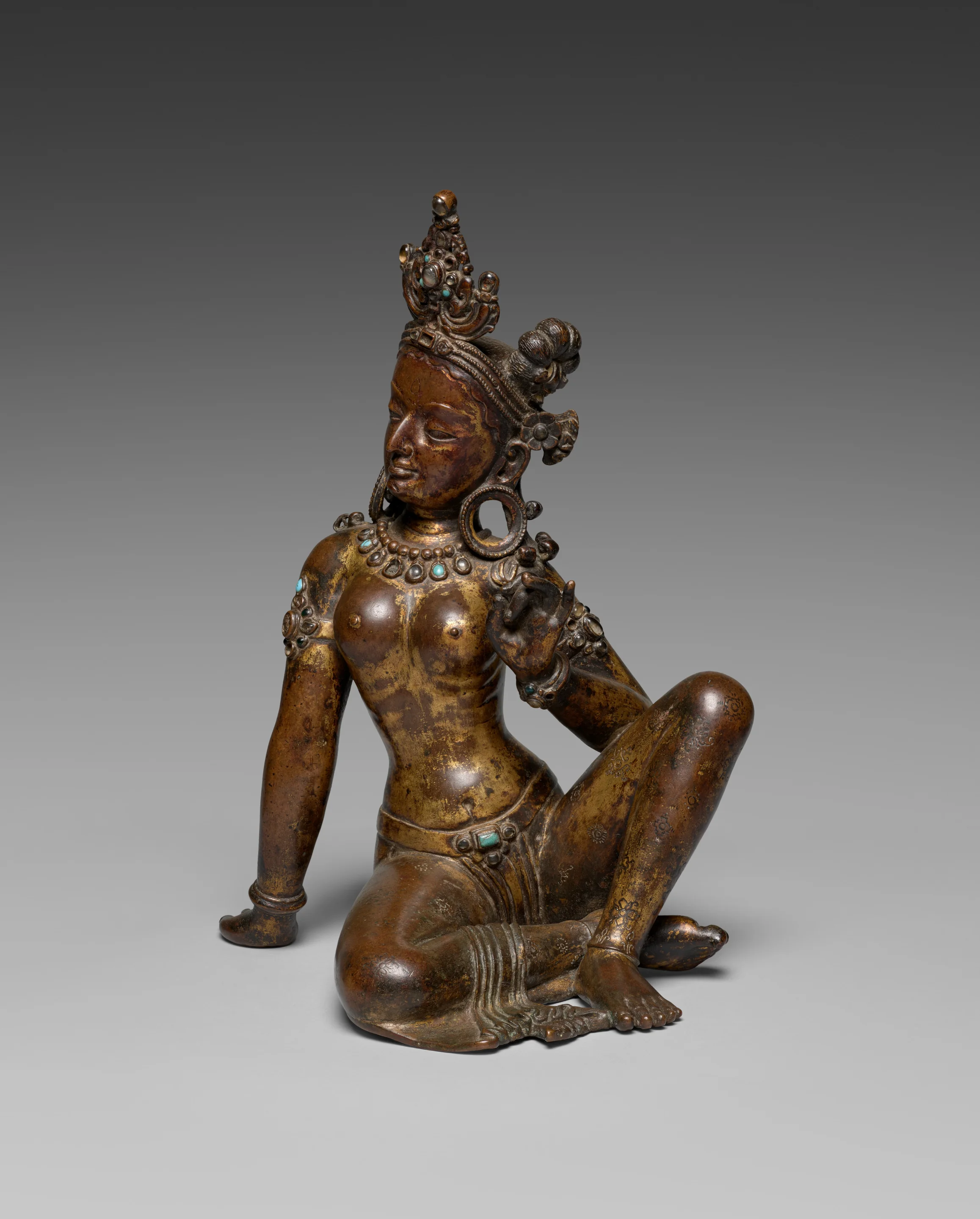
In the words of Pranav Ashar
How we renderThe heart of the Kena
In brief
Who makes the mind think and the eye see? The Kena turns the question back on the one asking. Brahman is not what is seen, heard or thought, but that by which all seeing, hearing and thinking happen. Whoever claims to know it as an object has missed it; it is known in every act of knowing. Then a story: the gods take credit for a victory, and a single blade of grass shows them that no power was ever their own.
- The knower behind the senses
- Never an object
- Known in every knowing
- Borrowed power
- The humbling of the gods
Contents
केनेषितं पतति प्रेषितं मनः केन प्राणः प्रथमः प्रैति युक्तः । केनेषितां वाचमिमां वदन्ति चक्षुः श्रोत्रं क उ देवो युनक्ति ॥
keneṣitaṃ patati preṣitaṃ manaḥ kena prāṇaḥ prathamaḥ praiti yuktaḥ | keneṣitāṃ vācamimāṃ vadanti cakṣuḥ śrotraṃ ka u devo yunakti ||
? Yoked by whom does the first breath go forth? Sent by whom is this speech that people speak? the eye and the ear?
Note //
The student's question: who is behind the instruments of body and mind? 'Deva' is the luminous one (Shankara).
श्रोत्रस्य श्रोत्रं मनसो मनो यद्वाचो ह वाचं स उ प्राणस्य प्राणः । चक्षुषश्चक्षुरतिमुच्य धीराः प्रेत्यास्माल्लोकादमृता भवन्ति ॥
śrotrasya śrotraṃ manaso mano yadvāco ha vācaṃ sa u prāṇasya prāṇaḥ | cakṣuṣaścakṣuratimucya dhīrāḥ pretyāsmāllokādamṛtā bhavanti ||
It is , the mind of the mind, the speech of speech, , the eye of the eye. and, leaving this world, are .letting go of the claim "I am these"
Note //
'Atimucya': letting go of identification with the senses and mind (Shankara).
न तत्र चक्षुर्गच्छति न वाग्गच्छति नो मनो न विद्मो न विजानीमो यथैतदनुशिष्यात् । अन्यदेव तद्विदितादथो अविदितादधि । इति शुश्रुम पूर्वेषां ये नस्तद्व्याचचक्षिरे ॥
na tatra cakṣurgacchati na vāggacchati no mano na vidmo na vijānīmo yathaitadanuśiṣyāt | anyadeva tadviditādatho aviditādadhi | iti śuśruma pūrveṣāṃ ye nastadvyācacakṣire ||
The eye it, nor speech, nor the mind. , so we do not know how it could be . It is , and beyond the unknown.So from those before us who explained it.
Note //
यद्वाचाऽनभ्युदितं येन वागभ्युद्यते । तदेव ब्रह्म त्वं विद्धि नेदं यदिदमुपासते ॥
yadvācā'nabhyuditaṃ yena vāgabhyudyate | tadeva brahma tvaṃ viddhi nedaṃ yadidamupāsate ||
What speech , but by which speech is spoken: as , not this that people here .
Note //
Brahman is never an object, not even an object of meditation. It is what is aware of every object.
यन्मनसा न मनुते येनाहुर्मनो मतम् । तदेव ब्रह्म त्वं विद्धि नेदं यदिदमुपासते ॥
yanmanasā na manute yenāhurmano matam | tadeva brahma tvaṃ viddhi nedaṃ yadidamupāsate ||
What the mind , but by which, , the mind is thought: as Brahman, not this that people here .
Note //
यच्चक्षुषा न पश्यति येन चक्षूंषि पश्यति । तदेव ब्रह्म त्वं विद्धि नेदं यदिदमुपासते ॥
yaccakṣuṣā na paśyati yena cakṣūṃṣi paśyati | tadeva brahma tvaṃ viddhi nedaṃ yadidamupāsate ||
What the eye cannot see, but : know that alone as Brahman, not this that people here .
Note //
यच्छ्रोत्रेण न शृणोति येन श्रोत्रमिदं श्रुतम् । तदेव ब्रह्म त्वं विद्धि नेदं यदिदमुपासते ॥
yacchrotreṇa na śṛṇoti yena śrotramidaṃ śrutam | tadeva brahma tvaṃ viddhi nedaṃ yadidamupāsate ||
What the ear cannot hear, but by which the ear is heard: know that alone as Brahman, not this that people here .
Note //
यत्प्राणेन न प्राणिति येन प्राणः प्रणीयते । तदेव ब्रह्म त्वं विद्धि नेदं यदिदमुपासते ॥
yatprāṇena na prāṇiti yena prāṇaḥ praṇīyate | tadeva brahma tvaṃ viddhi nedaṃ yadidamupāsate ||
What does not breathe with the breath, but by which the breath is led out: know that alone as Brahman, not this that people here .
Note //
यदि मन्यसे सुवेदेति दभ्रमेवापि नूनं त्वं वेत्थ ब्रह्मणो रूपम् । यदस्य त्वं यदस्य देवेष्वथ नु मीमांस्यमेव ते मन्ये विदितम् ॥
yadi manyase suvedeti dabhramevāpi nūnaṃ tvaṃ vettha brahmaṇo rūpam | yadasya tvaṃ yadasya deveṣvatha nu mīmāṃsyameva te manye viditam ||
If you think, "I know it well," : the form it takes in you, the form it takes in the gods. So it must still be by you. (The student, after reflection:) "I think I know it now."
Note //
Khanda 2 is a dialogue: the teacher speaks here (Shankara).
नाहं मन्ये सुवेदेति नो न वेदेति वेद च । यो नस्तद्वेद तद्वेद नो न वेदेति वेद च ॥
nāhaṃ manye suvedeti no na vedeti veda ca | yo nastadveda tadveda no na vedeti veda ca ||
I do not think, "I know it well." Nor do I think, "I do not know it." Whoever among us understands this, not unknown, yet not known as a thing, knows it.
Note //
The student answers.
यस्यामतं तस्य मतं मतं यस्य न वेद सः । अविज्ञातं विजानतां विज्ञातमविजानताम् ॥
yasyāmataṃ tasya mataṃ mataṃ yasya na veda saḥ | avijñātaṃ vijānatāṃ vijñātamavijānatām ||
. Whoever has thought it, does not know it. by those who make it a thing known, and known by those who do not.
Note //
प्रतिबोधविदितं मतममृतत्वं हि विन्दते । आत्मना विन्दते वीर्यं विद्यया विन्दतेऽमृतम् ॥
pratibodhaviditaṃ matamamṛtatvaṃ hi vindate | ātmanā vindate vīryaṃ vidyayā vindate'mṛtam ||
, for so one finds the deathless. Through the Self comes ; through knowledge, the deathless.
Note //
'Pratibodha-viditam': known as the witness of every cognition (Shankara).
इह चेदवेदीदथ सत्यमस्ति न चेदिहावेदीन्महती विनष्टिः । भूतेषु भूतेषु विचित्य धीराः प्रेत्यास्माल्लोकादमृता भवन्ति ॥
iha cedavedīdatha satyamasti na cedihāvedīnmahatī vinaṣṭiḥ | bhūteṣu bhūteṣu vicitya dhīrāḥ pretyāsmāllokādamṛtā bhavanti ||
Know it here, and life is true. Not knowing it here is the great loss. Seeing it in every being, the wise, leaving this world, are deathless.
Note //
ब्रह्म ह देवेभ्यो विजिग्ये तस्य ह ब्रह्मणो विजये देवा अमहीयन्त । त ऐक्षन्तास्माकमेवायं विजयोऽस्माकमेवायं महिमेति ॥
brahma ha devebhyo vijigye tasya ha brahmaṇo vijaye devā amahīyanta | ta aikṣantāsmākamevāyaṃ vijayo'smākamevāyaṃ mahimeti ||
Brahman won a victory for the gods, and in Brahman's victory the gods grew proud. They thought: "This victory is ours. This greatness is ours."
Note //
Khandas 3 and 4 are a story: no power belongs to anyone but Brahman.
तद्धैषां विजज्ञौ तेभ्यो ह प्रादुर्बभूव तन्न व्यजानत किमिदं यक्षमिति ॥
taddhaiṣāṃ vijajñau tebhyo ha prādurbabhūva tanna vyajānata kimidaṃ yakṣamiti ||
Brahman knew their thought and appeared before them. They did not know what this wondrous being was.
Note //
'Yaksha': a wondrous being, worthy of honour.
तेऽग्निमब्रुवञ्जातवेद एतद्विजानीहि किमेतद्यक्षमिति तथेति ॥
te'gnimabruvañjātaveda etadvijānīhi kimetadyakṣamiti tatheti ||
They said to Fire: "Knower of all, find out what this wondrous being is." "Yes," he said.
Note //
तदभ्यद्रवत्तमभ्यवदत्कोऽसीत्यग्निर्वा अहमस्मीत्यब्रवीज्जातवेदा वा अहमस्मीति ॥
tadabhyadravattamabhyavadatko'sītyagnirvā ahamasmītyabravījjātavedā vā ahamasmīti ||
He ran to it. It asked him: "Who are you?" "I am Fire," he said. "I am the knower of all."
Note //
तस्मिंस्त्वयि किं वीर्यमित्यपीदं सर्वं दहेयं यदिदं पृथिव्यामिति ॥
tasmiṃstvayi kiṃ vīryamityapīdaṃ sarvaṃ daheyaṃ yadidaṃ pṛthivyāmiti ||
"What power is in you?" "I could burn up everything there is on earth."
Note //
तस्मै तृणं निदधावेतद्दहेति तदुपप्रेयाय सर्वजवेन तन्न शशाक दग्धुं स तत एव निववृते नैतदशकं विज्ञातुं यदेतद्यक्षमिति ॥
tasmai tṛṇaṃ nidadhāvetaddaheti tadupapreyāya sarvajavena tanna śaśāka dagdhuṃ sa tata eva nivavṛte naitadaśakaṃ vijñātuṃ yadetadyakṣamiti ||
It set down a blade of grass: "Burn this." He rushed at it with all his speed, and could not burn it. He turned back: "I could not find out what this wondrous being is."
Note //
अथ वायुमब्रुवन्वायवेतद्विजानीहि किमेतद्यक्षमिति तथेति ॥
atha vāyumabruvanvāyavetadvijānīhi kimetadyakṣamiti tatheti ||
Then they said to Wind: "Wind, find out what this wondrous being is." "Yes," he said.
Note //
तदभ्यद्रवत्तमभ्यवदत्कोऽसीति वायुर्वा अहमस्मीत्यब्रवीन्मातरिश्वा वा अहमस्मीति ॥
tadabhyadravattamabhyavadatko'sīti vāyurvā ahamasmītyabravīnmātariśvā vā ahamasmīti ||
He ran to it. It asked him: "Who are you?" "I am Wind," he said. "I am the one who moves through space."
Note //
तस्मिंस्त्वयि किं वीर्यमित्यपीदं सर्वमाददीय यदिदं पृथिव्यामिति ॥
tasmiṃstvayi kiṃ vīryamityapīdaṃ sarvamādadīya yadidaṃ pṛthivyāmiti ||
"What power is in you?" "I could carry off everything there is on earth."
Note //
तस्मै तृणं निदधावेतदादत्स्वेति तदुपप्रेयाय सर्वजवेन तन्न शशाकादातुं स तत एव निववृते नैतदशकं विज्ञातुं यदेतद्यक्षमिति ॥
tasmai tṛṇaṃ nidadhāvetadādatsveti tadupapreyāya sarvajavena tanna śaśākādātuṃ sa tata eva nivavṛte naitadaśakaṃ vijñātuṃ yadetadyakṣamiti ||
It set down a blade of grass: "Carry this." He rushed at it with all his speed, and could not lift it. He turned back: "I could not find out what this wondrous being is."
Note //
अथेन्द्रमब्रुवन्मघवन्नेतद्विजानीहि किमेतद्यक्षमिति तथेति तदभ्यद्रवत्तस्मात्तिरोदधे ॥
athendramabruvanmaghavannetadvijānīhi kimetadyakṣamiti tatheti tadabhyadravattasmāttirodadhe ||
Then they said to Indra: "Great one, find out what this wondrous being is." "Yes," he said. He ran to it, and it vanished from him.
Note //
स तस्मिन्नेवाकाशे स्त्रियमाजगाम बहुशोभमानामुमां हैमवतीं तां होवाच किमेतद्यक्षमिति ॥
sa tasminnevākāśe striyamājagāma bahuśobhamānāmumāṃ haimavatīṃ tāṃ hovāca kimetadyakṣamiti ||
In that same space he met a woman of great radiance, Uma, daughter of the Himalaya. He asked her: "What was this wondrous being?"
Note //
Shankara reads Uma as knowledge itself, appearing to the one who seeks with humility.
सा ब्रह्मेति होवाच ब्रह्मणो वा एतद्विजये महीयध्वमिति ततो हैव विदाञ्चकार ब्रह्मेति ॥
sā brahmeti hovāca brahmaṇo vā etadvijaye mahīyadhvamiti tato haiva vidāñcakāra brahmeti ||
"It was Brahman," she said. "In Brahman's victory you grew great." Then he knew: it is Brahman.
Note //
तस्माद्वा एते देवा अतितरामिवान्यान्देवान्यदग्निर्वायुरिन्द्रस्ते ह्येनन्नेदिष्ठं पस्पृशुस्ते ह्येनत्प्रथमो विदाञ्चकार ब्रह्मेति ॥
tasmādvā ete devā atitarāmivānyāndevānyadagnirvāyurindraste hyenannediṣṭhaṃ paspṛśuste hyenatprathamo vidāñcakāra brahmeti ||
So these gods, Fire, Wind and Indra, stand above the others: they came nearest to it, and were the first to know it as Brahman.
Note //
तस्माद्वा इन्द्रोऽतितरामिवान्यान्देवान्स ह्येनन्नेदिष्ठं पस्पर्श स ह्येनत्प्रथमो विदाञ्चकार ब्रह्मेति ॥
tasmādvā indro'titarāmivānyāndevānsa hyenannediṣṭhaṃ pasparśa sa hyenatprathamo vidāñcakāra brahmeti ||
So Indra stands above all the gods: he came nearest to it, and was the first to know it as Brahman.
Note //
तस्यैष आदेशो यदेतद्विद्युतो व्यद्युतदा इतीन् न्यमीमिषदा इत्यधिदैवतम् ॥
tasyaiṣa ādeśo yadetadvidyuto vyadyutadā itīn nyamīmiṣadā ityadhidaivatam ||
This is how it is pointed to: like a flash of lightning, like the blink of an eye. That is how it shows in the world of the gods.
Note //
अथाध्यात्मं यदेतद्गच्छतीव च मनोऽनेन चैतदुपस्मरत्यभीक्ष्णं सङ्कल्पः ॥
athādhyātmaṃ yadetadgacchatīva ca mano'nena caitadupasmaratyabhīkṣṇaṃ saṅkalpaḥ ||
And within ourselves: it is what the mind seems to move toward, what it keeps remembering, what it wills.
Note //
Shankara: a meditation on Brahman as present in every movement of the mind.
तद्ध तद्वनं नाम तद्वनमित्युपासितव्यं स य एतदेवं वेदाभि हैनं सर्वाणि भूतानि संवाञ्छन्ति ॥
taddha tadvanaṃ nāma tadvanamityupāsitavyaṃ sa ya etadevaṃ vedābhi hainaṃ sarvāṇi bhūtāni saṃvāñchanti ||
Its name is "the one all love." Meditate on it as that. Whoever knows it this way, all beings come to love.
Note //
'Tadvanam': the beloved, the one worthy of all love.
उपनिषदं भो ब्रूहीत्युक्ता त उपनिषद्ब्राह्मीं वाव त उपनिषदमब्रूमेति ॥
upaniṣadaṃ bho brūhītyuktā ta upaniṣadbrāhmīṃ vāva ta upaniṣadamabrūmeti ||
"Sir, tell me the teaching." "The teaching has been told to you: the teaching about Brahman."
Note //
तस्यै तपो दमः कर्मेति प्रतिष्ठा वेदाः सर्वाङ्गानि सत्यमायतनम् ॥
tasyai tapo damaḥ karmeti pratiṣṭhā vedāḥ sarvāṅgāni satyamāyatanam ||
Its ground is discipline, self-control and right action. The Vedas are its limbs. Truth is its home.
Note //
Tapas, dama and karma as supports for knowledge (Shankara).
यो वा एतामेवं वेदापहत्य पाप्मानमनन्ते स्वर्गे लोके ज्येये प्रतितिष्ठति प्रतितिष्ठति ॥
yo vā etāmevaṃ vedāpahatya pāpmānamanante svarge loke jyeye pratitiṣṭhati pratitiṣṭhati ||
Whoever knows it this way, with wrong cast off, stands firm in the endless, highest world. Stands firm.
Note //
'This' is the teaching itself. The 'endless world' is Brahman (Shankara).
Touch an underlined word to see the Sanskrit behind it. The lighter lines are how the tradition read the verse; the rest is the verse.
The renderings on this page are shared under CC BY-NC 4.0, in the words of Pranav Ashar.