Atma Upanishad
In the words of Pranav Ashar
How we renderThe heart of the Atma
In brief
Angiras teaches that a person is threefold: the outer self of skin, flesh and bone, which is born and dies; the inner self, the hearer, smeller, doer and knower; and the highest Self, not born, not dying, without qualities, the witness. Brahman alone appears, as the world, as teacher and student. Taking the world as real keeps the round of becoming going; seeing it as not real on its own ends it. Bondage and freedom are made by maya; in truth there is no dissolution and no origination, no one bound, no one seeking, no one freed.
- Three selves in one person
- Brahman appears as all
- Not real on its own
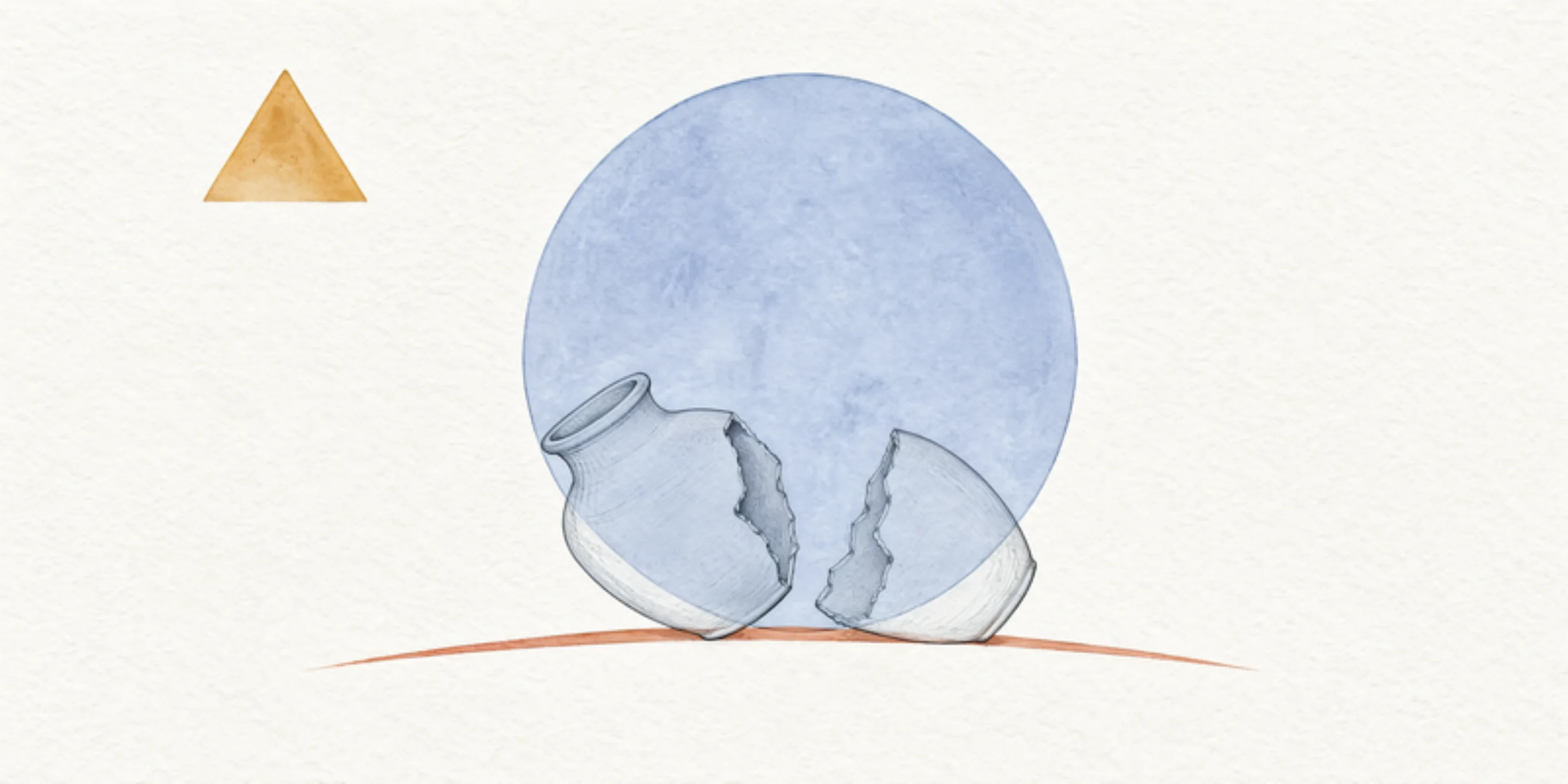
- Space when the pot breaks
- No one bound, no one freed
ॐ अथाङ्गिरास्त्रिविधः पुरुषोऽजायतात्मान्तरात्मा परमात्मा चेति । त्वक्चर्ममांसरोमाङ्गुष्ठाङ्गुल्यः पृष्ठवंशनखगुल्फोदरनाभिमेढ्रकट्यूरुकपोलश्रोत्रभ्रूललाटबाहुपार्श्वशिरोऽक्षीणि भवन्ति जायते म्रियत इत्येष आत्मा ।
oṃ athāṅgirāstrividhaḥ puruṣo'jāyatātmāntarātmā paramātmā ceti | tvakcarmamāṃsaromāṅguṣṭhāṅgulyaḥ pṛṣṭhavaṃśanakhagulphodaranābhimeḍhrakaṭyūrukapolaśrotrabhrūlalāṭabāhupārśvaśiro'kṣīṇi bhavanti jāyate mriyata ityeṣa ātmā |
Om. Now, Angiras: the person came to be threefold: , the inner self, and the highest Self. Skin, hide, flesh, hair, thumbs and fingers, spine, nails, ankles, belly, navel, organ, hips, thighs, cheeks, ears, brows, forehead, arms, sides, head and eyes: these come to be. It is born, it dies: this is .
Note //
The 'self' here is the outer self, the body; the Adyar collection calls it so (bāhyātmā) and opens 'puruṣas tad yathā bāhyātmā antarātmā paramātmā ca' ('the person is threefold, namely the outer self, the inner self and the highest Self'). Sanskritdocuments.org has 'puruṣo 'jāyata', which is kept, and the slip 'kaṭūru'; the Adyar collection adds 'dhamanikā' (veins) after 'head'. Pending review.
अथान्तरात्मा नाम पृथिव्यापस्तेजोवायुराकाशमिच्छाद्वेषसुखदुःखकाममोहविकल्पनादिभिः स्मृतिलिङ्ग उदात्तानुदात्तह्रस्वदीर्घप्लुतस्खलितगर्जितस्फुटितमुदितनृत्तगीतवादित्रप्रलयविजृम्भितादिभिः श्रोता घ्राता रसयिता मन्ता बोद्धा कर्ता विज्ञानात्मा पुरुषः पुराणन्यायमीमांसाधर्मशास्त्राणीति श्रवणघ्राणाकर्षणकर्मविशेषणं करोत्येषोऽन्तरात्मा नाम ।
athāntarātmā nāma pṛthivyāpastejovāyurākāśamicchādveṣasukhaduḥkhakāmamohavikalpanādibhiḥ smṛtiliṅga udāttānudāttahrasvadīrghaplutaskhalitagarjitasphuṭitamuditanṛttagītavāditrapralayavijṛmbhitādibhiḥ śrotā ghrātā rasayitā mantā boddhā kartā vijñānātmā puruṣaḥ purāṇanyāyamīmāṃsādharmaśāstrāṇīti śravaṇaghrāṇākarṣaṇakarmaviśeṣaṇaṃ karotyeṣo'ntarātmā nāma |
Now the one called the inner self. Through earth, water, fire, air and space, through desire and aversion, pleasure and pain, longing, confusion, imagining and the rest, known by the mark of memory; through high and low tones, short, long and drawn-out sounds, stumbling, roaring, bursting out, rejoicing, dancing, singing, playing music, fainting, yawning and the rest; the hearer, the smeller, the taster, the thinker, the one who understands, the doer, made of knowing, the person who studies the histories, logic, exegesis and law, who hears and smells and draws things in and tells actions apart: this is the one called the inner self.
Note //
The inner self is everything that knows and does: the subtle body with its senses, mind and intellect, lit by consciousness. 'Known by the mark of memory' (smṛtiliṅga) is uncertain. Sanskritdocuments.org reads 'netā' (leader) for 'mantā boddhā' (thinker, one who understands) and joins 'vikalpānādi'; the Adyar reading is followed. Pending review.
अथ परमात्मा नाम यथाक्षर उपासनीयः । स च प्राणायामप्रत्याहारधारणाध्यानसमाधियोगानुमानात्मचिन्तकवटकणिका वा श्यामाकतण्डुलो वा वालाग्रशतसहस्रविकल्पनाभिः स लभ्यते नोपलभ्यते न जायते न म्रियते न शुष्यति न क्लिद्यते न दह्यते न कम्पते न भिद्यते न च्छिद्यते निर्गुणः साक्षिभूतः शुद्धो निरवयवात्मा केवलः सूक्ष्मो निर्ममो निरञ्जनो निर्विकारः शब्दस्पर्शरूपरसगन्धवर्जितो निर्विकल्पो निराकाङ्क्षः सर्वव्यापी सोऽचिन्त्यो निर्वर्ण्यश्च पुनात्यशुद्धान्यपूतानि । निष्क्रियस्तस्य संसारो नास्ति ।
atha paramātmā nāma yathākṣara upāsanīyaḥ | sa ca prāṇāyāmapratyāhāradhāraṇādhyānasamādhiyogānumānātmacintakavaṭakaṇikā vā śyāmākataṇḍulo vā vālāgraśatasahasravikalpanābhiḥ sa labhyate nopalabhyate na jāyate na mriyate na śuṣyati na klidyate na dahyate na kampate na bhidyate na cchidyate nirguṇaḥ sākṣibhūtaḥ śuddho niravayavātmā kevalaḥ sūkṣmo nirmamo nirañjano nirvikāraḥ śabdasparśarūparasagandhavarjito nirvikalpo nirākāṅkṣaḥ sarvavyāpī so'cintyo nirvarṇyaśca punātyaśuddhānyapūtāni | niṣkriyastasya saṃsāro nāsti |
Now the one called the highest Self. He is to be worshipped as the imperishable. Those who think on by breath control, withdrawal of the senses, holding, meditation, absorption, yoga and inference, imagine him as a banyan seed, or a grain of millet, or a hair's tip split a hundred thousand times: so he is reached, but he is not perceived. He is not born, he does not die. He is not dried, not wetted, not burned, he does not shake, is not split, is not cut. Without qualities, the witness, pure, a Self without parts, alone, subtle, claiming nothing, untouched, unchanging, free of sound, touch, form, taste and smell, free of all division, wanting nothing, pervading all. He is beyond thought, beyond description. He makes pure what is impure and unclean. He does not act; for him there is no round of becoming.
Note //
The images of a seed, a grain and a hair's tip are those of Chandogya 3.14.3 and Shvetashvatara 5.9: ways of pointing to the subtle, which reach him but do not make him an object ('reached, but not perceived'). 'Not dried, not wetted, not burned': compare Gita 2.23-24. The Adyar collection reads 'niṣkalo' (partless) for 'nirmamo' (claiming nothing), and 'adhyātmacintakaṃ'. Interpretive; pending review.
आत्मसंज्ञः शिवः शुद्ध एक एवाद्वयः सदा । ब्रह्मरूपतया ब्रह्म केवलं प्रतिभासते ॥ १॥
ātmasaṃjñaḥ śivaḥ śuddha eka evādvayaḥ sadā | brahmarūpatayā brahma kevalaṃ pratibhāsate || 1||
Called , auspicious, pure, one only, always without a second, Brahman alone appears as Brahman.
जगद्रूपतयाप्येतद्ब्रह्मैव प्रतिभासते । विद्याविद्यादिभेदेन भावाभावादिभेदतः ॥ २ ॥ गुरुशिष्यादिभेदेन ब्रह्मैव प्रतिभासते । ब्रह्मैव केवलं शुद्धं विद्यते तत्त्वदर्शने ॥ ३ ॥
jagadrūpatayāpyetadbrahmaiva pratibhāsate | vidyāvidyādibhedena bhāvābhāvādibhedataḥ || 2 || guruśiṣyādibhedena brahmaiva pratibhāsate | brahmaiva kevalaṃ śuddhaṃ vidyate tattvadarśane || 3 ||
As the world, too, it is Brahman alone that appears: in the difference of knowledge and ignorance, in the difference of being and not-being, in the difference of teacher and student, Brahman alone appears. When the truth is seen, Brahman alone, pure, is.
Note //
Even the distinction between teacher and student, which the teaching needs, is Brahman appearing. Editions agree.
न च विद्या न चाविद्या न जगच्च न चापरम् । सत्यत्वेन जगद्भानं संसारस्य प्रवर्तकम् ॥ ४॥
na ca vidyā na cāvidyā na jagacca na cāparam | satyatvena jagadbhānaṃ saṃsārasya pravartakam || 4||
There is no knowledge, no ignorance, no world, nor anything else. The world appearing as real is what keeps the round of becoming going.
Note //
'Appearing as real' (satyatvena bhānam): the world is not denied as appearance; what binds is taking it as real on its own. Editions agree.
असत्यत्वेन भानं तु संसारस्य निवर्तकम् । घटोऽयमिति विज्ञातुं नियमः कोन्वपेक्षते ॥ ५॥
asatyatvena bhānaṃ tu saṃsārasya nivartakam | ghaṭo'yamiti vijñātuṃ niyamaḥ konvapekṣate || 5||
Its appearing as not real on its own is what ends the round. To know 'this is a pot', what discipline is needed?
Note //
The second line begins an argument (5-8): no special rule or practice is needed to know a pot when it is in front of one's eyes; so, once the means of knowledge (the teaching) is present, the Self, which is always already there, is known without further conditions, as one knows 'I am Devadatta'. 'Not real on its own' renders asatyatvena. Editions agree.
विना प्रमाणसुष्ठुत्वं यस्मिन्सति पदार्थधीः । अयमात्मा नित्यसिद्धः प्रमाणे सति भासते ॥ ६ ॥
vinā pramāṇasuṣṭhutvaṃ yasminsati padārthadhīḥ | ayamātmā nityasiddhaḥ pramāṇe sati bhāsate || 6 ||
Nothing but a sound means of knowing, in whose presence things are known. This Self, always already present, shines when the means of knowing is there.
Note //
The answer to the question in 5: to know a pot nothing is needed but a working eye. So too the Self, which is never absent, is recognised when the means of knowing it, the teaching, is present. Editions agree.
न देशं नापि कालं वा न शुद्धिं वाप्यपेक्षते । देवदत्तोऽहमित्येतद्विज्ञानं निरपेक्षकम् ॥ ७ ॥ तद्वद्ब्रह्मविदोऽप्यस्य ब्रह्माहमिति वेदनम् ।
na deśaṃ nāpi kālaṃ vā na śuddhiṃ vāpyapekṣate | devadatto'hamityetadvijñānaṃ nirapekṣakam || 7 || tadvadbrahmavido'pyasya brahmāhamiti vedanam |
The knowledge 'I am Devadatta' needs no place, no time, no purification; it depends on nothing. So too, for one who knows Brahman, the knowledge 'I am Brahman'.
Note //
Devadatta: any name, like 'John'. One does not need a holy place or hour to know one's own name; nor, once taught, to know 'I am Brahman'. Editions agree.
भानुनेव जगत्सर्वं भास्यते यस्य तेजसा ॥ ८ ॥ अनात्मकमसत्तुच्छं किं नु तस्यावभासकम् । वेदशास्त्रपुराणानि भूतानि सकलान्यपि ॥ ९ ॥ येनार्थवन्ति तं किं नु विज्ञातारं प्रकाशयेत् ।
bhānuneva jagatsarvaṃ bhāsyate yasya tejasā || 8 || anātmakamasattucchaṃ kiṃ nu tasyāvabhāsakam | vedaśāstrapurāṇāni bhūtāni sakalānyapi || 9 || yenārthavanti taṃ kiṃ nu vijñātāraṃ prakāśayet |
The one by whose light, as by the sun, the whole world is lit: what could light him up, the not-Self, unreal and empty? The Vedas, sciences and histories, and all beings too, have their meaning through him: what could reveal that knower?
Note //
Compare Brihadaranyaka 4.3.6 and Katha 2.2.15. The knower is not lit by anything; everything is lit by him. Editions agree.
क्षुधां देहव्यथां त्यक्त्वा बालः क्रीडति वस्तुनि ॥ १० ॥ तथैव विद्वान्रमते निर्ममो निरहं सुखी । कामान्निष्कामरूपी सञ्चरत्येकचरो मुनिः ॥ ११ ॥ स्वात्मनैव सदा तुष्टः स्वयं सर्वात्मना स्थितः । निर्धनोऽपि सदा तुष्टोऽप्यसहायो महाबलः ॥ १२ ॥
kṣudhāṃ dehavyathāṃ tyaktvā bālaḥ krīḍati vastuni || 10 || tathaiva vidvānramate nirmamo nirahaṃ sukhī | kāmānniṣkāmarūpī sañcaratyekacaro muniḥ || 11 || svātmanaiva sadā tuṣṭaḥ svayaṃ sarvātmanā sthitaḥ | nirdhano'pi sadā tuṣṭo'pyasahāyo mahābalaḥ || 12 ||
As a child at play with a thing forgets hunger and the body's aches, so the knower delights, claiming nothing, without the I-claim, happy. Going about among desires, himself without desire, the sage walks alone. Content always in his own Self, he stands as of all. Without wealth, yet always content; without help, yet of great strength.
Note //
The description of the knower that runs to 20 is close to Vivekachudamani 535-549 (Shankara's tradition). Editions agree.
नित्यतृप्तोऽप्यभुञ्जानोऽप्यसमः समदर्शनः । कुर्वन्नपि न कुर्वाणश्चाभोक्ता फलभोग्यपि ॥ १३॥
nityatṛpto'pyabhuñjāno'pyasamaḥ samadarśanaḥ | kurvannapi na kurvāṇaścābhoktā phalabhogyapi || 13||
Always satisfied, though he does not eat; unlike all, yet seeing all alike; acting, yet not acting; not enjoying, though he enjoys the fruits.
Note //
From the description of the knower (10-20). The paradoxes are kept: the knower's body acts and enjoys, but he does not take himself to be the doer or the enjoyer. Editions agree.
शरीर्यप्यशरीर्येष परिच्छिन्नोऽपि सर्वगः । अशरीरं सदा सन्तमिदं ब्रह्मविदं क्वचित् ॥ १४ ॥ प्रियाप्रिये न स्पृशतस्तथैव च शुभाशुभे ।
śarīryapyaśarīryeṣa paricchinno'pi sarvagaḥ | aśarīraṃ sadā santamidaṃ brahmavidaṃ kvacit || 14 || priyāpriye na spṛśatastathaiva ca śubhāśubhe |
With a body, he is bodiless; seemingly limited, he is everywhere. This knower of Brahman, always without a body, is never touched by the pleasant or unpleasant, nor by good or bad.
Note //
The last words are Chandogya 8.12.1: 'the pleasant and the unpleasant do not touch the bodiless'. Editions agree.
तमसा ग्रस्तवद्भानादग्रस्तोऽपि रविर्जनैः ॥ १५ ॥ ग्रस्त इत्युच्यते भ्रान्त्या ह्यज्ञात्वा वस्तुलक्षणम् । तद्वद्देहादिबन्धेभ्यो विमुक्तं ब्रह्मवित्तमम् ॥ १६ ॥ पश्यन्ति देहिवन्मूढाः शरीराभासदर्शनात् । अहिनिर्ल्वयनीवायं मुक्तदेहस्तु तिष्ठति ॥ १७ ॥
tamasā grastavadbhānādagrasto'pi ravirjanaiḥ || 15 || grasta ityucyate bhrāntyā hyajñātvā vastulakṣaṇam | tadvaddehādibandhebhyo vimuktaṃ brahmavittamam || 16 || paśyanti dehivanmūḍhāḥ śarīrābhāsadarśanāt | ahinirlvayanīvāyaṃ muktadehastu tiṣṭhati || 17 ||
Because it seems swallowed by darkness, people say, mistaken, that the sun is swallowed in an eclipse, though it is not, not knowing what the thing is. So too the deluded, seeing the appearance of a body, see the best knower of Brahman, who is free of the body and its bonds, as if he were embodied. But he stays free of the body, like the skin a snake has cast off.
Note //
The cast skin: Brihadaranyaka 4.4.7, 'as the slough of a snake lies dead on an anthill, so lies this body'. The snake no longer takes the skin as itself. Editions agree.
इतस्ततश्चाल्यमानो यत्किञ्चित्प्राणवायुना । स्रोतसा नीयते दारु यथा निम्नोन्नतस्थलम् ॥ १८ ॥ दैवेन नीयते देहो यथा कालोपभुक्तिषु । लक्ष्यालक्ष्यगतिं त्यक्त्वा यस्तिष्ठेत्केवलात्मना ॥ १९ ॥ शिव एव स्वयं साक्षादयं ब्रह्मविदुत्तमः । जीवन्नेव सदा मुक्तः कृतार्थो ब्रह्मवित्तमः ॥ २० ॥
itastataścālyamāno yatkiñcitprāṇavāyunā | srotasā nīyate dāru yathā nimnonnatasthalam || 18 || daivena nīyate deho yathā kālopabhuktiṣu | lakṣyālakṣyagatiṃ tyaktvā yastiṣṭhetkevalātmanā || 19 || śiva eva svayaṃ sākṣādayaṃ brahmaviduttamaḥ | jīvanneva sadā muktaḥ kṛtārtho brahmavittamaḥ || 20 ||
Moved here and there a little by the wind of the breath, as a log is carried by the current to low ground and high, so the body is carried by what has been set going, through the experiences of its time. One who has let go of going after what can and cannot be aimed at, and stays as alone, is Shiva himself, directly: the best of those who know Brahman, free while living, always, his purpose fulfilled.
Note //
'What has been set going' (daiva): the action already bearing fruit (prārabdha). The Adyar collection reads 'tathā' for 'yathā' in 19. 'Snota' in the Adyar collection is a slip for 'srota'. Editions agree otherwise.
उपाधिनाशाद्ब्रह्मैव सद्ब्रह्माप्येति निर्द्वयम् । शैलूषो वेषसद्भावाभावयोश्च यथा पुमान् ॥ २१ ॥
upādhināśādbrahmaiva sadbrahmāpyeti nirdvayam | śailūṣo veṣasadbhāvābhāvayośca yathā pumān || 21 ||
When the limiting conditions are gone, being Brahman already, he enters Brahman, without a second, as an actor is the same man whether he wears his costume or not.
Note //
'Being Brahman already, he enters Brahman' (brahmaiva san brahmāpyeti): Brihadaranyaka 4.4.6. Nothing changes but the costume. Editions agree.
तथैव ब्रह्मविच्छ्रेष्ठः सदा ब्रह्मैव नापरः । घटे नष्टे यथा व्योम व्योमैव भवति स्वयम् ॥ २२॥
tathaiva brahmavicchreṣṭhaḥ sadā brahmaiva nāparaḥ | ghaṭe naṣṭe yathā vyoma vyomaiva bhavati svayam || 22||
So the best knower of Brahman is always Brahman, and no other. When a pot breaks, the space in it is simply space.
Note //
Verse 21 gives the image of the actor, who is the same man whether he has his costume on or not. The space in the pot never became anything other than space; the pot only seemed to divide it. Editions agree.
तथैवोपाधिविलये ब्रह्मैव ब्रह्मवित्स्वयम् । क्षीरं क्षीरे यथा क्षिप्तं तैलं तैले जलं जले ॥ २३ ॥ संयुक्तमेकतां याति तथात्मन्यात्मविन्मुनिः । एवं विदेहकैवल्यं सन्मात्रत्वमखण्डितम् ॥ २४ ॥ ब्रह्मभावं प्रपद्यैष यतिर्नावर्तते पुनः ।
tathaivopādhivilaye brahmaiva brahmavitsvayam | kṣīraṃ kṣīre yathā kṣiptaṃ tailaṃ taile jalaṃ jale || 23 || saṃyuktamekatāṃ yāti tathātmanyātmavinmuniḥ | evaṃ videhakaivalyaṃ sanmātratvamakhaṇḍitam || 24 || brahmabhāvaṃ prapadyaiṣa yatirnāvartate punaḥ |
So, when the limiting conditions dissolve, the knower of Brahman is Brahman himself. As milk poured into milk, oil into oil, water into water, becomes one with it, so the sage who knows , in . So, in freedom when the body falls, which is pure being, undivided, having come to be Brahman, the renunciant does not return.
Note //
'Freedom when the body falls' (videha-kaivalya): not a new state but the end of the appearance of a separate body. Editions agree.
सदात्मकत्वविज्ञानदग्धाविद्यादिवर्ष्मणः ॥ २५ ॥
sadātmakatvavijñānadagdhāvidyādivarṣmaṇaḥ || 25 ||
His body of ignorance and the rest has been burned by knowing that he is being itself.
Note //
The second half of 25, which leads into 26: 'since he is Brahman, how could he come to be from Brahman?' Sanskritdocuments.org divides 'dagdhā vidyādi', which would mean 'knowledge and the rest burned'; the Adyar reading 'dagdhāvidyādi' (ignorance and the rest burned) is followed. Pending review.
अमुष्य ब्रह्मभूतत्वाद्ब्रह्मणः कुत उद्भवः । मायाक्लृप्तौ बन्धमोक्षौ न स्तः स्वात्मनि वस्तुतः ॥ २६॥
amuṣya brahmabhūtatvādbrahmaṇaḥ kuta udbhavaḥ | māyāklṛptau bandhamokṣau na staḥ svātmani vastutaḥ || 26||
Since he is Brahman, how could he come to be from Brahman? Bondage and freedom are ; in truth they are not in .
Note //
Verse 27: 'as, in the rope that does not move, the snake's appearing and going'. Editions agree.
यथा रज्जौ निष्क्रियायां सर्पाभासविनिर्गमौ । अवृतेः सदसत्त्वाभ्यां वक्तव्ये बन्धमोक्षणे ॥ २७ ॥ नावृतिर्ब्रह्मणः काचिदन्याभावादनावृतम् । अस्तीति प्रत्ययो यश्च यश्च नास्तीति वस्तुनि ॥ २८ ॥ बुद्धेरेव गुणावेतौ न तु नित्यस्य वस्तुनः । अतस्तौ मायया कॢप्तौ बन्धमोक्षौ न चात्मनि ॥ २९ ॥
yathā rajjau niṣkriyāyāṃ sarpābhāsavinirgamau | avṛteḥ sadasattvābhyāṃ vaktavye bandhamokṣaṇe || 27 || nāvṛtirbrahmaṇaḥ kācidanyābhāvādanāvṛtam | astīti pratyayo yaśca yaśca nāstīti vastuni || 28 || buddhereva guṇāvetau na tu nityasya vastunaḥ | atastau māyayā kḷptau bandhamokṣau na cātmani || 29 ||
As in the rope, which does not move, the snake appears and goes, bondage and freedom would be spoken of by whether there is a covering or not. But Brahman has no covering at all: there is nothing else to cover it, so it is uncovered. The thought 'it is' and the thought 'it is not' about a thing are both qualities of the intellect, not of the thing that is eternal. So bondage and freedom are , and are not in .
Note //
Close to Vivekachudamani 568-571. The Adyar collection has 'avṛteḥ' (without covering), sanskritdocuments.org 'nāvṛttir' and 'kvācit' for 'nāvṛtir' and 'kācit'. 'Avṛteḥ' in 27 is read as 'āvṛteḥ' (of the covering). Pending review.
निष्कले निष्क्रिये शान्ते निरवद्ये निरञ्जने । अद्वितीये परे तत्त्वे व्योमवत्कल्पना कुतः ॥ ३० ॥
niṣkale niṣkriye śānte niravadye nirañjane | advitīye pare tattve vyomavatkalpanā kutaḥ || 30 ||
In the highest reality, without parts, without action, at peace, without fault, untouched, without a second, like space, where could any imagining be?
Note //
Shvetashvatara 6.19 has the first line. Editions agree.
न निरोधो न चोत्पत्तिर्न बद्धो न च साधकः । न मुमुक्षुर्न वै मुक्त इत्येषा परमार्थता ॥ ३१॥ इत्युपनिषत् ॥
na nirodho na cotpattirna baddho na ca sādhakaḥ | na mumukṣurna vai mukta ityeṣā paramārthatā || 31|| ityupaniṣat ||
There is no dissolution, no origination, no one bound, no one seeking, , no one freed: this is the highest truth. This is the Upanishad.
Note //
The last verse, also Gaudapada's Mandukya Karika 2.32 and Amritabindu 10. It is said from the standpoint of the highest Self, in which nothing has ever happened. Editions agree.
No public-domain English translation exists for this text; the Sanskrit is shown.
The renderings on this page are shared under CC BY-NC 4.0, in the words of Pranav Ashar.