Kaivalya Upanishad
In the words of Pranav Ashar
How we renderThe heart of the Kaivalya
In brief
Ashvalayana asks the creator Brahma for the highest knowledge and is told: not by action, children or wealth, only by letting go. The Upanishad moves from meditation on Shiva in the heart, through waking, dream and deep sleep, to the great saying 'that is you, you are that'. Its second half speaks in the first person: in me all is born, in me all stands, into me all dissolves. 'Kaivalya' means aloneness: the Self, with nothing second to it.
- Letting go, not getting
- The form as a door to the formless
- Three states, one witness
- You are that
- The Self speaks as 'I'
अथाश्वलायनो भगवन्तं परमेष्ठिनमुपसमेत्योवाच । अधीहि भगवन्ब्रह्मविद्यां वरिष्ठां सदा सद्भिः सेव्यमानां निगूढाम् । ययाऽचिरात्सर्वपापं व्यपोह्य परात्परं पुरुषं याति विद्वान् ॥
athāśvalāyano bhagavantaṃ parameṣṭhinamupasametyovāca | adhīhi bhagavanbrahmavidyāṃ variṣṭhāṃ sadā sadbhiḥ sevyamānāṃ nigūḍhām | yayā'cirātsarvapāpaṃ vyapohya parātparaṃ puruṣaṃ yāti vidvān ||
Then Ashvalayana came to the revered Brahma, the highest, and said: "Sir, teach me the knowledge of Brahman: the best of all knowledge, always followed by the good, and hidden, by which the wise soon shake off every wrong and reach the person beyond the highest."
Note //
तस्मै स होवाच पितामहश्च श्रद्धाभक्तिध्यानयोगादवैहि ॥
tasmai sa hovāca pitāmahaśca śraddhābhaktidhyānayogādavaihi ||
The Grandfather said to him: "Know it through trust, devotion, meditation and practice."
Note //
Trust, devotion, meditation and practice are the means; knowing is the end (the text's own order, verses 2 to 4).
न कर्मणा न प्रजया धनेन त्यागेनैके अमृतत्वमानशुः । परेण नाकं निहितं गुहायां विभ्राजते यद्यतयो विशन्ति ॥
na karmaṇā na prajayā dhanena tyāgenaike amṛtatvamānaśuḥ | pareṇa nākaṃ nihitaṃ guhāyāṃ vibhrājate yadyatayo viśanti ||
Not by action, not by children, not by wealth: by alone have some reached the deathless. Higher than heaven, set in the cave of the heart, it shines, and those who strive enter it.
Note //
The same verse is in the Mahanarayana Upanishad. 'Tyaga', letting go, is above all letting go of the I-claim in action.
वेदान्तविज्ञानसुनिश्चितार्थाः संन्यासयोगाद्यतयः शुद्धसत्त्वाः । ते ब्रह्मलोकेषु परान्तकाले परामृताः परिमुच्यन्ति सर्वे ॥
vedāntavijñānasuniścitārthāḥ saṃnyāsayogādyatayaḥ śuddhasattvāḥ | te brahmalokeṣu parāntakāle parāmṛtāḥ parimucyanti sarve ||
Those who strive, their minds made clear, who have firmly grasped the meaning Vedanta teaches, through the practice of renunciation, in Brahman, at the body's last moment, one with the highest deathless, are all set free.
Note //
The same verse is Mundaka 3.2.6. There Shankara reads 'the worlds of Brahman' as Brahman itself, and 'the final end' as the end of this body, not of the cosmos; the rendering follows him.
विविक्तदेशे च सुखासनस्थः शुचिः समग्रीवशिरःशरीरः । अत्याश्रमस्थः सकलेन्द्रियाणि निरुध्य भक्त्या स्वगुरुं प्रणम्य ॥
viviktadeśe ca sukhāsanasthaḥ śuciḥ samagrīvaśiraḥśarīraḥ | atyāśramasthaḥ sakalendriyāṇi nirudhya bhaktyā svaguruṃ praṇamya ||
In a quiet place, seated at ease, clean, neck, head and body in a line, gone beyond the stages of life, holding back all the senses, bowing with devotion to one's own teacher,
Note //
Verses 5 to 7 are one sentence. 'Atyashrama': one who has gone beyond the four stages of life, the renunciate.
हृत्पुण्डरीकं विरजं विशुद्धं विचिन्त्य मध्ये विशदं विशोकम् । अचिन्त्यमव्यक्तमनन्तरूपं शिवं प्रशान्तममृतं ब्रह्मयोनिम् ॥
hṛtpuṇḍarīkaṃ virajaṃ viśuddhaṃ vicintya madhye viśadaṃ viśokam | acintyamavyaktamanantarūpaṃ śivaṃ praśāntamamṛtaṃ brahmayonim ||
holding in mind the lotus of the heart, spotless and pure, and in its centre, clear and free of sorrow, the unthinkable, the unmanifest, of endless forms, the all-good, the deeply peaceful, the deathless, the source of Brahma,
Note //
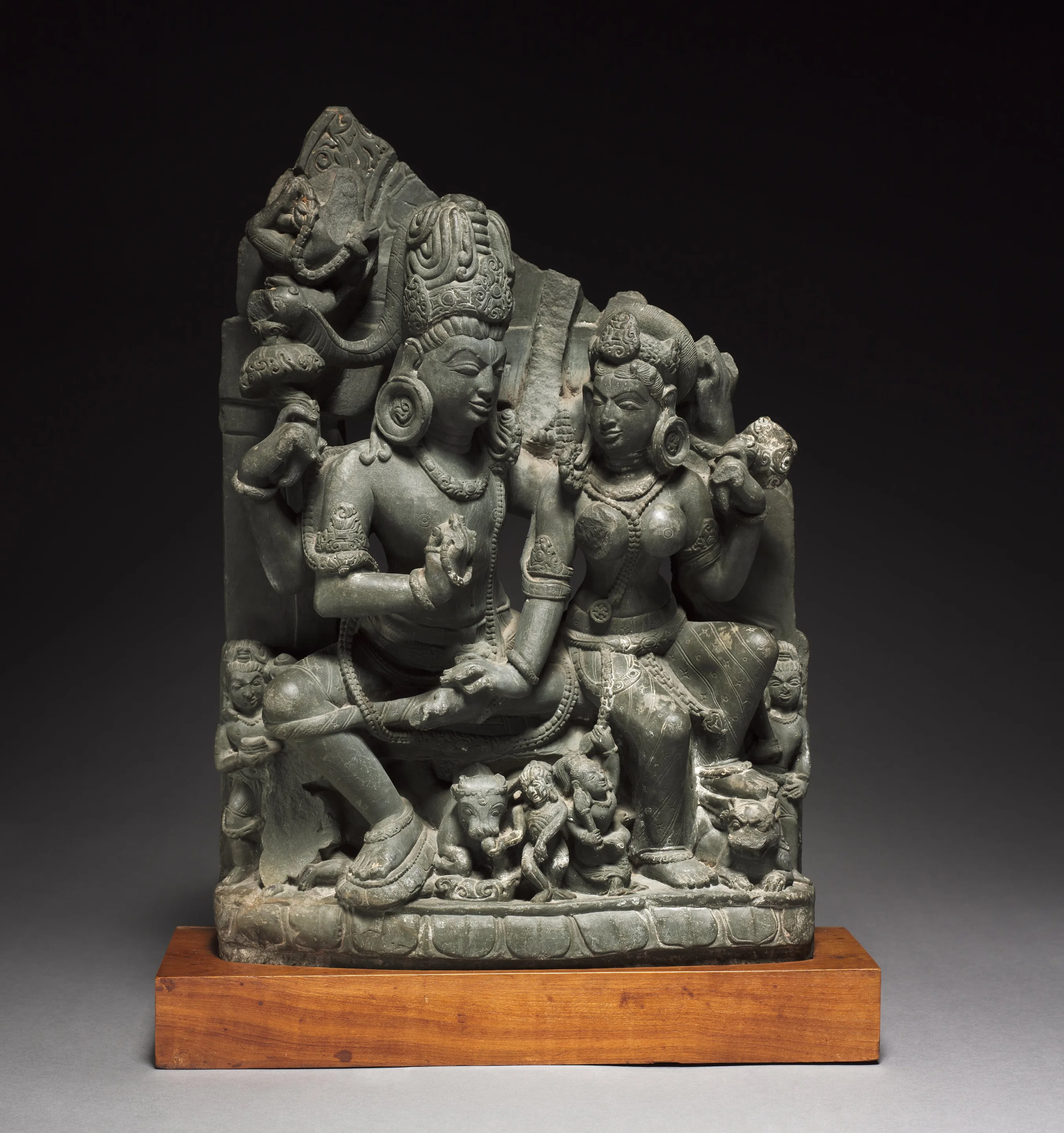
तमादिमध्यान्तविहीनमेकं विभुं चिदानन्दमरूपमद्भुतम् । उमासहायं परमेश्वरं प्रभुं त्रिलोचनं नीलकण्ठं प्रशान्तम् । ध्यात्वा मुनिर्गच्छति भूतयोनिं समस्तसाक्षिं तमसः परस्तात् ॥
tamādimadhyāntavihīnamekaṃ vibhuṃ cidānandamarūpamadbhutam | umāsahāyaṃ parameśvaraṃ prabhuṃ trilocanaṃ nīlakaṇṭhaṃ praśāntam | dhyātvā munirgacchati bhūtayoniṃ samastasākṣiṃ tamasaḥ parastāt ||
without beginning, middle or end, the one, all-pervading, the light and joy, formless, wondrous, the highest lord with Uma at his side, the master, three-eyed, blue-throated, at peace: meditating on him, the sage reaches the source of all beings, the witness of all, beyond darkness.
Note //
Shiva is described with form and without form in the same breath. For the text, the form is a door to the formless.
स ब्रह्मा स शिवः सेन्द्रः सोऽक्षरः परमः स्वराट् । स एव विष्णुः स प्राणः स कालोऽग्निः स चन्द्रमाः ॥
sa brahmā sa śivaḥ sendraḥ so'kṣaraḥ paramaḥ svarāṭ | sa eva viṣṇuḥ sa prāṇaḥ sa kālo'gniḥ sa candramāḥ ||
He is Brahma, he is Shiva, he is Indra, he is the imperishable, the highest, ruling himself. He alone is Vishnu, he is life, he is time, fire and the moon.
Note //
स एव सर्वं यद्भूतं यच्च भव्यं सनातनम् । ज्ञात्वा तं मृत्युमत्येति नान्यः पन्था विमुक्तये ॥
sa eva sarvaṃ yadbhūtaṃ yacca bhavyaṃ sanātanam | jñātvā taṃ mṛtyumatyeti nānyaḥ panthā vimuktaye ||
He alone is all that has been and all that will be, the eternal. Knowing him, one goes beyond death. There is no other path to freedom.
Note //
सर्वभूतस्थमात्मानं सर्वभूतानि चात्मनि । सम्पश्यन्ब्रह्म परमं याति नान्येन हेतुना ॥
sarvabhūtasthamātmānaṃ sarvabhūtāni cātmani | sampaśyanbrahma paramaṃ yāti nānyena hetunā ||
Seeing the Self in all beings and all beings in the Self, one reaches the highest Brahman, and by no other means.
Note //
Compare Isha 6 and Bhagavad Gita 6.29.
आत्मानमरणिं कृत्वा प्रणवं चोत्तरारणिम् । ज्ञाननिर्मथनाभ्यासात्पापं दहति पण्डितः ॥
ātmānamaraṇiṃ kṛtvā praṇavaṃ cottarāraṇim | jñānanirmathanābhyāsātpāpaṃ dahati paṇḍitaḥ ||
Making the self the lower fire-stick and Om the upper, by the steady friction of knowledge the wise one burns away all wrong.
Note //
Fire was kindled by rubbing two sticks together. Compare Shvetashvatara 1.14.
स एव मायापरिमोहितात्मा शरीरमास्थाय करोति सर्वम् । स्त्र्यन्नपानादिविचित्रभोगैः स एव जाग्रत्परितृप्तिमेति ॥
sa eva māyāparimohitātmā śarīramāsthāya karoti sarvam | stryannapānādivicitrabhogaiḥ sa eva jāgratparitṛptimeti ||
It is he who, as if bewildered by maya, takes on a body and does everything. In waking it is he who finds his fill in the many pleasures of women, food, drink and the rest.
Note //
'Maya' is the power by which the one appears as many. The rendering adds 'as if': the bewilderment belongs to the appearance, not to the Self.
स्वप्ने स जीवः सुखदुःखभोक्ता स्वमायया कल्पितजीवलोके । सुषुप्तिकाले सकले विलीने तमोऽभिभूतः सुखरूपमेति ॥
svapne sa jīvaḥ sukhaduḥkhabhoktā svamāyayā kalpitajīvaloke | suṣuptikāle sakale vilīne tamo'bhibhūtaḥ sukharūpameti ||
In dream that same living self tastes pleasure and pain in a world of beings made up by his own maya. In deep sleep, when everything has dissolved, covered by darkness, he comes to a state of ease.
Note //
पुनश्च जन्मान्तरकर्मयोगात्स एव जीवः स्वपिति प्रबुद्धः । पुरत्रये क्रीडति यश्च जीवस्ततस्तु जातं सकलं विचित्रम् । आधारमानन्दमखण्डबोधं यस्मिँल्लयं याति पुरत्रयं च ॥
punaśca janmāntarakarmayogātsa eva jīvaḥ svapiti prabuddhaḥ | puratraye krīḍati yaśca jīvastatastu jātaṃ sakalaṃ vicitram | ādhāramānandamakhaṇḍabodhaṃ yasmim̐llayaṃ yāti puratrayaṃ ca ||
Then, drawn by actions from other lives, that same living self, who slept, wakes again. From the living self who plays in the three cities comes all this varied world. The ground, the joy, undivided knowing, in which the three cities dissolve:
Note //
The three cities are the three bodies, gross, subtle and causal, lived in as waking, dream and deep sleep. The sentence runs on into verse 15.
एतस्माज्जायते प्राणो मनः सर्वेन्द्रियाणि च । खं वायुर्ज्योतिरापश्च पृथ्वी विश्वस्य धारिणी ॥
etasmājjāyate prāṇo manaḥ sarvendriyāṇi ca | khaṃ vāyurjyotirāpaśca pṛthvī viśvasya dhāriṇī ||
from this are born life, mind and all the senses, space, wind, light and water, and the earth that holds up all.
Note //
Compare Mundaka 2.1.3, where the same line appears.
यत्परं ब्रह्म सर्वात्मा विश्वस्यायतनं महत् । सूक्ष्मात्सूक्ष्मतरं नित्यं तत्त्वमेव त्वमेव तत् ॥
yatparaṃ brahma sarvātmā viśvasyāyatanaṃ mahat | sūkṣmātsūkṣmataraṃ nityaṃ tattvameva tvameva tat ||
The highest Brahman, the Self of all, the great home of the world, subtler than the subtle, eternal: that is you. You are that.
Note //
The great saying 'you are that' (Chandogya 6.8.7), turned both ways round so that it cannot be read as a comparison: that is you; you are that.
जाग्रत्स्वप्नसुषुप्त्यादिप्रपञ्चं यत्प्रकाशते । तद्ब्रह्माहमिति ज्ञात्वा सर्वबन्धैः प्रमुच्यते ॥
jāgratsvapnasuṣuptyādiprapañcaṃ yatprakāśate | tadbrahmāhamiti jñātvā sarvabandhaiḥ pramucyate ||
That which lights up the world of waking, dream, deep sleep and the rest: knowing "I am that Brahman," one is free of every bond.
Note //
त्रिषु धामसु यद्भोग्यं भोक्ता भोगश्च यद्भवेत् । तेभ्यो विलक्षणः साक्षी चिन्मात्रोऽहं सदाशिवः ॥
triṣu dhāmasu yadbhogyaṃ bhoktā bhogaśca yadbhavet | tebhyo vilakṣaṇaḥ sākṣī cinmātro'haṃ sadāśivaḥ ||
In the three states there is what is enjoyed, the one who enjoys, and the enjoying. Other than all of them, the witness, the light alone, always good: that am I.
Note //
'Chinmatra': the light of knowing and nothing else. 'Sadashiva', 'always good', is also a name of Shiva.
मय्येव सकलं जातं मयि सर्वं प्रतिष्ठितम् । मयि सर्वं लयं याति तद्ब्रह्माद्वयमस्म्यहम् ॥
mayyeva sakalaṃ jātaṃ mayi sarvaṃ pratiṣṭhitam | mayi sarvaṃ layaṃ yāti tadbrahmādvayamasmyaham ||
In me alone all was born; in me all stands; into me all dissolves. I am that Brahman, .
Note //
The first part of the text ends here.
अणोरणीयानहमेव तद्वन्महानहं विश्वमहं विचित्रम् । पुरातनोऽहं पुरुषोऽहमीशो हिरण्मयोऽहं शिवरूपमस्मि ॥
aṇoraṇīyānahameva tadvanmahānahaṃ viśvamahaṃ vicitram | purātano'haṃ puruṣo'hamīśo hiraṇmayo'haṃ śivarūpamasmi ||
Smaller than the smallest am I, and as vast; I am this many-coloured world. I am the ancient one, the person, the lord; I am the golden one; I am the form of the all-good.
Note //
अपाणिपादोऽहमचिन्त्यशक्तिः पश्याम्यचक्षुः स शृणोम्यकर्णः । अहं विजानामि विविक्तरूपो न चास्ति वेत्ता मम चित्सदाऽहम् ॥
apāṇipādo'hamacintyaśaktiḥ paśyāmyacakṣuḥ sa śṛṇomyakarṇaḥ | ahaṃ vijānāmi viviktarūpo na cāsti vettā mama citsadā'ham ||
Without hands or feet, my power is beyond thought. I see without eyes; I hear without ears. I know, standing apart from every form. There is no one who knows me: I am always the light of knowing.
Note //
The knower cannot be known as an object; it is known only as itself. Compare Shvetashvatara 3.19.
वेदैरनेकैरहमेव वेद्यो वेदान्तकृद्वेदविदेव चाहम् । न पुण्यपापे मम नास्ति नाशो न जन्म देहेन्द्रियबुद्धिरस्ति ॥
vedairanekairahameva vedyo vedāntakṛdvedavideva cāham | na puṇyapāpe mama nāsti nāśo na janma dehendriyabuddhirasti ||
Through all the Vedas, I alone am to be known. I am the maker of Vedanta, and the knower of the Veda. Neither merit nor wrong is mine; I have no end, no birth, no body, no senses, no intellect.
Note //
न भूमिरापो न च वह्निरस्ति न चानिलो मेऽस्ति न चाम्बरं च । एवं विदित्वा परमात्मरूपं गुहाशयं निष्कलमद्वितीयम् । समस्तसाक्षिं सदसद्विहीनं प्रयाति शुद्धं परमात्मरूपम् ॥
na bhūmirāpo na ca vahnirasti na cānilo me'sti na cāmbaraṃ ca | evaṃ viditvā paramātmarūpaṃ guhāśayaṃ niṣkalamadvitīyam | samastasākṣiṃ sadasadvihīnaṃ prayāti śuddhaṃ paramātmarūpam ||
For me there is no earth, no water, no fire, no wind, and no sky. Knowing in this way the highest Self, lying in the cave of the heart, without parts, without a second, the witness of all, beyond being and non-being, one comes to the pure nature of the highest Self.
Note //
यः शतरुद्रियमधीते सोऽग्निपूतो भवति सुरापानात्पूतो भवति स ब्रह्महत्यायाः पूतो भवति स सुवर्णस्तेयात्पूतो भवति स कृत्याकृत्यात्पूतो भवति तस्मादविमुक्तमाश्रितो भवत्यत्याश्रमी सर्वदा सकृद्वा जपेत् । अनेन ज्ञानमाप्नोति संसारार्णवनाशनम् । तस्मादेवं विदित्वैनं कैवल्यं पदमश्नुते कैवल्यं पदमश्नुत इति ॥
yaḥ śatarudriyamadhīte so'gnipūto bhavati surāpānātpūto bhavati sa brahmahatyāyāḥ pūto bhavati sa suvarṇasteyātpūto bhavati sa kṛtyākṛtyātpūto bhavati tasmādavimuktamāśrito bhavatyatyāśramī sarvadā sakṛdvā japet | anena jñānamāpnoti saṃsārārṇavanāśanam | tasmādevaṃ viditvainaṃ kaivalyaṃ padamaśnute kaivalyaṃ padamaśnuta iti ||
Whoever studies the Shatarudriya is made pure as by fire: pure of drinking liquor, pure of killing a priest, pure of stealing gold, pure of what was done and should not have been, and what was not done and should have been. So that one comes to rest in the Unforsaken. Let one who has gone beyond the stages of life repeat this always, or even once. By it one gains the knowledge that ends the ocean of births. So, knowing it in this way, one reaches the state of aloneness. One reaches the state of aloneness.
Note //
The Shatarudriya is the hymn to Rudra in the Yajur Veda; Aiyar takes the word to mean this Upanishad itself. 'Avimukta', the Unforsaken, is a name of Varanasi; inwardly (Jabala Upanishad) it is the point between the brows. The list of purifications is a traditional praise of study, the usual closing praise of a text.
The renderings on this page are shared under CC BY-NC 4.0, in the words of Pranav Ashar.