Mahanarayana Upanishad
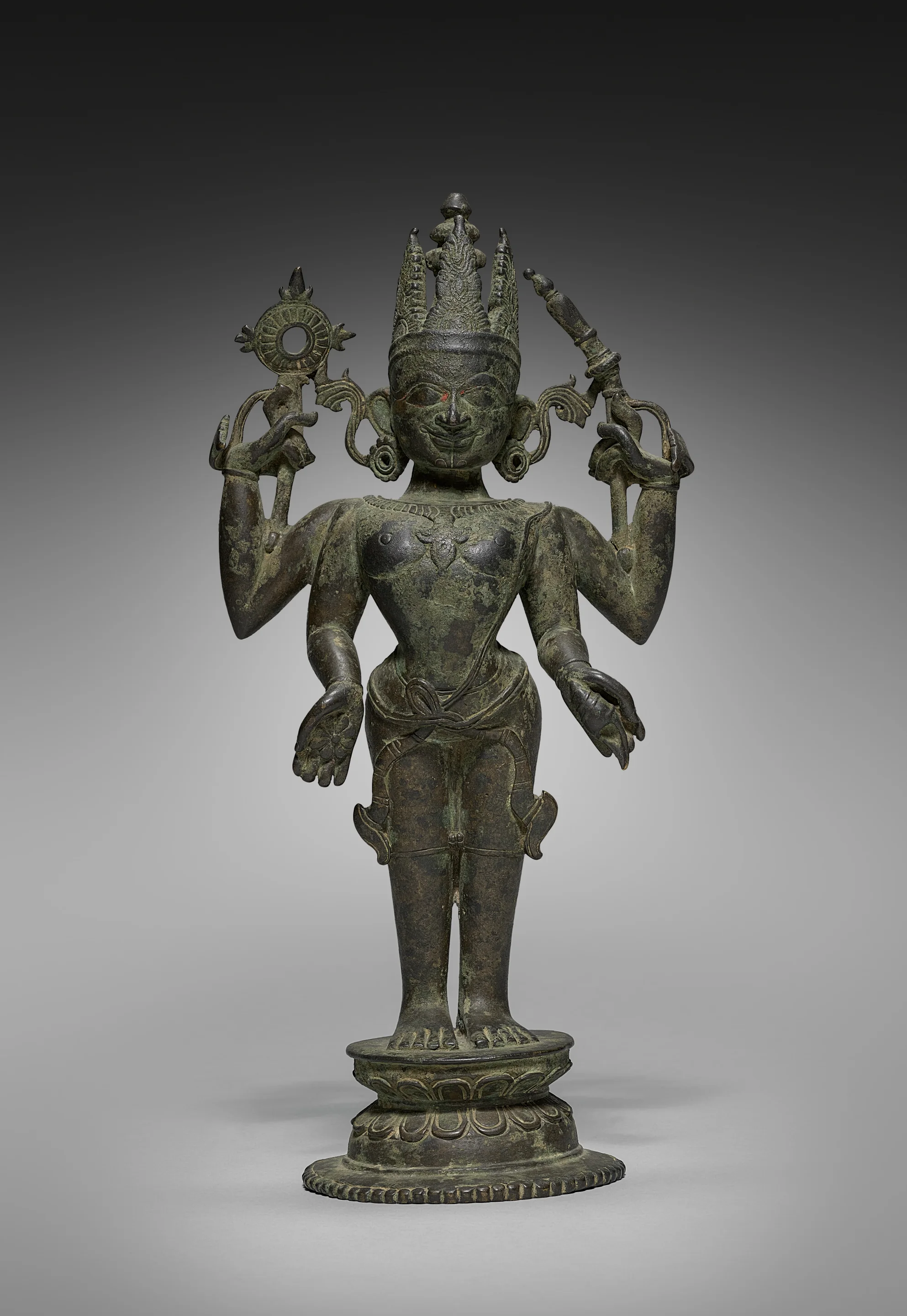
In the words of Pranav Ashar
How we renderThe heart of the Mahanarayana
In brief
The Mahanarayana gathers the prayers of the Vedic householder around one figure: Narayana, the Person. The bath ends in the offering 'I alone am I; I offer myself into myself'. Not by works, not by children, not by wealth, but by renunciation alone, some reached deathlessness. In the small lotus of the heart, the city of the body, is a small space free of sorrow. The text ends by setting renunciation above all austerities, and by seeing the knower's whole life as a sacrifice whose closing bath is death.
- Narayana, inside and outside
- I offer myself into myself
- Deathlessness by renunciation
- The small space in the heart
- The Self in the flame
- The knower's life as sacrifice
Contents
- 1.1
- 1.2
- 1.3
- 1.4
- 1.5
- 1.6
- 1.7
- 1.8
- 1.9
- 1.10
- 1.11
- 1.12
- 2.1
- 2.2
- 2.3
- 2.4
- 2.5
- 2.6
- 2.7
- 2.8
- 2.9
- 2.10
- 3.1
- 3.2
- 3.3
- 3.4
- 3.5
- 3.6
- 3.7
- 3.8
- 3.9
- 3.10
- 3.11
- 3.12
- 3.13
- 3.14
- 3.15
- 3.16
- 3.17
- 3.18
- 4.1
- 4.2
- 4.3
- 4.4
- 4.5
- 4.6
- 4.7
- 4.8
- 4.9
- 4.10
- 4.11
- 4.12
- 4.13
- 5.1
- 5.2
- 5.3
- 5.4
- 5.5
- 5.6
- 5.7
- 5.8
- 5.9
- 5.10
- 5.11
- 5.12
- 6.1
- 6.2
- 6.3
- 6.4
- 6.5
- 6.6
- 6.7
- 6.8
- 7.1
- 7.2
- 7.3
- 7.4
- 7.5
- 7.6
- 8.1
- 8.2
- 8.3
- 8.4
- 8.5
- 9.1
- 9.2
- 9.3
- 9.4
- 9.5
- 9.6
- 9.7
- 9.8
- 9.9
- 9.10
- 9.11
- 9.12
- 9.13
- 10.1
- 10.2
- 10.3
- 10.4
- 10.5
- 10.6
- 10.7
- 10.8
- 10.9
- 11.1
- 11.2
- 11.3
- 11.4
- 11.5
- 11.6
- 11.7
- 11.8
- 11.9
- 11.10
- 11.11
- 11.12
- 11.13
- 11.14
- 11.15
- 12.1
- 12.2
- 12.3
- 13.1
- 13.2
- 13.3
- 13.4
- 13.5
- 13.6
- 13.7
- 14.1
- 14.2
- 14.3
- 14.4
- 14.5
- 15.1
- 15.2
- 15.3
- 15.4
- 15.5
- 15.6
- 15.7
- 15.8
- 15.9
- 15.10
- 16.1
- 16.2
- 16.3
- 16.4
- 16.5
- 16.6
- 16.7
- 17.1
- 17.2
- 17.3
- 17.4
- 17.5
- 17.6
- 17.7
- 17.8
- 18.1
- 18.2
- 18.3
- 19.1
- 19.2
- 20.1
- 20.2
- 20.3
- 20.4
- 20.5
- 20.6
- 20.7
- 20.8
- 20.9
- 20.10
- 20.11
- 20.12
- 20.13
- 20.14
- 20.15
- 20.16
- 20.17
- 20.18
- 20.19
- 20.20
- 20.21
- 20.22
- 20.23
- 20.24
- 20.25
- 21.1
- 21.2
- 22.1
- 23.1
- 24.1
- 24.2
- 25.1
ॐ नमो महते नारायणाय । अम्भस्यपारे भुवनस्य मध्ये नाकस्य पृष्ठे महतो महीयान् । शुक्रेण ज्योतींषि समनुप्रविष्टः प्रजापतिश्चरति गर्भे अन्तः ॥ १॥
oṃ namo mahate nārāyaṇāya | ambhasyapāre bhuvanasya madhye nākasya pṛṣṭhe mahato mahīyān | śukreṇa jyotīṃṣi samanupraviṣṭaḥ prajāpatiścarati garbhe antaḥ || 1||
Om. Homage to the great Narayana. In the boundless waters, in the middle of the world, on the vault of heaven, greater than the great, having entered the lights with his brightness, Prajapati moves within the womb.
Note //
The opening of the text. The 'womb' is the cosmic egg, or the womb of all beings, within which the creator moves. Editions agree.
यस्मिन्निदं सं च वि चैति सर्वं यस्मिन्देवा अधि विश्वे निषेदुः । तदेव भूतं तदु भव्यमानमिदं तदक्षरे परमे व्योमन् ॥ २॥
yasminnidaṃ saṃ ca vi caiti sarvaṃ yasmindevā adhi viśve niṣeduḥ | tadeva bhūtaṃ tadu bhavyamānamidaṃ tadakṣare parame vyoman || 2||
In whom all this comes together and goes apart, on whom all the gods are seated: that alone is what has been, that is what is to be. This rests in the imperishable, in the highest heaven.
Note //
'Comes together and goes apart' (saṃ ca vi caiti): all things gather into it and spread out from it, as in Shvetashvatara 4.11. Editions agree.
येनावृतं खं च दिवं मही च येनादित्यस्तपति तेजसा भ्राजसा च । यदन्तः समुद्रे कवयो वदन्ति तदक्षरे परमे प्रजाः ॥ ३॥
yenāvṛtaṃ khaṃ ca divaṃ mahī ca yenādityastapati tejasā bhrājasā ca | yadantaḥ samudre kavayo vadanti tadakṣare parame prajāḥ || 3||
By which space, the sky and the earth are covered, by which the sun burns with heat and with splendour, which the poets say is within the ocean: in that imperishable, the highest, all creatures live.
Note //
Editions: 'kavayo vadanti' (PF copy) over 'kavayopadanti' (Adyar, a misprint).
यतः प्रसूता जगतः प्रसूती तोयेन जीवान्व्यससर्ज भूम्याम् । यदोषधीभिः पुरुषान्पशूंश्च विवेश भूतानि चराचराणि ॥ ४॥
yataḥ prasūtā jagataḥ prasūtī toyena jīvānvyasasarja bhūmyām | yadoṣadhībhiḥ puruṣānpaśūṃśca viveśa bhūtāni carācarāṇi || 4||
From it came the mother of the world, who with water let loose living things on the earth; and through the plants it entered men and cattle, all beings, moving and unmoving.
Note //
Editions: 'yad oṣadhībhiḥ' (PF copy, as in the Taittiriya Aranyaka) over 'yata oṣadhībhiḥ' (Adyar); 'vyasasarja' (Taittiriya Aranyaka) for 'vyacasarja' (PF copy) and 'visasarja' (Adyar); the sense is the same.
अतः परं नान्यदणीयसं हि परात्परं यन्महतो महान्तम् । यदेकमव्यक्तमनन्तरूपं विश्वं पुराणं तमसः परस्तात् ॥ ५॥
ataḥ paraṃ nānyadaṇīyasaṃ hi parātparaṃ yanmahato mahāntam | yadekamavyaktamanantarūpaṃ viśvaṃ purāṇaṃ tamasaḥ parastāt || 5||
Beyond this there is nothing else, nothing subtler: higher than the high, greater than the great; the one, unmanifest, of endless forms, the all, the ancient, beyond darkness.
Note //
'Subtler' and 'greater' together, as in Katha 1.2.20 ('smaller than the small, greater than the great'). 'Beyond darkness' (tamasaḥ parastāt) is Shvetashvatara 3.8: beyond the unknowing that hides it. Editions agree.
तदेवर्तं तदु सत्यमाहुस्तदेव ब्रह्म परमं कवीनाम् । इष्टापूर्तं बहुधा जातं जायमानं विश्वं बिभर्ति भुवनस्य नाभिः ॥ ६॥
tadevartaṃ tadu satyamāhustadeva brahma paramaṃ kavīnām | iṣṭāpūrtaṃ bahudhā jātaṃ jāyamānaṃ viśvaṃ bibharti bhuvanasya nābhiḥ || 6||
That alone they call the right; that, the true; that alone is the highest Brahman of the poets. Sacrifice and good works, born in many ways, still being born: the navel of the world holds up the whole.
Note //
'The right' (ṛta) is the order of things; 'the true' (satya), what is. 'Sacrifice and good works' (iṣṭāpūrta): the rites and the charitable works of the householder, all held up by that one. Editions agree.
तदेवाग्निस्तद्वायुस्तत्सूर्यस्तदु चन्द्रमाः । तदेव शुक्रममृतं तद्ब्रह्म तदापः स प्रजापतिः ॥ ७॥
tadevāgnistadvāyustatsūryastadu candramāḥ | tadeva śukramamṛtaṃ tadbrahma tadāpaḥ sa prajāpatiḥ || 7||
That is fire; that is wind; that is the sun; that is the moon. That is the bright; that is the deathless; that is Brahman; that is the waters; he is Prajapati.
Note //
Compare Shvetashvatara 4.2. Editions agree.
सर्वे निमेषा जज्ञिरे विद्युतः पुरुषादधि । कला मुहूर्ताः काष्ठाश्चाहोरात्राश्च सर्वशः ॥ ८॥
sarve nimeṣā jajñire vidyutaḥ puruṣādadhi | kalā muhūrtāḥ kāṣṭhāścāhorātrāśca sarvaśaḥ || 8||
All the blinks of time were born from the Person, shining like lightning: the parts of hours, the hours, the moments, the days and nights, all of them.
Note //
'Blinks' (nimeṣa), 'parts' (kalā), 'hours' (muhūrta), 'moments' (kāṣṭhā): the measures of time. Editions agree.
अर्धमासा मासा ऋतवः संवत्सरश्च कल्पताम् । स आपः प्रदुघे उभे इमे अन्तरिक्षमथो सुवः ॥ ९॥
ardhamāsā māsā ṛtavaḥ saṃvatsaraśca kalpatām | sa āpaḥ pradughe ubhe ime antarikṣamatho suvaḥ || 9||
The half-months, the months, the seasons and the year were shaped from him. He milked out the waters, and both these worlds, the space between, and the light of heaven.
Note //
Editions agree.
नैनमूर्ध्वं न तिर्यञ्चं न मध्ये परिजग्रभत् । न तस्येशे कश्चन तस्य नाम महद्यशः ॥ १०॥
nainamūrdhvaṃ na tiryañcaṃ na madhye parijagrabhat | na tasyeśe kaścana tasya nāma mahadyaśaḥ || 10||
No one has grasped him above, or across, or in the middle. No one is lord over him. His name is great glory.
Note //
Shvetashvatara 4.19. Editions agree.
न सन्दृशे तिष्ठति रूपमस्य न चक्षुषा पश्यति कश्चनैनम् । हृदा मनीषा मनसाभिक्लृप्तो य एनं विदुरमृतास्ते भवन्ति ॥ ११॥
na sandṛśe tiṣṭhati rūpamasya na cakṣuṣā paśyati kaścanainam | hṛdā manīṣā manasābhiklṛpto ya enaṃ viduramṛtāste bhavanti || 11||
His form does not stand where it can be seen; no one sees him with the eye. He is grasped by the heart, by insight, by the mind. Those who know him become deathless.
Note //
Shvetashvatara 4.20 and Katha 2.3.9. What is 'grasped by the heart' is not an object seen, but the one who sees. Editions agree (the Adyar collection prints 'abhikḷpto', the same word).
अद्भ्यः सम्भूतो हिरण्यगर्भ इत्यष्टौ ॥ १२॥
adbhyaḥ sambhūto hiraṇyagarbha ityaṣṭau || 12||
'Born from the waters, Hiranyagarbha': these eight.
Note //
A reference, not a verse: the first words of a group of eight verses that the reciter is to say here, as they are given elsewhere in the Taittiriya books. The editions give only these words.
एष हि देवः प्रदिशोऽनु सर्वाः पूर्वो हि जातः स उ गर्भे अन्तः । स विजायमानः स जनिष्यमाणः प्रत्यङ्मुखस्तिष्ठति सर्वतोमुखः ॥ १॥
eṣa hi devaḥ pradiśo'nu sarvāḥ pūrvo hi jātaḥ sa u garbhe antaḥ | sa vijāyamānaḥ sa janiṣyamāṇaḥ pratyaṅmukhastiṣṭhati sarvatomukhaḥ || 1||
This god is in every direction. He was born first; he is within the womb. He is being born; he will be born. He stands facing inward, facing every way.
Note //
Shvetashvatara 2.16. 'Facing inward' (pratyaṅmukha): turned toward every being as its inmost Self. Editions agree.
विश्वतश्चक्षुरुत विश्वतोमुखो विश्वतोबाहुरुत विश्वतस्पात् । सं बाहुभ्यां धमति सं पतत्रैर्द्यावापृथिवी जनयन्देव एकः ॥ २॥
viśvataścakṣuruta viśvatomukho viśvatobāhuruta viśvataspāt | saṃ bāhubhyāṃ dhamati saṃ patatrairdyāvāpṛthivī janayandeva ekaḥ || 2||
Eyes everywhere, faces everywhere, arms everywhere, feet everywhere: with arms and with wings he forges them, the one god, bringing forth heaven and earth.
Note //
Shvetashvatara 3.3 (Rig Veda 10.81.3). 'Forges' (dhamati): as a smith blows on the fire. Editions agree.
वेनस्तत्पश्यन्विश्वा भुवनानि विद्वान्यत्र विश्वं भवत्येकनीडम् । यस्मिन्निदं सं च वि चैकं स ओतः प्रोतश्च विभुः प्रजासु ॥ ३॥
venastatpaśyanviśvā bhuvanāni vidvānyatra viśvaṃ bhavatyekanīḍam | yasminnidaṃ saṃ ca vi caikaṃ sa otaḥ protaśca vibhuḥ prajāsu || 3||
The seer Vena, knowing all the worlds, saw that in which the whole becomes one nest; in which all this, the one, comes together and goes apart. He, all-pervading, is woven through creatures, warp and woof.
Note //
'One nest' (ekanīḍa): the one home of all. 'Woven, warp and woof' (otaḥ protaś ca), as in Brihadaranyaka 3.8.7. Editions agree.
प्र तद्वोचे अमृतं नु विद्वान्गन्धर्वो नाम निहितं गुहासु । त्रीणि पदा निहिता गुहासु यस्तद्वेद स पितुः पितासत् ॥ ४॥
pra tadvoce amṛtaṃ nu vidvāngandharvo nāma nihitaṃ guhāsu | trīṇi padā nihitā guhāsu yastadveda sa pituḥ pitāsat || 4||
The gandharva who knew it told of that deathless one, its name, hidden in the secret places. Three steps are set in the secret places: whoever knows them becomes the father's father.
Note //
'The secret places' (guhā): the cave of the heart. The 'three steps' are read in the tradition as the three states, or the three measures of Om, behind which the fourth is hidden; tentative. 'The father's father': the knower of the source is older than his elders. Editions agree.
स नो बन्धुर्जनिता स विधाता धामानि वेद भुवनानि विश्वा । यत्र देवा अमृतत्वमानशानास्तृतीये धामान्यभ्यैरयन्त ॥ ५॥
sa no bandhurjanitā sa vidhātā dhāmāni veda bhuvanāni viśvā | yatra devā amṛtatvamānaśānāstṛtīye dhāmānyabhyairayanta || 5||
He is our kin, our father, the one who sets things in order. He knows the dwellings, all the worlds, where the gods, having reached deathlessness, rose up into the third dwelling.
Note //
Editions agree.
परि द्यावापृथिवी यन्ति सद्यः परि लोकान्परि दिशः परि सुवः । ऋतस्य तन्तुं विततं विवृत्य तदपश्यत्तदभवत्तत्प्रजासु ॥ ६॥
pari dyāvāpṛthivī yanti sadyaḥ pari lokānpari diśaḥ pari suvaḥ | ṛtasya tantuṃ vitataṃ vivṛtya tadapaśyattadabhavattatprajāsu || 6||
At once they go round heaven and earth, round the worlds, round the directions, round the light. Unwinding the thread of the right, spread out everywhere, he saw it, he became it: it is he, in creatures.
Note //
'He saw it, he became it' (tad apaśyat tad abhavat): the seeing of the real is becoming it. Editions agree.
परीत्य लोकान्परीत्य भूतानि परीत्य सर्वाः प्रदिशो दिशश्च । प्रजापतिः प्रथमजा ऋतस्यात्मनात्मानमभिसम्बभूव ॥ ७॥
parītya lokānparītya bhūtāni parītya sarvāḥ pradiśo diśaśca | prajāpatiḥ prathamajā ṛtasyātmanātmānamabhisambabhūva || 7||
Going round the worlds, going round all beings, going round all the quarters and directions, Prajapati, the first-born of the right, entered into the Self by the Self.
Note //
'Entered into the Self by the Self' (ātmanātmānam abhisaṃbabhūva): after going round everything, the creator comes home to what he is, by no means other than himself. The phrase anticipates 5.10. Editions agree.
सदसस्पतिमद्भुतं प्रियमिन्द्रस्य काम्यम् । सनिं मेधामयासिषम् ॥ ८॥
sadasaspatimadbhutaṃ priyamindrasya kāmyam | saniṃ medhāmayāsiṣam || 8||
I have come to the lord of the assembly, wonderful, dear, the desire of Indra: to gain, and to wisdom.
Note //
Rig Veda 1.18.6, a prayer for wisdom. Editions agree.
उद्दीप्यस्व जातवेदोऽपघ्नन्निरृतिं मम । पशूंश्च मह्यमावह जीवनं च दिशो दिशः ॥ ९॥
uddīpyasva jātavedo'paghnannirṛtiṃ mama | paśūṃśca mahyamāvaha jīvanaṃ ca diśo diśaḥ || 9||
Blaze up, Jatavedas, fire who knows all born things, striking away my misfortune; bring me cattle, and life, from every quarter.
Note //
Editions: 'apaghnan' (PF copy) over 'apadhnan' (Adyar, a misprint); both print 'udvīpyasva', corrected to 'uddīpyasva' ('blaze up') with the Taittiriya Aranyaka.
मा नो हिंसीज्जातवेदो गामश्वं पुरुषं जगत् । अबिभ्रदग्न आगहि श्रिया मा परिपातय ॥ १०॥
mā no hiṃsījjātavedo gāmaśvaṃ puruṣaṃ jagat | abibhradagna āgahi śriyā mā paripātaya || 10||
Do not harm, Jatavedas, cow or horse, man or anything that moves. Come, Agni, without harming, and keep me all round in good fortune.
Note //
Editions agree.
तत्पुरुषस्य विद्महे सहस्राक्षस्य महादेवस्य धीमहि । तन्नो रुद्रः प्रचोदयात् ॥ १॥
tatpuruṣasya vidmahe sahasrākṣasya mahādevasya dhīmahi | tanno rudraḥ pracodayāt || 1||
May we know that Person; may we hold in mind the thousand-eyed great god. May Rudra move us to it.
Note //
Khanda 3 is a series of gayatris, each in the pattern of the Savitri: 'may we know ... may we hold in mind ... may he move us'. 'Move us' (pracodayāt): stir our understanding toward it. Editions agree.
तत्पुरुषाय विद्महे महादेवाय धीमहि । तन्नो रुद्रः प्रचोदयात् ॥ २॥
tatpuruṣāya vidmahe mahādevāya dhīmahi | tanno rudraḥ pracodayāt || 2||
May we know that Person; may we hold in mind the great god. May Rudra move us to it.
Note //
Editions agree.
तत्पुरुषाय विद्महे नन्दिकेश्वराय धीमहि । तन्नो वृषभः प्रचोदयात् ॥ ३॥
tatpuruṣāya vidmahe nandikeśvarāya dhīmahi | tanno vṛṣabhaḥ pracodayāt || 3||
May we know that Person; may we hold in mind Nandikeshvara. May the bull move us to it.
Note //
Nandi, Shiva's bull. Editions agree.
तत्पुरुषाय विद्महे वक्रतुण्डाय धीमहि । तन्नो दन्ती प्रचोदयात् ॥ ४॥
tatpuruṣāya vidmahe vakratuṇḍāya dhīmahi | tanno dantī pracodayāt || 4||
May we know that Person; may we hold in mind the one with the curved trunk. May the tusked one move us to it.
Note //
Ganesha. Editions agree.
षण्मुखाय विद्महे महासेनाय धीमहि । तन्नः षष्ठः प्रचोदयात् ॥ ५॥
ṣaṇmukhāya vidmahe mahāsenāya dhīmahi | tannaḥ ṣaṣṭhaḥ pracodayāt || 5||
May we know the six-faced one; may we hold in mind the great general. May the sixth move us to it.
पावकाय विद्महे सप्तजिह्वाय धीमहि । तन्नो वैश्वानरः प्रचोदयात् ॥ ६॥
pāvakāya vidmahe saptajihvāya dhīmahi | tanno vaiśvānaraḥ pracodayāt || 6||
May we know the purifier; may we hold in mind the seven-tongued. May Vaishvanara, the fire in all, move us to it.
Note //
Editions agree.
वैश्वानराय विद्महे लालीलाय धीमहि । तन्नो अग्निः प्रचोदयात् ॥ ७॥
vaiśvānarāya vidmahe lālīlāya dhīmahi | tanno agniḥ pracodayāt || 7||
May we know Vaishvanara; may we hold in mind the one with the flickering tongue. May Agni move us to it.
Note //
'lālīla' is obscure; read as 'flickering' (of the tongue of flame); tentative. Editions: 'lālīlāya' (PF copy) over 'lālelāya' (Adyar).
भास्कराय विद्महे दिवाकराय धीमहि । तन्नः सूर्यः प्रचोदयात् ॥ ८॥
bhāskarāya vidmahe divākarāya dhīmahi | tannaḥ sūryaḥ pracodayāt || 8||
May we know the maker of light; may we hold in mind the maker of day. May the sun move us to it.
Note //
Editions: 'pracodayāt' (PF copy) over 'pacodayāt' (Adyar, a misprint).
दिवाकराय विद्महे महाद्युतिकराय धीमहि । तन्न आदित्यः प्रचोदयात् ॥ ९॥
divākarāya vidmahe mahādyutikarāya dhīmahi | tanna ādityaḥ pracodayāt || 9||
May we know the maker of day; may we hold in mind the maker of great brightness. May Aditya move us to it.
Note //
Editions agree.
आदित्याय विद्महे सहस्रकिरणाय धीमहि । तन्नो भानुः प्रचोदयात् ॥ १०॥
ādityāya vidmahe sahasrakiraṇāya dhīmahi | tanno bhānuḥ pracodayāt || 10||
May we know Aditya; may we hold in mind the thousand-rayed. May the shining one move us to it.
Note //
Editions agree.
तीक्ष्णशृङ्गाय विद्महे वक्रपादाय धीमहि । तन्नो वृषभः प्रचोदयात् ॥ ११॥
tīkṣṇaśṛṅgāya vidmahe vakrapādāya dhīmahi | tanno vṛṣabhaḥ pracodayāt || 11||
May we know the sharp-horned; may we hold in mind the one with curved hooves. May the bull move us to it.
Note //
Editions agree.
कात्यायन्यै विद्महे कन्याकुमार्यै धीमहि । तन्नो दुर्गा प्रचोदयात् ॥ १२॥
kātyāyanyai vidmahe kanyākumāryai dhīmahi | tanno durgā pracodayāt || 12||
May we know Katyayani; may we hold in mind the maiden. May Durga move us to it.
Note //
Editions agree.
महाशूलिन्यै विद्महे महादुर्गायै धीमहि । तन्नो भगवती प्रचोदयात् ॥ १३॥
mahāśūlinyai vidmahe mahādurgāyai dhīmahi | tanno bhagavatī pracodayāt || 13||
May we know her of the great trident; may we hold in mind the great Durga. May the goddess move us to it.
Note //
Editions agree.
सुभगायै विद्महे काममालिन्यै धीमहि । तन्नो गौरी प्रचोदयात् ॥ १४॥
subhagāyai vidmahe kāmamālinyai dhīmahi | tanno gaurī pracodayāt || 14||
May we know the fortunate one; may we hold in mind her who wears the garland of desire. May Gauri move us to it.
Note //
Editions agree.
तत्पुरुषाय विद्महे सुपर्णपक्षाय धीमहि । तन्नो गरुडः प्रचोदयात् ॥ १५॥
tatpuruṣāya vidmahe suparṇapakṣāya dhīmahi | tanno garuḍaḥ pracodayāt || 15||
May we know that Person; may we hold in mind the one with eagle's wings. May Garuda move us to it.
Note //
Editions agree.
नारायणाय विद्महे वासुदेवाय धीमहि । तन्नो विष्णुः प्रचोदयात् ॥ १६॥
nārāyaṇāya vidmahe vāsudevāya dhīmahi | tanno viṣṇuḥ pracodayāt || 16||
May we know Narayana; may we hold in mind Vasudeva. May Vishnu move us to it.
Note //
Editions agree.
नृसिंहाय विद्महे वज्रनखाय धीमहि । तन्नः सिंहः प्रचोदयात् ॥ १७॥
nṛsiṃhāya vidmahe vajranakhāya dhīmahi | tannaḥ siṃhaḥ pracodayāt || 17||
May we know the man-lion; may we hold in mind the one with claws like thunderbolts. May the lion move us to it.
Note //
Editions agree.
चतुर्मुखाय विद्महे कमण्डलुधराय धीमहि । तन्नो ब्रह्मा प्रचोदयात् ॥ १८॥
caturmukhāya vidmahe kamaṇḍaludharāya dhīmahi | tanno brahmā pracodayāt || 18||
May we know the four-faced; may we hold in mind the one who holds the water-pot. May Brahma move us to it.
सहस्रपरमा देवी शतमूला शताङ्कुरा । सर्वं हरतु मे पापं दूर्वा दुःस्वप्ननाशिनी ॥ १॥
sahasraparamā devī śatamūlā śatāṅkurā | sarvaṃ haratu me pāpaṃ dūrvā duḥsvapnanāśinī || 1||
Goddess, best among thousands, with a hundred roots, a hundred shoots: may the durva grass, destroyer of bad dreams, take away all my wrong.
Note //
Khanda 4 gives the prayers of the bath: to the durva grass, to the earth and its clay, to Shri and to Varuna. Editions: both print 'durvā'; corrected to 'dūrvā', the grass, as in the next verse.
दूर्वा अमृतसम्भूताः शतमूलाः शताङ्कुराः । शतं मे घ्नन्ति पापानि शतमायुर्विवर्धति ॥ २॥
dūrvā amṛtasambhūtāḥ śatamūlāḥ śatāṅkurāḥ | śataṃ me ghnanti pāpāni śatamāyurvivardhati || 2||
The durva grasses, born of nectar, with a hundred roots, a hundred shoots, strike down a hundred of my wrongs; life grows to a hundred years.
Note //
Editions agree.
काण्डात्काण्डात्प्ररोहन्ती परुषः परुषः परि । एवा नो दूर्वे प्रतनु सहस्रेण शतेन च ॥ ३॥
kāṇḍātkāṇḍātprarohantī paruṣaḥ paruṣaḥ pari | evā no dūrve pratanu sahasreṇa śatena ca || 3||
Growing from stem to stem, from joint to joint: so spread us out, durva, by a thousand and a hundred.
Note //
Editions agree.
अश्वक्रान्ते रथक्रान्ते विष्णुक्रान्ते वसुन्धरे । शिरसा धारिता देवि रक्षस्व मां पदे पदे ॥ ४॥
aśvakrānte rathakrānte viṣṇukrānte vasundhare | śirasā dhāritā devi rakṣasva māṃ pade pade || 4||
Earth, trodden by horses, trodden by chariots, trodden by Vishnu's strides: goddess, I hold you on my head; protect me at every step.
Note //
The bather puts a little earth on his head. Editions agree.
उद्धृतासि वराहेण कृष्णेन शतबाहुना । भूमिर्धेनुर्धरित्री च धरणी लोकधारिणी । तेन या ब्रह्मदत्तासि काश्यपेनाभिमन्त्रिता ॥ ५॥
uddhṛtāsi varāheṇa kṛṣṇena śatabāhunā | bhūmirdhenurdharitrī ca dharaṇī lokadhāriṇī | tena yā brahmadattāsi kāśyapenābhimantritā || 5||
You were lifted up by the boar, dark, with a hundred arms. You are the ground, the cow, the bearer, the holder, the one who holds the worlds. You were given by Brahma, and blessed by Kashyapa.
Note //
Vishnu as the boar lifted the earth from the waters. Editions agree.
मृत्तिके हर मे पापं यन्मया दुष्कृतं कृतम् । त्वया हतेन पापेन जीवामि शरदः शतम् ॥ ६॥
mṛttike hara me pāpaṃ yanmayā duṣkṛtaṃ kṛtam | tvayā hatena pāpena jīvāmi śaradaḥ śatam || 6||
Clay, take away my wrong, whatever wrong I have done. With the wrong struck down by you, I live a hundred autumns.
Note //
Editions agree.
वाचा कृतं कर्मकृतं मनसा दुर्विचिन्तितम् । त्वया हतेन पापेन गच्छामि परमां गतिम् । मृत्तिके देहि मे पुष्टिं त्वयि सर्वं प्रतिष्ठितम् ॥ ७॥
vācā kṛtaṃ karmakṛtaṃ manasā durvicintitam | tvayā hatena pāpena gacchāmi paramāṃ gatim | mṛttike dehi me puṣṭiṃ tvayi sarvaṃ pratiṣṭhitam || 7||
What was done by speech, done by action, badly thought by the mind: with the wrong struck down by you, I go to the highest way. Clay, give me strength: in you all is established.
Note //
Editions agree.
गन्धद्वारां दुराधर्षां नित्यपुष्टां करीषिणीम् । ईश्वरीं सर्वभूतानां तामिहोपह्वये श्रियम् ॥ ८॥
gandhadvārāṃ durādharṣāṃ nityapuṣṭāṃ karīṣiṇīm | īśvarīṃ sarvabhūtānāṃ tāmihopahvaye śriyam || 8||
Her whose door is fragrance, hard to overcome, always thriving, rich in the dung of herds, queen of all beings: Shri, I call her here.
Note //
Shri as the bounty of the earth (Shri Sukta 9). Editions agree.
ॐ भूर्लक्ष्मीर्भुवर्लक्ष्मीः सुवः कालकर्णी तन्नो महालक्ष्मीः प्रचोदयात् ॥ ९॥
oṃ bhūrlakṣmīrbhuvarlakṣmīḥ suvaḥ kālakarṇī tanno mahālakṣmīḥ pracodayāt || 9||
Om. Lakshmi in the earth, Lakshmi in the space between, Kalakarni in the light of heaven: may the great Lakshmi move us to it.
Note //
Kalakarni ('black-eared') is read as a name of the goddess in her other aspect; tentative. Editions agree.
पद्मप्रभे पद्मसुन्दरि धर्मरतये स्वाहा ॥ १०॥
padmaprabhe padmasundari dharmarataye svāhā || 10||
You who shine like the lotus, lovely as the lotus: to you who delight in dharma, svaha.
Note //
Editions agree.
हिरण्यशृङ्गं वरुणं प्रपद्ये तीर्थं मे देहि याचितः । यन्मया भुक्तमसाधूनां पापेभ्यश्च प्रतिग्रहः ॥ ११॥
hiraṇyaśṛṅgaṃ varuṇaṃ prapadye tīrthaṃ me dehi yācitaḥ | yanmayā bhuktamasādhūnāṃ pāpebhyaśca pratigrahaḥ || 11||
I take refuge in Varuna of the golden horn. Asked, give me a place to bathe, for what I have eaten of the wicked, and what I have taken from the wrongdoers.
Note //
'A place to bathe' (tīrtha): a ford, a holy bathing place, where faults are washed away. Editions agree.
यन्मे मनसा वाचा कर्मणा वा दुष्कृतं कृतम् । तन्मे इन्द्रो वरुणो बृहस्पतिः सविता च पुनन्तु पुनः पुनः ॥ १२॥
yanme manasā vācā karmaṇā vā duṣkṛtaṃ kṛtam | tanme indro varuṇo bṛhaspatiḥ savitā ca punantu punaḥ punaḥ || 12||
Whatever wrong I have done by mind, by speech or by action: may Indra, Varuna, Brihaspati and Savitar purify me of it, again and again.
Note //
Editions agree.
सुमित्रिया न आप ओषधयः सन्तु दुर्मित्रियास्तस्मै भूयासुर्योऽस्मान्द्वेष्टि यं च वयं द्विष्मः ॥ १३॥
sumitriyā na āpa oṣadhayaḥ santu durmitriyāstasmai bhūyāsuryo'smāndveṣṭi yaṃ ca vayaṃ dviṣmaḥ || 13||
May the waters and the plants be friends to us; may they be no friends to the one who hates us, and whom we hate.
Note //
A common Vedic bathing formula. Editions agree.
नमोऽग्नयेऽप्सुमते नम इन्द्राय नमो वरुणाय नमो वारुण्यै नमोऽद्भ्यः । यदपां क्रूरं यदमेध्यं यदशान्तं तदपगच्छतात् ॥ १॥
namo'gnaye'psumate nama indrāya namo varuṇāya namo vāruṇyai namo'dbhyaḥ | yadapāṃ krūraṃ yadamedhyaṃ yadaśāntaṃ tadapagacchatāt || 1||
Homage to Agni, who lives in the waters; homage to Indra; homage to Varuna; homage to Varuni; homage to the waters. Whatever in the waters is harsh, or impure, or unquiet: let it go away.
Note //
Editions: 'apsumate' ('who lives in the waters', the PF copy) over 'asumate' (Adyar).
अत्याशनादतीपानाद्यच्च उग्रात्प्रतिग्रहात् । तन्मे वरुणो राजा पाणिना ह्यवमर्शतु ॥ २॥
atyāśanādatīpānādyacca ugrātpratigrahāt | tanme varuṇo rājā pāṇinā hyavamarśatu || 2||
What comes from eating too much, from drinking too much, from taking gifts from the cruel: may King Varuna wipe it away with his hand.
Note //
Editions: 'yac ca ugrāt' (PF copy; the Adyar collection has 'yac caugrāt'); the regular sandhi would be 'yac cogrāt'. Same sense.
सोऽहमपापो विरजो निर्मुक्तो मुक्तकिल्बिषः । नाकस्य पृष्ठमारुह्य गच्छेद्ब्रह्मसलोकताम् ॥ ३॥
so'hamapāpo virajo nirmukto muktakilbiṣaḥ | nākasya pṛṣṭhamāruhya gacchedbrahmasalokatām || 3||
So I, without wrong, without stain, set free, my faults let go, climbing to the vault of heaven, would go to the world of Brahman.
Note //
Editions: both print 'muktikilbiṣaḥ'; corrected to 'muktakilbiṣaḥ' ('whose faults are let go') with the Taittiriya Aranyaka.
इमं मे गङ्गे यमुने सरस्वति शुतुद्रि स्तोमं सचता परुष्ण्या । असिक्न्या मरुद्वृधे वितस्तयार्जीकीये शृणुह्या सुषोमया ॥ ४॥
imaṃ me gaṅge yamune sarasvati śutudri stomaṃ sacatā paruṣṇyā | asiknyā marudvṛdhe vitastayārjīkīye śṛṇuhyā suṣomayā || 4||
Ganga, Yamuna, Sarasvati, Shutudri, with Parushni, take up this praise of mine; Marudvridha, with Asikni and Vitasta; Arjikiya, with Sushoma, hear it.
Note //
Rig Veda 10.75.5, the hymn of the rivers, recited at the bath so that every river is present in the water. Editions agree.
ऋतं च सत्यं चाभीद्धात्तपसोऽध्यजायत । ततो रात्र्यजायत ततः समुद्रो अर्णवः ॥ ५॥
ṛtaṃ ca satyaṃ cābhīddhāttapaso'dhyajāyata | tato rātryajāyata tataḥ samudro arṇavaḥ || 5||
The right and the true were born from kindled heat. From that the night was born; from that, the surging ocean.
Note //
Verses 5.5-5.7 are Rig Veda 10.190, the Aghamarshana ('wiping away of wrong') hymn, recited standing in the water. Editions agree.
समुद्रादर्णवादधि संवत्सरो अजायत । अहोरात्राणि विदधद्विश्वस्य मिषतो वशी ॥ ६॥
samudrādarṇavādadhi saṃvatsaro ajāyata | ahorātrāṇi vidadhadviśvasya miṣato vaśī || 6||
From the surging ocean the year was born, setting out days and nights, ruler of everything that blinks.
Note //
Editions agree.
सूर्याचन्द्रमसौ धाता यथापूर्वमकल्पयत् । दिवं च पृथिवीं चान्तरिक्षमथो स्वः ॥ ७॥
sūryācandramasau dhātā yathāpūrvamakalpayat | divaṃ ca pṛthivīṃ cāntarikṣamatho svaḥ || 7||
The maker shaped the sun and moon as they were before, and heaven and earth, the space between, and the light.
Note //
'As they were before' (yathāpūrvam): creation repeats; the world is made again as it was. Editions agree.
यत्पृथिव्या रजः स्वमान्तरिक्षे विरोदसी । इमांस्तदापो वरुणः पुनात्वघमर्षणः ॥ ८॥
yatpṛthivyā rajaḥ svamāntarikṣe virodasī | imāṃstadāpo varuṇaḥ punātvaghamarṣaṇaḥ || 8||
Whatever dust is the earth's own, and in the space between the two worlds: may the waters, may Varuna, the wiper-away of wrong, make it clean.
Note //
The verse is obscure and the rendering tentative. Editions: 'imāṃs' (PF copy) over 'imās' (Adyar). Pending review.
एष सर्वस्य भूतस्य भव्ये भुवनस्य गोप्ता । एष पुण्यकृतां लोकानेष मृत्यो हिरण्मयः । द्यावापृथिव्योर्हिरण्मयं संश्रितं सुवः । स नः सुवः संशिशाधि ॥ ९॥
eṣa sarvasya bhūtasya bhavye bhuvanasya goptā | eṣa puṇyakṛtāṃ lokāneṣa mṛtyo hiraṇmayaḥ | dyāvāpṛthivyorhiraṇmayaṃ saṃśritaṃ suvaḥ | sa naḥ suvaḥ saṃśiśādhi || 9||
He is the guardian of all that has been, and of the world that is to be. He leads to the worlds of those who do good; he, death, is golden. The light, golden, rests between heaven and earth: may that light teach us well.
Note //
Obscure, and the rendering tentative. Editions: 'saṃśritam' corrected from 'saṃśṛtam' (both). Pending review.
आर्द्रं ज्वलति ज्योतिरहमस्मि । ज्योतिर्ज्वलति ब्रह्माहमस्मि । योऽहमस्मि ब्रह्माहमस्मि । अहमेवाहं मां जुहोमि स्वाहा ॥ १०॥
ārdraṃ jvalati jyotirahamasmi | jyotirjvalati brahmāhamasmi | yo'hamasmi brahmāhamasmi | ahamevāhaṃ māṃ juhomi svāhā || 10||
The moist burns: I am the light. The light burns: I am Brahman. What I am, Brahman I am. I alone am I: I offer myself into myself. Svaha.
Note //
The heart of the bath. Standing in the water, the bather says that the light that burns even in the moist, in the water, is himself, and that what he is is Brahman. The last offering is not water to a god but himself into himself: 'I alone am I; I offer myself into myself' (aham evāhaṃ māṃ juhomi). Read in the Advaitic sense, the rite ends in the recognition that offerer, offering and the one offered to are one. Editions agree.
अकार्यकार्यवकीर्णी स्तेनो भ्रूणहा गुरुतल्पगः । वरुणोऽपामघमर्षणस्तस्मात्पापात्प्रमुच्यते ॥ ११॥
akāryakāryavakīrṇī steno bhrūṇahā gurutalpagaḥ | varuṇo'pāmaghamarṣaṇastasmātpāpātpramucyate || 11||
One who does what should not be done, one who has broken his vow of chastity, a thief, one who kills an unborn child, one who violates his teacher's bed: Varuna of the waters, the wiper-away of wrong, frees him from that wrong.
Note //
The great faults of the law books, each washed away by the Aghamarshana. Editions: 'apām aghamarṣaṇaḥ' (PF copy) over 'apām avamarṣaṇaḥ' (Adyar).
रजो भूमिस्त्वमाँरोदयस्व प्रवदन्ति धीराः । पुनन्तु ऋषयः पुनन्तु वसवः पुनातु वरुणः पुनात्वघमर्षणः ॥ १२॥
rajo bhūmistvamām̐rodayasva pravadanti dhīrāḥ | punantu ṛṣayaḥ punantu vasavaḥ punātu varuṇaḥ punātvaghamarṣaṇaḥ || 12||
'You are dust, you are earth: make them weep,' say the wise. May the seers purify, may the Vasus purify, may Varuna purify, may the wiper-away of wrong purify.
Note //
The first line is garbled in both editions ('rajo bhūmis tvam āṃ rodayasva'), and the rendering is a guess. Pending review.
अक्रान्त्समुद्रः प्रथमे विधर्मञ्जनयन्प्रजा भुवनस्य राजा । वृषा पवित्रे अधि सानो अव्ये बृहत्सोमो वावृधे सुवान इन्दुः ॥ १॥
akrāntsamudraḥ prathame vidharmañjanayanprajā bhuvanasya rājā | vṛṣā pavitre adhi sāno avye bṛhatsomo vāvṛdhe suvāna induḥ || 1||
The ocean has roared in the first expanse, bringing forth creatures, king of the world. The bull on the filter, on the woollen ridge: the great soma, the drop, has grown as it is pressed.
Note //
Rig Veda 9.97.40, a soma verse that opens the prayers for crossing. Editions: 'akrānt' (Adyar, as in the Rig Veda) over 'ākrānt' (PF copy); 'vidharmañ janayan' (PF copy, regular sandhi) over 'vidharman janayan' (Adyar).
जातवेदसे सुनवाम सोममरातीयतो निदहाति वेदः । स नः पर्षदति दुर्गाणि विश्वा नावेव सिन्धुं दुरितात्यग्निः ॥ २॥
jātavedase sunavāma somamarātīyato nidahāti vedaḥ | sa naḥ parṣadati durgāṇi viśvā nāveva sindhuṃ duritātyagniḥ || 2||
For Jatavedas let us press the soma; he burns up the wealth of those who wish us ill. May Agni carry us across all difficulties, as by a boat across the river; may he carry us beyond wrong.
Note //
Rig Veda 1.99.1, the first of the Durga verses (khanda 6.2-6.7), recited for safe passage. Editions agree.
तामग्निवर्णां तपसा ज्वलन्तीं वैरोचनीं कर्मफलेषु जुष्टाम् । दुर्गां देवीं शरणमहं प्रपद्ये सुतरसि तरसे नमः ॥ ३॥
tāmagnivarṇāṃ tapasā jvalantīṃ vairocanīṃ karmaphaleṣu juṣṭām | durgāṃ devīṃ śaraṇamahaṃ prapadye sutarasi tarase namaḥ || 3||
Her, the colour of fire, blazing with heat, the daughter of the shining one, present in the fruits of action: the goddess Durga, I take refuge in her. You carry across well: to the swift one, homage.
Note //
'Durga', 'hard to cross', is also the one who carries across what is hard to cross. 'Present in the fruits of action' (karmaphaleṣu juṣṭā): she is sought for the results of rites. Editions: 'sutarasi tarase' (PF copy) over 'sutarasitarase' (Adyar), the same words.
अग्ने त्वं पारया नव्यो अस्मान्स्वस्तिभिरति दुर्गाणि विश्वा । पूश्च पृथ्वी बहुला न उर्वी भवा तोकाय तनयाय शंयोः ॥ ४॥
agne tvaṃ pārayā navyo asmānsvastibhirati durgāṇi viśvā | pūśca pṛthvī bahulā na urvī bhavā tokāya tanayāya śaṃyoḥ || 4||
Agni, carry us across, you who are ever new, with blessings, beyond all difficulties. Be for us a fortress, a broad, wide earth; be health and well-being for our children and their children.
Note //
Rig Veda 1.189.2. Editions agree.
विश्वानि नो दुर्गहा जातवेदः सिन्धुं न नावा दुरितातिपर्षि । अग्ने अत्रिवन्नमसा गृणानोऽस्माकं बोध्यविता तनूनाम् ॥ ५॥
viśvāni no durgahā jātavedaḥ sindhuṃ na nāvā duritātiparṣi | agne atrivannamasā gṛṇāno'smākaṃ bodhyavitā tanūnām || 5||
Jatavedas, breaker of difficulties, carry us across them all, as by a boat across the river, beyond every wrong. Agni, praised with homage as by Atri, watch over us, the guardian of our bodies.
Note //
Rig Veda 5.4.9. Editions: both have 'sindhur na'; corrected to 'sindhuṃ na', as in the Rig Veda and the Taittiriya Aranyaka.
पृतनाजितं सहमानमग्निमुग्रं हुवेम परमात्सधस्थात् । स नः पर्षदति दुर्गाणि विश्वा क्षामद्देवो अति दुरितात्यग्निः ॥ ६॥
pṛtanājitaṃ sahamānamagnimugraṃ huvema paramātsadhasthāt | sa naḥ parṣadati durgāṇi viśvā kṣāmaddevo ati duritātyagniḥ || 6||
Agni, winner of battles, overpowering, fierce: we call him from the highest seat. May he carry us across all difficulties; may the god forgive our faults; may Agni carry us beyond wrong.
Note //
Editions agree.
प्रत्नो हि कमीड्यो अध्वरेषु सनाच्च होता नव्यश्च सत्सि । स्वां चाग्ने तन्वं पिप्रयस्वास्मभ्यं च सौभगमायजस्व ॥ ७॥
pratno hi kamīḍyo adhvareṣu sanācca hotā navyaśca satsi | svāṃ cāgne tanvaṃ piprayasvāsmabhyaṃ ca saubhagamāyajasva || 7||
Ancient, worthy of praise in the rites, the priest from of old, and new, you take your seat. Agni, delight your own body, and win good fortune for us by sacrifice.
Note //
Rig Veda 8.11.10. Editions: both print 'sobhagam'; 'saubhagam' of the Taittiriya Aranyaka is used.
परस्ताद्यशो गुहासु मम सुपर्णपक्षाय धीमहि । शतबाहुना पुनरजायत सुवो राजा सधस्था त्रीणि च ॥ ८॥
parastādyaśo guhāsu mama suparṇapakṣāya dhīmahi | śatabāhunā punarajāyata suvo rājā sadhasthā trīṇi ca || 8||
'Beyond, glory ...', 'in the secret places ...', 'mine ...', 'may we hold in mind the eagle-winged ...', 'by the hundred-armed ...', 'was born again ...', 'the light ...', 'the king ...', 'the seats ...', 'and three ...'
Note //
Not a verse but a list of first words (pratīka) of passages to be recited, as in 1.12; some match lines found elsewhere in this text (3.15, 4.5). Given as the editions have it.
ॐ भूरग्नये पृथिव्यै स्वाहा । भुवो वायवेऽन्तरिक्षाय स्वाहा । सुवरादित्याय दिवे स्वाहा । भूर्भुवःसुवश्चन्द्रमसे दिग्भ्यः स्वाहा । नमो देवेभ्यः स्वधा पितृभ्यो भूर्भुवःसुवरग्निरोम् ॥ १॥
oṃ bhūragnaye pṛthivyai svāhā | bhuvo vāyave'ntarikṣāya svāhā | suvarādityāya dive svāhā | bhūrbhuvaḥsuvaścandramase digbhyaḥ svāhā | namo devebhyaḥ svadhā pitṛbhyo bhūrbhuvaḥsuvaragnirom || 1||
Om. Bhur: to Agni, to the earth, svaha. Bhuvah: to Vayu, to the space between, svaha. Suvah: to Aditya, to the sky, svaha. Bhur bhuvah suvah: to the moon, to the directions, svaha. Homage to the gods; svadha to the fathers. Bhur bhuvah suvah: Agni. Om.
Note //
Bhur, bhuvah and suvah are the three sacred words for earth, the space between and the sky (Taittiriya 1.5). Editions: 'bhūr' (PF copy) over 'ghūr' (Adyar, a misprint).
भूरन्नमग्नये पृथिव्यै स्वाहा । भुवोऽन्नं वायवेऽन्तरिक्षाय स्वाहा । सुवरन्नमादित्याय दिवे स्वाहा । भूर्भुवःसुवरन्नं चन्द्रमसे दिग्भ्यः स्वाहा । नमो देवेभ्यः स्वधा पितृभ्यो भूर्भुवःसुवरन्नमोम् ॥ २॥
bhūrannamagnaye pṛthivyai svāhā | bhuvo'nnaṃ vāyave'ntarikṣāya svāhā | suvarannamādityāya dive svāhā | bhūrbhuvaḥsuvarannaṃ candramase digbhyaḥ svāhā | namo devebhyaḥ svadhā pitṛbhyo bhūrbhuvaḥsuvarannamom || 2||
Bhur: food to Agni, to the earth, svaha. Bhuvah: food to Vayu, to the space between, svaha. Suvah: food to Aditya, to the sky, svaha. Bhur bhuvah suvah: food to the moon, to the directions, svaha. Homage to the gods; svadha to the fathers. Bhur bhuvah suvah: food. Om.
Note //
Editions: 'bhūrbhuvaḥsuvar annam' corrected from 'bhūbhuvaḥsuvar annam' (both, a misprint).
भूरग्नये च पृथिव्यै च महते च स्वाहा । भुवो वायवे चान्तरिक्षाय च महते च स्वाहा । सुवरादित्याय च दिवे च महते च स्वाहा । भूर्भुवःसुवश्चन्द्रमसे च नक्षत्रेभ्यश्च दिग्भ्यश्च महते च स्वाहा । नमो देवेभ्यः स्वधा पितृभ्यो भूर्भुवःसुवर्महरोम् ॥ ३॥
bhūragnaye ca pṛthivyai ca mahate ca svāhā | bhuvo vāyave cāntarikṣāya ca mahate ca svāhā | suvarādityāya ca dive ca mahate ca svāhā | bhūrbhuvaḥsuvaścandramase ca nakṣatrebhyaśca digbhyaśca mahate ca svāhā | namo devebhyaḥ svadhā pitṛbhyo bhūrbhuvaḥsuvarmaharom || 3||
Bhur: to Agni, to the earth, to the great, svaha. Bhuvah: to Vayu, to the space between, to the great, svaha. Suvah: to Aditya, to the sky, to the great, svaha. Bhur bhuvah suvah: to the moon, to the stars, to the directions, to the great, svaha. Homage to the gods; svadha to the fathers. Bhur bhuvah suvah: the great. Om.
Note //
'The great' (mahat, mahas): the fourth word after the three, which Taittiriya 1.5 calls Brahman, the Self. Editions agree.
पाहि नो अग्न एनसे स्वाहा । पाहि नो विश्ववेदसे स्वाहा । यज्ञं पाहि विभावसो स्वाहा । सर्वं पाहि शतक्रतो स्वाहा ॥ ४॥
pāhi no agna enase svāhā | pāhi no viśvavedase svāhā | yajñaṃ pāhi vibhāvaso svāhā | sarvaṃ pāhi śatakrato svāhā || 4||
Guard us, Agni, from wrong, svaha. Guard us, all-knowing, svaha. Guard the sacrifice, rich in light, svaha. Guard everything, lord of a hundred powers, svaha.
Note //
Editions agree.
यश्छन्दसामृषभो विश्वरूपश्छन्दोभ्यश्छन्दांस्याविवेश । सतां शक्यः प्रोवाचोपनिषदिन्द्रो ज्येष्ठ इन्द्राय ऋषिभ्यो नमो देवेभ्यः स्वधा पितृभ्यो भूर्भुवःसुवश्छन्द ॐ ॥ ५॥
yaśchandasāmṛṣabho viśvarūpaśchandobhyaśchandāṃsyāviveśa | satāṃ śakyaḥ provācopaniṣadindro jyeṣṭha indrāya ṛṣibhyo namo devebhyaḥ svadhā pitṛbhyo bhūrbhuvaḥsuvaśchanda oṃ || 5||
He who is the bull of the metres, of every form, who from the metres entered the metres: the able, Indra the eldest, spoke the secret teaching to the good. To Indra, to the seers, homage; homage to the gods; svadha to the fathers. Bhur bhuvah suvah: the metre. Om.
Note //
The first line is Taittiriya 1.4.1, where 'the bull of the metres, of every form' is Om, which arose from the Vedas and holds them. 'Spoke the secret teaching' renders 'provācopaniṣad'; the line is obscure and the rendering tentative ('satāṃ śakyaḥ' in both editions). Pending review.
नमो ब्रह्मणे धारणं मे अस्त्वनिराकरणं धारयिता भूयासं कर्णयोः श्रुतं मा च्योढ्वं ममामुष्य ॐ ॥ ६॥
namo brahmaṇe dhāraṇaṃ me astvanirākaraṇaṃ dhārayitā bhūyāsaṃ karṇayoḥ śrutaṃ mā cyoḍhvaṃ mamāmuṣya oṃ || 6||
Homage to Brahman. May I hold it; may I not turn it away; may I be one who holds it. What my ears have heard, do not slip away from me, from me, so-and-so. Om.
Note //
The student's prayer to keep what he has learned of the Veda. 'So-and-so' (amuṣya): here he says his own name. Editions agree.
ऋतं तपः सत्यं तपः श्रुतं तपः शान्तं तपो दानं तपो यज्ञस्तपो भूर्भुवःसुवर्ब्रह्मैतदुपास्यैतत्तपः ॥ १॥
ṛtaṃ tapaḥ satyaṃ tapaḥ śrutaṃ tapaḥ śāntaṃ tapo dānaṃ tapo yajñastapo bhūrbhuvaḥsuvarbrahmaitadupāsyaitattapaḥ || 1||
The right is austerity. Truth is austerity. Learning is austerity. Peace is austerity. Giving is austerity. Sacrifice is austerity. 'Bhur, bhuvah, suvah: Brahman': meditate on this. This is austerity.
Note //
Austerity (tapas) is defined by what it is for, not by hardship: living by the right, truthfulness, study, a quiet mind, generosity, and last, the meditation that the three worlds are Brahman. Editions agree.
यथा वृक्षस्य सम्पुष्पितस्य दूराद्गन्धो वात्येवं पुण्यस्य कर्मणो दूराद्गन्धो वाति । यथासिधारां कर्तेऽवहितामवक्रामेद्यद्यु वेह वेहवा विह्वलिष्यामि कर्तं पतिष्यामीत्येवमनृतादात्मानं जुगुप्सेत् ॥ २॥
yathā vṛkṣasya sampuṣpitasya dūrādgandho vātyevaṃ puṇyasya karmaṇo dūrādgandho vāti | yathāsidhārāṃ karte'vahitāmavakrāmedyadyu veha vehavā vihvaliṣyāmi kartaṃ patiṣyāmītyevamanṛtādātmānaṃ jugupset || 2||
As the scent of a tree in full flower is carried far on the wind, so the scent of a good act is carried far. As one stepping on the edge of a sword laid across a pit thinks, 'If I waver, if I tremble, I shall fall into the pit', so one should guard oneself from untruth.
Note //
The middle words ('yady u veha vehavā vihvaliṣyāmi') are garbled in both editions; the rendering gives the sense, which is clear. Pending review.
अणोरणीयान्महतो महीयानात्मा गुहायां निहितोऽस्य जन्तोः । तमक्रतुं पश्यति वीतशोको धातुः प्रसादान्महिमानमीशम् ॥ ३॥
aṇoraṇīyānmahato mahīyānātmā guhāyāṃ nihito'sya jantoḥ | tamakratuṃ paśyati vītaśoko dhātuḥ prasādānmahimānamīśam || 3||
Smaller than the small, greater than the great, the Self is hidden in the cave of every creature. The one free of willing sees it, free of sorrow, by the grace of the creator: its greatness, the Lord.
Note //
Shvetashvatara 3.20, close to Katha 1.2.20. 'Free of willing' (akratu): no longer driven by desire and resolve. 'By the grace of the creator' (dhātuḥ prasādāt): the Katha reads 'dhātu-prasādāt', 'by the clearness of the senses', and Shankara takes it so there; both readings are old. Editions agree.
सप्त प्राणाः प्रभवन्ति तस्मात्सप्तार्चिषः समिधः सप्त जिह्वाः । सप्त इमे लोका येषु चरन्ति प्राणा गुहाशया निहिताः सप्त सप्त ॥ ४॥
sapta prāṇāḥ prabhavanti tasmātsaptārciṣaḥ samidhaḥ sapta jihvāḥ | sapta ime lokā yeṣu caranti prāṇā guhāśayā nihitāḥ sapta sapta || 4||
From him spring the seven breaths, the seven flames, the fuel, the seven tongues, these seven worlds in which the breaths move, lying in the cave, set there seven by seven.
Note //
Close to Mundaka 2.1.8: the seven 'breaths' are the openings of the head (eyes, ears, nostrils, mouth), with their objects as fuel and their knowings as flames. Editions agree.
अतः समुद्रा गिरयश्च सर्वेऽस्मात्स्यन्दन्ते सिन्धवः सर्वरूपाः । अतश्च विश्वा ओषधयो रसश्च येनैष भूतैस्तिष्ठते ह्यन्तरात्मा ॥ ५॥
ataḥ samudrā girayaśca sarve'smātsyandante sindhavaḥ sarvarūpāḥ | ataśca viśvā oṣadhayo rasaśca yenaiṣa bhūtaistiṣṭhate hyantarātmā || 5||
From him come the oceans and all the mountains; from him flow the rivers of every form; from him come all the plants and their sap, by which this inner Self stands among the elements.
Note //
Mundaka 2.1.9. Editions: 'oṣadhayaḥ' (PF copy) over 'opadhayaḥ' (Adyar, a misprint).
ब्रह्मा देवानां पदवीः कवीनामृषिर्विप्राणां महिषो मृगाणाम् । श्येनो गृध्राणां स्वधितिर्वनानां सोमः पवित्रमत्येति रेभन् ॥ १॥
brahmā devānāṃ padavīḥ kavīnāmṛṣirviprāṇāṃ mahiṣo mṛgāṇām | śyeno gṛdhrāṇāṃ svadhitirvanānāṃ somaḥ pavitramatyeti rebhan || 1||
Brahma among the gods, leader among poets, seer among the inspired, buffalo among beasts, hawk among birds of prey, axe among the trees: soma passes through the filter, singing.
Note //
Rig Veda 9.96.6. Editions agree.
अजामेकां लोहितशुक्लकृष्णां बह्वीं प्रजां जनयन्तीं सरूपाम् । अजो ह्येको जुषमाणोऽनुशेते जहात्येनां भुक्तभोगामजोऽन्यः ॥ २॥
ajāmekāṃ lohitaśuklakṛṣṇāṃ bahvīṃ prajāṃ janayantīṃ sarūpām | ajo hyeko juṣamāṇo'nuśete jahātyenāṃ bhuktabhogāmajo'nyaḥ || 2||
The one unborn female, red, white and black, brings forth many creatures like herself. One unborn male lies with her, taking pleasure in her; another unborn leaves her, her pleasures known.
Note //
Shvetashvatara 4.5. The unborn female is nature (prakriti), or maya, with its three qualities as red, white and black (Chandogya 6.4); the 'unborn' males are the self, bound while it enjoys her and free when it has seen through her. Read in the Advaitic sense, the two are one self before and after knowing. Editions agree.
हंसः शुचिषद्वसुरन्तरिक्षसद्धोता वेदिषदतिथिर्दुरोणसत् । नृषद्वरसदृतसद्व्योमसदब्जा गोजा ऋतजा अद्रिजा ऋतं बृहत् ॥ ३॥
haṃsaḥ śuciṣadvasurantarikṣasaddhotā vediṣadatithirduroṇasat | nṛṣadvarasadṛtasadvyomasadabjā gojā ṛtajā adrijā ṛtaṃ bṛhat || 3||
The swan, dwelling in the bright; the good one, dwelling in the space between; the priest at the altar; the guest in the house; dwelling in men, in the best, in the right, in the sky; born of the waters, of the cows, of the right, of the mountains: the right, the great.
Note //
Rig Veda 4.40.5 and Katha 2.2.2: the one Self, the 'swan', dwells in all. Editions agree.
यस्मान्न जातः परो अन्यो अस्ति य आविवेश भुवनानि विश्वा । प्रजापतिः प्रजया संविदानस्त्रीणि ज्योतींषि सचते स षोडशी ॥ ४॥
yasmānna jātaḥ paro anyo asti ya āviveśa bhuvanāni viśvā | prajāpatiḥ prajayā saṃvidānastrīṇi jyotīṃṣi sacate sa ṣoḍaśī || 4||
Than him no other is born higher; he has entered all the worlds. Prajapati, at one with his creatures, holds together the three lights: he is the one of sixteen parts.
Note //
'The three lights' are fire, sun and moon, or the three worlds; 'of sixteen parts' (ṣoḍaśin): the whole person, as in Prashna 6. Editions agree.
विधर्तारं हवामहे वसोः कुविद्वनाति नः । सवितारं नृचक्षसम् ॥ ५॥
vidhartāraṃ havāmahe vasoḥ kuvidvanāti naḥ | savitāraṃ nṛcakṣasam || 5||
We call on the one who holds all apart, who will surely win us wealth: Savitar, who watches over men.
Note //
Editions agree.
अद्या नो देव सवितः प्रजावत्सावीः सौभगम् । परा दुःष्वप्नियं सुव ॥ ६॥
adyā no deva savitaḥ prajāvatsāvīḥ saubhagam | parā duḥṣvapniyaṃ suva || 6||
Today, god Savitar, bring us good fortune with children; drive away bad dreams.
Note //
Rig Veda 5.82.4. Editions agree.
विश्वानि देव सवितर्दुरितानि परासुव । यद्भद्रं तन्न आसुव ॥ ७॥
viśvāni deva savitarduritāni parāsuva | yadbhadraṃ tanna āsuva || 7||
God Savitar, drive away all that is wrong; bring us what is good.
Note //
Rig Veda 5.82.5. Editions agree.
मधु वाता ऋतायते मधु क्षरन्ति सिन्धवः । माध्वीर्नः सन्त्वोषधीः ॥ ८॥
madhu vātā ṛtāyate madhu kṣaranti sindhavaḥ | mādhvīrnaḥ santvoṣadhīḥ || 8||
Sweet blow the winds for the one who keeps the right; sweet flow the rivers; may the plants be sweet for us.
Note //
Verses 9.8-9.10 are Rig Veda 1.90.6-8, the honey verses. Editions agree.
मधु नक्तमुतोषसो मधुमत्पार्थिवं रजः । मधु द्यौरस्तु नः पिता ॥ ९॥
madhu naktamutoṣaso madhumatpārthivaṃ rajaḥ | madhu dyaurastu naḥ pitā || 9||
Sweet be the night and the dawns; sweet the dust of the earth; sweet be the sky, our father.
Note //
Editions agree.
मधुमान्नो वनस्पतिर्मधुमाँ अस्तु सूर्यः । माध्वीर्गावो भवन्तु नः ॥ १०॥
madhumānno vanaspatirmadhumām̐ astu sūryaḥ | mādhvīrgāvo bhavantu naḥ || 10||
Sweet be the tree for us; sweet be the sun; may the cows be sweet for us.
Note //
Editions agree.
घृतं मिमिक्षे घृतमस्य योनिर्घृते श्रितो घृतम्वस्य धाम । अनुष्वधमावह मादयस्व स्वाहाकृतं वृषभ वक्षि हव्यम् ॥ ११॥
ghṛtaṃ mimikṣe ghṛtamasya yonirghṛte śrito ghṛtamvasya dhāma | anuṣvadhamāvaha mādayasva svāhākṛtaṃ vṛṣabha vakṣi havyam || 11||
I pour out ghee: ghee is his womb; he rests in ghee; ghee is his home. Bring the gods to each offering; make them glad; bull, carry the offering made with svaha.
Note //
Rig Veda 2.3.11, to Agni. Editions agree.
समुद्रादूर्मिर्मधुमाँ उदारदुपांशुना सममृतत्वमानट् । घृतस्य नाम गुह्यं यदस्ति जिह्वा देवानाममृतस्य नाभिः ॥ १२॥
samudrādūrmirmadhumām̐ udāradupāṃśunā samamṛtatvamānaṭ | ghṛtasya nāma guhyaṃ yadasti jihvā devānāmamṛtasya nābhiḥ || 12||
From the ocean a wave of honey rose; with the soma stalk it reached deathlessness. What is the secret name of ghee is the tongue of the gods, the navel of the deathless.
Note //
Rig Veda 4.58.1. Editions agree.
वयं नाम प्रब्रवामा घृतस्यास्मिन्यज्ञे धारयामा नमोभिः । उप ब्रह्मा शृणवच्छस्यमानं चतुःशृङ्गोऽवमीद्गौर एतत् ॥ १३॥
vayaṃ nāma prabravāmā ghṛtasyāsminyajñe dhārayāmā namobhiḥ | upa brahmā śṛṇavacchasyamānaṃ catuḥśṛṅgo'vamīdgaura etat || 13||
We will proclaim the name of ghee; in this sacrifice we will hold it with homage. Let the priest hear the praise as it is sung: the four-horned buffalo has sent it forth.
Note //
Rig Veda 4.58.2. The 'four-horned' one is read in the tradition as speech, or as Om with its four measures (compare Nrisimhatapaniya U4.3); tentative. Editions agree.
चत्वारि शृङ्गा त्रयो अस्य पादा द्वे शीर्षे सप्त हस्तासो अस्य । त्रिधा बद्धो वृषभो रोरवीति महो देवो मर्त्याँ आविवेश ॥ १॥
catvāri śṛṅgā trayo asya pādā dve śīrṣe sapta hastāso asya | tridhā baddho vṛṣabho roravīti maho devo martyām̐ āviveśa || 1||
Four horns, three feet, two heads, seven hands has he. Bound threefold, the bull roars: the great god has entered mortals.
Note //
Rig Veda 4.58.3, continuing 9.12-13. Patanjali reads the bull as speech (four kinds of words, three tenses, two kinds of word, seven cases); the Vedanta tradition also reads its four horns as the four measures of Om. Either way, 'the great god has entered mortals'. Editions agree.
त्रिधा हितं पणिभिर्गुह्यमानं गवि देवासो घृतमन्वविन्दन् । इन्द्र एकं सूर्य एकं जजान वेनादेकं स्वधया निष्टतक्षुः ॥ २॥
tridhā hitaṃ paṇibhirguhyamānaṃ gavi devāso ghṛtamanvavindan | indra ekaṃ sūrya ekaṃ jajāna venādekaṃ svadhayā niṣṭatakṣuḥ || 2||
Set down threefold, hidden by the Panis, the gods found the ghee in the cow. Indra brought forth one part, the sun one; the third they shaped from Vena by their own power.
Note //
Rig Veda 4.58.4. Editions agree.
यो देवानां प्रथमं पुरस्ताद्विश्वाधिको रुद्रो महर्षिः । हिरण्यगर्भं पश्यत जायमानं स नो देवः शुभया स्मृत्या संयुनक्तु ॥ ३॥
yo devānāṃ prathamaṃ purastādviśvādhiko rudro maharṣiḥ | hiraṇyagarbhaṃ paśyata jāyamānaṃ sa no devaḥ śubhayā smṛtyā saṃyunaktu || 3||
He who came first, before the gods, greater than all, Rudra, the great seer: see Hiranyagarbha being born. May that god join us to clear remembrance.
Note //
Close to Shvetashvatara 3.4 and 4.12, which read 'buddhyā', 'understanding', where this text has 'smṛtyā', 'remembrance'. Editions: both have 'saṃyunakti'; the optative 'saṃyunaktu' ('may he join') of the Taittiriya Aranyaka and the Shvetashvatara is used.
यस्मात्परं नापरमस्ति किञ्चिद्यस्मान्नाणीयो न ज्यायोऽस्ति कश्चित् । वृक्ष इव स्तब्धो दिवि तिष्ठत्येकस्तेनेदं पूर्णं पुरुषेण सर्वम् ॥ ४॥
yasmātparaṃ nāparamasti kiñcidyasmānnāṇīyo na jyāyo'sti kaścit | vṛkṣa iva stabdho divi tiṣṭhatyekastenedaṃ pūrṇaṃ puruṣeṇa sarvam || 4||
Beyond whom there is nothing higher, nothing other; than whom nothing is smaller, nothing greater: the one stands like a tree, unmoving, in the sky. By that Person all this is full.
Note //
Also Shvetashvatara 3.9. 'Full' (pūrṇa): nothing in the world is outside the Person, nothing lacks him. Editions agree (sanskritdocuments.org 12.13).
न कर्मणा न प्रजया धनेन त्यागेनैके अमृतत्वमानशुः । परेण नाकं निहितं गुहायां विभ्राजते यद्यतयो विशन्ति ॥ ५॥
na karmaṇā na prajayā dhanena tyāgenaike amṛtatvamānaśuḥ | pareṇa nākaṃ nihitaṃ guhāyāṃ vibhrājate yadyatayo viśanti || 5||
Not by works, not by children, not by wealth: by alone some have reached deathlessness. Beyond the highest heaven, hidden in the cave, it shines; the renunciants enter it.
Note //
Recited at the taking of sannyasa and in the Kaivalya Upanishad (1.3). Shankara reads renunciation (tyāga) as the giving up of the sense of doership and ownership, which the outer vow expresses. 'The cave' is the heart. Editions: 'vibhrājate' (Adyar, PF copy) and 'bibhrājate' (sanskritdocuments.org), same sense (sanskritdocuments.org 12.14).
वेदान्तविज्ञानसुनिश्चितार्थाः सन्न्यासयोगाद्यतयः शुद्धसत्त्वाः । ते ब्रह्मलोकेषु परान्तकाले परामृताः परिमुच्यन्ति सर्वे ॥ ६॥
vedāntavijñānasuniścitārthāḥ sannyāsayogādyatayaḥ śuddhasattvāḥ | te brahmalokeṣu parāntakāle parāmṛtāḥ parimucyanti sarve || 6||
Those who have made certain of what the knowledge of Vedanta teaches, renunciants, made pure by the discipline of : at the last of times, in the worlds of Brahman, being one with the highest deathless, they are all set free.
Note //
Also Mundaka 3.2.6. Shankara reads 'the worlds of Brahman' as Brahman itself, and 'the last of times' as the end of the body: the knower is free at death, having been one with the deathless while living. Editions: 'suniścitārthāḥ' and 'brahmalokeṣu' (Adyar, PF copy, as in the Mundaka) over 'viniścitārthāḥ' and 'brahmaloke tu' (sanskritdocuments.org 12.15).
दह्रं विपाप्मं परवेश्मभूतं यत्पुण्डरीकं पुरमध्यसंस्थम् । तत्रापि दह्रं गगनं विशोकं तस्मिन्यदन्तस्तदुपासितव्यम् ॥ ७॥
dahraṃ vipāpmaṃ paraveśmabhūtaṃ yatpuṇḍarīkaṃ puramadhyasaṃstham | tatrāpi dahraṃ gaganaṃ viśokaṃ tasminyadantastadupāsitavyam || 7||
The small lotus, free of fault, the dwelling of the highest, set in the middle of the city of the body: in it is a small space, free of sorrow. What is within that is what is to be sought.
Note //
The teaching of the small space (dahara) of Chandogya 8.1: the body is a city, the heart a small lotus, and within it a space as wide as all space. Editions differ in the first line: the Adyar collection and the PF copy have 'vipāpmaṃ varaṃ veśmabhūtaṃ ... tannāpi ... viśokas', sanskritdocuments.org 'vipāpaṃ parame 'śmabhūta', with notes of variants; the standard Taittiriya Aranyaka reading 'vipāpmaṃ paraveśmabhūtaṃ' is given, with 'tatrāpi ... viśokaṃ' from sanskritdocuments.org. Pending review (sanskritdocuments.org 12.16).
यो वेदादौ स्वरः प्रोक्तो वेदान्ते च प्रतिष्ठितः । तस्य प्रकृतिलीनस्य यः परः स महेश्वरः ॥ ८॥
yo vedādau svaraḥ prokto vedānte ca pratiṣṭhitaḥ | tasya prakṛtilīnasya yaḥ paraḥ sa maheśvaraḥ || 8||
The sound spoken at the beginning of the Veda and set firm at the end of the Veda: when it has merged into its source, what is beyond it is the great Lord.
Note //
The sound is Om, said at the beginning and end of every Vedic recitation. When Om itself dissolves into its source, what remains beyond it is the great Lord: the fourth, beyond the measures (Mandukya 12). Editions agree.
अजोऽन्यः सुविभा नाभिः सर्वमस्यैव ॥ ९॥
ajo'nyaḥ suvibhā nābhiḥ sarvamasyaiva || 9||
'The other unborn ...', 'well shining ...', 'the navel ...': all of it is his alone.
Note //
Fragments, probably first words of verses to be recited (compare 9.2, 'another unborn'). Given as the editions have them; rendering tentative.
सहस्रशीर्षं देवं विश्वाख्यं विश्वशम्भुवम् । विश्वं नारायणं देवमक्षरं परमं प्रभुम् ॥ १॥
sahasraśīrṣaṃ devaṃ viśvākhyaṃ viśvaśambhuvam | viśvaṃ nārāyaṇaṃ devamakṣaraṃ paramaṃ prabhum || 1||
The thousand-headed god, named the All, from whom all good comes; the All, Narayana, the god, the imperishable, the highest lord.
Note //
The opening of the hymn to Narayana (Narayana Sukta). Editions: both have 'viśvākhyam' ('named the All'); the Taittiriya Aranyaka reads 'viśvākṣam' ('all-eyed'). Pending review.
विश्वतः परमं नित्यं विश्वं नारायणं हरिम् । विश्वमेवेदं पुरुषस्तद्विश्वमुपजीवति ॥ २॥
viśvataḥ paramaṃ nityaṃ viśvaṃ nārāyaṇaṃ harim | viśvamevedaṃ puruṣastadviśvamupajīvati || 2||
Beyond all, the highest, eternal; the All, Narayana, Hari. All this is the Person alone; the All lives on him.
Note //
'All this is the Person alone' (viśvam evedaṃ puruṣaḥ): compare Mundaka 2.1.10. Editions agree.
पतिं विश्वस्यात्मेश्वरं शाश्वतं शिवमच्युतम् । नारायणं महाज्ञेयं विश्वात्मानं परायणम् ॥ ३॥
patiṃ viśvasyātmeśvaraṃ śāśvataṃ śivamacyutam | nārāyaṇaṃ mahājñeyaṃ viśvātmānaṃ parāyaṇam || 3||
Lord of all, lord of the Self, everlasting, auspicious, unfailing; Narayana, the great one to be known, the Self of all, the highest refuge.
Note //
'Lord of the Self' (ātmeśvara) can also be read 'the Self, the Lord'. Editions agree.
नारायणः परं ब्रह्म तत्त्वं नारायणः परः । नारायणः परो ज्योतिरात्मा नारायणः परः ॥ ४॥
nārāyaṇaḥ paraṃ brahma tattvaṃ nārāyaṇaḥ paraḥ | nārāyaṇaḥ paro jyotirātmā nārāyaṇaḥ paraḥ || 4||
Narayana is the highest Brahman. Narayana is the highest truth. Narayana is the highest light. Narayana is the highest Self.
Note //
From the hymn to Narayana. 'Truth' renders tattva, 'that-ness', what a thing really is. Editions agree (sanskritdocuments.org 13.4).
नारायणः परो ध्याता ध्यानं नारायणः परः । परादपि परश्चासु तस्माद्यस्तु परात्परः ॥ ५॥
nārāyaṇaḥ paro dhyātā dhyānaṃ nārāyaṇaḥ paraḥ | parādapi paraścāsu tasmādyastu parātparaḥ || 5||
Narayana is the highest one who meditates; Narayana is the highest meditation. He is higher even than the high; he who is higher than the highest.
Note //
The one meditated on, the one who meditates and the meditation are one: the knower, knowing and known are not three. The second line ('parād api paraś cāsu tasmād yas tu parāt paraḥ') is corrupt in both editions and rendered by sense; it is missing in sanskritdocuments.org. Pending review.
यच्च किञ्चिज्जगत्यस्मिन्दृश्यते श्रूयतेऽपि वा । अन्तर्बहिश्च तत्सर्वं व्याप्य नारायणः स्थितः ॥ ६॥
yacca kiñcijjagatyasmindṛśyate śrūyate'pi vā | antarbahiśca tatsarvaṃ vyāpya nārāyaṇaḥ sthitaḥ || 6||
Whatever there is in this world, seen or heard, inside and outside, Narayana stands pervading it all.
अनन्तमव्ययं कविं समुद्रेऽन्तं विश्वशम्भुवम् । पद्मकोशप्रतीकाशं सुषिरं चाप्यधोमुखम् ॥ ७॥
anantamavyayaṃ kaviṃ samudre'ntaṃ viśvaśambhuvam | padmakośapratīkāśaṃ suṣiraṃ cāpyadhomukham || 7||
The endless, the unchanging, the seer, the end of the ocean, from whom all good comes. Like the bud of a lotus, hollow, hanging downward:
Note //
The first line praises Narayana as the 'end' or shore of the ocean of becoming; the second begins the description of the heart, which runs through 11.12. Editions: 'samudre 'ntam' (PF copy, as in the Taittiriya Aranyaka) over 'samudretam' (Adyar). The Taittiriya Aranyaka has 'hṛdayaṃ' for 'suṣiraṃ' in the second line.
अधो निष्ट्या वितस्त्यां तु नाभ्यामुपरि तिष्ठति । हृदयं तद्विजानीयाद्विश्वस्यायतनं महत् ॥ ८॥
adho niṣṭyā vitastyāṃ tu nābhyāmupari tiṣṭhati | hṛdayaṃ tadvijānīyādviśvasyāyatanaṃ mahat || 8||
below the throat, a span above the navel, it stands: know that as the heart, the great dwelling of all.
Note //
Editions agree; the Taittiriya Aranyaka reads 'vitastyānte'.
सन्ततं शिराभिस्तु लम्बत्याकोशसन्निभम् । तस्यान्ते सुषिरं सूक्ष्मं तस्मिन्सर्वं प्रतिष्ठितम् ॥ ९॥
santataṃ śirābhistu lambatyākośasannibham | tasyānte suṣiraṃ sūkṣmaṃ tasminsarvaṃ pratiṣṭhitam || 9||
Covered all round with channels, it hangs like a bud. At its tip is a fine opening; in that, all is established.
Note //
Editions: both read 'satataṃ tu śirābhis tu'; 'santataṃ' ('covered all round') of the Taittiriya Aranyaka is used.
तस्य मध्ये महानग्निर्विश्वार्चिर्विश्वतोमुखः । सोऽग्रभुग्विभजंस्तिष्ठन्नाहारमजरः कविः ॥ १०॥
tasya madhye mahānagnirviśvārcirviśvatomukhaḥ | so'grabhugvibhajaṃstiṣṭhannāhāramajaraḥ kaviḥ || 10||
In its middle is a great fire, flaming everywhere, facing every way. It eats first, and stands dividing the food, unaging, the seer.
Note //
The fire of digestion in the body, which is also the vital heat (compare Bhagavad Gita 15.14). Editions: both read 'akṣayaḥ' ('undecaying'); the Taittiriya Aranyaka has 'ajaraḥ', used here, same sense.
सन्तापयति स्वं देहमापादतलमस्तकम् । तस्य मध्ये वह्निशिखा अणीयोर्ध्वा व्यवस्थिता ॥ ११॥
santāpayati svaṃ dehamāpādatalamastakam | tasya madhye vahniśikhā aṇīyordhvā vyavasthitā || 11||
It warms its own body from the soles of the feet to the head. In its middle a tongue of flame, very fine, stands pointing upward:
Note //
Editions agree.
नीलतोयदमध्यस्था विद्युल्लेखेव भासुरा । नीवारशूकवत्तन्वी पीताभा स्यात्तनूपमा ॥ १२॥
nīlatoyadamadhyasthā vidyullekheva bhāsurā | nīvāraśūkavattanvī pītābhā syāttanūpamā || 12||
shining like a streak of lightning in the middle of a dark rain cloud, thin as the awn of a grain of wild rice, golden, slender.
Note //
Editions agree, with the Taittiriya Aranyaka.
तस्याः शिखाया मध्ये परमात्मा व्यवस्थितः । स ब्रह्मा स शिवः स हरिः सेन्द्रः सोऽक्षरः परमः स्वराट् ॥ १३॥
tasyāḥ śikhāyā madhye paramātmā vyavasthitaḥ | sa brahmā sa śivaḥ sa hariḥ sendraḥ so'kṣaraḥ paramaḥ svarāṭ || 13||
In the middle of that flame the highest Self stands. He is Brahma, he is Shiva, he is Hari, he is Indra. He is the imperishable, the highest, the self-ruling.
Note //
'That flame' is the thin flame at the centre of the fire in the heart, described in the verses before (11.7-12). The names of all the great gods are given to the one Self. Editions: 'sa hariḥ' is in sanskritdocuments.org (13.12) and the Taittiriya Aranyaka, not in the Adyar collection or the PF copy; it is kept.
अथातो योग जिह्वा मे मधुवादिनी । अहमेव कालो नाहं कालस्य ॥ १४॥
athāto yoga jihvā me madhuvādinī | ahameva kālo nāhaṃ kālasya || 14||
Now, then, the joining: may my tongue speak sweetly. I alone am time; I am not time's.
Note //
Fragments placed after the hymn. The last sentence speaks as the Self of 11.13: time is within it, and it is not within time. Rendering of the first line tentative.
नारायणः स्थितो व्यवस्थितश्चत्वारि च ॥ १५॥
nārāyaṇaḥ sthito vyavasthitaścatvāri ca || 15||
'Narayana ...', 'stands ...', 'is set firm ...': and four more.
Note //
First words of verses to be recited, as in 1.12. Given as the editions have them.
ऋतं सत्यं परं ब्रह्म पुरुषं कृष्णपिङ्गलम् । ऊर्ध्वरेतं विरूपाक्षं विश्वरूपाय वै नमः ॥ १॥
ṛtaṃ satyaṃ paraṃ brahma puruṣaṃ kṛṣṇapiṅgalam | ūrdhvaretaṃ virūpākṣaṃ viśvarūpāya vai namaḥ || 1||
The right, the true, the highest Brahman, the Person, dark and tawny, chaste, with eyes unlike others: to him whose form is all, homage.
Note //
A verse to Rudra-Shiva ('with eyes unlike others', virūpākṣa: the three-eyed). Editions: 'kṛṣṇapiṅgalam' corrected from 'kṛṣṇarpigalam' (Adyar) and 'kṛṣṇarpiṅgalam' (PF copy).
आदित्यो वा एष एतन्मण्डलं तपति । तत्र ता ऋचस्तदृचां मण्डलं स ऋचां लोकोऽथ य एष एतस्मिन्मण्डलेऽर्चिषि पुरुषस्तानि यजूंषि स यजुषां मण्डलं स यजुषां लोकोऽथ य एष एतस्मिन्मण्डले अर्चिर्दीप्यते तानि सामानि स साम्नां मण्डलं स साम्नां लोकः सैषा त्रय्येव विद्या तपति य एषोऽन्तरादित्ये हिरण्मयः पुरुषः ॥ २॥
ādityo vā eṣa etanmaṇḍalaṃ tapati | tatra tā ṛcastadṛcāṃ maṇḍalaṃ sa ṛcāṃ loko'tha ya eṣa etasminmaṇḍale'rciṣi puruṣastāni yajūṃṣi sa yajuṣāṃ maṇḍalaṃ sa yajuṣāṃ loko'tha ya eṣa etasminmaṇḍale arcirdīpyate tāni sāmāni sa sāmnāṃ maṇḍalaṃ sa sāmnāṃ lokaḥ saiṣā trayyeva vidyā tapati ya eṣo'ntarāditye hiraṇmayaḥ puruṣaḥ || 2||
This sun, this disc, burns. The verses of the Rig are there: that is the disc of the verses, the world of the verses. And the Person in the flame of this disc: those are the formulas of the Yajus; that is the disc of the formulas, the world of the formulas. And the flame that blazes in this disc: those are the chants of the Saman; that is the disc of the chants, the world of the chants. It is the threefold knowledge itself that burns: the golden Person within the sun.
Note //
The three Vedas placed in the sun: its disc, the Person in it, and its flame (compare Chandogya 1.6-7 and Brihadaranyaka 5.5). Editions agree.
आदित्यो वै तेज ओजो बलं यशश्चक्षुः श्रोत्रमात्मा मनो मन्युर्मनुर्मृत्युः सत्यो मित्रो वायुराकाशः प्राणो लोकपालकः । किं तत्सत्यमन्नमायुरमृतो जीवो विश्वः । कतमः स्वयम्भूः प्रजापतिः संवत्सर इति । संवत्सरोऽसावादित्यो य एष पुरुष एष भूतानामधिपतिः । ब्रह्मणः सायुज्यं सलोकतामाप्नोत्येतासामेव देवतानां सायुज्यं सार्ष्टितां समानलोकतामाप्नोति य एवं वेदेत्युपनिषत् ॥ ३॥
ādityo vai teja ojo balaṃ yaśaścakṣuḥ śrotramātmā mano manyurmanurmṛtyuḥ satyo mitro vāyurākāśaḥ prāṇo lokapālakaḥ | kiṃ tatsatyamannamāyuramṛto jīvo viśvaḥ | katamaḥ svayambhūḥ prajāpatiḥ saṃvatsara iti | saṃvatsaro'sāvādityo ya eṣa puruṣa eṣa bhūtānāmadhipatiḥ | brahmaṇaḥ sāyujyaṃ salokatāmāpnotyetāsāmeva devatānāṃ sāyujyaṃ sārṣṭitāṃ samānalokatāmāpnoti ya evaṃ vedetyupaniṣat || 3||
The sun is radiance, vigour, strength, glory, the eye, the ear, the self, the mind, ardour, Manu, death, truth, Mitra, wind, space, breath, the guardian of the worlds. What is it? Truth, food, life, the deathless, the living one, the all. Who is the self-born? Prajapati, the year. The year is that sun; this Person is the lord of beings. Whoever knows this reaches union with Brahman and its world; he reaches union with these very gods, equal power, and the same world. This is the secret teaching.
Note //
The text keeps the sun and the Person in it as one figure for all that is. Editions agree.
घृणिः सूर्य आदित्य ओम् । अर्चयन्ति तपः सत्यं मधु क्षरन्ति तद्ब्रह्म तदाप आपो ज्योती रसोऽमृतं ब्रह्म भूर्भुवःस्वरोम् ॥ १॥
ghṛṇiḥ sūrya āditya om | arcayanti tapaḥ satyaṃ madhu kṣaranti tadbrahma tadāpa āpo jyotī raso'mṛtaṃ brahma bhūrbhuvaḥsvarom || 1||
Radiant, the sun, Aditya: Om. They worship austerity, truth; they pour out honey. That is Brahman; that is the waters: the waters, the light, the essence, the deathless, Brahman. Bhur, bhuvah, svah. Om.
सर्वो वै रुद्रस्तस्मै रुद्राय नमो अस्तु । पुरुषो वै रुद्रस्तन्महो नमो नमः । विश्वं भूतं भव्यं भुवनं चित्रं बहुधा जातं जायमानं च यत् । सर्वो ह्येष रुद्रस्तस्मै रुद्राय नमो अस्तु ॥ २॥
sarvo vai rudrastasmai rudrāya namo astu | puruṣo vai rudrastanmaho namo namaḥ | viśvaṃ bhūtaṃ bhavyaṃ bhuvanaṃ citraṃ bahudhā jātaṃ jāyamānaṃ ca yat | sarvo hyeṣa rudrastasmai rudrāya namo astu || 2||
All is Rudra: to that Rudra, homage. The Person is Rudra: to that great one, homage, homage. The whole, what has been and what will be, the many-coloured world, born in many ways and still being born: all of it is Rudra. To that Rudra, homage.
कद्रुद्राय प्रचेतसे मीढुष्टमाय तव्यसे । वोचेम शन्तमं हृदे । सर्वो ह्येष रुद्रस्तस्मै रुद्राय नमो अस्तु ॥ ३॥
kadrudrāya pracetase mīḍhuṣṭamāya tavyase | vocema śantamaṃ hṛde | sarvo hyeṣa rudrastasmai rudrāya namo astu || 3||
What shall we say to Rudra, the wise, the most generous, the mighty, that will be dearest to his heart? All of it is Rudra. To that Rudra, homage.
Note //
Rig Veda 1.43.1. Both editions number this verse 6, a misprint; it is the third. 'mīḍhuṣṭamāya' is written for the Vedic 'mīḷhuṣṭamāya' of the editions.
नमो हिरण्यबाहवे हिरण्यवर्णाय हिरण्यरूपाय हिरण्यपतये । अम्बिकापतय उमापतये नमो नमः ॥ ४॥
namo hiraṇyabāhave hiraṇyavarṇāya hiraṇyarūpāya hiraṇyapataye | ambikāpataya umāpataye namo namaḥ || 4||
Homage to the golden-armed, golden-coloured, golden in form, lord of gold; to the lord of Ambika, to the lord of Uma, homage, homage.
Note //
Editions: 'ambikāpataya' (PF copy) over 'ambikāpataye' (Adyar), the same word.
यस्य वैकङ्कत्यग्निहोत्रहवणी भवति प्रतिष्ठिताः प्रत्येवास्याहुतयस्तिष्ठन्त्यथो प्रतिष्ठित्यै ॥ ५॥
yasya vaikaṅkatyagnihotrahavaṇī bhavati pratiṣṭhitāḥ pratyevāsyāhutayastiṣṭhantyatho pratiṣṭhityai || 5||
For one whose ladle for the fire offering is of vaikankata wood, the offerings stand firm, and so does he.
Note //
A ritual rule from the Brahmanas. Editions agree.
कृणुष्व पाज इति पञ्च ॥ ६॥
kṛṇuṣva pāja iti pañca || 6||
'Spread out your power ...': these five.
Note //
The first words of Rig Veda 4.4.1-5, to be recited here. Given as the editions have them.
अदितिर्देवा गन्धर्वा मनुष्याः पितरोऽसुरास्तेषां सर्वभूतानां माता मेदिनी पृथिवी महती मही सावित्री गायत्री जगत्युर्वी पृथ्वी बहुला विश्वा भूता । कतमा का या सा सत्येत्यमृतेति वसिष्ठः ॥ ७॥
aditirdevā gandharvā manuṣyāḥ pitaro'surāsteṣāṃ sarvabhūtānāṃ mātā medinī pṛthivī mahatī mahī sāvitrī gāyatrī jagatyurvī pṛthvī bahulā viśvā bhūtā | katamā kā yā sā satyetyamṛteti vasiṣṭhaḥ || 7||
Aditi, gods, gandharvas, men, fathers, demons: the mother of all these beings is the earth, the fertile, the broad, the great, the mighty, Savitri, Gayatri, Jagati, the wide, the vast, the abundant, all that has come to be. Which is she? Who is she? 'She is the true; she is the deathless,' said Vasishtha.
Note //
Editions agree.
आपो वा इदं सर्वं विश्वा भूतान्यापः प्राणो वा आपः पशव आपोऽन्नमापोऽमृतमापः सम्राडापो विराडापः स्वराडापश्छन्दांस्यापो ज्योतींष्यापो यजूंष्यापः सत्यमापः सर्वा देवता आपो भूर्भुवःसुवराप ओम् ॥ १॥
āpo vā idaṃ sarvaṃ viśvā bhūtānyāpaḥ prāṇo vā āpaḥ paśava āpo'nnamāpo'mṛtamāpaḥ samrāḍāpo virāḍāpaḥ svarāḍāpaśchandāṃsyāpo jyotīṃṣyāpo yajūṃṣyāpaḥ satyamāpaḥ sarvā devatā āpo bhūrbhuvaḥsuvarāpa om || 1||
The waters are all this. All beings are the waters. Breath is the waters. Cattle are the waters. Food is the waters. The deathless is the waters. The sovereign, the far-shining, the self-ruling are the waters. The metres are the waters; the lights are the waters; the formulas are the waters; truth is the waters; all the gods are the waters. Bhur, bhuvah, suvah: the waters. Om.
Note //
The opening of the water prayers of the sandhya, recited while sipping water. Editions: 'āpo 'nnam' (PF copy) over 'āpo annam' (Adyar).
आपः पुनन्तु पृथिवीं पृथिवी पूता पुनातु माम् । पुनन्तु ब्रह्मणस्पतिर्ब्रह्मपूता पुनातु माम् । यदुच्छिष्टमभोज्यं यद्वा दुश्चरितं मम । सर्वं पुनन्तु मामापोऽसतां च प्रतिग्रहं स्वाहा ॥ २॥
āpaḥ punantu pṛthivīṃ pṛthivī pūtā punātu mām | punantu brahmaṇaspatirbrahmapūtā punātu mām | yaducchiṣṭamabhojyaṃ yadvā duścaritaṃ mama | sarvaṃ punantu māmāpo'satāṃ ca pratigrahaṃ svāhā || 2||
May the waters purify the earth; may the earth, purified, purify me. May the lord of sacred speech purify; may what sacred speech has purified purify me. Whatever was left over, not fit to eat, or whatever I have done wrongly, and what I have taken from the wicked: may the waters purify me of all of it. Svaha.
Note //
Editions agree.
अग्निश्च मा मन्युश्च मन्युपतयश्च मन्युकृतेभ्यः पापेभ्यो रक्षन्ताम् । यदह्ना पापमकार्षं मनसा वाचा हस्ताभ्यां पद्भ्यामुदरेण शिश्ना अहस्तदवलुम्पतु यत्किञ्च दुरितं मयि । इदमहं माममृतयोनौ सत्ये ज्योतिषि जुहोमि स्वाहा ॥ ३॥
agniśca mā manyuśca manyupatayaśca manyukṛtebhyaḥ pāpebhyo rakṣantām | yadahnā pāpamakārṣaṃ manasā vācā hastābhyāṃ padbhyāmudareṇa śiśnā ahastadavalumpatu yatkiñca duritaṃ mayi | idamahaṃ māmamṛtayonau satye jyotiṣi juhomi svāhā || 3||
May Agni, and anger, and the lords of anger guard me from wrongs done in anger. Whatever wrong I did by day, with mind, with speech, with hands, with feet, with belly, with sex: may the day wipe it away. Whatever wrong is in me: this I, myself, I offer into the deathless source, into truth, into the light. Svaha.
Note //
The evening sandhya prayer (with Agni); the next is the morning one (with the sun). 'This I, myself, I offer' (idam ahaṃ mām ... juhomi): as at the end of the bath (5.10), the last offering is oneself, into the source, the true, the light. Editions: 'avalumpatu' (PF copy) over 'avalumpata' (Adyar); 'śiśnā' in both, for 'śiśnena'.
सूर्यश्च मा मन्युश्च मन्युपतयश्च मन्युकृतेभ्यः पापेभ्यो रक्षन्ताम् । यद्रात्रिया पापमकार्षं मनसा वाचा हस्ताभ्यां पद्भ्यामुदरेण शिश्ना रात्रिस्तदवलुम्पतु यत्किञ्च दुरितं मयि । इदमहं माममृतयोनौ सूर्ये ज्योतिषि जुहोमि स्वाहा ॥ ४॥
sūryaśca mā manyuśca manyupatayaśca manyukṛtebhyaḥ pāpebhyo rakṣantām | yadrātriyā pāpamakārṣaṃ manasā vācā hastābhyāṃ padbhyāmudareṇa śiśnā rātristadavalumpatu yatkiñca duritaṃ mayi | idamahaṃ māmamṛtayonau sūrye jyotiṣi juhomi svāhā || 4||
May the sun, and anger, and the lords of anger guard me from wrongs done in anger. Whatever wrong I did by night, with mind, with speech, with hands, with feet, with belly, with sex: may the night wipe it away. Whatever wrong is in me: this I, myself, I offer into the deathless source, into the sun, into the light. Svaha.
Note //
Editions: both print 'yāyā', a corruption; 'yad rātriyā' ('whatever ... by night') of the Taittiriya Aranyaka is used.
अहर्नो अत्यपीपरद्रात्रिर्नो अतिपारयत् । रात्रिर्नो अत्यपीपरदहर्नो अतिपारयत् ॥ ५॥
aharno atyapīparadrātrirno atipārayat | rātrirno atyapīparadaharno atipārayat || 5||
The day has carried us across; may the night carry us across. The night has carried us across; may the day carry us across.
Note //
Editions agree.
आयातु वरदा देवी अक्षरं ब्रह्मसम्मितम् । गायत्री छन्दसां माता इदं ब्रह्म जुषस्व नः । ओजोऽसि सहोऽसि बलमसि भ्राजोऽसि देवानां धाम नामासि विश्वमसि विश्वायुः सर्वमसि सर्वायुरभिभूरोम् । गायत्रीमावाहयामि सावित्रीमावाहयामि सरस्वतीमावाहयामि ॥ १॥
āyātu varadā devī akṣaraṃ brahmasammitam | gāyatrī chandasāṃ mātā idaṃ brahma juṣasva naḥ | ojo'si saho'si balamasi bhrājo'si devānāṃ dhāma nāmāsi viśvamasi viśvāyuḥ sarvamasi sarvāyurabhibhūrom | gāyatrīmāvāhayāmi sāvitrīmāvāhayāmi sarasvatīmāvāhayāmi || 1||
May the goddess who grants wishes come, the imperishable, the measure of Brahman. Gayatri, mother of the metres, take this prayer of ours with joy. You are vigour; you are power; you are strength; you are splendour; you are the dwelling and the name of the gods. You are all, the life of all; you are everything, the life of everything; you overcome all. Om. I call Gayatri; I call Savitri; I call Sarasvati.
Note //
The invocation of the Gayatri before its recitation. Editions agree.
ॐ भूः । ॐ भुवः । ॐ स्वः । ॐ महः । ॐ जनः । ॐ तपः । ॐ सत्यम् । ॐ तत्सवितुर्वरेण्यं भर्गो देवस्य धीमहि । धियो यो नः प्रचोदयात् । ओमापो ज्योती रसोऽमृतं ब्रह्म भूर्भुवःस्वरोम् ॥ २॥
oṃ bhūḥ | oṃ bhuvaḥ | oṃ svaḥ | oṃ mahaḥ | oṃ janaḥ | oṃ tapaḥ | oṃ satyam | oṃ tatsaviturvareṇyaṃ bhargo devasya dhīmahi | dhiyo yo naḥ pracodayāt | omāpo jyotī raso'mṛtaṃ brahma bhūrbhuvaḥsvarom || 2||
Om, earth. Om, the space between. Om, heaven. Om, the great. Om, the world of birth. Om, the world of heat. Om, the true. Om. May we hold in mind that excellent light of the god Savitar; may he move our understanding. Om: the waters, the light, the essence, the deathless, Brahman. Earth, the space between, heaven. Om.
Note //
The Gayatri (Rig Veda 3.62.10) with the seven worlds and the closing formula, as recited with breath control. Editions agree.
ॐ भूर्भुवःसुवर्महर्जनस्तपः सत्यं मधु क्षरन्ति । तद्ब्रह्म । तदाप आपो ज्योती रसोऽमृतं ब्रह्म भूर्भुवःस्वरोम् ॥ ३॥
oṃ bhūrbhuvaḥsuvarmaharjanastapaḥ satyaṃ madhu kṣaranti | tadbrahma | tadāpa āpo jyotī raso'mṛtaṃ brahma bhūrbhuvaḥsvarom || 3||
Om. Earth, the space between, heaven, the great, the world of birth, the world of heat, the true: they pour out honey. That is Brahman. That is the waters: the waters, the light, the essence, the deathless, Brahman. Earth, the space between, heaven. Om.
Note //
Editions agree.
ॐ तद्ब्रह्म । ॐ तद्वायुः । ॐ तदात्मा । ॐ तत्सर्वम् । ॐ तत्पुरोर्नमः ॥ ४॥
oṃ tadbrahma | oṃ tadvāyuḥ | oṃ tadātmā | oṃ tatsarvam | oṃ tatpurornamaḥ || 4||
Om: that is Brahman. Om: that is wind. Om: that is the Self. Om: that is all. Om: homage to that, the first.
Note //
'tat puror namaḥ' is obscure and the rendering tentative. Editions: 'tat puror namaḥ' (PF copy) over 'tat puraom namaḥ' (Adyar).
उत्तमे शिखरे देवी भूम्यां पर्वतमूर्धनि । ब्राह्मणेभ्यो ह्यनुज्ञाता गच्छ देवि यथासुखम् ॥ ५॥
uttame śikhare devī bhūmyāṃ parvatamūrdhani | brāhmaṇebhyo hyanujñātā gaccha devi yathāsukham || 5||
Goddess, on the highest peak, on the earth, on the mountain top: given leave by the brahmins, go, goddess, as you please.
Note //
The farewell to the Gayatri after recitation. Editions agree.
ॐ अन्तश्चरसि भूतेषु गुहायां विश्वमूर्तिषु । त्वं यज्ञस्त्वं विष्णुस्त्वं वषट्कारस्त्वं रुद्रस्त्वं ब्रह्मा त्वं प्रजापतिः ॥ ६॥
oṃ antaścarasi bhūteṣu guhāyāṃ viśvamūrtiṣu | tvaṃ yajñastvaṃ viṣṇustvaṃ vaṣaṭkārastvaṃ rudrastvaṃ brahmā tvaṃ prajāpatiḥ || 6||
Om. You move within beings, in the cave, in all forms. You are the sacrifice; you are Vishnu; you are the call of offering; you are Rudra; you are Brahma; you are Prajapati.
Note //
Said over the food before eating: the one who moves within all beings is the one who receives the meal. Editions: 'carasi' ('you move', Adyar) over 'carati' (PF copy), as 'you are' requires.
अमृतोपस्तरणमसि ॥ ७॥
amṛtopastaraṇamasi || 7||
You are the deathless spread beneath.
Note //
Said while sipping water before eating: the water is a 'spread' beneath the food. Editions agree.
प्राणे निविष्टोऽमृतं जुहोमि प्राणाय स्वाहा । अपाने निविष्टोऽमृतं जुहोमि अपानाय स्वाहा । व्याने निविष्टोऽमृतं जुहोमि व्यानाय स्वाहा । उदाने निविष्टोऽमृतं जुहोमि उदानाय स्वाहा । समाने निविष्टोऽमृतं जुहोमि समानाय स्वाहा ॥ ८॥
prāṇe niviṣṭo'mṛtaṃ juhomi prāṇāya svāhā | apāne niviṣṭo'mṛtaṃ juhomi apānāya svāhā | vyāne niviṣṭo'mṛtaṃ juhomi vyānāya svāhā | udāne niviṣṭo'mṛtaṃ juhomi udānāya svāhā | samāne niviṣṭo'mṛtaṃ juhomi samānāya svāhā || 8||
Dwelling in the breath that rises, I offer the deathless: to that breath, svaha. Dwelling in the breath that goes down, I offer the deathless: to that breath, svaha. Dwelling in the breath that pervades, I offer the deathless: to that breath, svaha. Dwelling in the breath that leads up, I offer the deathless: to that breath, svaha. Dwelling in the breath that digests, I offer the deathless: to that breath, svaha.
Note //
The rite of the fire offering in the breaths (prāṇāgnihotra): the first five mouthfuls are offered to the five breaths (prāṇa, apāna, vyāna, udāna, samāna). Editions: 'juhomi' corrected from 'guhomi' (both, a misprint) in the first line.
प्राणे निविष्टोऽमृतं जुहोमि । शिवो मा विशाप्रदाहाय । प्राणाय स्वाहा । अपाने निविष्टोऽमृतं जुहोमि । शिवो मा विशाप्रदाहाय । अपानाय स्वाहा । व्याने निविष्टोऽमृतं जुहोमि । शिवो मा विशाप्रदाहाय । व्यानाय स्वाहा । उदाने निविष्टोऽमृतं जुहोमि । शिवो मा विशाप्रदाहाय । उदानाय स्वाहा । समाने निविष्टोऽमृतं जुहोमि । शिवो मा विशाप्रदाहाय । समानाय स्वाहा ॥ ९॥
prāṇe niviṣṭo'mṛtaṃ juhomi | śivo mā viśāpradāhāya | prāṇāya svāhā | apāne niviṣṭo'mṛtaṃ juhomi | śivo mā viśāpradāhāya | apānāya svāhā | vyāne niviṣṭo'mṛtaṃ juhomi | śivo mā viśāpradāhāya | vyānāya svāhā | udāne niviṣṭo'mṛtaṃ juhomi | śivo mā viśāpradāhāya | udānāya svāhā | samāne niviṣṭo'mṛtaṃ juhomi | śivo mā viśāpradāhāya | samānāya svāhā || 9||
Dwelling in each of the five breaths, I offer the deathless. Enter me kindly, so as not to burn. To each breath, svaha.
Note //
The same offering with a prayer that the food enter 'kindly, so as not to burn'. The fivefold repetition is given once in the rendering. Editions agree.
अमृतापिधानमसि । ब्रह्मणि स आत्मामृतत्वाय ॥ १०॥
amṛtāpidhānamasi | brahmaṇi sa ātmāmṛtatvāya || 10||
You are the deathless covering above. The Self is in Brahman, for deathlessness.
Note //
Said while sipping water after eating: the water 'covers' the food. Editions: both have 'sa ātmā'; the Taittiriya Aranyaka reads 'ma ātmā' ('my self is in Brahman'). The editions' reading is kept. Pending review.
श्रद्धायां प्राणे निविश्यामृतं हुतम् । प्राणमन्नेनाप्यायस्व । अपाने निविश्यामृतं हुतम् । अपानमन्नेनाप्यायस्व । व्याने निविश्यामृतं हुतम् । व्यानमन्नेनाप्यायस्व । उदाने निविश्यामृतं हुतम् । उदानमन्नेनाप्यायस्व । समाने निविश्यामृतं हुतम् । समानमन्नेनाप्यायस्व । ब्रह्मणि स आत्मामृतत्वाय ॥ १॥
śraddhāyāṃ prāṇe niviśyāmṛtaṃ hutam | prāṇamannenāpyāyasva | apāne niviśyāmṛtaṃ hutam | apānamannenāpyāyasva | vyāne niviśyāmṛtaṃ hutam | vyānamannenāpyāyasva | udāne niviśyāmṛtaṃ hutam | udānamannenāpyāyasva | samāne niviśyāmṛtaṃ hutam | samānamannenāpyāyasva | brahmaṇi sa ātmāmṛtatvāya || 1||
In faith, entering the breath that rises, the deathless is offered: nourish that breath with food. So for the breath that goes down, the breath that pervades, the breath that leads up, the breath that digests: the deathless is offered; nourish each with food. The Self is in Brahman, for deathlessness.
Note //
The close of the meal rite. Editions agree.
प्राणानां ग्रन्थिरसि रुद्रो मा विशान्तकस्तेनान्नेनाप्यायस्व ॥ २॥
prāṇānāṃ granthirasi rudro mā viśāntakastenānnenāpyāyasva || 2||
You are the knot of the breaths. Rudra, ender of all, enter me; grow strong with this food.
Note //
Editions agree.
अङ्गुष्ठमात्रः पुरुषोऽङ्गुष्ठं च समाश्रितः । ईशः सर्वस्य जगतः प्रभुः प्रीणाति विश्वभुक् ॥ ३॥
aṅguṣṭhamātraḥ puruṣo'ṅguṣṭhaṃ ca samāśritaḥ | īśaḥ sarvasya jagataḥ prabhuḥ prīṇāti viśvabhuk || 3||
The Person the size of a thumb, dwelling in the thumb's measure: lord of all the world, the master, the eater of all, is pleased.
Note //
The Person 'the size of a thumb' is the Self in the heart (Katha 2.1.12-13, Shvetashvatara 3.13). Here the meal is received by him: the one who eats in all is the Self. Editions agree.
मेधा देवी जुषमाणा न आगाद्विश्वाची भद्रा सुमनस्यमाना । त्वया जुष्टा जुषमाणा दुरुक्तान्बृहद्वदेम विदथे सुवीराः । त्वया जुष्ट ऋषिर्भवतु देवि त्वया ब्रह्मा गतश्रीरुत त्वया । त्वया जुष्टश्चित्रं विन्दते वसु सा नो जुषस्व द्रविणेन मेधे ॥ ४॥
medhā devī juṣamāṇā na āgādviśvācī bhadrā sumanasyamānā | tvayā juṣṭā juṣamāṇā duruktānbṛhadvadema vidathe suvīrāḥ | tvayā juṣṭa ṛṣirbhavatu devi tvayā brahmā gataśrīruta tvayā | tvayā juṣṭaścitraṃ vindate vasu sā no juṣasva draviṇena medhe || 4||
Medha, the goddess, has come to us gladly: reaching everywhere, kind, gracious. Favoured by you, rejoicing in you, leaving behind what is badly said, may we speak great things in the assembly, with good sons. Favoured by you, goddess, one becomes a seer; by you, a priest; by you, one rich in fortune. Favoured by you, one finds wonderful wealth. So favour us with wealth, Medha.
Note //
The prayer to Medha, the goddess of understanding and memory. Editions: 'devi' (vocative) corrected from 'devī' (both).
मेधां म इन्द्रो ददातु मेधां देवी सरस्वती । मेधां मे अश्विनावुभावाधत्तां पुष्करस्रजौ ॥ ५॥
medhāṃ ma indro dadātu medhāṃ devī sarasvatī | medhāṃ me aśvināvubhāvādhattāṃ puṣkarasrajau || 5||
May Indra give me understanding; may the goddess Sarasvati give me understanding; may the two Ashvins, garlanded with lotus, set understanding in me.
Note //
Editions agree.
अप्सरासु च या मेधा गन्धर्वेषु च यन्मनः । दैवी मेधा मनुष्यजा सा मां मेधा सुरभिर्जुषताम् ॥ ६॥
apsarāsu ca yā medhā gandharveṣu ca yanmanaḥ | daivī medhā manuṣyajā sā māṃ medhā surabhirjuṣatām || 6||
The understanding in the apsarases, the mind in the gandharvas, understanding divine, and born in men: may that fragrant understanding take delight in me.
Note //
Editions agree.
आ मां मेधा सुरभिर्विश्वरूपा हिरण्यवर्णा जगती जगम्या । ऊर्जस्वती पयसा पिन्वमाना सा मां मेधा सुप्रतीका जुषताम् ॥ ७॥
ā māṃ medhā surabhirviśvarūpā hiraṇyavarṇā jagatī jagamyā | ūrjasvatī payasā pinvamānā sā māṃ medhā supratīkā juṣatām || 7||
May understanding come to me, fragrant, of every form, golden, moving, to be followed, full of strength, swelling with milk: may that understanding, fair to see, take delight in me.
Note //
Editions agree.
सद्योजातं प्रपद्यामि सद्योजाताय वै नमः । भवे भवे नातिभवे भजस्व मां भवोद्भवाय नमः ॥ १॥
sadyojātaṃ prapadyāmi sadyojātāya vai namaḥ | bhave bhave nātibhave bhajasva māṃ bhavodbhavāya namaḥ || 1||
I take refuge in the one born at once: homage to the one born at once. Not to birth after birth; beyond birth, lead me. Homage to the source of birth.
Note //
The first of the five mantras of Shiva's five faces (17.1-17.5): Sadyojata, Vamadeva, Aghora, Tatpurusha, Ishana. The second line ('bhave bhave nātibhave bhajasva mām') is read, as by many commentators, as a prayer for release from birth; tentative. Editions agree.
वामदेवाय नमो ज्येष्ठाय नमः श्रेष्ठाय नमो रुद्राय नमः कालाय नमः कलविकरणाय नमो बलविकरणाय नमो बलप्रमथनाय नमः सर्वभूतदमनाय नमो मनोन्मनाय नमः ॥ २॥
vāmadevāya namo jyeṣṭhāya namaḥ śreṣṭhāya namo rudrāya namaḥ kālāya namaḥ kalavikaraṇāya namo balavikaraṇāya namo balapramathanāya namaḥ sarvabhūtadamanāya namo manonmanāya namaḥ || 2||
Homage to Vamadeva, the lovely god; homage to the eldest; homage to the best; homage to Rudra; homage to Time; homage to the one who scatters the parts; homage to the one who scatters strength; homage to the one who crushes strength; homage to the tamer of all beings; homage to the one beyond the mind.
Note //
'The one beyond the mind' (manonmana): the state in which the mind is lifted beyond itself. Editions agree.
अघोरेभ्योऽथ घोरेभ्यो घोरघोरतरेभ्यः । सर्वतः शर्व सर्वेभ्यो नमस्ते अस्तु रुद्ररूपेभ्यः ॥ ३॥
aghorebhyo'tha ghorebhyo ghoraghoratarebhyaḥ | sarvataḥ śarva sarvebhyo namaste astu rudrarūpebhyaḥ || 3||
To the forms that are not terrible, to the forms that are terrible, to the more terrible than the terrible; Sharva, to all of them, everywhere: homage to you, to the forms of Rudra.
Note //
Sharva is a name of Rudra. Editions: both print the third pada corruptly ('ghore ghoratarebhyaḥ', 'ghorai ghoratarebhyaḥ') and read 'sarva' for 'śarva'; 'ghoraghoratarebhyaḥ' and 'śarva' of the Taittiriya Aranyaka are used.
तत्पुरुषाय विद्महे महादेवाय धीमहि । तन्नो रुद्रः प्रचोदयात् ॥ ४॥
tatpuruṣāya vidmahe mahādevāya dhīmahi | tanno rudraḥ pracodayāt || 4||
May we know that Person; may we hold in mind the great god. May Rudra move us to it.
Note //
As 3.2. Editions agree.
ईशानः सर्वविद्यानामीश्वरः सर्वभूतानां ब्रह्माधिपतिर्ब्रह्मणोऽधिपतिर्ब्रह्मा शिवो मे अस्तु सदाशिवोम् ॥ ५॥
īśānaḥ sarvavidyānāmīśvaraḥ sarvabhūtānāṃ brahmādhipatirbrahmaṇo'dhipatirbrahmā śivo me astu sadāśivom || 5||
The ruler of all knowledge, the lord of all beings, lord of the Veda, lord of Brahma: may Brahman be kind to me. The ever-kind. Om.
ब्रह्म मेतु माम् । मधु मेतु माम् । ब्रह्म मेऽव मधु मेतु माम् । यस्ते सोम प्रजावत्सोऽभि सो अहम् । दुःस्वप्नहन्दुरुष्वहा । यांस्ते सोम प्राणांस्ताञ्जुहोमि । त्रिसुपर्णमयाचितं ब्राह्मणाय दद्यात् । ब्रह्महत्यां वा एते घ्नन्ति ये ब्राह्मणास्त्रिसुपर्णं पठन्ति ते सोमं प्राप्नुवन्त्यासहस्रात्पङ्क्तिं पुनन्ति ॐ ॥ ६॥
brahma metu mām | madhu metu mām | brahma me'va madhu metu mām | yaste soma prajāvatso'bhi so aham | duḥsvapnahanduruṣvahā | yāṃste soma prāṇāṃstāñjuhomi | trisuparṇamayācitaṃ brāhmaṇāya dadyāt | brahmahatyāṃ vā ete ghnanti ye brāhmaṇāstrisuparṇaṃ paṭhanti te somaṃ prāpnuvantyāsahasrātpaṅktiṃ punanti oṃ || 6||
May Brahman come to me; may sweetness come to me. Brahman, protect me; may sweetness come to me. Soma, that child of yours: that am I. Destroyer of bad dreams, of bad sleep: Soma, those breaths of yours, I offer them. One should give the Trisuparna to a brahmin who has not asked for it. Brahmins who recite the Trisuparna undo even the killing of a brahmin; they reach the soma; they purify a row of diners up to a thousand. Om.
Note //
The first of the three Trisuparna ('three eagles') passages (17.6-17.8). 'Soma, that child of yours: that am I' renders 'yas te soma prajāvatso 'bhi so aham', obscure; tentative. 'The killing of a brahmin', 'of an unborn child' and 'of a hero' are the gravest faults of the law books, said to be undone by these recitations. Editions agree.
ब्रह्ममेधया मधुमेधया ब्रह्म मेऽव मधुमेधया । अद्या नो देव सवितः प्रजावत्सावीः सौभगम् । परा दुःष्वप्नियं सुव । विश्वानि देव सवितर्दुरितानि परासुव । यद्भद्रं तन्न आसुव । मधु वाता ऋतायते मधु क्षरन्ति सिन्धवः । माध्वीर्नः सन्त्वोषधीः । मधु नक्तमुतोषसो मधुमत्पार्थिवं रजः । मधु द्यौरस्तु नः पिता । मधुमान्नो वनस्पतिर्मधुमाँ अस्तु सूर्यः । माध्वीर्गावो भवन्तु नः । य इमं त्रिसुपर्णमयाचितं ब्राह्मणाय दद्यात् । भ्रूणहत्यां वा एते घ्नन्ति ये ब्राह्मणास्त्रिसुपर्णं पठन्ति ते सोमं प्राप्नुवन्त्यासहस्रात्पङ्क्तिं पुनन्ति ॐ ॥ ७॥
brahmamedhayā madhumedhayā brahma me'va madhumedhayā | adyā no deva savitaḥ prajāvatsāvīḥ saubhagam | parā duḥṣvapniyaṃ suva | viśvāni deva savitarduritāni parāsuva | yadbhadraṃ tanna āsuva | madhu vātā ṛtāyate madhu kṣaranti sindhavaḥ | mādhvīrnaḥ santvoṣadhīḥ | madhu naktamutoṣaso madhumatpārthivaṃ rajaḥ | madhu dyaurastu naḥ pitā | madhumānno vanaspatirmadhumām̐ astu sūryaḥ | mādhvīrgāvo bhavantu naḥ | ya imaṃ trisuparṇamayācitaṃ brāhmaṇāya dadyāt | bhrūṇahatyāṃ vā ete ghnanti ye brāhmaṇāstrisuparṇaṃ paṭhanti te somaṃ prāpnuvantyāsahasrātpaṅktiṃ punanti oṃ || 7||
With the wisdom of Brahman, with the wisdom of sweetness: Brahman, protect me, with the wisdom of sweetness. Then the verses to Savitar: 'Today, god Savitar, bring us good fortune ...', 'God Savitar, drive away all that is wrong ...'; and the honey verses: 'Sweet blow the winds ...', 'Sweet be the night and the dawns ...', 'Sweet be the tree for us ...' One who gives this Trisuparna to a brahmin who has not asked for it: brahmins who recite the Trisuparna undo even the killing of an unborn child; they reach the soma; they purify a row of diners up to a thousand. Om.
Note //
The second Trisuparna. The Savitar and honey verses are those of 9.6-9.10, rendered there; here only their first words are given in the rendering. Editions agree.
ॐ ब्रह्ममेधवा मधुमेधवा ब्रह्म मेऽव मधुमेधवा । ब्रह्मा देवानां पदवीः कवीनामृषिर्विप्राणां महिषो मृगाणाम् । श्येनो गृध्राणां स्वधितिर्वनानां सोमः पवित्रमत्येति रेभन् । हंसः शुचिषद्वसुरन्तरिक्षसद्धोता वेदिषदतिथिर्दुरोणसत् । नृषद्वरसदृतसद्व्योमसदब्जा गोजा ऋतजा अद्रिजा ऋतं बृहत् । य इमं त्रिसुपर्णमयाचितं ब्राह्मणाय दद्यात् । वीरहत्यां वा एते घ्नन्ति ये ब्राह्मणास्त्रिसुपर्णं पठन्ति ते सोमं प्राप्नुवन्त्यासहस्रात्पङ्क्तिं पुनन्ति ॐ ॥ ८॥
oṃ brahmamedhavā madhumedhavā brahma me'va madhumedhavā | brahmā devānāṃ padavīḥ kavīnāmṛṣirviprāṇāṃ mahiṣo mṛgāṇām | śyeno gṛdhrāṇāṃ svadhitirvanānāṃ somaḥ pavitramatyeti rebhan | haṃsaḥ śuciṣadvasurantarikṣasaddhotā vediṣadatithirduroṇasat | nṛṣadvarasadṛtasadvyomasadabjā gojā ṛtajā adrijā ṛtaṃ bṛhat | ya imaṃ trisuparṇamayācitaṃ brāhmaṇāya dadyāt | vīrahatyāṃ vā ete ghnanti ye brāhmaṇāstrisuparṇaṃ paṭhanti te somaṃ prāpnuvantyāsahasrātpaṅktiṃ punanti oṃ || 8||
Om. With the wisdom of Brahman, with the wisdom of sweetness: Brahman, protect me, with the wisdom of sweetness. Then: 'Brahma among the gods ...' and the verse of the swan: 'The swan, dwelling in the bright ...' One who gives this Trisuparna to a brahmin who has not asked for it: brahmins who recite the Trisuparna undo even the killing of a hero; they reach the soma; they purify a row of diners up to a thousand. Om.
Note //
The third Trisuparna, with the verses of 9.1 and 9.3. Editions: 'brahmā' corrected from 'bahmā' (both, a misprint); 'vyomasad' (PF copy) over 'bhyomasad' (Adyar).
देवकृतस्यैनसोऽवयजनमसि स्वाहा । मनुष्यकृतस्यैनसोऽवयजनमसि स्वाहा । पितृकृतस्यैनसोऽवयजनमसि स्वाहा । आत्मकृतस्यैनसोऽवयजनमसि स्वाहा । अन्यकृतस्यैनसोऽवयजनमसि स्वाहा । यद्दिवा च नक्तं चैनश्चकृम तस्यावयजनमसि स्वाहा । यद्विद्वांसश्चाविद्वांसश्चैनश्चकृम तस्यावयजनमसि स्वाहा । यच्चाहमेनो विद्वांसश्चाविद्वांसश्चैनश्चकृम तस्यावयजनमसि स्वाहा । यत्स्वपन्तश्च जाग्रतश्चैनश्चकृम तस्यावयजनमसि स्वाहा । यत्सुषुप्तश्च जाग्रतश्चैनश्चकृम तस्यावयजनमसि स्वाहा । एनस एनसोऽवयजनमसि स्वाहा ॥ १॥
devakṛtasyainaso'vayajanamasi svāhā | manuṣyakṛtasyainaso'vayajanamasi svāhā | pitṛkṛtasyainaso'vayajanamasi svāhā | ātmakṛtasyainaso'vayajanamasi svāhā | anyakṛtasyainaso'vayajanamasi svāhā | yaddivā ca naktaṃ cainaścakṛma tasyāvayajanamasi svāhā | yadvidvāṃsaścāvidvāṃsaścainaścakṛma tasyāvayajanamasi svāhā | yaccāhameno vidvāṃsaścāvidvāṃsaścainaścakṛma tasyāvayajanamasi svāhā | yatsvapantaśca jāgrataścainaścakṛma tasyāvayajanamasi svāhā | yatsuṣuptaśca jāgrataścainaścakṛma tasyāvayajanamasi svāhā | enasa enaso'vayajanamasi svāhā || 1||
You are the atonement for wrong done against the gods: svaha; for wrong done against men: svaha; for wrong done against the fathers: svaha; for wrong done by oneself: svaha; for wrong done by others: svaha. For the wrong we did by day and by night; knowing and not knowing; the wrong I did, and we did, knowing and not knowing; dreaming and awake; in deep sleep and awake: you are its atonement. Svaha. You are the atonement for every wrong. Svaha.
Note //
Offerings of expiation, addressed to the offering (or the fire) itself. Editions agree.
कामोऽकार्षीन्नाहं करोमि कामः करोति कामः कर्ता कामः कारयिता । एतत्ते काम कामाय स्वाहा ॥ २॥
kāmo'kārṣīnnāhaṃ karomi kāmaḥ karoti kāmaḥ kartā kāmaḥ kārayitā | etatte kāma kāmāya svāhā || 2||
Desire did it. I do not act. Desire acts; desire is the doer; desire makes it be done. Desire, this is yours: to desire, svaha.
Note //
A formula of expiation that is also a teaching. Read with the Gita (5.8-9: 'I do nothing at all, thinks the knower of truth'), the Self is never the doer: doing belongs to desire and its instruments, and the Self is the witness of them. This is not a licence for desire, but the knower's freedom from the claim 'I did it'. Editions agree.
मन्युरकार्षीन्नाहं करोमि मन्युः करोति मन्युः कर्ता मन्युः कारयिता । एतत्ते मन्यो मन्यवे स्वाहा ॥ ३॥
manyurakārṣīnnāhaṃ karomi manyuḥ karoti manyuḥ kartā manyuḥ kārayitā | etatte manyo manyave svāhā || 3||
Anger did it. I do not act. Anger acts; anger is the doer; anger makes it be done. Anger, this is yours: to anger, svaha.
Note //
As 18.2. Editions agree.
तिलाः कृष्णास्तिलाः श्वेतास्तिलाः सौम्या वशानुगाः । तिलाः पुनन्तु मे पापं यत्किञ्चिद्दुरितं मयि स्वाहा । यन्मे मनसा वाचा कर्मणा वा दुष्कृतं कृतम् । दुःस्वप्नं दुर्जनस्पर्शं तिलाः शान्तिं कुर्वन्तु स्वाहा । चौरस्यान्नं नवश्राद्धं ब्रह्महा गुरुतल्पगः । गोस्तेयं सुरापानं भ्रूणहत्यां तिलाः शमयन्तु स्वाहा । गणान्नं गणिकान्नं कुष्ठान्नं पतितान्नं भुक्त्वा वृषलीभोजनम् । श्रद्धा प्रजा च मेधा च तिलाः शान्तिं कुर्वन्तु स्वाहा । श्रीश्च पुष्टिश्चानृण्यं ब्रह्मण्यं बहुपुत्रिणम् । श्रद्धा प्रजा च मेधा च तिलाः शान्तिं कुर्वन्तु स्वाहा ॥ १॥
tilāḥ kṛṣṇāstilāḥ śvetāstilāḥ saumyā vaśānugāḥ | tilāḥ punantu me pāpaṃ yatkiñcidduritaṃ mayi svāhā | yanme manasā vācā karmaṇā vā duṣkṛtaṃ kṛtam | duḥsvapnaṃ durjanasparśaṃ tilāḥ śāntiṃ kurvantu svāhā | caurasyānnaṃ navaśrāddhaṃ brahmahā gurutalpagaḥ | gosteyaṃ surāpānaṃ bhrūṇahatyāṃ tilāḥ śamayantu svāhā | gaṇānnaṃ gaṇikānnaṃ kuṣṭhānnaṃ patitānnaṃ bhuktvā vṛṣalībhojanam | śraddhā prajā ca medhā ca tilāḥ śāntiṃ kurvantu svāhā | śrīśca puṣṭiścānṛṇyaṃ brahmaṇyaṃ bahuputriṇam | śraddhā prajā ca medhā ca tilāḥ śāntiṃ kurvantu svāhā || 1||
Black sesame, white sesame, gentle sesame, obedient: may the sesame purify my wrong, whatever fault is in me. Svaha. Whatever wrong I have done by mind, by speech or by action; bad dreams, the touch of the wicked: may the sesame bring peace. Svaha. The food of a thief, the first funeral meal, the killing of a brahmin, the violation of the teacher's bed, the theft of cattle, the drinking of liquor, the killing of an unborn child: may the sesame quiet them. Svaha. Having eaten food from a crowd, from a courtesan, from the sick, from the fallen, food from a low-born woman: may the sesame bring faith, offspring, understanding, and peace. Svaha. Fortune, nourishment, freedom from debt, devotion to the sacred, many sons; faith, offspring, understanding: may the sesame bring peace. Svaha.
Note //
Offerings of sesame for expiation. The list of impure foods reflects the purity rules of its time, and is rendered as the text has it. Editions: 'kuṣṭhānnam' corrected from 'kuṣṭānnam' (both).
अग्नये स्वाहा । विश्वेभ्यो देवेभ्यः स्वाहा । ध्रुवाय भूमाय स्वाहा । ध्रुवक्षितये स्वाहा । धूमाय स्वाहा । अच्युतक्षितये स्वाहा । अग्नये स्विष्टकृते स्वाहा । धर्माय स्वाहा । अधर्माय स्वाहा । अद्भ्यः स्वाहा । ओषधिवनस्पतिभ्यः स्वाहा । रक्षोदेवजनेभ्यः स्वाहा । गृह्याभ्यः स्वाहा । अवसानेभ्यः स्वाहा । अवसानपतिभ्यः स्वाहा । सर्वभूतेभ्यः स्वाहा । कामाय स्वाहा । अन्तरिक्षाय स्वाहा । यदेजति जगति यच्च चेष्टति नान्यो भागो यत्नान्मे स्वाहा । पृथिव्यै स्वाहा । अन्तरिक्षाय स्वाहा । दिवे स्वाहा । सूर्याय स्वाहा । चन्द्रमसे स्वाहा । नक्षत्रेभ्यः स्वाहा । इन्द्राय स्वाहा । बृहस्पतये स्वाहा । प्रजापतये स्वाहा । ब्रह्मणे स्वाहा । स्वधा पितृभ्यः स्वाहा । नमो रुद्राय पशुपतये स्वाहा । देवेभ्यः स्वाहा । पितृभ्यः स्वधास्तु । भूतेभ्यो नमः । मनुष्येभ्यो हन्ता । परमेष्ठिने स्वाहा ॥ २॥
agnaye svāhā | viśvebhyo devebhyaḥ svāhā | dhruvāya bhūmāya svāhā | dhruvakṣitaye svāhā | dhūmāya svāhā | acyutakṣitaye svāhā | agnaye sviṣṭakṛte svāhā | dharmāya svāhā | adharmāya svāhā | adbhyaḥ svāhā | oṣadhivanaspatibhyaḥ svāhā | rakṣodevajanebhyaḥ svāhā | gṛhyābhyaḥ svāhā | avasānebhyaḥ svāhā | avasānapatibhyaḥ svāhā | sarvabhūtebhyaḥ svāhā | kāmāya svāhā | antarikṣāya svāhā | yadejati jagati yacca ceṣṭati nānyo bhāgo yatnānme svāhā | pṛthivyai svāhā | antarikṣāya svāhā | dive svāhā | sūryāya svāhā | candramase svāhā | nakṣatrebhyaḥ svāhā | indrāya svāhā | bṛhaspataye svāhā | prajāpataye svāhā | brahmaṇe svāhā | svadhā pitṛbhyaḥ svāhā | namo rudrāya paśupataye svāhā | devebhyaḥ svāhā | pitṛbhyaḥ svadhāstu | bhūtebhyo namaḥ | manuṣyebhyo hantā | parameṣṭhine svāhā || 2||
To Agni, svaha. To all the gods, svaha. To the firm, the ground, svaha; to the one who dwells firm, svaha; to smoke, svaha; to the one who dwells unfailing, svaha; to Agni who makes the offering good, svaha. To dharma, svaha; to what is not dharma, svaha. To the waters, svaha; to plants and trees, svaha; to the demons and the gods' folk, svaha; to the spirits of the house, svaha; to the boundaries and their lords, svaha; to all beings, svaha; to desire, svaha; to the space between, svaha. To whatever moves and stirs in the world, its own share, svaha. To the earth, the space between, the sky, the sun, the moon, the stars, to Indra, Brihaspati, Prajapati, Brahman: svaha. To the fathers, svadha. Homage to Rudra, lord of creatures, svaha. To the gods, svaha. To the fathers, svadha. To the beings, homage. To men: 'Here, take it.' To the highest, svaha.
Note //
The daily offering to all the gods and beings (vaiśvadeva), from the gods to the demons, the house spirits, the fathers and the guest ('here, take it', hantā, said when food is offered to a man). The line 'yad ejati jagati yac ca ceṣṭati nānyo bhāgo yatnān me' is corrupt in both editions; rendered by sense. Editions: 'svadhāstu' (PF copy) over 'svadhā astu' (Adyar). Pending review.
ये भूताः प्रचरन्ति दिवानक्तं बलिमिच्छन्तो वितुदस्य प्रेष्ठाः । तेभ्यो बलिं पुष्टिकामो हरामि मयि पुष्टिं पुष्टिपतिर्दधातु स्वाहा ॥ १॥
ye bhūtāḥ pracaranti divānaktaṃ balimicchanto vitudasya preṣṭhāḥ | tebhyo baliṃ puṣṭikāmo harāmi mayi puṣṭiṃ puṣṭipatirdadhātu svāhā || 1||
The beings that roam by day and by night, wanting their share, dearest to Vituda: wanting strength, I bring them their share. May the lord of strength set strength in me. Svaha.
Note //
The offering of a share (bali) to the spirits. Vituda is obscure; tentative. Editions agree.
सजोषा इन्द्र सगणो मरुद्भिः सोमं पिब वृत्रहञ्छूर विद्वान् । जहि शत्रूंरप मृधो नुदस्वाथाभयं कृणुहि विश्वतो नः ॥ २॥
sajoṣā indra sagaṇo marudbhiḥ somaṃ piba vṛtrahañchūra vidvān | jahi śatrūṃrapa mṛdho nudasvāthābhayaṃ kṛṇuhi viśvato naḥ || 2||
Together with the Maruts, Indra, with your band, drink the soma, slayer of Vritra, hero, knower. Strike down the foes, drive off those who fight us, and make us safe on every side.
Note //
Rig Veda 3.47.2. Editions agree.
त्रातारमिन्द्रमवितारमिन्द्रं हवे हवे सुहवं शूरमिन्द्रम् । ह्वयामि शक्रं पुरुहूतमिन्द्रं स्वस्ति नो मघवा धात्विन्द्रः ॥ ३॥
trātāramindramavitāramindraṃ have have suhavaṃ śūramindram | hvayāmi śakraṃ puruhūtamindraṃ svasti no maghavā dhātvindraḥ || 3||
Indra the rescuer, Indra the helper, Indra the hero, glad to be called at every call: I call Shakra, Indra, called by many. May Indra the bountiful grant us well-being.
Note //
Rig Veda 6.47.11. Editions agree.
यत इन्द्र भयामहे ततो नो अभयं कृधि । मघवञ्छग्धि तव तन्न ऊतिभिर्विद्विषो विमृधो जहि ॥ ४॥
yata indra bhayāmahe tato no abhayaṃ kṛdhi | maghavañchagdhi tava tanna ūtibhirvidviṣo vimṛdho jahi || 4||
From whatever we fear, Indra, make us fearless. Bountiful one, you are able: with your help, strike down those who hate us and those who fight us.
Note //
Rig Veda 8.61.13. Editions agree.
स्वस्तिदा विशाम्पतिर्वृत्रहा विमृधो वशी । वृषेन्द्रः पुर एतु नः सोमपा अभयङ्करः ॥ ५॥
svastidā viśāmpatirvṛtrahā vimṛdho vaśī | vṛṣendraḥ pura etu naḥ somapā abhayaṅkaraḥ || 5||
Giver of well-being, lord of the people, slayer of Vritra, master of those who fight us: may Indra the bull go before us, the soma-drinker, the maker of fearlessness.
Note //
Rig Veda 10.152.2. Editions agree.
ऊर्ध्व ऊ षु ण ऊतये तिष्ठा देवो न सविता । ऊर्ध्वो वाजस्य सनिता यदञ्जिभिर्वाघद्भिर्विह्वयामहे ॥ ६॥
ūrdhva ū ṣu ṇa ūtaye tiṣṭhā devo na savitā | ūrdhvo vājasya sanitā yadañjibhirvāghadbhirvihvayāmahe || 6||
Stand up high to help us, like the god Savitar; high, the winner of strength, when we call you with those who anoint and those who sing.
Note //
Rig Veda 1.36.13, to the sacrificial post. Editions: 'vāghadbhiḥ' (Rig Veda) corrected from 'vāgadbhiḥ' (both).
तरणिर्विश्वदर्शतो ज्योतिष्कृदसि सूर्य । विश्वमाभासि रोचनम् ॥ ७॥
taraṇirviśvadarśato jyotiṣkṛdasi sūrya | viśvamābhāsi rocanam || 7||
Swift, seen by all, maker of light are you, Surya; you light up the whole bright sky.
Note //
Rig Veda 1.50.4. Editions agree.
उपयामगृहीतोऽसि सूर्याय त्वा भ्राजस्वत एष ते योनिः सूर्याय त्वा भ्राजस्वते ॥ ८॥
upayāmagṛhīto'si sūryāya tvā bhrājasvata eṣa te yoniḥ sūryāya tvā bhrājasvate || 8||
You are taken up with a support: for Surya, the radiant, you. This is your home: for Surya, the radiant, you.
Note //
A formula of the soma cups. Editions agree.
विष्णुमुखा वै देवाश्छन्दोभिरिमाँल्लोकाननपजय्यमभ्यजयन् ॥ ९॥
viṣṇumukhā vai devāśchandobhirimām̐llokānanapajayyamabhyajayan || 9||
The gods, with Vishnu at their head, won these worlds by the metres, never to be lost.
Note //
Editions agree.
श्रीर्मे भजत । अलक्ष्मीर्मे नश्यत ॥ १०॥
śrīrme bhajata | alakṣmīrme naśyata || 10||
Fortune, come to me. Misfortune, be gone from me.
Note //
Editions: both print 'śrī me ... alakṣmī me'; the nominatives 'śrīr ... alakṣmīr' are used. Pending review.
महाँ इन्द्रो वज्रबाहुः षोडशी शर्म यच्छतु । स्वस्ति नो मघवा करोतु हन्तु पाप्मानं योऽस्मान्द्वेष्टि ॥ ११॥
mahām̐ indro vajrabāhuḥ ṣoḍaśī śarma yacchatu | svasti no maghavā karotu hantu pāpmānaṃ yo'smāndveṣṭi || 11||
May great Indra, thunder-armed, of sixteen parts, give us shelter. May the bountiful one make us well, and strike down the wrong of the one who hates us.
Note //
Editions agree.
शरीरं यज्ञः शमलं कुसीदं तस्मिन्सीदतु योऽस्मान्द्वेष्टि ॥ १२॥
śarīraṃ yajñaḥ śamalaṃ kusīdaṃ tasminsīdatu yo'smāndveṣṭi || 12||
The body is the sacrifice; its stain is a debt. May the one who hates us sink into that.
Note //
Obscure; rendering tentative. Editions agree.
वरुणस्य स्कम्भनमसि वरुणस्य स्कम्भसर्जनमसि । उन्मुक्तो वरुणस्य पाशः ॥ १३॥
varuṇasya skambhanamasi varuṇasya skambhasarjanamasi | unmukto varuṇasya pāśaḥ || 13||
You are Varuna's prop; you are the release of Varuna's prop. Varuna's noose is loosed.
Note //
A formula of release from Varuna's bonds. Editions agree.
त्रीणि पदा विचक्रमे विष्णुर्गोपा अदाभ्यः । इतो धर्माणि धारयन् ॥ १४॥
trīṇi padā vicakrame viṣṇurgopā adābhyaḥ | ito dharmāṇi dhārayan || 14||
Vishnu the guardian, whom no one can deceive, strode three steps, upholding the ways of things from here.
Note //
Rig Veda 1.22.18. Editions agree.
प्राणापानव्यानोदानसमाना मे शुध्यन्ताम् । ज्योतिरहं विरजा विपाप्मा भूयासं स्वाहा ॥ १५॥
prāṇāpānavyānodānasamānā me śudhyantām | jyotirahaṃ virajā vipāpmā bhūyāsaṃ svāhā || 15||
May my five breaths be made pure. May I be light, stainless, free of wrong. Svaha.
Note //
The first of the Viraja offerings (20.15-20.25), said at the taking of sannyasa: each part of the person is offered, with the same refrain, 'may I be light, stainless, free of wrong' (jyotir ahaṃ virajā vipāpmā bhūyāsam). Editions agree.
वाङ्मनश्चक्षुःश्रोत्रजिह्वाघ्राणरेतोबुद्ध्याकूतिसङ्कल्पा मे शुध्यन्ताम् । ज्योतिरहं विरजा विपाप्मा भूयासं स्वाहा ॥ १६॥
vāṅmanaścakṣuḥśrotrajihvāghrāṇaretobuddhyākūtisaṅkalpā me śudhyantām | jyotirahaṃ virajā vipāpmā bhūyāsaṃ svāhā || 16||
May my speech, mind, eye, ear, tongue, smell, seed, intellect, purpose and resolve be made pure. May I be light, stainless, free of wrong. Svaha.
Note //
The Adyar collection abbreviates the refrain of 20.16-20.21 and 20.24 ('me ...'); the PF copy gives it in full, followed here.
शिरःपाणिपादपार्श्वपृष्ठोदरजङ्घाशिश्नोपस्थपायवो मे शुध्यन्ताम् । ज्योतिरहं विरजा विपाप्मा भूयासं स्वाहा ॥ १७॥
śiraḥpāṇipādapārśvapṛṣṭhodarajaṅghāśiśnopasthapāyavo me śudhyantām | jyotirahaṃ virajā vipāpmā bhūyāsaṃ svāhā || 17||
May my head, hands, feet, sides, back, belly, legs, and the organs of sex and of excretion be made pure. May I be light, stainless, free of wrong. Svaha.
Note //
Editions agree.
त्वक्चर्ममांसरुधिरस्नायुमेदोस्थिमज्जा मे शुध्यन्ताम् । ज्योतिरहं विरजा विपाप्मा भूयासं स्वाहा ॥ १८॥
tvakcarmamāṃsarudhirasnāyumedosthimajjā me śudhyantām | jyotirahaṃ virajā vipāpmā bhūyāsaṃ svāhā || 18||
May my skin, hide, flesh, blood, sinew, fat, bone and marrow be made pure. May I be light, stainless, free of wrong. Svaha.
Note //
Editions agree.
शब्दस्पर्शरसरूपगन्धा मे शुध्यन्ताम् । ज्योतिरहं विरजा विपाप्मा भूयासं स्वाहा ॥ १९॥
śabdasparśarasarūpagandhā me śudhyantām | jyotirahaṃ virajā vipāpmā bhūyāsaṃ svāhā || 19||
May sound, touch, taste, form and smell, as they are in me, be made pure. May I be light, stainless, free of wrong. Svaha.
Note //
Editions agree.
पृथिव्यप्तेजोवाय्वाकाशा मे शुध्यन्ताम् । ज्योतिरहं विरजा विपाप्मा भूयासं स्वाहा ॥ २०॥
pṛthivyaptejovāyvākāśā me śudhyantām | jyotirahaṃ virajā vipāpmā bhūyāsaṃ svāhā || 20||
May earth, water, fire, wind and space, as they are in me, be made pure. May I be light, stainless, free of wrong. Svaha.
Note //
Editions agree.
अन्नमयप्राणमयमनोमयविज्ञानमयानन्दमया मे शुध्यन्ताम् । ज्योतिरहं विरजा विपाप्मा भूयासं स्वाहा ॥ २१॥
annamayaprāṇamayamanomayavijñānamayānandamayā me śudhyantām | jyotirahaṃ virajā vipāpmā bhūyāsaṃ svāhā || 21||
May my sheaths, of food, of breath, of mind, of understanding and of bliss, be made pure. May I be light, stainless, free of wrong. Svaha.
Note //
The five sheaths of Taittiriya 2.1-5. When the last of them, the sheath of bliss, has been offered, what is left is what the refrain names: the light. Editions agree.
विविट्टि स्वाहा ॥ २२॥
viviṭṭi svāhā || 22||
To Vivitti, svaha.
Note //
Obscure, perhaps a secret name; tentative. Editions: both have 'viciṭi'; the Taittiriya Aranyaka has 'viviṭṭi', used here. Pending review.
घषोत्काय स्वाहा ॥ २३॥
ghaṣotkāya svāhā || 23||
To Ghashotka, svaha.
Note //
Obscure, perhaps a name of the sun or of fire; tentative. Editions: both have 'khakholkāya' ('to the meteor in the sky', a name of the sun); the Taittiriya Aranyaka has 'ghaṣotkāya', used here. Pending review.
उत्तिष्ठ पुरुष हरितपिङ्गल लोहिताक्ष देहि देहि ददापयिता मे शुध्यन्ताम् । ज्योतिरहं विरजा विपाप्मा भूयासं स्वाहा ॥ २४॥
uttiṣṭha puruṣa haritapiṅgala lohitākṣa dehi dehi dadāpayitā me śudhyantām | jyotirahaṃ virajā vipāpmā bhūyāsaṃ svāhā || 24||
Rise, Person, green and tawny, red-eyed: give, give, you who make others give. May all in me be made pure. May I be light, stainless, free of wrong. Svaha.
Note //
Editions: 'puruṣa harita-' divided from 'puruṣāharita-' (both); the Taittiriya Aranyaka differs ('puruṣā harī lohitapiṅgalākṣi'). Rendering of the first line tentative.
शुक्रशोणितौजांसि मे शुध्यन्ताम् । ज्योतिरहं विरजा विपाप्मा भूयासं स्वाहा ॥ २५॥
śukraśoṇitaujāṃsi me śudhyantām | jyotirahaṃ virajā vipāpmā bhūyāsaṃ svāhā || 25||
May my seed, blood and vigour be made pure. May I be light, stainless, free of wrong. Svaha.
Note //
Editions: 'śukraśoṇitaujāṃsi' corrected from 'śukraśoṇitaojāṃsi' (both).
ॐ स्वाहा ॥ १॥
oṃ svāhā || 1||
Om. Svaha.
Note //
Editions agree.
सत्यं परं परं सत्यं सत्येन न सुवर्गाल्लोकाच्च्यवन्ते कदाचन सतां हि सत्यं तस्मात्सत्ये रमन्ते । तप इति तपो नानशनात्परं यद्धि परं तपस्तद्दुर्धर्षं तद्दुराधर्षं तस्मात्तपसि रमन्ते । दम इति नियतं ब्रह्मचारिणस्तस्माद्दमे रमन्ते । शम इत्यरण्ये मुनयस्तस्माच्छमे रमन्ते । दानमिति सर्वाणि भूतानि प्रशंसन्ति दानान्नातिदुष्करं तस्माद्दाने रमन्ते । धर्म इति धर्मेण सर्वमिदं परिगृहीतं धर्मान्नातिदुश्चरं तस्माद्धर्मे रमन्ते । प्रजननमिति भूयांसस्तस्माद्भूयिष्ठाः प्रजायन्ते तस्माद्भूयिष्ठाः प्रजनने रमन्ते । अग्नय इत्याहुस्तस्मादग्नय आधातव्याः । अग्निहोत्रमित्याहुस्तस्मादग्निहोत्रे रमन्ते । यज्ञ इति यज्ञो हि देवानां यज्ञेन हि देवा दिवं गतास्तस्माद्यज्ञे रमन्ते । मानसमिति विद्वांसस्तस्माद्विद्वांस एव मानसे रमन्ते । न्यास इति ब्रह्मा ब्रह्मा हि परः परो हि ब्रह्मा तानि वा एतान्यवराणि तपांसि न्यास एवात्यरेचयत् । य एवं वेदेत्युपनिषत् ॥ २॥
satyaṃ paraṃ paraṃ satyaṃ satyena na suvargāllokāccyavante kadācana satāṃ hi satyaṃ tasmātsatye ramante | tapa iti tapo nānaśanātparaṃ yaddhi paraṃ tapastaddurdharṣaṃ taddurādharṣaṃ tasmāttapasi ramante | dama iti niyataṃ brahmacāriṇastasmāddame ramante | śama ityaraṇye munayastasmācchame ramante | dānamiti sarvāṇi bhūtāni praśaṃsanti dānānnātiduṣkaraṃ tasmāddāne ramante | dharma iti dharmeṇa sarvamidaṃ parigṛhītaṃ dharmānnātiduścaraṃ tasmāddharme ramante | prajananamiti bhūyāṃsastasmādbhūyiṣṭhāḥ prajāyante tasmādbhūyiṣṭhāḥ prajanane ramante | agnaya ityāhustasmādagnaya ādhātavyāḥ | agnihotramityāhustasmādagnihotre ramante | yajña iti yajño hi devānāṃ yajñena hi devā divaṃ gatāstasmādyajñe ramante | mānasamiti vidvāṃsastasmādvidvāṃsa eva mānase ramante | nyāsa iti brahmā brahmā hi paraḥ paro hi brahmā tāni vā etānyavarāṇi tapāṃsi nyāsa evātyarecayat | ya evaṃ vedetyupaniṣat || 2||
Truth is highest; the highest is truth. By truth they never fall from the world of light, for truth belongs to the good. So they delight in truth. 'Austerity', say some: there is no austerity higher than fasting, for the highest austerity is hard to bear, hard to overcome. So they delight in austerity. 'Restraint', say the students, always: so they delight in restraint. 'Calm', say the sages in the forest: so they delight in calm. 'Giving': all beings praise it; nothing is harder than giving. So they delight in giving. 'Dharma': by dharma all this is held; nothing is harder to keep than dharma. So they delight in dharma. 'Offspring', say the many: so the most are born, and the most delight in offspring. 'The fires', they say: so the fires should be laid. 'The fire offering', they say: so they delight in the fire offering. 'Sacrifice': sacrifice belongs to the gods; by sacrifice the gods went to heaven. So they delight in sacrifice. 'Inner worship', say the wise: so the wise delight in inner worship. '', says Brahma; for Brahma is the highest, and the highest is Brahma. These are lesser austerities; alone surpassed them. Whoever knows this: this is the secret teaching.
Note //
Each of these is praised by those who value it, and then all are called 'lesser austerities': renunciation (nyāsa) alone surpasses them. 'Brahma' here is both the creator, the teacher of this verdict, and Brahman, the highest, as 23.1 makes clear ('renunciation, the wise say, is Brahman'). Editions: 'agnaya ity āhuḥ' corrected from 'agneyaity āhuḥ' (Adyar) and 'agneya ity āhuḥ' (PF copy); 'cyavante' for 'cayavante' (both, a misprint).
प्राजापत्यो हारुणिः सुपर्णेयः प्रजापतिं पितरमुपससार किं भगवन्तः परमं वदन्तीति । तस्मै प्रोवाच सत्येन वायुरावाति सत्येनादित्यो रोचते दिवि सत्यं वाचः प्रतिष्ठा सत्ये सर्वं प्रतिष्ठितं तस्मात्सत्यं परमं वदन्ति । तपसा देवा देवतामग्र आयंस्तपसर्षयः सुवरन्वविन्दंस्तपसा सपत्नान्प्रणुदामारातीस्तपसि सर्वं प्रतिष्ठितं तस्मात्तपः परमं वदन्ति । दमेन दान्ताः किल्बिषमवधून्वन्ति दमेन ब्रह्मचारिणः सुवरगच्छन्दमो भूतानां दुराधर्षं दमे सर्वं प्रतिष्ठितं तस्माद्दमः परमं वदन्ति । शमेन शान्ताः शिवमाचरन्ति शमेन नाकं मुनयोऽन्वविन्दञ्छमो भूतानां दुराधर्षं शमे सर्वं प्रतिष्ठितं तस्माच्छमः परमं वदन्ति । दानं यज्ञानां वरूथं दक्षिणा लोके दातारं सर्वभूतान्युपजीवन्ति दानेनारातीरपानुदन्त दानेन द्विषन्तो मित्रा भवन्ति दाने सर्वं प्रतिष्ठितं तस्माद्दानं परमं वदन्ति । धर्मो विश्वस्य जगतः प्रतिष्ठा लोके धर्मिष्ठं प्रजा उपसर्पन्ति धर्मेण पापमपनुदन्ति धर्मे सर्वं प्रतिष्ठितं तस्माद्धर्मं परमं वदन्ति । प्रजननं वै प्रतिष्ठा लोके साधु प्रजायास्तन्तुं तन्वानः पितॄणामनृणो भवति तदेव तस्यानृणं तस्मात्प्रजननं परमं वदन्ति । अग्नयो वै त्रयी विद्या देवयानः पन्था गार्हपत्य ऋक्पृथिवी रथन्तरमन्वाहार्यपचनो यजुरन्तरिक्षं वामदेव्यमाहवनीयः साम सुवर्गो लोको बृहत्तस्मादग्नीन्परमं वदन्ति । अग्निहोत्रं सायम्प्रातर्गृहाणां निष्कृतिः स्विष्टं सुहुतं यज्ञक्रतूनां प्रायणं सुवर्गस्य लोकस्य ज्योतिस्तस्मादग्निहोत्रं परमं वदन्ति ॥ १॥
prājāpatyo hāruṇiḥ suparṇeyaḥ prajāpatiṃ pitaramupasasāra kiṃ bhagavantaḥ paramaṃ vadantīti | tasmai provāca satyena vāyurāvāti satyenādityo rocate divi satyaṃ vācaḥ pratiṣṭhā satye sarvaṃ pratiṣṭhitaṃ tasmātsatyaṃ paramaṃ vadanti | tapasā devā devatāmagra āyaṃstapasarṣayaḥ suvaranvavindaṃstapasā sapatnānpraṇudāmārātīstapasi sarvaṃ pratiṣṭhitaṃ tasmāttapaḥ paramaṃ vadanti | damena dāntāḥ kilbiṣamavadhūnvanti damena brahmacāriṇaḥ suvaragacchandamo bhūtānāṃ durādharṣaṃ dame sarvaṃ pratiṣṭhitaṃ tasmāddamaḥ paramaṃ vadanti | śamena śāntāḥ śivamācaranti śamena nākaṃ munayo'nvavindañchamo bhūtānāṃ durādharṣaṃ śame sarvaṃ pratiṣṭhitaṃ tasmācchamaḥ paramaṃ vadanti | dānaṃ yajñānāṃ varūthaṃ dakṣiṇā loke dātāraṃ sarvabhūtānyupajīvanti dānenārātīrapānudanta dānena dviṣanto mitrā bhavanti dāne sarvaṃ pratiṣṭhitaṃ tasmāddānaṃ paramaṃ vadanti | dharmo viśvasya jagataḥ pratiṣṭhā loke dharmiṣṭhaṃ prajā upasarpanti dharmeṇa pāpamapanudanti dharme sarvaṃ pratiṣṭhitaṃ tasmāddharmaṃ paramaṃ vadanti | prajananaṃ vai pratiṣṭhā loke sādhu prajāyāstantuṃ tanvānaḥ pitṝṇāmanṛṇo bhavati tadeva tasyānṛṇaṃ tasmātprajananaṃ paramaṃ vadanti | agnayo vai trayī vidyā devayānaḥ panthā gārhapatya ṛkpṛthivī rathantaramanvāhāryapacano yajurantarikṣaṃ vāmadevyamāhavanīyaḥ sāma suvargo loko bṛhattasmādagnīnparamaṃ vadanti | agnihotraṃ sāyamprātargṛhāṇāṃ niṣkṛtiḥ sviṣṭaṃ suhutaṃ yajñakratūnāṃ prāyaṇaṃ suvargasya lokasya jyotistasmādagnihotraṃ paramaṃ vadanti || 1||
Aruni, son of Suparna, of the line of Prajapati, went to his father Prajapati and asked: 'Lord, what do they call the highest?' He told him: By truth the wind blows; by truth the sun shines in the sky; truth is the ground of speech; on truth all rests. So they call truth the highest. By austerity the gods first became gods; by austerity the seers found the light; by austerity we drive off rivals and enemies; on austerity all rests. So they call austerity the highest. By restraint the restrained shake off their faults; by restraint the students went to the light; restraint is hard for beings to overcome; on restraint all rests. So they call restraint the highest. By calm the calm do good; by calm the sages found heaven; calm is hard for beings to overcome; on calm all rests. So they call calm the highest. Giving is the shield of sacrifices; the gift is the fee in the world; all beings live on the giver; by giving they drove off enemies; by giving, those who hate become friends; on giving all rests. So they call giving the highest. Dharma is the ground of the whole world; people come near to the one who keeps dharma; by dharma they drive off wrong; on dharma all rests. So they call dharma the highest. Offspring is the ground in the world: spinning well the thread of offspring, one is free of debt to the fathers; that is his freedom from debt. So they call offspring the highest. The fires are the threefold knowledge, the path that goes to the gods: the householder's fire is the Rig, the earth, the Rathantara chant; the southern fire is the Yajus, the space between, the Vamadevya; the offering fire is the Saman, the world of light, the Brihat. So they call the fires the highest. The fire offering, evening and morning, is the cleansing of the house, the good offering, well offered, the entry into all sacrifices, the light of the world of heaven. So they call the fire offering the highest.
Note //
The same list as 21.2, now taught by Prajapati to Aruni, with a reason for each; the verdict on renunciation follows in 23.1. Editions: 'suparṇeyaḥ' for 'sauparṇeyaḥ' (both); 'tapasarṣayaḥ' for 'tapasa ṛṣayaḥ' (Adyar) and 'tapasārṣayaḥ' (PF copy); 'damena' for 'dramena' (Adyar, a misprint); 'mitrā' for 'bhitrā' (both, a misprint); 'dharmiṣṭham' for 'dharmiṣṭam' (both); 'sādhu prajāyās tantuṃ' (as in the Taittiriya Aranyaka) for 'sādhuprajāvāṃs tantuṃ' (Adyar) and 'sādhu prajāyāṃs tantuṃ' (PF copy). Pending review.
यज्ञ इति यज्ञो हि देवानां यज्ञेन हि देवा दिवं गता यज्ञेनासुरानपानुदन्त यज्ञेन द्विषन्तो मित्रा भवन्ति यज्ञे सर्वं प्रतिष्ठितं तस्माद्यज्ञं परमं वदन्ति । मानसं वै प्राजापत्यं पवित्रं मानसेन मनसा साधु पश्यति मानसा ऋषयः प्रजा असृजन्त मानसे सर्वं प्रतिष्ठितं तस्मान्मानसं परमं वदन्ति । न्यास इत्याहुर्मनीषिणो ब्रह्माणम् । ब्रह्मा विश्वः कतमः स्वयम्भूः प्रजापतिः संवत्सर इति । संवत्सरोऽसावादित्यो य एष आदित्ये पुरुषः स परमेष्ठी ब्रह्मात्मा । याभिरादित्यस्तपति रश्मिभिस्ताभिः पर्जन्यो वर्षति पर्जन्येनौषधिवनस्पतयः प्रजायन्त ओषधिवनस्पतिभिरन्नं भवत्यन्नेन प्राणाः प्राणैर्बलं बलेन तपस्तपसा श्रद्धा श्रद्धया मेधा मेधया मनीषा मनीषया मनो मनसा शान्तिः शान्त्या चित्तं चित्तेन स्मृतिः स्मृत्या स्मारं स्मारेण विज्ञानं विज्ञानेनात्मानं वेदयति । तस्मादन्नं ददन्सर्वाण्येतानि ददात्यन्नात्प्राणा भवन्ति भूतानां प्राणैर्मनो मनसश्च विज्ञानं विज्ञानादानन्दो ब्रह्मयोनिः । स वा एष पुरुषः पञ्चधा पञ्चात्मा येन सर्वमिदं प्रोतं पृथिवी चान्तरिक्षं च द्यौश्च दिशश्चावान्तरदिशाश्च स वै सर्वमिदं जगत् ॥ १॥
yajña iti yajño hi devānāṃ yajñena hi devā divaṃ gatā yajñenāsurānapānudanta yajñena dviṣanto mitrā bhavanti yajñe sarvaṃ pratiṣṭhitaṃ tasmādyajñaṃ paramaṃ vadanti | mānasaṃ vai prājāpatyaṃ pavitraṃ mānasena manasā sādhu paśyati mānasā ṛṣayaḥ prajā asṛjanta mānase sarvaṃ pratiṣṭhitaṃ tasmānmānasaṃ paramaṃ vadanti | nyāsa ityāhurmanīṣiṇo brahmāṇam | brahmā viśvaḥ katamaḥ svayambhūḥ prajāpatiḥ saṃvatsara iti | saṃvatsaro'sāvādityo ya eṣa āditye puruṣaḥ sa parameṣṭhī brahmātmā | yābhirādityastapati raśmibhistābhiḥ parjanyo varṣati parjanyenauṣadhivanaspatayaḥ prajāyanta oṣadhivanaspatibhirannaṃ bhavatyannena prāṇāḥ prāṇairbalaṃ balena tapastapasā śraddhā śraddhayā medhā medhayā manīṣā manīṣayā mano manasā śāntiḥ śāntyā cittaṃ cittena smṛtiḥ smṛtyā smāraṃ smāreṇa vijñānaṃ vijñānenātmānaṃ vedayati | tasmādannaṃ dadansarvāṇyetāni dadātyannātprāṇā bhavanti bhūtānāṃ prāṇairmano manasaśca vijñānaṃ vijñānādānando brahmayoniḥ | sa vā eṣa puruṣaḥ pañcadhā pañcātmā yena sarvamidaṃ protaṃ pṛthivī cāntarikṣaṃ ca dyauśca diśaścāvāntaradiśāśca sa vai sarvamidaṃ jagat || 1||
'Sacrifice': sacrifice belongs to the gods; by sacrifice the gods went to heaven; by sacrifice they drove off the demons; by sacrifice those who hate become friends; on sacrifice all rests. So they call sacrifice the highest. Inner worship is Prajapati's, the purifier: by the inner mind one sees what is good; by inner worship the seers brought forth creatures; on inner worship all rests. So they call inner worship the highest. ',' the wise say, 'is Brahman.' Brahman is the all. Which? The self-born, Prajapati, the year. The year is that sun; the Person in the sun is the highest, Brahman, the Self. With the rays by which the sun burns, the rain-cloud rains; by the rain-cloud, plants and trees are born; from plants and trees comes food; from food, the breaths; from the breaths, strength; from strength, austerity; from austerity, faith; from faith, understanding; from understanding, insight; from insight, mind; from mind, peace; from peace, thought; from thought, memory; from memory, recollection; from recollection, knowledge; and by knowledge one knows the Self. So one who gives food gives all these. From food come the breaths of beings; from the breaths, mind; from mind, knowledge; from knowledge, bliss, the source of Brahman. This Person is fivefold, of five selves, on whom all this is woven: the earth, the space between, the sky, the directions and the directions between. He is all this world.
Note //
The verdict of 21.2 explained: renunciation is Brahman, the all. The ladder from sunlight to self-knowledge shows how the whole order of the world, down to a meal given, serves one end: 'by knowledge one knows the Self'. 'Fivefold, of five selves' recalls the five sheaths of Taittiriya 2. Editions: 'sa parameṣṭhī' for 'sa eva parameṣṭhī' (both; 'eva' dropped as in the Taittiriya Aranyaka; same sense); 'dadan sarvāṇi' for 'dadant sarvāṇi' (both); 'sa vai sarvam idaṃ jagat' for 'sarvaiḥ sarvam idaṃ jagat' (both), with the Taittiriya Aranyaka. Pending review.
स भूतं स च भव्यं जिज्ञासक्लृप्त ऋतजा रयिष्ठाः । श्रद्धा सत्यो महस्वांस्तमसोपरिष्टाज्ज्ञात्वा तमेवं मनसा हृदा च भूयो न मृत्युमुपयाहि विद्वान् । तस्मान्न्यासमेषां तपसामतिरिक्तमाहुः ॥ १॥
sa bhūtaṃ sa ca bhavyaṃ jijñāsaklṛpta ṛtajā rayiṣṭhāḥ | śraddhā satyo mahasvāṃstamasopariṣṭājjñātvā tamevaṃ manasā hṛdā ca bhūyo na mṛtyumupayāhi vidvān | tasmānnyāsameṣāṃ tapasāmatiriktamāhuḥ || 1||
He is what has been, and he is what will be: shaped by the wish to know, born of the right, rich in all goods, faith, truth, full of splendour, beyond darkness. Knowing him so, with mind and with heart, you will not go to death again, knower. So they say that surpasses these austerities.
Note //
The middle words are corrupt in both editions ('jijñāsāsaktipūritaṃ jārayiṣṭhāḥ'); the Taittiriya Aranyaka reading 'jijñāsakḷpta ṛtajā rayiṣṭhāḥ' is used, with its 'tamaso upariṣṭāt' ('beyond darkness', as in Shvetashvatara 3.8) for the editions' 'tapaso'. The rendering is tentative. Pending review.
वसुरण्यो विभूरसि प्राणे त्वमसि सन्धाता ब्रह्मन्त्वमसि विश्वसृक्तेजोदास्त्वमस्यग्नेर्वर्चोदास्त्वमसि सूर्यस्य द्युम्नोदास्त्वमसि चन्द्रमसः । उपयामगृहीतोऽसि । ब्रह्मणे त्वा महस ओमित्यात्मानं युञ्जीत । एतद्वै महोपनिषदं देवानां गुह्यम् । य एवं वेद ब्रह्मणो महिमानमाप्नोति तस्माद्ब्रह्मणो महिमानमित्युपनिषत् ॥ २॥
vasuraṇyo vibhūrasi prāṇe tvamasi sandhātā brahmantvamasi viśvasṛktejodāstvamasyagnervarcodāstvamasi sūryasya dyumnodāstvamasi candramasaḥ | upayāmagṛhīto'si | brahmaṇe tvā mahasa omityātmānaṃ yuñjīta | etadvai mahopaniṣadaṃ devānāṃ guhyam | ya evaṃ veda brahmaṇo mahimānamāpnoti tasmādbrahmaṇo mahimānamityupaniṣat || 2||
You are the good, the delightful, the all-pervading. In the breath, you are the one who joins. Brahman, you are the maker of all. You give fire its glow, the sun its splendour, the moon its brightness. You are taken up with a support: for Brahman, the great, you. With Om one should join oneself to it. This is the great secret teaching, the secret of the gods. Whoever knows this reaches the greatness of Brahman. So: the greatness of Brahman. This is the secret teaching.
Note //
'With Om one should join oneself' (om ity ātmānaṃ yuñjīta): the whole of the rite ends in the joining of the self to Brahman by Om. Editions agree, with the Taittiriya Aranyaka ('vasuraṇyo', rendered tentatively).
तस्यैवं विदुषो यज्ञस्यात्मा यजमानः श्रद्धा पत्नी शरीरमिध्ममुरो वेदिर्लोमानि बर्हिर्वेदः शिखा हृदयं यूपः काम आज्यं मन्युः पशुस्तपोऽग्निर्दमः शमयिता दक्षिणा वाग्घोता प्राण उद्गाता चक्षुरध्वर्युर्मनो ब्रह्मा श्रोत्रमग्नीत् । यावद्ध्रियते सा दीक्षा यदश्नाति तद्धविर्यत्पिबति तदस्य सोमपानं यद्रमते तदुपसदो यत्सञ्चरत्युपविशत्युत्तिष्ठते च स प्रवर्ग्यो यन्मुखं तदाहवनीयो यदस्य विज्ञानं तज्जुहोति यत्सायं प्रातरत्ति तत्समिधो यत्सायं प्रातर्मध्यन्दिनं च तानि सवनानि । ये अहोरात्रे ते दर्शपूर्णमासौ येऽर्धमासाश्च मासाश्च ते चातुर्मास्यानि य ऋतवस्ते पशुबन्धा ये संवत्सराश्च परिवत्सराश्च तेऽहर्गणाः सर्ववेदसं वा एतत्सत्रं यन्मरणं तदवभृथः । एतद्वै जरामर्यमग्निहोत्रं सत्रं य एवं विद्वानुदगयने प्रमीयते देवानामेव महिमानं गत्वादित्यस्य सायुज्यं गच्छत्यथ यो दक्षिणे प्रमीयते पितॄणामेव महिमानं गत्वा चन्द्रमसः सायुज्यं गच्छति । एतौ वै सूर्याचन्द्रमसोर्महिमानौ ब्राह्मणो विद्वानभिजयति तस्माद्ब्रह्मणो महिमानमाप्नोति तस्माद्ब्रह्मणो महिमानमाप्नोतीत्युपनिषत् ॥ १॥
tasyaivaṃ viduṣo yajñasyātmā yajamānaḥ śraddhā patnī śarīramidhmamuro vedirlomāni barhirvedaḥ śikhā hṛdayaṃ yūpaḥ kāma ājyaṃ manyuḥ paśustapo'gnirdamaḥ śamayitā dakṣiṇā vāgghotā prāṇa udgātā cakṣuradhvaryurmano brahmā śrotramagnīt | yāvaddhriyate sā dīkṣā yadaśnāti taddhaviryatpibati tadasya somapānaṃ yadramate tadupasado yatsañcaratyupaviśatyuttiṣṭhate ca sa pravargyo yanmukhaṃ tadāhavanīyo yadasya vijñānaṃ tajjuhoti yatsāyaṃ prātaratti tatsamidho yatsāyaṃ prātarmadhyandinaṃ ca tāni savanāni | ye ahorātre te darśapūrṇamāsau ye'rdhamāsāśca māsāśca te cāturmāsyāni ya ṛtavaste paśubandhā ye saṃvatsarāśca parivatsarāśca te'hargaṇāḥ sarvavedasaṃ vā etatsatraṃ yanmaraṇaṃ tadavabhṛthaḥ | etadvai jarāmaryamagnihotraṃ satraṃ ya evaṃ vidvānudagayane pramīyate devānāmeva mahimānaṃ gatvādityasya sāyujyaṃ gacchatyatha yo dakṣiṇe pramīyate pitṝṇāmeva mahimānaṃ gatvā candramasaḥ sāyujyaṃ gacchati | etau vai sūryācandramasormahimānau brāhmaṇo vidvānabhijayati tasmādbrahmaṇo mahimānamāpnoti tasmādbrahmaṇo mahimānamāpnotītyupaniṣat || 1||
For one who knows this, the Self is the sacrificer of the sacrifice; faith is his wife; the body is the fuel; the chest, the altar; the hairs, the sacred grass; the Veda, the tuft; the heart, the post; desire, the ghee; anger, the victim; austerity, the fire; restraint, the one who quiets the victim; giving, the priests' fee; speech is the priest who calls; breath, the priest who chants; the eye, the priest who acts; the mind, the priest who oversees; the ear, the keeper of the fire. As long as he lives, that is his consecration. What he eats is the offering; what he drinks, his soma; what he enjoys, the days of preparation; when he walks, sits and stands, that is the rite of the hot milk; his mouth is the offering fire; his knowing is what he offers. What he eats evening and morning is the fuel; morning, noon and evening are the three pressings of soma; days and nights are the rites of new and full moon; half-months and months, the rites of the seasons' turning; the seasons, the animal offerings; the years, the long sessions. This is the session of sacrifice in which everything one has is given. Death is the closing bath. This is the fire offering, the session that ends only with old age and death. One who knows this and dies in the sun's northern course goes to the greatness of the gods and to union with the sun; one who dies in the southern course goes to the greatness of the fathers and to union with the moon. The brahmin who knows this wins both these greatnesses, of sun and moon; so he reaches the greatness of Brahman. So he reaches the greatness of Brahman. This is the secret teaching.
Note //
The end of the text. The knower's life is the sacrifice, each part of it matched to a part of the Vedic rite (compare Chandogya 3.16-17 and Prashna 1). Nothing is added to his life: it is seen as already the offering, and death is only its closing bath (avabhṛtha). Editions: 'śarīram idhmam' (PF copy, Taittiriya Aranyaka) over 'śarīram idhmaḥ' (Adyar); the corrupt words 'yādyāhutīrāhutī' (both) are omitted, as in the Taittiriya Aranyaka; 'brahmaṇo mahimānam' at the end (Taittiriya Aranyaka) for 'brāhmaṇo mahimānam' (both). Pending review.
No public-domain English translation exists for this text; the Sanskrit is shown.
The renderings on this page are shared under CC BY-NC 4.0, in the words of Pranav Ashar.