Aruneya Upanishad
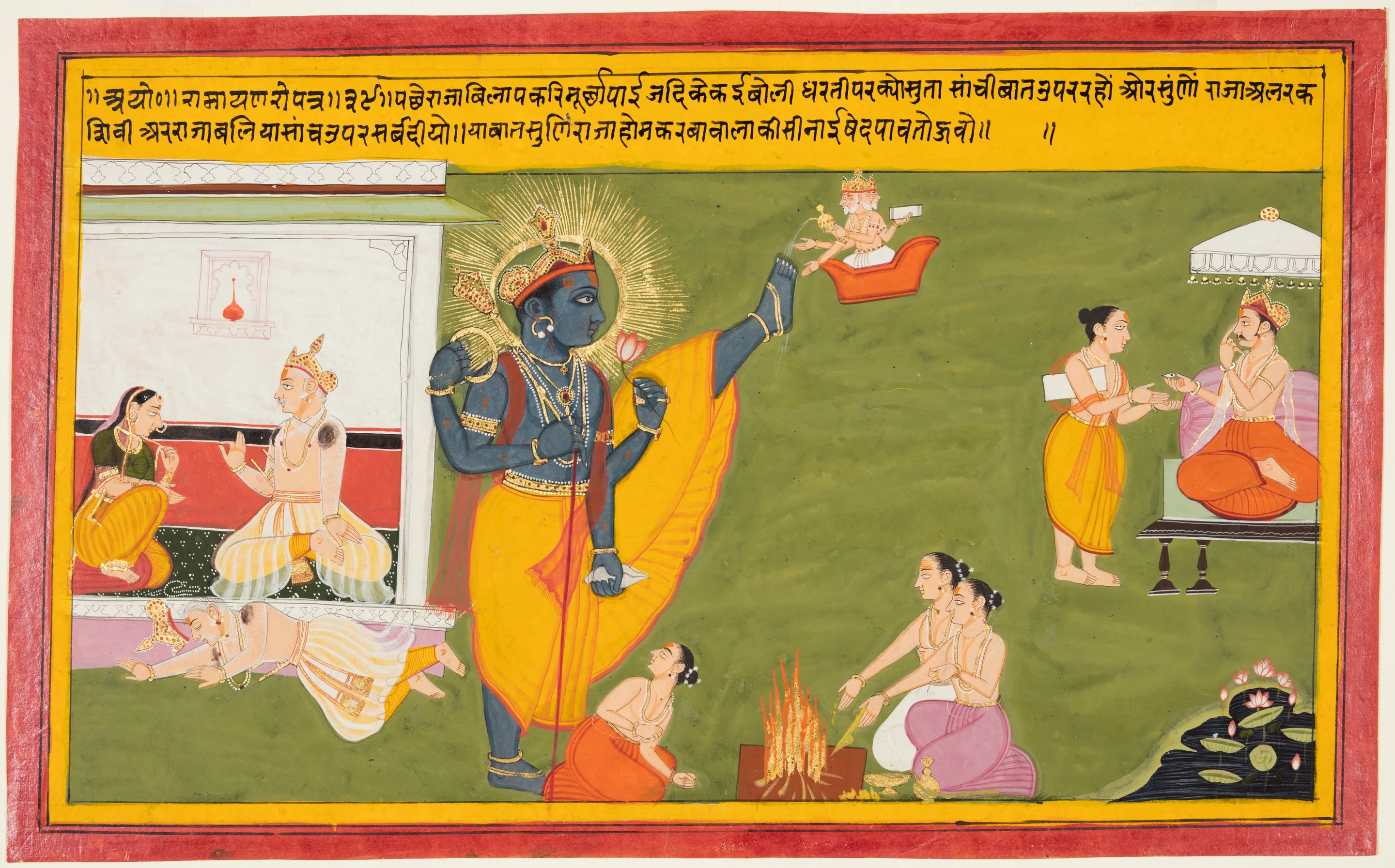
In the words of Pranav Ashar
How we renderThe heart of the Aruneya
In brief
Aruni goes to the world of Prajapati and asks how he can let go of all action, leaving nothing over. Prajapati tells him to give up family, the tuft and the thread, ritual and study, and all the worlds above and below, the whole cosmic egg, keeping only a staff, a cloth and a loincloth. The one who knows 'I am Brahman, I am the true thread' declares three times 'I have renounced'. The goal is the highest step of Vishnu, which the wise see always, like an eye open in the sky.
- Letting go of all action
- Giving up every world
- The Self as the true thread
- The vow of fearlessness
- The highest step of Vishnu
ॐ आरुणिः प्राजापत्यः प्रजापतेर्लोकं जगाम । तं गत्वोवाच । केन भगवन्कर्माण्यशेषतो विसृजानीति । तं होवाच प्रजापतिस्तव पुत्रान्भ्रातॄन्बन्ध्वादीञ्छिखां यज्ञोपवीतं च यागं च सूत्रं च स्वाध्यायं च भूर्लोकभुवर्लोकस्वर्लोकमहर्लोकजनलोकतपोलोकसत्यलोकं चातलतलातलवितलसुतलरसातलमहातलपातालं ब्रह्माण्डं च विसृजेत् । दण्डमाच्छादनं चैव कौपीनं च परिग्रहेत् । शेषं विसृजेदिति ॥ १॥
oṃ āruṇiḥ prājāpatyaḥ prajāpaterlokaṃ jagāma | taṃ gatvovāca | kena bhagavankarmāṇyaśeṣato visṛjānīti | taṃ hovāca prajāpatistava putrānbhrātṝnbandhvādīñchikhāṃ yajñopavītaṃ ca yāgaṃ ca sūtraṃ ca svādhyāyaṃ ca bhūrlokabhuvarlokasvarlokamaharlokajanalokatapolokasatyalokaṃ cātalatalātalavitalasutalarasātalamahātalapātālaṃ brahmāṇḍaṃ ca visṛjet | daṇḍamācchādanaṃ caiva kaupīnaṃ ca parigrahet | śeṣaṃ visṛjediti || 1||
Om. Aruni, son of Prajapati, went to the world of Prajapati. Arriving, he said: 'Lord, how can I let go of all actions, ?' Prajapati said to him: 'Let go of your sons, your brothers, your relatives; the tuft of hair, the sacred thread, the sacrifice, the thread of ritual, your study of the Veda; the seven worlds above, earth, sky, heaven, and the worlds of the great, of birth, of austerity and of truth; the seven worlds below, Atala, Talatala, Vitala, Sutala, Rasatala, Mahatala and Patala; and the whole cosmic egg. Take a staff, a cloth to cover you, and a loincloth. Let go of everything else.'
Note //
'Leaving nothing over' (aśeṣataḥ) is the key word: the question is not how to reduce action but how to be free of it entirely. The fourteen worlds and the 'egg of Brahma' (brahmāṇḍa) are the whole created universe in the Puranic picture; letting them go means giving up every place one might hope to reach. 'Thread' (sūtra) in the list is the ritual thread; section 3 returns to the word. Editions: 'prājāpatyaḥ' (Deccan College) is kept; 'visṛjānīti' (Adyar collection, 'how may I let go') over 'visṛjāmīti'; the fuller list 'yajñopavītaṃ ca yāgaṃ ca sūtraṃ ca svādhyāyaṃ ca' and 'janaloka' follow the Adyar collection; the order of the lower worlds and 'visṛjet' follow the Deccan College text (the Adyar collection has the lower worlds in a different order and 'visarjayet').
गृहस्थो ब्रह्मचारी वानप्रस्थो वा लौकिकाग्नीनुदराग्नौ समारोपयेत् । गायत्रीं च स्ववाचाग्नौ समारोपयेत् । उपवीतं भूमावप्सु वा विसृजेत् । कुटीचरो ब्रह्मचारी कुटुम्बं विसृजेत् । पात्रं विसृजेत् । पवित्रं विसृजेत् । दण्डांश्च लौकिकाग्नींश्च विसृजेदिति होवाच । अत ऊर्ध्वममन्त्रवदाचरेत् । ऊर्ध्वगमनं विसृजेत् । औषधवदशनमाचरेत् । त्रिसन्ध्यादौ स्नानमाचरेत् । सन्धिं समाधावात्मन्याचरेत् । सर्वेषु वेदेष्वारण्यकमावर्तयेदुपनिषदमावर्तयेदुपनिषदमावर्तयेदिति ॥ २॥
gṛhastho brahmacārī vānaprastho vā laukikāgnīnudarāgnau samāropayet | gāyatrīṃ ca svavācāgnau samāropayet | upavītaṃ bhūmāvapsu vā visṛjet | kuṭīcaro brahmacārī kuṭumbaṃ visṛjet | pātraṃ visṛjet | pavitraṃ visṛjet | daṇḍāṃśca laukikāgnīṃśca visṛjediti hovāca | ata ūrdhvamamantravadācaret | ūrdhvagamanaṃ visṛjet | auṣadhavadaśanamācaret | trisandhyādau snānamācaret | sandhiṃ samādhāvātmanyācaret | sarveṣu vedeṣvāraṇyakamāvartayedupaniṣadamāvartayedupaniṣadamāvartayediti || 2||
'Householder, student or forest-dweller, let him take the household fires up into the fire of his own belly, and the Gayatri into the fire of his own speech. Let him leave the sacred thread on the ground or in water. The student living in a hut lets go of his family. Let go of the bowl, let go of the strainer, let go of the staffs and the household fires,' he said. 'From then on, live without mantras. Give up going upward. Eat as one takes medicine. Bathe at the three junctions of the day, and keep the junction itself in samadhi, in the Self. Of all the Vedas, let him repeat the forest teachings, let him repeat the Upanishads, let him repeat the Upanishads.'
Note //
The outer fires and the Gayatri, the daily prayer, are not abandoned but taken inside: into digestion and into one's own speech. 'Without mantras' (amantravat): the ritual formulas no longer apply. 'Give up going upward' (ūrdhvagamanam visṛjet) is read here as giving up the aim of rising to higher worlds after death, which fits section 1; it may also mean giving up travel to higher ground. Pending review. 'Junction' (sandhi) is the twilight prayer at dawn, noon and dusk; it is to be kept 'in samadhi, in the Self'. Editions: the order of the first lines and 'daṇḍāṃś ca laukikāgnīṃś ca' follow the Adyar collection (the Deccan College text is garbled here); 'auṣadhavad aśanam ācaret' is in the Deccan College text and not the Adyar collection, and is kept.
खल्वहं ब्रह्म सूचनात्सूत्रं ब्रह्मसूत्रमहमेव विद्वांस्त्रिवृत्सूत्रं त्यजेद्विद्वान्य एवं वेद सन्न्यस्तं मया सन्न्यस्तं मया सन्न्यस्तं मयेति त्रिरुक्त्वाऽभयं सर्वभूतेभ्यो मत्तः सर्वं प्रवर्तते । सखा मा गोपायौजः सखायोऽसीन्द्रस्य वज्रोऽसि वार्त्रघ्नः शर्म मे भव यत्पापं तन्निवारयेति । अनेन मन्त्रेण कृतं वैणवं दण्डं कौपीनं परिग्रहेदौषधवदशनमाचरेदौषधवदशनं प्राश्नीयाद्यथालाभमश्नीयात् । ब्रह्मचर्यमहिंसां चापरिग्रहं च सत्यं च यत्नेन हे रक्षत हे रक्षत हे रक्षत इति ॥ ३॥
khalvahaṃ brahma sūcanātsūtraṃ brahmasūtramahameva vidvāṃstrivṛtsūtraṃ tyajedvidvānya evaṃ veda sannyastaṃ mayā sannyastaṃ mayā sannyastaṃ mayeti triruktvā'bhayaṃ sarvabhūtebhyo mattaḥ sarvaṃ pravartate | sakhā mā gopāyaujaḥ sakhāyo'sīndrasya vajro'si vārtraghnaḥ śarma me bhava yatpāpaṃ tannivārayeti | anena mantreṇa kṛtaṃ vaiṇavaṃ daṇḍaṃ kaupīnaṃ parigrahedauṣadhavadaśanamācaredauṣadhavadaśanaṃ prāśnīyādyathālābhamaśnīyāt | brahmacaryamahiṃsāṃ cāparigrahaṃ ca satyaṃ ca yatnena he rakṣata he rakṣata he rakṣata iti || 3||
'I am Brahman. A thread is so called because it points to something: I myself am . Knowing this, the wise one gives up the threefold thread; the one who knows this is wise. Saying three times, "I have renounced, I have renounced, I have renounced," let him give from fear to every being: from me, all things come forth. To the staff he says: "You are my friend: protect me. You are strength, you are a friend. You are Indra's thunderbolt, the slayer of Vritra. Be my shelter. Ward off whatever is wrong." With this mantra let him take a bamboo staff and a loincloth. Let him eat as one takes medicine, eat food as medicine, eat whatever comes. Celibacy, not harming, owning nothing, and truth: guard them with care, guard them, guard them.'
Note //
'Sūtra', thread, is explained from sūcana, 'pointing out': the thread is a sign, and the one who knows himself as Brahman, what the sign points to, no longer needs it. So the outer threefold thread is given up by one who is himself 'the thread that is Brahman'. 'I have renounced', said three times, is the renunciant's vow (praiṣa); with it goes the gift of fearlessness to all beings, the promise to harm none. 'From me all things come forth' is the knower speaking as Brahman. The staff mantra addresses the staff as a protector. Editions: 'brahma sūcanāt sūtraṃ brahmasūtram' combines the two editions (the Adyar collection repeats 'sūtraṃ'); 'trir uktvā' (Deccan College) over 'triḥ kṛtvā' (Adyar collection), same sense; 'vaiṇavaṃ' and 'ahiṃsāṃ' follow the Adyar collection; 'auṣadhavad aśanaṃ prāśnīyād yathālābham aśnīyāt' follows the Deccan College text. The Adyar collection marks the last calls with the drawn-out vowel of a call (rakṣato3), not shown here.
अथातः परमहंसपरिव्राजकानामासनशयनादिकं भूमौ ब्रह्मचर्यं मृत्पात्रं वाऽलाबुपात्रं दारुपात्रं वा कामक्रोधहर्षरोषलोभमोहदम्भदर्पेच्छासूयाममत्वाहङ्कारादीनपि परित्यजेत् । वर्षासु ध्रुवशीलोऽष्टौ मासानेकाकी यतिश्चरेत् द्वावेव वा चरेद्द्वावेव वा चरेदिति ॥ ४॥
athātaḥ paramahaṃsaparivrājakānāmāsanaśayanādikaṃ bhūmau brahmacaryaṃ mṛtpātraṃ vā'lābupātraṃ dārupātraṃ vā kāmakrodhaharṣaroṣalobhamohadambhadarpecchāsūyāmamatvāhaṅkārādīnapi parityajet | varṣāsu dhruvaśīlo'ṣṭau māsānekākī yatiścaret dvāveva vā careddvāveva vā carediti || 4||
'Now, for the supreme-swan wanderers: sitting and sleeping on the ground, celibacy, a bowl of clay, of gourd or of wood. Let him give up desire, anger, elation, resentment, greed, delusion, pretence, pride, wanting, envy, the sense of "mine", , and the rest. In the rains let him stay in one place; for the eight other months let the renunciant wander alone, or with just one other, or with just one other.'
Note //
The Paramahamsa wanderers are the highest order of renunciants. Of the 'possessions' given up in this list, the last are inner: the sense of 'mine' and the I-claim. Editions: the Deccan College text numbers this section 3 again and has 'yatīnāṃ' and 'vicaret'; the Adyar collection has 'brahmacāriṇāṃ' for 'brahmacaryaṃ' and lacks 'icchā' and 'pari-'. The reading given takes 'brahmacaryaṃ' and the list of faults from the Deccan College text, and 'alābupātraṃ' and 'caret' from the Adyar collection. Pending review.
स खल्वेवं यो विद्वान्सोपनयनादूर्ध्वमेतानि प्राग्वा त्यजेत् । पितरं पुत्रमग्न्युपवीतं कर्म कलत्रं चान्यदपीह यतयो भिक्षार्थं ग्रामं प्रविशन्ति पाणिपात्रमुदरपात्रं वा । ॐ हि ॐ हि ॐ हीत्येतदुपनिषदं विन्यसेत् ॥ खल्वेतदुपनिषदं विद्वान्य एवं वेद पालाशं बैल्वमाश्वत्थमौदुम्बरं दण्डं मौञ्जीं मेखलां यज्ञोपवीतं च त्यक्त्वा शूरो य एवं वेद । तद्विष्णोः परमं पदं सदा पश्यन्ति सूरयः । दिवीव चक्षुराततम् । तद्विप्रासो विपन्यवो जागृवांसः समिन्धते । विष्णोर्यत्परमं पदमिति । एवं निर्वाणानुशासनं वेदानुशासनं वेदानुशासनमिति ॥ ५॥
sa khalvevaṃ yo vidvānsopanayanādūrdhvametāni prāgvā tyajet | pitaraṃ putramagnyupavītaṃ karma kalatraṃ cānyadapīha yatayo bhikṣārthaṃ grāmaṃ praviśanti pāṇipātramudarapātraṃ vā | oṃ hi oṃ hi oṃ hītyetadupaniṣadaṃ vinyaset || khalvetadupaniṣadaṃ vidvānya evaṃ veda pālāśaṃ bailvamāśvatthamaudumbaraṃ daṇḍaṃ mauñjīṃ mekhalāṃ yajñopavītaṃ ca tyaktvā śūro ya evaṃ veda | tadviṣṇoḥ paramaṃ padaṃ sadā paśyanti sūrayaḥ | divīva cakṣurātatam | tadviprāso vipanyavo jāgṛvāṃsaḥ samindhate | viṣṇoryatparamaṃ padamiti | evaṃ nirvāṇānuśāsanaṃ vedānuśāsanaṃ vedānuśāsanamiti || 5||
'The wise one who knows this gives these things up, after his initiation or even before it: father, son, the fire, the sacred thread, ritual action, wife, and whatever else is here. Renunciants enter the village only for alms, the hand or the belly as their bowl. With "Om hi, Om hi, Om hi" let him place this secret teaching within. The wise one who knows this secret teaching, who knows it so, gives up the staff of palasha, bilva, ashvattha or udumbara wood, the munja-grass girdle and the sacred thread, and is a hero, who knows it so. That highest step of Vishnu the wise see always, like an eye spread open in the sky. The wise, awake and full of praise, set it alight: that which is the highest step of Vishnu. This is the teaching on , the teaching of the Veda, the teaching of the Veda.'
Note //
'Before initiation' (prāg vā): renunciation does not have to wait for the stages of life, as in the Jabala. The staffs of particular woods and the munja girdle are the marks of the Vedic student; the knower lets them go too. The closing verses are Rig Veda 1.22.20-21, the 'highest step' (paramaṃ padam) of Vishnu: the goal is not travelled to but seen, as the open sky is seen by an eye. 'Set it alight' (sam indhate) is read as 'make it shine', bring it to light in themselves. 'Nirvāṇa', freedom, is the blowing-out of becoming. Editions: 'sa khalv evaṃ yo vidvān' (Deccan College) over 'khalu vedārthaṃ yo vidvān' (Adyar collection); 'pitaraṃ' (Adyar) corrects 'pitraṃ'; the list of staffs and 'mauñjīṃ mekhalāṃ' follow the Deccan College text (the Adyar collection has 'pālāśaṃ bailvam audumbaraṃ daṇḍam ajinaṃ mekhalāṃ', with a deerskin in place of the ashvattha staff and the munja girdle).
No public-domain English translation exists for this text; the Sanskrit is shown.
The renderings on this page are shared under CC BY-NC 4.0, in the words of Pranav Ashar.