Paramahamsa Upanishad
In the words of Pranav Ashar
How we renderThe heart of the Paramahamsa
In brief
Narada asks the Lord what the way of the Paramahamsas is. The Lord answers that such a one is rare; his mind rests always in the Lord, and the Lord in him. He lets go of family, tuft, thread, study and all action. What matters is the knowledge 'I am the peaceful, unmoving, non-dual mass of bliss and awareness': that is his tuft, his thread and his twilight prayer. He carries the staff of knowledge, not of wood; he is neither 'I' nor 'you' nor 'all'; and knowing 'I am Brahman', he has done what was to be done.
- The rarest way
- The knowledge that is the thread
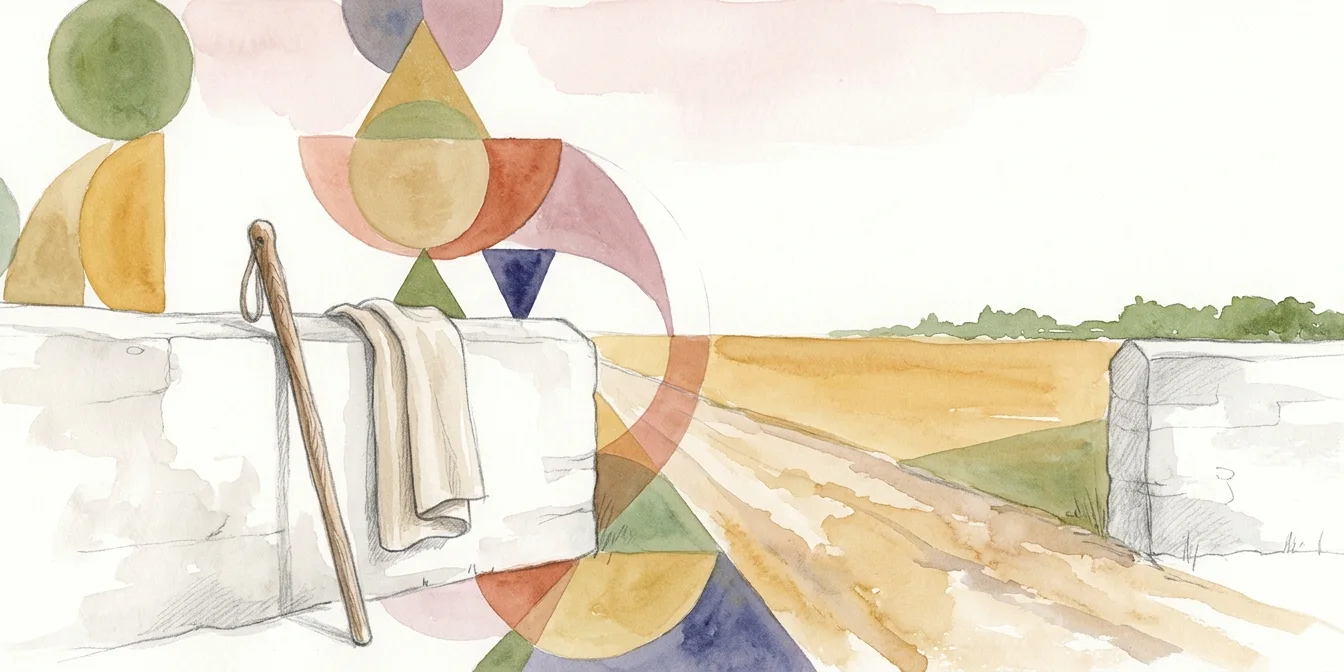
- The staff of knowledge
- Neither I nor you
- Done with doing
हरिः ॐ ॥ अथ योगिनां परमहंसानां कोऽयं मार्गस्तेषां का स्थितिरिति नारदो भगवन्तमुपगत्योवाच । तं भगवानाह । योऽयं परमहंसमार्गो लोके दुर्लभतरो न तु बाहुल्यो यद्येको भवति स एव नित्यपूतस्थः स एव वेदपुरुष इति विदुषो मन्यन्ते महापुरुषो यच्चित्तं तत्सर्वदा मय्येवावतिष्ठते तस्मादहं च तस्मिन्नेवावस्थीयते । असौ स्वपुत्रमित्रकलत्रबन्ध्वादीञ्छिखायज्ञोपवीते स्वाध्यायं च सर्वकर्माणि सन्न्यस्यायं ब्रह्माण्डं च हित्वा कौपीनं दण्डमाच्छादनं च स्वशरीरोपभोगार्थाय च लोकस्योपकारार्थाय च परिग्रहेत् । तच्च न मुख्योऽस्ति कोऽयं मुख्य इति चेदयं मुख्यः ॥ १॥
hariḥ oṃ || atha yogināṃ paramahaṃsānāṃ ko'yaṃ mārgasteṣāṃ kā sthitiriti nārado bhagavantamupagatyovāca | taṃ bhagavānāha | yo'yaṃ paramahaṃsamārgo loke durlabhataro na tu bāhulyo yadyeko bhavati sa eva nityapūtasthaḥ sa eva vedapuruṣa iti viduṣo manyante mahāpuruṣo yaccittaṃ tatsarvadā mayyevāvatiṣṭhate tasmādahaṃ ca tasminnevāvasthīyate | asau svaputramitrakalatrabandhvādīñchikhāyajñopavīte svādhyāyaṃ ca sarvakarmāṇi sannyasyāyaṃ brahmāṇḍaṃ ca hitvā kaupīnaṃ daṇḍamācchādanaṃ ca svaśarīropabhogārthāya ca lokasyopakārārthāya ca parigrahet | tacca na mukhyo'sti ko'yaṃ mukhya iti cedayaṃ mukhyaḥ || 1||
Hari Om. Narada came to the Lord and asked: 'The yogis who are Paramahamsas: what is their way? How do they live?' The Lord said to him: 'This way of the Paramahamsa is very hard to find in the world. They are not many; if there is even one, he alone stands in what is always pure. He alone is the Person the Veda speaks of: so the wise hold. The mind of that great one rests in me always, and so I too rest in him. He gives up his sons, friends, wife and relatives, the tuft and the sacred thread, the study of the Veda, and all action; he leaves this whole universe behind. A loincloth, a staff and a cloth to cover him he may keep, for the body's use and for the good of the world. But that is not the main thing. What is the main thing? This.'
Note //
'The Lord' (bhagavān) is Narayana, speaking in the first person: 'his mind rests in me, and I in him'. 'He alone stands in what is always pure' renders 'nityapūtasthaḥ'. The staff and cloth are allowed, but 'that is not the main thing': the main thing is what section 2 describes. Editions: sanskritdocuments.org has several misprints here ('yoginaṃ paramahaṃsanaṃ', 'teṣaṃ', 'avatiṣṭate'); the Adyar collection's correct forms are followed.
न दण्डं न शिखां न यज्ञोपवीतं न चाच्छादनं चरति परमहंसः । न शीतं न चोष्णं न सुखं न दुःखं न मानावमाने च षडूर्मिवर्जं निन्दागर्वमत्सरदम्भदर्पेच्छाद्वेषसुखदुःखकामक्रोधलोभमोहहर्षासूयाहङ्कारादींश्च हित्वा स्ववपुः कुणपमिव दृश्यते यतस्तद्वपुरपध्वस्तं संशयविपरीतमिथ्याज्ञानानां यो हेतुस्तेन नित्यनिवृत्तस्तन्नित्यबोधस्तत्स्वयमेवावस्थितिस्तं शान्तमचलमद्वयानन्दविज्ञानघन एवास्मि । तदेव मम परमधाम तदेव शिखा च तदेवोपवीतं च । परमात्मात्मनोरेकत्वज्ञानेन तयोर्भेद एव विभग्नः सा सन्ध्या ॥ २॥
na daṇḍaṃ na śikhāṃ na yajñopavītaṃ na cācchādanaṃ carati paramahaṃsaḥ | na śītaṃ na coṣṇaṃ na sukhaṃ na duḥkhaṃ na mānāvamāne ca ṣaḍūrmivarjaṃ nindāgarvamatsaradambhadarpecchādveṣasukhaduḥkhakāmakrodhalobhamohaharṣāsūyāhaṅkārādīṃśca hitvā svavapuḥ kuṇapamiva dṛśyate yatastadvapurapadhvastaṃ saṃśayaviparītamithyājñānānāṃ yo hetustena nityanivṛttastannityabodhastatsvayamevāvasthitistaṃ śāntamacalamadvayānandavijñānaghana evāsmi | tadeva mama paramadhāma tadeva śikhā ca tadevopavītaṃ ca | paramātmātmanorekatvajñānena tayorbheda eva vibhagnaḥ sā sandhyā || 2||
'The Paramahamsa goes without staff, without tuft, without thread, without covering. Not cold, not heat, not pleasure, not pain, not honour, not dishonour: free of the six waves, leaving behind blame, pride, jealousy, pretence, arrogance, wanting, hating, pleasure and pain, desire, anger, greed, delusion, elation, envy, and the rest, he sees his own body as a corpse, because the body has been undone, the cause of doubt, of error and of false knowledge. By that he is always at rest, always awake, standing in himself alone: "I am that peace, unmoving, the one mass of bliss and awareness without a second. That alone is my highest home. That alone is my tuft, that alone my sacred thread." By knowing the Self and the highest Self as one, the difference between them is broken: that is his .'
Note //
The 'six waves' (ṣaḍ-ūrmi) are hunger and thirst, grief and confusion, old age and death, which ripple over the body and mind but not over the Self. 'He sees his own body as a corpse' is explained by the text itself: the body as 'mine' was the cause of doubt, error and false knowledge, and that has been undone. It is not contempt for the body but the end of the claim on it. The twilight prayer (sandhyā) is said at the 'junctions' of the day; here the true junction is where the difference between the self and the highest Self breaks. Editions: 'na śītaṃ' and 'dṛśyate' (Adyar collection) correct 'na śitaṃ' and 'dṛṣyate' in sanskritdocuments.org.
सर्वान्कामान्परित्यज्य अद्वैते परमस्थितिः । ज्ञानदण्डो धृतो येन एकदण्डी स उच्यते ॥ काष्ठदण्डो धृतो येन सर्वाशी ज्ञानवर्जितः । तितिक्षाज्ञानवैराग्यशमादिगुणवर्जितः ॥ भिक्षामात्रेण यो जीवेत्स पापी यतिवृत्तिहा । स याति नरकान्घोरान्महारौरवसञ्ज्ञकान् ॥ इदमन्तरं ज्ञात्वा स परमहंसः ॥ ३॥
sarvānkāmānparityajya advaite paramasthitiḥ | jñānadaṇḍo dhṛto yena ekadaṇḍī sa ucyate || kāṣṭhadaṇḍo dhṛto yena sarvāśī jñānavarjitaḥ | titikṣājñānavairāgyaśamādiguṇavarjitaḥ || bhikṣāmātreṇa yo jīvetsa pāpī yativṛttihā | sa yāti narakānghorānmahārauravasañjñakān || idamantaraṃ jñātvā sa paramahaṃsaḥ || 3||
'Having given up every desire, resting at the highest, in the non-dual: the one who carries the staff of knowledge is the one called "the single-staff renunciant". But one who carries a staff of wood, eating anything, without knowledge, without patience, knowledge, dispassion, calm and the rest, living only by begging: he does wrong, and spoils the renunciant's way of life. He goes to the terrible hells called the Great Rauravas. Knowing this difference, he is a Paramahamsa.'
Note //
The 'single staff' (ekadaṇḍa) was the mark of the highest renunciants; the text says the real single staff is knowledge. 'Great Raurava' is the name of a hell in the Puranas; the point is the warning against renunciation as outer show. The two lines in brackets in sanskritdocuments.org ('without patience ... spoils the renunciant's way of life'), marked there as a variant, are in the Adyar collection and are kept. Editions: 'ekadaṇḍī' and 'sarvāśī' (Adyar collection) correct 'ekadaṇḍo' and 'sarvāśi'.
आशाम्बरो न नमस्कारो न स्वाहाकारो न स्वधाकारो न निन्दा न स्तुतिर्यादृच्छिको भवेद्भिक्षुः । नावाहनं न विसर्जनं न मन्त्रं न ध्यानं नोपासनं च न लक्ष्यं नालक्ष्यं न पृथङ्नापृथगहं न न त्वं न सर्वं चानिकेतस्थितिरेव भिक्षुः सौवर्णादीनां नैव परिग्रहेन्न लोकं नावलोकं च चाबाधकः क इति चेद्बाधकोऽस्त्येव यस्माद्भिक्षुर्हिरण्यं रसेन दृष्टं च स ब्रह्महा भवेत् । यस्माद्भिक्षुर्हिरण्यं रसेन स्पृष्टं चेत्स पौल्कसो भवेद्यस्माद्भिक्षुर्हिरण्यं रसेन ग्राह्यं च स आत्महा भवेत् । तस्माद्भिक्षुर्हिरण्यं रसेन न दृष्टं च न स्पृष्टं च न ग्राह्यं च । सर्वे कामा मनोगता व्यावर्तन्ते । दुःखे नोद्विग्नः सुखे न स्पृहा त्यागो रागे सर्वत्र शुभाशुभयोरनभिस्नेहो न द्वेष्टि न मोदं च । सर्वेषामिन्द्रियाणां गतिरुपरमते य आत्मन्येवावस्थीयते । यत्पूर्णानन्दैकबोधस्तद्ब्रह्मैवाहमस्मीति कृतकृत्यो भवति कृतकृत्यो भवति ॥ ४॥
āśāmbaro na namaskāro na svāhākāro na svadhākāro na nindā na stutiryādṛcchiko bhavedbhikṣuḥ | nāvāhanaṃ na visarjanaṃ na mantraṃ na dhyānaṃ nopāsanaṃ ca na lakṣyaṃ nālakṣyaṃ na pṛthaṅnāpṛthagahaṃ na na tvaṃ na sarvaṃ cāniketasthitireva bhikṣuḥ sauvarṇādīnāṃ naiva parigrahenna lokaṃ nāvalokaṃ ca cābādhakaḥ ka iti cedbādhako'styeva yasmādbhikṣurhiraṇyaṃ rasena dṛṣṭaṃ ca sa brahmahā bhavet | yasmādbhikṣurhiraṇyaṃ rasena spṛṣṭaṃ cetsa paulkaso bhavedyasmādbhikṣurhiraṇyaṃ rasena grāhyaṃ ca sa ātmahā bhavet | tasmādbhikṣurhiraṇyaṃ rasena na dṛṣṭaṃ ca na spṛṣṭaṃ ca na grāhyaṃ ca | sarve kāmā manogatā vyāvartante | duḥkhe nodvignaḥ sukhe na spṛhā tyāgo rāge sarvatra śubhāśubhayoranabhisneho na dveṣṭi na modaṃ ca | sarveṣāmindriyāṇāṃ gatiruparamate ya ātmanyevāvasthīyate | yatpūrṇānandaikabodhastadbrahmaivāhamasmīti kṛtakṛtyo bhavati kṛtakṛtyo bhavati || 4||
'Clothed in the directions, no bowing, no offering-calls to gods or to the fathers, no blame, no praise: the renunciant lives on what comes by chance. No calling a god in, no sending a god away, no mantra, no meditation, no worship; no aim and no aimlessness, not separate, not unseparate, not "I", not "you", not "all": the renunciant's only dwelling is no dwelling. Gold and the like he does not take; not the world, not the looking at the world. If it is asked, "What is the harm?" there is harm. A renunciant who looks at gold is a killer of Brahman. A renunciant who touches gold falls to the lowest of the low. A renunciant who takes gold is a killer of the Self. So the renunciant does not look at gold , does not touch it, does not take it. All desires that live in the mind fall away. Not shaken by sorrow, not longing in pleasure, letting go of attachment, not clinging anywhere to good or bad, he neither hates nor delights. The movement of all the senses comes to rest in one who rests in the Self alone. "That which is the one awareness of full bliss: that Brahman I am." Knowing this, he . He .'
Note //
'Clothed in the directions' (āśāmbara): naked, with space for clothing. 'Svāhā' and 'svadhā' are the calls with which offerings are made to the gods and to the ancestors. 'Not "I", not "you"' denies the I-claim and its other; the closing 'that Brahman I am' affirms the Self, which is neither one person nor another (see the insight). 'Rasena', with relish or craving, qualifies each act: the danger in gold is the wanting. A Paulkasa was counted among the lowest outcastes; the text uses the social language of its time to say how far the renunciant falls. 'Has done all there is to do' (kṛtakṛtya) is the classic description of the one who knows. Editions: 'na svāhākāro' is in sanskritdocuments.org and not in the Adyar collection, and is kept; 'tad brahmaivāham asmi' follows the Adyar collection (sanskritdocuments.org: 'tadabrahmāham asmi', a misprint). Pending review: 'na lokaṃ nāvalokaṃ ca cābādhakaḥ' (Adyar collection; sanskritdocuments.org 'cā-ābādhakaṃ') is read as 'not the world, not the looking; if it is asked what harm...'. In the last lines the Adyar collection drops the 'na' before 'spṛṣṭaṃ'; sanskritdocuments.org's 'na dṛṣṭaṃ ca na spṛṣṭaṃ ca na grāhyaṃ ca' is followed.
No public-domain English translation exists for this text; the Sanskrit is shown.
The renderings on this page are shared under CC BY-NC 4.0, in the words of Pranav Ashar.