Garuda Upanishad
In the words of Pranav Ashar
How we renderThe heart of the Garuda
In brief
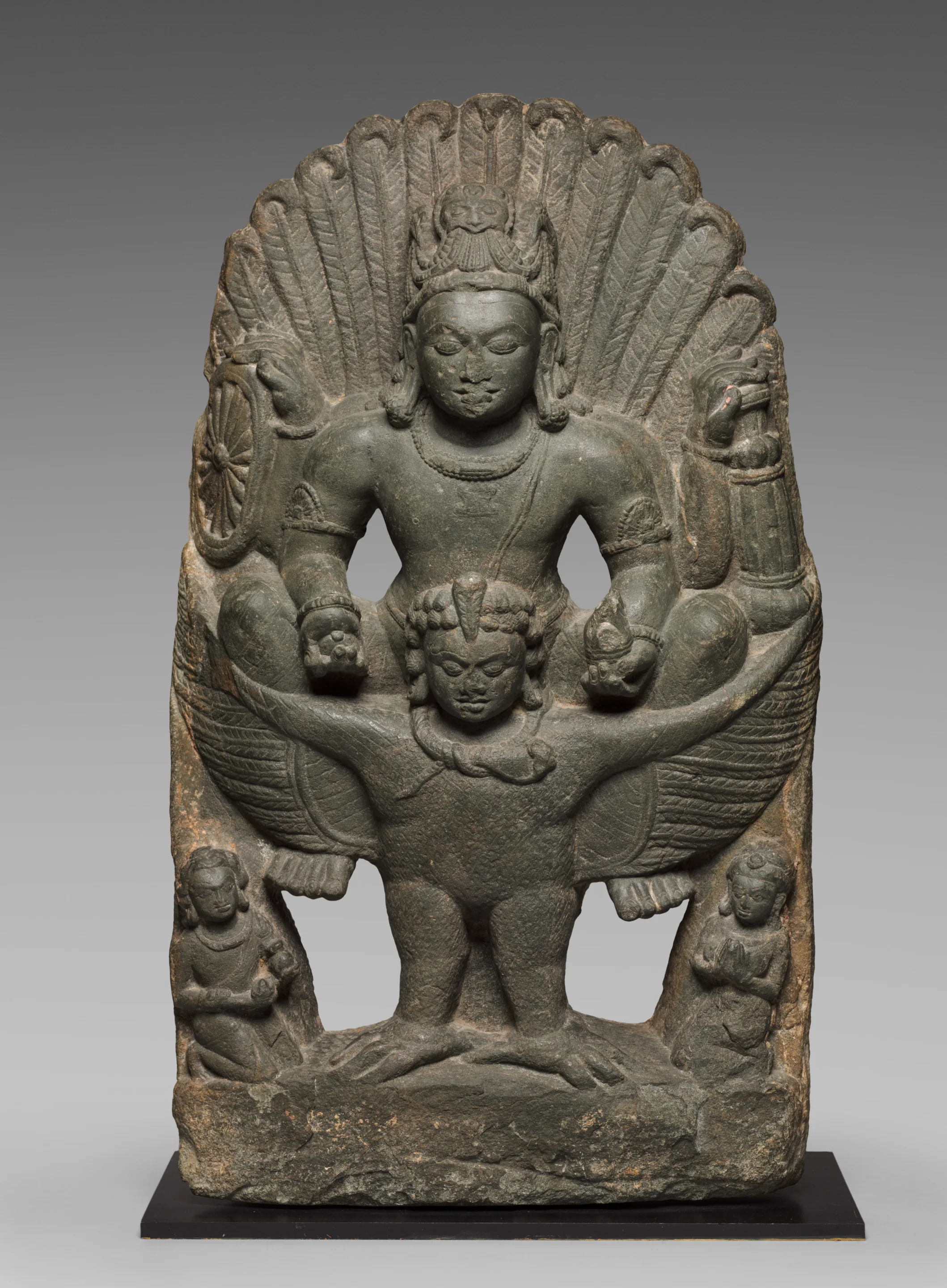
The Garuda Upanishad is a mantra against poison, given the title 'knowledge of Brahman'. Garuda, the eagle who devours serpents and carries Vishnu, is to be meditated on three times a day, wearing the great snakes as ornaments; this meditation destroys poison as fire destroys a heap of cotton. The mantras command every kind of poison to be struck down 'by Brahman', and an old Vedic verse names Garuda's head, eye, body and wings as the hymns of the Veda. The opening verse of the tradition says what the poison finally is: whatever is taken as other than Brahman.
- Poison is what is taken as other than Brahman
- Garuda, the knower who eats the serpents
- The body made of the Veda
- Struck down by Brahman
- A charm called knowledge of Brahman
विषं ब्रह्मातिरिक्तं स्यादमृतं ब्रह्ममात्रकम् । ब्रह्मातिरिक्तं विषवद्ब्रह्ममात्रं खगेडहम् ॥
viṣaṃ brahmātiriktaṃ syādamṛtaṃ brahmamātrakam | brahmātiriktaṃ viṣavadbrahmamātraṃ khageḍaham ||
Whatever is other than Brahman is poison; Brahman alone is the nectar. is like poison. I am the king of birds, who is Brahman alone.
Note //
The opening verse with which Upanishad Brahmayogin's tradition begins the text (both copies place it before the invocation); it is not part of the mantra itself, but it is how the Advaita tradition reads it. 'King of birds' (khageṭ): Garuda. 'Other than Brahman' (brahmātirikta): taken as having a being of its own apart from Brahman; the world as appearance of Brahman is not poison. The Deccan College copy has the slip 'viṣavabrahma'; the raw_etexts reading 'viṣavad brahma' is followed.
हरिः ॐ । गारुडब्रह्मविद्यां प्रवक्ष्यामि यां ब्रह्मा विद्यां नारदाय प्रोवाच नारदो बृहत्सेनाय बृहत्सेन इन्द्राय इन्द्रो भरद्वाजाय भरद्वाजो जीवत्कामेभ्यः शिष्येभ्यः प्रायच्छत् ।
hariḥ oṃ | gāruḍabrahmavidyāṃ pravakṣyāmi yāṃ brahmā vidyāṃ nāradāya provāca nārado bṛhatsenāya bṛhatsena indrāya indro bharadvājāya bharadvājo jīvatkāmebhyaḥ śiṣyebhyaḥ prāyacchat |
Hari Om. I will tell the Garuda knowledge of Brahman: the knowledge that Brahma told to Narada, Narada to Brihatsena, Brihatsena to Indra, Indra to Bharadvaja, and Bharadvaja gave to disciples .
Note //
The Deccan College copy has the slip 'bṛtsenāya'. 'Who wished to live' (jīvatkāma): the charm is first of all for those in danger of death from poison; the opening verse widens 'life' to deathlessness. Editions agree otherwise.
अस्याः श्रीमहागरुडब्रह्मविद्याया ब्रह्मा ऋषिः । गायत्री छन्दः । श्रीभगवान्महागरुडो देवता । श्रीमहागरुडप्रीत्यर्थे मम सकलविषविनाशनार्थे जपे विनियोगः । ॐ नमो भगवते अङ्गुष्ठाभ्यां नमः । श्रीमहागरुडाय तर्जनीभ्यां स्वाहा । पक्षीन्द्राय मध्यमाभ्यां वषट् । श्रीविष्णुवल्लभाय अनामिकाभ्यां हुम् । त्रैलोक्यपरिपूजिताय कनिष्ठिकाभ्यां वौषट् । उग्रभयङ्करकालानलरूपाय करतलकरपृष्ठाभ्यां फट् । एवं हृदयादिन्यासः । भूर्भुवः सुवरोमिति दिग्बन्धः । ध्यानम् ।
asyāḥ śrīmahāgaruḍabrahmavidyāyā brahmā ṛṣiḥ | gāyatrī chandaḥ | śrībhagavānmahāgaruḍo devatā | śrīmahāgaruḍaprītyarthe mama sakalaviṣavināśanārthe jape viniyogaḥ | oṃ namo bhagavate aṅguṣṭhābhyāṃ namaḥ | śrīmahāgaruḍāya tarjanībhyāṃ svāhā | pakṣīndrāya madhyamābhyāṃ vaṣaṭ | śrīviṣṇuvallabhāya anāmikābhyāṃ hum | trailokyaparipūjitāya kaniṣṭhikābhyāṃ vauṣaṭ | ugrabhayaṅkarakālānalarūpāya karatalakarapṛṣṭhābhyāṃ phaṭ | evaṃ hṛdayādinyāsaḥ | bhūrbhuvaḥ suvaromiti digbandhaḥ | dhyānam |
Of this knowledge of Brahman, the great Garuda, the seer is Brahma, the metre the gayatri, the god the blessed great Garuda. It is used in repetition for the pleasure of the great Garuda and to destroy all my poisons. 'Om, homage to the Lord': on the thumbs, namah. 'To the great Garuda': on the forefingers, svaha. 'To the king of birds': on the middle fingers, vashat. 'To Vishnu's beloved': on the ring fingers, hum. 'Worshipped by the three worlds': on the little fingers, vaushat. 'Whose form is the fierce, terrifying fire of time': on the palms and backs of the hands, phat. So also on the heart and the other places. 'Bhuh bhuvah suvah om': the binding of the directions. The meditation:
Note //
The technical frame of the mantra: seer, metre, god, use, and the placing (nyāsa) of its parts on the fingers and body. Editions agree in substance.
स्वस्तिको दक्षिणं पादं वामपादं तु कुञ्चितम् । प्राञ्जलीकृतदोर्युग्मं गरुडं हरिवल्लभम् ॥ १॥ अनन्तो वामकटको यज्ञसूत्रं तु वासुकिः । तक्षकः कटिसूत्रं तु हारः कार्कोट उच्यते ॥ २॥ पद्मो दक्षिणकर्णे तु महापद्मस्तु वामके । शङ्खः शिरःप्रदेशे तु गुलिकस्तु भुजान्तरे ॥ ३॥ पौण्ड्रकालिकनागाभ्यां चामराभ्यां सुवीजितम् । एलापुत्रकनागाद्यैः सेव्यमानं मुदान्वितम् ॥ ४॥
svastiko dakṣiṇaṃ pādaṃ vāmapādaṃ tu kuñcitam | prāñjalīkṛtadoryugmaṃ garuḍaṃ harivallabham || 1|| ananto vāmakaṭako yajñasūtraṃ tu vāsukiḥ | takṣakaḥ kaṭisūtraṃ tu hāraḥ kārkoṭa ucyate || 2|| padmo dakṣiṇakarṇe tu mahāpadmastu vāmake | śaṅkhaḥ śiraḥpradeśe tu gulikastu bhujāntare || 3|| pauṇḍrakālikanāgābhyāṃ cāmarābhyāṃ suvījitam | elāputrakanāgādyaiḥ sevyamānaṃ mudānvitam || 4||
Garuda, beloved of Hari, his right foot set in the auspicious posture, the left foot drawn up, his two arms joined in reverence. Ananta is his left bracelet, Vasuki his sacred thread, Takshaka his girdle; Karkota is called his necklace. Padma is at his right ear, Mahapadma at his left, Shankha on his head, Gulika between his arms. He is fanned with fly-whisks by the serpents Paundra and Kalika, served by Elaputraka and other serpents, full of joy.
Note //
The serpents whose poison the mantra destroys are worn as Garuda's ornaments: what threatens is already subdued in him. Editions: 'takṣakaḥ' (Deccan College) over 'takṣakāḥ' (raw_etexts).
कपिलाक्षं गरुत्मन्तं सुवर्णसदृशप्रभम् । दीर्घबाहुं बृहत्स्कन्धं नागाभरणभूषितम् ॥ ५॥ आजानुतः सुवर्णाभमाकट्योस्तुहिनप्रभम् । कुङ्कुमारुणमाकण्ठं शतचन्द्रनिभाननम् ॥ ६॥ नीलाग्रनासिकावक्त्रं सुमहच्चारुकुण्डलम् । दंष्ट्राकरालवदनं किरीटमुकुटोज्ज्वलम् ॥ ७॥ कुङ्कुमारुणसर्वाङ्गं कुन्देन्दुधवलाननम् । विष्णुवाह नमस्तुभ्यं क्षेमं कुरु सदा मम ॥ ८॥
kapilākṣaṃ garutmantaṃ suvarṇasadṛśaprabham | dīrghabāhuṃ bṛhatskandhaṃ nāgābharaṇabhūṣitam || 5|| ājānutaḥ suvarṇābhamākaṭyostuhinaprabham | kuṅkumāruṇamākaṇṭhaṃ śatacandranibhānanam || 6|| nīlāgranāsikāvaktraṃ sumahaccārukuṇḍalam | daṃṣṭrākarālavadanaṃ kirīṭamukuṭojjvalam || 7|| kuṅkumāruṇasarvāṅgaṃ kundendudhavalānanam | viṣṇuvāha namastubhyaṃ kṣemaṃ kuru sadā mama || 8||
Garutman, tawny-eyed, shining like gold, long-armed, broad-shouldered, adorned with ornaments of serpents; golden to the knees, white as snow to the hips, red as saffron to the neck, his face like a hundred moons; beak and face dark-tipped, with great and lovely earrings, his mouth terrible with fangs, bright with crown and diadem; his whole body red as saffron, his face white as jasmine and the moon. 'Bearer of Vishnu, homage to you: keep me always safe.'
Note //
Editions: 'nāgābharaṇa-' is read for 'nādābharaṇa-' (raw_etexts), as the serpent ornaments of verses 2-4 require; 'ākaṭyos' over 'ākaṭhyos'. Pending review.
एवं ध्यायेत्त्रिसन्ध्यासु गरुडं नागभूषणम् । विषं नाशयते शीघ्रं तूलराशिमिवानलः ॥
evaṃ dhyāyettrisandhyāsu garuḍaṃ nāgabhūṣaṇam | viṣaṃ nāśayate śīghraṃ tūlarāśimivānalaḥ ||
Let one meditate in this way, at dawn, noon and dusk, on Garuda adorned with serpents. He destroys poison at once, as fire destroys a heap of cotton.
Note //
The last of the nine verses of meditation. Editions agree.
ओमीमों नमो भगवते श्रीमहागरुडाय पक्षीन्द्राय विष्णुवल्लभाय त्रैलोक्यपरिपूजिताय उग्रभयङ्करकालानलरूपाय वज्रनखाय वज्रतुण्डाय वज्रदन्ताय वज्रदंष्ट्राय वज्रपुच्छाय वज्रपक्षालक्षितशरीराय ओमीकेह्येहि श्रीमहागरुडाप्रतिशासनास्मिन्नाविशाविश दुष्टानां विषं दूषय दूषय स्पृष्टानां नाशय नाशय दन्दशूकानां विषं दारय दारय प्रलीनं विषं प्रणाशय प्रणाशय सर्वविषं नाशय नाशय हन हन दह दह पच पच भस्मीकुरु भस्मीकुरु हुं फट् स्वाहा ॥
omīmoṃ namo bhagavate śrīmahāgaruḍāya pakṣīndrāya viṣṇuvallabhāya trailokyaparipūjitāya ugrabhayaṅkarakālānalarūpāya vajranakhāya vajratuṇḍāya vajradantāya vajradaṃṣṭrāya vajrapucchāya vajrapakṣālakṣitaśarīrāya omīkehyehi śrīmahāgaruḍāpratiśāsanāsminnāviśāviśa duṣṭānāṃ viṣaṃ dūṣaya dūṣaya spṛṣṭānāṃ nāśaya nāśaya dandaśūkānāṃ viṣaṃ dāraya dāraya pralīnaṃ viṣaṃ praṇāśaya praṇāśaya sarvaviṣaṃ nāśaya nāśaya hana hana daha daha paca paca bhasmīkuru bhasmīkuru huṃ phaṭ svāhā ||
Om im om. Homage to the blessed great Garuda, king of birds, beloved of Vishnu, worshipped by the three worlds, whose form is the fierce, terrifying fire of time, with claws of diamond, beak of diamond, teeth of diamond, fangs of diamond, tail of diamond, body marked with wings of diamond. Om, come, come, great Garuda, whose command none can resist: enter here, enter. Spoil the poison of the wicked, spoil it; destroy the poison of those who have touched, destroy it; tear apart the poison of biting snakes, tear it apart; the poison that has sunk in, wipe it out, wipe it out; destroy all poison, destroy it; strike, strike; burn, burn; cook, cook; turn it to ash, turn it to ash. Hum phat svaha.
Note //
The great mantra. Its syllables 'om īṃ' and the commands are those of the healer's rite. The compound 'ehy ehi śrīmahāgaruḍāpratiśāsana' is read as a vocative ('whose command none can resist'); uncertain. Editions agree in substance. Pending review.
चन्द्रमण्डलसङ्काश सूर्यमण्डलमुष्टिक । पृथ्वीमण्डलमुद्राङ्ग श्रीमहागरुडाय विषं हर हर हुं फट् स्वाहा ॥ ॐ क्षिप स्वाहा ॥
candramaṇḍalasaṅkāśa sūryamaṇḍalamuṣṭika | pṛthvīmaṇḍalamudrāṅga śrīmahāgaruḍāya viṣaṃ hara hara huṃ phaṭ svāhā || oṃ kṣipa svāhā ||
You who shine like the disc of the moon, whose fist is the disc of the sun, whose seal is the disc of the earth: to the great Garuda, take away the poison, take it away. Hum phat svaha. Om kshipa svaha.
Note //
'Kṣipa', 'throw (it) off', is Garuda's seed-mantra. Editions agree.
ओमीं सचरति सचरति तत्कारी मत्कारी विषाणां च विषरूपिणी विषदूषिणी विषशोषणी विषनाशिनी विषहारिणी हतं विषं नष्टं विषमन्तःप्रलीनं विषं प्रनष्टं विषं हतं ते ब्रह्मणा विषं हतमिन्द्रस्य वज्रेण स्वाहा ॥
omīṃ sacarati sacarati tatkārī matkārī viṣāṇāṃ ca viṣarūpiṇī viṣadūṣiṇī viṣaśoṣaṇī viṣanāśinī viṣahāriṇī hataṃ viṣaṃ naṣṭaṃ viṣamantaḥpralīnaṃ viṣaṃ pranaṣṭaṃ viṣaṃ hataṃ te brahmaṇā viṣaṃ hatamindrasya vajreṇa svāhā ||
Om im. It moves, it moves: 'tatkari, matkari'; she who is the form of poisons, who spoils poison, dries up poison, destroys poison, takes poison away. The poison is struck down, the poison is gone, the poison has dissolved within, the poison is utterly gone. Your poison is struck down , the poison is struck down by Indra's thunderbolt. Svaha.
Note //
'Sacarati sacarati tatkārī matkārī' are mantra-words without a clear sense, kept as sounds. The second half is the refrain that closes each of the mantras against the poison of the great serpents and their messengers, of spiders, scorpions, rats and wounds (4.a-4.b). 'By Brahman' (brahmaṇā) may also be read 'by Brahma', the god who first taught the charm (1); the rendering keeps the word as it stands and follows the opening verse (0). Interpretive. Editions agree.
ॐ नमो भगवते महागरुडाय विष्णुवाहनाय त्रैलोक्यपरिपूजिताय वज्रनखवज्रतुण्डाय वज्रपक्षालङ्कृतशरीराय एह्येहि महागरुड विषं छिन्धि छिन्धि आवेशयावेशय हुं फट् स्वाहा ॥
oṃ namo bhagavate mahāgaruḍāya viṣṇuvāhanāya trailokyaparipūjitāya vajranakhavajratuṇḍāya vajrapakṣālaṅkṛtaśarīrāya ehyehi mahāgaruḍa viṣaṃ chindhi chindhi āveśayāveśaya huṃ phaṭ svāhā ||
Om. Homage to the blessed great Garuda, bearer of Vishnu, worshipped by the three worlds, with claws of diamond and beak of diamond, his body adorned with wings of diamond. Come, come, great Garuda: cut the poison, cut it; enter, enter. Hum phat svaha.
Note //
Editions agree.
सुपर्णोऽसि गरुत्मांस्त्रिवृत्ते शिरो गायत्रं चक्षुः स्तोम आत्मा साम ते तनूर्वामदेव्यं बृहद्रथन्तरे पक्षौ यज्ञायज्ञियं पुच्छं छन्दांस्यङ्गानि धिष्णिया शफा यजूंषि नाम ॥
suparṇo'si garutmāṃstrivṛtte śiro gāyatraṃ cakṣuḥ stoma ātmā sāma te tanūrvāmadevyaṃ bṛhadrathantare pakṣau yajñāyajñiyaṃ pucchaṃ chandāṃsyaṅgāni dhiṣṇiyā śaphā yajūṃṣi nāma ||
You are the fair-winged one, Garutman. The threefold hymn is your head, the Gayatri your eye, the chant of praise your self. The Saman is your body, the Vamadevya chant; the Brihat and Rathantara are your wings, the Yajnayajniya your tail, the metres your limbs, the fire-altars your talons, the sacrificial formulas your name.
Note //
A verse of the Yajur Veda (Vajasaneyi Samhita 12.4, Taittiriya Samhita 4.1.10), where it is said over the fire-altar built in the shape of a bird. The names are of Vedic chants and metres. The copies read 'garutmāttrivṛt' and 'garutmāntrivṛt'; the standard sandhi 'garutmāṃs trivṛt' is given. 'Dhiṣṇiyā śaphā' is kept as both copies have it (the Samhita has 'dhiṣṇyāḥ śaphāḥ'). The raw_etexts copy has the slip 'yajūṃśi'.
सुपर्णोऽसि गरुत्मान्दिवं गच्छ सुवः पत ओमीं ब्रह्मविद्याममावास्यायां पौर्णमास्यां पुरोवाच सचरति सचरति तत्कारी मत्कारी विषनाशिनी विषदूषिणी विषहारिणी हतं विषं नष्टं विषं प्रनष्टं विषं हतमिन्द्रस्य वज्रेण विषं हतं ते ब्रह्मणा विषमिन्द्रस्य वज्रेण स्वाहा ॥
suparṇo'si garutmāndivaṃ gaccha suvaḥ pata omīṃ brahmavidyāmamāvāsyāyāṃ paurṇamāsyāṃ purovāca sacarati sacarati tatkārī matkārī viṣanāśinī viṣadūṣiṇī viṣahāriṇī hataṃ viṣaṃ naṣṭaṃ viṣaṃ pranaṣṭaṃ viṣaṃ hatamindrasya vajreṇa viṣaṃ hataṃ te brahmaṇā viṣamindrasya vajreṇa svāhā ||
'You are the fair-winged one, Garutman: go to heaven, fly to the light.' Om im. He taught this knowledge of Brahman of old, on the new moon and the full moon. It moves, it moves: 'tatkari, matkari'; she who destroys poison, spoils poison, takes poison away. The poison is struck down, the poison is gone, the poison is utterly gone; the poison is struck down by Indra's thunderbolt, your poison is struck down , by Indra's thunderbolt. Svaha.
Note //
The first line continues the Vedic verse of 3 (Vajasaneyi Samhita 12.4). Editions: 'tatkārī matkārī' as in 2.12, where both copies here have 'tartkārī martkārī'.
ततस्त्र्ययम् । यद्यनन्तकदूतोऽसि यदि वानन्तकः स्वयम् । सचरति सचरति तत्कारी मत्कारी विषनाशिनी विषदूषिणी हतं विषं नष्टं विषं हतमिन्द्रस्य वज्रेण विषं हतं ते ब्रह्मणा विषमिन्द्रस्य वज्रेण स्वाहा ॥ यदि वासुकिदूतोऽसि यदि वा वासुकिः स्वयम् । सचरति सचरति तत्कारी मत्कारी विषनाशिनी विषदूषिणी हतं विषं नष्टं विषं हतमिन्द्रस्य वज्रेण विषं हतं ते ब्रह्मणा विषमिन्द्रस्य वज्रेण स्वाहा ॥ यदि तक्षकदूतोऽसि यदि वा तक्षकः स्वयम् । सचरति सचरति तत्कारी मत्कारी विषनाशिनी विषदूषिणी हतं विषं नष्टं विषं हतमिन्द्रस्य वज्रेण विषं हतं ते ब्रह्मणा विषमिन्द्रस्य वज्रेण स्वाहा ॥ यदि कर्कोटकदूतोऽसि यदि वा कर्कोटकः स्वयम् । सचरति सचरति तत्कारी मत्कारी विषनाशिनी विषदूषिणी हतं विषं नष्टं विषं हतमिन्द्रस्य वज्रेण विषं हतं ते ब्रह्मणा विषमिन्द्रस्य वज्रेण स्वाहा ॥ यदि पद्मकदूतोऽसि यदि वा पद्मकः स्वयम् । सचरति सचरति तत्कारी मत्कारी विषनाशिनी विषदूषिणी हतं विषं नष्टं विषं हतमिन्द्रस्य वज्रेण विषं हतं ते ब्रह्मणा विषमिन्द्रस्य वज्रेण स्वाहा ॥ यदि महापद्मकदूतोऽसि यदि वा महापद्मकः स्वयम् । सचरति सचरति तत्कारी मत्कारी विषनाशिनी विषदूषिणी हतं विषं नष्टं विषं हतमिन्द्रस्य वज्रेण विषं हतं ते ब्रह्मणा विषमिन्द्रस्य वज्रेण स्वाहा ॥ यदि शङ्खकदूतोऽसि यदि वा शङ्खकः स्वयम् । सचरति सचरति तत्कारी मत्कारी विषनाशिनी विषदूषिणी हतं विषं नष्टं विषं हतमिन्द्रस्य वज्रेण विषं हतं ते ब्रह्मणा विषमिन्द्रस्य वज्रेण स्वाहा ॥ यदि गुलिकदूतोऽसि यदि वा गुलिकः स्वयम् । सचरति सचरति तत्कारी मत्कारी विषनाशिनी विषदूषिणी हतं विषं नष्टं विषं हतमिन्द्रस्य वज्रेण विषं हतं ते ब्रह्मणा विषमिन्द्रस्य वज्रेण स्वाहा ॥ यदि पौण्ड्रकालिकदूतोऽसि यदि वा पौण्ड्रकालिकः स्वयम् । सचरति सचरति तत्कारी मत्कारी विषनाशिनी विषदूषिणी हतं विषं नष्टं विषं हतमिन्द्रस्य वज्रेण विषं हतं ते ब्रह्मणा विषमिन्द्रस्य वज्रेण स्वाहा ॥ यदि नागकदूतोऽसि यदि वा नागकः स्वयम् । सचरति सचरति तत्कारी मत्कारी विषनाशिनी विषदूषिणी हतं विषं नष्टं विषं हतमिन्द्रस्य वज्रेण विषं हतं ते ब्रह्मणा विषमिन्द्रस्य वज्रेण स्वाहा ॥
tatastryayam | yadyanantakadūto'si yadi vānantakaḥ svayam | sacarati sacarati tatkārī matkārī viṣanāśinī viṣadūṣiṇī hataṃ viṣaṃ naṣṭaṃ viṣaṃ hatamindrasya vajreṇa viṣaṃ hataṃ te brahmaṇā viṣamindrasya vajreṇa svāhā || yadi vāsukidūto'si yadi vā vāsukiḥ svayam | sacarati sacarati tatkārī matkārī viṣanāśinī viṣadūṣiṇī hataṃ viṣaṃ naṣṭaṃ viṣaṃ hatamindrasya vajreṇa viṣaṃ hataṃ te brahmaṇā viṣamindrasya vajreṇa svāhā || yadi takṣakadūto'si yadi vā takṣakaḥ svayam | sacarati sacarati tatkārī matkārī viṣanāśinī viṣadūṣiṇī hataṃ viṣaṃ naṣṭaṃ viṣaṃ hatamindrasya vajreṇa viṣaṃ hataṃ te brahmaṇā viṣamindrasya vajreṇa svāhā || yadi karkoṭakadūto'si yadi vā karkoṭakaḥ svayam | sacarati sacarati tatkārī matkārī viṣanāśinī viṣadūṣiṇī hataṃ viṣaṃ naṣṭaṃ viṣaṃ hatamindrasya vajreṇa viṣaṃ hataṃ te brahmaṇā viṣamindrasya vajreṇa svāhā || yadi padmakadūto'si yadi vā padmakaḥ svayam | sacarati sacarati tatkārī matkārī viṣanāśinī viṣadūṣiṇī hataṃ viṣaṃ naṣṭaṃ viṣaṃ hatamindrasya vajreṇa viṣaṃ hataṃ te brahmaṇā viṣamindrasya vajreṇa svāhā || yadi mahāpadmakadūto'si yadi vā mahāpadmakaḥ svayam | sacarati sacarati tatkārī matkārī viṣanāśinī viṣadūṣiṇī hataṃ viṣaṃ naṣṭaṃ viṣaṃ hatamindrasya vajreṇa viṣaṃ hataṃ te brahmaṇā viṣamindrasya vajreṇa svāhā || yadi śaṅkhakadūto'si yadi vā śaṅkhakaḥ svayam | sacarati sacarati tatkārī matkārī viṣanāśinī viṣadūṣiṇī hataṃ viṣaṃ naṣṭaṃ viṣaṃ hatamindrasya vajreṇa viṣaṃ hataṃ te brahmaṇā viṣamindrasya vajreṇa svāhā || yadi gulikadūto'si yadi vā gulikaḥ svayam | sacarati sacarati tatkārī matkārī viṣanāśinī viṣadūṣiṇī hataṃ viṣaṃ naṣṭaṃ viṣaṃ hatamindrasya vajreṇa viṣaṃ hataṃ te brahmaṇā viṣamindrasya vajreṇa svāhā || yadi pauṇḍrakālikadūto'si yadi vā pauṇḍrakālikaḥ svayam | sacarati sacarati tatkārī matkārī viṣanāśinī viṣadūṣiṇī hataṃ viṣaṃ naṣṭaṃ viṣaṃ hatamindrasya vajreṇa viṣaṃ hataṃ te brahmaṇā viṣamindrasya vajreṇa svāhā || yadi nāgakadūto'si yadi vā nāgakaḥ svayam | sacarati sacarati tatkārī matkārī viṣanāśinī viṣadūṣiṇī hataṃ viṣaṃ naṣṭaṃ viṣaṃ hatamindrasya vajreṇa viṣaṃ hataṃ te brahmaṇā viṣamindrasya vajreṇa svāhā ||
Then three times: 'Whether you are Ananta's messenger, or Ananta himself: it moves, it moves: tatkari, matkari; she who destroys poison, spoils poison. The poison is struck down, the poison is gone; the poison is struck down by Indra's thunderbolt; your poison is struck down , by Indra's thunderbolt. Svaha.' And so for Vasuki, for Takshaka, Karkotaka, Padmaka, Mahapadmaka, Shankhaka, Gulika, Paundrakalika and Nagaka: 'Whether you are his messenger, or he himself', each with the same words.
Note //
The same formula is said for each of the ten great serpents; the rendering gives it once. The copies vary slightly in the refrain from serpent to serpent (some add 'viṣahāriṇī'); it is given here in one form throughout. 'Tatas tryayam' ('then three times') follows the raw_etexts copy (the Deccan College copy has 'tatas tram', sanskritdocuments.org 'tasryam'). All the copies omit the line for Takshaka's messenger; supplied. Pending review.
यदि लूतानां प्रलूतानां यदि वृश्चिकानां यदि घोटकानां यदि स्थावरजङ्गमानां सचरति सचरति तत्कारी मत्कारी विषनाशिनी विषदूषिणी विषहारिणी हतं विषं नष्टं विषं हतमिन्द्रस्य वज्रेण विषं हतं ते ब्रह्मणा विषमिन्द्रस्य वज्रेण स्वाहा । अनन्तवासुकितक्षककर्कोटकपद्मकमहापद्मकशङ्खकगुलिकपौण्ड्रकालिकनागक इत्येषां दिव्यानां महानागानां महानागादिरूपाणां विषतुण्डानां विषदन्तानां विषदंष्ट्राणां विषाङ्गानां विषपुच्छानां विश्वचाराणां वृश्चिकानां लूतानां प्रलूतानां मूषिकाणां गृहगौलिकानां गृहगोधिकानां घ्रणासानां गृहगिरिगह्वरकालानलवल्मीकोद्भूतानां तार्णानां पार्णानां काष्ठदारुवृक्षकोटरस्थानां मूलत्वग्दारुनिर्यासपत्रपुष्पफलोद्भूतानां दुष्टकीटकपिश्वानमार्जारजम्बुकव्याघ्रवराहाणां जरायुजाण्डजोद्भिज्जस्वेदजानां शस्त्रबाणक्षतस्फोटव्रणमहाव्रणकृतानां कृत्रिमाणामन्येषां भूतवेतालकूष्माण्डपिशाचप्रेतराक्षसयक्षभयप्रदानां विषतुण्डदंष्ट्राणां विषाङ्गानां विषपुच्छानां विषाणां विषरूपिणी विषदूषिणी विषशोषिणी विषनाशिनी विषहारिणी हतं विषं नष्टं विषमन्तःप्रलीनं विषं प्रनष्टं विषं हतं ते ब्रह्मणा विषमिन्द्रस्य वज्रेण स्वाहा ।
yadi lūtānāṃ pralūtānāṃ yadi vṛścikānāṃ yadi ghoṭakānāṃ yadi sthāvarajaṅgamānāṃ sacarati sacarati tatkārī matkārī viṣanāśinī viṣadūṣiṇī viṣahāriṇī hataṃ viṣaṃ naṣṭaṃ viṣaṃ hatamindrasya vajreṇa viṣaṃ hataṃ te brahmaṇā viṣamindrasya vajreṇa svāhā | anantavāsukitakṣakakarkoṭakapadmakamahāpadmakaśaṅkhakagulikapauṇḍrakālikanāgaka ityeṣāṃ divyānāṃ mahānāgānāṃ mahānāgādirūpāṇāṃ viṣatuṇḍānāṃ viṣadantānāṃ viṣadaṃṣṭrāṇāṃ viṣāṅgānāṃ viṣapucchānāṃ viśvacārāṇāṃ vṛścikānāṃ lūtānāṃ pralūtānāṃ mūṣikāṇāṃ gṛhagaulikānāṃ gṛhagodhikānāṃ ghraṇāsānāṃ gṛhagirigahvarakālānalavalmīkodbhūtānāṃ tārṇānāṃ pārṇānāṃ kāṣṭhadāruvṛkṣakoṭarasthānāṃ mūlatvagdāruniryāsapatrapuṣpaphalodbhūtānāṃ duṣṭakīṭakapiśvānamārjārajambukavyāghravarāhāṇāṃ jarāyujāṇḍajodbhijjasvedajānāṃ śastrabāṇakṣatasphoṭavraṇamahāvraṇakṛtānāṃ kṛtrimāṇāmanyeṣāṃ bhūtavetālakūṣmāṇḍapiśācapretarākṣasayakṣabhayapradānāṃ viṣatuṇḍadaṃṣṭrāṇāṃ viṣāṅgānāṃ viṣapucchānāṃ viṣāṇāṃ viṣarūpiṇī viṣadūṣiṇī viṣaśoṣiṇī viṣanāśinī viṣahāriṇī hataṃ viṣaṃ naṣṭaṃ viṣamantaḥpralīnaṃ viṣaṃ pranaṣṭaṃ viṣaṃ hataṃ te brahmaṇā viṣamindrasya vajreṇa svāhā |
Whether of spiders, of great spiders, of scorpions, of horse-like creatures, of things that move and things that do not: it moves, it moves: tatkari, matkari; she who destroys, spoils and takes away poison. The poison is struck down, the poison is gone; your poison is struck down , by Indra's thunderbolt. Svaha. Of these divine great serpents, Ananta, Vasuki, Takshaka, Karkotaka, Padmaka, Mahapadmaka, Shankhaka, Gulika, Paundrakalika and Nagaka, and of all that take the form of great serpents; of all with poison in beak, teeth, fangs, limbs or tail, roaming everywhere; of scorpions, spiders, rats, house lizards and geckos; of creatures born in houses, hills, caves, fire and anthills; of what lives in grass, in leaves, in wood and the hollows of trees; of what comes from roots, bark, sap, leaves, flowers and fruit; of vicious insects, monkeys, dogs, cats, jackals, tigers and boars; of the womb-born, the egg-born, the sprouted and the sweat-born; of what is caused by weapons, arrows, wounds, boils, sores and great sores; of poisons made by art, and others; of ghosts, vetalas, kushmandas, pishachas, pretas, rakshasas and yakshas that bring fear: she who is the form of poisons, who spoils poison, dries up poison, destroys poison, takes poison away. The poison is struck down, the poison is gone, the poison has dissolved within, the poison is utterly gone. Your poison is struck down , by Indra's thunderbolt. Svaha.
Note //
The great list of every source of poison, harm and fear, closed by the refrain. Read with the opening verse (0), the list ends where every list of dangers ends: in what is taken as other than Brahman. Editions: 'viṣaṃ pranaṣṭaṃ' over 'vipranaṣṭaṃ' (raw_etexts); '-daṃṣṭrāṇāṃ' over '-daṃṣṭrānāṃ'.
य इमां ब्रह्मविद्याममावास्यायां पठेच्छृणुयाद्वा यावज्जीवं न हिंसन्ति सर्पाः । अष्टौ ब्राह्मणान्ग्राहयित्वा तृणेन मोचयेत् । शतं ब्राह्मणान्ग्राहयित्वा चक्षुषा मोचयेत् । सहस्रं ब्राह्मणान्ग्राहयित्वा मनसा मोचयेत् । सर्पाञ्जलेन मुञ्चन्ति । तृणेन मुञ्चन्ति । काष्ठेन मुञ्चन्तीत्याह भगवान्ब्रह्मेत्युपनिषत् ॥
ya imāṃ brahmavidyāmamāvāsyāyāṃ paṭhecchṛṇuyādvā yāvajjīvaṃ na hiṃsanti sarpāḥ | aṣṭau brāhmaṇāngrāhayitvā tṛṇena mocayet | śataṃ brāhmaṇāngrāhayitvā cakṣuṣā mocayet | sahasraṃ brāhmaṇāngrāhayitvā manasā mocayet | sarpāñjalena muñcanti | tṛṇena muñcanti | kāṣṭhena muñcantītyāha bhagavānbrahmetyupaniṣat ||
Whoever reads or hears this knowledge of Brahman on the night of the new moon is not harmed by snakes as long as he lives. to eight Brahmins, he can free one who is poisoned with a blade of grass; to a hundred, with a glance; to a thousand, with the mind alone. They release from the snake with water, with grass, with a stick: so said the Lord Brahma. This is the Upanishad.
Note //
'Having taught it' (grāhayitvā): literally 'having caused them to take hold of it'. The last three sentences are read with the Deccan College copy as instrumentals ('with water, with grass, with wood'); the raw_etexts copy divides the same letters as 'jale na, tṛṇe na, kāṣṭhe na' ('they do not release in water, in grass, in wood'). Pending review. The Deccan College copy has 'sahastraṃ' for 'sahasraṃ'.
No public-domain English translation exists for this text; the Sanskrit is shown.
The renderings on this page are shared under CC BY-NC 4.0, in the words of Pranav Ashar.