Sannyasa Upanishad
In the words of Pranav Ashar
How we renderThe heart of the Sannyasa
In brief
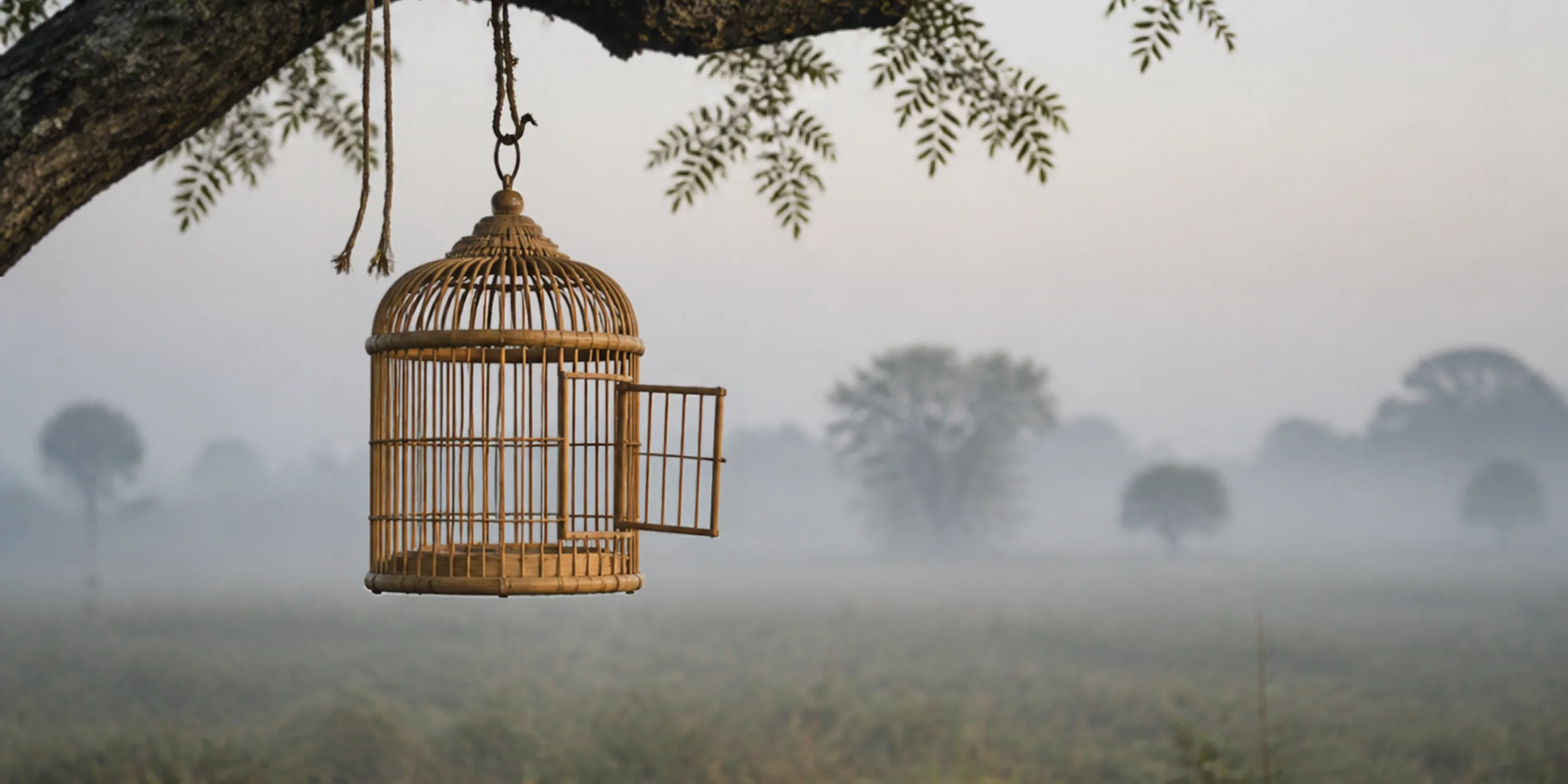
Renunciation is taken step by step: leave of one's family, the gift of everything; then the kinds of renunciants, up to the avadhuta who keeps no rule and rests in his own nature. The second chapter is what the renunciant knows. 'I am not this world of trees, grass and mountains.' Not the body, he is pure awareness, the light by which pot and cloth and the sun are seen. Let come what comes, let go what goes. The bird of the I-claim has cut the ropes of craving and flown from the cage of the body.
- Not this world, not this body
- Pure awareness, the light of all
- Let come what comes
- The bird that flew away
- The witness with a cool mind
Contents
- 1.a
- 1.b
- 1.c
- 2.0
- 2.1
- 2.2
- 2.2a
- 2.3
- 2.4
- 2.5
- 2.6
- 2.7
- 2.8
- 2.9
- 2.10
- 2.11
- 2.11a
- 2.12
- 2.12a
- 2.13
- 2.14
- 2.15
- 2.16
- 2.17
- 2.18
- 2.19
- 2.20
- 2.21
- 2.22
- 2.23
- 2.24
- 2.25
- 2.26
- 2.27
- 2.28
- 2.29
- 2.30
- 2.31
- 2.32
- 2.33
- 2.34
- 2.35
- 2.36
- 2.37
- 2.38
- 2.39
- 2.40
- 2.41
- 2.42
- 2.43
- 2.44
- 2.45
- 2.46
- 2.47
- 2.48
- 2.49
- 2.50
- 2.51
- 2.52
- 2.53
- 2.54
- 2.55
- 2.56
- 2.57
- 2.58
- 2.58a
- 2.59
- 2.60
- 2.61
- 2.62
- 2.63
- 2.64
- 2.65
- 2.66
- 2.67
- 2.68
- 2.69
- 2.70
- 2.71
- 2.72
- 2.73
- 2.74
- 2.75
- 2.76
- 2.77
- 2.78
- 2.78a
- 2.79
- 2.80
- 2.81
- 2.82
- 2.83
- 2.84
- 2.85
- 2.86
- 2.87
- 2.88
- 2.89
- 2.90
- 2.91
- 2.92
- 2.93
- 2.94
- 2.95
- 2.96
- 2.97
- 2.98
- 2.99
- 2.100
- 2.101
- 2.102
- 2.103
- 2.104
अथातः संन्यासोपनिषदं व्याख्यास्यामो योऽनुक्रमेण संन्यस्यति स संन्यस्तो भवति । कोऽयं संन्यास उच्यते कथं संन्यस्तो भवति । य आत्मानं क्रियाभिर्गुप्तं करोति मातरं पितरं भार्यां पुत्रान्बन्धूननुमोदयित्वा ये चास्यर्त्विजस्तान्सर्वांश्च पूर्ववत्प्राणित्वा वैश्वानरेष्टिं निर्वपेत्सर्वस्वं दद्याद्यजमानस्य गा ऋत्विजः सर्वैः पात्रैः समारोप्य यदाहवनीये गार्हपत्ये वान्वाहार्यपचने सभ्यावसथ्ययोश्च प्राणापानव्यानोदानसमानान्सर्वान्सर्वेषु समारोपयेत् । सशिखान्केशान्विसृज्य यज्ञोपवीतं छित्त्वा पुत्रं दृष्ट्वा त्वं यज्ञस्त्वं सर्वमित्यनुमन्त्रयेत् । यद्यपुत्रो भवत्यात्मानमेवेमं ध्यात्वानवेक्षमाणः प्राचीमुदीचीं वा दिशं प्रव्रजेच्च ।
athātaḥ saṃnyāsopaniṣadaṃ vyākhyāsyāmo yo'nukrameṇa saṃnyasyati sa saṃnyasto bhavati | ko'yaṃ saṃnyāsa ucyate kathaṃ saṃnyasto bhavati | ya ātmānaṃ kriyābhirguptaṃ karoti mātaraṃ pitaraṃ bhāryāṃ putrānbandhūnanumodayitvā ye cāsyartvijastānsarvāṃśca pūrvavatprāṇitvā vaiśvānareṣṭiṃ nirvapetsarvasvaṃ dadyādyajamānasya gā ṛtvijaḥ sarvaiḥ pātraiḥ samāropya yadāhavanīye gārhapatye vānvāhāryapacane sabhyāvasathyayośca prāṇāpānavyānodānasamānānsarvānsarveṣu samāropayet | saśikhānkeśānvisṛjya yajñopavītaṃ chittvā putraṃ dṛṣṭvā tvaṃ yajñastvaṃ sarvamityanumantrayet | yadyaputro bhavatyātmānamevemaṃ dhyātvānavekṣamāṇaḥ prācīmudīcīṃ vā diśaṃ pravrajecca |
Now we shall explain the Upanishad of renunciation. One who renounces in due order becomes a renunciant. What is this called renunciation? How does one become a renunciant? The one who has guarded himself by the rites, taking leave of mother, father, wife, sons and kin, and of the priests who serve him, honouring them all as before, offers the sacrifice to Vaishvanara and gives away everything he owns. The priests, with all the vessels, lay the sacrificer's fires in the fire of offering, the householder's fire, the southern fire, the hall-fire and the dwelling-fire, and he places the breaths, outgoing, incoming, pervading, rising and balancing, all in all of them. Letting go of his hair with its tuft, cutting the sacred thread, looking at his son, he says over him: 'You are the sacrifice; you are everything.' If he has no son, meditating on this Self, let him go forth, without looking back, to the east or the north.
Note //
Chapter 1, the rite of renunciation. The fires are 'laid in' the breaths: from now on the renunciant's own life is the sacrifice. Editions: 'sabhyāvasathyayoś' (Adyar) over 'sabhyāvasathyoś' (sanskritdocuments.org); 'udīcīṃ' (Adyar) over 'udīciṃ'.
त्रिषु वर्णेषु भिक्षाचर्यं चरेत् । पाणिपात्रेणाशनं कुर्यात् । औषधवदशनमाचरेत् । औषधवदशनं प्राश्नीयात् । यथालाभमश्नीयात्प्राणसन्धारणार्थं यथा मेदोवृद्धिर्न जायते । कृशीभूत्वा ग्रामैकरात्रं नगरे पञ्चरात्रं चतुरो मासान्वार्षिकान्ग्रामे वा नगरे वापि वसेत् । विशीर्णवस्त्रं वल्कलं वा प्रतिगृह्णीयान्नान्यत्प्रतिगृह्णीयाद्यद्यशक्तो भवति क्लेशतस्तप्यते तप इति ।
triṣu varṇeṣu bhikṣācaryaṃ caret | pāṇipātreṇāśanaṃ kuryāt | auṣadhavadaśanamācaret | auṣadhavadaśanaṃ prāśnīyāt | yathālābhamaśnīyātprāṇasandhāraṇārthaṃ yathā medovṛddhirna jāyate | kṛśībhūtvā grāmaikarātraṃ nagare pañcarātraṃ caturo māsānvārṣikāngrāme vā nagare vāpi vaset | viśīrṇavastraṃ valkalaṃ vā pratigṛhṇīyānnānyatpratigṛhṇīyādyadyaśakto bhavati kleśatastapyate tapa iti |
Let him beg among the three classes, eating from his hand as his bowl. Let him eat as one takes medicine; let him take food as medicine. Let him eat what comes, to keep up the breath, so that no fat grows. Grown thin, let him stay one night in a village, five nights in a town; for the four months of the rains let him stay in a village or a town. Let him accept a worn-out cloth or bark, and nothing else; if he is not able, he may. Through hardship, austerity is practised.
Note //
Editions: 'kṛśībhūtvā grāmaikarātraṃ' (sanskritdocuments.org) over 'kṛśo bhūtvā grāma ekarātraṃ'; the Adyar collection adds a garbled clause ('pakṣā vaimāso iti dvau māsau vā vaset', 'or let him stay two months'). The sense of 'yady aśakto bhavati' is uncertain.
यो वा एवं क्रमेण संन्यस्यति यो वा एवं पश्यति किमस्य यज्ञोपवीतं कास्य शिखा कथं वास्योपस्पर्शनमिति । तं होवाचेदमेवास्य तद्यज्ञोपवीतं यदात्मध्यानं विद्या शिखा नीरैः सर्वत्रावस्थितैः कार्यं निर्वर्तयन्नुदरपात्रेण जलतीरे निकेतनम् । ब्रह्मवादिनो वदन्त्यस्तमित आदित्ये कथं वास्योपस्पर्शनमिति । तान्होवाच यथाहनि तथा रात्रौ नास्य नक्तं न दिवा तदप्येतदृषिणोक्तम् । सकृद्दिवा हैवास्मै भवतीति । य एवंविद्वानेतेनात्मानं संधत्ते ॥
yo vā evaṃ krameṇa saṃnyasyati yo vā evaṃ paśyati kimasya yajñopavītaṃ kāsya śikhā kathaṃ vāsyopasparśanamiti | taṃ hovācedamevāsya tadyajñopavītaṃ yadātmadhyānaṃ vidyā śikhā nīraiḥ sarvatrāvasthitaiḥ kāryaṃ nirvartayannudarapātreṇa jalatīre niketanam | brahmavādino vadantyastamita āditye kathaṃ vāsyopasparśanamiti | tānhovāca yathāhani tathā rātrau nāsya naktaṃ na divā tadapyetadṛṣiṇoktam | sakṛddivā haivāsmai bhavatīti | ya evaṃvidvānetenātmānaṃ saṃdhatte ||
For one who renounces in this order, or who sees it so: 'What is his sacred thread? What is his tuft? How does he purify himself with water?' He said: 'His sacred thread is meditation on the Self; knowledge is his tuft. With the waters that are everywhere he does what is to be done, with his belly as his bowl, his dwelling on the bank of a river.' Those who speak of Brahman ask: 'When the sun has set, how does he purify himself?' He said to them: 'As in the day, so at night: for him there is no night and no day. This too the seer has said: "For him it is day once and for all." The one who knows this joins himself to the Self by it.'
Note //
The end of chapter 1. The outer marks are replaced by inner ones: the thread is meditation on the Self, the tuft is knowledge. 'Day once and for all' is Chandogya 3.11.3: for the knower the sun neither rises nor sets.
अथ द्वितीयोऽध्यायः । ॐ चत्वारिंशत्संस्कारसम्पन्नः सर्वतो विरक्तश्चित्तशुद्धिमेत्याशासूयेर्ष्याहंकारं दग्ध्वा साधनचतुष्टयसम्पन्न एव संन्यस्तुमर्हति ।
atha dvitīyo'dhyāyaḥ | oṃ catvāriṃśatsaṃskārasampannaḥ sarvato viraktaścittaśuddhimetyāśāsūyerṣyāhaṃkāraṃ dagdhvā sādhanacatuṣṭayasampanna eva saṃnyastumarhati |
Now the second chapter. Om. One who has received the forty rites of passage, who has turned away from everything, who has reached purity of mind, who has burnt up hope, spite, envy and , and who has the fourfold means: he alone is fit to renounce.
Note //
'The fourfold means' (sādhana-catuṣṭaya): discernment, dispassion, the six virtues beginning with calm, and the longing for freedom. Sanskritdocuments.org adds headings ('saṃnyāsādhikārī', 'patitalakṣaṇam') that are an editor's, not the text's. Editions: 'catvāriṃśat-' (Adyar) over 'catvāriṃṣat-'.
संन्यासं निश्चयं कृत्वा पुनर्न च करोति यः । स कुर्यात्कृच्छ्रमात्रं तु पुनः संन्यस्तुमर्हति ॥ १॥
saṃnyāsaṃ niścayaṃ kṛtvā punarna ca karoti yaḥ | sa kuryātkṛcchramātraṃ tu punaḥ saṃnyastumarhati || 1||
One who has resolved to renounce and then does not do it should perform a penance; then he is fit to renounce again.
Note //
Editions agree.
संन्यासं पातयेद्यस्तु पतितं न्यासयेत्तु यः । संन्यासविघ्नकर्ता च त्रीनेतान्पतितान्विदुः ॥ २॥
saṃnyāsaṃ pātayedyastu patitaṃ nyāsayettu yaḥ | saṃnyāsavighnakartā ca trīnetānpatitānviduḥ || 2||
One who makes another fall from renunciation, one who gives renunciation to the fallen, and one who puts obstacles in the way of renunciation: these three, they say, are fallen.
Note //
Editions agree.
इति । अथ षण्ढः पतितोऽङ्गविकलः स्त्रैणो बधिरोऽर्भको मूकः पाषण्डश्चक्री लिङ्गी कुष्ठी वैखानसहरद्विजौ भृतकाध्यापकः शिपिविष्टोऽनग्निको नास्तिको वैराग्यवन्तोऽप्येते न संन्यासार्हाः । संन्यस्ता यद्यपि महावाक्योपदेशे नाधिकारिणः ॥
iti | atha ṣaṇḍhaḥ patito'ṅgavikalaḥ straiṇo badhiro'rbhako mūkaḥ pāṣaṇḍaścakrī liṅgī kuṣṭhī vaikhānasaharadvijau bhṛtakādhyāpakaḥ śipiviṣṭo'nagniko nāstiko vairāgyavanto'pyete na saṃnyāsārhāḥ | saṃnyastā yadyapi mahāvākyopadeśe nādhikāriṇaḥ ||
Now: the impotent, the fallen, the maimed, one ruled by women, the deaf, a child, the dumb, the heretic, one who rides in chariots, one who wears sectarian marks, the leper, the Vaikhanasa and the Shaiva priest, one who teaches for pay, the bald, one without a sacred fire, the unbeliever: even if they have dispassion, these are not fit to renounce. Even if they have renounced, they are not fit to be taught the great sayings.
Note //
A list of exclusions in the conventions of the old law books, some of them about ritual status and some about bodily conditions; it is rendered as the text has it. Several terms are uncertain ('cakrī', 'liṅgī', 'vaikhānasa-hara-dvijau', 'śipiviṣṭa'). The Adyar collection numbers this prose with verse 3. Pending review.
आरूढपतितापत्यं कुनखी श्यावदन्तकः । क्षीबस्तथाङ्गविकलो नैव संन्यस्तुमर्हति ॥ ३॥
ārūḍhapatitāpatyaṃ kunakhī śyāvadantakaḥ | kṣībastathāṅgavikalo naiva saṃnyastumarhati || 3||
The child of one who fell from renunciation, one with diseased nails, one with black teeth, the drunkard, the maimed: none of these is fit to renounce.
Note //
Editions agree.
सम्प्रत्यवसितानां च महापातकिनां तथा । व्रात्यानामभिशस्तानां संन्यासं नैव कारयेत् ॥ ४॥
sampratyavasitānāṃ ca mahāpātakināṃ tathā | vrātyānāmabhiśastānāṃ saṃnyāsaṃ naiva kārayet || 4||
Those who have gone back on their vows, those guilty of great wrongs, those outside the rites, those accused: let renunciation not be given to them.
Note //
Editions: 'naiva kārayet' (Adyar, as the metre requires) over 'na kārayet' (sanskritdocuments.org).
व्रतयज्ञतपोदानहोमस्वाध्यायवर्जितम् । सत्यशौचपरिभ्रष्टं संन्यासं नैव कारयेत् ॥ ५॥
vratayajñatapodānahomasvādhyāyavarjitam | satyaśaucaparibhraṣṭaṃ saṃnyāsaṃ naiva kārayet || 5||
One without vows, sacrifice, austerity, giving, offering or study, fallen from truth and purity: let renunciation not be given to him.
Note //
Editions: 'naiva kārayet' (Adyar, as the metre requires) over 'na kārayet' (sanskritdocuments.org).
एते नार्हन्ति संन्यासमातुरेण विना क्रमम् । ॐ भूः स्वाहेति शिखामुत्पाट्य यज्ञोपवीतं बहिर्न निवसेत् । यशो बलं ज्ञानं वैराग्यं मेधां प्रयच्छेति यज्ञोपवीतं छित्त्वा ॐ भूः स्वाहेत्यप्सु वस्त्रं कटिसूत्रं च विसृज्य संन्यस्तं मयेति त्रिवारमभिमन्त्रयेत् । संन्यासिनं द्विजं दृष्ट्वा स्थानाच्चलति भास्करः । एष मे मण्डलं भित्त्वा परं ब्रह्माधिगच्छति ॥ ६॥
ete nārhanti saṃnyāsamātureṇa vinā kramam | oṃ bhūḥ svāheti śikhāmutpāṭya yajñopavītaṃ bahirna nivaset | yaśo balaṃ jñānaṃ vairāgyaṃ medhāṃ prayaccheti yajñopavītaṃ chittvā oṃ bhūḥ svāhetyapsu vastraṃ kaṭisūtraṃ ca visṛjya saṃnyastaṃ mayeti trivāramabhimantrayet | saṃnyāsinaṃ dvijaṃ dṛṣṭvā sthānāccalati bhāskaraḥ | eṣa me maṇḍalaṃ bhittvā paraṃ brahmādhigacchati || 6||
These are not fit to renounce in due order; they may renounce only in mortal danger. Saying 'Om bhuh svaha', let him pluck out the tuft; let him not keep the sacred thread outside. Saying 'Give me fame, strength, knowledge, dispassion and intelligence', let him cut the sacred thread; saying 'Om bhuh svaha', let him give up his cloth and girdle to the waters, and say three times: 'I have renounced.' Seeing a twice-born who has renounced, the sun moves from his place: 'This one will break through my disc and reach the highest Brahman.'
Note //
'In mortal danger' (ātura): renunciation taken at the point of death, which is allowed even to the excluded. Editions: 'kaṭisūtraṃ' over 'kaṭisūyaṃ' (sanskritdocuments.org).
षष्टिं कुलान्यतीतानि षष्टिमागामिकानि च । कुलान्युद्धरते प्राज्ञः संन्यस्तमिति यो वदेत् ॥ ७॥
ṣaṣṭiṃ kulānyatītāni ṣaṣṭimāgāmikāni ca | kulānyuddharate prājñaḥ saṃnyastamiti yo vadet || 7||
The wise one who says 'I have renounced' lifts up sixty generations past and sixty to come.
Note //
Editions agree.
ये च सन्तानजा दोषा ये दोषा देहसम्भवाः । प्रैषाग्निर्निर्दहेत्सर्वांस्तुषाग्निरिव काञ्चनम् ॥ ८॥
ye ca santānajā doṣā ye doṣā dehasambhavāḥ | praiṣāgnirnirdahetsarvāṃstuṣāgniriva kāñcanam || 8||
The faults born of one's family line, the faults born of the body: the fire of the call of renunciation burns them all, as a fire of husks refines gold.
Note //
'The call' (praiṣa): the formula 'I have renounced'. Editions: 'tuṣāgnir iva' (Adyar) over 'tuṣārinn iva' (sanskritdocuments.org).
सखा मा गोपायेति दण्डं परिग्रहेत् । दण्डं तु वैणवं सौम्यं सत्वचं समपर्वकम् । पुण्यस्थलसमुत्पन्नं नानाकल्मषशोधितम् ॥ ९॥
sakhā mā gopāyeti daṇḍaṃ parigrahet | daṇḍaṃ tu vaiṇavaṃ saumyaṃ satvacaṃ samaparvakam | puṇyasthalasamutpannaṃ nānākalmaṣaśodhitam || 9||
Saying 'Friend, guard me', let him take up the staff: a staff of bamboo, pleasant, with its bark, its joints even, grown in a holy place, cleansed of every stain,
Note //
Editions: 'vaiṇavaṃ' (Adyar) over 'vāṇavaṃ' (sanskritdocuments.org). The sentence runs into verse 10.
अदग्धमहतं कीटैः पर्वग्रन्थिविराजितम् । नासादघ्नं शिरस्तुल्यं भ्रुवोर्वा बिभृयाद्यतिः ॥ १०॥
adagdhamahataṃ kīṭaiḥ parvagranthivirājitam | nāsādaghnaṃ śirastulyaṃ bhruvorvā bibhṛyādyatiḥ || 10||
not burnt, not eaten by insects, handsome with joints and knots, reaching to the nose, or as high as the head, or to the brows: so let the renunciant carry it.
Note //
Editions agree.
दण्डात्मनोस्तु संयोगः सर्वथा तु विधीयते । न दण्डेन विना गच्छेदिषुक्षेपत्रयं बुधः ॥ ११॥
daṇḍātmanostu saṃyogaḥ sarvathā tu vidhīyate | na daṇḍena vinā gacchediṣukṣepatrayaṃ budhaḥ || 11||
The staff and the self are to be joined in every way. Let the wise one not go three arrow-shots without the staff.
Note //
Editions agree.
जगज्जीवनं जीवनाधारभूतं माते मामन्त्रयस्व सर्वसौम्येति कमण्डलुं परिगृह्य योगपट्टाभिषिक्तो भूत्वा यथासुखं विहरेत् ॥
jagajjīvanaṃ jīvanādhārabhūtaṃ māte māmantrayasva sarvasaumyeti kamaṇḍaluṃ parigṛhya yogapaṭṭābhiṣikto bhūtvā yathāsukhaṃ viharet ||
Saying 'Life of the world, support of life, do not leave me, you who are gentle to all', let him take up the water-pot, and, consecrated with the cloth of yoga, let him wander at ease.
Note //
The words to the water-pot are obscure in both editions ('mā te mām antrayasva'); rendered by their likely sense. The Adyar collection numbers this prose as verse 12. Pending review.
त्यज धर्ममधर्मं च उभे सत्यानृते त्यज । उभे सत्यानृते त्यक्त्वा येन त्यजसि तत्त्यज ॥ १२॥
tyaja dharmamadharmaṃ ca ubhe satyānṛte tyaja | ubhe satyānṛte tyaktvā yena tyajasi tattyaja || 12||
Let go of right and wrong; let go of both truth and untruth. Having let go of truth and untruth, let go of that by which you let go.
Note //
A verse of the Mahabharata (12.316.40), whose last words, 'yena tyajasi tat tyaja', also end a line of the Maha Upanishad (6.6). Even the letting go is let go. Editions agree.
वैराग्यसंन्यासी ज्ञानसंन्यासी ज्ञानवैराग्यसंन्यासी कर्मसंन्यासीति चातुर्विध्यमुपागतः । तद्यथेति दृष्टानुश्रविकविषयवैतृष्ण्यमेत्य प्राक्पुण्यकर्मविशेषात्संन्यस्तः स वैराग्यसंन्यासी । शास्त्रज्ञानात्पापपुण्यलोकानुभवश्रवणात्प्रपञ्चोपरतो देहवासनां शास्त्रवासनां लोकवासनां त्यक्त्वा वमनान्नमिव प्रवृत्तिं सर्वं हेयं मत्वा साधनचतुष्टयसम्पन्नो यः संन्यस्यति स एव ज्ञानसंन्यासी । क्रमेण सर्वमभ्यस्य सर्वमनुभूय ज्ञानवैराग्याभ्यां स्वरूपानुसन्धानेन देहमात्रावशिष्टः संन्यस्य जातरूपधरो भवति स ज्ञानवैराग्यसंन्यासी । ब्रह्मचर्यं समाप्य गृही भूत्वा वानप्रस्थाश्रममेत्य वैराग्याभावेऽप्याश्रमक्रमानुसारेण यः संन्यस्यति स कर्मसंन्यासी । स संन्यासः षड्विधो भवति कुटीचकबहूदकहंसपरमहंसतुरीयातीतावधूताश्चेति । कुटीचकः शिखायज्ञोपवीती दण्डकमण्डलुधरः कौपीनशाटीकन्थाधरः पितृमातृगुर्वाराधनपरः पिठरखनित्रशिक्यादिमात्रसाधनपर एकत्रान्नादनपरः श्वेतोर्ध्वपुण्ड्रधारी त्रिदण्डः । बहूदकः शिखादिकन्थाधरस्त्रिपुण्ड्रधारी कुटीचकवत्सर्वसमो मधुकरवृत्त्याष्टकवलाशी । हंसो जटाधारी त्रिपुण्ड्रोर्ध्वपुण्ड्रधारी असंक्लृप्तमाधूकरान्नाशी कौपीनखण्डतुण्डधारी । परमहंसः शिखायज्ञोपवीतरहितः पञ्चगृहेषु करपात्री एककौपीनधारी शाटीमेकामेकं वैणवं दण्डमेकशाटीधरो वा भस्मोद्धूलनपरः सर्वत्यागी । तुरीयातीतो गोमुखवृत्त्या फलाहारी अन्नाहारी चेद्गृहत्रये देहमात्रावशिष्टो दिगम्बरः कुणपवच्छरीरवृत्तिकः । अवधूतस्त्वनियमः पतिताभिशस्तवर्जनपूर्वकं सर्ववर्णेष्वजगरवृत्त्याहारपरः स्वरूपानुसन्धानपरः ।
vairāgyasaṃnyāsī jñānasaṃnyāsī jñānavairāgyasaṃnyāsī karmasaṃnyāsīti cāturvidhyamupāgataḥ | tadyatheti dṛṣṭānuśravikaviṣayavaitṛṣṇyametya prākpuṇyakarmaviśeṣātsaṃnyastaḥ sa vairāgyasaṃnyāsī | śāstrajñānātpāpapuṇyalokānubhavaśravaṇātprapañcoparato dehavāsanāṃ śāstravāsanāṃ lokavāsanāṃ tyaktvā vamanānnamiva pravṛttiṃ sarvaṃ heyaṃ matvā sādhanacatuṣṭayasampanno yaḥ saṃnyasyati sa eva jñānasaṃnyāsī | krameṇa sarvamabhyasya sarvamanubhūya jñānavairāgyābhyāṃ svarūpānusandhānena dehamātrāvaśiṣṭaḥ saṃnyasya jātarūpadharo bhavati sa jñānavairāgyasaṃnyāsī | brahmacaryaṃ samāpya gṛhī bhūtvā vānaprasthāśramametya vairāgyābhāve'pyāśramakramānusāreṇa yaḥ saṃnyasyati sa karmasaṃnyāsī | sa saṃnyāsaḥ ṣaḍvidho bhavati kuṭīcakabahūdakahaṃsaparamahaṃsaturīyātītāvadhūtāśceti | kuṭīcakaḥ śikhāyajñopavītī daṇḍakamaṇḍaludharaḥ kaupīnaśāṭīkanthādharaḥ pitṛmātṛgurvārādhanaparaḥ piṭharakhanitraśikyādimātrasādhanapara ekatrānnādanaparaḥ śvetordhvapuṇḍradhārī tridaṇḍaḥ | bahūdakaḥ śikhādikanthādharastripuṇḍradhārī kuṭīcakavatsarvasamo madhukaravṛttyāṣṭakavalāśī | haṃso jaṭādhārī tripuṇḍrordhvapuṇḍradhārī asaṃklṛptamādhūkarānnāśī kaupīnakhaṇḍatuṇḍadhārī | paramahaṃsaḥ śikhāyajñopavītarahitaḥ pañcagṛheṣu karapātrī ekakaupīnadhārī śāṭīmekāmekaṃ vaiṇavaṃ daṇḍamekaśāṭīdharo vā bhasmoddhūlanaparaḥ sarvatyāgī | turīyātīto gomukhavṛttyā phalāhārī annāhārī cedgṛhatraye dehamātrāvaśiṣṭo digambaraḥ kuṇapavaccharīravṛttikaḥ | avadhūtastvaniyamaḥ patitābhiśastavarjanapūrvakaṃ sarvavarṇeṣvajagaravṛttyāhāraparaḥ svarūpānusandhānaparaḥ |
Renunciation is of four kinds: from dispassion, from knowledge, from knowledge and dispassion, and from duty. The one who has become free of thirst for objects seen and heard of, and renounces by the force of good deeds before: he renounces from dispassion. The one who, from knowing the scriptures, from hearing of the worlds of wrong and merit, has turned away from the world, has let go of the tendencies of the body, of the scriptures and of the world, holds all activity as fit to be left, like vomited food, has the fourfold means, and renounces: he renounces from knowledge. The one who, having practised and lived through everything in order, by knowledge and dispassion, by dwelling on his own nature, with only the body left, renounces and goes naked as at birth: he renounces from knowledge and dispassion. The one who, having finished studentship, become a householder, and come to the forest stage, renounces according to the order of the stages, even without dispassion: he renounces from duty. That renunciation is of six kinds: the hut-dweller, the one of many waters, the swan, the highest swan, the one beyond the fourth, and the avadhuta. The hut-dweller keeps tuft and sacred thread, staff and water-pot, loincloth, cloth and patched robe; he serves father, mother and teacher; his only goods are a pot, a spade, a sling and the like; he eats in one place; he wears the white upright mark; he has the triple staff. The one of many waters wears the tuft and the patched robe and the triple mark, is like the hut-dweller in all else, and eats eight mouthfuls, begged like a bee. The swan wears matted hair, the triple and upright marks, eats food begged like a bee without planning, and wears a strip of loincloth. The highest swan has neither tuft nor sacred thread; he begs at five houses with his hand as bowl, wears one loincloth, one cloth and one bamboo staff, or only one cloth; he is smeared with ash; he has given up everything. The one beyond the fourth lives like a cow, eating fruit; if he eats grain, from three houses; with only the body left, naked, he treats his body like a corpse. The avadhuta keeps no rule; avoiding only the fallen and the accused, he takes food from all classes like the python, and is given wholly to dwelling on his own nature.
Note //
The kinds of renunciants, as in the Naradaparivrajaka and the Paramahamsaparivrajaka. Each has less than the last; the avadhuta, the last, has no rule, only the knowledge of his own nature. 'Like the python' (ajagara-vṛtti): eating only what comes of itself. Editions: 'śarīravṛttikaḥ' (Adyar) over the misprint of sanskritdocuments.org; the Adyar collection numbers this prose with verse 13. Pending review.
जगत्तावदिदं नाहं सवृक्षतृणपर्वतम् । यद्बाह्यं जडमत्यन्तं तत्स्यां कथमहं विभुः ॥ १३॥
jagattāvadidaṃ nāhaṃ savṛkṣatṛṇaparvatam | yadbāhyaṃ jaḍamatyantaṃ tatsyāṃ kathamahaṃ vibhuḥ || 13||
I am not this world, with its trees, grass and mountains. What is outside, wholly inert: how could I, all-pervading, be that?
Note //
The first of a series of verses (13-19), each ending 'I am not that, it is inert': the world, the body, sound, touch, taste, form and smell. The reasoning is the Advaita discrimination of seer and seen: what is seen and inert cannot be the seer. Editions agree.
कालेनाल्पेन विलयी देहो नाहमचेतनः । जडया कर्णशष्कुल्या कल्प्यमानक्षणस्थया ॥ १४॥
kālenālpena vilayī deho nāhamacetanaḥ | jaḍayā karṇaśaṣkulyā kalpyamānakṣaṇasthayā || 14||
The body, which perishes in a little time, I am not: it is without awareness. By the dull ear, which lasts but a moment of imagining,
Note //
Verses 13-19 go through the world, the body and the five senses with their objects: each is 'not I', because it is inert. The sentence runs into verse 15. Editions: 'kalpyamāna-' is read for 'kalpamāna-' (sanskritdocuments.org). Pending review.
शून्याकृतिः शून्यभवः शब्दो नाहमचेतनः । त्वचा क्षणविनाशिन्या प्राप्योऽप्राप्योऽयमन्यथा ॥ १५॥
śūnyākṛtiḥ śūnyabhavaḥ śabdo nāhamacetanaḥ | tvacā kṣaṇavināśinyā prāpyo'prāpyo'yamanyathā || 15||
sound, empty in form, born of emptiness, I am not: it is without awareness. By the skin, which perishes in a moment, this is reached, and otherwise not:
Note //
The sentence runs into verse 16. Editions agree.
चित्प्रसादोपलब्धात्मा स्पर्शो नाहमचेतनः । लब्धात्मा जिह्वया तुच्छो लोलया लोलसत्तया ॥ १६॥
citprasādopalabdhātmā sparśo nāhamacetanaḥ | labdhātmā jihvayā tuccho lolayā lolasattayā || 16||
touch, which gets its being from the grace of the light, I am not: it is without awareness. Getting its being from the tongue, a trifle, restless, of restless being,
Note //
Editions agree.
स्वल्पस्पन्दो द्रव्यनिष्ठो रसो नाहमचेतनः । दृश्यदर्शनयोर्लीनं क्षयिक्षणविनाशिनोः ॥ १७॥
svalpaspando dravyaniṣṭho raso nāhamacetanaḥ | dṛśyadarśanayorlīnaṃ kṣayikṣaṇavināśinoḥ || 17||
taste, a small stir resting on things, I am not: it is without awareness. Merged in the seen and the seeing, both passing, perishing in a moment,
Note //
Editions: 'svalpaspando' (Adyar) over 'svalpasyando' (sanskritdocuments.org).
केवले द्रष्टरि क्षीणं रूपं नाहमचेतनम् । नासया गन्धजडया क्षयिण्या परिकल्पितः ॥ १८॥
kevale draṣṭari kṣīṇaṃ rūpaṃ nāhamacetanam | nāsayā gandhajaḍayā kṣayiṇyā parikalpitaḥ || 18||
form, which fades in the pure seer, I am not: it is without awareness. Imagined by the nose, dull with smell, decaying,
Note //
Editions agree.
पेलवो नियताकारो गन्धो नाहमचेतनः । निर्ममोऽमननः शान्तो गतपञ्चेन्द्रियभ्रमः ॥ १९॥
pelavo niyatākāro gandho nāhamacetanaḥ | nirmamo'mananaḥ śānto gatapañcendriyabhramaḥ || 19||
smell, frail, fixed in shape, I am not: it is without awareness. Without 'mine', without thinking, at peace, the error of the five senses gone,
Note //
The sentence runs into verse 20. Editions agree.
शुद्धचेतन एवाहं कलाकलनवर्जितः । चैत्यवर्जितचिन्मात्रमहमेषोऽवभासकः ॥ २०॥
śuddhacetana evāhaṃ kalākalanavarjitaḥ | caityavarjitacinmātramahameṣo'vabhāsakaḥ || 20||
I am pure awareness alone, free of parts and of all reckoning. I am awareness only, with nothing to be aware of: the one who makes all things shine.
Note //
Verse 19 ends: 'without "mine", without thinking, at peace, the confusion of the five senses gone'. 'Nothing to be aware of' (caitya-varjita): awareness as it is in itself, not defined by its objects. Editions agree.
सबाह्याभ्यन्तरव्यापी निष्कलोऽहं निरञ्जनः । निर्विकल्पचिदाभास एक आत्मास्मि सर्वगः ॥ २१॥
sabāhyābhyantaravyāpī niṣkalo'haṃ nirañjanaḥ | nirvikalpacidābhāsa eka ātmāsmi sarvagaḥ || 21||
Pervading outside and inside, I am without parts, without stain. The shining of the light, free of imagining, I am the one Self, everywhere.
Note //
Editions agree.
मयैव चेतनेनेमे सर्वे घटपटादयः । सूर्यान्ता अवभास्यन्ते दीपेनेवात्मतेजसा ॥ २२॥
mayaiva cetaneneme sarve ghaṭapaṭādayaḥ | sūryāntā avabhāsyante dīpenevātmatejasā || 22||
By me alone, who am awareness, all these, pots, cloths and the rest, up to the sun itself, are made to shine, as by a lamp, by the light of the Self.
Note //
Even the sun, which lights everything, is known only in awareness; compare Katha 2.2.15 (Hume 5.15), 'by its shining all this shines'. Editions agree.
मयैवैताः स्फुरन्तीह विचित्रेन्द्रियवृत्तयः । तेजसान्तःप्रकाशेन यथाग्निकणपङ्क्तयः ॥ २३॥
mayaivaitāḥ sphurantīha vicitrendriyavṛttayaḥ | tejasāntaḥprakāśena yathāgnikaṇapaṅktayaḥ || 23||
By me alone these varied movements of the senses flicker here, by the inner light, as rows of sparks from a fire.
Note //
Editions agree.
अनन्तानन्दसम्भोगा परोपशमशालिनी । शुद्धेयं चिन्मयी दृष्टिर्जयत्यखिलदृष्टिषु ॥ २४॥
anantānandasambhogā paropaśamaśālinī | śuddheyaṃ cinmayī dṛṣṭirjayatyakhiladṛṣṭiṣu || 24||
This pure seeing, made of the light, which enjoys endless bliss and rests in the highest peace, prevails among all ways of seeing.
Note //
Editions agree.
सर्वभावान्तरस्थाय चैत्यमुक्तचिदात्मने । प्रत्यक्चैतन्यरूपाय मह्यमेव नमो नमः ॥ २५॥
sarvabhāvāntarasthāya caityamuktacidātmane | pratyakcaitanyarūpāya mahyameva namo namaḥ || 25||
To the one within all things, the Self that is the light, free of the known, whose form is the inner light: to me, homage, homage.
Note //
The renunciant bows to the Self, which is himself. Editions agree.
विचित्राः शक्तयः स्वच्छाः समा या निर्विकारया । चिता क्रियन्ते समया कलाकलनमुक्तया ॥ २६॥
vicitrāḥ śaktayaḥ svacchāḥ samā yā nirvikārayā | citā kriyante samayā kalākalanamuktayā || 26||
The varied powers, clear and even, are brought about by the light, which is unchanging, even, free of parts and of reckoning.
Note //
Editions agree.
कालत्रयमुपेक्षित्र्या हीनायाश्चैत्यबन्धनैः । चितश्चैत्यमुपेक्षित्र्याः समतैवावशिष्यते ॥ २७॥
kālatrayamupekṣitryā hīnāyāścaityabandhanaiḥ | citaścaityamupekṣitryāḥ samataivāvaśiṣyate || 27||
Of the light that looks past the three times, free of the bonds of the known, that looks past the known, only evenness remains.
Note //
Editions agree.
सा हि वाचामगम्यत्वादसत्तामिव शाश्वतीम् । नैरात्म्यसिद्धात्मदशामुपयातैव शिष्यते ॥ २८॥
sā hi vācāmagamyatvādasattāmiva śāśvatīm | nairātmyasiddhātmadaśāmupayātaiva śiṣyate || 28||
Because words cannot reach it, it seems like an everlasting non-being; it remains, having come to the state of the Self that is reached when every self-image is gone.
Note //
Read in the light of the Yoga Vasishtha: the Self appears as 'nothing' to words, but it is what remains. Interpretive. Editions: 'nairātmya-' is read for 'nairātma-' (both editions). Pending review.
ईहानीहामयैरन्तर्या चिदावलिता मलैः । सा चिन्नोत्पतितुं शक्ता पाशबद्धेव पक्षिणी ॥ २९॥
īhānīhāmayairantaryā cidāvalitā malaiḥ | sā cinnotpatituṃ śaktā pāśabaddheva pakṣiṇī || 29||
The light that is wrapped within in the stains of wanting and not wanting cannot fly up, like a bird caught in a snare.
Note //
Editions: 'utpatituṃ', 'fly up', is read for 'utpāditum' (both editions), as the image requires. Pending review.
इच्छाद्वेषसमुत्थेन द्वन्द्वमोहेन जन्तवः । धराविवरमग्नानां कीटानां समतां गताः ॥ ३०॥
icchādveṣasamutthena dvandvamohena jantavaḥ | dharāvivaramagnānāṃ kīṭānāṃ samatāṃ gatāḥ || 30||
By the confusion of the pairs, which rises from liking and disliking, creatures have become like insects sunk in a hole in the earth.
Note //
Bhagavad Gita 7.27. Editions agree.
आत्मनेऽस्तु नमो मह्यमविच्छिन्नचिदात्मने । परामृष्टोऽस्मि लब्धोऽस्मि प्रोदितोऽस्म्यचिरादहम् । उद्धृतोऽस्मि विकल्पेभ्यो योऽस्मि सोऽस्मि नमोऽस्तु ते ॥ ३१॥
ātmane'stu namo mahyamavicchinnacidātmane | parāmṛṣṭo'smi labdho'smi prodito'smyacirādaham | uddhṛto'smi vikalpebhyo yo'smi so'smi namo'stu te || 31||
Homage to the Self, to me, the Self that is the unbroken light. I am grasped, I am found, I have risen, and soon. I am lifted out of imaginings. I am what I am: homage to you.
Note //
'To you': the Self, addressed as other only to be greeted as oneself. Editions agree.
तुभ्यं मह्यमनन्ताय मह्यं तुभ्यं चिदात्मने । नमस्तुभ्यं परेशाय नमो मह्यं शिवाय च ॥ ३२॥
tubhyaṃ mahyamanantāya mahyaṃ tubhyaṃ cidātmane | namastubhyaṃ pareśāya namo mahyaṃ śivāya ca || 32||
To you, to me, the endless; to me, to you, the Self that is the light; homage to you, the highest Lord; homage to me, to Shiva.
Note //
Editions agree.
तिष्ठन्नपि हि नासीनो गच्छन्नपि न गच्छति । शान्तोऽपि व्यवहारस्थः कुर्वन्नपि न लिप्यते ॥ ३३॥
tiṣṭhannapi hi nāsīno gacchannapi na gacchati | śānto'pi vyavahārasthaḥ kurvannapi na lipyate || 33||
Even standing, he is not seated; even going, he does not go; at peace, yet busy with the world; even acting, he is not stained.
Note //
Editions agree.
सुलभश्चायमत्यन्तं सुज्ञेयश्चाप्तबन्धुवत् । शरीरपद्मकुहरे सर्वेषामेव षट्पदः ॥ ३४॥
sulabhaścāyamatyantaṃ sujñeyaścāptabandhuvat | śarīrapadmakuhare sarveṣāmeva ṣaṭpadaḥ || 34||
He is very easy to reach, easy to know, like a close friend: the bee in the hollow of the lotus of the body, in everyone.
Note //
Editions agree.
न मे भोगस्थितौ वाञ्छा न मे भोगविसर्जने । यदायाति तदायातु यत्प्रयाति प्रयातु तत् ॥ ३५॥
na me bhogasthitau vāñchā na me bhogavisarjane | yadāyāti tadāyātu yatprayāti prayātu tat || 35||
I have no wish to keep , and no wish to give it up. Let come what comes; let go what goes.
Note //
Renunciation completed: not a struggle to give things up, but freedom from both holding and rejecting. Editions agree.
मनसा मनसि च्छिन्ने निरहङ्कारतां गते । भावेन गलिते भावे स्वस्थस्तिष्ठामि केवलः ॥ ३६॥
manasā manasi cchinne nirahaṅkāratāṃ gate | bhāvena galite bhāve svasthastiṣṭhāmi kevalaḥ || 36||
When the mind is cut by the mind, and has become free of ; when feeling has melted away by feeling, I stand in myself, alone.
Note //
The mind used to end its own grasping, as a thorn is used to remove a thorn. 'Alone' (kevala): the Self with nothing second to it. Editions: 'nirahaṅkāratāṃ gate' (Adyar collection, which keeps the metre) over 'nirahaṅkāraṃ gate' (sanskritdocuments.org).
निर्भावं निरहंकारं निर्मनस्कमनीहितम् । केवलास्पन्दशुद्धात्मन्येव तिष्ठति मे रिपुः ॥ ३७॥
nirbhāvaṃ nirahaṃkāraṃ nirmanaskamanīhitam | kevalāspandaśuddhātmanyeva tiṣṭhati me ripuḥ || 37||
Without thought of things, without I-claim, without mind, without wanting: in the pure Self alone, which does not stir, my enemy stands.
Note //
'My enemy': the mind, which, defeated, rests in the Self like a conquered foe. Interpretive. Editions agree.
तृष्णारज्जुगणं छित्त्वा मच्छरीरकपञ्जरात् । न जाने क्व गतोड्डीय निरहङ्कारपक्षिणी ॥ ३८॥
tṛṣṇārajjugaṇaṃ chittvā maccharīrakapañjarāt | na jāne kva gatoḍḍīya nirahaṅkārapakṣiṇī || 38||
Cutting the knotted ropes of craving, the bird of has flown from the little cage of my body. Where it went, I do not know.
Note //
The image is gently comic: the 'bird' (feminine, pakṣiṇī) is the I-claim, nir-ahaṅkāra read as 'the I-claim that has gone'. 'I do not know where': nothing is left to follow it. Verse 37, before it, says the 'enemy' (the mind) now rests in the pure, unmoving Self. Editions agree.
यस्य नाहंकृतो भावो बुद्धिर्यस्य न लिप्यते । यः समः सर्वभूतेषु जीवितं तस्य शोभते ॥ ३९॥
yasya nāhaṃkṛto bhāvo buddhiryasya na lipyate | yaḥ samaḥ sarvabhūteṣu jīvitaṃ tasya śobhate || 39||
The one whose state is not made by , whose understanding is not stained, who is even toward all beings: his life is beautiful.
Note //
Compare Bhagavad Gita 18.17. Editions agree.
योऽन्तःशीतलया बुद्ध्या रागद्वेषविमुक्तया । साक्षिवत्पश्यतीदं हि जीवितं तस्य शोभते ॥ ४०॥
yo'ntaḥśītalayā buddhyā rāgadveṣavimuktayā | sākṣivatpaśyatīdaṃ hi jīvitaṃ tasya śobhate || 40||
One who, with an understanding cool within, free of liking and disliking, sees all this : his life is beautiful.
Note //
One of a series of verses ending 'his life is beautiful' (jīvitaṃ tasya śobhate). 'As a witness' (sākṣivat): seeing without the I-claim's taking part. Editions agree.
येन सम्यक्परिज्ञाय हेयोपादेयमुज्झता । चित्तस्यान्तेऽर्पितं चित्तं जीवितं तस्य शोभते ॥ ४१॥
yena samyakparijñāya heyopādeyamujjhatā | cittasyānte'rpitaṃ cittaṃ jīvitaṃ tasya śobhate || 41||
The one who, knowing fully, has let go of leaving and taking, and has offered the mind at the end of the mind: his life is beautiful.
Note //
Editions agree.
ग्राह्यग्राहकसम्बन्धे क्षीणे शान्तिरुदेत्यलम् । स्थितिमभ्यागता शान्तिर्मोक्षनामाभिधीयते ॥ ४२॥
grāhyagrāhakasambandhe kṣīṇe śāntirudetyalam | sthitimabhyāgatā śāntirmokṣanāmābhidhīyate || 42||
When the tie between the grasped and the grasper wears away, peace rises fully. Peace that has become steady is called freedom.
Note //
Editions agree.
भ्रष्टबीजोपमा भूयो जन्माङ्कुरविवर्जिता । हृदि जीवद्विमुक्तानां शुद्धा भवति वासना ॥ ४३॥
bhraṣṭabījopamā bhūyo janmāṅkuravivarjitā | hṛdi jīvadvimuktānāṃ śuddhā bhavati vāsanā || 43||
In the hearts of those free while living, tendency becomes pure, like a roasted seed, never again to sprout into birth.
Note //
Editions: 'janmāṅkura-' (Adyar) over the misprint of sanskritdocuments.org.
पावनी परमोदारा शुद्धसत्त्वानुपातिनी । आत्मध्यानमयी नित्या सुषुप्तिस्थेव तिष्ठति ॥ ४४॥
pāvanī paramodārā śuddhasattvānupātinī | ātmadhyānamayī nityā suṣuptistheva tiṣṭhati || 44||
Purifying, most generous, following pure clarity, made of meditation on the Self, constant, it stays as if in deep sleep.
Note //
Editions agree.
चेतनं चित्तरिक्तं हि प्रत्यक्चेतनमुच्यते । निर्मनस्कस्वभावत्वान्न तत्र कलनामलम् ॥ ४५॥
cetanaṃ cittariktaṃ hi pratyakcetanamucyate | nirmanaskasvabhāvatvānna tatra kalanāmalam || 45||
Awareness empty of the mind is called the inner awareness. Because its nature is to be without mind, there is no stain of reckoning in it.
Note //
Editions agree.
सा सत्यता सा शिवता सावस्था पारमात्मिकी । सर्वज्ञता सा संतृप्तिर्न तु यत्र मनः क्षतम् ॥ ४६॥
sā satyatā sā śivatā sāvasthā pāramātmikī | sarvajñatā sā saṃtṛptirna tu yatra manaḥ kṣatam || 46||
That is truth, that is goodness, that is the state of the highest Self, that is knowing all, that is fulfilment: not where the mind is merely wounded.
Note //
The last line is read as: that state is not a mind damaged or suppressed, but one gone beyond. Interpretive. Editions agree.
प्रलपन्विसृजन्गृह्णन्नुन्मिषन्निमिषन्नपि । निरस्तमननानन्दः संविन्मात्रपरोऽस्म्यहम् ॥ ४७॥
pralapanvisṛjangṛhṇannunmiṣannimiṣannapi | nirastamananānandaḥ saṃvinmātraparo'smyaham || 47||
Speaking, letting go, taking, opening and closing my eyes, my delight in thinking cast off, I am given to awareness alone.
Note //
After Bhagavad Gita 5.9. Editions agree.
मलं संवेद्यमुत्सृज्य मनो निर्मूलयन्परम् । आशापाशानलं छित्त्वा संविन्मात्रपरोऽस्म्यहम् ॥ ४८॥
malaṃ saṃvedyamutsṛjya mano nirmūlayanparam | āśāpāśānalaṃ chittvā saṃvinmātraparo'smyaham || 48||
Letting go of the stain of the known, pulling the mind up by the roots, cutting the nooses of hope for good, I am given to awareness alone.
Note //
Editions agree.
अशुभाशुभसंकल्पः संशान्तोऽस्मि निरामयः । नष्टेष्टानिष्टकलनः सन्मात्रपरोऽस्म्यहम् ॥ ४९॥
aśubhāśubhasaṃkalpaḥ saṃśānto'smi nirāmayaḥ | naṣṭeṣṭāniṣṭakalanaḥ sanmātraparo'smyaham || 49||
With imaginings good and bad stilled, I am at peace, untouched by harm. With the reckoning of wanted and unwanted gone, I am given to being alone.
Note //
Editions: 'sanmātra-' (Adyar) over 'saṃmātra-' (sanskritdocuments.org). The first word may be read 'śubhāśubha-'.
आत्मतापरते त्यक्त्वा निर्विभागो जगत्स्थितौ । वज्रस्तम्भवदात्मानमवलम्ब्य स्थिरोऽस्म्यहम् ॥ ५०॥
ātmatāparate tyaktvā nirvibhāgo jagatsthitau | vajrastambhavadātmānamavalambya sthiro'smyaham || 50||
Letting go of 'self' and 'other', undivided while the world goes on, holding to the Self like a diamond pillar, I am steady.
Note //
Editions agree.
निर्मलायां निराशायां स्वसंवित्तौ स्थितोऽस्म्यहम् । ईहितानीहितैर्मुक्तो हेयोपादेयवर्जितः ॥ ५१॥
nirmalāyāṃ nirāśāyāṃ svasaṃvittau sthito'smyaham | īhitānīhitairmukto heyopādeyavarjitaḥ || 51||
I stand in my own awareness, spotless, wanting nothing, free of what is striven for and not, without leaving or taking.
Note //
Editions agree.
कदान्तस्तोषमेष्यामि स्वप्रकाशपदे स्थितः । कदोपशान्तमननो धरणीधरकन्दरे ॥ ५२॥
kadāntastoṣameṣyāmi svaprakāśapade sthitaḥ | kadopaśāntamanano dharaṇīdharakandare || 52||
When shall I come to contentment within, standing in the self-luminous state? When, my thinking stilled, in a cave of the mountain,
Note //
Verses 52-55 are the longing of the renunciant, after the Yoga Vasishtha. The sentence runs into verse 53. Editions agree.
समेष्यामि शिलासाम्यं निर्विकल्पसमाधिना । निरंशध्यानविश्रान्तिमूकस्य मम मस्तके ॥ ५३॥
sameṣyāmi śilāsāmyaṃ nirvikalpasamādhinā | niraṃśadhyānaviśrāntimūkasya mama mastake || 53||
shall I become like a rock, in absorption without imagining? When, as I sit silent, resting in meditation without parts, on my head
Note //
The sentence runs into verse 54. Editions agree.
कदा तार्णं करिष्यन्ति कुलायं वनपुत्रिकाः । संकल्पपादपं तृष्णालतं छित्त्वा मनोवनम् ॥ ५४॥
kadā tārṇaṃ kariṣyanti kulāyaṃ vanaputrikāḥ | saṃkalpapādapaṃ tṛṣṇālataṃ chittvā manovanam || 54||
will the little forest birds make their nest of grass? Cutting down the forest of the mind, with its trees of imagining and its creepers of craving,
Note //
The sentence runs into verse 55. Editions agree.
विततां भुवमासाद्य विहरामि यथासुखम् । पदं तदनु यातोऽस्मि केवलोऽस्मि जयाम्यहम् ॥ ५५॥
vitatāṃ bhuvamāsādya viharāmi yathāsukham | padaṃ tadanu yāto'smi kevalo'smi jayāmyaham || 55||
reaching the wide open ground, I wander at ease. I have come to that state; I am alone; I prevail.
Note //
Editions: 'viharāmi' is read for 'viharābhi' (sanskritdocuments.org).
निर्वाणोऽस्मि निरीहोऽस्मि निरंशोऽस्मि निरीप्सितः । स्वच्छतोर्जितता सत्ता हृद्यता सत्यता ज्ञता ॥ ५६॥
nirvāṇo'smi nirīho'smi niraṃśo'smi nirīpsitaḥ | svacchatorjitatā sattā hṛdyatā satyatā jñatā || 56||
I am extinguished, without striving, without parts, without wanting. Clarity, strength, being, loveliness, truth, knowing,
Note //
The sentence runs into verse 57. Editions agree.
आनन्दितोपशमता सदा प्रमुदितोदिता । पूर्णतोदारता सत्या कान्तिसत्ता सदैकता ॥ ५७॥
ānanditopaśamatā sadā pramuditoditā | pūrṇatodāratā satyā kāntisattā sadaikatā || 57||
bliss, peace, always joyful, always risen, fullness, generosity, truth, the being of beauty, constant oneness.
Note //
The qualities of the one who has come to rest; the list is the text's own. Editions agree.
इत्येवं चिन्तयन्भिक्षुः स्वरूपस्थितिमञ्जसा । निर्विकल्पस्वरूपज्ञो निर्विकल्पो बभूव ह ॥ ५८॥
ityevaṃ cintayanbhikṣuḥ svarūpasthitimañjasā | nirvikalpasvarūpajño nirvikalpo babhūva ha || 58||
Reflecting in this way, the mendicant came straight to rest in his own nature; knowing his nature, free of imagining, he became free of imagining.
Note //
Editions agree.
आतुरो जीवति चेत्क्रमसंन्यासः कर्तव्यः । न शूद्रस्त्रीपतितोदक्यासम्भाषणम् । न यतेर्देवपूजनोत्सवदर्शनम् । तस्मान्न संन्यासिन एष लोकः । आतुरकुटीचकयोर्भूलोकभुवर्लोकौ । बहूदकस्य स्वर्गलोकः । हंसस्य तपोलोकः । परमहंसस्य सत्यलोकः । तुरीयातीतावधूतयोः स्वात्मन्येव कैवल्यं स्वरूपानुसन्धानेन भ्रमरकीटन्यायवत् । स्वरूपानुसन्धानव्यतिरिक्तान्यशास्त्राभ्यास उष्ट्रकुङ्कुमभारवद्व्यर्थः । न योगशास्त्रप्रवृत्तिः । न साङ्ख्यशास्त्राभ्यासः । न मन्त्रतन्त्रव्यापारः । नेतरशास्त्रप्रवृत्तिर्यतेरस्ति । अस्ति चेच्छवालङ्कारवत्कर्माचारविद्यादूरः । न परिव्राण्नामसंकीर्तनपरो यद्यत्कर्म करोति तत्तत्फलमनुभवति । एरण्डतैलफेनवत्सर्वं परित्यजेत् । न देवताप्रसादग्रहणम् । न बाह्यदेवाभ्यर्चनं कुर्यात् । स्वव्यतिरिक्तं सर्वं त्यक्त्वा मधुकरवृत्त्याहारमाहरन्कृशीभूत्वा मेदोवृद्धिमकुर्वन्विहरेत् । माधूकरेण करपात्रेणास्यपात्रेण वा कालं नयेत् ।
āturo jīvati cetkramasaṃnyāsaḥ kartavyaḥ | na śūdrastrīpatitodakyāsambhāṣaṇam | na yaterdevapūjanotsavadarśanam | tasmānna saṃnyāsina eṣa lokaḥ | āturakuṭīcakayorbhūlokabhuvarlokau | bahūdakasya svargalokaḥ | haṃsasya tapolokaḥ | paramahaṃsasya satyalokaḥ | turīyātītāvadhūtayoḥ svātmanyeva kaivalyaṃ svarūpānusandhānena bhramarakīṭanyāyavat | svarūpānusandhānavyatiriktānyaśāstrābhyāsa uṣṭrakuṅkumabhāravadvyarthaḥ | na yogaśāstrapravṛttiḥ | na sāṅkhyaśāstrābhyāsaḥ | na mantratantravyāpāraḥ | netaraśāstrapravṛttiryaterasti | asti cecchavālaṅkāravatkarmācāravidyādūraḥ | na parivrāṇnāmasaṃkīrtanaparo yadyatkarma karoti tattatphalamanubhavati | eraṇḍatailaphenavatsarvaṃ parityajet | na devatāprasādagrahaṇam | na bāhyadevābhyarcanaṃ kuryāt | svavyatiriktaṃ sarvaṃ tyaktvā madhukaravṛttyāhāramāharankṛśībhūtvā medovṛddhimakurvanviharet | mādhūkareṇa karapātreṇāsyapātreṇa vā kālaṃ nayet |
If one who renounced in mortal danger lives, let him take renunciation in due order. Let the renunciant not converse with labourers, women, the fallen or women in their courses; let him not look on worship of the gods or festivals. So this world is not for the renunciant. For the one who renounced in danger and the hut-dweller, the worlds of earth and atmosphere; for the one of many waters, heaven; for the swan, the world of austerity; for the highest swan, the world of truth; for the one beyond the fourth and the avadhuta, aloneness in their own Self, by dwelling on their own nature, as the grub becomes the wasp it dwells on. Study of other teachings, apart from dwelling on one's own nature, is as useless as saffron loaded on a camel. The renunciant does not take up the teaching of yoga, nor study the Samkhya, nor busy himself with mantras and rituals, nor take up any other teaching. If he does, it is like ornaments on a corpse; he is far from right action and knowledge. The wandering monk is not given to chanting names; whatever he does, he reaps its fruit. Let him throw everything away, like the froth on castor oil. Let him not take the food offered to gods, nor worship gods outside. Letting go of everything other than himself, taking food begged like a bee, growing thin, not putting on fat, let him wander. Let him pass his time with begged food, his hand or his mouth as his bowl.
Note //
The worlds named for the lower kinds of renunciants are still worlds; the last two have 'aloneness in their own Self'. 'As the grub becomes the wasp' (bhramara-kīṭa-nyāya): the grub, stung and dwelling on the wasp, becomes a wasp; so dwelling on one's own nature, one is it. The exclusions are rendered as the text has them. Editions: '-odakyāsambhāṣaṇam' over '-odakyā saṃbhāṣaṇam'; 'karmācāravidyādūraḥ' over 'karmācara vidyādūraḥ' (sanskritdocuments.org). The Adyar collection numbers this prose with verse 59. Pending review.
आत्मसम्मितमाहारमाहरेदात्मवान्यतिः । आहारस्य च भागौ द्वौ तृतीयमुदकस्य च । वायोः संचरणार्थाय चतुर्थमवशेषयेत् ॥ ५९॥
ātmasammitamāhāramāharedātmavānyatiḥ | āhārasya ca bhāgau dvau tṛtīyamudakasya ca | vāyoḥ saṃcaraṇārthāya caturthamavaśeṣayet || 59||
Let the self-possessed renunciant take food in measure with himself: two parts of the stomach for food, a third for water, and let him leave the fourth for the movement of air.
Note //
Editions agree.
भैक्षेण वर्तयेन्नित्यं नैकान्नाशी भवेत्क्वचित् । निरीक्षन्ते त्वनुद्विग्नास्तद्गृहं यत्नतो व्रजेत् ॥ ६०॥
bhaikṣeṇa vartayennityaṃ naikānnāśī bhavetkvacit | nirīkṣante tvanudvignāstadgṛhaṃ yatnato vrajet || 60||
Let him always live on alms, never eating from one person's food. Let him take care to go to the house where they look on him without dismay.
Note //
Editions agree.
पञ्चसप्तगृहाणां तु भिक्षामिच्छेत्क्रियावताम् । गोदोहमात्रमाकाङ्क्षेन्निष्क्रान्तो न पुनर्व्रजेत् ॥ ६१॥
pañcasaptagṛhāṇāṃ tu bhikṣāmicchetkriyāvatām | godohamātramākāṅkṣenniṣkrānto na punarvrajet || 61||
Let him seek alms at five or seven houses of those who keep the rites; let him wait only as long as it takes to milk a cow; once he has left, let him not go back.
Note //
Editions agree.
नक्ताद्वरश्चोपवास उपवासादयाचितः । अयाचिताद्वरं भैक्ष्यं तस्माद्भैक्षेण वर्तयेत् ॥ ६२॥
naktādvaraścopavāsa upavāsādayācitaḥ | ayācitādvaraṃ bhaikṣyaṃ tasmādbhaikṣeṇa vartayet || 62||
Fasting is better than eating only at night; food unasked for is better than fasting; begged food is better than food unasked for: so let him live on alms.
Note //
Editions: 'vartayet' (Adyar) over 'vardhayet' (sanskritdocuments.org).
नैव सव्यापसव्येन भिक्षाकाले विशेद्गृहान् । नातिक्रामेद्गृहं मोहाद्यत्र दोषो न विद्यते ॥ ६३॥
naiva savyāpasavyena bhikṣākāle viśedgṛhān | nātikrāmedgṛhaṃ mohādyatra doṣo na vidyate || 63||
At the time for alms let him not enter houses going this way and that; let him not pass by, out of delusion, a house where there is no fault.
Note //
Editions agree.
श्रोत्रियान्नं न भिक्षेत श्रद्धाभक्तिबहिष्कृतम् । व्रात्यस्यापि गृहे भिक्षेच्छ्रद्धाभक्तिपुरस्कृते ॥ ६४॥
śrotriyānnaṃ na bhikṣeta śraddhābhaktibahiṣkṛtam | vrātyasyāpi gṛhe bhikṣecchraddhābhaktipuraskṛte || 64||
Let him not beg the food of a learned man if it is given without faith and devotion; let him beg even in the house of one outside the rites if it is given with faith and devotion.
Note //
What matters in the gift is faith, not the giver's rank. Editions agree.
माधूकरमसंक्लृप्तं प्राक्प्रणीतमयाचितम् । तात्कालिकं चोपपन्नं भैक्षं पञ्चविधं स्मृतम् ॥ ६५॥
mādhūkaramasaṃklṛptaṃ prākpraṇītamayācitam | tātkālikaṃ copapannaṃ bhaikṣaṃ pañcavidhaṃ smṛtam || 65||
Begging like a bee, unplanned; offered beforehand; unasked for; offered at the moment; and brought: alms are known to be of five kinds.
Note //
Verses 66-70 explain each. Editions agree.
मनःसंकल्परहितांस्त्रीन्गृहान्पञ्च सप्त वा । मधुमक्षिकवत्कृत्वा माधूकरमिति स्मृतम् ॥ ६६॥
manaḥsaṃkalparahitāṃstrīngṛhānpañca sapta vā | madhumakṣikavatkṛtvā mādhūkaramiti smṛtam || 66||
Going to three, five or seven houses without any plan in mind, like a honey-bee: that is called begging like a bee.
Note //
Editions agree.
प्रातःकाले च पूर्वेद्युर्यद्भक्तैः प्रार्थितं मुहुः । तद्भैक्षं प्राक्प्रणीतं स्यात्स्थितिं कुर्यात्तथापि वा ॥ ६७॥
prātaḥkāle ca pūrvedyuryadbhaktaiḥ prārthitaṃ muhuḥ | tadbhaikṣaṃ prākpraṇītaṃ syātsthitiṃ kuryāttathāpi vā || 67||
What devotees have pressed on him in the morning or the day before: those alms are 'offered beforehand'; he may live on them too.
Note //
Editions: 'prārthitaṃ' over 'prāthitaṃ' (sanskritdocuments.org).
भिक्षाटनसमुद्योगाद्येन केन निमन्त्रितम् । अयाचितं तु तद्भैक्षं भोक्तव्यं च मुमुक्षुभिः ॥ ६८॥
bhikṣāṭanasamudyogādyena kena nimantritam | ayācitaṃ tu tadbhaikṣaṃ bhoktavyaṃ ca mumukṣubhiḥ || 68||
When, as he sets out to beg, anyone at all invites him: those alms are 'unasked for', to be eaten by those who seek freedom.
Note //
Editions agree.
उपस्थानेन यत्प्रोक्तं भिक्षार्थं ब्राह्मणेन तत् । तात्कालिकमिति ख्यातं भोक्तव्यं यतिभिस्तदा ॥ ६९॥
upasthānena yatproktaṃ bhikṣārthaṃ brāhmaṇena tat | tātkālikamiti khyātaṃ bhoktavyaṃ yatibhistadā || 69||
What a Brahmin offers when he comes up to him for alms: that is known as 'offered at the moment', to be eaten then by the renunciants.
Note //
Editions agree.
सिद्धमन्नं यदानीतं ब्राह्मणेन मठं प्रति । उपपन्नमिति प्राहुर्मुनयो मोक्षकाङ्क्षिणः ॥ ७०॥
siddhamannaṃ yadānītaṃ brāhmaṇena maṭhaṃ prati | upapannamiti prāhurmunayo mokṣakāṅkṣiṇaḥ || 70||
Cooked food brought by a Brahmin to the monastery: the sages who seek freedom call that 'brought'.
Note //
Editions agree.
चरेन्माधूकरं भैक्षं यतिर्म्लेच्छकुलादपि । एकान्नं न तु भुञ्जीत बृहस्पतिसमादपि । याचितायाचिताभ्यां च भिक्षाभ्यां कल्पयेत्स्थितिम् ॥ ७१॥
carenmādhūkaraṃ bhaikṣaṃ yatirmlecchakulādapi | ekānnaṃ na tu bhuñjīta bṛhaspatisamādapi | yācitāyācitābhyāṃ ca bhikṣābhyāṃ kalpayetsthitim || 71||
Let the renunciant beg like a bee, even from a family of outsiders; but let him not eat one person's food, even from one equal to Brihaspati. Let him live on alms both asked for and unasked.
Note //
Editions: 'sthitim' is read for 'sthitam' (sanskritdocuments.org).
न वायुः स्पर्शदोषेण नाग्निर्दहनकर्मणा । नापो मूत्रपुरीषाभ्यां नान्नदोषेण मस्करी ॥ ७२॥
na vāyuḥ sparśadoṣeṇa nāgnirdahanakarmaṇā | nāpo mūtrapurīṣābhyāṃ nānnadoṣeṇa maskarī || 72||
Wind is not defiled by what it touches, nor fire by what it burns, nor water by urine and dung, nor the wandering monk by faults in his food.
Note //
Editions agree.
विधूमे सन्नमुसले व्यङ्गारे भुक्तवज्जने । कालेऽपराह्णे भूयिष्ठे भिक्षाचरणमाचरेत् ॥ ७३॥
vidhūme sannamusale vyaṅgāre bhuktavajjane | kāle'parāhṇe bhūyiṣṭhe bhikṣācaraṇamācaret || 73||
When the smoke has gone, the pestle is put away, the coals are out, and the people have eaten, late in the afternoon, let him go for alms.
Note //
After Manu 6.56. Editions agree.
अभिशस्तं च पतितं पाषण्डं देवपूजकम् । वर्जयित्वा चरेद्भैक्षं सर्ववर्णेषु चापदि ॥ ७४॥
abhiśastaṃ ca patitaṃ pāṣaṇḍaṃ devapūjakam | varjayitvā caredbhaikṣaṃ sarvavarṇeṣu cāpadi || 74||
Avoiding the accused, the fallen, the heretic, and the paid temple priest, let him beg; in hard times, among all classes.
Note //
Editions: 'abhiśastaṃ' and 'pāṣaṇḍaṃ' (Adyar) over the misprints of sanskritdocuments.org.
घृतं स्वमूत्रसदृशं मधु स्यात्सुरया समम् । तैलं सूकरमूत्रं स्यात्सूपं लशुनसंमितम् ॥ ७५॥
ghṛtaṃ svamūtrasadṛśaṃ madhu syātsurayā samam | tailaṃ sūkaramūtraṃ syātsūpaṃ laśunasaṃmitam || 75||
Ghee is like his own urine; honey is like liquor; oil is like pig's urine; broth is like garlic;
Note //
The sentence runs into verse 76. Editions agree.
माषापूपादि गोमांसं क्षीरं मूत्रसमं भवेत् । तस्मात्सर्वप्रयत्नेन घृतादीन्वर्जयेद्यतिः । घृतसूपादिसंयुक्तमन्नं नाद्यात्कदाचन ॥ ७६॥
māṣāpūpādi gomāṃsaṃ kṣīraṃ mūtrasamaṃ bhavet | tasmātsarvaprayatnena ghṛtādīnvarjayedyatiḥ | ghṛtasūpādisaṃyuktamannaṃ nādyātkadācana || 76||
cakes of beans and the like are like beef; milk is like urine. So let the renunciant with every effort avoid ghee and the rest; let him never eat food mixed with ghee, broth and the like.
Note //
The strong comparisons are the ascetic literature's way of making rich foods unthinkable for the renunciant. Editions agree.
पात्रमस्य भवेत्पाणिस्तेन नित्यं स्थितिं नयेत् । पाणिपात्रश्चरन्योगी नासकृद्भैक्षमाचरेत् ॥ ७७॥
pātramasya bhavetpāṇistena nityaṃ sthitiṃ nayet | pāṇipātraścaranyogī nāsakṛdbhaikṣamācaret || 77||
His hand is his bowl; by it let him always live. The yogi going with his hand as his bowl should not beg more than once.
Note //
Editions agree.
आस्येन तु यदाहारं गोवन्मृगयते मुनिः । तदा समः स्यात्सर्वेषु सोऽमृतत्वाय कल्पते ॥ ७८॥
āsyena tu yadāhāraṃ govanmṛgayate muniḥ | tadā samaḥ syātsarveṣu so'mṛtatvāya kalpate || 78||
When the sage seeks food with his mouth, like a cow, then he is the same toward all, and fit for the deathless.
Note //
Editions agree.
आज्यं रुधिरमिव त्यजेदेकत्रान्नं पललमिव गन्धलेपनमशुद्धलेपनमिव क्षारमन्त्यजमिव वस्त्रमुच्छिष्टपात्रमिवाभ्यङ्गं स्त्रीसङ्गमिव मित्राह्लादकं मूत्रमिव स्पृहां गोमांसमिव ज्ञातचरदेशं चण्डालवाटिकामिव स्त्रियमहिमिव सुवर्णं कालकूटमिव सभास्थलं श्मशानस्थलमिव राजधानीं कुम्भीपाकमिव शवपिण्डवदेकत्रान्नं न देवतार्चनम् । प्रपञ्चवृत्तिं परित्यज्य जीवन्मुक्तो भवेत् ॥
ājyaṃ rudhiramiva tyajedekatrānnaṃ palalamiva gandhalepanamaśuddhalepanamiva kṣāramantyajamiva vastramucchiṣṭapātramivābhyaṅgaṃ strīsaṅgamiva mitrāhlādakaṃ mūtramiva spṛhāṃ gomāṃsamiva jñātacaradeśaṃ caṇḍālavāṭikāmiva striyamahimiva suvarṇaṃ kālakūṭamiva sabhāsthalaṃ śmaśānasthalamiva rājadhānīṃ kumbhīpākamiva śavapiṇḍavadekatrānnaṃ na devatārcanam | prapañcavṛttiṃ parityajya jīvanmukto bhavet ||
Let him avoid ghee as if it were blood, one person's food as if it were flesh, perfume as if it were filth, salt as if it were an outcast, clothes as if they were a soiled dish, oil-rubbing as if it were sex, what pleases friends as if it were urine, longing as if it were beef, a place where he is known as if it were an outcasts' quarter, a woman as if she were a snake, gold as if it were deadly poison, an assembly hall as if it were a burning ground, a royal city as if it were the hell of the boiling pot, one person's food as if it were a lump of corpse; no worship of gods. Leaving the ways of the world, let him be free while living.
Note //
A list in the ascetic convention, each thing compared with what is most repellent; rendered as the text has it. The point is the last line: the renunciant leaves the ways of the world to be free while living. Editions: 'caṇḍālavāṭikām iva' and 'parityajya' over the misprints of sanskritdocuments.org. The Adyar collection numbers this prose with verse 79.
आसनं पात्रलोपश्च संचयः शिष्यसंचयः । दिवास्वापो वृथालापो यतेर्बन्धकराणि षट् ॥ ७९॥
āsanaṃ pātralopaśca saṃcayaḥ śiṣyasaṃcayaḥ | divāsvāpo vṛthālāpo yaterbandhakarāṇi ṣaṭ || 79||
A fixed seat, the loss of his bowl, hoarding, gathering disciples, sleeping by day and idle talk: these six bind the renunciant.
Note //
Verses 80-84 explain each. Editions agree.
वर्षाभ्योऽन्यत्र यत्स्थानमासनं तदुदाहृतम् । उक्तालाब्वादिपात्राणामेकस्यापीह संग्रहः ॥ ८०॥
varṣābhyo'nyatra yatsthānamāsanaṃ tadudāhṛtam | uktālābvādipātrāṇāmekasyāpīha saṃgrahaḥ || 80||
Staying in one place except in the rains is called a fixed seat. Keeping even one of the bowls named, the gourd and the rest,
Note //
The sentence runs into verse 81. Editions: 'uktālābv-' is read for 'utkālābv-' (sanskritdocuments.org).
यतेः संव्यवहाराय पात्रलोपः स उच्यते । गृहीतस्य तु दण्डादेर्द्वितीयस्य परिग्रहः ॥ ८१॥
yateḥ saṃvyavahārāya pātralopaḥ sa ucyate | gṛhītasya tu daṇḍāderdvitīyasya parigrahaḥ || 81||
for the renunciant's use: that is called the loss of his bowl. Taking a second staff when one has been taken,
Note //
Editions agree.
कालान्तरोपभोगार्थं संचयः परिकीर्तितः । शुश्रूषालाभपूजार्थं यशोर्थं वा परिग्रहः ॥ ८२॥
kālāntaropabhogārthaṃ saṃcayaḥ parikīrtitaḥ | śuśrūṣālābhapūjārthaṃ yaśorthaṃ vā parigrahaḥ || 82||
to use at another time: that is called hoarding. Taking on disciples for service, gain, honour or fame,
Note //
Editions agree.
शिष्याणां न तु कारुण्याच्छिष्यसंग्रह ईरितः । विद्या दिवा प्रकाशत्वादविद्या रात्रिरुच्यते ॥ ८३॥
śiṣyāṇāṃ na tu kāruṇyācchiṣyasaṃgraha īritaḥ | vidyā divā prakāśatvādavidyā rātrirucyate || 83||
and not out of compassion: that is called gathering disciples. Knowledge is day, because it gives light; ignorance is called night.
Note //
Editions agree.
विद्याभ्यासे प्रमादो यः स दिवास्वाप उच्यते । आध्यात्मिकीं कथां मुक्त्वा भिक्षावार्तां विना तथा ॥ ८४॥
vidyābhyāse pramādo yaḥ sa divāsvāpa ucyate | ādhyātmikīṃ kathāṃ muktvā bhikṣāvārtāṃ vinā tathā || 84||
Neglect in the practice of knowledge is called sleeping by day. Apart from talk of the Self, and talk about alms,
Note //
The sentence runs into verse 85. Editions agree.
अनुग्रहं परिप्रश्नं वृथाजल्पोऽन्य उच्यते । एकान्नं मदमात्सर्यं गन्धपुष्पविभूषणम् ॥ ८५॥
anugrahaṃ paripraśnaṃ vṛthājalpo'nya ucyate | ekānnaṃ madamātsaryaṃ gandhapuṣpavibhūṣaṇam || 85||
blessing and answering questions, all other talk is called idle. One person's food, pride, envy, perfume, flowers, ornaments,
Note //
The sentence runs on to verse 88. Editions agree.
ताम्बूलाभ्यञ्जने क्रीडा भोगाकाङ्क्षा रसायनम् । कत्थनं कुत्सनं स्वस्ति ज्योतिश्च क्रयविक्रयम् ॥ ८६॥
tāmbūlābhyañjane krīḍā bhogākāṅkṣā rasāyanam | katthanaṃ kutsanaṃ svasti jyotiśca krayavikrayam || 86||
betel and oil-rubbing, play, longing for pleasure, elixirs, boasting, abuse, blessings, astrology, buying and selling,
Note //
Editions agree.
क्रियाकर्मविवादश्च गुरुवाक्यविलङ्घनम् । सन्धिश्च विग्रहो यानं मञ्चकं शुक्लवस्त्रकम् ॥ ८७॥
kriyākarmavivādaśca guruvākyavilaṅghanam | sandhiśca vigraho yānaṃ mañcakaṃ śuklavastrakam || 87||
rites, ritual acts and disputes, going against the teacher's word, peace-making and war, riding in carriages, a bed, white clothes,
Note //
Editions agree.
शुक्रोत्सर्गो दिवास्वापो भिक्षाधारस्तु तैजसम् । विषं चैवायुधं बीजं हिंसां तैक्ष्ण्यं च मैथुनम् ॥ ८८॥
śukrotsargo divāsvāpo bhikṣādhārastu taijasam | viṣaṃ caivāyudhaṃ bījaṃ hiṃsāṃ taikṣṇyaṃ ca maithunam || 88||
loss of semen, sleeping by day, a metal bowl for alms, poison, weapons, seed, violence, harshness and sex,
Note //
The sentence runs into verse 89. Editions: 'śukrotsargo', 'loss of semen' (Adyar), over 'śuklotsargo' (sanskritdocuments.org).
त्यक्तं संन्यासयोगेन गृहधर्मादिकं व्रतम् । गोत्रादिचरणं सर्वं पितृमातृकुलं धनम् । प्रतिषिद्धानि चैतानि सेवमानो व्रजेदधः ॥ ८९॥
tyaktaṃ saṃnyāsayogena gṛhadharmādikaṃ vratam | gotrādicaraṇaṃ sarvaṃ pitṛmātṛkulaṃ dhanam | pratiṣiddhāni caitāni sevamāno vrajedadhaḥ || 89||
and the vows of a householder and the like, given up by the yoga of renunciation; all observances of clan and the like, the family of father and mother, wealth: these are forbidden; whoever takes them up goes down.
Note //
Editions agree.
सुजीर्णोऽपि सुजीर्णासु विद्वान्स्त्रीषु न विश्वसेत् । सुजीर्णास्वपि कन्थासु सज्जते जीर्णमम्बरम् ॥ ९०॥
sujīrṇo'pi sujīrṇāsu vidvānstrīṣu na viśvaset | sujīrṇāsvapi kanthāsu sajjate jīrṇamambaram || 90||
Even very old, and learned, let him not trust himself with women, however old: even an old cloth catches on an old patched robe.
Note //
Editions agree.
स्थावरं जङ्गमं बीजं तैजसं विषमायुधम् । षडेतानि न गृह्णीयाद्यतिर्मूत्रपुरीषवत् ॥ ९१॥
sthāvaraṃ jaṅgamaṃ bījaṃ taijasaṃ viṣamāyudham | ṣaḍetāni na gṛhṇīyādyatirmūtrapurīṣavat || 91||
Property fixed or moving, seed, metal, poison and weapons: let the renunciant not take these six, any more than urine and dung.
Note //
Editions agree.
नैवाददीत पाथेयं यतिः किंचिदनापदि । पक्वमापत्सु गृह्णीयाद्यावदन्नं न लभ्यते ॥ ९२॥
naivādadīta pātheyaṃ yatiḥ kiṃcidanāpadi | pakvamāpatsu gṛhṇīyādyāvadannaṃ na labhyate || 92||
Except in trouble, let the renunciant take no provisions for the road. In trouble, let him take cooked food, for as long as no other food is to be had.
Note //
Editions agree.
नीरुजश्च युवा चैव भिक्षुर्नावसथे वसेत् । परार्थं न प्रतिग्राह्यं न दद्याच्च कथंचन ॥ ९३॥
nīrujaśca yuvā caiva bhikṣurnāvasathe vaset | parārthaṃ na pratigrāhyaṃ na dadyācca kathaṃcana || 93||
A mendicant who is healthy and young should not live in a dwelling. Let him not accept for another, nor give in any way.
Note //
Editions agree.
दैन्यभावात्तु भूतानां सौभगाय यतिश्चरेत् । पक्वं वा यदि वापक्वं याचमानो व्रजेदधः ॥ ९४॥
dainyabhāvāttu bhūtānāṃ saubhagāya yatiścaret | pakvaṃ vā yadi vāpakvaṃ yācamāno vrajedadhaḥ || 94||
Let the renunciant go about for the good of beings, out of humility. Begging cooked or uncooked food for its own sake, he goes down.
Note //
The verse is loosely constructed; 'begging... for its own sake' supplies its likely sense. Pending review. Editions agree.
अन्नपानपरो भिक्षुर्वस्त्रादीनां प्रतिग्रही । आविकं वानाविकं वा तथा पट्टपटानपि ॥ ९५॥
annapānaparo bhikṣurvastrādīnāṃ pratigrahī | āvikaṃ vānāvikaṃ vā tathā paṭṭapaṭānapi || 95||
A mendicant given to food and drink, who accepts clothes and the like, woollen or not, or even silks,
Note //
The sentence runs into verse 96. Editions agree.
प्रतिगृह्य यतिश्चैतान्पतत्येव न संशयः । अद्वैतं नावमाश्रित्य जीवन्मुक्तत्वमाप्नुयात् ॥ ९६॥
pratigṛhya yatiścaitānpatatyeva na saṃśayaḥ | advaitaṃ nāvamāśritya jīvanmuktatvamāpnuyāt || 96||
accepting these, the renunciant falls, without doubt. Taking to the boat of non-duality, let him reach freedom while living.
Note //
Editions agree.
वाग्दण्डे मौनमातिष्ठेत्कायदण्डे त्वभोजनम् । मानसे तु कृते दण्डे प्राणायामो विधीयते ॥ ९७॥
vāgdaṇḍe maunamātiṣṭhetkāyadaṇḍe tvabhojanam | mānase tu kṛte daṇḍe prāṇāyāmo vidhīyate || 97||
For the staff of speech, let him keep silence; for the staff of the body, fasting; for the staff of the mind, breath-control is prescribed.
Note //
The three staffs (tridaṇḍa) are inner restraints. Editions agree.
कर्मणा बध्यते जन्तुर्विद्यया च विमुच्यते । तस्मात्कर्म न कुर्वन्ति यतयः पारदर्शिनः ॥ ९८॥
karmaṇā badhyate janturvidyayā ca vimucyate | tasmātkarma na kurvanti yatayaḥ pāradarśinaḥ || 98||
A creature is bound by action and freed by knowledge. So renunciants who see the far shore do not act.
Note //
Mahabharata 12.233.7. 'Do not act' is read as: do not act for results, as one who claims to be the doer. Editions agree.
रथ्यायां बहुवस्त्राणि भिक्षा सर्वत्र लभ्यते । भूमिः शय्यास्ति विस्तीर्णा यतयः केन दुःखिताः ॥ ९९॥
rathyāyāṃ bahuvastrāṇi bhikṣā sarvatra labhyate | bhūmiḥ śayyāsti vistīrṇā yatayaḥ kena duḥkhitāḥ || 99||
In the street there are many rags; alms are to be had everywhere; the earth is a wide bed: why should renunciants suffer?
Note //
Editions: 'duḥkhitāḥ' is read for 'duḥkhitaḥ' (both editions).
प्रपञ्चमखिलं यस्तु ज्ञानाग्नौ जुहुयाद्यतिः । आत्मन्यग्नीन्समारोप्य सोऽग्निहोत्री महायतिः ॥ १००॥
prapañcamakhilaṃ yastu jñānāgnau juhuyādyatiḥ | ātmanyagnīnsamāropya so'gnihotrī mahāyatiḥ || 100||
The renunciant who offers the whole world into the fire of knowledge, having laid the fires in the Self: he is the great renunciant, the one who truly keeps the fire.
Note //
The renunciant gave up the outer fires (1.a); his fire now is knowledge. Editions agree.
प्रवृत्तिर्द्विविधा प्रोक्ता मार्जारी चैव वानरी । ज्ञानाभ्यासवतामोतुर्वानरीभाक्त्वमेव च ॥ १०१॥
pravṛttirdvividhā proktā mārjārī caiva vānarī | jñānābhyāsavatāmoturvānarībhāktvameva ca || 101||
The way of going on is said to be twofold: the cat's and the monkey's. For those who practise knowledge, the cat's way, and the monkey's too.
Note //
The kitten is carried by its mother; the young monkey clings by its own effort. The second line is obscure in both editions ('ākhor vānarībhāktvam'); rendered by its sense. Pending review.
नापृष्टः कस्यचिद्ब्रूयान्न चान्यायेन पृच्छतः । जानन्नपि हि मेधावी जडवल्लोकमाचरेत् ॥ १०२॥
nāpṛṣṭaḥ kasyacidbrūyānna cānyāyena pṛcchataḥ | jānannapi hi medhāvī jaḍavallokamācaret || 102||
Let him not speak to anyone unasked, nor to one who asks improperly. Though he knows, let the wise one move through the world as if dull.
Note //
Manu 2.110. Editions agree.
सर्वेषामेव पापानां संघाते समुपस्थिते । तारं द्वादशसाहस्रमभ्यसेच्छेदनं हि तत् ॥ १०३॥
sarveṣāmeva pāpānāṃ saṃghāte samupasthite | tāraṃ dvādaśasāhasramabhyasecchedanaṃ hi tat || 103||
When a mass of all wrongs has come together, let him repeat Om twelve thousand times: that cuts them through.
Note //
'Om' renders 'tāra', 'the one that carries across'. Editions agree.
यस्तु द्वादशसाहस्रं प्रणवं जपतेऽन्वहम् । तस्य द्वादशभिर्मासैः परं ब्रह्म प्रकाशते ॥ १०४॥ इत्युपनिषत् ॥
yastu dvādaśasāhasraṃ praṇavaṃ japate'nvaham | tasya dvādaśabhirmāsaiḥ paraṃ brahma prakāśate || 104|| ityupaniṣat ||
Whoever repeats Om twelve thousand times a day: for him, in twelve months, the highest Brahman shines forth. This is the Upanishad.
Note //
The end of chapter 2. Editions agree.
No public-domain English translation exists for this text; the Sanskrit is shown.
The renderings on this page are shared under CC BY-NC 4.0, in the words of Pranav Ashar.