Avadhuta Upanishad
In the words of Pranav Ashar
How we renderThe heart of the Avadhuta
In brief
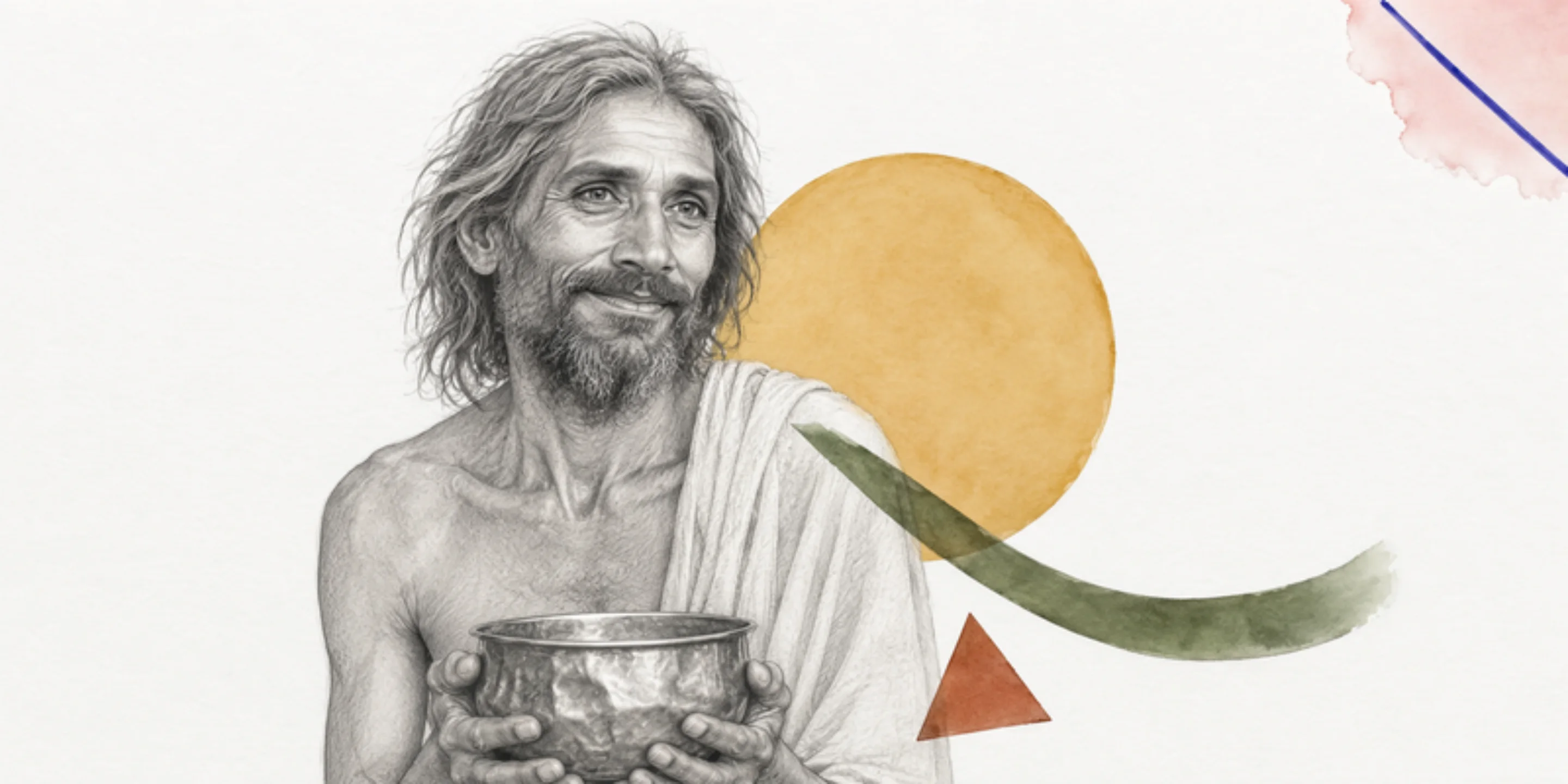
He is called avadhuta because he is imperishable, has shaken off the bonds of becoming, and is what 'You are That' points to. He has passed beyond castes and stages of life and stands always in the Self. Then he speaks: I have no distraction, so I have no samadhi; distraction and samadhi belong to a changing mind. Let the body bathe and beg, let the mind meditate on Vishnu or dissolve in bliss: I am the witness; I do nothing and cause nothing to be done. Blessed am I; the bliss of Brahman shines clearly in me.
- Who is an avadhuta?
- Beyond caste and stage of life
- No distraction, so no samadhi
- The witness does nothing
- Blessed am I
हरिः ॐ । अथ ह साङ्कृतिर्भगवन्तमवधूतं दत्तात्रेयं परिसमेत्य पप्रच्छ भगवन्कोऽवधूतस्तस्य का स्थितिः किं लक्ष्म किं संसरणमिति । तं होवाच भगवो दत्तात्रेयः परमकारुणिकः ।
hariḥ oṃ | atha ha sāṅkṛtirbhagavantamavadhūtaṃ dattātreyaṃ parisametya papraccha bhagavanko'vadhūtastasya kā sthitiḥ kiṃ lakṣma kiṃ saṃsaraṇamiti | taṃ hovāca bhagavo dattātreyaḥ paramakāruṇikaḥ |
Hari Om. Sankriti went up to the revered avadhuta Dattatreya and asked: Sir, who is an avadhuta? How does he stand? What are his marks? How does he go about in the world? The revered Dattatreya, most compassionate, said to him:
Note //
'Sir' (bhagavo): the Adyar collection keeps the form used in the answer. Sanskritdocuments.org has 'ko 'vadhūtasya', a slip for 'ko 'vadhūtas tasya'; the Adyar reading is followed.
अक्षरत्वाद्वरेण्यत्वाद्धूतसंसारबन्धनात् । तत्त्वमस्यादिलक्ष्यत्वादवधूत इतीर्यते ॥ १॥
akṣaratvādvareṇyatvāddhūtasaṃsārabandhanāt | tattvamasyādilakṣyatvādavadhūta itīryate || 1||
Because he is imperishable (a), because he is most to be chosen (va), because he has shaken off (dhū) the bonds of becoming, because he is what 'You are That' points to (ta), he is called avadhuta.
Note //
Dattatreya's first answer. The word is explained syllable by syllable: a from akṣara (imperishable), va from vareṇya (to be chosen), dhū from dhūta (shaken off), ta from 'tat tvam asi'. Editions: 'dhūta' (Adyar collection) corrects 'dhṛta' in sanskritdocuments.org.
यो विलङ्घ्याश्रमान्वर्णानात्मन्येव स्थितः सदा । अतिवर्णाश्रमी योगी अवधूतः स कथ्यते ॥ २॥
yo vilaṅghyāśramānvarṇānātmanyeva sthitaḥ sadā | ativarṇāśramī yogī avadhūtaḥ sa kathyate || 2||
One who has gone beyond the stages of life and the castes, and stands always in the Self alone: that yogi, beyond caste and stage, is called an avadhuta.
Note //
'Beyond caste and stage' (ativarṇāśramī): not against them, but no longer defined by them. Editions agree.
तस्य प्रियं शिरः कृत्वा मोदो दक्षिणपक्षकः । प्रमोद उत्तरः पक्ष आनन्दो गोष्पदायते ॥ ३ ॥ गोपालसदृशं शीर्षे नापि मध्ये न चाप्यधः । ब्रह्म पुच्छं प्रतिष्ठेति पुच्छाकारेण कारयेत् ॥ ४ ॥
tasya priyaṃ śiraḥ kṛtvā modo dakṣiṇapakṣakaḥ | pramoda uttaraḥ pakṣa ānando goṣpadāyate || 3 || gopālasadṛśaṃ śīrṣe nāpi madhye na cāpyadhaḥ | brahma pucchaṃ pratiṣṭheti pucchākāreṇa kārayet || 4 ||
Making love his head, delight his right wing, great delight his left wing, bliss is the ground he walks on. Like the herdsman, not at the head, not in the middle, not below: 'Brahman is the tail, the support': let him take that for his tail.
Note //
The bird made of bliss of Taittiriya 2.5 (love, delight, great delight, bliss, and 'Brahman the tail, the support'), turned into the avadhuta's own body. 'Is the ground he walks on' (goṣpadāyate, literally 'becomes a cow's footprint') may mean that bliss becomes as small and easy to cross as a hoofprint of water, or that it is what he stands on. The fourth verse is obscure in both copies ('gopālasadṛśaṃ' / 'gopālasadṛśāṃ'); the rendering is tentative. Interpretive; pending review.
एवं चतुष्पथं कृत्वा ते यान्ति परमां गतिम् । न कर्मणा न प्रजया धनेन त्यागेनैके अमृतत्वमानशुः ॥ ५ ॥
evaṃ catuṣpathaṃ kṛtvā te yānti paramāṃ gatim | na karmaṇā na prajayā dhanena tyāgenaike amṛtatvamānaśuḥ || 5 ||
Making the four ways one in this way, they go to the highest goal. Not by action, not by children, not by wealth: by letting go alone some have reached deathlessness.
Note //
'The four ways' (catuṣpatha, literally a crossroads): perhaps the four limbs of the bird in 3-4, or the four stages of life which the avadhuta has passed through; uncertain. The second line is Kaivalya 3 and Mahanarayana 10.5. Pending review. Editions agree.
स्वैरं स्वैरविहरणं तत्संसरणम् । साम्बरा वा दिगम्बरा वा । न तेषां धर्माधर्मौ न मेध्यामेध्यौ । सदा साङ्ग्रहण्येष्ट्याश्वमेधमन्तर्यागं यजते । स महामखो महायोगः । कृत्स्नमेतच्चित्रं कर्म । स्वैरं न विगायेत्तन्महाव्रतम् । न स मूढवल्लिप्यते । यथा रविः सर्वरसान्प्रभुङ्क्ते हुताशनश्चापि हि सर्वभक्षः । तथैव योगी विषयान्प्रभुङ्क्ते न लिप्यते पुण्यपापैश्च शुद्धः ॥ ६ ॥
svairaṃ svairaviharaṇaṃ tatsaṃsaraṇam | sāmbarā vā digambarā vā | na teṣāṃ dharmādharmau na medhyāmedhyau | sadā sāṅgrahaṇyeṣṭyāśvamedhamantaryāgaṃ yajate | sa mahāmakho mahāyogaḥ | kṛtsnametaccitraṃ karma | svairaṃ na vigāyettanmahāvratam | na sa mūḍhavallipyate | yathā raviḥ sarvarasānprabhuṅkte hutāśanaścāpi hi sarvabhakṣaḥ | tathaiva yogī viṣayānprabhuṅkte na lipyate puṇyapāpaiśca śuddhaḥ || 6 ||
Moving freely, as he wills: that is how he goes about in the world. Clothed, or clothed in the directions, for them there is no right and wrong, no clean and unclean. Always he offers the inner horse-sacrifice, with the offering that gathers everything in. That is the great sacrifice, the great yoga. All his action is a wonder. Let no one find fault with his freedom: that is the great vow. He is not stained, as the deluded are. As the sun draws up every liquid, and fire eats everything, so the yogi enjoys the objects of the senses and is not stained: pure, untouched by merit and fault.
Note //
'Clothed in the directions' (digambara): naked. 'The offering that gathers everything in' (sāṅgrahaṇī iṣṭi): a Vedic rite, here the inner offering of everything into the Self. 'No right and wrong' is said of the knower, who has no I-claim to own an act; it is not a licence for one who has (see 7 and 22). Sanskritdocuments.org has the slips 'medhyāmedhau', 'antayāgam'. Editions agree otherwise.
आपूर्यमाणमचलप्रतिष्ठं समुद्रमापः प्रविशन्ति यद्वत् । तद्वत्कामा यं प्रविशन्ति सर्वे स शान्तिमाप्नोति न कामकामी ॥ ७ ॥
āpūryamāṇamacalapratiṣṭhaṃ samudramāpaḥ praviśanti yadvat | tadvatkāmā yaṃ praviśanti sarve sa śāntimāpnoti na kāmakāmī || 7 ||
As waters enter the ocean, which is filled from every side and stays unmoved, so the one whom all desires enter finds peace; not one who desires desires.
Note //
Bhagavad Gita 2.70. Desires still arise in him, as rivers still flow into the sea; they do not move him. Editions agree.
न निरोधो न चोत्पत्तिर्न बद्धो न च साधकः । न मुमुक्षुर्न वै मुक्त इत्येषा परमार्थता ॥ ८ ॥
na nirodho na cotpattirna baddho na ca sādhakaḥ | na mumukṣurna vai mukta ityeṣā paramārthatā || 8 ||
There is no ending and no beginning, no one bound and no one striving, no one seeking freedom and no one freed: this is the highest truth.
Note //
Gaudapada's Karika 2.32, also Amritabindu 10. Bondage and freedom both belong to the level of appearance; in truth nothing has happened to the Self. Editions agree.
ऐहिकामुष्मिकव्रातसिद्ध्यै मुक्तेश्च सिद्धये । बहुकृत्यं पुरा स्यान्मे तत्सर्वमधुना कृतम् ॥ ९ ॥ तदेव कृतकृत्यत्वं प्रतियोगिपुरःसरम् । अनुसन्दधदेवायमेवं तृप्यति नित्यशः ॥ १० ॥
aihikāmuṣmikavrātasiddhyai mukteśca siddhaye | bahukṛtyaṃ purā syānme tatsarvamadhunā kṛtam || 9 || tadeva kṛtakṛtyatvaṃ pratiyogipuraḥsaram | anusandadhadevāyamevaṃ tṛpyati nityaśaḥ || 10 ||
For the many aims of this world and the next, and for gaining freedom, there was much I had to do before. All of it is done now. Calling to mind, again and again, that he has done all there is to do, set against what went before, he is content in this way, always.
Note //
Here the first-person voice of the knower begins, and runs to 32; the same verses close the Panchadasi's seventh chapter (the lamp of contentment). 'Set against what went before' (pratiyogi-puraḥsaram): remembering the former state of having much to do. Sanskritdocuments.org has 'siddhai'. Editions agree otherwise.
दुःखिनोऽज्ञाः संसरन्तु कामं पुत्राद्यपेक्षया । परमानन्दपूर्णोऽहं संसरामि किमिच्छया ॥ ११॥
duḥkhino'jñāḥ saṃsarantu kāmaṃ putrādyapekṣayā | paramānandapūrṇo'haṃ saṃsarāmi kimicchayā || 11||
Let those who are unhappy and do not know go round in the world as they please, wanting sons and the rest. I am full of the highest bliss: wanting what should I go round?
Note //
The first-person passage begins at verse 9 ('much I had to do before, for this world, the next, and freedom; now all of it is done'). Verses 9-32 also form the close of the Panchadasi's seventh chapter, the 'lamp of contentment'. Editions agree.
अनुतिष्ठन्तु कर्माणि परलोकयियासवः । सर्वलोकात्मकः कस्मादनुतिष्ठामि किं कथम् ॥ १२ ॥
anutiṣṭhantu karmāṇi paralokayiyāsavaḥ | sarvalokātmakaḥ kasmādanutiṣṭhāmi kiṃ katham || 12 ||
Let those who want to go to other worlds perform their rites. I am all the worlds: why should I perform them? What, and how?
Note //
Editions agree.
व्याचक्षतां ते शास्त्राणि वेदानध्यापयन्तु वा । येऽत्राधिकारिणो मे तु नाधिकारोऽक्रियत्वतः ॥ १३ ॥
vyācakṣatāṃ te śāstrāṇi vedānadhyāpayantu vā | ye'trādhikāriṇo me tu nādhikāro'kriyatvataḥ || 13 ||
Let those who are fit for it explain the scriptures, or teach the Vedas. I am not fit for anything, for I do not act.
Note //
'Fit' (adhikārin): qualified, with the right and duty to do something. The one who does not act has no duty to be qualified for. Editions agree.
निद्राभिक्षे स्नानशौचे नेच्छामि न करोमि च । द्रष्टारश्चेत्कल्पयन्तु किं मे स्यादन्यकल्पनात् ॥ १४ ॥
nidrābhikṣe snānaśauce necchāmi na karomi ca | draṣṭāraścetkalpayantu kiṃ me syādanyakalpanāt || 14 ||
Sleep and begging, bathing and washing: I do not want them, and I do not do them. If those who watch imagine I do, what is another's imagining to me?
Note //
The body sleeps, begs and bathes; the Self does none of it. Editions agree.
गुञ्जापुञ्जादि दह्येत नान्यारोपितवह्निना । नान्यारोपितसंसारधर्मानेवमहं भजे ॥ १५ ॥
guñjāpuñjādi dahyeta nānyāropitavahninā | nānyāropitasaṃsāradharmānevamahaṃ bhaje || 15 ||
A heap of red gunja berries is not burned by the fire others take it to be. Just so, I do not take on the marks of becoming that others lay on me.
Note //
Gunja berries are bright red and can be taken for live coals; they do not burn. The marks others superimpose on the knower do not touch him. Both copies read 'dharmā naivam'; the sense requires the accusative 'dharmān evam' (as in the Panchadasi), which is given. Pending review.
शृण्वन्त्वज्ञाततत्त्वास्ते जानन्कस्माच्छृणोम्यहम् । मन्यन्तां संशयापन्ना न मन्येऽहमसंशयः ॥ १६ ॥
śṛṇvantvajñātatattvāste jānankasmācchṛṇomyaham | manyantāṃ saṃśayāpannā na manye'hamasaṃśayaḥ || 16 ||
Let those who have not known the truth listen to the teaching. Knowing it, why should I listen? Let those who are caught in doubt reflect on it. I have no doubt; I do not reflect.
Note //
Listening and reflection (śravaṇa, manana), the first two means of knowledge, are for the one who does not yet know or still doubts. Editions agree.
विपर्यस्तो निदिध्यासे किं ध्यानमविपर्यये । देहात्मत्वविपर्यासं न कदाचिद्भजाम्यहम् ॥ १७ ॥
viparyasto nididhyāse kiṃ dhyānamaviparyaye | dehātmatvaviparyāsaṃ na kadācidbhajāmyaham || 17 ||
One who is mistaken should dwell on the truth. Where there is no mistake, what is there to meditate on? I never fall into the mistake of taking the body for the Self.
Note //
The third means, dwelling on the truth (nididhyāsana), is the remedy for the habit of taking the body as oneself. Editions agree.
अहं मनुष्य इत्यादिव्यवहारो विनाप्यमुम् । विपर्यासं चिराभ्यस्तवासनातोऽवकल्पते ॥ १८ ॥
ahaṃ manuṣya ityādivyavahāro vināpyamum | viparyāsaṃ cirābhyastavāsanāto'vakalpate || 18 ||
Dealings such as 'I am a human being' go on even without that mistake, from tendencies long practised.
Note //
An objection is met: the knower still says 'I am a man', 'I am hungry'. That is the momentum of old habit, not the error itself. Editions agree.
आरब्धकर्मणि क्षीणे व्यवहारो निवर्तते । कर्मक्षये त्वसौ नैव शाम्येद्ध्यानसहस्रतः ॥ १९ ॥
ārabdhakarmaṇi kṣīṇe vyavahāro nivartate | karmakṣaye tvasau naiva śāmyeddhyānasahasrataḥ || 19 ||
When is used up, those dealings stop. Until that action is used up, they will not cease for a thousand meditations.
Note //
'Action already begun' (ārabdha, prārabdha karma): the karma that produced this body, which runs its course like an arrow already shot. The second line is read as 'until the action is used up' (karmākṣaye, karma + akṣaye); both copies print 'karmakṣaye', which would say the opposite. The text is kept as printed. Sanskritdocuments.org has the slip 'śāmet'. Pending review.
विरलत्वं व्यवहृतेरिष्टं चेद्ध्यानमस्तु ते । बाधिकर्मव्यवहृतिं पश्यन्ध्यायाम्यहं कुतः ॥ २० ॥
viralatvaṃ vyavahṛteriṣṭaṃ ceddhyānamastu te | bādhikarmavyavahṛtiṃ paśyandhyāyāmyahaṃ kutaḥ || 20 ||
If you want your dealings to grow fewer, then meditate. I see that dealings do me no harm: why should I meditate?
Note //
The copies read 'bādhikarmavyavahṛtim'; the Panchadasi has 'abādhikāṃ vyavahṛtim' (dealings that do no harm), which gives the sense rendered. The copies are kept as they are. Pending review.
विक्षेपो नास्ति यस्मान्मे न समाधिस्ततो मम । विक्षेपो वा समाधिर्वा मनसः स्याद्विकारिणः । नित्यानुभवरूपस्य को मेऽत्रानुभवः पृथक् ॥ २१॥
vikṣepo nāsti yasmānme na samādhistato mama | vikṣepo vā samādhirvā manasaḥ syādvikāriṇaḥ | nityānubhavarūpasya ko me'trānubhavaḥ pṛthak || 21||
Since I have no distraction, I have no samadhi either. Distraction or samadhi belong to the mind, which changes. I am the form of ever-present experience: what separate experience could I have here?
Note //
Samadhi is a remedy for distraction, and both are states of the mind. The Self, 'the form of ever-present experience' (nityānubhava-rūpa), is not a state and cannot have one added to it. Editions agree.
कृतं कृत्यं प्रापणीयं प्राप्तमित्येव नित्यशः । व्यवहारो लौकिको वा शास्त्रीयो वान्यथापि वा । ममाकर्तुरलेपस्य यथारब्धं प्रवर्तताम् ॥ २२ ॥
kṛtaṃ kṛtyaṃ prāpaṇīyaṃ prāptamityeva nityaśaḥ | vyavahāro laukiko vā śāstrīyo vānyathāpi vā | mamākarturalepasya yathārabdhaṃ pravartatām || 22 ||
What was to be done is done; what was to be gained is gained: so it is, always. Let dealings, worldly or scriptural, or of any other kind, go on as they have begun; I do not act, and nothing sticks to me.
Note //
The Adyar collection has the slips 'śāstrībo' and 'pravatatām'. Editions agree otherwise.
अथवा कृतकृत्योऽपि लोकानुग्रहकाम्यया । शास्त्रीयेणैव मार्गेण वर्तेऽहं मम का क्षतिः ॥ २३॥
athavā kṛtakṛtyo'pi lokānugrahakāmyayā | śāstrīyeṇaiva mārgeṇa varte'haṃ mama kā kṣatiḥ || 23||
Or else, though I have done all there is to do, wishing the good of the world, I go on in the way the scriptures teach: what harm is there to me?
Note //
Verse 22: 'let everyday or scriptural conduct go on as it has begun; I am not the doer and I am not stained'. The knower may keep the rules, for others' sake; they do not bind him. Compare Gita 3.25. Editions: 'kṛtakṛtyo 'pi' (Adyar collection) corrects 'kṛtakṛtye 'pi'.
देवार्चनस्नानशौचभिक्षादौ वर्ततां वपुः । तारं जपतु वाक्तद्वत्पठत्वाम्नायमस्तकम् ॥ २४ ॥
devārcanasnānaśaucabhikṣādau vartatāṃ vapuḥ | tāraṃ japatu vāktadvatpaṭhatvāmnāyamastakam || 24 ||
Let the body be busy with worship, bathing, washing, begging and the rest. Let the voice repeat Om, and recite the crown of the Veda as well.
Note //
'Om' (tāra, 'what carries across'). 'The crown of the Veda' (āmnāya-mastaka): the Upanishads. Read with 25: each instrument does its own work. The Adyar collection has the slip 'snāna' as 'srāna'. Editions agree otherwise.
विष्णुं ध्यायतु धीर्यद्वा ब्रह्मानन्दे विलीयताम् । साक्ष्यहं किंचिदप्यत्र न कुर्वे नापि कारये ॥ २५॥
viṣṇuṃ dhyāyatu dhīryadvā brahmānande vilīyatām | sākṣyahaṃ kiṃcidapyatra na kurve nāpi kāraye || 25||
Let the mind meditate on Vishnu, or let it dissolve in the bliss of Brahman: I am . In all this I do nothing at all, and cause nothing to be done.
Note //
Verse 24: 'let the body worship, bathe, wash and beg; let the voice repeat Om and recite the Upanishads'. Body, voice and mind each do their part; the witness does none of it. Editions agree.
कृतकृत्यतया तृप्तः प्राप्तप्राप्यतया पुनः । तृप्यन्नेवं स्वमनसा मन्यतेऽसौ निरन्तरम् ॥ २६ ॥
kṛtakṛtyatayā tṛptaḥ prāptaprāpyatayā punaḥ | tṛpyannevaṃ svamanasā manyate'sau nirantaram || 26 ||
Content, because he has done what was to be done, and again, because he has gained what was to be gained, being content in this way, he thinks to himself, without end:
Note //
The verse introduces the four verses of 'blessed am I'. Editions agree.
धन्योऽहं धन्योऽहं नित्यं स्वात्मानमञ्जसा वेद्मि । धन्योऽहं धन्योऽहं ब्रह्मानन्दो विभाति मे स्पष्टम् ॥ २७॥
dhanyo'haṃ dhanyo'haṃ nityaṃ svātmānamañjasā vedmi | dhanyo'haṃ dhanyo'haṃ brahmānando vibhāti me spaṣṭam || 27||
Blessed am I, blessed am I: always, directly, I know my own Self. Blessed am I, blessed am I: the bliss of Brahman shines in me, clear.
Note //
The first of four verses of 'blessed am I' (dhanyo 'ham). Verse 26 introduces them: 'content with having done what was to be done and gained what was to be gained, he thinks this to himself without end'. Editions agree.
धन्योऽहं धन्योऽहं दुःखं सांसारिकं न वीक्षेऽद्य । धन्योऽहं धन्योऽहं स्वस्याज्ञानं पलायितं क्वापि ॥ २८ ॥
dhanyo'haṃ dhanyo'haṃ duḥkhaṃ sāṃsārikaṃ na vīkṣe'dya | dhanyo'haṃ dhanyo'haṃ svasyājñānaṃ palāyitaṃ kvāpi || 28 ||
Blessed am I, blessed am I: today I see none of the sorrow of becoming. Blessed am I, blessed am I: my not-knowing has fled, who knows where.
Note //
Not-knowing is not destroyed like a thing; it is simply not found when looked for. Editions agree.
धन्योऽहं धन्योऽहं कर्तव्यं मे न विद्यते किञ्चित् । धन्योऽहं धन्योऽहं प्राप्तव्यं सर्वमत्र सम्पन्नम् ॥ २९ ॥
dhanyo'haṃ dhanyo'haṃ kartavyaṃ me na vidyate kiñcit | dhanyo'haṃ dhanyo'haṃ prāptavyaṃ sarvamatra sampannam || 29 ||
Blessed am I, blessed am I: there is nothing at all I have to do. Blessed am I, blessed am I: all that was to be gained is gained, here.
Note //
Editions agree.
धन्योऽहं धन्योऽहं तृप्तेर्मे कोपमा भवेल्लोके । धन्योऽहं धन्योऽहं धन्यो धन्यः पुनः पुनर्धन्यः ॥ ३० ॥
dhanyo'haṃ dhanyo'haṃ tṛpterme kopamā bhavelloke | dhanyo'haṃ dhanyo'haṃ dhanyo dhanyaḥ punaḥ punardhanyaḥ || 30 ||
Blessed am I, blessed am I: what in the world could compare with my contentment? Blessed am I, blessed am I: blessed, blessed, again and again blessed.
Note //
Editions agree.
अहो पुण्यमहो पुण्यं फलितं फलितं दृढम् । अस्य पुण्यस्य सम्पत्तेरहो वयमहो वयम् ॥ ३१ ॥
aho puṇyamaho puṇyaṃ phalitaṃ phalitaṃ dṛḍham | asya puṇyasya sampatteraho vayamaho vayam || 31 ||
O the good I have done! O the good! It has borne fruit, borne fruit, and holds. By the wealth of this good, O what we are! O what we are!
Note //
The good done in the past is the cause of the knowledge, not of the Self it reveals. Editions agree.
अहो ज्ञानमहो ज्ञानमहो सुखमहो सुखम् । अहो शास्त्रमहो शास्त्रमहो गुरुरहो गुरुः ॥ ३२॥
aho jñānamaho jñānamaho sukhamaho sukham | aho śāstramaho śāstramaho gururaho guruḥ || 32||
O knowledge! O knowledge! O happiness! O happiness! O teaching! O teaching! O teacher! O teacher!
Note //
The last verse of the first-person passage: wonder at the knowledge, the teaching and the teacher. The text closes: 'whoever studies this has done what was to be done'. Editions agree.
इति य इदमधीते सोऽपि कृतकृत्यो भवति । सुरापानात्पूतो भवति । स्वर्णस्तेयात्पूतो भवति । ब्रह्महत्यात्पूतो भवति । कृत्याकृत्यात्पूतो भवति । एवं विदित्वा स्वेच्छाचारपरो भूयादों सत्यमित्युपनिषत् ॥
iti ya idamadhīte so'pi kṛtakṛtyo bhavati | surāpānātpūto bhavati | svarṇasteyātpūto bhavati | brahmahatyātpūto bhavati | kṛtyākṛtyātpūto bhavati | evaṃ viditvā svecchācāraparo bhūyādoṃ satyamityupaniṣat ||
Whoever studies this has also done all there is to do. He is made pure of drinking liquor, pure of stealing gold, pure of killing a Brahmin, pure of what he did and did not do. Knowing this, let him live as he wills. Om. This is the truth. This is the Upanishad.
Note //
'Live as he wills' (svecchācāra) is the last word, and it is given to the one who knows this: the will of one who has nothing to do and nothing to gain. The Adyar collection numbers this 33. Editions agree.
No public-domain English translation exists for this text; the Sanskrit is shown.
The renderings on this page are shared under CC BY-NC 4.0, in the words of Pranav Ashar.