Dattatreya Upanishad
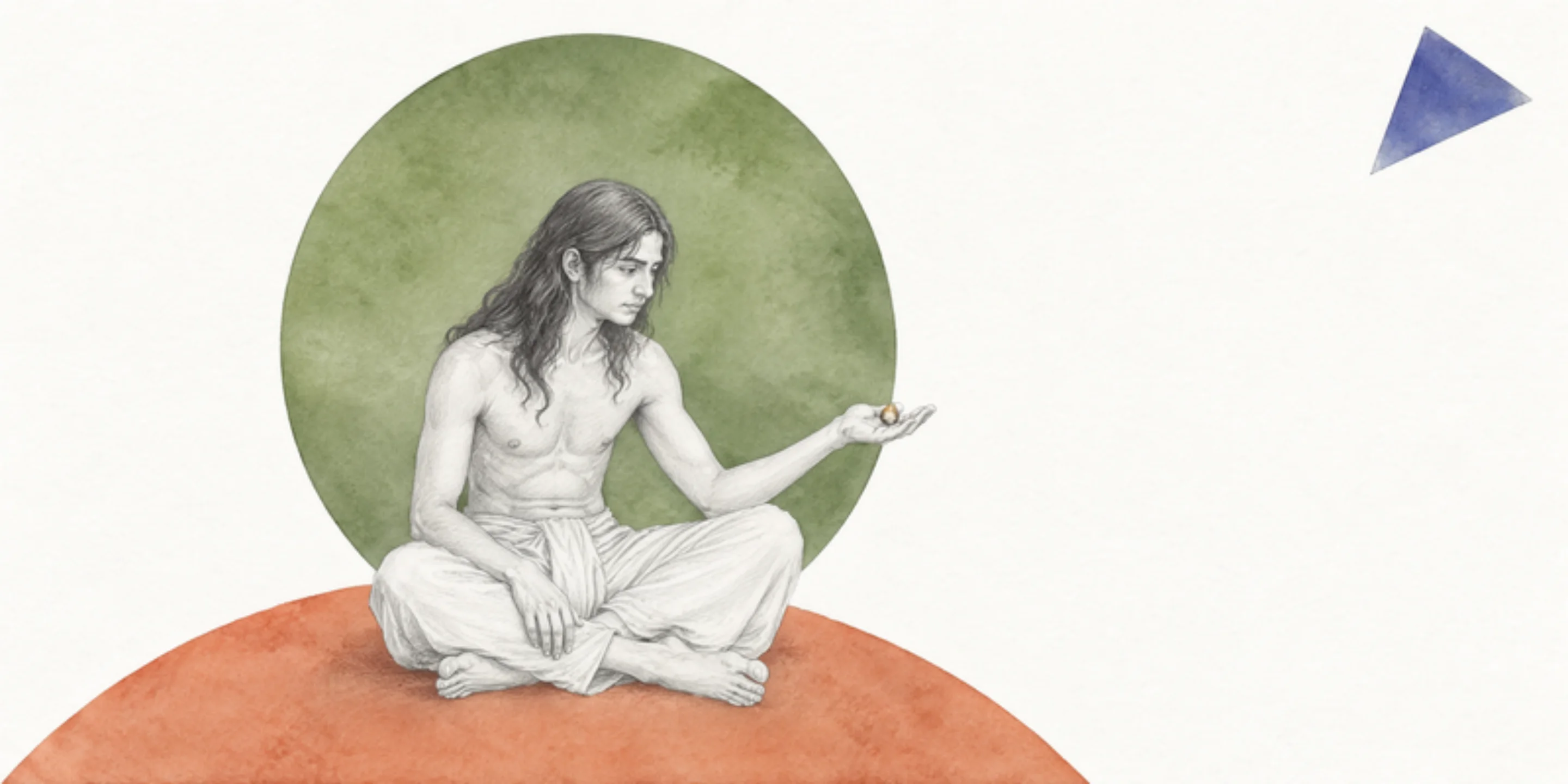
In the words of Pranav Ashar
How we renderThe heart of the Dattatreya
In brief
In the field of truth Brahma asks Narayana: what is the mantra that carries across? Narayana says: worship my own pure abode, which is being, bliss and the light. Those who always say 'I am Datta' are not of the world of becoming. As a whole tree lies in its seed, the whole world lies in Datta's seed. A verse addresses him as naked sage, child, madman, ocean of knowledge. The second section is a long mantra of protection and power. The third gives the fruits: whoever studies this daily is free while living.
- I am Datta
- The world in a seed
- Being, joy and the light in a name
- Naked, childlike, mad: the ocean of knowledge
- Free while living
सत्यक्षेत्रे ब्रह्मा नारायणं महासाम्राज्यं किं तारकं तन्नो ब्रूहि भगवन्नित्युक्तः सत्यानन्दचिदात्मकं सात्त्विकं मामकं धामोपास्वेत्याह । सदा दत्तोऽहमस्मीति प्रत्येतत्संवदन्ति येन ते संसारिणो भवन्ति । नारायणेनैवं विवक्षितो ब्रह्मा विश्वरूपधरं विष्णुं नारायणं दत्तात्रेयं ध्यात्वा सद्वदति ।
satyakṣetre brahmā nārāyaṇaṃ mahāsāmrājyaṃ kiṃ tārakaṃ tanno brūhi bhagavannityuktaḥ satyānandacidātmakaṃ sāttvikaṃ māmakaṃ dhāmopāsvetyāha | sadā datto'hamasmīti pratyetatsaṃvadanti yena te saṃsāriṇo bhavanti | nārāyaṇenaivaṃ vivakṣito brahmā viśvarūpadharaṃ viṣṇuṃ nārāyaṇaṃ dattātreyaṃ dhyātvā sadvadati |
In the field of truth Brahma said to Narayana: 'What is the great sovereignty, ? Tell us, Lord.' Asked this, he said: 'Worship my own pure abode, which is being, bliss and . Those who always say, of themselves, "I am Datta": by that they are not of the world of becoming.' So taught by Narayana, Brahma meditated on Vishnu, Narayana, Dattatreya, who bears the form of the universe, and spoke the truth.
Note //
The clause 'by that they are not of the world of becoming' is read as 'yena te na saṃsāriṇo bhavanti'; both editions lack the 'na' (not), and without it the sentence says the opposite of what the passage means. 'Being, bliss and the light' follows the Adyar copy; sanskritdocuments.org has 'satyānanda' only. Pending review.
दमिति हंसः । दामिति दीर्घं तद्बीजं नाम बीजस्थम् । दामित्येकाक्षरं भवति । तदेतत्तारकं भवति । तदेवोपासितव्यं विज्ञेयं गर्भादितारणम् । गायत्री छन्दः । सदाशिव ऋषिः । दत्तात्रेयो देवता । वटबीजस्थमिव दत्तबीजस्थं सर्वं जगत् । एतदेवैकाक्षरं व्याख्यातम् ।
damiti haṃsaḥ | dāmiti dīrghaṃ tadbījaṃ nāma bījastham | dāmityekākṣaraṃ bhavati | tadetattārakaṃ bhavati | tadevopāsitavyaṃ vijñeyaṃ garbhāditāraṇam | gāyatrī chandaḥ | sadāśiva ṛṣiḥ | dattātreyo devatā | vaṭabījasthamiva dattabījasthaṃ sarvaṃ jagat | etadevaikākṣaraṃ vyākhyātam |
'Dam' is the swan. 'Dām', with the long vowel, is the seed; the name lies in the seed. 'Dām' is the one syllable. This is what carries across. This alone is to be worshipped and known: it carries one across from the womb and all that follows. Its metre is the gayatri, its seer Sadashiva, its god Dattatreya. As a banyan tree lies in its seed, so the whole world lies in Datta's seed. So the one syllable has been explained.
Note //
'Dam is the swan' (hamsa): the seed is the Self, as the swan is in other texts. The banyan seed: Chandogya 6.12, where the whole tree is in the unseen subtlety of the seed. Editions: 'etad evaikākṣaram' (Adyar) over 'etad aivākṣaram' (sanskritdocuments.org).
व्याख्यास्ये षडक्षरम् । ओमिति प्रथमम् । श्रीमिति द्वितीयम् । ह्रीमिति तृतीयम् । क्लीमिति चतुर्थम् । ग्लौमिति पञ्चमम् । द्रामिति षट्कम् । षडक्षरोऽयं भवति । सर्वसम्पद्वृद्धिकरी भवति । योगानुभवो भवति । गायत्री छन्दः । सदाशिव ऋषिः । दत्तात्रेयो देवता । ॐ श्रीं ह्रीं क्लीं ग्लौं द्रां इति षडक्षरोऽयं भवति ।
vyākhyāsye ṣaḍakṣaram | omiti prathamam | śrīmiti dvitīyam | hrīmiti tṛtīyam | klīmiti caturtham | glaumiti pañcamam | drāmiti ṣaṭkam | ṣaḍakṣaro'yaṃ bhavati | sarvasampadvṛddhikarī bhavati | yogānubhavo bhavati | gāyatrī chandaḥ | sadāśiva ṛṣiḥ | dattātreyo devatā | oṃ śrīṃ hrīṃ klīṃ glauṃ drāṃ iti ṣaḍakṣaro'yaṃ bhavati |
I will explain the six-syllabled. 'Om' is the first, 'shrim' the second, 'hrim' the third, 'klim' the fourth, 'glaum' the fifth, 'dram' the sixth. This is the six-syllabled. It makes all wealth grow; it brings the experience of yoga. Its metre is the gayatri, its seer Sadashiva, its god Dattatreya. 'Om shrim hrim klim glaum dram': this is the six-syllabled.
Note //
Editions: 'śrīm iti dvitīyam', 'sarvasampadvṛddhikarī bhavati' and the closing line (sanskritdocuments.org), which the Adyar collection lacks.
द्रमित्युक्त्वा द्रामित्युक्त्वा वा दत्तात्रेयाय नम इत्यष्टाक्षरः । दत्तात्रेयायेति सत्यानन्दचिदात्मकम् । नम इति पूर्णानन्दैकविग्रहम् । गायत्री छन्दः । सदाशिव ऋषिः । दत्तात्रेयो देवता । दत्तात्रेयायेति कीलकम् । तदेव बीजम् । नमः शक्तिर्भवति ।
dramityuktvā drāmityuktvā vā dattātreyāya nama ityaṣṭākṣaraḥ | dattātreyāyeti satyānandacidātmakam | nama iti pūrṇānandaikavigraham | gāyatrī chandaḥ | sadāśiva ṛṣiḥ | dattātreyo devatā | dattātreyāyeti kīlakam | tadeva bījam | namaḥ śaktirbhavati |
Saying 'dram' or 'dram', then 'dattatreyaya namah': this is the eight-syllabled. 'To Dattatreya': that is being, bliss and . 'Salutation': that is the form of full bliss alone. Its metre is the gayatri, its seer Sadashiva, its god Dattatreya. 'To Dattatreya' is its pin, and also its seed; 'salutation' is its power.
Note //
The name is the one addressed, and the salutation is not a lesser being bowing but fullness itself. Editions: '-ānandaikavigraham' is read for '-ānandakavigraham' (both editions); the Adyar copy has the slip 'dattātreyāma'.
ओमिति प्रथमम् । आमिति द्वितीयम् । ह्रीमिति तृतीयम् । क्रोमिति चतुर्थम् । एहीति तदेव वदेत् । दत्तात्रेयेति स्वाहेति मन्त्रराजोऽयं द्वादशाक्षरः । जगती छन्दः । सदाशिव ऋषिः । दत्तात्रेयो देवता । ओमिति बीजम् । स्वाहेति शक्तिः । सम्बुद्धिरिति कीलकम् । द्रमिति हृदये । ह्रीं क्लीमिति शीर्षे । एहीति शिखायाम् । दत्तेति कवचे । आत्रेयेति चक्षुषि । स्वाहेत्यस्त्रे । तन्मयो भवति । य एवं वेद ।
omiti prathamam | āmiti dvitīyam | hrīmiti tṛtīyam | kromiti caturtham | ehīti tadeva vadet | dattātreyeti svāheti mantrarājo'yaṃ dvādaśākṣaraḥ | jagatī chandaḥ | sadāśiva ṛṣiḥ | dattātreyo devatā | omiti bījam | svāheti śaktiḥ | sambuddhiriti kīlakam | dramiti hṛdaye | hrīṃ klīmiti śīrṣe | ehīti śikhāyām | datteti kavace | ātreyeti cakṣuṣi | svāhetyastre | tanmayo bhavati | ya evaṃ veda |
'Om' is the first, 'am' the second, 'hrim' the third, 'krom' the fourth; then let one say 'ehi', 'come'; 'dattatreya', and 'svaha': this king of mantras has twelve syllables. Its metre is the jagati, its seer Sadashiva, its god Dattatreya; 'om' is its seed, 'svaha' its power, the vocative its pin. 'Dram' is placed at the heart, 'hrim klim' on the head, 'ehi' at the crown-lock, 'datta' as the armour, 'atreya' at the eyes, 'svaha' as the weapon. The one who knows this becomes one with him.
Note //
The placing (nyāsa) of the syllables on the body. Editions agree.
षोडशाक्षरं व्याख्यास्ये । प्राणं देयम् । मानं देयम् । चक्षुर्देयम् । श्रोत्रं देयम् । षड्दशशिरश्छिनत्ति षोडशाक्षरमन्त्रो न देयो भवति । अतिसेवापरभक्तगुणवच्छिष्याय वदेत् । ओमिति प्रथमं भवति । ऐमिति द्वितीयम् । क्रोमिति तृतीयम् । क्लीमिति चतुर्थम् । क्लूमिति पञ्चमम् । ह्रामिति षष्ठम् । ह्रीमिति सप्तमम् । ह्रूमित्यष्टमम् । सौरिति नवमम् । दत्तात्रेयायेति चतुर्दशम् । स्वाहेति षोडशम् । गायत्री छन्दः । सदाशिव ऋषिः । दत्तात्रेयो देवता । ॐ बीजम् । स्वाहा शक्तिः । चतुर्थ्यन्तं कीलकम् । ओमिति हृदये । क्लां क्लीं क्लूमिति शिखायाम् । सौरिति कवचे । चतुर्थ्यन्तं चक्षुषि । स्वाहेत्यस्त्रे । यो नित्यमधीयानः सच्चिदानन्दसुखी मोक्षी भवति । सौरित्यन्ते श्रीवैष्णव इत्युच्यते । तज्जापी विष्णुरूपी भवति ।
ṣoḍaśākṣaraṃ vyākhyāsye | prāṇaṃ deyam | mānaṃ deyam | cakṣurdeyam | śrotraṃ deyam | ṣaḍdaśaśiraśchinatti ṣoḍaśākṣaramantro na deyo bhavati | atisevāparabhaktaguṇavacchiṣyāya vadet | omiti prathamaṃ bhavati | aimiti dvitīyam | kromiti tṛtīyam | klīmiti caturtham | klūmiti pañcamam | hrāmiti ṣaṣṭham | hrīmiti saptamam | hrūmityaṣṭamam | sauriti navamam | dattātreyāyeti caturdaśam | svāheti ṣoḍaśam | gāyatrī chandaḥ | sadāśiva ṛṣiḥ | dattātreyo devatā | oṃ bījam | svāhā śaktiḥ | caturthyantaṃ kīlakam | omiti hṛdaye | klāṃ klīṃ klūmiti śikhāyām | sauriti kavace | caturthyantaṃ cakṣuṣi | svāhetyastre | yo nityamadhīyānaḥ saccidānandasukhī mokṣī bhavati | saurityante śrīvaiṣṇava ityucyate | tajjāpī viṣṇurūpī bhavati |
I will explain the sixteen-syllabled. One may give one's life, one's honour, one's eyes, one's ears; but the sixteen-syllabled mantra is not to be given: it cuts off sixteen heads. Let one tell it only to a disciple given to service, devoted and of good qualities. 'Om' is the first, 'aim' the second, 'krom' the third, 'klim' the fourth, 'klum' the fifth, 'hram' the sixth, 'hrim' the seventh, 'hrum' the eighth, 'sauh' the ninth; 'dattatreyaya' up to the fourteenth; 'svaha' the sixteenth. Its metre is the gayatri, its seer Sadashiva, its god Dattatreya; 'om' is its seed, 'svaha' its power, the dative its pin. 'Om' at the heart; 'klam klim klum' at the crown-lock; 'sauh' as the armour; the dative at the eyes; 'svaha' as the weapon. Whoever studies it always becomes happy in being, and bliss, and free. With 'sauh' at the end it is called the Shri Vaishnava; whoever repeats it takes the form of Vishnu.
Note //
'It cuts off sixteen heads' (ṣaḍdaśa-śiraś chinatti): the penalty for giving it to the unfit, a common figure for a secret teaching. Editions: 'ṣoḍaśākṣaramantro' (Adyar) over '-mantre' (sanskritdocuments.org).
अनुष्टुप् छन्दो व्याख्यास्ये । सर्वत्र सम्बुद्धिरिमानीत्युच्यन्ते । दत्तात्रेय हरे कृष्ण उन्मत्तानन्ददायक । दिगम्बर मुने बालपिशाच ज्ञानसागर ॥ इत्युपनिषत् । अनुष्टुप् छन्दः । सदाशिव ऋषिः । दत्तात्रेयो देवता । दत्तात्रेयेति हृदये । हरे कृष्णेति शीर्षे । उन्मत्तानन्देति शिखायाम् । दायक मुन इति कवचे । दिगम्बरेति चक्षुषि । पिशाचज्ञानसागरेत्यस्त्रे । आनुष्टुभोऽयं मयाधीतः । अब्रह्मजन्मदोषाश्च प्रणश्यन्ति । सर्वोपकारी मोक्षी भवति । य एवं वेदेत्युपनिषत् ॥ १॥
anuṣṭup chando vyākhyāsye | sarvatra sambuddhirimānītyucyante | dattātreya hare kṛṣṇa unmattānandadāyaka | digambara mune bālapiśāca jñānasāgara || ityupaniṣat | anuṣṭup chandaḥ | sadāśiva ṛṣiḥ | dattātreyo devatā | dattātreyeti hṛdaye | hare kṛṣṇeti śīrṣe | unmattānandeti śikhāyām | dāyaka muna iti kavace | digambareti cakṣuṣi | piśācajñānasāgaretyastre | ānuṣṭubho'yaṃ mayādhītaḥ | abrahmajanmadoṣāśca praṇaśyanti | sarvopakārī mokṣī bhavati | ya evaṃ vedetyupaniṣat || 1||
I will explain the anushtubh. Everywhere these are said in the vocative: 'Dattatreya, Hari, Krishna, giver of joy to the God-intoxicated, , sage, , ocean of knowledge.' This is the Upanishad. Its metre is the anushtubh, its seer Sadashiva, its god Dattatreya. 'Dattatreya' at the heart; 'Hari Krishna' on the head; 'unmattananda' at the crown-lock; 'dayaka mune' as the armour; 'digambara' at the eyes; 'pishaca jnanasagara' as the weapon. I have studied this anushtubh. The faults of a birth outside Brahman are destroyed; one becomes a helper of all, and free. The one who knows this: this is the Upanishad.
Note //
'Clothed in the directions' (digambara): naked. 'Child, madman' (bāla-piśāca, literally child and goblin): the conduct of the Avadhuta, who lives 'like a child, like a madman, like one possessed', a phrase common in the Sannyasa Upanishads. 'Unmatta-ānanda-dāyaka' may also be 'giver of intoxicating joy'. The end of the first section. Editions: 'ānuṣṭubho' (sanskritdocuments.org) over 'anuṣṭubho' (Adyar).
ओमिति व्याहरेत् । ॐ नमो भगवते दत्तात्रेयाय स्मरणमात्रसन्तुष्टाय महाभयनिवारणाय महाज्ञानप्रदाय चिदानन्दात्मने बालोन्मत्तपिशाचवेषायेति महायोगिनेऽवधूतायेति अनसूयानन्दवर्धनायात्रिपुत्रायेति सर्वकामफलप्रदाय ओमिति व्याहरेत् । भवबन्धमोचनायेति ह्रीमिति व्याहरेत् । सकलविभूतिदायेति क्रोमिति व्याहरेत् । साध्याकर्षणायेति सौरिति व्याहरेत् । सर्वमनःक्षोभणायेति श्रीमिति व्याहरेत् । महोमिति व्याहरेत् । चिरञ्जीविने वषडिति व्याहरेत् । वशीकुरु वशीकुरु वौषडिति व्याहरेत् । आकर्षयाकर्षय हुमिति व्याहरेत् । विद्वेषय विद्वेषय फडिति व्याहरेत् । उच्चाटयोच्चाटय ठठेति व्याहरेत् । स्तम्भय स्तम्भय खखेति व्याहरेत् । मारय मारय नमः सम्पन्नाय नमः सम्पन्नाय स्वाहा पोषय पोषय परमन्त्रपरयन्त्रपरतन्त्रांश्छिन्धि छिन्धि ग्रहान्निवारय निवारय व्याधीन्निवारय निवारय दुःखं हरय हरय दारिद्र्यं विद्रावय विद्रावय देहं पोषय पोषय चित्तं तोषय तोषयेति सर्वमन्त्रसर्वयन्त्रसर्वतन्त्रसर्वपल्लवस्वरूपायेति ॐ नमः शिवायेत्युपनिषत् ॥ २॥
omiti vyāharet | oṃ namo bhagavate dattātreyāya smaraṇamātrasantuṣṭāya mahābhayanivāraṇāya mahājñānapradāya cidānandātmane bālonmattapiśācaveṣāyeti mahāyogine'vadhūtāyeti anasūyānandavardhanāyātriputrāyeti sarvakāmaphalapradāya omiti vyāharet | bhavabandhamocanāyeti hrīmiti vyāharet | sakalavibhūtidāyeti kromiti vyāharet | sādhyākarṣaṇāyeti sauriti vyāharet | sarvamanaḥkṣobhaṇāyeti śrīmiti vyāharet | mahomiti vyāharet | cirañjīvine vaṣaḍiti vyāharet | vaśīkuru vaśīkuru vauṣaḍiti vyāharet | ākarṣayākarṣaya humiti vyāharet | vidveṣaya vidveṣaya phaḍiti vyāharet | uccāṭayoccāṭaya ṭhaṭheti vyāharet | stambhaya stambhaya khakheti vyāharet | māraya māraya namaḥ sampannāya namaḥ sampannāya svāhā poṣaya poṣaya paramantraparayantraparatantrāṃśchindhi chindhi grahānnivāraya nivāraya vyādhīnnivāraya nivāraya duḥkhaṃ haraya haraya dāridryaṃ vidrāvaya vidrāvaya dehaṃ poṣaya poṣaya cittaṃ toṣaya toṣayeti sarvamantrasarvayantrasarvatantrasarvapallavasvarūpāyeti oṃ namaḥ śivāyetyupaniṣat || 2||
Let one say 'Om'. 'Om. Homage to the blessed Dattatreya, pleased by mere remembrance, who wards off great fear, who gives great knowledge, whose Self is and bliss, who wears the guise of a child, a madman, one possessed, the great yogi, the Avadhuta, who increases Anasuya's joy, the son of Atri, who gives the fruit of every wish.' Then let one say 'Om'. 'Who frees from the bonds of becoming': let one say 'hrim'. 'Who gives every power': let one say 'krom'. 'Who draws what is to be won': let one say 'sauh'. 'Who stirs every mind': let one say 'shrim'. Let one say 'mahom'. 'To the long-lived, vashat.' 'Bring under control, bring under control, vaushat.' 'Draw, draw, hum.' 'Set at odds, set at odds, phat.' 'Drive off, drive off, thatha.' 'Hold still, hold still, khakha.' 'Strike down, strike down. Homage to the accomplished, homage to the accomplished, svaha. Nourish, nourish. Cut through the mantras, yantras and tantras of others, cut through. Ward off the planets, ward them off; ward off diseases, ward them off; take away sorrow, take it away; drive out poverty, drive it out; nourish the body, nourish it; content the mind, content it.' 'To the one whose form is every mantra, every yantra, every tantra, every branch.' Om. Homage to Shiva. This is the Upanishad.
Note //
The second section: a long mantra of the kind used in protective and magical rites, with its seed syllables and the classic commands (control, attraction, enmity, expulsion, paralysis, destruction), directed against hostile rites, illness and misfortune. It is rendered as the text has it. Its opening names Dattatreya 'whose Self is the light and bliss' and 'who frees from the bonds of becoming', and it ends with every mantra as his form. Editions: 'bālonmattapiśācaveṣāyeti', 'avadhūtāyeti' and 'anasūyānandavardhanāya' (sanskritdocuments.org) over the misprints of the Adyar collection.
य एवं वेद । अनुष्टुप् छन्दः । सदाशिव ऋषिः । दत्तात्रेयो देवता । ओमिति बीजम् । स्वाहेति शक्तिः । द्रामिति कीलकम् । अष्टमूर्त्यष्टमन्त्रा भवन्ति । यो नित्यमधीते वाय्वग्निसोमादित्यब्रह्मविष्णुरुद्रैः पूतो भवति । गायत्र्या शतसहस्रं जप्तं भवति । महारुद्रशतसहस्रजापी भवति । प्रणवायुतकोटिजप्तो भवति । शतपूर्वाञ्छतापरान्पुनाति । स पङ्क्तिपावनो भवति । ब्रह्महत्यादिपातकैर्मुक्तो भवति । गोहत्यादिपातकैर्मुक्तो भवति । तुलापुरुषादिदानैः प्रपापानतः पूतो भवति । अशेषपापान्मुक्तो भवति । भक्ष्याभक्ष्यपापैर्मुक्तो भवति । सर्वमन्त्रयोगपारीणो भवति । स एव ब्राह्मणो भवति । तस्माच्छिष्यं भक्तं प्रतिगृह्णीयात् । सोऽनन्तफलमश्नुते । स जीवन्मुक्तो भवतीत्याह भगवान्नारायणो ब्रह्माणमित्युपनिषत् ॥
ya evaṃ veda | anuṣṭup chandaḥ | sadāśiva ṛṣiḥ | dattātreyo devatā | omiti bījam | svāheti śaktiḥ | drāmiti kīlakam | aṣṭamūrtyaṣṭamantrā bhavanti | yo nityamadhīte vāyvagnisomādityabrahmaviṣṇurudraiḥ pūto bhavati | gāyatryā śatasahasraṃ japtaṃ bhavati | mahārudraśatasahasrajāpī bhavati | praṇavāyutakoṭijapto bhavati | śatapūrvāñchatāparānpunāti | sa paṅktipāvano bhavati | brahmahatyādipātakairmukto bhavati | gohatyādipātakairmukto bhavati | tulāpuruṣādidānaiḥ prapāpānataḥ pūto bhavati | aśeṣapāpānmukto bhavati | bhakṣyābhakṣyapāpairmukto bhavati | sarvamantrayogapārīṇo bhavati | sa eva brāhmaṇo bhavati | tasmācchiṣyaṃ bhaktaṃ pratigṛhṇīyāt | so'nantaphalamaśnute | sa jīvanmukto bhavatītyāha bhagavānnārāyaṇo brahmāṇamityupaniṣat ||
The one who knows this: its metre is the anushtubh, its seer Sadashiva, its god Dattatreya; 'om' is its seed, 'svaha' its power, 'dram' its pin. There are eight mantras for the eight forms. Whoever studies it always is purified by wind, fire, soma, the sun, Brahma, Vishnu and Rudra. He has repeated the Gayatri a hundred thousand times, the great Rudra hymn a hundred thousand times, Om ten thousand million times. He purifies a hundred generations before and a hundred after; he purifies the row he sits in. He is freed from killing a brahmin and other great wrongs, from killing a cow and other wrongs; he is purified as by the great gifts, the weighing against gold and the rest; he is freed from every wrong, from the wrongs of eating what should and should not be eaten. He masters every mantra and yoga. He alone is a true Brahmin. So let him take a devoted disciple. He gains endless fruit. He is free while living: so said the Lord Narayana to Brahma. This is the Upanishad.
Note //
The third section, the praise of study. The phrase 'prapāpānataḥ' is obscure in both editions and is rendered by its sense. Editions: 'mahārudraśatasahasrajāpī' (sanskritdocuments.org) over '-jāpi' (Adyar). Pending review.
No public-domain English translation exists for this text; the Sanskrit is shown.
The renderings on this page are shared under CC BY-NC 4.0, in the words of Pranav Ashar.