Yajnavalkya Upanishad
In the words of Pranav Ashar
How we renderThe heart of the Yajnavalkya
In brief
Janaka asks Yajnavalkya about renunciation. Yajnavalkya: whatever the day one becomes dispassionate, that very day one should renounce. Atri asks how one without the thread is a Brahmin; Yajnavalkya: the thread is Om, which is the Self. The verses: whoever abides in the fullness beyond name and form, in his own sovereignty, without a second: whom should he bow to? Knowing that the Lord has entered all as the individual, one should bow even to dogs and outcastes. Contemplate: you are consciousness, I am consciousness, these worlds are consciousness.
- Renounce the day dispassion comes
- The sacred thread is Om, the Self
- Whom should the knower bow to?
- Bow to all, for the Lord is in all
- All is consciousness
हरिः ॐ ॥ अथ जनको ह वैदेहो याज्ञवल्क्यमुपसमेत्योवाच भगवन्संन्यासमनुब्रूहीति कथं संन्यासलक्षणम् । स होवाच याज्ञवल्क्यो ब्रह्मचर्यं समाप्य गृही भवेत् । गृहाद्वनी भूत्वा प्रव्रजेत् । यदि वेतरथा ब्रह्मचर्यादेव प्रव्रजेद्गृहाद्वा वनाद्वा ।
hariḥ oṃ || atha janako ha vaideho yājñavalkyamupasametyovāca bhagavansaṃnyāsamanubrūhīti kathaṃ saṃnyāsalakṣaṇam | sa hovāca yājñavalkyo brahmacaryaṃ samāpya gṛhī bhavet | gṛhādvanī bhūtvā pravrajet | yadi vetarathā brahmacaryādeva pravrajedgṛhādvā vanādvā |
Hari Om. Janaka, king of Videha, came to Yajnavalkya and said: Sir, teach me renunciation. What is it that marks renunciation? Yajnavalkya said: Having finished one's years as a student, one may become a householder; from the house, become a forest-dweller; then renounce. Or else one may renounce straight from studentship, or from the house, or from the forest.
Note //
The opening of Yajnavalkya's answer to Janaka, word for word as in the Jabala (4). The stages are a usual order, not a requirement: the next sentence (P1) makes dispassion, not age or stage, the only condition. The block numbered P0 is the start of prose 1; P1 to P1c continue it. Editions agree.
अथ पुनर्व्रती वाऽव्रती वा स्नातको वाऽस्नातको वा उत्सन्नाग्निरनग्निको वा यदहरेव विरजेत्तदहरेव प्रव्रजेत् ।
atha punarvratī vā'vratī vā snātako vā'snātako vā utsannāgniranagniko vā yadahareva virajettadahareva pravrajet |
Then again, whether keeping vows or not, whether having completed studies or not, whether one's fires have gone out or one never kept them: whatever the day one becomes dispassionate, that very day one should renounce.
Note //
From Yajnavalkya's answer to Janaka, as in the Jabala (4). Sanskritdocuments.org has the slip 'anagnoko'vā' for 'anagniko vā'. Editions agree otherwise.
तदेके प्राजापत्यामेवेष्टिं कुर्वन्ति । अथ वा न कुर्यादाग्नेय्यामेव कुर्यात् । अग्निर्हि प्राणः । प्राणमेवैतया करोति । त्रैधातवीयामेव कुर्यात् । एतयैव त्रयो धातवो यदुत सत्त्वं रजस्तम इति । अयं ते योनिरृत्विजो यतो जातो अरोचथाः । तं जानन्नग्न आरोहाथा नो वर्धया रयिमित्यनेन मन्त्रेणाग्निमाजिघ्रेत् । एष वा अग्नेर्योनिर्यः प्राणं गच्छ स्वां योनिं गच्छ स्वाहेत्येवमेवैतदाग्रामादग्निमाहृत्य पूर्ववदग्निमाजिघ्रेत् । यदग्निं न विन्देदप्सु जुहुयादापो वै सर्वा देवताः सर्वाभ्यो देवताभ्यो जुहोमि स्वाहेति साज्यं हविरनामयम् । मोक्षमन्त्रस्त्रय्येवं वेद तद्ब्रह्म तदुपासितव्यम् ।
tadeke prājāpatyāmeveṣṭiṃ kurvanti | atha vā na kuryādāgneyyāmeva kuryāt | agnirhi prāṇaḥ | prāṇamevaitayā karoti | traidhātavīyāmeva kuryāt | etayaiva trayo dhātavo yaduta sattvaṃ rajastama iti | ayaṃ te yonirṛtvijo yato jāto arocathāḥ | taṃ jānannagna ārohāthā no vardhayā rayimityanena mantreṇāgnimājighret | eṣa vā agneryoniryaḥ prāṇaṃ gaccha svāṃ yoniṃ gaccha svāhetyevamevaitadāgrāmādagnimāhṛtya pūrvavadagnimājighret | yadagniṃ na vindedapsu juhuyādāpo vai sarvā devatāḥ sarvābhyo devatābhyo juhomi svāheti sājyaṃ haviranāmayam | mokṣamantrastrayyevaṃ veda tadbrahma tadupāsitavyam |
Some at this point perform the offering to Prajapati. Or one need not do that, and may do the offering to Agni alone, for fire is the breath: by it one makes the breath one's own. Or one should do the offering of the three elements, for by it come the three elements, sattva, rajas and tamas. With this verse one should breathe in the fire: 'This is your source, from which, born in due season, you shone. Knowing it, Agni, go up into it, and make our wealth grow.' For this is the source of fire, the breath: 'Go to the breath, go to your own source, svaha.' In the same way, bringing fire from the village, one should breathe it in as before. If one cannot find fire, one should offer into water: 'The waters are all the gods; to all the gods I offer, svaha.' The offering with ghee is wholesome. The words of release are the three Vedas; know it so: that is Brahman, that is to be worshipped.
Note //
The rite of taking leave of the sacred fires, as in the Jabala (4). The renouncer 'breathes in' the fire, taking the outer fires into himself as the breath; from now on his only fire is within. The verse quoted is Taittiriya Samhita 1.5.5 (and Rig Veda 3.29.10). The last sentence is compressed: the Jabala has 'having offered, he should eat the ghee offering, which is wholesome'; here only 'sājyaṃ havir anāmayam' remains, and it is rendered as it stands. 'Know it so' (evaṃ veda): the Jabala has 'evaṃ vindet', 'so one should find'. Sanskritdocuments.org drops the punctuation after 'tama iti' and joins 'ārohāthā no' as 'ārohāthāno'. Editions agree otherwise. The details of the rite are pending review.
शिखां यज्ञोपवीतं छित्त्वा संन्यस्तं मयेति त्रिवारमुच्चरेत् । एवमेवैतद्भगवन्निति वै याज्ञवल्क्यः ॥ १॥
śikhāṃ yajñopavītaṃ chittvā saṃnyastaṃ mayeti trivāramuccaret | evamevaitadbhagavanniti vai yājñavalkyaḥ || 1||
Cutting off the tuft of hair and the sacred thread, one should say three times: 'I have renounced.' That is how it is, sir, said Yajnavalkya.
Note //
'I have renounced' (saṃnyastaṃ mayā): the formal declaration of renunciation, spoken aloud three times. The Adyar collection spells 'chitvā'; 'chittvā' (sanskritdocuments.org) is the standard form. Editions agree otherwise.
अथ हैनमत्रिः पप्रच्छ याज्ञवल्क्यं यज्ञोपवीती कथं ब्राह्मण इति । स होवाच याज्ञवल्क्य इदं प्रणवमेवास्य तद्यज्ञोपवीतं य आत्मा ।
atha hainamatriḥ papraccha yājñavalkyaṃ yajñopavītī kathaṃ brāhmaṇa iti | sa hovāca yājñavalkya idaṃ praṇavamevāsya tadyajñopavītaṃ ya ātmā |
Then Atri asked Yajnavalkya: Without the sacred thread, how is one a Brahmin? Yajnavalkya said: This Om is his sacred thread, which is the Self.
Note //
As in the Jabala (5). The Jabala's question has 'ayajñopavītī' (one without the thread); both editions here have 'yajñopavītī', which makes less sense and is rendered as the Jabala reads (the Adyar collection also has the slip 'yajñopovītī'). Pending review.
प्राश्याचम्यायं विधिः । अथ वा परिव्राड्विवर्णवासा मुण्डोऽपरिग्रहः शुचिरद्रोही भैक्षमाणो ब्रह्मभूयाय भवति । एष पन्थाः परिव्राजकानां वीराध्वनि वाऽनाशके वापां प्रवेशे वाग्निप्रवेशे वा महाप्रस्थाने वा । एष पन्था ब्रह्मणा हानुवित्तस्तेनेति स संन्यासी ब्रह्मविदिति । एवमेवैष भगवन्निति वै याज्ञवल्क्य ।
prāśyācamyāyaṃ vidhiḥ | atha vā parivrāḍvivarṇavāsā muṇḍo'parigrahaḥ śuciradrohī bhaikṣamāṇo brahmabhūyāya bhavati | eṣa panthāḥ parivrājakānāṃ vīrādhvani vā'nāśake vāpāṃ praveśe vāgnipraveśe vā mahāprasthāne vā | eṣa panthā brahmaṇā hānuvittasteneti sa saṃnyāsī brahmaviditi | evamevaiṣa bhagavanniti vai yājñavalkya |
Having sipped water, that is the rule. The wanderer, in undyed clothes, head shaven, owning nothing, pure, harming no one, living on alms, becomes fit to be Brahman. This is the path of wanderers, whether the end comes on the hero's road, or by fasting, or by entering water, or entering fire, or on the great last journey. This path was found by Brahman, and one who goes by it is a renouncer, a knower of Brahman. That is how it is, sir, said Yajnavalkya.
Note //
Still following the Jabala (5). 'Having sipped water' (prāśyācamya): the Jabala's ruling that one without the thread is a Brahmin by the inner thread, Om, and only needs to sip water, as a rite of purification. 'Undyed' (vivarṇa): literally discoloured. The five ways of ending the body (a death in battle or on a pilgrimage, fasting, water, fire, the 'great departure' of walking until one falls) belong to the older renunciate tradition and are rendered as the text has them; the Advaitic point is that for the knower the body's end is no longer an event that touches him. 'Found by Brahman' (brahmaṇā anuvittaḥ): or 'by the Veda'. Editions agree.
तत्र परमहंसा नाम संवर्तकारुणिश्वेतकेतुदूर्वासऋभुनिदाघदत्तात्रेयशुकवामदेवहारीतकप्रभृतयोऽव्यक्तलिङ्गा अव्यक्ताचारा अनुन्मत्ता उन्मत्तवदाचरन्तः परस्त्रीपुरपराङ्मुखास्त्रिदण्डं कमण्डलुं भुक्तपात्रं जलपवित्रं शिखां यज्ञोपवीतं बहिरन्तश्चेत्येतत्सर्वं भूः स्वाहेत्यप्सु परित्यज्यात्मानमन्विच्छेत् ।
tatra paramahaṃsā nāma saṃvartakāruṇiśvetaketudūrvāsaṛbhunidāghadattātreyaśukavāmadevahārītakaprabhṛtayo'vyaktaliṅgā avyaktācārā anunmattā unmattavadācarantaḥ parastrīpuraparāṅmukhāstridaṇḍaṃ kamaṇḍaluṃ bhuktapātraṃ jalapavitraṃ śikhāṃ yajñopavītaṃ bahirantaścetyetatsarvaṃ bhūḥ svāhetyapsu parityajyātmānamanvicchet |
Among them are those called : Samvartaka, Aruni, Shvetaketu, Durvasas, Ribhu, Nidagha, Dattatreya, Shuka, Vamadeva, Harita and others. Their marks are not seen, their ways are not seen; they are not mad, but act as if mad; they turn away from other men's wives and from towns. The triple staff, the water pot, the eating bowl, the water strainer, the tuft of hair, the sacred thread, outer and inner: all this one gives up into the water with 'Bhuh, svaha', and seeks the Self.
Note //
The paramahamsas, the highest order of renouncers, as in the Jabala (6) and the Paramahamsa Upanishad. 'Swan' (haṃsa) is the traditional image of the one who can tell the real from the unreal, as the swan was said to draw milk from water. 'Outer and inner': the outward signs, and the inner holding on to them. The sentence moves from plural to singular ('one seeks the Self'), as the Sanskrit does. Editions agree.
यथा जातरूपधरा निर्द्वन्द्वा निष्परिग्रहास्तत्त्वब्रह्ममार्गे सम्यक्सम्पन्नाः शुद्धमानसाः प्राणसन्धारणार्थं यथोक्तकाले विमुक्तो भैक्षमाचरन्नुदरपात्रेण लाभालाभौ समौ भूत्वा करपात्रेण वा कमण्डलूदकपो भैक्षमाचरन्नुदरमात्रसंग्रहः पात्रान्तरशून्यो जलस्थलकमण्डलुरबाधकरहःस्थलनिकेतनो लाभालाभौ समौ भूत्वा शून्यागारदेवगृहतृणकूटवल्मीकवृक्षमूलकुलालशालाग्निहोत्रशालानदीपुलिनगिरिकुहरकोटरकन्दरनिर्झरस्थण्डिलेष्वनिकेतनिवास्यप्रयत्नः शुभाशुभकर्मनिर्मूलनपरः संन्यासेन देहत्यागं करोति स परमहंसो नामेति । आशाम्बरो न नमस्कारो न दारपुत्राभिलाषी लक्ष्यालक्ष्यनिर्वर्तकः परिव्राट् परमेश्वरो भवति ।
yathā jātarūpadharā nirdvandvā niṣparigrahāstattvabrahmamārge samyaksampannāḥ śuddhamānasāḥ prāṇasandhāraṇārthaṃ yathoktakāle vimukto bhaikṣamācarannudarapātreṇa lābhālābhau samau bhūtvā karapātreṇa vā kamaṇḍalūdakapo bhaikṣamācarannudaramātrasaṃgrahaḥ pātrāntaraśūnyo jalasthalakamaṇḍalurabādhakarahaḥsthalaniketano lābhālābhau samau bhūtvā śūnyāgāradevagṛhatṛṇakūṭavalmīkavṛkṣamūlakulālaśālāgnihotraśālānadīpulinagirikuharakoṭarakandaranirjharasthaṇḍileṣvaniketanivāsyaprayatnaḥ śubhāśubhakarmanirmūlanaparaḥ saṃnyāsena dehatyāgaṃ karoti sa paramahaṃso nāmeti | āśāmbaro na namaskāro na dāraputrābhilāṣī lakṣyālakṣyanirvartakaḥ parivrāṭ parameśvaro bhavati |
As they were born, wearing nothing, beyond the pairs of opposites, owning nothing, fully settled on the path of the truth that is Brahman, pure in mind, free, going for alms at the proper time only to keep the breath in the body, with the belly for a bowl, gain and loss the same to him; or with the hand for a bowl, drinking from a water pot, taking only what fills the stomach, with no other vessel, water and ground his water pot, his home some quiet place where he troubles no one, gain and loss the same to him; living without a home in an empty house, a temple, a heap of straw, an anthill, the root of a tree, a potter's shed, the shed of the sacred fire, a sandbank of a river, a mountain cave, a hollow, a ravine, beside a waterfall, on bare ground; making no effort, intent only on uprooting action, good and bad, he : he is the one called a supreme swan. Clothed in the directions, bowing to no one, wanting neither wife nor son, done with what is to be aimed at and what is not, the wanderer becomes the supreme Lord.
Note //
Close to the Jabala (6) and the Paramahamsa Upanishad. 'As they were born' (yathājātarūpadhara): naked. 'Water and ground his water pot' (jalasthalakamaṇḍalu): he uses whatever water and ground there is, and needs no pot of his own; interpretive. 'Lets the body go in renunciation' is taken as living out the body's time as a renouncer, not as a deliberate death; interpretive. 'Done with what is to be aimed at and what is not' (lakṣyālakṣyanirvartaka): he no longer sets up anything as a goal, since the goal is what he is; interpretive. 'Becomes the supreme Lord': having dropped every claim to be someone, he is what the Lord is. Sanskritdocuments.org has the slip 'pulunagiri' for 'pulinagiri'. Editions agree otherwise.
अत्रैते श्लोका भवन्ति । यो भवेत्पूर्वसंन्यासी तुल्यो वै धर्मतो यदि । तस्मै प्रणामः कर्तव्यो नेतराय कदाचन ॥ १॥ प्रमादिनो बहिश्चित्ताः पिशुनाः कलहोत्सुकाः । संन्यासिनोऽपि दृश्यन्ते देवसंदूषिताशयाः ॥ २॥
atraite ślokā bhavanti | yo bhavetpūrvasaṃnyāsī tulyo vai dharmato yadi | tasmai praṇāmaḥ kartavyo netarāya kadācana || 1|| pramādino bahiścittāḥ piśunāḥ kalahotsukāḥ | saṃnyāsino'pi dṛśyante devasaṃdūṣitāśayāḥ || 2||
Here are these verses. If one renounced before you and is your equal in dharma, bow to him; never to anyone else. For even among renouncers some are seen who are careless, their minds turned outward, slanderers, eager for a quarrel, their hearts spoiled by fate.
Note //
The rule of the order: a renouncer bows only to one senior in renunciation and equal in conduct. Both editions read 'devasaṃdūṣita', 'spoiled by the gods'; it is taken in the sense of 'daiva', fate, what was due to come, which gives the expected meaning; interpretive, pending review. Verse 3 then turns the rule around: for one who is established in the Self there is no one to bow to, and (4) everyone to bow to.
नामादिभ्यः परे भूम्नि स्वाराज्ये चेत्स्थितोऽद्वये । प्रणमेत्कं तदात्मज्ञो न कार्यं कर्मणा तदा ॥ ३॥
nāmādibhyaḥ pare bhūmni svārājye cetsthito'dvaye | praṇametkaṃ tadātmajño na kāryaṃ karmaṇā tadā || 3||
If one abides in beyond name and the rest, in one's own sovereignty, without a second, whom should that knower of the Self bow to? Then there is nothing to be done by action.
Note //
'The fullness beyond name and the rest' (nāmādibhyaḥ pare bhūmni): Chandogya 7, where Narada is led from name upward to the fullness (bhūman), and 'one's own sovereignty' (svārājya) is Chandogya 7.25.2. Sanskritdocuments.org has the slip 'advathe' for 'advaye'. Editions agree otherwise.
ईश्वरो जीवकलया प्रविष्टो भगवानिति । प्रणमेद्दण्डवद्भूमावाश्वचण्डालगोखरम् ॥ ४॥
īśvaro jīvakalayā praviṣṭo bhagavāniti | praṇameddaṇḍavadbhūmāvāśvacaṇḍālagokharam || 4||
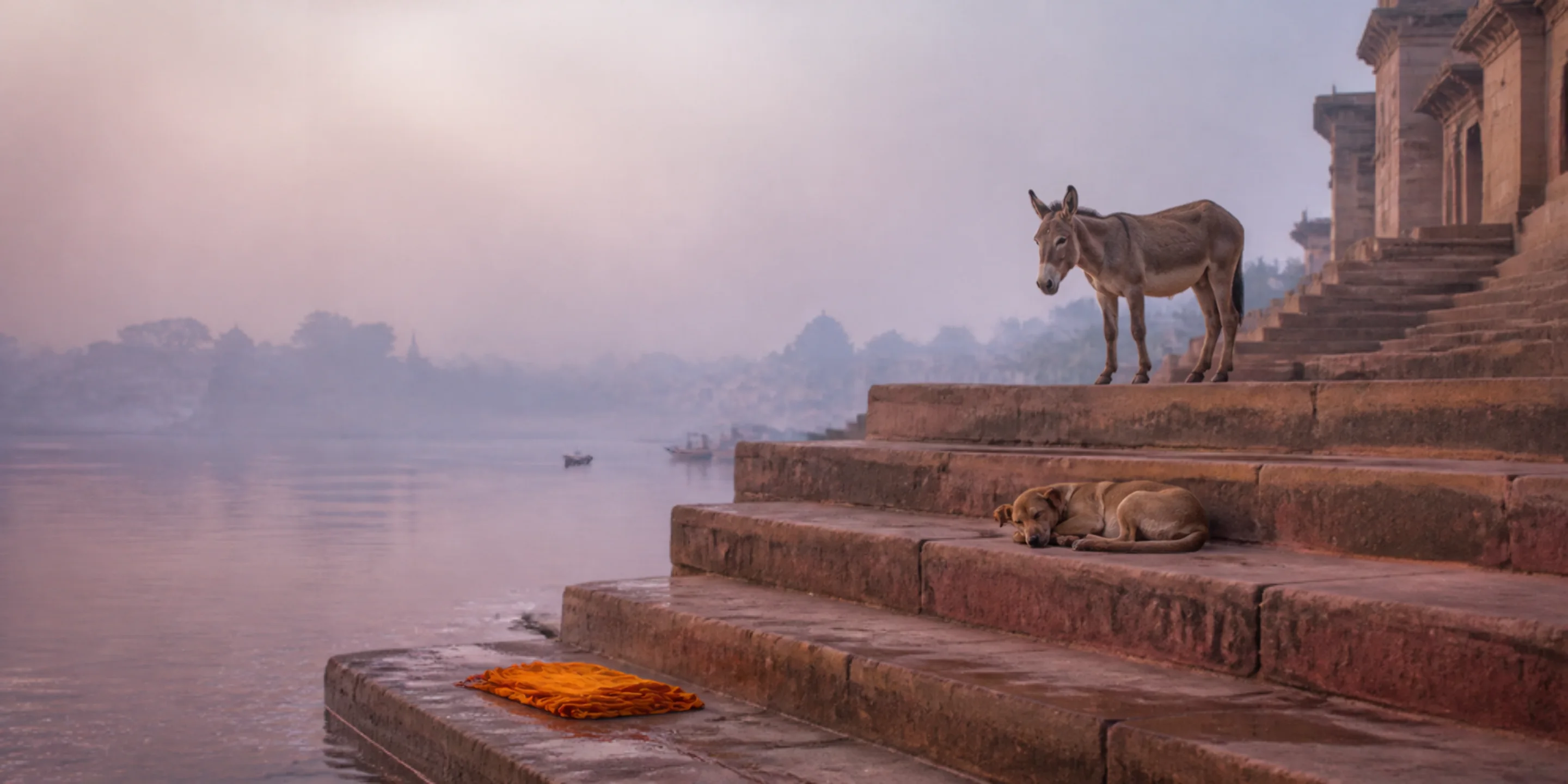
Knowing that the Lord has entered all as the individual, one should to all, down to a dog, an outcaste, a cow, a donkey.
Note //
'Āśva-' is read as 'ā śva-', 'down to the dog'. The verse is in the Laghu Yoga Vasishtha and the Bhagavata (11.29.16). The two verses together: no one to bow to, and all to bow to, because there is only one. Editions agree.
मांसपाञ्चालिकायास्तु यन्त्रलोकेऽङ्गपञ्जरे । स्नाय्वस्थिग्रन्थिशालिन्यः स्त्रियः किमिव शोभनम् ॥ ५॥ त्वङ्मांसरक्तबाष्पाम्बु पृथक्कृत्वा विलोचने । समालोकय रम्यं चेत्किं मुधा परिमुह्यसि ॥ ६॥
māṃsapāñcālikāyāstu yantraloke'ṅgapañjare | snāyvasthigranthiśālinyaḥ striyaḥ kimiva śobhanam || 5|| tvaṅmāṃsaraktabāṣpāmbu pṛthakkṛtvā vilocane | samālokaya ramyaṃ cetkiṃ mudhā parimuhyasi || 6||
A doll of flesh, a cage of limbs in a world of machines, held together with sinew, bone and joint: what in a woman is beautiful? Take apart the skin, the flesh, the blood, the tears, the fluids, and look at them with your own eyes: if that is lovely, well and good. Why be bewildered for nothing?
Note //
Verses 5-14 come from Rama's speech of dispassion in the Yoga Vasishtha (1.21). They are addressed to a male renouncer and speak of women as an object of his attachment, as the ascetic literature of their time does; they are rendered as the text has them. Read in the light of the text's own teaching (23), what is taken apart is the renouncer's fascination, not the worth of any person: the same analysis applies to every body, including his own. 'Doll' (pāñcālikā): a puppet worked by strings. Editions agree.
मेरुशृङ्गतटोल्लासिगङ्गाजलरयोपमा । दृष्टा यस्मिन्मुने मुक्ताहारस्योल्लासशालिता ॥ ७॥ श्मशानेषु दिगन्तेषु स एव ललनास्तनः । श्वभिरास्वाद्यते काले लघुपिण्ड इवान्धसः ॥ ८॥
meruśṛṅgataṭollāsigaṅgājalarayopamā | dṛṣṭā yasminmune muktāhārasyollāsaśālitā || 7|| śmaśāneṣu diganteṣu sa eva lalanāstanaḥ | śvabhirāsvādyate kāle laghupiṇḍa ivāndhasaḥ || 8||
The breast on which, O sage, a necklace of pearls was seen to sparkle like the rush of the Ganga leaping down the slopes of Meru's peak: in time that same breast of a woman is eaten by dogs in the cremation grounds at the edge of the world, like a small lump of food.
Note //
From the same speech in the Yoga Vasishtha (1.21); see 5-6. The point is impermanence: what fascinates is already on its way to the cremation ground. Readings: 'gaṅgājalarayopamā', 'the rush of the Ganga's water' (Adyar collection, which keeps the metre) against 'gaṅgājalasyopamā' (sanskritdocuments.org, a syllable short); 'ullāsa-' (Adyar) against 'ullasa-'; 'śmaśāneṣu' against the slip 'śmanāneṣu' (sanskritdocuments.org); 'laghupiṇḍa ivāndhasaḥ' (sanskritdocuments.org) against 'laghupiṇḍaivāndhasaḥ' (Adyar). The standard reading is followed in each case.
केशकज्जलधारिण्यो दुःस्पर्शा लोचनप्रियाः । दुष्कृताग्निशिखा नार्यो दहन्ति तृणवन्नरम् ॥ ९॥ ज्वलना अतिदूरेऽपि सरसा अपि नीरसाः । स्त्रियो हि नरकाग्नीनामिन्धनं चारु दारुणम् ॥ १०॥
keśakajjaladhāriṇyo duḥsparśā locanapriyāḥ | duṣkṛtāgniśikhā nāryo dahanti tṛṇavannaram || 9|| jvalanā atidūre'pi sarasā api nīrasāḥ | striyo hi narakāgnīnāmindhanaṃ cāru dāruṇam || 10||
With their dark hair and kohl, pleasing to the eye, hard to touch, women are flames of the fire of wrongdoing: they burn a man like straw. They burn even from far away; full of sap, they leave one dry. Women are the fuel of the fires of hell, lovely and cruel.
Note //
The same speech in the Yoga Vasishtha (1.21); see 5-6 for how this passage is read. 'Hard to touch' (duḥsparśa): like fire, which is lovely to see and burns when touched. 'Full of sap, they leave one dry' (sarasā api nīrasāḥ): a play on rasa, sap and also delight. Editions agree.
कामनाम्ना किरातेन विकीर्णा मुग्धचेतसः । नार्यो नरविहङ्गानामङ्गबन्धनवागुराः ॥ ११॥ जन्मपल्वलमत्स्यानां चित्तकर्दमचारिणाम् । पुंसां दुर्वासनारज्जुर्नारीबडिशपिण्डिका ॥ १२॥
kāmanāmnā kirātena vikīrṇā mugdhacetasaḥ | nāryo naravihaṅgānāmaṅgabandhanavāgurāḥ || 11|| janmapalvalamatsyānāṃ cittakardamacāriṇām | puṃsāṃ durvāsanārajjurnārībaḍiśapiṇḍikā || 12||
Spread out by the hunter called Desire, women are the nets that catch and bind the limbs of men, the birds of foolish mind. Men are fish in the pond of birth, moving through the mud of the mind; the line is their bad tendencies, and woman is the bait on the hook.
Note //
The same speech in the Yoga Vasishtha (1.21); see 5-6. The images make the hunter Desire, not the woman, the one who sets the trap, and the line that holds the fish is the man's own tendencies (vāsanā). Sanskritdocuments.org has 'matsyānāṃ', fish; the Adyar collection's 'matyānāṃ' is a slip. Editions agree otherwise.
सर्वेषां दोषरत्नानां सुसमुद्गिकयानया । दुःखशृङ्खलया नित्यमलमस्तु मम स्त्रिया ॥ १३॥ यस्य स्त्री तस्य भोगेच्छा निःस्त्रीकस्य क्व भोगभूः । स्त्रियं त्यक्त्वा जगत्त्यक्तं जगत्त्यक्त्वा सुखी भवेत् ॥ १४॥
sarveṣāṃ doṣaratnānāṃ susamudgikayānayā | duḥkhaśṛṅkhalayā nityamalamastu mama striyā || 13|| yasya strī tasya bhogecchā niḥstrīkasya kva bhogabhūḥ | striyaṃ tyaktvā jagattyaktaṃ jagattyaktvā sukhī bhavet || 14||
A fine casket for every jewel among faults, a chain of sorrow: I have had enough of woman, for good. Whoever has a woman has the wish to enjoy; for one without, where is the ground of enjoyment? Give up woman, and the world is given up; give up the world, and one is happy.
Note //
The end of the passage from Rama's speech in the Yoga Vasishtha (1.21); see 5-6. In 14 'woman' stands for the whole world of enjoyment: what is given up is the wish to enjoy, the root of the world as one's own. 'Niḥstrīkasya' (Adyar) and 'nistrīkasya' (sanskritdocuments.org) are the same word. Editions agree otherwise.
अलभ्यमानस्तनयः पितरौ क्लेशयेच्चिरम् । लब्धो हि गर्भपातेन प्रसवेन च बाधते ॥ १५॥ जातस्य ग्रहरोगादि कुमारस्य च धूर्तता । उपनीतेऽप्यविद्यत्वमनुद्वाहश्च पण्डिते ॥ १६॥ यूनश्च परदारादि दारिद्र्यं च कुटुम्बिनः । पुत्रदुःखस्य नास्त्यन्तो धनी चेन्म्रियते तदा ॥ १७॥
alabhyamānastanayaḥ pitarau kleśayecciram | labdho hi garbhapātena prasavena ca bādhate || 15|| jātasya graharogādi kumārasya ca dhūrtatā | upanīte'pyavidyatvamanudvāhaśca paṇḍite || 16|| yūnaśca paradārādi dāridryaṃ ca kuṭumbinaḥ | putraduḥkhasya nāstyanto dhanī cenmriyate tadā || 17||
A son not yet had torments his parents for a long time; once conceived, he troubles them with fear of miscarriage and the pain of birth. Once born, there are evil planets, illness; as a boy, mischief; even after his initiation, no learning; and if learned, he will not marry; as a young man, other men's wives and the rest; as a householder, poverty. There is no end to the sorrow a son brings; and if he is rich, then he dies.
Note //
A stock theme of the literature of renunciation: the sorrows of having a son, set against the old teaching that a son is needed to save his father. It assumes the family life of its time and is rendered as the text has it. 'Hi' (sanskritdocuments.org) is read for 'he' (Adyar collection, a slip) in 15. Editions agree otherwise.
न पाणिपादचपलो न नेत्रचपलो यतिः । न च वाक्चपलश्चैव ब्रह्मभूतो जितेन्द्रियः ॥ १८॥
na pāṇipādacapalo na netracapalo yatiḥ | na ca vākcapalaścaiva brahmabhūto jitendriyaḥ || 18||
The renouncer is not restless with hands and feet, not restless with the eyes, not restless with speech: he has become Brahman, the senses mastered.
Note //
Also in Manu (and the Narada Parivrajaka). Stillness of body, eye and speech is not the cause of being Brahman but its natural sign. Editions agree.
रिपौ बद्धे स्वदेहे च समैकात्म्यं प्रपश्यतः । विवेकिनः कुतः कोपः स्वदेहावयवेष्विव ॥ १९॥
ripau baddhe svadehe ca samaikātmyaṃ prapaśyataḥ | vivekinaḥ kutaḥ kopaḥ svadehāvayaveṣviva || 19||
For the discerning one, who sees the same one Self in an enemy who has bound him and in his own body, where is anger? It is like being angry with one's own limbs.
Note //
The next verses go on: 'if you are angry with one who harms you, why not be angry with anger, which harms your aims most of all?' Editions agree.
अपकारिणि कोपश्चेत्कोपे कोपः कथं न ते । धर्मार्थकाममोक्षाणां प्रसह्य परिपन्थिनि ॥ २०॥ नमोऽस्तु मम कोपाय स्वाश्रयज्वालिने भृशम् । कोपस्य मम वैराग्यदायिने दोषबोधिने ॥ २१॥
apakāriṇi kopaścetkope kopaḥ kathaṃ na te | dharmārthakāmamokṣāṇāṃ prasahya paripanthini || 20|| namo'stu mama kopāya svāśrayajvāline bhṛśam | kopasya mama vairāgyadāyine doṣabodhine || 21||
If you are angry with one who harms you, why are you not angry with anger, which by force stands in the way of dharma, wealth, pleasure and freedom? I bow to my anger, which burns fiercely the one it lives in, which gives me dispassion and shows me my faults.
Note //
Following 19 (no anger at an enemy who is one's own Self). The bow to anger in 21 is ironic and also sincere: anger burns first the one who harbours it, and so teaches dispassion. Editions agree.
यत्र सुप्ता जना नित्यं प्रबुद्धस्तत्र संयमी । प्रबुद्धा यत्र ते विद्वान्सुषुप्तिं याति योगिराट् ॥ २२॥
yatra suptā janā nityaṃ prabuddhastatra saṃyamī | prabuddhā yatra te vidvānsuṣuptiṃ yāti yogirāṭ || 22||
Where people are always asleep, there the self-controlled one is awake. Where they are awake, there the wise one, the king of yogis, goes to sleep.
Note //
A reworking of Gita 2.69. What the world is asleep to is the Self; what it is awake to, the play of objects, is where the knower rests as in sleep. Editions agree.
चिदिहास्तीति चिन्मात्रमिदं चिन्मयमेव च । चित्त्वं चिदहमेते च लोकाश्चिदिति भावय ॥ २३॥
cidihāstīti cinmātramidaṃ cinmayameva ca | cittvaṃ cidahamete ca lokāściditi bhāvaya || 23||
Consciousness is here; this is only consciousness, made of nothing but consciousness. You are consciousness, I am consciousness, and these worlds are consciousness: contemplate this.
Note //
Found also in the Maha Upanishad and the Yoga Vasishtha. The next and last verse: 'this is the highest state of the supreme swans, to be taken up by renouncers; there is nothing higher than this.' Editions agree.
यतीनां तदुपादेयं पारहंस्यं परं पदम् । नातः परतरं किञ्चिद्विद्यते मुनिपुङ्गव ॥ २४॥ इत्युपनिषत् ॥
yatīnāṃ tadupādeyaṃ pārahaṃsyaṃ paraṃ padam | nātaḥ parataraṃ kiñcidvidyate munipuṅgava || 24|| ityupaniṣat ||
This is what renouncers are to take up: the highest state, that of the supreme swan. There is nothing whatever higher than this, best of sages. Thus the Upanishad.
Note //
'This' is the seeing of 23: you, I and these worlds are consciousness. The state of the paramahamsa is not an outward order but that seeing. 'Munipuṅgava' (vocative, Adyar collection) is read for 'munipuṅgavaḥ' (sanskritdocuments.org). The Adyar collection's copy opens with a verse of its commentator, Upanishad Brahmayogin ('saṃnyāsajñānasampannāḥ...'), which is not part of the text and is not given.
No public-domain English translation exists for this text; the Sanskrit is shown.
The renderings on this page are shared under CC BY-NC 4.0, in the words of Pranav Ashar.