Maitreya Upanishad
In the words of Pranav Ashar
How we renderThe heart of the Maitreya
In brief
A king who has seen through the world asks the sage Shakayanya for the Self, and is told that the mind alone is the round of birth and death. Then Shiva teaches Maitreya that the body is a temple and the living self in it is Shiva himself, to be worshipped with 'I am he'; that the true bath is dropping the mind's dirt, and the sun of consciousness in the heart never rises or sets. The last chapter is the knower's own voice: I am Brahman, without second, without bondage or freedom, beyond every pair.
- The mind is the round of becoming
- The body as a temple, the self as Shiva
- Ritual turned inward
- True renunciation
- I am, beyond every pair
Contents
श्रुत्याचार्योपदेशेन मुनयो यत्पदं ययुः । तत्स्वानुभूतिसंसिद्धं स्वमात्रं ब्रह्म भावये ॥
śrutyācāryopadeśena munayo yatpadaṃ yayuḥ | tatsvānubhūtisaṃsiddhaṃ svamātraṃ brahma bhāvaye ||
The state the sages reached through the teaching of scripture and teacher, proven in one's own experience, Brahman, which is only oneself: on that I dwell.
Note //
A dedicatory verse from the commentator's tradition, placed before the peace invocation; it is not part of the numbered text.
ॐ बृहद्रथो वै नाम राजा राज्ये ज्येष्ठं पुत्रं निधापयित्वेदमशाश्वतं मन्यमानः शरीरं वैराग्यमुपेतोऽरण्यं निर्जगाम । स तत्र परमं तप आस्थायादित्यमीक्षमाण ऊर्ध्वबाहुस्तिष्ठत्यन्ते सहस्रस्य मुनिरन्तिकमाजगामाग्निरिवाधूमकस्तेजसा निर्दहन्निवात्मविद्भगवाञ्छाकायन्य उत्तिष्ठोत्तिष्ठ वरं वृणीश्वेति राजानमब्रवीत्स तस्मै नमस्कृत्योवाच भगवन्नाहमात्मवित्त्वं तत्त्वविच्छृणुमो वयं स त्वं नो ब्रूहीत्येतद्वृत्तं पुरस्तादशक्यं मा पृच्छ प्रश्नमैक्ष्वाकान्यान्कामान्वृणीश्वेति शाकायन्यस्य चरणावभिमृश्यमानो राजेमां गाथां जगाद ॥ १॥
oṃ bṛhadratho vai nāma rājā rājye jyeṣṭhaṃ putraṃ nidhāpayitvedamaśāśvataṃ manyamānaḥ śarīraṃ vairāgyamupeto'raṇyaṃ nirjagāma | sa tatra paramaṃ tapa āsthāyādityamīkṣamāṇa ūrdhvabāhustiṣṭhatyante sahasrasya munirantikamājagāmāgnirivādhūmakastejasā nirdahannivātmavidbhagavāñchākāyanya uttiṣṭhottiṣṭha varaṃ vṛṇīśveti rājānamabravītsa tasmai namaskṛtyovāca bhagavannāhamātmavittvaṃ tattvavicchṛṇumo vayaṃ sa tvaṃ no brūhītyetadvṛttaṃ purastādaśakyaṃ mā pṛccha praśnamaikṣvākānyānkāmānvṛṇīśveti śākāyanyasya caraṇāvabhimṛśyamāno rājemāṃ gāthāṃ jagāda || 1||
There was a king called Brihadratha. Seeing that this body does not last, he grew free of wanting, set his eldest son on the throne, and went out into the forest. There he took up the hardest discipline, standing with arms raised, gazing at the sun. At the end of a thousand days a sage came near, like a fire without smoke, as if burning with his own light: the blessed Shakayanya, who knew the Self. 'Rise, rise,' he said to the king. 'Choose a gift.' The king bowed to him and said: 'Lord, I do not know the Self. You know the truth, we hear. Tell it to us.' 'That was settled long ago; it cannot be told. Do not ask that question, descendant of Ikshvaku. Choose other wishes.' Touching Shakayanya's feet, the king spoke these lines:
Note //
The story is also the opening of the Maitri Upanishad (1.2). 'That was settled long ago; it cannot be told' (etad vrittam purastad ashakyam): Aiyar 'to begin with, your question is difficult'. Pending review.
अथ किमेतैर्वान्यानां शोषणं महार्णवानां शिखरिणां प्रपतनं ध्रुवस्य प्रचलनं स्थानं वा तरूणां निमज्जनं पृथिव्याः स्थानादपसरणं सुराणां सोऽहमित्येतद्विधेऽस्मिन्संसारे किं कामोपभोगैर्यैरेवाश्रितस्यासकृदुपावर्तनं दृश्यत इत्युद्धर्तुमर्हसीत्यन्धोदपानस्थो भेक इवाहमस्मिन्संसारे भगवंस्त्वं नो गतिरिति ॥ २॥
atha kimetairvānyānāṃ śoṣaṇaṃ mahārṇavānāṃ śikhariṇāṃ prapatanaṃ dhruvasya pracalanaṃ sthānaṃ vā tarūṇāṃ nimajjanaṃ pṛthivyāḥ sthānādapasaraṇaṃ surāṇāṃ so'hamityetadvidhe'sminsaṃsāre kiṃ kāmopabhogairyairevāśritasyāsakṛdupāvartanaṃ dṛśyata ityuddhartumarhasītyandhodapānastho bheka ivāhamasminsaṃsāre bhagavaṃstvaṃ no gatiriti || 2||
'What use are these, or any others? Great oceans dry up, mountain peaks fall, the pole star moves from its place, trees are swept away, the earth sinks, the gods are driven from their seats. In a world like this, what am I to do with the enjoyment of desires, when one who feeds on them is seen to come back here again and again? You can lift me out. In this world I am like a frog in a dry well. Lord, you are our refuge.
Note //
'In a world like this, what am I to do' takes so 'ham as 'such as I am'; Aiyar renders it 'I am He in reality'. The parallel in the Maitri (1.4) supports the plain sense. 'Dry well' (andhodapana): literally a blind or dark well; Aiyar 'a dry well'.
भगवञ्शरीरमिदं मैथुनादेवोद्भूतं संविदपेतं निरय एव मूत्रद्वारेण निष्क्रान्तमस्थिभिश्चितं मांसेनानुलिप्तं चर्मणावबद्धं विण्मूत्रवातपित्तकफमज्जामेदोवसाभिरन्यैश्च मलैर्बहुभिः परिपूर्णमेतादृशे शरीरे वर्तमानस्य भगवंस्त्वं नो गतिरिति ॥ ३॥
bhagavañśarīramidaṃ maithunādevodbhūtaṃ saṃvidapetaṃ niraya eva mūtradvāreṇa niṣkrāntamasthibhiścitaṃ māṃsenānuliptaṃ carmaṇāvabaddhaṃ viṇmūtravātapittakaphamajjāmedovasābhiranyaiśca malairbahubhiḥ paripūrṇametādṛśe śarīre vartamānasya bhagavaṃstvaṃ no gatiriti || 3||
'Lord, this body comes from union alone, has no awareness of its own, is a pit of suffering, came out by the passage of urine, is built of bones, plastered with flesh, bound in skin, and full of faeces, urine, wind, bile, phlegm, marrow, fat, grease and many other impurities. For me, living in such a body, Lord, you are our refuge.'
Note //
'Has no awareness of its own' (samvid-apetam): the body is not what knows; awareness belongs to the Self that lives in it. Aiyar: 'without wisdom'.
अथ भगवाञ्छाकायन्यः सुप्रीतोऽब्रवीद्राजानं महाराज बृहद्रथेक्ष्वाकुवंशध्वजशीर्षात्मज्ञः कृतकृत्यस्त्वं मरुन्नाम्नो विश्रुतोऽसीत्ययं खल्वात्मा ते कतमो भगवान्वर्ण्य इति तं होवाच ॥
atha bhagavāñchākāyanyaḥ suprīto'bravīdrājānaṃ mahārāja bṛhadrathekṣvākuvaṃśadhvajaśīrṣātmajñaḥ kṛtakṛtyastvaṃ marunnāmno viśruto'sītyayaṃ khalvātmā te katamo bhagavānvarṇya iti taṃ hovāca ||
Then the blessed Shakayanya, well pleased, said to the king: 'Great king Brihadratha, banner at the head of Ikshvaku's line, you know the Self; you have done what was to be done; you are famed by the name Marut.' 'Which, then, is this Self of mine, Lord? Describe it.' He said to him:
Note //
The sage tells the king he already knows the Self before teaching him: his clear seeing of the world in 1.2-1.3 is already the turning. 'Marut' is a name for the wind; the Maitri (2.1) has the same title.
शब्दस्पर्शमया येऽर्था अनर्था इव ते स्थिताः । येषां सक्तस्तु भूतात्मा न स्मरेच्च परं पदम् ॥ १॥
śabdasparśamayā ye'rthā anarthā iva te sthitāḥ | yeṣāṃ saktastu bhūtātmā na smarecca paraṃ padam || 1||
'The things made of sound, touch and the rest seem to be gains, but stand as losses. The embodied self that clings to them does not remember the highest state.
Note //
A play on artha (gain, object) and anartha (loss, harm). 'Does not remember' fits the teaching that follows: the highest is forgotten, not absent.
तपसा प्राप्यते सत्त्वं सत्त्वात्सम्प्राप्यते मनः । मनसा प्राप्यते ह्यात्मा ह्यात्मापत्त्या निवर्तते ॥ २॥
tapasā prāpyate sattvaṃ sattvātsamprāpyate manaḥ | manasā prāpyate hyātmā hyātmāpattyā nivartate || 2||
By discipline clarity is gained; by clarity, the mind; by the mind, the Self is reached; and by reaching the Self, one turns back no more.
Note //
The same verse is in the Maitri (4.3). 'Turns back no more': is not reborn.
यथा निरिन्धनो वह्निः स्वयोनावुपशाम्यति । तथा वृत्तिक्षयाच्चित्तं स्वयोनावुपशाम्यति ॥ ३॥
yathā nirindhano vahniḥ svayonāvupaśāmyati | tathā vṛttikṣayāccittaṃ svayonāvupaśāmyati || 3||
As a fire without fuel goes quiet in its own source, so the mind, when its movements end, goes quiet in its own source.
Note //
The fire is not destroyed; it returns to the heat it came from. The mind's source is the Self. The same image is in the Maitri (6.34).
स्वयोनावुपशान्तस्य मनसः सत्यगामिनः । इन्द्रियार्थविमूढस्यानृताः कर्मवशानुगाः ॥ ४॥
svayonāvupaśāntasya manasaḥ satyagāminaḥ | indriyārthavimūḍhasyānṛtāḥ karmavaśānugāḥ || 4||
For the mind that has gone quiet in its source and moves toward the true, the things of the senses that once confused it, which follow the pull of action, are seen as unreal.
Note //
Maitri 6.34 has the same verse. 'Unreal' (anrita): not real on their own; Aiyar: 'merely unreal'.
चित्तमेव हि संसारस्तत्प्रयत्नेन शोधयेत् । यच्चित्तस्तन्मयो भवति गुह्यमेतत्सनातनम् ॥ ५॥
cittameva hi saṃsārastatprayatnena śodhayet | yaccittastanmayo bhavati guhyametatsanātanam || 5||
The mind alone is the round of birth and death. Clean it, then, with care. Whatever the mind dwells on, that one becomes: this is the ancient secret.
Note //
Also Maitri 6.34. Samsara is not a place one is in but the movement of the mind; the Self is never in it.
चित्तस्य हि प्रसादेन हन्ति कर्म शुभाशुभम् । प्रसन्नात्मात्मनि स्थित्वा सुखमक्षयमश्नुते ॥ ६॥
cittasya hi prasādena hanti karma śubhāśubham | prasannātmātmani sthitvā sukhamakṣayamaśnute || 6||
By the clearing of the mind one ends all action, good and bad. Clear, resting in the Self, one enjoys a happiness that does not end.
Note //
समासक्तं यदा चित्तं जन्तोर्विषयगोचरम् । यद्येवं ब्रह्मणि स्यात्तत्को न मुच्येत बन्धनात् ॥ ७॥
samāsaktaṃ yadā cittaṃ jantorviṣayagocaram | yadyevaṃ brahmaṇi syāttatko na mucyeta bandhanāt || 7||
If a creature's mind were held by Brahman as firmly as it is held by the things of the senses, who would not be free of bondage?
Note //
हृत्पुण्डरीकमध्ये तु भावयेत्परमेश्वरम् । साक्षिणं बुद्धिवृत्तस्य परमप्रेमगोचरम् ॥ ८॥
hṛtpuṇḍarīkamadhye tu bhāvayetparameśvaram | sākṣiṇaṃ buddhivṛttasya paramapremagocaram || 8||
In the middle of the lotus of the heart contemplate the highest Lord, the witness of all the intellect does, the one most deeply loved,
Note //
Verses 1.12-1.14 are one sentence describing what is to be contemplated. 'The one most deeply loved': the Self is what is loved in everything loved (as in the Brihadaranyaka 2.4.5).
अगोचरं मनोवाचामवधूतादिसम्प्लवम् । सत्तामात्रप्रकाशैकप्रकाशं भावनातिगम् ॥ ९॥
agocaraṃ manovācāmavadhūtādisamplavam | sattāmātraprakāśaikaprakāśaṃ bhāvanātigam || 9||
beyond the reach of mind and speech, without beginning and without end, being alone, the one light of all light, beyond all imagining,
Note //
Avadhuta-adi-samplava: 'shaken free of beginning and dissolution'.
अहेयमनुपादेयमसामान्यविशेषणम् । ध्रुवं स्तिमितगम्भीरं न तेजो न तमस्ततम् । निर्विकल्पं निराभासं निर्वाणमयसंविदम् ॥ १०॥
aheyamanupādeyamasāmānyaviśeṣaṇam | dhruvaṃ stimitagambhīraṃ na tejo na tamastatam | nirvikalpaṃ nirābhāsaṃ nirvāṇamayasaṃvidam || 10||
not to be rejected, not to be grasped, neither general nor particular, firm, still and deep, neither light nor darkness, all-pervading, beyond all thought-constructs, without appearance, awareness made of peace.
Note //
'Neither light nor darkness': not a light the eyes see; it is what sees both. 'Awareness made of peace' renders nirvanamaya-samvid; Aiyar: 'wisdom of the nature of moksha'.
नित्यः शुद्धो बुद्धमुक्तस्वभावः सत्यः सूक्ष्मः संविभुश्चाद्वितीयः । आनन्दाब्धिर्यः परः सोऽहमस्मि प्रत्यग्धातुर्नात्र संशीतिरस्ति ॥ ११॥
nityaḥ śuddho buddhamuktasvabhāvaḥ satyaḥ sūkṣmaḥ saṃvibhuścādvitīyaḥ | ānandābdhiryaḥ paraḥ so'hamasmi pratyagdhāturnātra saṃśītirasti || 11||
Eternal, pure, by nature awake and free, true, subtle, everywhere, without a second, the ocean of bliss, the highest: that I am, the inmost essence. There is no doubt of it.
Note //
'Eternal, pure, awake, free' (nitya-shuddha-buddha-mukta) is the classic Advaita description of the Self. 'The inmost essence' (pratyag-dhatu): Aiyar reads 'superior to Pratyagatma', but pratyak here means the inward Self, which the speaker is.
आनन्दमन्तर्निजमाश्रयं तमाशापिशाचीमवमानयन्तम् । आलोकयन्तं जगदिन्द्रजालमापत्कथं मां प्रविशेदसङ्गम् ॥ १२॥
ānandamantarnijamāśrayaṃ tamāśāpiśācīmavamānayantam | ālokayantaṃ jagadindrajālamāpatkathaṃ māṃ praviśedasaṅgam || 12||
I rest on my own bliss within, I put the demon of hope to shame, I see the world as a magic show: how could misfortune reach me, who am bound to nothing?
Note //
'Magic show' (indrajala): an appearance that is real as appearance, not on its own.
वर्णाश्रमाचारयुता विमूढाः कर्मानुसारेण फलं लभन्ते । वर्णादिधर्मं हि परित्यजन्तः स्वानन्दतृप्ताः पुरुषा भवन्ति ॥ १३॥
varṇāśramācārayutā vimūḍhāḥ karmānusāreṇa phalaṃ labhante | varṇādidharmaṃ hi parityajantaḥ svānandatṛptāḥ puruṣā bhavanti || 13||
The confused, bound to the rules of caste and stage of life, gain fruit according to their acts. Those who let go of caste and its duties are content in their own bliss.
Note //
Spoken from the standpoint of the renunciate who knows the Self; it is not a rejection of dharma for those who still act, whose acts bring their fruit.
वर्णाश्रमं सावयवं स्वरूपमाद्यन्तयुक्तं ह्यतिकृच्छ्रमात्रम् । पुत्रादिदेहेष्वभिमानशून्यं भूत्वा वसेत्सौख्यतमे ह्यनन्त इति ॥ १४॥ ४॥
varṇāśramaṃ sāvayavaṃ svarūpamādyantayuktaṃ hyatikṛcchramātram | putrādideheṣvabhimānaśūnyaṃ bhūtvā vasetsaukhyatame hyananta iti || 14|| 4||
Caste and stage of life have parts, a beginning and an end, and are nothing but great toil. Free of any claim on son or body, live in the endless, which is the greatest joy.'
Note //
The edition closes prose section 4 here (॥ ४॥) and ends the first chapter.
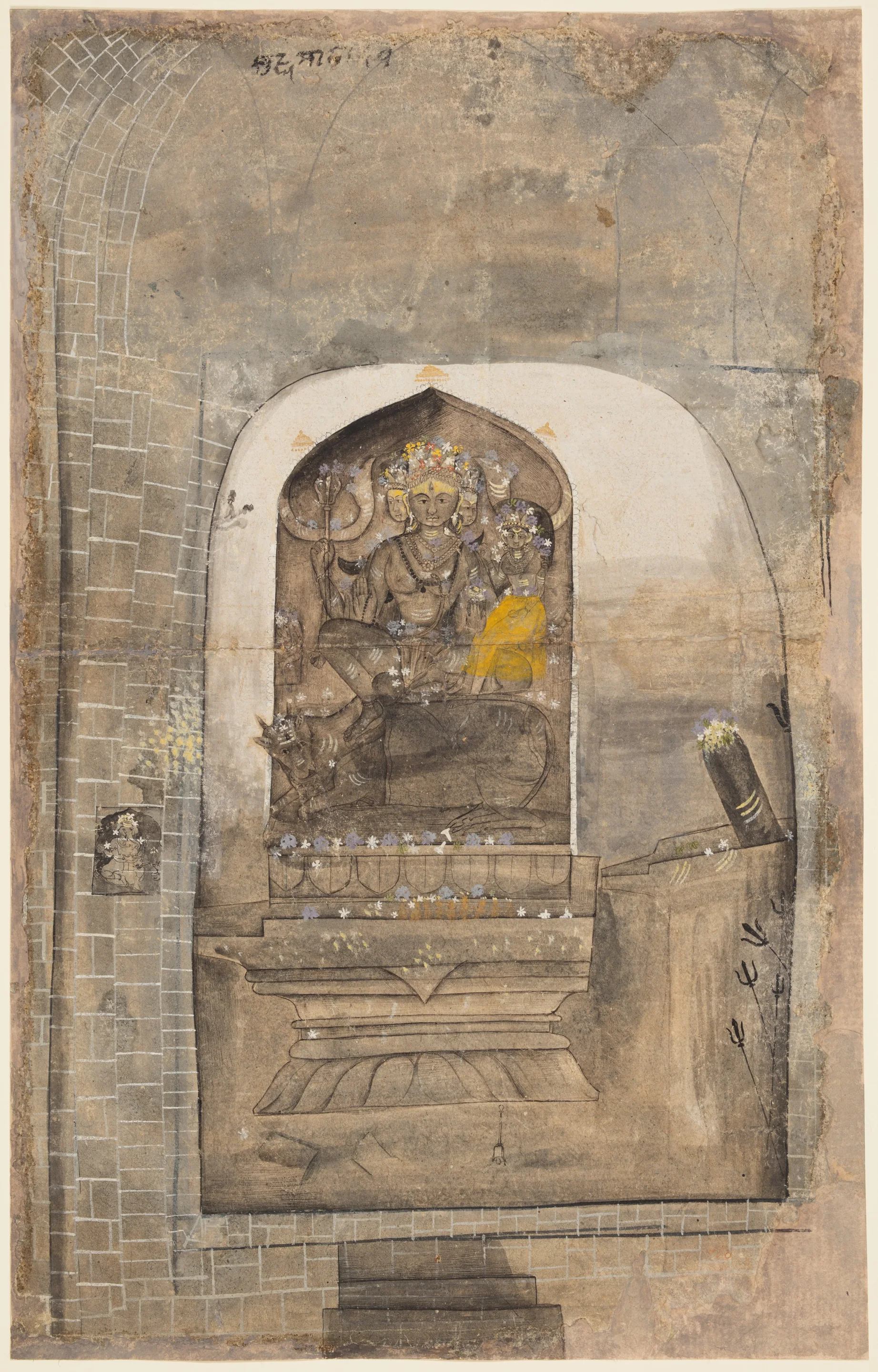
अथ भगवान्मैत्रेयः कैलासं जगाम तं गत्वोवाच भो भगवन्परमतत्त्वरहस्यमनुब्रूहीति ॥ स होवाच महादेवः ॥ देहो देवालयः प्रोक्तः स जीवः केवलः शिवः । त्यजेदज्ञाननिर्माल्यं सोऽहम्भावेन पूजयेत् ॥ १॥
atha bhagavānmaitreyaḥ kailāsaṃ jagāma taṃ gatvovāca bho bhagavanparamatattvarahasyamanubrūhīti || sa hovāca mahādevaḥ || deho devālayaḥ proktaḥ sa jīvaḥ kevalaḥ śivaḥ | tyajedajñānanirmālyaṃ so'hambhāvena pūjayet || 1||
Then the blessed Maitreya went to Kailasa and said to the Lord there: 'Lord, teach me the secret of the highest truth.' The great god said: 'The body is called a temple; the living self in it is Shiva alone. Throw away ignorance, like yesterday's flowers, and worship him with "I am he".
Note //
Nirmalya are the used flowers removed from the image before new worship. The worship is not of a god outside; it is recognising 'so 'ham', 'I am he'.
अभेददर्शनं ज्ञानं ध्यानं निर्विषयं मनः। स्नानं मनोमलत्यागः शौचमिन्द्रियनिग्रहः ॥ २॥
abhedadarśanaṃ jñānaṃ dhyānaṃ nirviṣayaṃ manaḥ| snānaṃ manomalatyāgaḥ śaucamindriyanigrahaḥ || 2||
is knowledge. A mind without objects is meditation. Dropping the mind's dirt is the bath. Mastering the senses is purity.
Note //
ब्रह्मामृतं पिबेद्भैक्षमाचरेद्देहरक्षणे । वसेदेकान्तिको भूत्वा चैकान्ते द्वैतवर्जिते । इत्येवमाचरेद्धीमान्स एवं मुक्तिमाप्नुयात् ॥ ३॥
brahmāmṛtaṃ pibedbhaikṣamācareddeharakṣaṇe | vasedekāntiko bhūtvā caikānte dvaitavarjite | ityevamācareddhīmānsa evaṃ muktimāpnuyāt || 3||
Drink the nectar of Brahman; beg food only to keep the body going; live alone, given to the One, in the solitude where there is no second. The wise who live like this reach freedom.
Note //
Ekanta, 'solitude', is redefined in 2.15: it is not a place but the One without a second.
जातं मृतमिदं देहं मातापितृमलात्मकम् । सुखदुःखालयामेध्यं स्पृष्ट्वा स्नानं विधीयते ॥ ४॥
jātaṃ mṛtamidaṃ dehaṃ mātāpitṛmalātmakam | sukhaduḥkhālayāmedhyaṃ spṛṣṭvā snānaṃ vidhīyate || 4||
This body is born and dies, made of the secretions of mother and father, a house of pleasure and pain, unclean: touch it, and a bath is called for.
धातुबद्धं महारोगं पापमन्दिरमध्रुवम् । विकाराकारविस्तीर्णं स्पृष्ट्वा स्नानं विधीयते ॥ ५॥
dhātubaddhaṃ mahārogaṃ pāpamandiramadhruvam | vikārākāravistīrṇaṃ spṛṣṭvā snānaṃ vidhīyate || 5||
Bound together by its tissues, a great sickness, a house of wrongs, unstable, spread out in changing shapes: touch it, and a bath is called for.
Note //
नवद्वारमलस्रावं सदा काले स्वभावजम् । दुर्गन्धं दुर्मलोपेतं स्पृष्ट्वा स्नानं विधीयते ॥ ६॥
navadvāramalasrāvaṃ sadā kāle svabhāvajam | durgandhaṃ durmalopetaṃ spṛṣṭvā snānaṃ vidhīyate || 6||
Its nine doors always leak dirt by their very nature; it smells, it is full of filth: touch it, and a bath is called for.
Note //
मातृसूतकसम्बन्धं सूतके सह जायते । मृतसूतकजं देहं स्पृष्ट्वा स्नानं विधीयते ॥ ७॥
mātṛsūtakasambandhaṃ sūtake saha jāyate | mṛtasūtakajaṃ dehaṃ spṛṣṭvā snānaṃ vidhīyate || 7||
It is born with the mother's birth-impurity and ends in the impurity of death: touch it, and a bath is called for.
Note //
अहम्ममेति विण्मूत्रलेपगन्धादिमोचनम् । शुद्धशौचमिति प्रोक्तं मृज्जलाभ्यां तु लौकिकम् ॥ ८॥
ahammameti viṇmūtralepagandhādimocanam | śuddhaśaucamiti proktaṃ mṛjjalābhyāṃ tu laukikam || 8||
'I' and 'mine' are the smell of the dung and urine smeared on it; to be rid of them is called true cleansing. Cleansing with earth and water is for the world.
Note //
चित्तशुद्धिकरं शौचं वासनात्रयनाशनम् । ज्ञानवैराग्यमृत्तोयैः क्षालनाच्छौचमुच्यते ॥ ९॥
cittaśuddhikaraṃ śaucaṃ vāsanātrayanāśanam | jñānavairāgyamṛttoyaiḥ kṣālanācchaucamucyate || 9||
The cleansing that clears the mind destroys the three kinds of craving; washing with the earth and water of knowledge and dispassion is called cleansing.
Note //
The three cravings (vasana-traya): for the world, for scriptural learning, and for the body, as Aiyar's note and the Muktika (2.2) list them.
अद्वैतभावनाभैक्षमभक्ष्यं द्वैतभावनम् । गुरुशास्त्रोक्तभावेन भिक्षोर्भैक्षं विधीयते ॥ १०॥
advaitabhāvanābhaikṣamabhakṣyaṃ dvaitabhāvanam | guruśāstroktabhāvena bhikṣorbhaikṣaṃ vidhīyate || 10||
The vision of non-duality is the alms to be eaten; the vision of duality is food not to be eaten. In the sense the teacher and scripture give it, this is the alms laid down for the renunciate.
Note //
विद्वान्स्वदेशमुत्सृज्य संन्यासानन्तरं स्वतः । कारागारविनिर्मुक्तचोरवद्दूरतो वसेत् ॥ ११॥
vidvānsvadeśamutsṛjya saṃnyāsānantaraṃ svataḥ | kārāgāravinirmuktacoravaddūrato vaset || 11||
After renouncing, the wise one should leave his own country of his own accord and live far away, like a thief let out of prison.
Note //
अहङ्कारसुतं वित्तभ्रातरं मोहमन्दिरम् । आशापत्नीं त्यजेद्यावत्तावन्मुक्तो न संशयः ॥ १२॥
ahaṅkārasutaṃ vittabhrātaraṃ mohamandiram | āśāpatnīṃ tyajedyāvattāvanmukto na saṃśayaḥ || 12||
The I-claim, his son; wealth, his brother; confusion, his house; hope, his wife: the moment he leaves these, he is free, without doubt.
Note //
मृता मोहमयी माता जातो बोधमयः सुतः । सूतकद्वयसम्प्राप्तौ कथं सन्ध्यामुपास्महे ॥ १३॥
mṛtā mohamayī mātā jāto bodhamayaḥ sutaḥ | sūtakadvayasamprāptau kathaṃ sandhyāmupāsmahe || 13||
Confusion, my mother, has died; awakening, my son, is born. With two impurities at once, death and birth, how can we keep the twilight rites?
Note //
A play on ritual law: during the impurity that follows a death or a birth in the family, the twilight rites (sandhya) are suspended. For the knower both have happened at once, so the rites lapse.
हृदाकाशे चिदादित्यः सदा भासति भासति । नास्तमेति न चोदेति कथं सन्ध्यामुपास्महे ॥ १४॥
hṛdākāśe cidādityaḥ sadā bhāsati bhāsati | nāstameti na codeti kathaṃ sandhyāmupāsmahe || 14||
In the space of the heart shines, always shines. It never sets and it never rises: how can we keep the twilight rites?
Note //
Sandhya is the rite at the junctions of the day, when the sun rises and sets. The light of the Self has no junctions.
एकमेवाद्वितीयं यद्गुरोर्वाक्येन निश्चितम् । एतदेकान्तमित्युक्तं न मठो न वनान्तरम् ॥ १५॥
ekamevādvitīyaṃ yadgurorvākyena niścitam | etadekāntamityuktaṃ na maṭho na vanāntaram || 15||
The one without a second, known for certain through the teacher's words: this is what solitude means, not a monastery, not the depths of a forest.
Note //
'One without a second' (ekam evadvitiyam) is from the Chandogya (6.2.1).
असंशयवतां मुक्तिः संशयाविष्टचेतसाम् । न मुक्तिर्जन्मजन्मान्ते तस्माद्विश्वासमाप्नुयात् ॥ १६॥
asaṃśayavatāṃ muktiḥ saṃśayāviṣṭacetasām | na muktirjanmajanmānte tasmādviśvāsamāpnuyāt || 16||
Freedom is for those without doubt. For minds caught in doubt there is no freedom, even after birth upon birth. So come to trust.
Note //
कर्मत्यागान्न संन्यासो न प्रेषोच्चारणेन तु । सन्धौ जीवात्मनोरैक्यं संन्यासः परिकीर्तितः ॥ १७॥
karmatyāgānna saṃnyāso na preṣoccāraṇena tu | sandhau jīvātmanoraikyaṃ saṃnyāsaḥ parikīrtitaḥ || 17||
Renunciation is not giving up action, nor saying the words of the vow. The oneness of the living self and the Self at the meeting point: that is called renunciation.
Note //
'The words of the vow' (praisha): the formula spoken at taking sannyasa. 'At the meeting point' (sandhau) plays on sandhya again: the true junction is where the individual and the Self are seen to be one. Aiyar: 'at the two sandhis (morning and evening)'.
वमनाहारवद्यस्य भाति सर्वेषणादिषु । तस्याधिकारः संन्यासे त्यक्तदेहाभिमानिनः ॥ १८॥
vamanāhāravadyasya bhāti sarveṣaṇādiṣu | tasyādhikāraḥ saṃnyāse tyaktadehābhimāninaḥ || 18||
One to whom every craving looks like vomited food, who has dropped the claim on the body, is fit for renunciation.
Note //
यदा मनसि वैराग्यं जातं सर्वेषु वस्तुषु । तदैव संन्यसेद्विद्वानन्यथा पतितो भवेत् ॥ १९॥
yadā manasi vairāgyaṃ jātaṃ sarveṣu vastuṣu | tadaiva saṃnyasedvidvānanyathā patito bhavet || 19||
When dispassion toward all things has arisen in the mind, then, that very day, the wise should renounce. Otherwise one falls.
Note //
द्रव्यार्थमन्नवस्त्रार्थं यः प्रतिष्ठार्थमेव वा । संन्यसेदुभयभ्रष्टः स मुक्तिं नाप्तुमर्हति ॥ २०॥
dravyārthamannavastrārthaṃ yaḥ pratiṣṭhārthameva vā | saṃnyasedubhayabhraṣṭaḥ sa muktiṃ nāptumarhati || 20||
Whoever renounces for money, for food and clothing, or for honour, has fallen from both lives and cannot reach freedom.
Note //
उत्तमा तत्त्वचिन्तैव मध्यमं शास्त्रचिन्तनम् । अधमा मन्त्रचिन्ता च तीर्थभ्रान्त्यधमाधमा ॥ २१॥
uttamā tattvacintaiva madhyamaṃ śāstracintanam | adhamā mantracintā ca tīrthabhrāntyadhamādhamā || 21||
Reflecting on the truth is highest; reflecting on the scriptures is middling; reflecting on mantras is lowest; and wandering from one holy place to another is the lowest of the low.
Note //
अनुभूतिं विना मूढो वृथा ब्रह्मणि मोदते । प्रतिबिम्बितशाखाग्रफलास्वादनमोदवत् ॥ २२॥
anubhūtiṃ vinā mūḍho vṛthā brahmaṇi modate | pratibimbitaśākhāgraphalāsvādanamodavat || 22||
Without direct experience the confused rejoice in Brahman in vain, like one delighting in the taste of fruit reflected from a branch in water.
Note //
न त्यजेच्चेद्यतिर्मुक्तो यो माधुकरमातरम् । वैराग्यजनकं श्रद्धाकलत्रं ज्ञाननन्दनम् ॥ २३॥
na tyajeccedyatirmukto yo mādhukaramātaram | vairāgyajanakaṃ śraddhākalatraṃ jñānanandanam || 23||
The renunciate who does not leave his mother, the alms gathered like honey, his father, dispassion, his wife, faith, and his son, knowledge, is free.
Note //
Madhukara, 'bee-like' alms, is food taken a little from each house. The verse gives the renunciate a new family he never leaves; Aiyar takes the alms as inward (meditation on the non-dual, as in 2.10).
धनवृद्धा वयोवृद्धा विद्यावृद्धास्तथैव च । ते सर्वे ज्ञानवृद्धस्य किंकराः शिष्यकिंकराः ॥ २४॥
dhanavṛddhā vayovṛddhā vidyāvṛddhāstathaiva ca | te sarve jñānavṛddhasya kiṃkarāḥ śiṣyakiṃkarāḥ || 24||
Those great in wealth, great in years, great in learning: all of them are servants of the one great in knowledge, and servants of his students.
Note //
यन्मायया मोहितचेतसो मामात्मानमापूर्णमलब्धवन्तः । परं विदग्धोदरपूरणाय भ्रमन्ति काका इव सूरयोऽपि ॥ २५॥
yanmāyayā mohitacetaso māmātmānamāpūrṇamalabdhavantaḥ | paraṃ vidagdhodarapūraṇāya bhramanti kākā iva sūrayo'pi || 25||
Their minds bewildered by my power of appearance, they have not found me, the Self, full in every part; and so even the learned wander like crows, only to fill their burning bellies.
Note //
Shiva speaks as the Self. Maya is rendered 'power of appearance'.
पाषाणलोहमणिमृण्मयविग्रहेषु पूजा पुनर्जननभोगकरी मुमुक्षोः । तस्माद्यतिः स्वहृदयार्चनमेव कुर्याद्बाह्यार्चनं परिहरेदपुनर्भवाय ॥ २६॥
pāṣāṇalohamaṇimṛṇmayavigraheṣu pūjā punarjananabhogakarī mumukṣoḥ | tasmādyatiḥ svahṛdayārcanameva kuryādbāhyārcanaṃ pariharedapunarbhavāya || 26||
For one who seeks freedom, worship of images of stone, metal, gems or clay brings more birth and more enjoyment. So the renunciate should worship in his own heart only, and leave outer worship, so as not to be born again.
Note //
Addressed to the renunciate who seeks freedom, not to householders, for whom outer worship is the right means. The point is the same as 2.1: the god worshipped is one's own Self.
अन्तःपूर्णो बहिःपूर्णः पूर्णकुम्भ इवार्णवे । अन्तःशून्यो बहिःशून्यः शून्यकुम्भ इवाम्बरे ॥ २७॥
antaḥpūrṇo bahiḥpūrṇaḥ pūrṇakumbha ivārṇave | antaḥśūnyo bahiḥśūnyaḥ śūnyakumbha ivāmbare || 27||
Full within and full without, like a full pot in the ocean; empty within and empty without, like an empty pot in the sky.
Note //
Two images of the same thing: the pot's 'inside' and 'outside' are the same water, the same space. The knower is full (purna) and empty (of all that is not the Self) at once.
मा भव ग्राह्यभावात्मा ग्राहकात्मा च मा भव । भावनामखिलं त्यक्त्वा यच्छिष्टं तन्मयो भव ॥ २८॥
mā bhava grāhyabhāvātmā grāhakātmā ca mā bhava | bhāvanāmakhilaṃ tyaktvā yacchiṣṭaṃ tanmayo bhava || 28||
Do not become the grasped, do not become the grasper. Let go of all imagining, and be what remains.
Note //
द्रष्टृदर्शनदृश्यानि त्यक्त्वा वासनया सह । दर्शनप्रथमाभासमात्मानं केवलं भज ॥ २९॥
draṣṭṛdarśanadṛśyāni tyaktvā vāsanayā saha | darśanaprathamābhāsamātmānaṃ kevalaṃ bhaja || 29||
Let go of seer, seeing and seen, together with the craving behind them, and rest in the Self alone, the light that shines first, before any seeing.
Note //
'The light that shines first, before any seeing' (darshana-prathamabhasa): the Self is what is already present before the division into seer, seeing and seen.
संशान्तसर्वसंकल्पा या शिलावदवस्थितिः । जाग्रन्निद्राविनिर्मुक्ता सा स्वरूपस्थितिः परा ॥ ३०॥
saṃśāntasarvasaṃkalpā yā śilāvadavasthitiḥ | jāgrannidrāvinirmuktā sā svarūpasthitiḥ parā || 30||
Where every intention has come to rest, still as a rock, free of both waking and sleep: that is the highest abiding in one's own nature.'
Note //
'Still as a rock' describes the stillness, not dullness: it is 'free of sleep' as well as of waking.
अहमस्मि परश्चास्मि ब्रह्मास्मि प्रभवोऽस्म्यहम् । सर्वलोकगुरुश्चास्मि सर्वलोकेऽस्मि सोऽस्म्यहम् ॥ १॥
ahamasmi paraścāsmi brahmāsmi prabhavo'smyaham | sarvalokaguruścāsmi sarvaloke'smi so'smyaham || 1||
I am. I am the other too. I am Brahman. I am the source. I am the teacher of all the worlds. I am in all the worlds. I am he.
Note //
The whole chapter is the knower speaking as the Self. 'I am the other too' (parash chasmi): Aiyar 'I am also another (the not-Self)'; it can also mean 'I am the highest'. The 'I' is not the person but the Self, which is also what appears as everything else.
अहमेवास्मि सिद्धोऽस्मि शुद्धोऽस्मि परमोऽस्म्यहम् । अहमस्मि सदा सोऽस्मि नित्योऽस्मि विमलोऽस्म्यहम् ॥ २॥
ahamevāsmi siddho'smi śuddho'smi paramo'smyaham | ahamasmi sadā so'smi nityo'smi vimalo'smyaham || 2||
I alone am. I am accomplished. I am pure. I am the highest. I am. I am always he. I am eternal. I am without stain.
Note //
विज्ञानोऽस्मि विशेषोऽस्मि सोमोऽस्मि सकलोऽस्म्यहम् । शुभोऽस्मि शोकहीनोऽस्मि चैतन्योऽस्मि समोऽस्म्यहम् ॥ ३॥
vijñāno'smi viśeṣo'smi somo'smi sakalo'smyaham | śubho'smi śokahīno'smi caitanyo'smi samo'smyaham || 3||
I am knowing. I am the distinct. I am the moon. I am the whole. I am the good. I am without sorrow. I am awareness. I am the same in all.
Note //
'The moon' (soma) may be read as 'with Uma' (sa-uma), i.e. Shiva; Aiyar keeps 'Soma'.
मानावमानहीनोऽस्मि निर्गुणोऽस्मि शिवोऽस्म्यहम् । द्वैताद्वैतविहीनोऽस्मि द्वन्द्वहीनोऽस्मि सोऽस्म्यहम् ॥ ४॥
mānāvamānahīno'smi nirguṇo'smi śivo'smyaham | dvaitādvaitavihīno'smi dvandvahīno'smi so'smyaham || 4||
I am without honour or dishonour. I am without qualities. I am Shiva. I am without duality and without non-duality. I am without the pairs. I am he.
Note //
'Without non-duality' too: non-duality is not a position the Self holds against duality. It is what remains when both are seen as ideas.
भावाभावविहीनोऽस्मि भाषाहीनोऽस्मि भास्म्यहम् । शून्याशून्यप्रभावोऽस्मि शोभनाशोभनोऽस्म्यहम् ॥ ५॥
bhāvābhāvavihīno'smi bhāṣāhīno'smi bhāsmyaham | śūnyāśūnyaprabhāvo'smi śobhanāśobhano'smyaham || 5||
I am without being and non-being. I am without speech. I am light. I am the power behind empty and not-empty. I am the lovely and the unlovely.
Note //
तुल्यातुल्यविहीनोऽस्मि नित्यः शुद्धः सदाशिवः । सर्वासर्वविहीनोऽस्मि सात्त्विकोऽस्मि सदास्म्यहम् ॥ ६॥
tulyātulyavihīno'smi nityaḥ śuddhaḥ sadāśivaḥ | sarvāsarvavihīno'smi sāttviko'smi sadāsmyaham || 6||
I am without like and unlike; eternal, pure, always at peace. I am without all and not-all. I am clear. I am, always.
Note //
एकसङ्ख्याविहीनोऽस्मि द्विसङ्ख्यावानहं न च । सदसद्भेदहीनोऽस्मि सङ्कल्परहितोऽस्म्यहम् ॥ ७॥
ekasaṅkhyāvihīno'smi dvisaṅkhyāvānahaṃ na ca | sadasadbhedahīno'smi saṅkalparahito'smyaham || 7||
I am without the number one, and I do not have the number two. I am without the split of real and unreal. I am without intention.
Note //
Even 'one' is a number, and so a thought; the Self is not countable. Advaita says 'not two' rather than 'one' for this reason.
नानात्मभेदहीनोऽस्मि ह्यखण्डानन्दविग्रहः । नाहमस्मि न चान्योऽस्मि देहादिरहितोऽस्म्यहम् ॥ ८॥
nānātmabhedahīno'smi hyakhaṇḍānandavigrahaḥ | nāhamasmi na cānyo'smi dehādirahito'smyaham || 8||
I am without the division of many selves, whole, unbroken bliss in form. I am not 'I', and I am not another. I am without body or anything else.
Note //
'I am not "I"': not the I-claim, the ego that says 'I' in opposition to 'you'. Aiyar: 'I am one that exists not. I am the one that is not another.'
आश्रयाश्रयहीनोऽस्मि आधाररहितोऽस्म्यहम् । बन्धमोक्षादिहीनोऽस्मि शुद्धब्रह्मास्मि सोऽस्म्यहम् ॥ ९॥
āśrayāśrayahīno'smi ādhārarahito'smyaham | bandhamokṣādihīno'smi śuddhabrahmāsmi so'smyaham || 9||
I am without a refuge or a need for one. I am without support. I am without bondage, freedom and the rest. I am pure Brahman. I am he.
Note //
चित्तादिसर्वहीनोऽस्मि परमोऽस्मि परात्परः । सदा विचाररूपोऽस्मि निर्विचारोऽस्मि सोऽस्म्यहम् ॥ १०॥
cittādisarvahīno'smi paramo'smi parātparaḥ | sadā vicārarūpo'smi nirvicāro'smi so'smyaham || 10||
I am without mind and all the rest. I am the highest, beyond the highest. I am always the form of inquiry; I am beyond inquiry. I am he.
Note //
अकारोकाररूपोऽस्मि मकारोऽस्मि सनातनः । ध्यातृध्यानविहीनोऽस्मि ध्येयहीनोऽस्मि सोऽस्म्यहम् ॥ ११॥
akārokārarūpo'smi makāro'smi sanātanaḥ | dhyātṛdhyānavihīno'smi dhyeyahīno'smi so'smyaham || 11||
I am A and U, I am M, the ancient. I am without meditator or meditation; I am without anything meditated on. I am he.
Note //
A, U and M are the three measures of Om (see the Mandukya).
सर्वपूर्णस्वरूपोऽस्मि सच्चिदानन्दलक्षणः । सर्वतीर्थस्वरूपोऽस्मि परमात्मास्म्यहं शिवः ॥ १२॥
sarvapūrṇasvarūpo'smi saccidānandalakṣaṇaḥ | sarvatīrthasvarūpo'smi paramātmāsmyahaṃ śivaḥ || 12||
I am full in all; being, light and bliss are my marks. I am every holy place. I am the highest Self, Shiva.
लक्ष्यालक्ष्यविहीनोऽस्मि लयहीनरसोऽस्म्यहम् । मातृमानविहीनोऽस्मि मेयहीनः शिवोऽस्म्यहम् ॥ १३॥
lakṣyālakṣyavihīno'smi layahīnaraso'smyaham | mātṛmānavihīno'smi meyahīnaḥ śivo'smyaham || 13||
I am without what is pointed to and what is not. I am the essence that never dissolves. I am without knower and means of knowing, without anything known. I am Shiva.
Note //
न जगत्सर्वद्रष्टास्मि नेत्रादिरहितोऽस्म्यहम् । प्रवृद्धोऽस्मि प्रबुद्धोऽस्मि प्रसन्नोऽस्मि परोऽस्म्यहम् ॥ १४॥
na jagatsarvadraṣṭāsmi netrādirahito'smyaham | pravṛddho'smi prabuddho'smi prasanno'smi paro'smyaham || 14||
I am not the world; I am the seer of all. I am without eyes and the rest. I am grown full. I am awake. I am clear. I am the highest.
Note //
सर्वेन्द्रियविहीनोऽस्मि सर्वकर्मकृदप्यहम् । सर्ववेदान्ततृप्तोऽस्मि सर्वदा सुलभोऽस्म्यहम् ॥ १५॥
sarvendriyavihīno'smi sarvakarmakṛdapyaham | sarvavedāntatṛpto'smi sarvadā sulabho'smyaham || 15||
I am without any of the senses, and yet I am the doer of all actions. I am what all the Upanishads are content in. I am always easy to reach.
Note //
'Doer of all actions' without organs: every action happens in the Self's light, and the Self does nothing. 'Easy to reach': it is never not here.
मुदितामुदिताख्योऽस्मि सर्वमौनफलोऽस्म्यहम् । नित्यचिन्मात्ररूपोऽस्मि सदा सच्चिन्मयोऽस्म्यहम् ॥ १६॥
muditāmuditākhyo'smi sarvamaunaphalo'smyaham | nityacinmātrarūpo'smi sadā saccinmayo'smyaham || 16||
I am called both glad and not glad. I am the fruit of all silence. I am always the light alone. I am always being and light.
Note //
यत्किञ्चिदपि हीनोऽस्मि स्वल्पमप्यति नास्म्यहम् । हृदयग्रन्थिहीनोऽस्मि हृदयाम्भोजमध्यगः ॥ १७॥
yatkiñcidapi hīno'smi svalpamapyati nāsmyaham | hṛdayagranthihīno'smi hṛdayāmbhojamadhyagaḥ || 17||
I am without anything at all, and I am not without even the least of things. I am without the knot of the heart, yet I dwell in the middle of the heart's lotus.
Note //
The second half of the first line is uncertain in the Sanskrit; the rendering follows Aiyar ('I am not one that has not anything in the least'). Pending review. 'The knot of the heart' is from the Mundaka (2.2.8): the knot of ignorance that is cut when the Self is seen.
षड्विकारविहीनोऽस्मि षट्कोषरहितोऽस्म्यहम् । अरिषड्वर्गमुक्तोऽस्मि अन्तरादन्तरोऽस्म्यहम् ॥ १८॥
ṣaḍvikāravihīno'smi ṣaṭkoṣarahito'smyaham | ariṣaḍvargamukto'smi antarādantaro'smyaham || 18||
I am without the six changes: being born, existing, growing, changing, decaying and dying. I am without the six sheaths. I am free of the six enemies. I am inner to the inner.
Note //
The six enemies are desire, anger, greed, delusion, pride and envy. 'Six sheaths' (shat-kosha) are usually counted as the six layers of the gross body (skin, blood, flesh, fat, bone, marrow).
देशकालविमुक्तोऽस्मि दिगम्बरसुखोऽस्म्यहम् । नास्ति नास्ति विमुक्तोऽस्मि नकाररहितोऽस्म्यहम् ॥ १९॥
deśakālavimukto'smi digambarasukho'smyaham | nāsti nāsti vimukto'smi nakārarahito'smyaham || 19||
I am free of place and time. I am the happiness of one clothed in space. I am free of 'it is not, it is not'. I am without the 'not'.
Note //
'Clothed in space' (digambara): naked, the renunciate with nothing. The second line goes past 'neti neti', 'not this, not this' (Brihadaranyaka 2.3.6): the negation is a means; what it reveals is not itself a 'not'.
अखण्डाकाशरूपोऽस्मि ह्यखण्डाकारमस्म्यहम् । प्रपञ्चमुक्तचित्तोऽस्मि प्रपञ्चरहितोऽस्म्यहम् ॥ २०॥
akhaṇḍākāśarūpo'smi hyakhaṇḍākāramasmyaham | prapañcamuktacitto'smi prapañcarahito'smyaham || 20||
I am unbroken space. I am the unbroken form. My mind is free of the world's spread; I am without the world's spread.
Note //
सर्वप्रकाशरूपोऽस्मि चिन्मात्रज्योतिरस्म्यहम् । कालत्रयविमुक्तोऽस्मि कामादिरहितोऽस्म्यहम् ॥ २१॥
sarvaprakāśarūpo'smi cinmātrajyotirasmyaham | kālatrayavimukto'smi kāmādirahito'smyaham || 21||
I am the light of all. I am the light that is pure awareness. I am free of the three times. I am without desire and the rest.
Note //
कायिकादिविमुक्तोऽस्मि निर्गुणः केवलोऽस्म्यहम् । मुक्तिहीनोऽस्मि मुक्तोऽस्मि मोक्षहीनोऽस्म्यहं सदा ॥ २२॥
kāyikādivimukto'smi nirguṇaḥ kevalo'smyaham | muktihīno'smi mukto'smi mokṣahīno'smyahaṃ sadā || 22||
I am free of the body's ills and the rest. I am without qualities. I am alone. I am without freedom. I am free. I am always without liberation.
Note //
'Without liberation', 'free', 'always without liberation': the Self is free, and for that very reason has never needed to be freed (see Amritabindu 10).
सत्यासत्यादिहीनोऽस्मि सन्मात्रान्नास्म्यहं सदा । गन्तव्यदेशहीनोऽस्मि गमनादिविवर्जितः ॥ २३॥
satyāsatyādihīno'smi sanmātrānnāsmyahaṃ sadā | gantavyadeśahīno'smi gamanādivivarjitaḥ || 23||
I am without true and untrue. I am never other than being itself. I have no place to go, and no going.
Note //
सर्वदा समरूपोऽस्मि शान्तोऽस्मि पुरुषोत्तमः । एवं स्वानुभवो यस्य सोऽहमस्मि न संशयः ॥ २४॥
sarvadā samarūpo'smi śānto'smi puruṣottamaḥ | evaṃ svānubhavo yasya so'hamasmi na saṃśayaḥ || 24||
I am always the same. I am at peace, the highest Person. Whoever knows himself like this is I. There is no doubt.
Note //
यः शृणोति सकृद्वापि ब्रह्मैव भवति स्वयमित्युपनिषत् ॥
yaḥ śṛṇoti sakṛdvāpi brahmaiva bhavati svayamityupaniṣat ||
Whoever hears this even once becomes Brahman himself. This is the Upanishad.
Note //
The renderings on this page are shared under CC BY-NC 4.0, in the words of Pranav Ashar.