Ganapati Upanishad
In the words of Pranav Ashar
How we renderThe heart of the Ganapati
In brief
Salutation to Ganapati: you are 'You are That' made visible; you are all this, which is Brahman; you are the Self, always. You are being, the light and bliss, without a second. All this world is born from you, stands in you, dissolves in you, returns to you. You are beyond the three qualities, the three states, the three bodies and the three times. The text then gives the mantra 'Om gam', the Gayatri, the image of the god for meditation, and the fruits of reciting it, ending: whoever recites it becomes fit to be Brahman.
- 'You are That', before the eyes
- All this is Brahman
- Being, the light, bliss, without a second
- Beyond the three states
- The god as the Self
नमस्ते गणपतये । त्वमेव प्रत्यक्षं तत्त्वमसि । त्वमेव केवलं कर्तासि । त्वमेव केवलं धर्तासि । त्वमेव केवलं हर्तासि । त्वमेव सर्वं खल्विदं ब्रह्मासि । त्वं साक्षादात्मासि नित्यम् ॥
namaste gaṇapataye | tvameva pratyakṣaṃ tattvamasi | tvameva kevalaṃ kartāsi | tvameva kevalaṃ dhartāsi | tvameva kevalaṃ hartāsi | tvameva sarvaṃ khalvidaṃ brahmāsi | tvaṃ sākṣādātmāsi nityam ||
Salutation to you, Ganapati. You are 'You are That' made visible. You alone make, you alone hold, you alone take away. You alone are all this, which is Brahman. You are the Self itself, always.
Note //
'You are, before the eyes, "You are That"' (tvam eva pratyakṣaṃ tat tvam asi): Chandogya 6.8.7, the great saying, here seen before the eyes. 'All this is Brahman' (sarvaṃ khalv idaṃ brahma): Chandogya 3.14.1. Editions agree.
ऋतं वच्मि । सत्यं वच्मि । अव त्वं माम् । अव वक्तारम् । अव श्रोतारम् ॥ २॥
ṛtaṃ vacmi | satyaṃ vacmi | ava tvaṃ mām | ava vaktāram | ava śrotāram || 2||
I speak what is right; I speak what is true. Protect me. Protect the one who speaks, protect the one who listens.
Note //
Sections 2-3 are a prayer for protection, of the kind that opens a Vedic recitation. Editions agree.
अव दातारम् । अव धातारम् । अवानूचानमव शिष्यम् । अव पश्चात्तात् । अव पुरस्तात् । अवोत्तरात्तात् । अव दक्षिणात्तात् । अव चोर्ध्वात्तात् । अवाधरात्तात् । सर्वतो मां पाहि पाहि समन्तात् ॥ ३॥
ava dātāram | ava dhātāram | avānūcānamava śiṣyam | ava paścāttāt | ava purastāt | avottarāttāt | ava dakṣiṇāttāt | ava cordhvāttāt | avādharāttāt | sarvato māṃ pāhi pāhi samantāt || 3||
Protect the one who gives, protect the one who holds it. Protect the teacher, protect the student. Protect from behind, protect from in front, protect from the north, protect from the south, protect from above, protect from below. Guard me on every side, guard me all around.
Note //
Editions: 'avottarāttāt' (sanskritdocuments.org) over 'ava cottarāttāt' (Adyar).
त्वं वाङ्मयस्त्वं चिन्मयः । त्वमानन्दमयस्त्वं ब्रह्ममयः । त्वं सच्चिदानन्दाद्वितीयोऽसि । त्वं प्रत्यक्षं ब्रह्मासि । त्वं ज्ञानमयो विज्ञानमयोऽसि ॥
tvaṃ vāṅmayastvaṃ cinmayaḥ | tvamānandamayastvaṃ brahmamayaḥ | tvaṃ saccidānandādvitīyo'si | tvaṃ pratyakṣaṃ brahmāsi | tvaṃ jñānamayo vijñānamayo'si ||
You are made of speech, you are made of the light. You are made of joy, you are made of Brahman. You are being, the light and bliss, without a second. You are Brahman before the eyes. You are made of knowing and of understanding.
सर्वं जगदिदं त्वत्तो जायते । सर्वं जगदिदं त्वत्तस्तिष्ठति । सर्वं जगदिदं त्वयि लयमेष्यति । सर्वं जगदिदं त्वयि प्रत्येति । त्वं भूमिरापोऽनलोऽनिलो नभः । त्वं चत्वारि वाक्पदानि ॥
sarvaṃ jagadidaṃ tvatto jāyate | sarvaṃ jagadidaṃ tvattastiṣṭhati | sarvaṃ jagadidaṃ tvayi layameṣyati | sarvaṃ jagadidaṃ tvayi pratyeti | tvaṃ bhūmirāpo'nalo'nilo nabhaḥ | tvaṃ catvāri vākpadāni ||
All this world is born from you. All this world stands in you. All this world will dissolve in you. All this world returns to you. You are earth, water, fire, air and space. You are the four levels of speech.
Note //
The Taittiriya's definition of Brahman (3.1) addressed to the god. 'The four levels of speech' (catvāri vāk-padāni): Rig Veda 1.164.45, read later as the four stages from the unspoken source to spoken word. Editions agree.
त्वं गुणत्रयातीतः । त्वमवस्थात्रयातीतः । त्वं देहत्रयातीतः । त्वं कालत्रयातीतः । त्वं मूलाधारस्थितोऽसि नित्यम् । त्वं शक्तित्रयात्मकः । त्वां योगिनो ध्यायन्ति नित्यम् । त्वं ब्रह्मा त्वं विष्णुस्त्वं रुद्रस्त्वमिन्द्रस्त्वमग्निस्त्वं वायुस्त्वं सूर्यस्त्वं चन्द्रमास्त्वं ब्रह्म भूर्भुवः स्वरोम् ॥
tvaṃ guṇatrayātītaḥ | tvamavasthātrayātītaḥ | tvaṃ dehatrayātītaḥ | tvaṃ kālatrayātītaḥ | tvaṃ mūlādhārasthito'si nityam | tvaṃ śaktitrayātmakaḥ | tvāṃ yogino dhyāyanti nityam | tvaṃ brahmā tvaṃ viṣṇustvaṃ rudrastvamindrastvamagnistvaṃ vāyustvaṃ sūryastvaṃ candramāstvaṃ brahma bhūrbhuvaḥ svarom ||
You are beyond the three qualities. You are beyond the three states. You are beyond the three bodies. You are beyond the three times. You dwell always at . You are the three powers. Yogis meditate on you always. You are Brahma, you are Vishnu, you are Rudra, you are Indra, fire and wind, you are sun and moon. You are Brahman: earth, sky, heaven, and Om.
Note //
The three states are waking, dream and sleep; the three bodies, gross, subtle and causal. 'Beyond the three states' is in sanskritdocuments.org but missing from the Adyar-lineage copy, which also orders the list differently; it is kept here. 'The root-centre' (mūlādhāra) is the lowest of the yogic centres, Ganapati's seat. The Adyar copy has 'suvar' for 'svar'. Pending review.
गणादिं पूर्वमुच्चार्य वर्णादिं तदनन्तरम् । अनुस्वारः परतरः । अर्धेन्दुलसितम् । तारेण ऋद्धम् । एतत्तव मनुस्वरूपम् । गकारः पूर्वरूपम् । अकारो मध्यमरूपम् । अनुस्वारश्चान्त्यरूपम् । बिन्दुरुत्तररूपम् । नादः सन्धानम् । संहिता सन्धिः । सैषा गणेशविद्या । गणक ऋषिः । निचृद्गायत्री छन्दः । श्रीमहागणपतिर्देवता । ॐ गं गणपतये नमः ॥ ७॥
gaṇādiṃ pūrvamuccārya varṇādiṃ tadanantaram | anusvāraḥ parataraḥ | ardhendulasitam | tāreṇa ṛddham | etattava manusvarūpam | gakāraḥ pūrvarūpam | akāro madhyamarūpam | anusvāraścāntyarūpam | binduruttararūpam | nādaḥ sandhānam | saṃhitā sandhiḥ | saiṣā gaṇeśavidyā | gaṇaka ṛṣiḥ | nicṛdgāyatrī chandaḥ | śrīmahāgaṇapatirdevatā | oṃ gaṃ gaṇapataye namaḥ || 7||
First say the first sound of 'gana', then the first of the letters, then the nasal after it, shining with the half-moon, made full with Om: this is the form of your mantra. The sound G is its first form, the sound A its middle form, the nasal its last form, the dot its highest form; the sound joins them, and their joining is the union. This is the knowledge of Ganesha. Its seer is Ganaka, its metre the nichrid gayatri, its god the great Ganapati. Om gam ganapataye namah.
Note //
The seed syllable 'gam' is built sound by sound, as Om is in the Mandukya: what is spoken resolves into the silence of the dot and the trailing sound. Editions: 'nādaḥ sandhānam' (Adyar) over the misprint of sanskritdocuments.org; 'tāreṇa ṛddham' (sanskritdocuments.org) over 'tāreṇa ruddham' (Adyar).
एकदन्ताय विद्महे वक्रतुण्डाय धीमहि । तन्नो दन्ती प्रचोदयात् ॥ ८॥
ekadantāya vidmahe vakratuṇḍāya dhīmahi | tanno dantī pracodayāt || 8||
We come to know the one-tusked; we meditate on the one with the curved trunk. May the tusked one stir our understanding.
Note //
A Gayatri, on the pattern of the Savitri verse. Editions: 'dantī' (Adyar) over 'dantiḥ' (sanskritdocuments.org).
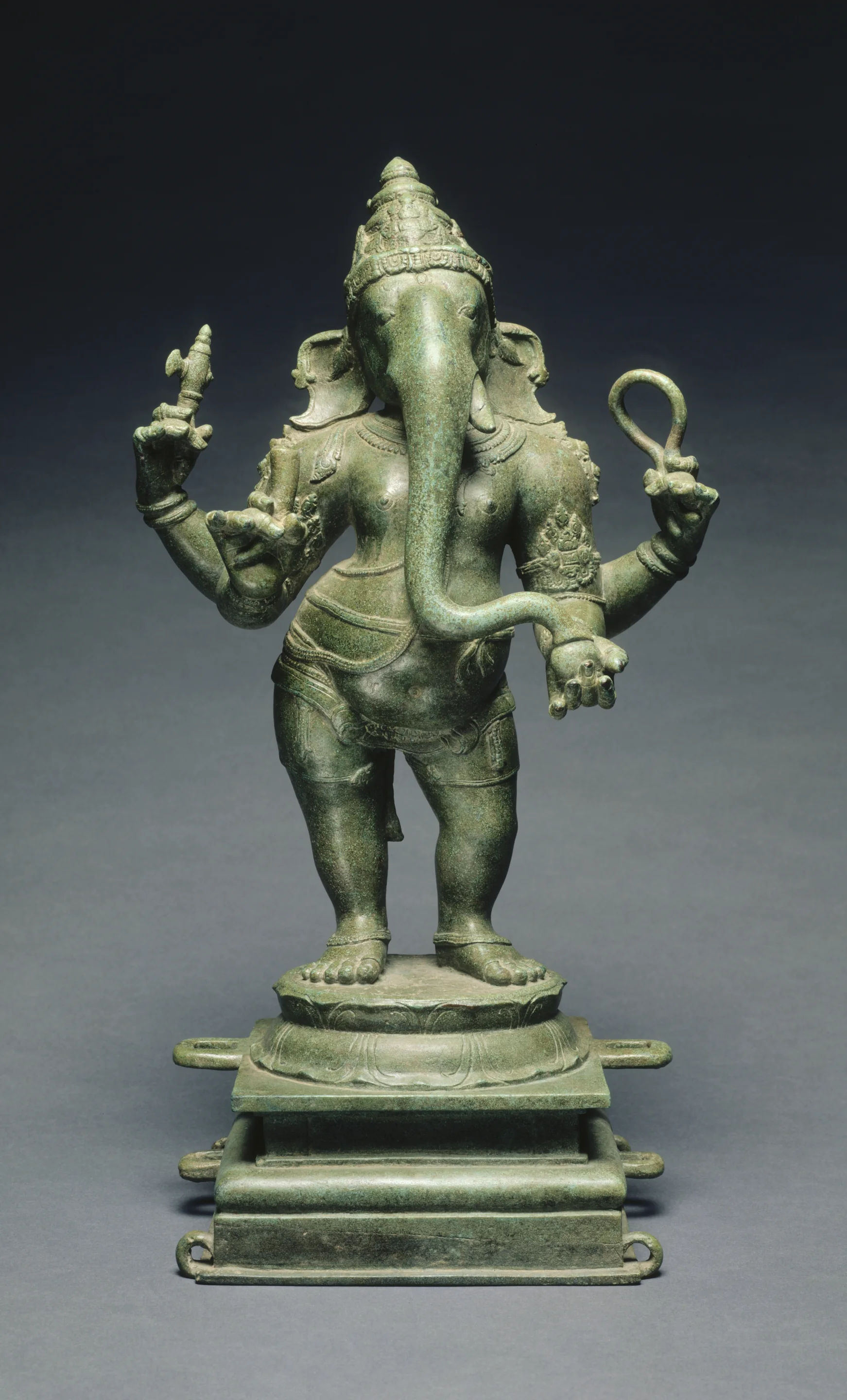
एकदन्तं चतुर्हस्तं पाशमङ्कुशधारिणम् । रदं च वरदं हस्तैर्बिभ्राणं मूषकध्वजम् । रक्तं लम्बोदरं शूर्पकर्णकं रक्तवाससम् । रक्तगन्धानुलिप्ताङ्गं रक्तपुष्पैः सुपूजितम् । भक्तानुकम्पिनं देवं जगत्कारणमच्युतम् । आविर्भूतं च सृष्ट्यादौ प्रकृतेः पुरुषात्परम् । एवं ध्यायति यो नित्यं स योगी योगिनां वरः ॥ ९॥
ekadantaṃ caturhastaṃ pāśamaṅkuśadhāriṇam | radaṃ ca varadaṃ hastairbibhrāṇaṃ mūṣakadhvajam | raktaṃ lambodaraṃ śūrpakarṇakaṃ raktavāsasam | raktagandhānuliptāṅgaṃ raktapuṣpaiḥ supūjitam | bhaktānukampinaṃ devaṃ jagatkāraṇamacyutam | āvirbhūtaṃ ca sṛṣṭyādau prakṛteḥ puruṣātparam | evaṃ dhyāyati yo nityaṃ sa yogī yogināṃ varaḥ || 9||
One-tusked, four-handed, holding the noose and the goad, bearing in his hands the tusk and the gesture of giving, with the mouse on his banner; red, big-bellied, with ears like winnowing fans, in red clothes, his limbs smeared with red sandal, worshipped with red flowers; the god who has compassion for his devotees, the cause of the world, unfallen, who appeared at the beginning of creation, beyond nature and the Person: whoever meditates on him like this, always, is a yogi, the best of yogis.
Note //
The meditation image. Its last lines turn the image back into what the opening sections said: the cause of the world, beyond nature and the Person. Editions: 'radaṃ ca varadaṃ' (sanskritdocuments.org, the usual reading) over 'abhayaṃ varadaṃ' (Adyar).
नमो व्रातपतये नमो गणपतये नमः प्रमथपतये नमस्तेऽस्तु लम्बोदरायैकदन्ताय विघ्नविनाशिने शिवसुताय श्रीवरदमूर्तये नमो नमः ॥ १०॥
namo vrātapataye namo gaṇapataye namaḥ pramathapataye namaste'stu lambodarāyaikadantāya vighnavināśine śivasutāya śrīvaradamūrtaye namo namaḥ || 10||
Homage to the lord of the troops, homage to the lord of the hosts, homage to the lord of Shiva's attendants; homage to you, big-bellied, one-tusked, destroyer of obstacles, son of Shiva, whose form gives every blessing: homage, homage.
Note //
Editions: 'lambodarāyaikadantāya' and 'namo namaḥ' (Adyar) over the separated forms of sanskritdocuments.org.
एतदथर्वशीर्षं योऽधीते । स ब्रह्मभूयाय कल्पते । स सर्वविघ्नैर्न बाध्यते । स सर्वतः सुखमेधते । स पञ्चमहापापात्प्रमुच्यते । सायमधीयानो दिवसकृतं पापं नाशयति । प्रातरधीयानो रात्रिकृतं पापं नाशयति । सायं प्रातः प्रयुञ्जानः पापोऽपापो भवति । धर्मार्थकाममोक्षं च विन्दति । इदमथर्वशीर्षमशिष्याय न देयम् । यो यदि मोहाद्दास्यति । स पापीयान्भवति । सहस्रावर्तनाद्यं यं काममधीते । तं तमनेन साधयेत् ॥ ११॥
etadatharvaśīrṣaṃ yo'dhīte | sa brahmabhūyāya kalpate | sa sarvavighnairna bādhyate | sa sarvataḥ sukhamedhate | sa pañcamahāpāpātpramucyate | sāyamadhīyāno divasakṛtaṃ pāpaṃ nāśayati | prātaradhīyāno rātrikṛtaṃ pāpaṃ nāśayati | sāyaṃ prātaḥ prayuñjānaḥ pāpo'pāpo bhavati | dharmārthakāmamokṣaṃ ca vindati | idamatharvaśīrṣamaśiṣyāya na deyam | yo yadi mohāddāsyati | sa pāpīyānbhavati | sahasrāvartanādyaṃ yaṃ kāmamadhīte | taṃ tamanena sādhayet || 11||
Whoever studies this Atharvashirsha becomes fit to become Brahman. He is not held back by any obstacle; he grows in happiness on every side; he is freed from the five great wrongs. Studying it in the evening, he destroys the wrong done in the day; studying it in the morning, the wrong done in the night; using it morning and evening, the one who did wrong becomes free of wrong. He gains right living, wealth, pleasure and freedom. This Atharvashirsha is not to be given to one who is not a student; whoever gives it out of delusion becomes worse. Whatever one wants, by reciting it a thousand times, one may achieve it.
Note //
The praise of study begins, and the fruit named first is the highest: 'becomes fit to become Brahman' (brahmabhūyāya kalpate), the phrase of Bhagavad Gita 14.26. Editions agree.
अनेन गणपतिमभिषिञ्चति । स वाग्मी भवति । चतुर्थ्यामनश्नञ्जपति । स विद्यावान्भवति । इत्यथर्वणवाक्यम् । ब्रह्माद्याचरणं विद्यान्न बिभेति कदाचनेति ॥ १२॥
anena gaṇapatimabhiṣiñcati | sa vāgmī bhavati | caturthyāmanaśnañjapati | sa vidyāvānbhavati | ityatharvaṇavākyam | brahmādyācaraṇaṃ vidyānna bibheti kadācaneti || 12||
Whoever bathes Ganapati with it becomes eloquent. Whoever repeats it fasting on the fourth day becomes learned. This is the word of Atharvan. Whoever knows the practice of Brahma and the first ones is never afraid.
Note //
The fourth day of the lunar fortnight is sacred to Ganesha. Editions agree.
यो दूर्वाङ्कुरैर्यजति । स वैश्रवणोपमो भवति । यो लाजैर्यजति । स यशोवान्भवति । स मेधावान्भवति । यो मोदकसहस्रेण यजति स वाञ्छितफलमवाप्नोति । यः साज्यसमिद्भिर्यजति । स सर्वं लभते स सर्वं लभते ॥ १३॥
yo dūrvāṅkurairyajati | sa vaiśravaṇopamo bhavati | yo lājairyajati | sa yaśovānbhavati | sa medhāvānbhavati | yo modakasahasreṇa yajati sa vāñchitaphalamavāpnoti | yaḥ sājyasamidbhiryajati | sa sarvaṃ labhate sa sarvaṃ labhate || 13||
Whoever worships with shoots of durva grass becomes like Kubera, lord of wealth. Whoever worships with parched rice becomes famous and wise. Whoever worships with a thousand sweets gains the fruit he desires. Whoever worships with firesticks and ghee gains everything, gains everything.
Note //
Editions: 'yaśovān' (sanskritdocuments.org) over 'yajovān' (Adyar).
अष्टौ ब्राह्मणान्सम्यग्ग्राहयित्वा । सूर्यवर्चस्वी भवति । सूर्यग्रहे महानद्यां प्रतिमासन्निधौ वा जप्त्वा । सिद्धमन्त्रो भवति । महाविघ्नात्प्रमुच्यते । महादोषात्प्रमुच्यते । महापापात्प्रमुच्यते । महाप्रत्यवायात्प्रमुच्यते । स सर्वविद्भवति स सर्वविद्भवति । य एवं वेद । इत्युपनिषत् ॥ १४॥
aṣṭau brāhmaṇānsamyaggrāhayitvā | sūryavarcasvī bhavati | sūryagrahe mahānadyāṃ pratimāsannidhau vā japtvā | siddhamantro bhavati | mahāvighnātpramucyate | mahādoṣātpramucyate | mahāpāpātpramucyate | mahāpratyavāyātpramucyate | sa sarvavidbhavati sa sarvavidbhavati | ya evaṃ veda | ityupaniṣat || 14||
Whoever teaches it rightly to eight brahmins becomes radiant as the sun. Whoever repeats it at an eclipse of the sun, by a great river, or before an image, makes the mantra his own. He is freed from great obstacles, from great faults, from great wrongs, from great failings. He knows all, he knows all: the one who knows this. This is the Upanishad.
Note //
The text ends where it began: 'he knows all', the knower of 1 and 4-6, for whom Ganapati is the Self. Editions: 'mahāpratyavāyāt pramucyate' (sanskritdocuments.org), which the Adyar collection lacks.
No public-domain English translation exists for this text; the Sanskrit is shown.
The renderings on this page are shared under CC BY-NC 4.0, in the words of Pranav Ashar.