Tarasara Upanishad
In the words of Pranav Ashar
How we renderThe heart of the Tarasara
In brief
A short text on the taraka, what carries one across the sea of births. Yajnavalkya teaches that the holy place of Avimukta is where Rudra whispers this saving word to the dying, and that the word is Narayana's mantra, Om namo narayanaya, and Om itself. Each part of Om is matched with a figure of the Ramayana, from Jambavan to Sita, and the last mantra ends not in worship but in identity: 'that Brahman I am; I am Rama.'
- What carries across
- The inner holy place
- Om into silence
- The Ramayana in a syllable
- Worship becomes knowing
बृहस्पतिरुवाच याज्ञवल्क्यं यदनु कुरुक्षेत्रं देवानां देवयजनं सर्वेषां भूतानां ब्रह्मसदनं तस्माद्यत्र क्वचन गच्छेत्तदेव मन्येतेति । इदं वै कुरुक्षेत्रं देवानां देवयजनं सर्वेषां भूतानां ब्रह्मसदनम् । अत्र हि जन्तोः प्राणेषूत्क्रममाणेषु रुद्रस्तारकं ब्रह्म व्याचष्टे येनासावमृतीभूत्वा मोक्षी भवति । तस्मादविमुक्तमेव निषेवेत । अविमुक्तं न विमुञ्चेत् । एवमेवैष भगवन्निति वै याज्ञवल्क्यः ॥
bṛhaspatiruvāca yājñavalkyaṃ yadanu kurukṣetraṃ devānāṃ devayajanaṃ sarveṣāṃ bhūtānāṃ brahmasadanaṃ tasmādyatra kvacana gacchettadeva manyeteti | idaṃ vai kurukṣetraṃ devānāṃ devayajanaṃ sarveṣāṃ bhūtānāṃ brahmasadanam | atra hi jantoḥ prāṇeṣūtkramamāṇeṣu rudrastārakaṃ brahma vyācaṣṭe yenāsāvamṛtībhūtvā mokṣī bhavati | tasmādavimuktameva niṣeveta | avimuktaṃ na vimuñcet | evamevaiṣa bhagavanniti vai yājñavalkyaḥ ||
Brihaspati said to Yajnavalkya: "Kurukshetra, they say, is where the gods make their offerings and where all beings dwell in Brahman. So wherever one goes, one should take that place to be it." "This is Kurukshetra, where the gods make their offerings and all beings dwell in Brahman. For here, when a creature's breaths are leaving, Rudra teaches the Brahman that carries across, by which it becomes deathless and free. So hold to Avimukta, the Unforsaken. Never forsake it." "So it is, sir." So taught Yajnavalkya.
Note //
'This' is Avimukta, the Unforsaken, which Aiyar's text names here. Outwardly Avimukta is Varanasi, where Shiva is said to whisper the saving word to the dying; inwardly the Jabala Upanishad places it between the brows. Kurukshetra, the field of the Gita, becomes the inner place where the Self is known.
अथ हैनं भारद्वाजः पप्रच्छ याज्ञवल्क्यं किं तारकम् । किं तारयतीति । स होवाच याज्ञवल्क्यः । ॐ नमो नारायणायेति तारकं चिदात्मकमित्युपासितव्यम् । ओमित्येकाक्षरमात्मस्वरूपम् । नम इति द्व्यक्षरं प्रकृतिस्वरूपम् । नारायणायेति पञ्चाक्षरं परंब्रह्मस्वरूपम् । इति य एवं वेद । सोऽमृतो भवति । ओमिति ब्रह्मा भवति । नकारो विष्णुर्भवति । मकारो रुद्रो भवति । नकार ईश्वरो भवति । रकारोऽण्डं विराड् भवति । यकारः पुरुषो भवति । णकारो भगवान्भवति । यकारः परमात्मा भवति । एतद्वै नारायणस्याष्टाक्षरं वेद परमपुरुषो भवति । अयमृग्वेदः प्रथमः पादः ॥
atha hainaṃ bhāradvājaḥ papraccha yājñavalkyaṃ kiṃ tārakam | kiṃ tārayatīti | sa hovāca yājñavalkyaḥ | oṃ namo nārāyaṇāyeti tārakaṃ cidātmakamityupāsitavyam | omityekākṣaramātmasvarūpam | nama iti dvyakṣaraṃ prakṛtisvarūpam | nārāyaṇāyeti pañcākṣaraṃ paraṃbrahmasvarūpam | iti ya evaṃ veda | so'mṛto bhavati | omiti brahmā bhavati | nakāro viṣṇurbhavati | makāro rudro bhavati | nakāra īśvaro bhavati | rakāro'ṇḍaṃ virāḍ bhavati | yakāraḥ puruṣo bhavati | ṇakāro bhagavānbhavati | yakāraḥ paramātmā bhavati | etadvai nārāyaṇasyāṣṭākṣaraṃ veda paramapuruṣo bhavati | ayamṛgvedaḥ prathamaḥ pādaḥ ||
Then Bharadvaja asked Yajnavalkya: "What is it that carries across? What does it carry across?" Yajnavalkya said: "Om namo narayanaya is what carries across. Worship it as the light of knowing, the Self. Om, one syllable, is the nature of the Self. Namah, two syllables, is the nature of nature. Narayanaya, five syllables, is the nature of the highest Brahman. Whoever knows this becomes deathless. Om becomes Brahma. Na becomes Vishnu. Ma becomes Rudra. Na becomes the Lord. Ra becomes the cosmic egg, the body of the world. Ya becomes the person. Na becomes the Blessed One. Ya becomes the highest Self. Whoever knows this eight-syllabled mantra of Narayana becomes the highest person." This is the Rig Veda, the first quarter.
Note //
'Taraka', what carries across, is the word that ferries one over the sea of births. The eight syllables are om-na-mo-na-ra-ya-na-ya. The three quarters of the text are named after the three Vedas.
ओमित्येतदक्षरं परं ब्रह्म । तदेवोपासितव्यम् । एतदेव सूक्ष्माष्टाक्षरं भवति । तदेतदष्टात्मकोऽष्टधा भवति । अकारः प्रथमाक्षरो भवति । उकारो द्वितीयाक्षरो भवति । मकारस्तृतीयाक्षरो भवति । बिन्दुस्तुरीयाक्षरो भवति । नादः पञ्चमाक्षरो भवति । कला षष्ठाक्षरो भवति । कलातीता सप्तमाक्षरो भवति । तत्परश्चाष्टमाक्षरो भवति । तारकत्वात्तारको भवति । तदेव तारकं ब्रह्म त्वं विद्धि । तदेवोपासितव्यम् ॥
omityetadakṣaraṃ paraṃ brahma | tadevopāsitavyam | etadeva sūkṣmāṣṭākṣaraṃ bhavati | tadetadaṣṭātmako'ṣṭadhā bhavati | akāraḥ prathamākṣaro bhavati | ukāro dvitīyākṣaro bhavati | makārastṛtīyākṣaro bhavati | bindusturīyākṣaro bhavati | nādaḥ pañcamākṣaro bhavati | kalā ṣaṣṭhākṣaro bhavati | kalātītā saptamākṣaro bhavati | tatparaścāṣṭamākṣaro bhavati | tārakatvāttārako bhavati | tadeva tārakaṃ brahma tvaṃ viddhi | tadevopāsitavyam ||
Om, this syllable, is the highest Brahman. That alone is to be worshipped. This is the subtle eight-syllabled mantra; it has eight parts and becomes eightfold. A is the first, u the second, m the third, the point the fourth, the resonance the fifth, the sixth, what is beyond the digit the seventh, and what is beyond that, the eighth. Because it carries across, it is called what carries across. Know that alone as the Brahman that carries across. That alone is to be worshipped.
Note //
The point (bindu), the resonance (nada) and the fading digit (kala) are the stages of Om's sound after m, as it dies away. The eighth, 'what is beyond', is the silence itself; compare Mandukya 12.
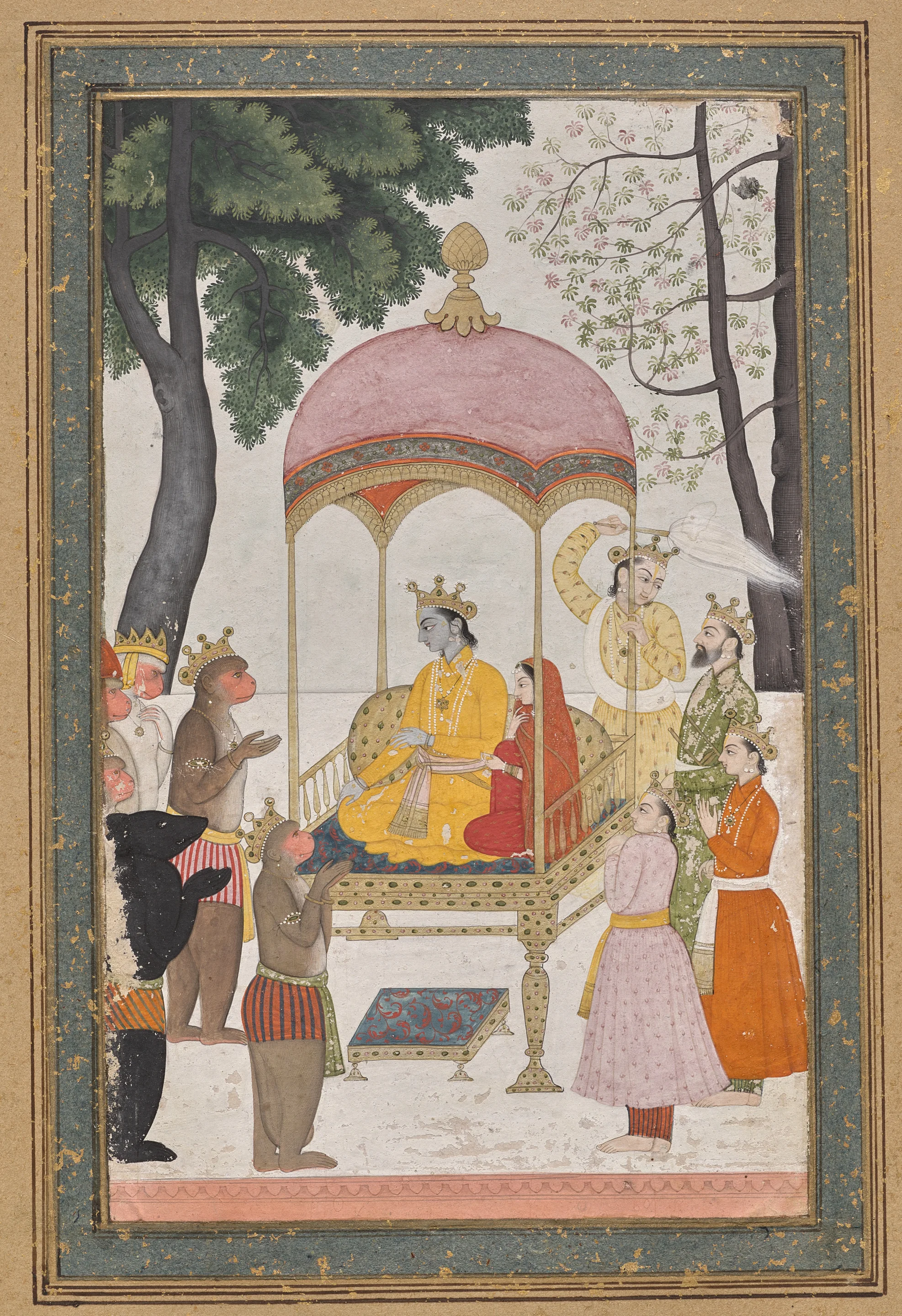
अत्रैते श्लोका भवन्ति । अकारादभवद्ब्रह्मा जाम्बवानिति संज्ञकः । उकाराक्षरसंभूत उपेन्द्रो हरिनायकः ॥
atraite ślokā bhavanti | akārādabhavadbrahmā jāmbavāniti saṃjñakaḥ | ukārākṣarasaṃbhūta upendro harināyakaḥ ||
Here are the verses: From a came Brahma, called Jambavan. From the letter u came Upendra, the leader of the monkeys.
Note //
The parts of Om are matched with figures of the Ramayana. Jambavan, the bear-king, is Brahma. 'Leader of the monkeys' (harinayaka) probably points to Sugriva; Aiyar has 'named Hari'.
मकाराक्षरसंभूतः शिवस्तु हनुमान्स्मृतः । बिन्दुरीश्वरसंज्ञस्तु शत्रुघ्नश्चक्रराट् स्वयम् ॥
makārākṣarasaṃbhūtaḥ śivastu hanumānsmṛtaḥ | bindurīśvarasaṃjñastu śatrughnaścakrarāṭ svayam ||
From the letter m came Shiva, remembered as Hanuman. The point is called the Lord: Shatrughna, king of the discus himself.
Note //
नादो महाप्रभुर्ज्ञेयो भरतः शङ्खनामकः । कलायाः पुरुषः साक्षाल्लक्ष्मणो धरणीधरः ॥
nādo mahāprabhurjñeyo bharataḥ śaṅkhanāmakaḥ | kalāyāḥ puruṣaḥ sākṣāllakṣmaṇo dharaṇīdharaḥ ||
The resonance is to be known as the great master, Bharata, called the conch. From the digit came the person himself, Lakshmana, who holds up the earth.
Note //
Rama's brothers are identified with Vishnu's emblems: Shatrughna with the discus, Bharata with the conch, and Lakshmana with Shesha, the serpent who holds up the earth.
कलातीता भगवती स्वयं सीतेति संज्ञिता । तत्परः परमात्मा च श्रीरामः पुरुषोत्तमः ॥
kalātītā bhagavatī svayaṃ sīteti saṃjñitā | tatparaḥ paramātmā ca śrīrāmaḥ puruṣottamaḥ ||
What is beyond the digit is the goddess herself, called Sita. Beyond that is the highest Self, Sri Rama, the highest person.
Note //
ओमित्येतदक्षरमिदं सर्वम् । तस्योपव्याख्यानं भूतं भव्यं भविष्यद्यच्चान्यत्तत्त्वमन्त्रवर्णदेवताछन्दो ऋक्कलाशक्तिसृष्ट्यात्मकमिति । य एवं वेद । यजुर्वेदो द्वितीयः पादः ॥
omityetadakṣaramidaṃ sarvam | tasyopavyākhyānaṃ bhūtaṃ bhavyaṃ bhaviṣyadyaccānyattattvamantravarṇadevatāchando ṛkkalāśaktisṛṣṭyātmakamiti | ya evaṃ veda | yajurvedo dvitīyaḥ pādaḥ ||
Om, this syllable, is all this. Here is what that means: what was, what is, what will be, and whatever else there is, made of all the principles, mantras, letters, gods, metres, verses, digits, powers and creations. Whoever knows this becomes deathless. This is the Yajur Veda, the second quarter.
Note //
The opening echoes Mandukya 1. 'Becomes deathless' is supplied, as in Aiyar; the Sanskrit breaks off at 'whoever knows this'.
अथ हैनं भारद्वाजो याज्ञवल्क्यमुवाचाथ कैर्मन्त्रैः परमात्मा प्रीतो भवति स्वात्मानं दर्शयति तन्नो ब्रूहि भगव इति । स होवाच याज्ञवल्क्यः ॥
atha hainaṃ bhāradvājo yājñavalkyamuvācātha kairmantraiḥ paramātmā prīto bhavati svātmānaṃ darśayati tanno brūhi bhagava iti | sa hovāca yājñavalkyaḥ ||
Then Bharadvaja said to Yajnavalkya: "By which mantras is the highest Self pleased, so that it shows its own Self? Tell us, sir." Yajnavalkya said:
Note //
ॐ यो ह वै श्रीपरमात्मा नारायणः स भगवानकारवाच्यो जाम्बवान्भूर्भुवः सुवस्तस्मै वै नमोनमः ॥
oṃ yo ha vai śrīparamātmā nārāyaṇaḥ sa bhagavānakāravācyo jāmbavānbhūrbhuvaḥ suvastasmai vai namonamaḥ ||
Om. The one who is the highest Self, Narayana, the Blessed One named by a, is Jambavan, and earth, sky and heaven: to him, honour, honour.
Note //
Earth, sky and heaven (bhur, bhuvah, suvah) are the three worlds, said at the start of the Gayatri.
ॐ यो ह वै श्रीपरमात्मा नारायणः स भगवानुकारवाच्य उपेन्द्रस्वरूपो हरिनायको भूर्भुवः सुवस्तस्मै वै नमोनमः ॥
oṃ yo ha vai śrīparamātmā nārāyaṇaḥ sa bhagavānukāravācya upendrasvarūpo harināyako bhūrbhuvaḥ suvastasmai vai namonamaḥ ||
Om. The one who is the highest Self, Narayana, the Blessed One named by u, in the form of Upendra, the leader of the monkeys, is earth, sky and heaven: to him, honour, honour.
Note //
ॐ यो ह वै श्रीपरमात्मा नारायणः स भगवान्मकारवाच्यः शिवस्वरूपो हनुमान्भूर्भुवः सुवस्तस्मै वै नमोनमः ॥
oṃ yo ha vai śrīparamātmā nārāyaṇaḥ sa bhagavānmakāravācyaḥ śivasvarūpo hanumānbhūrbhuvaḥ suvastasmai vai namonamaḥ ||
Om. The one who is the highest Self, Narayana, the Blessed One named by m, in the form of Shiva, is Hanuman, and earth, sky and heaven: to him, honour, honour.
Note //
ॐ यो ह वै श्रीपरमात्मा नारायणः स भगवान्बिन्दुस्वरूपः शत्रुघ्नो भूर्भुवः सुवस्तस्मै वै नमोनमः ॥
oṃ yo ha vai śrīparamātmā nārāyaṇaḥ sa bhagavānbindusvarūpaḥ śatrughno bhūrbhuvaḥ suvastasmai vai namonamaḥ ||
Om. The one who is the highest Self, Narayana, the Blessed One in the form of the point, is Shatrughna, and earth, sky and heaven: to him, honour, honour.
Note //
ॐ यो ह वै श्रीपरमात्मा नारायणः स भगवान्नादस्वरूपो भरतो भूर्भुवः सुवस्तस्मै वै नमोनमः ॥
oṃ yo ha vai śrīparamātmā nārāyaṇaḥ sa bhagavānnādasvarūpo bharato bhūrbhuvaḥ suvastasmai vai namonamaḥ ||
Om. The one who is the highest Self, Narayana, the Blessed One in the form of the resonance, is Bharata, and earth, sky and heaven: to him, honour, honour.
Note //
ॐ यो ह वै श्रीपरमात्मा नारायणः स भगवान्कलास्वरूपो लक्ष्मणो भूर्भुवः सुवस्तस्मै वै नमोनमः ॥
oṃ yo ha vai śrīparamātmā nārāyaṇaḥ sa bhagavānkalāsvarūpo lakṣmaṇo bhūrbhuvaḥ suvastasmai vai namonamaḥ ||
Om. The one who is the highest Self, Narayana, the Blessed One in the form of the digit, is Lakshmana, and earth, sky and heaven: to him, honour, honour.
Note //
ॐ यो ह वै श्रीपरमात्मा नारायणः स भगवान्कलातीता भगवती सीता चित्स्वरूपा भूर्भुवः सुवस्तस्मै वै नमोनमः ॥
oṃ yo ha vai śrīparamātmā nārāyaṇaḥ sa bhagavānkalātītā bhagavatī sītā citsvarūpā bhūrbhuvaḥ suvastasmai vai namonamaḥ ||
Om. The one who is the highest Self, Narayana, the Blessed One, is what lies beyond the digit: the goddess Sita, whose form is the light of knowing, and earth, sky and heaven: to him, honour, honour.
Note //
ॐ यो ह वै श्रीपरमात्मा नारायणः स भगवांस्तत्परः परमपुरुषः पुराणपुरुषोत्तमो नित्यशुद्धबुद्धमुक्तसत्यपरमानन्दानन्ताद्वयपरिपूर्णः परमात्मा ब्रह्मैवाहं रामोऽस्मि भूर्भुवः सुवस्तस्मै नमोनमः ॥
oṃ yo ha vai śrīparamātmā nārāyaṇaḥ sa bhagavāṃstatparaḥ paramapuruṣaḥ purāṇapuruṣottamo nityaśuddhabuddhamuktasatyaparamānandānantādvayaparipūrṇaḥ paramātmā brahmaivāhaṃ rāmo'smi bhūrbhuvaḥ suvastasmai namonamaḥ ||
Om. The one who is the highest Self, Narayana, the Blessed One beyond all these, the highest person, the ancient one, best of persons, ever pure, awake, free, true, the highest joy, endless, not two, full: that highest Self, Brahman, I am. I am Rama. Earth, sky and heaven: to him, honour, honour.
Note //
The eighth formula turns worship into knowing: the one honoured is 'I'. Sanskritdocuments.org prints a short editor's instruction before this mantra (how mantras 2 to 7 are to be expanded); it is not part of the text and is left out, as in Aiyar.
एतदष्टविधमन्त्रं योऽधीते सोऽग्निपूतो भवति । स वायुपूतो भवति । स आदित्यपूतो भवति । स स्थाणुपूतो भवति । स सर्वैर्देवैर्ज्ञातो भवति । तेनेतिहासपुराणानां रुद्राणां शतसहस्राणि जप्तानि फलानि भवन्ति । श्रीमन्नारायणाष्टाक्षरानुस्मरणेन गायत्र्याः शतसहस्रं जप्तं भवति । प्रणवानामयुतं जप्तं भवति । दशपूर्वान्दशोत्तरान्पुनाति । नारायणपदमवाप्नोति य एवं वेद । तद्विष्णोः परमं पदं सदा पश्यन्ति सूरयः । दिवीव चक्षुराततम् । तद्विप्रासो विपन्यवो जागृवांसः समिन्धते । विष्णोर्यत्परमं पदम् ॥ इत्युपनिषत् ॥ सामवेदस्तृतीयः पादः ॥
etadaṣṭavidhamantraṃ yo'dhīte so'gnipūto bhavati | sa vāyupūto bhavati | sa ādityapūto bhavati | sa sthāṇupūto bhavati | sa sarvairdevairjñāto bhavati | tenetihāsapurāṇānāṃ rudrāṇāṃ śatasahasrāṇi japtāni phalāni bhavanti | śrīmannārāyaṇāṣṭākṣarānusmaraṇena gāyatryāḥ śatasahasraṃ japtaṃ bhavati | praṇavānāmayutaṃ japtaṃ bhavati | daśapūrvāndaśottarānpunāti | nārāyaṇapadamavāpnoti ya evaṃ veda | tadviṣṇoḥ paramaṃ padaṃ sadā paśyanti sūrayaḥ | divīva cakṣurātatam | tadviprāso vipanyavo jāgṛvāṃsaḥ samindhate | viṣṇoryatparamaṃ padam || ityupaniṣat || sāmavedastṛtīyaḥ pādaḥ ||
Whoever studies this eightfold mantra is made pure by fire, pure by wind, pure by the sun, pure by Shiva, and is known to all the gods. By it comes the fruit of reciting the epics, the Puranas and the Rudra hymns a hundred thousand times. By remembering the eight-syllabled mantra of Narayana, it is as if the Gayatri were recited a hundred thousand times, and Om ten thousand times. One makes pure ten generations before and ten after, and reaches the state of Narayana: whoever knows this. "The wise always see that highest step of Vishnu, spread like an eye across the sky. The awakened poets, ever watchful, set it alight: that highest step of Vishnu." So says the Upanishad. This is the Sama Veda, the third quarter.
Note //
The closing verses are Rig Veda 1.22.20-21, often recited at the end of worship. 'Shiva' renders sthanu, 'the pillar', one of his names.
The renderings on this page are shared under CC BY-NC 4.0, in the words of Pranav Ashar.