Trishikhi-brahmana Upanishad
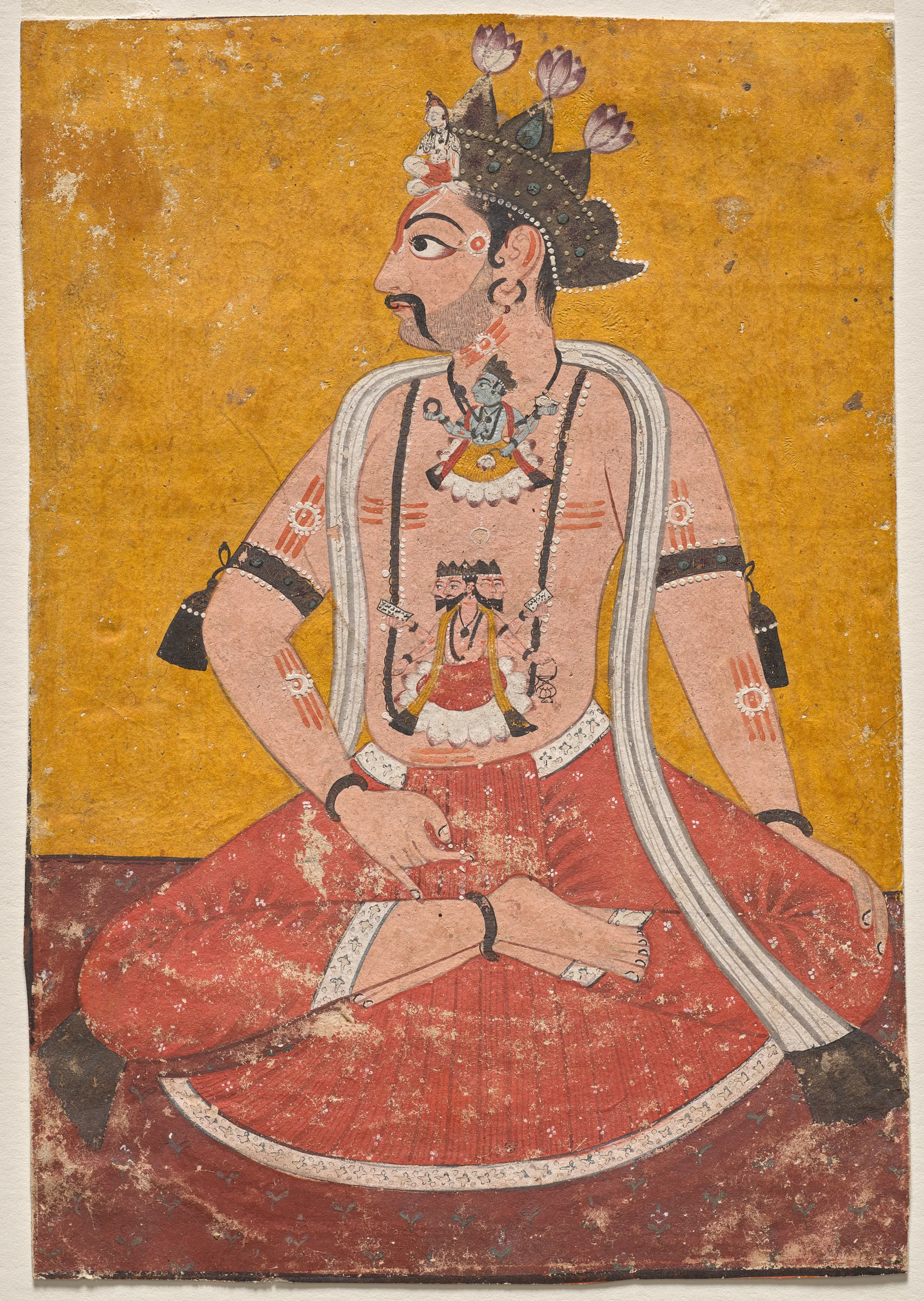
In the words of Pranav Ashar
How we renderThe heart of the Trishikhi-brahmana
In brief
Trishikhi asks what the body, breath, cause and Self are. The sun answers: know all this as Shiva alone, one and untouched, who by his own light appears as many, like red-hot iron. Yoga and knowledge feed each other, and the eight limbs are first defined as knowledge (seeing the world as appearance is the true breath-control) before they are taught as practice. The end is the samadhi in which 'I am the highest Brahman' stands with every movement of the mind gone, and the individual dissolves like salt in water.
- All this is Shiva
- With change and without
- Yoga and knowledge
- The eight limbs as knowledge
- Salt dissolved in water
Contents
- P1
- P2
- P3
- P4
- P5
- P6
- P7
- P8
- P9
- 1
- 2
- 3
- 4
- 5
- 6
- 7
- 8
- 9
- 10
- 11
- 12
- 13
- 14
- 15
- 16
- 17
- 18
- 19
- 20
- 21
- 22
- 23
- 24
- 25
- 26
- 27
- 28
- 29
- 30
- 31
- 32
- 33
- 34
- 35
- 36
- 37
- 38
- 39
- 40
- 41
- 42
- 43
- 44
- 45
- 46
- 47
- 48
- 49
- 50
- 51
- 52
- 53
- 54
- 55
- 56
- 57
- 58
- 59
- 60
- 61
- 62
- 63
- 64
- 65
- 66
- 67
- 68
- 69
- 70
- 71
- 72
- 73
- 74
- 75
- 76
- 77
- 78
- 79
- 80
- 81
- 82
- 83
- 84
- 85
- 86
- 87
- 88
- 89
- 90
- 91
- 92
- 93
- 94
- 95
- 96
- 97
- 98
- 99
- 100
- 101
- 102
- 103
- 104
- 105
- 106
- 107
- 108
- 109
- 110
- 111
- 112
- 113
- 114
- 115
- 116
- 117
- 118
- 119
- 120
- 121
- 122
- 123
- 124
- 125
- 126
- 127
- 128
- 129
- 130
- 131
- 132
- 133
- 134
- 135
- 136
- 137
- 138
- 139
- 140
- 141
- 142
- 143
- 144
- 145
- 146
- 147
- 148
- 149
- 150
- 151
- 152
- 153
- 154
- 155
- 156
- 157
- 158
- 159
- 160
- 161
- 162
- 163
- 164
ॐ त्रिशिखी ब्राह्मण आदित्यलोकं जगाम तं गत्वोवाच । भगवन् किं देहः किं प्राणः किं कारणं किमात्मेति ॥
oṃ triśikhī brāhmaṇa ādityalokaṃ jagāma taṃ gatvovāca | bhagavan kiṃ dehaḥ kiṃ prāṇaḥ kiṃ kāraṇaṃ kimātmeti ||
Om. A Brahmin named Trishikhi went to the world of the sun. Arriving, he asked: 'Lord, what is the body? What is breath? What is the cause? What is the Self?'
Note //
The four questions frame the whole text: the body and breath are answered in the account of the elements and the yoga, the cause in the account of Brahman coloured by not-knowing, the Self in the first words of the answer. Editions: 'kāraṇaṃ kim ātmeti' (Adyar collection) corrects 'kāraṇa kim ātmā' in the raw_etexts copy.
स होवाच सर्वमिदं शिव एव विजानीहि । किन्तु नित्यः शुद्धो निरञ्जनो विभुरद्वयः शिव एकः स्वेन भासेदं सर्वं दृष्ट्वा तप्तायःपिण्डवदेकं भिन्नवदवभासते । तद्भासकं किमिति चेदुच्यते । सच्छब्दवाच्यमविद्याशबलं ब्रह्म ॥
sa hovāca sarvamidaṃ śiva eva vijānīhi | kintu nityaḥ śuddho nirañjano vibhuradvayaḥ śiva ekaḥ svena bhāsedaṃ sarvaṃ dṛṣṭvā taptāyaḥpiṇḍavadekaṃ bhinnavadavabhāsate | tadbhāsakaṃ kimiti ceducyate | sacchabdavācyamavidyāśabalaṃ brahma ||
The sun said: 'Know all this as Shiva alone. But Shiva is one: eternal, pure, untouched, all-pervading, without a second. By his own light, seeing all this, he appears as one that seems divided, like a ball of red-hot iron. If you ask what makes this appear: Brahman, called "being", coloured by not-knowing.'
Note //
The image is of iron in a fire: the heat and glow are one, though they take the iron's shape and seem to be many. What makes the many appear is not a second thing beside Shiva but Brahman itself, 'coloured' (śabala) by not-knowing; in Advaita terms, Brahman as cause, seen through maya. Editions: the Adyar collection is followed ('advayaḥ', 'dṛṣṭvā', 'ekaṃ'); the raw_etexts copy has 'advayānandaḥ' (without a second and bliss), 'sṛṣṭvā' (having created) and 'aikyaṃ' (oneness), which give the same sense.
ब्रह्मणोऽव्यक्तम् । अव्यक्तान्महत् । महतोऽहङ्कारः । अहङ्कारात्पञ्चतन्मात्राणि । पञ्चतन्मात्रेभ्यः पञ्चमहाभूतानि । पञ्चमहाभूतेभ्योऽखिलं जगत् ॥
brahmaṇo'vyaktam | avyaktānmahat | mahato'haṅkāraḥ | ahaṅkārātpañcatanmātrāṇi | pañcatanmātrebhyaḥ pañcamahābhūtāni | pañcamahābhūtebhyo'khilaṃ jagat ||
From Brahman, the unmanifest. From the unmanifest, the great principle. From the great principle, the I-maker. From the I-maker, the five subtle elements. From the five subtle elements, the five great elements. From the five great elements, the whole world.
तदखिलं किमिति । भूतविकारविभागादिरिति । एकस्मिन्पिण्डे कथं भूतविकारविभाग इति । तत्तत्कार्यकारणभेदरूपेणांशतत्त्ववाचकवाच्यस्थानभेदविषयदेवताकोशभेदविभागा भवन्ति ॥
tadakhilaṃ kimiti | bhūtavikāravibhāgādiriti | ekasminpiṇḍe kathaṃ bhūtavikāravibhāga iti | tattatkāryakāraṇabhedarūpeṇāṃśatattvavācakavācyasthānabhedaviṣayadevatākośabhedavibhāgā bhavanti ||
What is that whole? The changes of the elements, their divisions and the rest. How can there be such division in a single body? As cause and effect, each with each, there arise the divisions of parts and principles, what names and what is named, places, objects, gods and sheaths.
Note //
The question is how one body can hold the whole order of the elements. The answer is that every element is divided again into its effects, and each effect has its own place, object, presiding god and sheath; the next sections list them. The list of divisions is compressed and its exact grouping is uncertain. Editions agree in substance.
अथाकाशोऽन्तःकरणमनोबुद्धिचित्ताहङ्काराः । वायुः समानोदानव्यानापानप्राणाः । वह्निः श्रोत्रत्वक्चक्षुर्जिह्वाघ्राणानि । आपः शब्दस्पर्शरूपरसगन्धाः । पृथिवी वाक्पाणिपादपायूपस्थाः ॥
athākāśo'ntaḥkaraṇamanobuddhicittāhaṅkārāḥ | vāyuḥ samānodānavyānāpānaprāṇāḥ | vahniḥ śrotratvakcakṣurjihvāghrāṇāni | āpaḥ śabdasparśarūparasagandhāḥ | pṛthivī vākpāṇipādapāyūpasthāḥ ||
Now: space becomes the inner instrument: mind, intellect, the mind's store and the I-maker. Air becomes the breaths: samana, udana, vyana, apana and prana. Fire becomes the senses: ear, skin, eye, tongue and nose. Water becomes their objects: sound, touch, form, taste and smell. Earth becomes the organs of action: speech, hands, feet, anus and genitals.
Note //
Each element gives rise to a group of five. 'The mind's store' renders citta, the mind as holding memory and impressions. Editions: 'ghrāṇāni' (Adyar collection) is followed for 'ghrāṇāḥ'; otherwise they agree.
ज्ञानसङ्कल्पनिश्चयानुसन्धानाभिमाना आकाशकार्यान्तःकरणविषयाः । समीकरणोन्नयनग्रहणश्रवणोच्छ्वासा वायुकार्यप्राणादिविषयाः । शब्दस्पर्शरूपरसगन्धा अग्निकार्यज्ञानेन्द्रियविषया अबाश्रिताः । वचनादानगमनविसर्गानन्दाः पृथिवीकार्यकर्मेन्द्रियविषयाः । कर्मज्ञानेन्द्रियविषयेषु प्राणतन्मात्रविषया अन्तर्भूताः । मनोबुद्ध्योश्चित्ताहङ्कारौ चान्तर्भूतौ ॥
jñānasaṅkalpaniścayānusandhānābhimānā ākāśakāryāntaḥkaraṇaviṣayāḥ | samīkaraṇonnayanagrahaṇaśravaṇocchvāsā vāyukāryaprāṇādiviṣayāḥ | śabdasparśarūparasagandhā agnikāryajñānendriyaviṣayā abāśritāḥ | vacanādānagamanavisargānandāḥ pṛthivīkāryakarmendriyaviṣayāḥ | karmajñānendriyaviṣayeṣu prāṇatanmātraviṣayā antarbhūtāḥ | manobuddhyościttāhaṅkārau cāntarbhūtau ||
Knowing, intending, deciding, holding in attention and claiming are the objects of the inner instrument, the work of space. Evening out, lifting up, taking in, hearing and breathing are the objects of the breaths, the work of air. Sound, touch, form, taste and smell are the objects of the senses, the work of fire, and they rest on water. Speaking, taking, going, letting go and delight are the objects of the organs of action, the work of earth. Within the objects of the organs of action and knowledge are contained those of the breaths and the subtle elements; within mind and intellect are contained the mind's store and the I-maker.
Note //
Each group of five has five activities. 'Claiming' renders abhimāna, the I-maker's taking things as 'mine'. In the breaths' list 'hearing' (śravaṇa) is the reading of both editions, though it sits oddly among the breaths; the list may be corrupt. Editions: 'samīkaraṇonnayana' (Adyar collection) corrects 'samīkaraṇonnanayana'.
अवकाशविधूतदर्शनपिण्डीकरणधारणाः सूक्ष्मतमा जैवतन्मात्रविषयाः ॥
avakāśavidhūtadarśanapiṇḍīkaraṇadhāraṇāḥ sūkṣmatamā jaivatanmātraviṣayāḥ ||
Giving room, stirring, seeing, binding together and holding up: these are the subtlest objects, the subtle elements as they work in a living being.
Note //
The five subtle elements in the body: space gives room (avakāśa), air stirs (vidhūta), fire sees (darśana), water binds together (piṇḍīkaraṇa), earth holds up (dhāraṇa). The pairing with the elements is implied, not stated. Editions agree.
एवं द्वादशाङ्गान्याध्यात्मिकान्याधिभौतिकान्याधिदैविकानि । अत्र निशाकरचतुर्मुखदिग्वातार्कवरुणाश्व्यग्नीन्द्रोपेन्द्रप्रजापतियमा इत्यक्षाधिदेवतारूपैर्द्वादशनाड्यन्तःप्रवृत्ताः प्राणा एवाङ्गानि अङ्गज्ञानं तदेव ज्ञातेति ॥
evaṃ dvādaśāṅgānyādhyātmikānyādhibhautikānyādhidaivikāni | atra niśākaracaturmukhadigvātārkavaruṇāśvyagnīndropendraprajāpatiyamā ityakṣādhidevatārūpairdvādaśanāḍyantaḥpravṛttāḥ prāṇā evāṅgāni aṅgajñānaṃ tadeva jñāteti ||
So there are twelve limbs, in the body, in the elements and in the gods. Here the moon, the four-faced Brahma, the directions, the wind, the sun, Varuna, the Ashvins, fire, Indra, Upendra, Prajapati and Yama are the gods who preside over the organs, and the breaths that move within the twelve channels are themselves the limbs. Knowing the limbs: that itself is the knower.
Note //
The twelve are the four of the inner instrument with the ten organs of sense and action, counted as twelve presiding gods (the list varies between texts). Each limb is seen three ways: as an organ in the body (adhyātma), as its object (adhibhūta) and as its god (adhidaiva). The last sentence is compressed; it is read as 'the one who knows all the limbs is the knower, the Self', which is the subject of the text. Editions agree in substance.
अथ व्योमानिलानलजलान्नानां पञ्चीकरणमिति । ज्ञातृत्वं समानयोगेन श्रोत्रद्वारा शब्दगुणो वागधिष्ठित आकाशे तिष्ठति आकाशस्तिष्ठति । मनोव्यानयोगेन त्वग्द्वारा स्पर्शगुणः पाण्यधिष्ठितो वायौ तिष्ठति वायुस्तिष्ठति । बुद्धिरुदानयोगेन चक्षुर्द्वारा रूपगुणः पादाधिष्ठितोऽग्नौ तिष्ठत्यग्निस्तिष्ठति । चित्तमपानयोगेन जिह्वाद्वारा रसगुण उपस्थाधिष्ठितोऽप्सु तिष्ठत्यापस्तिष्ठन्ति । अहङ्कारः प्राणयोगेन घ्राणद्वारा गन्धगुणो गुदाधिष्ठितः पृथिव्यां तिष्ठति पृथिवी तिष्ठति य एवं वेद । अत्रैते श्लोका भवन्ति ॥
atha vyomānilānalajalānnānāṃ pañcīkaraṇamiti | jñātṛtvaṃ samānayogena śrotradvārā śabdaguṇo vāgadhiṣṭhita ākāśe tiṣṭhati ākāśastiṣṭhati | manovyānayogena tvagdvārā sparśaguṇaḥ pāṇyadhiṣṭhito vāyau tiṣṭhati vāyustiṣṭhati | buddhirudānayogena cakṣurdvārā rūpaguṇaḥ pādādhiṣṭhito'gnau tiṣṭhatyagnistiṣṭhati | cittamapānayogena jihvādvārā rasaguṇa upasthādhiṣṭhito'psu tiṣṭhatyāpastiṣṭhanti | ahaṅkāraḥ prāṇayogena ghrāṇadvārā gandhaguṇo gudādhiṣṭhitaḥ pṛthivyāṃ tiṣṭhati pṛthivī tiṣṭhati ya evaṃ veda | atraite ślokā bhavanti ||
Now the fivefold mixing of space, air, fire, water and food. The knowing faculty, joined with samana, through the ear, as the quality of sound, with speech presiding, stands in space; and space stands. Mind, joined with vyana, through the skin, as the quality of touch, with the hands presiding, stands in air; and air stands. Intellect, joined with udana, through the eye, as the quality of form, with the feet presiding, stands in fire; and fire stands. The mind's store, joined with apana, through the tongue, as the quality of taste, with the genitals presiding, stands in the waters; and the waters stand. The I-maker, joined with prana, through the nose, as the quality of smell, with the anus presiding, stands in earth; and earth stands. So it is for one who knows this. On this there are these verses:
Note //
The 'fivefold mixing' (pañcīkaraṇa) is the Vedantic account of how each gross element contains parts of all five. Here it is shown in the body: each element holds one faculty of the inner instrument, one breath, one sense, one quality and one organ of action. Editions: 'ya evaṃ veda' (Adyar collection) is followed for 'ity evaṃ veda'.
पृथग्भूते षोडश कलाः स्वार्थभागान्परान्क्रमात् । अन्तःकरणव्यानाक्षिरसपायुनभःक्रमात् ॥ १॥
pṛthagbhūte ṣoḍaśa kalāḥ svārthabhāgānparānkramāt | antaḥkaraṇavyānākṣirasapāyunabhaḥkramāt || 1||
Each element, taken apart, has sixteen parts: its own share, and then, in order, the shares of the others: the inner instrument, vyana, the eye, taste, the anus and space, in turn.
Note //
Verses 1-4 are the most obscure in the text: they describe how each element is made of parts of all the others (the fivefold mixing in verse). The rendering follows the words; the exact scheme of sixteen parts is uncertain. Pending review.
मुख्यात्पूर्वोत्तरैर्भागैर्भूते भूते चतुश्चतुः । पूर्वमाकाशमाश्रित्य पृथिव्यादिषु संस्थिताः ॥ २॥
mukhyātpūrvottarairbhāgairbhūte bhūte catuścatuḥ | pūrvamākāśamāśritya pṛthivyādiṣu saṃsthitāḥ || 2||
From the principal part, with the parts before and after, there are four and four in each element. Resting first on space, they are set in earth and the rest.
Note //
Obscure, like verse 1. Editions: 'mukhyāt' (Adyar collection) is followed; the raw_etexts copy has 'mukhyān'. Pending review.
मुख्यादूर्ध्वे परा ज्ञेया न परानुत्तरान्विदुः । एवमंशो ह्यभूत्तस्मात्तेभ्यश्चांशो ह्यभूत्तथा ॥ ३॥
mukhyādūrdhve parā jñeyā na parānuttarānviduḥ | evamaṃśo hyabhūttasmāttebhyaścāṃśo hyabhūttathā || 3||
Above the principal part the higher ones are to be known; the later ones are not known as higher. So a portion came from it, and from those, again, a portion.
Note //
Obscure. Editions: 'mukhyād ūrdhve' and 'na parān' (Adyar collection) are followed; the raw_etexts copy has 'mukhyā ūrdhve' and 'na aparān', which breaks the metre. Pending review.
तस्मादन्योन्यमाश्रित्य ह्योतं प्रोतमनुक्रमात् । पञ्चभूतमयी भूमिः सा चेतनसमन्विता ॥ ४॥
tasmādanyonyamāśritya hyotaṃ protamanukramāt | pañcabhūtamayī bhūmiḥ sā cetanasamanvitā || 4||
So, resting on one another, woven through, warp and weft, in order, comes the earth made of five elements, and it is joined with awareness.
Note //
Whatever the scheme of parts, the point is clear: every element is woven with all the others, and the whole is lit by awareness (cetana). Editions: 'hy otaṃ protam' corrects the raw_etexts spacing.
तत ओषधयोऽन्नं च ततः पिण्डाश्चतुर्विधाः । रसासृङ्मांसमेदोऽस्थिमज्जाशुक्राणि धातवः ॥ ५॥
tata oṣadhayo'nnaṃ ca tataḥ piṇḍāścaturvidhāḥ | rasāsṛṅmāṃsamedo'sthimajjāśukrāṇi dhātavaḥ || 5||
From it come the plants and food, and from these the four kinds of bodies. Their tissues are chyle, blood, flesh, fat, bone, marrow and seed.
Note //
The four kinds of bodies are those born from the womb, from eggs, from sweat (insects) and from sprouts (plants). Editions: 'śukrāṇi' (Adyar collection) over 'śuklāṇi', the usual name of the seventh tissue.
केचित्तद्योगतः पिण्डा भूतेभ्यः सम्भवाः क्वचित् । तस्मिन्नन्नमयः पिण्डो नाभिमण्डलसंस्थितः ॥ ६॥
kecittadyogataḥ piṇḍā bhūtebhyaḥ sambhavāḥ kvacit | tasminnannamayaḥ piṇḍo nābhimaṇḍalasaṃsthitaḥ || 6||
Some bodies come from the union of these, some, here and there, from the elements alone. In this, the body made of food is set in the region of the navel.
Note //
Editions agree.
अस्य मध्येऽस्ति हृदयं सनालं पद्मकोशवत् । सत्त्वान्तर्वर्तिनो देवाः कर्त्रहङ्कारचेतनाः ॥ ७॥
asya madhye'sti hṛdayaṃ sanālaṃ padmakośavat | sattvāntarvartino devāḥ kartrahaṅkāracetanāḥ || 7||
In its middle is the heart, with its stalk, like a lotus bud. Within its clarity live the gods: the doer, the I-maker and awareness.
Note //
'Its clarity' renders sattva, the clear quality of the heart. Editions agree.
अस्य बीजं तमःपिण्डं मोहरूपं जडं घनम् । वर्तते कण्ठमाश्रित्य मिश्रीभूतमिदं जगत् ॥ ८॥
asya bījaṃ tamaḥpiṇḍaṃ moharūpaṃ jaḍaṃ ghanam | vartate kaṇṭhamāśritya miśrībhūtamidaṃ jagat || 8||
Its seed is a mass of darkness: delusion, inert and dense. It stays at the throat; this world is a mixture of the two.
Note //
The heart holds the clear powers, the throat the dark seed; the world as experienced is light and darkness mixed. Editions agree.
प्रत्यगानन्दरूपात्मा मूर्ध्नि स्थाने परे पदे । अनन्तशक्तिसंयुक्तो जगद्रूपेण भासते ॥ ९॥
pratyagānandarūpātmā mūrdhni sthāne pare pade | anantaśaktisaṃyukto jagadrūpeṇa bhāsate || 9||
The Self, whose nature is inward bliss, in the highest place, at the crown, joined with endless power, shines as the world.
Note //
'Shines as the world': the world is the Self's own shining, not something it makes outside itself. Editions: 'pare pade' (Adyar collection) and 'paraṃ pade' (raw_etexts copy) have the same sense.
सर्वत्र वर्तते जाग्रत्स्वप्नं जाग्रति वर्तते । सुषुप्तं च तुरीयं च नान्यावस्थासु कुत्रचित् ॥ १०॥
sarvatra vartate jāgratsvapnaṃ jāgrati vartate | suṣuptaṃ ca turīyaṃ ca nānyāvasthāsu kutracit || 10||
Waking runs everywhere; dream runs within waking; deep sleep and the fourth are found in no other state.
Note //
A compressed verse. It is read as: waking pervades the body, dream is found within waking, while deep sleep and the fourth (turīya) are not found inside the other states; the text later places the states in different parts of the body (148-150). The sense is uncertain. Pending review.
सर्वदेशेष्वनुस्यूतश्चतूरूपः शिवात्मकः । यथा महाफले सर्वे रसाः सर्वप्रवर्तकाः ॥ ११॥
sarvadeśeṣvanusyūtaścatūrūpaḥ śivātmakaḥ | yathā mahāphale sarve rasāḥ sarvapravartakāḥ || 11||
Threaded through every place, fourfold, Shiva in nature. As in a great fruit all the juices that move it
Note //
The sentence runs on into verse 12. 'Fourfold': the Self as present in the four states. Editions agree.
तथैवान्नमये कोशे कोशास्तिष्ठन्ति चान्तरे । यथा कोशस्तथा जीवो यथा जीवस्तथा शिवः ॥ १२॥
tathaivānnamaye kośe kośāstiṣṭhanti cāntare | yathā kośastathā jīvo yathā jīvastathā śivaḥ || 12||
are held within, so the sheaths stand within the sheath of food. As the sheath, so the individual. As the individual, so Shiva.
Note //
Each level is as the one within it: the sheath shapes the individual, and the individual is Shiva. Editions agree.
सविकारस्तथा जीवो निर्विकारस्तथा शिवः । कोशास्तस्य विकारास्ते ह्यवस्थासु प्रवर्तकाः ॥ १३॥
savikārastathā jīvo nirvikārastathā śivaḥ | kośāstasya vikārāste hyavasthāsu pravartakāḥ || 13||
The individual is the same, with change; Shiva is the same, without change. The sheaths are its changes; they drive it through the states.
Note //
The only difference between the individual and Shiva is change (vikāra): the individual is Shiva seen with the changes of the sheaths, which move it through waking, dream and sleep. Editions agree.
यथा रसाशये फेनं मथनादेव जायते । मनो निर्मथनादेव विकल्पा बहवस्तथा ॥ १४॥
yathā rasāśaye phenaṃ mathanādeva jāyate | mano nirmathanādeva vikalpā bahavastathā || 14||
As foam rises in a pot of milk only from churning, so the many thoughts rise only from the churning of the mind.
Note //
Thoughts and distinctions (vikalpa) are foam: they belong to the churning, not to what is churned. When the churning stops, the foam settles. Editions agree.
कर्मणा वर्तते कर्मी तत्त्यागाच्छान्तिमाप्नुयात् । अयने दक्षिणे प्राप्ते प्रपञ्चाभिमुखं गतः ॥ १५॥
karmaṇā vartate karmī tattyāgācchāntimāpnuyāt | ayane dakṣiṇe prāpte prapañcābhimukhaṃ gataḥ || 15||
By action the doer of action goes on; by giving it up he would come to peace. When the southern course is reached, he has turned towards the world.
Note //
The southern and northern courses (ayana) are the two paths of the Upanishads: the southern, of action and return, and the northern, of knowledge (18). Here they describe the mind turned outwards and turned inwards. Editions: 'karmī' (raw_etexts copy) over 'marmī' (Adyar collection, a misprint).
अहङ्काराभिमानेन जीवः स्याद्धि सदाशिवः । स चाविवेकप्रकृतिसङ्गत्या तत्र मुह्यते ॥ १६॥
ahaṅkārābhimānena jīvaḥ syāddhi sadāśivaḥ | sa cāvivekaprakṛtisaṅgatyā tatra muhyate || 16||
By the I-maker's claim, Sadashiva himself becomes the individual, and through contact with nature, without discernment, he is deluded there.
Note //
The individual is not a second being but Shiva under the I-claim. Editions: 'syād dhi' (raw_etexts copy) over 'svād dhi'.
नानायोनिशतं गत्वा शेतेऽसौ वासनावशात् । विमोक्षात्सञ्चरत्येव मत्स्यः कूलद्वयं यथा ॥ १७॥
nānāyoniśataṃ gatvā śete'sau vāsanāvaśāt | vimokṣātsañcaratyeva matsyaḥ kūladvayaṃ yathā || 17||
Going through hundreds of wombs, he lies under the sway of his tendencies; loosed from one, he moves to the next, as a fish swims between two banks.
Note //
The fish between two banks is the image of Brihadaranyaka 4.3.18, there for the self moving between waking and dream; here for moving from birth to birth. 'Loosed from one' renders vimokṣāt, read as release from one body, not final freedom. Editions agree.
ततः कालवशादेव ह्यात्मज्ञानविवेकतः । उत्तराभिमुखो भूत्वा स्थानात्स्थानान्तरं क्रमात् ॥ १८॥
tataḥ kālavaśādeva hyātmajñānavivekataḥ | uttarābhimukho bhūtvā sthānātsthānāntaraṃ kramāt || 18||
Then, in time, through the discernment that is knowledge of the Self, he turns to the north, and goes on from place to place, in order,
Note //
The sentence runs on into verse 19. 'Turns to the north': the mind turned inward, the path of knowledge. Editions agree.
मूर्ध्न्याधायात्मनः प्राणान् योगाभ्यासं स्थितश्चरन् । योगात्सञ्जायते ज्ञानं ज्ञानाद्योगः प्रवर्तते ॥ १९॥
mūrdhnyādhāyātmanaḥ prāṇān yogābhyāsaṃ sthitaścaran | yogātsañjāyate jñānaṃ jñānādyogaḥ pravartate || 19||
setting his breaths in the crown of the head, steady in the practice of yoga. From yoga, knowledge arises; from knowledge, yoga goes on.
Note //
Neither comes first: practice clears the way for knowledge, and knowledge keeps the practice true. Editions: 'mūrdhny ādhāya' (raw_etexts copy) is followed; the Adyar collection's text is misprinted here.
योगज्ञानपरो नित्यं स योगी न प्रणश्यति । विकारस्थं शिवं पश्येद्विकारश्च शिवे न तु ॥ २०॥
yogajñānaparo nityaṃ sa yogī na praṇaśyati | vikārasthaṃ śivaṃ paśyedvikāraśca śive na tu || 20||
Always given to yoga and knowledge, that yogi is never lost. Let him see Shiva in what changes; but change is not in Shiva.
Note //
The key verse of the text. Both editions read 'vikāraś ca śive na tu', 'but change is not in Shiva' (sanskritdocuments.org has 'śivena tu'). Shiva is seen in every changing thing, as the iron's fire is seen in its shape (P2); the change belongs to the shape.
योगप्रकाशकं योगैर्ध्यायेच्चानन्यभावनः । योगज्ञाने न विद्येते तस्य भावो न सिद्ध्यति ॥ २१॥
yogaprakāśakaṃ yogairdhyāyeccānanyabhāvanaḥ | yogajñāne na vidyete tasya bhāvo na siddhyati || 21||
By yoga, with no other thought, let him meditate on what makes yoga shine. If yoga and knowledge are not both there, his practice does not come to fulfilment.
Note //
'What makes yoga shine' (yogaprakāśaka) is read as the Self, the light by which the practice is known. Editions agree.
तस्मादभ्यासयोगेन मनःप्राणान्निरोधयेत् । योगी निशितधारेण क्षुरेणैव निकृन्तयेत् ॥ २२॥
tasmādabhyāsayogena manaḥprāṇānnirodhayet | yogī niśitadhāreṇa kṣureṇaiva nikṛntayet || 22||
So, by steady practice, let him hold back mind and breath. The yogi cuts through as with a razor of sharpened edge.
शिखा ज्ञानमयी वृत्तिर्यमाद्यष्टाङ्गसाधनैः । ज्ञानयोगः कर्मयोग इति योगो द्विधा मतः ॥ २३॥
śikhā jñānamayī vṛttiryamādyaṣṭāṅgasādhanaiḥ | jñānayogaḥ karmayoga iti yogo dvidhā mataḥ || 23||
The true tuft is the mind's movement made of knowledge, reached by the eight limbs, beginning with restraint. Yoga is held to be of two kinds: the yoga of knowledge and the yoga of action.
Note //
A play on the questioner's name, 'Trishikhi', 'three-tufted': the tuft that matters is not the lock of hair on the head but knowledge. Editions: 'jñānamayī' (Adyar collection) is followed; the raw_etexts copy has 'prāṇamayī', 'made of breath'. Pending review.
क्रियायोगमथेदानीं शृणु ब्राह्मणसत्तम । अव्याकुलस्य चित्तस्य बन्धनं विषये क्वचित् ॥ २४॥
kriyāyogamathedānīṃ śṛṇu brāhmaṇasattama | avyākulasya cittasya bandhanaṃ viṣaye kvacit || 24||
Now hear the yoga of action, best of Brahmins. When the mind, untroubled, is bound to some object,
Note //
Runs on to verse 25. Editions: 'śṛṇu' corrects 'śruṇu'.
यत्संयोगो द्विजश्रेष्ठ स च द्वैविध्यमश्नुते । कर्म कर्तव्यमित्येव विहितेष्वेव कर्मसु ॥ २५॥
yatsaṃyogo dvijaśreṣṭha sa ca dvaividhyamaśnute | karma kartavyamityeva vihiteṣveva karmasu || 25||
that joining, best of the twice-born, is of two kinds. 'This must be done': when, in just this way, to the actions enjoined,
Note //
Runs on to verse 26. Editions agree.
बन्धनं मनसो नित्यं कर्मयोगः स उच्यते । यतचित्तस्य सततमर्थे श्रेयसि बन्धनम् ॥ २६॥
bandhanaṃ manaso nityaṃ karmayogaḥ sa ucyate | yatacittasya satatamarthe śreyasi bandhanam || 26||
the mind is bound, always, that is called the yoga of action. When a mind held in check is bound, constantly, to the highest good,
Note //
Runs on to verse 27. Editions: 'yatacittasya' (Adyar collection) corrects 'yatta cittasya'.
ज्ञानयोगः स विज्ञेयः सर्वसिद्धिकरः शिवः । यस्योक्तलक्षणे योगे द्विविधेऽप्यव्ययं मनः ॥ २७॥
jñānayogaḥ sa vijñeyaḥ sarvasiddhikaraḥ śivaḥ | yasyoktalakṣaṇe yoge dvividhe'pyavyayaṃ manaḥ || 27||
know that as the yoga of knowledge, kind, and the giver of every fulfilment. One whose mind does not waver in yoga of either kind, as described,
Note //
'Kind' renders śiva, here an adjective, 'auspicious', with a glance at the name. Runs on to verse 28. Editions agree.
स याति परमं श्रेयो मोक्षलक्षणमञ्जसा । देहेन्द्रियेषु वैराग्यं यम इत्युच्यते बुधैः ॥ २८॥
sa yāti paramaṃ śreyo mokṣalakṣaṇamañjasā | dehendriyeṣu vairāgyaṃ yama ityucyate budhaiḥ || 28||
goes straight to the highest good, whose mark is freedom. Dispassion towards body and senses is what the wise call restraint (yama).
अनुरक्तिः परे तत्त्वे सततं नियमः स्मृतः । सर्ववस्तुन्युदासीनभावमासनमुत्तमम् ॥ २९॥
anuraktiḥ pare tattve satataṃ niyamaḥ smṛtaḥ | sarvavastunyudāsīnabhāvamāsanamuttamam || 29||
Constant love for the highest truth is called observance (niyama). Standing apart from all things is the best posture.
Note //
'Standing apart' renders udāsīna-bhāva, the attitude of one who sits to one side, unconcerned: the witness. Editions agree.
जगत्सर्वमिदं मिथ्याप्रतीतिः प्राणसंयमः । चित्तस्यान्तर्मुखीभावः प्रत्याहारस्तु सत्तम ॥ ३०॥
jagatsarvamidaṃ mithyāpratītiḥ prāṇasaṃyamaḥ | cittasyāntarmukhībhāvaḥ pratyāhārastu sattama || 30||
Knowing this whole world as is the control of breath. The mind turned inward is withdrawal, good one.
Note //
The most striking of the redefinitions. 'Real only as appearance' renders mithyā: the world is not denied, it is known as not standing on its own. Seeing this stills what breath-control stills, the mind's outward rush. Editions agree.
चित्तस्य निश्चलीभावो धारणा धारणं विदुः । सोऽहं चिन्मात्रमेवेति चिन्तनं ध्यानमुच्यते ॥ ३१॥
cittasya niścalībhāvo dhāraṇā dhāraṇaṃ viduḥ | so'haṃ cinmātrameveti cintanaṃ dhyānamucyate || 31||
The stillness of the mind is what they call holding (dharana). The thought 'I am that, the light alone' is called meditation.
Note //
'I am that' renders so 'ham; 'the light alone', cinmātra. Editions agree.
ध्यानस्य विस्मृतिः सम्यक्समाधिरभिधीयते । अहिंसा सत्यमस्तेयं ब्रह्मचर्यं दयाऽऽर्जवम् ॥ ३२॥
dhyānasya vismṛtiḥ samyaksamādhirabhidhīyate | ahiṃsā satyamasteyaṃ brahmacaryaṃ dayā''rjavam || 32||
When meditation itself is wholly forgotten, that is called samadhi. Not harming, truth, not stealing, chastity, kindness, straightness,
Note //
Samadhi is not a further act of attention but the end of the meditator's effort, when only what was meditated on remains. From the second half the eight limbs are taught again as practice; the list of restraints runs on into verse 33. Editions agree.
क्षमा धृतिर्मिताहारः शौचं चेति यमा दश । तपःसन्तुष्टिरास्तिक्यं दानमाराधनं हरेः ॥ ३३॥
kṣamā dhṛtirmitāhāraḥ śaucaṃ ceti yamā daśa | tapaḥsantuṣṭirāstikyaṃ dānamārādhanaṃ hareḥ || 33||
patience, steadiness, measured food and purity: these are the ten restraints. Austerity, contentment, faith, giving, the worship of Hari,
Note //
Runs on into verse 34. Editions: 'yamā daśa' and 'tapaḥsantuṣṭir' (Adyar collection) for 'yamādaśa' and 'tapassantuṣṭir'.
वेदान्तश्रवणं चैव ह्रीर्मतिश्च जपो व्रतम् ॥ इति । आसनानि तदङ्गानि स्वस्तिकादीनि वै द्विज ॥ ३४॥
vedāntaśravaṇaṃ caiva hrīrmatiśca japo vratam || iti | āsanāni tadaṅgāni svastikādīni vai dvija || 34||
hearing Vedanta, modesty, understanding, repetition and vows: these are the observances. The postures that are its limbs, svastika and the rest, twice-born,
Note //
The ten observances, as in Shandilya 1.2 and the Darshana. Editions: 'hrīr' (raw_etexts copy) for 'hīr', 'modesty'.
वर्ण्यन्ते स्वस्तिकं पादतलयोरुभयोरपि । पूर्वोत्तरे जानुनी द्वे कृत्वाऽऽसनमुदीरितम् ॥ ३५॥
varṇyante svastikaṃ pādatalayorubhayorapi | pūrvottare jānunī dve kṛtvā''sanamudīritam || 35||
are now described. Svastika ('the well-being seat'): with both soles set between the knees and the thighs: that is the posture so named.
Note //
Verses 35-52 describe the postures. The descriptions are compressed and are rendered to their plain sense; they are not instructions. Editions agree.
सव्ये दक्षिणगुल्फं तु पृष्ठपार्श्वे नियोजयेत् । दक्षिणेऽपि तथा सव्यं गोमुखं गोमुखं यथा ॥ ३६॥
savye dakṣiṇagulphaṃ tu pṛṣṭhapārśve niyojayet | dakṣiṇe'pi tathā savyaṃ gomukhaṃ gomukhaṃ yathā || 36||
Set the right ankle against the left side of the back, and the left likewise on the right: that is the cow's face, shaped like a cow's face.
Note //
Editions agree; the Adyar collection's 'gomukhaṃ gormukhaṃ' is a misprint.
एकं चरणमन्यस्मिन्नूरावारोप्य निश्चलः । आस्ते यदिदमेनोघ्नं वीरासनमुदीरितम् ॥ ३७॥
ekaṃ caraṇamanyasminnūrāvāropya niścalaḥ | āste yadidamenoghnaṃ vīrāsanamudīritam || 37||
Placing one foot on the other thigh, one sits without moving: this, which takes away wrong, is called the hero's posture.
Note //
Editions agree.
गुदं नियम्य गुल्फाभ्यां व्युत्क्रमेण समाहितः । योगासनं भवेदेतदिति योगविदो विदुः ॥ ३८॥
gudaṃ niyamya gulphābhyāṃ vyutkrameṇa samāhitaḥ | yogāsanaṃ bhavedetaditi yogavido viduḥ || 38||
Holding the anus firm with the ankles, crossed the other way, collected: this is the yoga posture, say those who know yoga.
Note //
Editions agree.
ऊर्वोरुपरि वै धत्ते यदा पादतले उभे । पद्मासनं भवेदेतत्सर्वव्याधिविषापहम् ॥ ३९॥
ūrvorupari vai dhatte yadā pādatale ubhe | padmāsanaṃ bhavedetatsarvavyādhiviṣāpaham || 39||
When both soles are set on top of the thighs, that is the lotus, which takes away every sickness and poison.
Note //
Editions agree.
पद्मासनं सुसंस्थाप्य तदङ्गुष्ठद्वयं पुनः । व्युत्क्रमेणैव हस्ताभ्यां बद्धपद्मासनं भवेत् ॥ ४०॥
padmāsanaṃ susaṃsthāpya tadaṅguṣṭhadvayaṃ punaḥ | vyutkrameṇaiva hastābhyāṃ baddhapadmāsanaṃ bhavet || 40||
Setting the lotus well, and then, with the hands crossed behind, holding the two big toes: that is the bound lotus.
Note //
Editions agree.
पद्मासनं सुसंस्थाप्य जानूर्वोरन्तरे करौ । निवेश्य भूमावातिष्ठेद्व्योमस्थः कुक्कुटासनः ॥ ४१॥
padmāsanaṃ susaṃsthāpya jānūrvorantare karau | niveśya bhūmāvātiṣṭhedvyomasthaḥ kukkuṭāsanaḥ || 41||
Setting the lotus well, pushing the hands between knees and thighs, and resting them on the ground, raised in the air: the cock.
Note //
Editions agree.
कुक्कुटासनबन्धस्थो दोर्भ्यां सम्बध्य कन्धरम् । शेते कूर्मवदुत्तान एतदुत्तानकूर्मकम् ॥ ४२॥
kukkuṭāsanabandhastho dorbhyāṃ sambadhya kandharam | śete kūrmavaduttāna etaduttānakūrmakam || 42||
In the cock posture, clasping the neck with both arms, lying on the back like a turtle: that is the upturned turtle.
Note //
Editions agree.
पादाङ्गुष्ठौ तु पाणिभ्यां गृहीत्वा श्रवणावधि । धनुराकर्षकाकृष्टं धनुरासनमीरितम् ॥ ४३॥
pādāṅguṣṭhau tu pāṇibhyāṃ gṛhītvā śravaṇāvadhi | dhanurākarṣakākṛṣṭaṃ dhanurāsanamīritam || 43||
Taking hold of the big toes with the hands and drawing them up to the ears, as an archer draws a bow: that is called the bow.
Note //
Editions agree.
सीवनीं गुल्फदेशाभ्यां निपीड्य व्युत्क्रमेण तु । प्रसार्य जानुनोर्हस्तावासनं सिंहरूपकम् ॥ ४४॥
sīvanīṃ gulphadeśābhyāṃ nipīḍya vyutkrameṇa tu | prasārya jānunorhastāvāsanaṃ siṃharūpakam || 44||
Pressing the seam below the body with the ankles, crossed the other way, and stretching the hands over the knees: that posture is the lion.
Note //
'The seam' renders sīvanī, the perineum. Editions: 'gulphadeśābhyāṃ' (Adyar collection) corrects 'gulphadeśābhyo'.
गुल्फौ च वृषणस्याधः सीवन्युभयपार्श्वयोः । निवेश्य पादौ हस्ताभ्यां बद्ध्वा भद्रासनं भवेत् ॥ ४५॥
gulphau ca vṛṣaṇasyādhaḥ sīvanyubhayapārśvayoḥ | niveśya pādau hastābhyāṃ baddhvā bhadrāsanaṃ bhavet || 45||
Setting the ankles below the scrotum, on both sides of the seam, placing the feet and holding them with the hands: that is the gracious posture.
Note //
Editions: 'pādau' (Adyar collection) is followed for 'bhūmau' (raw_etexts copy), and 'baddhvā' for 'badhvā'.
सीवनीपार्श्वमुभयं गुल्फाभ्यां व्युत्क्रमेण तु । निपीड्यासनमेतच्च मुक्तासनमुदीरितम् ॥ ४६॥
sīvanīpārśvamubhayaṃ gulphābhyāṃ vyutkrameṇa tu | nipīḍyāsanametacca muktāsanamudīritam || 46||
Pressing both sides of the seam with the ankles, crossed the other way: that posture is called the free.
Note //
Editions agree.
अवष्टभ्य धरां सम्यक्तलाभ्यां हस्तयोर्द्वयोः । कूर्परौ नाभिपार्श्वे तु स्थापयित्वा मयूरवत् ॥ ४७॥
avaṣṭabhya dharāṃ samyaktalābhyāṃ hastayordvayoḥ | kūrparau nābhipārśve tu sthāpayitvā mayūravat || 47||
Pressing the ground firmly with the palms of both hands, setting the elbows at the sides of the navel, like a peacock,
Note //
Runs on into verse 48. Editions: 'kūrparau' (raw_etexts copy), 'elbows', over the misprint 'karpūrau'.
समुन्नतशिरःपादो मयूरासनमिष्यते । वामोरुमूले दक्षाङ्घ्रिं जान्वोर्वेष्टितपाणिना ॥ ४८॥
samunnataśiraḥpādo mayūrāsanamiṣyate | vāmorumūle dakṣāṅghriṃ jānvorveṣṭitapāṇinā || 48||
with head and feet raised high: that is the peacock. The right foot at the root of the left thigh, the knee wrapped by the hand,
Note //
Runs on into verse 49; the posture is the one later called Matsyendra's. The exact positions are uncertain. Editions agree in substance.
वामेन वामाङ्गुष्ठं तु गृहीतं मत्स्यपीठकम् । योनिं वामेन सम्पीड्य मेढ्रादुपरि दक्षिणम् ॥ ४९॥
vāmena vāmāṅguṣṭhaṃ tu gṛhītaṃ matsyapīṭhakam | yoniṃ vāmena sampīḍya meḍhrādupari dakṣiṇam || 49||
the left big toe held by the left hand: that is the fish's seat. Pressing the source with the left heel, the right above the organ,
Note //
Runs on into verse 50. 'The source' (yoni) is the perineum. Editions agree.
ऋजुकायः समासीनः सिद्धासनमुदीरितम् । प्रसार्य भुवि पादौ तु दोर्भ्यामङ्गुष्ठमादरात् ॥ ५०॥
ṛjukāyaḥ samāsīnaḥ siddhāsanamudīritam | prasārya bhuvi pādau tu dorbhyāmaṅguṣṭhamādarāt || 50||
the body straight, sitting: that is called the adept's posture. Stretching the feet on the ground, holding the big toes with the arms, carefully,
Note //
Runs on into verse 51. Editions agree.
जानूपरि ललाटं तु पश्चिमं तानमुच्यते । येन केन प्रकारेण सुखं धार्यं च जायते ॥ ५१॥
jānūpari lalāṭaṃ tu paścimaṃ tānamucyate | yena kena prakāreṇa sukhaṃ dhāryaṃ ca jāyate || 51||
the forehead on the knees: that is called the stretch of the back. In whatever way one can sit and stay at ease,
Note //
Editions: 'tānam' (Adyar collection) corrects 'tāṇam'; 'yena kena' is separated.
तत्सुखासनमित्युक्तमशक्तस्तत्समाचरेत् । आसनं विजितं येन जितं तेन जगत्त्रयम् ॥ ५२॥
tatsukhāsanamityuktamaśaktastatsamācaret | āsanaṃ vijitaṃ yena jitaṃ tena jagattrayam || 52||
that is called the easy posture: one who cannot do the others should use it. One who has mastered posture has mastered the three worlds.
Note //
The list ends with the posture anyone can take: what matters is steadiness and ease, not the shape. Editions agree.
यमैश्च नियमैश्चैव आसनैश्च सुसंयतः । नाडीशुद्धिं च कृत्वादौ प्राणायामं समाचरेत् ॥ ५३॥
yamaiśca niyamaiścaiva āsanaiśca susaṃyataḥ | nāḍīśuddhiṃ ca kṛtvādau prāṇāyāmaṃ samācaret || 53||
Well held by the restraints, the observances and the postures, let him first purify the channels, and then practise the control of breath.
Note //
Editions agree.
देहमानं स्वाङ्गुलिभिः षण्णवत्यङ्गुलायतम् । प्राणः शरीरादधिको द्वादशाङ्गुलमानतः ॥ ५४॥
dehamānaṃ svāṅgulibhiḥ ṣaṇṇavatyaṅgulāyatam | prāṇaḥ śarīrādadhiko dvādaśāṅgulamānataḥ || 54||
The body measures ninety-six finger-widths by one's own fingers. The breath goes beyond the body by twelve finger-widths.
Note //
The breath is pictured as reaching twelve finger-widths beyond the body when it goes out; verse 55 says that yoga shortens this reach. Editions agree.
देहस्थमनिलं देहसमुद्भूतेन वह्निना । न्यूनं समं वा योगेन कुर्वन्ब्रह्मविदिष्यते ॥ ५५॥
dehasthamanilaṃ dehasamudbhūtena vahninā | nyūnaṃ samaṃ vā yogena kurvanbrahmavidiṣyate || 55||
One who, by yoga, with the fire that rises in the body, makes the air in the body less than this, or equal, is counted a knower of Brahman.
Note //
Read as: one who brings the breath's outward reach down to the body's own measure or less. The sense of the verse is uncertain. Pending review.
देहमध्ये शिखिस्थानं तप्तजाम्बूनदप्रभम् । त्रिकोणं द्विपदामन्यच्चतुरस्रं चतुष्पदम् ॥ ५६॥
dehamadhye śikhisthānaṃ taptajāmbūnadaprabham | trikoṇaṃ dvipadāmanyaccaturasraṃ catuṣpadam || 56||
In the middle of the body is the seat of fire, bright as molten gold: three-cornered in two-footed beings, four-sided in the four-footed,
Note //
Runs on into verse 57. Editions agree.
वृत्तं विहङ्गमानां तु षडस्रं सर्पजन्मनाम् । अष्टास्रं स्वेदजानां तु तस्मिन्दीपवदुज्ज्वलम् । कन्दस्थानं मनुष्याणां देहमध्यं नवाङ्गुलम् । चतुरङ्गुलमुत्सेधं चतुरङ्गुलमायतम् ॥ ५७॥
vṛttaṃ vihaṅgamānāṃ tu ṣaḍasraṃ sarpajanmanām | aṣṭāsraṃ svedajānāṃ tu tasmindīpavadujjvalam | kandasthānaṃ manuṣyāṇāṃ dehamadhyaṃ navāṅgulam | caturaṅgulamutsedhaṃ caturaṅgulamāyatam || 57||
round in birds, six-sided in snakes, eight-sided in those born of sweat; in it, fire shines like a lamp. The seat of the bulb, in human beings, is the middle of the body, nine finger-widths; four finger-widths high and four wide,
Note //
The Adyar collection counts these three lines as one verse; the raw_etexts copy makes the third its verse 58, and so numbers one ahead from here to the end. 'The bulb' (kanda) is the root from which the channels spring. Editions agree in wording.
अण्डाकृति तिरश्चां च द्विजानां च चतुष्पदाम् । तुन्दमध्यं तदिष्टं वै तन्मध्यं नाभिरिष्यते ॥ ५८॥
aṇḍākṛti tiraścāṃ ca dvijānāṃ ca catuṣpadām | tundamadhyaṃ tadiṣṭaṃ vai tanmadhyaṃ nābhiriṣyate || 58||
egg-shaped. For animals, birds and four-footed beings, the middle of the belly is meant; its middle is called the navel.
Note //
Editions agree.
तत्र चक्रं द्वादशारं तेषु विष्ण्वादिमूर्तयः । अहं तत्र स्थितश्चक्रं भ्रामयामि स्वमायया ॥ ५९॥
tatra cakraṃ dvādaśāraṃ teṣu viṣṇvādimūrtayaḥ | ahaṃ tatra sthitaścakraṃ bhrāmayāmi svamāyayā || 59||
There is a wheel of twelve spokes, and in them Vishnu and the other forms. 'Standing there, I turn the wheel by my own power of appearing.'
Note //
The sun, who is teaching, speaks as the Lord: the one who turns the wheel of the body is the Self, by maya, 'my own power of appearing'. Editions: 'tatra' (raw_etexts copy) for 'atra'.
अरेषु भ्रमते जीवः क्रमेण द्विजसत्तम । तन्तुपञ्जरमध्यस्था यथा भ्रमति लूतिका ॥ ६०॥
areṣu bhramate jīvaḥ krameṇa dvijasattama | tantupañjaramadhyasthā yathā bhramati lūtikā || 60||
Among the spokes the individual wanders, one after another, best of the twice-born, as a spider moves about in the middle of its web.
Note //
Editions agree.
प्राणाधिरूढश्चरति जीवस्तेन विना न हि । तस्योर्ध्वे कुण्डलीस्थानं नाभेस्तिर्यगथोर्ध्वतः ॥ ६१॥
prāṇādhirūḍhaścarati jīvastena vinā na hi | tasyordhve kuṇḍalīsthānaṃ nābhestiryagathordhvataḥ || 61||
Mounted on breath, the individual moves; without it, it does not. Above it is the seat of Kundalini, across from the navel and upward.
Note //
Editions: 'prāṇādhirūḍhaś' (raw_etexts copy) over the misprint 'prāṇāvirūḍhaś'.
अष्टप्रकृतिरूपा सा चाष्टधा कुण्डलीकृता । यथावद्वायुसारं च जलान्नादि च नित्यशः ॥ ६२॥
aṣṭaprakṛtirūpā sā cāṣṭadhā kuṇḍalīkṛtā | yathāvadvāyusāraṃ ca jalānnādi ca nityaśaḥ || 62||
She has the form of the eightfold nature, coiled eight times. The essence of the air, and water and food, always, as is fitting,
Note //
Runs on into verse 63. The eightfold nature (prakṛti) is earth, water, fire, air, space, mind, intellect and I-maker, as in Gita 7.4. Editions: 'jalānnādi' (raw_etexts copy) over 'jvalanādi' (Adyar collection, 'fire and the rest'). Pending review.
परितः कन्दपार्श्वे तु निरुध्यैव सदा स्थिता । मुखेनैव समावेष्ट्य ब्रह्मरन्ध्रमुखं तथा ॥ ६३॥
paritaḥ kandapārśve tu nirudhyaiva sadā sthitā | mukhenaiva samāveṣṭya brahmarandhramukhaṃ tathā || 63||
she holds back, all around the bulb, and stays there always, covering with her mouth the mouth of the opening of Brahman.
Note //
Kundalini, coiled, closes the way upward. Editions: 'nirudhyaiva' (Adyar collection) for 'nirudhyeva'.
योगकालेन मरुता साग्निना बोधिता सती । स्फुरिता हृदयाकाशे नागरूपा महोज्ज्वला ॥ ६४॥
yogakālena marutā sāgninā bodhitā satī | sphuritā hṛdayākāśe nāgarūpā mahojjvalā || 64||
At the time of yoga, woken by the air together with the fire, she flashes in the space of the heart, a serpent, blazing.
Note //
Editions agree.
अपानाद्द्व्यङ्गुलादूर्ध्वमधो मेढ्रस्य तावता । देहमध्यं मनुष्याणां हृन्मध्यं तु चतुष्पदाम् ॥ ६५॥
apānāddvyaṅgulādūrdhvamadho meḍhrasya tāvatā | dehamadhyaṃ manuṣyāṇāṃ hṛnmadhyaṃ tu catuṣpadām || 65||
Two finger-widths above the anus, and as far below the organ, is the middle of the body in human beings; in four-footed beings, the middle of the heart;
Note //
Editions: 'apānād dvyaṅgulād' (Adyar collection) corrects 'apanād dvayaṅgulād'.
इतरेषां तुन्दमध्यं नानानाडीसमावृतम् । चतुष्प्रकारद्व्ययुते देहमध्ये सुषुम्नया ॥ ६६॥
itareṣāṃ tundamadhyaṃ nānānāḍīsamāvṛtam | catuṣprakāradvyayute dehamadhye suṣumnayā || 66||
in others, the middle of the belly, surrounded by many channels. In the middle of the body, joined with the four kinds and the two, by the sushumna,
Note //
The second half is obscure in both editions and the rendering follows the words. The Adyar collection reads the first half differently: 'in the middle of the belly, joined with prana and apana'. The raw_etexts copy is followed. Pending review.
कन्दमध्ये स्थिता नाडी सुषुम्ना सुप्रतिष्ठिता । पद्मसूत्रप्रतीकाशा ऋजुरूर्ध्वप्रवर्तिनी ॥ ६७॥
kandamadhye sthitā nāḍī suṣumnā supratiṣṭhitā | padmasūtrapratīkāśā ṛjurūrdhvapravartinī || 67||
in the middle of the bulb stands the channel, the sushumna, firmly set, like the fibre of a lotus, straight, rising upward
Note //
Runs on into verse 68. Editions agree.
ब्रह्मणो विवरं यावद्विद्युदाभासनालकम् । वैष्णवी ब्रह्मनाडी च निर्वाणप्राप्तिपद्धतिः ॥ ६८॥
brahmaṇo vivaraṃ yāvadvidyudābhāsanālakam | vaiṣṇavī brahmanāḍī ca nirvāṇaprāptipaddhatiḥ || 68||
as far as the opening of Brahman, its tube like lightning: Vishnu's channel, the channel of Brahman, the way to freedom.
Note //
Editions agree.
इडा च पिङ्गला चैव तस्याः सव्येतरे स्थिते । इडा समुत्थिता कन्दाद्वामनासापुटावधि ॥ ६९॥
iḍā ca piṅgalā caiva tasyāḥ savyetare sthite | iḍā samutthitā kandādvāmanāsāpuṭāvadhi || 69||
Ida and pingala lie to its left and right. Ida rises from the bulb to the left nostril;
Note //
Editions agree.
पिङ्गला चोत्थिता तस्माद्दक्षनासापुटावधि । गान्धारी हस्तिजिह्वा च द्वे चान्ये नाडिके स्थिते ॥ ७०॥
piṅgalā cotthitā tasmāddakṣanāsāpuṭāvadhi | gāndhārī hastijihvā ca dve cānye nāḍike sthite || 70||
pingala rises from there to the right nostril. Gandhari and Hastijihva are two more channels,
Note //
Editions agree.
पुरतः पृष्ठतस्तस्या वामेतरदृशौ प्रति । पूषा यशस्विनी नाड्यौ तस्मादेव समुत्थिते ॥ ७१॥
purataḥ pṛṣṭhatastasyā vāmetaradṛśau prati | pūṣā yaśasvinī nāḍyau tasmādeva samutthite || 71||
in front of it and behind, running to the left and right eyes. The channels Pusha and Yashasvini rise from the same place
Note //
Editions: 'tasyā vāmetara-' corrects the sandhi of the raw_etexts copy ('tasyāḥ vāmetara-').
सव्येतरश्रुत्यवधि पायुमूलादलम्बुसा । अधोगता शुभा नाडी मेढ्रान्तावधिरायता ॥ ७२॥
savyetaraśrutyavadhi pāyumūlādalambusā | adhogatā śubhā nāḍī meḍhrāntāvadhirāyatā || 72||
to the left and right ears. From the root of the anus, Alambusa. Shubha runs downward, reaching to the end of the organ.
Note //
Editions: 'pāyumūlād alambusā' (Adyar collection) for 'pāyumūlāvalambusā'.
पादाङ्गुष्ठावधिः कन्दादधोयाता च कौशिकी । दशप्रकारभूतास्ताः कथिताः कन्दसम्भवाः ॥ ७३॥
pādāṅguṣṭhāvadhiḥ kandādadhoyātā ca kauśikī | daśaprakārabhūtāstāḥ kathitāḥ kandasambhavāḥ || 73||
Kaushiki runs down from the bulb to the big toes. These ten kinds are said to spring from the bulb.
Note //
The ten channels are those of Shandilya 1.4 and the Darshana, with small differences of name. Editions agree.
तन्मूला बहवो नाड्यः स्थूलसूक्ष्माश्च नाडिकाः । द्वासप्ततिसहस्राणि स्थूलाः सूक्ष्माश्च नाडयः ॥ ७४॥
tanmūlā bahavo nāḍyaḥ sthūlasūkṣmāśca nāḍikāḥ | dvāsaptatisahasrāṇi sthūlāḥ sūkṣmāśca nāḍayaḥ || 74||
Rooted in them are many channels, large and fine: seventy-two thousand channels, large and fine.
Note //
Editions agree.
सङ्ख्यातुं नैव शक्यन्ते स्थूलमूलाः पृथग्विधाः । यथाश्वत्थदले सूक्ष्माः स्थूलाश्च विततास्तथा ॥ ७५॥
saṅkhyātuṃ naiva śakyante sthūlamūlāḥ pṛthagvidhāḥ | yathāśvatthadale sūkṣmāḥ sthūlāśca vitatāstathā || 75||
They cannot be counted, rooted in the large ones, of many kinds: as in the leaf of the pipal tree the fine and the large veins spread.
Note //
Editions: 'naiva' (Adyar collection) for 'na', which the metre needs.
प्राणापानौ समानश्च उदानो व्यान एव च । नागः कूर्मश्च कृकरो देवदत्तो धनञ्जयः ॥ ७६॥
prāṇāpānau samānaśca udāno vyāna eva ca | nāgaḥ kūrmaśca kṛkaro devadatto dhanañjayaḥ || 76||
Prana, apana, samana, udana and vyana; naga, kurma, krikara, devadatta and dhananjaya:
Note //
The ten airs, five chief and five lesser. Editions agree.
चरन्ति दशनाडीषु दश प्राणादिवायवः । प्राणादिपञ्चकं तेषु प्रधानं तत्र च द्वयम् ॥ ७७॥
caranti daśanāḍīṣu daśa prāṇādivāyavaḥ | prāṇādipañcakaṃ teṣu pradhānaṃ tatra ca dvayam || 77||
these ten airs, beginning with prana, move in the ten channels. Of them the five beginning with prana are chief, and of these, two;
Note //
Editions agree.
प्राण एवाथवा ज्येष्ठो जीवात्मानं बिभर्ति यः । आस्यनासिकयोर्मध्यं हृदयं नाभिमण्डलम् ॥ ७८॥
prāṇa evāthavā jyeṣṭho jīvātmānaṃ bibharti yaḥ | āsyanāsikayormadhyaṃ hṛdayaṃ nābhimaṇḍalam || 78||
or rather prana alone is the eldest, for it carries the individual self. Between the mouth and the nose, the heart, the region of the navel,
Note //
'The eldest': the chief breath, as in the story of the senses' quarrel (Chandogya 5.1, Prashna 2). Editions agree.
पादाङ्गुष्ठमिति प्राणस्थानानि द्विजसत्तम । अपानश्चरति ब्रह्मन्गुदमेढ्रोरुजानुषु ॥ ७९॥
pādāṅguṣṭhamiti prāṇasthānāni dvijasattama | apānaścarati brahmangudameḍhrorujānuṣu || 79||
and the big toes: these are prana's places, best of the twice-born. Apana moves, Brahmin, in the anus, the organ, the thighs and the knees;
Note //
Editions agree.
समानः सर्वगात्रेषु सर्वव्यापी व्यवस्थितः । उदानः सर्वसन्धिस्थः पादयोर्हस्तयोरपि ॥ ८०॥
samānaḥ sarvagātreṣu sarvavyāpī vyavasthitaḥ | udānaḥ sarvasandhisthaḥ pādayorhastayorapi || 80||
samana stays in all the limbs, pervading all; udana in all the joints, in the feet and in the hands;
Note //
Editions agree.
व्यानः श्रोत्रोरुकट्यां च गुल्फस्कन्धगलेषु च । नागादिवायवः पञ्च त्वगस्थ्यादिषु संस्थिताः ॥ ८१॥
vyānaḥ śrotrorukaṭyāṃ ca gulphaskandhagaleṣu ca | nāgādivāyavaḥ pañca tvagasthyādiṣu saṃsthitāḥ || 81||
vyana in the ears, thighs and hips, in the ankles, shoulders and throat. The five airs beginning with naga stay in the skin, the bones and the rest.
Note //
Editions: 'tvagasthyādiṣu' (Adyar collection) corrects 'tvagasthādiṣu'.
तुन्दस्थजलमन्नं च रसादीनि समीकृतम् । तुन्दमध्यगतः प्राणस्तानि कुर्यात्पृथक्पृथक् ॥ ८२॥
tundasthajalamannaṃ ca rasādīni samīkṛtam | tundamadhyagataḥ prāṇastāni kuryātpṛthakpṛthak || 82||
Water, food, chyle and the rest, in the belly, mixed together: prana, in the middle of the belly, sorts them out, each from each.
Note //
Editions agree.
इत्यादिचेष्टनं प्राणः करोति च पृथक्स्थितः । अपानवायुर्मूत्रादेः करोति च विसर्जनम् ॥ ८३॥
ityādiceṣṭanaṃ prāṇaḥ karoti ca pṛthaksthitaḥ | apānavāyurmūtrādeḥ karoti ca visarjanam || 83||
Such movements prana makes, staying apart. The apana air lets out urine and the rest.
Note //
Editions agree.
प्राणापानादिचेष्टादि क्रियते व्यानवायुना । उज्जीर्यते शरीरस्थमुदानेन नभस्वता ॥ ८४॥
prāṇāpānādiceṣṭādi kriyate vyānavāyunā | ujjīryate śarīrasthamudānena nabhasvatā || 84||
The movements of prana, apana and the rest are made by the vyana air. What is in the body is lifted by udana, the moving air.
Note //
Editions agree.
पोषणादि शरीरस्य समानः कुरुते सदा । उद्गारादिक्रियो नागः कूर्मोऽक्षादिनिमीलनः ॥ ८५॥
poṣaṇādi śarīrasya samānaḥ kurute sadā | udgārādikriyo nāgaḥ kūrmo'kṣādinimīlanaḥ || 85||
Samana always nourishes the body. Naga's work is belching and the rest; kurma closes the eyes and the like;
Note //
Editions agree.
कृकरः क्षुतयोः कर्ता दत्तो निद्रादिकर्मकृत् । मृतगात्रस्य शोभादि धनञ्जय उदाहृतः ॥ ८६॥
kṛkaraḥ kṣutayoḥ kartā datto nidrādikarmakṛt | mṛtagātrasya śobhādi dhanañjaya udāhṛtaḥ || 86||
krikara makes sneezing; devadatta brings sleep and the rest; dhananjaya, it is said, makes the swelling of a dead body.
Note //
'Sneezing' follows the Adyar collection's 'kṣutayoḥ'; the raw_etexts copy's 'kṣapayoḥ' is a misprint. 'Swelling' renders śobhā, usually read as śopha, the swelling of a corpse, as dhananjaya is said in other texts not to leave the body even at death. Pending review.
नाडीभेदं मरुद्भेदं मरुतां स्थानमेव च । चेष्टाश्च विविधास्तेषां ज्ञात्वैव द्विजसत्तम ॥ ८७॥
nāḍībhedaṃ marudbhedaṃ marutāṃ sthānameva ca | ceṣṭāśca vividhāsteṣāṃ jñātvaiva dvijasattama || 87||
Knowing the different channels, the different airs and their places, and their many movements, best of the twice-born,
Note //
Editions: 'dvijasattama' (Adyar collection) corrects 'nijasattama'.
शुद्धौ यतेत नाडीनां पूर्वोक्तज्ञानसंयुतः । विविक्तदेशमास्थाय सर्वसम्बन्धवर्जितः ॥ ८८॥
śuddhau yateta nāḍīnāṃ pūrvoktajñānasaṃyutaḥ | viviktadeśamāsthāya sarvasambandhavarjitaḥ || 88||
with the knowledge already given, let him strive to purify the channels. Going to a solitary place, free of every tie,
Note //
Editions: 'āsthāya' (raw_etexts copy) and 'āsādya' (Adyar collection) mean the same.
योगाङ्गद्रव्यसम्पूर्णं तत्र दारुमये शुभे । आसने कल्पिते दर्भकुशकृष्णाजिनादिभिः ॥ ८९॥
yogāṅgadravyasampūrṇaṃ tatra dārumaye śubhe | āsane kalpite darbhakuśakṛṣṇājinādibhiḥ || 89||
with all that yoga needs at hand, there, on a clean wooden seat spread with darbha and kusha grass, a black antelope skin and the like,
Note //
Editions agree.
तावदासनमुत्सेधे तावद्द्वयसमायते । उपविश्यासनं सम्यक् स्वस्तिकादि यथारुचि ॥ ९०॥
tāvadāsanamutsedhe tāvaddvayasamāyate | upaviśyāsanaṃ samyak svastikādi yathāruci || 90||
a seat of that height, and twice as long, let him sit down properly, in svastika or as he likes,
Note //
The measures refer back to a length not given here; the sense is uncertain. Editions agree.
बद्ध्वा प्रागासनं विप्र ऋजुकायः समाहितः । नासाग्रन्यस्तनयनो दन्तैर्दन्तानसंस्पृशन् ॥ ९१॥
baddhvā prāgāsanaṃ vipra ṛjukāyaḥ samāhitaḥ | nāsāgranyastanayano dantairdantānasaṃspṛśan || 91||
first taking his posture, sage, body upright, collected, eyes on the tip of the nose, the teeth not touching the teeth,
Note //
Editions: 'baddhvā' for 'badhvā'.
रसनां तालुनि न्यस्य स्वस्थचित्तो निरामयः । आकुञ्चितशिरः किञ्चिन्निबध्नन्योगमुद्रया ॥ ९२॥
rasanāṃ tāluni nyasya svasthacitto nirāmayaḥ | ākuñcitaśiraḥ kiñcinnibadhnanyogamudrayā || 92||
the tongue against the palate, the mind at ease, free of sickness, the head a little bent, the hands held in the seal of yoga
Note //
Runs on into verse 93. Editions agree.
हस्तौ यथोक्तविधिना प्राणायामं समाचरेत् । रेचनं पूरणं वायोः शोधनं रेचनं तथा ॥ ९३॥
hastau yathoktavidhinā prāṇāyāmaṃ samācaret | recanaṃ pūraṇaṃ vāyoḥ śodhanaṃ recanaṃ tathā || 93||
in the way described, let him practise the control of breath: breathing out, filling with air, holding to cleanse, and breathing out again.
Note //
The four movements of verse 94. Editions agree.
चतुर्भिः क्लेशनं वायोः प्राणायाम उदीर्यते । हस्तेन दक्षिणेनैव पीडयेन्नासिकापुटम् ॥ ९४॥
caturbhiḥ kleśanaṃ vāyoḥ prāṇāyāma udīryate | hastena dakṣiṇenaiva pīḍayennāsikāpuṭam || 94||
These four ways of working the air are called the control of breath. With the right hand let him press one nostril,
Note //
Editions agree.
शनैः शनैरथ बहिः प्रक्षिपेत्पिङ्गलानिलम् । इडया वायुमापूर्य ब्रह्मन्षोडशमात्रया ॥ ९५॥
śanaiḥ śanairatha bahiḥ prakṣipetpiṅgalānilam | iḍayā vāyumāpūrya brahmanṣoḍaśamātrayā || 95||
and slowly, slowly, let out the air of pingala. Filling with air through ida for sixteen measures, Brahmin,
Note //
Editions agree.
पूरितं कुम्भयेत्पश्चाच्चतुःषष्ट्या तु मात्रया । द्वात्रिंशन्मात्रया सम्यग्रेचयेत्पिङ्गलानिलम् ॥ ९६॥
pūritaṃ kumbhayetpaścāccatuḥṣaṣṭyā tu mātrayā | dvātriṃśanmātrayā samyagrecayetpiṅgalānilam || 96||
let him hold what is filled for sixty-four measures, and breathe out the air of pingala for thirty-two measures.
Note //
The ratio 1 : 4 : 2 of filling, holding and emptying. Editions agree.
एवं पुनः पुनः कार्यं व्युत्क्रमानुक्रमेण तु । सम्पूर्णकुम्भवद्देहं कुम्भयेन्मातरिश्वना ॥ ९७॥
evaṃ punaḥ punaḥ kāryaṃ vyutkramānukrameṇa tu | sampūrṇakumbhavaddehaṃ kumbhayenmātariśvanā || 97||
So it is to be done again and again, in this order and the reverse. Let him fill the body with air like a full pot.
Note //
Editions agree.
पूरणान्नाडयः सर्वाः पूर्यन्ते मातरिश्वना । एवं कृते सति ब्रह्मंश्चरन्ति दश वायवः ॥ ९८॥
pūraṇānnāḍayaḥ sarvāḥ pūryante mātariśvanā | evaṃ kṛte sati brahmaṃścaranti daśa vāyavaḥ || 98||
By filling, all the channels are filled with air. When this is done, Brahmin, the ten airs move freely.
Note //
Editions agree.
हृदयाम्भोरुहं चापि व्याकोचं भवति स्फुटम् । तत्र पश्येत्परात्मानं वासुदेवमकल्मषम् ॥ ९९॥
hṛdayāmbhoruhaṃ cāpi vyākocaṃ bhavati sphuṭam | tatra paśyetparātmānaṃ vāsudevamakalmaṣam || 99||
The lotus of the heart opens, clearly. There let him see the highest Self, Vasudeva, without stain.
Note //
The breath-work ends where the text's question began: in seeing the Self. Editions agree.
प्रातर्मध्यन्दिने सायमर्धरात्रे च कुम्भकान् । शनैरशीतिपर्यन्तं चतुर्वारं समभ्यसेत् ॥ १००॥
prātarmadhyandine sāyamardharātre ca kumbhakān | śanairaśītiparyantaṃ caturvāraṃ samabhyaset || 100||
At dawn, at noon, at dusk and at midnight, let him practise the holdings four times a day, slowly building up to eighty.
Note //
Editions agree.
एकाहमात्रं कुर्वाणः सर्वपापैः प्रमुच्यते । संवत्सरत्रयादूर्ध्वं प्राणायामपरो नरः ॥ १०१॥
ekāhamātraṃ kurvāṇaḥ sarvapāpaiḥ pramucyate | saṃvatsaratrayādūrdhvaṃ prāṇāyāmaparo naraḥ || 101||
Doing it for even a single day, one is freed of every wrong. After three years given to the control of breath,
Note //
Editions agree.
योगसिद्धो भवेद्योगी वायुजिद्विजितेन्द्रियः । अल्पाशी स्वल्पनिद्रश्च तेजस्वी बलवान्भवेत् ॥ १०२॥
yogasiddho bhavedyogī vāyujidvijitendriyaḥ | alpāśī svalpanidraśca tejasvī balavānbhavet || 102||
the yogi is accomplished in yoga, master of the air, master of the senses. He eats little, sleeps little, and is bright and strong;
Note //
Editions agree.
अपमृत्युमतिक्रम्य दीर्घमायुरवाप्नुयात् । प्रस्वेदजननं यस्य प्राणायामेषु सोऽधमः ॥ १०३॥
apamṛtyumatikramya dīrghamāyuravāpnuyāt | prasvedajananaṃ yasya prāṇāyāmeṣu so'dhamaḥ || 103||
passing beyond untimely death, he gains a long life. One who sweats in the control of breath is the lowest;
Note //
The three grades of breath-control, as in Shandilya and the Yogatattva. Editions agree.
कम्पनं वपुषो यस्य प्राणायामेषु मध्यमः । उत्थानं वपुषो यस्य स उत्तम उदाहृतः ॥ १०४॥
kampanaṃ vapuṣo yasya prāṇāyāmeṣu madhyamaḥ | utthānaṃ vapuṣo yasya sa uttama udāhṛtaḥ || 104||
one whose body trembles in the control of breath, the middling; one whose body rises is called the highest.
Note //
Editions agree.
अधमे व्याधिपापानां नाशः स्यान्मध्यमे पुनः । पापरोगमहाव्याधिनाशः स्यादुत्तमे पुनः ॥ १०५॥
adhame vyādhipāpānāṃ nāśaḥ syānmadhyame punaḥ | pāparogamahāvyādhināśaḥ syāduttame punaḥ || 105||
In the lowest, sickness and wrongs are destroyed; in the middling, wrongs, diseases and great sicknesses; in the highest,
Note //
Runs on into verse 106, which lists the marks of the highest. Editions agree.
अल्पमूत्रोऽल्पविष्ठश्च लघुदेहो मिताशनः । पट्विन्द्रियः पटुमतिः कालत्रयविदात्मवान् ॥ १०६॥
alpamūtro'lpaviṣṭhaśca laghudeho mitāśanaḥ | paṭvindriyaḥ paṭumatiḥ kālatrayavidātmavān || 106||
little urine, little waste, a light body, measured eating, keen senses, keen mind, knowledge of the three times, and self-possession.
Note //
Editions agree.
रेचकं पूरकं मुक्त्वा कुम्भीकरणमेव यः । करोति त्रिषु कालेषु नैव तस्यास्ति दुर्लभम् ॥ १०७॥
recakaṃ pūrakaṃ muktvā kumbhīkaraṇameva yaḥ | karoti triṣu kāleṣu naiva tasyāsti durlabham || 107||
One who, leaving out breathing out and in, practises the holding alone at the three times of day: nothing is out of his reach.
Note //
The holding without breathing in or out is kevala kumbhaka, 'holding alone'. Editions: 'durlabham' (raw_etexts copy) over the misprint 'kurlabham'.
नाभिकन्दे च नासाग्रे पादाङ्गुष्ठे च यत्नवान् । धारयेन्मनसा प्राणान्सन्ध्याकालेषु वा सदा ॥ १०८॥
nābhikande ca nāsāgre pādāṅguṣṭhe ca yatnavān | dhārayenmanasā prāṇānsandhyākāleṣu vā sadā || 108||
At the bulb of the navel, at the tip of the nose and at the big toes, with care, let him hold the breaths by the mind, at the turns of the day, or always.
Note //
Editions agree.
सर्वरोगैर्विनिर्मुक्तो जीवेद्योगी गतक्लमः । कुक्षिरोगविनाशः स्यान्नाभिकन्देषु धारणात् ॥ १०९॥
sarvarogairvinirmukto jīvedyogī gataklamaḥ | kukṣirogavināśaḥ syānnābhikandeṣu dhāraṇāt || 109||
Freed of every sickness, the yogi lives without weariness. By holding at the bulb of the navel the sicknesses of the belly are destroyed;
Note //
Editions agree.
नासाग्रे धारणाद्दीर्घमायुः स्याद्देहलाघवम् । ब्राह्मे मुहूर्ते सम्प्राप्ते वायुमाकृष्य जिह्वया ॥ ११०॥
nāsāgre dhāraṇāddīrghamāyuḥ syāddehalāghavam | brāhme muhūrte samprāpte vāyumākṛṣya jihvayā || 110||
by holding at the tip of the nose, long life and lightness of body. At the hour of Brahma, before dawn, drawing in the air with the tongue,
Note //
Editions: 'lāghavam' (Adyar collection) for 'lāghavaḥ'.
पिबतस्त्रिषु मासेषु वाक्सिद्धिर्महती भवेत् । अभ्यस्यतश्च षण्मासान्महारोगविनाशनम् ॥ १११॥
pibatastriṣu māseṣu vāksiddhirmahatī bhavet | abhyasyataśca ṣaṇmāsānmahārogavināśanam || 111||
one who drinks it for three months gains great power of speech; practising it for six months, great sickness is destroyed.
Note //
Editions: 'abhyasyataś ca' corrects 'abhyasyatuś ca' (raw_etexts copy) and 'abhyāsataś ca' (Adyar collection).
यत्र यत्र धृतो वायुरङ्गे रोगादिदूषिते । धारणादेव मरुतस्तत्तदारोग्यमश्नुते ॥ ११२॥
yatra yatra dhṛto vāyuraṅge rogādidūṣite | dhāraṇādeva marutastattadārogyamaśnute || 112||
Wherever in the body, in a limb spoiled by sickness, the air is held, just by holding the air there that limb gains health.
Note //
Editions agree.
मनसो धारणादेव पवनो धारितो भवेत् । मनसः स्थापने हेतुरुच्यते द्विजपुङ्गव ॥ ११३॥
manaso dhāraṇādeva pavano dhārito bhavet | manasaḥ sthāpane heturucyate dvijapuṅgava || 113||
It is only by holding the mind that the air is held. The means of setting the mind is now told, bull among the twice-born.
Note //
The turn of the text from breath to mind: the breath is held only because the mind is. Editions agree.
करणानि समाहृत्य विषयेभ्यः समाहितः । अपानमूर्ध्वमाकृष्येदुदरोपरि धारयेत् ॥ ११४॥
karaṇāni samāhṛtya viṣayebhyaḥ samāhitaḥ | apānamūrdhvamākṛṣyedudaropari dhārayet || 114||
Drawing the organs back from their objects, collected, let him draw apana upward and hold it above the belly,
Note //
Editions: 'karaṇāni' (Adyar collection), 'organs', for 'kāraṇāni'.
बध्नन्कराभ्यां श्रोत्रादिकरणानि यथातथम् । युञ्जानस्य यथोक्तेन वर्त्मना स्ववशं मनः ॥ ११५॥
badhnankarābhyāṃ śrotrādikaraṇāni yathātatham | yuñjānasya yathoktena vartmanā svavaśaṃ manaḥ || 115||
closing the ears and the other organs with the hands, as is fitting. For one who practises in the way described, the mind comes under his own control.
Note //
Editions: 'badhnan', 'closing' (Adyar collection), corrects 'bandhan'.
मनोवशात्प्राणवायुः स्ववशे स्थाप्यते सदा । नासिकापुटयोः प्राणः पर्यायेण प्रवर्तते ॥ ११६॥
manovaśātprāṇavāyuḥ svavaśe sthāpyate sadā | nāsikāpuṭayoḥ prāṇaḥ paryāyeṇa pravartate || 116||
When the mind is held, the breath is always held in check. Breath moves through the nostrils by turns.
Note //
Editions agree.
तिस्रश्च नाडिकास्तासु स यावन्तं चरत्ययम् । शङ्खिनीविवरे याम्ये प्राणः प्राणभृतां सताम् ॥ ११७॥
tisraśca nāḍikāstāsu sa yāvantaṃ caratyayam | śaṅkhinīvivare yāmye prāṇaḥ prāṇabhṛtāṃ satām || 117||
There are three channels, and in them for as long as it moves: in the right-hand opening of the shankhini the breath of living beings moves,
तावन्तं च पुनः कालं सौम्ये चरति सन्ततम् । इत्थं क्रमेण चरता वायुना वायुजिन्नरः ॥ ११८॥
tāvantaṃ ca punaḥ kālaṃ saumye carati santatam | itthaṃ krameṇa caratā vāyunā vāyujinnaraḥ || 118||
and for as long a time again it moves, without a break, in the left. By the air moving in this order, one who has mastered the air,
Note //
Editions agree.
अहश्च रात्रिं पक्षं च मासमृत्वयनादिकम् । अन्तर्मुखो विजानीयात् कालभेदं समाहितः ॥ ११९॥
ahaśca rātriṃ pakṣaṃ ca māsamṛtvayanādikam | antarmukho vijānīyāt kālabhedaṃ samāhitaḥ || 119||
reckoning day and night, fortnight, month, season, half-year and the rest, turned inward and collected, can know the divisions of time.
Note //
Editions: 'māsam ṛtv-ayanādikam', 'month, season, half-year' (Adyar collection), for 'māsaṃ matvāyanādikam'.
अङ्गुष्ठादिस्वावयवस्फुरणादशनैरपि । अरिष्टैर्जीवितस्यापि जानीयात्क्षयमात्मनः ॥ १२०॥
aṅguṣṭhādisvāvayavasphuraṇādaśanairapi | ariṣṭairjīvitasyāpi jānīyātkṣayamātmanaḥ || 120||
By the throbbing of the big toes and other limbs failing to be felt, and by other signs, let him know the waning of his life.
Note //
Verses 120-127 give the signs of approaching death, a common theme of the yoga texts. They are rendered as the text has them. Editions agree.
ज्ञात्वा यतेत कैवल्यप्राप्तये योगवित्तमः । पादाङ्गुष्ठे कराङ्गुष्ठे स्फुरणं यस्य नश्यति ॥ १२१॥
jñātvā yateta kaivalyaprāptaye yogavittamaḥ | pādāṅguṣṭhe karāṅguṣṭhe sphuraṇaṃ yasya naśyati || 121||
Knowing this, let the best of yogis strive to reach . One in whom the throb in the big toe and the thumb has ceased
Note //
Editions: 'naśyati' corrects 'naśyatiḥ'.
तस्य संवत्सरादूर्ध्वं जीवितस्य क्षयो भवेत् । मणिबन्धे तथा गुल्फे स्फुरणं यस्य नश्यति ॥ १२२॥
tasya saṃvatsarādūrdhvaṃ jīvitasya kṣayo bhavet | maṇibandhe tathā gulphe sphuraṇaṃ yasya naśyati || 122||
has a year left of life. One in whom the throb at the wrist and at the ankle has ceased
Note //
Editions: 'jīvitasya kṣayo' (Adyar collection) for 'jīvitavyakṣayo'.
षण्मासावधिरेतस्य जीवितस्य स्थितिर्भवेत् । कूर्परास्फुरणं यस्य तस्य त्रैमासिकी स्थितिः ॥ १२३॥
ṣaṇmāsāvadhiretasya jīvitasya sthitirbhavet | kūrparāsphuraṇaṃ yasya tasya traimāsikī sthitiḥ || 123||
has life for up to six months. One whose elbow does not throb has three months.
Note //
Editions: 'kūrparāsphuraṇaṃ' (raw_etexts copy), 'no throb at the elbow', for 'kūrpare sphuraṇaṃ'.
कक्षे मेहनपार्श्वे च स्फुरणानुपलम्भने । मासावधिर्जीवितं स्यात् तदर्धं सत्वदर्शने ॥ १२४॥
kakṣe mehanapārśve ca sphuraṇānupalambhane | māsāvadhirjīvitaṃ syāt tadardhaṃ satvadarśane || 124||
When no throb is felt at the armpit and beside the organ, life has a month; half of that at the sight of ...
Note //
The last words, 'sattvadarśane', are obscure and the Adyar collection's text is garbled here; the sign meant is unknown. Pending review.
आश्रिते जठरद्वारे दिनानि दश जीवितम् । ज्योतिः खद्योतवद्यस्य तदर्धं तस्य जीवितम् ॥ १२५॥
āśrite jaṭharadvāre dināni daśa jīvitam | jyotiḥ khadyotavadyasya tadardhaṃ tasya jīvitam || 125||
When it has reached the door of the belly, ten days of life; one who sees a light like fireflies has half of that.
Note //
Editions: 'jaṭharadvāre' (Adyar collection) for 'jaṭhare dvāre'. What 'reaches the door of the belly' is not stated; it is read as the failing throb. Pending review.
जिह्वाग्रादर्शने त्रीणि दिनानि स्थितिरात्मनः । ज्वालाया दर्शने मृत्युर्द्विदिने भवति ध्रुवम् ॥ १२६॥
jihvāgrādarśane trīṇi dināni sthitirātmanaḥ | jvālāyā darśane mṛtyurdvidine bhavati dhruvam || 126||
Not seeing the tip of the tongue: three days remain. Seeing a flame: death comes, surely, in two days.
Note //
Editions agree.
एवमादीन्यरिष्टानि दृष्ट्वायुःक्षयकारणम् । निःश्रेयसाय युञ्जीत जपध्यानपरायणः ॥ १२७॥
evamādīnyariṣṭāni dṛṣṭvāyuḥkṣayakāraṇam | niḥśreyasāya yuñjīta japadhyānaparāyaṇaḥ || 127||
Seeing such signs, the causes of life's waning, let him give himself to the highest good, intent on repetition and meditation.
Note //
The signs are not given for fear but as a call to turn to what does not wane. Editions: 'dṛṣṭvāyuḥkṣayakāraṇam' (Adyar collection) corrects 'dṛṣṭā''yuḥkṣarakāraṇam'.
मनसा परमात्मानं ध्यात्वा तद्रूपतामियात् । यद्यष्टादशभेदेषु मर्मस्थानेषु धारणम् ॥ १२८॥
manasā paramātmānaṃ dhyātvā tadrūpatāmiyāt | yadyaṣṭādaśabhedeṣu marmasthāneṣu dhāraṇam || 128||
Meditating on the highest Self with the mind, let him become one with its form. When there is a holding at the eighteen vital points,
Note //
Runs on into verse 129. Editions agree.
स्थानात्स्थानं समाकृष्य प्रत्याहारः स उच्यते । पादाङ्गुष्ठं तथा गुल्फं जङ्घामध्यं तथैव च ॥ १२९॥
sthānātsthānaṃ samākṛṣya pratyāhāraḥ sa ucyate | pādāṅguṣṭhaṃ tathā gulphaṃ jaṅghāmadhyaṃ tathaiva ca || 129||
drawing the mind from point to point, that is called withdrawal. The big toes and the ankles, the middle of the shins,
Note //
Here withdrawal (pratyāhāra) is taught as practice: the mind is drawn up through the vital points listed in 129-132. Editions agree.
मध्यमूर्वोश्च मूलं च पायुर्हृदयमेव च । मेहनं देहमध्यं च नाभिं च गलकूर्परम् ॥ १३०॥
madhyamūrvośca mūlaṃ ca pāyurhṛdayameva ca | mehanaṃ dehamadhyaṃ ca nābhiṃ ca galakūrparam || 130||
the middle and the root of the thighs, the anus and the heart, the organ, the middle of the body, the navel, the throat and the elbows,
Note //
Editions agree.
तालुमूलं च मूलं च घ्राणस्याक्ष्णोश्च मण्डलम् । भ्रुवोर्मध्यं ललाटं च मूलमूर्ध्वं च जानुनी ॥ १३१॥
tālumūlaṃ ca mūlaṃ ca ghrāṇasyākṣṇośca maṇḍalam | bhruvormadhyaṃ lalāṭaṃ ca mūlamūrdhvaṃ ca jānunī || 131||
the root of the palate, the root of the nose, the circle of the eyes, the middle of the brows, the forehead, the root above, and the knees,
Note //
'The root above' (mūlam ūrdhvam) is uncertain; perhaps the crown. Editions agree.
मूलं च करयोर्मूलं महान्त्येतानि वै द्विज । पञ्चभूतमये देहे भूतेष्वेतेषु पञ्चसु ॥ १३२॥
mūlaṃ ca karayormūlaṃ mahāntyetāni vai dvija | pañcabhūtamaye dehe bhūteṣveteṣu pañcasu || 132||
and the root of the hands: these are the great points, twice-born. In the body made of five elements, in these five elements,
Note //
Runs on into verse 133. Editions agree.
मनसो धारणं यत्तद्युक्तस्य च यमादिभिः । धारणा सा च संसारसागरोत्तारकारणम् ॥ १३३॥
manaso dhāraṇaṃ yattadyuktasya ca yamādibhiḥ | dhāraṇā sā ca saṃsārasāgarottārakāraṇam || 133||
the holding of the mind, by one who is joined with restraint and the rest, is holding (dharana); and that is what carries one across the sea of becoming.
Note //
Verses 134-143 give this holding: the mind and breath held in each of the five elements in turn, in its place in the body. Editions agree.
आजानुपादपर्यन्तं पृथिवीस्थानमिष्यते । पीतला चतुरस्रा च वसुधा वज्रलाञ्छिता ॥ १३४॥
ājānupādaparyantaṃ pṛthivīsthānamiṣyate | pītalā caturasrā ca vasudhā vajralāñchitā || 134||
From the feet to the knees is the place of earth: yellow, four-sided, earth marked with the thunderbolt.
Note //
Editions agree.
स्मर्तव्या पञ्च घटिकास्तत्रारोप्य प्रभञ्जनम् । आजानुकटिपर्यन्तमपां स्थानं प्रकीर्तितम् ॥ १३५॥
smartavyā pañca ghaṭikāstatrāropya prabhañjanam | ājānukaṭiparyantamapāṃ sthānaṃ prakīrtitam || 135||
Let it be held in mind for five spans, placing the breath there. From the knees to the hips is said to be the place of water,
Note //
A span (ghaṭikā) is twenty-four minutes. Editions: 'pañca ghaṭikās tatra' (Adyar collection) for 'pañcaghaṭikā tatra'.
अर्धचन्द्रसमाकारं श्वेतमर्जुनलाञ्छितम् । स्मर्तव्यमम्भः श्वसनमारोप्य दशनाडिकाः ॥ १३६॥
ardhacandrasamākāraṃ śvetamarjunalāñchitam | smartavyamambhaḥ śvasanamāropya daśanāḍikāḥ || 136||
shaped like a half-moon, white, marked with silver. Let water be held in mind, placing the breath there, for ten spans.
Note //
Editions agree.
आदेहमध्यकट्यन्तमग्निस्थानमुदाहृतम् । तत्र सिन्दूरवर्णोऽग्निर्ज्वलनं दशपञ्च च ॥ १३७॥
ādehamadhyakaṭyantamagnisthānamudāhṛtam | tatra sindūravarṇo'gnirjvalanaṃ daśapañca ca || 137||
From the hips to the middle of the body is said to be the place of fire. There fire is vermilion, blazing; for fifteen
Note //
Runs on into verse 138. Editions agree.
स्मर्तव्या घटिकाः प्राणं कृत्वा कुम्भे तथेरितम् । नाभेरुपरि नासान्तं वायुस्थानं तु तत्र वै ॥ १३८॥
smartavyā ghaṭikāḥ prāṇaṃ kṛtvā kumbhe tatheritam | nābherupari nāsāntaṃ vāyusthānaṃ tu tatra vai || 138||
spans let it be held in mind, with the breath held in, as described. Above the navel, up to the nose, is the place of air.
Note //
Editions: 'ghaṭikāḥ' supplies the visarga missing in the raw_etexts copy; the Adyar collection has 'smartavyo nāḍikāḥ', the same sense.
वेदिकाकारवद्धूम्रो बलवान्भूतमारुतः । स्मर्तव्यः कुम्भकेनैव प्राणमारोप्य मारुतम् ॥ १३९॥
vedikākāravaddhūmro balavānbhūtamārutaḥ | smartavyaḥ kumbhakenaiva prāṇamāropya mārutam || 139||
Shaped like an altar, smoke-coloured, strong, is the element air. Let it be held in mind by holding the breath, placing the breath in air,
Note //
Editions agree.
घटिकाविंशतिस्तस्माद् घ्राणाद्ब्रह्मबिलावधि । व्योमस्थानं नभस्तत्र भिन्नाञ्जनसमप्रभम् ॥ १४०॥
ghaṭikāviṃśatistasmād ghrāṇādbrahmabilāvadhi | vyomasthānaṃ nabhastatra bhinnāñjanasamaprabham || 140||
for twenty spans. From there, from the nose up to the opening of Brahman, is the place of space: space there shines like crushed collyrium.
Note //
Collyrium is the dark eye-black; space is pictured deep blue-black. Editions agree.
व्योम्नि मारुतमारोप्य कुम्भकेनैव यत्नवान् । पृथिव्यंशे तु देहस्य चतुर्बाहुं किरीटिनम् ॥ १४१॥
vyomni mārutamāropya kumbhakenaiva yatnavān | pṛthivyaṃśe tu dehasya caturbāhuṃ kirīṭinam || 141||
Placing the air in space, holding the breath, with care, in the earth part of the body let the yogi meditate on the four-armed, crowned
Note //
Runs on into verse 142. Editions agree.
अनिरुद्धं हरिं योगी यतेत भवमुक्तये । अबंशे पूरयेद्योगी नारायणमुदग्रधीः ॥ १४२॥
aniruddhaṃ hariṃ yogī yateta bhavamuktaye | abaṃśe pūrayedyogī nārāyaṇamudagradhīḥ || 142||
Aniruddha, Hari, for freedom from becoming. In the water part, let the yogi, keen of mind, fill himself with Narayana;
Note //
Editions agree.
प्रद्युम्नमग्नौ वाय्वंशे सङ्कर्षणमतः परम् । व्योमांशे परमात्मानं वासुदेवं सदा स्मरेत् ॥ १४३॥
pradyumnamagnau vāyvaṃśe saṅkarṣaṇamataḥ param | vyomāṃśe paramātmānaṃ vāsudevaṃ sadā smaret || 143||
in fire, Pradyumna; in the air part, Sankarshana; in the space part, let him always remember the highest Self, Vasudeva.
अचिरादेव तत्प्राप्तिर्युञ्जानस्य न संशयः । बद्ध्वा योगासनं पूर्वं हृद्देशे हृदयाञ्जलिः ॥ १४४॥
acirādeva tatprāptiryuñjānasya na saṃśayaḥ | baddhvā yogāsanaṃ pūrvaṃ hṛddeśe hṛdayāñjaliḥ || 144||
Soon he reaches that, without doubt, as he keeps at it. First taking the yoga posture, the hands joined at the heart,
Note //
Editions: 'baddhvā' for 'badhvā'.
नासाग्रन्यस्तनयनो जिह्वां कृत्वा च तालुनि । दन्तैर्दन्तानसंस्पृश्य ऊर्ध्वकायः समाहितः ॥ १४५॥
nāsāgranyastanayano jihvāṃ kṛtvā ca tāluni | dantairdantānasaṃspṛśya ūrdhvakāyaḥ samāhitaḥ || 145||
the eyes on the tip of the nose, the tongue against the palate, the teeth not touching the teeth, the body upright, collected,
Note //
Editions agree.
संयमेच्चेन्द्रियग्राममात्मबुद्ध्या विशुद्धया । चिन्तनं वासुदेवस्य परस्य परमात्मनः ॥ १४६॥
saṃyameccendriyagrāmamātmabuddhyā viśuddhayā | cintanaṃ vāsudevasya parasya paramātmanaḥ || 146||
let him hold in the whole troop of the senses with a clear understanding of the Self. Thinking of Vasudeva, the highest, the highest Self,
Note //
Runs on into verse 147. Editions agree.
स्वरूपव्याप्तरूपस्य ध्यानं कैवल्यसिद्धिदम् । याममात्रं वासुदेवं चिन्तयेत्कुम्भकेन यः ॥ १४७॥
svarūpavyāptarūpasya dhyānaṃ kaivalyasiddhidam | yāmamātraṃ vāsudevaṃ cintayetkumbhakena yaḥ || 147||
whose form is one's own nature, and the form that pervades all: that meditation gives . One who thinks of Vasudeva for a watch of the night, holding the breath,
Note //
'Whose form is one's own nature' (svarūpa) and 'the form that pervades all' (vyāptarūpa): Vasudeva is meditated on as the Self and as the all-pervading, not as an object. Editions agree.
सप्तजन्मार्जितं पापं तस्य नश्यति योगिनः । नाभिकन्दात्समारभ्य यावद्धृदयगोचरम् ॥ १४८॥
saptajanmārjitaṃ pāpaṃ tasya naśyati yoginaḥ | nābhikandātsamārabhya yāvaddhṛdayagocaram || 148||
the wrongs gathered over seven births are destroyed for that yogi. From the bulb of the navel up to the region of the heart,
Note //
Runs on into verse 149. Editions agree.
जाग्रद्वृत्तिं विजानीयात्कण्ठस्थं स्वप्नवर्तनम् । सुषुप्तं तालुमध्यस्थं तुर्यं भ्रूमध्यसंस्थितम् ॥ १४९॥
jāgradvṛttiṃ vijānīyātkaṇṭhasthaṃ svapnavartanam | suṣuptaṃ tālumadhyasthaṃ turyaṃ bhrūmadhyasaṃsthitam || 149||
know it as the working of waking; in the throat, the working of dream; deep sleep in the middle of the palate; the fourth, between the brows.
Note //
The states placed in the body, as in other yoga Upanishads; compare verse 10. Editions agree.
तुर्यातीतं परं ब्रह्म ब्रह्मरन्ध्रे तु लक्षयेत् । जाग्रद्वृत्तिं समारभ्य यावद्ब्रह्मबिलान्तरम् ॥ १५०॥
turyātītaṃ paraṃ brahma brahmarandhre tu lakṣayet | jāgradvṛttiṃ samārabhya yāvadbrahmabilāntaram || 150||
Beyond the fourth, the highest Brahman: let him find it in the opening of Brahman. From the working of waking up to within the opening of Brahman,
Note //
Runs on into verse 151. 'Beyond the fourth' (turyātīta) is the name of an Upanishad of its own (Turiyatita). Editions agree.
तत्रात्मायं तुरीयः स्यात् तुर्यान्ते विष्णुरुच्यते । ध्यानेनैव समायुक्तो व्योम्नि चात्यन्तनिर्मले ॥ १५१॥
tatrātmāyaṃ turīyaḥ syāt turyānte viṣṇurucyate | dhyānenaiva samāyukto vyomni cātyantanirmale || 151||
there this Self is the fourth; at the end of the fourth, it is called Vishnu. Joined in meditation alone, in the utterly clear space,
Note //
Read as: the Self that runs through all the states is the fourth; past even that, it is Vishnu, 'the pervader'. Runs on into verse 152. Editions: 'turīyaḥ syāt' (raw_etexts copy) for 'turīyasya'.
सूर्यकोटिद्युतिरथं नित्योदितमधोक्षजम् । हृदयाम्बुरुहासीनं ध्यायेद्वा विश्वरूपिणम् ॥ १५२॥
sūryakoṭidyutirathaṃ nityoditamadhokṣajam | hṛdayāmburuhāsīnaṃ dhyāyedvā viśvarūpiṇam || 152||
bright as ten million suns, ever risen, Adhokshaja, seated in the lotus of the heart: or let him meditate on the one whose form is all,
Note //
Adhokshaja ('beyond the senses') is a name of Vishnu. Editions agree.
अनेकाकारखचितमनेकवदनान्वितम् । अनेकभुजसंयुक्तमनेकायुधमण्डितम् ॥ १५३॥
anekākārakhacitamanekavadanānvitam | anekabhujasaṃyuktamanekāyudhamaṇḍitam || 153||
set with many shapes, with many faces, with many arms, adorned with many weapons,
Note //
The form of all forms, as in Gita 11. Editions agree.
नानावर्णधरं देवं शान्तमुग्रमुदायुधम् । अनेकनयनाकीर्णं सूर्यकोटिसमप्रभम् ॥ १५४॥
nānāvarṇadharaṃ devaṃ śāntamugramudāyudham | anekanayanākīrṇaṃ sūryakoṭisamaprabham || 154||
wearing many colours, the god, peaceful and fierce, weapons raised, crowded with many eyes, bright as ten million suns.
Note //
Editions: 'nānāvarṇadharaṃ', 'śāntam' and 'anekanayanākīrṇaṃ' (Adyar collection) correct 'nanā-', 'śātam' and 'anekanayānākīrṇaṃ'.
ध्यायतो योगिनः सर्वमनोवृत्तिर्विनश्यति । हृत्पुण्डरीकमध्यस्थं चैतन्यज्योतिरव्ययम् ॥ १५५॥
dhyāyato yoginaḥ sarvamanovṛttirvinaśyati | hṛtpuṇḍarīkamadhyasthaṃ caitanyajyotiravyayam || 155||
For the yogi meditating so, every movement of the mind dies away. In the middle of the lotus of the heart, the light, unchanging,
Note //
Here the text turns from the form to the formless: the second meditation, on the light in the heart (155-157). Editions agree.
कदम्बगोलकाकारं तुर्यातीतं परात्परम् । अनन्तमानन्दमयं चिन्मयं भास्करं विभुम् ॥ १५६॥
kadambagolakākāraṃ turyātītaṃ parātparam | anantamānandamayaṃ cinmayaṃ bhāskaraṃ vibhum || 156||
round like the kadamba flower, beyond the beyond-the-fourth, higher than the high, endless, made of bliss, made of the light, shining, everywhere,
Note //
The kadamba flower is a round ball of filaments. Editions agree.
निवातदीपसदृशमकृत्रिममणिप्रभम् । ध्यायतो योगिनस्तस्य मुक्तिः करतले स्थिता ॥ १५७॥
nivātadīpasadṛśamakṛtrimamaṇiprabham | dhyāyato yoginastasya muktiḥ karatale sthitā || 157||
like a lamp out of the wind, like the glow of a jewel that no one made: for the yogi meditating on that, freedom lies in the palm of his hand.
Note //
The lamp out of the wind is the Gita's image (6.19) of the still mind; the jewel's glow is light that needs nothing to make it shine. Editions agree.
विश्वरूपस्य देवस्य रूपं यत्किञ्चिदेव हि । स्थवीयः सूक्ष्ममन्यद्वा पश्यन्हृदयपङ्कजे ॥ १५८॥
viśvarūpasya devasya rūpaṃ yatkiñcideva hi | sthavīyaḥ sūkṣmamanyadvā paśyanhṛdayapaṅkaje || 158||
Of the god whose form is all, whatever form it may be, large, subtle, or other, seen in the lotus of the heart:
Note //
Runs on into verse 159. Editions agree.
ध्यायतो योगिनो यस्तु साक्षादेव प्रकाशते । अणिमादिफलं चैव सुखेनैवोपजायते ॥ १५९॥
dhyāyato yogino yastu sākṣādeva prakāśate | aṇimādiphalaṃ caiva sukhenaivopajāyate || 159||
to the yogi meditating on it, the god shines forth directly, and the powers, becoming small and the rest, come to him with ease.
Note //
Any form of the god, meditated on, leads to the same presence. The powers (siddhi) are mentioned, but the text goes straight past them to samadhi. Editions agree.
जीवात्मनः परस्यापि यद्येवमुभयोरपि । अहमेव परम्ब्रह्म ब्रह्माहमिति संस्थितिः ॥ १६०॥
jīvātmanaḥ parasyāpi yadyevamubhayorapi | ahameva parambrahma brahmāhamiti saṃsthitiḥ || 160||
When, of the individual self and the highest, of both, it is known so: 'I alone am the highest Brahman; Brahman is I', and one stands in that:
समाधिः स तु विज्ञेयः सर्ववृत्तिविवर्जितः । ब्रह्म सम्पद्यते योगी न भूयः संसृतिं व्रजेत् ॥ १६१॥
samādhiḥ sa tu vijñeyaḥ sarvavṛttivivarjitaḥ | brahma sampadyate yogī na bhūyaḥ saṃsṛtiṃ vrajet || 161||
know that as samadhi, free of every movement of the mind. The yogi becomes Brahman and does not go round again.
एवं विशोध्य तत्त्वानि योगी निःस्पृहचेतसा । यथा निरिन्धनो वह्निः स्वयमेव प्रशाम्यति ॥ १६२॥
evaṃ viśodhya tattvāni yogī niḥspṛhacetasā | yathā nirindhano vahniḥ svayameva praśāmyati || 162||
So, having made the elements clear, the yogi, with a mind that wants nothing, goes out of himself, as a fire with no fuel.
Note //
The fire without fuel is the image of Maitri 6.34: nothing is put out by force; what kept the fire going is simply no longer fed. Editions agree.
ग्राह्याभावे मनः प्राणो निश्चयज्ञानसंयुतः । शुद्धसत्त्वे परे लीनो जीवः सैन्धवपिण्डवत् ॥ १६३॥
grāhyābhāve manaḥ prāṇo niścayajñānasaṃyutaḥ | śuddhasattve pare līno jīvaḥ saindhavapiṇḍavat || 163||
When there is nothing left to grasp, the mind and breath, joined with sure knowledge, and the individual, are dissolved in the pure, the highest, like a lump of salt in water.
Note //
Salt dissolved in water is the image of Brihadaranyaka 2.4.12 and Chandogya 6.13: the salt is not destroyed, but it can no longer be found apart from the water. Editions agree.
मोहजालकसङ्घातं विश्वं पश्यति स्वप्नवत् । सुषुप्तिवद्यश्चरति स्वभावपरिनिश्चलः ॥ १६४॥ निर्वाणपदमाश्रित्य योगी कैवल्यमश्नुत इत्युपनिषत् ॥
mohajālakasaṅghātaṃ viśvaṃ paśyati svapnavat | suṣuptivadyaścarati svabhāvapariniścalaḥ || 164|| nirvāṇapadamāśritya yogī kaivalyamaśnuta ityupaniṣat ||
He sees the world, that tangle of the net of delusion, as a dream. One who moves through it as in deep sleep, utterly still in his own nature, resting in the state of freedom: that yogi reaches . This is the Upanishad.
Note //
'As a dream': the world is still seen, but as appearance. 'As in deep sleep': untroubled by it, as one in deep sleep is untroubled by anything. 'Aloneness' (kaivalya) is the Self alone, with nothing second to it. Editions: 'mohajālakasaṅghātaṃ' (raw_etexts copy), agreeing with 'viśvaṃ', 'the world, a tangle of delusion's net', is followed; the Adyar collection and sanskritdocuments.org have 'saṅghāto', which is hard to construe. This settles the doubt noted on the key-verses page.
No public-domain English translation exists for this text; the Sanskrit is shown.
The renderings on this page are shared under CC BY-NC 4.0, in the words of Pranav Ashar.