Kshurika Upanishad
In the words of Pranav Ashar
How we renderThe heart of the Kshurika
In brief
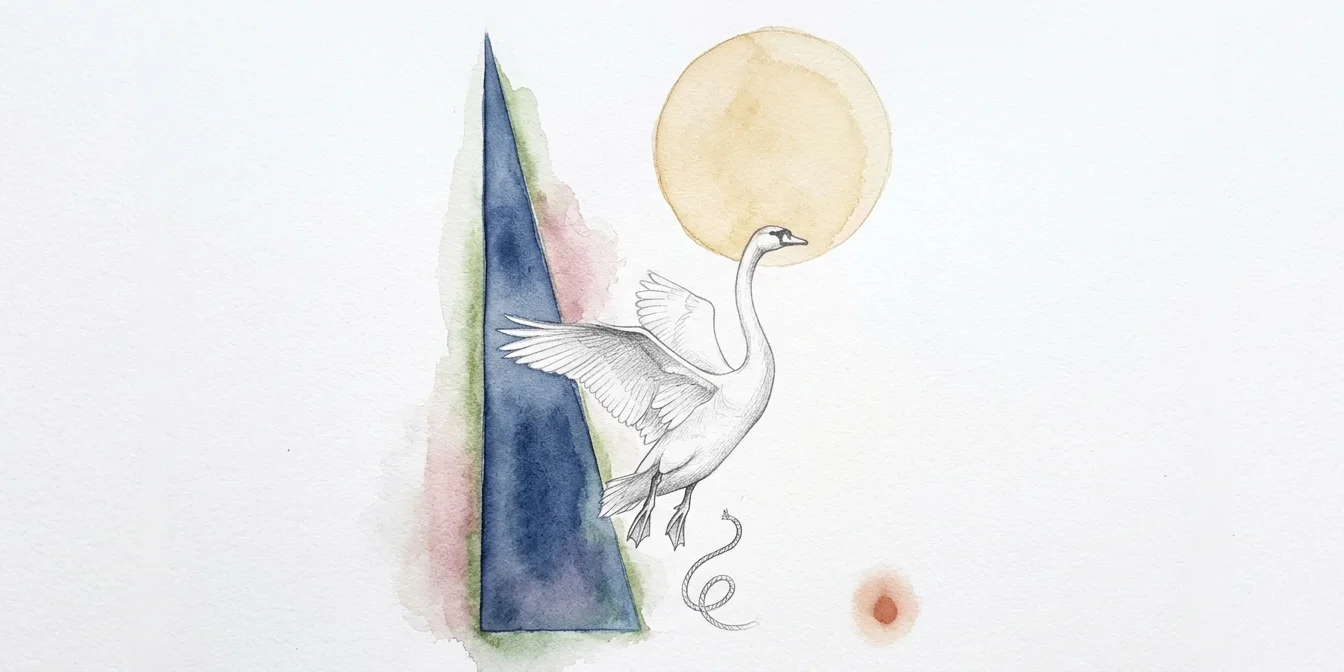
The text promises a concentration that ends rebirth. Seated in a silent place, the yogi fills himself with breath and Om. Taking up 'the dagger of the mind, very sharp, made clean by understanding', he cuts through the vital points and the hundred channels; only the sushumna, which leads to Brahman, is not cut. As a swan cuts its snare and flies into the sky, the self with its bonds cut crosses the round of becoming; as a lamp goes out when its oil is burnt, the yogi's actions burn away. Freed from desire, he reaches deathlessness.
- The dagger of the mind
- Cutting the bonds
- The one channel not cut
- The swan and the lamp
- Freedom from desire
ॐ क्षुरिकां सम्प्रवक्ष्यामि धारणां योगसिद्धये । यां प्राप्य न पुनर्जन्म योगयुक्तस्य जायते ॥ १॥
oṃ kṣurikāṃ sampravakṣyāmi dhāraṇāṃ yogasiddhaye | yāṃ prāpya na punarjanma yogayuktasya jāyate || 1||
Om. I will teach , the concentration for the fulfilment of yoga. Once it is gained, there is no more birth for the one who is joined in yoga.
Note //
'Dagger' (kṣurikā) is the name of the text and of the concentration it teaches. Editions: 'yāṃ prāpya' (Adyar collection; it agrees with kṣurikāṃ and dhāraṇāṃ) over 'yaṃ prāpya'; 'yogayuktasya jāyate' (sanskritdocuments.org) over 'yogayuktaḥ sa jāyate'.
वेदतत्त्वार्थविहितं यथोक्तं हि स्वयम्भुवा । निःशब्दं देशमास्थाय तत्रासनमवस्थितः ॥ २॥
vedatattvārthavihitaṃ yathoktaṃ hi svayambhuvā | niḥśabdaṃ deśamāsthāya tatrāsanamavasthitaḥ || 2||
It is laid down by the meaning of the Veda's truth, as the Self-born taught it. Going to a silent place, seated there in a posture,
कूर्मोऽङ्गानीव संहृत्य मनो हृदि निरुध्य च । मात्राद्वादशयोगेन प्रणवेन शनैः शनैः ॥ ३॥
kūrmo'ṅgānīva saṃhṛtya mano hṛdi nirudhya ca | mātrādvādaśayogena praṇavena śanaiḥ śanaiḥ || 3||
drawing in the senses as a tortoise draws in its limbs, holding the mind in the heart, slowly, slowly, with Om held for twelve measures,
Note //
The tortoise is the image of Bhagavad Gita 2.58. 'Twelve measures' (mātrā): a measure of time in breath-control. Editions agree.
पूरयेत्सर्वमात्मानं सर्वद्वारान्निरुध्य च । उरोमुखकटिग्रीवं किंचिद्धृदयमुन्नतम् ॥ ४॥
pūrayetsarvamātmānaṃ sarvadvārānnirudhya ca | uromukhakaṭigrīvaṃ kiṃciddhṛdayamunnatam || 4||
let him fill his whole self with breath, closing all the doors, chest, face, waist and neck in line, the heart lifted a little.
Note //
'The doors': the openings of the body. Editions: 'sarvadvārān' (Adyar) over 'sarvadvāraṃ'; 'kiṃcid dhṛdayam' (Adyar) over the misprint of sanskritdocuments.org.
प्राणान्सन्धारयेत्तस्मिन्नासाभ्यन्तरचारिणः । भूत्वा तत्र गतः प्राणः शनैरथ समुत्सृजेत् ॥ ५॥
prāṇānsandhārayettasminnāsābhyantaracāriṇaḥ | bhūtvā tatra gataḥ prāṇaḥ śanairatha samutsṛjet || 5||
Let him hold there the breaths that move within the nose; when the breath has gone there and settled, let him slowly release it.
Note //
The second line is loosely constructed in both editions; rendered by its sense. Editions: 'sandhārayet', 'hold' (sanskritdocuments.org), over 'sañcārayet', 'move' (Adyar).
स्थिरमात्रादृढं कृत्वा अङ्गुष्ठेन समाहितः । द्वे गुल्फे तु प्रकुर्वीत जङ्घे चैव त्रयस्त्रयः ॥ ६॥
sthiramātrādṛḍhaṃ kṛtvā aṅguṣṭhena samāhitaḥ | dve gulphe tu prakurvīta jaṅghe caiva trayastrayaḥ || 6||
Making it firm, with steady measures, collected, beginning at the big toe, let him work on the two ankles, and three by three on the shins,
Note //
The concentration moves up the body through the vital points (marma), each to be 'cut' (verses 12-14). The counting is uncertain. Editions agree.
द्वे जानुनी तथोरुभ्यां गुदे शिश्ने त्रयस्त्रयः । वायोरायतनं चात्र नाभिदेशे समाश्रयेत् ॥ ७॥
dve jānunī tathorubhyāṃ gude śiśne trayastrayaḥ | vāyorāyatanaṃ cātra nābhideśe samāśrayet || 7||
the two knees, the thighs, three by three at the anus and the sex. Then let him come to the seat of the breath here, at the navel.
Note //
Editions agree.
तत्र नाडी सुषुम्ना तु नाडीभिर्बहुभिर्वृता । अणुरक्ताश्च पीताश्च कृष्णास्ताम्रविलोहिताः ॥ ८॥
tatra nāḍī suṣumnā tu nāḍībhirbahubhirvṛtā | aṇuraktāśca pītāśca kṛṣṇāstāmravilohitāḥ || 8||
There is the channel, the sushumna, surrounded by many channels, fine and red, yellow, black, copper and deep red.
Note //
Editions: '-tāmravilohitāḥ' (Adyar) over '-tāmrā vilohitāḥ'; 'aṇuraktāś' (Adyar) over 'aṇu raktaś' (sanskritdocuments.org).
अतिसूक्ष्मां च तन्वीं च शुक्लां नाडीं समाश्रयेत् । तत्र संचारयेत्प्राणानूर्णनाभीव तन्तुना ॥ ९॥
atisūkṣmāṃ ca tanvīṃ ca śuklāṃ nāḍīṃ samāśrayet | tatra saṃcārayetprāṇānūrṇanābhīva tantunā || 9||
Let him take to the channel that is very fine, slender and white, and move the breaths there, as a spider moves along its thread.
Note //
Editions: 'tatra' (sanskritdocuments.org) over 'tataḥ' (Adyar).
ततो रक्तोत्पलाभासं पुरुषायतनं महत् । दहरं पुण्डरीकं तद्वेदान्तेषु निगद्यते ॥ १०॥
tato raktotpalābhāsaṃ puruṣāyatanaṃ mahat | daharaṃ puṇḍarīkaṃ tadvedānteṣu nigadyate || 10||
Then there is the great dwelling of the Person, shining like a red lotus: in the Upanishads it is called the small lotus.
Note //
'The small lotus' (dahara puṇḍarīka): the space of the heart, Chandogya 8.1.1. Editions: 'puṇḍarīkaṃ tad' (sanskritdocuments.org) over 'puṇḍarīketi' (Adyar).
तद्भित्त्वा कण्ठमायाति तां नाडीं पूरयन्यतः । मनसस्तु क्षुरं गृह्य सुतीक्ष्णं बुद्धिनिर्मलम् ॥ ११॥
tadbhittvā kaṇṭhamāyāti tāṃ nāḍīṃ pūrayanyataḥ | manasastu kṣuraṃ gṛhya sutīkṣṇaṃ buddhinirmalam || 11||
Breaking through the lotus of the heart, the breath comes up to the throat, filling that channel as it goes. Then take up of the mind, very sharp, .
Note //
'That' is the 'small lotus' of the heart (dahara puṇḍarīka), named in verse 10 as the dwelling of the Person. The dagger is 'of the mind' and 'made clean by understanding' (buddhi-nirmala): the cutting that follows is done by a mind sharpened into discrimination. Editions: the Adyar collection numbers the second line with verse 10 and has the same words.
पादस्योपरि यन्मध्ये तद्रूपं नाम कृन्तयेत् । मनोद्वारेण तीक्ष्णेन योगमाश्रित्य नित्यशः ॥ १२॥
pādasyopari yanmadhye tadrūpaṃ nāma kṛntayet | manodvāreṇa tīkṣṇena yogamāśritya nityaśaḥ || 12||
What lies in the middle above the foot, its form and its name, let him cut, with the sharp door of the mind, relying always on yoga.
Note //
'Its form and its name': what is cut is name and form, the identification with the body, not the body. Interpretive. Editions: the Adyar collection reads 'marmṛjya', perhaps 'having rubbed', for 'yan madhye'; sanskritdocuments.org is followed. Pending review.
इन्द्रवज्र इति प्रोक्तं मर्मजङ्घानुकीर्तनम् । तद्ध्यानबलयोगेन धारणाभिर्निकृन्तयेत् ॥ १३॥
indravajra iti proktaṃ marmajaṅghānukīrtanam | taddhyānabalayogena dhāraṇābhirnikṛntayet || 13||
The vital point of the shin is called Indra's thunderbolt. By the power of meditation on it, let him cut it through, with concentrations.
Note //
Editions agree.
ऊर्वोर्मध्ये तु संस्थाप्य मर्मप्राणविमोचनम् । चतुरभ्यासयोगेन छिन्देदनभिशङ्कितः ॥ १४॥
ūrvormadhye tu saṃsthāpya marmaprāṇavimocanam | caturabhyāsayogena chindedanabhiśaṅkitaḥ || 14||
Setting it in the middle of the thighs, the releasing of the breath from the vital points, by fourfold practice let him cut, without hesitation.
Note //
Editions: 'ūrvor' (sanskritdocuments.org) over 'ūror' (Adyar).
ततः कण्ठान्तरे योगी समूहन्नाडिसंचयम् । एकोत्तरं नाडिशतं तासां मध्ये वराः स्मृताः ॥ १५॥
tataḥ kaṇṭhāntare yogī samūhannāḍisaṃcayam | ekottaraṃ nāḍiśataṃ tāsāṃ madhye varāḥ smṛtāḥ || 15||
Then the yogi, within the throat, gathers together the mass of channels: a hundred and one channels, and among them the best are named.
Note //
Editions: 'samūhan', 'gathering' (sanskritdocuments.org), over 'samūhaṃ' (Adyar).
सुषुम्ना तु परे लीना विरजा ब्रह्मरूपिणी । इडा तिष्ठति वामेन पिङ्गला दक्षिणेन च ॥ १६॥
suṣumnā tu pare līnā virajā brahmarūpiṇī | iḍā tiṣṭhati vāmena piṅgalā dakṣiṇena ca || 16||
The sushumna is merged in the highest, pure, its form Brahman. Ida stands on the left, Pingala on the right.
Note //
The Adyar collection orders these lines differently ('iḍā rakṣatu vāmena...' in its verse 14, 'suṣumnā tu pare līnā' in 15); sanskritdocuments.org is followed.
तयोर्मध्ये वरं स्थानं यस्तं वेद स वेदवित् । द्वासप्ततिसहस्राणि प्रतिनाडीषु तैतिलम् ॥ १७॥
tayormadhye varaṃ sthānaṃ yastaṃ veda sa vedavit | dvāsaptatisahasrāṇi pratināḍīṣu taitilam || 17||
Between them is the best place: whoever knows it knows the Veda. The seventy-two thousand channels, each of them,
छिद्यन्ते ध्यानयोगेन सुषुम्नैका न छिद्यते । योगनिर्मलधारेण क्षुरेणानलवर्चसा ॥ १८॥
chidyante dhyānayogena suṣumnaikā na chidyate | yoganirmaladhāreṇa kṣureṇānalavarcasā || 18||
are cut by meditation; the sushumna alone is not cut. With whose edge yoga has made clean, bright as fire,
Note //
Editions: 'chidyante' (Adyar) over 'chidyate', agreeing with the seventy-two thousand; 'analavarcasā', 'bright as fire' (sanskritdocuments.org), over 'amala-', 'spotless' (Adyar).
छिन्देन्नाडीशतं धीरः प्रभावादिह जन्मनि । जातीपुष्पसमायोगैर्यथा वास्यति तैतिलम् ॥ १९॥
chindennāḍīśataṃ dhīraḥ prabhāvādiha janmani | jātīpuṣpasamāyogairyathā vāsyati taitilam || 19||
let the steady one cut the hundred channels, by its power, in this very life. As sesame oil is scented by being steeped with jasmine flowers,
Note //
The sentence runs into verse 20. Editions agree.
एवं शुभाशुभैर्भावैः सा नाडीति विभावयेत् । तद्भाविताः प्रपद्यन्ते पुनर्जन्मविवर्जिताः ॥ २०॥
evaṃ śubhāśubhairbhāvaiḥ sā nāḍīti vibhāvayet | tadbhāvitāḥ prapadyante punarjanmavivarjitāḥ || 20||
so, by good and bad states, let him know that this is the channel. Those who are steeped in it reach the state where there is no more birth.
Note //
The simile: the channels take on the scent of what one dwells on, as oil does of flowers; the sushumna, dwelt on, leads beyond birth. The second line is uncertain. Editions: 'evaṃ' and 'nāḍīti' (sanskritdocuments.org) over the misprints of the Adyar collection. Pending review.
तपोविजितचित्तस्तु निःशब्दं देशमास्थितः । निःसङ्गस्तत्त्वयोगज्ञो निरपेक्षः शनैः शनैः ॥ २१॥
tapovijitacittastu niḥśabdaṃ deśamāsthitaḥ | niḥsaṅgastattvayogajño nirapekṣaḥ śanaiḥ śanaiḥ || 21||
With the mind mastered by discipline, staying in a silent place, unattached, knowing the yoga of what is real, wanting nothing, little by little:
Note //
The verse leads into verse 22. Editions: 'tapovijitacittas' (sanskritdocuments.org) over 'tato viditacittas' ('then, with the mind known', Adyar collection); 'niḥsaṅgas tattvayogajño' (Adyar collection) corrects 'niḥsaṅgatattvayogajño'. Pending review.
पाशं छित्त्वा यथा हंसो निर्विशङ्कः खमुत्क्रमेत् । छिन्नपाशस्तथा जीवः संसारं तरते तदा ॥ २२॥
pāśaṃ chittvā yathā haṃso nirviśaṅkaḥ khamutkramet | chinnapāśastathā jīvaḥ saṃsāraṃ tarate tadā || 22||
as a swan cuts its snare and rises, fearless, into the sky, so the self, its bonds cut, crosses the round of becoming.
Note //
The swan (haṃsa) is the classic image of the self; here it is a bird caught in a snare, which only has to cut it to be what it was. Editions: 'nirviśaṅkaḥ' and 'tadā' (Adyar collection) over 'nirviśaṅkaṃ' and 'sadā'.
यथा निर्वाणकाले तु दीपो दग्ध्वा लयं व्रजेत् । तथा सर्वाणि कर्माणि योगी दग्ध्वा लयं व्रजेत् ॥ २३॥
yathā nirvāṇakāle tu dīpo dagdhvā layaṃ vrajet | tathā sarvāṇi karmāṇi yogī dagdhvā layaṃ vrajet || 23||
As a lamp, when it , having burnt its fuel, comes to rest, so the yogi, having burnt all his actions, comes to rest.
Note //
'Goes out' renders nirvāṇa, the blowing-out of a flame. The lamp does not go anywhere; its burning ends because its fuel is gone. So with the actions that keep the round of becoming going. Editions agree.
प्राणायामसुतीक्ष्णेन मात्राधारेण योगवित् । वैराग्योपलघृष्टेन छित्त्वा तन्तुं न बध्यते ॥ २४॥
prāṇāyāmasutīkṣṇena mātrādhāreṇa yogavit | vairāgyopalaghṛṣṭena chittvā tantuṃ na badhyate || 24||
With a blade made sharp by breath-control, its edge the measures of Om, whetted on the stone of dispassion, the knower of yoga cuts the thread and is no longer bound.
Note //
The dagger is described as a blade: its sharpness is breath-control, its edge (ādhāra) the measures (mātrā) of Om, its whetstone dispassion (vairāgya). Editions: 'tantuṃ' ('the thread', Adyar collection) over 'taṃ tu'.
अमृतत्वं समाप्नोति यदा कामात्प्रमुच्यते । सर्वैषणाविनिर्मुक्तश्छित्त्वा तन्तुं न बध्यत इत्युपनिषत् ॥
amṛtatvaṃ samāpnoti yadā kāmātpramucyate | sarvaiṣaṇāvinirmuktaśchittvā tantuṃ na badhyata ityupaniṣat ||
One reaches deathlessness when one is freed from desire. Free of , having cut the thread, one is no longer bound. This is the Upanishad.
Note //
The last verse, unnumbered in sanskritdocuments.org (Adyar collection 23). The 'thread' that binds is named: desire. 'Every wanting' (sarvaiṣaṇā) recalls the three wantings of Brihadaranyaka 3.5.1, for sons, wealth and worlds. Editions: 'pramucyate' and 'tantuṃ' (Adyar collection) over 'sa mucyate' and 'taṃ tu'; the Adyar collection repeats the last half-line.
No public-domain English translation exists for this text; the Sanskrit is shown.
The renderings on this page are shared under CC BY-NC 4.0, in the words of Pranav Ashar.