Vasudeva Upanishad
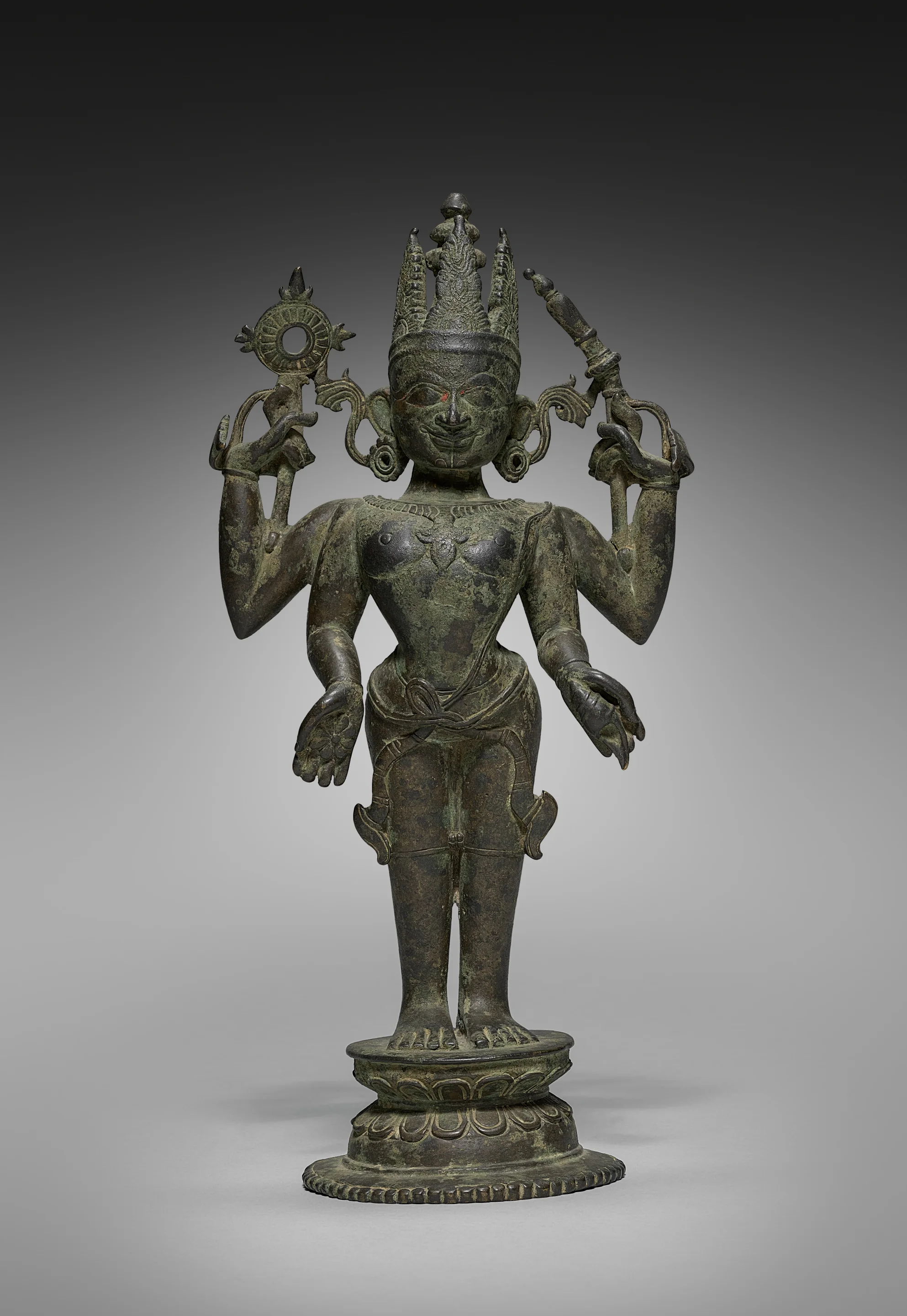
In the words of Pranav Ashar
How we renderThe heart of the Vasudeva
In brief
Narada asks for the rule of the vertical mark. Vasudeva describes the clay, gopichandana, and where students, householders and renunciants wear it. The three vertical lines are the three gods, the three worlds, the three metres, fires, times, states and selves: they are A, U and M, made of Om, and their self is the real, Om; the highest renunciant wears a single line with Om alone. One Vishnu lives in all beings, as oil in sesame, fire in wood, butter in milk and scent in flowers: 'so I dwell as the Self in all'.
- The meaning of the vertical mark
- Om on the forehead
- The Self as the lamp of truth
- Without beginning, middle or end
- One Vishnu in all
ॐ नमस्कृत्य भगवान्नारदः सर्वेश्वरं वासुदेवं पप्रच्छ अधीहि भगवन्नूर्ध्वपुण्ड्रविधिं द्रव्यमन्त्रस्थानादिसहितं मे ब्रूहीति ।
oṃ namaskṛtya bhagavānnāradaḥ sarveśvaraṃ vāsudevaṃ papraccha adhīhi bhagavannūrdhvapuṇḍravidhiṃ dravyamantrasthānādisahitaṃ me brūhīti |
Om. The blessed Narada, bowing to Vasudeva, the Lord of all, asked: 'Teach me, Lord, the rule of the vertical mark, with its substance, its mantras, its places and the rest.'
Note //
The opening. The question parallels Sanatkumara's in the Kalagnirudra. The answer that follows describes the sacred clay of Dvaraka, gopichandana, and the mantras for applying it. Editions agree.
तं होवाच भगवान्वासुदेवो वैकुण्ठस्थानादुत्पन्नं मम प्रीतिकरं मद्भक्तैर्ब्रह्मादिभिर्धारितं विष्णुचन्दनं ममाङ्गे प्रतिदिनमालिप्तं गोपीभिः प्रक्षालनाद्गोपीचन्दनमाख्यातं मदङ्गलेपनं पुण्यं चक्रतीर्थान्तःस्थितं चक्रसमायुक्तं पीतवर्णं मुक्तिसाधनं भवति ।
taṃ hovāca bhagavānvāsudevo vaikuṇṭhasthānādutpannaṃ mama prītikaraṃ madbhaktairbrahmādibhirdhāritaṃ viṣṇucandanaṃ mamāṅge pratidinamāliptaṃ gopībhiḥ prakṣālanādgopīcandanamākhyātaṃ madaṅgalepanaṃ puṇyaṃ cakratīrthāntaḥsthitaṃ cakrasamāyuktaṃ pītavarṇaṃ muktisādhanaṃ bhavati |
The blessed Vasudeva said to him: The sandal-clay of Vishnu came from the place of Vaikuntha. It pleases me; Brahma and the others, my devotees, wear it. It was spread on my body every day, and because the cowherd women washed it off, it is called gopichandana, 'the clay of the cowherd women'. The anointing of my body, it is holy; it lies in the pool of the discus, marked with the discus, yellow in colour. It is a means to freedom.
Note //
The substance of the mark. Gopichandana is the pale yellow clay of the Chakratirtha at Dvaraka, said to be the sandal paste washed from Krishna's body by the gopis. 'A means to freedom' (muktisādhana): a help on the way, as the rest of the text makes clear, not freedom itself. Editions agree.
अथ गोपीचन्दनं नमस्कृत्वोद्धृत्य । गोपीचन्दन पापघ्न विष्णुदेहसमुद्भव । चक्राङ्कित नमस्तुभ्यं धारणान्मुक्तिदो भव । इमं मे गङ्गे इति जलमादाय विष्णोर्नुकमिति मर्दयेत् । अतो देवा अवन्तु न इत्येतन्मन्त्रैर्विष्णुगायत्र्या केशवादिनामभिर्वा धारयेत् ।
atha gopīcandanaṃ namaskṛtvoddhṛtya | gopīcandana pāpaghna viṣṇudehasamudbhava | cakrāṅkita namastubhyaṃ dhāraṇānmuktido bhava | imaṃ me gaṅge iti jalamādāya viṣṇornukamiti mardayet | ato devā avantu na ityetanmantrairviṣṇugāyatryā keśavādināmabhirvā dhārayet |
Now, bowing to the gopichandana, let him take it up, saying: 'Gopichandana, destroyer of wrong, born from the body of Vishnu, marked with the discus, I bow to you: by being worn, give freedom.' Taking water with the verse 'This, O Ganga, of mine', let him mix it with the verse 'Of Vishnu now'; and with the verse 'From there may the gods protect us', with the Vishnu Gayatri, or with the names Keshava and the rest, let him put it on.
Note //
The mantras: 'imaṃ me gaṅge' (Rig Veda 10.75.5), 'viṣṇor nu kam' (1.154.1), 'ato devā avantu naḥ' (1.22.16); the Vishnu Gayatri is 'nārāyaṇāya vidmahe, vāsudevāya dhīmahi, tan no viṣṇuḥ pracodayāt'; Keshava and the rest are the twelve names of Vishnu, one for each place of the mark. Editions agree.
ब्रह्मचारी वानप्रस्थो वा ललाटहृदयकण्ठबाहुमूलेषु वैष्णवगायत्र्या कृष्णादिनामभिर्वा धारयेत् । इति त्रिवारमभिमन्त्र्य शङ्खचक्रगदापाणे द्वारकानिलयाच्युत । गोविन्द पुण्डरीकाक्ष रक्ष मां शरणागतम् । इति ध्यात्वा गृहस्थो ललाटादिद्वादशस्थलेष्वनामिकाङ्गुल्या वैष्णवगायत्र्या केशवादिनामभिर्वा धारयेत् । ब्रह्मचारी गृहस्थो वा ललाटहृदयकण्ठबाहुमूलेषु वैष्णवगायत्र्या कृष्णादिनामभिर्वा धारयेत् । यतिस्तर्जन्या शिरोललाटहृदयेषु प्रणवेनैव धारयेत् ।
brahmacārī vānaprastho vā lalāṭahṛdayakaṇṭhabāhumūleṣu vaiṣṇavagāyatryā kṛṣṇādināmabhirvā dhārayet | iti trivāramabhimantrya śaṅkhacakragadāpāṇe dvārakānilayācyuta | govinda puṇḍarīkākṣa rakṣa māṃ śaraṇāgatam | iti dhyātvā gṛhastho lalāṭādidvādaśasthaleṣvanāmikāṅgulyā vaiṣṇavagāyatryā keśavādināmabhirvā dhārayet | brahmacārī gṛhastho vā lalāṭahṛdayakaṇṭhabāhumūleṣu vaiṣṇavagāyatryā kṛṣṇādināmabhirvā dhārayet | yatistarjanyā śirolalāṭahṛdayeṣu praṇavenaiva dhārayet |
The student or the forest-dweller should wear it on the forehead, heart, throat and at the roots of the arms, with the Vishnu Gayatri or with the names Krishna and the rest. Having blessed it three times so, and meditating: 'You who hold conch, discus and mace, who dwell in Dvaraka, unfallen, Govinda, lotus-eyed, protect me: I have come to you for shelter', the householder should wear it in twelve places, beginning with the forehead, with the ring finger, with the Vishnu Gayatri or the names Keshava and the rest. The student or the householder may wear it on forehead, heart, throat and the roots of the arms, with the Vishnu Gayatri or the names Krishna and the rest. The renunciant should wear it with the forefinger on the head, forehead and heart, with Om alone.
Note //
The places of the mark by stage of life. The second rule for the student ('the student or the householder') repeats the first with 'householder' in place of 'forest-dweller'; it may be an alternative for a householder who does not use all twelve places. The renunciant uses Om alone, as the Paramahamsa does in 2. Editions: 'bāhumūla' (Adyar collection) over 'bāhūmūla' (sanskritdocuments.org); 'rakṣa māṃ' (sanskritdocuments.org) over 'rakṣaṃ māṃ' (Adyar collection). Otherwise editions agree.
ब्रह्मादयस्त्रयो मूर्तयस्तिस्रो व्याहृतयस्त्रीणि छन्दांसि त्रयोऽग्नय इति ज्योतिष्मन्तस्त्रयः कालास्तिस्रोऽवस्थास्त्रय आत्मानः पुण्ड्रास्त्रय ऊर्ध्वा अकार उकारो मकार एते प्रणवमयोर्ध्वपुण्ड्रास्तदात्मा सदेतदोमिति । तानेकधा समभवत् । ऊर्ध्वमुन्नमयत इत्योङ्काराधिकारी । तस्मादूर्ध्वपुण्ड्रं धारयेत् । परमहंसो ललाटे प्रणवेनैकमूर्ध्वपुण्ड्रं वा धारयेत् ।
brahmādayastrayo mūrtayastisro vyāhṛtayastrīṇi chandāṃsi trayo'gnaya iti jyotiṣmantastrayaḥ kālāstisro'vasthāstraya ātmānaḥ puṇḍrāstraya ūrdhvā akāra ukāro makāra ete praṇavamayordhvapuṇḍrāstadātmā sadetadomiti | tānekadhā samabhavat | ūrdhvamunnamayata ityoṅkārādhikārī | tasmādūrdhvapuṇḍraṃ dhārayet | paramahaṃso lalāṭe praṇavenaikamūrdhvapuṇḍraṃ vā dhārayet |
The three forms, Brahma and the others; the three words, earth, sky and heaven; the three metres; the three fires, the lights; the three times; the three states; the three selves: these are the three vertical lines. They are A, U and M: vertical lines made of Om. Their self is : Om. They became one. Because it lifts upward, it belongs to the one fit for Om. So let one wear the vertical mark. The supreme swan, the Paramahamsa, may wear a single vertical line on the forehead, with Om alone.
Note //
The meaning of the mark, as in Kalagnirudra 2 for the horizontal lines. 'The three selves' are the individual, the inner and the highest Self. 'Their self is the real: Om' renders 'tad-ātmā sad etad om': the three lines are three aspects of the one reality that Om names. 'They became one' (tān ekadhā samabhavat) is read as the three lines merging into the one. The Paramahamsa needs only one line. Editions: 'puṇḍrās traya' (Adyar collection) over 'puṇḍrātraya' (sanskritdocuments.org); 'praṇavena' (sanskritdocuments.org) over 'praṇaveṇa' (Adyar collection).
तत्त्वप्रदीपप्रकाशं स्वात्मानं पश्यन्योगी मत्सायुज्यमवाप्नोति । अथवा न्यस्तहृदयपुण्ड्रमध्ये वा हृदयकमलमध्ये वा । तस्य मध्ये वह्निशिखा अणीयोर्ध्वा व्यवस्थिता । नीलतोयदमध्यस्थाद्विद्युल्लेखेव भास्वरा । नीवारशूकवत्तन्वी विद्युल्लेखेव भास्वरा । तस्याः शिखाया मध्ये परमात्मा व्यवस्थित इति । अतः पुण्ड्रस्थं हृदयपुण्डरीकेषु तमभ्यसेत् ।
tattvapradīpaprakāśaṃ svātmānaṃ paśyanyogī matsāyujyamavāpnoti | athavā nyastahṛdayapuṇḍramadhye vā hṛdayakamalamadhye vā | tasya madhye vahniśikhā aṇīyordhvā vyavasthitā | nīlatoyadamadhyasthādvidyullekheva bhāsvarā | nīvāraśūkavattanvī vidyullekheva bhāsvarā | tasyāḥ śikhāyā madhye paramātmā vyavasthita iti | ataḥ puṇḍrasthaṃ hṛdayapuṇḍarīkeṣu tamabhyaset |
Seeing his own Self as the light of the lamp of truth, the yogi becomes one with me. Or else, in the middle of the mark placed on the heart, or in the middle of the lotus of the heart: in its middle stands a flame of fire, very fine, rising upward, shining like a streak of lightning in the middle of a dark rain cloud, slender as the awn of a grain of wild rice, shining like a streak of lightning. In the middle of that flame the highest Self abides. So let him practise on him who is in the mark, in the lotus of the heart.
Note //
The meditation. The flame in the heart is from Mahanarayana 11.9-12 (Taittiriya Aranyaka 10.13). 'The lamp of truth' (tattvapradīpa): the light by which reality is seen, which is the Self itself. 'Becomes one with me' (matsāyujya): union with Vasudeva. Editions: sanskritdocuments.org drops the lines between 'tanvī' and 'paramātmā'; the Adyar collection's fuller text is followed, though its repeated 'vidyullekheva bhāsvarā' may stand for the Mahanarayana's 'pītā bhāsvaty aṇūpamā'.
क्रमादेवं स्वात्मानं भावयेन्मां परं हरिम् । एकाग्रमनसा यो मां ध्यायते हरिमव्ययम् । हृत्पङ्कजे च स्वात्मानं स मुक्तो नात्र संशयः । मद्रूपमद्वयं ब्रह्म आदिमध्यान्तवर्जितम् । स्वप्रभं सच्चिदानन्दं भक्त्या जानाति चाव्ययम् ।
kramādevaṃ svātmānaṃ bhāvayenmāṃ paraṃ harim | ekāgramanasā yo māṃ dhyāyate harimavyayam | hṛtpaṅkaje ca svātmānaṃ sa mukto nātra saṃśayaḥ | madrūpamadvayaṃ brahma ādimadhyāntavarjitam | svaprabhaṃ saccidānandaṃ bhaktyā jānāti cāvyayam |
So, step by step, let one hold one's own Self to be me, the highest, Hari. Whoever, with a one-pointed mind, meditates on me, Hari, the imperishable, as his own Self in the lotus of the heart, is free: there is no doubt. My form is the non-dual Brahman, without beginning, middle or end, shining by itself, : by devotion one knows it, the imperishable.
Note //
From the meditation that follows the description of the flame in the heart (as in Mahanarayana 11.7-13). The object of meditation is 'one's own Self' (svātmānam) as Hari. 'By devotion one knows it': devotion here ends in knowledge, not in a relation between two. Editions agree.
एको विष्णुरनेकेषु जङ्गमस्थावरेषु च । अनुस्यूतो वसत्यात्मा भूतेष्वहमवस्थितः । तैलं तिलेषु काष्ठेषु वह्निः क्षीरे घृतं यथा । गन्धः पुष्पेषु भूतेषु तथात्मावस्थितो ह्यहम् ।
eko viṣṇuranekeṣu jaṅgamasthāvareṣu ca | anusyūto vasatyātmā bhūteṣvahamavasthitaḥ | tailaṃ tileṣu kāṣṭheṣu vahniḥ kṣīre ghṛtaṃ yathā | gandhaḥ puṣpeṣu bhūteṣu tathātmāvasthito hyaham |
One Vishnu, in the many, moving and still, dwells as the Self, : I abide in all beings. As oil is in sesame seeds, fire in wood, butter in milk, and scent in flowers, so I abide in all beings as the Self.
Note //
The images are those of Shvetashvatara 1.15-16 (oil in sesame, butter in curd, fire in the fire-sticks) and Brahmavidya 35. 'Threaded through' (anusyūta): present in every being as the thread is in every bead. The speaker's 'I' is the Self of all. Editions: 'anusyūta' (Adyar collection) corrects sanskritdocuments.org's 'anusyuta'.
ब्रह्मरन्ध्रे भ्रुवोर्मध्ये हृदये चिद्रविं हरिम् । गोपीचन्दनमालिप्य तत्र ध्यात्वाप्नुयात्परम् । ऊर्ध्वदण्डोर्ध्वरेताश्च ऊर्ध्वपुण्ड्रोर्ध्वयोगवान् । ऊर्ध्वं पदमवाप्नोति यतिरूर्ध्वचतुष्कवान् । इत्येतन्निश्चितं ज्ञानं मद्भक्त्या सिध्यति स्वयम् । नित्यमेकाग्रभक्तिः स्याद्गोपीचन्दनधारणात् ।
brahmarandhre bhruvormadhye hṛdaye cidraviṃ harim | gopīcandanamālipya tatra dhyātvāpnuyātparam | ūrdhvadaṇḍordhvaretāśca ūrdhvapuṇḍrordhvayogavān | ūrdhvaṃ padamavāpnoti yatirūrdhvacatuṣkavān | ityetanniścitaṃ jñānaṃ madbhaktyā sidhyati svayam | nityamekāgrabhaktiḥ syādgopīcandanadhāraṇāt |
At the crown of the head, between the brows, and in the heart, let him put on the gopichandana and meditate there on Hari, the sun of the light: so he reaches the highest. With his staff upright, his seed drawn upward, his mark upright, his yoga rising: the renunciant with these four upright things reaches the place that is above all. This sure knowledge comes of itself through devotion to me. By wearing the gopichandana let there be devotion, one-pointed, always.
Note //
'The sun of the light' (cidravi): the Self as light that knows, seen in the three places where the mark is worn. 'Four upright things' (ūrdhvacatuṣka): the staff, celibacy, the mark and the yoga that rises. 'Comes of itself' (svayam): knowledge is not made by devotion but shows itself when the mind is one-pointed. Editions agree.
ब्राह्मणानां तु सर्वेषां वैदिकानामनुत्तमम् । गोपीचन्दनवारिभ्यामूर्ध्वपुण्ड्रं विधीयते । यो गोपीचन्दनाभावे तुलसीमूलमृत्तिकाम् । मुमुक्षुर्धारयेन्नित्यमपरोक्षात्मसिद्धये । अतिरात्राग्निहोत्रभस्मनाग्नेर्भसितमिदं विष्णुस्त्रीणि पदेति मन्त्रैर्वैष्णवगायत्र्या प्रणवेनोद्धूलनं कुर्यात् । एवं विधिना गोपीचन्दनं च धारयेत् ।
brāhmaṇānāṃ tu sarveṣāṃ vaidikānāmanuttamam | gopīcandanavāribhyāmūrdhvapuṇḍraṃ vidhīyate | yo gopīcandanābhāve tulasīmūlamṛttikām | mumukṣurdhārayennityamaparokṣātmasiddhaye | atirātrāgnihotrabhasmanāgnerbhasitamidaṃ viṣṇustrīṇi padeti mantrairvaiṣṇavagāyatryā praṇavenoddhūlanaṃ kuryāt | evaṃ vidhinā gopīcandanaṃ ca dhārayet |
For all Brahmins who follow the Veda the vertical mark of gopichandana and water is laid down as the best. Where there is no gopichandana, one who seeks freedom should wear, every day, earth from the root of the tulasi, for the direct knowing of the Self. With the ash of the Atiratra rite and of the daily fire offering, with the verses 'The ash of fire', 'This Vishnu' and 'Three strides', with the Vishnu Gayatri and with Om, let him smear himself with ash. And in this way, by the rule, let him wear the gopichandana.
Note //
'For the direct knowing of the Self' (aparokṣātmasiddhaye): even the substitute clay is given this aim. The verses for the ash are 'agner bhasmāsi' and Rig Veda 1.22.17-18 ('idaṃ viṣṇur vi cakrame', 'trīṇi padā vi cakrame'). Editions: 'brāhmaṇānām' (Adyar collection) corrects sanskritdocuments.org's 'brāhmāṇānām'; 'uddhūlanam' (sanskritdocuments.org) over 'udghūlanam' (Adyar collection).
यस्त्वधीते वा स सर्वपातकेभ्यः पूतो भवति । पापबुद्धिस्तस्य न जायते । स सर्वेषु तीर्थेषु स्नातो भवति । स सर्वैर्यज्ञैर्याजितो भवति । स सर्वैर्देवैः पूज्यो भवति । श्रीमन्नारायणे मय्यचञ्चला भक्तिश्च भवति । स सम्यग्ज्ञानं च लब्ध्वा विष्णुसायुज्यमवाप्नोति । न च पुनरावर्तते न च पुनरावर्तते इत्याह भगवान्वासुदेवः । यस्त्वेतद्वाधीते सोऽप्येवमेव भवतीत्यों सत्यमित्युपनिषत् ॥
yastvadhīte vā sa sarvapātakebhyaḥ pūto bhavati | pāpabuddhistasya na jāyate | sa sarveṣu tīrtheṣu snāto bhavati | sa sarvairyajñairyājito bhavati | sa sarvairdevaiḥ pūjyo bhavati | śrīmannārāyaṇe mayyacañcalā bhaktiśca bhavati | sa samyagjñānaṃ ca labdhvā viṣṇusāyujyamavāpnoti | na ca punarāvartate na ca punarāvartate ityāha bhagavānvāsudevaḥ | yastvetadvādhīte so'pyevameva bhavatītyoṃ satyamityupaniṣat ||
Whoever wears it, or studies this, is made pure of every wrong; the thought of wrong does not arise in him. He has bathed at every holy place; he has offered every sacrifice; all the gods honour him. Unwavering devotion to me, the glorious Narayana, comes to him. And gaining right knowledge, he becomes one with Vishnu. He does not come back again; he does not come back again. So said the blessed Vasudeva. Whoever studies this becomes the same. Om. This is the truth. This is the Upanishad.
Note //
The order is the point: devotion, then right knowledge (samyagjñāna), then oneness with Vishnu. 'Whoever wears it, or studies this' supplies 'wears' for the bare 'yas tv adhīte vā' ('whoever studies, or'), which seems to have lost a word. Interpretive. Editions agree.
No public-domain English translation exists for this text; the Sanskrit is shown.
The renderings on this page are shared under CC BY-NC 4.0, in the words of Pranav Ashar.