Krishna Upanishad
In the words of Pranav Ashar
How we renderThe heart of the Krishna
In brief
Seeing Rama, the forest sages wonder at his beauty and ask to hold him. He says: when I come as Krishna, you will be the cowherd women and hold me. Then the key: Nanda is the highest joy, Yashoda the mistress of liberation. Krishna plays in Vrindavana: the women and cows are the Vedic verses; Gokula is heaven in the forest, the demons are greed, anger and the rest. Krishna is Brahman itself, eternal. All of heaven has been brought down to earth. Whoever knows this is freed from the bond of the body.
- The story as a key
- Every figure a meaning
- The demons are greed and anger
- Krishna is Brahman itself
- Heaven brought down to earth
श्रीमहाविष्णुं सच्चिदानन्दलक्षणं रामचन्द्रं दृष्ट्वा सर्वाङ्गसुन्दरं मुनयो वनवासिनो विस्मिता बभूवुः । तं होचुर्नोऽवद्यमवतारान्वै गण्यन्ते आलिङ्गामो भवन्तमिति । भवान्तरे कृष्णावतारे यूयं गोपिका भूत्वा मामालिङ्गथ । अन्ये येऽवतारास्ते हि गोपा न स्त्रीश्च नो कुरु । अन्योन्यविग्रहं धार्यं तवाङ्गस्पर्शनादिह । शश्वत्स्पर्शयितास्माकं गृह्णीमोऽवतारान्वयम् ॥ १॥
śrīmahāviṣṇuṃ saccidānandalakṣaṇaṃ rāmacandraṃ dṛṣṭvā sarvāṅgasundaraṃ munayo vanavāsino vismitā babhūvuḥ | taṃ hocurno'vadyamavatārānvai gaṇyante āliṅgāmo bhavantamiti | bhavāntare kṛṣṇāvatāre yūyaṃ gopikā bhūtvā māmāliṅgatha | anye ye'vatārāste hi gopā na strīśca no kuru | anyonyavigrahaṃ dhāryaṃ tavāṅgasparśanādiha | śaśvatsparśayitāsmākaṃ gṛhṇīmo'vatārānvayam || 1||
Seeing Ramachandra, the great Vishnu, whose mark is being, the light and bliss, beautiful in every limb, the sages who lived in the forest were filled with wonder. They said to him: 'It is no fault, for your descents are counted: let us embrace you.' He said: 'In another birth, when I come as Krishna, you will become the cowherd women and embrace me.' They said: 'Let the others who come down with you be cowherds; do not make us women. Let each of us take a body to touch your limbs here. You will touch us always: we take on these descents.'
Note //
A prose opening with verse-like lines, numbered 1 in both editions. The sages' words are obscure in both editions ('no 'vadyam avatārān vai gaṇyante': perhaps 'it is not blameworthy, for your descents are counted'), and so is their reply; both are rendered by their likely sense. Editions: 'śaśvat-' (Adyar) over 'śāśvata-'; 'gṛhṇīmo' over 'gṛṇhīmo' (sanskritdocuments.org). Pending review.
रुद्रादीनां वचः श्रुत्वा प्रोवाच भगवान्स्वयम् । अङ्गसङ्गं करिष्यामि भवद्वाक्यं करोम्यहम् ॥ २॥
rudrādīnāṃ vacaḥ śrutvā provāca bhagavānsvayam | aṅgasaṅgaṃ kariṣyāmi bhavadvākyaṃ karomyaham || 2||
Hearing the words of Rudra and the others, the Lord himself said: 'I will be with you, limb to limb; I will do as you say.'
Note //
The speakers are now 'Rudra and the others': the gods themselves take birth as the companions of Krishna, as the rest of the text explains. Editions: 'śrutvā' (Adyar) over 'śutvā' (sanskritdocuments.org).
मोदितास्ते सुराः सर्वे कृतकृत्याधुना वयम् । यो नन्दः परमानन्दो यशोदा मुक्तिगेहिनी ॥
moditāste surāḥ sarve kṛtakṛtyādhunā vayam | yo nandaḥ paramānando yaśodā muktigehinī ||
All the gods rejoiced: 'Now our work is done.' Nanda is the highest joy; Yashoda is the mistress of the house of liberation.
Note //
The key begins. The names are read by meaning: 'nanda' is joy; Yashoda, 'giver of fame', is the house where liberation lives. Sanskritdocuments.org notes a variant 'mauktigehinī'. Editions agree.
माया सा त्रिविधा प्रोक्ता सत्त्वराजसतामसी । प्रोक्ता च सात्त्विकी रुद्रे भक्ते ब्रह्मणि राजसी ॥ ४॥
māyā sā trividhā proktā sattvarājasatāmasī | proktā ca sāttvikī rudre bhakte brahmaṇi rājasī || 4||
Maya is said to be threefold: of clarity, of passion, of darkness. Of clarity in Rudra, the devotee; of passion in Brahma;
Note //
The sentence runs into verse 5. Editions agree.
तामसी दैत्यपक्षेषु माया त्रेधा ह्युदाहृता । अजेया वैष्णवी माया जप्येन च सुता पुरा ॥ ५॥
tāmasī daityapakṣeṣu māyā tredhā hyudāhṛtā | ajeyā vaiṣṇavī māyā japyena ca sutā purā || 5||
of darkness in the demons' party: so maya is declared threefold. Vishnu's maya cannot be conquered; of old she was born through repetition of the mantra.
Note //
The second line is obscure ('japyena ca sutā purā'); rendered literally. Pending review. Editions agree.
देवकी ब्रह्मपुत्रा सा या वेदैरुपगीयते । निगमो वसुदेवो यो वेदार्थः कृष्णरामयोः ॥ ६॥
devakī brahmaputrā sā yā vedairupagīyate | nigamo vasudevo yo vedārthaḥ kṛṣṇarāmayoḥ || 6||
Devaki is she, daughter of Brahma, who is sung by the Vedas. Vasudeva is the Veda, whose meaning is Krishna and Rama,
स्तुवते सततं यस्तु सोऽवतीर्णो महीतले । वने वृन्दावने क्रीडन्गोपगोपीसुरैः सह ॥ ७॥
stuvate satataṃ yastu so'vatīrṇo mahītale | vane vṛndāvane krīḍangopagopīsuraiḥ saha || 7||
whom it always praises. He has come down to the earth, playing in the forest, in Vrindavana, with the cowherds, the cowherd women and the gods.
Note //
Editions agree.
गोप्यो गाव ऋचस्तस्य यष्टिका कमलासनः । वंशस्तु भगवान्रुद्रः शृङ्गमिन्द्रः सगोसुरः ॥ गोकुलं वनवैकुण्ठं तापसास्तत्र ते द्रुमाः । लोभक्रोधादयो दैत्याः कलिकालस्तिरस्कृतः ॥
gopyo gāva ṛcastasya yaṣṭikā kamalāsanaḥ | vaṃśastu bhagavānrudraḥ śṛṅgamindraḥ sagosuraḥ || gokulaṃ vanavaikuṇṭhaṃ tāpasāstatra te drumāḥ | lobhakrodhādayo daityāḥ kalikālastiraskṛtaḥ ||
The cowherd women and the cows are the Vedic verses; his stick is Brahma, seated on the lotus; his flute is the Lord Rudra; his horn is Indra. Gokula is ; the trees there are ascetics; the demons are greed, anger and the rest; the age of strife is overcome.
Note //
Vaikuntha is Vishnu's heaven. 'Sagosuraḥ' is unclear (with the cow-demon?) and not rendered. Editions agree. Pending review.
गोपरूपो हरिः साक्षान्मायाविग्रहधारणः । दुर्बोधं कुहकं तस्य मायया मोहितं जगत् ॥
goparūpo hariḥ sākṣānmāyāvigrahadhāraṇaḥ | durbodhaṃ kuhakaṃ tasya māyayā mohitaṃ jagat ||
Hari himself, in the form of a cowherd, wears . His is hard to understand; the world is bewildered by his maya.
Note //
'A body made of maya' (māyā-vigraha): a form taken on in appearance, real as appearance, not on its own; not a body that binds him. 'Play of appearance' renders 'kuhaka', a conjuror's trick. Editions agree.
दुर्जया सा सुरैः सर्वैर्धृष्टिरूपो भवेद्द्विजः । रुद्रो येन कृतो वंशस्तस्य माया जगत्कथम् ॥ ११॥
durjayā sā suraiḥ sarvairdhṛṣṭirūpo bhaveddvijaḥ | rudro yena kṛto vaṃśastasya māyā jagatkatham || 11||
She cannot be conquered by all the gods. The Brahmin becomes the form of boldness. He by whom Rudra was made his flute: how could the world be anything but his maya?
Note //
The middle line ('dhṛṣṭirūpo bhaved dvijaḥ') is obscure; rendered literally. The last line is read as a question: if even Rudra is his flute, the whole world is his play. Pending review. Editions agree.
बलं ज्ञानं सुराणां वै तेषां ज्ञानं हृतं क्षणात् । शेषनागो भवेद्रामः कृष्णो ब्रह्मैव शाश्वतम् ॥
balaṃ jñānaṃ surāṇāṃ vai teṣāṃ jñānaṃ hṛtaṃ kṣaṇāt | śeṣanāgo bhavedrāmaḥ kṛṣṇo brahmaiva śāśvatam ||
Knowledge is the strength of the gods, and their knowledge was taken in a moment. Balarama is the serpent Shesha; Krishna is Brahman itself, eternal.
अष्टावष्टसहस्रे द्वे शताधिक्यः स्त्रियस्तथा । ऋचोपनिषदस्ता वै ब्रह्मरूपा ऋचः स्त्रियः ॥ १३॥
aṣṭāvaṣṭasahasre dve śatādhikyaḥ striyastathā | ṛcopaniṣadastā vai brahmarūpā ṛcaḥ striyaḥ || 13||
The sixteen thousand one hundred and eight wives: they are the verses and the Upanishads; the women are verses whose form is Brahman.
Note //
Krishna's sixteen thousand one hundred and eight wives (the count is given in a compressed form). Editions: 'striyaḥ' (Adyar) over 'striyāḥ' (sanskritdocuments.org).
द्वेषश्चाणूरमल्लोऽयं मत्सरो मुष्टिको जयः । दर्पः कुवलयापीडो गर्वो रक्षः खगो बकः ॥ १४॥
dveṣaścāṇūramallo'yaṃ matsaro muṣṭiko jayaḥ | darpaḥ kuvalayāpīḍo garvo rakṣaḥ khago bakaḥ || 14||
Hatred is the wrestler Chanura; envy is Mushtika, the conquered; pride is the elephant Kuvalayapida; arrogance is the demon, the bird Baka.
Note //
The enemies Krishna kills are the mind's own faults. Editions agree.
दया सा रोहिणी माता सत्यभामा धरेति वै । अघासुरो महाव्याधिः कलिः कंसः स भूपतिः ॥ १५॥
dayā sā rohiṇī mātā satyabhāmā dhareti vai | aghāsuro mahāvyādhiḥ kaliḥ kaṃsaḥ sa bhūpatiḥ || 15||
Compassion is Rohini, the mother; Satyabhama is the earth. The demon Agha is great sickness; Kamsa, that king, is the age of strife.
Note //
Editions agree.
शमो मित्रः सुदामा च सत्याक्रूरोद्धवो दमः । यः शङ्खः स स्वयं विष्णुर्लक्ष्मीरूपो व्यवस्थितः ॥ १६॥
śamo mitraḥ sudāmā ca satyākrūroddhavo damaḥ | yaḥ śaṅkhaḥ sa svayaṃ viṣṇurlakṣmīrūpo vyavasthitaḥ || 16||
Calm is his friend Sudama; truth is Akrura; self-restraint is Uddhava. The conch is Vishnu himself, standing in the form of Lakshmi,
Note //
The sentence runs into verse 17. Editions agree.
दुग्धसिन्धौ समुत्पन्नो मेघघोषस्तु संस्मृतः । दुग्धोदधिः कृतस्तेन भग्नभाण्डो दधिग्रहे ॥ १७॥
dugdhasindhau samutpanno meghaghoṣastu saṃsmṛtaḥ | dugdhodadhiḥ kṛtastena bhagnabhāṇḍo dadhigrahe || 17||
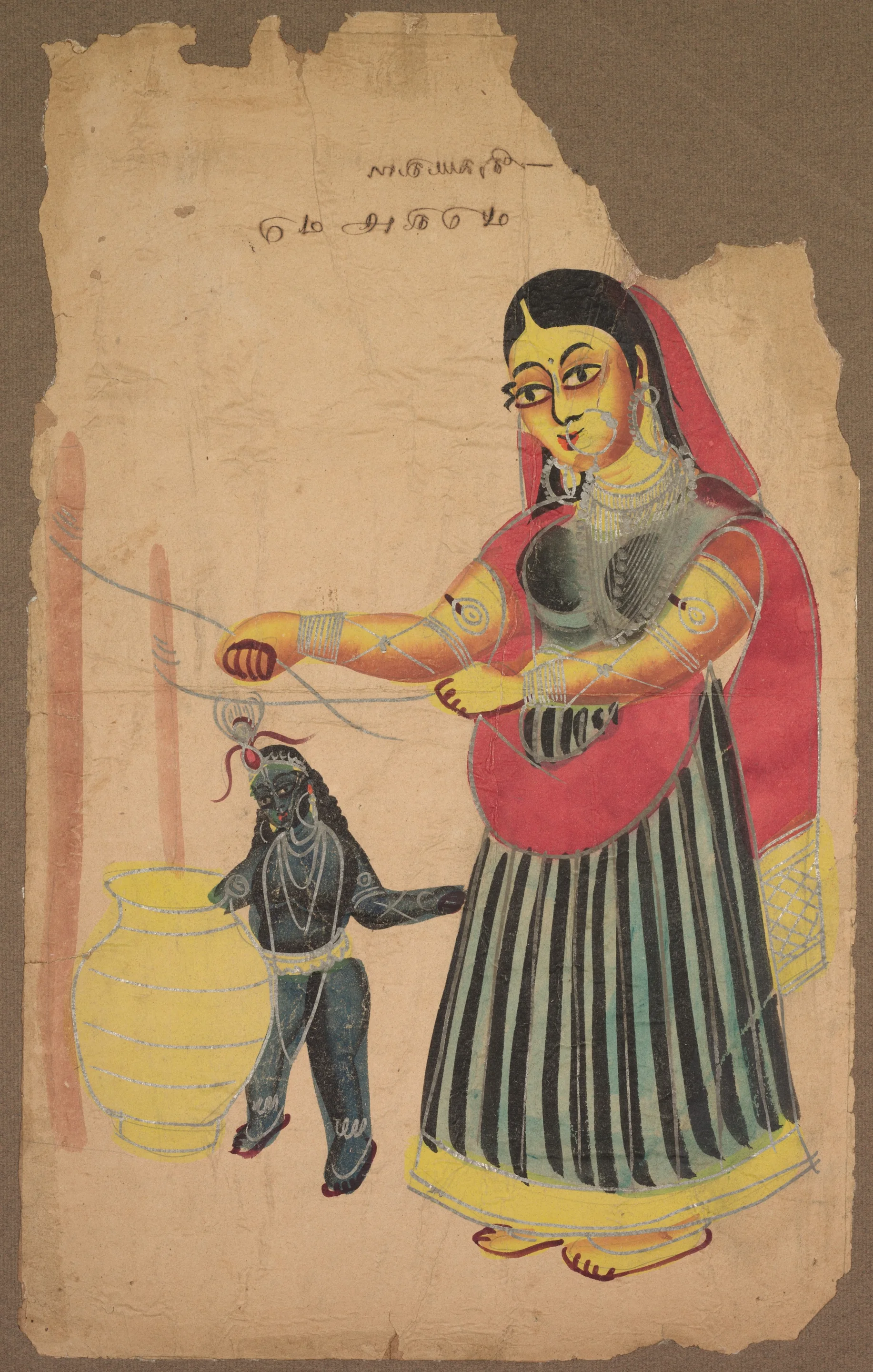
born in the ocean of milk, known as the roar of the thunder-cloud. He made an ocean of milk when he broke the pot in the house of curds,
Note //
The child Krishna breaking the butter-pot is the churning of the ocean of milk again. Editions: 'dadhigrahe' (Adyar) over 'dadhigṛhe'; the sense, 'in the house of curds' or 'in taking the curds', is uncertain.
क्रीडते बालको भूत्वा पूर्ववत्सुमहोदधौ । संहारार्थं च शत्रूणां रक्षणाय च संस्थितः ॥ १८॥
krīḍate bālako bhūtvā pūrvavatsumahodadhau | saṃhārārthaṃ ca śatrūṇāṃ rakṣaṇāya ca saṃsthitaḥ || 18||
and becoming a child, he plays, as before in the great ocean. He stands ready to destroy his enemies and to protect.
Note //
Editions agree.
कृपार्थे सर्वभूतानां गोप्तारं धर्ममात्मजम् । यत्स्रष्टुमीश्वरेणासीत्तच्चक्रं ब्रह्मरूपधृक् ॥ १९॥
kṛpārthe sarvabhūtānāṃ goptāraṃ dharmamātmajam | yatsraṣṭumīśvareṇāsīttaccakraṃ brahmarūpadhṛk || 19||
For compassion toward all beings, Dharma, the protector, his own son; the discus, which the Lord had in order to create, bears the form of Brahman.
Note //
Obscure; rendered literally. Pending review. Editions: '-dhṛk' (Adyar) over '-dṛk' (sanskritdocuments.org).
जयन्तीसम्भवो वायुश्चमरो धर्मसंज्ञितः । यस्यासौ ज्वलनाभासः खड्गरूपो महेश्वरः ॥ २०॥
jayantīsambhavo vāyuścamaro dharmasaṃjñitaḥ | yasyāsau jvalanābhāsaḥ khaḍgarūpo maheśvaraḥ || 20||
The wind born of Jayanti is the fly-whisk, called Dharma. His sword, shining like fire, is the Great Lord.
Note //
Editions agree.
कश्यपोलूखलः ख्यातो रज्जुर्माताऽदितिस्तथा । चक्रं शङ्खं च संसिद्धिं बिन्दुं च सर्वमूर्धनि ॥ २१॥
kaśyapolūkhalaḥ khyāto rajjurmātā'ditistathā | cakraṃ śaṅkhaṃ ca saṃsiddhiṃ binduṃ ca sarvamūrdhani || 21||
The mortar is known as Kashyapa; the rope is the mother, Aditi. The discus, the conch, fulfilment, and the point at the crown of all,
Note //
The mortar and rope with which Yashoda tied the child are the parents of the gods. The second line runs into verse 22. Editions agree.
यावन्ति देवरूपाणि वदन्ति विबुधा जनाः । नमन्ति देवरूपेभ्य एवमादि न संशयः ॥ २२॥
yāvanti devarūpāṇi vadanti vibudhā janāḥ | namanti devarūpebhya evamādi na saṃśayaḥ || 22||
whatever forms of the gods the wise speak of, and to which people bow: all are such as these, without doubt.
Note //
Editions: 'vibudhā' (Adyar) over 'vibhudhā' (sanskritdocuments.org).
गदा च कालिका साक्षात्सर्वशत्रुनिबर्हिणी । धनुः शार्ङ्गं स्वमाया च शरत्कालः सुभोजनः ॥ २३॥
gadā ca kālikā sākṣātsarvaśatrunibarhiṇī | dhanuḥ śārṅgaṃ svamāyā ca śaratkālaḥ subhojanaḥ || 23||
His mace is Kali herself, who destroys every enemy; his bow Sharnga is his own maya; the autumn is his good meal.
Note //
Editions agree.
अब्जकाण्डं जगद्बीजं धृतं पाणौ स्वलीलया । गरुडो वटभाण्डीरः सुदामा नारदो मुनिः ॥ २४॥
abjakāṇḍaṃ jagadbījaṃ dhṛtaṃ pāṇau svalīlayā | garuḍo vaṭabhāṇḍīraḥ sudāmā nārado muniḥ || 24||
The lotus stalk he holds in his hand, in play, is the seed of the world. Garuda is the Bhandira banyan; Sudama is the sage Narada.
Note //
Editions: 'jagadbījaṃ' (Adyar) over 'jagatbījaṃ' (sanskritdocuments.org).
वृन्दा भक्तिः क्रिया बुद्धिः सर्वजन्तुप्रकाशिनी । तस्मान्न भिन्नं नाभिन्नमाभिर्भिन्नो न वै विभुः । भूमावुत्तारितं सर्वं वैकुण्ठं स्वर्गवासिनाम् ॥ २५॥ सर्वतीर्थफलं लभते य एवं वेद । देहबन्धाद्विमुच्यते इत्युपनिषत् ॥
vṛndā bhaktiḥ kriyā buddhiḥ sarvajantuprakāśinī | tasmānna bhinnaṃ nābhinnamābhirbhinno na vai vibhuḥ | bhūmāvuttāritaṃ sarvaṃ vaikuṇṭhaṃ svargavāsinām || 25|| sarvatīrthaphalaṃ labhate ya evaṃ veda | dehabandhādvimucyate ityupaniṣat ||
Vrinda is devotion; action is understanding, which lights up every creature. So they are neither different nor not different; the all-pervading one is not different from them. All the Vaikuntha of those who live in heaven has been brought down to earth. Whoever knows this gains the fruit of every holy place; he is freed from the bondage of the body. This is the Upanishad.
Note //
The last verse, with three lines in both editions. 'Neither different nor not different' (na bhinnaṃ nābhinnam): the powers and companions are not separate from Krishna, nor is he divided by them. The text ends in prose: 'Whoever knows this gains the fruit of all pilgrimages and is freed from the bond of the body.' Editions agree (the Adyar copy runs 'kriyā-buddhiḥ' together). Pending review.
No public-domain English translation exists for this text; the Sanskrit is shown.
The renderings on this page are shared under CC BY-NC 4.0, in the words of Pranav Ashar.