Turiyatita Upanishad
In the words of Pranav Ashar
How we renderThe heart of the Turiyatita
In brief
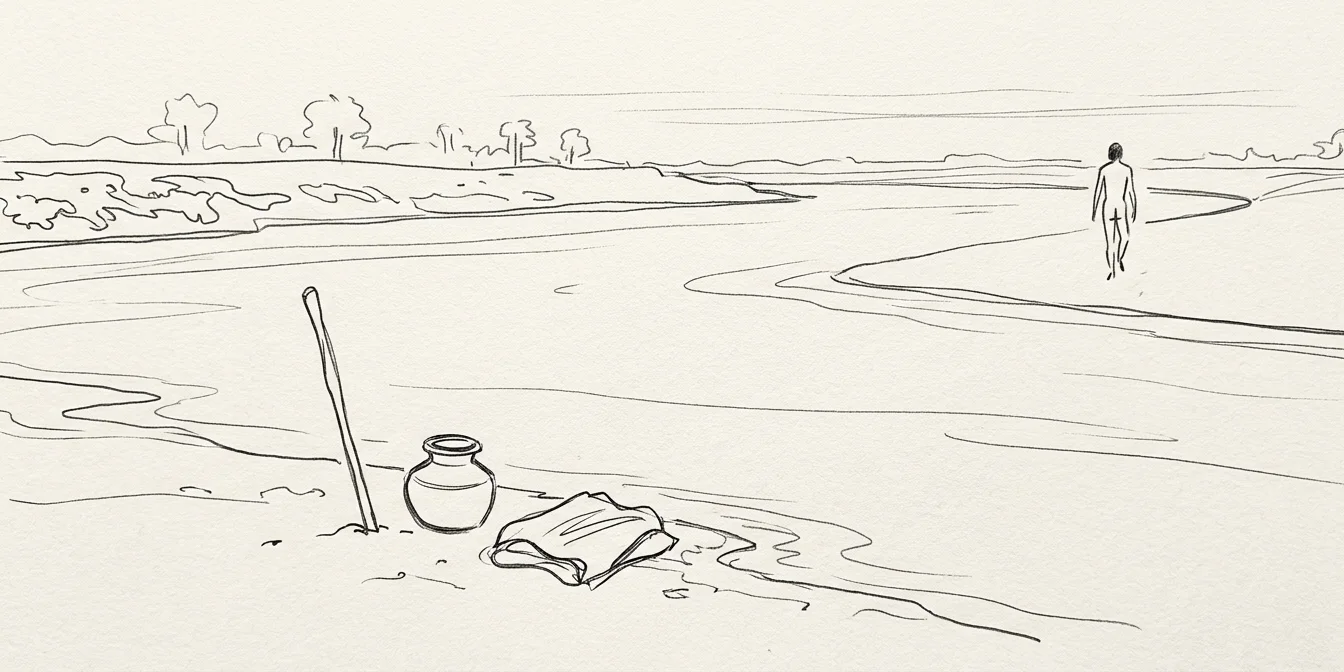
Brahma asks what the way of the avadhutas beyond the fourth is. Narayana answers: such a one is very rare. He passes through the orders of renunciation one by one, and, having known the whole world by attending to his own nature, lets go of staff, pot, cord, cloth and every rite into the water, and goes naked. He lives without mantras, leaves behind merit and demerit, knowledge and ignorance, sees his body as a corpse, takes what comes, hides his own state, and holds that there is no one other than himself.
- Beyond the fourth
- Giving up even the marks of renunciation
- Beyond knowledge and ignorance
- No one other than oneself
- Hidden, silent, alone
अथ तुरीयातीतावधूतानां कोऽयं मार्गस्तेषां का स्थितिरिति पितामहो भगवन्तं पितरमादिनारायणं परिसमेत्योवाच । तमाह भगवान्नारायणो योऽयमवधूतमार्गस्थो लोके दुर्लभतरो नतु बाहुल्यो यद्येको भवति स एव नित्यपूतः स एव वैराग्यमूर्तिः स एव ज्ञानाकारः स एव वेदपुरुष इति ज्ञानिनो मन्यन्ते । महापुरुषो यस्तच्चित्तं मय्येवावतिष्ठते । अहं च तस्मिन्नेवावस्थितः ।
atha turīyātītāvadhūtānāṃ ko'yaṃ mārgasteṣāṃ kā sthitiriti pitāmaho bhagavantaṃ pitaramādinārāyaṇaṃ parisametyovāca | tamāha bhagavānnārāyaṇo yo'yamavadhūtamārgastho loke durlabhataro natu bāhulyo yadyeko bhavati sa eva nityapūtaḥ sa eva vairāgyamūrtiḥ sa eva jñānākāraḥ sa eva vedapuruṣa iti jñānino manyante | mahāpuruṣo yastaccittaṃ mayyevāvatiṣṭhate | ahaṃ ca tasminnevāvasthitaḥ |
Brahma, the grandfather, came to his father, the blessed first Narayana, and asked: 'The avadhutas : what is their way? How do they live?' The blessed Narayana said to him: 'One who stands on the avadhuta's way is very hard to find in the world. They are not many; if there is even one, he alone is ever pure, he alone is dispassion in person, he alone is knowledge in form, he alone is the Person the Veda speaks of: so the wise hold. The mind of that great one rests in me alone, and I abide in him.'
Note //
'Avadhuta', 'one who has shaken off', is the renunciant who has shaken off everything, even the rules of renunciation. 'Beyond the fourth' (turīyātīta): beyond turiya, the fourth, as a name. The opening follows the Paramahamsa Upanishad (1) closely. Editions: 'bhagavān nārāyaṇo' (Adyar collection) corrects 'bhagavan nārāyaṇo' in sanskritdocuments.org.
सोऽयमादौ तावत्क्रमेण कुटीचको बहूदकत्वं प्राप्य बहूदको हंसत्वमवलम्ब्य हंसः परमहंसो भूत्वा स्वरूपानुसन्धानेन सर्वप्रपञ्चं विदित्वा दण्डकमण्डलुकटिसूत्रकौपीनाच्छादनं स्वविध्युक्तक्रियादिकं सर्वमप्सु संन्यस्य दिगम्बरो भूत्वा विवर्णजीर्णवल्कलाजिनपरिग्रहमपि संत्यज्य तदूर्ध्वममन्त्रवदाचरन्क्षौराभ्यङ्गस्नानोर्ध्वपुण्ड्रादिकं विहाय लौकिकवैदिकमप्युपसंहृत्य
so'yamādau tāvatkrameṇa kuṭīcako bahūdakatvaṃ prāpya bahūdako haṃsatvamavalambya haṃsaḥ paramahaṃso bhūtvā svarūpānusandhānena sarvaprapañcaṃ viditvā daṇḍakamaṇḍalukaṭisūtrakaupīnācchādanaṃ svavidhyuktakriyādikaṃ sarvamapsu saṃnyasya digambaro bhūtvā vivarṇajīrṇavalkalājinaparigrahamapi saṃtyajya tadūrdhvamamantravadācarankṣaurābhyaṅgasnānordhvapuṇḍrādikaṃ vihāya laukikavaidikamapyupasaṃhṛtya
'First, step by step, the hut-dweller becomes a wanderer among the holy waters; the wanderer takes up the life of the swan; the swan becomes the supreme swan. Then, by attending to his own nature, he , and lets go into the water staff, water-pot, waist-cord, loincloth and cloth, and every rite his rule prescribed. He goes clothed in the directions. He gives up even the faded, worn bark and skin he wore. From then on he lives without mantras. He leaves off shaving, oiling, bathing, the vertical mark and the rest, and draws back from worldly and Vedic custom alike.'
Note //
The four orders of renunciants, kuṭīcaka, bahūdaka, haṃsa and paramahaṃsa, are passed through in order (compare Bhikshuka Upanishad). 'Knows the whole world' (sarvaprapañcaṃ viditvā): knows it as appearance, by attending to his own nature (svarūpānusandhāna). 'Clothed in the directions' (digambara): naked. Editions agree.
सर्वत्र पुण्यापुण्यवर्जितो ज्ञानाज्ञानमपि विहाय शीतोष्णसुखदुःखमानावमानं निर्जित्य वासनात्रयपूर्वकं निन्दानिन्दागर्वमत्सरदम्भदर्पद्वेषकामक्रोधलोभमोहहर्षामर्षासूयात्मसंरक्षणादिकं दग्ध्वा स्ववपुः कुणपाकारमिव पश्यन्नयत्नेनानियमेन लाभालाभौ समौ कृत्वा गोवृत्त्या प्राणसन्धारणं कुर्वन्यत्प्राप्तं तेनैव निर्लोलुपः सर्वविद्यापाण्डित्यप्रपञ्चं भस्मीकृत्य स्वरूपं गोपयित्वा
sarvatra puṇyāpuṇyavarjito jñānājñānamapi vihāya śītoṣṇasukhaduḥkhamānāvamānaṃ nirjitya vāsanātrayapūrvakaṃ nindānindāgarvamatsaradambhadarpadveṣakāmakrodhalobhamohaharṣāmarṣāsūyātmasaṃrakṣaṇādikaṃ dagdhvā svavapuḥ kuṇapākāramiva paśyannayatnenāniyamena lābhālābhau samau kṛtvā govṛttyā prāṇasandhāraṇaṃ kurvanyatprāptaṃ tenaiva nirlolupaḥ sarvavidyāpāṇḍityaprapañcaṃ bhasmīkṛtya svarūpaṃ gopayitvā
'Free of merit and demerit everywhere, leaving behind even knowledge and ignorance, mastering cold and heat, pleasure and pain, honour and dishonour, burning away, with the three kinds of tendency, blame and praise, pride, jealousy, pretence, arrogance, hatred, desire, anger, greed, delusion, elation, resentment, envy, the guarding of oneself, and the rest, seeing his own body as a corpse, without effort, without rule, holding gain and loss as the same, keeping the breath in the body , content with whatever comes, without craving, burning to ash the whole display of learning, hiding his own nature:'
Note //
'Even knowledge and ignorance' (jñānājñānam api): see the insight. 'The three kinds of tendency' (vāsanā-traya) are those of the world, of scripture and of the body. 'As a cow grazes' (go-vṛtti): eating what is at hand, without preparing it. 'Hiding his own nature': not showing his state, so as not to be honoured for it. Editions: 'śītoṣṇa' (sanskritdocuments.org) corrects 'śīvoṣṇa' in the Adyar collection.
ज्येष्ठाज्येष्ठत्वानपलापकः सर्वोत्कृष्टत्वसर्वात्मकत्वाद्वैतं कल्पयित्वा मत्तो व्यतिरिक्तः कश्चिन्नान्योऽस्तीति देवगुह्यादिधनमात्मन्युपसंहृत्य दुःखेन नोद्विग्नः सुखेन नानुमोदको रागे निःस्पृहः सर्वत्र शुभाशुभयोरनभिस्नेहः सर्वेन्द्रियोपरमः स्वपूर्वापन्नाश्रमाचारविद्याधर्मप्राभवमननुस्मरंस्त्यक्तवर्णाश्रमाचारः
jyeṣṭhājyeṣṭhatvānapalāpakaḥ sarvotkṛṣṭatvasarvātmakatvādvaitaṃ kalpayitvā matto vyatiriktaḥ kaścinnānyo'stīti devaguhyādidhanamātmanyupasaṃhṛtya duḥkhena nodvignaḥ sukhena nānumodako rāge niḥspṛhaḥ sarvatra śubhāśubhayoranabhisnehaḥ sarvendriyoparamaḥ svapūrvāpannāśramācāravidyādharmaprābhavamananusmaraṃstyaktavarṇāśramācāraḥ
'not denying that some are higher and some lower, yet holding non-duality, that he is the highest and the Self of all, "there is no one other than me, no one set apart from me", gathering into the Self every treasure, even the secret wealth of the gods; not shaken by sorrow, not delighted by pleasure, without longing for what attracts, not clinging anywhere to good or bad, all the senses at rest, not recalling the customs, learning, duties and standing of the stages he once lived in, having let go of the conduct of caste and stage of life:'
Note //
'Not denying higher and lower' (jyeṣṭhājyeṣṭhatvānapalāpakaḥ): in the world he does not quarrel with distinctions, while knowing that there is no second. 'There is no one other than me' is said from the Self, not from the person; compare Atharvashiras 1. Editions: 'ananusmaraṃs tyakta' (Adyar collection) over 'ananusmaran tyakta'.
सर्वदा दिवानक्तसमत्वेनास्वप्नः सर्वदा संचारशीलो देहमात्रावशिष्टो जलस्थलकमण्डलुः सर्वदानुन्मत्तो बालोन्मत्तपिशाचवदेकाकी संचरन्नसंभाषणपरः स्वरूपध्यानेन निरालम्बमवलम्ब्य स्वात्मनिष्ठानुकूलेन सर्वं विस्मृत्य तुरीयातीतावधूतवेषेणाद्वैतनिष्ठापरः प्रणवात्मकत्वेन देहत्यागं करोति यः सोऽवधूतः स कृतकृत्यो भवतीत्युपनिषत् ॥ ॐ तत्सत् ॥
sarvadā divānaktasamatvenāsvapnaḥ sarvadā saṃcāraśīlo dehamātrāvaśiṣṭo jalasthalakamaṇḍaluḥ sarvadānunmatto bālonmattapiśācavadekākī saṃcarannasaṃbhāṣaṇaparaḥ svarūpadhyānena nirālambamavalambya svātmaniṣṭhānukūlena sarvaṃ vismṛtya turīyātītāvadhūtaveṣeṇādvaitaniṣṭhāparaḥ praṇavātmakatvena dehatyāgaṃ karoti yaḥ so'vadhūtaḥ sa kṛtakṛtyo bhavatītyupaniṣat || oṃ tatsat ||
'always the same by day and night, so never asleep to it, always on the move, with nothing left but the body, water and ground his only pot, never mad, yet wandering alone like a child, a madman or a ghost, given to silence, by meditating on his own nature , forgetting all, in keeping with his steadiness in the Self, in the guise of the avadhuta , devoted to non-duality, he lets the body go as one with Om. He is the avadhuta. He has done all there is to do.' This is the Upanishad. Om. That is real.
Note //
'Never asleep to it' (asvapna) is read as 'never lost in the dream of the world', since day and night are the same to him. 'Resting on what rests on nothing' (nirālambam avalambya). 'Lets the body go as one with Om' is read, as in the other Sannyasa Upanishads, as living out the body's time in identity with Om until it falls. Editions: 'dehamātrāvaśiṣṭo' (Adyar collection) over 'dehamātravaśiṣṭo'; 'divānakta' (sanskritdocuments.org) corrects 'divanakta'.
No public-domain English translation exists for this text; the Sanskrit is shown.
The renderings on this page are shared under CC BY-NC 4.0, in the words of Pranav Ashar.