Bhikshuka Upanishad
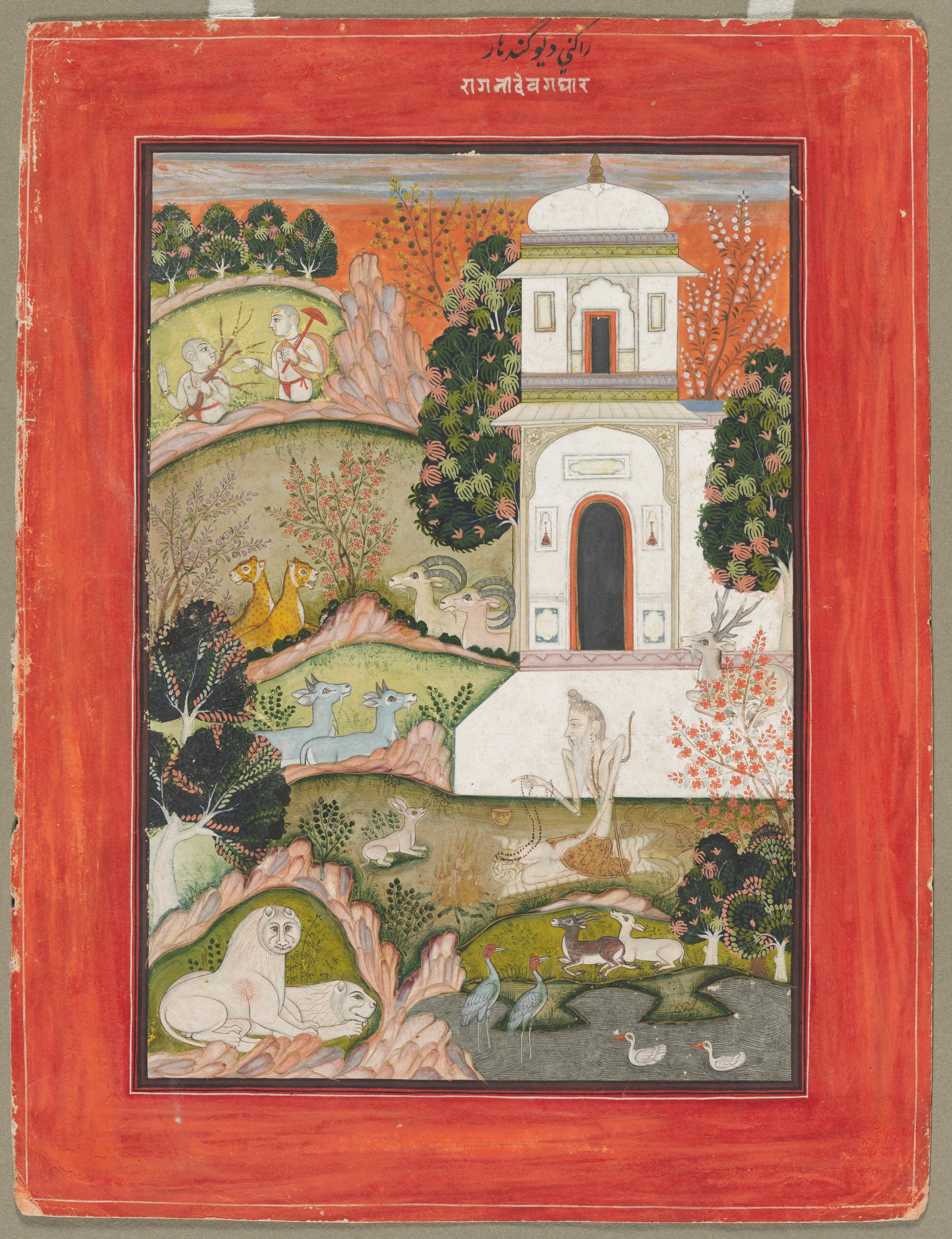
In the words of Pranav Ashar
How we renderThe heart of the Bhikshuka
In brief
There are four kinds of mendicant who seek freedom: the hut-dweller, the wanderer from water to water, the swan and the highest swan. Each is described by how it lives and eats; all of them seek freedom through the path of yoga. The highest swans, sages like Shvetaketu, Jadabharata, Dattatreya and Shuka, live at the foot of trees or in cremation grounds, clothed or naked; for them there is no right and wrong, gain and loss, pure and impure; they see the Self everywhere, and they leave the body as renunciates.
- Four kinds of renunciate
- Beyond right and wrong
- Seeing the Self everywhere
- Living on alms
भिक्षूणां पटलं यत्र विश्रान्तिमगमत्सदा । तन्त्रैपदं ब्रह्मतत्त्वं ब्रह्ममात्रं करोतु माम् ॥
bhikṣūṇāṃ paṭalaṃ yatra viśrāntimagamatsadā | tantraipadaṃ brahmatattvaṃ brahmamātraṃ karotu mām ||
That in which the company of mendicants has always come to rest, the truth of Brahman beyond the three states: may it make me Brahman alone.
Note //
A dedicatory verse from the commentator's tradition, placed before the peace invocation; it is not part of the numbered text.
ॐ अथ भिक्षूणां मोक्षार्थिनां कुटीचकबहूदकहंसपरमहंसाश्चेति चत्वारः ।
oṃ atha bhikṣūṇāṃ mokṣārthināṃ kuṭīcakabahūdakahaṃsaparamahaṃsāśceti catvāraḥ |
Om. Mendicants who seek freedom are of four kinds: the hut-dweller, the wanderer from water to water, the swan and the highest swan.
Note //
Kutichaka, bahudaka, hamsa and paramahamsa are the four traditional orders of sannyasa.
कुटीचका नाम गौतमभरद्वाजयाज्ञवल्क्यवसिष्ठप्रभृतयोऽष्टौ ग्रासांश्चरन्तो योगमार्गे मोक्षमेव प्रार्थयन्ते ।
kuṭīcakā nāma gautamabharadvājayājñavalkyavasiṣṭhaprabhṛtayo'ṣṭau grāsāṃścaranto yogamārge mokṣameva prārthayante |
The hut-dwellers, like Gautama, Bharadvaja, Yajnavalkya, Vasishtha and others, live on eight mouthfuls a day, and seek freedom alone, by the path of yoga.
Note //
अथ बहूदका नाम त्रिदण्डकमण्डलुशिखायज्ञोपवीतकाषायवस्त्रधारिणो ब्रह्मर्षिगृहे मधुमांसं वर्जयित्वाष्टौ ग्रासान्भैक्षाचरणं कृत्वा योगमार्गे मोक्षमेव प्रार्थयन्ते ।
atha bahūdakā nāma tridaṇḍakamaṇḍaluśikhāyajñopavītakāṣāyavastradhāriṇo brahmarṣigṛhe madhumāṃsaṃ varjayitvāṣṭau grāsānbhaikṣācaraṇaṃ kṛtvā yogamārge mokṣameva prārthayante |
The wanderers from water to water carry the triple staff and the water-pot, keep the tuft of hair and the sacred thread, and wear ochre cloth. They beg eight mouthfuls in the houses of priestly seers, avoiding honey and meat, and seek freedom alone, by the path of yoga.
Note //
अथ हंसा नाम ग्राम एकरात्रं नगरे पञ्चरात्रं क्षेत्रे सप्तरात्रं तदुपरि न वसेयुः । गोमूत्रगोमयाहारिणो नित्यं चान्द्रायणपरायणा योगमार्गे मोक्षमेव प्रार्थयन्ते ।
atha haṃsā nāma grāma ekarātraṃ nagare pañcarātraṃ kṣetre saptarātraṃ tadupari na vaseyuḥ | gomūtragomayāhāriṇo nityaṃ cāndrāyaṇaparāyaṇā yogamārge mokṣameva prārthayante |
The swans may stay one night in a village, five in a town, seven at a holy place, and no longer. They live on what the cow gives, its urine and dung, always keep the moon-fast, and seek freedom alone, by the path of yoga.
Note //
The moon-fast (chandrayana) increases and decreases the daily mouthfuls with the waxing and waning moon.
अथ परमहंसा नाम संवर्तकारुणिश्वेतकेतुजडभरतदत्तात्रेयशुकवामदेवहारीतकप्रभृतयोऽष्टौ ग्रासांश्चरन्तो योगमार्गे मोक्षमेव प्रार्थयन्ते । वृक्षमूले शून्यगृहे श्मशानवासिनो वा साम्बरा वा दिगम्बरा वा । न तेषां धर्माधर्मौ लाभालाभौ शुद्धाशुद्धौ द्वैतवर्जिताः समलोष्टाश्मकाञ्चनाः सर्ववर्णेषु भैक्षाचरणं कृत्वा सर्वत्रात्मैवेति पश्यन्ति ।
atha paramahaṃsā nāma saṃvartakāruṇiśvetaketujaḍabharatadattātreyaśukavāmadevahārītakaprabhṛtayo'ṣṭau grāsāṃścaranto yogamārge mokṣameva prārthayante | vṛkṣamūle śūnyagṛhe śmaśānavāsino vā sāmbarā vā digambarā vā | na teṣāṃ dharmādharmau lābhālābhau śuddhāśuddhau dvaitavarjitāḥ samaloṣṭāśmakāñcanāḥ sarvavarṇeṣu bhaikṣācaraṇaṃ kṛtvā sarvatrātmaiveti paśyanti |
The highest swans, like Samvartaka, Aruni, Shvetaketu, Jadabharata, Dattatreya, Shuka, Vamadeva, Haritaka and others, live on eight mouthfuls, and seek freedom alone, by the path of yoga. They live at the foot of trees, in empty houses, or in cremation grounds, clothed or clothed in space. For them there is no , no gain and loss, no pure and impure. Free of duality, they see a clod, a stone and gold as the same. Begging from every class alike, they see that everywhere there is only the Self.
Note //
Shvetaketu is the student taught 'you are that' (Chandogya 6); Vamadeva knew Brahman while still in the womb (Aitareya 2.5); Shuka and Jadabharata are the classic knowers of the Puranas. 'No right and wrong': not licence, but the end of the doer who claims merit and blame.
अथ जातरूपधरा निर्द्वन्द्वा निष्परिग्रहाः शुक्लध्यानपरायणा आत्मनिष्ठाः प्राणसंधारणार्थे यथोक्तकाले भैक्षमाचरन्तः शून्यागारदेवगृहतृणकूटवल्मीकवृक्षमूलकुलालशालाग्निहोत्रशालानदीपुलिनगिरिकन्दरकुहरकोटरनिर्झरस्थण्डिले तत्र ब्रह्ममार्गे सम्यक्सम्पन्नाः शुद्धमानसाः परमहंसाचरणेन संन्यासेन देहत्यागं कुर्वन्ति ते परमहंसा नामेत्युपनिषत् ॥
atha jātarūpadharā nirdvandvā niṣparigrahāḥ śukladhyānaparāyaṇā ātmaniṣṭhāḥ prāṇasaṃdhāraṇārthe yathoktakāle bhaikṣamācarantaḥ śūnyāgāradevagṛhatṛṇakūṭavalmīkavṛkṣamūlakulālaśālāgnihotraśālānadīpulinagirikandarakuharakoṭaranirjharasthaṇḍile tatra brahmamārge samyaksampannāḥ śuddhamānasāḥ paramahaṃsācaraṇena saṃnyāsena dehatyāgaṃ kurvanti te paramahaṃsā nāmetyupaniṣat ||
Naked as they were born, beyond the pairs, owning nothing, given to , established in the Self, begging at the proper time only to keep the breath going, they live in empty houses, temples, heaps of straw, anthills, at the foot of trees, in potters' sheds, in the halls of the sacred fire, on river sands, in mountain caves, hollows and clefts, by waterfalls, on bare ground. Well established on the path of Brahman, pure in mind, they leave the body as renunciates, in the way of the highest swans. These are called the highest swans. This is the Upanishad.
Note //
'They leave the body as renunciates' (sannyasena dehatyagam kurvanti): they live out their lives and die in renunciation; it does not mean ending life deliberately. 'Pure meditation' (shukla-dhyana): meditation on the Self, free of objects.
The renderings on this page are shared under CC BY-NC 4.0, in the words of Pranav Ashar.