Avyakta Upanishad
In the words of Pranav Ashar
How we renderThe heart of the Avyakta
In brief
In the beginning there was nothing: only light, made of knowledge and bliss. It became two, a red and a green; from their joining came the golden egg, and from it Prajapati. He asks what he is and what he must do. A voice answers: you are born of the unmanifest; your work is the manifest. 'It is unknowable; if you want to know it, do not try to grasp it.' After a thousand years of discipline he sees Nrisimha. The way to create is the sacrifice of meditation: offer your own self into me, the fire.
- Before anything was
- The unmanifest cannot be grasped
- Born of the unmanifest, for the manifest
- The sacrifice of meditation
- Offering oneself into the fire
हरिः ॐ । पुरा किलेदं न किञ्चनासीन्न द्यौर्नान्तरिक्षं न पृथिवी केवलं ज्योतीरूपमनाद्यनन्तमनण्वस्थूलरूपमरूपं रूपवदविज्ञेयं ज्ञानरूपमानन्दमयमासीत् । तदनन्यत्तद्द्वेधाभूद्धरितमेकं रक्तमपरम् । तत्र यद्रक्तं तत्पुंसो रूपमभूत् । यद्धरितं तन्मायायाः । तौ समगच्छतः । तयोर्वीर्यमेवमनन्दत् । तदवर्धत । तदण्डमभूद्धैमम् । तत्परिणममानमभूत् । ततः परमेष्ठी व्यजायत ।
hariḥ oṃ | purā kiledaṃ na kiñcanāsīnna dyaurnāntarikṣaṃ na pṛthivī kevalaṃ jyotīrūpamanādyanantamanaṇvasthūlarūpamarūpaṃ rūpavadavijñeyaṃ jñānarūpamānandamayamāsīt | tadananyattaddvedhābhūddharitamekaṃ raktamaparam | tatra yadraktaṃ tatpuṃso rūpamabhūt | yaddharitaṃ tanmāyāyāḥ | tau samagacchataḥ | tayorvīryamevamanandat | tadavardhata | tadaṇḍamabhūddhaimam | tatpariṇamamānamabhūt | tataḥ parameṣṭhī vyajāyata |
Hari Om. In the beginning, they say, there was nothing of this: no heaven, no sky, no earth. There was only light: without beginning or end, neither subtle nor gross, formless, yet as if with form, unknowable, made of knowledge, full of bliss. That, with nothing other than itself, became two: one green, the other red. The red became the form of the Person; the green, the form of maya. The two came together. Their seed rejoiced, and grew. It became a golden egg. The egg ripened, and from it was born the one who stands highest, Prajapati.
Note //
The opening of section 1. 'Nothing of this' (na kiñcana): none of the world, not nothing at all; what was is described as light, knowledge and bliss. 'Formless, yet as if with form' (arūpaṃ rūpavat) is read as 'formless, yet the source of all form'. 'With nothing other than itself' (tad ananyat): the two that come from it are not a second thing beside it; the Person and maya are the one light taken as two, which is how the text's own Advaitic sense is read here. 'Their seed rejoiced' (vīryam evam anandat) is tentative. Editions: 'abhūt' (sanskritdocuments.org) over 'asūt' (Adyar), and 'abhūd dhaimam' (Adyar) over the slip 'abhūdhaimam' (sanskritdocuments.org); 'na kiñcanāsīn' (Adyar collection) corrects 'na kiñcannāsīn'.
सोऽभिजिज्ञासत किं मे कुलं किं मे कृत्यमिति । तं ह वागदृश्यमानाभ्युवाच भो भो प्रजापते त्वमव्यक्तादुत्पन्नोऽसि व्यक्तं ते कृत्यमिति । किमव्यक्तं यस्मादहमासिषम् । किं तद्व्यक्तं यन्मे कृत्यमिति । साब्रवीदविज्ञेयं हि तत्सौम्य तेजः । यदविज्ञेयं तदव्यक्तम् । तच्चेज्जिज्ञाससि मावगच्छेति । स होवाच कैषा त्वं ब्रह्मवाग्यदसि शंसात्मानमिति । सा त्वब्रवीत्तपसा मां विजिज्ञासस्वेति । स ह सहस्रं समा ब्रह्मचर्यमध्युवासाध्युवास ॥ १॥
so'bhijijñāsata kiṃ me kulaṃ kiṃ me kṛtyamiti | taṃ ha vāgadṛśyamānābhyuvāca bho bho prajāpate tvamavyaktādutpanno'si vyaktaṃ te kṛtyamiti | kimavyaktaṃ yasmādahamāsiṣam | kiṃ tadvyaktaṃ yanme kṛtyamiti | sābravīdavijñeyaṃ hi tatsaumya tejaḥ | yadavijñeyaṃ tadavyaktam | taccejjijñāsasi māvagaccheti | sa hovāca kaiṣā tvaṃ brahmavāgyadasi śaṃsātmānamiti | sā tvabravīttapasā māṃ vijijñāsasveti | sa ha sahasraṃ samā brahmacaryamadhyuvāsādhyuvāsa || 1||
Prajapati wished to know: 'What is my origin? What is my task?' An unseen voice said to him: 'Prajapati, you are born of . The manifest is your task.' 'What is , from which I came? What is the manifest, which is my task?' The voice said: 'It is light, dear one, and it cannot be known. What cannot be known is . If you want to know it, .' He said: 'Who are you, the voice of Brahman? Tell me yourself.' She said: 'Know me by discipline.' And for a thousand years he lived the life of discipline, he lived it.
Note //
The end of section 1, after the birth of Prajapati from the golden egg. 'Do not try to grasp it' (mā avagaccha) is the key: the unmanifest is not an object of knowledge; to seek it as one is to miss it. Compare Kena 2.3: 'it is known by one who does not know it as an object'. 'Know me by discipline' (tapas): as in Taittiriya 3, discipline here is turning inward. Editions agree.
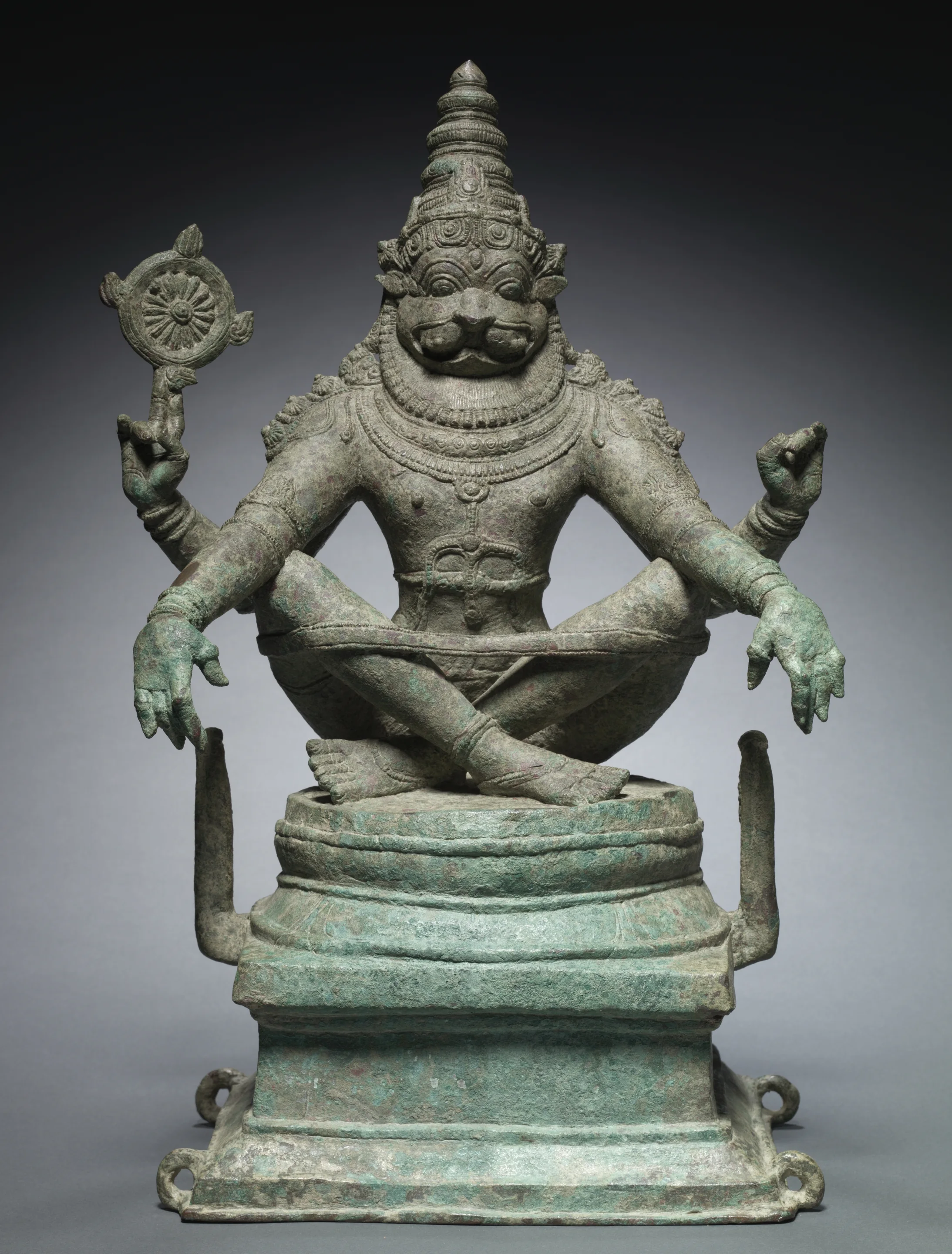
अथापश्यदृचमानुष्टुभीं परमां विद्यां यस्याङ्गान्यन्ये मन्त्राः । यत्र ब्रह्म प्रतिष्ठितम् । विश्वेदेवाः प्रतिष्ठिताः । यस्तां न वेद किमन्यैर्वेदैः करिष्यति । तां विदित्वा स च रक्तं जिज्ञासयामास । तामेवमनूचानां गायन्नासिष्ट । सहस्रं समा आद्यन्तनिहितोङ्कारेण पदान्यगायत् । सहस्रं समास्तथैवाक्षरशः । ततोऽपश्यज्ज्योतिर्मयं श्रियालिङ्गितं सुपर्णरथं शेषफणाच्छादितमौलिं मृगमुखं नरवपुषं शशिसूर्यहव्यवाहनात्मकनयनत्रयम् । ततः प्रजापतिः प्रणिपपात नमो नम इति । तथैवर्चाथ तमस्तौत् ।
athāpaśyadṛcamānuṣṭubhīṃ paramāṃ vidyāṃ yasyāṅgānyanye mantrāḥ | yatra brahma pratiṣṭhitam | viśvedevāḥ pratiṣṭhitāḥ | yastāṃ na veda kimanyairvedaiḥ kariṣyati | tāṃ viditvā sa ca raktaṃ jijñāsayāmāsa | tāmevamanūcānāṃ gāyannāsiṣṭa | sahasraṃ samā ādyantanihitoṅkāreṇa padānyagāyat | sahasraṃ samāstathaivākṣaraśaḥ | tato'paśyajjyotirmayaṃ śriyāliṅgitaṃ suparṇarathaṃ śeṣaphaṇācchāditamauliṃ mṛgamukhaṃ naravapuṣaṃ śaśisūryahavyavāhanātmakanayanatrayam | tataḥ prajāpatiḥ praṇipapāta namo nama iti | tathaivarcātha tamastaut |
Then he saw the verse in the anushtubh metre, the highest knowledge, of which all other mantras are the limbs, in which Brahman stands, in which all the gods stand. Whoever does not know it, what will he do with the other Vedas? Knowing it, he sought to know the red one. He sat singing the verse as it had been handed down. For a thousand years he sang its words, with Om set at the beginning and the end; for a thousand years more, syllable by syllable. Then he saw: one made of light, embraced by Shri, whose chariot is the eagle, whose head is sheltered by the hoods of Shesha, with a lion's face and a man's body, and three eyes, the moon, the sun and fire. Prajapati fell down before him: 'Homage, homage.' And then he praised him with that same verse.
Note //
Section 2. The verse is the anushtubh mantra of Nrisimha, which sanskritdocuments.org prints after this section: 'ugraṃ vīraṃ mahāviṣṇuṃ jvalantaṃ sarvatomukham, nṛsiṃhaṃ bhīṣaṇaṃ bhadraṃ mṛtyumṛtyuṃ namāmy aham' (it has 'sarvatejasam' for 'sarvatomukham', against the words explained in 2.b). 'The red one': the Person, red in 1.a. 'A lion's face' renders mṛgamukha, literally 'a beast's face'. The thousand years of singing are the 'discipline' asked for at the end of section 1. Editions: 'śeṣaphaṇācchāditamauliṃ' and 'jijñāsayāmāsa' (each in one edition) over the slips 'cchaditamauliṃ' (sanskritdocuments.org) and 'jiñjāsayāmāsa' (Adyar).
उग्रमित्याह उग्रः खलु वा एष मृगरूपत्वात् । वीरमित्याह वीरो वा एष वीर्यवत्त्वात् । महाविष्णुमित्याह महतां वा अयं महान्रोदसी व्याप्य स्थितः । ज्वलन्तमित्याह ज्वलन्निव खल्वसाववस्थितः । सर्वतोमुखमित्याह सर्वतः खल्वयं मुखवान्विश्वरूपत्वात् । नृसिंहमित्याह यथा यजुरेवैतत् । भीषणमित्याह भीषा वा अस्मादादित्य उदेति भीतश्चन्द्रमा भीतो वायुर्वाति भीतोऽग्निर्दहति भीतः पर्जन्यो वर्षति । भद्रमित्याह भद्रः खल्वयं श्रिया जुष्टः । मृत्योर्मृत्युमित्याह मृत्योर्वा अयं मृत्युरमृतत्वं प्रजानामन्नादानाम् । नमामीत्याह यथा यजुरेवैतत् । अहमित्याह यथा यजुरेवैतत् ॥ २॥
ugramityāha ugraḥ khalu vā eṣa mṛgarūpatvāt | vīramityāha vīro vā eṣa vīryavattvāt | mahāviṣṇumityāha mahatāṃ vā ayaṃ mahānrodasī vyāpya sthitaḥ | jvalantamityāha jvalanniva khalvasāvavasthitaḥ | sarvatomukhamityāha sarvataḥ khalvayaṃ mukhavānviśvarūpatvāt | nṛsiṃhamityāha yathā yajurevaitat | bhīṣaṇamityāha bhīṣā vā asmādāditya udeti bhītaścandramā bhīto vāyurvāti bhīto'gnirdahati bhītaḥ parjanyo varṣati | bhadramityāha bhadraḥ khalvayaṃ śriyā juṣṭaḥ | mṛtyormṛtyumityāha mṛtyorvā ayaṃ mṛtyuramṛtatvaṃ prajānāmannādānām | namāmītyāha yathā yajurevaitat | ahamityāha yathā yajurevaitat || 2||
He says 'fierce': he is fierce, for he has the form of a beast. He says 'hero': he is a hero, for he is full of strength. He says 'great Vishnu': he is the greatest of the great; he stands pervading heaven and earth. He says 'blazing': he stands there as if on fire. He says 'facing every way': he has faces on every side, for every form is his. He says 'man-lion': the word says what it means. He says 'terrible': from fear of him the sun rises; in fear the moon moves, in fear the wind blows, in fear fire burns, in fear the rain-cloud rains. He says 'auspicious': he is auspicious, for Shri attends him. He says 'death of death': he is the death of death, the deathlessness of all creatures that eat food. He says 'I bow': the word says what it means. He says 'I': the word says what it means.
Note //
Each word of the verse is explained in turn. 'The word says what it means' (yathā yajur evaitat, literally 'just as the formula is'). 'From fear of him the sun rises' echoes Taittiriya 2.8 and Katha 2.3.3 (Hume 6.3): all things keep their order because of him. 'Death of death': what ends death itself. The verse ends with 'I' (aham); in the text's Advaitic sense the one who bows and the one bowed to are finally not two, as the opening invocation asks ('make me Brahman alone, free of every opposite'). Interpretive. Editions agree (the Adyar collection writes 'nama iti' as 'namaiti').
अथ भगवांस्तमब्रवीत्प्रजापते प्रीतोऽहं किं तवेप्सितं तदाशंसेति । स होवाच भगवन्नव्यक्तादुत्पन्नोऽस्मि व्यक्तं मम कृत्यमिति पुराश्रावि । तत्राव्यक्तं भवानित्यज्ञायि व्यक्तं मे कथयेति । व्यक्तं वै विश्वं चराचरात्मकम् । यद्व्यज्यते तद्व्यक्तस्य व्यक्तत्वमिति ।
atha bhagavāṃstamabravītprajāpate prīto'haṃ kiṃ tavepsitaṃ tadāśaṃseti | sa hovāca bhagavannavyaktādutpanno'smi vyaktaṃ mama kṛtyamiti purāśrāvi | tatrāvyaktaṃ bhavānityajñāyi vyaktaṃ me kathayeti | vyaktaṃ vai viśvaṃ carācarātmakam | yadvyajyate tadvyaktasya vyaktatvamiti |
Then the Lord said to him: 'Prajapati, I am pleased. What do you wish for? Ask it.' He said: 'Lord, long ago I heard that I was born of and that the manifest is my task. Of these, I have come to know that you are . Tell me the manifest.' 'The manifest is the whole world, moving and unmoving. What is made manifest: that is the manifestness of the manifest.'
Note //
The opening of section 3, after Prajapati's praise of Nrisimha (2.b). The unmanifest is the Lord himself; the manifest is the same, 'made manifest'. Editions agree.
स होवाच न शक्नोमि जगत्स्रष्टुमुपायं मे कथयेति । तमुवाच पुरुषः प्रजापते शृणु सृष्टेरुपायं परमं यं विदित्वा सर्वं ज्ञास्यसि । सर्वत्र शक्ष्यसि सर्वं करिष्यसि । मय्यग्नौ स्वात्मानं हविर्ध्यायेत्तयैवानुष्टुभर्चा । ध्यानयज्ञोऽयमेव । एतद्वै महोपनिषद्देवानां गुह्यम् । न ह वा एतस्य साम्ना नर्चा न यजुषार्थो नु विद्यते । य इमां वेद स सर्वान्कामानवाप्य सर्वांल्लोकाञ्जित्वा मामेवाभ्युपैति न स पुनरावर्तते य एवं वेदेति ॥ ३॥
sa hovāca na śaknomi jagatsraṣṭumupāyaṃ me kathayeti | tamuvāca puruṣaḥ prajāpate śṛṇu sṛṣṭerupāyaṃ paramaṃ yaṃ viditvā sarvaṃ jñāsyasi | sarvatra śakṣyasi sarvaṃ kariṣyasi | mayyagnau svātmānaṃ havirdhyāyettayaivānuṣṭubharcā | dhyānayajño'yameva | etadvai mahopaniṣaddevānāṃ guhyam | na ha vā etasya sāmnā narcā na yajuṣārtho nu vidyate | ya imāṃ veda sa sarvānkāmānavāpya sarvāṃllokāñjitvā māmevābhyupaiti na sa punarāvartate ya evaṃ vedeti || 3||
He said: 'I cannot create the world. Tell me the way.' The Person said to him: 'Prajapati, hear the highest way of creating. Knowing it, you will know everything, be able to do everything, make everything. With that same anushtubh verse, let one meditate on one's own self as the oblation, offered into me, the fire. This is . This is the great Upanishad, the secret of the gods. For this one there is no need of chant, verse or sacrificial formula. Whoever knows this gains every wish, wins every world, and comes to me alone. He does not return, whoever knows this.'
Note //
The Lord's teaching on how to create: not a rite but an inner offering of oneself. 'No need of chant, verse or formula': the outer rites are fulfilled in this one. 'Comes to me alone': the offerer is not lost but returns to his source. Editions: 'ya imāṃ veda' (sanskritdocuments.org 'ya imā veda' is a misprint, as in the Adyar collection; corrected). Pending review.
प्रजापतिस्तं यज्ञाय वसीयांसमात्मानं मन्यमानो मनोयज्ञेनेजे । सप्रणवया तयैवर्चा हविर्ध्यात्वात्मानमात्मन्यग्नौ जुहुयात् । सर्वमजानात्सर्वत्राशकत्सर्वमकरोत् । य एवं विद्वानिमं ध्यानयज्ञमनुतिष्ठेत्स सर्वज्ञोऽनन्तशक्तिः सर्वकर्ता भवति । स सर्वांल्लोकाञ्जित्वा ब्रह्म परं प्राप्नोति ॥ ४॥
prajāpatistaṃ yajñāya vasīyāṃsamātmānaṃ manyamāno manoyajñeneje | sapraṇavayā tayaivarcā havirdhyātvātmānamātmanyagnau juhuyāt | sarvamajānātsarvatrāśakatsarvamakarot | ya evaṃ vidvānimaṃ dhyānayajñamanutiṣṭhetsa sarvajño'nantaśaktiḥ sarvakartā bhavati | sa sarvāṃllokāñjitvā brahma paraṃ prāpnoti || 4||
Prajapati, thinking himself the best offering for that sacrifice, worshipped with the sacrifice of the mind. With that verse and Om, meditating on himself as the oblation, he offered the self into the Self, as into fire. He knew everything, could do everything, made everything. Whoever, knowing this, performs this sacrifice of meditation, becomes all-knowing, of endless power, the maker of all. Having won all the worlds, he reaches the highest Brahman.
Note //
Section 4. 'Offered the self into the Self' (ātmānam ātmany agnau juhuyāt): the individual self offered into the Self, which is the fire. Read in the Advaita sense, what is offered is the I-claim; what receives it is what one is. Editions: 'yajñāya' (Adyar collection) over 'yajñāyaṃ' (sanskritdocuments.org).
अथ प्रजापतिर्लोकान्सिसृक्षमाणस्तस्या एव विद्याया यानि त्रिंशदक्षराणि तेभ्यस्त्रींल्लोकान् । अथ द्वे द्वे अक्षरे ताभ्यामुभयतो दधार । तस्या एवर्चो द्वात्रिंशद्भिरक्षरैस्तान्देवान्निर्ममे । सर्वैरेव स इन्द्रोऽभवत् । तस्मादिन्द्रो देवानामधिकोऽभवत् । य एवं वेद समानानामधिको भवेत् ।
atha prajāpatirlokānsisṛkṣamāṇastasyā eva vidyāyā yāni triṃśadakṣarāṇi tebhyastrīṃllokān | atha dve dve akṣare tābhyāmubhayato dadhāra | tasyā evarco dvātriṃśadbhirakṣaraistāndevānnirmame | sarvaireva sa indro'bhavat | tasmādindro devānāmadhiko'bhavat | ya evaṃ veda samānānāmadhiko bhavet |
Then Prajapati, wishing to bring forth the worlds, from the thirty syllables of that same knowledge made the three worlds; and with the remaining two and two syllables he held them on either side. With the thirty-two syllables of that verse he shaped the gods. From all of them together he himself became Indra; so Indra became the foremost of the gods. Whoever knows this becomes the foremost among his equals.
Note //
Section 5. The anushtubh has thirty-two syllables; the text derives the worlds, gods, classes, day and night, Vedas and metres from its parts. The verb for the three worlds is understood ('made'). The point, in the text's own sense: everything comes from the one verse, as everything comes from the one Lord it names. Editions agree.
तस्या एकादशभिः पादैरेकादश रुद्रान्निर्ममे । तस्या एकादशभिरेकादशादित्यान्निर्ममे । सर्वैरेव स विष्णुरभवत् । तस्माद्विष्णुरादित्यानामधिकोऽभवत् । य एवं वेद समानानामधिको भवेत् । स चतुर्भिश्चतुर्भिरक्षरैरष्टौ वसूनजनयत् । स तस्या आद्यैर्द्वादशभिरक्षरैर्ब्राह्मणमजनयत् । दशभिर्दशभिर्विट्क्षत्रे । तस्माद्ब्राह्मणो मुख्यो भवति । एवं तन्मुख्यो भवति य एवं वेद । तूष्णीं शूद्रमजनयत्तस्माच्छूद्रो निर्विद्योऽभवत् ।
tasyā ekādaśabhiḥ pādairekādaśa rudrānnirmame | tasyā ekādaśabhirekādaśādityānnirmame | sarvaireva sa viṣṇurabhavat | tasmādviṣṇurādityānāmadhiko'bhavat | ya evaṃ veda samānānāmadhiko bhavet | sa caturbhiścaturbhirakṣarairaṣṭau vasūnajanayat | sa tasyā ādyairdvādaśabhirakṣarairbrāhmaṇamajanayat | daśabhirdaśabhirviṭkṣatre | tasmādbrāhmaṇo mukhyo bhavati | evaṃ tanmukhyo bhavati ya evaṃ veda | tūṣṇīṃ śūdramajanayattasmācchūdro nirvidyo'bhavat |
With eleven of its parts he shaped the eleven Rudras; with eleven more, the eleven Adityas. From all of them together he himself became Vishnu; so Vishnu became the foremost of the Adityas. Whoever knows this becomes the foremost among his equals. With four and four syllables he brought forth the eight Vasus. With its first twelve syllables he brought forth the Brahmin; with ten and ten, the Vaishya and the Kshatriya. So the Brahmin is the first; whoever knows this becomes first in that way. In silence he brought forth the Shudra; so the Shudra was without learning.
Note //
'Parts' renders pādaiḥ (literally 'feet'), which cannot mean the verse's four feet here; perhaps groups of syllables. The derivation of the four classes from the syllables of the verse, with the Shudra made 'in silence' and so 'without learning', is given as the text has it; it reflects the social order of its time and is not part of the teaching of the Self, which in this same text is the one light from which everything without exception came (1.a). It is not endorsed here. Editions agree. Pending review.
न वेदं दिवा न नक्तमासीदव्यावृतम् । स प्रजापतिरानुष्टुभाभ्यामर्धर्चाभ्यामहोरात्रावकल्पयत् । ततो व्यैच्छत् व्येवास्मा उच्छति । अथो तम एवापहते । ऋग्वेदमस्या आद्यात्पादादकल्पयत् । यजुर्द्वितीयात् । साम तृतीयात् । अथर्वाङ्गिरसश्चतुर्थात् । यदष्टाक्षरपदा तेन गायत्री । यदेकादशपदा तेन त्रिष्टुप् । यच्चतुष्पदा तेन जगती । यद्द्वात्रिंशदक्षरा तेनानुष्टुप् । सा वा एषा सर्वाणि छन्दांसि । य इमां सर्वाणि छन्दांसि वेद । सर्वं जगदानुष्टुभ एवोत्पन्नमनुष्टुप्प्रतिष्ठितं प्रतितिष्ठति यश्चैवं वेद ॥ ५॥
na vedaṃ divā na naktamāsīdavyāvṛtam | sa prajāpatirānuṣṭubhābhyāmardharcābhyāmahorātrāvakalpayat | tato vyaicchat vyevāsmā ucchati | atho tama evāpahate | ṛgvedamasyā ādyātpādādakalpayat | yajurdvitīyāt | sāma tṛtīyāt | atharvāṅgirasaścaturthāt | yadaṣṭākṣarapadā tena gāyatrī | yadekādaśapadā tena triṣṭup | yaccatuṣpadā tena jagatī | yaddvātriṃśadakṣarā tenānuṣṭup | sā vā eṣā sarvāṇi chandāṃsi | ya imāṃ sarvāṇi chandāṃsi veda | sarvaṃ jagadānuṣṭubha evotpannamanuṣṭuppratiṣṭhitaṃ pratitiṣṭhati yaścaivaṃ veda || 5||
This was neither day nor night; nothing was set apart. With the two halves of the anushtubh Prajapati shaped day and night. Then it dawned; and for one who knows this it dawns, and darkness is struck away. From its first foot he shaped the Rig Veda, the Yajur from the second, the Sama from the third, the Atharvangiras from the fourth. Because its feet have eight syllables, it is the gayatri; because of its eleven-syllable feet, the trishtubh; because it has four feet, the jagati; because it has thirty-two syllables, the anushtubh. So this verse is all the metres. Whoever knows it as all the metres: the whole world was born from the anushtubh and stands on the anushtubh; and whoever knows this stands firm.
Note //
'For one who knows this it dawns' (vy evāsmā ucchati): the dawn is also the dawn of knowing. 'Because of its eleven-syllable feet' reads 'yad ekādaśapadā' loosely; the arithmetic of the metres is the text's own. Editions: 'na vedaṃ divā' (that is, 'na vā idaṃ divā'; Adyar collection) corrects 'na vedaṃ ivā' in sanskritdocuments.org. Pending review.
अथ यदा प्रजाः सृष्टा न जायन्ते प्रजापतिः कथं न्विमाः प्रजाः सृजेयमिति चिन्तयन्नुग्रमितीमामृचं गातुमुपाक्रामत् । ततः प्रथमपादादुग्ररूपो देवः प्रादुरभूत् । एकः श्यामः पुरतो रक्तः पिनाकी स्त्रीपुंसरूपस्तं विभज्य स्त्रीषु तस्य स्त्रीरूपं पुंसि च पुंरूपं व्यधात् । स उभाभ्यामंशाभ्यां सर्वमादिष्टः । ततः प्रजाः प्रजायन्ते । य एवं वेद प्रजापतेः सोऽपि त्र्यम्बक इमामृचमुद्गायन्नुद्ग्रथितजटाकलापः प्रत्यग्ज्योतिष्यात्मन्येव रन्तारमिति ।
atha yadā prajāḥ sṛṣṭā na jāyante prajāpatiḥ kathaṃ nvimāḥ prajāḥ sṛjeyamiti cintayannugramitīmāmṛcaṃ gātumupākrāmat | tataḥ prathamapādādugrarūpo devaḥ prādurabhūt | ekaḥ śyāmaḥ purato raktaḥ pinākī strīpuṃsarūpastaṃ vibhajya strīṣu tasya strīrūpaṃ puṃsi ca puṃrūpaṃ vyadhāt | sa ubhābhyāmaṃśābhyāṃ sarvamādiṣṭaḥ | tataḥ prajāḥ prajāyante | ya evaṃ veda prajāpateḥ so'pi tryambaka imāmṛcamudgāyannudgrathitajaṭākalāpaḥ pratyagjyotiṣyātmanyeva rantāramiti |
Then, when the creatures he had made did not multiply, Prajapati thought: 'How am I to bring forth these creatures?' and began to sing this verse, 'Fierce ...'. From its first foot a god of fierce form appeared: one, dark, red in front, holding the bow Pinaka, woman and man in one form. Dividing him, Prajapati set his woman-form in women and his man-form in men. Through those two parts everything was ordered, and from them creatures are born. Whoever knows this is of Prajapati's kind. And he, the three-eyed one, singing out this verse, his matted hair bound high, delights in the Self alone, in the inner light.
Note //
Section 6. The god is Rudra-Shiva as half woman, half man. The second half of the passage is obscure in both editions ('ya evaṃ veda prajāpateḥ so 'pi tryambaka ... pratyagjyotiṣy ātmany eva rantāram iti'); the rendering is tentative, reading 'rantāram' as 'one who delights'. The image fits the text's sense: the god who brings forth all pairs himself rests in the one inner light. Editions: 'sa ubhābhyām aṃśābhyāṃ' and 'pratyagjyotiṣi' (Adyar collection) correct 'ubhābhyānaṃśābhyāṃ' and 'pratyo agjyotiṣi' in sanskritdocuments.org. Interpretive; pending review.
इन्द्रो वै किल देवानामनुजावर आसीत् । तं प्रजापतिरब्रवीद्गच्छ देवानामधिपतिर्भवेति । सोऽगच्छत् । तं देवा ऊचुरनुजावरोऽसि त्वमस्माकं कुतस्त्वाधिपत्यमिति । स प्रजापतिमभ्येत्योवाचैवं देवा ऊचुरनुजावरस्य कुतस्तवाधिपत्यमिति । तं प्रजापतिरिन्द्रं त्रिकलशैरमृतपूर्णैरानुष्टुभाभिमन्त्रितैरभिषिच्य तं सुदर्शनेन दक्षिणतो ररक्ष पाञ्चजन्येन वामतो द्वयेनैव सुरक्षितोऽभवत् । रौक्मे फलके सूर्यवर्चसि मन्त्रमानुष्टुभं विन्यस्य तदस्य कण्ठे प्रत्यमुञ्चत् । ततः सुदुर्निरीक्षोऽभवत् । तस्मै विद्यामानुष्टुभीं प्रादात् । ततो देवास्तमाधिपत्यायानुमेनिरे । स स्वराडभूत् । य एवं वेद स्वराड्भवेत् ।
indro vai kila devānāmanujāvara āsīt | taṃ prajāpatirabravīdgaccha devānāmadhipatirbhaveti | so'gacchat | taṃ devā ūcuranujāvaro'si tvamasmākaṃ kutastvādhipatyamiti | sa prajāpatimabhyetyovācaivaṃ devā ūcuranujāvarasya kutastavādhipatyamiti | taṃ prajāpatirindraṃ trikalaśairamṛtapūrṇairānuṣṭubhābhimantritairabhiṣicya taṃ sudarśanena dakṣiṇato rarakṣa pāñcajanyena vāmato dvayenaiva surakṣito'bhavat | raukme phalake sūryavarcasi mantramānuṣṭubhaṃ vinyasya tadasya kaṇṭhe pratyamuñcat | tataḥ sudurnirīkṣo'bhavat | tasmai vidyāmānuṣṭubhīṃ prādāt | tato devāstamādhipatyāyānumenire | sa svarāḍabhūt | ya evaṃ veda svarāḍbhavet |
Indra, they say, was the youngest of the gods. Prajapati said to him: 'Go, be lord of the gods.' He went. The gods said to him: 'You are the youngest of us. How can you be our lord?' He came back to Prajapati and said: 'The gods say: how can the youngest be lord?' Prajapati anointed Indra from three jars full of nectar, made holy with the anushtubh verse, and guarded him on the right with the discus Sudarshana, and on the left with the conch Panchajanya; by the two he was well guarded. On a golden tablet, bright as the sun, he set the anushtubh mantra and fastened it at his throat. Then he became too bright to look at. He gave him the knowledge of the anushtubh. Then the gods agreed to his lordship. He became lord of himself. Whoever knows this becomes lord of himself.
Note //
A story in praise of the verse. 'Lord of himself' (svarāṭ): self-ruling, dependent on no one; in the Upanishads (Chandogya 7.25.2) the word is used of the knower of the Self. Editions: 'dvayenaiva' (sanskritdocuments.org) corrects 'dvayenaina' in the Adyar collection; otherwise they agree.
सोऽमन्यत पृथिवीमपि कथमपां जयेयमिति । स प्रजापतिमुपाधावत् । तस्मात्प्रजापतिः कमठाकारमिन्द्रनागभुजगेन्द्राधारं भद्रासनं प्रादात् । स पृथिवीमभ्यजयत् । ततः स उभयोर्लोकयोरधिपतिरभूत् । य एवं वेदोभयोर्लोकयोरधिपतिर्भवति । स पृथिवीं जयति । यो वा अप्रतिष्ठितं शिथिलं भ्रातृव्येभ्यः परमात्मानं मन्यते । स एतमासीनमधितिष्ठेत् । प्रतिष्ठितोऽशिथिलो भ्रातृव्येभ्यो वसीयान्भवति यश्चैवं वेद यश्चैवं वेद ॥ ६॥
so'manyata pṛthivīmapi kathamapāṃ jayeyamiti | sa prajāpatimupādhāvat | tasmātprajāpatiḥ kamaṭhākāramindranāgabhujagendrādhāraṃ bhadrāsanaṃ prādāt | sa pṛthivīmabhyajayat | tataḥ sa ubhayorlokayoradhipatirabhūt | ya evaṃ vedobhayorlokayoradhipatirbhavati | sa pṛthivīṃ jayati | yo vā apratiṣṭhitaṃ śithilaṃ bhrātṛvyebhyaḥ paramātmānaṃ manyate | sa etamāsīnamadhitiṣṭhet | pratiṣṭhito'śithilo bhrātṛvyebhyo vasīyānbhavati yaścaivaṃ veda yaścaivaṃ veda || 6||
He thought: 'How can I win the earth as well, which lies in the waters?' He ran to Prajapati. So Prajapati gave him a throne of good fortune, shaped like a tortoise, borne up by the king of elephants and the king of serpents. He won the earth, and so became lord of both worlds. Whoever knows this becomes lord of both worlds; he wins the earth. Whoever thinks himself without footing, loose, before his rivals, let him take his seat on this. Firm, no longer loose, he becomes greater than his rivals, whoever knows this, whoever knows this.
Note //
The passage from 'whoever thinks himself' to 'take his seat on this' is missing in sanskritdocuments.org, which jumps from 'apratiṣṭhitaṃ śithilaṃ' to 'vasīyān bhavati'; the Adyar collection's fuller text is followed. 'Paramātmānaṃ' there is read as 'param ātmānaṃ' (himself ... before others); interpretive. Editions: 'bhrātṛvyebhyaḥ' (Adyar) corrects 'bhrātṛvebhyaḥ'. Pending review.
य इमां विद्यामधीते स सर्वान्वेदानधीते । स सर्वैः क्रतुभिर्यजते । स सर्वतीर्थेषु स्नाति । स महापातकोपपातकैः प्रमुच्यते । स ब्रह्मवर्चसं महदाप्नुयात् । आब्रह्मणः पूर्वानाकल्पांश्चोत्तरांश्च वंशान्पुनीते । नैनमपस्मारादयो रोगा आदिधेयुः । सयक्षाः सप्रेतपिशाचा अप्येनं स्पृष्ट्वा दृष्ट्वा श्रुत्वा वा पापिनः पुण्यांल्लोकानवाप्नुयुः । चिन्तितमात्रादस्य सर्वेऽर्थाः सिद्ध्येयुः । पितरमिवैनं सर्वे मन्यन्ते । राजानश्चास्यादेशकारिणो भवन्ति । न चाचार्यव्यतिरिक्तं श्रेयांसं दृष्ट्वा नमस्कुर्यात् । न चास्मादुपावरोहेत् । जीवन्मुक्तश्च भवति । देहान्ते तमसः परं धाम प्राप्नुयात् । यत्र विराण्नृसिंहोऽवभासते तत्र खलूपासते । तत्स्वरूपध्यानपरा मुनय आकल्पान्ते तस्मिन्नेवात्मनि लीयन्ते । न च पुनरावर्तन्ते ।
ya imāṃ vidyāmadhīte sa sarvānvedānadhīte | sa sarvaiḥ kratubhiryajate | sa sarvatīrtheṣu snāti | sa mahāpātakopapātakaiḥ pramucyate | sa brahmavarcasaṃ mahadāpnuyāt | ābrahmaṇaḥ pūrvānākalpāṃścottarāṃśca vaṃśānpunīte | nainamapasmārādayo rogā ādidheyuḥ | sayakṣāḥ sapretapiśācā apyenaṃ spṛṣṭvā dṛṣṭvā śrutvā vā pāpinaḥ puṇyāṃllokānavāpnuyuḥ | cintitamātrādasya sarve'rthāḥ siddhyeyuḥ | pitaramivainaṃ sarve manyante | rājānaścāsyādeśakāriṇo bhavanti | na cācāryavyatiriktaṃ śreyāṃsaṃ dṛṣṭvā namaskuryāt | na cāsmādupāvarohet | jīvanmuktaśca bhavati | dehānte tamasaḥ paraṃ dhāma prāpnuyāt | yatra virāṇnṛsiṃho'vabhāsate tatra khalūpāsate | tatsvarūpadhyānaparā munaya ākalpānte tasminnevātmani līyante | na ca punarāvartante |
Whoever studies this knowledge has studied all the Vedas, offered every sacrifice, bathed at every holy place; he is freed from great wrongs and small, and gains the great radiance of Brahman. He makes his line pure, back to Brahma and forward to the end of the age. Fits and such illnesses do not seize him. Even wrongdoers, yakshas, ghosts and goblins, by touching him, seeing him or hearing him, reach the worlds of the good. Whatever he only thinks of comes to pass. All look on him as a father; kings do as he says. He need bow to no one, however great, except his teacher, and he does not come down from this. He is free while living. When the body ends, he reaches the abode beyond darkness, where Nrisimha shines as the whole universe, and there they worship him. The sages given to meditating on his nature dissolve, at the end of the age, into that very Self, and do not come back.
Note //
Section 7, the praise of the knowledge (phalaśruti), in the traditional form. Among the promises, the one the text's Advaitic sense rests on is 'he is free while living' (jīvanmukta), and the last line: the sages 'dissolve into that very Self'. 'He need bow to no one ... except his teacher' reads 'na cācāryavyatiriktaṃ śreyāṃsaṃ dṛṣṭvā namaskuryāt' loosely; interpretive. Editions: 'ya imāṃ' (sanskritdocuments.org) corrects 'sa imāṃ' in the Adyar collection; 'vaṃśān' (sanskritdocuments.org) / 'vaṃśyān' (Adyar), the same sense; 'ākalpāṃś' (Adyar) corrects 'ākalpā'ś'.
न चेमां विद्यामश्रद्दधानाय ब्रूयान्नासूयावते नानूचानाय नाविष्णुभक्ताय नानृतिने नातपसे नादान्ताय नाशान्ताय नादीक्षिताय नाधर्मशीलाय न हिंसकाय नाब्रह्मचारिण इत्येषोपनिषत् ॥ ७॥
na cemāṃ vidyāmaśraddadhānāya brūyānnāsūyāvate nānūcānāya nāviṣṇubhaktāya nānṛtine nātapase nādāntāya nāśāntāya nādīkṣitāya nādharmaśīlāya na hiṃsakāya nābrahmacāriṇa ityeṣopaniṣat || 7||
Let him not tell this knowledge to one without trust, to one who finds fault, to one who has not learned the Veda, to one with no love for Vishnu, to one who lies, to one without discipline, to one without self-restraint, to one without calm, to one not initiated, to one careless of dharma, to one who harms, to one who is not chaste. This is the Upanishad.
Note //
The usual closing rule: the teaching is given to those ready for it. Editions agree (neither numbers the section here; the Adyar collection's '1' is a printing slip, and 7 is supplied).
No public-domain English translation exists for this text; the Sanskrit is shown.
The renderings on this page are shared under CC BY-NC 4.0, in the words of Pranav Ashar.