Kathashruti Upanishad
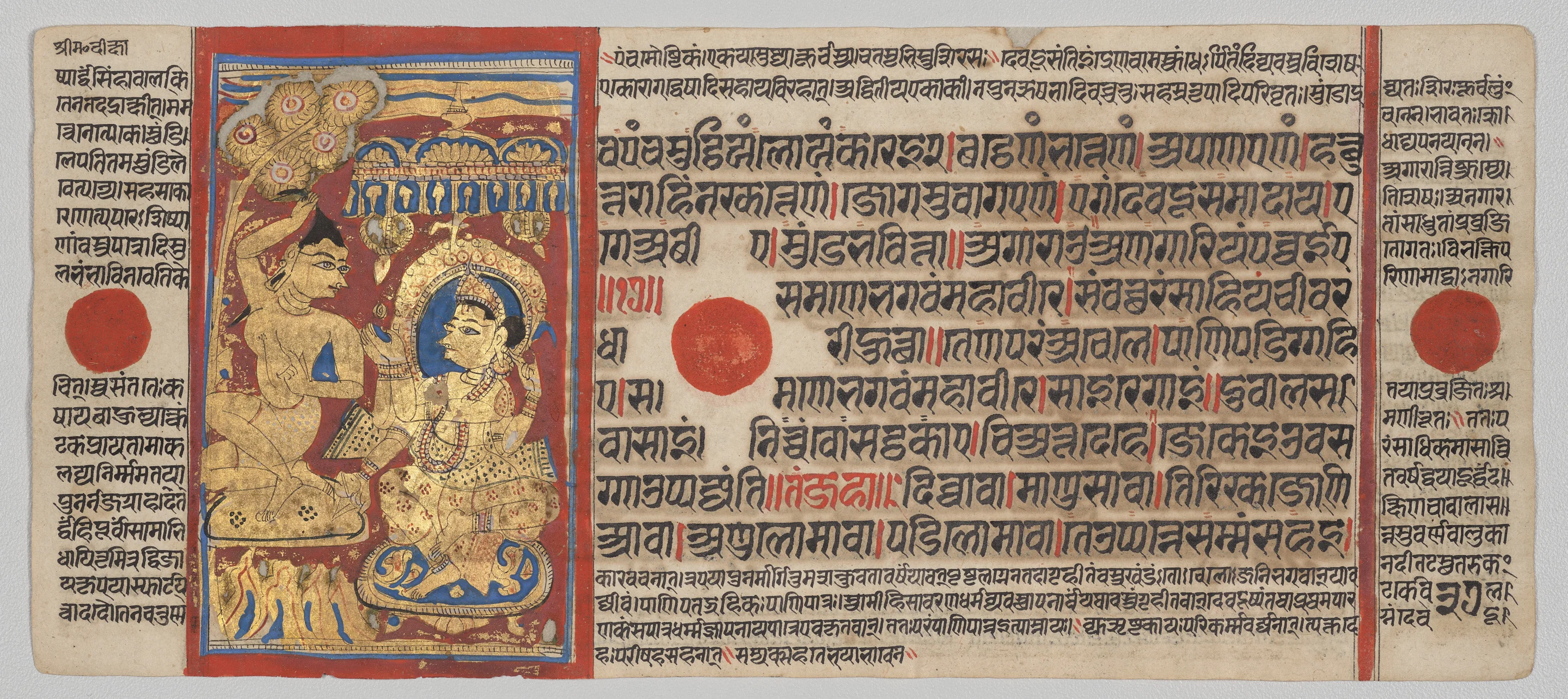
In the words of Pranav Ashar
How we renderThe heart of the Kathashruti
In brief
The renouncing father tells his son 'You are Brahma, you are the sacrifice'; the son answers 'I am Brahma, I am the sacrifice'. The renunciant gives up tuft and thread, and lives chaste. Then the teaching: the light that shines by itself and makes the world shine is the witness of the world, the mass of awareness. By knowing Brahman alone one reaches Brahman. From it the elements arise like a snake in a rope. Whoever makes even a small gap in it has fear. In the end: dying to oneself, being oneself, one remains as oneself alone.
- The light that lights the world
- Not by action, by knowing alone
- Creation as the snake in the rope
- The smallest gap brings fear
- One remains as oneself
Contents
हरिः ॐ ॥ देवा ह वै भगवन्तमब्रुवन्नधीहि भगवन्ब्रह्मविद्याम् । स प्रजापतिरब्रवीत्सशिखान्केशान्निष्कृत्य विसृज्य यज्ञोपवीतं निष्कृत्य पुत्रं दृष्ट्वा त्वं ब्रह्मा त्वं यज्ञस्त्वं वषट्कारस्त्वमोङ्कारस्त्वं स्वाहा त्वं स्वधा त्वं धाता त्वं विधाता त्वं प्रतिष्ठाऽसीति वदेत् । अथ पुत्रो वदत्यहं ब्रह्माहं यज्ञोऽहं वषट्कारोऽहमोङ्कारोऽहं स्वाहाहं स्वधाहं धाताहं विधाताहं त्वष्टाहं प्रतिष्ठास्मीति ।
hariḥ oṃ || devā ha vai bhagavantamabruvannadhīhi bhagavanbrahmavidyām | sa prajāpatirabravītsaśikhānkeśānniṣkṛtya visṛjya yajñopavītaṃ niṣkṛtya putraṃ dṛṣṭvā tvaṃ brahmā tvaṃ yajñastvaṃ vaṣaṭkārastvamoṅkārastvaṃ svāhā tvaṃ svadhā tvaṃ dhātā tvaṃ vidhātā tvaṃ pratiṣṭhā'sīti vadet | atha putro vadatyahaṃ brahmāhaṃ yajño'haṃ vaṣaṭkāro'hamoṅkāro'haṃ svāhāhaṃ svadhāhaṃ dhātāhaṃ vidhātāhaṃ tvaṣṭāhaṃ pratiṣṭhāsmīti |
Hari Om. The gods said to the Lord: Teach us, Lord, the knowledge of Brahman. Prajapati said: Pulling out the hair with its tuft, casting off and pulling away the sacred thread, one should look at one's son and say: You are Brahma, you are the sacrifice, you are the call of offering, you are Om, you are svaha, you are svadha, you are the founder, you are the arranger, you are the support. Then the son says: I am Brahma, I am the sacrifice, I am the call of offering, I am Om, I am svaha, I am svadha, I am the founder, I am the arranger, I am the shaper, I am the support.
Note //
The father hands his sacred duties over to his son before he renounces, and does it in the form of the great sentence: 'you are', answered by 'I am'. Svaha and svadha are the calls with which offerings are made to the gods and to the ancestors; 'the call of offering' is vaṣaṭ. The son adds 'I am the shaper' (Tvashtri), which the father's list lacks, in both editions. 'Niṣkṛtya' (sanskritdocuments.org) and 'niṣkṛṣya' (Adyar collection) both mean pulling out; the second is followed in the rendering. Editions agree otherwise.
तान्येतान्यनुव्रजन्नाश्रुमापातयेत् । यदश्रुमापातयेत्प्रजां विच्छिन्द्यात् । प्रदक्षिणमावृत्त्यैतच्चैतच्चानवेक्षमाणाः प्रत्यायन्ति । स स्वर्ग्यो भवति ब्रह्मचारी वेदमधीत्य वेदोक्ताचरितब्रह्मचर्यो दारानाहृत्य पुत्रानुत्पाद्य ताननुपाधिभिर्वितत्येष्ट्वा च शक्तितो यज्ञैः । तस्य संन्यासो गुरुभिरनुज्ञातस्य बान्धवैश्च ।
tānyetānyanuvrajannāśrumāpātayet | yadaśrumāpātayetprajāṃ vicchindyāt | pradakṣiṇamāvṛttyaitaccaitaccānavekṣamāṇāḥ pratyāyanti | sa svargyo bhavati brahmacārī vedamadhītya vedoktācaritabrahmacaryo dārānāhṛtya putrānutpādya tānanupādhibhirvitatyeṣṭvā ca śaktito yajñaiḥ | tasya saṃnyāso gurubhiranujñātasya bāndhavaiśca |
As the family follows him out, he should not let a tear fall; if he lets a tear fall, he cuts off his line. Turning round him to the right, not looking back at this or that, they go home. He is bound for heaven: one who as a student studied the Veda and kept the student's vow as the Veda prescribes, brought home a wife, fathered sons, settled them with means of their own, and offered sacrifices as he was able. Renunciation is for him, once his teachers and his kin have given leave.
Note //
The leave-taking from the family. 'Settled them with means of their own' (anupādhibhir vitatya): obscure in both editions ('anupādhibhiḥ', Adyar; 'anupādibhiḥ', sanskritdocuments.org); the rendering is tentative and pending review. This passage gives the orderly path of renunciation after household life; other Sannyasa texts, such as the Jabala and the Yajnavalkya, allow it from any stage as soon as dispassion comes. Editions agree otherwise.
सोऽरण्यं परेत्य द्वादशरात्रं पयसाग्निहोत्रं जुहुयात् । द्वादशरात्रं पयोभक्षा स्यात् । द्वादशरात्रस्यान्ते अग्नये वैश्वानराय प्रजापतये च प्राजापत्यं चरुं वैष्णवं त्रिकपालमग्निं संस्थितानि पूर्वाणि दारुपात्राण्यग्नौ जुहुयात् । मृण्मयान्यप्सु जुहुयात् । तैजसानि गुरवे दद्यात् । मा त्वं मामपहाय परागाः । नाहं त्वामपहाय परागामिति । गार्हपत्यदक्षिणाग्न्याहवनीयेष्वरणिदेशाद्भस्ममुष्टिं पिबेदित्येके । सशिखान्केशान्निष्कृत्य विसृज्य यज्ञोपवीतं भूः स्वाहेत्यप्सु जुहुयात् ।
so'raṇyaṃ paretya dvādaśarātraṃ payasāgnihotraṃ juhuyāt | dvādaśarātraṃ payobhakṣā syāt | dvādaśarātrasyānte agnaye vaiśvānarāya prajāpataye ca prājāpatyaṃ caruṃ vaiṣṇavaṃ trikapālamagniṃ saṃsthitāni pūrvāṇi dārupātrāṇyagnau juhuyāt | mṛṇmayānyapsu juhuyāt | taijasāni gurave dadyāt | mā tvaṃ māmapahāya parāgāḥ | nāhaṃ tvāmapahāya parāgāmiti | gārhapatyadakṣiṇāgnyāhavanīyeṣvaraṇideśādbhasmamuṣṭiṃ pibedityeke | saśikhānkeśānniṣkṛtya visṛjya yajñopavītaṃ bhūḥ svāhetyapsu juhuyāt |
Going out to the forest, for twelve nights he should make the fire offering with milk, and for twelve nights live on milk. At the end of the twelve nights, to Agni Vaishvanara and to Prajapati he should offer the pot of rice for Prajapati, the cake on three dishes for Vishnu, and into the fire the wooden vessels that served the fire before. The clay vessels he should offer into the water; the metal ones he should give to his teacher. 'Do not go away and leave me.' 'I will not go away and leave you.' Some say he should drink a handful of ash from where the fire-sticks lay in the three fires. Pulling out the hair with its tuft, casting off the sacred thread, he should offer them into the water with 'Bhuh, svaha'.
Note //
The rite of renunciation proper. 'Do not go away and leave me' / 'I will not go away and leave you': an exchange, probably between the renouncer and the fire (or the teacher), as the outer fire is taken into himself; the speakers are not named in either edition; interpretive. The three fires are the householder's, the southern and the offering fire. The Adyar collection has the slips 'dakṣiṇāpny-' and (sanskritdocuments.org) 'dārupātrāṇyāgnau'. Editions agree otherwise.
अत ऊर्ध्वमनशनमपां प्रवेशमग्निप्रवेशं वीराध्वानं महाप्रस्थानं वृद्धाश्रमं वा गच्छेत् । पयसा यं प्राश्नीयात्सोऽस्य सायंहोमः । यत्प्रातः सोऽयं प्रातः । यद्दर्शे तद्दर्शनम् । यत्पौर्णमास्ये तत्पौर्णमास्यम् । यद्वसन्ते केशश्मश्रुलोमनखानि वापयेत्सोऽस्याग्निष्टोमः । संन्यस्याग्निं न पुनरावर्तयेन्मृत्युर्जयमावहमित्यध्यात्ममन्त्रान्पठेत् । स्वस्ति सर्वजीवेभ्य इत्युक्त्वात्मानमनन्यं ध्यायन् तदूर्ध्वबाहुर्विमुक्तमार्गो भवेत् । अनिकेतश्चरेत् । भिक्षाशी यत्किञ्चिन्नाद्यात् । लवैकं न धावयेज्जन्तुसंरक्षणार्थं वर्षवर्जमिति ।
ata ūrdhvamanaśanamapāṃ praveśamagnipraveśaṃ vīrādhvānaṃ mahāprasthānaṃ vṛddhāśramaṃ vā gacchet | payasā yaṃ prāśnīyātso'sya sāyaṃhomaḥ | yatprātaḥ so'yaṃ prātaḥ | yaddarśe taddarśanam | yatpaurṇamāsye tatpaurṇamāsyam | yadvasante keśaśmaśrulomanakhāni vāpayetso'syāgniṣṭomaḥ | saṃnyasyāgniṃ na punarāvartayenmṛtyurjayamāvahamityadhyātmamantrānpaṭhet | svasti sarvajīvebhya ityuktvātmānamananyaṃ dhyāyan tadūrdhvabāhurvimuktamārgo bhavet | aniketaścaret | bhikṣāśī yatkiñcinnādyāt | lavaikaṃ na dhāvayejjantusaṃrakṣaṇārthaṃ varṣavarjamiti |
From then on he may go to fasting, to entering water, entering fire, to the hero's road, the great last journey, or to the shelter of the old. The milk he drinks is his evening offering, what he drinks in the morning his morning offering; what he takes at the new moon is his new-moon rite, at the full moon his full-moon rite; shaving head, beard, body hair and nails in spring is his great soma sacrifice. Having renounced the fire, he should not turn back to it. He should recite the inward verses, 'Death, I have brought victory'. Saying 'Well-being to all that lives', meditating on the Self as no other than himself, arms raised, he walks the path of freedom. He should wander without a home. Living on alms, he should not eat just anything. To protect living things he should not disturb even the smallest of them, and he wanders at all times but the rains.
Note //
Every rite of the householder is now done within the renouncer's own life: his food is his offering, his shaving is his soma sacrifice. The ways of ending the body (fasting, water, fire, the hero's road, the great journey) belong to the older renunciate tradition and are rendered as the text has them; 'the shelter of the old' (vṛddhāśrama) is the gentler alternative. 'Death, I have brought victory' (mṛtyur jayam āvaham): the words of the inward mantra are obscure. The last sentence ('lavaikaṃ na dhāvayej jantusaṃrakṣaṇārthaṃ varṣavarjam') is obscure in both editions; the rendering, which takes it with the rule that a renouncer stays in one place during the rains so as not to harm the creatures they bring, is tentative. Pending review. 'Ātmānam ananyaṃ' (sanskritdocuments.org) is read for 'ananyan' (Adyar). Editions agree otherwise.
तदपि श्लोका भवन्ति । कुण्डिकां चमसं शिक्यं त्रिविष्टपमुपानहौ । शीतोपघातिनीं कन्थां कौपीनाच्छादनं तथा ॥ १॥ पवित्रं स्नानशाटीं च उत्तरासङ्गमेव च । यज्ञोपवीतं वेदांश्च सर्वं तद्वर्जयेद्यतिः ॥ २॥
tadapi ślokā bhavanti | kuṇḍikāṃ camasaṃ śikyaṃ triviṣṭapamupānahau | śītopaghātinīṃ kanthāṃ kaupīnācchādanaṃ tathā || 1|| pavitraṃ snānaśāṭīṃ ca uttarāsaṅgameva ca | yajñopavītaṃ vedāṃśca sarvaṃ tadvarjayedyatiḥ || 2||
On this there are these verses. A water pot, a cup, a sling to carry them, a three-legged stand, a pair of sandals, a patched cloak to keep off the cold, a loincloth and a cover; a water strainer, a cloth for bathing, and an upper cloth: these the renouncer has. The sacred thread and the Vedas: all that he gives up.
Note //
The few things a renouncer keeps, then what he gives up. Read strictly, 'sarvaṃ tad varjayet' could cover the whole list; the parallel lists in other Sannyasa texts (Aruni, Narada Parivrajaka) give these as what he may keep, and the rendering follows them; interpretive. 'Three-legged stand' (triviṣṭapa, Adyar; 'triviṣṭa', sanskritdocuments.org): uncertain, pending review. 'Snānaśāṭī', a bathing cloth (Adyar), is read for 'jñānaśāṭī' (sanskritdocuments.org, a slip).
स्नानं पानं तथा शौचमद्भिः पूताभिराचरेत् । नदीपुलिनशायी स्याद्देवागारेषु वा स्वपेत् ॥ ३॥
snānaṃ pānaṃ tathā śaucamadbhiḥ pūtābhirācaret | nadīpulinaśāyī syāddevāgāreṣu vā svapet || 3||
For bathing, drinking and cleansing he should use water that has been strained. He should sleep on a river's sandbank, or else in temples.
Note //
Strained water, so as not to harm small creatures. Editions agree.
नात्यर्थं सुखदुःखाभ्यां शरीरमुपतापयेत् । स्तूयमानो न तुष्येत निन्दितो न शपेत्परान् ॥ ४॥
nātyarthaṃ sukhaduḥkhābhyāṃ śarīramupatāpayet | stūyamāno na tuṣyeta nindito na śapetparān || 4||
He should not wear out the body too much, with pleasure or with pain. Praised, he should not be pleased; blamed, he should not curse others.
Note //
Sanskritdocuments.org has the slips 'upatāyet' and 'tuṣeta'; the Adyar readings are followed. Editions agree otherwise.
ब्रह्मचर्येण सन्तिष्ठेदप्रमादेन मस्करी । दर्शनं स्पर्शनं केलिः कीर्तनं गुह्यभाषणम् ॥ ५॥ सङ्कल्पोऽध्यवसायश्च क्रियानिर्वृत्तिरेव च । एतन्मैथुनमष्टाङ्गं प्रवदन्ति मनीषिणः ॥ ६॥ विपरीतं ब्रह्मचर्यमनुष्ठेयं मुमुक्षुभिः ।
brahmacaryeṇa santiṣṭhedapramādena maskarī | darśanaṃ sparśanaṃ keliḥ kīrtanaṃ guhyabhāṣaṇam || 5|| saṅkalpo'dhyavasāyaśca kriyānirvṛttireva ca | etanmaithunamaṣṭāṅgaṃ pravadanti manīṣiṇaḥ || 6|| viparītaṃ brahmacaryamanuṣṭheyaṃ mumukṣubhiḥ |
The wandering monk should stand firm in chastity, never careless. Looking, touching, play, talking of it, speaking in private, intending, resolving, and the act itself: this, the wise say, is sexual union in its eight limbs. Its opposite, chastity, is to be practised by those who want to be free.
Note //
The eight limbs of sexual union, a list found also in the Daksha Smriti; chastity is the turning away from all eight, in mind as in act. 'Maskarī', a monk who carries a bamboo staff. Sanskritdocuments.org has the slip 'kriyānnirvṛttiḥ'. Editions agree otherwise.
यज्जगद्भासकं भानं नित्यं भाति स्वतः स्फुरत् ॥ ७॥ स एव जगतः साक्षी सर्वात्मा विमलाकृतिः । प्रतिष्ठा सर्वभूतानां प्रज्ञानघनलक्षणः ॥ ८॥
yajjagadbhāsakaṃ bhānaṃ nityaṃ bhāti svataḥ sphurat || 7|| sa eva jagataḥ sākṣī sarvātmā vimalākṛtiḥ | pratiṣṭhā sarvabhūtānāṃ prajñānaghanalakṣaṇaḥ || 8||
The light that makes the world shine, always shining, flashing out by itself: that alone is the witness of the world, the Self of all, spotless in form, the ground of all beings, whose mark is to be .
Note //
The first line is the second half of verse 7 in the editions; it begins the teaching after the rules of renunciation. 'Mass of awareness' (prajñānaghana): Mandukya 5 and Brihadaranyaka 4.5.13. Editions: sanskritdocuments.org notes the variant 'eṣa' for 'sa eva'.
न कर्मणा न प्रजया न चान्येनापि केनचित् । ब्रह्मवेदनमात्रेण ब्रह्माप्नोत्येव मानवः ॥ ९॥
na karmaṇā na prajayā na cānyenāpi kenacit | brahmavedanamātreṇa brahmāpnotyeva mānavaḥ || 9||
Not by action, not by offspring, not by anything else at all: by knowing Brahman alone a human being reaches Brahman.
Note //
An echo of Kaivalya 3 and Mahanarayana 10.5 ('not by works, not by children, not by wealth'), with renunciation replaced by knowledge: 'by knowing Brahman alone' (brahma-vedana-mātreṇa). Editions: 'kenacit' (Adyar collection) corrects 'kecit'.
तद्विद्याविषयं ब्रह्म सत्यज्ञानसुखाद्वयम् । संसारे च गुहावाच्ये मायाज्ञानादिसंज्ञके ॥ १०॥ निहितं ब्रह्म यो वेद परमे व्योम्नि संज्ञिते । सोऽश्नुते सकलान्कामान्क्रमेणैव द्विजोत्तमः ॥ ११॥
tadvidyāviṣayaṃ brahma satyajñānasukhādvayam | saṃsāre ca guhāvācye māyājñānādisaṃjñake || 10|| nihitaṃ brahma yo veda parame vyomni saṃjñite | so'śnute sakalānkāmānkrameṇaiva dvijottamaḥ || 11||
Brahman is what that knowledge is about: truth, knowledge, joy, without a second. Whoever knows Brahman hidden in the cave, the round of becoming, which goes by the names of maya, not-knowing and the rest, in what is called the highest space: that best of the twice-born attains all desires, each in its turn.
Note //
Taittiriya 2.1: 'Brahman is truth, knowledge, the infinite; whoever knows it hidden in the cave, in the highest space, attains all desires together with Brahman, the wise.' Here the cave is explained as the round of becoming, maya and not-knowing, in which Brahman is hidden as the Self. 'Each in its turn' (krameṇa) replaces the Taittiriya's 'together with Brahman'; the sense, in Shankara's reading of the Taittiriya, is that all joys are found in the one joy that is Brahman. The Adyar collection has the slip 'stayajñāna' for 'satyajñāna'; sanskritdocuments.org prints 'tad vidyā viṣayaṃ' as two words. Editions agree otherwise.
प्रत्यगात्मानमज्ञानमायाशक्तेश्च साक्षिणम् । एकं ब्रह्माहमस्मीति ब्रह्मैव भवति स्वयम् ॥ १२॥
pratyagātmānamajñānamāyāśakteśca sākṣiṇam | ekaṃ brahmāhamasmīti brahmaiva bhavati svayam || 12||
The inmost Self, the witness of not-knowing and of the power of maya: knowing it as 'I am the one Brahman', one becomes Brahman oneself.
ब्रह्मभूतात्मनस्तस्मादेतस्माच्छक्तिमिश्रितात् । अपञ्चीकृत आकाशसंभूतो रज्जुसर्पवत् ॥ १३॥
brahmabhūtātmanastasmādetasmācchaktimiśritāt | apañcīkṛta ākāśasaṃbhūto rajjusarpavat || 13||
From that Self which is Brahman, joined with its power, space, not yet compounded, came to be, .
Note //
The account of creation that follows (13-16) is the standard Vedanta one: the subtle elements arise from Brahman with maya, then are compounded (pañcīkaraṇa) into the gross world. The image says how to take it: as a snake 'arises' in a rope. Editions: 'apañcīkṛta' (sanskritdocuments.org) corrects 'upañcīkṛta' in the Adyar collection.
आकाशाद्वायुसंज्ञस्तु स्पर्शोऽपञ्चीकृतः पुनः । वायोरग्निस्तथा चाग्नेराप अद्भ्यो वसुन्धरा ॥ १४॥
ākāśādvāyusaṃjñastu sparśo'pañcīkṛtaḥ punaḥ | vāyoragnistathā cāgnerāpa adbhyo vasundharā || 14||
From space came touch, called air, again not yet compounded; from air, fire; and from fire, water; from water, the earth.
Note //
Taittiriya 2.1. Each element is named by its quality (air by touch). Editions agree.
तानि भूतानि सूक्ष्माणि पञ्चीकृत्येश्वरस्तदा । तेभ्य एव विसृष्टं तद्ब्रह्माण्डादि शिवेन ह ॥ १५॥ ब्रह्माण्डस्योदरे देवा दानवा यक्षकिन्नराः । मनुष्याः पशुपक्ष्याद्यास्तत्तत्कर्मानुसारतः ॥ १६॥
tāni bhūtāni sūkṣmāṇi pañcīkṛtyeśvarastadā | tebhya eva visṛṣṭaṃ tadbrahmāṇḍādi śivena ha || 15|| brahmāṇḍasyodare devā dānavā yakṣakinnarāḥ | manuṣyāḥ paśupakṣyādyāstattatkarmānusārataḥ || 16||
Then the Lord compounded those subtle elements, five into each, and out of them Shiva sent forth the egg of the world and all it holds. Within the world-egg are gods, demons, yakshas, kinnaras, human beings, animals, birds and the rest, each according to its own actions.
Note //
The fivefold compounding (pañcīkaraṇa) of the subtle elements into the gross world, as in Vedanta manuals. Read with 13, all of this arises as the snake in the rope. Editions agree.
अस्थिस्नाय्वादिरूपोऽयं शरीरं भाति देहिनाम् । योऽयमन्नमयो ह्यात्मा भाति सर्वशरीरिणः ॥ १७॥ ततः प्राणमयो ह्यात्मा विभिन्नश्चान्तरस्थितः । ततो विज्ञान आत्मा तु ततोऽन्यश्चान्तरः स्वतः ॥ १८॥
asthisnāyvādirūpo'yaṃ śarīraṃ bhāti dehinām | yo'yamannamayo hyātmā bhāti sarvaśarīriṇaḥ || 17|| tataḥ prāṇamayo hyātmā vibhinnaścāntarasthitaḥ | tato vijñāna ātmā tu tato'nyaścāntaraḥ svataḥ || 18||
This, made of bone, sinew and the rest, appears to embodied beings as the body: this self made of food appears to all who have bodies. Then, different from it and within, is the self made of breath; then the self of understanding, another again, and further within.
Note //
The five sheaths of Taittiriya 2.1-5. In 18 the self made of mind (manomaya) is missing in the Adyar collection; sanskritdocuments.org adds in brackets the half-line 'tato manomayo hy ātmā vibhinnaś cāntaraḥ sthitaḥ', which verse 20 presupposes. The bracketed line is not printed here; the rendering of 19-21 supplies the mind-self from 20. 'Antarasthitaḥ' (Adyar) and 'antaraḥ sthitaḥ' (sanskritdocuments.org) mean the same. Pending review.
आनन्दमय आत्मा तु ततोऽन्यश्चान्तरस्थितः । योऽयमन्नमयः सोऽयं पूर्णः प्राणमयेन तु ॥ १९॥ मनोमयेन प्राणोऽपि तथा पूर्णः स्वभावतः । तथा मनोमयो ह्यात्मा पूर्णो ज्ञानमयेन तु ॥ २०॥ आनन्देन सदा पूर्णः सदा ज्ञानमयः सुखम् । तथानन्दमयश्चापि ब्रह्मणोऽन्येन साक्षिणा ॥ २१॥ सर्वान्तरेण पूर्णश्च ब्रह्म नान्येन केनचित् ।
ānandamaya ātmā tu tato'nyaścāntarasthitaḥ | yo'yamannamayaḥ so'yaṃ pūrṇaḥ prāṇamayena tu || 19|| manomayena prāṇo'pi tathā pūrṇaḥ svabhāvataḥ | tathā manomayo hyātmā pūrṇo jñānamayena tu || 20|| ānandena sadā pūrṇaḥ sadā jñānamayaḥ sukham | tathānandamayaścāpi brahmaṇo'nyena sākṣiṇā || 21|| sarvāntareṇa pūrṇaśca brahma nānyena kenacit |
The self made of bliss is another again, and within. This self made of food is filled by the self made of breath; the breath, by its nature, is filled by the self made of mind; the self made of mind is filled by the self made of knowing; the self made of knowing is always filled with bliss; and the self made of bliss is filled by Brahman, which is other than it, the witness, the inmost of all. But Brahman is filled by nothing else.
Note //
Taittiriya 2.2-5: 'by this, that one is filled' (tenaiṣa pūrṇaḥ). Each sheath is pervaded by the subtler one within it, and all of them by Brahman, the witness; Brahman alone is pervaded by nothing, because there is nothing other than it. 'Sukham' in 21 is taken with the line, 'happily, always'; the sense is that the knowing self is always filled with bliss. Editions agree.
यदिदं ब्रह्मपुच्छाख्यं सत्यज्ञानाद्वयात्मकम् ॥ २२॥ सारमेव रसं लब्ध्वा साक्षाद्देही सनातनम् । सुखी भवति सर्वत्र अन्यथा सुखता कुतः ॥ २३॥
yadidaṃ brahmapucchākhyaṃ satyajñānādvayātmakam || 22|| sārameva rasaṃ labdhvā sākṣāddehī sanātanam | sukhī bhavati sarvatra anyathā sukhatā kutaḥ || 23||
This which is called Brahman, the tail, whose nature is truth, knowledge, without a second: having found that essence, that eternal sweetness, directly, the embodied one is happy everywhere. Otherwise, where would happiness come from?
Note //
Taittiriya 2.5 ('Brahman is the tail, the support') and 2.7 ('it is sweetness itself, rasa; having found that sweetness, one is in bliss'). 'Advaya' (Adyar collection) is read for 'dvaya' (sanskritdocuments.org, a slip). Editions agree otherwise.
असत्यस्मिन्परानन्दे स्वात्मभूतेऽखिलात्मनाम् । को जीवति नरो जन्तुः को वा नित्यं विचेष्टते ॥ २४॥
asatyasminparānande svātmabhūte'khilātmanām | ko jīvati naro jantuḥ ko vā nityaṃ viceṣṭate || 24||
If this supreme bliss were not, the very Self of every self, what person, what creature could live? Who could move at all?
Note //
Taittiriya 2.7: 'who could breathe, who could live, if this bliss were not in the space of the heart?' The joy of every living thing is a share of the bliss that is its own Self. Editions agree.
तस्मात्सर्वात्मना चित्ते भासमानो ह्यसौ नरः । आनन्दयति दुःखाढ्यं जीवात्मानं सदा जनः ॥ २५॥
tasmātsarvātmanā citte bhāsamāno hyasau naraḥ | ānandayati duḥkhāḍhyaṃ jīvātmānaṃ sadā janaḥ || 25||
So it is this, shining in the mind as the Self of all, that always brings joy to the individual self, full of sorrow as it is.
Note //
The syntax is loose in both editions ('asau naraḥ ... janaḥ'); taken with Taittiriya 2.7, 'this alone gives joy'. The 'person' here is read as the inner Person, the Self, which gives joy to the individual; interpretive, pending review. Editions agree.
यदा ह्येवैष एतस्मिन्नदृश्यत्वादिलक्षणे । निर्भेदं परमाद्वैतं विन्दते च महायतिः ॥ २६॥ तदेवाभयमत्यन्तकल्याणं परमामृतम् । सद्रूपं परमं ब्रह्म त्रिपरिच्छेदवर्जितम् ॥ २७॥
yadā hyevaiṣa etasminnadṛśyatvādilakṣaṇe | nirbhedaṃ paramādvaitaṃ vindate ca mahāyatiḥ || 26|| tadevābhayamatyantakalyāṇaṃ paramāmṛtam | sadrūpaṃ paramaṃ brahma triparicchedavarjitam || 27||
When this great renouncer finds, in this which is marked as unseen and the rest, the supreme non-duality, with no division in it: that alone is fearlessness, the utterly good, the supreme nectar, being itself, the supreme Brahman, free of the three limits.
Note //
Taittiriya 2.7: 'when one finds fearless ground in this which is unseen, bodiless, unspoken, without support, then one has reached fearlessness.' 'The three limits' (tripariccheda): of place, of time and of being a thing among things. 'Paramāmṛtam' (sanskritdocuments.org) is read for 'paramābhṛtam' (Adyar, a slip). Editions agree otherwise.
यदा ह्येवैष एतस्मिन्नल्पमप्यन्तरं नरः । विजानाति तदा तस्य भयं स्यान्नात्र संशयः ॥ २८॥
yadā hyevaiṣa etasminnalpamapyantaraṃ naraḥ | vijānāti tadā tasya bhayaṃ syānnātra saṃśayaḥ || 28||
When a person sees in this even the smallest gap, then there is fear for him: of that there is no doubt.
Note //
Taittiriya 2.7. The verses 17-34 follow the Taittiriya's teaching of the five sheaths and the bliss of Brahman closely. Editions agree.
अस्यैवानन्दकोशेन स्तम्बान्ता विष्णुपूर्वकाः । भवन्ति सुखिनो नित्यं तारतम्यक्रमेण तु ॥ २९॥
asyaivānandakośena stambāntā viṣṇupūrvakāḥ | bhavanti sukhino nityaṃ tāratamyakrameṇa tu || 29||
By the sheath of bliss of this alone, all beings, from Vishnu down to a blade of grass, are happy, always, each in greater or lesser measure.
Note //
Taittiriya 2.8 (the measure of bliss) and Brihadaranyaka 4.3.32: 'on a particle of this bliss other beings live.' Editions agree.
तत्तत्पदविरक्तस्य श्रोत्रियस्य प्रसादिनः । स्वरूपभूत आनन्दः स्वयं भाति परे यथा ॥ ३०॥
tattatpadaviraktasya śrotriyasya prasādinaḥ | svarūpabhūta ānandaḥ svayaṃ bhāti pare yathā || 30||
For one learned in the Veda, clear and at peace, who no longer wants any of those states, the bliss that is his own nature shines by itself, as it does in the Supreme.
Note //
Taittiriya 2.8 repeats, at each level of bliss, 'and of one learned in the Veda, untouched by desire'. One who wants none of the higher states has the bliss they are shares of. Editions agree.
निमित्तं किञ्चिदाश्रित्य खलु शब्दः प्रवर्तते । यतो वाचो निवर्तन्ते निमित्तानामभावतः ॥ ३१॥
nimittaṃ kiñcidāśritya khalu śabdaḥ pravartate | yato vāco nivartante nimittānāmabhāvataḥ || 31||
A word works by resting on some feature of its object. 'From which words turn back': because there are no such features there.
Note //
Taittiriya 2.4 and 2.9: 'from which words turn back, together with the mind, not reaching it.' Words name by kind, quality, action or relation; Brahman has none of these. Sanskritdocuments.org has the slip 'abhavataḥ'. Editions agree otherwise.
निर्विशेषे परानन्दे कथं शब्दः प्रवर्तते । तस्मादेतन्मनः सूक्ष्मं व्यावृतं सर्वगोचरम् ॥ ३२॥ यस्माच्छ्रोत्रत्वगक्ष्यादिखादिकर्मेन्द्रियाणि च । व्यावृत्तानि परं प्राप्तुं न समर्थानि तानि तु ॥ ३३॥
nirviśeṣe parānande kathaṃ śabdaḥ pravartate | tasmādetanmanaḥ sūkṣmaṃ vyāvṛtaṃ sarvagocaram || 32|| yasmācchrotratvagakṣyādikhādikarmendriyāṇi ca | vyāvṛttāni paraṃ prāptuṃ na samarthāni tāni tu || 33||
In the supreme bliss, without distinctions, how could a word work? So this subtle mind, which ranges over everything, turns back from it; and the ears, skin, eyes and the rest, the organs of action too, turn back: they cannot reach the Supreme.
Note //
'Together with the mind' of Taittiriya 2.9, spelled out: mind and senses turn back because Brahman is not an object for them. Sanskritdocuments.org gives in brackets the variants 'nirviśeṣaparānande' and 'vyāvṛttam'. Editions agree otherwise.
तद्ब्रह्मानन्दमद्वन्द्वं निर्गुणं सत्यचिद्घनम् । विदित्वा स्वात्मरूपेण न बिभेति कुतश्चन ॥ ३४॥
tadbrahmānandamadvandvaṃ nirguṇaṃ satyacidghanam | viditvā svātmarūpeṇa na bibheti kutaścana || 34||
Knowing that bliss of Brahman, beyond all pairs, without qualities, a mass of truth and of the light, as one's own Self, one fears nothing from anywhere.
Note //
Taittiriya 2.9: 'knowing the bliss of Brahman, one fears nothing from anywhere.' The words that cannot reach it (31-33) are not needed to know it, because it is known as oneself. Editions agree.
एवं यस्तु विजानाति स्वगुरोरुपदेशतः । स साध्वसाधुकर्मभ्यां सदा न तपति प्रभुः ॥ ३५॥
evaṃ yastu vijānāti svagurorupadeśataḥ | sa sādhvasādhukarmabhyāṃ sadā na tapati prabhuḥ || 35||
Whoever knows this through his own teacher's instruction is master of himself: he is never burned by what he has done well or badly.
Note //
Taittiriya 2.9: 'this does not burn him: why did I not do the good, why did I do the wrong?' Sanskritdocuments.org has the slip 'sādhvāsādhu-'. Editions agree otherwise.
ताप्यतापकरूपेण विभातमखिलं जगत् । प्रत्यगात्मतया भाति ज्ञानाद्वेदान्तवाक्यजात् ॥ ३६॥
tāpyatāpakarūpeṇa vibhātamakhilaṃ jagat | pratyagātmatayā bhāti jñānādvedāntavākyajāt || 36||
The whole world, which shone as the burned and the burner, shines as the inmost Self through the knowledge born of the words of Vedanta.
Note //
'The burned and the burner' (tāpya-tāpaka): the sufferer and what makes him suffer, the two sides of the round of becoming. After knowledge, the same world is seen as the Self. Editions agree.
शुद्धमीश्वरचैतन्यं जीवचैतन्यमेव च । प्रमाता च प्रमाणं च प्रमेयं च फलं तथा ॥ ३७॥ इति सप्तविधं प्रोक्तं भिद्यते व्यवहारतः । मायोपाधिविनिर्मुक्तं शुद्धमित्यभिधीयते ॥ ३८॥
śuddhamīśvaracaitanyaṃ jīvacaitanyameva ca | pramātā ca pramāṇaṃ ca prameyaṃ ca phalaṃ tathā || 37|| iti saptavidhaṃ proktaṃ bhidyate vyavahārataḥ | māyopādhivinirmuktaṃ śuddhamityabhidhīyate || 38||
Pure consciousness, the Lord's consciousness, the individual's consciousness, the knower, the means of knowing, the known, and the knowing that results: so it is called sevenfold, divided . Free of the limiting adjunct of maya, it is called pure.
Note //
One consciousness, named seven ways according to what it is taken with. 'Only in everyday dealings' (vyavahārataḥ): the distinctions are real as appearance, not on their own. Editions agree.
मायासंबन्धतश्चेशो जीवोऽविद्यावशस्तथा । अन्तःकरणसंबन्धात्प्रमातेत्यभिधीयते ॥ ३९॥ तथा तद्वृत्तिसंबन्धात्प्रमाणमिति कथ्यते । अज्ञातमपि चैतन्यं प्रमेयमिति कथ्यते ॥ ४०॥ तथा ज्ञातं च चैतन्यं फलमित्यभिधीयते । सर्वोपाधिविनिर्मुक्तं स्वात्मानं भावयेत्सुधीः ॥ ४१॥
māyāsaṃbandhataśceśo jīvo'vidyāvaśastathā | antaḥkaraṇasaṃbandhātpramātetyabhidhīyate || 39|| tathā tadvṛttisaṃbandhātpramāṇamiti kathyate | ajñātamapi caitanyaṃ prameyamiti kathyate || 40|| tathā jñātaṃ ca caitanyaṃ phalamityabhidhīyate | sarvopādhivinirmuktaṃ svātmānaṃ bhāvayetsudhīḥ || 41||
Joined with maya, it is the Lord; under the sway of not-knowing, the individual; joined with the inner instrument, the mind, it is called the knower; joined with the mind's movements, it is called the means of knowing; consciousness not yet known is called the known; and consciousness known is called the result. The wise one should contemplate his own Self as free of all these adjuncts.
एवं यो वेद तत्त्वेन ब्रह्मभूयाय कल्पते ।
evaṃ yo veda tattvena brahmabhūyāya kalpate |
Whoever knows this as it truly is is fit to be Brahman.
Note //
The first half of verse 42; its second half and the close follow. Editions agree.
सर्ववेदान्तसिद्धान्तसारं वच्मि यथार्थतः ॥ ४२॥ स्वयं मृत्वा स्वयं भूत्वा स्वयमेवावशिष्यते ॥ इत्युपनिषत् ॥
sarvavedāntasiddhāntasāraṃ vacmi yathārthataḥ || 42|| svayaṃ mṛtvā svayaṃ bhūtvā svayamevāvaśiṣyate || ityupaniṣat ||
I tell you truly the essence of all that Vedanta teaches: , being oneself, one remains as oneself alone. This is the Upanishad.
Note //
The second half of verse 42 and the closing half-verse, which neither edition numbers. 'Dying to oneself' (svayaṃ mṛtvā): the end of the self taken to be someone. 'Remains as oneself alone' (svayam evāvaśiṣyate): compare the peace invocation, 'the full is what remains'. Editions agree.
No public-domain English translation exists for this text; the Sanskrit is shown.
The renderings on this page are shared under CC BY-NC 4.0, in the words of Pranav Ashar.