Shatyayaniya Upanishad
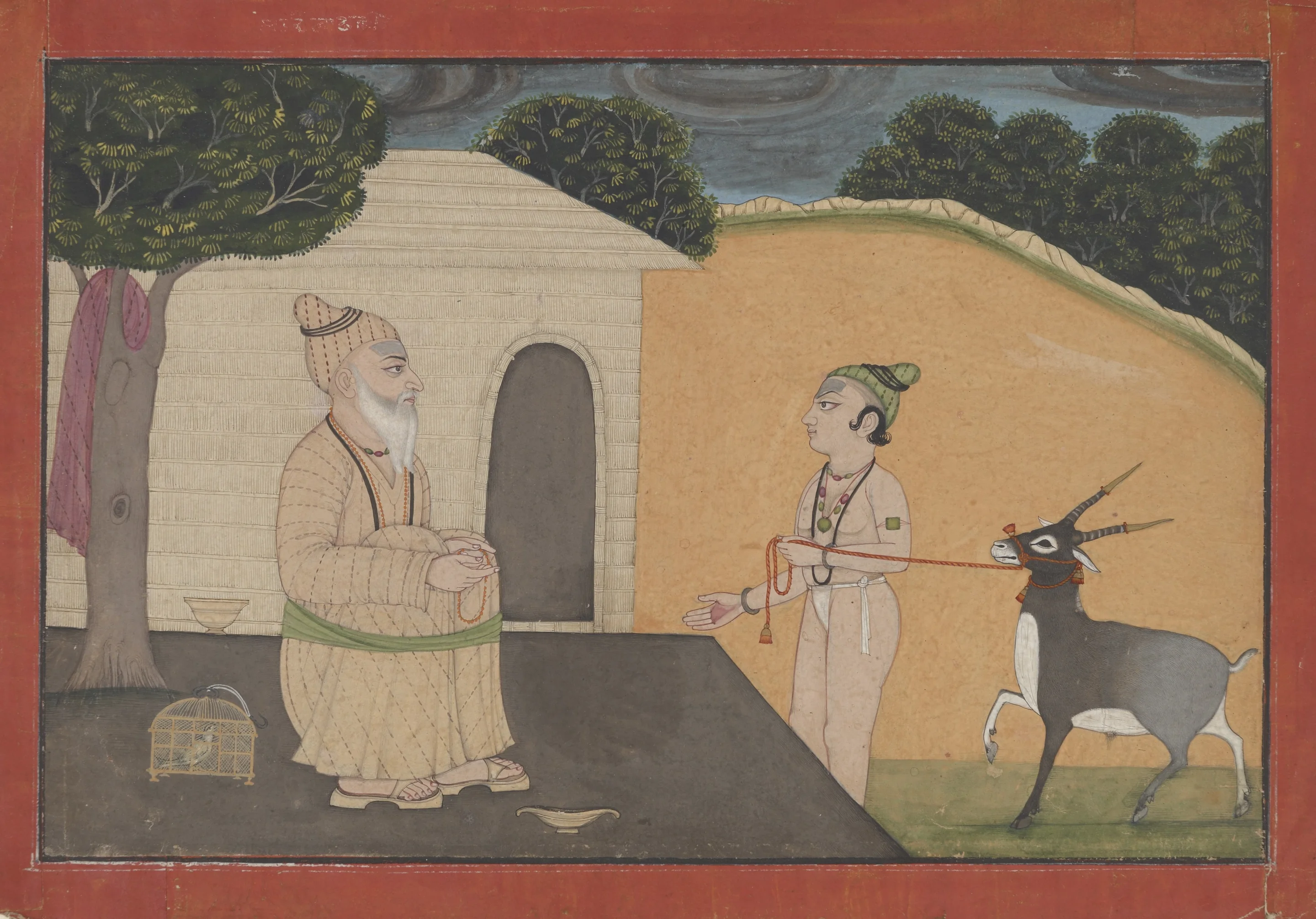
In the words of Pranav Ashar
How we renderThe heart of the Shatyayaniya
In brief
The mind alone is the cause of bondage and release: attached to objects, it binds; free of objects, it frees. The renouncer lives silent wherever he is, keeping the staff, thread, cloth, sling and strainer all his life. Their five daily sacrifices end in the sacrifice of knowledge: offering the self into the fire of Brahman with Om. For one whose tuft is knowledge and whose thread is knowledge, all that makes a Brahmin is complete. If a person knows the Self, 'I am this', wanting what, for whose desire, would he suffer along with the body?
- The mind binds and frees
- As the mind is, so one becomes
- The sacrifice of knowledge
- Like a tree, like a fire without fuel
- Knowing 'I am this'
मन एव मनुष्याणां कारणं बन्धमोक्षयोः । बन्धाय विषयासक्तं मुक्त्यै निर्विषयं स्मृतम् ॥ १॥
mana eva manuṣyāṇāṃ kāraṇaṃ bandhamokṣayoḥ | bandhāya viṣayāsaktaṃ muktyai nirviṣayaṃ smṛtam || 1||
The mind alone is the cause of bondage and release for human beings. Attached to objects, it binds; free of objects, it frees.
Note //
The opening verse, found also in the Amritabindu (2). Editions agree.
समासक्तं सदा चित्तं जन्तोर्विषयगोचरे । यद्येवं ब्रह्मणि स्यात्तत्को न मुच्येत बन्धनात् ॥ २॥
samāsaktaṃ sadā cittaṃ jantorviṣayagocare | yadyevaṃ brahmaṇi syāttatko na mucyeta bandhanāt || 2||
A creature's mind is always held fast in the field of objects. If it were held so in Brahman, who would not be freed from bondage?
Note //
The verse is also in the Maitri Upanishad (6.34). Editions agree.
चित्तमेव हि संसारस्तत्प्रयत्नेन शोधयेत् । यच्चित्तस्तन्मयो भवति गुह्यमेतत्सनातनम् ॥ ३॥
cittameva hi saṃsārastatprayatnena śodhayet | yaccittastanmayo bhavati guhyametatsanātanam || 3||
The mind alone is ; purify it with effort. As one's mind is, so one becomes: this is the ancient secret.
Note //
Also Maitri 6.34. Sanskritdocuments.org has the slip 'vittam' for 'cittam'. Editions agree otherwise.
नावेदविन्मनुते तं बृहन्तं नाब्रह्मवित्परमं प्रैति धाम । विष्णुक्रान्तं वासुदेवं विजानन्विप्रो विप्रत्वं गच्छते तत्त्वदर्शी ॥ ४॥
nāvedavinmanute taṃ bṛhantaṃ nābrahmavitparamaṃ praiti dhāma | viṣṇukrāntaṃ vāsudevaṃ vijānanvipro vipratvaṃ gacchate tattvadarśī || 4||
One who does not know the Veda cannot think of that vast one; one who does not know Brahman does not reach the highest home. Knowing Vasudeva, into whom Vishnu has stepped, the Brahmin who sees what is true comes to be a Brahmin indeed.
Note //
The first line is Taittiriya Brahmana 3.12.9.7. 'Into whom Vishnu has stepped' (viṣṇukrānta): pervaded by Vishnu, whose three strides cover all; interpretive. 'Comes to be a Brahmin indeed': as in Brihadaranyaka 3.8.10, the true Brahmin is the one who knows. Editions agree.
अथाह यत्परं ब्रह्म सनातनं ये श्रोत्रिया अकामहता अधीयुः । शान्तो दान्त उपरतस्तितिक्षुर्योऽनूचानो ह्यभिजज्ञौ समानः ॥ ५॥ त्यक्तेषणो ह्यनृणस्तं विदित्वा मौनी वसेदाश्रमे यत्र कुत्र । अथाश्रमं चरमं सम्प्रविश्य यथोपपत्तिं पञ्चमात्रां दधानः ॥ ६॥
athāha yatparaṃ brahma sanātanaṃ ye śrotriyā akāmahatā adhīyuḥ | śānto dānta uparatastitikṣuryo'nūcāno hyabhijajñau samānaḥ || 5|| tyakteṣaṇo hyanṛṇastaṃ viditvā maunī vasedāśrame yatra kutra | athāśramaṃ caramaṃ sampraviśya yathopapattiṃ pañcamātrāṃ dadhānaḥ || 6||
Now it says: the supreme Brahman, the eternal, which those learned in the Veda, untouched by desire, have studied: one who is calm, controlled, withdrawn, enduring, who has learned the Veda through, who has come to know it, even-minded, who has let go of the three desires, who owes no debt: knowing that, let him live in silence, in whatever stage of life he is. Then, entering the last stage, let him keep the five things as they come to hand.
Note //
'Calm, controlled, withdrawn, enduring' is Brihadaranyaka 4.4.23. 'The three desires' (eṣaṇā): for sons, for wealth, for worlds (Brihadaranyaka 3.5.1). 'Owes no debt': to the seers, the gods and the ancestors, paid by study, sacrifice and children. 'The five things' are listed in 7. 'Abhijajñau' is obscure; rendered 'has come to know it', tentatively. Readings: 'paraṃ' (Adyar) against 'paramaṃ' (sanskritdocuments.org); 'uparatas titikṣuḥ' (Adyar) against the slip 'uparatis titikṣuhuḥ' (sanskritdocuments.org). Pending review.
त्रिदण्डमुपवीतं च वासः कौपीनवेष्टनम् । शिक्यं पवित्रमित्येतद्बिभृयाद्यावदायुषम् ॥ ७॥ पञ्चैतास्तु यतेर्मात्रास्ता मात्रा ब्रह्मणे श्रुताः । न त्यजेद्यावदुत्क्रान्तिरन्तेऽपि निखनेत्सह ॥ ८॥
tridaṇḍamupavītaṃ ca vāsaḥ kaupīnaveṣṭanam | śikyaṃ pavitramityetadbibhṛyādyāvadāyuṣam || 7|| pañcaitāstu yatermātrāstā mātrā brahmaṇe śrutāḥ | na tyajedyāvadutkrāntirante'pi nikhanetsaha || 8||
The triple staff, the sacred thread, a cloth, loincloth and wrap, a sling, a water strainer: these he should carry as long as he lives. These five are the renouncer's things; the Veda says they are for Brahman. He should not give them up until the breath departs; at the end, they are buried with him.
Note //
The Vaishnava rule of this text: the renouncer keeps the triple staff and the thread for life, unlike the paramahamsa of other Sannyasa texts, who gives them up. It is rendered as the text has it; the text itself turns the outer marks inward in 16-17. Renouncers are traditionally buried, not cremated. 'Bibhṛyāt' (Adyar) is read for 'vibhṛyāt' and 'pañcaitās' (sanskritdocuments.org) for 'pañcetās'. Editions agree otherwise.
विष्णुलिङ्गं द्विधा प्रोक्तं व्यक्तमव्यक्तमेव च । तयोरेकमपि त्यक्त्वा पतत्येव न संशयः ॥ ९॥ त्रिदण्डं वैष्णवं लिङ्गं विप्राणां मुक्तिसाधनम् । निर्वाणं सर्वधर्माणामिति वेदानुशासनम् ॥ १०॥
viṣṇuliṅgaṃ dvidhā proktaṃ vyaktamavyaktameva ca | tayorekamapi tyaktvā patatyeva na saṃśayaḥ || 9|| tridaṇḍaṃ vaiṣṇavaṃ liṅgaṃ viprāṇāṃ muktisādhanam | nirvāṇaṃ sarvadharmāṇāmiti vedānuśāsanam || 10||
is said to be twofold: the seen and the unseen. Giving up even one of them, one falls: there is no doubt. The triple staff, , is the Brahmin's means to freedom, the end in which all dharmas come to rest: so the Veda teaches.
Note //
'The unseen mark' is the inner one: knowledge, the mind turned to Brahman (see 16-17). 'The end in which all dharmas come to rest' (nirvāṇaṃ sarvadharmāṇām): the staff stands for the end of all duties; interpretive. The triple staff (tridaṇḍa) is also explained as control of speech, mind and body (Manu 12.10). Editions agree.
अथ खलु सोम्य कुटीचको बहूदको हंसः परमहंस इत्येते परिव्राजकाश्चतुर्विधा भवन्ति । सर्व एते विष्णुलिङ्गिनः शिखिनोपवीतिनः शुद्धचित्ता आत्मानमात्मना ब्रह्म भावयन्तः शुद्धचिद्रूपोपासनरता जपयमवन्तो नियमवन्तः सुशीलिनः पुण्यश्लोका भवन्ति । तदेतदृचाभ्युक्तम् । कुटीचको बहूदकश्चापि हंसः परमहंस इति वृत्त्या च भिन्नाः । सर्व एते विष्णुलिङ्गं दधाना वृत्त्या व्यक्तं बहिरन्तश्च नित्यम् । पञ्चयज्ञा वेदशिरःप्रविष्टाः क्रियावन्तोऽमी सङ्गता ब्रह्मविद्याम् । त्यक्त्वा वृक्षं वृक्षमूलं श्रितासः संन्यस्तपुष्पा रसमेवाश्नुवानाः । विष्णुक्रीडा विष्णुरतयो विमुक्ता विष्ण्वात्मका विष्णुमेवापियन्ति ॥ ११॥
atha khalu somya kuṭīcako bahūdako haṃsaḥ paramahaṃsa ityete parivrājakāścaturvidhā bhavanti | sarva ete viṣṇuliṅginaḥ śikhinopavītinaḥ śuddhacittā ātmānamātmanā brahma bhāvayantaḥ śuddhacidrūpopāsanaratā japayamavanto niyamavantaḥ suśīlinaḥ puṇyaślokā bhavanti | tadetadṛcābhyuktam | kuṭīcako bahūdakaścāpi haṃsaḥ paramahaṃsa iti vṛttyā ca bhinnāḥ | sarva ete viṣṇuliṅgaṃ dadhānā vṛttyā vyaktaṃ bahirantaśca nityam | pañcayajñā vedaśiraḥpraviṣṭāḥ kriyāvanto'mī saṅgatā brahmavidyām | tyaktvā vṛkṣaṃ vṛkṣamūlaṃ śritāsaḥ saṃnyastapuṣpā rasamevāśnuvānāḥ | viṣṇukrīḍā viṣṇuratayo vimuktā viṣṇvātmakā viṣṇumevāpiyanti || 11||
Now, dear one, the hut-dweller, the one who wanders from water to water, the swan and the supreme swan: these are the four kinds of wandering renouncers. All of them bear , wear the tuft and the thread, are pure in mind, contemplate the Self, by the Self, as Brahman, delight in worshipping , keep to repetition and restraint, keep the observances, are good in conduct and holy in name. A verse says this: Hut-dweller, wanderer from water to water, swan and supreme swan: they differ in their way of life. All of them bear , shown in their way of life, outside and within, always. Keeping the five sacrifices, entered into the crown of the Veda, active, they have come together in the knowledge of Brahman. Leaving the tree, they rest at the root of the tree; the flowers given up, they taste the sap alone. Playing in Vishnu, delighting in Vishnu, free, Vishnu in their very being, they go into Vishnu himself.
Note //
The four orders of renouncers, as in the Ashrama and Narada Parivrajaka Upanishads: the kuṭīcaka lives in a hut near his family, the bahūdaka wanders between holy waters, the haṃsa and paramahaṃsa go further in renunciation. 'The crown of the Veda': the Upanishads. 'Leaving the tree ... the sap alone': the tree is read as the world, its flowers as the fruits of action, the root and sap as Brahman, the source and the bliss; interpretive. Readings: 'somya' (Adyar) for 'saumya' (sanskritdocuments.org), as usual in the Upanishads; 'paramahaṃsa iti' (Adyar) for 'iva'. 'Vṛttyā vyaktaṃ' (sanskritdocuments.org) is joined as 'vṛttyāvyaktaṃ' in the Adyar collection, which could also be read 'vṛttyā avyaktam', 'unseen in their way of life'; the rendering follows sanskritdocuments.org. Pending review.
त्रिसन्ध्यं शक्तितः स्नानं तर्पणं मार्जनं तथा । उपस्थानं पञ्चयज्ञान्कुर्यादामरणान्तिकम् ॥ १२॥ दशभिः प्रणवैः सप्तव्याहृतिभिश्चतुष्पदा । गायत्रीजपयज्ञश्च त्रिसन्ध्यं शिरसा सह ॥ १३॥ योगयज्ञः सदैकाग्र्यभक्त्या सेवा हरेर्गुरोः । अहिंसा तु तपोयज्ञो वाङ्मनःकायकर्मभिः ॥ १४॥
trisandhyaṃ śaktitaḥ snānaṃ tarpaṇaṃ mārjanaṃ tathā | upasthānaṃ pañcayajñānkuryādāmaraṇāntikam || 12|| daśabhiḥ praṇavaiḥ saptavyāhṛtibhiścatuṣpadā | gāyatrījapayajñaśca trisandhyaṃ śirasā saha || 13|| yogayajñaḥ sadaikāgryabhaktyā sevā harerguroḥ | ahiṃsā tu tapoyajño vāṅmanaḥkāyakarmabhiḥ || 14||
At the three joinings of the day, as far as he is able, bathing, offering water, sprinkling, worship of the sun: and the five sacrifices he should do until death. The sacrifice of repetition is the four-footed Gayatri, with ten Oms and the seven great words, with its head, at the three joinings of the day. The sacrifice of yoga is the mind always on one point, serving Hari and the teacher with devotion. The sacrifice of austerity is harming no one, in speech, in mind, in body, in act.
Note //
The first three of the renouncer's five daily sacrifices; the fourth and fifth are in 15-16. 'The seven great words' (vyāhṛti): bhūḥ, bhuvaḥ, svaḥ, mahaḥ, janaḥ, tapaḥ, satyam. 'Its head': the closing formula of the Gayatri. Readings: 'daśabhiḥ' (sanskritdocuments.org) for 'daśābhiḥ' (Adyar, a slip); 'aikāgrya' (Adyar) against 'ekāgra', same sense. Editions agree otherwise.
नानोपनिषदभ्यासः स्वाध्यायो यज्ञ ईरितः । ओमित्यात्मानमव्यग्रो ब्रह्मण्यग्नौ जुहोति यत् ॥ १५॥ ज्ञानयज्ञः स विज्ञेयः सर्वयज्ञोत्तमोत्तमः । ज्ञानदण्डा ज्ञानशिखा ज्ञानयज्ञोपवीतिनः ॥ १६॥
nānopaniṣadabhyāsaḥ svādhyāyo yajña īritaḥ | omityātmānamavyagro brahmaṇyagnau juhoti yat || 15|| jñānayajñaḥ sa vijñeyaḥ sarvayajñottamottamaḥ | jñānadaṇḍā jñānaśikhā jñānayajñopavītinaḥ || 16||
The study of the many Upanishads is called . When, undistracted, saying Om, one offers oneself into the fire of Brahman, know that as the sacrifice of knowledge, the highest of all sacrifices. Their staff is knowledge, their tuft is knowledge, their sacred thread is knowledge.
Note //
The last two of the renouncer's five daily sacrifices (13-15). 'Sacrifice of knowledge' (jñāna-yajña): Gita 4.33. Sanskritdocuments.org has the slip 'brahmaṇy agnā'. Editions agree otherwise.
शिखा ज्ञानमयी यस्य उपवीतं च तन्मयम् । ब्राह्मण्यं सकलं तस्य इति वेदानुशासनम् ॥ १७॥
śikhā jñānamayī yasya upavītaṃ ca tanmayam | brāhmaṇyaṃ sakalaṃ tasya iti vedānuśāsanam || 17||
One whose tuft is made of knowledge, and whose sacred thread is made of the same: his is the whole of being a Brahmin. So the Veda teaches.
Note //
Also Brahma Upanishad 3.12 and Parabrahma 12. The outer marks of 7-10 here become knowledge. Editions agree.
अथ खलु सोम्यैते परिव्राजका यथा प्रादुर्भवन्ति तथा भवन्ति । कामक्रोधलोभमोहदम्भदर्पासूयाममत्वाहङ्कारादींस्तितीर्य मानावमानौ निन्दास्तुती च वर्जयित्वा वृक्ष इव तिष्ठासेत् । छिद्यमानो न ब्रूयात् । तदैवं विद्वांस इहैवामृता भवन्ति । तदेतदृचाभ्युक्तम् । बन्धुपुत्रमनुमोदयित्वानवेक्ष्यमाणो द्वन्द्वसहः प्रशान्तः । प्राचीमुदीचीं वा निर्वर्तयंश्चरेत पात्री दण्डी युगमात्रावलोकी । शिखी मुण्डी चोपवीती कुटुम्बी यात्रामात्रं प्रतिगृह्णन्मनुष्यात् ॥ १८॥
atha khalu somyaite parivrājakā yathā prādurbhavanti tathā bhavanti | kāmakrodhalobhamohadambhadarpāsūyāmamatvāhaṅkārādīṃstitīrya mānāvamānau nindāstutī ca varjayitvā vṛkṣa iva tiṣṭhāset | chidyamāno na brūyāt | tadaivaṃ vidvāṃsa ihaivāmṛtā bhavanti | tadetadṛcābhyuktam | bandhuputramanumodayitvānavekṣyamāṇo dvandvasahaḥ praśāntaḥ | prācīmudīcīṃ vā nirvartayaṃścareta pātrī daṇḍī yugamātrāvalokī | śikhī muṇḍī copavītī kuṭumbī yātrāmātraṃ pratigṛhṇanmanuṣyāt || 18||
Now, dear one, these wandering renouncers remain as they first came to be. Crossing beyond desire, anger, greed, delusion, pretence, pride, envy, the sense of 'mine', the I-claim and the rest, leaving behind honour and dishonour, blame and praise, he should stand like a tree: when it is cut, it does not speak. So the knowers become deathless, here and now. A verse says this: Taking leave of his kin and his son with their consent, not looking back, bearing the pairs of opposites, at peace, he should wander, turning east or north, with a bowl and a staff, looking only a yoke's length ahead, with tuft, head shaven, with the thread, his household all he carries, taking from people only enough for the journey.
Note //
'Remain as they first came to be' (yathā prādurbhavanti tathā bhavanti): obscure; perhaps 'they are as they were born', simple and unadorned; tentative. 'Like a tree: when it is cut, it does not speak': the image of patience, also in the Narada Parivrajaka. 'A yoke's length': about six feet, so as not to tread on small creatures. 'His household all he carries' (kuṭumbī): obscure; taken as one whose only household is his few things; interpretive. Readings: 'somyaite' (Adyar) for 'saumyeta' (sanskritdocuments.org); 'vṛkṣa iva' (sanskritdocuments.org) for 'vṛkṣaiva' (Adyar); 'udīcīṃ' (Adyar) for 'udīciṃ'. Pending review.
अयाचितं याचितं वोत भैक्षं मृद्दार्वलाबूफलपर्णपात्रम् । क्षीणं क्षौमं तृणं कन्थाजिने च पर्णमाच्छादनं स्यादहतं वा विमुक्तः ॥ १९॥
ayācitaṃ yācitaṃ vota bhaikṣaṃ mṛddārvalābūphalaparṇapātram | kṣīṇaṃ kṣaumaṃ tṛṇaṃ kanthājine ca parṇamācchādanaṃ syādahataṃ vā vimuktaḥ || 19||
Alms unasked, or asked for; a bowl of clay, of wood, of gourd, of fruit-shell or of leaf; for a covering, something worn thin, linen, grass, a patched cloth, a deerskin, leaves, or an unused cloth: so the free one lives.
Note //
Any bowl and any covering will do: what matters is that nothing is held as one's own. 'Ahata' is a new, unwashed cloth. Editions agree.
ऋतुसन्धौ मुण्डयेन्मुण्डमात्रं नाधो नाक्षं जातु शिखां न वापयेत् । चतुरो मासान्ध्रुवशीलतः स्यात्स यावत्सुप्तोऽन्तरात्मा पुरुषो विश्वरूपः । अन्यानथाष्टौ पुनरुत्थितेऽस्मिन्स्वकर्मलिप्सुर्विहरेद्वा वसेद्वा ॥ २०॥
ṛtusandhau muṇḍayenmuṇḍamātraṃ nādho nākṣaṃ jātu śikhāṃ na vāpayet | caturo māsāndhruvaśīlataḥ syātsa yāvatsupto'ntarātmā puruṣo viśvarūpaḥ | anyānathāṣṭau punarutthite'sminsvakarmalipsurviharedvā vasedvā || 20||
At the turning of the seasons he should shave the head only: never below, never the brows, never the tuft. For four months he should stay in one place, as long as the inner Self, the Person whose form is everything, is asleep; for the other eight, once he has risen again, wanting to do his own work, he may wander or he may stay.
Note //
The four months of the rains, when Vishnu, the inner Self of all, is said to sleep, and renouncers stay in one place. 'Never the brows' renders nākṣam, literally 'not the eye'; tentative. Editions agree.
देवाग्न्यगारे तरुमूले गुहायां वसेदसङ्गोऽलक्षितशीलवृत्तः । अनिन्धनो ज्योतिरिवोपशान्तो न चोद्विजेदुद्विजेद्यत्र कुत्र ॥ २१॥
devāgnyagāre tarumūle guhāyāṃ vasedasaṅgo'lakṣitaśīlavṛttaḥ | anindhano jyotirivopaśānto na codvijedudvijedyatra kutra || 21||
In a temple, a fire-hall, at the root of a tree, in a cave, let him live unattached, his ways and conduct unnoticed, at peace like a fire without fuel, not troubling anyone, not troubled, wherever he is.
Note //
'Like a fire without fuel': Shvetashvatara 6.19. 'Not troubling, not troubled': Gita 12.15. Editions agree.
आत्मानं चेद्विजानीयादयमस्मीति पूरुषः । किमिच्छन्कस्य कामाय शरीरमनुसंज्वरेत् ॥ २२॥
ātmānaṃ cedvijānīyādayamasmīti pūruṣaḥ | kimicchankasya kāmāya śarīramanusaṃjvaret || 22||
If a person knows the Self, 'I am this', wanting what, for whose desire, would he suffer along with the body?
Note //
Brihadaranyaka 4.4.12. The next verse is 4.4.21: knowing him, let the wise one make wisdom his; let him not dwell on many words, for that only wearies speech. Editions agree.
तमेव धीरो विज्ञाय प्रज्ञां कुर्वीत ब्राह्मणः । नानुध्यायाद्बहूञ्छब्दान्वाचो विग्लापनं हि तत् ॥ २३॥
tameva dhīro vijñāya prajñāṃ kurvīta brāhmaṇaḥ | nānudhyāyādbahūñchabdānvāco viglāpanaṃ hi tat || 23||
Knowing him alone, let the wise Brahmin make that wisdom his own. Let him not dwell on many words: that only wearies speech.
Note //
Brihadaranyaka 4.4.21. 'Make that wisdom his own' (prajñāṃ kurvīta): let the knowledge become his settled understanding. Editions agree.
बाल्येनैव हि तिष्ठासेन्निर्विद्य ब्रह्मवेदनम् । ब्रह्मविद्या च बाल्यं च निर्विद्य मुनिरात्मवान् ॥ २४॥
bālyenaiva hi tiṣṭhāsennirvidya brahmavedanam | brahmavidyā ca bālyaṃ ca nirvidya munirātmavān || 24||
Having done with learning about Brahman, let him be content to stand in the simplicity of a child. Done with both, with the knowledge of Brahman and with the simplicity of a child, the sage is at home in the Self.
Note //
After Brihadaranyaka 3.5.1: 'having done with learning, let him live as a child; having done with both, he is a silent sage.' The sage gives up even the identity of a knower and of one who is simple; what remains is the Self. 'Brahmavidyā' (both editions, nominative) is taken with 'nirvidya' as its object. Editions agree.
यदा सर्वे प्रमुच्यन्ते कामा येऽस्य हृदि श्रिताः । अथ मर्त्योऽमृतो भवत्यत्र ब्रह्म समश्नुते ॥ २५॥
yadā sarve pramucyante kāmā ye'sya hṛdi śritāḥ | atha martyo'mṛto bhavatyatra brahma samaśnute || 25||
When all the desires lodged in one's heart are let go, then the mortal becomes deathless, and attains Brahman here.
Note //
Brihadaranyaka 4.4.7, Katha 6.14. Editions agree.
अथ खलु सोम्येदं पारिव्राज्यं नैष्ठिकमात्मधर्मं यो विजहाति स वीरहा भवति । स ब्रह्महा भवति । स भ्रूणहा भवति । स महापातकी भवति । य इमां वैष्णवीं निष्ठां परित्यजति स स्तेनो भवति । स गुरुतल्पगो भवति । स मित्रध्रुग्भवति । स कृतघ्नो भवति । स सर्वस्माल्लोकात्प्रच्युतो भवति । तदेतदृचाभ्युक्तम् । स्तेनः सुरापो गुरुतल्पगामी मित्रध्रुगेते निष्कृतेर्यान्ति शुद्धिम् । व्यक्तमव्यक्तं वा विधृतं विष्णुलिङ्गं त्यजन्न शुध्येदखिलैरात्मभासा ॥ २६॥
atha khalu somyedaṃ pārivrājyaṃ naiṣṭhikamātmadharmaṃ yo vijahāti sa vīrahā bhavati | sa brahmahā bhavati | sa bhrūṇahā bhavati | sa mahāpātakī bhavati | ya imāṃ vaiṣṇavīṃ niṣṭhāṃ parityajati sa steno bhavati | sa gurutalpago bhavati | sa mitradhrugbhavati | sa kṛtaghno bhavati | sa sarvasmāllokātpracyuto bhavati | tadetadṛcābhyuktam | stenaḥ surāpo gurutalpagāmī mitradhrugete niṣkṛteryānti śuddhim | vyaktamavyaktaṃ vā vidhṛtaṃ viṣṇuliṅgaṃ tyajanna śudhyedakhilairātmabhāsā || 26||
Now, dear one, whoever gives up this life of wandering, this dharma of the Self taken on for life, becomes the killer of a hero, the killer of a Brahmin, the killer of an unborn child, a great sinner. Whoever abandons this commitment to Vishnu becomes a thief, one who defiles his teacher's bed, a betrayer of friends, an ingrate; he falls from every world. A verse says this: The thief, the drinker, the one who defiles his teacher's bed, the betrayer of friends: these find purity by atonement. But one who drops he has taken up, seen or unseen, is not made pure by them all, not even by the light of the Self.
Note //
The text's warning against abandoning renunciation, in the strong language of the law books, which list these as the gravest sins; it is rendered as the text has it. 'Killer of a hero' (vīrahan): in the law books, one who lets his sacred fire go out. 'Not even by the light of the Self' (ātmabhāsā): obscure; tentative. Readings: 'parityajati' (Adyar) for the slip 'parityajyati' (sanskritdocuments.org); 'śuddhim' (sanskritdocuments.org) for 'śuddham' (Adyar). Pending review.
त्यक्त्वा विष्णोर्लिङ्गमन्तर्बहिर्वा यः स्वाश्रमं सेवतेऽनाश्रमं वा । प्रत्यापत्तिं भजते वातिमूढो नैषां गतिः कल्पकोट्यापि दृष्टा ॥ २७॥
tyaktvā viṣṇorliṅgamantarbahirvā yaḥ svāśramaṃ sevate'nāśramaṃ vā | pratyāpattiṃ bhajate vātimūḍho naiṣāṃ gatiḥ kalpakoṭyāpi dṛṣṭā || 27||
Whoever drops , inner or outer, and goes back to his former stage of life, or to no stage at all, or, utterly deluded, returns to what he left: for such as these no way out is seen, not in ten million ages.
Note //
Rendered as the text has it. Read with 9-10, the 'inner mark' that must not be dropped is the mind turned to Brahman. Readings: 'sevate 'nāśramaṃ' (sanskritdocuments.org) against 'sevate nāśramaṃ' (Adyar), same sense; 'pratyāpattiṃ' (Adyar) for 'pratyapattiṃ'. Editions agree otherwise.
त्यक्त्वा सर्वाश्रमान्धीरो वसेन्मोक्षाश्रमे चिरम् । मोक्षाश्रमात्परिभ्रष्टो न गतिस्तस्य विद्यते ॥ २८॥ पारिव्राज्यं गृहीत्वा तु यः स्वधर्मे न तिष्ठति । तमारूढच्युतं विद्यादिति वेदानुशासनम् ॥ २९॥
tyaktvā sarvāśramāndhīro vasenmokṣāśrame ciram | mokṣāśramātparibhraṣṭo na gatistasya vidyate || 28|| pārivrājyaṃ gṛhītvā tu yaḥ svadharme na tiṣṭhati | tamārūḍhacyutaṃ vidyāditi vedānuśāsanam || 29||
Leaving all the stages of life, let the steady one live long in the stage of freedom. For one who falls from the stage of freedom there is no way. Whoever takes up the wandering life and does not stand in his own dharma: know him as one who climbed and fell. So the Veda teaches.
Note //
'One who climbed and fell' (ārūḍhacyuta): a technical term in the law books for one who renounces and then returns. Editions agree.
अथ खलु सोम्येमं सनातनमात्मधर्मं वैष्णवीं निष्ठां लब्ध्वा यस्तामदूषयन्वर्तते स वशी भवति । स पुण्यश्लोको भवति । स लोकज्ञो भवति । स वेदान्तज्ञो भवति । स ब्रह्मज्ञो भवति । स सर्वज्ञो भवति । स स्वराड् भवति । स परं ब्रह्म भगवन्तमाप्नोति । स पितॄन्सम्बन्धिनो बान्धवान्सुहृदो मित्राणि च भवादुत्तारयति । तदेतदृचाभ्युक्तम् । शतं कुलानां प्रथमं बभूव तथा पराणां त्रिशतं समग्रम् । एते भवन्ति सुकृतस्य लोके येषां कुले संन्यसतीह विद्वान् ॥ ३०॥
atha khalu somyemaṃ sanātanamātmadharmaṃ vaiṣṇavīṃ niṣṭhāṃ labdhvā yastāmadūṣayanvartate sa vaśī bhavati | sa puṇyaśloko bhavati | sa lokajño bhavati | sa vedāntajño bhavati | sa brahmajño bhavati | sa sarvajño bhavati | sa svarāḍ bhavati | sa paraṃ brahma bhagavantamāpnoti | sa pitṝnsambandhino bāndhavānsuhṛdo mitrāṇi ca bhavāduttārayati | tadetadṛcābhyuktam | śataṃ kulānāṃ prathamaṃ babhūva tathā parāṇāṃ triśataṃ samagram | ete bhavanti sukṛtasya loke yeṣāṃ kule saṃnyasatīha vidvān || 30||
Now, dear one, whoever has found this eternal dharma of the Self, this commitment to Vishnu, and lives it without spoiling it, becomes master of himself. His name is holy; he knows the world; he knows Vedanta; he knows Brahman; he knows all; he is his own sovereign; he reaches the supreme Brahman, the Lord. He carries his ancestors, his relations, his kin, his companions and his friends across . A verse says this: A hundred families before, and three hundred after, all of them: these come to the world of good deeds, in whose family a knower renounces here.
Note //
The merit of renunciation for one's family, a common theme of the Sannyasa texts; rendered as the text has it. 'His own sovereign' (svarāṭ): Chandogya 7.25.2. Readings: 'vaśī bhavati'; 'uttārayati' (Adyar) for the slip 'uttarayati' and 'yeṣāṃ' for 'yeṣaṃ' (sanskritdocuments.org). Editions agree otherwise.
त्रिंशत्परांस्त्रिंशदपरांस्त्रिंशच्च परतः परान् । उत्तारयति धर्मिष्ठः परिव्राडिति वै श्रुतिः ॥ ३१॥ संन्यस्तमिति यो ब्रूयात्कण्ठस्थप्राणवानपि । तारिताः पितरस्तेन इति वेदानुशासनम् ॥ ३२॥
triṃśatparāṃstriṃśadaparāṃstriṃśacca parataḥ parān | uttārayati dharmiṣṭhaḥ parivrāḍiti vai śrutiḥ || 31|| saṃnyastamiti yo brūyātkaṇṭhasthaprāṇavānapi | tāritāḥ pitarastena iti vedānuśāsanam || 32||
Thirty before, thirty after, and thirty beyond those: the righteous wanderer carries them all across. So scripture says. Whoever says 'I have renounced', even with the last breath in his throat, has carried his ancestors across. So the Veda teaches.
Note //
Renunciation at the point of death (āturasaṃnyāsa) was an accepted practice. Readings: 'uttārayati' (Adyar) for 'uttarayati'; 'saṃnyastam' (Adyar) for the slip 'saṃyastam' (sanskritdocuments.org). Editions agree otherwise.
अथ खलु सोम्येमं सनातनमात्मधर्मं वैष्णवीं निष्ठां नासमाप्य प्रब्रूयात् । नानूचानाय नानात्मविदे नावीतरागाय नाविशुद्धाय नानुपसन्नाय नाप्रयतमानसायेति ह स्माहुः । तदेतदृचाभ्युक्तम् । विद्या ह वै ब्राह्मणमाजगाम गोपाय मां शेवधिष्टेऽहमस्मि । असूयकायानृजवे शठाय मा मा ब्रूया वीर्यवती तथा स्याम् ॥ ३३॥
atha khalu somyemaṃ sanātanamātmadharmaṃ vaiṣṇavīṃ niṣṭhāṃ nāsamāpya prabrūyāt | nānūcānāya nānātmavide nāvītarāgāya nāviśuddhāya nānupasannāya nāprayatamānasāyeti ha smāhuḥ | tadetadṛcābhyuktam | vidyā ha vai brāhmaṇamājagāma gopāya māṃ śevadhiṣṭe'hamasmi | asūyakāyānṛjave śaṭhāya mā mā brūyā vīryavatī tathā syām || 33||
Now, dear one, this eternal dharma of the Self, this commitment to Vishnu, one should not teach without having completed it oneself; not to one who has not studied the Veda, not to one who does not know the Self, not to one who is not free of passion, not to one who is not pure, not to one who has not come as a student, not to one whose mind is not disciplined: so they used to say. A verse says this: Knowledge came to the Brahmin and said: 'Guard me; I am your treasure. Do not tell me to the envious, to the crooked, to the deceitful: so I shall keep my strength.'
Note //
The verse of Knowledge is in the Nirukta (2.4) and the Vasishtha Dharmasutra. 'Without having completed it oneself' (nāsamāpya): or 'without completing the teaching'; interpretive. Editions agree.
यमेव विद्याश्रुतमप्रमत्तं मेधाविनं ब्रह्मचर्योपपन्नम् । अस्मा इमामुपसन्नाय सम्यक् परीक्ष्य दद्याद्वैष्णवीमात्मनिष्ठाम् ॥ ३४॥
yameva vidyāśrutamapramattaṃ medhāvinaṃ brahmacaryopapannam | asmā imāmupasannāya samyak parīkṣya dadyādvaiṣṇavīmātmaniṣṭhām || 34||
The one you know to be learned, careful, intelligent, established in chastity: to him, when he has come to you as a student, having tested him well, give this commitment to the Self, the commitment to Vishnu.
Note //
From the same passage of the Nirukta (2.4), adapted. 'Vidyāḥ śrutam' is read as 'whom you know as learned'. Editions agree.
अध्यापिता ये गुरुं नाद्रियन्ते विप्रा वाचा मनसा कर्मणा वा । यथैव तेन न गुरुर्भोजनीयस्तथैव चान्नं न भुनक्ति श्रुतं तत् ॥ ३५॥
adhyāpitā ye guruṃ nādriyante viprā vācā manasā karmaṇā vā | yathaiva tena na gururbhojanīyastathaiva cānnaṃ na bhunakti śrutaṃ tat || 35||
Those Brahmins who have been taught and do not honour their teacher in word, in mind or in deed: just as the teacher should not take food from such a one, so what he has learned does not feed him either.
Note //
Also from the Nirukta (2.4), where it reads 'as they are of no use to the teacher, so their learning is of no use to them'. The second half is compressed here and the rendering is tentative. 'Cānnaṃ' (Adyar) is read for the slip 'cānaṃ' (sanskritdocuments.org). Pending review.
गुरुरेव परो धर्मो गुरुरेव परा गतिः । एकाक्षरप्रदातारं यो गुरुं नाभिनन्दति । तस्य श्रुतं तथा ज्ञानं स्रवत्यामघटाम्बुवत् ॥ ३६॥
gurureva paro dharmo gurureva parā gatiḥ | ekākṣarapradātāraṃ yo guruṃ nābhinandati | tasya śrutaṃ tathā jñānaṃ sravatyāmaghaṭāmbuvat || 36||
The teacher is the highest dharma, the teacher is the highest goal. Whoever does not honour the teacher who gave him even one syllable: his learning and his knowledge leak away like water from an unfired pot.
Note //
A verse of three lines in both editions. 'One syllable': perhaps Om itself. Editions agree.
यस्य देवे परा भक्तिर्यथा देवे तथा गुरौ । स ब्रह्मवित्परं प्रेयादिति वेदानुशासनम् ॥ ३७॥ इत्युपनिषत् ॥
yasya deve parā bhaktiryathā deve tathā gurau | sa brahmavitparaṃ preyāditi vedānuśāsanam || 37|| ityupaniṣat ||
One who has the highest devotion to God, and as to God, so to the teacher: that knower of Brahman goes to the Supreme. So the Veda teaches. Thus the Upanishad.
Note //
After Shvetashvatara 6.23. The Adyar collection has the slip 'bedānuśāsanam'. Editions agree otherwise.
No public-domain English translation exists for this text; the Sanskrit is shown.
The renderings on this page are shared under CC BY-NC 4.0, in the words of Pranav Ashar.