Ramatapaniya Upanishad
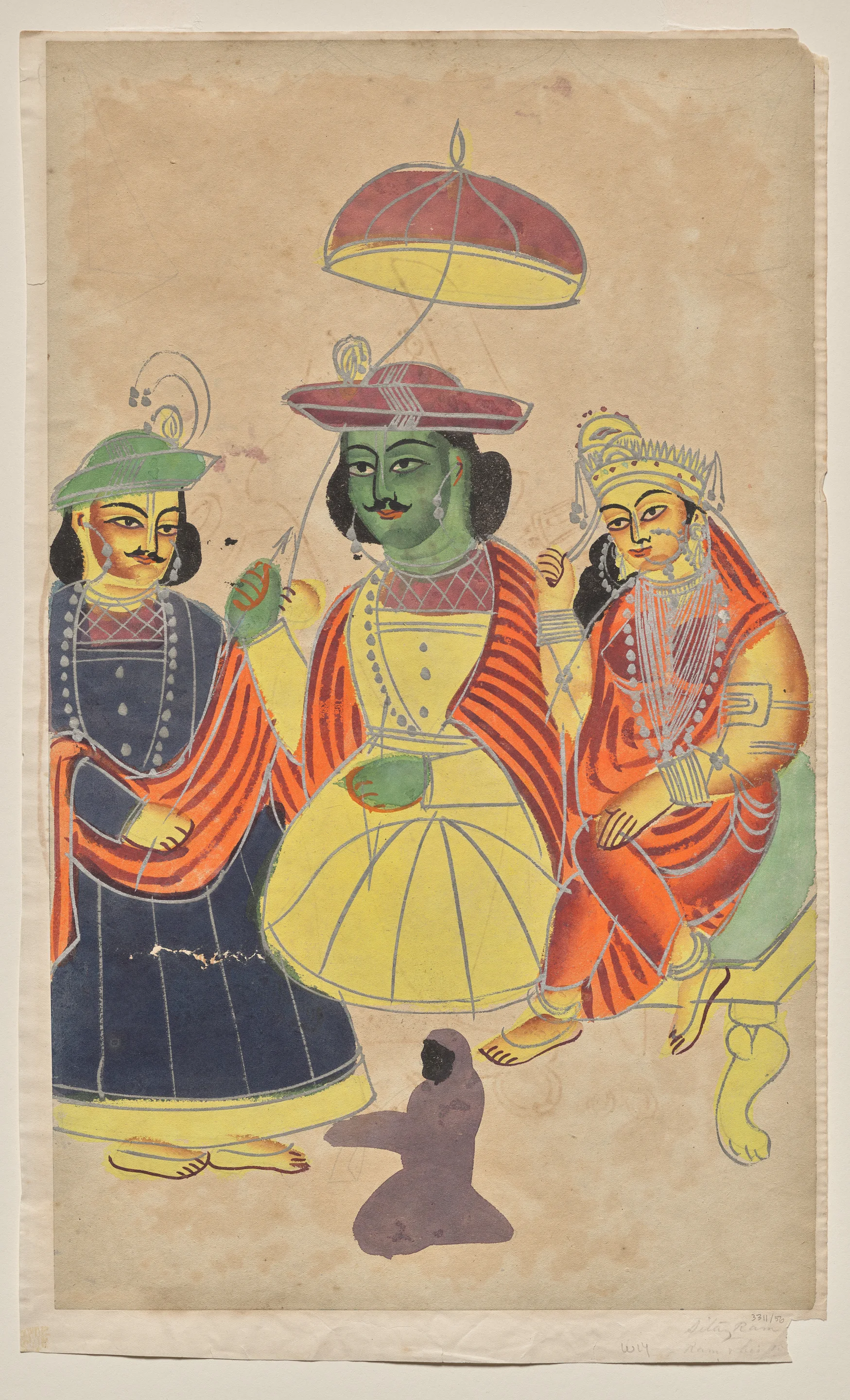
In the words of Pranav Ashar
How we renderThe heart of the Ramatapaniya
In brief
Rama is so called because the yogis delight in the endless bliss of the light, the Self: the name means the highest Brahman. For Brahman, without a second, without parts or body, a form is imagined for the sake of those who worship. In the mantra rāmāya namaḥ, 'namah' names the jiva and 'Rama' the Self, and the mantra declares their oneness. In the second part Rama is the half-measure of Om beyond waking, dream and sleep, and the Mandukya's fourth is to be known as 'I': 'I am that highest Brahman, Rama, who is the light'.
- The name that means Brahman
- Form imagined for the worshipper
- Namah as the jiva, Rama as the Self
- The Brahman that carries across
- The fourth is Rama
- I am Rama
Contents
- P1.1
- P1.2
- P1.3
- P1.4
- P1.5
- P1.6
- P1.7
- P1.8
- P1.9
- P1.10
- P1.11
- P1.12
- P1.13
- P2.1
- P2.2
- P2.3
- P3.1
- P3.2
- P4.1
- P4.2
- P4.3
- P4.4
- P4.5
- P4.6
- P4.7
- P4.8
- P4.9
- P4.10
- P4.11
- P4.12
- P4.13
- P4.14
- P4.15
- P4.16
- P4.17
- P4.18
- P4.19
- P4.20
- P4.21
- P4.22
- P4.23
- P4.24
- P4.25
- P4.26
- P4.27
- P4.28
- P4.29
- P4.30
- P4.31
- P4.32
- P4.33
- P4.34
- P4.35
- P4.36
- P4.37
- P4.38
- P4.39
- P4.40
- P4.41
- P4.42
- P4.43
- P4.44
- P4.45
- P4.46
- P4.47
- P4.48
- P4.49
- P4.50
- P4.51
- P4.52
- P4.53
- P4.54
- P4.55
- P4.56
- P4.57
- P4.58
- P4.59
- P4.60
- P4.61
- P4.62
- P4.63
- P4.64
- P4.65
- P4.66
- P4.67
- P5.1
- P5.2
- P5.3
- P5.4
- P5.5
- P5.6
- P5.7
- P5.8
- P5.9
- P5.10
- P5.C
- U1
- U2
- U2.1
- U2.2
- U2.3
- U2.4
- U3.a
- U3.b
- U3.c
- U4.a
- U4.b
- U4.1
- U4.2
- U4.3
- U4.4
- U4.5
- U4.6
- U4.7
- U4.8
- U5.0
- U5.1
- U5.2-10
- U5.11-20
- U5.21-30
- U5.31-40
- U5.41-47
- U5.C
- U6.0
- U6.1
- U6.2
- U6.3
- U6.P
- U6.4-6
- U6.7-10
- U6.11-16
- U6.17-22
- U6.23-25
- U6.26-28
- U6.C
ॐ चिन्मयेऽस्मिन्महाविष्णौ जाते दशरथे हरौ । रघोः कुलेऽखिलं राति राजते यो महीस्थितः ॥ १॥
oṃ cinmaye'sminmahāviṣṇau jāte daśarathe harau | raghoḥ kule'khilaṃ rāti rājate yo mahīsthitaḥ || 1||
Om. When this great Vishnu, who is the light, was born as Hari, son of Dasharatha, in the line of Raghu, he who, standing on the earth, gives (rāti) everything and shines (rājate)...
Note //
The first of several explanations of the name: ra from rā, 'to give', and from rāj, 'to shine'. The sentence runs on into verse 2. Editions: 'kule 'khilaṃ rāti rājate' (sanskritdocuments.org); the Adyar collection's 'kule 'svilaṃ rātirājate' is a misprint.
स राम इति लोकेषु विद्वद्भिः प्रकटीकृतः । राक्षसा येन मरणं यान्ति स्वोद्रेकतोऽथवा ॥ २॥
sa rāma iti lokeṣu vidvadbhiḥ prakaṭīkṛtaḥ | rākṣasā yena maraṇaṃ yānti svodrekato'thavā || 2||
...was made known in the worlds by the wise as 'Rama'; or because by him the rakshasas go to death (maraṇa), or by his own surpassing power.
Note //
A second etymology: ra for rākṣasa, ma for maraṇa, 'death'. Editions agree.
रामनाम भुवि ख्यातमभिरामेण वा पुनः । राक्षसान्मर्त्यरूपेण राहुर्मनसिजं यथा ॥ ३॥
rāmanāma bhuvi khyātamabhirāmeṇa vā punaḥ | rākṣasānmartyarūpeṇa rāhurmanasijaṃ yathā || 3||
Or again the name Rama is famous on earth from his beauty (abhirāma); or because, in mortal form, he dimmed the rakshasas as Rahu dims the moon...
Note //
'The one born of the mind' (manasija) is the moon, born from the mind of the Person (Rig Veda 10.90.13). The sentence runs on into verses 4-5. Editions agree.
प्रभाहीनांस्तथा कृत्वा राज्यार्हाणां महीभृताम् । धर्ममार्गं चरित्रेण ज्ञानमार्गं च नामतः ॥ ४॥
prabhāhīnāṃstathā kṛtvā rājyārhāṇāṃ mahībhṛtām | dharmamārgaṃ caritreṇa jñānamārgaṃ ca nāmataḥ || 4||
...and so too made pale the kings who claimed to be fit to rule; or because he gives the way of dharma by his conduct, the way of knowledge by his name,
Note //
'Gives' (rāti, verse 5) governs the list in verses 4-5. Editions: 'ca nāmataḥ' (sanskritdocuments.org); the Adyar collection runs the words together.
तथा ध्यानेन वैराग्यमैश्वर्यं स्वस्य पूजनात् । तथा रात्यस्य रामाख्या भुवि स्यादथ तत्त्वतः ॥ ५॥
tathā dhyānena vairāgyamaiśvaryaṃ svasya pūjanāt | tathā rātyasya rāmākhyā bhuvi syādatha tattvataḥ || 5||
dispassion by meditation on him, sovereignty by his worship: because he gives (rāti) these, his name on earth is Rama. And now, according to the truth:
Note //
The etymologies so far are from the story; the next verse gives the meaning 'according to the truth' (tattvataḥ). Editions agree.
रमन्ते योगिनोऽनन्ते नित्यानन्दे चिदात्मनि । इति रामपदेनासौ परं ब्रह्माभिधीयते ॥ ६॥
ramante yogino'nante nityānande cidātmani | iti rāmapadenāsau paraṃ brahmābhidhīyate || 6||
The yogis delight in the endless one, eternal bliss, the Self that is the light: so by the word 'Rama' the highest Brahman is meant.
Note //
The name explained from ram, 'to delight': Rama is that in which those who know delight. 'The Self that is the light' (cidātman): 'the light' is the settled word for cit. Editions agree.
चिन्मयस्याद्वितीयस्य निष्कलस्याशरीरिणः । उपासकानां कार्यार्थं ब्रह्मणो रूपकल्पना ॥ ७॥
cinmayasyādvitīyasya niṣkalasyāśarīriṇaḥ | upāsakānāṃ kāryārthaṃ brahmaṇo rūpakalpanā || 7||
For Brahman, which is the light, without a second, without parts, without a body, a form , for the sake of those who worship.
Note //
The key verse for the text's view of images and forms. 'Imagined' (kalpanā) does not mean false: the form is a real means for the worshipper, as an appearance is real as appearance, not on its own. The next verses extend this to the gods' sexes, arms, weapons, colours, vehicles and armies. Editions agree.
रूपस्थानां देवतानां पुंस्त्र्यङ्गास्त्रादिकल्पना । द्विचत्वारिषडष्टासां दश द्वादश षोडश ॥ ८॥
rūpasthānāṃ devatānāṃ puṃstryaṅgāstrādikalpanā | dvicatvāriṣaḍaṣṭāsāṃ daśa dvādaśa ṣoḍaśa || 8||
For the gods who have forms, male and female bodies, limbs and weapons are imagined. Two, four, six, eight arms for these, ten, twelve, sixteen...
Note //
The sentence runs on into verse 9. Editions: 'pumstryaṅgāstrādi' (sanskritdocuments.org; the Adyar collection's 'āstrārdi' is a misprint). The number list is corrupt in both: the Adyar collection has 'dvi catvāri ṣaḍaṣṭā''sāṃ', sanskritdocuments.org 'dvittatvāriṣaḍaṣṭānāṃ'; the text follows the Adyar reading, 'two, four, six, eight, for these (āsām)'. Pending review.
अष्टादशामी कथिता हस्ताः शङ्खादिभिर्युताः । सहस्रान्तास्तथा तासां वर्णवाहनकल्पना ॥ ९॥
aṣṭādaśāmī kathitā hastāḥ śaṅkhādibhiryutāḥ | sahasrāntāstathā tāsāṃ varṇavāhanakalpanā || 9||
...eighteen: these are the arms told of, holding the conch and the rest, up to a thousand; and so their colours and vehicles are imagined.
Note //
Editions: 'sahasrāntās' (sanskritdocuments.org; 'sahasnāntās' in the Adyar collection is a misprint).
शक्तिसेनाकल्पना च ब्रह्मण्येवं हि पञ्चधा । कल्पितस्य शरीरस्य तस्य सेनादिकल्पना ॥ १०॥
śaktisenākalpanā ca brahmaṇyevaṃ hi pañcadhā | kalpitasya śarīrasya tasya senādikalpanā || 10||
Their powers and armies are imagined too: so in Brahman the imagining is fivefold. For the body that , an army and the rest are imagined.
Note //
Fivefold: body (limbs and weapons), arms, colours, vehicles, and powers with their armies. The last line makes the point: the attendants belong to a body that is itself imagined. Editions agree.
ब्रह्मादीनां वाचकोऽयं मन्त्रोऽन्वर्थादिसंज्ञकः । जप्तव्यो मन्त्रिणा नैवं विना देवः प्रसीदति ॥ ११॥
brahmādīnāṃ vācako'yaṃ mantro'nvarthādisaṃjñakaḥ | japtavyo mantriṇā naivaṃ vinā devaḥ prasīdati || 11||
This mantra names Brahma and the others; its names follow its meaning. The one who takes up the mantra should repeat it: without it, the god is not pleased.
Note //
'Its names follow its meaning' (anvarthādisaṃjñaka): the mantra's names, such as 'mantra-king', fit what it does. Editions agree.
क्रियाकर्मेज्यकर्तॄणामर्थं मन्त्रो वदत्यथ । मननात्त्राणनान्मन्त्रः सर्ववाच्यस्य वाचकः ॥ १२॥
kriyākarmejyakartṝṇāmarthaṃ mantro vadatyatha | mananāttrāṇanānmantraḥ sarvavācyasya vācakaḥ || 12||
The mantra tells the meaning of act, of rite, of the one worshipped, of those who do it. It is mantra from thinking (manana) and from protecting (trāṇa); it names all that can be named.
Note //
Editions: 'kriyākarmejyakartṝṇām' (sanskritdocuments.org) is followed; the Adyar collection has 'kriyā karmeti kartṝṇām'. 'Mananāt trāṇanāt' is the common etymology of mantra; both editions write 'mananāntrāṇanāt' or 'mananāntrāṇanān', corrected here.
सोभयस्यास्य देवस्य विग्रहो यन्त्रकल्पना । विना यन्त्रेण चेत्पूजा देवता न प्रसीदति ॥ १३॥
sobhayasyāsya devasya vigraho yantrakalpanā | vinā yantreṇa cetpūjā devatā na prasīdati || 13||
The diagram (yantra) that is drawn is the body of this god, both the word and what it names. If worship is done without the diagram, the god is not pleased.
Note //
'Of both' follows the Adyar collection, 'sobhayasya' (saḥ ubhayasya): the yantra embodies both the mantra (what names) and the god (what is named), as verse 12 and section 4 explain. sanskritdocuments.org has 'so 'bhayasya', 'of the fearless one'. Pending review.
स्वर्भूर्ज्योतिर्मयोऽनन्तरूपी स्वेनैव भासते । जीवत्वेन समो यस्य सृष्टिस्थितिलयस्य च ॥ १॥
svarbhūrjyotirmayo'nantarūpī svenaiva bhāsate | jīvatvena samo yasya sṛṣṭisthitilayasya ca || 1||
Self-born, made of light, endless in form, it shines by itself alone. As the jiva it is the same in all; and of creation, keeping and dissolution...
कारणत्वेन चिच्छक्त्या रजःसत्त्वतमोगुणैः । यथैव वटबीजस्थः प्राकृतश्च महान्द्रुमः ॥ २॥
kāraṇatvena cicchaktyā rajaḥsattvatamoguṇaiḥ | yathaiva vaṭabījasthaḥ prākṛtaśca mahāndrumaḥ || 2||
...it is the cause, through the power of the light, with the qualities rajas, sattva and tamas. Just as a great tree, in its nature, lies within the seed of the banyan...
Note //
Editions: 'mahān drumaḥ' (sanskritdocuments.org); 'mahādrumaḥ' (Adyar collection), same sense.
तथैव रामबीजस्थं जगदेतच्चराचरम् । रेफारूढा मूर्तयः स्युः शक्तयस्तिस्र एव चेति ॥ ३॥
tathaiva rāmabījasthaṃ jagadetaccarācaram | rephārūḍhā mūrtayaḥ syuḥ śaktayastisra eva ceti || 3||
...so this world, moving and unmoving, lies within the seed of Rama. On its letter r ride the forms, and the three powers as well.
Note //
The seed (bīja) is the syllable rāṃ. The forms are Brahma, Vishnu and Shiva; the three powers, of will, knowing and action, or the three qualities. Editions agree.
सीतारामौ तन्मयावत्र पूज्यौ जातान्याभ्यां भुवनानि द्विसप्त । स्थितानि च प्रहितान्येव तेषु ततो रामो मानवो माययाधात् ॥ १॥
sītārāmau tanmayāvatra pūjyau jātānyābhyāṃ bhuvanāni dvisapta | sthitāni ca prahitānyeva teṣu tato rāmo mānavo māyayādhāt || 1||
Sita and Rama, made of that, are to be worshipped here. From these two the fourteen worlds were born; in them they stand, and into them they are sent forth. Then Rama, by maya, took on a human form.
Note //
'Made of that' (tanmaya): of the seed, and so of Brahman. Rama's human birth is by maya, the power by which the one appears as many; the form is real as appearance, as P1.7 said of every form. Editions: 'prahitāni' and 'māyayādhāt' (sanskritdocuments.org) are followed; the Adyar collection has 'prahatāni' and 'māyayādhyāt'.
जगत्प्राणायात्मनेऽस्मै नमः स्यान्नमस्त्वैक्यं प्रवदेत्प्राग्गुणेनेति ॥ २॥
jagatprāṇāyātmane'smai namaḥ syānnamastvaikyaṃ pravadetprāgguṇeneti || 2||
To him, the life of the world, the Self, let there be namah. And namah, as before, declares the oneness.
Note //
The sense, as section 4 explains, is that in 'rāmāya namaḥ' the word namah stands for the jiva bowing into the Self, and so says that they are one. 'As before' (prāg guṇena) is obscure: perhaps 'by the quality already named'. Editions agree. Pending review.
जीववाची नमो नाम चात्मा रामेति गीयते । तदात्मिका या चतुर्थी तथा चायेति गीयते ॥ १॥
jīvavācī namo nāma cātmā rāmeti gīyate | tadātmikā yā caturthī tathā cāyeti gīyate || 1||
Namah is the word that means the jiva; the Self is sung as 'Rama'; and the dative that joins them is sung as '-āya'.
Note //
The six-syllable mantra, (rāṃ) rāmāya namaḥ, word by word: namaḥ, the individual; rāma, the Self; the dative ending -āya, 'to', which gives the one to the other. Read with P3.2, the mantra states the identity of jiva and Self. Editions: the Adyar collection's 'tathā cāyeti' is followed; sanskritdocuments.org has 'tathā māyeti', which does not fit the grammar of the mantra. Pending review.
मन्त्रोऽयं वाचको रामो वाच्यः स्याद्योग एतयोः । फलदश्चैव सर्वेषां साधकानां न संशयः ॥ २॥
mantro'yaṃ vācako rāmo vācyaḥ syādyoga etayoḥ | phaladaścaiva sarveṣāṃ sādhakānāṃ na saṃśayaḥ || 2||
This mantra is what names; Rama is what is named. The joining of the two gives its fruit to all who practise: of this there is no doubt.
Note //
Editions: the Adyar collection is followed ('phaladaś'); sanskritdocuments.org adds a second 'rāmo', which breaks the metre, and has 'phalataś'.
यथा नामी वाचकेन नाम्ना योऽभिमुखो भवेत् । तथा बीजात्मको मन्त्रो मन्त्रिणोऽभिमुखो भवेत् ॥ ३॥
yathā nāmī vācakena nāmnā yo'bhimukho bhavet | tathā bījātmako mantro mantriṇo'bhimukho bhavet || 3||
As one who bears a name turns toward whoever calls it, so the mantra, whose heart is the seed, turns toward the one who says it.
Note //
Editions agree.
बीजशक्तिं न्यसेद्दक्षवामयोः स्तनयोरपि । कीलो मध्येऽविनाभाव्यः स्ववाञ्छाविनियोगवान् ॥ ४॥
bījaśaktiṃ nyaseddakṣavāmayoḥ stanayorapi | kīlo madhye'vinābhāvyaḥ svavāñchāviniyogavān || 4||
Let him place the seed and the power on the right and the left of the breast, and the pin in the middle, never apart from them, applying it to what he seeks.
Note //
The placing (nyāsa) of the mantra's parts on the body: seed (bīja), power (śakti) and pin (kīlaka). Editions: 'madhye 'vinābhāvyaḥ' (Adyar collection); sanskritdocuments.org divides 'madhye vinā bhāvyaḥ'.
सर्वेषामेव मन्त्राणामेष साधारणः क्रमः । अत्र रामोऽनन्तरूपस्तेजसा वह्निना समः ॥ ५॥
sarveṣāmeva mantrāṇāmeṣa sādhāraṇaḥ kramaḥ | atra rāmo'nantarūpastejasā vahninā samaḥ || 5||
This is the common order for all mantras. Here Rama, endless in form, is equal to fire in brilliance;
Note //
Editions agree.
स त्वनुष्णगुविश्वश्चेदग्नीषोमात्मकं जगत् । उत्पन्नः सीतया भाति चन्द्रश्चन्द्रिकया यथा ॥ ६॥
sa tvanuṣṇaguviśvaścedagnīṣomātmakaṃ jagat | utpannaḥ sītayā bhāti candraścandrikayā yathā || 6||
and if he is also the cool-rayed moon, the world is fire and moon together. Born, he shines with Sita as the moon with its light.
Note //
The world is 'of fire and soma', the hot and the cool; Rama is both, and Sita is to him as moonlight to the moon, his own radiance. The line is difficult in both editions: 'sa tv anuṣṇaguviśvaś ced' (Adyar collection) is followed; sanskritdocuments.org has 'sattvanuṣṇaguviśvaś'. 'Sītayā' (sanskritdocuments.org) is followed against 'śītayā' (Adyar collection). Pending review.
प्रकृत्या सहितः श्यामः पीतवासा जटाधरः । द्विभुजः कुण्डली रत्नमाली धीरो धनुर्धरः ॥ ७॥
prakṛtyā sahitaḥ śyāmaḥ pītavāsā jaṭādharaḥ | dvibhujaḥ kuṇḍalī ratnamālī dhīro dhanurdharaḥ || 7||
With Prakriti beside him, dark, in yellow garments, with matted hair, two-armed, with earrings and a garland of jewels, steady, bearing the bow;
Note //
The form for meditation (dhyāna). Prakriti is Sita (U2.4). Editions agree.
प्रसन्नवदनो जेता धृष्ट्यष्टकविभूषितः । प्रकृत्या परमेश्वर्या जगद्योन्याङ्किताङ्कभृत् ॥ ८॥
prasannavadano jetā dhṛṣṭyaṣṭakavibhūṣitaḥ | prakṛtyā parameśvaryā jagadyonyāṅkitāṅkabhṛt || 8||
calm of face, the victor, graced by the eight beginning with Dhrishti, bearing on his lap Prakriti, the highest sovereign, the womb of the world;
Note //
The eight are Rama's ministers, named in verses 36-37. Editions: 'dhṛṣṭi' (Adyar collection) against 'ghṛṣṭi' (sanskritdocuments.org).
हेमाभया द्विभुजया सर्वालङ्कृतया चिता । श्लिष्टः कमलधारिण्या पुष्टः कोसलजात्मजः ॥ ९॥
hemābhayā dvibhujayā sarvālaṅkṛtayā citā | śliṣṭaḥ kamaladhāriṇyā puṣṭaḥ kosalajātmajaḥ || 9||
embraced by her who glows like gold, two-armed, adorned with every ornament, holding a lotus: so the strong son of Kosala's daughter.
Note //
Editions agree.
दक्षिणे लक्ष्मणेनाथ सधनुष्पाणिना पुनः । हेमाभेनानुजेनैव तथा कोणत्रयं भवेत् ॥ १०॥
dakṣiṇe lakṣmaṇenātha sadhanuṣpāṇinā punaḥ | hemābhenānujenaiva tathā koṇatrayaṃ bhavet || 10||
On his right, Lakshmana, his younger brother, golden, bow in hand: so there is a triangle.
Note //
Rama, Sita and Lakshmana form the first triangle of the diagram. Editions agree.
तथैव तस्य मन्त्रस्य यस्याणुश्च स्वङेन्तया । एवं त्रिकोणरूपं स्यात्तं देवा ये समाययुः ॥ ११॥
tathaiva tasya mantrasya yasyāṇuśca svaṅentayā | evaṃ trikoṇarūpaṃ syāttaṃ devā ye samāyayuḥ || 11||
So too the mantra, its letters with the dative ending, takes the shape of a triangle. The gods who came to him...
Note //
'With the dative ending' (sva-ṅe-antayā): the mantra's three parts, rām, -āya, namaḥ, match the three figures. The line is obscure. Editions agree. Pending review.
स्तुतिं चक्रुश्च जगतः पतिं कल्पतरौ स्थितम् । कामरूपाय रामाय नमो मायामयाय च ॥ १२॥
stutiṃ cakruśca jagataḥ patiṃ kalpatarau sthitam | kāmarūpāya rāmāya namo māyāmayāya ca || 12||
...praised the lord of the world, seated beneath the wishing tree: 'Namah to Rama, who takes what form he will, and who is made of maya;
Note //
The gods' hymn runs to verse 16. 'Made of maya' (māyāmaya): his forms are appearance, in the sense of P1.7 and P3.1. Editions agree.
नमो वेदादिरूपाय ओङ्काराय नमो नमः । रमाधराय रामाय श्रीरामायात्ममूर्तये ॥ १३॥
namo vedādirūpāya oṅkārāya namo namaḥ | ramādharāya rāmāya śrīrāmāyātmamūrtaye || 13||
namah, namah to him whose form is the first of the Veda, to him who is Om; to Rama who holds Rama, Lakshmi, to Shri Rama, whose form is the Self;
Note //
Editions agree.
जानकीदेहभूषाय रक्षोघ्नाय शुभाङ्गिने । भद्राय रघुवीराय दशास्यान्तकरूपिणे ॥ १४॥
jānakīdehabhūṣāya rakṣoghnāya śubhāṅgine | bhadrāya raghuvīrāya daśāsyāntakarūpiṇe || 14||
to him who adorns Janaki's body, slayer of rakshasas, of auspicious limbs, the kindly one, Raghu's hero, whose form is the end of the ten-faced one.
Note //
Editions agree.
रामभद्र महेष्वास रघुवीर नृपोत्तम । भो दशास्यान्तकास्माकं रक्षां देहि श्रियं च ते ॥ १५॥
rāmabhadra maheṣvāsa raghuvīra nṛpottama | bho daśāsyāntakāsmākaṃ rakṣāṃ dehi śriyaṃ ca te || 15||
Ramabhadra, great archer, hero of Raghu, best of kings, ender of the ten-faced one: give us protection, and your fortune.
Note //
Editions: 'maheṣvāsa' (Adyar collection) against 'maheśvāsa' (sanskritdocuments.org). The Adyar collection ends a section after the first line.
त्वमैश्वर्यं दापयाथ सम्प्रत्याश्वरिमारणम् । कुर्विति स्तुत्य देवाद्यास्तेन सार्धं सुखं स्थिताः ॥ १६॥
tvamaiśvaryaṃ dāpayātha sampratyāśvarimāraṇam | kurviti stutya devādyāstena sārdhaṃ sukhaṃ sthitāḥ || 16||
Grant us sovereignty, and now, quickly, put our enemy to death.' Having praised him so, the gods and the rest lived happily with him.
Note //
Editions: sanskritdocuments.org is followed ('sampraty āśv arimāraṇaṃ kurv iti'); the Adyar collection has 'sampratyā kharamāraṇaṃ kurvanti', 'the killing of Khara'.
स्तुवन्त्येवं हि ऋषयस्तदा रावण आसुरः । रामपत्नीं वनस्थां यः स्वनिवृत्त्यर्थमाददे ॥ १७॥
stuvantyevaṃ hi ṛṣayastadā rāvaṇa āsuraḥ | rāmapatnīṃ vanasthāṃ yaḥ svanivṛttyarthamādade || 17||
So the seers praise him. Then Ravana, the demon, carried off Rama's wife, who lived in the forest, for the sake of his own release.
Note //
'For his own release' (svanivṛttyartham): the tradition reads Ravana's crime as the way he would die at Rama's hand and so be freed. Editions agree.
स रावण इति ख्यातो यद्वा रावाच्च रावणः । तद्व्याजेनेक्षितुं सीतां रामो लक्ष्मण एव च ॥ १८॥
sa rāvaṇa iti khyāto yadvā rāvācca rāvaṇaḥ | tadvyājenekṣituṃ sītāṃ rāmo lakṣmaṇa eva ca || 18||
He is called Ravana, or Ravana from his roar (rāva). On that account, to look for Sita, Rama and Lakshmana...
Note //
Editions agree.
विचेरतुस्तदा भूमौ देवीं संदृश्य चासुरम् । हत्वा कबन्धं शबरीं गत्वा तस्याज्ञया तया ॥ १९॥
viceratustadā bhūmau devīṃ saṃdṛśya cāsuram | hatvā kabandhaṃ śabarīṃ gatvā tasyājñayā tayā || 19||
...wandered the earth. Seeing the signs of the goddess and the demon, they killed Kabandha, went to Shabari at his bidding;
Note //
Editions: 'gatvā' (sanskritdocuments.org; 'gavvā' in the Adyar collection is a misprint).
पूजितो वायुपुत्रेण भक्तेन च कपीश्वरम् । आहूय शंसतां सर्वमाद्यन्तं रामलक्ष्मणौ ॥ २०॥
pūjito vāyuputreṇa bhaktena ca kapīśvaram | āhūya śaṃsatāṃ sarvamādyantaṃ rāmalakṣmaṇau || 20||
honoured by her, and by the devoted son of the Wind, Rama and Lakshmana called the king of the monkeys and told him everything, from beginning to end.
Note //
Editions: 'vāyuputreṇa', Hanuman (sanskritdocuments.org), against 'vīraputreṇa' (Adyar collection).
स तु रामे शङ्कितः सन्प्रत्ययार्थं च दुन्दुभेः । विग्रहं दर्शयामास यो रामस्तमचिक्षिपत् ॥ २१॥
sa tu rāme śaṅkitaḥ sanpratyayārthaṃ ca dundubheḥ | vigrahaṃ darśayāmāsa yo rāmastamacikṣipat || 21||
He, doubting Rama, to test him showed him the body of Dundubhi; Rama flung it away.
Note //
Editions agree.
सप्त सालान्विभिद्याशु मोदते राघवस्तदा । तेन हृष्टः कपीन्द्रोऽसौ स रामस्तस्य पत्तनम् ॥ २२॥
sapta sālānvibhidyāśu modate rāghavastadā | tena hṛṣṭaḥ kapīndro'sau sa rāmastasya pattanam || 22||
He pierced seven sal trees at once, and Raghava was glad. Pleased by this, the monkey king, with Rama, to his brother's city...
Note //
Editions agree.
जगामागर्जदनुजो वालिनो वेगतो गृहात् । तदा वाली निर्जगाम तं वालिनमथाहवे ॥ २३॥
jagāmāgarjadanujo vālino vegato gṛhāt | tadā vālī nirjagāma taṃ vālinamathāhave || 23||
...went; the younger brother roared; Vali rushed out of his house. Then Vali, in the fight...
Note //
Editions agree in sense; the order 'tadā vālī' follows sanskritdocuments.org.
निहत्य राघवो राज्ये सुग्रीवं स्थापयत्ततः । हरीनाहूय सुग्रीवस्त्वाह चाशाविदोऽधुना ॥ २४॥
nihatya rāghavo rājye sugrīvaṃ sthāpayattataḥ | harīnāhūya sugrīvastvāha cāśāvido'dhunā || 24||
...Raghava killed, and set Sugriva on the throne. Sugriva called the monkeys and said: 'You who know the quarters of the earth,
Note //
Editions: 'sthāpayat' (sanskritdocuments.org) against 'sthāpayet' (Adyar collection).
आदाय मैथिलीमद्य ददताश्वाशु गच्छत । ततस्ततार हनुमानब्धिं लङ्कां समाययौ ॥ २५॥
ādāya maithilīmadya dadatāśvāśu gacchata | tatastatāra hanumānabdhiṃ laṅkāṃ samāyayau || 25||
go now, quickly; bring back Maithili today and give her to him.' Then Hanuman crossed the ocean and came to Lanka.
Note //
The line 'dadatāśv āśu gacchata' is awkward in both editions; the sense is clear. Editions: sanskritdocuments.org is followed.
सीतां दृष्ट्वाऽसुरान्हत्वा पुरं दग्ध्वा तथा स्वयम् । आगत्य रामेण सह न्यवेदयत तत्त्वतः ॥ २६॥
sītāṃ dṛṣṭvā'surānhatvā puraṃ dagdhvā tathā svayam | āgatya rāmeṇa saha nyavedayata tattvataḥ || 26||
He saw Sita, killed demons, burned the city, came back himself, and told Rama everything as it was.
Note //
Editions agree.
तदा रामः क्रोधरूपी तानाहूयाथ वानरान् । तैः सार्धमादायास्त्राणि पुरीं लङ्कां समाययौ ॥ २७॥
tadā rāmaḥ krodharūpī tānāhūyātha vānarān | taiḥ sārdhamādāyāstrāṇi purīṃ laṅkāṃ samāyayau || 27||
Then Rama, wrath in form, called the monkeys, took up his weapons, and came with them to the city of Lanka.
Note //
Editions: 'astrāṇi' (sanskritdocuments.org) against 'astrāṃś ca' (Adyar collection).
तां दृष्ट्वा तदधीशेन सार्धं युद्धमकारयत् । घटश्रोत्रसहस्राक्षजिद्भ्यां युक्तं तमाहवे ॥ २८॥
tāṃ dṛṣṭvā tadadhīśena sārdhaṃ yuddhamakārayat | ghaṭaśrotrasahasrākṣajidbhyāṃ yuktaṃ tamāhave || 28||
Seeing it, he fought its lord, joined in battle by Kumbhakarna and by Indrajit, conqueror of the thousand-eyed;
Note //
'Pot-ear' (ghaṭaśrotra) is Kumbhakarna; 'conqueror of the thousand-eyed' (sahasrākṣajit), Indrajit. Editions: 'tadadhīśena', 'its lord' (Adyar collection), against 'udadhīśena', 'the lord of the ocean' (sanskritdocuments.org).
हत्वा विभीषणं तत्र स्थाप्याथ जनकात्मजाम् । आदायाङ्कस्थितां कृत्वा स्वपुरं तैर्जगाम सः ॥ २९॥
hatvā vibhīṣaṇaṃ tatra sthāpyātha janakātmajām | ādāyāṅkasthitāṃ kṛtvā svapuraṃ tairjagāma saḥ || 29||
he killed him, set Vibhishana there, took Janaka's daughter, seated her on his lap, and went with them to his own city.
Note //
Editions agree; 'vibhīṣaṇa' (Adyar collection) against 'bibhīṣaṇa' (sanskritdocuments.org).
ततः सिंहासनस्थः सन् द्विभुजो रघुनन्दनः । धनुर्धरः प्रसन्नात्मा सर्वाभरणभूषितः ॥ ३०॥
tataḥ siṃhāsanasthaḥ san dvibhujo raghunandanaḥ | dhanurdharaḥ prasannātmā sarvābharaṇabhūṣitaḥ || 30||
Then, seated on the lion throne, two-armed, the joy of Raghu, bearing the bow, serene, adorned with every ornament,
Note //
Editions: 'tataḥ' (sanskritdocuments.org) against 'dhṛtaḥ' (Adyar collection).
मुद्रां ज्ञानमयीं याम्ये वामे तेजःप्रकाशिनीम् । धृत्वा व्याख्याननिरतश्चिन्मयः परमेश्वरः ॥ ३१॥
mudrāṃ jñānamayīṃ yāmye vāme tejaḥprakāśinīm | dhṛtvā vyākhyānanirataścinmayaḥ parameśvaraḥ || 31||
holding in his right hand the gesture of knowledge, in his left the gesture that shows the light, intent on teaching: the supreme Lord, made of the light.
Note //
The whole story ends here, not with victory but with Rama as teacher, like Dakshinamurti. The 'gesture of knowledge' (jñānamudrā) joins thumb and forefinger, the jiva and Brahman. Editions: 'tejaḥprakāśinīm' (Adyar collection) against 'tejaprakāśinīm' (sanskritdocuments.org).
उदग्दक्षिणयोः स्वस्य शत्रुघ्नभरतौ ततः । हनूमन्तं च श्रोतारमग्रतः स्यात्त्रिकोणगम् ॥ ३२॥
udagdakṣiṇayoḥ svasya śatrughnabharatau tataḥ | hanūmantaṃ ca śrotāramagrataḥ syāttrikoṇagam || 32||
To his north and south, Shatrughna and Bharata; in front, Hanuman, the listener: so there is a triangle.
Note //
Editions: 'tataḥ' (sanskritdocuments.org) against 'ghṛtaḥ' (Adyar collection).
भरताधस्तु सुग्रीवं शत्रुघ्नाधो विभीषणम् । पश्चिमे लक्ष्मणं तस्य धृतच्छत्रं सचामरम् ॥ ३३॥
bharatādhastu sugrīvaṃ śatrughnādho vibhīṣaṇam | paścime lakṣmaṇaṃ tasya dhṛtacchatraṃ sacāmaram || 33||
Below Bharata, Sugriva; below Shatrughna, Vibhishana; behind him, Lakshmana, holding the parasol and the fly-whisk;
Note //
Editions agree.
तदधस्तौ तालवृन्तकरौ त्र्यस्रं पुनर्भवेत् । एवं षट्कोणमादौ स्वदीर्घाङ्गैरेष संयुतः ॥ ३४॥
tadadhastau tālavṛntakarau tryasraṃ punarbhavet | evaṃ ṣaṭkoṇamādau svadīrghāṅgaireṣa saṃyutaḥ || 34||
below him, the two with palm-leaf fans: another triangle. So, first, a six-pointed figure, joined with its limbs in long vowels.
Note //
The two triangles make the hexagon. 'Its limbs in long vowels' (svadīrghāṅgaiḥ): the limb-mantras formed from the seed with the long vowels. Editions agree.
द्वितीयं वासुदेवाद्यैराग्नेय्यादिषु संयुतः । तृतीयं वायुसूनुं च सुग्रीवं भरतं तथा ॥ ३५॥
dvitīyaṃ vāsudevādyairāgneyyādiṣu saṃyutaḥ | tṛtīyaṃ vāyusūnuṃ ca sugrīvaṃ bharataṃ tathā || 35||
The second ring, with Vasudeva and the others in the south-east and the other corners; the third, with the son of the Wind, with Sugriva, with Bharata,
Note //
Editions: 'āgneyyādiṣu' (Adyar collection) against 'āgneyādiṣu' (sanskritdocuments.org).
विभीषणं लक्ष्मणं च अङ्गदं चारिमर्दनम् । जाम्बवन्तं च तैर्युक्तस्ततो धृष्टिर्जयन्तकः ॥ ३६॥
vibhīṣaṇaṃ lakṣmaṇaṃ ca aṅgadaṃ cārimardanam | jāmbavantaṃ ca tairyuktastato dhṛṣṭirjayantakaḥ || 36||
Vibhishana, Lakshmana, Angada, crusher of foes, and Jambavan: joined with these. Then Dhrishti, Jayantaka,
Note //
Editions: 'cārimardanam' (sanskritdocuments.org) against 'cārivimardanam' (Adyar collection, one syllable too many).
विजयश्च सुराष्ट्रश्च राष्ट्रवर्धन एव च । अशोको धर्मपालश्च सुमन्त्रश्चैभिरावृतः ॥ ३७॥
vijayaśca surāṣṭraśca rāṣṭravardhana eva ca | aśoko dharmapālaśca sumantraścaibhirāvṛtaḥ || 37||
Vijaya, Surashtra and Rashtravardhana, Ashoka, Dharmapala and Sumantra: surrounded by these;
Note //
The eight ministers of P4.8. Editions agree in sense.
ततः सहस्रदृग्वह्निर्धर्मज्ञो वरुणोऽनिलः । इन्द्वीशधात्रनन्ताश्च दशभिश्चैभिरावृतः ॥ ३८॥
tataḥ sahasradṛgvahnirdharmajño varuṇo'nilaḥ | indvīśadhātranantāśca daśabhiścaibhirāvṛtaḥ || 38||
then the thousand-eyed, fire, the knower of dharma, Varuna, the wind, the moon, Ishana, the creator and Ananta: surrounded by these ten;
Note //
The ten guardians of the directions. The Adyar collection reads 'dharmarakṣo', 'dharma and the demon', giving both Yama and Nirriti, which the list of ten needs; sanskritdocuments.org's 'dharmajño' keeps the metre but loses one. Pending review.
बहिस्तदायुधैः पूज्यो नीलादिभिरलङ्कृतः । वसिष्ठवामदेवादिमुनिभिः समुपासितः ॥ ३९॥
bahistadāyudhaiḥ pūjyo nīlādibhiralaṅkṛtaḥ | vasiṣṭhavāmadevādimunibhiḥ samupāsitaḥ || 39||
outside, he is to be worshipped with their weapons, graced by Nila and the others, attended by the sages, Vasishtha, Vamadeva and the rest.
Note //
Editions agree.
एवमुद्देशतः प्रोक्तं निर्देशस्तस्य चाधुना । त्रिरेखापुटमालिख्य मध्ये तारद्वयं लिखेत् ॥ ४०॥
evamuddeśataḥ proktaṃ nirdeśastasya cādhunā | trirekhāpuṭamālikhya madhye tāradvayaṃ likhet || 40||
So much in outline; now it is set out in detail. Drawing a frame of three lines, let him write two Oms in the middle.
Note //
'Om' is 'the star' (tāra) in the language of mantra. The 'frame of three lines' is a triangle, or a pair of triangles. Editions agree.
तन्मध्ये बीजमालिख्य तदधः साध्यमालिखेत् । द्वितीयान्तं च तस्योर्ध्वं षष्ठ्यन्तं साधकं तथा ॥ ४१॥
tanmadhye bījamālikhya tadadhaḥ sādhyamālikhet | dvitīyāntaṃ ca tasyordhvaṃ ṣaṣṭhyantaṃ sādhakaṃ tathā || 41||
Between them let him write the seed, below it the aim, in the accusative, and above it the one who practises, in the genitive.
Note //
'The aim' (sādhya): the person or thing the rite is for. Editions agree.
कुरुद्वयं च तत्पार्श्वे लिखेद्बीजान्तरे रमाम् । तत्सर्वं प्रणवाभ्यां च वेष्टयेच्छुद्धबुद्धिमान् ॥ ४२॥
kurudvayaṃ ca tatpārśve likhedbījāntare ramām | tatsarvaṃ praṇavābhyāṃ ca veṣṭayecchuddhabuddhimān || 42||
Beside it, 'kuru' twice; within the seed, Rama, the syllable of Lakshmi. Let the one whose mind is clear enclose all this with two Oms.
Note //
'Kuru', 'do'; 'Rama' (ramā) here is Lakshmi and her seed śrīṃ. Editions: 'veṣṭayec chuddhabuddhimān' (sanskritdocuments.org) against 'veṣṭitaṃ buddhibuddhimān' (Adyar collection).
दीर्घभाजि षडस्रे तु लिखेद्बीजं हृदादिभिः । कोणपार्श्वे रमामाये तदग्रेऽनङ्गमालिखेत् ॥ ४३॥
dīrghabhāji ṣaḍasre tu likhedbījaṃ hṛdādibhiḥ | koṇapārśve ramāmāye tadagre'naṅgamālikhet || 43||
In the six-pointed figure with the long vowels, let him write the seed with 'heart' and the other limbs; beside the corners, Rama and Maya; at their tips, the seed of the bodiless god.
Note //
Rama, Maya and Ananga stand for the seeds śrīṃ, hrīṃ and klīṃ. Editions agree.
क्रोधं कोणाग्रान्तरेषु लिख्य मन्त्र्यभितो गिरम् । वृत्तत्रयं साष्टपत्रं सरोजे विलिखेत्स्वरान् ॥ ४४॥
krodhaṃ koṇāgrāntareṣu likhya mantryabhito giram | vṛttatrayaṃ sāṣṭapatraṃ saroje vilikhetsvarān || 44||
Writing 'wrath' between the tips of the corners, and speech all round, the one who keeps the mantra draws three circles with a lotus of eight petals, and writes the vowels in the lotus.
Note //
'Wrath' (krodha) and 'speech' (gir) are the seeds hūṃ and aiṃ. Editions agree.
केसरेष्वष्टपत्रे च वर्गाष्टकमथालिखेत् । तेषु मालामनोर्वर्णान्विलिखेदूर्मिसंख्यया ॥ ४५॥
kesareṣvaṣṭapatre ca vargāṣṭakamathālikhet | teṣu mālāmanorvarṇānvilikhedūrmisaṃkhyayā || 45||
In the filaments and the eight petals, the eight groups of letters; and in them, the letters of the garland-mantra, six at a time.
Note //
'Waves' (ūrmi) stands for six. Editions: 'kesareṣv' (Adyar collection) against 'kesare cā' (sanskritdocuments.org).
अन्ते पञ्चाक्षराण्येवं पुनरष्टदलं लिखेत् । तेषु नारायणाष्टार्णांल्लिख्य तत्केसरे रमाम् ॥ ४६॥
ante pañcākṣarāṇyevaṃ punaraṣṭadalaṃ likhet | teṣu nārāyaṇāṣṭārṇāṃllikhya tatkesare ramām || 46||
five letters at the end. Then let him draw another eight-petalled lotus, write in it the eight syllables of Narayana, and Rama in its filaments.
Note //
The eight syllables: oṃ namo nārāyaṇāya. Editions: sanskritdocuments.org is followed.
तद्बहिर्द्वादशदलं विलिखेद्द्वादशाक्षरम् । अथों नमो भगवते वासुदेवाय इत्ययम् ॥ ४७॥
tadbahirdvādaśadalaṃ vilikheddvādaśākṣaram | athoṃ namo bhagavate vāsudevāya ityayam || 47||
Outside it, a lotus of twelve petals, and in it the twelve syllables: 'Om, namah to the Lord Vasudeva.'
Note //
Editions: 'athoṃ' (sanskritdocuments.org) against 'tathoṃ' (Adyar collection).
आदिक्षान्तान्केसरेषु वृत्ताकारेण संलिखेत् । तद्बहिः षोडशदलं लिख्य तत्केसरे ह्रियम् ॥ ४८॥
ādikṣāntānkesareṣu vṛttākāreṇa saṃlikhet | tadbahiḥ ṣoḍaśadalaṃ likhya tatkesare hriyam || 48||
In its filaments let him write, in a circle, the letters from a to kṣa. Outside it a lotus of sixteen petals, and in its filaments, the seed of Hri.
Note //
Every letter of the alphabet. 'Hri' is the seed hrīṃ. Editions: 'hriyam' (Adyar collection) against 'hṛyam' (sanskritdocuments.org).
वर्मास्त्रनतिसंयुक्तं दलेषु द्वादशाक्षरम् । तत्सन्धिष्विरजादीनां मन्त्रान्मन्त्री समालिखेत् ॥ ४९॥
varmāstranatisaṃyuktaṃ daleṣu dvādaśākṣaram | tatsandhiṣvirajādīnāṃ mantrānmantrī samālikhet || 49||
In the petals, the twelve syllables joined with 'armour', 'weapon' and 'bow'; and in the joins, the mantras of Iraja and the others.
Note //
'Armour', 'weapon' and 'bow' are hum, phaṭ and namaḥ. 'Iraja and the others' is uncertain: both editions divide 'sandhiṣv irajādīnām'. Pending review.
ह्रं स्रं भ्रं व्रं ल्रं श्रं ज्रं च लिखेत्सम्यक्ततो बहिः । द्वात्रिंशारं महापद्मं नादबिन्दुसमायुतम् ॥ ५०॥
hraṃ sraṃ bhraṃ vraṃ lraṃ śraṃ jraṃ ca likhetsamyaktato bahiḥ | dvātriṃśāraṃ mahāpadmaṃ nādabindusamāyutam || 50||
Let him write the seeds hraṃ, sraṃ, bhraṃ, vraṃ, lraṃ, śraṃ and jraṃ, with care. Outside, a great lotus of thirty-two petals, with resonance and point.
Note //
The seven seeds differ in the editions: sanskritdocuments.org has 'hraṃ sraṃ bhraṃ vraṃ lūṃ śraṃ jraṃ' (the fifth garbled), the Adyar collection 'hṛṃ sṛṃ bhṛṃ vṛṃ lṛṃ śṛṃ jṛṃ'. The pattern of sanskritdocuments.org is followed. Pending review.
विलिखेन्मन्त्रराजार्णांस्तेषु पत्रेषु यत्नतः । ध्यायेदष्टवसूनेकादशरुद्रांश्च तत्र वै ॥ ५१॥
vilikhenmantrarājārṇāṃsteṣu patreṣu yatnataḥ | dhyāyedaṣṭavasūnekādaśarudrāṃśca tatra vai || 51||
In those petals let him write with care the letters of the king of mantras, and meditate there on the eight Vasus and the eleven Rudras,
Note //
Editions agree.
द्वादशेनांश्च धातारं वषट्कारं च तद्बहिः । भूगृहं वज्रशूलाढ्यं रेखात्रयसमन्वितम् ॥ ५२॥
dvādaśenāṃśca dhātāraṃ vaṣaṭkāraṃ ca tadbahiḥ | bhūgṛhaṃ vajraśūlāḍhyaṃ rekhātrayasamanvitam || 52||
the twelve suns, the creator, and the cry 'vashat'. Outside it, the house of the earth, with thunderbolts and tridents, of three lines,
Note //
Editions: 'ca tadbahiḥ' (sanskritdocuments.org) against 'tato bahiḥ' (Adyar collection).
द्वारोपेतं च राश्यादिभूषितं फणिसंयुतम् । अनन्तो वासुकिश्चैव तक्षः कर्कोटपद्मकः ॥ ५३॥
dvāropetaṃ ca rāśyādibhūṣitaṃ phaṇisaṃyutam | ananto vāsukiścaiva takṣaḥ karkoṭapadmakaḥ || 53||
with gates, adorned with the signs of the zodiac, and with the serpents: Ananta, Vasuki, Takshaka, Karkota, Padmaka,
Note //
Editions: 'dvāropetaṃ' (Adyar collection) against 'dvāropataṃ' (sanskritdocuments.org).
महापद्मश्च शङ्खश्च गुलिकोऽष्टौ प्रकीर्तिताः । एवं मण्डलमालिख्य तस्य दिक्षु विदिक्षु च ॥ ५४॥
mahāpadmaśca śaṅkhaśca guliko'ṣṭau prakīrtitāḥ | evaṃ maṇḍalamālikhya tasya dikṣu vidikṣu ca || 54||
Mahapadma, Shankha and Gulika: these eight are named. Having drawn the circle so, in its quarters and between them
Note //
Editions agree.
नारसिंहं च वाराहं लिखेन्मन्त्रद्वयं तथा । कूटो रेफानुग्रहेन्दुनादशक्त्यादिभिर्युतः ॥ ५५॥
nārasiṃhaṃ ca vārāhaṃ likhenmantradvayaṃ tathā | kūṭo rephānugrahendunādaśaktyādibhiryutaḥ || 55||
let him write the two mantras, of Narasimha and of Varaha. The joined letter, with r, with 'grace', with the moon, the resonance, the power and the rest...
Note //
The seeds are given by the names of their parts; the decoding is not attempted here. 'The joined letter' (kūṭa) is kṣa. Editions agree.
यो नृसिंहः समाख्यातो ग्रहमारणकर्मणि । अन्त्याङ्घ्रीशवियद्बिन्दुनादैर्बीजं च सौकरम् ॥ ५६॥
yo nṛsiṃhaḥ samākhyāto grahamāraṇakarmaṇi | antyāṅghrīśaviyadbindunādairbījaṃ ca saukaram || 56||
...is called Narasimha's, for rites of seizing and of killing. The seed of the boar is made of the last letter, with 'Ishvara's foot', 'sky', point and resonance,
Note //
Rites of 'seizing and killing' are rendered as the text has them. Editions: sanskritdocuments.org is followed; the Adyar collection has 'antyo 'rdhīśa ... nādabījam'.
हुंकारं चात्र रामस्य मालामन्त्रोऽधुनेरितः । तारो नतिश्च निद्रायाः स्मृतिर्मेदश्च कामिका ॥ ५७॥
huṃkāraṃ cātra rāmasya mālāmantro'dhuneritaḥ | tāro natiśca nidrāyāḥ smṛtirmedaśca kāmikā || 57||
and hum. Now the garland-mantra of Rama is told: 'the star', 'the bow', then Nidra's letter, Smriti, Medas and Kamika,
Note //
Verses 57-64 give Rama's garland-mantra of forty-seven syllables in the code of tantric letter-names (Nidra, Smriti, Kamika and the rest). The names are kept; no reconstruction is attempted. Editions differ on several names: 'medaś' (Adyar collection) against 'bhedaś' (sanskritdocuments.org) here. Pending review.
रुद्रेण संयुता वह्निर्मेधामरविभूषिता । दीर्घा क्रूरयुता ह्लादिन्यथो दीर्घसमायुता ॥ ५८॥
rudreṇa saṃyutā vahnirmedhāmaravibhūṣitā | dīrghā krūrayutā hlādinyatho dīrghasamāyutā || 58||
fire joined with Rudra, Medha adorned with Amara, Dirgha joined with Krura, then Hladini joined with the long vowel,
Note //
Code names. Editions: 'rudreṇa' and 'vahnir' corrected from both ('rudreja', 'vahnime'); 'dīrghasamāyutā' (sanskritdocuments.org) against 'dīrghasamānadā' (Adyar collection). Pending review.
क्षुधा क्रोधिन्यमोघा च विश्वमप्यथ मेधया । युक्ता दीर्घज्वालिनी च सुसूक्ष्मा मृत्युरूपिणी ॥ ५९॥
kṣudhā krodhinyamoghā ca viśvamapyatha medhayā | yuktā dīrghajvālinī ca susūkṣmā mṛtyurūpiṇī || 59||
Kshudha, Krodhini, Amogha, then Vishva joined with Medha, Dirghajvalini, Susukshma, Mrityurupini,
Note //
Code names. Editions: 'dīrghajvālinī' (sanskritdocuments.org) against 'dīrghā jvālinī' (Adyar collection).
सप्रतिष्ठा ह्लादिनी त्वक्क्ष्वेलः प्रीतिश्च सामरा । ज्योतिस्तीक्ष्णाग्निसंयुक्ता श्वेतानुस्वारसंयुता ॥ ६०॥
sapratiṣṭhā hlādinī tvakkṣvelaḥ prītiśca sāmarā | jyotistīkṣṇāgnisaṃyuktā śvetānusvārasaṃyutā || 60||
Hladini with Pratishtha, Tvak, Kshvela, and Priti with Amara, Jyoti joined with Tikshna and fire, Shveta with the nasal point,
Note //
Code names. Editions: 'tvakkṣvelaḥ prītiś' (Adyar collection) against 'tvakkṣvelaprītiś' (sanskritdocuments.org). Pending review.
कामिकापञ्चमूलान्तस्तान्तान्तो थान्त इत्यथ । स सानन्तो दीर्घयुतो वायुः सूक्ष्मयुतो विषः ॥ ६१॥
kāmikāpañcamūlāntastāntānto thānta ityatha | sa sānanto dīrghayuto vāyuḥ sūkṣmayuto viṣaḥ || 61||
Kamika, the fifth, the letter after la, the letter after ta, the letter after tha; then sa with Ananta and the long vowel, wind with Sukshma, and poison,
Note //
Code names; the reading is uncertain in both editions (the Adyar collection has 'pañca molāntas ... dhānta'). sanskritdocuments.org is followed. Pending review.
कामिका कामका रुद्रयुक्ताथोऽथ स्थिरातपा । तापनी दीर्घयुक्ता भूरनलोऽनन्तगोऽनिलः ॥ ६२॥
kāmikā kāmakā rudrayuktātho'tha sthirātapā | tāpanī dīrghayuktā bhūranalo'nantago'nilaḥ || 62||
Kamika, Kamaka joined with Rudra, then Sthira and Tapa, Tapani with the long vowel, earth, fire, and wind going with Ananta,
Note //
Code names; uncertain in both editions (the Adyar collection has 'kāmikārudrayuktātho 'tha sthirā sa e / tāpinī'). sanskritdocuments.org is followed. Pending review.
नारायणात्मकः कालः प्राणाभो विद्यया युतः । पीतारातिस्तथा लान्तो योन्या युक्तस्ततो नतिः ॥ ६३॥
nārāyaṇātmakaḥ kālaḥ prāṇābho vidyayā yutaḥ | pītārātistathā lānto yonyā yuktastato natiḥ || 63||
Kala, which is Narayana, the breath-like one joined with Vidya, Pita, Arati, the letter after la joined with Yoni, and then the bow.
Note //
Code names. Editions: sanskritdocuments.org is followed; the Adyar collection has 'prāṇāṃ bho', 'pītā ratis' and 'antato natiḥ'. Pending review.
सप्तचत्वारिंशद्वर्णगुणान्तःस्पृङ्मनुः स्वयम् । राज्याभिषिक्तस्य तस्य रामस्योक्तक्रमाल्लिखेत् ॥ ६४॥
saptacatvāriṃśadvarṇaguṇāntaḥspṛṅmanuḥ svayam | rājyābhiṣiktasya tasya rāmasyoktakramāllikhet || 64||
This is the mantra of forty-seven letters, touching within it the qualities. Let him write it in the order told, for Rama consecrated as king.
Note //
Editions: 'guṇāntaḥspṛṅ manuḥ' (sanskritdocuments.org) against 'guṇāntaḥ saguṇaḥ' (Adyar collection). The forty-seven letters answer to the forty-seven mantras of Brahma's hymn in the second part (U5). Pending review.
इदं सर्वात्मकं यन्त्रं प्रागुक्तमृषिसेवितम् । सेवकानां मोक्षकरमायुरारोग्यवर्धनम् ॥ ६५॥
idaṃ sarvātmakaṃ yantraṃ prāguktamṛṣisevitam | sevakānāṃ mokṣakaramāyurārogyavardhanam || 65||
This diagram is the Self of all, told of old, served by the seers. To those who serve it, it gives freedom, and long life and health.
Note //
'The Self of all' (sarvātmaka): it holds every letter, every god and the earth, as Rama holds all. Editions agree.
अपुत्राणां पुत्रदं च बहुना किमनेन वै । प्राप्नुवन्ति क्षणात्सम्यगत्र धर्मादिकानपि ॥ ६६॥
aputrāṇāṃ putradaṃ ca bahunā kimanena vai | prāpnuvanti kṣaṇātsamyagatra dharmādikānapi || 66||
To the childless it gives children. But why say more? Here, at once, people gain fully dharma and the other aims of life.
Note //
The four aims: dharma, wealth, pleasure and freedom. Editions agree.
इदं रहस्यं परममीश्वरेणापि दुर्गमम् । इदं यन्त्रं समाख्यातं न देयं प्राकृते जने ॥ ६७॥ इति ॥
idaṃ rahasyaṃ paramamīśvareṇāpi durgamam | idaṃ yantraṃ samākhyātaṃ na deyaṃ prākṛte jane || 67|| iti ||
This is the highest secret, hard to reach even for a lord. This diagram, now told, is not to be given to the common person.
Note //
'The common person' (prākṛta jana): one without the interest or preparation. Editions agree.
ॐ भूतादिकं शोधयेद्द्वारपूजां कृत्वा पद्माद्यासनस्थः प्रसन्नः । अर्चाविधावस्य पीठाधरोर्ध्वपार्श्वार्चनं मध्यपद्मार्चनं च ॥ १॥
oṃ bhūtādikaṃ śodhayeddvārapūjāṃ kṛtvā padmādyāsanasthaḥ prasannaḥ | arcāvidhāvasya pīṭhādharordhvapārśvārcanaṃ madhyapadmārcanaṃ ca || 1||
Om. Let him purify the elements and the rest, worship at the door, and sit, serene, in the lotus or another posture. In the rite of worship: worship below, above and beside the seat, and in the central lotus;
Note //
Section 5 is in a longer metre. 'Purify the elements' (bhūtaśuddhi): the body dissolved in meditation and made anew. Editions agree.
कृत्वा मृदुश्लक्ष्णसुतूलिकायां रत्नासने देशिकमर्चयित्वा । शक्तिं चाधाराख्यकां कूर्मनागौ पृथिव्यब्जे स्वासनाधः प्रकल्प्य ॥ २॥
kṛtvā mṛduślakṣṇasutūlikāyāṃ ratnāsane deśikamarcayitvā | śaktiṃ cādhārākhyakāṃ kūrmanāgau pṛthivyabje svāsanādhaḥ prakalpya || 2||
having done this, on a soft, smooth cushion on a jewelled seat, having honoured the teacher, let him imagine below his seat the power called the support, the tortoise, the serpent, the earth and the lotus;
Note //
Editions agree.
विघ्नेशं दुर्गां क्षेत्रपालं च वाणीं बीजादिकांश्चाग्निदेशादिकांश्च । पीठस्याङ्घ्रिष्वेव धर्मादिकांश्च नञ्पूर्वांस्तांस्तस्य दिक्ष्वर्चयेच्च ॥ ३॥
vighneśaṃ durgāṃ kṣetrapālaṃ ca vāṇīṃ bījādikāṃścāgnideśādikāṃśca | pīṭhasyāṅghriṣveva dharmādikāṃśca nañpūrvāṃstāṃstasya dikṣvarcayecca || 3||
Ganesha, Durga, the guardian of the place, and Vani, the goddess of speech, with their seeds, in the south-east and the other corners; dharma and the others at the feet of the seat, and the same with 'not' before them in its directions.
Note //
Dharma, knowledge, dispassion and sovereignty at the feet of the seat; their opposites (adharma and the rest) at its sides. The last line follows the Adyar collection, 'nañpūrvāṃs tāṃs tasya dikṣv' ('vikṣv' corrected); sanskritdocuments.org has 'natvā pūrvādyāsu dikṣv', 'bowing, in the east and other quarters'. 'Vighneśam' (sanskritdocuments.org) against 'vighnam' (Adyar collection). Pending review.
मध्ये क्रमादर्कविध्वग्नितेजांस्युपर्युपर्यादिमैरर्चितानि । रजः सत्त्वं तम एतानि वृत्तत्रयं बीजाढ्यं क्रमाद्भावयेच्च ॥ ४॥
madhye kramādarkavidhvagnitejāṃsyuparyuparyādimairarcitāni | rajaḥ sattvaṃ tama etāni vṛttatrayaṃ bījāḍhyaṃ kramādbhāvayecca || 4||
In the middle, one above the other, the brightness of sun, moon and fire, each worshipped with its first letter; rajas, sattva and tamas: let him see these in order as three circles, each with its seed.
Note //
Editions: 'etāni' (Adyar collection) against 'etān' (sanskritdocuments.org).
आशाव्याशास्वप्यथात्मानमन्तरात्मानं वा परमात्मानमन्तः । ज्ञानात्मानं चार्चयेत्तस्य दिक्षु मायाविद्ये ये कलापरतत्त्वे ॥ ५॥
āśāvyāśāsvapyathātmānamantarātmānaṃ vā paramātmānamantaḥ | jñānātmānaṃ cārcayettasya dikṣu māyāvidye ye kalāparatattve || 5||
In the quarters and the spaces between, let him worship the Self, the inner Self, the highest Self within, and the Self that is knowledge; and in its directions, Maya and Vidya, Kala and the highest principle.
Note //
Four names of one Self set in the four quarters of the seat: the worshipper's seat rests on the Self. Editions: 'kalāparatattve' (sanskritdocuments.org) against 'kalāpāratattve' (Adyar collection).
सम्पूजयेद्विमलाद्याश्च शक्तीरभ्यर्चयेद्देवमावाहयेच्च । अङ्गव्यूहानिलजाद्यैश्च पूज्य धृष्ट्यादिकैर्लोकपालैस्तदस्त्रैः ॥ ६॥
sampūjayedvimalādyāśca śaktīrabhyarcayeddevamāvāhayecca | aṅgavyūhānilajādyaiśca pūjya dhṛṣṭyādikairlokapālaistadastraiḥ || 6||
Let him worship Vimala and the other powers, honour the god and call him in; having worshipped him with his limbs and emanations, with Hanuman, son of the wind, and the rest, with Dhrishti and the others, with the guardians of the world and their weapons,
Note //
'Vimalādyāś' and 'āvāhayec' (Adyar collection); 'aṅgavyūhānilajādyaiś' (sanskritdocuments.org) against 'aṅgavyūhāni jalādyaiś' (Adyar collection). 'Dhṛṣṭi' corrected from 'ghṛṣṭi' (sanskritdocuments.org).
वसिष्ठाद्यैर्मुनिभिर्नीलमुख्यैराराधयेद्राघवं चन्दनाद्यैः । मुख्योपहारैर्विविधैश्च पूज्यैस्तस्मै जपादींश्च सम्यक्समर्प्य ॥ ७॥
vasiṣṭhādyairmunibhirnīlamukhyairārādhayedrāghavaṃ candanādyaiḥ | mukhyopahārairvividhaiśca pūjyaistasmai japādīṃśca samyaksamarpya || 7||
with Vasishtha and the sages, with Nila and the chief monkeys, let him worship Raghava with sandal and the rest, with the chief offerings, many and fitting, and offer to him, as is right, the repetition and the rest.
Note //
The repetition of the mantra is itself given to Rama at the end. Editions: 'samarpya' (Adyar collection) against 'prakalpya' (sanskritdocuments.org).
एवंभूतं जगदाधारभूतं रामं वन्दे सच्चिदानन्दरूपम् । गदारिशङ्खाब्जधरं भवारिं स यो ध्यायेन्मोक्षमाप्नोति सर्वः ॥ ८॥
evaṃbhūtaṃ jagadādhārabhūtaṃ rāmaṃ vande saccidānandarūpam | gadāriśaṅkhābjadharaṃ bhavāriṃ sa yo dhyāyenmokṣamāpnoti sarvaḥ || 8||
Such is Rama, the support of the world; I bow to Rama, whose form is being, the light and bliss, who holds the mace, the discus, the conch and the lotus, the enemy of becoming. Whoever meditates on him reaches freedom.
Note //
'Being, the light and bliss' (saccidānanda). The form with four arms here is Vishnu's. Editions agree.
विश्वव्यापी राघवो यस्तदानीमन्तर्दधे शङ्खचक्रे गदाब्जे । धृत्वा रमासहितः सानुजश्च सपत्तनः सानुगः सर्वलोकी ॥ ९॥
viśvavyāpī rāghavo yastadānīmantardadhe śaṅkhacakre gadābje | dhṛtvā ramāsahitaḥ sānujaśca sapattanaḥ sānugaḥ sarvalokī || 9||
Raghava, who pervades all, then vanished, holding conch and discus, mace and lotus, with Rama, his Lakshmi, with his brothers, with his city, his followers, with all his world.
Note //
The end of the story: Rama returns into what he is, taking his world with him; form withdraws into the one who pervades all. Editions: 'yas tadānīm' and 'sapattanaḥ' (sanskritdocuments.org) against 'tho tadānīm' and 'sapatnajaḥ' (Adyar collection).
तद्भक्ता ये लब्धकामांश्च भुक्त्वा तथा पदं परमं यान्ति ते च । इमा ऋचः सर्वकामार्थदाश्च ये ते पठन्त्यमला यान्ति मोक्षम् ॥ १०॥
tadbhaktā ye labdhakāmāṃśca bhuktvā tathā padaṃ paramaṃ yānti te ca | imā ṛcaḥ sarvakāmārthadāśca ye te paṭhantyamalā yānti mokṣam || 10||
Those devoted to him, having enjoyed what they wished for, then go to the highest state. These verses give every wish and aim; those who recite them become pure and go to freedom.
Note //
Editions agree; the Adyar collection repeats the last line.
चिन्मयेऽस्मिंस्त्रयोदश । स्वर्भूर्ज्योतिस्तिस्रः । सीतारामावेका । जीववाची षट्षष्टिः । भूतादिकमेता दश । पञ्चखण्डेषु त्रिनवतिः ॥
cinmaye'smiṃstrayodaśa | svarbhūrjyotistisraḥ | sītārāmāvekā | jīvavācī ṣaṭṣaṣṭiḥ | bhūtādikametā daśa | pañcakhaṇḍeṣu trinavatiḥ ||
'In this one, who is the light': thirteen. 'Self-born, made of light': three. 'Sita and Rama': one. 'Namah, the word for the jiva': sixty-six. 'The elements and the rest': these ten. In the five sections, ninety-three.
Note //
The text's own count of its verses, by the first words of each section. It confirms the five sections. 'Etā daśa', 'these ten' (Adyar collection), agrees with the total; sanskritdocuments.org has 'ekādaśa', 'eleven'. sanskritdocuments.org numbers section 4 to 67, counting the half-verse P3.2 differently. 'Svarbhūr' corrected from 'svabhūr' (both editions).
ॐ बृहस्पतिरुवाच याज्ञवल्क्यम् । यदनु कुरुक्षेत्रं देवानां देवयजनं सर्वेषां भूतानां ब्रह्मसदनम् । अविमुक्तं वै कुरुक्षेत्रं देवानां देवयजनं सर्वेषां भूतानां ब्रह्मसदनम् । तस्माद्यत्र क्वचन गच्छति तदेव मन्येतेतीदं वै कुरुक्षेत्रं देवानां देवयजनं सर्वेषां भूतानां ब्रह्मसदनम् । अत्र हि जन्तोः प्राणेषूत्क्रममाणेषु रुद्रस्तारकं ब्रह्म व्याचष्टे येनासावमृतीभूत्वा मोक्षीभवति । तस्मादविमुक्तमेव निषेवेत । अविमुक्तं न विमुञ्चेत् । एवमेवैतद्याज्ञवल्क्य ॥ १॥
oṃ bṛhaspatiruvāca yājñavalkyam | yadanu kurukṣetraṃ devānāṃ devayajanaṃ sarveṣāṃ bhūtānāṃ brahmasadanam | avimuktaṃ vai kurukṣetraṃ devānāṃ devayajanaṃ sarveṣāṃ bhūtānāṃ brahmasadanam | tasmādyatra kvacana gacchati tadeva manyetetīdaṃ vai kurukṣetraṃ devānāṃ devayajanaṃ sarveṣāṃ bhūtānāṃ brahmasadanam | atra hi jantoḥ prāṇeṣūtkramamāṇeṣu rudrastārakaṃ brahma vyācaṣṭe yenāsāvamṛtībhūtvā mokṣībhavati | tasmādavimuktameva niṣeveta | avimuktaṃ na vimuñcet | evamevaitadyājñavalkya || 1||
Om. Brihaspati asked Yajnavalkya: 'What is Kurukshetra, the place where the gods worship, the seat of Brahman for all beings?' 'Avimukta, the unreleased, is Kurukshetra, the place where the gods worship, the seat of Brahman for all beings. So wherever one goes, let one think of it as this: this is Kurukshetra, the place where the gods worship, the seat of Brahman for all beings. For here, as a creature's breaths depart, Rudra explains , by which one becomes deathless and is freed. So let one dwell in Avimukta alone; let one never leave Avimukta.' 'So it is, Yajnavalkya.'
Note //
Taken almost word for word from the Jabala Upanishad (1). Avimukta, 'the unreleased', is Kashi, the city Shiva never leaves; U4 places it within, between the brows. 'Wherever one goes, let one think of it as this': the holy place goes with the one who knows. Editions: 'gacchati' (sanskritdocuments.org) against 'gacchet' (Adyar collection); 'amṛtībhūtvā mokṣībhavati' as in the Jabala.
अथ हैनं भारद्वाजः पप्रच्छ याज्ञवल्क्यं किं तारकं किं तारयतीति । स होवाच याज्ञवल्क्यस्तारकं दीर्घानलं बिन्दुपूर्वकं दीर्घानलं पुनर्मायां नमश्चन्द्राय नमो भद्राय नम इत्येतद्ब्रह्मात्मिकाः सच्चिदानन्दाख्या इत्युपासितव्याः । अकारः प्रथमाक्षरो भवति । उकारो द्वितीयाक्षरो भवति । मकारस्तृतीयाक्षरो भवति । अर्धमात्रश्चतुर्थाक्षरो भवति । बिन्दुः पञ्चमाक्षरो भवति । नादः षष्ठाक्षरो भवति । तारकत्वात्तारको भवति । तदेव तारकं ब्रह्म त्वं विद्धि । तदेवोपासितव्यमिति ज्ञेयम् । गर्भजन्मजरामरणसंसारमहद्भयात्संतारयतीति । तस्मादुच्यते षडक्षरं तारकमिति । य एतत्तारकं ब्रह्म ब्राह्मणो नित्यमधीते । स पाप्मानं तरति । स मृत्युं तरति । स ब्रह्महत्यां तरति । स भ्रूणहत्यां तरति । स संसारं तरति । स सर्वं तरति । सोऽविमुक्तमाश्रितो भवति । स महान्भवति । सोऽमृतत्वं च गच्छति ॥ २॥
atha hainaṃ bhāradvājaḥ papraccha yājñavalkyaṃ kiṃ tārakaṃ kiṃ tārayatīti | sa hovāca yājñavalkyastārakaṃ dīrghānalaṃ bindupūrvakaṃ dīrghānalaṃ punarmāyāṃ namaścandrāya namo bhadrāya nama ityetadbrahmātmikāḥ saccidānandākhyā ityupāsitavyāḥ | akāraḥ prathamākṣaro bhavati | ukāro dvitīyākṣaro bhavati | makārastṛtīyākṣaro bhavati | ardhamātraścaturthākṣaro bhavati | binduḥ pañcamākṣaro bhavati | nādaḥ ṣaṣṭhākṣaro bhavati | tārakatvāttārako bhavati | tadeva tārakaṃ brahma tvaṃ viddhi | tadevopāsitavyamiti jñeyam | garbhajanmajarāmaraṇasaṃsāramahadbhayātsaṃtārayatīti | tasmāducyate ṣaḍakṣaraṃ tārakamiti | ya etattārakaṃ brahma brāhmaṇo nityamadhīte | sa pāpmānaṃ tarati | sa mṛtyuṃ tarati | sa brahmahatyāṃ tarati | sa bhrūṇahatyāṃ tarati | sa saṃsāraṃ tarati | sa sarvaṃ tarati | so'vimuktamāśrito bhavati | sa mahānbhavati | so'mṛtatvaṃ ca gacchati || 2||
Then Bharadvaja asked Yajnavalkya: 'What is the one that carries across? What does it carry across?' Yajnavalkya said: 'The one that carries across is: fire with the long vowel, after the point; fire with the long vowel again; Maya; namah to the moon, namah to the kind one, namah. These, which are Brahman, called being, the light and bliss, are to be worshipped. A is the first letter, U the second, M the third, the fourth, the point the fifth, the resonance the sixth. Because it carries across, it is the one that carries across. Know that this alone is ; know that this alone is to be worshipped. It carries one over the great fear of womb, birth, old age, death and the round of births: so the six syllables are called the one that carries across. The one who studies this Brahman that carries across every day crosses over wrong, crosses over death, crosses over the killing of a Brahmin, the killing of an unborn child, crosses the round of births, crosses everything. He has taken refuge in Avimukta; he becomes great; he goes to deathlessness.'
Note //
After the Jabala (1-2), but the saving word is now Rama's mantra. Its letters are given in code: 'fire (r) with the long vowel and the point' is rāṃ, and so on through rāmāya namaḥ; the code is not decoded further. The six parts of Om (a, u, m, half-measure, point, resonance) answer to the six syllables. Editions: sanskritdocuments.org is followed ('kiṃ tārayati', 'ity etad', 'tad evopāsitavyam', 'ṣaḍakṣaraṃ tārakam'), with 'upāsitavyāḥ' (Adyar collection) for the agreement with 'brahmātmikāḥ'. The Adyar collection adds 'he crosses the killing of a hero, he crosses every killing'.
अत्रैते श्लोका भवन्ति । अकाराक्षरसंभूतः सौमित्रिर्विश्वभावनः । उकाराक्षरसंभूतः शत्रुघ्नस्तैजसात्मकः ॥ १॥
atraite ślokā bhavanti | akārākṣarasaṃbhūtaḥ saumitrirviśvabhāvanaḥ | ukārākṣarasaṃbhūtaḥ śatrughnastaijasātmakaḥ || 1||
On this there are these verses: From the sound A comes Lakshmana, son of Sumitra, who brings forth the world; from the sound U comes Shatrughna, the self of dream.
Note //
The sounds of Om (as in the Mandukya, 9-12) are mapped onto Rama's family. 'Who brings forth the world' (viśvabhāvana) plays on viśva, the waking self; Shatrughna is taijasa, the dreaming self. Editions: 'akārākṣara' (Adyar collection) corrects 'akārakṣara' in sanskritdocuments.org.
प्राज्ञात्मकस्तु भरतो मकाराक्षरसंभवः । अर्धमात्रात्मको रामो ब्रह्मानन्दैकविग्रहः ॥ २॥
prājñātmakastu bharato makārākṣarasaṃbhavaḥ | ardhamātrātmako rāmo brahmānandaikavigrahaḥ || 2||
Bharata, the self of deep sleep, comes from the sound M. Rama is , his form the one bliss of Brahman.
Note //
Rama is not one of the three sounds but the 'half-measure' (ardhamātrā), the silence beyond them, which corresponds to the fourth, turiya (U3.a-b). Editions agree.
श्रीरामसांनिध्यवशाज्जगदानन्ददायिनी । उत्पत्तिस्थितिसंहारकारिणी सर्वदेहिनाम् ॥ ३॥
śrīrāmasāṃnidhyavaśājjagadānandadāyinī | utpattisthitisaṃhārakāriṇī sarvadehinām || 3||
By the presence of Shri Rama she gives joy to the world, and brings about the birth, the keeping and the end of all embodied beings:
Note //
Sita acts by Rama's presence (sānnidhya), as nature acts in the presence of the Self without the Self doing anything; compare the Sita Upanishad. Editions: 'jagadānandadāyinī' (Adyar collection) is followed; sanskritdocuments.org has 'jagadādhārakāriṇī', which repeats 'kāriṇī' in the next line.
सा सीता भवति ज्ञेया मूलप्रकृतिसंज्ञिता । प्रणवत्वात्प्रकृतिरिति वदन्ति ब्रह्मवादिनः ॥ ४॥ इति ॥
sā sītā bhavati jñeyā mūlaprakṛtisaṃjñitā | praṇavatvātprakṛtiriti vadanti brahmavādinaḥ || 4|| iti ||
she is to be known as Sita, called the root nature. Because she is Om, those who speak of Brahman call her Prakriti.
Note //
'Because she is Om' (praṇavatvāt): a play on pra- in praṇava and prakṛti. Editions agree.
ओमित्येतदक्षरमिदं सर्वं तस्योपव्याख्यानं भूतं भवद्भविष्यदिति सर्वमोंकार एव । यच्चान्यत्त्रिकालातीतं तदप्योंकार एव । सर्वं ह्येतद्ब्रह्म । अयमात्मा ब्रह्म सोऽयमात्मा चतुष्पात् । जागरितस्थानो बहिःप्रज्ञः सप्ताङ्ग एकोनविंशतिमुखः स्थूलभुग्वैश्वानरः प्रथमः पादः । स्वप्नस्थानोऽन्तःप्रज्ञः सप्ताङ्ग एकोनविंशतिमुखः प्रविविक्तभुक्तैजसो द्वितीयः पादः । यत्र सुप्तो न कंचन कामं कामयते न कंचन स्वप्नं पश्यति तत्सुषुप्तम् । सुषुप्तस्थान एकीभूतः प्रज्ञानघन एवानन्दमयो ह्यानन्दभुक्चेतोमुखः प्राज्ञस्तृतीयः पादः । एष सर्वेश्वर एष सर्वज्ञ एषोऽन्तर्याम्येष योनिः सर्वस्य प्रभवाप्ययौ हि भूतानाम् । नान्तःप्रज्ञं न बहिःप्रज्ञं नोभयतःप्रज्ञं न प्रज्ञं नाप्रज्ञं न प्रज्ञानघनमदृष्टमव्यवहार्यमग्राह्यमलक्षणमचिन्त्यमव्यपदेश्यमेकात्मप्रत्ययसारं प्रपञ्चोपशमं शान्तं शिवमद्वैतं चतुर्थं मन्यन्ते ।
omityetadakṣaramidaṃ sarvaṃ tasyopavyākhyānaṃ bhūtaṃ bhavadbhaviṣyaditi sarvamoṃkāra eva | yaccānyattrikālātītaṃ tadapyoṃkāra eva | sarvaṃ hyetadbrahma | ayamātmā brahma so'yamātmā catuṣpāt | jāgaritasthāno bahiḥprajñaḥ saptāṅga ekonaviṃśatimukhaḥ sthūlabhugvaiśvānaraḥ prathamaḥ pādaḥ | svapnasthāno'ntaḥprajñaḥ saptāṅga ekonaviṃśatimukhaḥ praviviktabhuktaijaso dvitīyaḥ pādaḥ | yatra supto na kaṃcana kāmaṃ kāmayate na kaṃcana svapnaṃ paśyati tatsuṣuptam | suṣuptasthāna ekībhūtaḥ prajñānaghana evānandamayo hyānandabhukcetomukhaḥ prājñastṛtīyaḥ pādaḥ | eṣa sarveśvara eṣa sarvajña eṣo'ntaryāmyeṣa yoniḥ sarvasya prabhavāpyayau hi bhūtānām | nāntaḥprajñaṃ na bahiḥprajñaṃ nobhayataḥprajñaṃ na prajñaṃ nāprajñaṃ na prajñānaghanamadṛṣṭamavyavahāryamagrāhyamalakṣaṇamacintyamavyapadeśyamekātmapratyayasāraṃ prapañcopaśamaṃ śāntaṃ śivamadvaitaṃ caturthaṃ manyante |
Om: this sound is all this. Its explanation: what was, what is and what will be, all of it is Om; and whatever else is beyond the three times, that too is Om. All this is Brahman. This Self is Brahman. This Self has four quarters. The first quarter is the waking one, knowing outward, with seven limbs and nineteen mouths, enjoying the gross: Vaishvanara. The second is the dreaming one, knowing inward, with seven limbs and nineteen mouths, enjoying the subtle: Taijasa. Where the sleeper wants nothing and sees no dream, that is deep sleep. The third is the one in deep sleep, become one, a mass of knowing, made of bliss, enjoying bliss, whose mouth is awareness: Prajna. This is the lord of all, the knower of all, the inner ruler, the source of all, the arising and the passing away of beings. Not knowing inward, not knowing outward, not knowing both ways, not a mass of knowing, not knowing, not unknowing; unseen, beyond dealings, beyond grasp, without marks, beyond thought, beyond naming, whose essence is the sense of one Self, where the world comes to rest, peaceful, kind, without a second: this they take to be the fourth.
Note //
The Mandukya Upanishad, verses 1-7, quoted whole. The sentence it leads into (U3.b) says what this fourth is to the knower. 'Whose mouth is awareness' (cetomukha) keeps the Mandukya page's wording. Editions: 'bhavad' and 'adṛṣṭam' (Adyar collection, as in the Mandukya) against 'bhavyaṃ' and 'adṛśyam' (sanskritdocuments.org).
स आत्मा स विज्ञेयः सदोज्ज्वलोऽविद्यातत्कार्यहीनः स्वात्मबन्धहरः सर्वदा द्वैतरहित आनन्दरूपः सर्वाधिष्ठानसन्मात्रो निरस्ताविद्यातमोमोहोऽहमेवेति संभाव्याहमोंतत्सद्यत्परंब्रह्म रामचन्द्रश्चिदात्मकः । सोऽहमोंतद्रामभद्रपरंज्योतीरसोऽहमोमित्यात्मानमादाय मनसा ब्रह्मणैकीकुर्यात् ॥
sa ātmā sa vijñeyaḥ sadojjvalo'vidyātatkāryahīnaḥ svātmabandhaharaḥ sarvadā dvaitarahita ānandarūpaḥ sarvādhiṣṭhānasanmātro nirastāvidyātamomoho'hameveti saṃbhāvyāhamoṃtatsadyatparaṃbrahma rāmacandraścidātmakaḥ | so'hamoṃtadrāmabhadraparaṃjyotīraso'hamomityātmānamādāya manasā brahmaṇaikīkuryāt ||
That is the Self; that is to be known: always shining, free of not-knowing and all it makes, the one who removes the bonds of the self, ever without duality, bliss itself, being alone, the ground of all, in whom the darkness and delusion of not-knowing are gone. Taking it to heart, 'I am that', 'I am Om, that, being, the highest Brahman, Ramachandra, who is the light; I am Om, that, Ramabhadra, the highest light, the essence', let one take up the Self with the mind and make it one with Brahman.
Note //
The text's own addition to the Mandukya: what the fourth is to the knower is 'I'. The sentence is difficult and the two editions divide it differently ('sambhāvyāham oṃ tat sat' and 'sambhāvyāham ity oṃ tat sat'); the rendering follows the sense of both. 'Make it one with Brahman' (ekīkuryāt), as in the Nrisimhatapaniya (U1.1). Numbered U3 on the earlier key-verses page. Editions: 'sarvādhiṣṭhānasanmātro' (sanskritdocuments.org) and 'sarvādhiṣṭhānaḥ sanmātro' (Adyar collection), same sense. Pending review.
सदा रामोऽहमस्मीति तत्त्वतः प्रवदन्ति ये । न ते संसारिणो नूनं राम एव न संशयः ॥ इत्युपनिषत् । य एवं वेद स मुक्तो भवतीति याज्ञवल्क्यः ॥
sadā rāmo'hamasmīti tattvataḥ pravadanti ye | na te saṃsāriṇo nūnaṃ rāma eva na saṃśayaḥ || ityupaniṣat | ya evaṃ veda sa mukto bhavatīti yājñavalkyaḥ ||
Those who truly say, 'I am always Rama', are surely not in the round of births: they are Rama himself; there is no doubt. This is the secret teaching. Whoever knows this is free: so said Yajnavalkya.
Note //
'Truly' (tattvataḥ): not as a formula but in fact, from knowledge. The same verse is in the Rama-rahasya (5.17). Editions agree.
अथ हैनमत्रिः पप्रच्छ याज्ञवल्क्यं य एषोऽनन्तोऽव्यक्तपरिपूर्णानन्दैकचिदात्मा तं कथमहं विजानीयामिति । स होवाच याज्ञवल्क्यः । सोऽविमुक्त उपास्यो य एषोऽनन्तोऽव्यक्त आत्मा सोऽविमुक्ते प्रतिष्ठित इति । सोऽविमुक्तः कस्मिन्प्रतिष्ठित इति । वरणायां नास्यां च मध्ये प्रतिष्ठित इति ॥
atha hainamatriḥ papraccha yājñavalkyaṃ ya eṣo'nanto'vyaktaparipūrṇānandaikacidātmā taṃ kathamahaṃ vijānīyāmiti | sa hovāca yājñavalkyaḥ | so'vimukta upāsyo ya eṣo'nanto'vyakta ātmā so'vimukte pratiṣṭhita iti | so'vimuktaḥ kasminpratiṣṭhita iti | varaṇāyāṃ nāsyāṃ ca madhye pratiṣṭhita iti ||
Then Atri asked Yajnavalkya: 'This endless, unmanifest Self, the one full bliss, the light: how am I to know it?' Yajnavalkya said: 'It is to be worshipped as Avimukta. This endless, unmanifest Self is established in Avimukta.' 'In what is Avimukta established?' 'It is established between the Varana and the Nasi.'
Note //
From the Jabala Upanishad (2). Varana and Asi (here Nasi) are the two streams that bound Kashi. Editions: 'upāsyo ya eṣo' (Adyar collection, as in the Jabala) against 'upāsyo 'yam. eṣo' (sanskritdocuments.org); 'nāsī' (sanskritdocuments.org, as in the Jabala) against 'nāśī' (Adyar collection).
का वै वरणा का च नासीति । जन्मान्तरकृतान्सर्वान्दोषान्वारयतीति तेन वरणा भवतीति । सर्वानिन्द्रियकृतान्पापान्नाशयतीति तेन नासी भवतीति । कतमच्चास्य स्थानं भवतीति । भ्रुवोर्घ्राणस्य च यः सन्धिः स एष द्यौर्लोकस्य परस्य च सन्धिर्भवतीति । एतद्वै सन्धिं सन्ध्यां ब्रह्मविद उपासत इति । सोऽविमुक्त उपास्य इति । सोऽविमुक्तं ज्ञानमाचष्टे यो वा एतदेवं वेद ॥
kā vai varaṇā kā ca nāsīti | janmāntarakṛtānsarvāndoṣānvārayatīti tena varaṇā bhavatīti | sarvānindriyakṛtānpāpānnāśayatīti tena nāsī bhavatīti | katamaccāsya sthānaṃ bhavatīti | bhruvorghrāṇasya ca yaḥ sandhiḥ sa eṣa dyaurlokasya parasya ca sandhirbhavatīti | etadvai sandhiṃ sandhyāṃ brahmavida upāsata iti | so'vimukta upāsya iti | so'vimuktaṃ jñānamācaṣṭe yo vā etadevaṃ veda ||
'What is the Varana, and what the Nasi?' 'It wards off (vārayati) all the faults done in other births: so it is the Varana. It destroys (nāśayati) all the wrongs the senses have done: so it is the Nasi.' 'And what is its place?' 'The meeting of the brows and the nose: that is the meeting of heaven's world and the world beyond. This meeting is the twilight the knowers of Brahman worship. It is to be worshipped as Avimukta. The one who knows this teaches the knowledge of Avimukta.'
Note //
The holy city is placed within: Avimukta is the point between the brows, and the two rivers that bound it are what wards off and what destroys. 'Twilight' (sandhyā) plays on sandhi, 'meeting': the daily twilight prayer is this inner meeting. Editions: sanskritdocuments.org is followed; the Adyar collection adds 'he is this imperishable, endless, unmanifest one, the one full bliss, the light, established in Avimukta'. 'Doṣān' corrected from 'doṣan' (sanskritdocuments.org).
अथ तं प्रत्युवाच । श्रीरामस्य मनुं काश्यां जजाप वृषभध्वजः । मन्वन्तरसहस्रैस्तु जपहोमार्चनादिभिः ॥ १॥
atha taṃ pratyuvāca | śrīrāmasya manuṃ kāśyāṃ jajāpa vṛṣabhadhvajaḥ | manvantarasahasraistu japahomārcanādibhiḥ || 1||
Then he told him: In Kashi, the one whose banner is the bull repeated Shri Rama's mantra for thousands of ages, with repetition, offering, worship and the rest.
Note //
'The one whose banner is the bull' is Shiva. Editions agree.
ततः प्रसन्नो भगवाञ्छ्रीरामः प्राह शंकरम् । वृणीष्व यदभीष्टं तद्दास्यामि परमेश्वर ॥ २॥ इति ॥
tataḥ prasanno bhagavāñchrīrāmaḥ prāha śaṃkaram | vṛṇīṣva yadabhīṣṭaṃ taddāsyāmi parameśvara || 2|| iti ||
Then the Lord Shri Rama, pleased, said to Shankara: 'Choose what you wish; I will give it, supreme Lord.'
Note //
Editions: 'vṛṇīṣva' corrected from 'vṛṇīśva' (sanskritdocuments.org).
अथ सच्चिदानन्दात्मानं श्रीराममीश्वरः पप्रच्छ । मणिकर्ण्यां मम क्षेत्रे गङ्गायां वा तटे पुनः । म्रियेत देही तज्जन्तोर्मुक्तिर्नातो वरान्तरम् ॥ ३॥ इति ॥
atha saccidānandātmānaṃ śrīrāmamīśvaraḥ papraccha | maṇikarṇyāṃ mama kṣetre gaṅgāyāṃ vā taṭe punaḥ | mriyeta dehī tajjantormuktirnāto varāntaram || 3|| iti ||
Then the Lord asked Shri Rama, the Self that is being, the light and bliss: 'Whoever dies at Manikarnika, in my field, or on the bank of the Ganga: let that creature be freed. I ask no other gift.'
Note //
Editions: 'saccidānandātmānaṃ' and 'mama kṣetre' (sanskritdocuments.org) against 'saccidānandātmā' and 'matkṣetre' (Adyar collection; one syllable short).
अथ स होवाच श्रीरामः । क्षेत्रेऽस्मिंस्तव देवेश यत्र कुत्रापि वा मृताः । कृमिकीटादयोऽप्याशु मुक्ताः सन्तु न चान्यथा ॥ ४॥
atha sa hovāca śrīrāmaḥ | kṣetre'smiṃstava deveśa yatra kutrāpi vā mṛtāḥ | kṛmikīṭādayo'pyāśu muktāḥ santu na cānyathā || 4||
Then Shri Rama said: 'Lord of the gods, in this field of yours, whoever dies, wherever it may be, even worms and insects, let them be freed at once, and not otherwise.
Note //
Editions: 'kṣetre 'smiṃs' (sanskritdocuments.org) against 'kṣetre 'tra' (Adyar collection).
अविमुक्ते तव क्षेत्रे सर्वेषां मुक्तिसिद्धये । अहं संनिहितस्तत्र पाषाणप्रतिमादिषु ॥ ५॥
avimukte tava kṣetre sarveṣāṃ muktisiddhaye | ahaṃ saṃnihitastatra pāṣāṇapratimādiṣu || 5||
In Avimukta, your field, so that all may be freed, I am present there, in images of stone and the rest.
Note //
The image is a place of presence, as P1.7 said: form for the sake of those who come. Editions agree.
क्षेत्रेऽस्मिन्योऽर्चयेद्भक्त्या मन्त्रेणानेन मां शिव । ब्रह्महत्यादिपापेभ्यो मोक्षयिष्यामि मा शुचः ॥ ६॥
kṣetre'sminyo'rcayedbhaktyā mantreṇānena māṃ śiva | brahmahatyādipāpebhyo mokṣayiṣyāmi mā śucaḥ || 6||
Whoever in this field worships me with love, Shiva, with this mantra, I will free from wrongs, even from killing a Brahmin. Do not grieve.
Note //
Editions: 'yo 'rcayed' (sanskritdocuments.org; 'vo 'rcayed' in the Adyar collection is a misprint).
त्वत्तो वा ब्रह्मणो वापि ये लभन्ते षडक्षरम् । जीवन्तो मन्त्रसिद्धाः स्युर्मुक्ता मां प्राप्नुवन्ति ते ॥ ७॥
tvatto vā brahmaṇo vāpi ye labhante ṣaḍakṣaram | jīvanto mantrasiddhāḥ syurmuktā māṃ prāpnuvanti te || 7||
Those who receive the six syllables from you or from Brahma are perfected in the mantra while they live; freed, they come to me.
Note //
Editions agree.
मुमूर्षोर्दक्षिणे कर्णे यस्य कस्यापि वा स्वयम् । उपदेक्ष्यसि मन्मन्त्रं स मुक्तो भविता शिव ॥ ८॥ इति श्रीरामचन्द्रेणोक्तम् ॥
mumūrṣordakṣiṇe karṇe yasya kasyāpi vā svayam | upadekṣyasi manmantraṃ sa mukto bhavitā śiva || 8|| iti śrīrāmacandreṇoktam ||
Whoever is dying, whoever it may be, into whose right ear you yourself speak my mantra: he will be free, Shiva.' So said Shri Ramachandra.
Note //
The tradition that Shiva whispers the 'Brahman that carries across' into the ear of the dying at Kashi (U1). Editions: 'śiva' (sanskritdocuments.org) against 'śiveti' (Adyar collection); after this the Adyar collection adds 'whoever sees Avimukta wards off the faults of other births and destroys their wrongs'.
अथ हैनं भारद्वाजो याज्ञवल्क्यमुवाचाथ कैर्मन्त्रैः स्तुतः श्रीरामचन्द्रः प्रीतो भवति । स्वात्मानं दर्शयति तान्नो ब्रूहि भगवन्निति । स होवाच याज्ञवल्क्यः । पूर्वं सत्यलोके श्रीरामचन्द्रेणैवं शिक्षितो ब्रह्मा पुनरेतया गाथया नमस्करोति । विश्वरूपधरं विष्णुं नारायणमनामयम् । पूर्णानन्दैकविज्ञानं परं ब्रह्मस्वरूपिणम् ॥ मनसा संस्मरन्ब्रह्म तुष्टाव परमेश्वरम् ।
atha hainaṃ bhāradvājo yājñavalkyamuvācātha kairmantraiḥ stutaḥ śrīrāmacandraḥ prīto bhavati | svātmānaṃ darśayati tānno brūhi bhagavanniti | sa hovāca yājñavalkyaḥ | pūrvaṃ satyaloke śrīrāmacandreṇaivaṃ śikṣito brahmā punaretayā gāthayā namaskaroti | viśvarūpadharaṃ viṣṇuṃ nārāyaṇamanāmayam | pūrṇānandaikavijñānaṃ paraṃ brahmasvarūpiṇam || manasā saṃsmaranbrahma tuṣṭāva parameśvaram |
Then Bharadvaja said to Yajnavalkya: 'With what mantras is Shri Ramachandra praised, so that he is pleased and shows his own Self? Tell us these, sir.' Yajnavalkya said: 'Long ago, in the world of truth, Brahma, taught in this way by Shri Ramachandra, bowed again with this verse: "Vishnu, who bears every form, Narayana, free of all ill, the one knowing of full bliss, whose form is the highest Brahman." Calling him to mind, Brahma praised the supreme Lord:
Note //
'Shows his own Self' (svātmānaṃ darśayati): the fruit of the hymn is a vision of the Self. Editions: sanskritdocuments.org is followed ('pūrvaṃ satyaloke', 'viśvarūpadharaṃ viṣṇuṃ ... pūrṇānandaikavijñānaṃ'); the Adyar collection has 'viśvādhāraṃ mahāviṣṇuṃ ... paripūrṇānandavijñaṃ'. 'Tuṣṭāva' (sanskritdocuments.org) against 'tuṣṭava' (Adyar collection).
ॐ यो ह वै श्रीरामचन्द्रः स भगवानद्वैतपरमानन्दात्मा यत्परं ब्रह्म भूर्भुवः स्वस्तस्मै वै नमो नमः ॥ १॥ यथा प्रथममन्त्रोक्तावाद्यन्तौ तथा सर्वमन्त्रेषु ज्ञातव्यौ ॥
oṃ yo ha vai śrīrāmacandraḥ sa bhagavānadvaitaparamānandātmā yatparaṃ brahma bhūrbhuvaḥ svastasmai vai namo namaḥ || 1|| yathā prathamamantroktāvādyantau tathā sarvamantreṣu jñātavyau ||
"Om. He who is Shri Ramachandra, he is the Lord, the Self that is supreme bliss without a second, that which is the highest Brahman: earth, sky, heaven; to him, namah, namah." As the beginning and end are given in the first mantra, so they are to be understood in all the mantras.
Note //
Each of the forty-seven mantras has the form 'Om. He who is Shri Ramachandra, he is the Lord, ... earth, sky, heaven; to him, namah, namah', with a different middle. sanskritdocuments.org gives the middles only, with this rule; the Adyar collection writes each mantra out in full. Editions: 'svas' (Adyar collection) against 'suvas' (sanskritdocuments.org); 'advaitaparamānandātmā' (Adyar collection) against 'advaitaparamānanda ātmā' (sanskritdocuments.org).
यश्चाखण्डैकरसात्मा ॥ २॥ यच्च ब्रह्मानन्दामृतम् ॥ ३॥ यत्तारकं ब्रह्म ॥ ४॥ यो ब्रह्मा विष्णुर्महेश्वरो यः सर्वदेवात्मा ॥ ५॥ ये सर्वे वेदाः साङ्गाः सशाखाः सेतिहासपुराणाः ॥ ६॥ यो जीवान्तरात्मा ॥ ७॥ यः सर्वभूतान्तरात्मा ॥ ८॥ ये देवासुरमनुष्यादिभावाः ॥ ९॥ ये मत्स्यकूर्माद्यवताराः ॥ १०॥
yaścākhaṇḍaikarasātmā || 2|| yacca brahmānandāmṛtam || 3|| yattārakaṃ brahma || 4|| yo brahmā viṣṇurmaheśvaro yaḥ sarvadevātmā || 5|| ye sarve vedāḥ sāṅgāḥ saśākhāḥ setihāsapurāṇāḥ || 6|| yo jīvāntarātmā || 7|| yaḥ sarvabhūtāntarātmā || 8|| ye devāsuramanuṣyādibhāvāḥ || 9|| ye matsyakūrmādyavatārāḥ || 10||
He who is the Self of one undivided taste; that which is the nectar of Brahman's bliss; that which is ; who is Brahma, Vishnu and Maheshvara, the Self of all the gods; who are all the Vedas, with their limbs and branches, the histories and the Puranas; who is the inner Self of the jiva; who is the inner Self of all beings; who are the states of gods, demons, humans and the rest; who are the descents, the fish, the tortoise and the rest:
Note //
Each line is the middle of a mantra; read 'Om. He who is Shri Ramachandra, he is the Lord, ... to him, namah, namah' around it. Editions: sanskritdocuments.org is followed; the Adyar collection has 'yo brahma viṣṇur īśvaro' (5), 'sapurāṇāḥ' (6) and 'yo jīvātmā' (7).
योऽन्तःकरणचतुष्टयात्मा ॥ ११॥ यश्च प्राणः ॥ १२॥ यश्च यमः ॥ १३॥ यश्चान्तकः ॥ १४॥ यश्च मृत्युः ॥ १५॥ यच्चामृतम् ॥ १६॥ यानि च पञ्चमहाभूतानि ॥ १७॥ यः स्थावरजङ्गमात्मा ॥ १८॥ ये पञ्चाग्नयः ॥ १९॥ याः सप्त महाव्याहृतयः ॥ २०॥
yo'ntaḥkaraṇacatuṣṭayātmā || 11|| yaśca prāṇaḥ || 12|| yaśca yamaḥ || 13|| yaścāntakaḥ || 14|| yaśca mṛtyuḥ || 15|| yaccāmṛtam || 16|| yāni ca pañcamahābhūtāni || 17|| yaḥ sthāvarajaṅgamātmā || 18|| ye pañcāgnayaḥ || 19|| yāḥ sapta mahāvyāhṛtayaḥ || 20||
who is the fourfold inner instrument; who is the breath; who is Yama; who is the Ender; who is death; and who is the deathless; who are the five great elements; who is the Self of all that moves and does not move; who are the five fires; who are the seven great utterances:
Note //
The fourfold inner instrument: mind, intellect, the I-claim and memory. He is both death and the deathless. Editions: the order of 11 and 12 is reversed in the Adyar collection.
या विद्या ॥ २१॥ या सरस्वती ॥ २२॥ या लक्ष्मीः ॥ २३॥ या गौरी ॥ २४॥ या जानकी ॥ २५॥ यच्च त्रैलोक्यम् ॥ २६॥ यः सूर्यः ॥ २७॥ यः सोमः ॥ २८॥ यानि च नक्षत्राणि ॥ २९॥ ये च नव ग्रहाः ॥ ३०॥
yā vidyā || 21|| yā sarasvatī || 22|| yā lakṣmīḥ || 23|| yā gaurī || 24|| yā jānakī || 25|| yacca trailokyam || 26|| yaḥ sūryaḥ || 27|| yaḥ somaḥ || 28|| yāni ca nakṣatrāṇi || 29|| ye ca nava grahāḥ || 30||
who is knowledge; who is Sarasvati, who is Lakshmi, who is Gauri, who is Janaki; who are the three worlds; who is the sun, who is the moon; who are the stars, and the nine planets:
Note //
Editions agree.
ये चाष्टौ लोकपालाः ॥ ३१॥ ये चाष्टौ वसवः ॥ ३२॥ ये चैकादश रुद्राः ॥ ३३॥ ये च द्वादशादित्याः ॥ ३४॥ यच्च भूतं भव्यं भविष्यत् ॥ ३५॥ यद्ब्रह्माण्डस्य बहिर्व्याप्तम् ॥ ३६॥ यो हिरण्यगर्भः ॥ ३७॥ या प्रकृतिः ॥ ३८॥ यश्चोंकारः ॥ ३९॥ याश्चतस्रोऽर्धमात्राः ॥ ४०॥
ye cāṣṭau lokapālāḥ || 31|| ye cāṣṭau vasavaḥ || 32|| ye caikādaśa rudrāḥ || 33|| ye ca dvādaśādityāḥ || 34|| yacca bhūtaṃ bhavyaṃ bhaviṣyat || 35|| yadbrahmāṇḍasya bahirvyāptam || 36|| yo hiraṇyagarbhaḥ || 37|| yā prakṛtiḥ || 38|| yaścoṃkāraḥ || 39|| yāścatasro'rdhamātrāḥ || 40||
who are the eight guardians of the world, the eight Vasus, the eleven Rudras, the twelve Adityas; who is what was, what is and what will be; who pervades beyond the egg of the world; who is Hiranyagarbha; who is Prakriti; who is Om, and the four, with :
Note //
Editions: 31 is missing in the Adyar collection; 'dvādaśādityāḥ' corrected from 'dvadiśādityāḥ' (sanskritdocuments.org). For 36 the Adyar collection has 'who pervades the world-egg inside and out, who is Viraj'. 40: 'the four half-measures' (catasro 'rdhamātrāḥ), the measures of Om with the half-measure.
यः परमपुरुषः ॥ ४१॥ यश्च महेश्वरः ॥ ४२॥ यश्च महादेवः ॥ ४३॥ य ॐ नमो भगवते वासुदेवाय ॥ ४४॥ यो महाविष्णुः ॥ ४५॥ यः परमात्मा ॥ ४६॥ यो विज्ञानात्मा ॥ ४७॥
yaḥ paramapuruṣaḥ || 41|| yaśca maheśvaraḥ || 42|| yaśca mahādevaḥ || 43|| ya oṃ namo bhagavate vāsudevāya || 44|| yo mahāviṣṇuḥ || 45|| yaḥ paramātmā || 46|| yo vijñānātmā || 47||
who is the highest Person; who is Maheshvara, who is Mahadeva; who is 'Om, namah to the Lord Vasudeva'; who is the great Vishnu; who is the highest Self; who is the Self that is knowing.
Note //
Editions: sanskritdocuments.org is followed; the Adyar collection runs 44 and 45 together and ends 46 'yo vijñānātmā', 47 'yaḥ saccidānandaikarasātmā'.
ॐ यो ह वै श्रीरामचन्द्रः स भगवानद्वैतपरमानन्द आत्मा । यः सच्चिदानन्दाद्वैतैकचिदात्मा भूर्भुवः स्वस्तस्मै वै नमो नमः ॥ इति तान्ब्रह्माब्रवीत् । सप्तचत्वारिंशन्मन्त्रैर्नित्यं देवं स्तुवध्वम् । ततो देवः प्रीतो भवति । स्वात्मानं दर्शयति । तस्माद्य एतैर्मन्त्रैर्नित्यं देवं स्तौति स देवं पश्यति । सोऽमृतत्वं गच्छतीति महोपनिषत् ॥ ५॥
oṃ yo ha vai śrīrāmacandraḥ sa bhagavānadvaitaparamānanda ātmā | yaḥ saccidānandādvaitaikacidātmā bhūrbhuvaḥ svastasmai vai namo namaḥ || iti tānbrahmābravīt | saptacatvāriṃśanmantrairnityaṃ devaṃ stuvadhvam | tato devaḥ prīto bhavati | svātmānaṃ darśayati | tasmādya etairmantrairnityaṃ devaṃ stauti sa devaṃ paśyati | so'mṛtatvaṃ gacchatīti mahopaniṣat || 5||
"Om. He who is Shri Ramachandra, he is the Lord, the Self, supreme bliss without a second, who is the one light, the Self, being, the light and bliss, without a second: earth, sky, heaven; to him, namah, namah." So Brahma said to them: "Praise the god every day with these forty-seven mantras. Then the god is pleased and shows his own Self." So whoever praises the god every day with these mantras sees the god and goes to deathlessness. This is the great secret teaching.'
Note //
The closing mantra gathers the hymn into one: Rama is the Self that is being, the light and bliss, without a second. 'Sees the god' and 'shows his own Self' say the same thing. Editions: sanskritdocuments.org is followed; the Adyar collection has 'ity etān brahmavit ... stuvaṃs' ('the knower of Brahman, praising...') and lacks the closing mantra, ending the text here.
अथ हैनं भारद्वाजो याज्ञवल्क्यमुपसमेत्योवाच श्रीराममन्त्रराजस्य माहात्म्यमनुब्रूहीति । स होवाच याज्ञवल्क्यः ।
atha hainaṃ bhāradvājo yājñavalkyamupasametyovāca śrīrāmamantrarājasya māhātmyamanubrūhīti | sa hovāca yājñavalkyaḥ |
Then Bharadvaja came to Yajnavalkya and said: 'Tell me the greatness of Shri Rama's king of mantras.' Yajnavalkya said:
Note //
Section 6 is in sanskritdocuments.org only; it was checked against that edition alone and is pending review against a printed edition.
स्वप्रकाशः परंज्योतिः स्वानुभूत्यैकचिन्मयः । तदेव रामचन्द्रस्य मनोराद्यक्षरः स्मृतः ॥ १॥
svaprakāśaḥ paraṃjyotiḥ svānubhūtyaikacinmayaḥ | tadeva rāmacandrasya manorādyakṣaraḥ smṛtaḥ || 1||
Shining by itself, the highest light, made of the light alone, known by itself: that is taught as the first syllable of Ramachandra's mantra.
Note //
The three verses read the three parts of the mantra, rām, rāmāya and namaḥ, as Brahman. 'Known by itself' (svānubhūtyā): not an object for another knower. Single edition.
अखण्डैकरसानन्दस्तारकब्रह्मवाचकः । रामायेति सुविज्ञेयः सत्यानन्दचिदात्मकः ॥ २॥
akhaṇḍaikarasānandastārakabrahmavācakaḥ | rāmāyeti suvijñeyaḥ satyānandacidātmakaḥ || 2||
Bliss of one undivided taste, naming : so 'rāmāya' is to be known, whose nature is truth, bliss and the light.
Note //
Single edition.
नमःपदं सुविज्ञेयं पूर्णानन्दैककारणम् । सदा नमन्ति हृदये सर्वे देवा मुमुक्षवः ॥ ३॥ इति ॥
namaḥpadaṃ suvijñeyaṃ pūrṇānandaikakāraṇam | sadā namanti hṛdaye sarve devā mumukṣavaḥ || 3|| iti ||
And the word 'namah' is to be known as the one cause of full bliss: in the heart, all the gods who seek freedom bow always.
Note //
Single edition.
य एवं मन्त्रराजं श्रीरामचन्द्रषडक्षरं नित्यमधीते । सोऽग्निपूतो भवति । स वायुपूतो भवति । स आदित्यपूतो भवति । स सोमपूतो भवति । स ब्रह्मपूतो भवति । स विष्णुपूतो भवति । स रुद्रपूतो भवति । सर्वैर्देवैर्ज्ञातो भवति । सर्वक्रतुभिरिष्टवान्भवति । तेनेतिहासपुराणानां रुद्राणां शतसहस्राणि जप्तानि फलानि भवन्ति । श्रीरामचन्द्रमनुस्मरणेन गायत्र्यः शतसहस्राणि जप्तानि फलानि भवन्ति । प्रणवानामयुतकोटिजपा भवन्ति । दश पूर्वान्दशोत्तरान्पुनाति । स पङ्क्तिपावनो भवति । स महान्भवति । सोऽमृतत्वं च गच्छति ॥
ya evaṃ mantrarājaṃ śrīrāmacandraṣaḍakṣaraṃ nityamadhīte | so'gnipūto bhavati | sa vāyupūto bhavati | sa ādityapūto bhavati | sa somapūto bhavati | sa brahmapūto bhavati | sa viṣṇupūto bhavati | sa rudrapūto bhavati | sarvairdevairjñāto bhavati | sarvakratubhiriṣṭavānbhavati | tenetihāsapurāṇānāṃ rudrāṇāṃ śatasahasrāṇi japtāni phalāni bhavanti | śrīrāmacandramanusmaraṇena gāyatryaḥ śatasahasrāṇi japtāni phalāni bhavanti | praṇavānāmayutakoṭijapā bhavanti | daśa pūrvāndaśottarānpunāti | sa paṅktipāvano bhavati | sa mahānbhavati | so'mṛtatvaṃ ca gacchati ||
Whoever studies every day this king of mantras, Shri Ramachandra's six syllables, is made pure by fire, by wind, by the sun, by the moon, by Brahma, by Vishnu, by Rudra. He is known by all the gods; he has offered every sacrifice. For him, the fruit of repeating the histories and Puranas and the Rudra hymn a hundred thousand times is gained; by remembering Shri Ramachandra's mantra, the fruit of a hundred thousand Gayatris; it is as if Om were repeated ten thousand million times. He purifies ten generations before him and ten after. He makes pure the row he eats in. He becomes great; he goes to deathlessness.
Note //
Praise of the mantra in the manner of the Puranas. 'Makes pure the row he eats in' (paṅktipāvana): a guest whose presence sanctifies a shared meal. Single edition.
अत्रैते श्लोका भवन्ति । गाणपत्येषु शैवेषु शाक्तसौरेष्वभीष्टदः । वैष्णवेष्वपि सर्वेषु राममन्त्रः फलाधिकः ॥ ४॥ गाणपत्यादिमन्त्रेषु कोटिकोटिगुणाधिकः । मन्त्रस्तेष्वप्यनायासफलदोऽयं षडक्षरः ॥ ५॥ षडक्षरोऽयं मन्त्रः स्यात्सर्वाघौघनिवारणः । मन्त्रराज इति प्रोक्तः सर्वेषामुत्तमोत्तमः ॥ ६॥
atraite ślokā bhavanti | gāṇapatyeṣu śaiveṣu śāktasaureṣvabhīṣṭadaḥ | vaiṣṇaveṣvapi sarveṣu rāmamantraḥ phalādhikaḥ || 4|| gāṇapatyādimantreṣu koṭikoṭiguṇādhikaḥ | mantrasteṣvapyanāyāsaphalado'yaṃ ṣaḍakṣaraḥ || 5|| ṣaḍakṣaro'yaṃ mantraḥ syātsarvāghaughanivāraṇaḥ | mantrarāja iti proktaḥ sarveṣāmuttamottamaḥ || 6||
On this there are these verses: Among the mantras of Ganapati, of Shiva, of the Goddess and the Sun, and among all of Vishnu's too, Rama's mantra gives what is wished for, and more. Among the mantras of Ganapati and the rest it is millions of times greater; this six-syllable mantra gives its fruit without strain. This six-syllable mantra wards off every flood of wrong; it is called the king of mantras, the highest of the high.
कृतं दिने यद्दुरितं पक्षमासर्तुवर्षजम् । सर्वं दहति निःशेषं तूलराशिमिवानलः ॥ ७॥ ब्रह्महत्यासहस्राणि ज्ञानाज्ञानकृतानि च । स्वर्णस्तेयसुरापानगुरुतल्पायुतानि च ॥ ८॥ कोटिकोटिसहस्राणि उपपातकजान्यपि । सर्वाण्यपि प्रणश्यन्ति राममन्त्रानुकीर्तनात् ॥ ९॥ भूतप्रेतपिशाचाद्याः कूष्माण्डब्रह्मराक्षसाः । दूरादेव प्रधावन्ति राममन्त्रप्रभावतः ॥ १०॥
kṛtaṃ dine yadduritaṃ pakṣamāsartuvarṣajam | sarvaṃ dahati niḥśeṣaṃ tūlarāśimivānalaḥ || 7|| brahmahatyāsahasrāṇi jñānājñānakṛtāni ca | svarṇasteyasurāpānagurutalpāyutāni ca || 8|| koṭikoṭisahasrāṇi upapātakajānyapi | sarvāṇyapi praṇaśyanti rāmamantrānukīrtanāt || 9|| bhūtapretapiśācādyāḥ kūṣmāṇḍabrahmarākṣasāḥ | dūrādeva pradhāvanti rāmamantraprabhāvataḥ || 10||
Whatever wrong is done in a day, a fortnight, a month, a season, a year, it burns all of it, leaving nothing, as fire burns a heap of cotton. Thousands of killings of Brahmins, done knowingly or not, tens of thousands of thefts of gold, of drinking, of violating the teacher's bed, and countless lesser wrongs: all of them perish by repeating Rama's mantra. Ghosts, spirits, goblins and the rest, Kushmandas and Brahmin-demons, run far away by the power of Rama's mantra.
Note //
The great sins of the law-books (killing a Brahmin, stealing gold, drinking, violating the teacher's bed) are named. Single edition.
ऐहलौकिकमैश्वर्यं स्वर्गाद्यं पारलौकिकम् । कैवल्यं भगवत्त्वं च मन्त्रोऽयं साधयिष्यति ॥ ११॥ ग्राम्यारण्यपशुघ्नत्वं संचितं दुरितं च यत् । मद्यपानेन यत्पापं तदप्याशु विनाशयेत् ॥ १२॥ अभक्ष्यभक्षणोत्पन्नं मिथ्याज्ञानसमुद्भवम् । सर्वं विलीयते राममन्त्रस्यास्यैव कीर्तनात् ॥ १३॥ श्रोत्रियस्वर्णहरणाद्यच्च पापमुपस्थितम् । रत्नादेश्चापहारेण तदप्याशु विनाशयेत् ॥ १४॥ ब्राह्मणं क्षत्रियं वैश्यं शूद्रं हत्वा च किल्बिषम् । संचिनोति नरो मोहाद्यद्यत्तदपि नाशयेत् ॥ १५॥ गत्वापि मातरं मोहादगम्याश्चैव योषितः । उपास्यानेन मन्त्रेण रामस्तदपि नाशयेत् ॥ १६॥
aihalaukikamaiśvaryaṃ svargādyaṃ pāralaukikam | kaivalyaṃ bhagavattvaṃ ca mantro'yaṃ sādhayiṣyati || 11|| grāmyāraṇyapaśughnatvaṃ saṃcitaṃ duritaṃ ca yat | madyapānena yatpāpaṃ tadapyāśu vināśayet || 12|| abhakṣyabhakṣaṇotpannaṃ mithyājñānasamudbhavam | sarvaṃ vilīyate rāmamantrasyāsyaiva kīrtanāt || 13|| śrotriyasvarṇaharaṇādyacca pāpamupasthitam | ratnādeścāpahāreṇa tadapyāśu vināśayet || 14|| brāhmaṇaṃ kṣatriyaṃ vaiśyaṃ śūdraṃ hatvā ca kilbiṣam | saṃcinoti naro mohādyadyattadapi nāśayet || 15|| gatvāpi mātaraṃ mohādagamyāścaiva yoṣitaḥ | upāsyānena mantreṇa rāmastadapi nāśayet || 16||
Sovereignty in this world, heaven and the rest in the next, aloneness and godhood: this mantra will bring them all about. The guilt of killing animals, tame or wild, whatever wrong has been heaped up, the wrong of drinking liquor: that too it destroys at once. What comes of eating what should not be eaten, what arises from false knowledge: all of it dissolves by repeating this mantra of Rama. The wrong that comes of stealing a scholar's gold, or of carrying off jewels and the like: that too it destroys at once. Whatever guilt a man heaps up in delusion by killing a Brahmin, a Kshatriya, a Vaishya or a Shudra: that too it destroys. Even one who in delusion goes to his mother, or to women forbidden to him, if he worships with this mantra, Rama destroys that too.
Note //
'Aloneness' (kaivalya) is freedom. Among the wrongs it destroys the text names 'false knowledge' (mithyājñāna), which in Advaita is the root of the rest. The list of grave wrongs, including incest, is rendered as the text has it. Editions: 'duritaṃ' and 'abhakṣyabhakṣaṇa' corrected from 'durutaṃ' and 'abhakṣyabhakhakṣaṇa' (sanskritdocuments.org). Single edition.
महापातकपापिष्ठसङ्गत्या संचितं च यत् । नाशयेत्तत्कथालापशयनासनभोजनैः ॥ १७॥ पितृमातृवधोत्पन्नं बुद्धिपूर्वमघं च यत् । तदनुष्ठानमात्रेण सर्वमेतद्विलीयते ॥ १८॥ यत्प्रयागादितीर्थोक्तप्रायश्चित्तशतैरपि । नैवापनोद्यते पापं तदप्याशु विनाशयेत् ॥ १९॥ पुण्यक्षेत्रेषु सर्वेषु कुरुक्षेत्रादिषु स्वयम् । बुद्धिपूर्वमघं कृत्वा तदप्याशु विनाशयेत् ॥ २०॥ कृच्छ्रैस्तप्तपराकाद्यैर्नानाचान्द्रायणैरपि । पापं च नापनोद्यं यत्तदप्याशु विनाशयेत् ॥ २१॥ आत्मतुल्यसुवर्णादिदानैर्बहुविधैरपि । किंचिदप्यपरिक्षीणं तदप्याशु विनाशयेत् ॥ २२॥
mahāpātakapāpiṣṭhasaṅgatyā saṃcitaṃ ca yat | nāśayettatkathālāpaśayanāsanabhojanaiḥ || 17|| pitṛmātṛvadhotpannaṃ buddhipūrvamaghaṃ ca yat | tadanuṣṭhānamātreṇa sarvametadvilīyate || 18|| yatprayāgāditīrthoktaprāyaścittaśatairapi | naivāpanodyate pāpaṃ tadapyāśu vināśayet || 19|| puṇyakṣetreṣu sarveṣu kurukṣetrādiṣu svayam | buddhipūrvamaghaṃ kṛtvā tadapyāśu vināśayet || 20|| kṛcchraistaptaparākādyairnānācāndrāyaṇairapi | pāpaṃ ca nāpanodyaṃ yattadapyāśu vināśayet || 21|| ātmatulyasuvarṇādidānairbahuvidhairapi | kiṃcidapyaparikṣīṇaṃ tadapyāśu vināśayet || 22||
What is heaped up by keeping company with the worst of great sinners, by talking, lying, sitting and eating with them, it destroys. The wrong of killing father or mother, done knowingly: by the mere practice of this it all dissolves. The wrong that cannot be removed by hundreds of expiations told for Prayaga and other holy places: that too it destroys at once. Even a wrong done knowingly in the holy fields, Kurukshetra and the rest: that too it destroys at once. The wrong that cannot be removed by the hard penances, the hot one, the Paraka and the rest, or by the many moon-penances: that too it destroys at once. Whatever is not worn away even by many kinds of gifts, gold equal to one's own weight and more: that too it destroys at once.
Note //
'Lying' here is lying down (śayana). The expiations named are those of the law-books. Single edition.
अवस्थात्रितयेष्वेव बुद्धिपूर्वमघं च यत् । तन्मन्त्रस्मरणेनैव निःशेषं प्रविलीयते ॥ २३॥ अवस्थात्रितयेष्वेवं मूलबन्धमन्त्रं च यत् । तत्तन्मन्त्रोपदेशेन सर्वमेतत्प्रणश्यति ॥ २४॥ आब्रह्मबीजदोषाश्च नियमातिक्रमोद्भवाः । स्त्रीणां च पुरुषाणां च मन्त्रेणानेन नाशिताः ॥ २५॥
avasthātritayeṣveva buddhipūrvamaghaṃ ca yat | tanmantrasmaraṇenaiva niḥśeṣaṃ pravilīyate || 23|| avasthātritayeṣvevaṃ mūlabandhamantraṃ ca yat | tattanmantropadeśena sarvametatpraṇaśyati || 24|| ābrahmabījadoṣāśca niyamātikramodbhavāḥ | strīṇāṃ ca puruṣāṇāṃ ca mantreṇānena nāśitāḥ || 25||
Whatever wrong is done knowingly in the three states, waking, dream and sleep, by remembering that mantra alone it dissolves without remainder. And whatever binds at the root in the three states, by the teaching of that mantra all of it perishes. The faults in the seed, back to Brahma, and those that arise from breaking the rules, of women and of men, are destroyed by this mantra.
Note //
Verse 24 is corrupt ('mūlabandhamantraṃ ca yat'); the rendering 'whatever binds at the root' is tentative. Pending review. Single edition.
येषु येष्वपि देशेषु रामभद्र उपास्यते । दुर्भिक्षादिभयं तेषु न भवेत्तु कदाचन ॥ २६॥ शान्तः प्रसन्नवदनो ह्यक्रोधो भक्तवत्सलः । अनेन सदृशो मन्त्रो जगत्स्वपि न विद्यते ॥ २७॥ सम्यगाराधितो रामः प्रसीदत्येव सत्वरम् । ददात्यायुष्यमैश्वर्यमन्ते विष्णुपदं च यत् ॥ २८॥
yeṣu yeṣvapi deśeṣu rāmabhadra upāsyate | durbhikṣādibhayaṃ teṣu na bhavettu kadācana || 26|| śāntaḥ prasannavadano hyakrodho bhaktavatsalaḥ | anena sadṛśo mantro jagatsvapi na vidyate || 27|| samyagārādhito rāmaḥ prasīdatyeva satvaram | dadātyāyuṣyamaiśvaryamante viṣṇupadaṃ ca yat || 28||
In whatever lands Ramabhadra is worshipped, there is never any fear of famine or the like. Calm, his face serene, free of anger, loving to his devotees: no mantra like this one is found in all the worlds. Rama, rightly worshipped, is pleased, and quickly; he gives long life and sovereignty, and at the end, the state of Vishnu.
Note //
Single edition.
तदेतदृचाभ्युक्तम् । ऋचो अक्षरे परमे व्योमन्यस्मिन्देवा अधि विश्वे निषेदुः । यस्तन्न वेद किमृचा करिष्यति य इत्तद्विदुस्त इमे समासते । तद्विष्णोः परमं पदं सदा पश्यन्ति सूरयः । दिवीव चक्षुराततम् । तद्विप्रासो विपन्यवो जागृवांसः समिन्धते । विष्णोर्यत्परमं पदम् । ॐ सत्यमित्युपनिषत् ॥ ६॥
tadetadṛcābhyuktam | ṛco akṣare parame vyomanyasmindevā adhi viśve niṣeduḥ | yastanna veda kimṛcā kariṣyati ya ittadvidusta ime samāsate | tadviṣṇoḥ paramaṃ padaṃ sadā paśyanti sūrayaḥ | divīva cakṣurātatam | tadviprāso vipanyavo jāgṛvāṃsaḥ samindhate | viṣṇoryatparamaṃ padam | oṃ satyamityupaniṣat || 6||
This is said in the verse: 'The verses rest in the imperishable, in the highest heaven, where all the gods are seated. One who does not know that, what will he do with a verse? Those who know it sit here together, complete.' 'That highest state of Vishnu the wise see always, like an eye spread out in the sky. That highest state of Vishnu the wakeful, the inspired, the singers kindle into flame.' Om. It is true. This is the secret teaching.
Note //
Rig Veda 1.164.39 and 1.22.20-21. The first is the Advaita point in the Veda's own words: the verses (and the mantra) are of use only to one who knows what they rest in. In sanskritdocuments.org the peace invocation 'bhadraṃ karṇebhiḥ' follows; the Adyar collection ends its text (after U5) with 'vāṅ me manasi'. Single edition.
No public-domain English translation exists for this text; the Sanskrit is shown.
The renderings on this page are shared under CC BY-NC 4.0, in the words of Pranav Ashar.