Rama-rahasya Upanishad
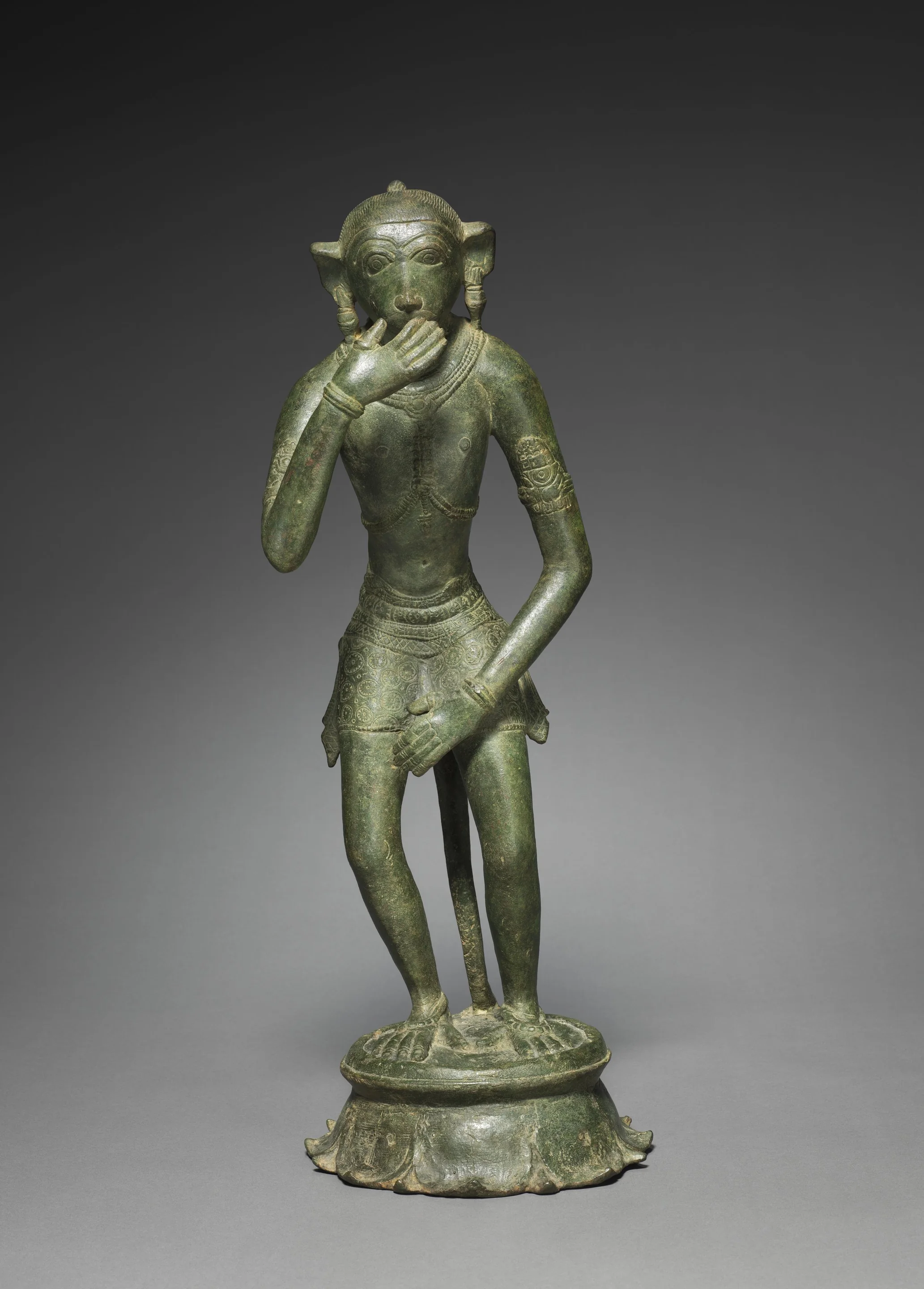
In the words of Pranav Ashar
How we renderThe heart of the Rama-rahasya
In brief
The sages ask Hanuman what, among all the Puranas, Smritis, Vedas and sciences, is the essence. He answers: Rama alone is the highest Brahman, the Brahman that carries across. Most of the text gives Rama's mantras and their rites. In the last chapter the meaning is drawn out: as a great banyan lies in its seed, the whole world lies in the seed-syllable of Rama. The first sound of the name, 'Ra', means 'That'; the second, 'Ma', means 'you'; joining them means 'are'. So the name is 'You are That', and whoever knows its meaning is free while living.
- Rama as the highest Brahman
- The world in the seed
- The name as 'You are That'
- Free while living
- I am Rama
Contents
- 1.1
- 1.2
- 1.3
- 1.4
- 1.5
- 1.6
- 1.7a
- 1.7
- 1.8
- 1.9
- 2.1
- 2.2
- 2.3-6
- 2.6b-7
- 2.8
- 2.9
- 2.10-12a
- 2.12b-15
- 2.16
- 2.17
- 2.18
- 2.19
- 2.20-23
- 2.24
- 2.25-26a
- 2.26b-27a
- 2.27b-29
- 2.30-31
- 2.32-35a
- 2.35b-37
- 2.38
- 2.39-40a
- 2.40b-43
- 2.44-47
- 2.48-49
- 2.50-51a
- 2.51b-54a
- 2.54b-55
- 2.56-57
- 2.58-59a
- 2.59b-61
- 2.62-64a
- 2.64b-65
- 2.66-67a
- 2.67b-68
- 2.69-72
- 2.73-74
- 2.75-77
- 2.78-80
- 2.81
- 2.82-85
- 2.86-88
- 2.89-90a
- 2.90b-94a
- 2.94b-97
- 2.98-101a
- 2.101b-103a
- 2.103b-104
- 2.105-106
- 3.1a
- 3.1
- 4.1
- 4.2-3
- 4.4-6
- 4.7-9
- 4.10-11
- 4.12-13
- 5.1-2
- 5.3
- 5.4-5
- 5.6-8
- 5.9
- 5.10
- 5.11
- 5.12
- 5.13
- 5.14-15
- 5.16
- 5.17a
- 5.17
ॐ रहस्यं रामतपनं वासुदेवं च मुद्गलम् । शाण्डिल्यं पैङ्गलं भिक्षुं महच्छारीरकं शिखाम् ॥ १॥
oṃ rahasyaṃ rāmatapanaṃ vāsudevaṃ ca mudgalam | śāṇḍilyaṃ paiṅgalaṃ bhikṣuṃ mahacchārīrakaṃ śikhām || 1||
Om. The Rahasya, the Ramatapana, the Vasudeva and the Mudgala; the Shandilya, the Paingala, the Bhikshu, the Maha, the Sharirika and the Shikha.
Note //
A list of ten Upanishads, beginning with this one, which both editions number as verse 1. It reads like a cataloguing verse of the collection rather than part of the teaching, and its purpose is not stated; it is given because both editions keep it. Editions: 'rāmatapanam' and 'śikhām' (Adyar collection) over 'ramatapatam' and 'śikhā' (sanskritdocuments.org, misprints). Pending review.
सनकाद्या योगिवर्या अन्ये च ऋषयस्तथा । प्रह्लादाद्या विष्णुभक्ता हनूमन्तमथाब्रुवन् ॥ २॥
sanakādyā yogivaryā anye ca ṛṣayastathā | prahlādādyā viṣṇubhaktā hanūmantamathābruvan || 2||
Sanaka and the other great yogis, other seers too, and Prahlada and the other devotees of Vishnu then said to Hanuman:
Note //
Editions agree.
वायुपुत्र महाबाहो किं तत्त्वं ब्रह्मवादिनाम् । पुराणेष्वष्टादशसु स्मृतिष्वष्टादशस्वपि ॥ ३॥
vāyuputra mahābāho kiṃ tattvaṃ brahmavādinām | purāṇeṣvaṣṭādaśasu smṛtiṣvaṣṭādaśasvapi || 3||
'Son of the Wind, mighty one, what is the essence for those who speak of Brahman, in the eighteen Puranas, and in the eighteen Smritis too,
Note //
The question runs on into verse 4. Editions agree.
चतुर्वेदेषु शास्त्रेषु विद्यास्वाध्यात्मिकेऽपि च । सर्वेषु विद्यादानेषु विघ्नसूर्येशशक्तिषु । एतेषु मध्ये किं तत्त्वं कथय त्वं महाबल ॥ ४॥
caturvedeṣu śāstreṣu vidyāsvādhyātmike'pi ca | sarveṣu vidyādāneṣu vighnasūryeśaśaktiṣu | eteṣu madhye kiṃ tattvaṃ kathaya tvaṃ mahābala || 4||
in the four Vedas and the sciences, in the branches of knowledge and in the teaching of the Self, in all the gifts of knowledge, in the worship of Ganesha, the Sun, Shiva and the Goddess? Among all these, what is the essence? Tell us, mighty one.'
Note //
'Ganesha, the Sun, Shiva and the Goddess' renders 'vighna-sūrya-īśa-śaktiṣu', the lords of the other schools of worship; with Vishnu they make the five of the later tradition. Editions agree.
हनूमान्होवाच । भो योगीन्द्राश्चैव ऋषयो विष्णुभक्तास्तथैव च । शृणुध्वं मामकीं वाचं भवबन्धविनाशिनीम् ॥ ५॥
hanūmānhovāca | bho yogīndrāścaiva ṛṣayo viṣṇubhaktāstathaiva ca | śṛṇudhvaṃ māmakīṃ vācaṃ bhavabandhavināśinīm || 5||
Hanuman said: 'Great yogis, seers, and devotees of Vishnu, listen to my words, which destroy the bondage of becoming.
Note //
Editions agree.
एतेषु चैव सर्वेषु तत्त्वं च ब्रह्म तारकम् । राम एव परं ब्रह्म राम एव परं तपः । राम एव परं तत्त्वं श्रीरामो ब्रह्म तारकम् ॥ ६॥
eteṣu caiva sarveṣu tattvaṃ ca brahma tārakam | rāma eva paraṃ brahma rāma eva paraṃ tapaḥ | rāma eva paraṃ tattvaṃ śrīrāmo brahma tārakam || 6||
In all of these, the essence is . Rama alone is the highest Brahman. Rama alone is the highest discipline. Rama alone is the highest truth. Shri Rama is .
Note //
Hanuman's answer to the sages' question: what is the essence of the Puranas, Smritis, Vedas and sciences? 'Taraka', 'what carries across', is the name of Rama's mantra in the Vaishnava tradition, and of Brahman in the Advayataraka. Editions: the fuller reading of the Adyar collection, with 'rāma eva paraṃ tapaḥ', is followed; sanskritdocuments.org has only 'rāma eva paraṃ brahma tattvaṃ śrīrāmo brahma tārakam'.
वायुपुत्रेणोक्तास्ते योगीन्द्रा ऋषयो विष्णुभक्ता हनूमन्तं पप्रच्छुः रामस्याङ्गानि नो ब्रूहीति । हनूमान्होवाच । वायुपुत्रं विघ्नेशं वाणीं दुर्गां क्षेत्रपालकं सूर्यं चन्द्रं नारायणं नारसिंहं वायुदेवं वाराहं तत्सर्वान्त्समात्रान्सीतां लक्ष्मणं शत्रुघ्नं भरतं विभीषणं सुग्रीवमङ्गदं जाम्बवन्तं प्रणवमेतानि रामस्याङ्गानि जानीथाः । तान्यङ्गानि विना रामो विघ्नकरो भवति । पुनर्वायुपुत्रेणोक्तास्ते हनूमन्तं पप्रच्छुः । आञ्जनेय महाबल विप्राणां गृहस्थानां प्रणवाधिकारः कथं स्यादिति । स होवाच श्रीराम एवोवाचेति । येषामेव षडक्षराधिकारो वर्तते तेषां प्रणवाधिकारः स्यान्नान्येषाम् । केवलमकारोकारमकारार्धमात्रासहितं प्रणवमूह्य यो राममन्त्रं जपति तस्य शुभकरोऽहं स्याम् । तस्य प्रणवस्थाकारस्योकारस्य मकारस्यार्धमात्रायाश्च ऋषिश्छन्दो देवता तत्तद्वर्णावर्णावस्थानं स्वरवेदाग्निगुणानुच्चार्यान्वहं प्रणवमन्त्राद्द्विगुणं जप्त्वा पश्चाद्राममन्त्रं यो जपेत् स रामो भवतीति रामेणोक्तास्तस्माद्रामाङ्गं प्रणवः कथित इति ।
vāyuputreṇoktāste yogīndrā ṛṣayo viṣṇubhaktā hanūmantaṃ papracchuḥ rāmasyāṅgāni no brūhīti | hanūmānhovāca | vāyuputraṃ vighneśaṃ vāṇīṃ durgāṃ kṣetrapālakaṃ sūryaṃ candraṃ nārāyaṇaṃ nārasiṃhaṃ vāyudevaṃ vārāhaṃ tatsarvāntsamātrānsītāṃ lakṣmaṇaṃ śatrughnaṃ bharataṃ vibhīṣaṇaṃ sugrīvamaṅgadaṃ jāmbavantaṃ praṇavametāni rāmasyāṅgāni jānīthāḥ | tānyaṅgāni vinā rāmo vighnakaro bhavati | punarvāyuputreṇoktāste hanūmantaṃ papracchuḥ | āñjaneya mahābala viprāṇāṃ gṛhasthānāṃ praṇavādhikāraḥ kathaṃ syāditi | sa hovāca śrīrāma evovāceti | yeṣāmeva ṣaḍakṣarādhikāro vartate teṣāṃ praṇavādhikāraḥ syānnānyeṣām | kevalamakārokāramakārārdhamātrāsahitaṃ praṇavamūhya yo rāmamantraṃ japati tasya śubhakaro'haṃ syām | tasya praṇavasthākārasyokārasya makārasyārdhamātrāyāśca ṛṣiśchando devatā tattadvarṇāvarṇāvasthānaṃ svaravedāgniguṇānuccāryānvahaṃ praṇavamantrāddviguṇaṃ japtvā paścādrāmamantraṃ yo japet sa rāmo bhavatīti rāmeṇoktāstasmādrāmāṅgaṃ praṇavaḥ kathita iti |
Told this by the Son of the Wind, the great yogis, the seers and the devotees of Vishnu asked Hanuman: 'Tell us the limbs of Rama.' Hanuman said: 'The Son of the Wind, the Lord of obstacles, Speech, Durga, the guardian of the field, the sun, the moon, Narayana, Narasimha, the god of the wind, Varaha, all of them with their measures, Sita, Lakshmana, Shatrughna, Bharata, Vibhishana, Sugriva, Angada, Jambavan, and Om: know these as the limbs of Rama. Without these limbs, Rama puts obstacles in the way.' Told this by the Son of the Wind, they asked Hanuman again: 'Son of Anjana, mighty one, how can Brahmin householders have the right to Om?' He said: 'Shri Rama himself said this: "Those who have the right to the six-syllabled mantra have the right to Om, and no others. Whoever repeats Rama's mantra taking Om with its a, its u, its m and its half-measure, for him I will bring about good. Whoever, every day, names the seer, metre and deity of the a, the u, the m and the half-measure of Om, the place of each letter and of the whole, their tones, Vedas, fires and qualities, repeats Om twice as many times as the mantra, and then repeats Rama's mantra, becomes Rama." So Rama said. That is why Om is called a limb of Rama.'
Note //
The prose that opens verse 7 in both editions, given as 7a. The 'limbs' (aṅga) of a deity are the attendant deities worshipped with him; Om is among them. The question about householders reflects the rule that Om was reserved for renunciants; the answer gives it to all who have the right to Rama's six-syllabled mantra. 'All of them with their measures' renders the obscure 'tat sarvān tsamātrān'. 'Varṇāvarṇa-avasthānam' is read as 'the place of each letter and of the whole'. Editions: 'durgāṃ kṣetrapālakam', 'sītām' (Adyar; sanskritdocuments.org 'sītam'); 'praṇavamantrād' (Adyar) over 'praṇavamantrad'; both print 'makarāsya' for 'makārasya', corrected. Pending review.
विभीषण उवाच । सिंहासने समासीनं रामं पौलस्त्यसूदनम् । प्रणम्य दण्डवद्भूमौ पौलस्त्यो वाक्यमब्रवीत् ॥ ७॥
vibhīṣaṇa uvāca | siṃhāsane samāsīnaṃ rāmaṃ paulastyasūdanam | praṇamya daṇḍavadbhūmau paulastyo vākyamabravīt || 7||
Vibhishana spoke. Rama, slayer of Ravana, sat on the throne; Vibhishana bowed down before him, stretched on the ground like a staff, and said:
Note //
'Paulastya', descendant of Pulastya, names both Ravana, whom Rama killed, and his brother Vibhishana, who took refuge with Rama. Editions agree.
रघुनाथ महाबाहो केवलं कथितं त्वया । अङ्गानां सुलभं चैव कथनीयं च सौलभम् ॥ ८॥
raghunātha mahābāho kevalaṃ kathitaṃ tvayā | aṅgānāṃ sulabhaṃ caiva kathanīyaṃ ca saulabham || 8||
'Lord of the Raghus, mighty one, you have told of the limbs alone; now tell an easy way, for the limbs as well.'
Note //
The sense of the second line is unclear in both editions; it is read as a request for an easier practice, which is what Rama gives in verse 9. Editions agree. Pending review.
श्रीराम उवाच । अथ पञ्च दण्डकानि पितृघ्नो मातृघ्नो ब्रह्मघ्नो गुरुहननः कोटियतिघ्नोऽनेककृतपापो यो मम षण्णवतिकोटिनामानि जपति स तेभ्यः पापेभ्यः प्रमुच्यते । स्वयमेव सच्चिदानन्दस्वरूपो भवेन्न किम् । पुनरुवाच विभीषणः । तत्राप्यशक्तोऽयं किं करोति । स होवाचेमम् । कैकसेय पुरश्चरणविधावशक्तो यो मम महोपनिषदं मम गीतां मन्नामसहस्रं मद्विश्वरूपं ममाष्टोत्तरशतं रामशताभिधानं नारदोक्तस्तवराजं हनूमत्प्रोक्तं मन्त्रराजात्मकस्तवं सीतास्तवं च रामषडक्षरीत्यादिभिर्मन्त्रैर्यो मां नित्यं स्तौति तत्सदृशो भवेन्न किं भवेन्न किम् ॥ ९॥
śrīrāma uvāca | atha pañca daṇḍakāni pitṛghno mātṛghno brahmaghno guruhananaḥ koṭiyatighno'nekakṛtapāpo yo mama ṣaṇṇavatikoṭināmāni japati sa tebhyaḥ pāpebhyaḥ pramucyate | svayameva saccidānandasvarūpo bhavenna kim | punaruvāca vibhīṣaṇaḥ | tatrāpyaśakto'yaṃ kiṃ karoti | sa hovācemam | kaikaseya puraścaraṇavidhāvaśakto yo mama mahopaniṣadaṃ mama gītāṃ mannāmasahasraṃ madviśvarūpaṃ mamāṣṭottaraśataṃ rāmaśatābhidhānaṃ nāradoktastavarājaṃ hanūmatproktaṃ mantrarājātmakastavaṃ sītāstavaṃ ca rāmaṣaḍakṣarītyādibhirmantrairyo māṃ nityaṃ stauti tatsadṛśo bhavenna kiṃ bhavenna kim || 9||
Shri Rama said: 'Now the five great wrongs. One who has killed his father, his mother, a Brahmin, his teacher, or ten million ascetics, one who has done many wrongs: if he repeats my ninety-six crore names, he is freed from those wrongs. Will he not himself become being, the light and bliss?' Vibhishana spoke again: 'And if he cannot do even that, what then?' Rama said to him: 'Son of Kaikasi, whoever cannot keep the rule of preparatory practice, but praises me every day with my great Upanishad, my Gita, my thousand names, my universal form, my hundred and eight names, the hundred names of Rama, the king of hymns told by Narada, the hymn in the form of the king of mantras told by Hanuman, the hymn to Sita, and mantras such as Rama's six syllables: will he not become like me? He will.'
Note //
The end of chapter 1. 'Being, the light and bliss' (saccidānanda): the one who repeats the names does not gain something new; he becomes what he is. 'Five great wrongs' renders 'pañca daṇḍakāni', obscure. 'Ninety-six crore' is 960 million. The list of hymns names texts of the Rama tradition: 'my Gita' is probably the Rama Gita, and 'my great Upanishad' perhaps the Ramatapani. 'Will he not become like me?' is said twice in the original. Editions agree, apart from 'tatrāpy aśaktaḥ' printed apart in sanskritdocuments.org.
सनकाद्या मुनयो हनूमन्तं पप्रच्छुः । आञ्जनेय महाबल तारकब्रह्मणो रामचन्द्रस्य मन्त्रग्रामं नो ब्रूहीति । हनूमान्होवाच । वह्निस्थं शयनं विष्णोरर्धचन्द्रविभूषितम् । एकाक्षरो मनुः प्रोक्तो मन्त्रराजः सुरद्रुमः ॥ १॥
sanakādyā munayo hanūmantaṃ papracchuḥ | āñjaneya mahābala tārakabrahmaṇo rāmacandrasya mantragrāmaṃ no brūhīti | hanūmānhovāca | vahnisthaṃ śayanaṃ viṣṇorardhacandravibhūṣitam | ekākṣaro manuḥ prokto mantrarājaḥ suradrumaḥ || 1||
Sanaka and the other sages asked Hanuman: 'Son of Anjana, mighty one, tell us the mantras of Ramachandra, .' Hanuman said: 'Vishnu's couch set in fire, adorned with the half-moon: this is called the one-syllabled mantra, the king of mantras, a wishing-tree of the gods.
Note //
Chapter 2 gives Rama's mantras from one syllable upward, each with its seer, metre and deity, its placings (nyāsa) on the body, and a picture for meditation. The mantras are given in code, as the mantra manuals give them. Here: fire is the letter ra, 'Vishnu's couch' (the serpent Shesha) the long ā, and the half-moon the nasal: rāṃ, Rama's seed syllable. The decoding of all the codes in this chapter follows the usual keys of the mantra manuals (as in the Sharada Tilaka); the text itself gives only the code. Editions agree.
ब्रह्मा मुनिः स्याद्गायत्रं छन्दो रामोऽस्य देवता । दीर्घार्धेन्दुयुजाङ्गानि कुर्याद्वह्न्यात्मनो मनोः ॥ २॥
brahmā muniḥ syādgāyatraṃ chando rāmo'sya devatā | dīrghārdhenduyujāṅgāni kuryādvahnyātmano manoḥ || 2||
Its seer is Brahma, its metre the Gayatri, its deity Rama. Make the placings on the limbs with the fire-letter of the mantra joined to the long vowels and the half-moon.
Note //
The six limb-placings (ṣaḍaṅga) use the seed with six long vowels: rāṃ, rīṃ, rūṃ, raiṃ, rauṃ, raḥ, placed on heart, head, crown-tuft, the body as armour, the eyes, and all round as the 'weapon'. Editions: 'rāmo 'sya devatā' (Adyar collection) over 'rāmasya devatā' (sanskritdocuments.org).
बीजशक्त्यादिबीजेन इष्टार्थे विनियोजयेत् । सरयूतीरमन्दारवेदिकापङ्कजासने ॥ ३॥ श्यामं वीरासनासीनं ज्ञानमुद्रोपशोभितम् । वामोरुन्यस्ततद्धस्तं सीतालक्ष्मणसंयुतम् ॥ ४॥ अवेक्षमाणमात्मानमात्मन्यमिततेजसम् । शुद्धस्फटिकसङ्काशं केवलं मोक्षकाङ्क्षया ॥ ५॥ चिन्तयन्परमात्मानं भानुलक्षं जपेन्मनुम् ।
bījaśaktyādibījena iṣṭārthe viniyojayet | sarayūtīramandāravedikāpaṅkajāsane || 3|| śyāmaṃ vīrāsanāsīnaṃ jñānamudropaśobhitam | vāmorunyastataddhastaṃ sītālakṣmaṇasaṃyutam || 4|| avekṣamāṇamātmānamātmanyamitatejasam | śuddhasphaṭikasaṅkāśaṃ kevalaṃ mokṣakāṅkṣayā || 5|| cintayanparamātmānaṃ bhānulakṣaṃ japenmanum |
The seed, the power and the rest are the seed itself; apply it to the aim desired. On a lotus seat on a platform under the coral tree on the bank of the Sarayu, dark, seated in the hero's posture, graced by the gesture of knowledge, his other hand resting on his left thigh, with Sita and Lakshmana, looking at the Self in the Self, of boundless light, like pure crystal: so, with the wish for freedom alone, meditating on the highest Self, let him repeat the mantra twelve hundred thousand times.
Note //
Grouped because the meditation is one sentence. The picture is of Rama as teacher and knower: in the gesture of knowledge, 'looking at the Self in the Self' (avekṣamāṇam ātmānam ātmani), clear as crystal. The one who meditates on him 'with the wish for freedom alone' meditates on 'the highest Self'. 'Twelve hundred thousand' renders 'bhānu-lakṣam' (bhānu, the sun, stands for twelve, the suns of the twelve months). Editions: 'vīrāsana' (Adyar) over 'virāsana' (sanskritdocuments.org, a misprint); 'bījaśaktyādi bījena' printed apart in sanskritdocuments.org.
वह्निर्नारायणो नाड्यो जाठरः केवलोऽपि च ॥ ६॥ द्व्यक्षरो मन्त्रराजोऽयं सर्वाभीष्टप्रदस्ततः । एकाक्षरोक्तमृष्यादि स्यादाद्येन षडङ्गकम् ॥ ७॥
vahnirnārāyaṇo nāḍyo jāṭharaḥ kevalo'pi ca || 6|| dvyakṣaro mantrarājo'yaṃ sarvābhīṣṭapradastataḥ | ekākṣaroktamṛṣyādi syādādyena ṣaḍaṅgakam || 7||
Fire, Narayana, the one in the channel, the fire of the belly, and with nothing added: this is the two-syllabled king of mantras, which gives all that is wished for. The seer and the rest are as for the one-syllabled, and the six placings are made with the first.
Note //
The code gives ra (fire), ā (Narayana), and ma, with no nasal ('with nothing added'): rāma, the name itself as a two-syllabled mantra. 'The one in the channel' and 'the fire of the belly' are read as code-names for ma; the decoding is the usual one, and the two names are not separately explained. 'The first' is the seed rāṃ. Editions agree.
तारमायारमानङ्गवाक्स्वबीजैश्च षड्विधः । त्र्यक्षरो मन्त्रराजः स्यात्सर्वाभीष्टफलप्रदः ॥ ८॥
tāramāyāramānaṅgavāksvabījaiśca ṣaḍvidhaḥ | tryakṣaro mantrarājaḥ syātsarvābhīṣṭaphalapradaḥ || 8||
With Om, the seed of Maya, of Lakshmi, of the bodiless god of love, of Speech, or its own seed, it is sixfold: the three-syllabled king of mantras, which gives the fruit of all that is wished for.
Note //
The six seeds are oṃ, hrīṃ (Maya), śrīṃ (Lakshmi), klīṃ (Kama, 'the bodiless'), aiṃ (Speech) and rāṃ (its own); each set before 'rāma' gives a three-syllabled mantra: oṃ rāma, hrīṃ rāma, śrīṃ rāma, klīṃ rāma, aiṃ rāma, rāṃ rāma. Editions agree.
द्व्यक्षरश्चन्द्रभद्रान्तो द्विविधश्चतुरक्षरः । ऋष्यादि पूर्ववज्ज्ञेयमेतयोश्च विचक्षणैः ॥ ९॥
dvyakṣaraścandrabhadrānto dvividhaścaturakṣaraḥ | ṛṣyādi pūrvavajjñeyametayośca vicakṣaṇaiḥ || 9||
The two-syllabled, ending in 'candra' or 'bhadra', is the four-syllabled, in two forms. The wise should know their seer and the rest as before.
Note //
Rāmacandra and Rāmabhadra: the name with 'moon' or 'blessed' added. Editions agree.
सप्रतिष्ठौ रमौ वायौ हृत्पञ्चार्णो मनुर्मतः । विश्वामित्रऋषिः प्रोक्तः पङ्क्तिश्छन्दोऽस्य देवता ॥ १०॥ रामभद्रो बीजशक्तिः प्रथमार्णमिति क्रमात् । भ्रूमध्ये हृदि नाभ्यूर्वोः पादयोर्विन्यसेन्मनुम् ॥ ११॥ षडङ्गं पूर्ववद्विद्यान्मन्त्रार्णैर्मनुनास्त्रकम् ।
sapratiṣṭhau ramau vāyau hṛtpañcārṇo manurmataḥ | viśvāmitraṛṣiḥ proktaḥ paṅktiśchando'sya devatā || 10|| rāmabhadro bījaśaktiḥ prathamārṇamiti kramāt | bhrūmadhye hṛdi nābhyūrvoḥ pādayorvinyasenmanum || 11|| ṣaḍaṅgaṃ pūrvavadvidyānmantrārṇairmanunāstrakam |
Ra and ma, each with its support, then the wind with its support, and the heart-word: this is held to be the five-syllabled mantra. Its seer is said to be Vishvamitra, its metre the Pankti, its deity Ramabhadra; its seed and power are its first letters, in order. Place the mantra on the brow-centre, the heart, the navel, the thighs and the feet. Know the six placings as before, with the letters of the mantra, and the weapon with the whole mantra.
Note //
'Support' (pratiṣṭhā) is read as the long ā; the wind is ya; the heart-word is namaḥ: rāmāya namaḥ, 'bowing to Rama', the five-syllabled mantra. Editions agree. Pending review.
मध्ये वनं कल्पतरोर्मूले पुष्पलतासने ॥ १२॥ लक्ष्मणेन प्रगुणितमक्ष्णः कोणेन सायकम् । अवेक्षमाणं जानक्या कृतव्यजनमीश्वरम् ॥ १३॥ जटाभारलसच्छीर्षं श्यामं मुनिगणावृतम् । लक्ष्मणेन धृतच्छत्रमथवा पुष्पकोपरि ॥ १४॥ दशास्यमथनं शान्तं ससुग्रीवविभीषणम् । एवं लब्ध्वा जयार्थी तु वर्णलक्षं जपेन्मनुम् ॥ १५॥
madhye vanaṃ kalpatarormūle puṣpalatāsane || 12|| lakṣmaṇena praguṇitamakṣṇaḥ koṇena sāyakam | avekṣamāṇaṃ jānakyā kṛtavyajanamīśvaram || 13|| jaṭābhāralasacchīrṣaṃ śyāmaṃ munigaṇāvṛtam | lakṣmaṇena dhṛtacchatramathavā puṣpakopari || 14|| daśāsyamathanaṃ śāntaṃ sasugrīvavibhīṣaṇam | evaṃ labdhvā jayārthī tu varṇalakṣaṃ japenmanum || 15||
In the middle of the forest, at the foot of the wishing-tree, on a seat of flowering creepers, looking from the corner of his eye at the arrow Lakshmana has made ready, fanned by Janaki, the Lord, his head bright with its mass of matted hair, dark, surrounded by sages, Lakshmana holding the parasol; or else on the Pushpaka chariot, the destroyer of the ten-headed, at peace, with Sugriva and Vibhishana: having received it so, one who wants victory should repeat the mantra a hundred thousand times for each letter.
Note //
Two pictures for meditation: Rama in the forest as an exile, and Rama returning in the flying chariot Pushpaka after the war. Editions agree.
स्वकामशक्तिवाग्लक्ष्मीस्तवाद्याः पञ्चवर्णकाः । षडक्षरः षड्विधः स्याच्चतुर्वर्गफलप्रदः ॥ १६॥
svakāmaśaktivāglakṣmīstavādyāḥ pañcavarṇakāḥ | ṣaḍakṣaraḥ ṣaḍvidhaḥ syāccaturvargaphalapradaḥ || 16||
The five-syllabled, with its own seed, the seed of love, of power, of speech, of Lakshmi or of Om in front: this is the six-syllabled, in six forms, which gives the fruit of all four aims of life.
Note //
rāṃ rāmāya namaḥ, klīṃ rāmāya namaḥ, hrīṃ rāmāya namaḥ, aiṃ rāmāya namaḥ, śrīṃ rāmāya namaḥ, oṃ rāmāya namaḥ: the six-syllabled mantra, the one most often meant by 'Rama's mantra' and the one explained in chapter 5. Both editions print 'lakṣmīs tavādyāḥ'; read as 'lakṣmī-tārādyāḥ', 'Lakshmi, Om (tāra) and the rest', as the six seeds require. Pending review.
पञ्चाशन्मातृकामन्त्रवर्णप्रत्येकपूर्वकम् । लक्ष्मीवाङ्मन्मथादिश्च तारादिः स्यादनेकधा ॥ १७॥
pañcāśanmātṛkāmantravarṇapratyekapūrvakam | lakṣmīvāṅmanmathādiśca tārādiḥ syādanekadhā || 17||
With each of the fifty letters of the alphabet set before the mantra's letters, and with Lakshmi, Speech or Love in front, or Om in front, it takes many forms.
Note //
Editions agree.
श्रीमायामन्मथैकैकबीजाद्यन्तर्गतो मनुः । चतुर्वर्णः स एव स्यात्षड्वर्णो वाञ्छितप्रदः ॥ १८॥
śrīmāyāmanmathaikaikabījādyantargato manuḥ | caturvarṇaḥ sa eva syātṣaḍvarṇo vāñchitapradaḥ || 18||
The mantra set within the seeds of Shri, Maya or Love, one at a time, at its beginning and its end: the four-syllabled itself becomes six-syllabled, and gives what is wished for.
Note //
For example śrīṃ rāmacandra śrīṃ. Editions: 'manmathaikaika-' joined as in the Adyar collection. Pending review.
स्वाहान्तो हुम्फडन्तो वा नत्यन्तो वा भवेदयम् । अष्टाविंशत्युत्तरशतभेदः षड्वर्ण ईरितः ॥ १९॥
svāhānto humphaḍanto vā natyanto vā bhavedayam | aṣṭāviṃśatyuttaraśatabhedaḥ ṣaḍvarṇa īritaḥ || 19||
It may end in svaha, or in hum phat, or in a bow: the six-syllabled is said to have a hundred and twenty-eight forms.
Note //
Editions agree.
ब्रह्मा सम्मोहनः शक्तिर्दक्षिणामूर्तिरेव च । अगस्त्यश्च शिवः प्रोक्ता मुनयोऽनुक्रमादिमे ॥ २०॥ छन्दो गायत्रसञ्ज्ञं च श्रीरामश्चैव देवता । अथवा कामबीजादेर्विश्वामित्रो मुनिर्मनोः ॥ २१॥ छन्दो देव्यादिगायत्री रामभद्रोऽस्य देवता । बीजशक्ती यथापूर्वं षड्वर्णान्विन्यसेत्क्रमात् ॥ २२॥ ब्रह्मरन्ध्रे भ्रुवोर्मध्ये हृन्नाभ्यूरुषु पादयोः । बीजैः षड्दीर्घयुक्तैर्वा मन्त्रार्णैर्वा षडङ्गकम् ॥ २३॥
brahmā sammohanaḥ śaktirdakṣiṇāmūrtireva ca | agastyaśca śivaḥ proktā munayo'nukramādime || 20|| chando gāyatrasañjñaṃ ca śrīrāmaścaiva devatā | athavā kāmabījāderviśvāmitro munirmanoḥ || 21|| chando devyādigāyatrī rāmabhadro'sya devatā | bījaśaktī yathāpūrvaṃ ṣaḍvarṇānvinyasetkramāt || 22|| brahmarandhre bhruvormadhye hṛnnābhyūruṣu pādayoḥ | bījaiḥ ṣaḍdīrghayuktairvā mantrārṇairvā ṣaḍaṅgakam || 23||
Brahma, Sammohana, Shakti, Dakshinamurti, Agastya and Shiva: these are named, in order, as the seers. The metre is called the Gayatri, and the deity is Shri Rama. Or, for the mantra that begins with the seed of love, the seer is Vishvamitra, the metre the Devi Gayatri, the deity Ramabhadra. Seed and power are as before. Place the six letters in order on the crown of the head, between the brows, on the heart, the navel, the thighs and the feet; and make the six placings with the seeds joined to the six long vowels, or with the letters of the mantra.
Note //
The seers of the six forms of the six-syllabled mantra (verse 16). Editions: 'muniyo 'nukramād ime' (Adyar, which keeps the metre) over 'muniyo 'kramād ime' (sanskritdocuments.org); 'mantrārṇair vā' (Adyar) over 'mantrārṇaivā' (sanskritdocuments.org, a misprint).
कालाम्भोधरकान्तिकान्तमनिशं वीरासनाध्यासितं मुद्रां ज्ञानमयीं दधानमपरं हस्ताम्बुजं जानुनि । सीतां पार्श्वगतां सरोरुहकरां विद्युन्निभां राघवं पश्यन्तं मुकुटाङ्गदादिविविधाकल्पोज्ज्वलाङ्गं भजे ॥ २४॥
kālāmbhodharakāntikāntamaniśaṃ vīrāsanādhyāsitaṃ mudrāṃ jñānamayīṃ dadhānamaparaṃ hastāmbujaṃ jānuni | sītāṃ pārśvagatāṃ saroruhakarāṃ vidyunnibhāṃ rāghavaṃ paśyantaṃ mukuṭāṅgadādivividhākalpojjvalāṅgaṃ bhaje || 24||
I worship Raghava, lovely as a dark rain-cloud, seated always in the hero's posture, holding the gesture made of knowledge, his other lotus-hand on his knee, looking at Sita, who sits beside him, a lotus in her hand, bright as lightning, his body shining with crown, armlets and every kind of ornament.
Note //
The best-known meditation verse for the six-syllabled mantra. Editions: 'kālāmbhodhara' (Adyar) over 'kālābhodhara' (sanskritdocuments.org, a misprint).
श्रीरामश्चन्द्रभद्रान्तो ङेन्तो नतियुतो द्विधा । सप्ताक्षरो मन्त्रराजः सर्वकामफलप्रदः ॥ २५॥ तारादिसहितः सोऽपि द्विविधोऽष्टाक्षरो मतः ।
śrīrāmaścandrabhadrānto ṅento natiyuto dvidhā | saptākṣaro mantrarājaḥ sarvakāmaphalapradaḥ || 25|| tārādisahitaḥ so'pi dvividho'ṣṭākṣaro mataḥ |
Rama, ending in 'candra' or 'bhadra', in the dative, with the bow: in two forms, this is the seven-syllabled king of mantras, which gives the fruit of every desire. With Om in front it is held to be the eight-syllabled, in two forms.
Note //
rāmacandrāya namaḥ, rāmabhadrāya namaḥ (seven syllables); with oṃ, eight. 'Śrī' here is read as honorific. 'In the dative' renders 'ṅe-antaḥ', the grammarians' name for the dative ending. Editions agree. Pending review.
तारं रामश्चतुर्थ्यन्तः क्रोडास्त्रं वह्नितल्पगा ॥ २६॥ अष्टार्णोऽयं परो मन्त्रो ऋष्यादिः स्यात्षडर्णवत् ।
tāraṃ rāmaścaturthyantaḥ kroḍāstraṃ vahnitalpagā || 26|| aṣṭārṇo'yaṃ paro mantro ṛṣyādiḥ syātṣaḍarṇavat |
Om; Rama in the dative; the boar, the weapon, and the one who lies on fire's couch: this is the highest eight-syllabled mantra. Its seer and the rest are as for the six-syllabled.
Note //
oṃ rāmāya huṃ phaṭ svāhā: 'the boar' is the code for huṃ, 'the weapon' for phaṭ, 'she who lies on fire's couch' for svāhā, the wife of Fire. Editions: 'caturthyantaḥ' (Adyar) over 'caturthyataḥ' (sanskritdocuments.org); 'kroḍāstram' (sanskritdocuments.org) over 'kraḍāsram' (Adyar), both misprints in part.
पुनरष्टाक्षरस्याथ राम एव ऋषिः स्मृतः ॥ २७॥ गायत्रं छन्द इत्यस्य देवता राम एव च । तारं श्रीबीजयुग्मं च बीजशक्त्यादयो मताः ॥ २८॥ षडङ्गं च ततः कुर्यान्मन्त्रार्णैरेव बुद्धिमान् । तारं श्रीबीजयुग्मं च रामाय नम उच्चरेत् ॥ २९॥
punaraṣṭākṣarasyātha rāma eva ṛṣiḥ smṛtaḥ || 27|| gāyatraṃ chanda ityasya devatā rāma eva ca | tāraṃ śrībījayugmaṃ ca bījaśaktyādayo matāḥ || 28|| ṣaḍaṅgaṃ ca tataḥ kuryānmantrārṇaireva buddhimān | tāraṃ śrībījayugmaṃ ca rāmāya nama uccaret || 29||
Then, for another eight-syllabled mantra, Rama himself is the seer, the metre is the Gayatri, and Rama himself the deity. Om and the pair of Shri seeds are held to be its seed, power and the rest. The wise should then make the six placings with the letters of the mantra. Say Om, the pair of Shri seeds, and 'bowing to Rama'.
Note //
oṃ śrīṃ śrīṃ rāmāya namaḥ. Editions: 'nama uccaret' (sanskritdocuments.org) over 'namauccaret' (Adyar).
ग्लौं ॐ बीजं वदेन्मायां हृद्रामाय पुनश्च ताम् । शिवोमाराममन्त्रोऽयं वस्वर्णस्तु वसुप्रदः ॥ ३०॥ ऋषिः सदाशिवः प्रोक्तो गायत्रं छन्द उच्यते । शिवोमारामचन्द्रोऽत्र देवता परिकीर्तितः ॥ ३१॥
glauṃ oṃ bījaṃ vadenmāyāṃ hṛdrāmāya punaśca tām | śivomārāmamantro'yaṃ vasvarṇastu vasupradaḥ || 30|| ṛṣiḥ sadāśivaḥ prokto gāyatraṃ chanda ucyate | śivomārāmacandro'tra devatā parikīrtitaḥ || 31||
Say the seeds glaum and Om, then Maya, the heart-word, 'to Rama', and Maya again: this is the mantra of Shiva, Uma and Rama, of eight syllables, which gives wealth. Its seer is said to be Sadashiva, its metre the Gayatri, and its deity is named Shiva-Uma-Ramachandra.
Note //
glauṃ oṃ hrīṃ namo rāmāya hrīṃ (the count of eight is the text's). A mantra joining Rama with Shiva and Uma: the same one worshipped in two forms. Editions: 'glauṃ oṃ' (sanskritdocuments.org 'glauṃmoṃ', Adyar 'glaum oṃ', printed joined); 'parikīrtitaḥ' (sanskritdocuments.org) over 'parikīrtitā'. Pending review.
दीर्घया माययाङ्गानि तारपञ्चार्णयुक्तया । रामं त्रिनेत्रं सोमार्धधारिणं शूलिनं परम् । भस्मोद्धूलितसर्वाङ्गं कपर्दिनमुपास्महे ॥ ३२॥ रामाभिरामां सौन्दर्यसीमां सोमावतंसिकाम् । पाशाङ्कुशधनुर्बाणधरां ध्यायेत्त्रिलोचनाम् ॥ ३३॥ ध्यायन्नेवं वर्णलक्षं जपतर्पणतत्परः । बिल्वपत्रैः फलैः पुष्पैस्तिलाज्यैः पङ्कजैर्हुनेत् ॥ ३४॥ स्वयमायान्ति निधयः सिद्धयश्च सुरेप्सिताः ।
dīrghayā māyayāṅgāni tārapañcārṇayuktayā | rāmaṃ trinetraṃ somārdhadhāriṇaṃ śūlinaṃ param | bhasmoddhūlitasarvāṅgaṃ kapardinamupāsmahe || 32|| rāmābhirāmāṃ saundaryasīmāṃ somāvataṃsikām | pāśāṅkuśadhanurbāṇadharāṃ dhyāyettrilocanām || 33|| dhyāyannevaṃ varṇalakṣaṃ japatarpaṇatatparaḥ | bilvapatraiḥ phalaiḥ puṣpaistilājyaiḥ paṅkajairhunet || 34|| svayamāyānti nidhayaḥ siddhayaśca surepsitāḥ |
The placings on the limbs are made with Maya, lengthened, joined to Om and the five-syllabled. We worship Rama, three-eyed, wearing the half-moon, holding the trident, the highest, his whole body white with ash, his hair in matted locks. Let him meditate on her, three-eyed, the delight of Rama, the furthest reach of beauty, crowned with the moon, holding noose and goad, bow and arrows. Meditating so, intent on repetition and libations, a hundred thousand for each letter, let him offer into the fire bilva leaves, fruits, flowers, sesame with ghee, and lotuses. The treasures come of themselves, and the powers the gods long for.
Note //
The meditation for the Shiva-Uma-Rama mantra: Rama pictured as Shiva, with the third eye, the moon, the trident and the ash, and Sita as Uma. Editions: 'bilvapatraiḥ' (sanskritdocuments.org) over 'bimbapatraiḥ' (Adyar, a misprint).
पुनरष्टाक्षरस्याथ ब्रह्मगायत्रराघवाः ॥ ३५॥ ऋष्यादयस्तु विज्ञेयाः श्रीबीजं मम शक्तिकम् । तत्प्रीत्यै विनियोगश्च मन्त्रार्णैरङ्गकल्पना ॥ ३६॥ केयूराङ्गदकङ्कणैर्मणिगतैर्विद्योतमानं सदा रामं पार्वणचन्द्रकोटिसदृशच्छत्रेण वै राजितम् । हेमस्तम्भसहस्रषोडशयुते मध्ये महामण्डपे देवेशं भरतादिभिः परिवृतं रामं भजे श्यामलम् ॥ ३७॥
punaraṣṭākṣarasyātha brahmagāyatrarāghavāḥ || 35|| ṛṣyādayastu vijñeyāḥ śrībījaṃ mama śaktikam | tatprītyai viniyogaśca mantrārṇairaṅgakalpanā || 36|| keyūrāṅgadakaṅkaṇairmaṇigatairvidyotamānaṃ sadā rāmaṃ pārvaṇacandrakoṭisadṛśacchatreṇa vai rājitam | hemastambhasahasraṣoḍaśayute madhye mahāmaṇḍape deveśaṃ bharatādibhiḥ parivṛtaṃ rāmaṃ bhaje śyāmalam || 37||
Then, for another eight-syllabled mantra, know Brahma, the Gayatri and Raghava as seer, metre and deity. The seed is Shri, the power is 'my'; it is used for his pleasure, and the placings are made with the letters of the mantra. I worship Rama, the dark one, always shining with armlets, bracelets and bangles set with jewels, splendid under a parasol like ten million full moons, lord of the gods, in the middle of a great hall of sixteen thousand golden pillars, surrounded by Bharata and the others.
Note //
The mantra is the one praised in verse 38, śrīrāmaḥ śaraṇaṃ mama, 'Shri Rama is my refuge': its seed is its first word, 'śrī', and its power its last, 'mama', 'my'. Editions: the Adyar collection numbers verse 35 as '36' (a misprint, giving two verses 36); 'brahma-gāyatra-rāghavāḥ' joined as in the Adyar collection.
किं मन्त्रैर्बहुभिर्विनश्वरफलैरायाससाध्यैर्वृथा किञ्चिल्लोभवितानमात्रविफलैः संसारदुःखावहैः । एकः सन्नपि सर्वमन्त्रफलदो लोभादिदोषोज्झितः श्रीरामः शरणं ममेति सततं मन्त्रोऽयमष्टाक्षरः ॥ ३८॥
kiṃ mantrairbahubhirvinaśvaraphalairāyāsasādhyairvṛthā kiñcillobhavitānamātraviphalaiḥ saṃsāraduḥkhāvahaiḥ | ekaḥ sannapi sarvamantraphalado lobhādidoṣojjhitaḥ śrīrāmaḥ śaraṇaṃ mameti satataṃ mantro'yamaṣṭākṣaraḥ || 38||
What use are many mantras, whose fruits perish, won with toil and in vain, fruitless but for spreading a little greed, bringing the sorrow of becoming? This one, though it is one, gives the fruit of every mantra, and is free of greed and every fault: 'Shri Rama is my refuge', always: this is the eight-syllabled mantra.
Note //
The eight-syllabled mantra of verses 35-37, śrīrāmaḥ śaraṇaṃ mama. After pages of mantras with their seers and fruits, the text sets them all aside for one sentence of refuge, which asks for nothing. Editions: 'vṛthā' (Adyar) over 'vṛtā' (sanskritdocuments.org, a misprint).
एवमष्टाक्षरः सम्यक् सप्तधा परिकीर्तितः । रामसप्ताक्षरो मन्त्र आद्यन्ते तारसंयुतः ॥ ३९॥ नवार्णो मन्त्रराजः स्याच्छेषं षड्वर्णवन्न्यसेत् ।
evamaṣṭākṣaraḥ samyak saptadhā parikīrtitaḥ | rāmasaptākṣaro mantra ādyante tārasaṃyutaḥ || 39|| navārṇo mantrarājaḥ syāccheṣaṃ ṣaḍvarṇavannyaset |
So the eight-syllabled has been told fully, in seven forms. Rama's seven-syllabled mantra, with Om at its beginning and end, is the nine-syllabled king of mantras; place the rest as for the six-syllabled.
Note //
oṃ rāmacandrāya namaḥ oṃ. Editions agree.
जानकीवल्लभं ङेन्तं वह्नेर्जायाहुमादिकम् ॥ ४०॥ दशाक्षरोऽयं मन्त्रः स्यात्सर्वाभीष्टफलप्रदः । दशाक्षरस्य मन्त्रस्य वसिष्ठोऽस्य ऋषिर्विराट् ॥ ४१॥ छन्दोऽस्य देवता रामः सीतापाणिपरिग्रहः । आद्यो बीजं द्विठः शक्तिः कामेनाङ्गक्रिया मता ॥ ४२॥ शिरोललाटभ्रूमध्ये तालुकर्णेषु हृद्यपि । नाभ्यूरुजानुपादेषु दशार्णान्विन्यसेन्मनोः ॥ ४३॥
jānakīvallabhaṃ ṅentaṃ vahnerjāyāhumādikam || 40|| daśākṣaro'yaṃ mantraḥ syātsarvābhīṣṭaphalapradaḥ | daśākṣarasya mantrasya vasiṣṭho'sya ṛṣirvirāṭ || 41|| chando'sya devatā rāmaḥ sītāpāṇiparigrahaḥ | ādyo bījaṃ dviṭhaḥ śaktiḥ kāmenāṅgakriyā matā || 42|| śirolalāṭabhrūmadhye tālukarṇeṣu hṛdyapi | nābhyūrujānupādeṣu daśārṇānvinyasenmanoḥ || 43||
'Janaki's beloved' in the dative, with fire's wife at the end and hum in front: this is the ten-syllabled mantra, which gives the fruit of all that is wished for. Of the ten-syllabled mantra the seer is Vasishtha, the metre Viraj, and the deity Rama, who took Sita's hand in marriage. The first syllable is the seed, the double tha the power, and the placings on the limbs are made with the seed of love. Place the ten letters of the mantra on the head, the forehead, between the brows, on the palate, the ears and the heart, the navel, the thighs, the knees and the feet.
Note //
huṃ jānakīvallabhāya svāhā. 'Fire's wife' is svāhā; 'the double ṭha' is the code for svāhā as well, here named as the power. Editions: 'vasiṣṭhaḥ' (sanskritdocuments.org) over 'vasiṣṭaḥ' (Adyar); 'nābhyūru-' (Adyar) over 'nābhūru-' (sanskritdocuments.org, a misprint).
अयोध्यानगरे रत्नचित्रे सौवर्णमण्डपे । मन्दारपुष्पैराबद्धविताने तोरणाञ्चिते ॥ ४४॥ सिंहासने समासीनं पुष्पकोपरि राघवम् । रक्षोभिर्हरिभिर्देवैर्दिव्ययानगतैः शुभैः ॥ ४५॥ संस्तूयमानं मुनिभिः प्रह्वैश्च परिसेवितम् । सीतालङ्कृतवामाङ्गं लक्ष्मणेनोपसेवितम् ॥ ४६॥ श्यामं प्रसन्नवदनं सर्वाभरणभूषितम् । ध्यायन्नेवं जपेन्मन्त्रं वर्णलक्षमनन्यधीः ॥ ४७॥
ayodhyānagare ratnacitre sauvarṇamaṇḍape | mandārapuṣpairābaddhavitāne toraṇāñcite || 44|| siṃhāsane samāsīnaṃ puṣpakopari rāghavam | rakṣobhirharibhirdevairdivyayānagataiḥ śubhaiḥ || 45|| saṃstūyamānaṃ munibhiḥ prahvaiśca parisevitam | sītālaṅkṛtavāmāṅgaṃ lakṣmaṇenopasevitam || 46|| śyāmaṃ prasannavadanaṃ sarvābharaṇabhūṣitam | dhyāyannevaṃ japenmantraṃ varṇalakṣamananyadhīḥ || 47||
In the city of Ayodhya, in a golden hall bright with jewels, under a canopy hung with coral-tree flowers, adorned with arches, Raghava, seated on the throne, on the Pushpaka chariot, praised by rakshasas, monkeys and gods in their fine heavenly cars, and by sages, served by those who bow to him, Sita gracing his left side, Lakshmana attending him, dark, his face serene, adorned with every ornament: meditating on him so, with a mind on nothing else, let him repeat the mantra a hundred thousand times for each letter.
Note //
Rama enthroned after his return, the picture for the ten-syllabled mantra. Editions agree.
रामं ङेन्तं धनुष्पाणयेऽन्तः स्याद्वह्निसुन्दरी । दशाक्षरोऽयं मन्त्रः स्यान्मुनिर्ब्रह्मा विराट् स्मृतः ॥ ४८॥ छन्दस्तु देवता प्रोक्तो रामो राक्षसमर्दनः । शेषं तु पूर्ववत्कुर्याच्चापबाणधरं स्मरेत् ॥ ४९॥
rāmaṃ ṅentaṃ dhanuṣpāṇaye'ntaḥ syādvahnisundarī | daśākṣaro'yaṃ mantraḥ syānmunirbrahmā virāṭ smṛtaḥ || 48|| chandastu devatā prokto rāmo rākṣasamardanaḥ | śeṣaṃ tu pūrvavatkuryāccāpabāṇadharaṃ smaret || 49||
Rama in the dative, 'to the one with the bow in his hand', with fire's beauty at the end: this is another ten-syllabled mantra. Its seer is Brahma, its metre is held to be Viraj, its deity is said to be Rama, crusher of the rakshasas. Do the rest as before, and remember him holding bow and arrow.
Note //
rāmāya dhanuṣpāṇaye svāhā. Editions agree.
तारमायारमानङ्गवाक्स्वबीजैश्च षड्विधः । दशार्णो मन्त्रराजः स्याद्रुद्रवर्णात्मको मनुः ॥ ५०॥ शेषं षडर्णवज्ज्ञेयं न्यासध्यानादिकं बुधैः ।
tāramāyāramānaṅgavāksvabījaiśca ṣaḍvidhaḥ | daśārṇo mantrarājaḥ syādrudravarṇātmako manuḥ || 50|| śeṣaṃ ṣaḍarṇavajjñeyaṃ nyāsadhyānādikaṃ budhaiḥ |
With Om, the seeds of Maya, Lakshmi, Love, Speech, or its own seed, the ten-syllabled king of mantras is sixfold, a mantra of eleven syllables. The wise should know the rest, placings, meditation and the like, as for the six-syllabled.
Note //
Each of the six seeds set before a ten-syllabled mantra makes it eleven ('rudra', the eleven Rudras, stands for eleven). Which ten-syllabled mantra is meant is not said. Editions agree. Pending review.
द्वादशाक्षरमन्त्रस्य श्रीराम ऋषिरुच्यते ॥ ५१॥ जगती छन्द इत्युक्तं श्रीरामो देवता मतः । प्रणवो बीजमित्युक्तः क्लीं शक्तिर्ह्रीं च कीलकम् ॥ ५२॥ मन्त्रेणाङ्गानि विन्यस्य शिष्टं पूर्ववदाचरेत् । तारं मायां समुच्चार्य भरताग्रज इत्यपि ॥ ५३॥ रामं क्लीं वह्निजायान्तं मन्त्रोऽयं द्वादशाक्षरः ।
dvādaśākṣaramantrasya śrīrāma ṛṣirucyate || 51|| jagatī chanda ityuktaṃ śrīrāmo devatā mataḥ | praṇavo bījamityuktaḥ klīṃ śaktirhrīṃ ca kīlakam || 52|| mantreṇāṅgāni vinyasya śiṣṭaṃ pūrvavadācaret | tāraṃ māyāṃ samuccārya bharatāgraja ityapi || 53|| rāmaṃ klīṃ vahnijāyāntaṃ mantro'yaṃ dvādaśākṣaraḥ |
Of the twelve-syllabled mantra the seer is said to be Shri Rama, the metre the Jagati, the deity Shri Rama. Om is said to be its seed, klim its power, and hrim its pin. Place it on the limbs with the mantra, and do the rest as before. Say Om and Maya, then 'elder brother of Bharata', 'Rama', klim, and fire's wife at the end: this is the twelve-syllabled mantra.
Note //
oṃ hrīṃ bharatāgraja rāma klīṃ svāhā. The 'pin' (kīlaka) is the syllable that fastens a mantra's power. Editions: 'hrīṃ' (sanskritdocuments.org; Adyar 'hrīm'). Editions agree otherwise.
ॐ हृद्भगवते रामचन्द्रभद्रौ च ङेयुतौ ॥ ५४॥ अर्कार्णो द्विविधोऽप्यस्य ऋषिध्यानादिपूर्ववत् । छन्दस्तु जगती चैव मन्त्रार्णैरङ्गकल्पना ॥ ५५॥
oṃ hṛdbhagavate rāmacandrabhadrau ca ṅeyutau || 54|| arkārṇo dvividho'pyasya ṛṣidhyānādipūrvavat | chandastu jagatī caiva mantrārṇairaṅgakalpanā || 55||
Om, the heart-word, 'to the Blessed One', and Ramacandra or Ramabhadra in the dative: this is the twelve-syllabled, in two forms. Its seer, meditation and the rest are as before; its metre is the Jagati; the placings are made with the mantra's letters.
Note //
oṃ namo bhagavate rāmacandrāya, oṃ namo bhagavate rāmabhadrāya ('arka', the sun, stands for twelve). Editions agree.
श्रीरामेति पदं चोक्त्वा जयराम ततः परम् । जयद्वयं वदेत्प्राज्ञो रामेति मनुराजकः ॥ ५६॥ त्रयोदशार्ण ऋष्यादि पूर्ववत्सर्वकामदः । पदद्वयद्विरावृत्तेरङ्गं ध्यानं दशार्णवत् ॥ ५७॥
śrīrāmeti padaṃ coktvā jayarāma tataḥ param | jayadvayaṃ vadetprājño rāmeti manurājakaḥ || 56|| trayodaśārṇa ṛṣyādi pūrvavatsarvakāmadaḥ | padadvayadvirāvṛtteraṅgaṃ dhyānaṃ daśārṇavat || 57||
Saying 'Shri Rama', then 'Jaya Rama', then 'Jaya' twice, the wise one says 'Rama': this is the king of mantras of thirteen syllables, which grants every desire. Its seer and the rest are as before; the placings are made by saying the two words twice; the meditation is as for the ten-syllabled.
Note //
śrīrāma jayarāma jaya jaya rāma, 'Shri Rama, victory to Rama, victory, victory, Rama', the mantra most widely sung in the Rama tradition. Editions agree.
तारादिसहितः सोऽपि स चतुर्दशवर्णकः । त्रयोदशार्णमुच्चार्य पश्चाद्रामेति योजयेत् ॥ ५८॥ स वै पञ्चदशार्णस्तु जपतां कल्पभूरुहः ।
tārādisahitaḥ so'pi sa caturdaśavarṇakaḥ | trayodaśārṇamuccārya paścādrāmeti yojayet || 58|| sa vai pañcadaśārṇastu japatāṃ kalpabhūruhaḥ |
With Om in front, it is of fourteen syllables. Saying the thirteen-syllabled, add 'Rama' after it: that is the fifteen-syllabled, a wishing-tree for those who repeat it.
Note //
Editions agree.
नमश्च सीतापतये रामायेति हनद्वयम् ॥ ५९॥ ततस्तु कवचास्त्रान्तः षोडशाक्षर ईरितः । तस्यागस्त्यऋषिश्छन्दो बृहती देवता च सः ॥ ६०॥ रां बीजं शक्तिरस्त्रं च कीलकं हुमितीरितम् । द्विपञ्चत्रिचतुर्वर्णैः सर्वैरङ्गं न्यसेत्क्रमात् ॥ ६१॥
namaśca sītāpataye rāmāyeti hanadvayam || 59|| tatastu kavacāstrāntaḥ ṣoḍaśākṣara īritaḥ | tasyāgastyaṛṣiśchando bṛhatī devatā ca saḥ || 60|| rāṃ bījaṃ śaktirastraṃ ca kīlakaṃ humitīritam | dvipañcatricaturvarṇaiḥ sarvairaṅgaṃ nyasetkramāt || 61||
'Namah', 'to Sita's lord, to Rama', 'hana' twice, then the armour and the weapon at the end: this is called the sixteen-syllabled. Its seer is Agastya, its metre the Brihati, its deity he himself. Ram is its seed, the weapon its power, and hum is called its pin. Place it on the limbs in order with two, five, three and four letters, and with all of them.
Note //
namaḥ sītāpataye rāmāya hana hana huṃ phaṭ; 'the armour' is huṃ and 'the weapon' phaṭ. 'Hana', 'strike', is directed against what obstructs. Editions agree.
तारादिसहितः सोऽपि मन्त्रः सप्तदशाक्षरः । तारं नमो भगवते रामं ङेन्तं महाततः ॥ ६२॥ पुरुषाय पदं पश्चाद्धृदन्तोऽष्टादशाक्षरः । विश्वामित्रो मुनिश्छन्दो गायत्रं देवता च सः ॥ ६३॥ कामादिसहितः सोऽपि मन्त्र एकोनविंशकः ।
tārādisahitaḥ so'pi mantraḥ saptadaśākṣaraḥ | tāraṃ namo bhagavate rāmaṃ ṅentaṃ mahātataḥ || 62|| puruṣāya padaṃ paścāddhṛdanto'ṣṭādaśākṣaraḥ | viśvāmitro muniśchando gāyatraṃ devatā ca saḥ || 63|| kāmādisahitaḥ so'pi mantra ekonaviṃśakaḥ |
With Om in front, it is the seventeen-syllabled mantra. Om, 'bowing to the Blessed One', Rama in the dative, then 'great', then the word 'person', ending with the heart-word: this is the eighteen-syllabled. Its seer is Vishvamitra, its metre the Gayatri, its deity he himself. With the seed of love in front, it is the nineteen-syllabled mantra.
Note //
oṃ namo bhagavate rāmāya mahāpuruṣāya namaḥ, 'Om, bowing to the Blessed One, to Rama, the great Person, bowing'. Editions: 'rāmaṃ ṅentam' (Adyar) over 'rāṃ ṅentam' (sanskritdocuments.org); 'aṣṭādaśākṣaraḥ' (Adyar) over 'aṣṭadaśākṣaraḥ'.
तारं नमो भगवते रामायेति पदं वदेत् ॥ ६४॥ सर्वशब्दं समुच्चार्य सौभाग्यं देहि मे वदेत् । वह्निजायां तथोच्चार्य मन्त्रो विंशार्णको मतः ॥ ६५॥
tāraṃ namo bhagavate rāmāyeti padaṃ vadet || 64|| sarvaśabdaṃ samuccārya saubhāgyaṃ dehi me vadet | vahnijāyāṃ tathoccārya mantro viṃśārṇako mataḥ || 65||
Say Om, 'bowing to the Blessed One, to Rama', then the word 'all', then 'good fortune give me', and then fire's wife: this is held to be the twenty-syllabled mantra.
Note //
oṃ namo bhagavate rāmāya sarvasaubhāgyaṃ dehi me svāhā. Editions: 'namo' (Adyar) over 'nāmo' (sanskritdocuments.org, a misprint).
तारं नमो भगवते रामाय सकलं वदेत् । आपन्निवारणायेति वह्निजायां ततो वदेत् ॥ ६६॥ एकविंशार्णको मन्त्रः सर्वाभीष्टफलप्रदः ।
tāraṃ namo bhagavate rāmāya sakalaṃ vadet | āpannivāraṇāyeti vahnijāyāṃ tato vadet || 66|| ekaviṃśārṇako mantraḥ sarvābhīṣṭaphalapradaḥ |
Om, 'bowing to the Blessed One, to Rama', then 'all', then 'to the one who wards off misfortune', then fire's wife: this is the twenty-one-syllabled mantra, which gives the fruit of all that is wished for.
Note //
oṃ namo bhagavate rāmāya sakalāpannivāraṇāya svāhā. Editions agree.
तारं रमा स्वबीजं च ततो दाशरथाय च ॥ ६७॥ ततः सीतावल्लभाय सर्वाभीष्टपदं वदेत् । ततो दाय हृदन्तोऽयं मन्त्रो द्वाविंशदक्षरः ॥ ६८॥
tāraṃ ramā svabījaṃ ca tato dāśarathāya ca || 67|| tataḥ sītāvallabhāya sarvābhīṣṭapadaṃ vadet | tato dāya hṛdanto'yaṃ mantro dvāviṃśadakṣaraḥ || 68||
Om, Lakshmi's seed and its own seed, then 'to the son of Dasharatha', then 'to Sita's beloved', then 'all that is wished', then 'to the giver', ending with the heart-word: this is the twenty-two-syllabled mantra.
Note //
oṃ śrīṃ rāṃ dāśarathāya sītāvallabhāya sarvābhīṣṭadāya namaḥ. Editions agree.
तारं नमो भगवते वीररामाय संवदेत् । कल शत्रून् हन द्वन्द्वं वह्निजायां ततो वदेत् ॥ ६९॥ त्रयोविंशाक्षरो मन्त्रः सर्वशत्रुनिबर्हणः । विश्वामित्रो मुनिः प्रोक्तो गायत्रीछन्द उच्यते ॥ ७०॥ देवता वीररामोऽसौ बीजाद्याः पूर्ववन्मताः । मूलमन्त्रविभागेन न्यासान्कृत्वा विचक्षणः ॥ ७१॥ शरं धनुषि सन्धाय तिष्ठन्तं रावणोन्मुखम् । वज्रपाणिं रथारूढं रामं ध्यात्वा जपेन्मनुम् ॥ ७२॥
tāraṃ namo bhagavate vīrarāmāya saṃvadet | kala śatrūn hana dvandvaṃ vahnijāyāṃ tato vadet || 69|| trayoviṃśākṣaro mantraḥ sarvaśatrunibarhaṇaḥ | viśvāmitro muniḥ prokto gāyatrīchanda ucyate || 70|| devatā vīrarāmo'sau bījādyāḥ pūrvavanmatāḥ | mūlamantravibhāgena nyāsānkṛtvā vicakṣaṇaḥ || 71|| śaraṃ dhanuṣi sandhāya tiṣṭhantaṃ rāvaṇonmukham | vajrapāṇiṃ rathārūḍhaṃ rāmaṃ dhyātvā japenmanum || 72||
Say Om, 'bowing to the Blessed One, to Rama the hero', then 'kala', 'the enemies', 'strike', each doubled, then fire's wife: this is the twenty-three-syllabled mantra, which destroys every enemy. Its seer is said to be Vishvamitra, its metre the Gayatri, its deity Rama the hero; the seed and the rest are as before. Making the placings by dividing the root mantra, the wise one meditates on Rama standing with an arrow set to his bow, facing Ravana, thunderbolt in hand, mounted on his chariot, and repeats the mantra.
Note //
oṃ namo bhagavate vīrarāmāya, then 'kala', 'śatrūn' and 'hana' doubled, then svāhā. 'Kala' is obscure (perhaps 'sakala', 'all'), and the syllable count does not come out exactly; the reading of 'dvandvam' as doubling all three words is tentative. 'Thunderbolt in hand' (vajrapāṇi) is the epithet of Indra, whose chariot Rama rode against Ravana. Editions agree. Pending review.
तारं नमो भगवते श्रीरामाय पदं वदेत् । तारकब्रह्मणे चोक्त्वा मां तारय पदं वदेत् ॥ ७३॥ नमस्तारात्मको मन्त्रश्चतुर्विंशतिवर्णकः । बीजादिकं यथापूर्वं सर्वं कुर्यात्षडर्णवत् ॥ ७४॥
tāraṃ namo bhagavate śrīrāmāya padaṃ vadet | tārakabrahmaṇe coktvā māṃ tāraya padaṃ vadet || 73|| namastārātmako mantraścaturviṃśativarṇakaḥ | bījādikaṃ yathāpūrvaṃ sarvaṃ kuryātṣaḍarṇavat || 74||
Say Om, 'bowing to the Blessed One, to Shri Rama', then 'to ', then 'carry me across', with 'namah' and Om: this is the mantra of twenty-four syllables. The seed and the rest are as before; do everything as for the six-syllabled.
कामस्तारो नतिश्चैव ततो भगवतेपदम् । रामचन्द्राय चोच्चार्य सकलेति पदं वदेत् ॥ ७५॥ जनवश्यकरायेति स्वाहा कामात्मको मनुः । सर्ववश्यकरो मन्त्रः पञ्चविंशतिवर्णकः ॥ ७६॥ आदौ तारेण संयुक्तो मन्त्रः षड्विंशदक्षरः । अन्तेऽपि तारसंयुक्तः सप्तविंशतिवर्णकः ॥ ७७॥
kāmastāro natiścaiva tato bhagavatepadam | rāmacandrāya coccārya sakaleti padaṃ vadet || 75|| janavaśyakarāyeti svāhā kāmātmako manuḥ | sarvavaśyakaro mantraḥ pañcaviṃśativarṇakaḥ || 76|| ādau tāreṇa saṃyukto mantraḥ ṣaḍviṃśadakṣaraḥ | ante'pi tārasaṃyuktaḥ saptaviṃśativarṇakaḥ || 77||
The seed of love, Om, and a bow, then the word 'to the Blessed One'; saying 'to Ramachandra', then the word 'all', then 'to the one who wins over the people', svaha, and the seed of love: this is the mantra of twenty-five syllables, which wins over everyone. With Om at its beginning, it is of twenty-six syllables; with Om at the end as well, of twenty-seven.
Note //
klīṃ oṃ namo bhagavate rāmacandrāya sakalajanavaśyakarāya svāhā klīṃ. Editions agree.
तारं नमो भगवते रक्षोघ्नविशदाय च । सर्वविघ्नान्त्समुच्चार्य निवारय पदद्वयम् ॥ ७८॥ स्वाहान्तो मन्त्रराजोऽयमष्टाविंशतिवर्णकः । अन्ते तारेण संयुक्त एकोनत्रिंशदक्षरः ॥ ७९॥ आदौ स्वबीजसंयुक्तस्त्रिंशद्वर्णात्मको मनुः । अन्तेऽपि तेन संयुक्त एकत्रिंशात्मकः स्मृतः ॥ ८०॥
tāraṃ namo bhagavate rakṣoghnaviśadāya ca | sarvavighnāntsamuccārya nivāraya padadvayam || 78|| svāhānto mantrarājo'yamaṣṭāviṃśativarṇakaḥ | ante tāreṇa saṃyukta ekonatriṃśadakṣaraḥ || 79|| ādau svabījasaṃyuktastriṃśadvarṇātmako manuḥ | ante'pi tena saṃyukta ekatriṃśātmakaḥ smṛtaḥ || 80||
Om, 'bowing to the Blessed One', 'to the bright slayer of rakshasas', then saying 'all obstacles', the word 'ward off', twice, ending with svaha: this is the king of mantras of twenty-eight syllables. With Om at the end, it has twenty-nine. With its own seed at the beginning, it is a mantra of thirty; with that seed at the end as well, it is remembered as of thirty-one.
Note //
oṃ namo bhagavate rakṣoghnaviśadāya sarvavighnān nivāraya nivāraya svāhā. Editions agree.
रामभद्र महेष्वास रघुवीर नृपोत्तम । भो दशास्यान्तकास्माकं श्रियं दापय देहि मे ॥ ८१॥
rāmabhadra maheṣvāsa raghuvīra nṛpottama | bho daśāsyāntakāsmākaṃ śriyaṃ dāpaya dehi me || 81||
Ramabhadra, great archer, hero of the Raghus, best of kings, ender of the ten-headed: let fortune be given to us; give it to me.
Note //
A mantra in the anushtubh metre, a whole verse used as a mantra. Editions: 'maheṣvāsa', 'great archer' (Adyar), over 'maheśvāsa' (sanskritdocuments.org).
आनुष्टुभ ऋषी रामश्छन्दोऽनुष्टुप्स देवता । रां बीजमस्य यं शक्तिरिष्टार्थे विनियोजयेत् ॥ ८२॥ पादं हृदि च विन्यस्य पादं शिरसि विन्यसेत् । शिखायां पञ्चभिर्न्यस्य त्रिवर्णैः कवचं न्यसेत् ॥ ८३॥ नेत्रयोः पञ्चवर्णैश्च दापयेत्यस्त्रमुच्यते । चापबाणधरं श्यामं ससुग्रीवविभीषणम् ॥ ८४॥ हत्वा रावणमायान्तं कृतत्रैलोक्यरक्षणम् । रामभद्रं हृदि ध्यात्वा दशलक्षं जपेन्मनुम् ॥ ८५॥
ānuṣṭubha ṛṣī rāmaśchando'nuṣṭupsa devatā | rāṃ bījamasya yaṃ śaktiriṣṭārthe viniyojayet || 82|| pādaṃ hṛdi ca vinyasya pādaṃ śirasi vinyaset | śikhāyāṃ pañcabhirnyasya trivarṇaiḥ kavacaṃ nyaset || 83|| netrayoḥ pañcavarṇaiśca dāpayetyastramucyate | cāpabāṇadharaṃ śyāmaṃ sasugrīvavibhīṣaṇam || 84|| hatvā rāvaṇamāyāntaṃ kṛtatrailokyarakṣaṇam | rāmabhadraṃ hṛdi dhyātvā daśalakṣaṃ japenmanum || 85||
Of the anushtubh mantra the seer is Rama, the metre the Anushtubh, the deity he himself. Ram is its seed, yam its power; apply it to the aim desired. Placing one quarter on the heart, place another on the head; placing five syllables on the crown-tuft, place three as armour, five on the eyes; 'let be given' is called the weapon. Meditating in the heart on Ramabhadra, holding bow and arrows, dark, with Sugriva and Vibhishana, coming home after killing Ravana, having kept the three worlds safe, let him repeat the mantra a million times.
Note //
Editions: 'rāmabhadram' (Adyar) over 'rāmacandram' (sanskritdocuments.org); 'savibhīṣaṇam' over 'sabibhīṣaṇam' (sanskritdocuments.org) and 'samugrīva' (Adyar), misprints.
वदेद्दाशरथायेति विद्महेति पदं ततः । सीतापदं समुद्धृत्य वल्लभाय ततो वदेत् ॥ ८६॥ धीमहीति वदेत्तन्नो रामश्चापि प्रचोदयात् । तारादिरेषा गायत्री मुक्तिमेव प्रयच्छति ॥ ८७॥ मायादिरपि वैदुष्ट्यं रामादिश्च श्रियः पदम् । मदनेनापि संयुक्तः स मोहयति मेदिनीम् ॥ ८८॥
vadeddāśarathāyeti vidmaheti padaṃ tataḥ | sītāpadaṃ samuddhṛtya vallabhāya tato vadet || 86|| dhīmahīti vadettanno rāmaścāpi pracodayāt | tārādireṣā gāyatrī muktimeva prayacchati || 87|| māyādirapi vaiduṣṭyaṃ rāmādiśca śriyaḥ padam | madanenāpi saṃyuktaḥ sa mohayati medinīm || 88||
Let him say 'Dasharatha's son', then the word 'we know'; raising the word 'Sita', let him then say 'beloved', then 'we meditate', then 'may Rama impel us'. With Om in front, this Gayatri gives freedom itself. With Maya in front, it gives learning; with Lakshmi in front, a place of fortune; joined with the seed of love, it enchants the earth.
Note //
The Rama Gayatri: dāśarathāya vidmahe sītāvallabhāya dhīmahi, tan no rāmaḥ pracodayāt, 'we know him as Dasharatha's son, we meditate on him as Sita's beloved; may Rama impel us', on the pattern of the Gayatri of Savitar. 'Gives freedom itself' (muktim eva): with Om, the prayer asks for nothing but the knowledge that frees. 'Vaiduṣṭyam' is read as 'vaiduṣyam', learning. Editions agree.
पञ्च त्रीणि षडर्णैश्च त्रीणि चत्वारि वर्णकैः । चत्वारि च चतुर्वर्णैरङ्गन्यासं प्रकल्पयेत् ॥ ८९॥ बीजध्यानादिकं सर्वं कुर्यात्षड्वर्णवत्क्रमात् ।
pañca trīṇi ṣaḍarṇaiśca trīṇi catvāri varṇakaiḥ | catvāri ca caturvarṇairaṅganyāsaṃ prakalpayet || 89|| bījadhyānādikaṃ sarvaṃ kuryātṣaḍvarṇavatkramāt |
Make the placings on the limbs with its words in groups: five, three, of six letters, three, four, and four of four letters. Do all the rest, seed, meditation and the like, in order, as for the six-syllabled.
Note //
The grouping of the Gayatri's words for the six placings; the exact division is unclear. Editions agree. Pending review.
तारं नमो भगवते चतुर्थ्या रघुनन्दनम् ॥ ९०॥ रक्षोघ्नविशदं तद्वन्मधुरेति वदेत्ततः । प्रसन्नवदनं ङेन्तं वदेदमिततेजसे ॥ ९१॥ बलरामौ चतुर्थ्यन्तौ विष्णुं ङेन्तं नतिस्ततः । प्रोक्तो मालामनुः सप्तचत्वारिंशद्भिरक्षरैः ॥ ९२॥ ऋषिश्छन्दो देवतादि ब्रह्मानुष्टुभराघवाः । सप्तर्तुसप्तदशषड्रुद्रसङ्ख्यैः षडङ्गकम् ॥ ९३॥ ध्यानं दशाक्षरं प्रोक्तं लक्षमेकं जपेन्मनुम् ।
tāraṃ namo bhagavate caturthyā raghunandanam || 90|| rakṣoghnaviśadaṃ tadvanmadhureti vadettataḥ | prasannavadanaṃ ṅentaṃ vadedamitatejase || 91|| balarāmau caturthyantau viṣṇuṃ ṅentaṃ natistataḥ | prokto mālāmanuḥ saptacatvāriṃśadbhirakṣaraiḥ || 92|| ṛṣiśchando devatādi brahmānuṣṭubharāghavāḥ | saptartusaptadaśaṣaḍrudrasaṅkhyaiḥ ṣaḍaṅgakam || 93|| dhyānaṃ daśākṣaraṃ proktaṃ lakṣamekaṃ japenmanum |
Om, 'bowing to the Blessed One', then 'Raghunandana' in the dative, 'the bright slayer of rakshasas' likewise; then let him say 'sweet', 'of serene face' in the dative, 'to the one of boundless light', 'strength' and 'Rama' in the dative, 'Vishnu' in the dative, and then the bow: this is called the garland mantra, of forty-seven syllables. Its seer, metre and deity are Brahma, the Anushtubh and Raghava. The six placings are made with groups of seven, six, seven, ten, six and eleven. Its meditation is said to be that of the ten-syllabled. Let him repeat the mantra a hundred thousand times.
Note //
oṃ namo bhagavate raghunandanāya rakṣoghnaviśadāya madhuraprasannavadanāya amitatejase balāya rāmāya viṣṇave namaḥ. A 'garland mantra' (mālā-mantra) is a long string of names. The groups add up to forty-seven ('ṛtu', the seasons, is six; 'rudra' is eleven). Editions agree.
श्रियं सीतां चतुर्थ्यन्तां स्वाहान्तोऽयं षडक्षरः ॥ ९४॥ जनकोऽस्य ऋषिश्छन्दो गायत्री देवता मनोः । सीता भगवती प्रोक्ता श्रीं बीजं नतिशक्तिकम् ॥ ९५॥ कीलं सीताचतुर्थ्यन्तमिष्टार्थे विनियोजयेत् । दीर्घस्वरयुताद्येन षडङ्गानि प्रकल्पयेत् ॥ ९६॥ स्वर्णाभामम्बुजकरां रामालोकनतत्पराम् । ध्यायेत्षट्कोणमध्यस्थरामाङ्कोपरिशोभिताम् ॥ ९७॥
śriyaṃ sītāṃ caturthyantāṃ svāhānto'yaṃ ṣaḍakṣaraḥ || 94|| janako'sya ṛṣiśchando gāyatrī devatā manoḥ | sītā bhagavatī proktā śrīṃ bījaṃ natiśaktikam || 95|| kīlaṃ sītācaturthyantamiṣṭārthe viniyojayet | dīrghasvarayutādyena ṣaḍaṅgāni prakalpayet || 96|| svarṇābhāmambujakarāṃ rāmālokanatatparām | dhyāyetṣaṭkoṇamadhyastharāmāṅkopariśobhitām || 97||
Shri, and Sita in the dative, ending with svaha: this is the six-syllabled mantra. Its seer is Janaka, its metre the Gayatri, its deity is said to be the blessed Sita. Shrim is the seed, the bow is the power, 'to Sita' is the pin; apply it to the aim desired. Make the six placings with the first syllable joined to the long vowels. Let him meditate on her, golden, a lotus in her hand, intent on looking at Rama, shining on Rama's lap in the middle of the six-pointed star.
Note //
śrīṃ sītāyai svāhā, Sita's mantra, whose seer is her father Janaka. Editions: 'sītām' (sanskritdocuments.org) over 'sītmam' (Adyar, a misprint).
लकारं तु समुद्धृत्य लक्ष्मणाय नमोन्तकः । अगस्त्यऋषिरस्याथ गायत्रं छन्द उच्यते ॥ ९८॥ लक्ष्मणो देवता प्रोक्तो लं बीजं शक्तिरस्य हि । नमस्तु विनियोगो हि पुरुषार्थचतुष्टये ॥ ९९॥ दीर्घभाजा स्वबीजेन षडङ्गानि प्रकल्पयेत् । द्विभुजं स्वर्णरुचिरतनुं पद्मनिभेक्षणम् ॥ १००॥ धनुर्बाणधरं देवं रामाराधनतत्परम् ।
lakāraṃ tu samuddhṛtya lakṣmaṇāya namontakaḥ | agastyaṛṣirasyātha gāyatraṃ chanda ucyate || 98|| lakṣmaṇo devatā prokto laṃ bījaṃ śaktirasya hi | namastu viniyogo hi puruṣārthacatuṣṭaye || 99|| dīrghabhājā svabījena ṣaḍaṅgāni prakalpayet | dvibhujaṃ svarṇaruciratanuṃ padmanibhekṣaṇam || 100|| dhanurbāṇadharaṃ devaṃ rāmārādhanatatparam |
Raising the letter la, then 'to Lakshmana', ending with the bow: its seer is Agastya, its metre is said to be the Gayatri, its deity Lakshmana. Lam is its seed, the bow its power; it is used for the four aims of life. Make the six placings with its own seed lengthened. Meditate on the god, two-armed, his body shining like gold, his eyes like lotuses, holding bow and arrows, intent on worshipping Rama.
Note //
laṃ lakṣmaṇāya namaḥ. Editions agree.
भकारं तु समुद्धृत्य भरताय नमोन्तकः ॥ १०१॥ अगस्त्यऋषिरस्याथ शेषं पूर्ववदाचरेत् । भरतं श्यामलं शान्तं रामसेवापरायणम् ॥ १०२॥ धनुर्बाणधरं वीरं कैकेयीतनयं भजे ।
bhakāraṃ tu samuddhṛtya bharatāya namontakaḥ || 101|| agastyaṛṣirasyātha śeṣaṃ pūrvavadācaret | bharataṃ śyāmalaṃ śāntaṃ rāmasevāparāyaṇam || 102|| dhanurbāṇadharaṃ vīraṃ kaikeyītanayaṃ bhaje |
Raising the letter bha, then 'to Bharata', ending with the bow: its seer is Agastya; do the rest as before. I worship Bharata, dark, at peace, given wholly to serving Rama, holding bow and arrows, the hero, the son of Kaikeyi.
Note //
bhaṃ bharatāya namaḥ. Editions agree.
शं बीजं तु समुद्धृत्य शत्रुघ्नाय नमोन्तकः । ऋष्यादयो यथापूर्वं विनियोगोऽरिनिग्रहे ॥ १०३॥ द्विभुजं स्वर्णवर्णाभं रामसेवापरायणम् । लवणासुरहन्तारं सुमित्रातनयं भजे ॥ १०४॥
śaṃ bījaṃ tu samuddhṛtya śatrughnāya namontakaḥ | ṛṣyādayo yathāpūrvaṃ viniyogo'rinigrahe || 103|| dvibhujaṃ svarṇavarṇābhaṃ rāmasevāparāyaṇam | lavaṇāsurahantāraṃ sumitrātanayaṃ bhaje || 104||
Raising the seed sham, then 'to Shatrughna', ending with the bow: its seer and the rest are as before; it is used to restrain enemies. I worship the son of Sumitra, two-armed, the colour of gold, given wholly to serving Rama, the slayer of the demon Lavana.
Note //
śaṃ śatrughnāya namaḥ. Shatrughna, Lakshmana's twin, killed the demon Lavana. The Adyar collection includes the first half of verse 104 in verse 103. Editions agree.
हृं हनूमांश्चतुर्थ्यन्तं हृदन्तो मन्त्रराजकः । रामचन्द्रऋषिः प्रोक्तो योजयेत्पूर्ववत्क्रमात् ॥ १०५॥ द्विभुजं स्वर्णवर्णाभं रामसेवापरायणम् । मौञ्जीकौपीनसहितं मां ध्यायेद्रामसेवकम् ॥ इति ॥ १०६॥
hṛṃ hanūmāṃścaturthyantaṃ hṛdanto mantrarājakaḥ | rāmacandraṛṣiḥ prokto yojayetpūrvavatkramāt || 105|| dvibhujaṃ svarṇavarṇābhaṃ rāmasevāparāyaṇam | mauñjīkaupīnasahitaṃ māṃ dhyāyedrāmasevakam || iti || 106||
Hrm, 'Hanuman' in the dative, ending with the heart-word: this is the king of mantras. Its seer is said to be Ramachandra; apply the rest in order as before. Let him meditate on me, Rama's servant, two-armed, the colour of gold, given wholly to serving Rama, with the munja-grass girdle and the loincloth.'
Note //
hṛṃ hanumate namaḥ. Hanuman ends his account of the mantras with his own: the servant is worshipped with the master. Editions: 'hanūmān' (Adyar) over 'hanumān' (sanskritdocuments.org); both print the seed as 'hṛṃ', read here as Hanuman's seed (often given as 'hauṃ' or 'hrauṃ' elsewhere). Pending review.
सनकाद्या मुनयो हनूमन्तं पप्रच्छुः । आञ्जनेय महाबल पूर्वोक्तमन्त्राणां पूजापीठमनुब्रूहीति । हनूमान्होवाच । आदौ षट्कोणम् । तन्मध्ये रामबीजं सश्रीकम् । तदधोभागे द्वितीयान्तं साध्यम् । बीजोर्ध्वभागे षष्ठ्यन्तं साधकम् । पार्श्वे दृष्टिबीजे तत्परितो जीवप्राणशक्तिवश्यबीजानि । तत्सर्वं सन्मुखोन्मुखाभ्यां प्रणवाभ्यां वेष्टनम् । अग्नीशासुरवायव्यपुरःपृष्ठेषु षट्कोणेषु दीर्घभाञ्जि । हृदयादिमन्त्राः क्रमेण । रां रीं रूं रैं रौं रः इति दीर्घभाञ्जि तद्युक्तहृदयाद्यस्त्रान्तम् । षट्कोणपार्श्वे रमामायाबीजे । कोणाग्रे वाराहं हुमिति । तद्बीजान्तराले कामबीजम् । परितो वाग्भवम् । ततो वृत्तत्रयं साष्टपत्रम् । तेषु दलेषु स्वरानष्टवर्गान्प्रतिदलं मालामनुवर्णषट्कम् । अन्ते पञ्चाक्षरम् । तद्दलकपोलेष्वष्टवर्णान् । पुनरष्टदलपद्मम् । तेषु दलेषु नारायणाष्टाक्षरो मन्त्रः । तद्दलकपोलेषु श्रीबीजम् । ततो वृत्तम् । ततो द्वादशदलम् । तेषु दलेषु वासुदेवद्वादशाक्षरो मन्त्रः । तद्दलकपोलेष्वादिक्षान्तान् । ततो वृत्तम् । ततः षोडशदलम् । तेषु दलेषु हुं फट् नतिसहितरामद्वादशाक्षरम् । तद्दलकपोलेषु मायाबीजम् । सर्वत्र प्रतिकपोलं द्विरावृत्त्या ह्रं स्रं भ्रं ब्रं भ्रमं श्रुं ज्रम् । ततो वृत्तम् । ततो द्वात्रिंशद्दलपद्मम् । तेषु दलेषु नृसिंहमन्त्रराजानुष्टुभमन्त्रः । तद्दलकपोलेष्वष्टवस्वेकादशरुद्रद्वादशादित्यमन्त्राः प्रणवादिनमोन्ताश्चतुर्थ्यन्ताः क्रमेण । तद्बहिर्वषट्कारं परितः । ततो रेखात्रययुक्तं भूपुरम् । द्वादशदिक्षु राश्यादिभूषितम् । अष्टनागैरधिष्ठितम् । चतुर्दिक्षु नारसिंहबीजम् । विदिक्षु वाराहबीजम् । एतत्सर्वात्मकं यन्त्रं सर्वकामप्रदं मोक्षप्रदं च । एकाक्षरादिनवाक्षरान्तानामेतद्यन्त्रं भवति । तद्दशावरणात्मकं भवति । षट्कोणमध्ये साङ्गं राघवं यजेत् । षट्कोणेष्वङ्गैः प्रथमावृतिः । अष्टदलमूले आत्माद्यावरणम् । तदग्रे वासुदेवाद्यावरणम् । द्वितीयाष्टदलमूले धृष्ट्याद्यावरणम् । तदग्रे हनूमदाद्यावरणम् । द्वादशदलेषु वसिष्ठाद्यावरणम् । षोडशदलेषु नीलाद्यावरणम् । द्वात्रिंशद्दलेषु ध्रुवाद्यावरणम् । भूपुरान्तरिन्द्राद्यावरणम् । तद्बहिर्वज्राद्यावरणम् । एवमभ्यर्च्य मनुं जपेत् ॥
sanakādyā munayo hanūmantaṃ papracchuḥ | āñjaneya mahābala pūrvoktamantrāṇāṃ pūjāpīṭhamanubrūhīti | hanūmānhovāca | ādau ṣaṭkoṇam | tanmadhye rāmabījaṃ saśrīkam | tadadhobhāge dvitīyāntaṃ sādhyam | bījordhvabhāge ṣaṣṭhyantaṃ sādhakam | pārśve dṛṣṭibīje tatparito jīvaprāṇaśaktivaśyabījāni | tatsarvaṃ sanmukhonmukhābhyāṃ praṇavābhyāṃ veṣṭanam | agnīśāsuravāyavyapuraḥpṛṣṭheṣu ṣaṭkoṇeṣu dīrghabhāñji | hṛdayādimantrāḥ krameṇa | rāṃ rīṃ rūṃ raiṃ rauṃ raḥ iti dīrghabhāñji tadyuktahṛdayādyastrāntam | ṣaṭkoṇapārśve ramāmāyābīje | koṇāgre vārāhaṃ humiti | tadbījāntarāle kāmabījam | parito vāgbhavam | tato vṛttatrayaṃ sāṣṭapatram | teṣu daleṣu svarānaṣṭavargānpratidalaṃ mālāmanuvarṇaṣaṭkam | ante pañcākṣaram | taddalakapoleṣvaṣṭavarṇān | punaraṣṭadalapadmam | teṣu daleṣu nārāyaṇāṣṭākṣaro mantraḥ | taddalakapoleṣu śrībījam | tato vṛttam | tato dvādaśadalam | teṣu daleṣu vāsudevadvādaśākṣaro mantraḥ | taddalakapoleṣvādikṣāntān | tato vṛttam | tataḥ ṣoḍaśadalam | teṣu daleṣu huṃ phaṭ natisahitarāmadvādaśākṣaram | taddalakapoleṣu māyābījam | sarvatra pratikapolaṃ dvirāvṛttyā hraṃ sraṃ bhraṃ braṃ bhramaṃ śruṃ jram | tato vṛttam | tato dvātriṃśaddalapadmam | teṣu daleṣu nṛsiṃhamantrarājānuṣṭubhamantraḥ | taddalakapoleṣvaṣṭavasvekādaśarudradvādaśādityamantrāḥ praṇavādinamontāścaturthyantāḥ krameṇa | tadbahirvaṣaṭkāraṃ paritaḥ | tato rekhātrayayuktaṃ bhūpuram | dvādaśadikṣu rāśyādibhūṣitam | aṣṭanāgairadhiṣṭhitam | caturdikṣu nārasiṃhabījam | vidikṣu vārāhabījam | etatsarvātmakaṃ yantraṃ sarvakāmapradaṃ mokṣapradaṃ ca | ekākṣarādinavākṣarāntānāmetadyantraṃ bhavati | taddaśāvaraṇātmakaṃ bhavati | ṣaṭkoṇamadhye sāṅgaṃ rāghavaṃ yajet | ṣaṭkoṇeṣvaṅgaiḥ prathamāvṛtiḥ | aṣṭadalamūle ātmādyāvaraṇam | tadagre vāsudevādyāvaraṇam | dvitīyāṣṭadalamūle dhṛṣṭyādyāvaraṇam | tadagre hanūmadādyāvaraṇam | dvādaśadaleṣu vasiṣṭhādyāvaraṇam | ṣoḍaśadaleṣu nīlādyāvaraṇam | dvātriṃśaddaleṣu dhruvādyāvaraṇam | bhūpurāntarindrādyāvaraṇam | tadbahirvajrādyāvaraṇam | evamabhyarcya manuṃ japet ||
Sanaka and the other sages asked Hanuman: 'Son of Anjana, mighty one, tell us the seat of worship for the mantras you have told.' Hanuman said: 'First, a six-pointed star. In its middle, Rama's seed with Shri. Below it, the name of the one the rite is for, as its object; above the seed, the name of the one who performs it, as its owner. At the sides, the two eye-seeds; around them, the seeds of life, breath, power and attraction. Enclose all of it with two Oms, one facing in and one facing out. In the six points, south-east, north-east, south-west, north-west, front and back, the mantras of the heart and the other limbs, in order, with the long vowels: ram, rim, rum, raim, raum, rah, joined to them, from the heart to the weapon. At the sides of the star, the seeds of Lakshmi and Maya; at the tips of the points, the boar's seed, hum; between those seeds, the seed of love; all round, the seed of speech. Then three circles with eight petals. In those petals, the vowels and the eight groups of letters, and in each petal six letters of the garland mantra, with the five-syllabled at the end; in the spaces between the petals, eight letters. Then another eight-petalled lotus: in its petals, Narayana's eight-syllabled mantra; between them, the seed of Shri. Then a circle. Then twelve petals: in them, Vasudeva's twelve-syllabled mantra; between them, the letters from a to ksha. Then a circle. Then sixteen petals: in them, Rama's twelve-syllabled mantra with hum phat and the bow; between them, the seed of Maya, and in every space, twice over, hram, sram, bhram, bram, bhramam, shrum, jram. Then a circle. Then a lotus of thirty-two petals: in its petals, the anushtubh king of mantras of Narasimha; between them, in order, the mantras of the eight Vasus, the eleven Rudras and the twelve Adityas, each beginning with Om, in the dative, ending with the bow. Outside it, vashat, all round. Then the earth-square with three lines, adorned in the twelve directions with the signs of the zodiac, presided over by the eight serpents; in the four directions, Narasimha's seed; in the corners between, the boar's seed. This yantra holds everything; it gives every desire, and freedom. It is the yantra for the mantras of one to nine syllables, and has ten enclosures. In the middle of the star, worship Raghava with his limbs. In the points, with the limbs: the first enclosure. At the base of the eight petals, the enclosure of the Self and the rest; at their tips, of Vasudeva and the rest. At the base of the second eight petals, of Dhrishti and the rest; at their tips, of Hanuman and the rest. In the twelve petals, of Vasishtha and the rest; in the sixteen, of Nila and the rest; in the thirty-two, of Dhruva and the rest; inside the earth-square, of Indra and the rest; outside it, of the thunderbolt and the rest. Worshipping so, let him repeat the mantra.
Note //
Chapter 3 describes the yantra, the drawn seat of worship, for Rama's mantras: a six-pointed star at the centre, rings of petals filled with mantras and letters, and an outer square. The text is a set of instructions and is rendered as such. The 'eye-seeds', the seeds of 'life, breath, power and attraction', and the string 'hraṃ sraṃ bhraṃ braṃ bhramaṃ śruṃ jram' are given as both editions print them; they are not explained in the text. Narayana's mantra is oṃ namo nārāyaṇāya; Vasudeva's, oṃ namo bhagavate vāsudevāya; Narasimha's anushtubh is the well-known 'ugraṃ vīraṃ mahāviṣṇum'. Dhrishti and the others are Rama's ministers; Nila is a monkey-chief; Dhruva and the rest are attendant deities. The enclosures of worship move from Rama at the centre to the guardians of the directions outside. Editions: 'koṇāgre' (sanskritdocuments.org) over 'kaṇāgre' (Adyar); 'dīrghabhāñji' in both places (sanskritdocuments.org has 'dīrghabhāji' the second time); 'dhṛṣṭy-' for Rama's minister Dhrishti (both print 'ghṛṣṭy-' or 'ghṛṣṭ-', read as a misprint); 'prathamāvṛtiḥ' (sanskritdocuments.org 'prathamā vṛtiḥ', Adyar 'prathamā vṛttiḥ'). The Adyar collection numbers the whole chapter as 1; numbered here 3.1a and 3.1 for its two yantras. Pending review.
अथ दशाक्षरादिद्वात्रिंशदक्षरान्तानां मन्त्राणां पूजापीठमुच्यते । आदौ षट्कोणम् । तन्मध्ये स्वबीजम् । तन्मध्ये साध्यनामानि । एवं कामबीजवेष्टनम् । ततः शिष्टेन नवार्णेन वेष्टनम् । षट्कोणेषु षडङ्गान्यग्नीशासुरवायव्यपूर्वपृष्ठेषु । तत्कपोलेषु श्रीमाये । कोणाग्रे क्रोधम् । ततो वृत्तम् । ततोऽष्टदलम् । तेषु दलेषु षट्सङ्ख्यया मालामनुवर्णान् । तद्दलकपोलेषु षोडश स्वराः । ततो वृत्तम् । तत्परित आदिक्षान्तम् । तद्बहिर्भूपुरं साष्टशूलाग्रम् । दिक्षु विदिक्षु नारसिंहवाराहे । एतन्महायन्त्रम् । आधारशक्त्यादिवैष्णवपीठम् । अङ्गैः प्रथमावृतिः । मध्ये रामम् । वामभागे सीताम् । तत्पुरतः शार्ङ्गं शरं च । अष्टदलमूले हनुमदादिद्वितीयावरणम् । धृष्ट्यादितृतीयावरणम् । इन्द्रादिभिश्चतुर्थी । वज्रादिभिः पञ्चमी । एतद्यन्त्राराधनपूर्वकं दशाक्षरादिमन्त्रं जपेत् ॥ १॥
atha daśākṣarādidvātriṃśadakṣarāntānāṃ mantrāṇāṃ pūjāpīṭhamucyate | ādau ṣaṭkoṇam | tanmadhye svabījam | tanmadhye sādhyanāmāni | evaṃ kāmabījaveṣṭanam | tataḥ śiṣṭena navārṇena veṣṭanam | ṣaṭkoṇeṣu ṣaḍaṅgānyagnīśāsuravāyavyapūrvapṛṣṭheṣu | tatkapoleṣu śrīmāye | koṇāgre krodham | tato vṛttam | tato'ṣṭadalam | teṣu daleṣu ṣaṭsaṅkhyayā mālāmanuvarṇān | taddalakapoleṣu ṣoḍaśa svarāḥ | tato vṛttam | tatparita ādikṣāntam | tadbahirbhūpuraṃ sāṣṭaśūlāgram | dikṣu vidikṣu nārasiṃhavārāhe | etanmahāyantram | ādhāraśaktyādivaiṣṇavapīṭham | aṅgaiḥ prathamāvṛtiḥ | madhye rāmam | vāmabhāge sītām | tatpurataḥ śārṅgaṃ śaraṃ ca | aṣṭadalamūle hanumadādidvitīyāvaraṇam | dhṛṣṭyāditṛtīyāvaraṇam | indrādibhiścaturthī | vajrādibhiḥ pañcamī | etadyantrārādhanapūrvakaṃ daśākṣarādimantraṃ japet || 1||
Now the seat of worship is told for the mantras of ten to thirty-two syllables. First, a six-pointed star. In its middle, its own seed; within that, the names of those the rite is for. Enclose it with the seed of love, then with the remaining nine syllables. In the points, the six limbs: south-east, north-east, south-west, north-west, east and west. Between them, Shri and Maya; at the tips of the points, the seed of wrath. Then a circle. Then eight petals: in them, the letters of the garland mantra, six to a petal; between the petals, the sixteen vowels. Then a circle, and around it the letters from a to ksha. Outside, the earth-square, with eight tridents at its points; in the directions and the corners between, the seeds of Narasimha and of the boar. This is the great yantra. The Vaishnava seat begins with the power that supports. With the limbs, the first enclosure. In the middle, Rama; on his left, Sita; in front of them, the bow Sharnga and the arrow. At the base of the eight petals, Hanuman and the rest: the second enclosure. Dhrishti and the rest: the third. Indra and the rest: the fourth. The thunderbolt and the rest: the fifth. Worshipping this yantra first, let him repeat the ten-syllabled mantra and the others.
Note //
The second, simpler yantra, of five enclosures. 'The seed of wrath' (krodha) is huṃ. 'The power that supports' (ādhāra-śakti) is the first of the deities of the seat on which the worship is set. Editions: 'tataḥ śiṣṭena' (Adyar) over 'taṃ śiṣṭena' (sanskritdocuments.org); 'dhṛṣṭy-' as in 3.1a. Pending review.
सनकाद्या मुनयो हनूमन्तं पप्रच्छुः । श्रीराममन्त्राणां पुरश्चरणविधिमनुब्रूहीति । हनूमान्होवाच । नित्यं त्रिषवणस्नायी पयोमूलफलादिभुक् । अथवा पायसाहारो हविष्यान्नाद एव वा ॥ १॥
sanakādyā munayo hanūmantaṃ papracchuḥ | śrīrāmamantrāṇāṃ puraścaraṇavidhimanubrūhīti | hanūmānhovāca | nityaṃ triṣavaṇasnāyī payomūlaphalādibhuk | athavā pāyasāhāro haviṣyānnāda eva vā || 1||
Sanaka and the other sages asked Hanuman: 'Tell us the rule for the preliminary practice of Rama's mantras.' Hanuman said: 'Bathing every day at dawn, noon and dusk, living on milk, roots, fruit and the like, or on rice cooked in milk, or only on food fit for offering;
Note //
'Preliminary practice' (puraścaraṇa) is the set course of repetition, offering and feeding by which a mantra is made one's own ('perfected', verse 9). Verses 1-8 are one sentence describing the one who practises. Editions agree.
षड्रसैश्च परित्यक्तः स्वाश्रमोक्तविधिं चरन् । वनितादिषु वाक्कर्ममनोभिर्निःस्पृहः शुचिः ॥ २॥ भूमिशायी ब्रह्मचारी निष्कामो गुरुभक्तिमान् । स्नानपूजाजपध्यानहोमतर्पणतत्परः ॥ ३॥
ṣaḍrasaiśca parityaktaḥ svāśramoktavidhiṃ caran | vanitādiṣu vākkarmamanobhirniḥspṛhaḥ śuciḥ || 2|| bhūmiśāyī brahmacārī niṣkāmo gurubhaktimān | snānapūjājapadhyānahomatarpaṇatatparaḥ || 3||
giving up the six flavours, following the rule of his own stage of life, without longing, in word, act or mind, for women and the rest; clean; sleeping on the ground, chaste, wanting nothing, devoted to the teacher, intent on bathing, worship, repetition, meditation, fire-offering and libations;
Note //
'The six flavours' (ṣaḍ-rasa): sweet, sour, salty, pungent, bitter and astringent; giving them up means plain, unseasoned food. Editions: 'ṣaḍrasaiś' (Adyar) over 'ṣaḍsaiś' (sanskritdocuments.org, a typing slip).
गुरूपदिष्टमार्गेण ध्यायन्राममनन्यधीः । सूर्येन्दुगुरुदीपादिगोब्राह्मणसमीपतः ॥ ४॥ श्रीरामसन्निधौ मौनी मन्त्रार्थमनुचिन्तयन् । व्याघ्रचर्मासने स्थित्वा स्वस्तिकाद्यासनक्रमात् ॥ ५॥ तुलसीपारिजातश्रीवृक्षमूलादिकस्थले । पद्माक्षतुलसीकाष्ठरुद्राक्षकृतमालया ॥ ६॥
gurūpadiṣṭamārgeṇa dhyāyanrāmamananyadhīḥ | sūryendugurudīpādigobrāhmaṇasamīpataḥ || 4|| śrīrāmasannidhau maunī mantrārthamanucintayan | vyāghracarmāsane sthitvā svastikādyāsanakramāt || 5|| tulasīpārijātaśrīvṛkṣamūlādikasthale | padmākṣatulasīkāṣṭharudrākṣakṛtamālayā || 6||
meditating on Rama in the way the teacher showed, his mind on nothing else, near the sun, the moon, the teacher, a lamp, a cow or a brahmin; silent, in Rama's presence, dwelling on the meaning of the mantra; seated on a tiger skin, in the svastika or another posture, in order; at the foot of a tulasi, a parijata or a bilva tree, or a place like these; with a rosary of lotus seeds, tulasi wood or rudraksha,
Note //
'Dwelling on the meaning of the mantra' (mantrārtham anucintayan): the meaning is given in chapter 5, where it turns out to be 'You are That'. 'The Shri tree' (śrī-vṛkṣa) is the bilva. Editions: 'sūryendu-' (sanskritdocuments.org) over 'sūyandu-' (Adyar, a misprint).
मातृकामालया मन्त्री मनसैव मनुं जपेत् । अभ्यर्च्य वैष्णवे पीठे जपेदक्षरलक्षकम् ॥ ७॥ तर्पयेत्तद्दशांशेन पायसात्तद्दशांशतः । जुहुयाद्गोघृतेनैव भोजयेत्तद्दशांशतः ॥ ८॥ ततः पुष्पाञ्जलिं मूलमन्त्रेण विधिवच्चरेत् । ततः सिद्धमनुर्भूत्वा जीवन्मुक्तो भवेन्मुनिः ॥ ९॥
mātṛkāmālayā mantrī manasaiva manuṃ japet | abhyarcya vaiṣṇave pīṭhe japedakṣaralakṣakam || 7|| tarpayettaddaśāṃśena pāyasāttaddaśāṃśataḥ | juhuyādgoghṛtenaiva bhojayettaddaśāṃśataḥ || 8|| tataḥ puṣpāñjaliṃ mūlamantreṇa vidhivaccaret | tataḥ siddhamanurbhūtvā jīvanmukto bhavenmuniḥ || 9||
or with the garland of letters, the one who holds the mantra should repeat it in the mind alone. Having worshipped on the Vaishnava seat, let him repeat it a hundred thousand times for each syllable. For a tenth of that number, let him pour libations; for a tenth of that, let him offer rice cooked in milk into the fire, with the ghee of cows; for a tenth of that, let him feed brahmins. Then let him offer a handful of flowers with the root mantra, as the rule says. Then, the mantra perfected, the sage becomes .
Note //
'The garland of letters' (mātṛkā-mālā): counting on the fifty letters of the alphabet in place of beads. 'The Vaishnava seat' is the yantra of chapter 3. 'A hundred thousand for each syllable' (akṣara-lakṣa): for the six-syllabled mantra, six hundred thousand repetitions. 'Free while living' is said here of the practice; chapter 5 makes clear that it is knowing the mantra's meaning that frees (5.16). Editions agree.
अणिमादिर्भजत्येनं यूनं वरवधूरिव । ऐहिकेषु च कार्येषु महापत्सु च सर्वदा ॥ १०॥ नैव योज्यो राममन्त्रः केवलं मोक्षसाधकः । ऐहिके समनुप्राप्ते मां स्मरेद्रामसेवकम् ॥ ११॥
aṇimādirbhajatyenaṃ yūnaṃ varavadhūriva | aihikeṣu ca kāryeṣu mahāpatsu ca sarvadā || 10|| naiva yojyo rāmamantraḥ kevalaṃ mokṣasādhakaḥ | aihike samanuprāpte māṃ smaredrāmasevakam || 11||
The powers, becoming small and the rest, come to him as a bride comes to a young man. But for the business of this world, even in great trouble, at any time, Rama's mantra is never to be used: it is a means to freedom alone. When a worldly need comes, let him remember me, Rama's servant.
Note //
'Becoming small and the rest' (aṇimā-ādi): the eight powers said to come with yogic attainment. The text keeps Rama's mantra for freedom alone and sends worldly needs to Hanuman, the servant: the highest is not to be spent on lesser ends. 'Yūnam' is read as 'yuvānam', 'a young man', as the simile requires. Editions agree.
यो रामं संस्मरेन्नित्यं भक्त्या मनुपरायणः । तस्याहमिष्टसंसिद्ध्यै दीक्षितोऽस्मि मुनीश्वराः ॥ १२॥ वाञ्छितार्थं प्रदास्यामि भक्तानां राघवस्य तु । सर्वथा जागरूकोऽस्मि रामकार्यधुरन्धरः ॥ १३॥
yo rāmaṃ saṃsmarennityaṃ bhaktyā manuparāyaṇaḥ | tasyāhamiṣṭasaṃsiddhyai dīkṣito'smi munīśvarāḥ || 12|| vāñchitārthaṃ pradāsyāmi bhaktānāṃ rāghavasya tu | sarvathā jāgarūko'smi rāmakāryadhurandharaḥ || 13||
Whoever always remembers Rama with devotion, given wholly to his mantra: to bring about what he wants, great sages, I am pledged. To the devotees of Raghava I will give what they long for. I am awake in every way, I who carry the burden of Rama's work.'
Note //
'Pledged' (dīkṣitaḥ): literally 'consecrated', bound by a vow as for a rite. The end of chapter 4. Editions agree.
सनकाद्या मुनयो हनूमन्तं पप्रच्छुः । श्रीराममन्त्रार्थमनुब्रूहीति । हनूमान्होवाच । सर्वेषु राममन्त्रेषु मन्त्रराजः षडक्षरः । एकधाय द्विधा त्रेधा चतुर्धा पञ्चधा तथा ॥ १॥ षट्सप्तधाष्टधा चैव बहुधायं व्यवस्थितः । षडक्षरस्य माहात्म्यं शिवो जानाति तत्त्वतः ॥ २॥
sanakādyā munayo hanūmantaṃ papracchuḥ | śrīrāmamantrārthamanubrūhīti | hanūmānhovāca | sarveṣu rāmamantreṣu mantrarājaḥ ṣaḍakṣaraḥ | ekadhāya dvidhā tredhā caturdhā pañcadhā tathā || 1|| ṣaṭsaptadhāṣṭadhā caiva bahudhāyaṃ vyavasthitaḥ | ṣaḍakṣarasya māhātmyaṃ śivo jānāti tattvataḥ || 2||
Sanaka and the other sages asked Hanuman: 'Tell us the meaning of Rama's mantra.' Hanuman said: 'Of all the mantras of Rama, the king is the six-syllabled. It is set out singly, in two, in three, in four and in five, in six, seven and eight, in many ways. The greatness of the six-syllabled Shiva knows as it truly is.
Note //
The six-syllabled mantra is 'rāṃ rāmāya namaḥ'. Its forms 'singly, in two, in three...' are the variants of one syllable and more given in chapter 2. Shiva knows it because, in the tradition, he whispers Rama's name at Kashi to those who die there. Both editions print 'ekadhāya'; it is read as 'ekadhā', 'singly', with 'ayam' ('it') supplied from the next line. Pending review.
श्रीराममन्त्रराजस्य सम्यगर्थोऽयमुच्यते । नारायणाष्टाक्षरे च शिवपञ्चाक्षरे तथा । सार्थकार्णद्वयं रामो रमन्ते यत्र योगिनः । रकारो वह्निवचनः प्रकाशः पर्यवस्यति ॥ ३॥
śrīrāmamantrarājasya samyagartho'yamucyate | nārāyaṇāṣṭākṣare ca śivapañcākṣare tathā | sārthakārṇadvayaṃ rāmo ramante yatra yoginaḥ | rakāro vahnivacanaḥ prakāśaḥ paryavasyati || 3||
Now the true meaning of the king of Rama's mantras is told. In Narayana's eight-syllabled mantra and in Shiva's five-syllabled, the two syllables that carry the meaning are 'Rama': that in which the yogis delight. The sound 'Ra' names fire; it comes to rest in light.
Note //
The two 'syllables that carry the meaning' are 'rā' from 'oṃ namo nārāyaṇāya' and 'ma' from 'namaḥ śivāya'; a traditional explanation says that without them the two mantras would read 'not the way' (na-ayanāya) and 'not auspicious' (na śivāya). 'In which the yogis delight' (ramante) gives the old derivation of the name from 'ram', to delight, as in the Ramapurvatapini (1.6). 'Ra' is the seed-syllable of fire, so it 'comes to rest in light', the light that is the Self. Interpretive. Editions agree.
सच्चिदानन्दरूपोऽस्य परमात्मार्थ उच्यते । व्यञ्जनं निष्कलं ब्रह्म प्राणो मायेति च स्वरः ॥ ४॥ व्यञ्जनैः स्वरसंयोगं विद्धि तत्प्राणयोजनम् । रेफो ज्योतिर्मये तस्मात्कृतमाकारयोजनम् ॥ ५॥
saccidānandarūpo'sya paramātmārtha ucyate | vyañjanaṃ niṣkalaṃ brahma prāṇo māyeti ca svaraḥ || 4|| vyañjanaiḥ svarasaṃyogaṃ viddhi tatprāṇayojanam | repho jyotirmaye tasmātkṛtamākārayojanam || 5||
Its meaning is said to be the highest Self, whose form is being, the light and bliss. The consonant is Brahman without parts; the vowel is breath, and maya. The joining of vowel to consonant, know, is the joining of breath. So to 'R', which is all light, the 'a' has been joined.
Note //
The image: a consonant cannot sound by itself; it sounds only with a vowel. So Brahman, without parts, is spoken of only through maya, the power that appears as the world; the vowel adds sound, not a second reality. Editions: 'ākāra-' (Adyar) over 'ākara-' (sanskritdocuments.org), as the vowel 'ā' is meant. The construction of 'jyotirmaye' ('in that which is all light') is uncertain. Pending review.
मकारोऽभ्युदयार्थत्वात्स मायेति च कीर्त्यते । सोऽयं बीजं स्वकं यस्मात्समायं ब्रह्म चोच्यते ॥ ६॥ सबिन्दुः सोऽपि पुरुषः शिवसूर्येन्दुरूपवान् । ज्योतिस्तस्य शिखा रूपं नादः सप्रकृतिर्मतः ॥ ७॥ प्रकृतिः पुरुषश्चोभौ समायाद्ब्रह्मणः स्मृतौ । बिन्दुनादात्मकं बीजं वह्निसोमकलात्मकम् ॥ ८॥
makāro'bhyudayārthatvātsa māyeti ca kīrtyate | so'yaṃ bījaṃ svakaṃ yasmātsamāyaṃ brahma cocyate || 6|| sabinduḥ so'pi puruṣaḥ śivasūryendurūpavān | jyotistasya śikhā rūpaṃ nādaḥ saprakṛtirmataḥ || 7|| prakṛtiḥ puruṣaścobhau samāyādbrahmaṇaḥ smṛtau | bindunādātmakaṃ bījaṃ vahnisomakalātmakam || 8||
Because 'Ma' means rising in the world, it is called maya. And since this seed is its own, it is called . With the dot, it is the Person, in the form of Shiva, sun and moon. Its flame is light; the sound is held to be the Person with nature. Nature and the Person, both, are taught to come from . The seed is dot and sound, made of the digits of fire and moon.
Note //
A reading of the written seed 'rāṃ': its letter, its vowel, the dot (bindu, the nasal 'ṃ') and the sound that trails after it (nāda). Brahman 'with maya' (samāya) is Brahman as the cause of the world, as presence; nature and the Person both come from that, not from Brahman as it is in itself (verse 11). 'Rising in the world' (abhyudaya) is worldly increase, as against freedom. Interpretive. Editions agree.
अग्नीषोमात्मकं रूपं रामबीजे प्रतिष्ठितम् । यथैव वटबीजस्थः प्राकृतश्च महाद्रुमः ॥ ९॥
agnīṣomātmakaṃ rūpaṃ rāmabīje pratiṣṭhitam | yathaiva vaṭabījasthaḥ prākṛtaśca mahādrumaḥ || 9||
The form made of fire and soma rests in the seed-syllable of Rama, just as a great tree, with all it will become, lies in the seed of a banyan.
Note //
The 'seed' (bīja) is the root syllable of the mantra. The image of the banyan seed, which holds the whole tree, is from Chandogya 6.12. The sentence continues in verse 10: 'so this whole world, moving and unmoving, lies in the seed of Rama'. Editions agree.
तथैव रामबीजस्थं जगदेतच्चराचरम् । बीजोक्तमुभयार्थत्वं रामनामनि दृश्यते ॥ १०॥
tathaiva rāmabījasthaṃ jagadetaccarācaram | bījoktamubhayārthatvaṃ rāmanāmani dṛśyate || 10||
so this whole world, moving and unmoving, lies in the seed of Rama. The double meaning told of the seed is seen in the name of Rama too.
बीजं मायाविनिर्मुक्तं परं ब्रह्मेति कीर्त्यते । मुक्तिदं साधकानां च मकारो मुक्तिदो मतः ॥ ११॥
bījaṃ māyāvinirmuktaṃ paraṃ brahmeti kīrtyate | muktidaṃ sādhakānāṃ ca makāro muktido mataḥ || 11||
The seed, freed of maya, is called the highest Brahman. It gives freedom to those who practise; and 'Ma' too is held to give freedom.
मारूपत्वादतो रामो भुक्तिमुक्तिफलप्रदः । आद्यो रा तत्पदार्थः स्यान्मकारस्त्वंपदार्थवान् ॥ १२॥
mārūpatvādato rāmo bhuktimuktiphalapradaḥ | ādyo rā tatpadārthaḥ syānmakārastvaṃpadārthavān || 12||
Because 'ma' has the form of 'ma', the measure, Rama gives both enjoyment and freedom. The first sound, 'Ra', means 'That'; the sound 'Ma' means 'you'.
Note //
The first line plays on 'mā', the measure or Lakshmi, the goddess of fortune; its sense is uncertain. The second line begins the reading of the name as the great sentence 'You are That' (tat tvam asi, Chandogya 6.8.7). Editions: 'rā' (Adyar collection) over 'ra' (sanskritdocuments.org), as the name is Rāma.
तयोः संयोजनमसीत्यर्थे तत्त्वविदो विदुः । नमस्त्वमर्थो विज्ञेयो रामस्तत्पदमुच्यते ॥ १३॥
tayoḥ saṃyojanamasītyarthe tattvavido viduḥ | namastvamartho vijñeyo rāmastatpadamucyate || 13||
Their joining, the knowers of truth know, means 'are'. In the mantra, 'namaḥ' is to be known as 'you', and 'Rama' is called 'That'.
Note //
The six-syllabled mantra is 'rāmāya namaḥ'. Read as a sentence, 'namaḥ' (the bowing one) is 'you', 'Rama' is 'That', and the dative ending '-āya' stands for 'are' (verse 14). Both readings, of the name and of the mantra, come to the same: the one who bows and the one bowed to are one. Editions agree.
असीत्यर्थे चतुर्थी स्यादेवं मन्त्रेषु योजयेत् । तत्त्वमस्यादिवाक्यं तु केवलं मुक्तिदं यतः ॥ १४॥ भुक्तिमुक्तिप्रदं चैतत्तस्मादप्यतिरिच्यते । मनुष्वेतेषु सर्वेषामधिकारोऽस्ति देहिनाम् ॥ १५॥
asītyarthe caturthī syādevaṃ mantreṣu yojayet | tattvamasyādivākyaṃ tu kevalaṃ muktidaṃ yataḥ || 14|| bhuktimuktipradaṃ caitattasmādapyatiricyate | manuṣveteṣu sarveṣāmadhikāro'sti dehinām || 15||
The dative ending stands for 'are': so let him apply it in the mantras. Since the sentence 'You are That' and the others give freedom alone, and this gives both enjoyment and freedom, it goes even beyond them. In these mantras every embodied being has a share.
Note //
The claim that the mantra 'goes beyond' the great sentences is the text's praise of its own path: it gives what the great sentence gives, and it is open to all, where the Vedic sentences were taught to the few. What it gives as freedom is the same knowing (verse 16). Editions: 'kevalaṃ muktidam' (sanskritdocuments.org) over 'kevalamuktidam', 'gives the freedom of aloneness' (Adyar); the sense is close. Interpretive.
मुमुक्षूणां विरक्तानां तथा चाश्रमवासिनाम् । प्रणवत्वात्सदा ध्येयो यतीनां च विशेषतः । राममन्त्रार्थविज्ञानी जीवन्मुक्तो न संशयः ॥ १६॥
mumukṣūṇāṃ viraktānāṃ tathā cāśramavāsinām | praṇavatvātsadā dhyeyo yatīnāṃ ca viśeṣataḥ | rāmamantrārthavijñānī jīvanmukto na saṃśayaḥ || 16||
For those who seek freedom, for the dispassionate, for those in every stage of life, and for renunciants above all, it is always to be meditated on, being Om. Whoever knows the meaning of Rama's mantra is , without doubt.
Note //
'Being Om' (praṇavatvāt): the mantra is treated as equal to Om, which renunciants may repeat. 'Knows the meaning' (artha-vijñānī): freedom comes from knowing what the mantra says, the identity of verses 12-13, not from repetition alone. Editions agree.
य इमामुपनिषदमधीते सोऽग्निपूतो भवति । स वायुपूतो भवति । सुरापानात्पूतो भवति । स्वर्णस्तेयात्पूतो भवति । ब्रह्महत्यायाः पूतो भवति । स राममन्त्राणां कृतपुरश्चरणो रामचन्द्रो भवति । तदेतदृचाभ्युक्तम् ।
ya imāmupaniṣadamadhīte so'gnipūto bhavati | sa vāyupūto bhavati | surāpānātpūto bhavati | svarṇasteyātpūto bhavati | brahmahatyāyāḥ pūto bhavati | sa rāmamantrāṇāṃ kṛtapuraścaraṇo rāmacandro bhavati | tadetadṛcābhyuktam |
Whoever studies this Upanishad is made pure by fire, made pure by wind, made pure from drinking liquor, from stealing gold, from killing a brahmin. He has done the preliminary practice of the mantras of Rama; he becomes Ramachandra. This is said in a verse:
Note //
The usual closing praise of study. 'He becomes Ramachandra': the verse that follows says how. Editions: 'brahmahatyāyāḥ pūtaḥ' (Adyar) over 'brahmahatyāpūtaḥ' (sanskritdocuments.org), matching the other ablatives; 'ṛcābhyuktam' (sanskritdocuments.org) over 'ṛcābhuktam' (Adyar, a misprint).
सदा रामोऽहमस्मीति तत्त्वतः प्रवदन्ति ये । न ते संसारिणो नूनं राम एव न संशयः ॥ ॐ सत्यमित्युपनिषत् ॥
sadā rāmo'hamasmīti tattvataḥ pravadanti ye | na te saṃsāriṇo nūnaṃ rāma eva na saṃśayaḥ || oṃ satyamityupaniṣat ||
Those who always say, , 'I am Rama': they are surely not beings of the round of becoming. They are Rama, without doubt. Om. This is the truth. This is the Upanishad.
Note //
The closing verse, introduced as 'said in a verse' (ṛcābhyuktam). 'Knowing it truly' (tattvataḥ): not as a claim of the I, but as the knowledge that the Self is what the name names. Numbered 17 here as in the Adyar collection; sanskritdocuments.org leaves it unnumbered. Editions agree.
No public-domain English translation exists for this text; the Sanskrit is shown.
The renderings on this page are shared under CC BY-NC 4.0, in the words of Pranav Ashar.