Dakshinamurti Upanishad
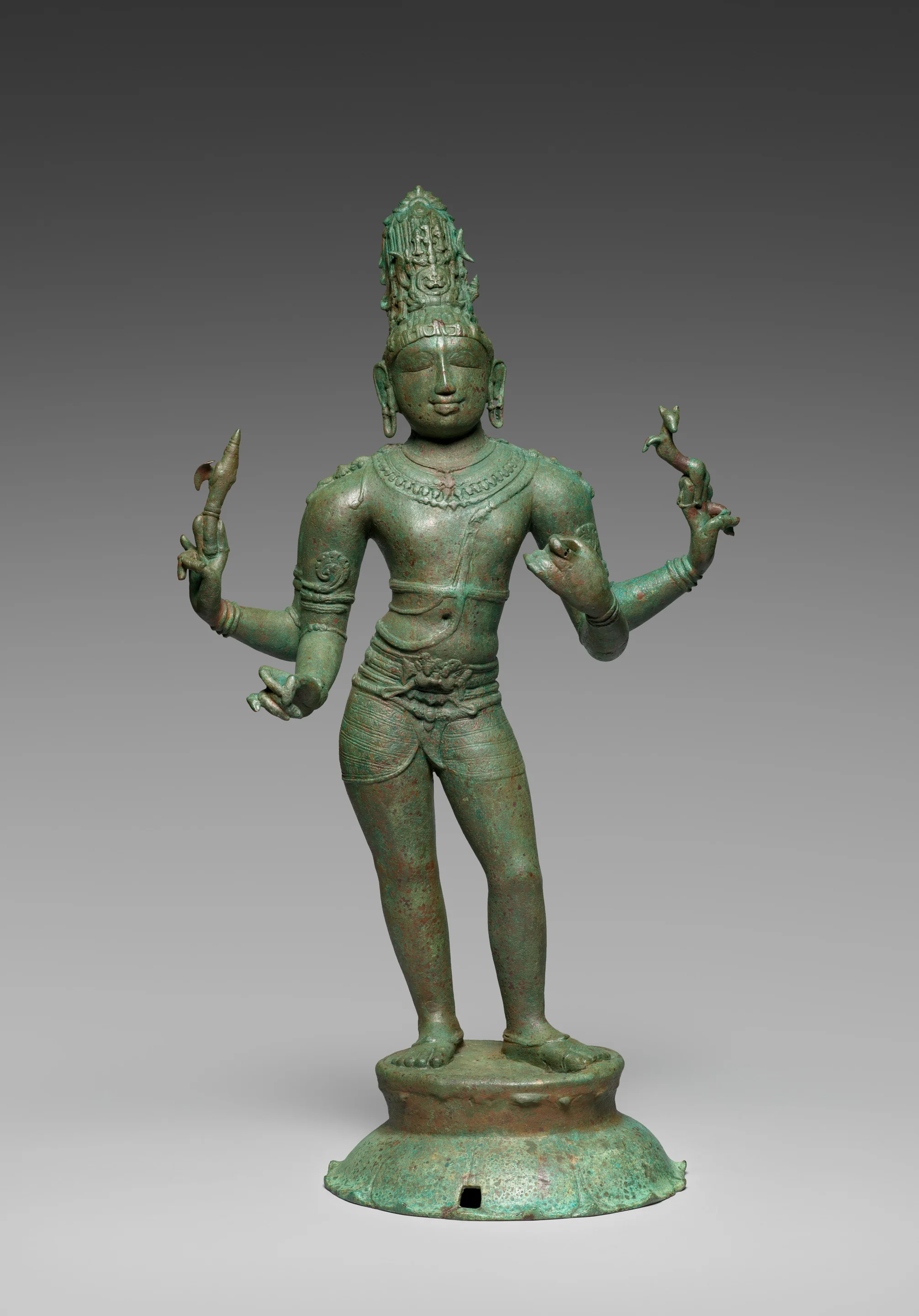
In the words of Pranav Ashar
How we renderThe heart of the Dakshinamurti
In brief
The sages ask Markandeya the secret of his long life and his joy. It is the knowledge of Shiva. The god is the one who, when everything comes to rest, gathers all things into the Self and delights, shining, in the bliss of the Self. The practice is to stand in 'He am I'. In verse, the text says how the light arises: a lamp filled with the oil of dispassion, its wick devotion, its bowl understanding. The story of Markandeya is the story of discrimination, bound by Death and freed by Shiva. 'Facing south' means facing the understanding.
- The silent teacher
- He am I
- The lamp of knowing
- Markandeya and Death
- Facing the understanding
ॐ ब्रह्मावर्ते महाभाण्डीरवटमूले महासत्राय समेता महर्षयः शौनकादयस्ते ह समित्पाणयस्तत्त्वजिज्ञासवो मार्कण्डेयं चिरञ्जीविनमुपसमेत्य पप्रच्छुः केन त्वं चिरं जीवसि केन वानन्दमनुभवसीति । परमरहस्यशिवतत्त्वज्ञानेनेति स होवाच । किं तत्परमरहस्यशिवतत्त्वज्ञानम् । तत्र को देवः । के मन्त्राः । को जपः । का मुद्रा । का निष्ठा । किं तज्ज्ञानसाधनम् । कः परिकरः । को बलिः । कः कालः । किं तत्स्थानमिति । स होवाच । येन दक्षिणामुखः शिवोऽपरोक्षीकृतो भवति तत्परमरहस्यशिवतत्त्वज्ञानम् । यः सर्वोपरमे काले सर्वानात्मन्युपसंहृत्य स्वात्मानन्दसुखे मोदते प्रकाशते वा स देवः ।
oṃ brahmāvarte mahābhāṇḍīravaṭamūle mahāsatrāya sametā maharṣayaḥ śaunakādayaste ha samitpāṇayastattvajijñāsavo mārkaṇḍeyaṃ cirañjīvinamupasametya papracchuḥ kena tvaṃ ciraṃ jīvasi kena vānandamanubhavasīti | paramarahasyaśivatattvajñāneneti sa hovāca | kiṃ tatparamarahasyaśivatattvajñānam | tatra ko devaḥ | ke mantrāḥ | ko japaḥ | kā mudrā | kā niṣṭhā | kiṃ tajjñānasādhanam | kaḥ parikaraḥ | ko baliḥ | kaḥ kālaḥ | kiṃ tatsthānamiti | sa hovāca | yena dakṣiṇāmukhaḥ śivo'parokṣīkṛto bhavati tatparamarahasyaśivatattvajñānam | yaḥ sarvoparame kāle sarvānātmanyupasaṃhṛtya svātmānandasukhe modate prakāśate vā sa devaḥ |
Om. In Brahmavarta, at the foot of the great Bhandira banyan, the great seers, Shaunaka and the others, gathered for a long sacrifice. Seeking the truth, fuel in hand, they came to Markandeya, the long-lived, and asked: 'How do you live so long? How do you know such joy?' He said: 'By the knowledge of Shiva, the highest secret.' 'What is that highest secret, the knowledge of Shiva? In it, who is the god? What are the mantras? What is the repetition, the gesture, the steadfastness? What is the means to that knowledge? What are its helps, its offering, its time, its place?' He said: 'That by which Shiva facing south is known directly: that is the highest secret, the knowledge of Shiva. The one who, when everything comes to rest, gathers all things into the Self, and delights, shining, in the bliss of his own Self: he is the god.'
Note //
The opening prose. 'Fuel in hand' is the sign of a student approaching a teacher. 'Known directly' (aparokṣīkṛta): not known as an object, but as oneself. The answer to 'who is the god?' describes not a figure but what remains when everything is withdrawn into the Self: the Self itself, shining in its own bliss. Editions agree.
अत्रैते मन्त्ररहस्यश्लोका भवन्ति । मेधा दक्षिणामूर्तिमन्त्रस्य ब्रह्मा ऋषिः । गायत्री छन्दः । देवता दक्षिणास्यः । मन्त्रेणाङ्गन्यासः । ॐ आदौ नम उच्चार्य ततो भगवते पदम् । दक्षिणेति पदं पश्चान्मूर्तये पदमुद्धरेत् ॥ १॥ अस्मच्छब्दं चतुर्थ्यन्तं मेधां प्रज्ञां पदं वदेत् । समुच्चार्य ततो वायुबीजं च्छं च ततः पठेत् । अग्निजायां ततस्त्वेष चतुर्विंशाक्षरो मनुः ॥ २॥
atraite mantrarahasyaślokā bhavanti | medhā dakṣiṇāmūrtimantrasya brahmā ṛṣiḥ | gāyatrī chandaḥ | devatā dakṣiṇāsyaḥ | mantreṇāṅganyāsaḥ | oṃ ādau nama uccārya tato bhagavate padam | dakṣiṇeti padaṃ paścānmūrtaye padamuddharet || 1|| asmacchabdaṃ caturthyantaṃ medhāṃ prajñāṃ padaṃ vadet | samuccārya tato vāyubījaṃ cchaṃ ca tataḥ paṭhet | agnijāyāṃ tatastveṣa caturviṃśākṣaro manuḥ || 2||
Here are the verses on the secret of the mantras. Of the Dakshinamurti mantra for intelligence (medhā) the seer is Brahma, the metre is Gayatri, the deity is the one who faces south. The limbs are placed with the mantra itself. First say Om, then 'namo', then the word 'bhagavate', then 'dakṣiṇā', then 'mūrtaye'. Then the word 'I' in the dative, 'to me', then 'medhāṃ prajñām', intelligence and wisdom; then the seed of wind with 'ccha', 'give'; then the wife of fire, 'svāhā'. This is the mantra of twenty-four syllables.
Note //
The first of four Dakshinamurti mantras. Each is given in code, word by word, as the mantra manuals do: 'the seed of wind' is the syllable ya, 'the wife of fire' is svāhā (Svaha is Agni's wife in the myth). The mantra so built is usually given as 'oṃ namo bhagavate dakṣiṇāmūrtaye mahyaṃ medhāṃ prajñāṃ prayaccha svāhā', 'Om, homage to the Lord Dakshinamurti; give me intelligence and wisdom, svāhā', which makes the twenty-four syllables; how 'pra' enters is not stated, and the reconstruction is the usual one. 'Seer, metre, deity' are the three things said before any Vedic mantra is used; 'placing on the limbs' (aṅga-nyāsa) is touching the parts of the body while saying parts of the mantra, so that the body itself is taken up into the worship. Editions agree, apart from spacing.
ध्यानम् ॥ स्फटिकरजतवर्णं मौक्तिकीमक्षमालाममृतकलशविद्यां ज्ञानमुद्रां कराग्रे । दधतमुरगकक्ष्यं चन्द्रचूडं त्रिनेत्रं विधृतविविधभूषं दक्षिणामूर्तिमीडे ॥ ३॥
dhyānam || sphaṭikarajatavarṇaṃ mauktikīmakṣamālāmamṛtakalaśavidyāṃ jñānamudrāṃ karāgre | dadhatamuragakakṣyaṃ candracūḍaṃ trinetraṃ vidhṛtavividhabhūṣaṃ dakṣiṇāmūrtimīḍe || 3||
Meditation. I praise Dakshinamurti, the colour of crystal and of silver, holding at his fingertips a rosary of pearls, a pot of nectar, a book of learning, and the gesture of knowledge; a serpent for his girdle, the moon on his crest, three-eyed, wearing ornaments of every kind.
Note //
A meditation verse (dhyāna), describing the form to be held in mind with the mantra. 'Gesture of knowledge' (jñāna-mudrā): thumb and forefinger joined, the other three fingers apart, read as the individual joined to Brahman, free of the three states and three qualities. 'Vidyā' beside the pot of nectar is read, as usual, as the book. Editions: 'uragakakṣyaṃ' (sanskritdocuments.org) is kept over 'uragakakṣaṃ' (Adyar collection); same sense.
मन्त्रेण न्यासः । आदौ वेदादिमुच्चार्य स्वराद्यं सविसर्गकम् । पञ्चार्णं तत उद्धृत्य अन्तरं सविसर्गकम् । अन्ते समुद्धरेत्तारं मनुरेष नवाक्षरः ॥ ४॥
mantreṇa nyāsaḥ | ādau vedādimuccārya svarādyaṃ savisargakam | pañcārṇaṃ tata uddhṛtya antaraṃ savisargakam | ante samuddharettāraṃ manureṣa navākṣaraḥ || 4||
Placing with the mantra. First say the beginning of the Veda, Om; then the first of the vowels, with the breath-sound after it; then bring out the five-syllable word; then the one within, again with the breath-sound; and at the end say Om again. This mantra has nine syllables.
Note //
The second mantra, again in code. 'The beginning of the Veda' and 'the deliverer' (tāra) are both Om; 'the first of the vowels with visarga' is 'aḥ'; 'the five-syllable word' is probably 'namaḥ śivāya'. What 'the one within' (antara) stands for is not clear, and the full mantra is not reconstructed here. Pending review. Editions agree.
मुद्रां भद्रार्थदात्रीं स परशुहरिणं बाहुभिर्बाहुमेकं जान्वासक्तं दधानो भुजगबिलसमाबद्धकक्ष्यो वटाधः । आसीनश्चन्द्रखण्डप्रतिघटितजटाक्षीरगौरस्त्रिनेत्रो दद्यादाद्यः शुकाद्यैर्मुनिभिरभिवृतो भावशुद्धिं भवो नः ॥ ५॥
mudrāṃ bhadrārthadātrīṃ sa paraśuhariṇaṃ bāhubhirbāhumekaṃ jānvāsaktaṃ dadhāno bhujagabilasamābaddhakakṣyo vaṭādhaḥ | āsīnaścandrakhaṇḍapratighaṭitajaṭākṣīragaurastrinetro dadyādādyaḥ śukādyairmunibhirabhivṛto bhāvaśuddhiṃ bhavo naḥ || 5||
With his arms he holds the gesture that grants what is good, the axe and the deer, and rests one arm upon his knee; his waist is bound with a serpent; he sits beneath the banyan, a sliver of moon set in his matted hair, white as milk, three-eyed, the first one, surrounded by Shuka and the other sages. May Bhava, Shiva, give us purity of heart.
Note //
The meditation verse for the second mantra. The axe and the deer are Shiva's usual emblems. 'Purity of heart' (bhāva-śuddhi): the one thing asked for is a clean mind, the ground for knowledge. Editions agree.
मन्त्रेण न्यासः । ब्रह्मर्षिन्यासः । तारं ब्रूं नम उच्चार्य मायां वाग्भवमेव च । दक्षिणापदमुच्चार्य ततः स्यान्मूर्तये पदम् ॥ ६॥ ज्ञानं देहि पदं पश्चाद्वह्निजायां ततो न्यसेत् । मनुरष्टादशार्णोऽयं सर्वमन्त्रेषु गोपितः ॥ ७॥
mantreṇa nyāsaḥ | brahmarṣinyāsaḥ | tāraṃ brūṃ nama uccārya māyāṃ vāgbhavameva ca | dakṣiṇāpadamuccārya tataḥ syānmūrtaye padam || 6|| jñānaṃ dehi padaṃ paścādvahnijāyāṃ tato nyaset | manuraṣṭādaśārṇo'yaṃ sarvamantreṣu gopitaḥ || 7||
Placing with the mantra: the placing of the seer, Brahma. Say Om, 'brūṃ', 'namaḥ', then the seed of maya and the seed of speech; say the word 'dakṣiṇā', then the word 'mūrtaye'; after that the words 'jñānaṃ dehi', 'give knowledge', and then place the wife of fire, 'svāhā'. This is the mantra of eighteen syllables, kept hidden among all mantras.
Note //
The third mantra. 'The seed of maya' is hrīṃ, 'the seed of speech' (vāgbhava) is aiṃ. Built up, it reads 'oṃ brūṃ namaḥ hrīṃ aiṃ dakṣiṇāmūrtaye jñānaṃ dehi svāhā', 'Om ... homage ... to Dakshinamurti; give knowledge, svāhā', eighteen syllables. 'Placing of the seer' (ṛṣi-nyāsa) is the placing of the seer, metre and deity on the head, mouth and heart. Editions agree.
भस्मव्यापाण्डुराङ्गः शशिशकलधरो ज्ञानमुद्राक्षमालावीणापुस्तैर्विराजत्करकमलधरो योगपट्टाभिरामः । व्याख्यापीठे निषण्णो मुनिवरनिकरैः सेव्यमानः प्रसन्नः सव्यालः कृत्तिवासाः सततमवतु नो दक्षिणामूर्तिरीशः ॥ ८॥
bhasmavyāpāṇḍurāṅgaḥ śaśiśakaladharo jñānamudrākṣamālāvīṇāpustairvirājatkarakamaladharo yogapaṭṭābhirāmaḥ | vyākhyāpīṭhe niṣaṇṇo munivaranikaraiḥ sevyamānaḥ prasannaḥ savyālaḥ kṛttivāsāḥ satatamavatu no dakṣiṇāmūrtirīśaḥ || 8||
His body pale with ash, wearing a sliver of the moon, his lotus hands shining with the gesture of knowledge, the rosary, the vina and the book, handsome in the band that holds the yogi's knees, seated on the seat of teaching, served by crowds of the best of sages, gracious, wearing serpents, clothed in a hide: may the Lord Dakshinamurti protect us always.
Note //
The meditation verse for the third mantra. The seat of teaching (vyākhyā-pīṭha) is the seat from which he teaches, and he teaches, as the tradition says, by silence. The 'yoga-band' (yoga-paṭṭa) is a cloth band holding the knees in a seated posture. Editions: 'pāṇḍurāṅgaḥ', 'jñānamudrā' (Adyar collection) correct 'pāṇḍuraṅgaḥ', 'jñānamṛdrā' in sanskritdocuments.org; 'vyākhyāpīṭhe' (sanskritdocuments.org) corrects 'vyākhyāpīṭe' (Adyar).
मन्त्रेण न्यासः । ब्रह्मर्षिन्यासः । तारं परं रमाबीजं वदेत्साम्बशिवाय च । तुभ्यं चानलजायां च मनुर्द्वादशवर्णकः ॥ ९॥
mantreṇa nyāsaḥ | brahmarṣinyāsaḥ | tāraṃ paraṃ ramābījaṃ vadetsāmbaśivāya ca | tubhyaṃ cānalajāyāṃ ca manurdvādaśavarṇakaḥ || 9||
Placing with the mantra: the placing of the seer. Say Om, then the highest seed, the seed of Rama, Lakshmi, and 'sāmbaśivāya', 'to Shiva with Amba'; then 'tubhyam', 'to you', and the wife of fire, 'svāhā'. This is the mantra of twelve syllables.
Note //
The fourth, short mantra. 'The seed of Rama' (Lakshmi) is śrīṃ; 'the highest' (para) is probably another seed syllable, often taken as hrīṃ; the full form is not certain. Pending review. Editions: 'cānalajāyāṃ ca' (Adyar collection) is kept; sanskritdocuments.org omits 'ca', which leaves the line a syllable short, and puts the second 'brahmarṣinyāsaḥ' in brackets.
वीणां करैः पुस्तकमक्षमालां बिभ्राणमभ्राभगलं वराढ्यम् । फणीन्द्रकक्ष्यं मुनिभिः शुकाद्यैः सेव्यं वटाधः कृतनीडमीडे ॥ १०॥
vīṇāṃ karaiḥ pustakamakṣamālāṃ bibhrāṇamabhrābhagalaṃ varāḍhyam | phaṇīndrakakṣyaṃ munibhiḥ śukādyaiḥ sevyaṃ vaṭādhaḥ kṛtanīḍamīḍe || 10||
I praise him who holds in his hands the vina, the book and the rosary, his throat dark as a cloud, rich in blessings, the king of serpents for his girdle, served by Shuka and the other sages, who has made his home beneath the banyan.
Note //
The meditation verse for the fourth mantra. 'Throat dark as a cloud': Shiva's throat, darkened by the poison he drank to save the worlds. Editions agree.
विष्णुरृषिः । अनुष्टुप् छन्दः । देवता दक्षिणास्यः । मन्त्रेण न्यासः । तारं नमो भगवते तुभ्यं वटपदं ततः । मूलेति पदमुच्चार्य वासिने पदमुद्धरेत् ॥ ११॥ प्रज्ञामेधापदं पश्चादादिसिद्धिं ततो वदेत् । दायिने पदमुच्चार्य मायिने नम उद्धरेत् ॥ १२॥ वागीशाय ततः पश्चान्महाज्ञानपदं ततः । वह्निजायां ततस्त्वेष द्वात्रिंशद्वर्णको मनुः । आनुष्टुभो मन्त्रराजः सर्वमन्त्रोत्तमोत्तमः ॥ १३॥
viṣṇurṛṣiḥ | anuṣṭup chandaḥ | devatā dakṣiṇāsyaḥ | mantreṇa nyāsaḥ | tāraṃ namo bhagavate tubhyaṃ vaṭapadaṃ tataḥ | mūleti padamuccārya vāsine padamuddharet || 11|| prajñāmedhāpadaṃ paścādādisiddhiṃ tato vadet | dāyine padamuccārya māyine nama uddharet || 12|| vāgīśāya tataḥ paścānmahājñānapadaṃ tataḥ | vahnijāyāṃ tatastveṣa dvātriṃśadvarṇako manuḥ | ānuṣṭubho mantrarājaḥ sarvamantrottamottamaḥ || 13||
The seer is Vishnu, the metre Anushtubh, the deity the one who faces south. Placing with the mantra. Say Om, 'namo bhagavate tubhyam', 'homage to you, Lord'; then the word 'vaṭa', banyan; say the word 'mūla', root; bring out the word 'vāsine', dweller; then the words 'prajñā-medhā', wisdom and intelligence, then say 'ādi-siddhi', the first attainments; say the word 'dāyine', giver; bring out 'māyine namaḥ', homage to the lord of maya; then 'vāgīśāya', to the lord of speech; then the word 'mahājñāna', great knowledge; then the wife of fire, 'svāhā'. This is the mantra of thirty-two syllables, the king of mantras in the Anushtubh metre, highest of the highest of all mantras.
Note //
The great mantra, which fills one Anushtubh verse of thirty-two syllables: 'Om, homage to you, Lord, who dwells at the root of the banyan, giver of wisdom, intelligence and the first attainments, lord of maya, homage; to the lord of speech, great knowledge, svāhā.' Here Dakshinamurti is 'lord of maya' (māyin): the one who holds the power of appearance, not one bound by it. Editions: the seer's name is 'viṣṇū ṛṣiḥ' in sanskritdocuments.org and 'viṣṇuṛṣiḥ' in the Adyar collection; the standard sandhi 'viṣṇur ṛṣiḥ' is written here. 'sarvamantrottamottamaḥ' (Adyar) corrects 'ottamotamaḥ' (sanskritdocuments.org).
ध्यानम् । मुद्रापुस्तकवह्निनागविलसद्बाहुं प्रसन्नाननं मुक्ताहारविभूषणं शशिकलाभास्वत्किरीटोज्ज्वलम् । अज्ञानापहमादिमादिमगिरामर्थं भवानीपतिं न्यग्रोधान्तनिवासिनं परगुरुं ध्यायाम्यभीष्टाप्तये ॥ १४॥
dhyānam | mudrāpustakavahnināgavilasadbāhuṃ prasannānanaṃ muktāhāravibhūṣaṇaṃ śaśikalābhāsvatkirīṭojjvalam | ajñānāpahamādimādimagirāmarthaṃ bhavānīpatiṃ nyagrodhāntanivāsinaṃ paraguruṃ dhyāyāmyabhīṣṭāptaye || 14||
Meditation. His arms bright with the gesture, the book, the fire and the serpent, his face serene, adorned with a string of pearls, radiant with a crown lit by the crescent moon; the remover of not-knowing, the first one, the meaning of the first words, the Vedas; the husband of Bhavani, who lives at the foot of the banyan, the highest teacher: on him I meditate, to reach what I seek.
Note //
The meditation verse for the great mantra. 'The meaning of the first words' (ādima-girām artham): he is what the Vedas mean, that is, the Self the Upanishads point to. 'Remover of not-knowing' (ajñāna-apaha) is the teacher's whole work. Editions agree.
मौनमुद्रा ।
maunamudrā |
.
Note //
The answers to the questions of the opening begin here: 'what is the gesture?' The other mantras have hand gestures; this teaching's gesture is silence (mauna), the silence in which Dakshinamurti teaches. Editions agree.
सोऽहमिति यावदास्थितिः सा निष्ठा भवति । तदभेदेन मन्त्राम्रेडनं ज्ञानसाधनम् । चित्ते तदेकतानता परिकरः । अङ्गचेष्टार्पणं बलिः । त्रीणि धामानि कालः । द्वादशान्तपदं स्थानमिति ।
so'hamiti yāvadāsthitiḥ sā niṣṭhā bhavati | tadabhedena mantrāmreḍanaṃ jñānasādhanam | citte tadekatānatā parikaraḥ | aṅgaceṣṭārpaṇaṃ baliḥ | trīṇi dhāmāni kālaḥ | dvādaśāntapadaṃ sthānamiti |
To stand in '' for as long as one stands: that is steadfastness. To repeat the mantra as not different from him: that is the means to knowledge. The mind flowing to him alone: that is the help. Offering every movement of the limbs: that is the offering. The three states are its time. The point twelve fingers above the head is its place.
Note //
The answers to the questions of the opening, given after the mantras and meditation verses (verses 1-14), after the gesture of silence. 'He am I' (so 'ham): the recognition of oneself as Shiva. 'Offering every movement of the limbs': every action is the worship. 'The three states' (trīṇi dhāmāni), waking, dream and sleep, are 'its time': there is no time when it is not. 'Twelve fingers above' (dvādaśānta) is the yogic place of the highest. Editions agree.
ते ह पुनः श्रद्दधानास्तं प्रत्यूचुः । कथं वाऽस्योदयः । किं स्वरूपम् । को वाऽस्योपासक इति । स होवाच ।
te ha punaḥ śraddadhānāstaṃ pratyūcuḥ | kathaṃ vā'syodayaḥ | kiṃ svarūpam | ko vā'syopāsaka iti | sa hovāca |
Full of trust, they spoke to him again: 'How does it arise? What is it? Who is the one who worships it?' He said:
Note //
The second question, about the knowledge itself. The answer is given in verses 15-20. Editions agree.
वैराग्यतैलसम्पूर्णे भक्तिवर्तिसमन्विते । प्रबोधपूर्णपात्रे तु ज्ञप्तिदीपं विलोकयेत् ॥ १५॥
vairāgyatailasampūrṇe bhaktivartisamanvite | prabodhapūrṇapātre tu jñaptidīpaṃ vilokayet || 15||
In a lamp filled with the oil of dispassion, with a wick of devotion, its bowl brimming with understanding, see the light of knowing.
Note //
The sages ask, 'How does it arise? What is it? Who worships it?' This verse begins the answer. Dispassion, devotion and understanding prepare the lamp; the light itself, 'knowing' (jñapti), is not made by them. Editions agree.
मोहान्धकारे निःसारे उदेति स्वयमेव हि । वैराग्यमरणिं कृत्वा ज्ञानं कृत्वोत्तरारणिम् ॥ १६॥
mohāndhakāre niḥsāre udeti svayameva hi | vairāgyamaraṇiṃ kṛtvā jñānaṃ kṛtvottarāraṇim || 16||
In the empty darkness of delusion it rises by itself. Make dispassion the lower fire-stick and knowledge the upper one,
Note //
'It rises by itself' (svayam eva): the light of knowing is not produced; it shows itself when the darkness is gone. The fire-sticks (araṇi) are the two pieces of wood rubbed together to kindle the sacred fire; the sentence runs on into verse 17. Editions: 'jñānaṃ kṛtvottarāraṇim' (sanskritdocuments.org) over 'jñānaṅkṛtvā tu citragum' (Adyar collection), which does not fit the image. Pending review.
गाढतामिस्रसंशान्त्यै गूढमर्थं निवेदयेत् । मोहभानुजसंक्रान्तं विवेकाख्यं मृकण्डुजम् ॥ १७॥
gāḍhatāmisrasaṃśāntyai gūḍhamarthaṃ nivedayet | mohabhānujasaṃkrāntaṃ vivekākhyaṃ mṛkaṇḍujam || 17||
and to still the thick darkness, make known the hidden meaning: Mrikandu's son, whose name is discrimination, seized by Death, the son of the sun of delusion,
तत्त्वाविचारपाशेन बद्धं द्वैतभयातुरम् । उज्जीवयन्निजानन्दे स्वस्वरूपेण संस्थितः ॥ १८॥
tattvāvicārapāśena baddhaṃ dvaitabhayāturam | ujjīvayannijānande svasvarūpeṇa saṃsthitaḥ || 18||
bound by the noose of , sick with the fear of duality: bringing him back to life in his own bliss, Shiva stands in his own nature.
Note //
In the legend Shiva saves the boy from Yama's noose. Here the noose is 'not inquiring into the real' (tattva-avicāra), and the fear is 'the fear of duality': as Brihadaranyaka 1.4.2 says, 'fear comes from a second'. Shiva saves discrimination by restoring it to its own bliss; he does not go anywhere to do it, but 'stands in his own nature'. Editions agree.
शेमुषी दक्षिणा प्रोक्ता सा यस्याभीक्षणे मुखम् । दक्षिणाभिमुखः प्रोक्तः शिवोऽसौ ब्रह्मवादिभिः ॥ १९॥
śemuṣī dakṣiṇā proktā sā yasyābhīkṣaṇe mukham | dakṣiṇābhimukhaḥ proktaḥ śivo'sau brahmavādibhiḥ || 19||
'Dakshina' is . The one whose face is turned to it, to see it, is called by the knowers of Brahman Shiva 'facing south'.
Note //
The name explained. Dakṣiṇā means 'south', and here 'understanding' (śemuṣī). Dakshinamurti, 'the one facing south', is the one whose face is turned towards the understanding: the light that faces and illumines the mind. Editions agree.
सर्गादिकाले भगवान्विरिञ्चिरुपास्यैनं सर्गसामर्थ्यमाप्य । तुतोष चित्ते वाञ्छितार्थांश्च लब्ध्वा धन्यः सोपास्योपासको भवति धाता ॥ २०॥
sargādikāle bhagavānviriñcirupāsyainaṃ sargasāmarthyamāpya | tutoṣa citte vāñchitārthāṃśca labdhvā dhanyaḥ sopāsyopāsako bhavati dhātā || 20||
At the beginning of creation the Lord Brahma worshipped him, gained the power to create, and was glad at heart, having found what he wished for. Blessed is the Creator: the worshipper becomes the one worshipped.
Note //
'The worshipper becomes the one worshipped' (sopāsya upāsako bhavati): read in the light of verses 17-19, worship ends in the recognition that the worshipper is not other than what he worships, 'He am I' (Practice). The phrase can also be read more simply, 'the worshipper, blessed with his object of worship'; the Advaitic reading is followed here, as interpretation. Editions agree.
य इमां परमरहस्यशिवतत्त्वविद्यामधीते स सर्वपापेभ्यो मुक्तो भवति । य एवं वेद स कैवल्यमनुभवतीत्युपनिषत् ॥ २१॥
ya imāṃ paramarahasyaśivatattvavidyāmadhīte sa sarvapāpebhyo mukto bhavati | ya evaṃ veda sa kaivalyamanubhavatītyupaniṣat || 21||
Whoever studies this knowledge of Shiva, the highest secret, is freed from every wrong. Whoever knows it in this way knows aloneness, freedom. This is the Upanishad.
Note //
'Aloneness' (kaivalya): the Self alone, without a second; the word for freedom in the Upanishads of this group. The number 21 is the Adyar collection's; sanskritdocuments.org leaves the closing unnumbered. Editions agree.
No public-domain English translation exists for this text; the Sanskrit is shown.
The renderings on this page are shared under CC BY-NC 4.0, in the words of Pranav Ashar.