Brahma Sutras with Shankara's commentary: the first four sutras
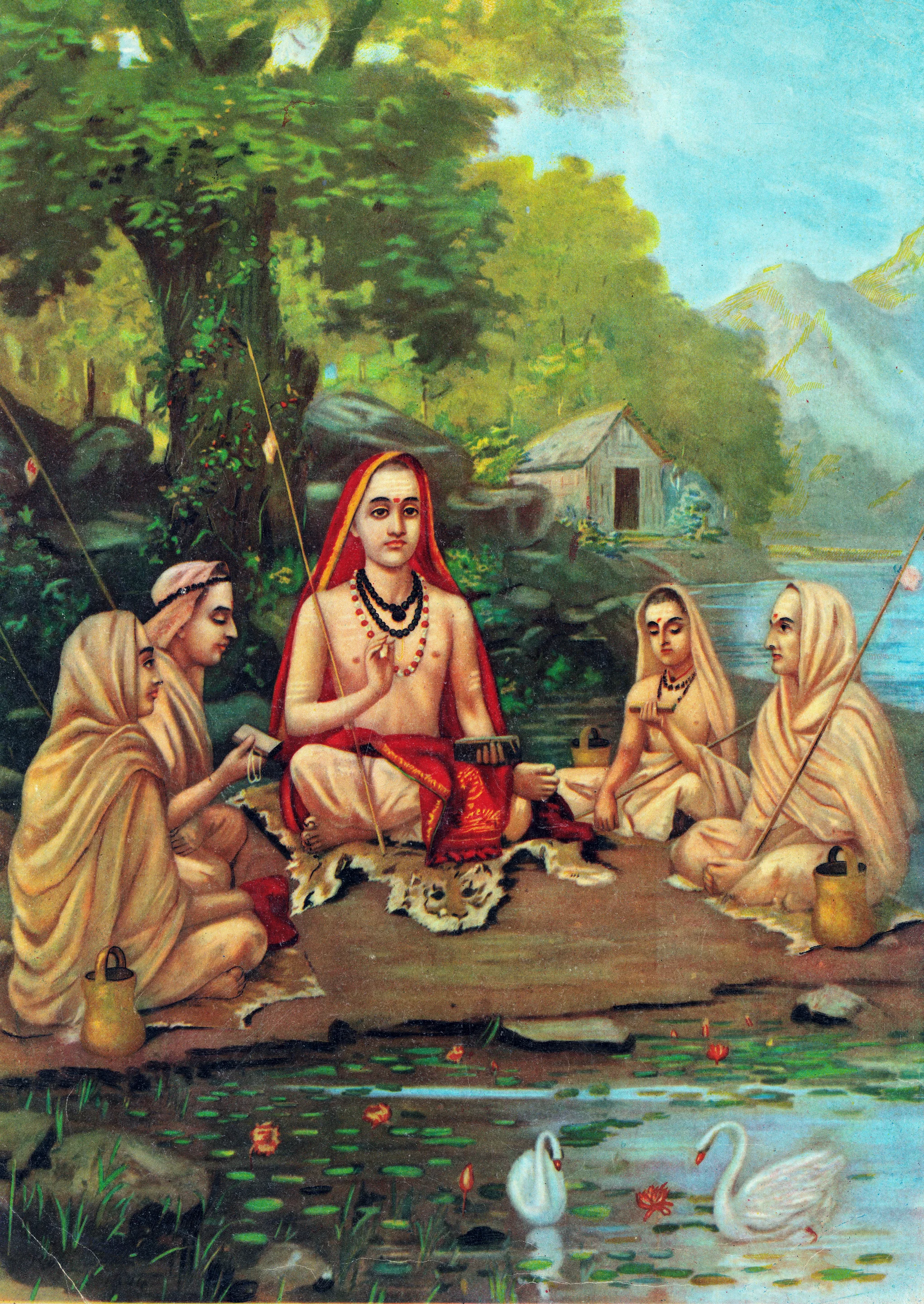
In the words of Pranav Ashar
How we renderThe heart of the Brahma Sutras with Shankara's commentary: the first four sutras
In brief
The Brahma Sutras, compressed sayings ascribed to Badarayana, sum up what the Upanishads teach; Shankara's commentary on them, in the eighth century, is the founding text of Advaita. Given here complete: his introduction on mistaking (the laying-on of Self and not-Self) and his commentary on the first four sutras, the 'catuhsutri', with Thibaut's translation of 1890 beside each unit.
Intro.1
//Reverence to . The subject and the object are as opposed as light and darkness. The object belongs to the notion 'you', the subject to the notion 'I'. That the two cannot be one needs no proof, and still less can the features of one become the features of the other. So it is wrong to lay the object and its features onto the subject, whose very self is awareness and whose ground is the notion 'I'; and wrong, the other way round, to lay the subject and its features onto the object. Even so, people do it, and do it naturally. Rooted in a wrong knowing, they fail to tell the two apart, although they are wholly distinct, and lay the nature and features of each onto the other. Joining the real and the unreal, they say 'I am this' and 'this is mine'.
Self and not-Self are as opposed as light and dark, and still people say 'I am this' and 'this is mine'.
It was said that merely telling of a thing, apart from a command, is pointless, like 'the earth has seven continents'. That has been answered: 'this is a rope, not a snake' tells only of a thing, and its point is plain. But it was said that telling of Brahman does not have a point as telling of the rope does, because one who has heard of Brahman is still seen in the round of birth and death as before. We reply: it cannot be shown that one who has understood that Brahman is the Self remains in the round as before, because that contradicts his being Brahman, as known through the Veda. We see that one who takes the body and the rest as the Self feels pain and fear. We cannot suppose that the same person, once he has understood through the Veda that Brahman is the Self and has dropped that notion, still feels the pain and fear that came from the false knowledge. A rich householder proud of his wealth suffers when it is stolen; once he has renounced and dropped that pride, the same theft does not hurt him. A man with earrings enjoys being their owner; once the earrings and the pride in them are gone, so is that pleasure. Scripture says: 'pleasant and unpleasant do not touch one who is bodiless' (Chandogya 8.12.1). Bodiless only when the body falls, you say, not while living? No, because being embodied comes from false knowledge. No cause for being embodied can be found other than the false knowledge that takes the body as the Self. And we have said that bodilessness is eternal, since it is not caused by action. Is embodiedness caused by merit and demerit that the Self has made? No: the Self's connection with a body is not established, so neither is its having made merit and demerit. To make embodiedness depend on merit and demerit, and merit and demerit on embodiedness, is arguing in a circle; and making the chain beginningless is a line of the blind leading the blind. Besides, the Self cannot be a doer, since it cannot be joined with action. Kings and the like are doers by mere presence, you say? No: they have servants bought with wages and gifts; nothing like wages can be imagined that would make the Self owner of the body and the rest. The plain cause of the connection is the false notion. That also explains how the Self is called the sacrificer. Some say the Self, which is other than the body, takes the body as its own in a figurative sense, not falsely. No. A figurative use requires that the difference of the two things be known. Where one knows the animal with a mane, the true referent of the word and notion 'lion', and knows also a man with a lion's fierceness and courage, the word 'lion' is used of the man figuratively. Where the difference is not known, using one thing's word and notion for another is simply error: as when, in dim light, one does not see that it is a post and calls it a man; or when, all at once, one is sure that the shell is silver. How can 'I' said of the body, which arises from not telling Self and not-Self apart, be called figurative? Even learned people who know the difference use these words and notions as undiscerningly as shepherds and goatherds. So for those who hold that the Self is other than the body, 'I' said of the body is simply false, not figurative. Since embodiedness comes from a false notion, it is established that the one who knows is bodiless even while living. Scripture says of the knower of Brahman: 'As the slough of a snake lies dead and cast off on an anthill, so this body lies; and this bodiless, immortal life is Brahman, is light' (Brihadaranyaka 4.4.7); and 'with eyes as if without eyes, with ears as if without ears, with speech as if without speech, with mind as if without mind, with breath as if without breath'. Tradition too, in describing the one of steady wisdom ('what is the mark of one of steady wisdom?', Gita 2.54), shows that the knower is untouched by any activity. So one who has understood Brahman as the Self is not in the round as before. And one who is still in the round as before has not understood Brahman as the Self. There is no contradiction.
One who still suffers as before has not understood; one who has understood is bodiless while living.
What most readings miss
The commentary is read as a defence of renunciation and scripture against the ritualists, and much of it is. But its first page names the one thing it is about: mistaking. Self and not-Self are as opposed as light and dark, and still everyone says 'I am this'. Everything after follows from that. Knowing cannot produce freedom, because freedom was never lost; it can only remove the mistake, as seeing the rope removes the snake. So the objection that hearers of 'you are that' still suffer gets a blunt answer: then they have not understood (1.1.4.k). The site's positions 5, 6 and 7 are this argument, kept close to Shankara's words.
The renderings on this page are shared under CC BY-NC 4.0, in the words of Pranav Ashar.