Jabali Upanishad
In the words of Pranav Ashar
How we renderThe heart of the Jabali
In brief
Pippaladi asks Jabali for the secret of the highest truth. Jabali answers that the individual who wanders through births is Pashupati, the Lord of creatures himself, taken over by the I-claim; as long as that lasts, he is the bound creature. The Lord is the one who knows all and does the five acts. Knowledge of him comes by wearing the ash, and the text explains its three lines as the three letters of Om and the three powers of action, will and knowledge. Whoever wears it knowing this is purified, and does not return.
- The Lord taken over by the I-claim
- Pashu and Pashupati: the bound one and the Lord
- The three lines of ash as Om
- Action, will and knowledge
- No return
हरिः ॐ । अथ हैनं भगवन्तं जाबालिं पैप्पलादिः पप्रच्छ भगवन्मे ब्रूहि परमतत्त्वरहस्यम् । किं तत्त्वं को जीवः कः पशुः क ईशः को मोक्षोपाय इति ।
hariḥ oṃ | atha hainaṃ bhagavantaṃ jābāliṃ paippalādiḥ papraccha bhagavanme brūhi paramatattvarahasyam | kiṃ tattvaṃ ko jīvaḥ kaḥ paśuḥ ka īśaḥ ko mokṣopāya iti |
Hari Om. Pippaladi asked the revered Jabali: Sir, tell me the secret of the highest truth. What is the truth? Who is the individual? Who is ? Who is the Lord? What is the way to freedom?
Note //
Pippaladi: a son or descendant of Pippalada, the teacher of the Prashna Upanishad. Editions agree.
स तं होवाच साधु पृष्टं सर्वं निवेदयामि यथाज्ञातमिति । पुनः स तमुवाच कुतस्त्वया ज्ञातमिति । पुनः स तमुवाच षडाननादिति । पुनः स तमुवाच तेनाथ कुतो ज्ञातमिति । पुनः स तमुवाच तेनेशानादिति । पुनः स तमुवाच कथं तस्मात्तेन ज्ञातमिति । पुनः स तमुवाच तदुपासनादिति ।
sa taṃ hovāca sādhu pṛṣṭaṃ sarvaṃ nivedayāmi yathājñātamiti | punaḥ sa tamuvāca kutastvayā jñātamiti | punaḥ sa tamuvāca ṣaḍānanāditi | punaḥ sa tamuvāca tenātha kuto jñātamiti | punaḥ sa tamuvāca teneśānāditi | punaḥ sa tamuvāca kathaṃ tasmāttena jñātamiti | punaḥ sa tamuvāca tadupāsanāditi |
He said to him: Well asked. I will tell you all of it, as I have come to know it. The other asked: From whom did you learn it? From the six-faced one. And from whom did he learn it? From the Lord. How did he learn it from him? By worshipping him.
पुनः स तमुवाच भगवन्कृपया मे सरहस्यं सर्वं निवेदयेति । स तेन पृष्टः सर्वं निवेदयामास तत्त्वम् । पशुपतिरहङ्काराविष्टः संसारी जीवः स एव पशुः । सर्वज्ञः पञ्चकृत्यसम्पन्नः सर्वेश्वर ईशः पशुपतिः ।
punaḥ sa tamuvāca bhagavankṛpayā me sarahasyaṃ sarvaṃ nivedayeti | sa tena pṛṣṭaḥ sarvaṃ nivedayāmāsa tattvam | paśupatirahaṅkārāviṣṭaḥ saṃsārī jīvaḥ sa eva paśuḥ | sarvajñaḥ pañcakṛtyasampannaḥ sarveśvara īśaḥ paśupatiḥ |
Then Pippaladi said: 'Lord, in your kindness, tell me all of it, with its secret.' Asked by him, Jabali told him all of it, the truth: Pashupati, the Lord of creatures, and wandering from birth to birth, is the individual. He alone is . The one who knows all, who does the five acts, the Lord of all, is the Lord, Pashupati.
Note //
'Taken over by' (āviṣṭa): entered, possessed. 'Wandering from birth to birth' (saṃsārī). The five acts (pañcakṛtya): making, keeping and ending the world, veiling, and grace that frees. The sentence is read as one: the same Pashupati is the individual when taken over by the I-claim, and the Lord when he is not. It could also be divided so that 'Pashupati' stands as a heading for the answer that follows; but both editions run it into 'ahaṅkārāviṣṭaḥ', and the Advaitic reading is the plain sense of the words. Interpretive; pending review. Editions agree; the opening request ('punaḥ sa tam uvāca... tattvam') was missing from the key-verses page and is added here.
के पशव इति पुनः स तमुवाच जीवाः पशव उक्ताः । तत्पतित्वात्पशुपतिः । स पुनस्तं होवाच कथं जीवाः पशव इति । कथं तत्पतिरिति । स तमुवाच यथा तृणाशिनो विवेकहीनाः परप्रेष्याः कृष्यादिकर्मसु नियुक्ताः सकलदुःखसहाः स्वस्वामिबध्यमाना गवादयः पशवः । यथा तत्स्वामिन इव सर्वज्ञ ईशः पशुपतिः ।
ke paśava iti punaḥ sa tamuvāca jīvāḥ paśava uktāḥ | tatpatitvātpaśupatiḥ | sa punastaṃ hovāca kathaṃ jīvāḥ paśava iti | kathaṃ tatpatiriti | sa tamuvāca yathā tṛṇāśino vivekahīnāḥ parapreṣyāḥ kṛṣyādikarmasu niyuktāḥ sakaladuḥkhasahāḥ svasvāmibadhyamānā gavādayaḥ paśavaḥ | yathā tatsvāmina iva sarvajña īśaḥ paśupatiḥ |
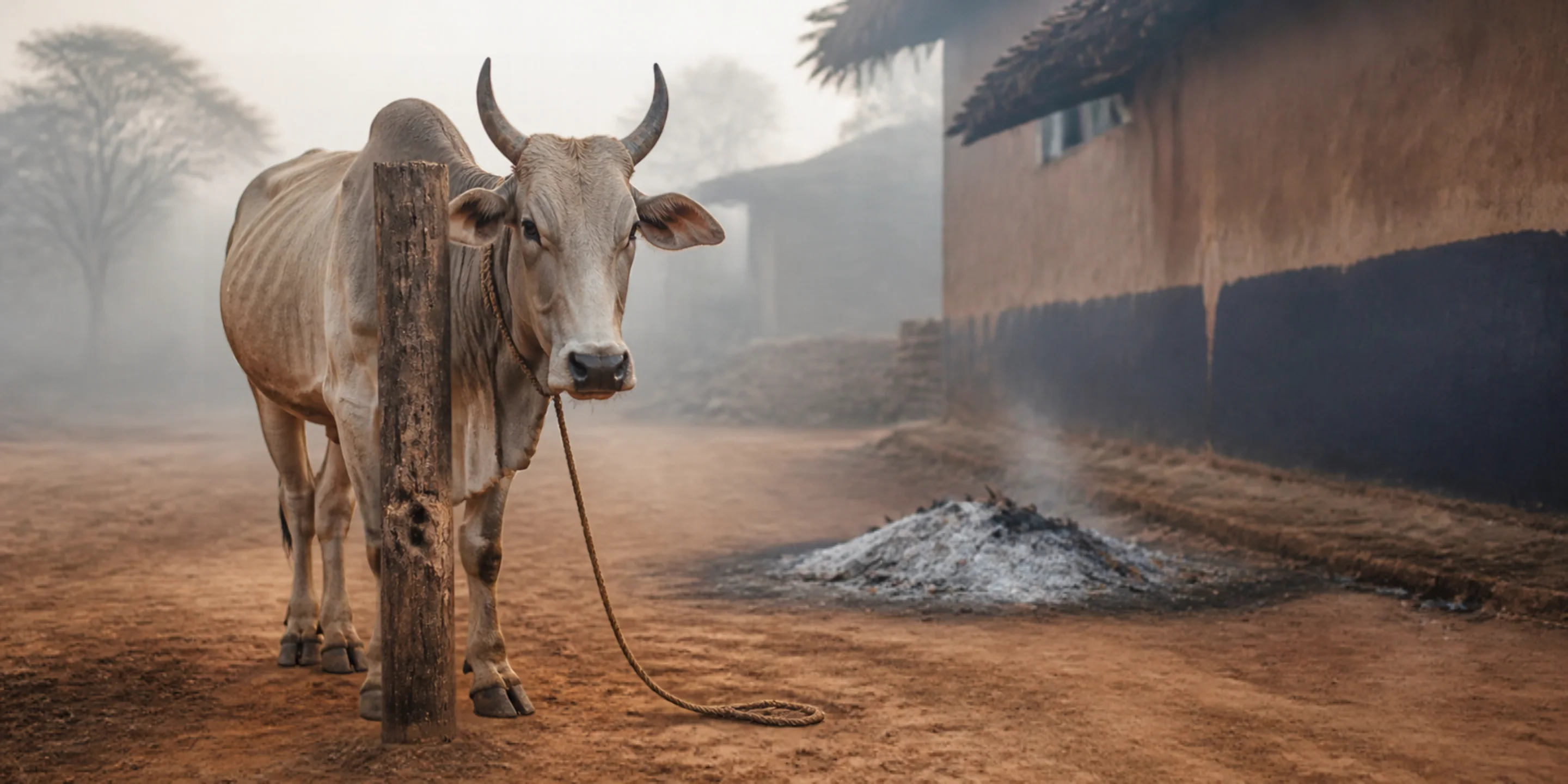
Who are the creatures? the other asked. Individuals are called the creatures. Because he is their Lord, he is Pashupati. He asked again: How are individuals creatures? And how is he their Lord? He said: Cattle and the like eat grass, have no discernment, are driven by another, are set to ploughing and other work, bear every pain, and are tied up by their owner: they are creatures. And as their owner is to them, so the Lord who knows all is Pashupati.
Note //
'Pashu' means a domestic animal, a beast led by a master; in Shaiva teaching it is the bound soul. Each mark of the cattle is a mark of the individual taken over by the I-claim: living on what the senses graze, without discernment, driven by desire, bearing pain, bound. Editions agree.
तज्ज्ञानं केनोपायेन जायते । पुनः स तमुवाच विभूतिधारणादेव । तत्प्रकारः कथमिति । कुत्र कुत्र धार्यम् । पुनः स तमुवाच सद्योजातादिपञ्चब्रह्ममन्त्रैर्भस्म सङ्गृह्याग्निरिति भस्मेत्यनेनाभिमन्त्र्य मानस्तोक इति समुद्धृत्य जलेन संसृज्य त्र्यायुषमिति शिरोललाटवक्षःस्कन्धेष्विति तिसृभिस्त्र्यायुषैस्त्रियम्बकैस्तिस्रो रेखाः प्रकुर्वीत । व्रतमेतच्छाम्भवं सर्वेषु वेदेषु वेदवादिभिरुक्तं भवति । तत्समाचरेन्मुमुक्षुर्न पुनर्भवाय ।
tajjñānaṃ kenopāyena jāyate | punaḥ sa tamuvāca vibhūtidhāraṇādeva | tatprakāraḥ kathamiti | kutra kutra dhāryam | punaḥ sa tamuvāca sadyojātādipañcabrahmamantrairbhasma saṅgṛhyāgniriti bhasmetyanenābhimantrya mānastoka iti samuddhṛtya jalena saṃsṛjya tryāyuṣamiti śirolalāṭavakṣaḥskandheṣviti tisṛbhistryāyuṣaistriyambakaistisro rekhāḥ prakurvīta | vratametacchāmbhavaṃ sarveṣu vedeṣu vedavādibhiruktaṃ bhavati | tatsamācarenmumukṣurna punarbhavāya |
By what means does that knowledge arise? He said: By wearing the sacred ash. How is it done? Where is it worn? He said: Gather the ash with the five Brahman mantras, 'Sadyojata' and the rest; consecrate it with 'Fire is ash'; take it up with 'Do not harm our children'; mix it with water; and with 'the threefold life' and 'the three-eyed one' draw three lines on the head, the forehead, the chest and the shoulders. This is Shiva's vow, taught in all the Vedas by those who know the Veda. Let one who seeks freedom keep it, so as not to be born again.
Note //
The mantras are named by their first words: the five Brahman mantras of the Mahanarayana (Sadyojata, Vamadeva, Aghora, Tatpurusha, Ishana); 'agnir iti bhasma' (Atharvashiras 5); 'mā nas toke' (Rig Veda 1.114.8); 'tryāyuṣam' (Vajasaneyi Samhita 3.62); 'tryambakam' (Rig Veda 7.59.12). Sanskritdocuments.org has the slips 'tryāyupam' and 'tryāyupaiḥ'; the Adyar reading 'tryāyuṣa' is followed.
अथ सनत्कुमारः प्रमाणं पृच्छति । त्रिपुण्ड्रधारणस्य त्रिधा रेखा आललाटादाचक्षुषोराभ्रुवोर्मध्यतश्च । यास्य प्रथमा रेखा सा गार्हपत्यश्चाकारो रजो भूर्लोकः स्वात्मा क्रियाशक्तिः ऋग्वेदः प्रातःसवनं प्रजापतिर्देवो देवतेति । यास्य द्वितीया रेखा सा दक्षिणाग्निरुकारः सत्त्वमन्तरिक्षमन्तरात्मा चेच्छाशक्तिर्यजुर्वेदो माध्यन्दिनसवनं विष्णुर्देवो देवतेति । यास्य तृतीया रेखा साहवनीयो मकारस्तमो द्यौर्लोकः परमात्मा ज्ञानशक्तिः सामवेदस्तृतीयसवनं महादेवो देवतेति त्रिपुण्ड्रं भस्मना करोति ।
atha sanatkumāraḥ pramāṇaṃ pṛcchati | tripuṇḍradhāraṇasya tridhā rekhā ālalāṭādācakṣuṣorābhruvormadhyataśca | yāsya prathamā rekhā sā gārhapatyaścākāro rajo bhūrlokaḥ svātmā kriyāśaktiḥ ṛgvedaḥ prātaḥsavanaṃ prajāpatirdevo devateti | yāsya dvitīyā rekhā sā dakṣiṇāgnirukāraḥ sattvamantarikṣamantarātmā cecchāśaktiryajurvedo mādhyandinasavanaṃ viṣṇurdevo devateti | yāsya tṛtīyā rekhā sāhavanīyo makārastamo dyaurlokaḥ paramātmā jñānaśaktiḥ sāmavedastṛtīyasavanaṃ mahādevo devateti tripuṇḍraṃ bhasmanā karoti |
Then Sanatkumara asks its measure. The three lines of the tripundra run across the forehead, as long as the eyes, between the brows. Its first line is the household fire, the letter A, passion, this world, one's own self, the power of action, the Rig Veda, the morning offering; its god is Prajapati. Its second line is the southern fire, the letter U, clarity, the middle air, the inner self, the power of will, the Yajur Veda, the noon offering; its god is Vishnu. Its third line is the offering fire, the letter M, inertia, heaven, the highest Self, the power of knowledge, the Sama Veda, the evening offering; its god is Mahadeva. So one draws the tripundra with ash.
Note //
The three lines are A, U and M, the three letters of Om (Mandukya 8-11). Passion, clarity and inertia: the three gunas (rajas, sattva, tamas). 'One's own self, the inner self, the highest Self' (svātmā, antarātmā, paramātmā). The measure 'as long as the eyes, between the brows' is uncertain; the phrase may give three limits for the lines. Sanskritdocuments.org has 'tridhaḥ' and 'satva'; the Adyar collection has 'pṛcchāti' and 'prātaḥsvanam'. Pending review.
यो विद्वान्ब्रह्मचारी गृही वानप्रस्थो यतिर्वा स महापातकोपपातकेभ्यः पूतो भवति । स सर्वान्देवान्ध्यातो भवति । स सर्वेषु तीर्थेषु स्नातो भवति । स सकलरुद्रमन्त्रजापी भवति । न स पुनरावर्तते न स पुनरावर्तते ॥ इति । ॐ सत्यमित्युपनिषत् ॥
yo vidvānbrahmacārī gṛhī vānaprastho yatirvā sa mahāpātakopapātakebhyaḥ pūto bhavati | sa sarvāndevāndhyāto bhavati | sa sarveṣu tīrtheṣu snāto bhavati | sa sakalarudramantrajāpī bhavati | na sa punarāvartate na sa punarāvartate || iti | oṃ satyamityupaniṣat ||
The one who knows this, student, householder, forest-dweller or renouncer, is made pure of great wrongs and small. He has meditated on all the gods. He has bathed in every holy water. He has recited every mantra of Rudra. He does not return. He does not return. Om. This is the truth. This is the Upanishad.
Note //
'The one who knows this' (vidvān): the promise is made to knowing, not to the mark alone. Editions agree.
No public-domain English translation exists for this text; the Sanskrit is shown.
The renderings on this page are shared under CC BY-NC 4.0, in the words of Pranav Ashar.