Bhagavad Gita
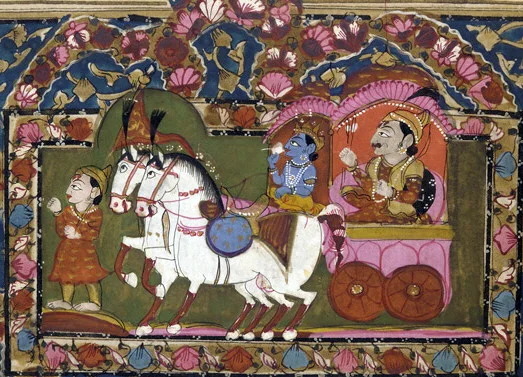
In the words of Pranav Ashar
How we renderContents
Chapter 15: The highest person
पुरुषोत्तमयोगः
ऊर्ध्वमूलमधःशाखमश्वत्थं प्राहुरव्ययम् । छन्दांसि यस्य पर्णानि यस्तं वेद स वेदवित् ॥
ūrdhvamūlamadhaḥśākhamaśvatthaṃ prāhuravyayam | chandāṃsi yasya parṇāni yastaṃ veda sa vedavit ||
said: With its roots above and its branches below, , they say, does not pass away;. Whoever knows it knows the Veda.
Note //
The world as a tree (compare Katha 2.3.1). Shankara: its root above is Brahman, the unmanifest, with its power of appearance; it is called ashvattha, 'not lasting till tomorrow', because it changes every moment, and 'does not pass away' because the stream of appearance has no beginning.
अधश्चोर्ध्वं प्रसृतास्तस्य शाखा गुणप्रवृद्धा विषयप्रवालाः । अधश्च मूलान्यनुसन्ततानि कर्मानुबन्धीनि मनुष्यलोके ॥
adhaścordhvaṃ prasṛtāstasya śākhā guṇapravṛddhā viṣayapravālāḥ | adhaśca mūlānyanusantatāni karmānubandhīni manuṣyaloke ||
Its branches spread below and above, nourished by the qualities, ; and below, in the human world, its roots stretch on, binding to action.
Note //
Shankara: these lower roots are the impressions of liking and disliking left by the fruits of action, which lead to more action, above all in the human world.
न रूपमस्येह तथोपलभ्यते नान्तो न चादिर्न च सम्प्रतिष्ठा । अश्वत्थमेनं सुविरूढमूलं असङ्गशस्त्रेण दृढेन छित्त्वा ॥
na rūpamasyeha tathopalabhyate nānto na cādirna ca sampratiṣṭhā | aśvatthamenaṃ suvirūḍhamūlaṃ asaṅgaśastreṇa dṛḍhena chittvā ||
, nor its end, nor its beginning, nor where it stands. Cutting this ashvattha, its roots grown deep, ,
Note //
In the site's reading: the tree is not cut down in fact but seen through; knowledge ends the covering, while the world goes on appearing. Telang's sentence runs from the second half of this verse through 15.4 and is given here.
ततः पदं तत्परिमार्गितव्यं यस्मिन्गता न निवर्तन्ति भूयः । तमेव चाद्यं पुरुषं प्रपद्ये । यतः प्रवृत्तिः प्रसृता पुराणी ॥
tataḥ padaṃ tatparimārgitavyaṃ yasmingatā na nivartanti bhūyaḥ | tameva cādyaṃ puruṣaṃ prapadye | yataḥ pravṛttiḥ prasṛtā purāṇī ||
one should then seek that place from which those who go do not return: 'I take refuge in that first person from whom has flowed.'
निर्मानमोहा जितसङ्गदोषा अध्यात्मनित्या विनिवृत्तकामाः । द्वन्द्वैर्विमुक्ताः सुखदुःखसंज्ञै- र्गच्छन्त्यमूढाः पदमव्ययं तत् ॥
nirmānamohā jitasaṅgadoṣā adhyātmanityā vinivṛttakāmāḥ | dvandvairvimuktāḥ sukhaduḥkhasaṃjñai- rgacchantyamūḍhāḥ padamavyayaṃ tat ||
Free of pride and confusion, the fault of clinging overcome, always abiding in , desires turned away, freed from the pairs called pleasure and pain, the unconfused go to that place that does not pass.
न तद्भासयते सूर्यो न शशाङ्को न पावकः । यद्गत्वा न निवर्तन्ते तद्धाम परमं मम ॥
na tadbhāsayate sūryo na śaśāṅko na pāvakaḥ | yadgatvā na nivartante taddhāma paramaṃ mama ||
, nor the moon, nor fire; going there, they do not return: that is my highest abode.
Note //
Compare Katha 2.2.15: 'There the sun does not shine.' The light that no other light lights.
ममैवांशो जीवलोके जीवभूतः सनातनः । मनःषष्ठानीन्द्रियाणि प्रकृतिस्थानि कर्षति ॥
mamaivāṃśo jīvaloke jīvabhūtaḥ sanātanaḥ | manaḥṣaṣṭhānīndriyāṇi prakṛtisthāni karṣati ||
, eternal, becomes the living one in the world of the living, and , with the mind as sixth, which rest in nature.
Note //
Shankara: a 'part' as the sun's reflection in water is part of the sun, or the space in a pot part of space: a part only through its frame, by not-knowing, since the whole has no parts. When the frame goes, it is the whole and does not return. Smallness belongs to the frame, not the Self.
शरीरं यदवाप्नोति यच्चाप्युत्क्रामतीश्वरः । गृहीत्वैतानि संयाति वायुर्गन्धानिवाशयात् ॥
śarīraṃ yadavāpnoti yaccāpyutkrāmatīśvaraḥ | gṛhītvaitāni saṃyāti vāyurgandhānivāśayāt ||
When takes a body, and when it leaves one, it takes these with it and goes, .
Note //
Ishvara here is the living one, the master of the body.
श्रोत्रं चक्षुः स्पर्शनं च रसनं घ्राणमेव च । अधिष्ठाय मनश्चायं विषयानुपसेवते ॥
śrotraṃ cakṣuḥ sparśanaṃ ca rasanaṃ ghrāṇameva ca | adhiṣṭhāya manaścāyaṃ viṣayānupasevate ||
Presiding over hearing, sight, touch, taste and smell, and the mind, it enjoys the objects of the senses.
उत्क्रामन्तं स्थितं वापि भुञ्जानं वा गुणान्वितम् । विमूढा नानुपश्यन्ति पश्यन्ति ज्ञानचक्षुषः ॥
utkrāmantaṃ sthitaṃ vāpi bhuñjānaṃ vā guṇānvitam | vimūḍhā nānupaśyanti paśyanti jñānacakṣuṣaḥ ||
Whether it leaves or stays, or enjoys, joined to the qualities, the confused do not see it; those with the eye of knowledge see.
यतन्तो योगिनश्चैनं पश्यन्त्यात्मन्यवस्थितम् । यतन्तोऽप्यकृतात्मानो नैनं पश्यन्त्यचेतसः ॥
yatanto yoginaścainaṃ paśyantyātmanyavasthitam | yatanto'pyakṛtātmāno nainaṃ paśyantyacetasaḥ ||
Yogis who strive ; those who strive but are unprepared, without discernment, do not see it.
यदादित्यगतं तेजो जगद्भासयतेऽखिलम् । यच्चन्द्रमसि यच्चाग्नौ तत्तेजो विद्धि मामकम् ॥
yadādityagataṃ tejo jagadbhāsayate'khilam | yaccandramasi yaccāgnau tattejo viddhi māmakam ||
The light in the sun that lights the whole world, the light in the moon and in fire: know that light as mine.
गामाविश्य च भूतानि धारयाम्यहमोजसा । पुष्णामि चौषधीः सर्वाः सोमो भूत्वा रसात्मकः ॥
gāmāviśya ca bhūtāni dhārayāmyahamojasā | puṣṇāmi cauṣadhīḥ sarvāḥ somo bhūtvā rasātmakaḥ ||
Entering the earth, I hold up beings by my strength; becoming the moon, full of sap, I nourish all plants.
Note //
Soma here is the moon, held to feed the plants with its juices.
अहं वैश्वानरो भूत्वा प्राणिनां देहमाश्रितः । प्राणापानसमायुक्तः पचाम्यन्नं चतुर्विधम् ॥
ahaṃ vaiśvānaro bhūtvā prāṇināṃ dehamāśritaḥ | prāṇāpānasamāyuktaḥ pacāmyannaṃ caturvidham ||
, dwelling in the bodies of living beings, joined with the in-breath and the out-breath, I digest the four kinds of food.
Note //
Vaishvanara is the fire present in all beings. The four kinds of food: chewed, sucked, licked and swallowed.
सर्वस्य चाहं हृदि सन्निविष्टो मत्तः स्मृतिर्ज्ञानमपोहनञ्च । वेदैश्च सर्वैरहमेव वेद्यो वेदान्तकृद्वेदविदेव चाहम् ॥
sarvasya cāhaṃ hṛdi sanniviṣṭo mattaḥ smṛtirjñānamapohanañca | vedaiśca sarvairahameva vedyo vedāntakṛdvedavideva cāham ||
; from me come memory, knowledge and . I am what is to be known by all the Vedas; I am the maker of the Vedanta and the knower of the Veda.
द्वाविमौ पुरुषौ लोके क्षरश्चाक्षर एव च । क्षरः सर्वाणि भूतानि कूटस्थोऽक्षर उच्यते ॥
dvāvimau puruṣau loke kṣaraścākṣara eva ca | kṣaraḥ sarvāṇi bhūtāni kūṭastho'kṣara ucyate ||
There are two persons in the world: the perishable and the imperishable. The perishable is all beings; .
Note //
Shankara: the imperishable here is the Lord's power of appearance, the seed of the perishable, holding the impressions of all beings; it does not perish because the seeds of the cycle are endless. Kutastha can also mean 'standing in deception', that is, as maya. In the site's terms: the seed.
उत्तमः पुरुषस्त्वन्यः परमात्मेत्युदाहृतः । यो लोकत्रयमाविश्य बिभर्त्यव्यय ईश्वरः ॥
uttamaḥ puruṣastvanyaḥ paramātmetyudāhṛtaḥ | yo lokatrayamāviśya bibhartyavyaya īśvaraḥ ||
But the highest person is another, : the unchanging Lord who enters the three worlds and upholds them.
यस्मात्क्षरमतीतोऽहमक्षरादपि चोत्तमः । अतोऽस्मि लोके वेदे च प्रथितः पुरुषोत्तमः ॥
yasmātkṣaramatīto'hamakṣarādapi cottamaḥ | ato'smi loke vede ca prathitaḥ puruṣottamaḥ ||
Because I am beyond the perishable and higher even than the imperishable, I am known in the world and in the Veda as the highest person.
Note //
Purushottama, 'the highest person'. In the site's terms: the perishable is the world as appearance, the imperishable is the seed, and the highest is the whole, beyond both.
यो मामेवमसम्मूढो जानाति पुरुषोत्तमम् । स सर्वविद्भजति मां सर्वभावेन भारत ॥
yo māmevamasammūḍho jānāti puruṣottamam | sa sarvavidbhajati māṃ sarvabhāvena bhārata ||
Whoever, unconfused, knows me so as the highest person knows all, and is devoted to me with the whole being, .
इति गुह्यतमं शास्त्रमिदमुक्तं मयानघ । एतद्बुद्ध्वा बुद्धिमान्स्यात्कृतकृत्यश्च भारत ॥
iti guhyatamaṃ śāstramidamuktaṃ mayānagha | etadbuddhvā buddhimānsyātkṛtakṛtyaśca bhārata ||
So I have told you , sinless one. Knowing it, one is wise, and has done all there is to do, Bharata.
Note //
Kritakritya: one for whom nothing remains to be done (compare 3.17).
Touch an underlined word to see the Sanskrit behind it. The lighter lines are how the tradition read the verse; the rest is the verse.
The renderings on this page are shared under CC BY-NC 4.0, in the words of Pranav Ashar.