Bhagavad Gita
In the words of Pranav Ashar
How we renderContents
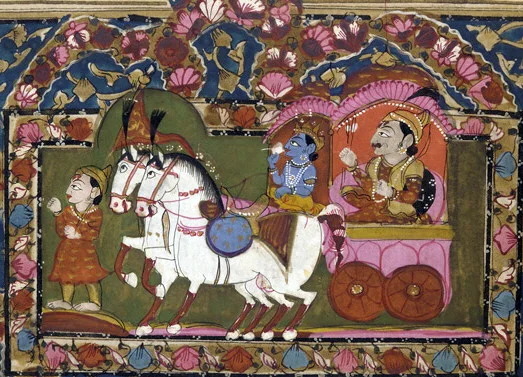
Chapter 11: The vision of the universal form
विश्वरूपदर्शनयोगः
मदनुग्रहाय परमं गुह्यमध्यात्मसंज्ञितम् । यत्त्वयोक्तं वचस्तेन मोहोऽयं विगतो मम ॥
madanugrahāya paramaṃ guhyamadhyātmasaṃjñitam | yattvayoktaṃ vacastena moho'yaṃ vigato mama ||
Arjuna said: Out of kindness to me you have spoken the highest secret, ; by your words this confusion of mine is gone.
भवाप्ययौ हि भूतानां श्रुतौ विस्तरशो मया । त्वत्तः कमलपत्राक्ष माहात्म्यमपि चाव्ययम् ॥
bhavāpyayau hi bhūtānāṃ śrutau vistaraśo mayā | tvattaḥ kamalapatrākṣa māhātmyamapi cāvyayam ||
From you, lotus-eyed one, I have heard in full of the coming and going of beings, and of your greatness that does not pass.
एवमेतद्यथात्थ त्वमात्मानं परमेश्वर । द्रष्टुमिच्छामि ते रूपमैश्वरं पुरुषोत्तम ॥
evametadyathāttha tvamātmānaṃ parameśvara | draṣṭumicchāmi te rūpamaiśvaraṃ puruṣottama ||
It is as you have said of yourself, highest . Now I want to see your form as , highest of persons.
मन्यसे यदि तच्छक्यं मया द्रष्टुमिति प्रभो । योगेश्वर ततो मे त्वं दर्शयात्मानमव्ययम् ॥
manyase yadi tacchakyaṃ mayā draṣṭumiti prabho | yogeśvara tato me tvaṃ darśayātmānamavyayam ||
If you think it can be seen by me, Lord, then, master of yoga, show me your unchanging Self.
पश्य मे पार्थ रूपाणि शतशोऽथ सहस्रशः । नानाविधानि दिव्यानि नानावर्णाकृतीनि च ॥
paśya me pārtha rūpāṇi śataśo'tha sahasraśaḥ | nānāvidhāni divyāni nānāvarṇākṛtīni ca ||
The Lord said: See my forms, , by hundreds and by thousands, of many kinds, unearthly, of many colours and shapes.
पश्यादित्यान्वसून्रुद्रानश्विनौ मरुतस्तथा । बहून्यदृष्टपूर्वाणि पश्याश्चर्याणि भारत ॥
paśyādityānvasūnrudrānaśvinau marutastathā | bahūnyadṛṣṭapūrvāṇi paśyāścaryāṇi bhārata ||
See the Adityas, the Vasus, the Rudras, the two Ashvins and the Maruts; see many wonders, , never seen before.
इहैकस्थं जगत्कृत्स्नं पश्याद्य सचराचरम् । मम देहे गुडाकेश यच्चान्यद् द्रष्टुमिच्छसि ॥
ihaikasthaṃ jagatkṛtsnaṃ paśyādya sacarācaram | mama dehe guḍākeśa yaccānyad draṣṭumicchasi ||
See here today the whole world, moving and unmoving, standing as one in my body, Gudakesha, and whatever else you want to see.
न तु मां शक्यसे द्रष्टुमनेनैव स्वचक्षुषा । दिव्यं ददामि ते चक्षुः पश्य मे योगमैश्वरम् ॥
na tu māṃ śakyase draṣṭumanenaiva svacakṣuṣā | divyaṃ dadāmi te cakṣuḥ paśya me yogamaiśvaram ||
But you cannot see me with these eyes of yours. : see my power as the Lord.
Note //
Shankara: not with the eye of nature; the celestial eye is given for this seeing.
एवमुक्त्वा ततो राजन्महायोगेश्वरो हरिः । दर्शयामास पार्थाय परमं रूपमैश्वरम् ॥
evamuktvā tato rājanmahāyogeśvaro hariḥ | darśayāmāsa pārthāya paramaṃ rūpamaiśvaram ||
Sanjaya said: Having spoken so, king, Hari, the great master of yoga, showed Partha his highest form as the Lord:
Note //
Hari is Krishna; Sanjaya is speaking to the blind king Dhritarashtra (1.1). Telang renders 11.9-11 as one sentence, given here.
अनेकवक्त्रनयनमनेकाद्भुतदर्शनम् । अनेकदिव्याभरणं दिव्यानेकोद्यतायुधम् ॥
anekavaktranayanamanekādbhutadarśanam | anekadivyābharaṇaṃ divyānekodyatāyudham ||
with many mouths and eyes, many wondrous sights, many unearthly ornaments, many unearthly weapons raised,
दिव्यमाल्याम्बरधरं दिव्यगन्धानुलेपनम् । सर्वाश्चर्यमयं देवमनन्तं विश्वतोमुखम् ॥
divyamālyāmbaradharaṃ divyagandhānulepanam | sarvāścaryamayaṃ devamanantaṃ viśvatomukham ||
wearing unearthly garlands and garments, anointed with unearthly scents, all wonder, the god without end, facing every way.
दिवि सूर्यसहस्रस्य भवेद्युगपदुत्थिता । यदि भाः सदृशी सा स्याद्भासस्तस्य महात्मनः ॥
divi sūryasahasrasya bhavedyugapadutthitā | yadi bhāḥ sadṛśī sā syādbhāsastasya mahātmanaḥ ||
were to rise at once in the sky, it might be like the light of that great one.
तत्रैकस्थं जगत्कृत्स्नं प्रविभक्तमनेकधा । अपश्यद्देवदेवस्य शरीरे पाण्डवस्तदा ॥
tatraikasthaṃ jagatkṛtsnaṃ pravibhaktamanekadhā | apaśyaddevadevasya śarīre pāṇḍavastadā ||
There, in the body of the god of gods, the son of Pandu then saw the whole world standing as one, divided in many ways.
Note //
'As one' and 'divided in many ways': the many seen in the one, and still many.
ततः स विस्मयाविष्टो हृष्टरोमा धनञ्जयः । प्रणम्य शिरसा देवं कृताञ्जलिरभाषत ॥
tataḥ sa vismayāviṣṭo hṛṣṭaromā dhanañjayaḥ | praṇamya śirasā devaṃ kṛtāñjalirabhāṣata ||
Then Dhananjaya, filled with wonder, his hair on end, bowed his head to the god and, hands joined, spoke.
पश्यामि देवांस्तव देव देहे सर्वांस्तथा भूतविशेषसङ्घान् । ब्रह्माणमीशं कमलासनस्थ- मृषींश्च सर्वानुरगांश्च दिव्यान् ॥
paśyāmi devāṃstava deva dehe sarvāṃstathā bhūtaviśeṣasaṅghān | brahmāṇamīśaṃ kamalāsanastha- mṛṣīṃśca sarvānuragāṃśca divyān ||
Arjuna said: I see in your body, God, all the gods and the hosts of every kind of being; on his lotus seat, all the seers and the serpents of heaven.
अनेकबाहूदरवक्त्रनेत्रं पश्यामि त्वां सर्वतोऽनन्तरूपम् । नान्तं न मध्यं न पुनस्तवादिं पश्यामि विश्वेश्वर विश्वरूप ॥
anekabāhūdaravaktranetraṃ paśyāmi tvāṃ sarvato'nantarūpam | nāntaṃ na madhyaṃ na punastavādiṃ paśyāmi viśveśvara viśvarūpa ||
I see you everywhere, endless in form, with many arms, bellies, mouths and eyes; no end, no middle, no beginning of you do I see, , form of all.
किरीटिनं गदिनं चक्रिणं च तेजोराशिं सर्वतो दीप्तिमन्तम् । पश्यामि त्वां दुर्निरीक्ष्यं समन्ताद् दीप्तानलार्कद्युतिमप्रमेयम् ॥
kirīṭinaṃ gadinaṃ cakriṇaṃ ca tejorāśiṃ sarvato dīptimantam | paśyāmi tvāṃ durnirīkṣyaṃ samantād dīptānalārkadyutimaprameyam ||
I see you with crown, mace and discus, a mass of light shining on every side, hard to look at, all around the blaze of fire and sun, beyond measure.
त्वमक्षरं परमं वेदितव्यं त्वमस्य विश्वस्य परं निधानम् । त्वमव्ययः शाश्वतधर्मगोप्ता सनातनस्त्वं पुरुषो मतो मे ॥
tvamakṣaraṃ paramaṃ veditavyaṃ tvamasya viśvasya paraṃ nidhānam | tvamavyayaḥ śāśvatadharmagoptā sanātanastvaṃ puruṣo mato me ||
You are the unchanging one, the highest to be known; you are the final resting place of all this; you are the undying guardian of the lasting dharma; you, I know, are the eternal person.
Note //
Nidhana, 'resting place': where all comes to rest at dissolution (Telang: 'support').
अनादिमध्यान्तमनन्तवीर्य- मनन्तबाहुं शशिसूर्यनेत्रम् । पश्यामि त्वां दीप्तहुताशवक्त्रं स्वतेजसा विश्वमिदं तपन्तम् ॥
anādimadhyāntamanantavīrya- manantabāhuṃ śaśisūryanetram | paśyāmi tvāṃ dīptahutāśavaktraṃ svatejasā viśvamidaṃ tapantam ||
I see you without beginning, middle or end, of endless power, with endless arms, the moon and sun your eyes, your mouth a blazing fire, burning this world with your own light.
द्यावापृथिव्योरिदमन्तरं हि व्याप्तं त्वयैकेन दिशश्च सर्वाः । दृष्ट्वाद्भुतं रूपमुग्रं तवेदं लोकत्रयं प्रव्यथितं महात्मन् ॥
dyāvāpṛthivyoridamantaraṃ hi vyāptaṃ tvayaikena diśaśca sarvāḥ | dṛṣṭvādbhutaṃ rūpamugraṃ tavedaṃ lokatrayaṃ pravyathitaṃ mahātman ||
The space between heaven and earth, and every direction, is filled by you alone. Seeing this wondrous, terrible form of yours, great one, the three worlds tremble.
अमी हि त्वां सुरसङ्घा विशन्ति केचिद्भीताः प्राञ्जलयो गृणन्ति । स्वस्तीत्युक्त्वा महर्षिसिद्धसङ्घाः स्तुवन्ति त्वां स्तुतिभिः पुष्कलाभिः ॥
amī hi tvāṃ surasaṅghā viśanti kecidbhītāḥ prāñjalayo gṛṇanti | svastītyuktvā maharṣisiddhasaṅghāḥ stuvanti tvāṃ stutibhiḥ puṣkalābhiḥ ||
These hosts of gods enter into you; some, afraid, praise you with joined hands; crying 'May it be well!', the hosts of great seers and perfected ones praise you with full hymns.
रुद्रादित्या वसवो ये च साध्या विश्वेऽश्विनौ मरुतश्चोष्मपाश्च । गन्धर्वयक्षासुरसिद्धसङ्घा वीक्षन्ते त्वां विस्मिताश्चैव सर्वे ॥
rudrādityā vasavo ye ca sādhyā viśve'śvinau marutaścoṣmapāśca | gandharvayakṣāsurasiddhasaṅghā vīkṣante tvāṃ vismitāścaiva sarve ||
Rudras, Adityas, Vasus and Sadhyas, Vishvas, the two Ashvins, Maruts and Ushmapas, hosts of gandharvas, yakshas, demons and perfected ones: all of them gaze at you in wonder.
रूपं महत्ते बहुवक्त्रनेत्रं महाबाहो बहुबाहूरुपादम् । बहूदरं बहुदंष्ट्राकरालं दृष्ट्वा लोकाः प्रव्यथितास्तथाहम् ॥
rūpaṃ mahatte bahuvaktranetraṃ mahābāho bahubāhūrupādam | bahūdaraṃ bahudaṃṣṭrākarālaṃ dṛṣṭvā lokāḥ pravyathitāstathāham ||
Seeing your great form, mighty-armed, with many mouths and eyes, many arms, thighs and feet, many bellies, terrible with many tusks, the worlds tremble, and so do I.
नभःस्पृशं दीप्तमनेकवर्णं व्यात्ताननं दीप्तविशालनेत्रम् । दृष्ट्वा हि त्वां प्रव्यथितान्तरात्मा धृतिं न विन्दामि शमं च विष्णो ॥
nabhaḥspṛśaṃ dīptamanekavarṇaṃ vyāttānanaṃ dīptaviśālanetram | dṛṣṭvā hi tvāṃ pravyathitāntarātmā dhṛtiṃ na vindāmi śamaṃ ca viṣṇo ||
Seeing you touching the sky, blazing, many-coloured, mouths wide open, with huge blazing eyes, I tremble within and find no steadiness and no peace, Vishnu.
दंष्ट्राकरालानि च ते मुखानि दृष्ट्वैव कालानलसन्निभानि । दिशो न जाने न लभे च शर्म प्रसीद देवेश जगन्निवास ॥
daṃṣṭrākarālāni ca te mukhāni dṛṣṭvaiva kālānalasannibhāni | diśo na jāne na labhe ca śarma prasīda deveśa jagannivāsa ||
Seeing your mouths, terrible with tusks, like the fire at the end of time, I lose all sense of direction and find no shelter. Be kind, , home of the world.
अमी च त्वां धृतराष्ट्रस्य पुत्राः सर्वे सहैवावनिपालसङ्घैः । भीष्मो द्रोणः सूतपुत्रस्तथासौ सहास्मदीयैरपि योधमुख्यैः ॥
amī ca tvāṃ dhṛtarāṣṭrasya putrāḥ sarve sahaivāvanipālasaṅghaiḥ | bhīṣmo droṇaḥ sūtaputrastathāsau sahāsmadīyairapi yodhamukhyaiḥ ||
And all these sons of Dhritarashtra, with the hosts of kings, Bhishma, Drona, and that charioteer's son, with our own chief warriors too,
Note //
The charioteer's son is Karna. Telang's sentence runs on through the first half of 11.27 and is given here.
वक्त्राणि ते त्वरमाणा विशन्ति दंष्ट्राकरालानि भयानकानि । केचिद्विलग्ना दशनान्तरेषु सन्दृश्यन्ते चूर्णितैरुत्तमाङ्गैः ॥
vaktrāṇi te tvaramāṇā viśanti daṃṣṭrākarālāni bhayānakāni | kecidvilagnā daśanāntareṣu sandṛśyante cūrṇitairuttamāṅgaiḥ ||
rush into your mouths, terrible with tusks and fearful. Some are seen caught between your teeth, their heads crushed.
यथा नदीनां बहवोऽम्बुवेगाः समुद्रमेवाभिमुखा द्रवन्ति । तथा तवामी नरलोकवीरा विशन्ति वक्त्राण्यभिविज्वलन्ति ॥
yathā nadīnāṃ bahavo'mbuvegāḥ samudramevābhimukhā dravanti | tathā tavāmī naralokavīrā viśanti vaktrāṇyabhivijvalanti ||
As the many rushing streams of rivers run toward the sea, so these heroes of the human world enter your blazing mouths.
यथा प्रदीप्तं ज्वलनं पतङ्गा विशन्ति नाशाय समृद्धवेगाः । तथैव नाशाय विशन्ति लोका- स्तवापि वक्त्राणि समृद्धवेगाः ॥
yathā pradīptaṃ jvalanaṃ pataṅgā viśanti nāśāya samṛddhavegāḥ | tathaiva nāśāya viśanti lokā- stavāpi vaktrāṇi samṛddhavegāḥ ||
As moths rush at full speed into a blazing fire, to their end, so these worlds rush at full speed into your mouths, to their end.
लेलिह्यसे ग्रसमानः समन्ताल्- लोकान्समग्रान्वदनैर्ज्वलद्भिः । तेजोभिरापूर्य जगत्समग्रं भासस्तवोग्राः प्रतपन्ति विष्णो ॥
lelihyase grasamānaḥ samantāl- lokānsamagrānvadanairjvaladbhiḥ | tejobhirāpūrya jagatsamagraṃ bhāsastavogrāḥ pratapanti viṣṇo ||
Swallowing all the worlds on every side with your flaming mouths, you lick your lips; your fierce rays fill the whole world with light and scorch it, Vishnu.
आख्याहि मे को भवानुग्ररूपो नमोऽस्तु ते देववर प्रसीद । विज्ञातुमिच्छामि भवन्तमाद्यं न हि प्रजानामि तव प्रवृत्तिम् ॥
ākhyāhi me ko bhavānugrarūpo namo'stu te devavara prasīda | vijñātumicchāmi bhavantamādyaṃ na hi prajānāmi tava pravṛttim ||
Tell me who you are, so terrible in form. I bow to you, best of gods; be kind. I want to know you, the first; I do not understand what you are doing.
कालोऽस्मि लोकक्षयकृत्प्रवृद्धो लोकान्समाहर्तुमिह प्रवृत्तः । ऋतेऽपि त्वां न भविष्यन्ति सर्वे येऽवस्थिताः प्रत्यनीकेषु योधाः ॥
kālo'smi lokakṣayakṛtpravṛddho lokānsamāhartumiha pravṛttaḥ | ṛte'pi tvāṃ na bhaviṣyanti sarve ye'vasthitāḥ pratyanīkeṣu yodhāḥ ||
The Lord said: , at work here to gather the worlds in. Even without you, all these warriors standing in the opposing ranks will cease to be.
Note //
Kala is time and death together (Telang: 'death').
तस्मात्त्वमुत्तिष्ठ यशो लभस्व जित्वा शत्रून् भुङ्क्ष्व राज्यं समृद्धम् । मयैवैते निहताः पूर्वमेव निमित्तमात्रं भव सव्यसाचिन् ॥
tasmāttvamuttiṣṭha yaśo labhasva jitvā śatrūn bhuṅkṣva rājyaṃ samṛddham | mayaivaite nihatāḥ pūrvameva nimittamātraṃ bhava savyasācin ||
So stand up, win fame; conquer your enemies and enjoy a rich kingdom. They have already been killed by me; , Savyasachin.
Note //
Nimittamatra, 'only the occasion' or 'only the instrument'. Savyasachin, 'who shoots with either hand', is Arjuna. In the site's reading: the outcome belongs to the order; Arjuna's part is the act itself, with the I-claim offered.
द्रोणं च भीष्मं च जयद्रथं च कर्णं तथान्यानपि योधवीरान् । मया हतांस्त्वं जहि मा व्यथिष्ठा युध्यस्व जेतासि रणे सपत्नान् ॥
droṇaṃ ca bhīṣmaṃ ca jayadrathaṃ ca karṇaṃ tathānyānapi yodhavīrān | mayā hatāṃstvaṃ jahi mā vyathiṣṭhā yudhyasva jetāsi raṇe sapatnān ||
Drona, Bhishma, Jayadratha, Karna and the other great warriors are already killed by me: kill them; do not tremble. Fight: you will defeat your rivals in battle.
एतच्छ्रुत्वा वचनं केशवस्य कृताञ्जलिर्वेपमानः किरीटी । नमस्कृत्वा भूय एवाह कृष्णं सगद्गदं भीतभीतः प्रणम्य ॥
etacchrutvā vacanaṃ keśavasya kṛtāñjalirvepamānaḥ kirīṭī | namaskṛtvā bhūya evāha kṛṣṇaṃ sagadgadaṃ bhītabhītaḥ praṇamya ||
Sanjaya said: Hearing these words of Keshava, the crowned one, trembling, hands joined, bowed, and, terrified, bowing again, spoke to Krishna in a choking voice.
Note //
The crowned one (Kiritin) is Arjuna.
स्थाने हृषीकेश तव प्रकीर्त्या जगत्प्रहृष्यत्यनुरज्यते च । रक्षांसि भीतानि दिशो द्रवन्ति सर्वे नमस्यन्ति च सिद्धसङ्घाः ॥
sthāne hṛṣīkeśa tava prakīrtyā jagatprahṛṣyatyanurajyate ca | rakṣāṃsi bhītāni diśo dravanti sarve namasyanti ca siddhasaṅghāḥ ||
Arjuna said: It is right, Hrishikesha, that the world rejoices and delights in praising you; the demons flee in fear in every direction, and all the hosts of the perfected bow down.
कस्माच्च ते न नमेरन्महात्मन् गरीयसे ब्रह्मणोऽप्यादिकर्त्रे । अनन्त देवेश जगन्निवास त्वमक्षरं सदसत्तत्परं यत् ॥
kasmācca te na nameranmahātman garīyase brahmaṇo'pyādikartre | ananta deveśa jagannivāsa tvamakṣaraṃ sadasattatparaṃ yat ||
And why should they not bow to you, great one, greater even than Brahma, you the first maker? Endless one, master of gods, home of the world, you are the unchanging one: being, non-being, .
Note //
Shankara: being and non-being are its adjuncts, through which it is spoken of; in truth the unchanging one is beyond both, and that is you.
त्वमादिदेवः पुरुषः पुराण- स्त्वमस्य विश्वस्य परं निधानम् । वेत्तासि वेद्यं च परं च धाम त्वया ततं विश्वमनन्तरूप ॥
tvamādidevaḥ puruṣaḥ purāṇa- stvamasya viśvasya paraṃ nidhānam | vettāsi vedyaṃ ca paraṃ ca dhāma tvayā tataṃ viśvamanantarūpa ||
You are the first god, the ancient person, the final resting place of all this; you are , and the highest abode. All this is pervaded by you, endless in form.
Note //
Shankara: the knower of all that is known, and also all that is to be known.
वायुर्यमोऽग्निर्वरुणः शशाङ्कः प्रजापतिस्त्वं प्रपितामहश्च । नमो नमस्तेऽस्तु सहस्रकृत्वः पुनश्च भूयोऽपि नमो नमस्ते ॥
vāyuryamo'gnirvaruṇaḥ śaśāṅkaḥ prajāpatistvaṃ prapitāmahaśca | namo namaste'stu sahasrakṛtvaḥ punaśca bhūyo'pi namo namaste ||
You are , Yama, , Varuna, the moon; you are Prajapati, and the great-grandfather. Homage, homage to you, a thousand times, and again and again, homage to you.
Note //
Vayu is the wind, Yama death, Agni fire, Varuna the waters. The great-grandfather is the source even of Brahma, the grandfather of beings.
नमः पुरस्तादथ पृष्ठतस्ते नमोऽस्तु ते सर्वत एव सर्व । अनन्तवीर्यामितविक्रमस्त्वं सर्वं समाप्नोषि ततोऽसि सर्वः ॥
namaḥ purastādatha pṛṣṭhataste namo'stu te sarvata eva sarva | anantavīryāmitavikramastvaṃ sarvaṃ samāpnoṣi tato'si sarvaḥ ||
Homage to you in front and behind; homage on every side, you who are all. Endless in power, boundless in might, you pervade all, and so you are all.
सखेति मत्वा प्रसभं यदुक्तं हे कृष्ण हे यादव हे सखेति । अजानता महिमानं तवेदं मया प्रमादात्प्रणयेन वापि ॥
sakheti matvā prasabhaṃ yaduktaṃ he kṛṣṇa he yādava he sakheti | ajānatā mahimānaṃ tavedaṃ mayā pramādātpraṇayena vāpi ||
Whatever I said rashly, taking you for a friend, 'Krishna! Yadava! Friend!', not knowing this greatness of yours, from carelessness or from affection;
Note //
Telang renders 11.41-42 as one sentence, given here.
यच्चावहासार्थमसत्कृतोऽसि विहारशय्यासनभोजनेषु । एकोऽथवाप्यच्युत तत्समक्षं तत्क्षामये त्वामहमप्रमेयम् ॥
yaccāvahāsārthamasatkṛto'si vihāraśayyāsanabhojaneṣu | eko'thavāpyacyuta tatsamakṣaṃ tatkṣāmaye tvāmahamaprameyam ||
whatever disrespect I showed you in jest, at play, at rest, sitting or eating, alone, Achyuta, or in front of others: for that I ask you, beyond measure, to forgive me.
पितासि लोकस्य चराचरस्य त्वमस्य पूज्यश्च गुरुर्गरीयान् । न त्वत्समोऽस्त्यभ्यधिकः कुतोऽन्यो लोकत्रयेऽप्यप्रतिमप्रभाव ॥
pitāsi lokasya carācarasya tvamasya pūjyaśca gururgarīyān | na tvatsamo'styabhyadhikaḥ kuto'nyo lokatraye'pyapratimaprabhāva ||
You are the father of the world, moving and unmoving, its teacher, to be honoured, the greatest. There is none equal to you; how could there be one greater in the three worlds, you of power without compare?
तस्मात्प्रणम्य प्रणिधाय कायं प्रसादये त्वामहमीशमीड्यम् । पितेव पुत्रस्य सखेव सख्युः प्रियः प्रियायार्हसि देव सोढुम् ॥
tasmātpraṇamya praṇidhāya kāyaṃ prasādaye tvāmahamīśamīḍyam | piteva putrasya sakheva sakhyuḥ priyaḥ priyāyārhasi deva soḍhum ||
So, bowing, laying my body down, I ask your favour, Lord to be praised. As a father with a son, a friend with a friend, a lover with the beloved, bear with me, God.
अदृष्टपूर्वं हृषितोऽस्मि दृष्ट्वा भयेन च प्रव्यथितं मनो मे । तदेव मे दर्शय देव रूपं प्रसीद देवेश जगन्निवास ॥
adṛṣṭapūrvaṃ hṛṣito'smi dṛṣṭvā bhayena ca pravyathitaṃ mano me | tadeva me darśaya deva rūpaṃ prasīda deveśa jagannivāsa ||
I am thrilled to have seen what was never seen before, and my mind is shaken with fear. Show me that other form, God. Be kind, master of gods, home of the world.
किरीटिनं गदिनं चक्रहस्तं इच्छामि त्वां द्रष्टुमहं तथैव । तेनैव रूपेण चतुर्भुजेन सहस्रबाहो भव विश्वमूर्ते ॥
kirīṭinaṃ gadinaṃ cakrahastaṃ icchāmi tvāṃ draṣṭumahaṃ tathaiva | tenaiva rūpeṇa caturbhujena sahasrabāho bhava viśvamūrte ||
I want to see you as before, with crown and mace and discus in hand. Take that four-armed form, thousand-armed one, whose body is the universe.
मया प्रसन्नेन तवार्जुनेदं रूपं परं दर्शितमात्मयोगात् । तेजोमयं विश्वमनन्तमाद्यं यन्मे त्वदन्येन न दृष्टपूर्वम् ॥
mayā prasannena tavārjunedaṃ rūpaṃ paraṃ darśitamātmayogāt | tejomayaṃ viśvamanantamādyaṃ yanme tvadanyena na dṛṣṭapūrvam ||
The Lord said: Pleased with you, Arjuna, by my own power, I have shown you this highest form, made of light, universal, endless, first, which no one but you has seen before.
न वेदयज्ञाध्ययनैर्न दानै- र्न च क्रियाभिर्न तपोभिरुग्रैः । एवंरूपः शक्य अहं नृलोके द्रष्टुं त्वदन्येन कुरुप्रवीर ॥
na vedayajñādhyayanairna dānai- rna ca kriyābhirna tapobhirugraiḥ | evaṃrūpaḥ śakya ahaṃ nṛloke draṣṭuṃ tvadanyena kurupravīra ||
, not by gifts, not by rites, not by fierce austerities, can I be seen in this form in the human world by anyone but you, hero of the Kurus.
Note //
Telang's 'O you hero among the Kauravas!' (kurupravira, end of this verse) closes his 11.47 sentence.
मा ते व्यथा मा च विमूढभावो दृष्ट्वा रूपं घोरमीदृङ्ममेदम् । व्यपेतभीः प्रीतमनाः पुनस्त्वं तदेव मे रूपमिदं प्रपश्य ॥
mā te vyathā mā ca vimūḍhabhāvo dṛṣṭvā rūpaṃ ghoramīdṛṅmamedam | vyapetabhīḥ prītamanāḥ punastvaṃ tadeva me rūpamidaṃ prapaśya ||
Do not tremble, do not be confused, seeing this terrible form of mine. Free of fear, glad in mind, see again this other form of mine.
इत्यर्जुनं वासुदेवस्तथोक्त्वा स्वकं रूपं दर्शयामास भूयः । आश्वासयामास च भीतमेनं भूत्वा पुनः सौम्यवपुर्महात्मा ॥
ityarjunaṃ vāsudevastathoktvā svakaṃ rūpaṃ darśayāmāsa bhūyaḥ | āśvāsayāmāsa ca bhītamenaṃ bhūtvā punaḥ saumyavapurmahātmā ||
Sanjaya said: Having spoken so to Arjuna, Vasudeva showed his own form again; and the great one, gentle in body once more, comforted the frightened Arjuna.
दृष्ट्वेदं मानुषं रूपं तव सौम्यं जनार्दन । इदानीमस्मि संवृत्तः सचेताः प्रकृतिं गतः ॥
dṛṣṭvedaṃ mānuṣaṃ rūpaṃ tava saumyaṃ janārdana | idānīmasmi saṃvṛttaḥ sacetāḥ prakṛtiṃ gataḥ ||
Arjuna said: Seeing this gentle human form of yours, Janardana, I am myself again; my mind has come back to its own nature.
सुदुर्दर्शमिदं रूपं दृष्टवानसि यन्मम । देवा अप्यस्य रूपस्य नित्यं दर्शनकाङ्क्षिणः ॥
sudurdarśamidaṃ rūpaṃ dṛṣṭavānasi yanmama | devā apyasya rūpasya nityaṃ darśanakāṅkṣiṇaḥ ||
The Lord said: This form of mine that you have seen is very hard to see; even the gods always long to see it.
नाहं वेदैर्न तपसा न दानेन न चेज्यया । शक्य एवंविधो द्रष्टुं दृष्टवानसि मां यथा ॥
nāhaṃ vedairna tapasā na dānena na cejyayā | śakya evaṃvidho draṣṭuṃ dṛṣṭavānasi māṃ yathā ||
Not by the Vedas, not by austerity, not by gifts, not by offering can I be seen like this, as you have seen me.
भक्त्या त्वनन्यया शक्य अहमेवंविधोऽर्जुन । ज्ञातुं द्रष्टुं च तत्त्वेन प्रवेष्टुं च परन्तप ॥
bhaktyā tvananyayā śakya ahamevaṃvidho'rjuna | jñātuṃ draṣṭuṃ ca tattvena praveṣṭuṃ ca parantapa ||
But by devotion to me alone, Arjuna, I can be known like this, and seen as I truly am, , scorcher of foes.
Note //
Shankara: known from the scriptures, seen directly, and entered, which is freedom. Undivided devotion is that in which nothing other than the Lord is found.
मत्कर्मकृन्मत्परमो मद्भक्तः सङ्गवर्जितः । निर्वैरः सर्वभूतेषु यः स मामेति पाण्डव ॥
matkarmakṛnmatparamo madbhaktaḥ saṅgavarjitaḥ | nirvairaḥ sarvabhūteṣu yaḥ sa māmeti pāṇḍava ||
One who does my work, , who is devoted to me, free of clinging, without enmity toward any being: that one comes to me, Pandava.
Note //
Shankara: 'without enmity', even toward those who do one the greatest harm.
Touch an underlined word to see the Sanskrit behind it. The lighter lines are how the tradition read the verse; the rest is the verse.
The renderings on this page are shared under CC BY-NC 4.0, in the words of Pranav Ashar.