Bhagavad Gita
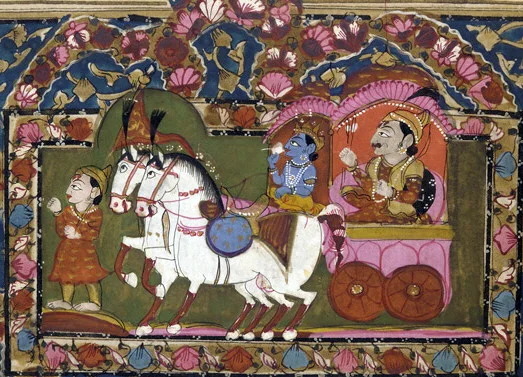
In the words of Pranav Ashar
How we renderContents
Chapter 10: The spreading forth
विभूतियोगः
भूय एव महाबाहो शृणु मे परमं वचः । यत्तेऽहं प्रीयमाणाय वक्ष्यामि हितकाम्यया ॥
bhūya eva mahābāho śṛṇu me paramaṃ vacaḥ | yatte'haṃ prīyamāṇāya vakṣyāmi hitakāmyayā ||
said: Hear again, mighty-armed, my highest word, which I tell you, who delight in it, wishing your good.
न मे विदुः सुरगणाः प्रभवं न महर्षयः । अहमादिर्हि देवानां महर्षीणां च सर्वशः ॥
na me viduḥ suragaṇāḥ prabhavaṃ na maharṣayaḥ | ahamādirhi devānāṃ maharṣīṇāṃ ca sarvaśaḥ ||
Neither the hosts of gods nor the great seers ; for I am, in every way, the source of the gods and the great seers.
यो मामजमनादिं च वेत्ति लोकमहेश्वरम् । असम्मूढः स मर्त्येषु सर्वपापैः प्रमुच्यते ॥
yo māmajamanādiṃ ca vetti lokamaheśvaram | asammūḍhaḥ sa martyeṣu sarvapāpaiḥ pramucyate ||
One who knows me as unborn, without beginning, the , is unconfused among mortals and freed from all wrong.
बुद्धिर्ज्ञानमसम्मोहः क्षमा सत्यं दमः शमः । सुखं दुःखं भवोऽभावो भयं चाभयमेव च ॥
buddhirjñānamasammohaḥ kṣamā satyaṃ damaḥ śamaḥ | sukhaṃ duḥkhaṃ bhavo'bhāvo bhayaṃ cābhayameva ca ||
Understanding, knowledge, clear-headedness, patience, truth, self-control, calm, pleasure and pain, coming to be and ceasing, fear and fearlessness,
Note //
Telang renders 10.4-5 as one sentence, given here.
अहिंसा समता तुष्टिस्तपो दानं यशोऽयशः । भवन्ति भावा भूतानां मत्त एव पृथग्विधाः ॥
ahiṃsā samatā tuṣṭistapo dānaṃ yaśo'yaśaḥ | bhavanti bhāvā bhūtānāṃ matta eva pṛthagvidhāḥ ||
not harming, evenness, contentment, austerity, giving, fame and disgrace: these many states of beings come from me alone.
महर्षयः सप्त पूर्वे चत्वारो मनवस्तथा । मद्भावा मानसा जाता येषां लोक इमाः प्रजाः ॥
maharṣayaḥ sapta pūrve catvāro manavastathā | madbhāvā mānasā jātā yeṣāṃ loka imāḥ prajāḥ ||
The seven great seers of old and the four Manus, from whom these creatures in the world descend, were born of my mind, sharing my nature.
Note //
Shankara: the seven seers are Bhrigu and the others; the four Manus are those called Savarna. Some read 'the four' as a separate group, the four sages Sanaka and the others.
एतां विभूतिं योगं च मम यो वेत्ति तत्त्वतः । सोऽविकम्पेन योगेन युज्यते नात्र संशयः ॥
etāṃ vibhūtiṃ yogaṃ ca mama yo vetti tattvataḥ | so'vikampena yogena yujyate nātra saṃśayaḥ ||
Whoever truly knows , and my power, is joined in a yoga that does not waver; of this there is no doubt.
Note //
Vibhuti, 'spreading forth': the many ways the one shows itself.
अहं सर्वस्य प्रभवो मत्तः सर्वं प्रवर्तते । इति मत्वा भजन्ते मां बुधा भावसमन्विताः ॥
ahaṃ sarvasya prabhavo mattaḥ sarvaṃ pravartate | iti matvā bhajante māṃ budhā bhāvasamanvitāḥ ||
I am the source of all; . Knowing this, the wise devote themselves to me, .
मच्चित्ता मद्गतप्राणा बोधयन्तः परस्परम् । कथयन्तश्च मां नित्यं तुष्यन्ति च रमन्ति च ॥
maccittā madgataprāṇā bodhayantaḥ parasparam | kathayantaśca māṃ nityaṃ tuṣyanti ca ramanti ca ||
Their minds on me, their lives given to me, teaching one another and always speaking of me, they are content, and they delight.
तेषां सततयुक्तानां भजतां प्रीतिपूर्वकम् । ददामि बुद्धियोगं तं येन मामुपयान्ति ते ॥
teṣāṃ satatayuktānāṃ bhajatāṃ prītipūrvakam | dadāmi buddhiyogaṃ taṃ yena māmupayānti te ||
To them, always steady, devoted to me with love, I give that yoga of understanding by which they come to me.
तेषामेवानुकम्पार्थमहमज्ञानजं तमः । नाशयाम्यात्मभावस्थो ज्ञानदीपेन भास्वता ॥
teṣāmevānukampārthamahamajñānajaṃ tamaḥ | nāśayāmyātmabhāvastho jñānadīpena bhāsvatā ||
Out of compassion for them, dwelling within their own minds, I destroy the darkness born of not-knowing .
Note //
Shankara: atmabhava is the inner mind; the lamp is discernment. The light is not brought in from outside.
परं ब्रह्म परं धाम पवित्रं परमं भवान् । पुरुषं शाश्वतं दिव्यमादिदेवमजं विभुम् ॥
paraṃ brahma paraṃ dhāma pavitraṃ paramaṃ bhavān | puruṣaṃ śāśvataṃ divyamādidevamajaṃ vibhum ||
Arjuna said: You are the highest Brahman, the highest abode, the highest purifier; the eternal, shining person, the first of the gods, unborn, all-pervading:
Note //
The second half runs on into 10.13; Telang gives it in his sentence there.
आहुस्त्वामृषयः सर्वे देवर्षिर्नारदस्तथा । असितो देवलो व्यासः स्वयं चैव ब्रवीषि मे ॥
āhustvāmṛṣayaḥ sarve devarṣirnāradastathā | asito devalo vyāsaḥ svayaṃ caiva bravīṣi me ||
so all the seers speak of you, and Narada, seer of the gods, Asita, Devala and Vyasa; and you yourself tell me so.
सर्वमेतदृतं मन्ये यन्मां वदसि केशव । न हि ते भगवन्व्यक्तिं विदुर्देवा न दानवाः ॥
sarvametadṛtaṃ manye yanmāṃ vadasi keśava | na hi te bhagavanvyaktiṃ vidurdevā na dānavāḥ ||
I take all that you tell me, Keshava, as true; for neither the gods nor the demons, Lord, know your showing forth.
स्वयमेवात्मनात्मानं वेत्थ त्वं पुरुषोत्तम । भूतभावन भूतेश देवदेव जगत्पते ॥
svayamevātmanātmānaṃ vettha tvaṃ puruṣottama | bhūtabhāvana bhūteśa devadeva jagatpate ||
, highest person, source of beings, , god of gods, master of the world.
Note //
The names in the second half begin Telang's next sentence, at 10.16. In the site's reading: the light is known by itself alone.
वक्तुमर्हस्यशेषेण दिव्या ह्यात्मविभूतयः । याभिर्विभूतिभिर्लोकानिमांस्त्वं व्याप्य तिष्ठसि ॥
vaktumarhasyaśeṣeṇa divyā hyātmavibhūtayaḥ | yābhirvibhūtibhirlokānimāṃstvaṃ vyāpya tiṣṭhasi ||
Tell me in full your own powers as God, by which you pervade these worlds and remain.
कथं विद्यामहं योगिंस्त्वां सदा परिचिन्तयन् । केषु केषु च भावेषु चिन्त्योऽसि भगवन्मया ॥
kathaṃ vidyāmahaṃ yogiṃstvāṃ sadā paricintayan | keṣu keṣu ca bhāveṣu cintyo'si bhagavanmayā ||
How shall I know you, master of yoga, always thinking of you? In what forms, Lord, am I to think of you?
विस्तरेणात्मनो योगं विभूतिं च जनार्दन । भूयः कथय तृप्तिर्हि शृण्वतो नास्ति मेऽमृतम् ॥
vistareṇātmano yogaṃ vibhūtiṃ ca janārdana | bhūyaḥ kathaya tṛptirhi śṛṇvato nāsti me'mṛtam ||
Tell me again, in full, Janardana, your power and your spreading forth; I do not have my fill of hearing this nectar.
हन्त ते कथयिष्यामि दिव्या ह्यात्मविभूतयः । प्राधान्यतः कुरुश्रेष्ठ नास्त्यन्तो विस्तरस्य मे ॥
hanta te kathayiṣyāmi divyā hyātmavibhūtayaḥ | prādhānyataḥ kuruśreṣṭha nāstyanto vistarasya me ||
The Lord said: Yes, I will tell you my powers as God, , the chief of them only; there is no end to my extent.
अहमात्मा गुडाकेश सर्वभूताशयस्थितः । अहमादिश्च मध्यं च भूतानामन्त एव च ॥
ahamātmā guḍākeśa sarvabhūtāśayasthitaḥ | ahamādiśca madhyaṃ ca bhūtānāmanta eva ca ||
I am , , ; I am the beginning, the middle and the end of beings.
Note //
Shankara: this inmost Self is what is to be meditated on; one who cannot may think of the forms that follow. Gudakesha, 'master of sleep', is Arjuna.
आदित्यानामहं विष्णुर्ज्योतिषां रविरंशुमान् । मरीचिर्मरुतामस्मि नक्षत्राणामहं शशी ॥
ādityānāmahaṃ viṣṇurjyotiṣāṃ raviraṃśumān | marīcirmarutāmasmi nakṣatrāṇāmahaṃ śaśī ||
Of the Adityas I am Vishnu; of lights, the radiant sun; of the Maruts I am Marichi; of the stars, the moon.
Note //
The Adityas are the sun-gods; the Maruts, the storm-gods.
वेदानां सामवेदोऽस्मि देवानामस्मि वासवः । इन्द्रियाणां मनश्चास्मि भूतानामस्मि चेतना ॥
vedānāṃ sāmavedo'smi devānāmasmi vāsavaḥ | indriyāṇāṃ manaścāsmi bhūtānāmasmi cetanā ||
Of the Vedas I am the Sama Veda; of the gods, Indra; of the senses I am the mind; .
Note //
Chetana, 'sentience': Shankara, the working of the understanding always present in a living body. In the site's terms, the reflected light, not awareness itself (Telang: 'consciousness').
रुद्राणां शङ्करश्चास्मि वित्तेशो यक्षरक्षसाम् । वसूनां पावकश्चास्मि मेरुः शिखरिणामहम् ॥
rudrāṇāṃ śaṅkaraścāsmi vitteśo yakṣarakṣasām | vasūnāṃ pāvakaścāsmi meruḥ śikhariṇāmaham ||
Of the Rudras I am Shankara; of yakshas and rakshasas, the god of wealth; of the Vasus I am fire; of peaks, Meru.
Note //
Shankara here is Shiva; the god of wealth is Kubera; Meru is the mountain at the centre of the world.
पुरोधसां च मुख्यं मां विद्धि पार्थ बृहस्पतिम् । सेनानीनामहं स्कन्दः सरसामस्मि सागरः ॥
purodhasāṃ ca mukhyaṃ māṃ viddhi pārtha bṛhaspatim | senānīnāmahaṃ skandaḥ sarasāmasmi sāgaraḥ ||
Of household priests, Partha, know me as the chief, Brihaspati; of generals I am Skanda; of waters, the ocean.
महर्षीणां भृगुरहं गिरामस्म्येकमक्षरम् । यज्ञानां जपयज्ञोऽस्मि स्थावराणां हिमालयः ॥
maharṣīṇāṃ bhṛgurahaṃ girāmasmyekamakṣaram | yajñānāṃ japayajño'smi sthāvarāṇāṃ himālayaḥ ||
Of the great seers I am Bhrigu; ; of offerings, the offering of quiet repetition; of things unmoving, the Himalaya.
Note //
The one syllable is Om; japa is the quiet repetition of a word used in devotion. Telang's sentence runs on into 10.26 and is given here.
अश्वत्थः सर्ववृक्षाणां देवर्षीणां च नारदः । गन्धर्वाणां चित्ररथः सिद्धानां कपिलो मुनिः ॥
aśvatthaḥ sarvavṛkṣāṇāṃ devarṣīṇāṃ ca nāradaḥ | gandharvāṇāṃ citrarathaḥ siddhānāṃ kapilo muniḥ ||
Of all trees, ; of the seers of the gods, Narada; of the gandharvas, Chitraratha; of the perfected, the sage Kapila.
Note //
The ashvattha is the revered fig (compare 15.1-3); the gandharvas are celestial musicians; Kapila is the founder of Sankhya.
उच्चैःश्रवसमश्वानां विद्धि माममृतोद्भवम् । ऐरावतं गजेन्द्राणां नराणां च नराधिपम् ॥
uccaiḥśravasamaśvānāṃ viddhi māmamṛtodbhavam | airāvataṃ gajendrāṇāṃ narāṇāṃ ca narādhipam ||
Of horses, know me as Uchchaihshravas, born of the nectar; of lordly elephants, Airavata; of men, the king.
Note //
Both came out of the churning of the ocean for the nectar of immortality.
आयुधानामहं वज्रं धेनूनामस्मि कामधुक् । प्रजनश्चास्मि कन्दर्पः सर्पाणामस्मि वासुकिः ॥
āyudhānāmahaṃ vajraṃ dhenūnāmasmi kāmadhuk | prajanaścāsmi kandarpaḥ sarpāṇāmasmi vāsukiḥ ||
Of weapons I am the thunderbolt; of cows, the wish-giving cow; I am Kandarpa, who brings forth life; of serpents I am Vasuki.
Note //
Kandarpa is love as the power of begetting.
अनन्तश्चास्मि नागानां वरुणो यादसामहम् । पितॄणामर्यमा चास्मि यमः संयमतामहम् ॥
anantaścāsmi nāgānāṃ varuṇo yādasāmaham | pitṝṇāmaryamā cāsmi yamaḥ saṃyamatāmaham ||
Of nagas I am Ananta; of water beings, Varuna; of the ancestors I am Aryaman; of those who hold in check, Yama.
प्रह्लादश्चास्मि दैत्यानां कालः कलयतामहम् । मृगाणां च मृगेन्द्रोऽहं वैनतेयश्च पक्षिणाम् ॥
prahlādaścāsmi daityānāṃ kālaḥ kalayatāmaham | mṛgāṇāṃ ca mṛgendro'haṃ vainateyaśca pakṣiṇām ||
Of the daityas I am Prahlada; of those who count, time; of beasts I am the lion; of birds, the son of Vinata.
Note //
Prahlada is the demon prince devoted to Vishnu; the son of Vinata is Garuda.
पवनः पवतामस्मि रामः शस्त्रभृतामहम् । झषाणां मकरश्चास्मि स्रोतसामस्मि जाह्नवी ॥
pavanaḥ pavatāmasmi rāmaḥ śastrabhṛtāmaham | jhaṣāṇāṃ makaraścāsmi srotasāmasmi jāhnavī ||
Of purifiers I am the wind; of those who bear arms, Rama; of sea creatures I am the makara; of rivers, the Ganges.
Note //
Pavatam, 'of those that purify' (Telang: 'that blow'). The makara is a sea creature, often taken as the crocodile.
सर्गाणामादिरन्तश्च मध्यं चैवाहमर्जुन । अध्यात्मविद्या विद्यानां वादः प्रवदतामहम् ॥
sargāṇāmādirantaśca madhyaṃ caivāhamarjuna | adhyātmavidyā vidyānāṃ vādaḥ pravadatāmaham ||
Of all that is brought forth I am the beginning, the end and the middle, Arjuna; of knowledges, the knowledge of ; .
Note //
Shankara: knowledge of the Self is chief because it brings freedom; vada is the discussion that aims at settling the truth, not at winning.
अक्षराणामकारोऽस्मि द्वन्द्वः सामासिकस्य च । अहमेवाक्षयः कालो धाताहं विश्वतोमुखः ॥
akṣarāṇāmakāro'smi dvandvaḥ sāmāsikasya ca | ahamevākṣayaḥ kālo dhātāhaṃ viśvatomukhaḥ ||
Of letters I am A; ; I alone am time that does not run out; I am the sustainer, facing every way.
Note //
A is the first letter. The dvandva compound joins equals, as in 'father-and-mother'.
मृत्युः सर्वहरश्चाहमुद्भवश्च भविष्यताम् । कीर्तिः श्रीर्वाक्च नारीणां स्मृतिर्मेधा धृतिः क्षमा ॥
mṛtyuḥ sarvaharaścāhamudbhavaśca bhaviṣyatām | kīrtiḥ śrīrvākca nārīṇāṃ smṛtirmedhā dhṛtiḥ kṣamā ||
I am death that takes all, and the birth of what is to be; of feminine powers, fame, fortune, speech, memory, intelligence, steadiness and patience.
Note //
These seven are feminine words in Sanskrit; Telang: 'among females'.
बृहत्साम तथा साम्नां गायत्री छन्दसामहम् । मासानां मार्गशीर्षोऽहमृतूनां कुसुमाकरः ॥
bṛhatsāma tathā sāmnāṃ gāyatrī chandasāmaham | māsānāṃ mārgaśīrṣo'hamṛtūnāṃ kusumākaraḥ ||
Of chants I am the Brihat-saman; of metres, the Gayatri; of months I am Margashirsha; of seasons, the flowering spring.
Note //
Margashirsha falls in November and December. Telang's sentence runs on into 10.36 and is given here.
द्यूतं छलयतामस्मि तेजस्तेजस्विनामहम् । जयोऽस्मि व्यवसायोऽस्मि सत्त्वं सत्त्ववतामहम् ॥
dyūtaṃ chalayatāmasmi tejastejasvināmaham | jayo'smi vyavasāyo'smi sattvaṃ sattvavatāmaham ||
; I am the brilliance of the brilliant; I am victory, I am resolve; I am the goodness of the good.
Note //
Even the dice: whatever excels in its kind.
वृष्णीनां वासुदेवोऽस्मि पाण्डवानां धनञ्जयः । मुनीनामप्यहं व्यासः कवीनामुशना कविः ॥
vṛṣṇīnāṃ vāsudevo'smi pāṇḍavānāṃ dhanañjayaḥ | munīnāmapyahaṃ vyāsaḥ kavīnāmuśanā kaviḥ ||
Of the Vrishnis I am Vasudeva; of the Pandavas, Dhananjaya; of sages I am Vyasa; of seers, the seer Ushanas.
Note //
Krishna names himself (Vasudeva) and Arjuna (Dhananjaya). Kavi here is a seer-poet.
दण्डो दमयतामस्मि नीतिरस्मि जिगीषताम् । मौनं चैवास्मि गुह्यानां ज्ञानं ज्ञानवतामहम् ॥
daṇḍo damayatāmasmi nītirasmi jigīṣatām | maunaṃ caivāsmi guhyānāṃ jñānaṃ jñānavatāmaham ||
Of those who hold in check I am the rod; of those who seek victory, good policy; ; of knowers, the knowledge.
यच्चापि सर्वभूतानां बीजं तदहमर्जुन । न तदस्ति विना यत्स्यान्मया भूतं चराचरम् ॥
yaccāpi sarvabhūtānāṃ bījaṃ tadahamarjuna | na tadasti vinā yatsyānmayā bhūtaṃ carācaram ||
Whatever is the seed of all beings, that I am, Arjuna. There is nothing, moving or unmoving, that could be without me.
Note //
Without me: nothing stands on its own; everything depends on the whole.
नान्तोऽस्ति मम दिव्यानां विभूतीनां परन्तप । एष तूद्देशतः प्रोक्तो विभूतेर्विस्तरो मया ॥
nānto'sti mama divyānāṃ vibhūtīnāṃ parantapa | eṣa tūddeśataḥ prokto vibhūtervistaro mayā ||
There is no end to my powers as God, scorcher of foes; this account of their extent I have given only as a sample.
यद्यद्विभूतिमत्सत्त्वं श्रीमदूर्जितमेव वा । तत्तदेवावगच्छ त्वं मम तेजोंऽशसम्भवम् ॥
yadyadvibhūtimatsattvaṃ śrīmadūrjitameva vā | tattadevāvagaccha tvaṃ mama tejoṃ'śasambhavam ||
Whatever being has power, beauty or strength, know that it is born of .
अथवा बहुनैतेन किं ज्ञातेन तवार्जुन । विष्टभ्याहमिदं कृत्स्नमेकांशेन स्थितो जगत् ॥
athavā bahunaitena kiṃ jñātena tavārjuna | viṣṭabhyāhamidaṃ kṛtsnamekāṃśena sthito jagat ||
But what use to you, Arjuna, is knowing all this in detail? I stand, holding this whole world .
Note //
Shankara cites 'all beings are a quarter of him' (Taittiriya Aranyaka 3.12; also Rig Veda 10.90.3).
Touch an underlined word to see the Sanskrit behind it. The lighter lines are how the tradition read the verse; the rest is the verse.
The renderings on this page are shared under CC BY-NC 4.0, in the words of Pranav Ashar.