Mudgala Upanishad
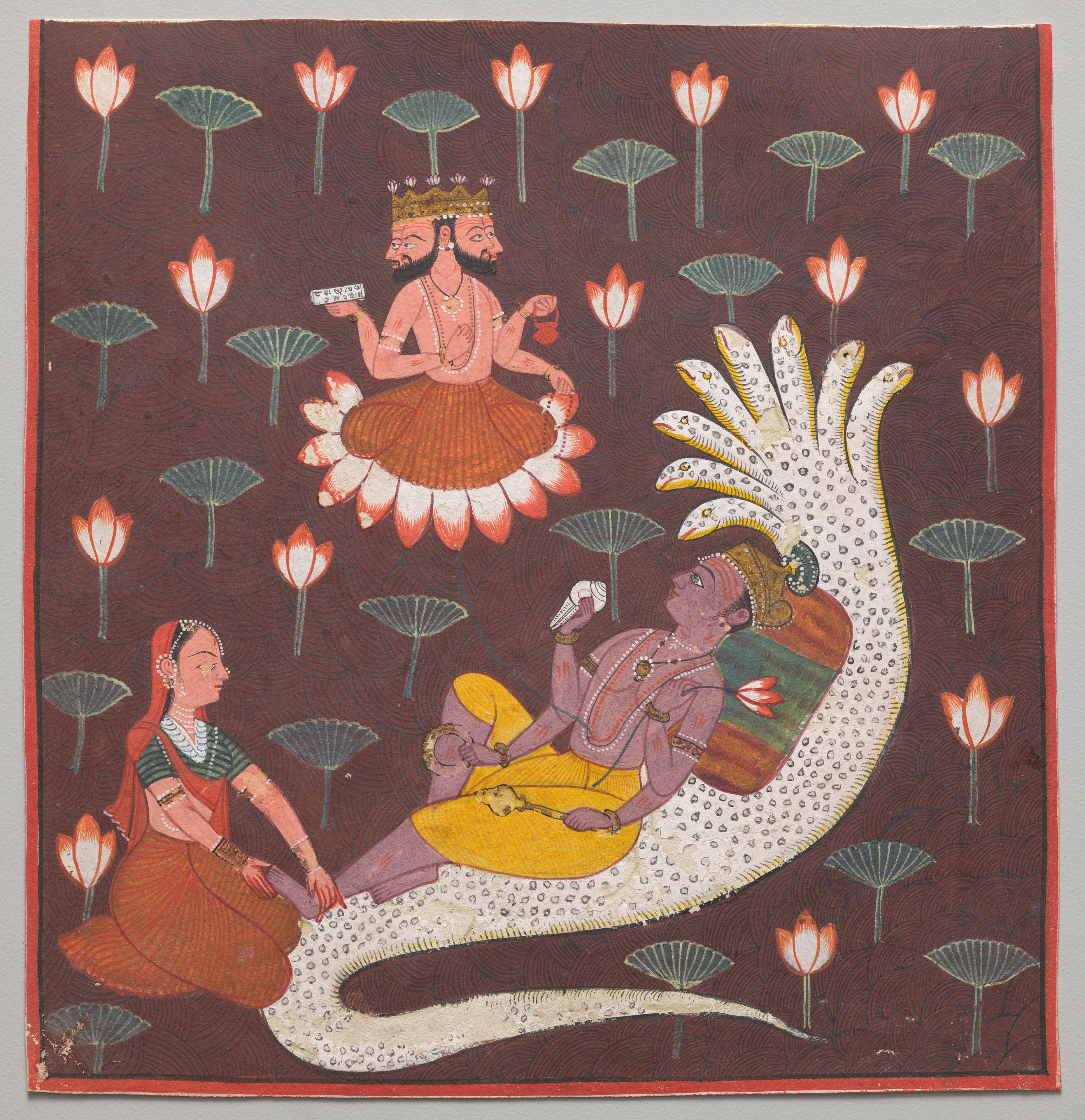
In the words of Pranav Ashar
How we renderThe heart of the Mudgala
In brief
The Upanishad reads the Purusha Sukta as a teaching about Vishnu: 'a thousand' means endless. One God, unborn, is born in many ways, and each worships him under its own name: as fire, as poison, as maya; as he is worshipped, so he becomes. So one should hold: 'I am the highest Brahman, in the form of the Person.' That Brahman is beyond the six confusions of family, clan, birth, caste, stage and form; by joining with these, the highest Person becomes the individual, and nothing else.
- The Person of a thousand heads
- Beyond name and form
- One God, many names
- As one worships, one becomes
- The Person becomes the individual
ॐ पुरुषसूक्तार्थनिर्णयं व्याख्यास्यामः । पुरुषसंहितायां पुरुषसूक्तार्थः संग्रहेण प्रोच्यते । सहस्रशीर्षेत्यत्र सशब्दोऽनन्तवाचकः । अनन्तयोजनं प्राह दशाङ्गुलवचस्तथा ॥ १॥
oṃ puruṣasūktārthanirṇayaṃ vyākhyāsyāmaḥ | puruṣasaṃhitāyāṃ puruṣasūktārthaḥ saṃgraheṇa procyate | sahasraśīrṣetyatra saśabdo'nantavācakaḥ | anantayojanaṃ prāha daśāṅgulavacastathā || 1||
Om. We shall explain the meaning of the Purusha Sukta. In the Purusha Samhita its meaning is given in brief. In 'a thousand heads', the word 'thousand' means . And the words 'ten fingers' beyond mean leagues.
Note //
The opening. The Purusha Sukta begins: 'The Person has a thousand heads, a thousand eyes, a thousand feet; covering the earth on all sides, he stood ten fingers beyond it.' The Upanishad reads 'thousand' as 'endless' and 'ten fingers' as 'endless leagues': the numbers are not measures but signs of what has no measure. Editions agree.
तस्य प्रथमया विष्णोर्देशतो व्याप्तिरीरिता । द्वितीयया चास्य विष्णोः कालतो व्याप्तिरुच्यते ॥ २॥
tasya prathamayā viṣṇordeśato vyāptirīritā | dvitīyayā cāsya viṣṇoḥ kālato vyāptirucyate || 2||
By the first verse of the hymn Vishnu's pervading of space is told; by the second, his pervading of time.
Note //
The first verse of the Purusha Sukta has the Person cover the earth on every side; the second says 'the Person is all this, what has been and what will be'. So the hymn is read as saying that nothing in space and nothing in time is outside him. Editions agree.
विष्णोर्मोक्षप्रदत्वं च कथितं तु तृतीयया । एतावानिति मन्त्रेण वैभवं कथितं हरेः ॥ ३॥
viṣṇormokṣapradatvaṃ ca kathitaṃ tu tṛtīyayā | etāvāniti mantreṇa vaibhavaṃ kathitaṃ hareḥ || 3||
By the third, that Vishnu gives freedom; by the verse 'So great', the greatness of Hari.
Note //
The 'third' is probably the line of the hymn's second verse where the Person is 'lord of deathlessness'; the count of verses here is not exact. 'So great is his greatness' opens the hymn's third verse. Hari is a name of Vishnu. Editions agree.
एतेनैव च मन्त्रेण चतुर्व्यूहो विभाषितः । त्रिपादित्यनया प्रोक्तमनिरुद्धस्य वैभवम् ॥ ४॥
etenaiva ca mantreṇa caturvyūho vibhāṣitaḥ | tripādityanayā proktamaniruddhasya vaibhavam || 4||
By that same verse his fourfold emanation is set out; by the verse 'Three quarters' the greatness of Aniruddha.
Note //
'A quarter of him is all beings; three quarters are the deathless in heaven' (Purusha Sukta 3-4). The Vaishnava reading takes the four quarters as the four emanations (vyūha) of Vasudeva, of which Aniruddha is the one turned towards the world. Editions agree.
तस्माद्विराडित्यनया पादनारायणाद्धरेः । प्रकृतेः पुरुषस्यापि समुत्पत्तिः प्रदर्शिता ॥ ५॥
tasmādvirāḍityanayā pādanārāyaṇāddhareḥ | prakṛteḥ puruṣasyāpi samutpattiḥ pradarśitā || 5||
By the verse 'From him Viraj was born' it is shown that nature and the person both arise from Hari, from Narayana in his one quarter.
Note //
'Nature and the person' (prakṛti, puruṣa): matter and the conscious individual, the two principles of Sankhya, here both coming from the one quarter of Narayana that faces the world. Editions agree.
यत्पुरुषेणेत्यनया सृष्टियज्ञः समीरितः । सप्तास्यासन्परिधयः समिधश्च समीरिताः ॥ ६॥
yatpuruṣeṇetyanayā sṛṣṭiyajñaḥ samīritaḥ | saptāsyāsanparidhayaḥ samidhaśca samīritāḥ || 6||
By the verse 'When with the Person as offering' the sacrifice of creation is told; by 'Seven were its enclosing sticks' its enclosing sticks and its fuel.
Note //
In the hymn the gods make a sacrifice with the Person himself as the offering, and the world comes from it. 'Enclosing sticks' (paridhi): the sticks laid round the sacred fire. Editions agree.
तं यज्ञमिति मन्त्रेण सृष्टियज्ञः समीरितः । अनेनैव च मन्त्रेण मोक्षश्च समुदीरितः ॥ ७॥
taṃ yajñamiti mantreṇa sṛṣṭiyajñaḥ samīritaḥ | anenaiva ca mantreṇa mokṣaśca samudīritaḥ || 7||
By the verse 'That sacrifice' the sacrifice of creation is told, and by that same verse freedom as well.
Note //
One verse is read two ways: as the making of the world, and as the way out of it. The text returns to this in section 2 (2.e), where knowing the sacrifice of creation is itself the way to freedom. Editions agree.
तस्मादिति च मन्त्रेण जगत्सृष्टिः समीरिता । वेदाहमिति मन्त्राभ्यां वैभवं कथितं हरेः ॥ ८॥
tasmāditi ca mantreṇa jagatsṛṣṭiḥ samīritā | vedāhamiti mantrābhyāṃ vaibhavaṃ kathitaṃ hareḥ || 8||
By the verses beginning 'From that' the making of the world is told; by the two verses 'I know' the greatness of Hari.
Note //
'I know this great Person, the colour of the sun, beyond darkness; knowing him one passes beyond death; there is no other way to go' (the Uttara Narayana, which follows the Purusha Sukta; also Shvetashvatara 3.8). Editions agree.
यज्ञेनेत्युपसंहारः सृष्टेर्मोक्षस्य चेरितः । य एवमेतज्जानाति स हि मुक्तो भवेदिति ॥ ९॥ १॥
yajñenetyupasaṃhāraḥ sṛṣṭermokṣasya ceritaḥ | ya evametajjānāti sa hi mukto bhavediti || 9|| 1||
By the verse 'With sacrifice' both creation and freedom are brought to a close. Whoever knows this is free.
Note //
'With sacrifice the gods sacrificed to sacrifice' is the hymn's last verse. The section ends, as the Upanishad will, with knowing as the way to freedom. End of section 1. Editions agree.
अथ तथा मुद्गलोपनिषदि पुरुषसूक्तस्य वैभवं विस्तरेण प्रतिपादितम् । वासुदेव इन्द्राय भगवज्ज्ञानमुपदिश्य पुनरपि सूक्ष्मश्रवणाय प्रणतायेन्द्राय परमरहस्यभूतं पुरुषसूक्ताभ्यां खण्डद्वयाभ्यामुपादिशत् । द्वौ खण्डावुच्येते ।
atha tathā mudgalopaniṣadi puruṣasūktasya vaibhavaṃ vistareṇa pratipāditam | vāsudeva indrāya bhagavajjñānamupadiśya punarapi sūkṣmaśravaṇāya praṇatāyendrāya paramarahasyabhūtaṃ puruṣasūktābhyāṃ khaṇḍadvayābhyāmupādiśat | dvau khaṇḍāvucyete |
Now in the Mudgala Upanishad the greatness of the Purusha Sukta is set out at length. Vasudeva taught Indra the knowledge of the Lord. Then, when Indra bowed again and asked to hear what is subtler, he taught him the highest secret from the Purusha Sukta, in two parts. The two parts are now told.
Note //
Section 2 begins. Vasudeva (Krishna, Vishnu) is the teacher and Indra the student, as in the Vasudeva Upanishad. 'In two parts' (khaṇḍadvaya): the two parts that follow, the Person's taking on of form and the sacrifice of creation. Editions agree.
योऽयमुक्तः स पुरुषो नामरूपज्ञानागोचरं संसारिणामतिदुर्ज्ञेयं विषयं विहाय क्लेशादिभिः संक्लिष्टदेवादिजिहीर्षया सहस्रकलावयवकल्याणं दृष्टमात्रेण मोक्षदं वेषमाददे । तेन वेषेण भूम्यादिलोकं व्याप्यानन्तयोजनमत्यतिष्ठत् ।
yo'yamuktaḥ sa puruṣo nāmarūpajñānāgocaraṃ saṃsāriṇāmatidurjñeyaṃ viṣayaṃ vihāya kleśādibhiḥ saṃkliṣṭadevādijihīrṣayā sahasrakalāvayavakalyāṇaṃ dṛṣṭamātreṇa mokṣadaṃ veṣamādade | tena veṣeṇa bhūmyādilokaṃ vyāpyānantayojanamatyatiṣṭhat |
This Person who has been spoken of, leaving his own realm, beyond the reach of name, form and knowing, very hard for those in the round of becoming to know, wishing to lift the gods and others who were worn down by suffering, took on a form, blessed, of a thousand parts, which frees one at a mere glance. In that form he pervaded the earth and the other worlds and stood beyond them by leagues.
Note //
Section 2, first part (numbered 2 on the key-verses page). The Person in himself is 'beyond the reach of name, form and knowing'; the form of the hymn, with its thousand heads, is one he takes on for the sake of others. This is the same teaching as Ramatapaniya P1.7: form is assumed for those who need it. Editions: 'yo 'yam uktaḥ' (Adyar collection) over 'yo 'ya muktaḥ' (sanskritdocuments.org); 'veṣam' (sanskritdocuments.org) corrects 'yeṣam' in the Adyar collection.
पुरुषो नारायणो भूतं भव्यं भविष्यच्चासीत् । स च सर्वस्मान्महिम्नो ज्यायान् । तस्मान्न कोऽपि ज्यायान् । महापुरुष आत्मानं चतुर्धा कृत्वा त्रिपादेन परमे व्योम्नि चासीत् । इतरेण चतुर्थेनानिरुद्धनारायणेन विश्वान्यासन् ।
puruṣo nārāyaṇo bhūtaṃ bhavyaṃ bhaviṣyaccāsīt | sa ca sarvasmānmahimno jyāyān | tasmānna ko'pi jyāyān | mahāpuruṣa ātmānaṃ caturdhā kṛtvā tripādena parame vyomni cāsīt | itareṇa caturthenāniruddhanārāyaṇena viśvānyāsan |
The Person, Narayana, was what has been, what is, and what will be. He is greater than all this greatness; no one is greater than he. The great Person made himself fourfold. With three quarters he stayed in the highest space; by the other, the fourth, Aniruddha Narayana, all the worlds came to be.
Note //
The prose retells Purusha Sukta 2-4. 'Greater than all this greatness': the world is his greatness, and he is more than it; the three quarters 'in the highest space' are what is never touched by becoming the world. Editions: the Adyar collection has 'sa eṣa sarveṣāṃ mokṣadaś cāsīt' ('he was the giver of freedom to all') in place of 'sa ca sarvasmān mahimno jyāyān', and its copy breaks off at this point, resuming only near the end of section 4; sanskritdocuments.org and the Deccan College text agree, and are followed.
स च पादनारायणो जगत्स्रष्टुं प्रकृतिमजनयत् । स समृद्धकायः सन्सृष्टिकर्म न जज्ञिवान् । सोऽनिरुद्धनारायणस्तस्मै सृष्टिमुपादिशत् । ब्रह्मंस्तवेन्द्रियाणि याजकानि ध्यात्वा कोशभूतं दृढं ग्रन्थिकलेवरं हविर्ध्यात्वा मां हविर्भुजं ध्यात्वा वसन्तकालमाज्यं ध्यात्वा ग्रीष्ममिध्मं ध्यात्वा शरदृतुं रसं ध्यात्वैवमग्नौ हुत्वाङ्गस्पर्शात्कलेवरो वज्रं हीष्यते ।
sa ca pādanārāyaṇo jagatsraṣṭuṃ prakṛtimajanayat | sa samṛddhakāyaḥ sansṛṣṭikarma na jajñivān | so'niruddhanārāyaṇastasmai sṛṣṭimupādiśat | brahmaṃstavendriyāṇi yājakāni dhyātvā kośabhūtaṃ dṛḍhaṃ granthikalevaraṃ havirdhyātvā māṃ havirbhujaṃ dhyātvā vasantakālamājyaṃ dhyātvā grīṣmamidhmaṃ dhyātvā śaradṛtuṃ rasaṃ dhyātvaivamagnau hutvāṅgasparśātkalevaro vajraṃ hīṣyate |
That Narayana of one quarter, to make the world, brought forth nature. The one who was born of it, full-grown in body, did not know the work of making. So Aniruddha Narayana taught him how to make: Brahma, think of your senses as the priests; think of your body, firm, knotted, a sheath, as the offering; think of me as the one who eats the offering; think of spring as the melted butter, summer as the fuel, autumn as the sacred drink. When you have offered in the fire in this way, at the touch of my body your body will become as strong as a diamond.
Note //
The second part: the sacrifice of creation (Purusha Sukta 6, 'spring was its butter, summer its fuel, autumn its offering'), taught to Brahma as an inward offering of his own body and senses into the Lord. 'The one who was born of it' supplies the subject, which the text leaves out; it is Brahma, addressed in the next sentence. The last words ('kalevaro vajraṃ hīṣyate') are corrupt in every copy; 'will become as strong as a diamond' (vajra) is a conjectural reading of the sense. Interpretive; pending review.
ततः स्वकार्यान्सर्वप्राणिजीवान्सृष्ट्वा पश्वाद्याः प्रादुर्भविष्यन्ति । ततः स्थावरजङ्गमात्मकं जगद्भविष्यति । एतेन जीवात्मनोर्योगेन मोक्षप्रकारश्च कथित इत्यनुसन्धेयम् । य इमं सृष्टियज्ञं जानाति मोक्षप्रकारं च सर्वमायुरेति ॥ २॥
tataḥ svakāryānsarvaprāṇijīvānsṛṣṭvā paśvādyāḥ prādurbhaviṣyanti | tataḥ sthāvarajaṅgamātmakaṃ jagadbhaviṣyati | etena jīvātmanoryogena mokṣaprakāraśca kathita ityanusandheyam | ya imaṃ sṛṣṭiyajñaṃ jānāti mokṣaprakāraṃ ca sarvamāyureti || 2||
Then, when you have made all living beings, your own work, beasts and the rest will appear; then the world of what stands and what moves will come to be. Understand this: by this joining of and the Self, the way to freedom is also told. Whoever knows this sacrifice of creation and the way to freedom lives out his full life.
Note //
The sacrifice that makes the world, read inwardly, is also the way out: the individual offers body and senses into the Lord and finds itself joined with the Self (jīvātmanor yoga, 'joining of the individual and the Self'). This is the double reading announced in 1.7. End of section 2. Editions agree.
एको देवो बहुधा निविष्ट अजायमानो बहुधा विजायते । तमेतमग्निरित्यध्वर्यव उपासते । यजुरित्येष हीदं सर्वं युनक्ति । सामेति छन्दोगाः । एतस्मिन्हीदं सर्वं प्रतिष्ठितम् । विषमिति सर्पाः । सर्प इति सर्पविदः । ऊर्गिति देवाः । रयिरिति मनुष्याः । मायेत्यसुराः । स्वधेति पितरः । देवजन इति देवजनविदः । रूपमिति गन्धर्वाः । गन्धर्व इति अप्सरसः । तं यथायथोपासते तथैव भवति । तस्माद्ब्राह्मणः पुरुषरूपं परं ब्रह्मैवाहमिति भावयेत् । तद्रूपो भवति । य एवं वेद ॥ ३॥
eko devo bahudhā niviṣṭa ajāyamāno bahudhā vijāyate | tametamagnirityadhvaryava upāsate | yajurityeṣa hīdaṃ sarvaṃ yunakti | sāmeti chandogāḥ | etasminhīdaṃ sarvaṃ pratiṣṭhitam | viṣamiti sarpāḥ | sarpa iti sarpavidaḥ | ūrgiti devāḥ | rayiriti manuṣyāḥ | māyetyasurāḥ | svadheti pitaraḥ | devajana iti devajanavidaḥ | rūpamiti gandharvāḥ | gandharva iti apsarasaḥ | taṃ yathāyathopāsate tathaiva bhavati | tasmādbrāhmaṇaḥ puruṣarūpaṃ paraṃ brahmaivāhamiti bhāvayet | tadrūpo bhavati | ya evaṃ veda || 3||
One God, entered into many, unborn, is born in many ways. The priests of the rite worship him as fire; as the sacrificial formula, for he yokes all this; the singers, as the chant, for on him all this rests. Serpents worship him as poison; those who know serpents, as the serpent. The gods, as strength; people, as wealth; the asuras, as maya; the ancestors, as their food; those who know the divine folk, as the divine folk; the gandharvas, as beauty; the apsaras, as the gandharva. As each worships him, so he becomes. So let the Brahmin hold: 'I am the highest Brahman, in the form of the Person.' He becomes that, whoever knows this.
Note //
Section 3. The list is adapted from Shatapatha Brahmana 10.5.2.20. 'As each worships him, so he becomes' (yathā yathopāsate tathaiva bhavati): the one God appears to each according to how each approaches him. The conclusion is not 'worship him in the right way' but 'know yourself as him'. Editions: sanskritdocuments.org and the Deccan College text agree word for word (the Deccan College text has the same transcription error 'chhandogāḥ'); the Adyar collection's copy has a gap here.
तद्ब्रह्म तापत्रयातीतं षट्कोशविनिर्मुक्तं षडूर्मिवर्जितं पञ्चकोशातीतं षड्भावविकारशून्यमेवमादिसर्वविलक्षणं भवति ।
tadbrahma tāpatrayātītaṃ ṣaṭkośavinirmuktaṃ ṣaḍūrmivarjitaṃ pañcakośātītaṃ ṣaḍbhāvavikāraśūnyamevamādisarvavilakṣaṇaṃ bhavati |
That Brahman is beyond the three afflictions, free of the six coverings, without the six waves, beyond the five sheaths, empty of the six changes: in this way and every way, unlike anything at all.
Note //
The opening of section 4, which then names each list: the three afflictions are those from oneself, from other beings and from the gods (also the triads of doer, deed and result, knower, knowing and known, enjoyer, enjoying and enjoyed); the six coverings are skin, flesh, blood, bone, sinew and marrow; the six waves are hunger, thirst, grief, delusion, old age and death; the five sheaths are those of food, breath, mind, understanding and bliss (Taittiriya 2); the six changes are being born, existing, growing, changing, declining and perishing. Editions agree.
तापत्रयं त्वाध्यात्मिकाधिभौतिकाधिदैविकं कर्तृकर्मकार्यज्ञातृज्ञानज्ञेयभोक्तृभोगभोग्यमिति त्रिविधम् । त्वङ्मांसशोणितास्थिस्नायुमज्जाः षट्कोशाः । कामक्रोधलोभमोहमदमात्सर्यमित्यरिषड्वर्गः । अन्नमयप्राणमयमनोमयविज्ञानमयानन्दमया इति पञ्चकोशाः । प्रियात्मजननवर्धनपरिणामक्षयनाशाः षड्भावाः । अशनायापिपासाशोकमोहजरामरणानीति षडूर्मयः ।
tāpatrayaṃ tvādhyātmikādhibhautikādhidaivikaṃ kartṛkarmakāryajñātṛjñānajñeyabhoktṛbhogabhogyamiti trividham | tvaṅmāṃsaśoṇitāsthisnāyumajjāḥ ṣaṭkośāḥ | kāmakrodhalobhamohamadamātsaryamityariṣaḍvargaḥ | annamayaprāṇamayamanomayavijñānamayānandamayā iti pañcakośāḥ | priyātmajananavardhanapariṇāmakṣayanāśāḥ ṣaḍbhāvāḥ | aśanāyāpipāsāśokamohajarāmaraṇānīti ṣaḍūrmayaḥ |
The three afflictions are those from oneself, from other beings, and from the powers above; and they are threefold again: doer, deed and result; knower, knowing and known; enjoyer, enjoying and enjoyed. Skin, flesh, blood, bone, sinew and marrow are the six coverings. Desire, anger, greed, delusion, pride and envy are the six enemies. The sheaths made of food, of breath, of mind, of understanding and of bliss are the five sheaths. Coming to be, being born, growing, changing, waning and perishing are the six changes. Hunger, thirst, grief, delusion, old age and death are the six waves.
Note //
The lists of 4.a explained. The six enemies are not named in 4.a but are added here. The first of the six changes is written 'priyātma' in every copy, which does not fit the usual list (is, is born, grows, changes, wanes, perishes); 'coming to be' follows the usual list and is a conjecture. The six coverings are the body's tissues; the five sheaths are those of Taittiriya 2. Editions agree.
कुलगोत्रजातिवर्णाश्रमरूपाणि षड् भ्रमाः । एतद्योगेन परमपुरुषो जीवो भवति नान्यः ।
kulagotrajātivarṇāśramarūpāṇi ṣaḍ bhramāḥ | etadyogena paramapuruṣo jīvo bhavati nānyaḥ |
Family, clan, birth, caste, stage of life and form: these are the six . By joining with these, the highest Person becomes , and nothing else.
Note //
The last list of section 4. 'Confusions' (bhrama) are taken-for-true appearances: the markers of social identity are named as what makes the highest Person look like a particular individual. 'And nothing else' (nānyaḥ): the individual is not another being but the highest Person, joined to these. Editions agree.
य एतदुपनिषदं नित्यमधीते सोऽग्निपूतो भवति । स वायुपूतो भवति । स आदित्यपूतो भवति । अरोगी भवति । श्रीमांश्च भवति । पुत्रपौत्रादिभिः समृद्धो भवति । विद्वांश्च भवति । महापातकात्पूतो भवति । सुरापानात्पूतो भवति । अगम्यागमनात्पूतो भवति । मातृगमनात्पूतो भवति । दुहितृस्नुषाभिगमनात्पूतो भवति । स्वर्णस्तेयात्पूतो भवति । वेदिजन्महानात्पूतो भवति । गुरोरशुश्रूषणात्पूतो भवति । अयाज्ययाजनात्पूतो भवति । अभक्ष्यभक्षणात्पूतो भवति । उग्रप्रतिग्रहात्पूतो भवति । परदारगमनात्पूतो भवति । कामक्रोधलोभमोहेर्ष्यादिभिरबाधितो भवति । सर्वेभ्यः पापेभ्यो मुक्तो भवति । इह जन्मनि पुरुषो भवति ।
ya etadupaniṣadaṃ nityamadhīte so'gnipūto bhavati | sa vāyupūto bhavati | sa ādityapūto bhavati | arogī bhavati | śrīmāṃśca bhavati | putrapautrādibhiḥ samṛddho bhavati | vidvāṃśca bhavati | mahāpātakātpūto bhavati | surāpānātpūto bhavati | agamyāgamanātpūto bhavati | mātṛgamanātpūto bhavati | duhitṛsnuṣābhigamanātpūto bhavati | svarṇasteyātpūto bhavati | vedijanmahānātpūto bhavati | guroraśuśrūṣaṇātpūto bhavati | ayājyayājanātpūto bhavati | abhakṣyabhakṣaṇātpūto bhavati | ugrapratigrahātpūto bhavati | paradāragamanātpūto bhavati | kāmakrodhalobhamoherṣyādibhirabādhito bhavati | sarvebhyaḥ pāpebhyo mukto bhavati | iha janmani puruṣo bhavati |
Whoever studies this Upanishad every day is made pure by fire, made pure by wind, made pure by the sun. He is free of illness, and prosperous, rich in children and grandchildren, and learned. He is made pure of the great wrongs: of drinking liquor, of going to those he must not go to, to his mother, to his daughter or daughter-in-law; of stealing gold; of abandoning the Veda he was born to; of not serving his teacher; of sacrificing for those unfit for it; of eating what must not be eaten; of taking gifts from the cruel; of going to another's wife. Desire, anger, greed, delusion, envy and the rest do not trouble him. He is freed from every wrong. In this very life he becomes the Person.
Note //
The customary praise of study. The last line is the point: 'he becomes the Person' (puruṣo bhavati) in this life, not after it, which matches the teaching of 3 and 4.c. 'Abandoning the Veda he was born to' (vedijanmahāna) is a doubtful word and a tentative rendering. Editions: here the Adyar collection's copy resumes (from 'paradāragamanāt'); from this point all three agree.
तस्मादेतत्पुरुषसूक्तार्थमतिरहस्यं राजगुह्यं देवगुह्यं गुह्यादपि गुह्यतरं नादीक्षितायोपदिशेत् । नानूचानाय । नायज्ञशीलाय । नावैष्णवाय । नायोगिने । न बहुभाषिणे । नाप्रियवादिने । नासंवत्सरवेदिने । नातुष्टाय । नानधीतवेदायोपदिशेत् ।
tasmādetatpuruṣasūktārthamatirahasyaṃ rājaguhyaṃ devaguhyaṃ guhyādapi guhyataraṃ nādīkṣitāyopadiśet | nānūcānāya | nāyajñaśīlāya | nāvaiṣṇavāya | nāyogine | na bahubhāṣiṇe | nāpriyavādine | nāsaṃvatsaravedine | nātuṣṭāya | nānadhītavedāyopadiśet |
So this meaning of the Purusha Sukta, most secret, the secret of kings, the secret of the gods, more hidden than the hidden, should not be taught to one not initiated; not to one who has not studied, who does not sacrifice, who is not devoted to Vishnu, who does not practise yoga; not to one who talks too much, or speaks unkindly; not to one who has not stayed a year, who is not content, or who has not learnt the Veda.
Note //
The usual restriction on teaching. 'Not stayed a year' (asaṃvatsaravedin): one who has not lived with the teacher for a year. Editions agree.
गुरुरप्येवंविच्छुचौ देशे पुण्यनक्षत्रे प्राणानायम्य पुरुषं ध्यायन्नुपसन्नाय शिष्याय दक्षिणकर्णे पुरुषसूक्तार्थमुपदिशेद्विद्वान् । न बहुशो वदेत् । यातयामो भवति । असकृत्कर्णमुपदिशेत् । एतत्कुर्वाणोऽध्येताध्यापकश्च इह जन्मनि पुरुषो भवतीत्युपनिषत् ॥
gururapyevaṃvicchucau deśe puṇyanakṣatre prāṇānāyamya puruṣaṃ dhyāyannupasannāya śiṣyāya dakṣiṇakarṇe puruṣasūktārthamupadiśedvidvān | na bahuśo vadet | yātayāmo bhavati | asakṛtkarṇamupadiśet | etatkurvāṇo'dhyetādhyāpakaśca iha janmani puruṣo bhavatītyupaniṣat ||
And the teacher who knows this, in a clean place, under an auspicious star, holding his breath and meditating on the Person, should teach the meaning of the Purusha Sukta into the right ear of the student who has come to him. He should not speak it to many; it grows stale. He should say it into the ear again and again. Doing this, both the one who studies and the one who teaches become the Person in this very life. This is the Upanishad.
Note //
'Not to many' (na bahuśo): the words could also mean 'not too much', but 'again and again' in the next sentence suggests the sense is: to few, but repeatedly. Interpretive. Editions agree.
No public-domain English translation exists for this text; the Sanskrit is shown.
The renderings on this page are shared under CC BY-NC 4.0, in the words of Pranav Ashar.