Bahvricha Upanishad
In the words of Pranav Ashar
How we renderThe heart of the Bahvricha
In brief
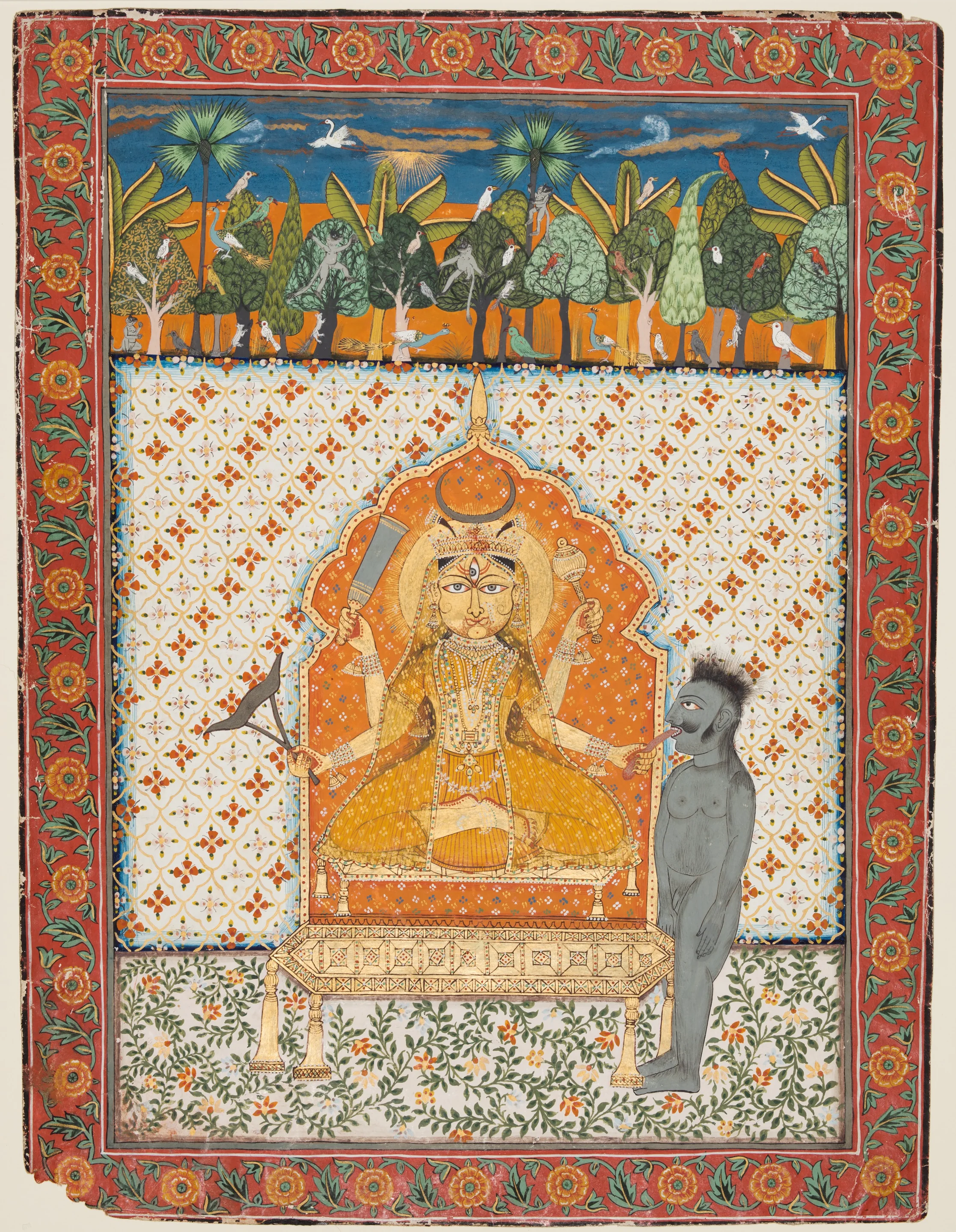
In the beginning the Goddess alone was. She brought forth the world-egg, and from her came Brahma, Vishnu, Rudra and every living thing. As Mahatripurasundari she pervades the three states and the three bodies and is the inward consciousness, lighting everything within and without. She alone is the Self; whatever is other than her is not true and not the Self. What is, is she as pure being; what shines, is she as pure light; what is loved, is she as joy. 'You and I, the whole universe, all the gods': all is she, the one non-dual Brahman.
- The Goddess as the Self
- Being, light and joy as her form
- Inward consciousness in the three bodies
- The great sayings as mantra
- What remains when name and form are let go
हरिः ॐ । देवी ह्येकाग्र एवासीत् । सैव जगदण्डमसृजत् । कामकलेति विज्ञायते । शृङ्गारकलेति विज्ञायते ॥ १ ॥
hariḥ oṃ | devī hyekāgra evāsīt | saiva jagadaṇḍamasṛjat | kāmakaleti vijñāyate | śṛṅgārakaleti vijñāyate || 1 ||
Hari Om. In the beginning the Goddess alone was. She brought forth the egg of the world. She is known as the art of desire; she is known as the art of love.
Note //
'In the beginning' (agre): the copies read 'ekāgra', which is 'eka agre', 'alone, in the beginning'. 'Art of desire' (kāmakalā) and 'art of love' (śṛṅgārakalā) are names of the Goddess in Shri Vidya, where kāmakalā is also the root diagram of the three points from which the mantra unfolds. The Deccan College copy has 'ekāgra āsīt' without 'eva' (alone); the raw_etexts reading is followed. The raw_etexts copy has the slip 'śrṛṅgāra'.
तस्या एव ब्रह्मा अजीजनत् । विष्णुरजीजनत् । रुद्रोऽजीजनत् । सर्वे मरुद्गणा अजीजनन् । गन्धर्वाप्सरसः किन्नरा वादित्रवादिनः समन्तादजीजनन् । भोग्यमजीजनत् । सर्वमजीजनत् । सर्वं शाक्तमजीजनत् । अण्डजं स्वेदजमुद्भिज्जं जरायुजं यत्किञ्चैतत्प्राणि स्थावरजङ्गमं मनुष्यमजीजनत् ॥ २ ॥
tasyā eva brahmā ajījanat | viṣṇurajījanat | rudro'jījanat | sarve marudgaṇā ajījanan | gandharvāpsarasaḥ kinnarā vāditravādinaḥ samantādajījanan | bhogyamajījanat | sarvamajījanat | sarvaṃ śāktamajījanat | aṇḍajaṃ svedajamudbhijjaṃ jarāyujaṃ yatkiñcaitatprāṇi sthāvarajaṅgamaṃ manuṣyamajījanat || 2 ||
From her alone Brahma was born. Vishnu was born. Rudra was born. All the hosts of the storm-gods were born. Gandharvas, apsarases, kinnaras, the players of music, were born all around. All that is enjoyed was born. Everything was born. was born. Whatever breathes, born from eggs, from sweat, from sprouts, from wombs, what stands and what moves, and human beings, were born.
Note //
'Ajījanat' is read in the sense 'was born' (from her), as the opening 'tasyā eva' requires; the plural subjects take 'ajījanan' in the Deccan College copy, which is followed there; the raw_etexts copy has the singular throughout. 'All that has power' (śākta): all that is of Shakti. The four kinds of birth are those of Aitareya 3.3. Pending review.
सैषा परा शक्तिः । सैषा शाम्भवी विद्या कादिविद्येति वा हादिविद्येति वा सादिविद्येति वा रहस्यम् । ओमों वाचि प्रतिष्ठा ॥ ३ ॥
saiṣā parā śaktiḥ | saiṣā śāmbhavī vidyā kādividyeti vā hādividyeti vā sādividyeti vā rahasyam | omoṃ vāci pratiṣṭhā || 3 ||
She is the highest power. She is the knowledge of Shiva, the secret called the ka-mantra, or the ha-mantra, or the sa-mantra. Om, Om: established in speech.
Note //
Kādi, hādi and sādi vidyā: the forms of the fifteen-syllable Shri Vidya mantra that begin with 'ka', 'ha' and 'sa'. 'Highest power' (parā śakti) follows the raw_etexts copy and the common reading; the Deccan College copy writes 'saiṣā'parā', which could be read 'the lower power'. 'Om, Om: established in speech' is uncertain; the mantra rests in speech as its seat. Pending review.
सैव पुरत्रयं शरीरत्रयं व्याप्य बहिरन्तरवभासयन्ती देशकालवस्त्वन्तरसङ्गान्महात्रिपुरसुन्दरी वै प्रत्यक्चितिः ॥ ४ ॥
saiva puratrayaṃ śarīratrayaṃ vyāpya bahirantaravabhāsayantī deśakālavastvantarasaṅgānmahātripurasundarī vai pratyakcitiḥ || 4 ||
She alone pervades the three cities and the three bodies, lighting up what is outside and what is inside, all our ties to place, to time, to other things. She, Mahatripurasundari, is .
Note //
'Three cities' (puratraya): the three states, waking, dream and deep sleep, from which Tripura takes its name. 'Three bodies': gross, subtle and causal. 'Inward consciousness' (pratyak citi): the witness, the consciousness that is never an object. The phrase 'deśa-kāla-vastvantara-saṅgān' is read as the object of 'lighting up'; it may also be taken as '(free of) ties to place, time and other things'. Interpretive; pending review. Editions agree.
सैवात्मा ततोऽन्यदसत्यमनात्मा । अत एषा ब्रह्मसंवित्तिर्भावाभावकलाविनिर्मुक्ता चिद्विद्याऽद्वितीयब्रह्मसंवित्तिः सच्चिदानन्दलहरी महात्रिपुरसुन्दरी बहिरन्तरनुप्रविश्य स्वयमेकैव विभाति । यदस्ति सन्मात्रम् । यद्विभाति चिन्मात्रम् । यत्प्रियमानन्दं तदेतत्सर्वाकारा महात्रिपुरसुन्दरी । त्वं चाहं च सर्वं विश्वं सर्वदेवता । इतरत्सर्वं महात्रिपुरसुन्दरी । सत्यमेकं ललिताख्यं वस्तु तदद्वितीयमखण्डार्थं परं ब्रह्म ॥ ५ ॥
saivātmā tato'nyadasatyamanātmā | ata eṣā brahmasaṃvittirbhāvābhāvakalāvinirmuktā cidvidyā'dvitīyabrahmasaṃvittiḥ saccidānandalaharī mahātripurasundarī bahirantaranupraviśya svayamekaiva vibhāti | yadasti sanmātram | yadvibhāti cinmātram | yatpriyamānandaṃ tadetatsarvākārā mahātripurasundarī | tvaṃ cāhaṃ ca sarvaṃ viśvaṃ sarvadevatā | itaratsarvaṃ mahātripurasundarī | satyamekaṃ lalitākhyaṃ vastu tadadvitīyamakhaṇḍārthaṃ paraṃ brahma || 5 ||
She alone is the Self. Whatever is other than her is not true; it is not the Self. So she is the knowing that is Brahman, free of the parts of being and not-being, the light that knows, the knowing of Brahman without a second, a wave of being, consciousness and joy. Mahatripurasundari enters outside and inside and shines, herself, alone. What is: that is pure being. What shines: that is . What is loved: that is joy. This is Mahatripurasundari, wearing every form. You and I, the whole universe, all the gods: all the rest is Mahatripurasundari. The one true reality, called Lalita, is that: without a second, undivided, the highest Brahman.
Note //
'Is, shines, is loved' (asti, bhāti, priya): the three marks by which Advaita finds being, consciousness and joy in every experience; the two further marks, name and form, belong to appearance (see 6). 'Free of the parts of being and not-being': beyond both what comes to be and what ceases. The raw_etexts copy reads 'ata eṣā brahmāsaṃvittiḥ' and 'cidvidyā'; the Deccan College copy reads 'ata eṣa brahmasaṃvittir' and, in its footnote, 'cidvidyā'. The rendering follows 'eṣā brahmasaṃvittir'. Pending review.
पञ्चरूपपरित्यागादस्वरूपप्रहाणतः । अधिष्ठानं परं तत्त्वमेकं सच्छिष्यते महत् ॥ इति ॥ ६ ॥
pañcarūpaparityāgādasvarūpaprahāṇataḥ | adhiṣṭhānaṃ paraṃ tattvamekaṃ sacchiṣyate mahat || iti || 6 ||
When the five forms are let go, and what is not one's own nature is dropped, what remains is the ground, the highest reality: one, being, great.
Note //
A quoted verse. 'The five forms' is read with the Advaita teaching of the five marks (is, shines, is loved, name, form): when the forms are let go, the two that are not the thing's own nature, name and form, fall away, and being remains as the ground on which they appeared. It may also mean the five elements or the five sheaths. Interpretive; pending review. Editions agree.
प्रज्ञानं ब्रह्मेति वा अहं ब्रह्मास्मीति वा भाष्यते । तत्त्वमसीत्येव सम्भाष्यते । अयमात्मा ब्रह्मेति वा ब्रह्मैवाहमस्मीति वा ॥ ७ ॥
prajñānaṃ brahmeti vā ahaṃ brahmāsmīti vā bhāṣyate | tattvamasītyeva sambhāṣyate | ayamātmā brahmeti vā brahmaivāhamasmīti vā || 7 ||
'Consciousness is Brahman', or 'I am Brahman', is said. 'You are That' is said in reply. Or 'This Self is Brahman', or 'I am Brahman alone'.
Note //
The four great sayings of the four Vedas (Aitareya 3.3, Brihadaranyaka 1.4.10, Chandogya 6.8.7, Mandukya 2), with 'brahmaivāham asmi'. 'Is said in reply' (sambhāṣyate): 'You are That' is the teacher's word, answered by the student's 'I am Brahman'. Editions agree.
योऽहमस्मीति वा सोऽहमस्मीति वा योऽसौ सोऽहमस्मीति वा या भाष्यते सैषा षोडशी श्रीविद्या पञ्चदशाक्षरी श्रीमहात्रिपुरसुन्दरी बालाम्बिकेति बगलेति वा मातङ्गीति स्वयंवरकल्याणीति भुवनेश्वरीति चामुण्डेति चण्डेति वाराहीति तिरस्करिणीति राजमातङ्गीति वा शुकश्यामलेति वा लघुश्यामलेति वा अश्वारूढेति वा प्रत्यङ्गिरा धूमावती सावित्री गायत्री सरस्वती ब्रह्मानन्दकलेति ॥ ८ ॥
yo'hamasmīti vā so'hamasmīti vā yo'sau so'hamasmīti vā yā bhāṣyate saiṣā ṣoḍaśī śrīvidyā pañcadaśākṣarī śrīmahātripurasundarī bālāmbiketi bagaleti vā mātaṅgīti svayaṃvarakalyāṇīti bhuvaneśvarīti cāmuṇḍeti caṇḍeti vārāhīti tiraskariṇīti rājamātaṅgīti vā śukaśyāmaleti vā laghuśyāmaleti vā aśvārūḍheti vā pratyaṅgirā dhūmāvatī sāvitrī gāyatrī sarasvatī brahmānandakaleti || 8 ||
'I am who I am', or 'I am He', or 'He who is there, I am He': what is spoken in this way is the sixteen-syllable Shri Vidya, the fifteen-syllable mantra, the glorious Mahatripurasundari. She is called Bala and Ambika, Bagala, Matangi, Svayamvarakalyani, Bhuvaneshvari, Chamunda, Chanda, Varahi, Tiraskarini, Rajamatangi, Shukashyamala, Laghushyamala, Ashvarudha, Pratyangira, Dhumavati, Savitri, Gayatri, Sarasvati, and the art of the joy of Brahman.
Note //
'He who is there, I am He' (yo 'sau so 'ham asmi): Isha 16. The sixteen-syllable mantra (ṣoḍaśī) is the fifteen-syllable Shri Vidya with one further seed; here the great sayings are named as its meaning. The names are forms of the Goddess in Shakta worship. 'Gāyatrī' is in the raw_etexts copy only. The Deccan College copy has 'yo 'ham asmi vā' without 'iti'. Pending review.
ऋचो अक्षरे परमे व्योमन्यस्मिन्देवा अधि विश्वे निषेदुः । यस्तन्न वेद किमृचा करिष्यति य इत्तद्विदुस्त इमे समासते ॥ इत्युपनिषत् ॥ ९ ॥
ṛco akṣare parame vyomanyasmindevā adhi viśve niṣeduḥ | yastanna veda kimṛcā kariṣyati ya ittadvidusta ime samāsate || ityupaniṣat || 9 ||
The verses rest in the syllable, in the highest heaven, where all the gods are seated. One who does not know That, what will he do with the verse? Those who know That sit here together, at rest. This is the Upanishad.
Note //
Rig Veda 1.164.39, also quoted in the Shvetashvatara (4.8). 'Syllable' (akṣara) is also 'the imperishable'. For a Rig Vedic priest, a 'man of many verses', the closing verse is pointed: the verses are worth nothing without knowing what they rest in. Editions agree.
No public-domain English translation exists for this text; the Sanskrit is shown.
The renderings on this page are shared under CC BY-NC 4.0, in the words of Pranav Ashar.