Amritanada Upanishad
In the words of Pranav Ashar
How we renderThe heart of the Amritanada
In brief
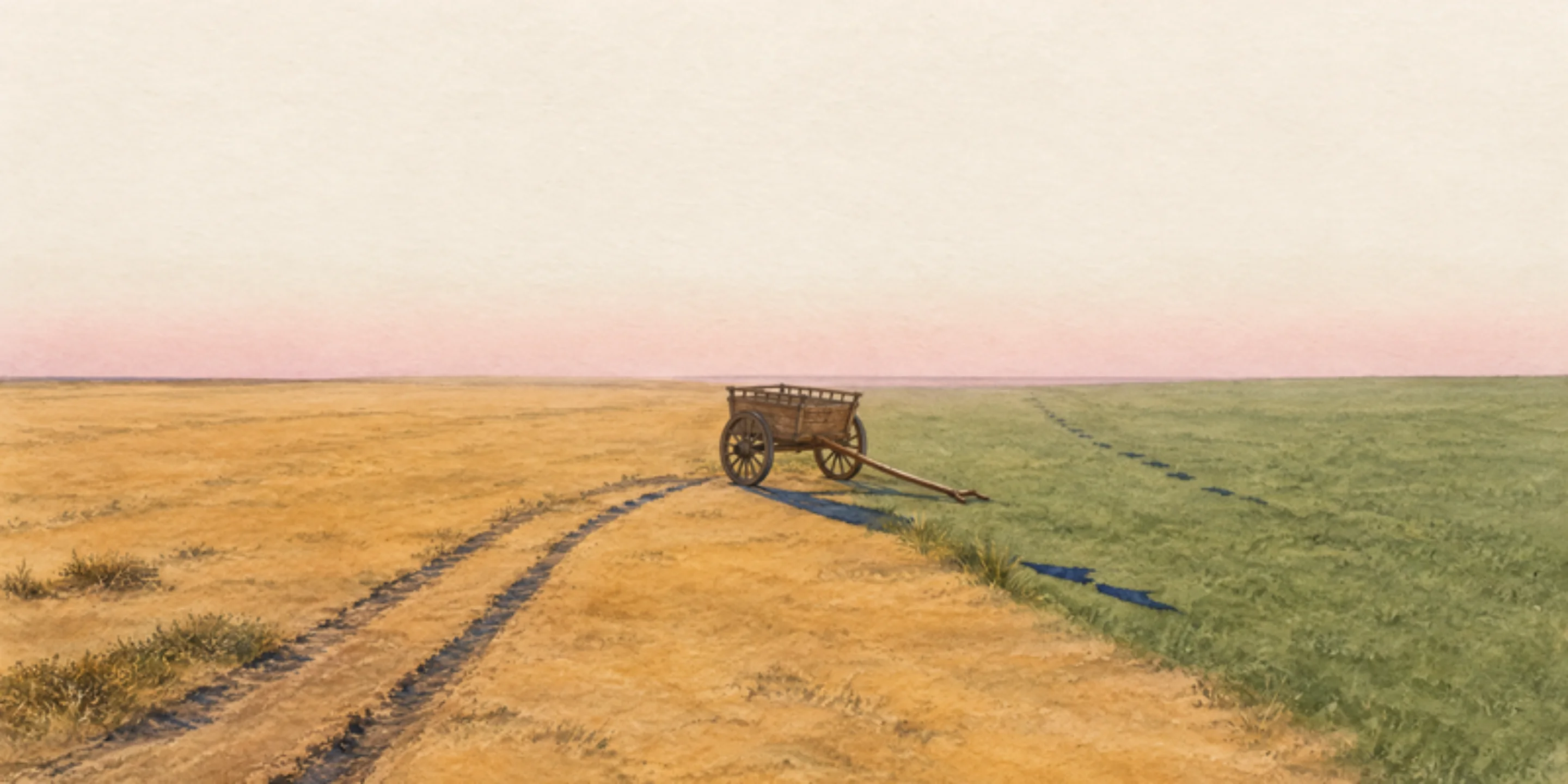
Learn the scriptures, and when Brahman is known, drop them like a torch at the end of the road. Ride the chariot of Om with Vishnu as charioteer until the road ends, then leave the chariot and walk on into the soundless. The text then teaches a sixfold yoga: withdrawal, meditation, breath-control, holding, reflection and absorption, with the practice of Om in breath and posture, the five breaths and their colours. Whoever's breath leaves through the crown, piercing the circle of the head, is not born again.
- Om as the chariot
- Leaving the vehicle at the road's end
- The sixfold yoga
- The soundless syllable
- The breath and its paths
अमृतनादोपनिषत्प्रतिपाद्यं पराक्षरम् । त्रैपदानन्दसाम्राज्यं हृदि मे भातु सन्ततम् ॥
amṛtanādopaniṣatpratipādyaṃ parākṣaram | traipadānandasāmrājyaṃ hṛdi me bhātu santatam ||
The highest imperishable, which the Amritanada Upanishad makes known, the kingdom of bliss beyond the three states: may it shine in my heart always.
Note //
A dedicatory verse from the commentator's tradition, placed before the peace invocation; it is not part of the numbered text. 'Beyond the three states' renders traipada, 'of the three quarters' (waking, dream, sleep); read here as the fourth, which rules over them.
शास्त्राण्यधीत्य मेधावी अभ्यस्य च पुनः पुनः । परमं ब्रह्म विज्ञाय उल्कावत्तान्यथोत्सृजेत् ॥ १॥
śāstrāṇyadhītya medhāvī abhyasya ca punaḥ punaḥ | paramaṃ brahma vijñāya ulkāvattānyathotsṛjet || 1||
Having studied the scriptures and gone over them again and again, once the wise have known the highest Brahman, they should , like a torch.
Note //
A torch is carried in the dark and thrown down on arrival. The scriptures are not rejected; they are finished with.
ओङ्कारं रथमारुह्य विष्णुं कृत्वाथ सारथिम् । ब्रह्मलोकपदान्वेषी रुद्राराधनतत्परः ॥ २॥
oṅkāraṃ rathamāruhya viṣṇuṃ kṛtvātha sārathim | brahmalokapadānveṣī rudrārādhanatatparaḥ || 2||
Mounting the chariot of Om, with Vishnu as charioteer, the one who seeks the state of Brahman, intent on the worship of Rudra,
Note //
The image recalls the Katha (1.3.3-9): the body as chariot, the intellect as charioteer, the highest place of Vishnu as the goal. Vishnu and Rudra are named together, as in the Narayana Upanishad. Aiyar glosses Vishnu as 'the Higher Self'.
तावद्रथेन गन्तव्यं यावद्रथपथि स्थितः । स्थित्वा रथपथस्थानं रथमुत्सृज्य गच्छति ॥ ३॥
tāvadrathena gantavyaṃ yāvadrathapathi sthitaḥ | sthitvā rathapathasthānaṃ rathamutsṛjya gacchati || 3||
should go by the chariot as long as he is on the chariot-road. Having reached where the road ends, he leaves the chariot and goes on.
Note //
Om sounded is the chariot; where the road ends, its sound ends, and what follows is walked without a vehicle (4). Aiyar reads 'reaches the place of the Lord of the car'.
मात्रालिङ्गपदं त्यक्त्वा शब्दव्यञ्जनवर्जितम् । अस्वरेण मकारेण पदं सूक्ष्मं च गच्छति ॥ ४॥
mātrāliṅgapadaṃ tyaktvā śabdavyañjanavarjitam | asvareṇa makāreṇa padaṃ sūkṣmaṃ ca gacchati || 4||
Leaving behind its measures, its marks and its stations, he goes, by the M with no sound left in it, to the subtle state, free of sound and letter.
Note //
Om's measures (A, U, M), its 'marks' and its 'stations' are dropped one by one; the M is held until it fades into silence. Aiyar notes that the three terms are also explained as the gross, subtle and causal bodies.
शब्दादिविषयाः पञ्च मनश्चैवातिचञ्चलम् । चिन्तयेदात्मनो रश्मीन्प्रत्याहारः स उच्यते ॥ ५॥
śabdādiviṣayāḥ pañca manaścaivāticañcalam | cintayedātmano raśmīnpratyāhāraḥ sa ucyate || 5||
The five objects, sound and the rest, and the restless mind: to see these as the Self's own rays is called withdrawal (pratyahara).
Note //
Withdrawal is defined not as pulling the senses away by force but as seeing them and the mind as rays of the Self, which then has nothing outside itself to run after. Aiyar reads 'the reins of Atma'; rashmi means both 'ray' and 'rein'.
प्रत्याहारस्तथा ध्यानं प्राणायामोऽथ धारणा । तर्कश्चैव समाधिश्च षडङ्गो योग उच्यते ॥ ६॥
pratyāhārastathā dhyānaṃ prāṇāyāmo'tha dhāraṇā | tarkaścaiva samādhiśca ṣaḍaṅgo yoga ucyate || 6||
Withdrawal, meditation, breath-control, holding, reflection and absorption: these are called the six limbs of yoga.
Note //
'Reflection' (tarka) takes the place of the first two limbs (yama, niyama) of Patanjali's eight. It is defined in verse 17.
यथा पर्वतधातूनां दह्यन्ते धमनान्मलाः । तथेन्द्रियकृता दोषा दह्यन्ते प्राणनिग्रहात् ॥ ७॥
yathā parvatadhātūnāṃ dahyante dhamanānmalāḥ | tathendriyakṛtā doṣā dahyante prāṇanigrahāt || 7||
As the dross of mountain ores is burned off by the bellows, so the faults made by the senses are burned off by holding the breath.
Note //
प्राणायामैर्दहेद्दोषान्धारणाभिश्च किल्बिषम् । प्रत्याहारेण संसर्गाद्ध्यानेनानीश्वरान्गुणान् ॥ ८॥
prāṇāyāmairdaheddoṣāndhāraṇābhiśca kilbiṣam | pratyāhāreṇa saṃsargāddhyānenānīśvarānguṇān || 8||
Burn the faults with breath-control, the wrongs with holding, attachment with withdrawal, and with meditation, the qualities that are not of the Lord.
Note //
'Qualities that are not of the Lord' (anishvaran gunan): traits that hide one's own nature as the Lord; Aiyar: 'the godless qualities'.
किल्बिषं हि क्षयं नीत्वा रुचिरं चैव चिन्तयेत् ॥ ९॥
kilbiṣaṃ hi kṣayaṃ nītvā ruciraṃ caiva cintayet || 9||
Having brought the wrongs to an end, one should contemplate the radiant.
Note //
A half-verse in the edition. 'The radiant' (ruchira) is the shining Self; verse 10 plays on the word.
रुचिरं रेचकं चैव वायोराकर्षणं तथा । प्राणायामस्त्रयः प्रोक्ता रेचपूरककुम्भकाः ॥ १०॥
ruciraṃ recakaṃ caiva vāyorākarṣaṇaṃ tathā | prāṇāyāmastrayaḥ proktā recapūrakakumbhakāḥ || 10||
The radiant pause, the breathing out, and the drawing in of air: these three are called breath-control, breathing out, breathing in and holding.
Note //
सव्याहृतिं सप्रणवां गायत्रीं शिरसा सह । त्रिः पठेदायतप्राणः प्राणायामः स उच्यते ॥ ११॥
savyāhṛtiṃ sapraṇavāṃ gāyatrīṃ śirasā saha | triḥ paṭhedāyataprāṇaḥ prāṇāyāmaḥ sa ucyate || 11||
With the breath drawn long, reciting three times the Gayatri, with the sacred words and Om before it and its 'head' after it: this is called one breath-control.
Note //
The sacred words (vyahritis) are bhur, bhuvah, svah and the rest; the 'head' (shiras) is the closing formula 'apo jyoti rasomritam ...', as Aiyar's note says.
उत्क्षिप्य वायुमाकाशं शून्यं कृत्वा निरात्मकम् । शून्यभावेन युञ्जीयाद्रेचकस्येति लक्षणम् ॥ १२॥
utkṣipya vāyumākāśaṃ śūnyaṃ kṛtvā nirātmakam | śūnyabhāvena yuñjīyādrecakasyeti lakṣaṇam || 12||
Sending the air up and out, leaving the space within empty, without self, one should rest in that emptiness: this is the mark of breathing out.
Note //
वक्त्रेणोत्पलनालेन तोयमाकर्षयेन्नरः । एवं वायुर्ग्रहीतव्यः पूरकस्येति लक्षणम् ॥ १३॥
vaktreṇotpalanālena toyamākarṣayennaraḥ | evaṃ vāyurgrahītavyaḥ pūrakasyeti lakṣaṇam || 13||
As one draws water into the mouth through the stalk of a lotus, so the air is to be drawn in: this is the mark of breathing in.
Note //
नोच्छ्वसेन्न च निःश्वसेत् गात्राणि नैव चालयेत् । एवं भावं नियुञ्जीयात् कुम्भकस्येति लक्षणम् ॥ १४॥
nocchvasenna ca niḥśvaset gātrāṇi naiva cālayet | evaṃ bhāvaṃ niyuñjīyāt kumbhakasyeti lakṣaṇam || 14||
Neither breathe in nor out, nor move the limbs at all: holding still in one state like this is the mark of holding the breath.
Note //
अन्धवत्पश्य रूपाणि शब्दं बधिरवत् शृणु । काष्ठवत्पश्यते देहं प्रशान्तस्येति लक्षणम् ॥ १५॥
andhavatpaśya rūpāṇi śabdaṃ badhiravat śṛṇu | kāṣṭhavatpaśyate dehaṃ praśāntasyeti lakṣaṇam || 15||
See forms as if you were blind, hear sound as if you were deaf; he sees the body as a log of wood: this is the mark of one at peace.
Note //
Seeing and hearing go on, but nothing seen or heard takes hold; the body is seen, not taken for oneself.
मनः सङ्कल्पकं ध्यात्वा संक्षिप्यात्मनि बुद्धिमान् । धारयित्वा तथाऽऽत्मानं धारणा परिकीर्तिता ॥ १६॥
manaḥ saṅkalpakaṃ dhyātvā saṃkṣipyātmani buddhimān | dhārayitvā tathā''tmānaṃ dhāraṇā parikīrtitā || 16||
Seeing the mind as what makes intentions, the wise fold it into the Self, and hold the Self there: this is called holding (dharana).
Note //
आगमस्याविरोधेन ऊहनं तर्क उच्यते । समं मन्येत यं लब्ध्वा स समाधिः प्रकीर्तितः ॥ १७॥
āgamasyāvirodhena ūhanaṃ tarka ucyate | samaṃ manyeta yaṃ labdhvā sa samādhiḥ prakīrtitaḥ || 17||
Reasoning that does not go against the scripture is called reflection. That which, once reached, makes one see all as the same is called absorption (samadhi).
Note //
'See all as the same' (samam manyeta): the same Self in everything. Aiyar: 'thinks (all) equal'.
भूमिभागे समे रम्ये सर्वदोषविवर्जिते । कृत्वा मनोमयीं रक्षां जप्त्वा वै रथमण्डलम् ॥ १८॥
bhūmibhāge same ramye sarvadoṣavivarjite | kṛtvā manomayīṃ rakṣāṃ japtvā vai rathamaṇḍalam || 18||
On level ground, pleasant, free of every fault, having made a protection in the mind and recited the chariot-circle,
Note //
'The chariot-circle' (ratha-mandala): Aiyar notes it is a diagram for invoking the deity, or, for some commentators, Om (the chariot of verse 2) and the circle of Shiva. Pending review.
पद्मकं स्वस्तिकं वापि भद्रासनमथापि वा । बद्ध्वा योगासनं सम्यगुत्तराभिमुखः स्थितः ॥ १९॥
padmakaṃ svastikaṃ vāpi bhadrāsanamathāpi vā | baddhvā yogāsanaṃ samyaguttarābhimukhaḥ sthitaḥ || 19||
sitting firmly in a yoga posture, the lotus, the auspicious or the gracious seat, facing north,
Note //
नासिकापुटमङ्गुल्या पिधायैकेन मारुतम् । आकृष्य धारयेदग्निं शब्दमेवाभिचिन्तयेत् ॥ २०॥
nāsikāpuṭamaṅgulyā pidhāyaikena mārutam | ākṛṣya dhārayedagniṃ śabdamevābhicintayet || 20||
closing one nostril with a finger, drawing in air through the other, one should hold the inner fire and contemplate the sound alone.
Note //
ओमित्येकाक्षरं ब्रह्म ओमित्येकेन रेचयेत् । दिव्यमन्त्रेण बहुशः कुर्यादात्ममलच्युतिम् ॥ २१॥
omityekākṣaraṃ brahma omityekena recayet | divyamantreṇa bahuśaḥ kuryādātmamalacyutim || 21||
Om, the one syllable, is Brahman. With Om alone one should breathe out. With this divine mantra, many times, one should wash away one's impurity.
Note //
Aiyar reads 'Om should not be breathed out' (a reading like ओमित्येनं न रेचयेत्). The edition's reading is followed. Pending review.
पश्चाद्ध्यायीत पूर्वोक्तक्रमशो मन्त्रविद्बुधः । स्थूलातिस्थूलमात्रायं नाभेरूर्ध्वमुपक्रमः ॥ २२॥
paścāddhyāyīta pūrvoktakramaśo mantravidbudhaḥ | sthūlātisthūlamātrāyaṃ nābherūrdhvamupakramaḥ || 22||
Then the wise, knowing the mantra, should meditate in the order already given, from the gross to the very gross measure, beginning from the navel and moving up.
Note //
The second line is obscure; Aiyar: 'beginning with the navel upwards, in the gross, the primary gross and subtle states'. Pending review.
तिर्यगूर्ध्वमधो दृष्टिं विहाय च महामतिः । स्थिरस्थायी विनिष्कम्पः सदा योगं समभ्यसेत् ॥ २३॥
tiryagūrdhvamadho dṛṣṭiṃ vihāya ca mahāmatiḥ | sthirasthāyī viniṣkampaḥ sadā yogaṃ samabhyaset || 23||
Not looking across, up or down, the wise one, seated firm and unshaking, should practise yoga always.
Note //
तालमात्राविनिष्कम्पो धारणायोजनं तथा । द्वादशमात्रो योगस्तु कालतो नियमः स्मृतः ॥ २४॥
tālamātrāviniṣkampo dhāraṇāyojanaṃ tathā | dvādaśamātro yogastu kālato niyamaḥ smṛtaḥ || 24||
Unshaking for the length of a beat, joined in holding: yoga of twelve measures is the rule for its time.
Note //
The verse is obscure. Tala-matra is read as 'a beat's measure'; Aiyar's text had something like 'in the hollow stalk' (the central channel). Pending review.
अघोषमव्यञ्जनमस्वरं च अकण्ठताल्वोष्ठमनासिकं च । अरेफजातमुभयोष्मवर्जितं यदक्षरं न क्षरते कदाचित् ॥ २५॥
aghoṣamavyañjanamasvaraṃ ca akaṇṭhatālvoṣṭhamanāsikaṃ ca | arephajātamubhayoṣmavarjitaṃ yadakṣaraṃ na kṣarate kadācit || 25||
Without voice, without consonant, without vowel, made not in the throat, the palate, the lips or the nose, with no R in it, without either breath-sound: that is the syllable, the imperishable, which never perishes.
Note //
Every part of speech-sound the grammarians name is denied of it. The Om that is the goal is not a sound but the silence sound appears in. Akshara means both 'syllable' and 'imperishable'.
येनासौ गच्छते मार्गं प्राणस्तेन हि गच्छति । अतस्तमभ्यसेन्नित्यं सन्मार्गगमनाय वै ॥ २६॥
yenāsau gacchate mārgaṃ prāṇastena hi gacchati | atastamabhyasennityaṃ sanmārgagamanāya vai || 26||
By the path this syllable goes, the breath goes too. So practise it always, to travel the true path.
Note //
हृद्द्वारं वायुद्वारं च मूर्धद्वारमतः परम् । मोक्षद्वारं बिलं चैव सुषिरं मण्डलं विदुः ॥ २७॥
hṛddvāraṃ vāyudvāraṃ ca mūrdhadvāramataḥ param | mokṣadvāraṃ bilaṃ caiva suṣiraṃ maṇḍalaṃ viduḥ || 27||
The door of the heart, the door of air, then the door at the crown, and the door of freedom: this they call the cave, the hollow, the circle.
Note //
भयं क्रोधमथालस्यमतिस्वप्नातिजागरम् । अत्याहारमनाहारं नित्यं योगी विवर्जयेत् ॥ २८॥
bhayaṃ krodhamathālasyamatisvapnātijāgaram | atyāhāramanāhāraṃ nityaṃ yogī vivarjayet || 28||
Fear, anger and sloth, too much sleep and too much waking, too much food and no food: the yogi always avoids these.
Note //
अनेन विधिना सम्यङ्नित्यमभ्यसतः क्रमात् । स्वयमुत्पद्यते ज्ञानं त्रिभिर्मासैर्न संशयः ॥ २९॥
anena vidhinā samyaṅnityamabhyasataḥ kramāt | svayamutpadyate jñānaṃ tribhirmāsairna saṃśayaḥ || 29||
For one who practises in this way, rightly, daily, step by step, knowledge arises of itself in three months, without doubt.
Note //
'Of itself' (svayam): the practice removes what covers; it does not manufacture the knowledge.
चतुर्भिः पश्यते देवान्पञ्चभिस्तुल्यविक्रमः । इच्छयाप्नोति कैवल्यं षष्ठे मासि न संशयः ॥ ३०॥
caturbhiḥ paśyate devānpañcabhistulyavikramaḥ | icchayāpnoti kaivalyaṃ ṣaṣṭhe māsi na saṃśayaḥ || 30||
In four months one sees the gods; in five, one has their power; in the sixth month, one gains aloneness at will, without doubt.
पार्थिवः पञ्चमात्रस्तु चतुर्मात्राणि वारुणः । आग्नेयस्तु त्रिमात्रोऽसौ वायव्यस्तु द्विमात्रकः ॥ ३१॥
pārthivaḥ pañcamātrastu caturmātrāṇi vāruṇaḥ | āgneyastu trimātro'sau vāyavyastu dvimātrakaḥ || 31||
Om of the earth has five measures, of water four, of fire three, of air two,
Note //
एकमात्रस्तथाकाशो ह्यर्धमात्रं तु चिन्तयेत् । सिद्धिं कृत्वा तु मनसा चिन्तयेदात्मनात्मनि ॥ ३२॥
ekamātrastathākāśo hyardhamātraṃ tu cintayet | siddhiṃ kṛtvā tu manasā cintayedātmanātmani || 32||
and of space one. But contemplate the half-measure. Having made it firm with the mind, contemplate the Self, by the Self, in the Self.
Note //
The half-measure (ardha-matra) is the fading after M, where sound turns into silence; Aiyar: 'that which is with no matras'. The last line leaves nothing outside the Self: the one contemplating, the means and the place are the same.
त्रिंशत्पर्वाङ्गुलः प्राणो यत्र प्राणः प्रतिष्ठितः । एष प्राण इति ख्यातो बाह्यप्राणस्य गोचरः ॥ ३३॥
triṃśatparvāṅgulaḥ prāṇo yatra prāṇaḥ pratiṣṭhitaḥ | eṣa prāṇa iti khyāto bāhyaprāṇasya gocaraḥ || 33||
The breath reaches thirty finger-widths, where the breath is established. This is called the breath: the range of the outer breath.
Note //
अशीतिश्च शतं चैव सहस्राणि त्रयोदश । लक्षश्चैको निःश्वासा अहोरात्रप्रमाणतः ॥ ३४॥
aśītiśca śataṃ caiva sahasrāṇi trayodaśa | lakṣaścaiko niḥśvāsā ahorātrapramāṇataḥ || 34||
A hundred and eighty, thirteen thousand, and one lakh: so many are the breaths of a day and night.
Note //
That is 113,180 breaths in a day and night (a lakh is a hundred thousand). The Hamsa Upanishad gives 21,600; the traditions differ.
प्राण आद्यो हृदिस्थाने अपानस्तु पुनर्गुदे । समानो नाभिदेशे तु उदानः कण्ठमाश्रितः ॥ ३५॥
prāṇa ādyo hṛdisthāne apānastu punargude | samāno nābhideśe tu udānaḥ kaṇṭhamāśritaḥ || 35||
Prana, the first, is in the heart, apana in the lower opening, samana in the region of the navel, udana in the throat,
Note //
व्यानः सर्वेषु चाङ्गेषु सदा व्यावृत्य तिष्ठति । अथ वर्णास्तु पञ्चानां प्राणादीनामनुक्रमात् ॥ ३६॥
vyānaḥ sarveṣu cāṅgeṣu sadā vyāvṛtya tiṣṭhati | atha varṇāstu pañcānāṃ prāṇādīnāmanukramāt || 36||
and vyana pervades all the limbs, always. Now the colours of the five breaths, prana and the rest, in order.
Note //
The five breaths are five functions of the one life-force: taking in, letting go, digesting, rising, and circulating.
रक्तवर्णो मणिप्रख्यः प्राणो वायुः प्रकीर्तितः । अपानस्तस्य मध्ये तु इन्द्रगोपसमप्रभः ॥ ३७॥
raktavarṇo maṇiprakhyaḥ prāṇo vāyuḥ prakīrtitaḥ | apānastasya madhye tu indragopasamaprabhaḥ || 37||
Prana is said to be red, like a ruby; apana, in its middle, shines like the red velvet-mite.
Note //
समानस्तु द्वयोर्मध्ये गोक्षीरधवलप्रभः । आपाण्डर उदानश्च व्यानो ह्यर्चिःसमप्रभः ॥ ३८॥
samānastu dvayormadhye gokṣīradhavalaprabhaḥ | āpāṇḍara udānaśca vyāno hyarciḥsamaprabhaḥ || 38||
Samana, between the two, is white as cow's milk; udana is pale; vyana shines like a flame.
Note //
यस्येदं मण्डलं भित्वा मारुतो याति मूर्धनि । यत्र तत्र म्रियेद्वापि न स भूयोऽभिजायते । न स भूयोऽभिजायत इत्युपनिषत् ॥ ३९॥
yasyedaṃ maṇḍalaṃ bhitvā māruto yāti mūrdhani | yatra tatra mriyedvāpi na sa bhūyo'bhijāyate | na sa bhūyo'bhijāyata ityupaniṣat || 39||
Whoever's breath pierces this circle and goes out through the crown, wherever he dies, he is not born again. He is not born again. This is the Upanishad.
The renderings on this page are shared under CC BY-NC 4.0, in the words of Pranav Ashar.