Bhagavad Gita
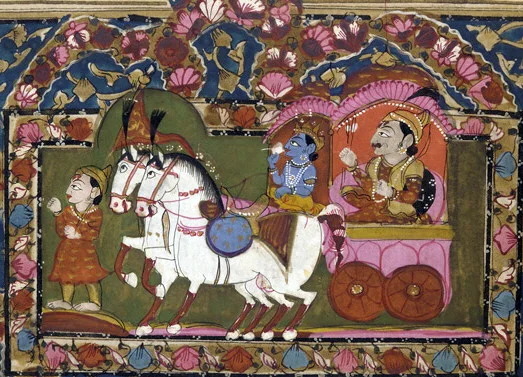
In the words of Pranav Ashar
How we renderContents
- 18.1
- 18.2
- 18.3
- 18.4
- 18.5
- 18.6
- 18.7
- 18.8
- 18.9
- 18.10
- 18.11
- 18.12
- 18.13
- 18.14
- 18.15
- 18.16
- 18.17
- 18.18
- 18.19
- 18.20
- 18.21
- 18.22
- 18.23
- 18.24
- 18.25
- 18.26
- 18.27
- 18.28
- 18.29
- 18.30
- 18.31
- 18.32
- 18.33
- 18.34
- 18.35
- 18.36
- 18.37
- 18.38
- 18.39
- 18.40
- 18.41
- 18.42
- 18.43
- 18.44
- 18.45
- 18.46
- 18.47
- 18.48
- 18.49
- 18.50
- 18.51
- 18.52
- 18.53
- 18.54
- 18.55
- 18.56
- 18.57
- 18.58
- 18.59
- 18.60
- 18.61
- 18.62
- 18.63
- 18.64
- 18.65
- 18.66
- 18.67
- 18.68
- 18.69
- 18.70
- 18.71
- 18.72
- 18.73
- 18.74
- 18.75
- 18.76
- 18.77
- 18.78
Chapter 18: Freedom through renunciation
मोक्षसंन्यासयोगः
संन्यासस्य महाबाहो तत्त्वमिच्छामि वेदितुम् । त्यागस्य च हृषीकेश पृथक्केशिनिषूदन ॥
saṃnyāsasya mahābāho tattvamicchāmi veditum | tyāgasya ca hṛṣīkeśa pṛthakkeśiniṣūdana ||
Arjuna said: Mighty-armed one, I want to know the truth of renunciation, and of letting go, Hrishikesha, each apart, slayer of Keshi.
Note //
Sannyasa (renunciation) and tyaga (letting go, abandonment): the chapter gathers the whole teaching under these two words.
काम्यानां कर्मणां न्यासं संन्यासं कवयो विदुः । सर्वकर्मफलत्यागं प्राहुस्त्यागं विचक्षणाः ॥
kāmyānāṃ karmaṇāṃ nyāsaṃ saṃnyāsaṃ kavayo viduḥ | sarvakarmaphalatyāgaṃ prāhustyāgaṃ vicakṣaṇāḥ ||
said: The wise know as giving up actions done from desire; the discerning call letting go the giving up of the fruit of all actions.
Note //
Shankara: renunciation here is not doing the rites done for a desired result; letting go is doing the regular duties while giving up the fruit that would accrue to oneself.
त्याज्यं दोषवदित्येके कर्म प्राहुर्मनीषिणः । यज्ञदानतपःकर्म न त्याज्यमिति चापरे ॥
tyājyaṃ doṣavadityeke karma prāhurmanīṣiṇaḥ | yajñadānatapaḥkarma na tyājyamiti cāpare ||
Some thinkers say action should be given up as if it were a fault; others, that acts of offering, giving and austerity are not to be given up.
निश्चयं शृणु मे तत्र त्यागे भरतसत्तम । त्यागो हि पुरुषव्याघ्र त्रिविधः सम्प्रकीर्तितः ॥
niścayaṃ śṛṇu me tatra tyāge bharatasattama | tyāgo hi puruṣavyāghra trividhaḥ samprakīrtitaḥ ||
Hear from me what is settled about letting go, best of the Bharatas; for letting go, tiger among men, is said to be of three kinds.
यज्ञदानतपःकर्म न त्याज्यं कार्यमेव तत् । यज्ञो दानं तपश्चैव पावनानि मनीषिणाम् ॥
yajñadānatapaḥkarma na tyājyaṃ kāryameva tat | yajño dānaṃ tapaścaiva pāvanāni manīṣiṇām ||
Acts of offering, giving and austerity are not to be given up but done; for offering, giving and austerity purify the wise.
एतान्यपि तु कर्माणि सङ्गं त्यक्त्वा फलानि च । कर्तव्यानीति मे पार्थ निश्चितं मतमुत्तमम् ॥
etānyapi tu karmāṇi saṅgaṃ tyaktvā phalāni ca | kartavyānīti me pārtha niścitaṃ matamuttamam ||
But even these actions are to be done letting go of clinging and of their fruits: this, Partha, is my settled and highest view.
नियतस्य तु संन्यासः कर्मणो नोपपद्यते । मोहात्तस्य परित्यागस्तामसः परिकीर्तितः ॥
niyatasya tu saṃnyāsaḥ karmaṇo nopapadyate | mohāttasya parityāgastāmasaḥ parikīrtitaḥ ||
The renunciation of one's set work is not right; giving it up out of confusion is called of heaviness.
दुःखमित्येव यत्कर्म कायक्लेशभयात्त्यजेत् । स कृत्वा राजसं त्यागं नैव त्यागफलं लभेत् ॥
duḥkhamityeva yatkarma kāyakleśabhayāttyajet | sa kṛtvā rājasaṃ tyāgaṃ naiva tyāgaphalaṃ labhet ||
One who gives up an action only because it is painful, for fear of bodily strain, lets go in the way of restlessness and gains nothing by it.
कार्यमित्येव यत्कर्म नियतं क्रियतेऽर्जुन । सङ्गं त्यक्त्वा फलं चैव स त्यागः सात्त्विको मतः ॥
kāryamityeva yatkarma niyataṃ kriyate'rjuna | saṅgaṃ tyaktvā phalaṃ caiva sa tyāgaḥ sāttviko mataḥ ||
When set work is done, Arjuna, only because it is to be done, letting go of clinging and of the fruit, that letting go is held to be of clarity.
Note //
This is the practice in short: the work done fully, the claim and the result let go.
न द्वेष्ट्यकुशलं कर्म कुशले नानुषज्जते । त्यागी सत्त्वसमाविष्टो मेधावी छिन्नसंशयः ॥
na dveṣṭyakuśalaṃ karma kuśale nānuṣajjate | tyāgī sattvasamāviṣṭo medhāvī chinnasaṃśayaḥ ||
One who lets go, filled with clarity, wise, with doubts cut away, does not hate unpleasant work nor cling to pleasant work.
न हि देहभृता शक्यं त्यक्तुं कर्माण्यशेषतः । यस्तु कर्मफलत्यागी स त्यागीत्यभिधीयते ॥
na hi dehabhṛtā śakyaṃ tyaktuṃ karmāṇyaśeṣataḥ | yastu karmaphalatyāgī sa tyāgītyabhidhīyate ||
For one who bears a body cannot give up actions entirely; but one who gives up the fruit of action is called one who lets go.
Note //
Shankara: 'one who bears a body' is one who takes the body for the Self; for such a one total renunciation is not possible, and letting go of the fruit is the way.
अनिष्टमिष्टं मिश्रं च त्रिविधं कर्मणः फलम् । भवत्यत्यागिनां प्रेत्य न तु संन्यासिनां क्वचित् ॥
aniṣṭamiṣṭaṃ miśraṃ ca trividhaṃ karmaṇaḥ phalam | bhavatyatyāgināṃ pretya na tu saṃnyāsināṃ kvacit ||
Unwanted, wanted, and mixed: the fruit of action is of three kinds, and it comes after death to those who have not let go, but never to those who have renounced.
Note //
Shankara: the 'renouncers' here are those who have renounced in the full sense, settled in right knowledge.
पञ्चैतानि महाबाहो कारणानि निबोध मे । साङ्ख्ये कृतान्ते प्रोक्तानि सिद्धये सर्वकर्मणाम् ॥
pañcaitāni mahābāho kāraṇāni nibodha me | sāṅkhye kṛtānte proktāni siddhaye sarvakarmaṇām ||
Learn from me, mighty-armed, these five causes for the accomplishing of all actions, taught in the Sankhya, where action comes to its end.
Note //
Shankara: Sankhya here is the Vedanta, where all that is to be known is set out, and 'where action comes to its end' (kritanta) describes it.
अधिष्ठानं तथा कर्ता करणं च पृथग्विधम् । विविधाश्च पृथक्चेष्टा दैवं चैवात्र पञ्चमम् ॥
adhiṣṭhānaṃ tathā kartā karaṇaṃ ca pṛthagvidham | vividhāśca pṛthakceṣṭā daivaṃ caivātra pañcamam ||
The seat, the doer, the various instruments, the many separate movements, and fifth, .
Note //
Shankara: the seat is the body; the doer is the experiencer, a thing of the frame; the instruments are the senses; the movements are the vital breaths; the fifth, daiva, the gods such as the sun that favour the eye and the other senses.
शरीरवाङ्मनोभिर्यत्कर्म प्रारभते नरः । न्याय्यं वा विपरीतं वा पञ्चैते तस्य हेतवः ॥
śarīravāṅmanobhiryatkarma prārabhate naraḥ | nyāyyaṃ vā viparītaṃ vā pañcaite tasya hetavaḥ ||
Whatever action a person undertakes with body, speech or mind, right or wrong, these five are its causes.
तत्रैवं सति कर्तारमात्मानं केवलं तु यः । पश्यत्यकृतबुद्धित्वान्न स पश्यति दुर्मतिः ॥
tatraivaṃ sati kartāramātmānaṃ kevalaṃ tu yaḥ | paśyatyakṛtabuddhitvānna sa paśyati durmatiḥ ||
This being so, whoever, from an untrained understanding, does not see; that one's thinking is crooked.
Note //
Shankara: the five are imagined in the Self by not-knowing; whoever sees the Self, pure and alone, as 'I am the doer' has not been trained by the teaching and by reasoning.
यस्य नाहङ्कृतो भावो बुद्धिर्यस्य न लिप्यते । हत्वाऽपि स इमाँल्लोकान्न हन्ति न निबध्यते ॥
yasya nāhaṅkṛto bhāvo buddhiryasya na lipyate | hatvā'pi sa imām̐llokānna hanti na nibadhyate ||
One who has no sense of 'I am doing', whose understanding is not stained, even if that one kills these people, .
Note //
Shankara: such a one sees 'these five do all actions, not I; I am the witness of their working'. The verse speaks of the knower's freedom from the I-claim; it is not a licence, as the whole chapter's stress on dharma shows.
ज्ञानं ज्ञेयं परिज्ञाता त्रिविधा कर्मचोदना । करणं कर्म कर्तेति त्रिविधः कर्मसङ्ग्रहः ॥
jñānaṃ jñeyaṃ parijñātā trividhā karmacodanā | karaṇaṃ karma karteti trividhaḥ karmasaṅgrahaḥ ||
Knowing, the known and the knower are the threefold impulse to action; the instrument, the act and the doer are the threefold make-up of action.
ज्ञानं कर्म च कर्ता च त्रिधैव गुणभेदतः । प्रोच्यते गुणसङ्ख्याने यथावच्छृणु तान्यपि ॥
jñānaṃ karma ca kartā ca tridhaiva guṇabhedataḥ | procyate guṇasaṅkhyāne yathāvacchṛṇu tānyapi ||
Knowledge, action and doer are said, in the account of the qualities, to be of three kinds, by quality. Hear of them too as they are.
सर्वभूतेषु येनैकं भावमव्ययमीक्षते । अविभक्तं विभक्तेषु तज्ज्ञानं विद्धि सात्त्विकम् ॥
sarvabhūteṣu yenaikaṃ bhāvamavyayamīkṣate | avibhaktaṃ vibhakteṣu tajjñānaṃ viddhi sāttvikam ||
The knowledge by which one sees in all beings one unchanging being, : know that knowledge as of clarity.
Note //
Shankara: the one being is the Self, undivided like space in every body; this knowledge is the direct seeing of the non-dual Self.
पृथक्त्वेन तु यज्ज्ञानं नानाभावान्पृथग्विधान् । वेत्ति सर्वेषु भूतेषु तज्ज्ञानं विद्धि राजसम् ॥
pṛthaktvena tu yajjñānaṃ nānābhāvānpṛthagvidhān | vetti sarveṣu bhūteṣu tajjñānaṃ viddhi rājasam ||
The knowledge that sees in all beings many beings of different kinds, each separate: know that knowledge as of restlessness.
यत्तु कृत्स्नवदेकस्मिन्कार्ये सक्तमहैतुकम् । अतत्त्वार्थवदल्पं च तत्तामसमुदाहृतम् ॥
yattu kṛtsnavadekasminkārye saktamahaitukam | atattvārthavadalpaṃ ca tattāmasamudāhṛtam ||
That which clings to one thing as if it were the whole, without reason, without grasp of truth, and small: that is called of heaviness.
नियतं सङ्गरहितमरागद्वेषतः कृतम् । अफलप्रेप्सुना कर्म यत्तत्सात्त्विकमुच्यते ॥
niyataṃ saṅgarahitamarāgadveṣataḥ kṛtam | aphalaprepsunā karma yattatsāttvikamucyate ||
Action that is one's set work, free of clinging, done without liking or hate, by one who does not want the fruit: that is called of clarity.
यत्तु कामेप्सुना कर्म साहङ्कारेण वा पुनः । क्रियते बहुलायासं तद्राजसमुदाहृतम् ॥
yattu kāmepsunā karma sāhaṅkāreṇa vā punaḥ | kriyate bahulāyāsaṃ tadrājasamudāhṛtam ||
But action done by one who wants what is desired, or with , with great strain: that is called of restlessness.
अनुबन्धं क्षयं हिंसामनपेक्ष्य च पौरुषम् । मोहादारभ्यते कर्म यत्तत्तामसमुच्यते ॥
anubandhaṃ kṣayaṃ hiṃsāmanapekṣya ca pauruṣam | mohādārabhyate karma yattattāmasamucyate ||
Action begun out of confusion, without regard to consequence, loss, harm, or one's own strength: that is called of heaviness.
Note //
sa.wikisource and Shankara's text read अनवेक्ष्य ('without looking to') for our अनपेक्ष्य ('without regard to'); the sense is the same.
मुक्तसङ्गोऽनहंवादी धृत्युत्साहसमन्वितः । सिद्ध्यसिद्ध्योर्निर्विकारः कर्ता सात्त्विक उच्यते ॥
muktasaṅgo'nahaṃvādī dhṛtyutsāhasamanvitaḥ | siddhyasiddhyornirvikāraḥ kartā sāttvika ucyate ||
The doer free of clinging, who does not talk of 'I', full of firmness and zeal, unchanged by success or failure, is called of clarity.
रागी कर्मफलप्रेप्सुर्लुब्धो हिंसात्मकोऽशुचिः । हर्षशोकान्वितः कर्ता राजसः परिकीर्तितः ॥
rāgī karmaphalaprepsurlubdho hiṃsātmako'śuciḥ | harṣaśokānvitaḥ kartā rājasaḥ parikīrtitaḥ ||
The doer full of craving, wanting the fruit of action, greedy, harmful, impure, tossed by joy and grief, is called of restlessness.
अयुक्तः प्राकृतः स्तब्धः शठो नैष्कृतिकोऽलसः । विषादी दीर्घसूत्री च कर्ता तामस उच्यते ॥
ayuktaḥ prākṛtaḥ stabdhaḥ śaṭho naiṣkṛtiko'lasaḥ | viṣādī dīrghasūtrī ca kartā tāmasa ucyate ||
The doer who is unsteady, coarse, stubborn, deceitful, spiteful, lazy, despondent and slow to act, is called of heaviness.
बुद्धेर्भेदं धृतेश्चैव गुणतस्त्रिविधं शृणु । प्रोच्यमानमशेषेण पृथक्त्वेन धनञ्जय ॥
buddherbhedaṃ dhṛteścaiva guṇatastrividhaṃ śṛṇu | procyamānamaśeṣeṇa pṛthaktvena dhanañjaya ||
Hear now the threefold difference, by quality, of understanding and of firmness, told in full, each apart, Dhananjaya.
प्रवृत्तिं च निवृत्तिं च कार्याकार्ये भयाभये । बन्धं मोक्षं च या वेत्ति बुद्धिः सा पार्थ सात्त्विकी ॥
pravṛttiṃ ca nivṛttiṃ ca kāryākārye bhayābhaye | bandhaṃ mokṣaṃ ca yā vetti buddhiḥ sā pārtha sāttvikī ||
The understanding that knows when to act and when to refrain, what is to be done and what not, what to fear and what not, bondage and freedom: that, Partha, is of clarity.
यया धर्ममधर्मं च कार्यं चाकार्यमेव च । अयथावत्प्रजानाति बुद्धिः सा पार्थ राजसी ॥
yayā dharmamadharmaṃ ca kāryaṃ cākāryameva ca | ayathāvatprajānāti buddhiḥ sā pārtha rājasī ||
The understanding by which one knows wrongly what is dharma and what is not, what is to be done and what is not: that, Partha, is of restlessness.
अधर्मं धर्ममिति या मन्यते तमसावृता । सर्वार्थान्विपरीतांश्च बुद्धिः सा पार्थ तामसी ॥
adharmaṃ dharmamiti yā manyate tamasāvṛtā | sarvārthānviparītāṃśca buddhiḥ sā pārtha tāmasī ||
The understanding which, covered by darkness, takes what is against dharma for dharma, and everything the wrong way round: that, Partha, is of heaviness.
धृत्या यया धारयते मनःप्राणेन्द्रियक्रियाः । योगेनाव्यभिचारिण्या धृतिः सा पार्थ सात्त्विकी ॥
dhṛtyā yayā dhārayate manaḥprāṇendriyakriyāḥ | yogenāvyabhicāriṇyā dhṛtiḥ sā pārtha sāttvikī ||
The unwavering firmness by which, through yoga, one holds the workings of mind, breath and senses: that firmness, Partha, is of clarity.
यया तु धर्मकामार्थान्धृत्या धारयतेऽर्जुन । प्रसङ्गेन फलाकाङ्क्षी धृतिः सा पार्थ राजसी ॥
yayā tu dharmakāmārthāndhṛtyā dhārayate'rjuna | prasaṅgena phalākāṅkṣī dhṛtiḥ sā pārtha rājasī ||
But the firmness by which one holds to dharma, pleasure and wealth, Arjuna, wanting their fruit out of attachment: that firmness, Partha, is of restlessness.
यया स्वप्नं भयं शोकं विषादं मदमेव च । न विमुञ्चति दुर्मेधा धृतिः सा पार्थ तामसी ॥
yayā svapnaṃ bhayaṃ śokaṃ viṣādaṃ madameva ca | na vimuñcati durmedhā dhṛtiḥ sā pārtha tāmasī ||
The firmness by which a dull mind does not let go of sleep, fear, grief, despondency and conceit: that firmness, Partha, is of heaviness.
सुखं त्विदानीं त्रिविधं शृणु मे भरतर्षभ । अभ्यासाद्रमते यत्र दुःखान्तं च निगच्छति ॥
sukhaṃ tvidānīṃ trividhaṃ śṛṇu me bharatarṣabha | abhyāsādramate yatra duḥkhāntaṃ ca nigacchati ||
And now hear from me, best of the Bharatas, the three kinds of happiness: that in which one comes to delight by practice, and reaches the end of sorrow,
Note //
Telang's sentence for the second half of 18.36 runs through 18.37 and is given here with his first sentence.
यत्तदग्रे विषमिव परिणामेऽमृतोपमम् । तत्सुखं सात्त्विकं प्रोक्तमात्मबुद्धिप्रसादजम् ॥
yattadagre viṣamiva pariṇāme'mṛtopamam | tatsukhaṃ sāttvikaṃ proktamātmabuddhiprasādajam ||
which is and like nectar in the end: that happiness is called of clarity, born of the clearness of one's own understanding.
Note //
Atmabuddhiprasada: the clearness of the understanding turned to the Self (Telang: 'a clear knowledge of the self').
विषयेन्द्रियसंयोगाद्यत्तदग्रेऽमृतोपमम् । परिणामे विषमिव तत्सुखं राजसं स्मृतम् ॥
viṣayendriyasaṃyogādyattadagre'mṛtopamam | pariṇāme viṣamiva tatsukhaṃ rājasaṃ smṛtam ||
Happiness that comes from the senses meeting their objects, like nectar at first and like poison in the end, is held to be of restlessness.
यदग्रे चानुबन्धे च सुखं मोहनमात्मनः । निद्रालस्यप्रमादोत्थं तत्तामसमुदाहृतम् ॥
yadagre cānubandhe ca sukhaṃ mohanamātmanaḥ | nidrālasyapramādotthaṃ tattāmasamudāhṛtam ||
Happiness that confuses at first and after, arising from sleep, sloth and carelessness, is called of heaviness.
न तदस्ति पृथिव्यां वा दिवि देवेषु वा पुनः । सत्त्वं प्रकृतिजैर्मुक्तं यदेभिः स्यात्त्रिभिर्गुणैः ॥
na tadasti pṛthivyāṃ vā divi deveṣu vā punaḥ | sattvaṃ prakṛtijairmuktaṃ yadebhiḥ syāttribhirguṇaiḥ ||
There is no being on earth, or in heaven among the gods, that is free of these three qualities born of nature.
Note //
Everything that appears is made of the qualities; only the Self, which does not appear as an object, is beyond them (14.19).
ब्राह्मणक्षत्रियविशां शूद्राणां च परन्तप । कर्माणि प्रविभक्तानि स्वभावप्रभवैर्गुणैः ॥
brāhmaṇakṣatriyaviśāṃ śūdrāṇāṃ ca parantapa | karmāṇi pravibhaktāni svabhāvaprabhavairguṇaiḥ ||
The work of brahmins, kshatriyas and vaishyas, and of shudras, scorcher of foes, is divided by the qualities that arise from their own nature.
Note //
As in 4.13: the four orders follow the qualities. Being is equal in all; position differs.
शमो दमस्तपः शौचं क्षान्तिरार्जवमेव च । ज्ञानं विज्ञानमास्तिक्यं ब्रह्मकर्म स्वभावजम् ॥
śamo damastapaḥ śaucaṃ kṣāntirārjavameva ca | jñānaṃ vijñānamāstikyaṃ brahmakarma svabhāvajam ||
Calm, self-control, austerity, purity, patience and honesty, knowledge, realisation and trust in the teaching: this is the brahmin's work, born of nature.
Note //
Astikya: trust that the teaching is true (Telang: 'belief in a future world').
शौर्यं तेजो धृतिर्दाक्ष्यं युद्धे चाप्यपलायनम् । दानमीश्वरभावश्च क्षात्रं कर्म स्वभावजम् ॥
śauryaṃ tejo dhṛtirdākṣyaṃ yuddhe cāpyapalāyanam | dānamīśvarabhāvaśca kṣātraṃ karma svabhāvajam ||
Courage, vigour, firmness, skill, not fleeing in battle, generosity and the bearing of a ruler: this is the kshatriya's work, born of nature.
कृषिगौरक्ष्यवाणिज्यं वैश्यकर्म स्वभावजम् । परिचर्यात्मकं कर्म शूद्रस्यापि स्वभावजम् ॥
kṛṣigaurakṣyavāṇijyaṃ vaiśyakarma svabhāvajam | paricaryātmakaṃ karma śūdrasyāpi svabhāvajam ||
Farming, tending cattle and trade are the vaishya's work, born of nature; and the shudra's work, born of nature, is service.
स्वे स्वे कर्मण्यभिरतः संसिद्धिं लभते नरः । स्वकर्मनिरतः सिद्धिं यथा विन्दति तच्छृणु ॥
sve sve karmaṇyabhirataḥ saṃsiddhiṃ labhate naraḥ | svakarmanirataḥ siddhiṃ yathā vindati tacchṛṇu ||
Each , a person reaches . Hear how one devoted to one's own work finds .
यतः प्रवृत्तिर्भूतानां येन सर्वमिदं ततम् । स्वकर्मणा तमभ्यर्च्य सिद्धिं विन्दति मानवः ॥
yataḥ pravṛttirbhūtānāṃ yena sarvamidaṃ tatam | svakarmaṇā tamabhyarcya siddhiṃ vindati mānavaḥ ||
Honouring with one's own work the one from whom beings come forth and by whom all this is pervaded, a person finds fulfilment.
Note //
Work as honouring the order: this is the daily practice.
श्रेयान्स्वधर्मो विगुणः परधर्मात्स्वनुष्ठितात् । स्वभावनियतं कर्म कुर्वन्नाप्नोति किल्बिषम् ॥
śreyānsvadharmo viguṇaḥ paradharmātsvanuṣṭhitāt | svabhāvaniyataṃ karma kurvannāpnoti kilbiṣam ||
, than another's dharma done well; doing the work set by one's own nature, one incurs no fault.
Note //
The first line repeats 3.35.
सहजं कर्म कौन्तेय सदोषमपि न त्यजेत् । सर्वारम्भा हि दोषेण धूमेनाग्निरिवावृताः ॥
sahajaṃ karma kaunteya sadoṣamapi na tyajet | sarvārambhā hi doṣeṇa dhūmenāgnirivāvṛtāḥ ||
One should not give up the work one is born to, son of Kunti, even if it has faults; for every undertaking is covered by fault, .
Note //
Shankara: every action, being made of the three qualities, has some fault.
असक्तबुद्धिः सर्वत्र जितात्मा विगतस्पृहः । नैष्कर्म्यसिद्धिं परमां संन्यासेनाधिगच्छति ॥
asaktabuddhiḥ sarvatra jitātmā vigataspṛhaḥ | naiṣkarmyasiddhiṃ paramāṃ saṃnyāsenādhigacchati ||
With understanding unattached everywhere, self-mastered, free of longing, one reaches by renunciation .
Note //
Naishkarmya, as in 3.4. Shankara: the knower of the Self, knowing the actionless Brahman as oneself, reaches the state from which actions have fallen away.
सिद्धिं प्राप्तो यथा ब्रह्म तथाप्नोति निबोध मे । समासेनैव कौन्तेय निष्ठा ज्ञानस्य या परा ॥
siddhiṃ prāpto yathā brahma tathāpnoti nibodha me | samāsenaiva kaunteya niṣṭhā jñānasya yā parā ||
Hear from me in brief, son of Kunti, how one who has reached that fulfilment reaches Brahman: the highest standing in knowledge.
Note //
Shankara: the fulfilment here is the fitness for standing in knowledge, gained by honouring the Lord through one's own work; 18.51-55 describe that standing.
बुद्ध्या विशुद्धया युक्तो धृत्यात्मानं नियम्य च । शब्दादीन्विषयांस्त्यक्त्वा रागद्वेषौ व्युदस्य च ॥
buddhyā viśuddhayā yukto dhṛtyātmānaṃ niyamya ca | śabdādīnviṣayāṃstyaktvā rāgadveṣau vyudasya ca ||
Joined to a pure understanding, holding oneself firm, giving up sound and the other objects, casting off liking and disliking,
Note //
Telang renders 18.51-53 as one sentence, given here.
विविक्तसेवी लघ्वाशी यतवाक्कायमानसः । ध्यानयोगपरो नित्यं वैराग्यं समुपाश्रितः ॥
viviktasevī laghvāśī yatavākkāyamānasaḥ | dhyānayogaparo nityaṃ vairāgyaṃ samupāśritaḥ ||
living apart, eating little, speech, body and mind held in check, always given to meditation, resting in dispassion,
अहङ्कारं बलं दर्पं कामं क्रोधं परिग्रहम् । विमुच्य निर्ममः शान्तो ब्रह्मभूयाय कल्पते ॥
ahaṅkāraṃ balaṃ darpaṃ kāmaṃ krodhaṃ parigraham | vimucya nirmamaḥ śānto brahmabhūyāya kalpate ||
letting go of , force, arrogance, desire, anger and possessions, without 'mine', at peace: one is fit to become Brahman.
ब्रह्मभूतः प्रसन्नात्मा न शोचति न काङ्क्षति । समः सर्वेषु भूतेषु मद्भक्तिं लभते पराम् ॥
brahmabhūtaḥ prasannātmā na śocati na kāṅkṣati | samaḥ sarveṣu bhūteṣu madbhaktiṃ labhate parām ||
, clear in mind, one neither grieves nor craves; the same toward all beings, one gains the highest devotion to me.
Note //
Shankara: the highest devotion here is the fourth kind of 7.16-17, the devotion of the one who knows: knowledge itself.
भक्त्या मामभिजानाति यावान्यश्चास्मि तत्त्वतः । ततो मां तत्त्वतो ज्ञात्वा विशते तदनन्तरम् ॥
bhaktyā māmabhijānāti yāvānyaścāsmi tattvataḥ | tato māṃ tattvato jñātvā viśate tadanantaram ||
By devotion one knows me truly, how great I am and who I am; then, knowing me truly, .
Note //
Shankara: one knows me as I am, free of every frame, non-dual, awareness alone, unageing and fearless; knowing and entering are not two acts here: to know is to be.
सर्वकर्माण्यपि सदा कुर्वाणो मद्व्यपाश्रयः । मत्प्रसादादवाप्नोति शाश्वतं पदमव्ययम् ॥
sarvakarmāṇyapi sadā kurvāṇo madvyapāśrayaḥ | matprasādādavāpnoti śāśvataṃ padamavyayam ||
Even doing all actions always, taking refuge in me, by my favour one reaches the eternal, unchanging place.
चेतसा सर्वकर्माणि मयि संन्यस्य मत्परः । बुद्धियोगमुपाश्रित्य मच्चित्तः सततं भव ॥
cetasā sarvakarmāṇi mayi saṃnyasya matparaḥ | buddhiyogamupāśritya maccittaḥ satataṃ bhava ||
Laying all actions on me in your mind, with me as your goal, resting in the yoga of understanding, keep your mind always on me.
मच्चित्तः सर्वदुर्गाणि मत्प्रसादात्तरिष्यसि । अथ चेत्त्वमहङ्कारान्न श्रोष्यसि विनङ्क्ष्यसि ॥
maccittaḥ sarvadurgāṇi matprasādāttariṣyasi | atha cettvamahaṅkārānna śroṣyasi vinaṅkṣyasi ||
Mind on me, by my favour you will cross every difficulty; but if, from , you will not listen, you will be lost.
यदहङ्कारमाश्रित्य न योत्स्य इति मन्यसे । मिथ्यैष व्यवसायस्ते प्रकृतिस्त्वां नियोक्ष्यति ॥
yadahaṅkāramāśritya na yotsya iti manyase | mithyaiṣa vyavasāyaste prakṛtistvāṃ niyokṣyati ||
If, holding to , you think 'I will not fight', your resolve is empty: your nature will set you to it.
Note //
A warrior's nature will act; the I-claim only claims the choosing.
स्वभावजेन कौन्तेय निबद्धः स्वेन कर्मणा । कर्तुं नेच्छसि यन्मोहात्करिष्यस्यवशोऽपि तत् ॥
svabhāvajena kaunteya nibaddhaḥ svena karmaṇā | kartuṃ necchasi yanmohātkariṣyasyavaśo'pi tat ||
What you do not want to do out of confusion, son of Kunti, you will do even against your will, bound by your own work, born of your nature.
ईश्वरः सर्वभूतानां हृद्देशेऽर्जुन तिष्ठति । भ्रामयन्सर्वभूतानि यन्त्रारूढानि मायया ॥
īśvaraḥ sarvabhūtānāṃ hṛddeśe'rjuna tiṣṭhati | bhrāmayansarvabhūtāni yantrārūḍhāni māyayā ||
of all beings, Arjuna, turning all beings , .
Note //
Shankara: 'as if' mounted, like wooden figures on a machine. In the site's terms: the order moves everything; the I-claim takes the moving as its own.
तमेव शरणं गच्छ सर्वभावेन भारत । तत्प्रसादात्परां शान्तिं स्थानं प्राप्स्यसि शाश्वतम् ॥
tameva śaraṇaṃ gaccha sarvabhāvena bhārata | tatprasādātparāṃ śāntiṃ sthānaṃ prāpsyasi śāśvatam ||
Go to that one alone for refuge with your whole being, Bharata; by that one's favour you will reach the highest peace, the eternal place.
इति ते ज्ञानमाख्यातं गुह्याद्गुह्यतरं मया । विमृश्यैतदशेषेण यथेच्छसि तथा कुरु ॥
iti te jñānamākhyātaṃ guhyādguhyataraṃ mayā | vimṛśyaitadaśeṣeṇa yathecchasi tathā kuru ||
So I have told you knowledge more secret than any secret. Reflect on it fully, .
Note //
The teacher gives the teaching and leaves the choice: the student has to see for himself.
सर्वगुह्यतमं भूयः शृणु मे परमं वचः । इष्टोऽसि मे दृढमिति ततो वक्ष्यामि ते हितम् ॥
sarvaguhyatamaṃ bhūyaḥ śṛṇu me paramaṃ vacaḥ | iṣṭo'si me dṛḍhamiti tato vakṣyāmi te hitam ||
Hear again my highest word, the most secret of all. You are dearly loved by me, so I will tell you what is for your good.
मन्मना भव मद्भक्तो मद्याजी मां नमस्कुरु । मामेवैष्यसि सत्यं ते प्रतिजाने प्रियोऽसि मे ॥
manmanā bhava madbhakto madyājī māṃ namaskuru | māmevaiṣyasi satyaṃ te pratijāne priyo'si me ||
Fix your mind on me; be devoted to me; make your offerings to me; bow to me. You will come to me: I promise you truly, for you are dear to me.
सर्वधर्मान्परित्यज्य मामेकं शरणं व्रज । अहं त्वा सर्वपापेभ्यो मोक्षयिष्यामि मा शुचः ॥
sarvadharmānparityajya māmekaṃ śaraṇaṃ vraja | ahaṃ tvā sarvapāpebhyo mokṣayiṣyāmi mā śucaḥ ||
, come to me alone for refuge. I will free you from all wrong; do not grieve.
Note //
Shankara: 'all dharmas' takes in their opposite too, giving up all action, right and wrong; 'me alone' is the Self of all: know 'I am that alone; there is nothing other than me'. The freeing is the Self shown as it is (10.11), and this is where the teaching ends. sa.wikisource reads त्वां for our त्वा ('you'), the same word.
इदं ते नातपस्काय नाभक्ताय कदाचन । न चाशुश्रूषवे वाच्यं न च मां योऽभ्यसूयति ॥
idaṃ te nātapaskāya nābhaktāya kadācana | na cāśuśrūṣave vācyaṃ na ca māṃ yo'bhyasūyati ||
This is never to be told by you to one without discipline, without devotion, without willingness to listen, or to one who finds fault with me.
य इमं परमं गुह्यं मद्भक्तेष्वभिधास्यति । भक्तिं मयि परां कृत्वा मामेवैष्यत्यसंशयः ॥
ya imaṃ paramaṃ guhyaṃ madbhakteṣvabhidhāsyati | bhaktiṃ mayi parāṃ kṛtvā māmevaiṣyatyasaṃśayaḥ ||
One who teaches this highest secret to those devoted to me, with the highest devotion to me, will come to me, without doubt.
Note //
Our base text (sanskritdocuments.org) reads इदं; this follows Shankara's bhashya and sa.wikisource, इमं ('this', masculine, with 'dialogue' understood). The sense is the same.
न च तस्मान्मनुष्येषु कश्चिन्मे प्रियकृत्तमः । भविता न च मे तस्मादन्यः प्रियतरो भुवि ॥
na ca tasmānmanuṣyeṣu kaścinme priyakṛttamaḥ | bhavitā na ca me tasmādanyaḥ priyataro bhuvi ||
No one among people does what is dearer to me than that one, nor will anyone on earth be dearer to me.
अध्येष्यते च य इमं धर्म्यं संवादमावयोः । ज्ञानयज्ञेन तेनाहमिष्टः स्यामिति मे मतिः ॥
adhyeṣyate ca ya imaṃ dharmyaṃ saṃvādamāvayoḥ | jñānayajñena tenāhamiṣṭaḥ syāmiti me matiḥ ||
And one who studies this dialogue of ours, true to dharma, makes me an offering, I hold: the offering of knowledge.
श्रद्धावाननसूयश्च शृणुयादपि यो नरः । सोऽपि मुक्तः शुभाँल्लोकान्प्राप्नुयात्पुण्यकर्मणाम् ॥
śraddhāvānanasūyaśca śṛṇuyādapi yo naraḥ | so'pi muktaḥ śubhām̐llokānprāpnuyātpuṇyakarmaṇām ||
And even one who only hears it, with trust and without finding fault, is freed, and reaches the bright worlds of those who do good.
कच्चिदेतच्छ्रुतं पार्थ त्वयैकाग्रेण चेतसा । कच्चिदज्ञानसम्मोहः प्रनष्टस्ते धनञ्जय ॥
kaccidetacchrutaṃ pārtha tvayaikāgreṇa cetasā | kaccidajñānasammohaḥ pranaṣṭaste dhanañjaya ||
Have you heard this, Partha, with a one-pointed mind? Is your confusion, born of not-knowing, gone, Dhananjaya?
नष्टो मोहः स्मृतिर्लब्धा त्वत्प्रसादान्मयाच्युत । स्थितोऽस्मि गतसन्देहः करिष्ये वचनं तव ॥
naṣṭo mohaḥ smṛtirlabdhā tvatprasādānmayācyuta | sthito'smi gatasandehaḥ kariṣye vacanaṃ tava ||
Arjuna said: ; , by your favour, . I stand firm, my doubts are gone; I will do as you say.
Note //
Smriti, 'memory': Shankara, the recollection of the truth of the Self, by which every knot of the heart is loosened; this is the fruit of the whole teaching. And Arjuna goes on to act: the same life, without the confinement.
इत्यहं वासुदेवस्य पार्थस्य च महात्मनः । संवादमिममश्रौषमद्भुतं रोमहर्षणम् ॥
ityahaṃ vāsudevasya pārthasya ca mahātmanaḥ | saṃvādamimamaśrauṣamadbhutaṃ romaharṣaṇam ||
Sanjaya said: So I heard this dialogue of Vasudeva and the great Partha, wondrous, making the hair stand on end.
व्यासप्रसादाच्छ्रुतवानेतद्गुह्यमहं परम् । योगं योगेश्वरात्कृष्णात्साक्षात्कथयतः स्वयम् ॥
vyāsaprasādācchrutavānetadguhyamahaṃ param | yogaṃ yogeśvarātkṛṣṇātsākṣātkathayataḥ svayam ||
Thanks to Vyasa I heard this highest secret, this yoga, from Krishna, the master of yoga himself, as he spoke it.
Note //
Vyasa gave Sanjaya the sight to see and hear the battle from afar.
राजन्संस्मृत्य संस्मृत्य संवादमिममद्भुतम् । केशवार्जुनयोः पुण्यं हृष्यामि च मुहुर्मुहुः ॥
rājansaṃsmṛtya saṃsmṛtya saṃvādamimamadbhutam | keśavārjunayoḥ puṇyaṃ hṛṣyāmi ca muhurmuhuḥ ||
, remembering again and again this wondrous, auspicious dialogue of Keshava and Arjuna, I rejoice again and again.
तच्च संस्मृत्य संस्मृत्य रूपमत्यद्भुतं हरेः । विस्मयो मे महान् राजन्हृष्यामि च पुनः पुनः ॥
tacca saṃsmṛtya saṃsmṛtya rūpamatyadbhutaṃ hareḥ | vismayo me mahān rājanhṛṣyāmi ca punaḥ punaḥ ||
And remembering again and again that most wondrous form of Hari, great is my wonder, king, and I rejoice again and again.
यत्र योगेश्वरः कृष्णो यत्र पार्थो धनुर्धरः । तत्र श्रीर्विजयो भूतिर्ध्रुवा नीतिर्मतिर्मम ॥
yatra yogeśvaraḥ kṛṣṇo yatra pārtho dhanurdharaḥ | tatra śrīrvijayo bhūtirdhruvā nītirmatirmama ||
Where Krishna, the master of yoga, is, and where Partha the archer is, there are fortune, victory, well-being and lasting right: this is my conviction.
Touch an underlined word to see the Sanskrit behind it. The lighter lines are how the tradition read the verse; the rest is the verse.
The renderings on this page are shared under CC BY-NC 4.0, in the words of Pranav Ashar.