Ashtavakra Gita
In the words of Pranav Ashar
How we renderChapter 3: Testing the knower
अविनाशिनमात्मानमेकं विज्ञाय तत्त्वतः । तवात्मज्ञानस्य धीरस्य कथमर्थार्जने रतिः ॥
avināśinamātmānamekaṃ vijñāya tattvataḥ | tavātmajñānasya dhīrasya kathamarthārjane ratiḥ ||
You have known the Self in truth, one and without end; how can you, steady and knowing the Self, still delight in gaining wealth?
Note //
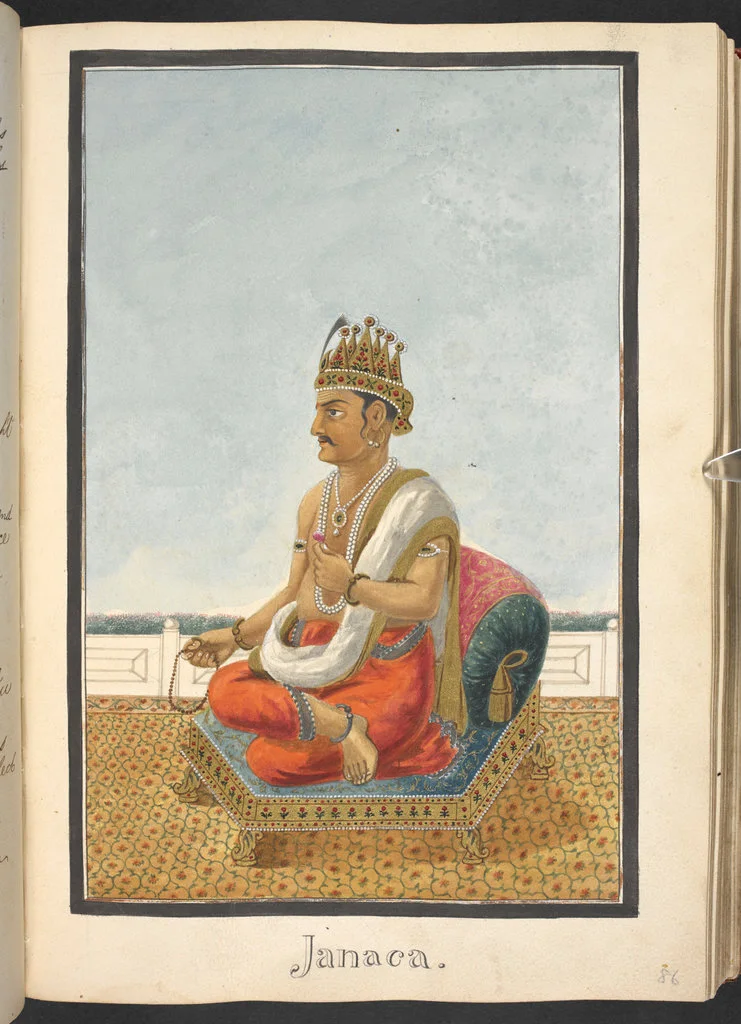
Ashtavakra now tests Janaka's claim of chapter 2.
आत्माज्ञानादहो प्रीतिर्विषयभ्रमगोचरे । शुक्तेरज्ञानतो लोभो यथा रजतविभ्रमे ॥
ātmājñānādaho prītirviṣayabhramagocare | śukterajñānato lobho yathā rajatavibhrame ||
Wonder! Through not knowing the Self one delights in the objects of a , as greed for silver arises through not knowing mother-of-pearl.
विश्वं स्फुरति यत्रेदं तरङ्गा इव सागरे । सोऽहमस्मीति विज्ञाय किं दीन इव धावसि ॥
viśvaṃ sphurati yatredaṃ taraṅgā iva sāgare | so'hamasmīti vijñāya kiṃ dīna iva dhāvasi ||
Having known: 'I am That in which this world rises like waves in the sea', why do you run about like someone in need?
श्रुत्वापि शुद्धचैतन्य आत्मानमतिसुन्दरम् । उपस्थेऽत्यन्तसंसक्तो मालिन्यमधिगच्छति ॥
śrutvāpi śuddhacaitanya ātmānamatisundaram | upasthe'tyantasaṃsakto mālinyamadhigacchati ||
Even after hearing that the Self is pure and utterly beautiful, one deeply bound to sex is tarnished.
सर्वभूतेषु चात्मानं सर्वभूतानि चात्मनि । मुनेर्जानत आश्चर्यं ममत्वमनुवर्तते ॥
sarvabhūteṣu cātmānaṃ sarvabhūtāni cātmani | munerjānata āścaryaṃ mamatvamanuvartate ||
Knowing the Self in all beings and all beings in the Self, it is strange that the sage still keeps the sense of 'mine'.
Note //
In 3.5-8 'strange' (ashcharya) is irony: these are lapses that can remain in one who has only heard the teaching.
आस्थितः परमाद्वैतं मोक्षार्थेऽपि व्यवस्थितः । आश्चर्यं कामवशगो विकलः केलिशिक्षया ॥
āsthitaḥ paramādvaitaṃ mokṣārthe'pi vyavasthitaḥ | āścaryaṃ kāmavaśago vikalaḥ keliśikṣayā ||
Settled in the highest non-duality, set on freedom too, it is strange that one is ruled by desire, unsettled by the pull of love-play.
उद्भूतं ज्ञानदुर्मित्रमवधार्यातिदुर्बलः । आश्चर्यं काममाकाङ्क्षेत् कालमन्तमनुश्रितः ॥
udbhūtaṃ jñānadurmitramavadhāryātidurbalaḥ | āścaryaṃ kāmamākāṅkṣet kālamantamanuśritaḥ ||
Knowing that desire, once roused, is the enemy of knowledge, very weak, nearing the end of his days, it is strange that one should still long for pleasure.
इहामुत्र विरक्तस्य नित्यानित्यविवेकिनः । आश्चर्यं मोक्षकामस्य मोक्षाद् एव विभीषिका ॥
ihāmutra viraktasya nityānityavivekinaḥ | āścaryaṃ mokṣakāmasya mokṣād eva vibhīṣikā ||
Unattached to this world and the next, discerning the lasting from the passing, longing for freedom, it is strange that one should fear freedom itself.
Note //
The fear is of losing oneself: freedom looks like an end to the person, when it is only the end of the I-claim.
धीरस्तु भोज्यमानोऽपि पीड्यमानोऽपि सर्वदा । आत्मानं केवलं पश्यन् न तुष्यति न कुप्यति ॥
dhīrastu bhojyamāno'pi pīḍyamāno'pi sarvadā | ātmānaṃ kevalaṃ paśyan na tuṣyati na kupyati ||
But the steady one, feasted or tormented, always seeing the Self alone, is neither pleased nor angered.
चेष्टमानं शरीरं स्वं पश्यत्यन्यशरीरवत् । संस्तवे चापि निन्दायां कथं क्षुभ्येत् महाशयः ॥
ceṣṭamānaṃ śarīraṃ svaṃ paśyatyanyaśarīravat | saṃstave cāpi nindāyāṃ kathaṃ kṣubhyet mahāśayaḥ ||
He watches his own body moving as if it were another's; how should the great-hearted one be shaken by praise or blame?
मायामात्रमिदं विश्वं पश्यन् विगतकौतुकः । अपि सन्निहिते मृत्यौ कथं त्रस्यति धीरधीः ॥
māyāmātramidaṃ viśvaṃ paśyan vigatakautukaḥ | api sannihite mṛtyau kathaṃ trasyati dhīradhīḥ ||
Seeing this world as only, his curiosity gone, how should the steady-minded one be afraid even when death is near?
Note //
Mayamatra, 'appearance only': the world is seen as it is, real as appearance and never on its own.
निःस्पृहं मानसं यस्य नैराश्येऽपि महात्मनः । तस्यात्मज्ञानतृप्तस्य तुलना केन जायते ॥
niḥspṛhaṃ mānasaṃ yasya nairāśye'pi mahātmanaḥ | tasyātmajñānatṛptasya tulanā kena jāyate ||
Whose mind wants nothing even when hopes come to nothing, the great one, content in knowing the Self: with whom can he be compared?
स्वभावाद् एव जानानो दृश्यमेतन्न किञ्चन । इदं ग्राह्यमिदं त्याज्यं स किं पश्यति धीरधीः ॥
svabhāvād eva jānāno dṛśyametanna kiñcana | idaṃ grāhyamidaṃ tyājyaṃ sa kiṃ paśyati dhīradhīḥ ||
Knowing by his very nature that what is seen is nothing, how should the steady-minded one see 'this is to take, this to leave'?
अन्तस्त्यक्तकषायस्य निर्द्वन्द्वस्य निराशिषः । यदृच्छयागतो भोगो न दुःखाय न तुष्टये ॥
antastyaktakaṣāyasya nirdvandvasya nirāśiṣaḥ | yadṛcchayāgato bhogo na duḥkhāya na tuṣṭaye ||
For one who has dropped the stains within, free of the pairs, free of wanting, enjoyment that comes by chance brings neither pain nor delight.
Note //
'The pairs' (dvandva) are the opposites: pleasure and pain, gain and loss, praise and blame.
The renderings on this page are shared under CC BY-NC 4.0, in the words of Pranav Ashar.