Ashtavakra Gita
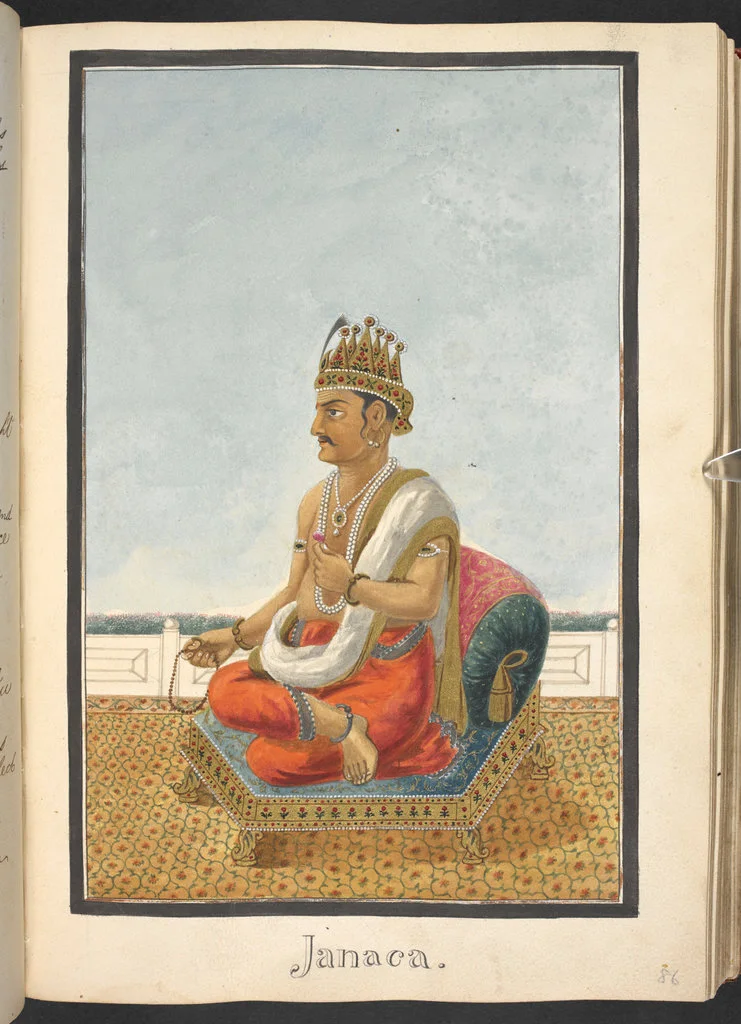
In the words of Pranav Ashar
How we renderContents
Chapter 2: The wonder of waking
अहो निरञ्जनः शान्तो बोधोऽहं प्रकृतेः परः । एतावन्तमहं कालं मोहेनैव विडम्बितः ॥
aho nirañjanaḥ śānto bodho'haṃ prakṛteḥ paraḥ | etāvantamahaṃ kālaṃ mohenaiva viḍambitaḥ ||
Wonder! I am without stain, at peace, , beyond nature. All this time I have only been fooled by delusion.
Note //
Janaka speaks from recognition. 'Beyond nature' (prakriti) means beyond everything that changes, the body-mind included.
यथा प्रकाशयाम्येको देहमेनं तथा जगत् । अतो मम जगत्सर्वमथवा न च किञ्चन ॥
yathā prakāśayāmyeko dehamenaṃ tathā jagat | ato mama jagatsarvamathavā na ca kiñcana ||
As I alone light up this body, so I light up the world. So the whole world is mine, or else nothing is.
स शरीरमहो विश्वं परित्यज्य मयाधुना । कुतश्चित् कौशलाद् एव परमात्मा विलोक्यते ॥
sa śarīramaho viśvaṃ parityajya mayādhunā | kutaścit kauśalād eva paramātmā vilokyate ||
Wonder! Now that I have let go of the world along with the body, through some skill or other the highest Self is seen.
Note //
'Some skill' is usually taken as the skill of the teacher's teaching; Richards has 'by good fortune'.
यथा न तोयतो भिन्नास्तरङ्गाः फेनबुद्बुदाः । आत्मनो न तथा भिन्नं विश्वमात्मविनिर्गतम् ॥
yathā na toyato bhinnāstaraṅgāḥ phenabudbudāḥ | ātmano na tathā bhinnaṃ viśvamātmavinirgatam ||
As waves, foam and bubbles are not other than water, so the world that came from the Self is not other than the Self.
तन्तुमात्रो भवेद् एव पटो यद्वद् विचारितः । आत्मतन्मात्रमेवेदं तद्वद् विश्वं विचारितम् ॥
tantumātro bhaved eva paṭo yadvad vicāritaḥ | ātmatanmātramevedaṃ tadvad viśvaṃ vicāritam ||
Looked into, cloth turns out to be only thread; looked into, this world turns out to be only the Self.
यथैवेक्षुरसे क्लृप्ता तेन व्याप्तैव शर्करा । तथा विश्वं मयि क्लृप्तं मया व्याप्तं निरन्तरम् ॥
yathaivekṣurase klṛptā tena vyāptaiva śarkarā | tathā viśvaṃ mayi klṛptaṃ mayā vyāptaṃ nirantaram ||
As sugar made from cane juice is pervaded by it through and through, so the world, made up in me, is pervaded by me throughout.
आत्माज्ञानाज्जगद्भाति आत्मज्ञानान्न भासते । रज्ज्वज्ञानादहिर्भाति तज्ज्ञानाद् भासते न हि ॥
ātmājñānājjagadbhāti ātmajñānānna bhāsate | rajjvajñānādahirbhāti tajjñānād bhāsate na hi ||
Through not knowing the Self the world shines; through knowing the Self it does not. Through not knowing the rope a snake shines; through knowing the rope it does not.
Note //
'Does not shine' means no longer as something on its own. In the site's reading the world still appears to the knower; what ends is taking it as apart from awareness.
प्रकाशो मे निजं रूपं नातिरिक्तोऽस्म्यहं ततः । यदा प्रकाशते विश्वं तदाहं भास एव हि ॥
prakāśo me nijaṃ rūpaṃ nātirikto'smyahaṃ tataḥ | yadā prakāśate viśvaṃ tadāhaṃ bhāsa eva hi ||
Light is my own nature; I am nothing other than that. When the world shines, it is I alone who shine.
अहो विकल्पितं विश्वमज्ञानान्मयि भासते । रूप्यं शुक्तौ फणी रज्जौ वारि सूर्यकरे यथा ॥
aho vikalpitaṃ viśvamajñānānmayi bhāsate | rūpyaṃ śuktau phaṇī rajjau vāri sūryakare yathā ||
Wonder! The world, imagined in me through not-knowing, shines in me as silver in mother-of-pearl, a snake in a rope, water in the sun's rays.
मत्तो विनिर्गतं विश्वं मय्येव लयमेष्यति । मृदि कुम्भो जले वीचिः कनके कटकं यथा ॥
matto vinirgataṃ viśvaṃ mayyeva layameṣyati | mṛdi kumbho jale vīciḥ kanake kaṭakaṃ yathā ||
The world came out of me and will dissolve back into me, as a pot into clay, a wave into water, a bracelet into gold.
Note //
The images change from mistake (snake, silver) to source (clay, water, gold): the world is not only imagined on the Self but made of nothing else.
अहो अहं नमो मह्यं विनाशो यस्य नास्ति मे । ब्रह्मादिस्तम्बपर्यन्तं जगन्नाशोऽपि तिष्ठतः ॥
aho ahaṃ namo mahyaṃ vināśo yasya nāsti me | brahmādistambaparyantaṃ jagannāśo'pi tiṣṭhataḥ ||
Wonder, I am! Homage to me, who have no end, who remain even when the world, from Brahma to a blade of grass, comes to its end.
Note //
The 'I' praised in 2.11-14 is not Janaka the person but the Self he has recognised.
अहो अहं नमो मह्यमेकोऽहं देहवानपि । क्वचिन्न गन्ता नागन्ता व्याप्य विश्वमवस्थितः ॥
aho ahaṃ namo mahyameko'haṃ dehavānapi | kvacinna gantā nāgantā vyāpya viśvamavasthitaḥ ||
Wonder, I am! Homage to me, one, though with a body, going nowhere, coming from nowhere, standing here, pervading the world.
अहो अहं नमो मह्यं दक्षो नास्तीह मत्समः । असंस्पृश्य शरीरेण येन विश्वं चिरं धृतम् ॥
aho ahaṃ namo mahyaṃ dakṣo nāstīha matsamaḥ | asaṃspṛśya śarīreṇa yena viśvaṃ ciraṃ dhṛtam ||
Wonder, I am! Homage to me; no one here is as skilful as I, who have held up the world for ever without touching it with a body.
अहो अहं नमो मह्यं यस्य मे नास्ति किञ्चन । अथवा यस्य मे सर्वं यद् वाङ्मनसगोचरम् ॥
aho ahaṃ namo mahyaṃ yasya me nāsti kiñcana | athavā yasya me sarvaṃ yad vāṅmanasagocaram ||
Wonder, I am! Homage to me, who have nothing at all, or else have everything that speech and mind can reach.
ज्ञानं ज्ञेयं तथा ज्ञाता त्रितयं नास्ति वास्तवम् । अज्ञानाद् भाति यत्रेदं सोऽहमस्मि निरञ्जनः ॥
jñānaṃ jñeyaṃ tathā jñātā tritayaṃ nāsti vāstavam | ajñānād bhāti yatredaṃ so'hamasmi nirañjanaḥ ||
Knowing, the known and the knower: the three are not real in themselves. I am the stainless one in which they shine through not-knowing.
द्वैतमूलमहो दुःखं नान्यत्तस्याऽस्ति भेषजम् । दृश्यमेतन् मृषा सर्वमेकोऽहं चिद्रसोमलः ॥
dvaitamūlamaho duḥkhaṃ nānyattasyā'sti bheṣajam | dṛśyametan mṛṣā sarvameko'haṃ cidrasomalaḥ ||
Wonder! Two-ness is the root of sorrow; there is no other cure for it than seeing that all this seen is untrue, and I am one, pure, made of .
Note //
'Untrue' (mrisha) is read as dependent: what is seen has no being apart from the seer.
बोधमात्रोऽहमज्ञानाद् उपाधिः कल्पितो मया । एवं विमृशतो नित्यं निर्विकल्पे स्थितिर्मम ॥
bodhamātro'hamajñānād upādhiḥ kalpito mayā | evaṃ vimṛśato nityaṃ nirvikalpe sthitirmama ||
I am alone; through not-knowing I imagined a frame on myself. Reflecting like this, always, I rest in what has no divisions.
Note //
The frame (upadhi) is what seems to limit awareness, as a pot seems to limit space.
न मे बन्धोऽस्ति मोक्षो वा भ्रान्तिः शान्ता निराश्रया । अहो मयि स्थितं विश्वं वस्तुतो न मयि स्थितम् ॥
na me bandho'sti mokṣo vā bhrāntiḥ śāntā nirāśrayā | aho mayi sthitaṃ viśvaṃ vastuto na mayi sthitam ||
For me there is no bondage, no freedom; the has lost its ground and come to rest. Wonder! The world stands in me, and in truth does not stand in me.
Note //
The paradox is kept: the world appears in the Self, and the Self is neither touched nor limited by it.
सशरीरमिदं विश्वं न किञ्चिदिति निश्चितम् । शुद्धचिन्मात्र आत्मा च तत्कस्मिन् कल्पनाधुना ॥
saśarīramidaṃ viśvaṃ na kiñciditi niścitam | śuddhacinmātra ātmā ca tatkasmin kalpanādhunā ||
This world, body and all, is nothing: that is settled; and the Self is pure alone. So where could imagining take hold now?
शरीरं स्वर्गनरकौ बन्धमोक्षौ भयं तथा । कल्पनामात्रमेवैतत् किं मे कार्यं चिदात्मनः ॥
śarīraṃ svarganarakau bandhamokṣau bhayaṃ tathā | kalpanāmātramevaitat kiṃ me kāryaṃ cidātmanaḥ ||
Body, heaven and hell, bondage and freedom, and fear: all this is only imagining. What is left for me to do, whose nature is ?
अहो जनसमूहेऽपि न द्वैतं पश्यतो मम । अरण्यमिव संवृत्तं क्व रतिं करवाण्यहम् ॥
aho janasamūhe'pi na dvaitaṃ paśyato mama | araṇyamiva saṃvṛttaṃ kva ratiṃ karavāṇyaham ||
Wonder! Even in a crowd of people I do not see two; it has become like a wilderness. Where should I cling?
Note //
For one who sees no second, a crowd is no different from solitude; Richards reads the line differently.
नाहं देहो न मे देहो जीवो नाहमहं हि चित् । अयमेव हि मे बन्ध आसीद्या जीविते स्पृहा ॥
nāhaṃ deho na me deho jīvo nāhamahaṃ hi cit | ayameva hi me bandha āsīdyā jīvite spṛhā ||
I am not the body, nor is the body mine; I am not the person: I am . This alone was my bondage: the thirst for living.
Note //
What is denied is being confined to the person (jiva), not the body-mind's appearing.
अहो भुवनकल्लोलैर्विचित्रैर्द्राक् समुत्थितम् । मय्यनन्तमहाम्भोधौ चित्तवाते समुद्यते ॥
aho bhuvanakallolairvicitrairdrāk samutthitam | mayyanantamahāmbhodhau cittavāte samudyate ||
Wonder! In me, the endless ocean, when the wind of the mind rises, the many waves of worlds spring up at once.
मय्यनन्तमहाम्भोधौ चित्तवाते प्रशाम्यति । अभाग्याज्जीववणिजो जगत्पोतो विनश्वरः ॥
mayyanantamahāmbhodhau cittavāte praśāmyati | abhāgyājjīvavaṇijo jagatpoto vinaśvaraḥ ||
In me, the endless ocean, when the wind of the mind falls still, by the ill luck of the trader, the person, the ship of the world goes down.
Note //
A playful image: the person is a merchant whose ship, the world, sinks when the mind's wind drops; for the ocean nothing is lost.
मय्यनन्तमहाम्भोधावाश्चर्यं जीववीचयः । उद्यन्ति घ्नन्ति खेलन्ति प्रविशन्ति स्वभावतः ॥
mayyanantamahāmbhodhāvāścaryaṃ jīvavīcayaḥ | udyanti ghnanti khelanti praviśanti svabhāvataḥ ||
Wonder! In me, the endless ocean, the waves that are living beings rise, strike each other, play and sink back, by their own nature.
The renderings on this page are shared under CC BY-NC 4.0, in the words of Pranav Ashar.