Ashtavakra Gita
In the words of Pranav Ashar
How we renderChapter 1: You are the witness
कथं ज्ञानमवाप्नोति कथं मुक्तिर्भविष्यति । वैराग्यं च कथं प्राप्तमेतद् ब्रूहि मम प्रभो ॥
kathaṃ jñānamavāpnoti kathaṃ muktirbhaviṣyati | vairāgyaṃ ca kathaṃ prāptametad brūhi mama prabho ||
How does one come to knowledge? How does freedom come about? And how is dispassion reached? Tell me this, master.
Note //
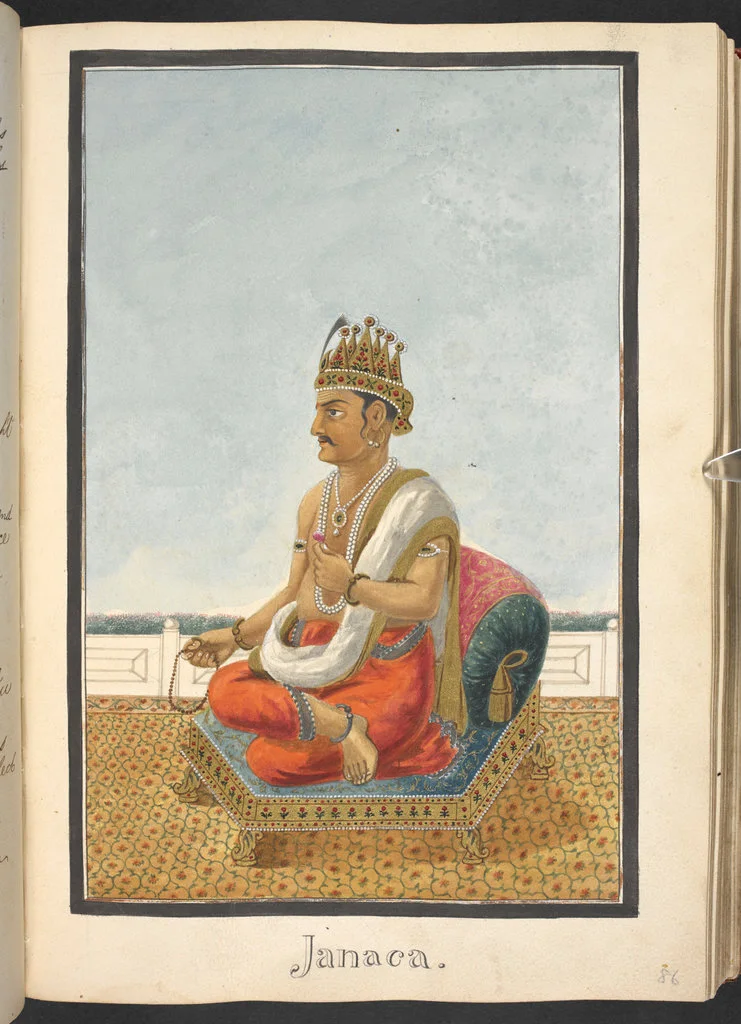
Janaka, the philosopher-king of the Upanishads, asks three questions; Ashtavakra's answers make up the rest of the text.
मुक्तिमिच्छसि चेत्तात विषयान् विषवत्त्यज । क्षमार्जवदयातोषसत्यं पीयूषवद् भज ॥
muktimicchasi cettāta viṣayān viṣavattyaja | kṣamārjavadayātoṣasatyaṃ pīyūṣavad bhaja ||
If you want freedom, my child, leave the objects of the senses like poison, and take forgiveness, honesty, kindness, contentment and truth like nectar.
Note //
Tata, 'my child', is a teacher's affectionate word for a pupil. This is the ordinary preparation of the mind; the teaching proper begins with the next verse.
न पृथ्वी न जलं नाग्निर्न वायुर्द्यौर्न वा भवान् । एषां साक्षिणमात्मानं चिद्रूपं विद्धि मुक्तये ॥
na pṛthvī na jalaṃ nāgnirna vāyurdyaurna vā bhavān | eṣāṃ sākṣiṇamātmānaṃ cidrūpaṃ viddhi muktaye ||
You are not earth, not water, not fire, not air, not space. To be free, know yourself as the witness of these: itself.
Note //
The five elements make up everything that can be seen; what knows them is not one of them.
यदि देहं पृथक् कृत्य चिति विश्राम्य तिष्ठसि । अधुनैव सुखी शान्तो बन्धमुक्तो भविष्यसि ॥
yadi dehaṃ pṛthak kṛtya citi viśrāmya tiṣṭhasi | adhunaiva sukhī śānto bandhamukto bhaviṣyasi ||
If you set the body apart and rest in , then, right now, you will be happy, at peace, free of bondage.
Note //
'Set the body apart' is discernment, not leaving the body: it is known, so it is not the knower.
न त्वं विप्रादिको वर्णो नाश्रमी नाक्षगोचरः । असङ्गोऽसि निराकारो विश्वसाक्षी सुखी भव ॥
na tvaṃ viprādiko varṇo nāśramī nākṣagocaraḥ | asaṅgo'si nirākāro viśvasākṣī sukhī bhava ||
You are not a brahmin or any other class, not in any stage of life, nothing the eyes can see. Unattached and without form, the witness of everything: be happy.
Note //
Class (varna) and stage of life (ashrama) are the social frame of the person; the Self is in none of them.
धर्माधर्मौ सुखं दुःखं मानसानि न ते विभो । न कर्तासि न भोक्तासि मुक्त एवासि सर्वदा ॥
dharmādharmau sukhaṃ duḥkhaṃ mānasāni na te vibho | na kartāsi na bhoktāsi mukta evāsi sarvadā ||
Right and wrong, pleasure and pain belong to the mind, not to you, all-pervading one. You are not the doer, not the one who reaps; you are always free.
एको द्रष्टासि सर्वस्य मुक्तप्रायोऽसि सर्वदा । अयमेव हि ते बन्धो द्रष्टारं पश्यसीतरम् ॥
eko draṣṭāsi sarvasya muktaprāyo'si sarvadā | ayameva hi te bandho draṣṭāraṃ paśyasītaram ||
You are of everything, and you are always free. This alone is your bondage: you see the seer as something other.
Note //
Bondage is not a fact about the Self but a mistake about it: taking the seer for one more seen thing, a person among persons.
अहं कर्तेत्यहंमानमहाकृष्णाहिदंशितः । नाहं कर्तेति विश्वासामृतं पीत्वा सुखं चर ॥
ahaṃ kartetyahaṃmānamahākṛṣṇāhidaṃśitaḥ | nāhaṃ karteti viśvāsāmṛtaṃ pītvā sukhaṃ cara ||
Bitten by the great black snake, the claim 'I am the doer', drink the nectar of trust, 'I am not the doer', and go about happy.
Note //
The I-claim (ahamkara) is a snake's bite, and the cure is not effort but a recognition.
एको विशुद्धबोधोऽहमिति निश्चयवह्निना । प्रज्वाल्याज्ञानगहनं वीतशोकः सुखी भव ॥
eko viśuddhabodho'hamiti niścayavahninā | prajvālyājñānagahanaṃ vītaśokaḥ sukhī bhava ||
With the fire of the certainty 'I am the one pure ', burn down the forest of not-knowing; be free of sorrow, be happy.
यत्र विश्वमिदं भाति कल्पितं रज्जुसर्पवत् । आनन्दपरमानन्दः स बोधस्त्वं सुखं भव ॥
yatra viśvamidaṃ bhāti kalpitaṃ rajjusarpavat | ānandaparamānandaḥ sa bodhastvaṃ sukhaṃ bhava ||
That in which this world shines, imagined on it like a snake on a rope: that fullness, that highest joy, that is you. Be happy.
Note //
The rope and the snake: the world is seen on awareness as a snake is seen in a rope. The text's image makes the world only imagined; the site reads it as dependent, real as appearance and never apart from awareness.
मुक्ताभिमानी मुक्तो हि बद्धो बद्धाभिमान्यपि । किंवदन्तीह सत्येयं या मतिः सा गतिर्भवेत् ॥
muktābhimānī mukto hi baddho baddhābhimānyapi | kiṃvadantīha satyeyaṃ yā matiḥ sā gatirbhavet ||
One who takes himself as free is free; one who takes himself as bound is bound. The saying is true here: as you think, so you become.
Note //
Not a claim that thinking makes things true, but that bondage is nothing other than taking oneself to be bound.
आत्मा साक्षी विभुः पूर्ण एको मुक्तश्चिदक्रियः । असङ्गो निःस्पृहः शान्तो भ्रमात्संसारवानिव ॥
ātmā sākṣī vibhuḥ pūrṇa eko muktaścidakriyaḥ | asaṅgo niḥspṛhaḥ śānto bhramātsaṃsāravāniva ||
The Self is the witness, all-pervading, full, one, free, , without action, unattached, wanting nothing, at peace; only by does it seem caught in .
Note //
Bhrama, 'mistake', is the site's mistaking: the round of births (samsara) belongs to what the Self is taken for, never to the Self.
कूटस्थं बोधमद्वैतमात्मानं परिभावय । आभासोऽहं भ्रमं मुक्त्वा भावं बाह्यमथान्तरम् ॥
kūṭasthaṃ bodhamadvaitamātmānaṃ paribhāvaya | ābhāso'haṃ bhramaṃ muktvā bhāvaṃ bāhyamathāntaram ||
Contemplate the Self: unmoving, , not two. Let go of the 'I am a reflection', and of every sense of outer and inner.
Note //
Kutastha, 'unmoving as an anvil', stays the same through every change. Abhasa is awareness reflected in the mind; the verse says not to take yourself for that reflection.
देहाभिमानपाशेन चिरं बद्धोऽसि पुत्रक । बोधोऽहं ज्ञानखड्गेन तन्निकृत्य सुखी भव ॥
dehābhimānapāśena ciraṃ baddho'si putraka | bodho'haṃ jñānakhaḍgena tannikṛtya sukhī bhava ||
For a long time, child, you have been bound by the noose of taking the body as yourself. Cut it with the sword of knowing 'I am ' and be happy.
निःसङ्गो निष्क्रियोऽसि त्वं स्वप्रकाशो निरञ्जनः । अयमेव हि ते बन्धः समाधिमनुतिष्ठसि ॥
niḥsaṅgo niṣkriyo'si tvaṃ svaprakāśo nirañjanaḥ | ayameva hi te bandhaḥ samādhimanutiṣṭhasi ||
You are unattached, without action, self-shining, . This is your bondage: that you .
Note //
Even stilling the mind binds when it is done to reach a Self that is already what you are. The text does not forbid practice; it removes the idea that freedom is its product.
त्वया व्याप्तमिदं विश्वं त्वयि प्रोतं यथार्थतः । शुद्धबुद्धस्वरूपस्त्वं मा गमः क्षुद्रचित्तताम् ॥
tvayā vyāptamidaṃ viśvaṃ tvayi protaṃ yathārthataḥ | śuddhabuddhasvarūpastvaṃ mā gamaḥ kṣudracittatām ||
This whole world is pervaded by you, truly strung on you. You are pure by nature; do not fall into small-mindedness.
Note //
Strung on you like beads on a thread, as in Gita 7.7.
निरपेक्षो निर्विकारो निर्भरः शीतलाशयः । अगाधबुद्धिरक्षुब्धो भव चिन्मात्रवासनः ॥
nirapekṣo nirvikāro nirbharaḥ śītalāśayaḥ | agādhabuddhirakṣubdho bhava cinmātravāsanaḥ ||
Needing nothing, changeless, full, cool at heart, fathomless in understanding, unshaken, let your one leaning be toward .
साकारमनृतं विद्धि निराकारं तु निश्चलम् । एतत्तत्त्वोपदेशेन न पुनर्भवसम्भवः ॥
sākāramanṛtaṃ viddhi nirākāraṃ tu niścalam | etattattvopadeśena na punarbhavasambhavaḥ ||
Know that what has form is untrue, and the formless does not move. Through this teaching of what is real there is no more coming back to birth.
Note //
'Untrue' (anrta) is read here as dependent: forms are real as appearance and never on their own; what does not move is the formless.
यथैवादर्शमध्यस्थे रूपेऽन्तः परितस्तु सः । तथैवाऽस्मिन् शरीरेऽन्तः परितः परमेश्वरः ॥
yathaivādarśamadhyasthe rūpe'ntaḥ paritastu saḥ | tathaivā'smin śarīre'ntaḥ paritaḥ parameśvaraḥ ||
As a mirror is within the image it shows and all around it, so , the highest, is within this body and all around it.
Note //
Parameshvara here is the Self, not a person apart.
एकं सर्वगतं व्योम बहिरन्तर्यथा घटे । नित्यं निरन्तरं ब्रह्म सर्वभूतगणे तथा ॥
ekaṃ sarvagataṃ vyoma bahirantaryathā ghaṭe | nityaṃ nirantaraṃ brahma sarvabhūtagaṇe tathā ||
As one all-pervading space is inside and outside a pot, so the eternal, unbroken whole (Brahman) is in all the host of beings.
Note //
The pot and space: the frame seems to shape space without touching it, as the body seems to shape awareness.
Touch an underlined word to see the Sanskrit behind it. The lighter lines are how the tradition read the verse; the rest is the verse.
The renderings on this page are shared under CC BY-NC 4.0, in the words of Pranav Ashar.