Saubhagyalakshmi Upanishad
In the words of Pranav Ashar
How we renderThe heart of the Saubhagyalakshmi
In brief
The gods ask Narayana for the knowledge of Lakshmi, the Goddess of good fortune. He teaches her worship through the Shri Sukta, and then says that it bears fruit only for those without desire. Asked for the truth to which she points, he teaches yoga. The endless is seen in what ends. Samadhi is the oneness of Self and mind, as salt dissolves in water; the I-sense and the world-sense are let go, and the knower rests where there is no division. Wherever the mind then goes, there is the highest state, Brahman present everywhere.
- Fortune that comes only to the desireless
- By yoga, yoga is known
- Salt in water: samadhi
- The I-sense and the world-sense let go
- Wherever the mind goes, Brahman
Contents
अथ भगवन्तं देवा ऊचुर्हे भगवन्नः कथय सौभाग्यलक्ष्मीविद्याम् । तथेत्यवोचद्भगवानादिनारायणः सर्वे देवा यूयं सावधानमनसो भूत्वा शृणुत तुरीयरूपां तुरीयातीतां सर्वोत्कटां सर्वमन्त्रासनगतां पीठोपपीठदेवतापरिवृतां चतुर्भुजां श्रियं हिरण्यवर्णामिति पञ्चदशर्ग्भिर्ध्यायेत् ।
atha bhagavantaṃ devā ūcurhe bhagavannaḥ kathaya saubhāgyalakṣmīvidyām | tathetyavocadbhagavānādinārāyaṇaḥ sarve devā yūyaṃ sāvadhānamanaso bhūtvā śṛṇuta turīyarūpāṃ turīyātītāṃ sarvotkaṭāṃ sarvamantrāsanagatāṃ pīṭhopapīṭhadevatāparivṛtāṃ caturbhujāṃ śriyaṃ hiraṇyavarṇāmiti pañcadaśargbhirdhyāyet |
Then the gods said to the Lord: Lord, tell us the knowledge of Saubhagyalakshmi. So be it, said the Lord Adi-Narayana. All you gods, listen with attentive minds. With the fifteen verses that begin 'golden in colour', let one meditate on Shri: she whose form is the fourth, who is beyond the fourth, highest of all, seated in every mantra, surrounded by the gods of the seats and lesser seats, four-armed.
Note //
'The fifteen verses' are the Shri Sukta, the hymn to Shri appended to the Rig Veda, which begins 'hiraṇyavarṇām'. 'The fourth' (turīya): what is beyond waking, dream and sleep; the Goddess is named both as that and as beyond it. Editions: 'turīyātītāṃ' (Adyar) over 'turīyātītān' (sanskritdocuments.org). Editions agree otherwise.
अथ पञ्चदशऋगात्मकस्य श्रीसूक्तस्यानन्दकर्दमचिक्लीतेन्दिरासुता ऋषयः । श्रीऋष्याद्या ऋचः चतुर्दशानामृचामानन्दाद्यृषयः । हिरण्यवर्णाद्याद्यत्रयस्यानुष्टुप् छन्दः । कांसोऽस्मीत्यस्य बृहती छन्दः । तदन्ययोर्द्वयोस्त्रिष्टुप् । पुनरष्टकस्यानुष्टुप् । शेषस्य प्रस्तारपङ्क्तिः । श्र्यग्निर्देवता । हिरण्यवर्णामिति बीजम् । कांसोऽस्मीति शक्तिः । हिरण्मया चन्द्रा रजतस्रजा हिरण्या हिरण्यवर्णेति प्रणवादिनमोन्तैश्चतुर्थ्यन्तैरङ्गन्यासः । अथ वक्त्रत्रयैरङ्गन्यासः । मस्तकलोचनश्रुतिघ्राणवदनकण्ठबाहुद्वयहृदयनाभिगुह्यपायूरुजानुजङ्घेषु श्रीसूक्तैरेव क्रमशो न्यसेत् ।
atha pañcadaśaṛgātmakasya śrīsūktasyānandakardamaciklītendirāsutā ṛṣayaḥ | śrīṛṣyādyā ṛcaḥ caturdaśānāmṛcāmānandādyṛṣayaḥ | hiraṇyavarṇādyādyatrayasyānuṣṭup chandaḥ | kāṃso'smītyasya bṛhatī chandaḥ | tadanyayordvayostriṣṭup | punaraṣṭakasyānuṣṭup | śeṣasya prastārapaṅktiḥ | śryagnirdevatā | hiraṇyavarṇāmiti bījam | kāṃso'smīti śaktiḥ | hiraṇmayā candrā rajatasrajā hiraṇyā hiraṇyavarṇeti praṇavādinamontaiścaturthyantairaṅganyāsaḥ | atha vaktratrayairaṅganyāsaḥ | mastakalocanaśrutighrāṇavadanakaṇṭhabāhudvayahṛdayanābhiguhyapāyūrujānujaṅgheṣu śrīsūktaireva kramaśo nyaset |
Now, of the Shri Sukta of fifteen verses, the seers are Ananda, Kardama, Chiklita and Indira's sons. Of the fourteen verses, Ananda and the others are the seers. The first three, from 'golden in colour', are in anushtubh metre; the verse 'kāṃso 'smi' in brihati; the two after it in trishtubh; the next eight in anushtubh; the last in prastarapankti. Shri and Fire are the deity. 'Golden in colour' is the seed; 'kāṃso 'smi' is the power. The limbs are placed with the names 'golden', 'moon-like', 'with a silver garland', 'made of gold', 'golden in colour', each with Om before, in the dative, and 'namaḥ' after. Then the limbs are placed with the three groups. On the head, eyes, ears, nose, mouth, throat, both arms, heart, navel, the private parts, the anus, thighs, knees and shanks, one should place the verses of the Shri Sukta in order.
Note //
The usual preamble to a ritual use of a hymn: its seers, metres, deity, seed and power, and the 'placing' (nyāsa) of its words on the body, so that the worshipper's body becomes the hymn's. 'Śrī-ṛṣy-ādyā ṛcaḥ' is unclear and is left out of the rendering; 'with the three groups' (vaktra-traya) is also uncertain. Editions: 'locana-śruti' (sanskritdocuments.org) over 'locanāśru' (Adyar); 'caturdaśānām' (Adyar) over 'caturdaśānam'; 'ānandādy-ṛṣayaḥ' (sanskritdocuments.org) over 'ānandā ṛṣayaḥ' (Adyar). Pending review.
अरुणकमलसंस्था तद्रजःपुञ्जवर्णा करकमलधृतेष्टाऽभीतियुग्माम्बुजा च । मणिकटकविचित्रालङ्कृताकल्पजालैः सकलभुवनमाता सन्ततं श्रीः श्रियै नः ॥
aruṇakamalasaṃsthā tadrajaḥpuñjavarṇā karakamaladhṛteṣṭā'bhītiyugmāmbujā ca | maṇikaṭakavicitrālaṅkṛtākalpajālaiḥ sakalabhuvanamātā santataṃ śrīḥ śriyai naḥ ||
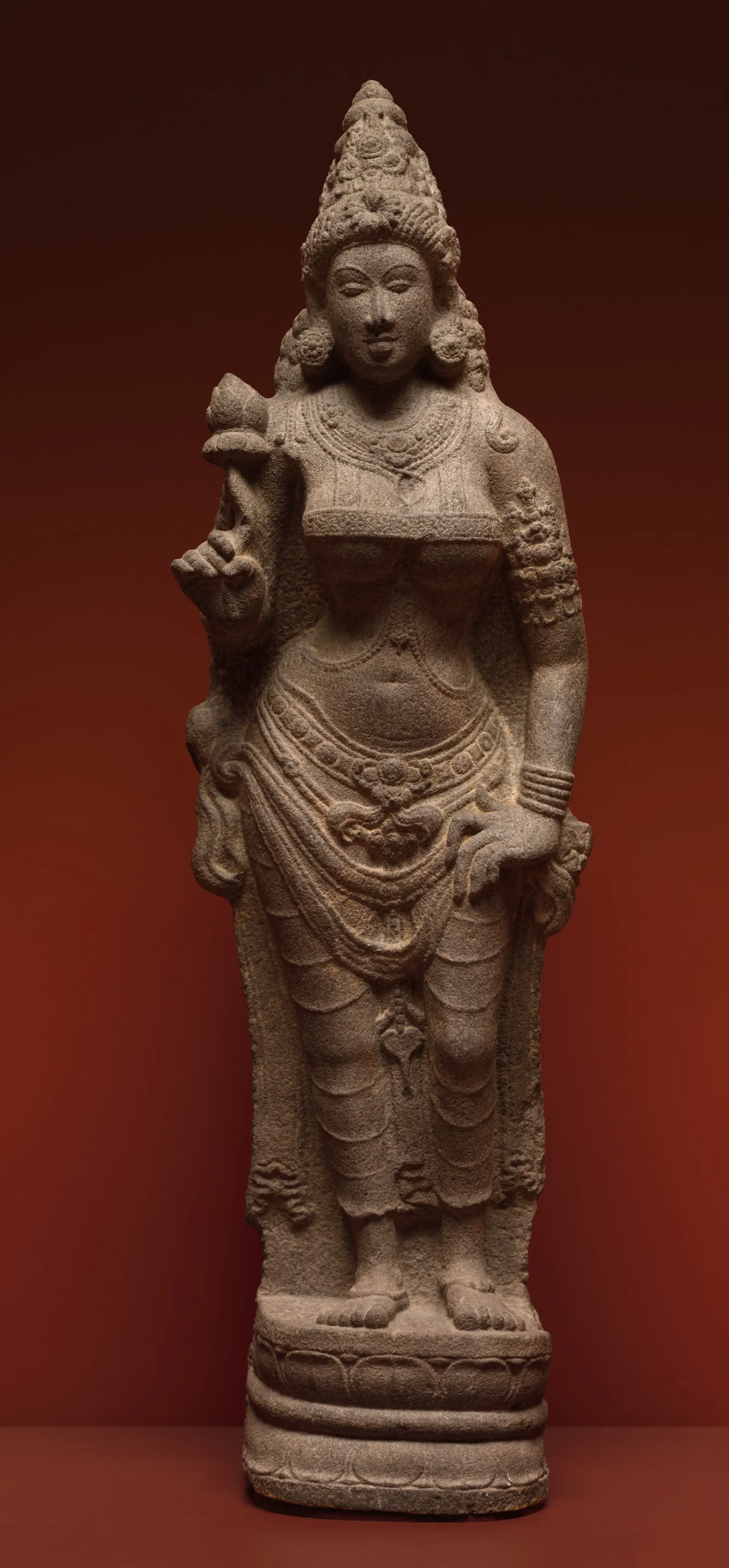
Seated on a red lotus, the colour of its heaped pollen, holding in her lotus hands the gestures of granting and of no fear, and a pair of lotuses, adorned with jewelled bracelets and a mesh of ornaments, mother of all the worlds: may Shri be always for our good.
Note //
The verse for meditation on the Goddess's form. 'For our good' renders 'śriyai naḥ', literally 'for our fortune'. Editions agree.
तत्पीठकर्णिकायां ससाध्यं श्रीबीजम् । वस्वादित्यकलापद्मेषु श्रीसूक्तगतार्धार्धर्चा तद्बहिर्यः शुचिरिति मातृकया च श्रियं यन्त्राङ्गदशकं च विलिख्य श्रियमावाहयेत् । अङ्गैः प्रथमा वृत्तिः । पद्मादिभिर्द्वितीया । लोकेशैस्तृतीया । तदायुधैस्तुरीया वृत्तिर्भवति । श्रीसूक्तैरावाहनादि । षोडशसहस्रजपः ।
tatpīṭhakarṇikāyāṃ sasādhyaṃ śrībījam | vasvādityakalāpadmeṣu śrīsūktagatārdhārdharcā tadbahiryaḥ śuciriti mātṛkayā ca śriyaṃ yantrāṅgadaśakaṃ ca vilikhya śriyamāvāhayet | aṅgaiḥ prathamā vṛttiḥ | padmādibhirdvitīyā | lokeśaistṛtīyā | tadāyudhaisturīyā vṛttirbhavati | śrīsūktairāvāhanādi | ṣoḍaśasahasrajapaḥ |
In the centre of the lotus of her seat, the seed-syllable of Shri, with the aim of the rite. On lotuses of eight, twelve and sixteen petals, the half-verses of the Shri Sukta; outside these, the verse 'whoever is pure', and the letters of the alphabet; drawing Shri and the ten limbs of the diagram, one should invoke Shri. The first circle is of the limbs, the second of the lotus and the rest, the third of the guardians of the worlds, the fourth of their weapons. The invoking and the rest are done with the Shri Sukta. Sixteen thousand repetitions.
Note //
The drawing of the diagram (yantra) for worship. 'Eight, twelve and sixteen' renders the code-words 'vasu, āditya, kalā' (the eight Vasus, twelve suns, sixteen digits of the moon). 'With the aim of the rite' (sasādhya): with the name of what the rite is for. Editions: 'lokeśaiḥ' (Adyar) over 'sokeśaiḥ' (sanskritdocuments.org); 'āvāhanādi' (sanskritdocuments.org) over 'āhanādi' (Adyar).
सौभाग्यरमैकाक्षर्या भृगुनिचृद्गायत्री । श्रिय ऋष्यादयः । शमिति बीजशक्तिः । श्रीमित्यादि षडङ्गम् । भूयाद्भूयो द्विपद्माभयवरदकरा तप्तकार्तस्वराभा शुभ्राभ्राभेभयुग्मद्वयकरधृतकुम्भाद्भिरासिच्यमाना । रक्तौघाबद्धमौलिर्विमलतरदुकूलार्तवालेपनाढ्या पद्माक्षी पद्मनाभोरसि कृतवसतिः पद्मगा श्रीः श्रियै नः ॥
saubhāgyaramaikākṣaryā bhṛgunicṛdgāyatrī | śriya ṛṣyādayaḥ | śamiti bījaśaktiḥ | śrīmityādi ṣaḍaṅgam | bhūyādbhūyo dvipadmābhayavaradakarā taptakārtasvarābhā śubhrābhrābhebhayugmadvayakaradhṛtakumbhādbhirāsicyamānā | raktaughābaddhamaulirvimalataradukūlārtavālepanāḍhyā padmākṣī padmanābhorasi kṛtavasatiḥ padmagā śrīḥ śriyai naḥ ||
Of the one-syllabled mantra of Rama, Goddess of good fortune, the seer is Bhrigu, the metre nichrid gayatri; Shri is the deity and the rest. 'Śam' is the seed and the power; 'śrīm' and the rest are the six limbs. Again and again, with two lotuses, and hands granting gifts and no fear, shining like heated gold, bathed by water from pitchers held in the trunks of two pairs of elephants white as autumn clouds, her crown bound with a cluster of red jewels, rich with spotless silk and seasonal ointments, lotus-eyed, dwelling on the breast of the lotus-naveled Vishnu, standing on a lotus: may Shri be always for our good.
Note //
The one-syllabled mantra is 'śrīṃ'. The meditation verse is the image of Gaja-Lakshmi, the Goddess bathed by elephants. 'Again and again' (bhūyād bhūyaḥ) may belong with the end: 'may she be, again and again, for our good'. Editions: 'kara-dhṛta' (sanskritdocuments.org) over 'kara-ghṛta' (Adyar). Pending review.
तत्पीठम् । अष्टपत्रं वृत्तत्रयं द्वादशराशिखण्डं चतुरस्रं रमापीठं भवति । कर्णिकायां ससाध्यं श्रीबीजम् । विभूतिरुन्नतिः कान्तिः सृष्टिः कीर्तिः सन्नतिर्व्युष्टिः सत्कृष्टिरृद्धिरिति प्रणवादिनमोन्तैश्चतुर्थ्यन्तैर्नवशक्तिं यजेत् । अङ्गे प्रथमा वृत्तिः । वासुदेवादिभिर्द्वितीया । बालाक्यादिभिस्तृतीया । इन्द्रादिभिश्चतुर्थी भवति । द्वादशलक्षजपः ।
tatpīṭham | aṣṭapatraṃ vṛttatrayaṃ dvādaśarāśikhaṇḍaṃ caturasraṃ ramāpīṭhaṃ bhavati | karṇikāyāṃ sasādhyaṃ śrībījam | vibhūtirunnatiḥ kāntiḥ sṛṣṭiḥ kīrtiḥ sannatirvyuṣṭiḥ satkṛṣṭirṛddhiriti praṇavādinamontaiścaturthyantairnavaśaktiṃ yajet | aṅge prathamā vṛttiḥ | vāsudevādibhirdvitīyā | bālākyādibhistṛtīyā | indrādibhiścaturthī bhavati | dvādaśalakṣajapaḥ |
Its seat: eight petals, three circles, twelve divisions for the signs of the zodiac, and a square: this is Rama's seat. In the centre, the seed-syllable of Shri, with the aim of the rite. One should worship the nine Powers, Splendour, Rising, Beauty, Creation, Fame, Humility, Dawning, Good Harvest and Increase, with Om before, in the dative, and 'namaḥ' after. The first circle is of the limbs, the second of Vasudeva and the others, the third of Balaki and the others, the fourth of Indra and the others. Twelve hundred thousand repetitions.
Note //
The diagram for the one-syllabled mantra. The names of the nine Powers are rendered by meaning. Editions: 'vāsudevādibhiḥ' (Adyar) over 'vāsudevābhiḥ' (sanskritdocuments.org); 'namontaiḥ' (Adyar) over 'namo taiḥ'; 'vṛttiḥ' (sanskritdocuments.org) over 'vṛtiḥ' (Adyar).
श्रीलक्ष्मीर्वरदा विष्णुपत्नी वसुप्रदा हिरण्यरूपा स्वर्णमालिनी रजतस्रजा स्वर्णप्रभा स्वर्णप्राकारा पद्मवासिनी पद्महस्ता पद्मप्रिया मुक्तालङ्कारा चन्द्रसूर्या बिल्वप्रिया ईश्वरी भुक्तिर्मुक्तिर्विभूतिरृद्धिः समृद्धिः कृष्टिः पुष्टिर्धनदा धनेश्वरी श्रद्धा भोगिनी भोगदा सावित्री धात्री विधात्रीत्यादिप्रणवादिनमोन्ताश्चतुर्थ्यन्ता मन्त्राः । एकाक्षरवदङ्गादिपीठम् । लक्षजपः । दशांशं तर्पणम् । दशांशं हवनम् । द्विजतृप्तिः । निष्कामानामेव श्रीविद्यासिद्धिः । न कदापि सकामानामिति ॥
śrīlakṣmīrvaradā viṣṇupatnī vasupradā hiraṇyarūpā svarṇamālinī rajatasrajā svarṇaprabhā svarṇaprākārā padmavāsinī padmahastā padmapriyā muktālaṅkārā candrasūryā bilvapriyā īśvarī bhuktirmuktirvibhūtirṛddhiḥ samṛddhiḥ kṛṣṭiḥ puṣṭirdhanadā dhaneśvarī śraddhā bhoginī bhogadā sāvitrī dhātrī vidhātrītyādipraṇavādinamontāścaturthyantā mantrāḥ | ekākṣaravadaṅgādipīṭham | lakṣajapaḥ | daśāṃśaṃ tarpaṇam | daśāṃśaṃ havanam | dvijatṛptiḥ | niṣkāmānāmeva śrīvidyāsiddhiḥ | na kadāpi sakāmānāmiti ||
Shri, Lakshmi, the giver of gifts, Vishnu's wife, the giver of wealth, golden in form, garlanded with gold, with a silver garland, gold-shining, walled with gold, dwelling in the lotus, lotus in hand, lover of the lotus, adorned with pearls, moon and sun, lover of the bilva, the Ruler, enjoyment, freedom, splendour, increase, abundance, harvest, nourishment, giver of wealth, lord of wealth, faith, the enjoyer, giver of enjoyment, Savitri, the sustainer, the ordainer: these and others, with Om before, in the dative, and 'namaḥ' after, are the mantras. The limbs and the seat are as for the one-syllabled mantra. A hundred thousand repetitions; a tenth as many offerings of water, a tenth as many offerings in the fire, and the feeding of Brahmins. Success in comes only to those without desire, never to those with desire.
Note //
The last sentence of the first section turns the whole of it. Everything before it is the worship that is recited for wealth; this says it bears fruit only for those who want nothing from it. 'Knowledge of Shri' (śrīvidyā): here the worship of Lakshmi taught in this section. Among the names, 'freedom' (mukti) stands beside 'enjoyment' (bhukti). Editions: 'bhuktir muktir' (sanskritdocuments.org) over 'bhuktir bhuktir' (Adyar).
अथ हैनं देवा ऊचुस्तुरीयया मायया निर्दिष्टं तत्त्वं ब्रूहीति । तथेति स होवाच । योगेन योगो ज्ञातव्यो योगो योगात्प्रवर्धते । योऽप्रमत्तस्तु योगेन स योगी रमते चिरम् ॥ १ ॥
atha hainaṃ devā ūcusturīyayā māyayā nirdiṣṭaṃ tattvaṃ brūhīti | tatheti sa hovāca | yogena yogo jñātavyo yogo yogātpravardhate | yo'pramattastu yogena sa yogī ramate ciram || 1 ||
Then the gods said to him: Tell us the truth that the fourth, the Goddess's power, points to. So be it, he said. By yoga, yoga is to be known; yoga grows from yoga. One who is steady and awake in yoga is the yogi who rejoices for ever.
Note //
'The fourth, the Goddess's power' (turīyā māyā): the Goddess as the power beyond the three states, in whose name the first section was taught; the phrase is uncertain. The verse is also in the Yogashikha and the Hatha Yoga tradition. Pending review. Editions agree.
समापय्य निद्रां सुजीर्णेऽल्पभोजी श्रमत्याज्यबाधे विविक्ते प्रदेशे । सदा शीतनिस्तृष्ण एष प्रयत्नोऽथ वा प्राणरोधो निजाभ्यासमार्गात् ॥ २ ॥
samāpayya nidrāṃ sujīrṇe'lpabhojī śramatyājyabādhe vivikte pradeśe | sadā śītanistṛṣṇa eṣa prayatno'tha vā prāṇarodho nijābhyāsamārgāt || 2 ||
Having done with sleep, the food well digested, eating little, in a quiet place where fatigue and its troubles are left behind, always cool and free of craving: this is the effort. Or else the holding of the breath, by the way of one's own practice.
Note //
The conditions of practice. 'Where fatigue and its troubles are left behind' renders 'śrama-tyājya-bādhe', which is unclear. Editions: 'sujīrṇe' (Adyar) over 'sijīrṇe' (sanskritdocuments.org); 'prāṇarodho' (sanskritdocuments.org) over 'praṇarodho' (Adyar).
वक्त्रेणापूर्य वायुं हुतवहनिलयेऽपानमाकृष्य धृत्वा स्वाङ्गुष्ठाद्यङ्गुलीभिर्वरकरतलयोः षड्भिरेवं निरुध्य । श्रोत्रे नेत्रे च नासापुटयुगलमथोऽनेन मार्गेण सम्यक्पश्यन्ति प्रत्ययांशं प्रणवबहुविधध्यानसंलीनचित्ताः ॥ ३ ॥
vaktreṇāpūrya vāyuṃ hutavahanilaye'pānamākṛṣya dhṛtvā svāṅguṣṭhādyaṅgulībhirvarakaratalayoḥ ṣaḍbhirevaṃ nirudhya | śrotre netre ca nāsāpuṭayugalamatho'nena mārgeṇa samyakpaśyanti pratyayāṃśaṃ praṇavabahuvidhadhyānasaṃlīnacittāḥ || 3 ||
Filling in the breath through the mouth, drawing the downward breath up to the seat of fire and holding it, closing the ears, the eyes and both nostrils with six fingers of the two hands, thumbs and the next: by this way, their minds absorbed in meditation on Om in its many forms, they see clearly the part that is pure knowing.
Note //
The closing of the six gates (ṣaṇmukhī mudrā). 'The part that is pure knowing' renders 'pratyayāṃśa', which is uncertain; it may mean 'the inner sign' or 'the ray of awareness'. Editions: 'hutavaha' and 'atho' and 'pratyayāṃśaṃ' (Adyar) over 'hutavala', 'ato' and 'pratyayāśaṃ' (sanskritdocuments.org). Pending review.
श्रवणमुखनयननासानिरोधनेनैव कर्तव्यम् । शुद्धसुषुम्नासरणौ स्फुटममलं श्रूयते नादः ॥ ४ ॥
śravaṇamukhanayananāsānirodhanenaiva kartavyam | śuddhasuṣumnāsaraṇau sphuṭamamalaṃ śrūyate nādaḥ || 4 ||
It is to be done by closing the ears, mouth, eyes and nose. In the cleared path of the sushumna the sound is heard, clear and pure.
Note //
'Sushumna': the central channel of the subtle body. Editions agree.
विचित्रघोषसंयुक्तानाहते श्रूयते ध्वनिः । दिव्यदेहश्च तेजस्वी दिव्यगन्धोऽप्यरोगवान् ॥ ५ ॥
vicitraghoṣasaṃyuktānāhate śrūyate dhvaniḥ | divyadehaśca tejasvī divyagandho'pyarogavān || 5 ||
In the unstruck centre a sound is heard, with many kinds of tone. The body becomes divine, radiant, sweet-smelling, and free of illness.
Note //
'The unstruck' (anāhata): the centre at the heart, and the sound that arises without any striking. This and the next verses follow the four stages of the inner sound found also in the Hatha Yoga Pradipika (4.69-76). Editions agree.
सम्पूर्णहृदयः शून्ये त्वारम्भे योगवान्भवेत् । द्वितीया विघटीकृत्य वायुर्भवति मध्यगः ॥ ६ ॥
sampūrṇahṛdayaḥ śūnye tvārambhe yogavānbhavet | dvitīyā vighaṭīkṛtya vāyurbhavati madhyagaḥ || 6 ||
With the heart full, in the void, at the first stage, one becomes a yogi. In the second, breaking the knot, the breath goes into the middle.
Note //
The first stage (ārambha) is the piercing of the knot of Brahma at the heart. 'Breaking the knot' fills out 'dvitīyā vighaṭīkṛtya', literally 'the second, having broken apart'. Editions agree.
दृढासनो भवेद्योगी पद्माद्यासनसंस्थितः । विष्णुग्रन्थेस्ततो भेदात्परमानन्दसम्भवः ॥ ७ ॥
dṛḍhāsano bhavedyogī padmādyāsanasaṃsthitaḥ | viṣṇugranthestato bhedātparamānandasambhavaḥ || 7 ||
The yogi should be firm in posture, seated in the lotus or another posture. Then, from piercing the knot of Vishnu, the highest joy is born.
Note //
The knot of Vishnu is placed at the throat. Editions agree.
अतिशून्यो विमर्दश्च भेरीशब्दस्ततो भवेत् । तृतीयां यत्नतो भित्त्वा निनादो मर्दलध्वनिः ॥ ८ ॥
atiśūnyo vimardaśca bherīśabdastato bhavet | tṛtīyāṃ yatnato bhittvā ninādo mardaladhvaniḥ || 8 ||
Then there is the further void, a pounding, the sound of the kettledrum. Piercing the third with effort, the resounding is the sound of the mardala drum.
Note //
The third knot, of Rudra, is placed between the brows. 'A pounding' renders 'vimarda'. Editions: 'mardala' (sanskritdocuments.org) over 'mardana' (Adyar); the mardala is a drum, as in the Hatha Yoga Pradipika (4.75).
महाशून्यं ततो याति सर्वसिद्धिसमाश्रयम् । चित्तानन्दं ततो भित्त्वा सर्वपीठगतानिलः ॥ ९ ॥
mahāśūnyaṃ tato yāti sarvasiddhisamāśrayam | cittānandaṃ tato bhittvā sarvapīṭhagatānilaḥ || 9 ||
Then it goes to the great void, where every power finds its home. Then, breaking through the mind's own joy, the breath reaches every seat.
Note //
Even the joy of the mind is something to pass through. Editions agree.
निष्पत्तौ वैष्णवः शब्दः क्वणतीति क्वणो भवेत् । एकीभूतं तदा चित्तं सनकादिमुनीडितम् ॥ १० ॥
niṣpattau vaiṣṇavaḥ śabdaḥ kvaṇatīti kvaṇo bhavet | ekībhūtaṃ tadā cittaṃ sanakādimunīḍitam || 10 ||
At the last stage the sound of Vishnu rings, and becomes a ringing. Then the mind is one, the state praised by Sanaka and the other sages.
Note //
The last stage (niṣpatti): the sound itself rings out, and the mind is one with it. 'The sound of Vishnu' (vaiṣṇavaḥ śabdaḥ) may be the sound of the all-pervading. Editions agree.
अन्तेऽनन्तं समारोप्य खण्डेऽखण्डं समर्पयन् । भूमानं प्रकृतिं ध्यात्वा कृतकृत्योऽमृतो भवेत् ॥ ११ ॥
ante'nantaṃ samāropya khaṇḍe'khaṇḍaṃ samarpayan | bhūmānaṃ prakṛtiṃ dhyātvā kṛtakṛtyo'mṛto bhavet || 11 ||
Seeing the endless in what ends, giving the undivided to what is divided, knowing the vast as one's own nature, one has done all there is to do, and is beyond death.
Note //
Literally 'placing the endless on the end, offering the undivided in the divided'. The rendering takes this as seeing what is limited as the appearance of what is not limited, in Advaita terms; 'samāropya' is the verb used for superimposition, here turned the other way. 'The vast' (bhūman): Chandogya 7.23-24, 'the vast is joy'. 'One's own nature' (prakṛti) may also be 'nature' in the Samkhya sense. Interpretive; pending review. Editions agree.
योगेन योगं संरोध्य भावं भावेन चाञ्जसा । निर्विकल्पं परं तत्त्वं सदा भूत्वा परं भवेत् ॥ १२ ॥
yogena yogaṃ saṃrodhya bhāvaṃ bhāvena cāñjasā | nirvikalpaṃ paraṃ tattvaṃ sadā bhūtvā paraṃ bhavet || 12 ||
Stilling yoga by yoga, and one state by another, directly, being always the highest reality, which has no divisions, one becomes the highest.
Note //
Even the effort of yoga is stilled by yoga, and the last state by the state that has no second. 'Without divisions' (nirvikalpa): free of the distinctions of knower, knowing and known. Editions agree.
अहंभावं परित्यज्य जगद्भावमनीदृशम् । निर्विकल्पे स्थितो विद्वान्भूयो नाप्यनुशोचति ॥ १३ ॥
ahaṃbhāvaṃ parityajya jagadbhāvamanīdṛśam | nirvikalpe sthito vidvānbhūyo nāpyanuśocati || 13 ||
Letting go of and the world-sense, which is not what it seems, the knower rests where there is no division and grieves no more.
Note //
'Which is not what it seems' (anīdṛśam, literally 'not of this kind'): the world taken as standing on its own; it may also qualify the knower's state ('incomparable'). The I-sense and the world-sense are let go together: the I-claim and the world it claims stand and fall as a pair. Pending review. Editions agree.
सलिले सैन्धवं यद्वत्साम्यं भवति योगतः । तथात्ममनसोरैक्यं समाधिरभिधीयते ॥ १४ ॥
salile saindhavaṃ yadvatsāmyaṃ bhavati yogataḥ | tathātmamanasoraikyaṃ samādhirabhidhīyate || 14 ||
As salt in water becomes one with it, so the oneness of the Self and the mind is called samadhi.
Note //
Also in the Hatha Yoga Pradipika (4.5). The salt in water: Chandogya 6.13 and Brihadaranyaka 2.4.12. Sanskritdocuments.org has the slips 'saindhāvaṃ' and 'manasaureikyaṃ'; the Adyar reading is followed.
यदा संक्षीयते प्राणो मानसं च प्रलीयते । तदा समरसत्वं यत्समाधिरभिधीयते ॥ १५ ॥
yadā saṃkṣīyate prāṇo mānasaṃ ca pralīyate | tadā samarasatvaṃ yatsamādhirabhidhīyate || 15 ||
When the breath has worn away and the mind dissolves, the oneness of taste that remains is called samadhi.
Note //
Also in the Hatha Yoga Pradipika (4.6). 'Oneness of taste' (samarasatva): one savour throughout, with nothing set apart from it. Editions agree.
यत्समत्वं तयोरत्र जीवात्मपरमात्मनोः । समस्तनष्टसङ्कल्पः समाधिरभिधीयते ॥ १६ ॥
yatsamatvaṃ tayoratra jīvātmaparamātmanoḥ | samastanaṣṭasaṅkalpaḥ samādhirabhidhīyate || 16 ||
The sameness, here, of the individual self and the highest Self, in which every intention has gone: that is called samadhi.
Note //
Also in the Hatha Yoga Pradipika (4.7). 'Here' (atra): in this very life. Editions agree.
प्रभाशून्यं मनःशून्यं बुद्धिशून्यं निरामयम् । सर्वशून्यं निराभासं समाधिरभिधीयते ॥ १७ ॥
prabhāśūnyaṃ manaḥśūnyaṃ buddhiśūnyaṃ nirāmayam | sarvaśūnyaṃ nirābhāsaṃ samādhirabhidhīyate || 17 ||
light, mind, intellect, free of all sickness, everything, without any appearance: that is called samadhi.
Note //
'Empty' (śūnya): free of these, not a void. What is empty of everything is what knows the emptiness; Advaita reads such verses as the negation of every object, not of the Self. 'Light' (prabhā): perhaps the inner lights seen in meditation. Interpretive. Editions agree.
स्वयमुच्चलिते देहे देही नित्यसमाधिना । निश्चलं तं विजानीयात्समाधिरभिधीयते ॥ १८ ॥
svayamuccalite dehe dehī nityasamādhinā | niścalaṃ taṃ vijānīyātsamādhirabhidhīyate || 18 ||
When the body moves of itself, let one know the one in the body as unmoving, by a samadhi that never ends: that is called samadhi.
Note //
Samadhi here is not a stillness of the body but the knowledge that the Self is still while the body moves. Sanskritdocuments.org places the heading of the third section before this verse; the Adyar collection keeps it in the second section, as its numbering requires. Interpretive. Editions agree in the words.
यत्र यत्र मनो याति तत्र तत्र परं पदम् । तत्र तत्र परं ब्रह्म सर्वत्र समवस्थितम् ॥ १९ ॥
yatra yatra mano yāti tatra tatra paraṃ padam | tatra tatra paraṃ brahma sarvatra samavasthitam || 19 ||
Wherever the mind goes, there is . There is the highest Brahman, present everywhere.
Note //
The last verse of the teaching on samadhi. Editions agree.
अथ हैनं देवा ऊचुर्नवचक्रविवेकमनुब्रूहीति । तथेति स होवाच आधारे ब्रह्मचक्रं त्रिरावृत्तं भगमण्डलाकारम् । तत्र मूलकन्दे शक्तिः पावकाकारं ध्यायेत् । तत्रैव कामरूपपीठं सर्वकामप्रदं भवति । इत्याधारचक्रम् । द्वितीयं स्वाधिष्ठानचक्रं षड्दलम् । तन्मध्ये पश्चिमाभिमुखं लिङ्गं प्रवालाङ्कुरसदृशं ध्यायेत् । तत्रैवोड्याणपीठं जगदाकर्षणसिद्धिदं भवति । तृतीयं नाभिचक्रं पञ्चावर्तं सर्पकुटिलाकारम् । तन्मध्ये कुण्डलिनीं बालार्ककोटिप्रभां तडित्प्रभां तनुमध्यां ध्यायेत् । सामर्थ्यशक्तिः सर्वसिद्धिप्रदा भवति ।
atha hainaṃ devā ūcurnavacakravivekamanubrūhīti | tatheti sa hovāca ādhāre brahmacakraṃ trirāvṛttaṃ bhagamaṇḍalākāram | tatra mūlakande śaktiḥ pāvakākāraṃ dhyāyet | tatraiva kāmarūpapīṭhaṃ sarvakāmapradaṃ bhavati | ityādhāracakram | dvitīyaṃ svādhiṣṭhānacakraṃ ṣaḍdalam | tanmadhye paścimābhimukhaṃ liṅgaṃ pravālāṅkurasadṛśaṃ dhyāyet | tatraivoḍyāṇapīṭhaṃ jagadākarṣaṇasiddhidaṃ bhavati | tṛtīyaṃ nābhicakraṃ pañcāvartaṃ sarpakuṭilākāram | tanmadhye kuṇḍalinīṃ bālārkakoṭiprabhāṃ taḍitprabhāṃ tanumadhyāṃ dhyāyet | sāmarthyaśaktiḥ sarvasiddhipradā bhavati |
Then the gods said to him: Tell us the discernment of the nine centres. So be it, he said. At the base is the centre of Brahma, three times coiled, in the shape of the circle of the womb. There, at the root-bulb, let one meditate on the Power in the form of fire. There too is the seat of Kamarupa, which grants every wish. This is the base centre. The second is the svadhishthana centre, of six petals. In its middle let one meditate on a linga facing west, like a shoot of coral. There too is the seat of Uddiyana, which grants the power to draw the world. The third is the navel centre, of five turns, coiled like a snake. In its middle let one meditate on Kundalini, bright as ten million rising suns, bright as lightning, slender-waisted. She is the Power of capacity, who grants every attainment.
Note //
Kamarupa, Uddiyana, and later Jalandhara and Purnagiri are the four great seats (pīṭha) of the Goddess, here placed in the body. 'Facing west': facing backward, toward the spine. Editions: 'taḍitprabhāṃ' and 'tanumadhyāṃ' are in the Adyar text; sanskritdocuments.org lacks 'taḍitprabhāṃ'; adopted. 'trirāvṛttaṃ' (sanskritdocuments.org) over 'trirāvṛtam' (Adyar).
मणिपूरचक्रं हृदयचक्रम् । अष्टदलमधोमुखम् । तन्मध्ये ज्योतिर्मयलिङ्गाकारं ध्यायेत् । सैव हंसकला सर्वप्रिया सर्वलोकवश्यकरी भवति । कण्ठचक्रं चतुरङ्गुलम् । तत्र वामे इडा चन्द्रनाडी दक्षिणे पिङ्गला सूर्यनाडी तन्मध्ये सुषुम्नां श्वेतवर्णां ध्यायेत् । य एवं वेदानाहता सिद्धिदा भवति । तालुचक्रम् । तत्रामृतधाराप्रवाहः । घण्टिकालिङ्गमूलचक्ररन्ध्रे राजदन्तावलम्बिनीविवरं दशद्वादशारम् । तत्र शून्यं ध्यायेत् । चित्तलयो भवति ।
maṇipūracakraṃ hṛdayacakram | aṣṭadalamadhomukham | tanmadhye jyotirmayaliṅgākāraṃ dhyāyet | saiva haṃsakalā sarvapriyā sarvalokavaśyakarī bhavati | kaṇṭhacakraṃ caturaṅgulam | tatra vāme iḍā candranāḍī dakṣiṇe piṅgalā sūryanāḍī tanmadhye suṣumnāṃ śvetavarṇāṃ dhyāyet | ya evaṃ vedānāhatā siddhidā bhavati | tālucakram | tatrāmṛtadhārāpravāhaḥ | ghaṇṭikāliṅgamūlacakrarandhre rājadantāvalambinīvivaraṃ daśadvādaśāram | tatra śūnyaṃ dhyāyet | cittalayo bhavati |
The manipura centre is the heart centre, of eight petals, facing down. In its middle let one meditate on a form like a linga made of light. That is the digit of the swan, dear to all, which brings all the worlds under one's sway. The throat centre is four fingers wide. There, on the left, is ida, the channel of the moon, on the right pingala, the channel of the sun, and between them let one meditate on the sushumna, white in colour. For one who knows this, the unstruck sound grants attainment. The palate centre: there the stream of nectar flows. At the opening of the centre at the root of the uvula, the hollow hanging by the royal tooth, with ten or twelve spokes: there let one meditate on the void. The mind dissolves.
Note //
The text's placing of the centres differs from the later standard list (here manipura is at the heart). 'The swan' (haṃsa): the breath going out and in as 'ham' and 'sa', and the Self that the breath names. 'The royal tooth' (rāja-danta): the front tooth; the passage on the palate is obscure. Editions: 'maṇipūra' (sanskritdocuments.org); Adyar 'maṇipūraka'. Editions agree otherwise. Pending review.
सप्तमं भ्रूचक्रमङ्गुष्ठमात्रम् । तत्र ज्ञाननेत्रं दीपशिखाकारं ध्यायेत् । तदेव कपालकन्दवाक्सिद्धिदं भवति । आज्ञाचक्रमष्टमम् । ब्रह्मरन्ध्रं निर्वाणचक्रम् । तत्र सूचिकागृहेतरं धूम्रशिखाकारं ध्यायेत् । तत्र जालन्धरपीठं मोक्षप्रदं भवतीति परब्रह्मचक्रम् । नवममाकाशचक्रम् । तत्र षोडशदलपद्ममूर्ध्वमुखं तन्मध्यकर्णिकात्रिकूटाकारम् । तन्मध्ये ऊर्ध्वशक्तिः । तां पश्यन्ध्यायेत् । तत्रैव पूर्णगिरिपीठं सर्वेच्छासिद्धिसाधनं भवति ।
saptamaṃ bhrūcakramaṅguṣṭhamātram | tatra jñānanetraṃ dīpaśikhākāraṃ dhyāyet | tadeva kapālakandavāksiddhidaṃ bhavati | ājñācakramaṣṭamam | brahmarandhraṃ nirvāṇacakram | tatra sūcikāgṛhetaraṃ dhūmraśikhākāraṃ dhyāyet | tatra jālandharapīṭhaṃ mokṣapradaṃ bhavatīti parabrahmacakram | navamamākāśacakram | tatra ṣoḍaśadalapadmamūrdhvamukhaṃ tanmadhyakarṇikātrikūṭākāram | tanmadhye ūrdhvaśaktiḥ | tāṃ paśyandhyāyet | tatraiva pūrṇagiripīṭhaṃ sarvecchāsiddhisādhanaṃ bhavati |
The seventh is the brow centre, the size of a thumb. There let one meditate on the eye of knowledge, in the shape of a lamp's flame. That grants mastery of speech at the root of the skull. The eighth is the ajna centre. The opening of Brahman is the centre of release. There let one meditate on a form like a plume of smoke, other than the needle's house. There is the seat of Jalandhara, which grants freedom. This is the centre of the highest Brahman. The ninth is the centre of space. There is a lotus of sixteen petals, facing up; the centre of it is shaped like three peaks; in the middle of that is the upward Power. Seeing her, let one meditate. There too is the seat of Purnagiri, the means of attaining every wish.
Note //
The count of nine is reached by naming the brow centre, the ajna and the opening of Brahman (brahmarandhra) separately; the text is not clear whether these are two centres or three. 'Other than the needle's house' (sūcikā-gṛhetaram) is obscure and rendered literally. 'Grants mastery of speech at the root of the skull' takes 'kapāla-kanda-vāk-siddhidam' as one phrase; uncertain. Editions agree in substance. Pending review.
सौभाग्यलक्ष्म्युपनिषदं नित्यमधीते सोऽग्निपूतो भवति । स वायुपूतो भवति । स सकलधनधान्यसत्पुत्रकलत्रहयभूगजपशुमहिषीदासीदासयोगज्ञानवान्भवति । न स पुनरावर्तते न स पुनरावर्तत इत्युपनिषत् ॥
saubhāgyalakṣmyupaniṣadaṃ nityamadhīte so'gnipūto bhavati | sa vāyupūto bhavati | sa sakaladhanadhānyasatputrakalatrahayabhūgajapaśumahiṣīdāsīdāsayogajñānavānbhavati | na sa punarāvartate na sa punarāvartata ityupaniṣat ||
Whoever studies the Saubhagyalakshmi Upanishad every day is made pure by fire, made pure by wind. He comes to have all wealth and grain, good children and wife, horses, land, elephants, cattle, buffaloes, servants, and the knowledge of yoga. He does not return. He does not return. This is the Upanishad.
Note //
The end of the third section, after the nine centres of meditation. The promised goods are those the Shri Sukta asks for; read with 1.7, they come to the one who studies without wanting them. The copies read 'adhīte so 'gnipūtaḥ' (Adyar) and 'adhīte yo 'gnipūtaḥ' (sanskritdocuments.org); the Adyar reading is followed. Pending review.
No public-domain English translation exists for this text; the Sanskrit is shown.
The renderings on this page are shared under CC BY-NC 4.0, in the words of Pranav Ashar.