Atmabodha Upanishad
In the words of Pranav Ashar
How we renderThe heart of the Atmabodha
In brief
A short text in two parts. The first is a meditation on Narayana in the lotus of the heart that ends, like the Aitareya, in 'knowing is Brahman'. The second is a hymn of thirty verses in the first person: the knower speaks as the Self, without maya, without the I-claim, untouched by the three bodies. Its images are among the clearest in the tradition: sugar in the cane juice, the sun that lights a pot, a small lamp in great darkness.
- From devotion to knowing
- The Self speaks as 'I'
- Three bodies, none of them me
- Why the world still shines
- A little light is enough
Contents
ॐ प्रत्यगानन्दं ब्रह्मपुरुषं प्रणवस्वरूपं अकार उकारो मकार इति त्र्यक्षरं प्रणवं तदेतदोमिति । यमुक्त्वा मुच्यते योगी जन्मसंसारबन्धनात् । ॐ नमो नारायणाय शङ्खचक्रगदाधराय तस्मात् ॐ नमो नारायणायेति मन्त्रोपासको वैकुण्ठभवनं गमिष्यति ॥
oṃ pratyagānandaṃ brahmapuruṣaṃ praṇavasvarūpaṃ akāra ukāro makāra iti tryakṣaraṃ praṇavaṃ tadetadomiti | yamuktvā mucyate yogī janmasaṃsārabandhanāt | oṃ namo nārāyaṇāya śaṅkhacakragadādharāya tasmāt oṃ namo nārāyaṇāyeti mantropāsako vaikuṇṭhabhavanaṃ gamiṣyati ||
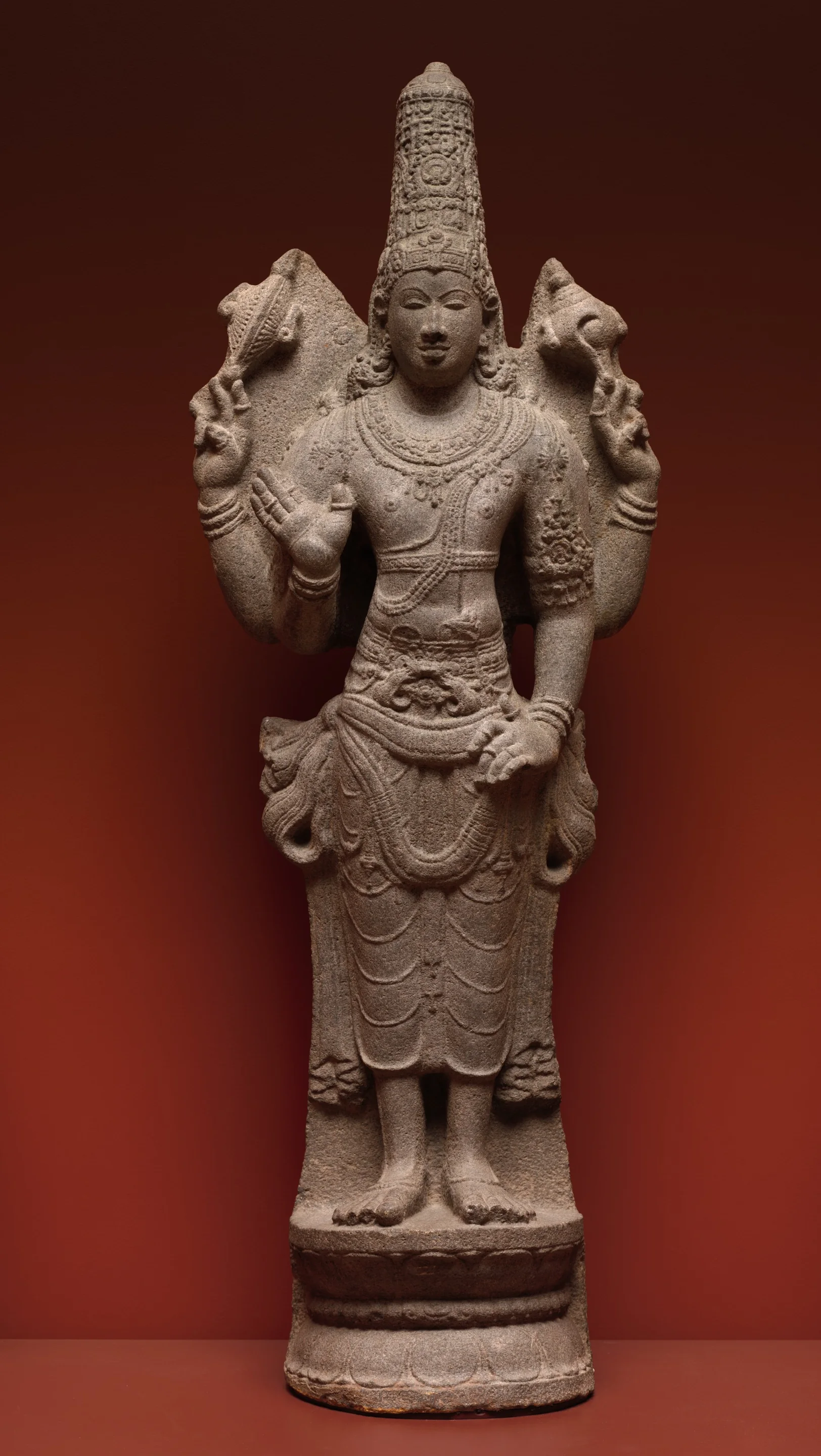
Om. The inward joy, the person who is Brahman, whose form is Om: the sound of three letters, a, u and m, is this Om. Saying it, the yogi is freed from the bonds of birth and the round of the world. Om, honour to Narayana, who holds the conch, the discus and the mace. So whoever worships with the words "Om, honour to Narayana" will reach the world of Vaikuntha.
Note //
The opening is devotional: Narayana (Vishnu) and his mantra, om namo narayanaya. Devotion is the way in; from 1.4 the text speaks of the one Self.
अथ यदिदं ब्रह्मपुरं पुण्डरीकं तस्मात्तडिताभमात्रं दीपवत्प्रकाशम् ॥
atha yadidaṃ brahmapuraṃ puṇḍarīkaṃ tasmāttaḍitābhamātraṃ dīpavatprakāśam ||
Now this city of Brahman is the lotus of the heart. It gleams like a flash of lightning and shines like a lamp.
Note //
ब्रह्मण्यो देवकीपुत्रो ब्रह्मण्यो मधुसूदनः । ब्रह्मण्यः पुण्डरीकाक्षो ब्रह्मण्यो विष्णुरच्युतः ॥
brahmaṇyo devakīputro brahmaṇyo madhusūdanaḥ | brahmaṇyaḥ puṇḍarīkākṣo brahmaṇyo viṣṇuracyutaḥ ||
Krishna, Devaki's son, is lord of Brahman's city; Madhusudana is its lord; the lotus-eyed one is its lord; Vishnu, who never falls, is its lord.
सर्वभूतस्थमेकं नारायणं कारणपुरुषमकारणं परं ब्रह्मोम् । शोकमोहविनिर्मुक्तो विष्णुं ध्यायन्न सीदति । द्वैताद्वैतमभयं भवति । मृत्योः स मृत्युमाप्नोति य इह नानेव पश्यति ॥
sarvabhūtasthamekaṃ nārāyaṇaṃ kāraṇapuruṣamakāraṇaṃ paraṃ brahmom | śokamohavinirmukto viṣṇuṃ dhyāyanna sīdati | dvaitādvaitamabhayaṃ bhavati | mṛtyoḥ sa mṛtyumāpnoti ya iha nāneva paśyati ||
The one Narayana, present in all beings, the person who is the cause, himself without a cause, the highest Brahman, Om. Meditating on Vishnu, free of grief and confusion, one does not sink. From two, one becomes the fearless not-two. Whoever sees as if there were many here goes from death to death.
Note //
The last line is Katha 4.10 and Brihadaranyaka 4.4.19. 'As if many': the many are not denied as appearances; what binds is seeing them as many separate things.
हृत्पद्ममध्ये सर्वं यत्तत्प्रज्ञाने प्रतिष्ठितम् । प्रज्ञानेत्रो लोकः प्रज्ञा प्रतिष्ठा प्रज्ञानं ब्रह्म । स एतेन प्रज्ञेनात्मनास्माल्लोकादुत्क्रम्यामुष्मिन्स्वर्गे लोके सर्वान्कामानाप्त्वाऽमृतः समभवदमृतः समभवत् ॥
hṛtpadmamadhye sarvaṃ yattatprajñāne pratiṣṭhitam | prajñānetro lokaḥ prajñā pratiṣṭhā prajñānaṃ brahma | sa etena prajñenātmanāsmāllokādutkramyāmuṣminsvarge loke sarvānkāmānāptvā'mṛtaḥ samabhavadamṛtaḥ samabhavat ||
In the middle of the heart-lotus, all that is rests in knowing. The world is guided by knowing; knowing is its ground. Knowing is Brahman. With this knowing Self he rose up from this world, gained every desire in that world of light, and became deathless. He became deathless.
Note //
This repeats Aitareya 5.3 and 5.4: 'knowing is Brahman'.
यत्र ज्योतिरजस्रं यस्मिँल्लोकेऽभ्यर्हितम् । तस्मिन्मां देहि स्वमानमृते लोके अक्षते अच्युते लोके अक्षते अमृतत्वं च गच्छत्यों नमः ॥
yatra jyotirajasraṃ yasmim̐lloke'bhyarhitam | tasminmāṃ dehi svamānamṛte loke akṣate acyute loke akṣate amṛtatvaṃ ca gacchatyoṃ namaḥ ||
Where the light never fails, the world held in honour: place me in that deathless world, the world that does not decay or fall. And one reaches the deathless. Om, honour.
Note //
Pending review. The prayer adapts Rig Veda 9.113.7 ('where the light never fails ... place me in that deathless, undecaying world'). The Sanskrit printed here is uncertain in places.
प्रगलितनिजमायोऽहं निस्तुलदृशिरूपवस्तुमात्रोऽहम् । अस्तमिताहन्तोऽहं प्रगलितजगदीशजीवभेदोऽहम् ॥
pragalitanijamāyo'haṃ nistuladṛśirūpavastumātro'ham | astamitāhanto'haṃ pragalitajagadīśajīvabhedo'ham ||
My maya has melted away. I am nothing but the reality that sees, beyond compare. has set. World, Lord and living self are no longer divided in me.
Note //
The second chapter speaks in the voice of the Self. Each 'I' is the Self, not the person.
प्रत्यगभिन्नपरोऽहं विध्वस्ताशेषविधिनिषेधोऽहम् । समुदस्ताश्रमितोऽहं प्रविततसुखपूर्णसंविदेवाहम् ॥
pratyagabhinnaparo'haṃ vidhvastāśeṣavidhiniṣedho'ham | samudastāśramito'haṃ pravitatasukhapūrṇasaṃvidevāham ||
I am . For me every 'do' and 'do not' has fallen away. I have put down the stages of life. I am only awareness: wide, joyful and full.
Note //
साक्ष्यहमनपेक्षोऽहं निजमहिम्नि संस्थितोऽहमचलोऽहम् । अजरोऽहमव्ययोऽहं पक्षविपक्षादिभेदविधुरोऽहम् ॥
sākṣyahamanapekṣo'haṃ nijamahimni saṃsthito'hamacalo'ham | ajaro'hamavyayo'haṃ pakṣavipakṣādibhedavidhuro'ham ||
I am the witness; I need nothing. I rest in my own greatness; I do not move. I do not age; I do not wear away. I am free of every split into my side and the other side.
Note //
अवबोधैकरसोऽहं मोक्षानन्दैकसिन्धुरेवाहम् । सूक्ष्मोऽहमक्षरोऽहं विगलितगुणजालकेवलात्माऽहम् ॥
avabodhaikaraso'haṃ mokṣānandaikasindhurevāham | sūkṣmo'hamakṣaro'haṃ vigalitaguṇajālakevalātmā'ham ||
I am one taste: understanding. I am the one ocean of the joy of freedom. I am subtle; I am imperishable. The net of qualities has slipped away: I am the Self alone.
Note //
निस्त्रैगुण्यपदोऽहं कुक्षिस्थानेकलोककलनोऽहम् । कूटस्थचेतनोऽहं निष्क्रियधामाहमप्रतर्क्योऽहम् ॥
nistraiguṇyapado'haṃ kukṣisthānekalokakalano'ham | kūṭasthacetano'haṃ niṣkriyadhāmāhamapratarkyo'ham ||
I am the state beyond the three qualities. The many worlds are held within me. I am unchanging awareness, steady as an anvil. I am the place of no action; I am beyond reasoning.
Note //
'Kutastha': unchanging, like the anvil on which everything is shaped.
एकोऽहमविकलोऽहं निर्मलनिर्वाणमूर्तिरेवाहम् । निरवयवोऽहमजोऽहं केवलसन्मात्रसारभूतोऽहम् ॥
eko'hamavikalo'haṃ nirmalanirvāṇamūrtirevāham | niravayavo'hamajo'haṃ kevalasanmātrasārabhūto'ham ||
I am one; I am whole. I am the very form of stainless freedom. I have no parts; I am unborn. I am the essence that is being alone.
Note //
निरवधिनिजबोधोऽहं शुभतरभावोऽहमप्रभेद्योऽहम् । विभुरहमनवद्योऽहं निरवधिनिःसीमतत्त्वमात्रोऽहम् ॥
niravadhinijabodho'haṃ śubhatarabhāvo'hamaprabhedyo'ham | vibhurahamanavadyo'haṃ niravadhiniḥsīmatattvamātro'ham ||
I am my own knowing, without limit. I am the most blessed state; I cannot be divided. I am all-pervading; I am faultless. I am only the reality, without limit or edge.
Note //
वेद्योऽहमागमान्तैराराध्योऽहं सकलभुवनहृद्योऽहम् । परमानन्दघनोऽहं परमानन्दैकभूमरूपोऽहम् ॥
vedyo'hamāgamāntairārādhyo'haṃ sakalabhuvanahṛdyo'ham | paramānandaghano'haṃ paramānandaikabhūmarūpo'ham ||
I am the one to be known through the Upanishads, the one to be worshipped, dear to the heart of every world. I am a mass of the highest joy; I am the one fullness of the highest joy.
Note //
'Bhuma', fullness, as in Chandogya 7.23: 'the full is joy'.
शुद्धोऽहमद्वयोऽहं सन्ततभावोऽहमादिशून्योऽहम् । शमितान्तत्रितयोऽहं बद्धो मुक्तोऽहमद्भुतात्माहम् ॥
śuddho'hamadvayo'haṃ santatabhāvo'hamādiśūnyo'ham | śamitāntatritayo'haṃ baddho mukto'hamadbhutātmāham ||
I am pure; I am not two. I am being that never breaks; I have no beginning. The three have come to rest in me. Once bound, I am free: I am the wondrous Self.
Note //
Pending review. 'The three': Aiyar takes them as the three bodies. 'Once bound, I am free' renders baddho mukto'ham, whose sense is uncertain; Aiyar has simply 'I am the emancipated One'.
शुद्धोऽहमान्तरोऽहं शाश्वतविज्ञानसमरसात्माहम् । शोधितपरतत्त्वोऽहं बोधानन्दैकमूर्तिरेवाहम् ॥
śuddho'hamāntaro'haṃ śāśvatavijñānasamarasātmāham | śodhitaparatattvo'haṃ bodhānandaikamūrtirevāham ||
I am pure; I am the inmost. I am the Self that is one taste with eternal knowing. I am the highest truth, sifted from all else. I am the very form of understanding and joy.
Note //
विवेकयुक्तिबुद्ध्याहं जानाम्यात्मानमद्वयम् । तथापि बन्धमोक्षादिव्यवहारः प्रतीयते ॥
vivekayuktibuddhyāhaṃ jānāmyātmānamadvayam | tathāpi bandhamokṣādivyavahāraḥ pratīyate ||
With discernment, reasoning and understanding I know the Self as not two. Even so, all the talk of bondage and freedom still appears.
Note //
Knowing does not make the everyday world of 'bound' and 'free' disappear. The next verse says why it does no harm.
निवृत्तोऽपि प्रपञ्चो मे सत्यवद्भाति सर्वदा । सर्पादौ रज्जुसत्तेव ब्रह्मसत्तैव केवलम् । प्रपञ्चाधाररूपेण वर्ततेऽतो जगन्न हि ॥
nivṛtto'pi prapañco me satyavadbhāti sarvadā | sarpādau rajjusatteva brahmasattaiva kevalam | prapañcādhārarūpeṇa vartate'to jaganna hi ||
The world has ended for me, yet it always shines as if real. As in the 'snake' there is only the rope's being, so Brahman's being alone is there, as the ground of the world. So .
Note //
The world is mithya: real as appearance, not on its own. 'On its own' is added to make the sense plain.
यथेक्षुरससंव्याप्ता शर्करा वर्तते तथा । अद्वयब्रह्मरूपेण व्याप्तोऽहं वै जगत्त्रयम् ॥
yathekṣurasasaṃvyāptā śarkarā vartate tathā | advayabrahmarūpeṇa vyāpto'haṃ vai jagattrayam ||
As sugar fills the whole of the cane's juice, so I, as Brahman, not two, fill the three worlds.
Note //
ब्रह्मादिकीटपर्यन्ताः प्राणिनो मयि कल्पिताः । बुद्बुदादिविकारान्तस्तरङ्गः सागरे यथा ॥
brahmādikīṭaparyantāḥ prāṇino mayi kalpitāḥ | budbudādivikārāntastaraṅgaḥ sāgare yathā ||
All living beings, from Brahma to the worm, are pictured in me, as bubbles and waves and every other change are in the ocean.
Note //
तरङ्गस्थं द्रवं सिन्धुर्न वाञ्छति यथा तथा । विषयानन्दवाञ्छा मे मा भूदानन्दरूपतः ॥
taraṅgasthaṃ dravaṃ sindhurna vāñchati yathā tathā | viṣayānandavāñchā me mā bhūdānandarūpataḥ ||
As the ocean does not long for the water in its waves, so I, being joy itself, have no longing for the joy of objects.
Note //
दारिद्र्याशा यथा नास्ति सम्पन्नस्य तथा मम । ब्रह्मानन्दे निमग्नस्य विषयाशा न तद्भवेत् ॥
dāridryāśā yathā nāsti sampannasya tathā mama | brahmānande nimagnasya viṣayāśā na tadbhavet ||
As the rich do not wish to be poor, so I, immersed in the joy of Brahman, have no wish for objects.
Note //
विषं दृष्ट्वाऽमृतं दृष्ट्वा विषं त्यजति बुद्धिमान् । आत्मानमपि दृष्ट्वाहमनात्मानं त्यजाम्यहम् ॥
viṣaṃ dṛṣṭvā'mṛtaṃ dṛṣṭvā viṣaṃ tyajati buddhimān | ātmānamapi dṛṣṭvāhamanātmānaṃ tyajāmyaham ||
Seeing poison and seeing nectar, the wise leave the poison. So I, seeing the Self, leave what is not the Self.
Note //
घटावभासको भानुर्घटनाशे न नश्यति । देहावभासकः साक्षी देहनाशे न नश्यति ॥
ghaṭāvabhāsako bhānurghaṭanāśe na naśyati | dehāvabhāsakaḥ sākṣī dehanāśe na naśyati ||
The sun that lights up a pot does not perish when the pot breaks. The witness that lights up the body does not perish when the body dies.
Note //
न मे बन्धो न मे मुक्तिर्न मे शास्त्रं न मे गुरुः । मायामात्रविकासत्वान्मायातीतोऽहमद्वयः ॥
na me bandho na me muktirna me śāstraṃ na me guruḥ | māyāmātravikāsatvānmāyātīto'hamadvayaḥ ||
I have no bondage, no freedom, no scripture, no teacher. These unfold from maya alone; I am beyond maya, not two.
Note //
Not a dismissal of the teacher. Scripture and teacher belong to the appearance through which the Self is known, and are put down only when their work is done.
प्राणाश्चलन्तु तद्धर्मैः कामैर्वा हन्यतां मनः । आनन्दबुद्धिपूर्णस्य मम दुःखं कथं भवेत् ॥
prāṇāścalantu taddharmaiḥ kāmairvā hanyatāṃ manaḥ | ānandabuddhipūrṇasya mama duḥkhaṃ kathaṃ bhavet ||
Let the breaths move by their own nature; let the mind be battered by desires. I am full of the knowing of joy: how could sorrow touch me?
Note //
आत्मानमञ्जसा वेद्मि क्वाप्यज्ञानं पलायितम् । कर्तृत्वमद्य मे नष्टं कर्तव्यं वापि न क्वचित् ॥
ātmānamañjasā vedmi kvāpyajñānaṃ palāyitam | kartṛtvamadya me naṣṭaṃ kartavyaṃ vāpi na kvacit ||
I know the Self directly. Where has not-knowing run off to? Today the sense of being the doer is gone, and nothing is left to be done.
Note //
ब्राह्मण्यं कुलगोत्रे च नामसौन्दर्यजातयः । स्थूलदेहगता एते स्थूलाद्भिन्नस्य मे नहि ॥
brāhmaṇyaṃ kulagotre ca nāmasaundaryajātayaḥ | sthūladehagatā ete sthūlādbhinnasya me nahi ||
Priesthood, family and lineage, name, beauty and class belong to the gross body. They are not mine, for I am other than it.
Note //
क्षुत्पिपासान्ध्यबाधिर्यकामक्रोधादयोऽखिलाः । लिङ्गदेहगता एते ह्यलिङ्गस्य न सन्ति हि ॥
kṣutpipāsāndhyabādhiryakāmakrodhādayo'khilāḥ | liṅgadehagatā ete hyaliṅgasya na santi hi ||
Hunger, thirst, blindness, deafness, desire, anger and all the rest belong to the subtle body. They are not in me, who have no subtle body.
Note //
जडत्वप्रियमोदत्वधर्माः कारणदेहगाः । न सन्ति मम नित्यस्य निर्विकारस्वरूपिणः ॥
jaḍatvapriyamodatvadharmāḥ kāraṇadehagāḥ | na santi mama nityasya nirvikārasvarūpiṇaḥ ||
Dullness, liking and delight belong to the causal body. They are not mine, eternal and unchanging by nature.
Note //
Verses 22 to 24 take the three bodies in turn, gross, subtle and causal, and give each its own properties; none of them belongs to the Self.
उलूकस्य यथा भानुरन्धकारः प्रतीयते । स्वप्रकाशे परानन्दे तमो मूढस्य जायते ॥
ulūkasya yathā bhānurandhakāraḥ pratīyate | svaprakāśe parānande tamo mūḍhasya jāyate ||
As the sun seems darkness to the owl, so in the self-shining highest joy the deluded find only darkness.
Note //
चक्षुर्दृष्टिनिरोधेऽभ्रैः सूर्यो नास्तीति मन्यते । तथाऽज्ञानावृतो देही ब्रह्म नास्तीति मन्यते ॥
cakṣurdṛṣṭinirodhe'bhraiḥ sūryo nāstīti manyate | tathā'jñānāvṛto dehī brahma nāstīti manyate ||
When clouds block the eye's sight, one thinks there is no sun. So the embodied one, covered by not-knowing, thinks there is no Brahman.
Note //
यथामृतं विषाद्भिन्नं विषदोषैर्न लिप्यते । न स्पृशामि जडाद्भिन्नो जडदोषान्प्रकाशतः ॥
yathāmṛtaṃ viṣādbhinnaṃ viṣadoṣairna lipyate | na spṛśāmi jaḍādbhinno jaḍadoṣānprakāśataḥ ||
As nectar, being other than poison, is not stained by poison's faults, so I, other than what is inert, am not touched by its faults, being light.
Note //
स्वल्पापि दीपकणिका बहुलं नाशयेत्तमः । स्वल्पोऽपि बोधो निबिडं बहुलं नाशयेत्तमः ॥
svalpāpi dīpakaṇikā bahulaṃ nāśayettamaḥ | svalpo'pi bodho nibiḍaṃ bahulaṃ nāśayettamaḥ ||
Even a tiny flame of a lamp can end a great darkness. Even a little understanding can end a darkness thick and vast.
Note //
कालत्रये यथा सर्पो रज्जौ नास्ति तथा मयि । अहङ्कारादिदेहान्तं जगन्नास्त्यहमद्वयः ॥
kālatraye yathā sarpo rajjau nāsti tathā mayi | ahaṅkārādidehāntaṃ jagannāstyahamadvayaḥ ||
As in all three times there is no snake in the rope, so in me, not two, there is no world, from down to the body.
Note //
चिद्रूपत्वान्न मे जाड्यं सत्यत्वान्नानृतं मम । आनन्दत्वान्न मे दुःखमज्ञानाद्भाति सत्यवत् ॥
cidrūpatvānna me jāḍyaṃ satyatvānnānṛtaṃ mama | ānandatvānna me duḥkhamajñānādbhāti satyavat ||
Being the light, I am not inert. Being true, nothing false is mine. Being joy, no sorrow is mine. It is through not-knowing that the world shines as if real.
Note //
आत्मप्रबोधोपनिषदं मुहूर्तमुपासित्वा न स पुनरावर्तते न स पुनरावर्तत इत्युपनिषत् ॥
ātmaprabodhopaniṣadaṃ muhūrtamupāsitvā na sa punarāvartate na sa punarāvartata ityupaniṣat ||
Whoever dwells on this Atmaprabodha Upanishad for even a muhurta does not return. Does not return. So says the Upanishad.
Note //
A muhurta is a short span, forty-eight minutes.
The renderings on this page are shared under CC BY-NC 4.0, in the words of Pranav Ashar.