Annapurna Upanishad
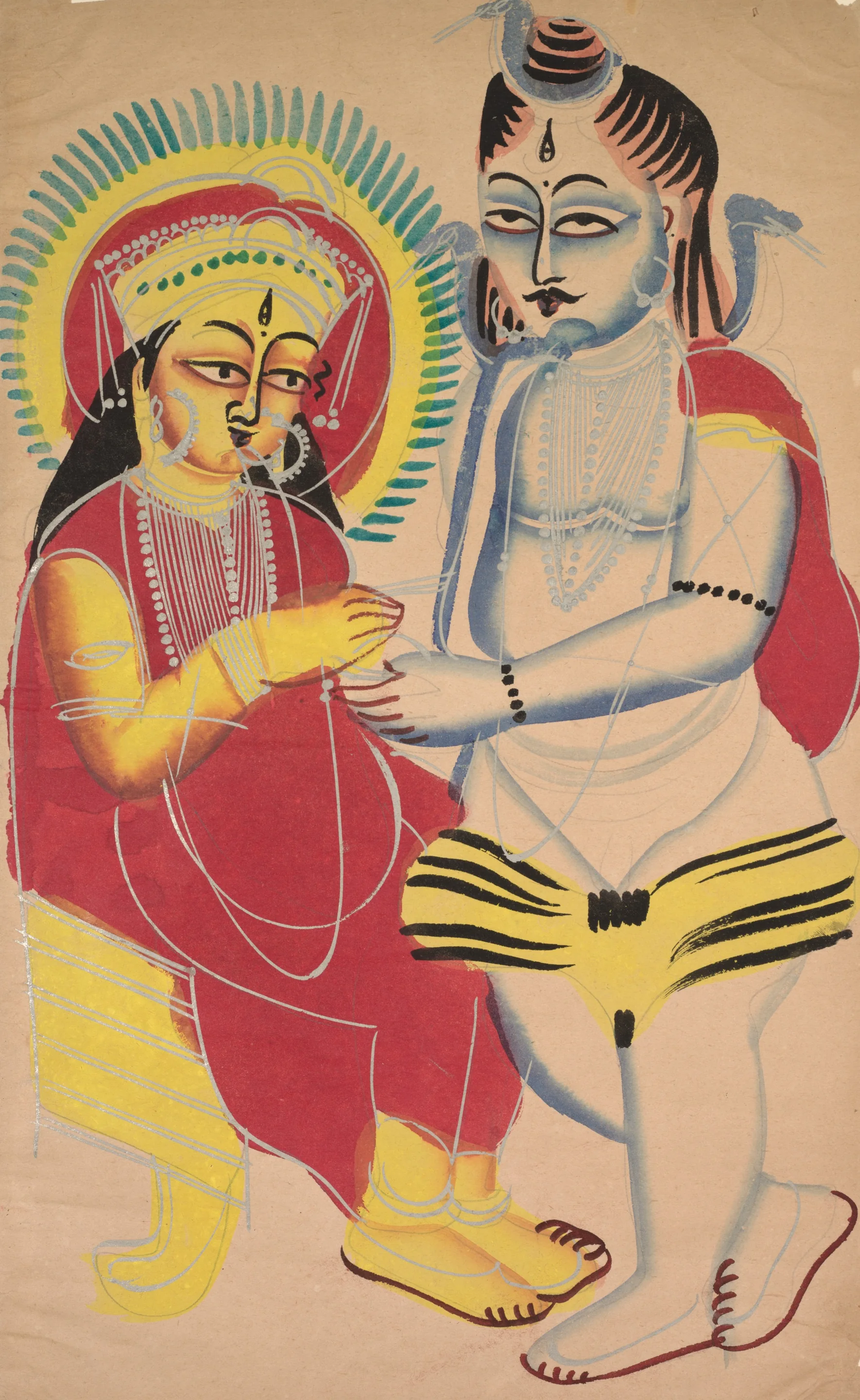
In the words of Pranav Ashar
How we renderThe heart of the Annapurna
In brief
Ribhu tells of his worship of Annapurna, 'she who is full of food', and of the one boon he asked: 'let the truth of the Self appear in my mind'. He saw five errors: that the individual and the Lord are different; that doing belongs to the Self; that the individual is attached to its bodies; that the cause changes; and that the world is real apart from its cause. Five examples removed them: the reflection, the crystal by a red flower, the space in a pot, the rope and the snake, and gold and its ornaments.
- Asking only for the Self
- The five errors
- The five examples
- Cool within, the world is cool
- Who am I?
- The seven stages
Contents
- 1.1
- 1.2
- 1.3
- 1.4
- 1.5
- 1.6
- 1.7
- 1.8
- 1.9
- 1.10
- 1.11
- 1.12
- 1.13
- 1.14
- 1.15
- 1.16
- 1.17
- 1.18
- 1.19
- 1.20
- 1.21
- 1.22
- 1.23
- 1.24
- 1.25
- 1.26-27
- 1.28
- 1.29
- 1.30
- 1.31
- 1.32
- 1.33
- 1.34
- 1.35
- 1.36
- 1.37
- 1.38
- 1.39
- 1.40
- 1.41
- 1.42
- 1.43
- 1.44
- 1.45
- 1.46
- 1.47
- 1.48
- 1.49
- 1.50
- 1.51
- 1.52
- 1.53
- 1.54
- 1.55
- 1.56
- 1.57
- 2.1
- 2.2
- 2.3
- 2.4
- 2.5
- 2.6
- 2.7
- 2.8
- 2.9
- 2.10
- 2.11
- 2.12
- 2.13
- 2.14
- 2.15
- 2.16
- 2.17
- 2.18
- 2.19
- 2.20
- 2.21
- 2.22
- 2.23
- 2.24
- 2.25
- 2.26
- 2.27
- 2.28
- 2.29
- 2.30
- 2.31
- 2.32
- 2.33
- 2.34
- 2.35
- 2.36
- 2.37
- 2.38
- 2.39
- 2.40
- 2.41
- 2.42
- 2.43
- 2.44
- 3.1
- 3.2
- 3.3
- 3.4
- 3.5
- 3.6
- 3.7
- 3.8
- 3.9
- 3.10
- 3.11
- 3.12
- 3.13
- 3.14
- 3.15
- 3.16
- 3.17
- 3.18
- 3.19
- 3.20
- 3.21
- 3.22
- 3.23
- 3.24
- 4.1
- 4.2
- 4.3
- 4.4
- 4.5
- 4.6
- 4.7
- 4.8
- 4.9
- 4.10
- 4.11
- 4.12
- 4.13
- 4.14
- 4.15
- 4.16
- 4.17
- 4.18
- 4.19
- 4.20
- 4.21
- 4.22
- 4.23
- 4.24
- 4.25
- 4.26
- 4.27
- 4.28
- 4.29
- 4.30
- 4.31
- 4.32
- 4.33
- 4.34
- 4.35
- 4.36
- 4.37
- 4.38
- 4.39
- 4.40
- 4.41
- 4.42
- 4.43
- 4.44
- 4.45
- 4.46
- 4.47
- 4.48
- 4.49
- 4.50
- 4.51
- 4.52
- 4.53
- 4.54
- 4.55
- 4.56
- 4.57
- 4.58
- 4.59
- 4.60
- 4.61
- 4.62
- 4.63
- 4.64
- 4.65
- 4.66
- 4.67
- 4.68
- 4.69
- 4.70
- 4.71
- 4.72
- 4.73
- 4.74
- 4.75
- 4.76
- 4.77
- 4.78
- 4.79
- 4.80
- 4.81
- 4.82
- 4.83
- 4.84
- 4.85
- 4.86
- 4.87
- 4.88
- 4.89
- 4.90
- 4.91
- 4.92
- 5.1
- 5.2
- 5.3
- 5.4
- 5.5
- 5.6
- 5.7
- 5.8
- 5.9
- 5.10
- 5.11
- 5.12
- 5.13
- 5.14
- 5.15
- 5.16
- 5.17
- 5.18
- 5.19
- 5.20
- 5.21
- 5.22
- 5.23
- 5.24
- 5.25
- 5.26
- 5.27
- 5.28
- 5.29
- 5.30
- 5.31
- 5.32
- 5.33
- 5.34
- 5.35
- 5.36
- 5.37
- 5.38
- 5.39
- 5.40
- 5.41
- 5.42
- 5.43
- 5.44
- 5.45
- 5.46
- 5.47
- 5.48
- 5.49
- 5.50
- 5.51
- 5.52
- 5.53
- 5.54
- 5.55
- 5.56
- 5.57
- 5.58
- 5.59
- 5.60
- 5.61
- 5.62
- 5.63
- 5.64
- 5.65
- 5.66
- 5.67
- 5.68
- 5.69
- 5.70
- 5.71
- 5.72
- 5.73
- 5.74
- 5.75
- 5.76
- 5.77
- 5.78
- 5.79
- 5.80
- 5.81
- 5.82
- 5.83
- 5.84
- 5.85
- 5.86
- 5.87
- 5.88
- 5.89
- 5.90
- 5.91
- 5.92
- 5.93
- 5.94
- 5.95
- 5.96
- 5.97
- 5.98
- 5.99
- 5.100
- 5.101
- 5.102
- 5.103
- 5.104
- 5.105
- 5.106
- 5.107
- 5.108
- 5.109
- 5.110
- 5.111
- 5.112
- 5.113
- 5.114
- 5.115
- 5.116
- 5.117
- 5.118
- 5.119
- 5.120
निदाघो नाम योगीन्द्र ऋभुं ब्रह्मविदां वरम् । प्रणम्य दण्डवद्भूमावुत्थाय स पुनर्मुनिः ॥ १॥
nidāgho nāma yogīndra ṛbhuṃ brahmavidāṃ varam | praṇamya daṇḍavadbhūmāvutthāya sa punarmuniḥ || 1||
Nidagha, a master among yogis, bowed to the ground, full length, before Ribhu, the best of those who know Brahman. Rising, the sage then
Note //
The frame of the whole text: Nidagha asks, Ribhu teaches. The sentence runs on into verse 2. Editions agree.
आत्मतत्त्वमनुब्रूहीत्येवं पप्रच्छ सादरम् । कयोपासनया ब्रह्मन्नीदृशं प्राप्तवानसि ॥ २॥
ātmatattvamanubrūhītyevaṃ papraccha sādaram | kayopāsanayā brahmannīdṛśaṃ prāptavānasi || 2||
asked him, with reverence: 'Teach me the truth of the Self. By what worship, sir, did you come to be as you are?'
Note //
'Sir' renders brahman, used here as a form of address to a brahmin. Editions agree.
तां मे ब्रूहि महाविद्यां मोक्षसाम्राज्यदायिनीम् । निदाघ त्वं कृतार्थोऽसि शृणु विद्यां सनातनीम् ॥ ३॥
tāṃ me brūhi mahāvidyāṃ mokṣasāmrājyadāyinīm | nidāgha tvaṃ kṛtārtho'si śṛṇu vidyāṃ sanātanīm || 3||
'Tell me that great knowledge which gives the kingdom of freedom.' 'Nidagha, you are blessed. Hear the knowledge that has always been,
Note //
Ribhu answers from the second half of the verse. sanskritdocuments.org places a section heading inside this verse. Editions agree.
यस्या विज्ञानमात्रेण जीवन्मुक्तो भविष्यसि । मूलशृङ्गाटमध्यस्था बिन्दुनादकलाश्रया ॥ ४॥
yasyā vijñānamātreṇa jīvanmukto bhaviṣyasi | mūlaśṛṅgāṭamadhyasthā bindunādakalāśrayā || 4||
by simply knowing which you will be free while living. She dwells in the centre of the root triangle, resting on the point, the sound and the part;
Note //
Ribhu describes the goddess and then gives her mantra in coded form (verses 4-7). The root triangle, point (bindu), sound (nāda) and part (kalā) are terms of Tantric worship. Editions agree.
नित्यानन्दा निराधारा विख्याता विलसत्कचा । विष्टपेशी महालक्ष्मीः कामस्तारो नतिस्तथा ॥ ५॥
nityānandā nirādhārā vikhyātā vilasatkacā | viṣṭapeśī mahālakṣmīḥ kāmastāro natistathā || 5||
she is ever-blissful, without support, renowned, with shining hair. Then come the seed-sounds: the Lady of the worlds, Great Lakshmi, Kama, the Star, and the bow;
Note //
The names in the second half stand for the seed-syllables of the mantra (hrīṃ for the Lady of the worlds, śrīṃ for Lakshmi, klīṃ for Kama, oṃ for the Star, namaḥ for the bow), following the usual Tantric code; the decoding is an interpretive choice. Editions agree.
भगवत्यन्नपूर्णेति ममाभिलषितन्ततः । अन्नं देहि ततः स्वाहा मन्त्रसारेति विश्रुता ॥ ६॥
bhagavatyannapūrṇeti mamābhilaṣitantataḥ | annaṃ dehi tataḥ svāhā mantrasāreti viśrutā || 6||
then 'Blessed Annapurna', then 'what I long for', 'give food', and then 'svaha': this is known as the heart of mantras,
Note //
Editions agree.
सप्तविंशति वर्णात्मा योगिनीगणसेविता ॥ ७॥
saptaviṃśati varṇātmā yoginīgaṇasevitā || 7||
made of twenty-seven syllables, served by the hosts of yoginis.
Note //
Editions agree.
ऐं ह्रीं सौः श्रीं क्लीं ॐ नमो भगवत्यन्नपूर्णे ममाभिलषितमन्नं देहि स्वाहा । इति पित्रोपदिष्टोऽस्मि तदादि नियमस्थितः । कृतवान् स्वाश्रमाचारो मन्त्रानुष्ठानमन्वहम् ॥ ८॥
aiṃ hrīṃ sauḥ śrīṃ klīṃ oṃ namo bhagavatyannapūrṇe mamābhilaṣitamannaṃ dehi svāhā | iti pitropadiṣṭo'smi tadādi niyamasthitaḥ | kṛtavān svāśramācāro mantrānuṣṭhānamanvaham || 8||
'Aim hrim sauh shrim klim om: homage to the Blessed Annapurna; give the food I long for, svaha.' My father taught me this. From then on I kept to the discipline, lived by the rule of my stage of life, and practised the mantra every day.
Note //
The mantra is given in full. The Adyar collection has 'sauṃ' and 'niyamaḥ sthitaḥ'; sanskritdocuments.org has 'sauḥ', the usual seed-syllable, and 'niyamasthitaḥ', 'keeping to the discipline'. Both are followed here.
एवं गते बहुदिने प्रादुरासीन्ममाग्रतः । अन्नपूर्णा विशालाक्षी स्मयमानमुखाम्बुजा ॥ ९॥
evaṃ gate bahudine prādurāsīnmamāgrataḥ | annapūrṇā viśālākṣī smayamānamukhāmbujā || 9||
After many days had passed, Annapurna appeared before me, wide-eyed, her lotus face smiling.
Note //
Editions agree.
तान्दृष्ट्वा दण्डवद्भूमौ नत्वा प्राञ्जलिरास्थितः । अहो वत्स कृतार्थोऽसि वरं वरय मा चिरम् ॥ १०॥
tāndṛṣṭvā daṇḍavadbhūmau natvā prāñjalirāsthitaḥ | aho vatsa kṛtārtho'si varaṃ varaya mā ciram || 10||
Seeing her, I bowed to the ground, full length, and stood with joined palms. 'Child, your work is done. Choose a boon, and do not delay.'
Note //
Editions agree.
एवमुक्तो विशालाक्ष्या मयोक्तं मुनिपुङ्गव । आत्मतत्त्वम्मनसि मे प्रादुर्भवतु पार्वति ॥ ११॥
evamukto viśālākṣyā mayoktaṃ munipuṅgava | ātmatattvammanasi me prādurbhavatu pārvati || 11||
When the wide-eyed goddess said this, I answered, best of sages: 'Parvati, let the truth of the Self appear in my mind.'
Note //
The one boon asked for. Ribhu is addressing Nidagha ('best of sages'). Parvati is the goddess's own name; Annapurna is a form of her. Editions agree.
तथैवास्त्विति मामुक्त्वा तत्रैवान्तरधीयत । तदा मे मतिरुत्पन्ना जगद्वैचित्र्यदर्शनात् ॥ १२॥
tathaivāstviti māmuktvā tatraivāntaradhīyata | tadā me matirutpannā jagadvaicitryadarśanāt || 12||
'So be it,' she said, and vanished there and then. Then understanding arose in me from seeing the variety of the world.
Note //
The goddess grants knowledge not as a vision but as a way of seeing: what follows is drawn from looking at the world. sanskritdocuments.org reads 'tathaivāsthiti', a misprint for the Adyar collection's 'tathaivāstv iti', 'so be it'.
भ्रमः पञ्चविधो भाति तदेवेह समुच्यते । जीवेश्वरौ भिन्नरूपाविति प्राथमिको भ्रमः ॥ १३॥
bhramaḥ pañcavidho bhāti tadeveha samucyate | jīveśvarau bhinnarūpāviti prāthamiko bhramaḥ || 13||
appears in five forms; here they are named. That the individual and the Lord are different in nature: that is the first .
Note //
Ribhu speaks. Verse 12 ends: 'then, from seeing the variety of the world, understanding arose in me'. 'Error' (bhrama) is taking something for what it is not. sanskritdocuments.org numbers this verse 12 a second time. Editions agree.
आत्मनिष्ठं कर्तृगुणं वास्तवं वा द्वितीयकः । शरीरत्रयसंयुक्तजीवः सङ्गी तृतीयकः ॥ १४॥
ātmaniṣṭhaṃ kartṛguṇaṃ vāstavaṃ vā dvitīyakaḥ | śarīratrayasaṃyuktajīvaḥ saṅgī tṛtīyakaḥ || 14||
That doing, as a quality, truly belongs to the Self: that is the second. That the individual, joined to its three bodies, is attached to them: that is the third.
Note //
The three bodies are the gross, the subtle and the causal. Editions agree.
जगत्कारणरूपस्य विकारित्वं चतुर्थकः । कारणाद्भिन्नजगतः सत्यत्वं पञ्चमो भ्रमः । पञ्चभ्रमनिवृत्तिश्च तदा स्फुरति चेतसि ॥ १५॥
jagatkāraṇarūpasya vikāritvaṃ caturthakaḥ | kāraṇādbhinnajagataḥ satyatvaṃ pañcamo bhramaḥ | pañcabhramanivṛttiśca tadā sphurati cetasi || 15||
That what is the cause of the world undergoes change: that is the fourth. That the world, as something apart from its cause, is real: that is the fifth . And then the ending of the five errors shone in my mind.
बिम्बप्रतिबिम्बदर्शनेन भेदभ्रमो निवृत्तः । स्फटिकलोहितदर्शनेन पारमार्थिककर्तृत्वभ्रमो निवृत्तः । घटमठाकाशदर्शनेन सङ्गीतिभ्रमो निवृत्तः । रज्जुसर्पदर्शनेन कारणाद्भिन्नजगतः सत्यत्वभ्रमो निवृत्तः । कनकरुचकदर्शनेन विकारित्वभ्रमो निवृत्तः । तदाप्रभृति मच्चित्तं ब्रह्माकारमभूत्स्वयम् । निदाघ त्वमपीत्थं हि तत्त्वज्ञानमवाप्नुहि ॥ १६॥
bimbapratibimbadarśanena bhedabhramo nivṛttaḥ | sphaṭikalohitadarśanena pāramārthikakartṛtvabhramo nivṛttaḥ | ghaṭamaṭhākāśadarśanena saṅgītibhramo nivṛttaḥ | rajjusarpadarśanena kāraṇādbhinnajagataḥ satyatvabhramo nivṛttaḥ | kanakarucakadarśanena vikāritvabhramo nivṛttaḥ | tadāprabhṛti maccittaṃ brahmākāramabhūtsvayam | nidāgha tvamapītthaṃ hi tattvajñānamavāpnuhi || 16||
By seeing a face and its reflection, the of difference was removed. By seeing a crystal by a red flower, the that doing truly belongs to the Self was removed. By seeing the space in a pot and in a house, the of attachment was removed. By seeing the rope and the snake, the that the world is real apart from its cause was removed. By seeing gold and its ornament, the that the cause changes was removed. From then on my mind took the form of Brahman by itself. Nidagha, you too, in this way, gain the knowledge of the truth.
Note //
Each example answers one error. The reflection: many reflections of one face are not many faces. The crystal looks red beside a red flower but does not become red: the Self seems to act because of what is near it, the mind. The space in a pot is not attached to the pot. The rope was never a snake. Gold stays gold as ornament. These are the standard examples of the Advaita tradition. Editions agree.
निदाघः प्रणतो भूत्वा ऋभुम्पप्रच्छ सादरम् । ब्रूहि मे श्रद्दधानाय ब्रह्मविद्यामनुत्तमाम् ॥ १७॥
nidāghaḥ praṇato bhūtvā ṛbhumpapraccha sādaram | brūhi me śraddadhānāya brahmavidyāmanuttamām || 17||
Nidagha bowed and asked Ribhu with reverence: 'Tell me, for I have faith, the highest knowledge of Brahman.'
Note //
Editions agree.
तथेत्याह ऋभुः प्रीतस्तत्त्वज्ञानं वदामि ते । महाकर्ता महाभोक्ता महात्यागी भवानघ । स्वस्वरूपानुसन्धानमेवं कृत्वा सुखी भव ॥ १८॥
tathetyāha ṛbhuḥ prītastattvajñānaṃ vadāmi te | mahākartā mahābhoktā mahātyāgī bhavānagha | svasvarūpānusandhānamevaṃ kṛtvā sukhī bhava || 18||
'So be it,' said Ribhu, pleased. 'I will tell you the knowledge of the truth. Be a great doer, a great enjoyer, a great renouncer, sinless one. Keep turning to your own nature like this, and be happy.'
Note //
The great doer, great enjoyer and great renouncer are taught at length in the Maha Upanishad (chapter 6) and the Yoga Vasishtha: one who does and enjoys fully because nothing is done or enjoyed for the I-claim. 'Turning to your own nature' renders svasvarūpānusandhāna. Editions agree.
नित्योदितं विमलमाद्यमनन्तरूपं ब्रह्मास्मि नेतरकलाकलनं हि किंचित् । इत्येव भावय निरञ्जनतामुपेतो निर्वाणमेहि सकलामलशान्तवृत्तिः ॥ १९॥
nityoditaṃ vimalamādyamanantarūpaṃ brahmāsmi netarakalākalanaṃ hi kiṃcit | ityeva bhāvaya nirañjanatāmupeto nirvāṇamehi sakalāmalaśāntavṛttiḥ || 19||
'I am Brahman: ever risen, spotless, first, endless in form; there is not the least trace of anything else.' Hold this, come to be untouched, and with every movement of the mind gone quiet and clear, come to rest.
Note //
Ribhu's first teaching to Nidagha. The verse before says: 'be a great doer, a great enjoyer, a great renouncer'. 'Come to rest' renders nirvāṇam ehi, 'go to the blowing-out'. Editions: 'anantarūpaṃ' (Adyar collection) corrects 'anatarūpaṃ' in sanskritdocuments.org.
यदिदं दृश्यते किञ्चित् तत्तन्नास्तीति भावय । यथा गन्धर्वनगरं यथा वारि मरुस्थले ॥ २०॥
yadidaṃ dṛśyate kiñcit tattannāstīti bhāvaya | yathā gandharvanagaraṃ yathā vāri marusthale || 20||
Whatever is seen here, hold that it is not there, like a city in the clouds, like water in the desert.
Note //
'Not there' means not there as it seems: it is seen, but has no being of its own, like a mirage. A city of the gandharvas is a castle seen in the clouds. Editions agree.
यत्तु नो दृश्यते किञ्चिद्यन्नु किञ्चिदिव स्थितम् । मनःषष्ठेन्द्रियातीतं तन्मयो भव वै मुने ॥ २१॥
yattu no dṛśyate kiñcidyannu kiñcidiva sthitam | manaḥṣaṣṭhendriyātītaṃ tanmayo bhava vai mune || 21||
What is not seen at all, yet stands here as if it were something, beyond the mind and the five senses: become that, sage.
Note //
The mind is counted as the sixth sense. Editions agree.
अविनाशि चिदाकाशं सर्वात्मकमखण्डितम् । नीरन्ध्रम्भूरिवाशेषं तदस्मीति विभावय ॥ २२॥
avināśi cidākāśaṃ sarvātmakamakhaṇḍitam | nīrandhrambhūrivāśeṣaṃ tadasmīti vibhāvaya || 22||
Undying, the space of the light, the Self of all, unbroken, without a gap, filling everything, as dense as the earth: 'I am that.' Hold this.
Note //
'The space of the light' renders cidākāśa. 'As dense as the earth' renders bhūr iva, read with nīrandhram, 'without a gap': the light has no holes in it. Editions agree.
यदा सङ्क्षीयते चित्तमभावात्यन्तभावनात् । चित्सामान्यस्वरूपस्य सत्तासामान्यता तदा ॥ २३॥
yadā saṅkṣīyate cittamabhāvātyantabhāvanāt | citsāmānyasvarūpasya sattāsāmānyatā tadā || 23||
When the mind wastes away by holding to the absence of things completely, then the light, being general, is simply being itself.
Note //
'General' renders sāmānya: the light no longer specified by any object, which is the same as plain being (sattā-sāmānya). Taking 'absence' as the absence of objects is an interpretive choice. Editions agree.
नूनं चैत्यांशरहिता चिद्यदात्मनि लीयते । असद्रूपवदत्यच्छा सत्तासामान्यता तदा ॥ २४॥
nūnaṃ caityāṃśarahitā cidyadātmani līyate | asadrūpavadatyacchā sattāsāmānyatā tadā || 24||
When the light, with no part left over for anything known, dissolves in the Self, then there is plain being, so clear it seems like nothing.
Note //
'Anything known' renders caitya, the object side of awareness. 'Seems like nothing' renders asadrūpavat, 'as if of the form of non-being': it is not nothing, but there is no object in it. Editions agree.
दृष्टिरेषा हि परमा सदेहादेहयोः समा । मुक्तयोः सम्भवत्येव तुर्यातीतपदाभिधा ॥ २५॥
dṛṣṭireṣā hi paramā sadehādehayoḥ samā | muktayoḥ sambhavatyeva turyātītapadābhidhā || 25||
This is the highest seeing, the same with a body or without. It arises in both kinds of the free, and is called the state beyond the fourth.
Note //
The two kinds of the free are those free while living and those free at the body's end. 'Beyond the fourth' (turyātīta): beyond even turīya, the fourth, which is named only in relation to waking, dream and sleep. Editions agree.
व्युत्थितस्य भवत्येषा समाधिस्थस्य चानघ । ज्ञस्य केवलमज्ञस्य न भवत्येव बोधजा । अनानन्दसमानन्दमुग्धमुग्धमुखद्युतिः ॥ २६॥ चिरकालपरिक्षीणमननादिपरिभ्रमः । पदमासाद्यते पुण्यं प्रज्ञयैवैकया तथा ॥ २७॥
vyutthitasya bhavatyeṣā samādhisthasya cānagha | jñasya kevalamajñasya na bhavatyeva bodhajā | anānandasamānandamugdhamugdhamukhadyutiḥ || 26|| cirakālaparikṣīṇamananādiparibhramaḥ | padamāsādyate puṇyaṃ prajñayaivaikayā tathā || 27||
It is there for one who has come out of samadhi and for one in it, sinless one. It is only for the knower; for the one who does not know, it does not arise, since it is born of waking up. His face has the glow of a child's, in a joy that is no joy and an even joy; the wandering of his thoughts long since worn away, he reaches the pure state by wisdom alone.
Note //
The Adyar collection ends verse 26 with the half-line on the shining face; sanskritdocuments.org begins verse 27 with it. The two are given together. 'A joy that is no joy and an even joy' renders anānanda-samānanda: beyond pleasure, and level. Editions otherwise agree.
इमं गुणसमाहारमनात्मत्वेन पश्यतः । अन्तःशीतलया याऽसौ समाधिरिति कथ्यते ॥ २८॥
imaṃ guṇasamāhāramanātmatvena paśyataḥ | antaḥśītalayā yā'sau samādhiriti kathyate || 28||
For one who sees this heap of qualities as not the Self, the coolness within: that is called samadhi.
Note //
The 'heap of qualities' is body and mind, made of the three gunas. Samadhi is defined by seeing, not by a trance. Editions agree.
अवासनं स्थिरं प्रोक्तं मनोध्यानं तदेव च । तदेव केवलीभावं शान्ततैव च तत्सदा ॥ २९॥
avāsanaṃ sthiraṃ proktaṃ manodhyānaṃ tadeva ca | tadeva kevalībhāvaṃ śāntataiva ca tatsadā || 29||
Without latent : that is called steady. That is the mind's meditation, that is being alone, that is peace, always.
Note //
'Latent tendencies' renders vāsanā, the stored impressions that drive the mind. The Adyar collection reads 'kevalībhāvaṃ', 'being alone'; sanskritdocuments.org has 'kevalībhānaṃ', taken as a misprint.
तनुवासनमत्युच्चैः पदायोद्यतमुच्यते । अवासनं मनोऽकर्तृपदं तस्मादवाप्यते ॥ ३०॥
tanuvāsanamatyuccaiḥ padāyodyatamucyate | avāsanaṃ mano'kartṛpadaṃ tasmādavāpyate || 30||
With thin , the mind is said to be rising to the state. Without , the mind reaches the state of not-doing.
Note //
sanskritdocuments.org has 'avāsagaṃ', a misprint for the Adyar collection's 'avāsanaṃ'.
घनवासनमेतत्तु चेतःकर्तृत्वभावनम् । सर्वदुःखप्रदं तस्माद्वासनां तनुतां नयेत् ॥ ३१॥
ghanavāsanametattu cetaḥkartṛtvabhāvanam | sarvaduḥkhapradaṃ tasmādvāsanāṃ tanutāṃ nayet || 31||
With dense , the mind imagines itself the doer, and that brings every sorrow. So make the thin.
Note //
Editions agree.
चेतसा सम्परित्यज्य सर्वभावात्मभावनाम् । सर्वमाकाशतामेति नित्यमन्तर्मुखस्थितेः ॥ ३२॥
cetasā samparityajya sarvabhāvātmabhāvanām | sarvamākāśatāmeti nityamantarmukhasthiteḥ || 32||
When the mind lets go of taking every thing for itself, everything becomes like space for one who stays turned within.
Note //
'Taking every thing for itself' renders sarvabhāvātmabhāvanā, the habit of finding 'me' and 'mine' in things. Editions agree.
यथा विपणगा लोका विहरन्तोऽप्यसत्समाः । असम्बन्धात्तथा ज्ञस्य ग्रामोऽपि विपिनोपमः ॥ ३३॥
yathā vipaṇagā lokā viharanto'pyasatsamāḥ | asambandhāttathā jñasya grāmo'pi vipinopamaḥ || 33||
As the people in a market, though they move about, are as good as not there to a passer-by, so to the knower, who has no ties, even a village is like a forest.
Note //
The Adyar collection reads 'vipanopamaḥ'; sanskritdocuments.org has 'vipinopamaḥ', 'like a forest', which is followed. 'A passer-by' is added to make the comparison plain.
अन्तर्मुखतया नित्यं सुप्तो बुद्धो व्रजन् पठन् । पुरं जनपदं ग्राममरण्यमिव पश्यति ॥ ३४॥
antarmukhatayā nityaṃ supto buddho vrajan paṭhan | puraṃ janapadaṃ grāmamaraṇyamiva paśyati || 34||
Turned always within, asleep or awake, walking or reading, he sees a town, a country, a village, as a forest.
Note //
The forest is the place of solitude: crowds do not disturb one whose attention rests within. Editions agree.
अन्तःशीतलतायां तु लब्धायां शीतलं जगत् । अन्तस्तृष्णोपतप्तानां दावदाहमयं जगत् ॥ ३५॥
antaḥśītalatāyāṃ tu labdhāyāṃ śītalaṃ jagat | antastṛṣṇopataptānāṃ dāvadāhamayaṃ jagat || 35||
When coolness within has been found, the world is cool. For those burning within with craving, the world is a forest on fire.
Note //
Verse 36 completes the thought: 'what is within all beings, that stands outside'. Editions agree.
भवत्यखिलजन्तूनां यदन्तस्तद्बहिः स्थितम् ॥ ३६॥
bhavatyakhilajantūnāṃ yadantastadbahiḥ sthitam || 36||
What is within all beings is what stands outside them.
Note //
A half-verse, completing verse 35: the world each one meets is the colour of what is within. Editions agree.
यस्त्वात्मरतिरेवान्तः कुर्वन् कर्मेन्द्रियैः क्रियाः । न वशो हर्षशोकाभ्यां स समाहित उच्यते ॥ ३७॥
yastvātmaratirevāntaḥ kurvan karmendriyaiḥ kriyāḥ | na vaśo harṣaśokābhyāṃ sa samāhita ucyate || 37||
One who delights in the Self within, while doing what is to be done with the organs of action, and is not ruled by joy or sorrow: he is called settled.
Note //
'Settled' renders samāhita. Editions agree.
आत्मवत्सर्वभूतानि परद्रव्याणि लोष्टवत् । स्वभावादेव न भयाद्यः पश्यति स पश्यति ॥ ३८॥
ātmavatsarvabhūtāni paradravyāṇi loṣṭavat | svabhāvādeva na bhayādyaḥ paśyati sa paśyati || 38||
One who sees all beings as himself, and what belongs to others as clods of earth, by his own nature, not from fear: he sees.
Note //
Editions agree.
अद्यैव मृतिरायातु कल्पान्तनिचयेन वा । नासौ कलङ्कमाप्नोति हेम पङ्कगतं यथा ॥ ३९॥
adyaiva mṛtirāyātu kalpāntanicayena vā | nāsau kalaṅkamāpnoti hema paṅkagataṃ yathā || 39||
Let death come today, or after ages piled on ages: he gains no stain, as gold in the mud gains none.
Note //
Editions agree.
कोऽहं कथमिदं किं वा कथं मरणजन्मनी । विचारयान्तरे वेत्थं महत्तत्फलमेष्यसि ॥ ४०॥
ko'haṃ kathamidaṃ kiṃ vā kathaṃ maraṇajanmanī | vicārayāntare vetthaṃ mahattatphalameṣyasi || 40||
'Who am I? How did this come about? What is it? How are death and birth?' Inquire like this, within, and you will come to a great result.
Note //
Self-inquiry (vicāra), in four questions. Verse 41 continues: 'when you have known your own nature by inquiry, the mind will let go of its form and come to a peace free of fever'. Editions agree.
विचारेण परिज्ञातस्वभावस्य सतस्तव । मनः स्वरूपमुत्सृज्य शममेष्यति विज्वरम् ॥ ४१॥
vicāreṇa parijñātasvabhāvasya satastava | manaḥ svarūpamutsṛjya śamameṣyati vijvaram || 41||
When by inquiry you have come to know your own nature, your mind will let go of its form and come to a peace without fever.
Note //
Editions agree.
विज्वरत्वं गतं चेतस्तव संसारवृत्तिषु । न निमज्जति तद्ब्रह्मन् गोष्पदेष्विव वारणः ॥ ४२॥
vijvaratvaṃ gataṃ cetastava saṃsāravṛttiṣu | na nimajjati tadbrahman goṣpadeṣviva vāraṇaḥ || 42||
Your mind, once free of fever, will not sink in the ways of the world, sir, any more than an elephant sinks in the hoofprint of a cow.
Note //
Editions agree.
कृपणं तु मनो ब्रह्मन् गोष्पदेऽपि निमज्जति । कार्ये गोष्पदतोयेऽपि विशीर्णो मशको यथा ॥ ४३॥
kṛpaṇaṃ tu mano brahman goṣpade'pi nimajjati | kārye goṣpadatoye'pi viśīrṇo maśako yathā || 43||
But a small mind, sir, sinks even in a hoofprint, as a gnat drowns in the water of a cow's hoofprint.
Note //
Editions agree.
यावद्यावन्मुनिश्रेष्ठ स्वयं सन्त्यज्यतेऽखिलम् । तावत्तावत् परालोकः परमात्मैव शिष्यते ॥ ४४॥
yāvadyāvanmuniśreṣṭha svayaṃ santyajyate'khilam | tāvattāvat parālokaḥ paramātmaiva śiṣyate || 44||
As far as everything is let go, of itself, best of sages, so far the highest light, the highest Self alone, remains.
Note //
sanskritdocuments.org has 'santajyate', a misprint for 'santyajyate'. 'Of itself' renders svayam.
यावत्सर्वं न सन्त्यक्तं तावदात्मा न लभ्यते । सर्ववस्तुपरित्यागे शेष आत्मेति कथ्यते ॥ ४५॥
yāvatsarvaṃ na santyaktaṃ tāvadātmā na labhyate | sarvavastuparityāge śeṣa ātmeti kathyate || 45||
As long as everything is not let go, the Self is not found. When all things are given up, what remains is called the Self.
Note //
Not a loss: what is let go is the taking of things for oneself, and what remains is what was always there. Editions agree.
आत्मावलोकनार्थं तु तस्मात् सर्वं परित्यजेत् । सर्वं सन्त्यज्य दूरेण यच्छिष्टं तन्मयो भव ॥ ४६॥
ātmāvalokanārthaṃ tu tasmāt sarvaṃ parityajet | sarvaṃ santyajya dūreṇa yacchiṣṭaṃ tanmayo bhava || 46||
So, to see the Self, give up everything. Put everything far away, and become what remains.
Note //
Editions agree.
सर्वं किञ्चिदिदं दृश्यं दृश्यते यज्जगद्गतम् । चिन्निष्पन्दांशमात्रं तन्नान्यत् किञ्चन शाश्वतम् ॥ ४७॥
sarvaṃ kiñcididaṃ dṛśyaṃ dṛśyate yajjagadgatam | cinniṣpandāṃśamātraṃ tannānyat kiñcana śāśvatam || 47||
All this that is seen, whatever belongs to the world, is only a sliver of the unmoving light. Nothing else lasts.
Note //
'A sliver of the unmoving light' renders cin-niṣpandāṃśa-mātram. The Yoga Vasishtha often speaks of the 'stirring' (spanda) of the light; both editions here read niṣpanda, 'unmoving', and that is followed. Pending review.
समाहिता नित्यतृप्ता यथाभूतार्थदर्शिनी । ब्रह्मन् समाधिशब्देन परा प्रज्ञोच्यते बुधैः ॥ ४८॥
samāhitā nityatṛptā yathābhūtārthadarśinī | brahman samādhiśabdena parā prajñocyate budhaiḥ || 48||
Settled, always content, seeing things as they are: this highest wisdom, sir, the wise call samadhi.
Note //
The Adyar collection reads 'nityanṛptā', a misprint; sanskritdocuments.org has 'nityatṛptā', 'always content', which is followed.
अक्षुब्धा निरहङ्कारा द्वन्द्वेष्वननुपातिनी । प्रोक्ता समाधिशब्देन मेरोः स्थिरतरा स्थितिः ॥ ४९॥
akṣubdhā nirahaṅkārā dvandveṣvananupātinī | proktā samādhiśabdena meroḥ sthiratarā sthitiḥ || 49||
Unshaken, without the I-claim, not pulled after the pairs of opposites, a stillness steadier than Mount Meru: this is called samadhi.
Note //
Editions agree.
निश्चिता विगताभीष्टा हेयोपादेयवर्जिता । ब्रह्मन् समाधिशब्देन परिपूर्णा मनोगतिः ॥ ५०॥
niścitā vigatābhīṣṭā heyopādeyavarjitā | brahman samādhiśabdena paripūrṇā manogatiḥ || 50||
Certain, with nothing left to want, with nothing to reject or take up: this full movement of the mind, sir, is called samadhi.
Note //
sanskritdocuments.org has 'heyopadeya', a misprint for the Adyar collection's 'heyopādeya'.
केवलं चित्प्रकाशांशकल्पिता स्थिरतां गता । तुर्या सा प्राप्यते दृष्टिर्महद्भिर्वेदवित्तमैः ॥ ५१॥
kevalaṃ citprakāśāṃśakalpitā sthiratāṃ gatā | turyā sā prāpyate dṛṣṭirmahadbhirvedavittamaiḥ || 51||
Formed only of a ray of the light's shining, and gone steady: that seeing of the fourth is reached by the great, the deepest knowers of the Veda.
Note //
'The fourth' (turya) is the Self beyond waking, dream and deep sleep. Editions agree.
अदूरगतसादृश्या सुषुप्तस्योपलक्ष्यते । मनोहङ्कारविलये सर्वभावान्तरस्थिता ॥ ५२॥
adūragatasādṛśyā suṣuptasyopalakṣyate | manohaṅkāravilaye sarvabhāvāntarasthitā || 52||
It is noticed to be not far from the state of one in deep sleep. When the mind and the I-claim dissolve, it stands within all things,
Note //
Like deep sleep, there is no object in it; unlike deep sleep, it is awake. The sentence continues into verse 53. Editions agree.
समुदेति परानन्दा या तनुः पारमेश्वरी । मनसैव मनश्छित्त्वा सा स्वयं लभ्यते गतिः ॥ ५३॥
samudeti parānandā yā tanuḥ pārameśvarī | manasaiva manaśchittvā sā svayaṃ labhyate gatiḥ || 53||
and rises as the highest bliss, the very form of the Lord. Cutting the mind with the mind, that goal is reached of itself.
Note //
'The very form of the Lord' renders pārameśvarī tanuḥ. Editions agree.
तदनु विषयवासनाविनाशस्तदनु शुभः परमःस्फुटप्रकाशः । तदनु च समतावशात् स्वरूपे परिणमनं महतामचिन्त्यरूपम् ॥ ५४॥
tadanu viṣayavāsanāvināśastadanu śubhaḥ paramaḥsphuṭaprakāśaḥ | tadanu ca samatāvaśāt svarūpe pariṇamanaṃ mahatāmacintyarūpam || 54||
Then the toward objects end. Then comes the clear light, good and highest. And then, by evenness, the great are changed into their own nature, in a way beyond thought.
Note //
The 'change' is a way of speaking: one's own nature does not become anything; what changes is the mind's taking itself for something else. The Adyar collection reads 'paramaḥ sphuṭaprakāśaḥ', sanskritdocuments.org 'paramasphuṭaprakāśaḥ'; the sense is the same.
अखिलमिदमनन्तमात्मतत्त्वं दृढपरिणामिनि चेतसि स्थितोऽन्तः । बहिरुपशमिते चराचरात्मा स्वयमनुभूयत एव देवदेवः ॥ ५५॥
akhilamidamanantamātmatattvaṃ dṛḍhapariṇāmini cetasi sthito'ntaḥ | bahirupaśamite carācarātmā svayamanubhūyata eva devadevaḥ || 55||
All this, without end, is the truth of the Self. It stands within the mind that has been firmly changed. When the outer is quieted, the God of gods, the Self of all that moves and does not move, is known by himself, directly.
Note //
sanskritdocuments.org repeats 'ananta' ('anantam anantam'), a misprint.
असक्तन्निर्मलं चित्तं युक्तं संसार्यविस्फुटम् । सक्तं तु दीर्घतपसा मुक्तमप्यतिबद्धवत् ॥ ५६॥
asaktannirmalaṃ cittaṃ yuktaṃ saṃsāryavisphuṭam | saktaṃ tu dīrghatapasā muktamapyatibaddhavat || 56||
A mind without attachment, pure, is free, even living in the world. A mind attached, even after long austerities, is as bound as can be, though it seems free.
Note //
Both editions read 'yuktaṃ saṃsāry avisphuṭam'; 'avisphuṭam' is hard to construe, and the rendering follows the clear sense of the second half, reading the first half as 'muktaṃ saṃsāry api sphuṭam', 'clearly free, though in the world'. Pending review.
अन्तःसंसक्तिनिर्मुक्तो जीवो मधुरवृत्तिमान् । बहिः कुर्वन्नकुर्वन्वा कर्ता भोक्ता न हि क्वचित् ॥ ५७॥
antaḥsaṃsaktinirmukto jīvo madhuravṛttimān | bahiḥ kurvannakurvanvā kartā bhoktā na hi kvacit || 57||
The one who is free of attachment within lives with gentle ways. Acting outwardly or not acting, he is never the doer, never the enjoyer.
Note //
This answers 1.18: the great doer and great enjoyer is the one who is neither. Editions agree.
निदाघ उवाच ॥ सङ्गः कीदृश इत्युक्तः कश्च बन्धाय देहिनाम् । कश्च मोक्षाय कथितः कथं त्वेष चिकित्स्यते ॥ १॥
nidāgha uvāca || saṅgaḥ kīdṛśa ityuktaḥ kaśca bandhāya dehinām | kaśca mokṣāya kathitaḥ kathaṃ tveṣa cikitsyate || 1||
Nidagha said: 'What is attachment, as it is spoken of? What kind binds embodied beings, what kind is said to free them, and how is it cured?'
Note //
The second chapter: attachment and its cure. The Adyar collection marks 'Nidagha said'; sanskritdocuments.org reads 'nidāghaḥ' in the line. Editions otherwise agree.
देहदेहिविभागैकपरित्यागेन भावना । देहमात्रे हि विश्वासः सङ्गो बन्धाय कथ्यते ॥ २॥
dehadehivibhāgaikaparityāgena bhāvanā | dehamātre hi viśvāsaḥ saṅgo bandhāya kathyate || 2||
A way of thinking that drops the one distinction, between the body and its owner, and trusts in the body alone: that attachment is said to bind.
Note //
Ribhu answers. The binding attachment is taking oneself to be the body. Editions agree.
सर्वमात्मेदमत्राहं किं वाञ्छामि त्यजामि किम् । इत्यसङ्गस्थितिं विद्धि जीवन्मुक्ततनुस्थिताम् ॥ ३॥
sarvamātmedamatrāhaṃ kiṃ vāñchāmi tyajāmi kim | ityasaṅgasthitiṃ viddhi jīvanmuktatanusthitām || 3||
'All this is the Self, and I am here: what should I want, what should I give up?' Know this as the unattached state, found in one who lives free in the body.
Note //
Editions agree.
नाहमस्मि न चान्योऽस्ति न चायं न च नेतरः । सोऽसङ्ग इति सम्प्रोक्तो ब्रह्मास्मीत्येव सर्वदा ॥ ४॥
nāhamasmi na cānyo'sti na cāyaṃ na ca netaraḥ | so'saṅga iti samprokto brahmāsmītyeva sarvadā || 4||
'I am not; there is no other; not this, and not what is not other': this is called being unattached, with 'I am Brahman' always.
Note //
The first line denies the I-claim and every second thing, even the denial of a second. Editions agree.
नाभिनन्दति नैष्कर्म्यं न कर्मस्वनुषज्जते । सुसमो यः परित्यागी सोऽसंसक्त इति स्मृतः ॥ ५॥
nābhinandati naiṣkarmyaṃ na karmasvanuṣajjate | susamo yaḥ parityāgī so'saṃsakta iti smṛtaḥ || 5||
He does not delight in not-doing, and does not cling to actions. Even through and through, a true renouncer: he is known as the unattached.
Note //
The Adyar collection reads 'anuṣajjate', as in the Gita (6.4); sanskritdocuments.org has 'anuṣajyate'. The sense is the same.
सर्वकर्मफलादीनां मनसैव न कर्मणा । निपुणो यः परित्यागी सोऽसंसक्त इति स्मृतः ॥ ६॥
sarvakarmaphalādīnāṃ manasaiva na karmaṇā | nipuṇo yaḥ parityāgī so'saṃsakta iti smṛtaḥ || 6||
One who, with skill, gives up the fruits of all actions and the rest, by the mind and not by deeds: he is known as the unattached.
Note //
Giving up is inward: the actions go on, the claim on their fruits does not. Editions agree.
असङ्कल्पेन सकलाश्चेष्टा नाना विजृम्भिताः । चिकित्सिता भवन्तीह श्रेयः सम्पादयन्ति हि ॥ ७॥
asaṅkalpena sakalāśceṣṭā nānā vijṛmbhitāḥ | cikitsitā bhavantīha śreyaḥ sampādayanti hi || 7||
By not forming intentions, all the many activities that have spread out are cured here, and bring about the good.
Note //
'Not forming intentions' renders asaṅkalpa: not the end of action, but of the mind's 'I will have this'. Editions agree.
न सक्तमिह चेष्टासु न चिन्तासु न वस्तुषु । न गमागमचेष्टासु न कालकलनासु च ॥ ८॥
na saktamiha ceṣṭāsu na cintāsu na vastuṣu | na gamāgamaceṣṭāsu na kālakalanāsu ca || 8||
Not attached here to activities, to thoughts or to things, to comings and goings, or to the reckonings of time,
Note //
The sentence continues into verse 9. Editions agree.
केवलं चिति विश्रम्य किञ्चिच्चैत्यावलम्ब्यपि । सर्वत्र नीरसमिह तिष्ठत्यात्मरसं मनः ॥ ९॥
kevalaṃ citi viśramya kiñciccaityāvalambyapi | sarvatra nīrasamiha tiṣṭhatyātmarasaṃ manaḥ || 9||
resting in the light alone, even while leaning on something known, the mind, with no taste for anything here, stays tasting the Self.
Note //
'Something known' renders caitya, an object of awareness. Editions agree.
व्यवहारमिदं सर्वं मा करोतु करोतु वा । अकुर्वन् वापि कुर्वन् वा जीवः स्वात्मरतिक्रियः ॥ १०॥
vyavahāramidaṃ sarvaṃ mā karotu karotu vā | akurvan vāpi kurvan vā jīvaḥ svātmaratikriyaḥ || 10||
Let it carry on all this business or not: doing or not doing, the individual delights in the Self in everything it does.
Note //
Editions agree.
अथवा तमपि त्यक्त्वा चैत्यांशं शान्तचिद्घनः । जीवस्तिष्ठति संशान्तो ज्वलन्मणिरिवात्मनि ॥ ११॥
athavā tamapi tyaktvā caityāṃśaṃ śāntacidghanaḥ | jīvastiṣṭhati saṃśānto jvalanmaṇirivātmani || 11||
Or, letting go even that part which leans on the known, dense with the quiet light, the individual stays wholly at peace, like a glowing jewel, in itself.
Note //
Editions agree.
चित्ते चैत्यदशाहीने या स्थितिः क्षीणचेतसाम् । सोच्यते शान्तकलना जाग्रत्येव सुषुप्तता ॥ १२॥
citte caityadaśāhīne yā sthitiḥ kṣīṇacetasām | socyate śāntakalanā jāgratyeva suṣuptatā || 12||
When the mind has no more objects, the state of those whose mind has worn away is called 'imagining at rest': deep sleep while awake.
Note //
'Imagining' renders kalanā, the mind's constant construing. Editions agree.
एषा निदाघ सौषुप्तस्थितिरभ्यासयोगतः । प्रौढा सती तुरीयेति कथिता तत्त्वकोविदैः ॥ १३॥
eṣā nidāgha sauṣuptasthitirabhyāsayogataḥ | prauḍhā satī turīyeti kathitā tattvakovidaiḥ || 13||
This state of deep sleep, Nidagha, grown mature through practice, is called the fourth by those who know the truth.
Note //
Editions agree.
अस्यां तुरीयावस्थायां स्थितिं प्राप्याविनाशिनीम् । आनन्दैकान्तशीलत्वादनानन्दपदं गतः ॥ १४॥
asyāṃ turīyāvasthāyāṃ sthitiṃ prāpyāvināśinīm | ānandaikāntaśīlatvādanānandapadaṃ gataḥ || 14||
Settled in this fourth state, which does not pass, by dwelling in bliss alone one reaches the state beyond bliss.
Note //
Editions agree.
अनानन्दमहानन्दकालातीतस्ततोऽपि हि । मुक्त इत्युच्यते योगी तुर्यातीतपदं गतः ॥ १५॥
anānandamahānandakālātītastato'pi hi | mukta ityucyate yogī turyātītapadaṃ gataḥ || 15||
Beyond no-bliss, beyond great bliss, beyond time, and beyond even that, the yogi who reaches the state beyond the fourth is called free.
Note //
Editions agree.
परिगलितसमस्तजन्मपाशः सकलविलीनतमोमयाभिमानः । परमरसमयीं परात्मसत्तां जलगतसैन्धवखण्डवन्महात्मा ॥ १६॥
parigalitasamastajanmapāśaḥ sakalavilīnatamomayābhimānaḥ | paramarasamayīṃ parātmasattāṃ jalagatasaindhavakhaṇḍavanmahātmā || 16||
Every noose of birth fallen away, all the I-sense made of darkness dissolved, the great one enters the highest being, the highest Self, full of the highest savour, like a lump of salt in water.
Note //
The verse has no main verb; 'enters' is supplied. The salt in water is the image of the Brihadaranyaka (2.4.12): it dissolves and is everywhere in the water. Editions agree.
जडाजडदृशोर्मध्ये यत्तत्त्वं पारमार्थिकम् । अनुभूतिमयं तस्मात् सारम्ब्रह्मेति कथ्यते ॥ १७॥
jaḍājaḍadṛśormadhye yattattvaṃ pāramārthikam | anubhūtimayaṃ tasmāt sārambrahmeti kathyate || 17||
Between the seeing of the inert and the aware, the truth that is real, made of direct experience: that is called the essence, Brahman.
Note //
'Between' points to what is present in every seeing, before it is split into seer and seen. Editions agree.
दृश्यसंवलितो बन्धस्तन्मुक्तौ मुक्तिरुच्यते । द्रव्यदर्शनसम्बन्धे याऽनुभूतिरनामया ॥ १८॥
dṛśyasaṃvalito bandhastanmuktau muktirucyate | dravyadarśanasambandhe yā'nubhūtiranāmayā || 18||
Bondage is being mixed with the seen; release from it is called freedom. Where the thing and the seeing meet, the experience that is untroubled:
Note //
The sentence continues into verse 19. Editions agree.
तामवष्टभ्य तिष्ठ त्वं सौषुप्तीं भजते स्थितिम् । सैव तुर्यत्वमाप्नोति तस्यां दृष्टिं स्थिरां कुरु ॥ १९॥
tāmavaṣṭabhya tiṣṭha tvaṃ sauṣuptīṃ bhajate sthitim | saiva turyatvamāpnoti tasyāṃ dṛṣṭiṃ sthirāṃ kuru || 19||
hold to that, and stay. It takes the state of deep sleep, and becomes the fourth. Make your seeing steady in it.
Note //
Editions agree.
आत्मास्थूलो न चैवाणुर्न प्रत्यक्षो न चेतरः । न चेतनो न च जडो न चैवासन्न सन्मयः ॥ २०॥
ātmāsthūlo na caivāṇurna pratyakṣo na cetaraḥ | na cetano na ca jaḍo na caivāsanna sanmayaḥ || 20||
The Self is not gross, nor fine, not perceived, nor anything else; not aware as an object is, not inert, not non-being, and not made of being.
Note //
Each term is denied as a description: the Self is not a thing with these qualities. 'Not aware as an object is' renders na cetanaḥ: it is the light, not something lit. That reading is an interpretive choice. Editions agree.
नाहं नान्यो न चैवैको न चानेकोऽद्वयोऽव्ययः । यदीदन्दृश्यतां प्राप्तं मनः सर्वेन्द्रियास्पदम् ॥ २१॥
nāhaṃ nānyo na caivaiko na cāneko'dvayo'vyayaḥ | yadīdandṛśyatāṃ prāptaṃ manaḥ sarvendriyāspadam || 21||
Not I, not another, not one, not many: not two, not decaying. This mind, the seat of all the senses, has itself become something seen.
Note //
The second half is difficult and is read with verse 22: the mind, too, is an object, and what the Self is lies beyond the mind's meetings with things. Pending review. Editions agree.
दृश्यदर्शनसम्बन्धे यत्सुखम्पारमार्थिकम् । तदतीतं पदं यस्मात्तन्न किञ्चिदिवैव तत् ॥ २२॥
dṛśyadarśanasambandhe yatsukhampāramārthikam | tadatītaṃ padaṃ yasmāttanna kiñcidivaiva tat || 22||
The real happiness in the meeting of seer and seen: the state is beyond even that, for it is as if it were nothing.
Note //
'As if nothing': nothing that can be seen, and so nothing to grasp. The construction is compressed and the rendering is interpretive. Editions agree.
न मोक्षो नभसः पृष्ठे न पाताले न भूतले । सर्वाशासङ्क्षये चेतःक्षयो मोक्ष इतीष्यते ॥ २३॥
na mokṣo nabhasaḥ pṛṣṭhe na pātāle na bhūtale | sarvāśāsaṅkṣaye cetaḥkṣayo mokṣa itīṣyate || 23||
Freedom is not on the back of the sky, not in the world below, not on the earth. When every hope has ended, the ending of the mind is called freedom.
Note //
Editions agree.
मोक्षो मेऽस्त्विति चिन्ताऽन्तर्जाता चेदुत्थितं मनः । मननोत्थे मनस्येष बन्धः सांसारिको दृढः ॥ २४॥
mokṣo me'stviti cintā'ntarjātā cedutthitaṃ manaḥ | mananotthe manasyeṣa bandhaḥ sāṃsāriko dṛḍhaḥ || 24||
If the thought 'let me be free' has arisen within, the mind has risen. When the mind has risen with thinking, that is the firm bondage of the world.
Note //
The Adyar collection reads 'manasy eṣa', sanskritdocuments.org 'manasyaiṣa'; the first is correct. After this verse sanskritdocuments.org has a further verse ('Not wiping this away is the great round of the world; wiping it away is called freedom'), which the Adyar collection gives in chapter 4 (4.56).
आत्मन्यतीते सर्वस्मात्सर्वरूपेऽथ वा तते । को बन्धः कश्च वा मोक्षो निर्मूलं मननं कुरु ॥ २५॥
ātmanyatīte sarvasmātsarvarūpe'tha vā tate | ko bandhaḥ kaśca vā mokṣo nirmūlaṃ mananaṃ kuru || 25||
The Self is beyond everything, or else spread out as everything: what is bondage then, what is freedom? Make thinking rootless.
Note //
Editions agree.
अध्यात्मरतिराशान्तः पूर्णपावनमानसः । प्राप्तानुत्तमविश्रान्तिर्न किञ्चिदिह वाञ्छति ॥ २६॥
adhyātmaratirāśāntaḥ pūrṇapāvanamānasaḥ | prāptānuttamaviśrāntirna kiñcidiha vāñchati || 26||
Delighting in the Self, wholly at peace, his mind full and pure, having reached the rest beyond which there is none, he wants nothing here.
Note //
The description of one free while living begins here and runs to verse 31. Editions agree.
सर्वाधिष्ठानसन्मात्रे निर्विकल्पे चिदात्मनि । यो जीवति गतस्नेहः स जीवन्मुक्त उच्यते ॥ २७॥
sarvādhiṣṭhānasanmātre nirvikalpe cidātmani | yo jīvati gatasnehaḥ sa jīvanmukta ucyate || 27||
In the Self that is the light, bare being, the ground of everything, without imaginings: one who lives there, his clinging gone, is called free while living.
Note //
The Adyar collection's 'virvikalpe' is a misprint for 'nirvikalpe' (sanskritdocuments.org).
नापेक्षते भविष्यच्च वर्तमाने न तिष्ठति । न संस्मरत्यतीतं च सर्वमेव करोति च ॥ २८॥
nāpekṣate bhaviṣyacca vartamāne na tiṣṭhati | na saṃsmaratyatītaṃ ca sarvameva karoti ca || 28||
He does not look ahead to the future, does not dwell in the present, does not recall the past, and does everything.
Note //
Editions agree.
अनुबन्धपरे जन्तावसंसर्गमनाः सदा । भक्ते भक्तसमाचारः शठे शठ इव स्थितः ॥ २९॥
anubandhapare jantāvasaṃsargamanāḥ sadā | bhakte bhaktasamācāraḥ śaṭhe śaṭha iva sthitaḥ || 29||
Among people bent on ties, his mind always untouched, with the devoted he acts as the devoted, with the crooked he stands as the crooked do.
Note //
'As the crooked do': he meets each person on their own ground, without becoming what they are. sanskritdocuments.org has 'samācaraḥ', a misprint for 'samācāraḥ'.
बालो बालेषु वृद्धेषु वृद्धो धीरेषु धैर्यवान् । युवा यौवनवृत्तेषु दुःखितेषु सुदुःखधीः ॥ ३०॥
bālo bāleṣu vṛddheṣu vṛddho dhīreṣu dhairyavān | yuvā yauvanavṛtteṣu duḥkhiteṣu suduḥkhadhīḥ || 30||
A child among children, old among the old, steady among the steady, young among those living their youth, sorrowing among the sorrowful.
Note //
Editions agree.
धीरधीरुदितानन्दः पेशलः पुण्यकीर्तनः । प्राज्ञः प्रसन्नमधुरो दैन्यादपगताशयः ॥ ३१॥
dhīradhīruditānandaḥ peśalaḥ puṇyakīrtanaḥ | prājñaḥ prasannamadhuro dainyādapagatāśayaḥ || 31||
Steady of mind, joy risen in him, gentle, of good name, wise, clear and sweet, with no meanness in his heart.
Note //
Editions agree.
अभ्यासेन परिस्पन्दे प्राणानां क्षयमागते । मनः प्रशममायाति निर्वाणमवशिष्यते ॥ ३२॥
abhyāsena parispande prāṇānāṃ kṣayamāgate | manaḥ praśamamāyāti nirvāṇamavaśiṣyate || 32||
When by practice the movement of the breaths has dwindled away, the mind comes to peace, and what remains is nirvana.
Note //
Editions agree.
यतो वाचो निवर्तन्ते विकल्पकलनान्विताः । विकल्पसङ्क्षयाज्जन्तोः पदं तदवशिष्यते ॥ ३३॥
yato vāco nivartante vikalpakalanānvitāḥ | vikalpasaṅkṣayājjantoḥ padaṃ tadavaśiṣyate || 33||
That from which words turn back, with all their imagined distinctions: when imagining ends, that state remains.
Note //
The first line echoes the Taittiriya (2.4). Editions agree.
अनाद्यन्तावभासात्मा परमात्मैव विद्यते । इत्येतन्निश्चयं स्फारं सम्यग्ज्ञानं विदुर्बुधाः ॥ ३४॥
anādyantāvabhāsātmā paramātmaiva vidyate | ityetanniścayaṃ sphāraṃ samyagjñānaṃ vidurbudhāḥ || 34||
'Only the highest Self is, a shining without beginning or end': this vast certainty the wise call right knowledge.
Note //
Editions agree.
यथाभूतार्थदर्शित्वमेतावद्भुवनत्रये । यदात्मैव जगत्सर्वमिति निश्चित्य पूर्णता ॥ ३५॥
yathābhūtārthadarśitvametāvadbhuvanatraye | yadātmaiva jagatsarvamiti niścitya pūrṇatā || 35||
Seeing things as they are comes to just this, in all three worlds: being certain that the whole world is the Self alone. That is fullness.
Note //
Editions agree.
सर्वमात्मैव कौ दृष्टौ भावाभावौ क्व वा स्थितौ । क्व बन्धमोक्षकलने ब्रह्मैवेदं विजृम्भते ॥ ३६॥
sarvamātmaiva kau dṛṣṭau bhāvābhāvau kva vā sthitau | kva bandhamokṣakalane brahmaivedaṃ vijṛmbhate || 36||
All is the Self: where then are being and not-being? Where are bondage and freedom, as ideas? Brahman alone unfolds as this.
Note //
Editions agree.
सर्वमेकं परं व्योम को मोक्षः कस्य बन्धता । ब्रह्मेदं बृंहिताकारं बृहद्बृहदवस्थितम् ॥ ३७॥
sarvamekaṃ paraṃ vyoma ko mokṣaḥ kasya bandhatā | brahmedaṃ bṛṃhitākāraṃ bṛhadbṛhadavasthitam || 37||
All is one, the highest space: what freedom, whose bondage? This is Brahman, grown vast, standing vast and vaster.
Note //
'Vast' plays on the root of 'Brahman', bṛh, 'to grow great'. The Adyar collection reads 'bṛhadbṛṃhad', a misprint for 'bṛhadbṛhad' (sanskritdocuments.org). sanskritdocuments.org adds the first half of verse 38 to this verse, and its numbering runs a half-verse behind until verse 42.
दूरादस्तमितद्वित्वं भवात्मैव त्वमात्मना । सम्यगालोकिते रूपे काष्ठपाषाणवाससाम् ॥ ३८॥
dūrādastamitadvitvaṃ bhavātmaiva tvamātmanā | samyagālokite rūpe kāṣṭhapāṣāṇavāsasām || 38||
With twoness set far away, be the Self, by the Self. When the forms of wood, stone and cloth are rightly seen,
Note //
The sentence continues into verse 39. Editions agree in wording; their verse divisions differ (see 2.37).
मनागपि न भेदोऽस्ति क्वासि सङ्कल्पनोन्मुखः । आदावन्ते च संशान्तस्वरूपमविनाशि यत् ॥ ३९॥
manāgapi na bhedo'sti kvāsi saṅkalpanonmukhaḥ | ādāvante ca saṃśāntasvarūpamavināśi yat || 39||
there is not the least difference. Where are you, so ready to imagine? What is quiet at the beginning and the end, and does not perish,
Note //
The sentence continues into verse 40. Editions agree.
वस्तूनामात्मनश्चैतत्तन्मयो भव सर्वदा । द्वैताद्वैतसमुद्भेदैर्जरामरणविभ्रमैः ॥ ४०॥
vastūnāmātmanaścaitattanmayo bhava sarvadā | dvaitādvaitasamudbhedairjarāmaraṇavibhramaiḥ || 40||
that is the nature of things and of the Self: be made of that, always. Through the splits of two and not-two, through the confusions of age and death,
Note //
The sentence continues into verse 41. Editions agree.
स्फुरत्यात्मभिरात्मैव चित्तैरब्धीव वीचिभिः । आपत्करञ्जपरशुं पराया निर्वृतेः पदम् ॥ ४१॥
sphuratyātmabhirātmaiva cittairabdhīva vīcibhiḥ | āpatkarañjaparaśuṃ parāyā nirvṛteḥ padam || 41||
the Self alone shines, as its many selves and minds, as the sea shines as its waves. The axe to the thorny tree of trouble, the state of the highest peace,
Note //
The karañja is a thorny tree; 'thorny tree of trouble' renders āpat-karañja. The sentence continues into verse 42. Editions agree.
शुद्धमात्मानमालिङ्ग्य नित्यमन्तःस्थया धिया । यः स्थितस्तं क आत्मेह भोगो बाधयितुं क्षमः ॥ ४२॥
śuddhamātmānamāliṅgya nityamantaḥsthayā dhiyā | yaḥ sthitastaṃ ka ātmeha bhogo bādhayituṃ kṣamaḥ || 42||
the pure Self: one who holds to it with a mind turned within, always, what pleasure here can trouble him?
Note //
Editions agree; the Adyar collection reads 'antaḥsthayā', sanskritdocuments.org 'antasthayā'.
कृतस्फारविचारस्य मनोभोगादयोऽरयः । मनागपि न भिन्दन्ति शैलं मन्दानिला इव ॥ ४३॥
kṛtasphāravicārasya manobhogādayo'rayaḥ | manāgapi na bhindanti śailaṃ mandānilā iva || 43||
For one who has inquired deeply, the mind's enemies, pleasure and the rest, do not break him in the least, as soft breezes do not break a rock.
Note //
Editions agree.
नानात्वमस्ति कलनासु न वस्तुतोऽन्तर्नानाविधासु सरसीषु जलादिवान्यत् । इत्येकनिश्चयमयः पुरुषो विमुक्त इत्युच्यते समवलोकितसम्यगर्थः ॥ ४४॥
nānātvamasti kalanāsu na vastuto'ntarnānāvidhāsu sarasīṣu jalādivānyat | ityekaniścayamayaḥ puruṣo vimukta ityucyate samavalokitasamyagarthaḥ || 44||
Manyness is in the imagining, not in what is, within: as in lakes of every kind there is nothing other than water. One who is certain of this alone, who has seen the truth rightly, is called free.
Note //
The Adyar collection reads 'sarasīṣu', 'in lakes'; sanskritdocuments.org 'sarasīva', 'as in a lake'. The sense is the same; the Adyar reading is followed.
विदेहमुक्तेः किं रूपं तद्वान् को वा महामुनिः । कं योगं समुपस्थाय प्राप्तवान्परमं पदम् ॥ १॥
videhamukteḥ kiṃ rūpaṃ tadvān ko vā mahāmuniḥ | kaṃ yogaṃ samupasthāya prāptavānparamaṃ padam || 1||
'What is freedom without a body? What great sage had it? Taking up what discipline did he reach the highest state?'
Note //
Nidagha asks; the third chapter answers with the story of Mandavya, taken from the Yoga Vasishtha. Editions agree.
सुमेरोर्वसुधापीठे माण्डव्यो नाम वै मुनिः । कौण्डिन्यात्तत्त्वमास्थाय जीवन्मुक्तोऽभवत्पुरा ॥ २॥
sumerorvasudhāpīṭhe māṇḍavyo nāma vai muniḥ | kauṇḍinyāttattvamāsthāya jīvanmukto'bhavatpurā || 2||
On the high ground of Mount Sumeru there was once a sage named Mandavya. Having learned the truth from Kaundinya, he lived free.
Note //
The Adyar collection reads 'jīvanmukto 'bhavat purā', 'he was free while living, long ago'; sanskritdocuments.org 'jīvanmukto bhavaty asau', 'he becomes free while living'. The Adyar reading suits the story and is followed. sanskritdocuments.org places a section heading in this verse.
जीवन्मुक्तिदशां प्राप्य कदाचिद्ब्रह्मवित्तमः । सर्वेन्द्रियाणि संहर्तुं मनश्चक्रे महामुनिः ॥ ३॥
jīvanmuktidaśāṃ prāpya kadācidbrahmavittamaḥ | sarvendriyāṇi saṃhartuṃ manaścakre mahāmuniḥ || 3||
Having reached the state of freedom while living, the great sage, the deepest knower of Brahman, once set his mind on drawing in all his senses.
Note //
Editions agree.
बद्धपद्मासनस्तिष्ठन्नर्धोन्मीलितलोचनः । बाह्यानाभ्यन्तरांश्चैव स्पर्शान्परिहरञ्छनैः ॥ ४॥
baddhapadmāsanastiṣṭhannardhonmīlitalocanaḥ | bāhyānābhyantarāṃścaiva sparśānpariharañchanaiḥ || 4||
Seated firm in the lotus posture, his eyes half closed, slowly setting aside every contact, outer and inner,
Note //
The sentence continues into verse 5. sanskritdocuments.org has 'bāhyānābhyāntarān', a misprint for 'bāhyān ābhyantarān'.
ततः स्वमनसः स्थैर्यं मनसा विगतैनसा । अहो नु चञ्चलमिदं प्रत्याहृतमपि स्फुटम् ॥ ५॥
tataḥ svamanasaḥ sthairyaṃ manasā vigatainasā | aho nu cañcalamidaṃ pratyāhṛtamapi sphuṭam || 5||
he looked, with a mind free of fault, at how steady his own mind was: 'Ah, this is restless, plainly, even when drawn in.
Note //
Mandavya's own reflection runs from here to verse 13. Editions agree.
पटाद्घटमुपायाति घटाच्छकटमुत्कटम् । चित्तमर्थेषु चरति पादपेष्विव मर्कटः ॥ ६॥
paṭādghaṭamupāyāti ghaṭācchakaṭamutkaṭam | cittamartheṣu carati pādapeṣviva markaṭaḥ || 6||
From a cloth it goes to a pot, from a pot to a great cart: the mind wanders among things like a monkey among trees.
Note //
Editions agree.
पञ्च द्वाराणि मनसश्चक्षुरादीन्यमून्यलम् । बुद्धीन्द्रियाभिधानानि तान्येवालोकयाम्यहम् ॥ ७॥
pañca dvārāṇi manasaścakṣurādīnyamūnyalam | buddhīndriyābhidhānāni tānyevālokayāmyaham || 7||
These five doors of the mind, the eye and the rest, called the senses of knowing: I will look at them alone.
Note //
The Adyar collection reads 'manasaś', 'of the mind'; sanskritdocuments.org 'manasā', 'with the mind'. The Adyar reading is followed.
हन्तेन्द्रियगणा यूयं त्यजताकुलतां शनैः । चिदात्मा भगवान् सर्वसाक्षित्वेन स्थितोऽस्म्यहम् ॥ ८॥
hantendriyagaṇā yūyaṃ tyajatākulatāṃ śanaiḥ | cidātmā bhagavān sarvasākṣitvena sthito'smyaham || 8||
Now then, you senses, let your agitation go, slowly. I am the Self that is the light, the Lord, standing as the witness of all.
Note //
The Adyar collection reads 'tyajata', the correct imperative; sanskritdocuments.org 'tyajatha'.
तेनात्मना बहुज्ञेन निर्ज्ञाताश्चक्षुरादयः । परिनिर्वामि शान्तोऽस्मि दिष्ट्यास्मि विगतज्वरः ॥ ९॥
tenātmanā bahujñena nirjñātāścakṣurādayaḥ | parinirvāmi śānto'smi diṣṭyāsmi vigatajvaraḥ || 9||
By that Self, which knows so much, the eye and the rest are seen through. I am quenched, I am at peace; happily, the fever has left me.'
Note //
Editions agree.
स्वात्मन्येवावतिष्ठेऽहं तुर्यरूपपदेऽनिशम् । अन्तरेव शशामास्य क्रमेण प्राणसन्ततिः ॥ १०॥
svātmanyevāvatiṣṭhe'haṃ turyarūpapade'niśam | antareva śaśāmāsya krameṇa prāṇasantatiḥ || 10||
'I rest in my own Self alone, in the state of the fourth, always.' Within him, step by step, the stream of his breath grew still,
Note //
Editions agree.
ज्वालाजालपरिस्पन्दो दग्धेन्धन इवानलः । उदितोऽस्तं गत इव ह्यस्तं गत इवोदितः ॥ ११॥
jvālājālaparispando dagdhendhana ivānalaḥ | udito'staṃ gata iva hyastaṃ gata ivoditaḥ || 11||
like the flicker of a mass of flames when the fuel is burnt. Risen, he was as if set; set, as if risen.
Note //
The Adyar collection's 'dagdhendhanaivānalaḥ' is a syllable short; sanskritdocuments.org's 'dagdhendhana ivānalaḥ' is followed. For the second half the Adyar reading 'udito 'staṃ', 'risen ... set', is followed against 'tadito 'staṃ' in sanskritdocuments.org.
समः समरसाभासस्तिष्ठामि स्वच्छतां गतः । प्रबुद्धोऽपि सुषुप्तिस्थः सुषुप्तिस्थः प्रबुद्धवान् ॥ १२॥
samaḥ samarasābhāsastiṣṭhāmi svacchatāṃ gataḥ | prabuddho'pi suṣuptisthaḥ suṣuptisthaḥ prabuddhavān || 12||
'Even, shining with one savour, I stay, gone clear: awake, yet in deep sleep; in deep sleep, yet awake.
Note //
Editions agree.
तुर्यमालम्ब्य कायान्तस्तिष्ठामि स्तम्भितस्थितिः । सबाह्याभ्यन्तरान् भावान् स्थूलान् सूक्ष्मतरानपि ॥ १३॥
turyamālambya kāyāntastiṣṭhāmi stambhitasthitiḥ | sabāhyābhyantarān bhāvān sthūlān sūkṣmatarānapi || 13||
Holding to the fourth, I stay within the body, still.' Things outer and inner, gross, and finer still,
Note //
The sentence continues into verse 15. Editions agree.
त्रैलोक्यसम्भवांस्त्यक्त्वा सङ्कल्पैकविनिर्मितान् । सह प्रणवपर्यन्तदीर्घनिःस्वनतन्तुना ॥ १४॥
trailokyasambhavāṃstyaktvā saṅkalpaikavinirmitān | saha praṇavaparyantadīrghaniḥsvanatantunā || 14||
born in the three worlds, made by intention alone, he let go of them all, and with the thread of the long sound that runs to the end of Om,
Note //
Editions agree.
जहाविन्द्रियतादात्म्यं जालं खग इवानलः । ततोऽङ्गसंविदं स्वच्छां प्रतिभासमुपागताम् ॥ १५॥
jahāvindriyatādātmyaṃ jālaṃ khaga ivānalaḥ | tato'ṅgasaṃvidaṃ svacchāṃ pratibhāsamupāgatām || 15||
he gave up being one with the senses, as a bird slips a net. Then the clear sense of the body that came to appear to him,
Note //
The Adyar collection reads 'indriya-tanmātrā-jālaṃ ... ivānilaḥ', a line a syllable too long; sanskritdocuments.org's metrical 'indriya-tādātmyaṃ jālaṃ khaga ivānalaḥ' is followed. Its last word, 'like fire', is hard to place, and the rendering keeps only the bird and the net. Pending review.
सद्योजातशिशुज्ञानं प्राप्तवान्मुनिपुङ्गवः । जहौ चित्तं चैत्यदशां स्पन्दशक्तिमिवानिलः ॥ १६॥
sadyojātaśiśujñānaṃ prāptavānmunipuṅgavaḥ | jahau cittaṃ caityadaśāṃ spandaśaktimivānilaḥ || 16||
was the knowing of a newborn child, and the bull among sages reached it. He let go of the mind, and of objects, as the wind lets go of its power to stir.
Note //
The newborn knows without naming. Editions agree.
चित्सामान्यमथासाद्य सत्तामात्रात्मकं ततः । सुषुप्तपदमालम्ब्य तस्थौ गिरिरिवाचलः ॥ १७॥
citsāmānyamathāsādya sattāmātrātmakaṃ tataḥ | suṣuptapadamālambya tasthau giririvācalaḥ || 17||
Then, reaching the light in general, which is being alone, he held to the state of deep sleep and stood like a mountain, unmoving.
Note //
Editions agree.
सुषुप्तस्थैर्यमासाद्य तुर्यरूपमुपाययौ । निरानन्दोऽपि सानन्दः सच्चासच्च बभूव सः ॥ १८॥
suṣuptasthairyamāsādya turyarūpamupāyayau | nirānando'pi sānandaḥ saccāsacca babhūva saḥ || 18||
Grown steady in deep sleep, he came to the form of the fourth. Without bliss, yet blissful, he became both being and not-being.
Note //
Editions agree.
ततस्तत्सम्बभूवासौ यद्गिरामप्यगोचरम् । यच्छून्यवादिनां शून्यं ब्रह्म ब्रह्मविदां च यत् ॥ १९॥
tatastatsambabhūvāsau yadgirāmapyagocaram | yacchūnyavādināṃ śūnyaṃ brahma brahmavidāṃ ca yat || 19||
Then he became that which words cannot reach: what those who speak of emptiness call emptiness, what the knowers of Brahman call Brahman,
Note //
The Adyar collection reads 'tatas tu ... agocaraḥ', sanskritdocuments.org 'tatas tat ... agocaram', 'he became that which ...'; the second is followed. The list continues to verse 23.
विज्ञानमात्रं विज्ञानविदां यदमलात्मकम् । पुरुषः साङ्ख्यदृष्टीनामीश्वरो योगवादिनाम् ॥ २०॥
vijñānamātraṃ vijñānavidāṃ yadamalātmakam | puruṣaḥ sāṅkhyadṛṣṭīnāmīśvaro yogavādinām || 20||
what those who know consciousness call consciousness alone, stainless; the Person, for those of the Sankhya view; the Lord, for those who teach Yoga;
Note //
Each school names the one reality in its own terms. Editions agree.
शिवः शैवागमस्थानां कालः कालैकवादिनाम् । यत्सर्वशास्त्रसिद्धान्तं यत्सर्वहृदयानुगम् ॥ २१॥
śivaḥ śaivāgamasthānāṃ kālaḥ kālaikavādinām | yatsarvaśāstrasiddhāntaṃ yatsarvahṛdayānugam || 21||
Shiva, for those who hold the Shaiva scriptures; time, for those who say all is time; what all the teachings conclude, what every heart follows:
Note //
Editions agree.
यत्सर्वं सर्वगं वस्तु यत्तत्त्वं तदसौ स्थितः । यदनुक्तमनिष्पन्दं दीपकं तेजसामपि ॥ २२॥
yatsarvaṃ sarvagaṃ vastu yattattvaṃ tadasau sthitaḥ | yadanuktamaniṣpandaṃ dīpakaṃ tejasāmapi || 22||
what is everything, the thing that is in everything: that truth, he stood as that. What is unspoken, unmoving, the lamp even of the lights,
Note //
Editions agree.
स्वानुभूत्यैकमानं च यत्तत्त्वं तदसौ स्थितः । यदेकं चाप्यनेकं च साञ्जनं च निरञ्जनम् । यत्सर्वं चाप्यसर्वं च यत्तत्त्वं तदसौ स्थितः ॥ २३॥
svānubhūtyaikamānaṃ ca yattattvaṃ tadasau sthitaḥ | yadekaṃ cāpyanekaṃ ca sāñjanaṃ ca nirañjanam | yatsarvaṃ cāpyasarvaṃ ca yattattvaṃ tadasau sthitaḥ || 23||
known only by its own experience: that truth, he stood as that. What is one and many, with stain and without stain, what is all and not all: that truth, he stood as that.
Note //
Editions agree.
अजममरमनाद्यमाद्यमेकं पदममलं सकलं च निष्कलं च । स्थित इति स तदा नभःस्वरूपादपि विमलस्थितिरीश्वरः क्षणेन ॥ २४॥
ajamamaramanādyamādyamekaṃ padamamalaṃ sakalaṃ ca niṣkalaṃ ca | sthita iti sa tadā nabhaḥsvarūpādapi vimalasthitirīśvaraḥ kṣaṇena || 24||
Unborn, undying, without beginning, the beginning, one, the stainless state, with parts and without parts: he stood as that. And in a moment he was the Lord, his state more spotless than the sky.
Note //
Freedom without a body is not a new place: Mandavya 'stood as' what he always was. Editions agree.
जीवन्मुक्तस्य किं लक्ष्म ह्याकाशगमनादिकम् । तथा चेन्मुनिशार्दूल तत्र नैव प्रलक्ष्यते ॥ १॥
jīvanmuktasya kiṃ lakṣma hyākāśagamanādikam | tathā cenmuniśārdūla tatra naiva pralakṣyate || 1||
'What is the mark of one free while living? Moving through the sky, and the like?' 'If that is what you mean, tiger among sages, it is not to be seen in him at all.
Note //
The fourth chapter opens with powers. The verse is read as a question and its answer, which is an interpretive choice. Editions agree.
अनात्मविदमुक्तोऽपि नभोविहरणादिकम् । द्रव्यमन्त्रक्रियाकालशक्त्याऽऽप्नोत्येव स द्विजः ॥ २॥
anātmavidamukto'pi nabhoviharaṇādikam | dravyamantrakriyākālaśaktyā''pnotyeva sa dvijaḥ || 2||
Even one who does not know the Self, who is not free, gains travel through the sky and such, by the power of substances, mantras, rites and times.
Note //
Editions agree.
नात्मज्ञस्यैष विषय आत्मज्ञो ह्यात्ममात्रदृक् । आत्मनाऽऽत्मनि सन्तृप्तो नाविद्यामनुधावति ॥ ३॥
nātmajñasyaiṣa viṣaya ātmajño hyātmamātradṛk | ātmanā''tmani santṛpto nāvidyāmanudhāvati || 3||
This is not the field of the one who knows the Self. The knower of the Self sees the Self alone. Content in the Self, by the Self, he does not run after ignorance.
Note //
Editions agree.
ये ये भावाः स्थिता लोके तानविद्यामयान्विदुः । त्यक्ताविद्यो महायोगी कथं तेषु निमज्जति ॥ ४॥
ye ye bhāvāḥ sthitā loke tānavidyāmayānviduḥ | tyaktāvidyo mahāyogī kathaṃ teṣu nimajjati || 4||
Whatever things there are in the world, they know them to be made of ignorance. How would the great yogi, who has left ignorance, sink into them?
Note //
Editions agree.
यस्तु मूढोऽल्पबुद्धिर्वा सिद्धिजालानि वाञ्छति । स सिद्धिसाधनैर्योगैस्तानि साधयति क्रमात् ॥ ५॥
yastu mūḍho'lpabuddhirvā siddhijālāni vāñchati | sa siddhisādhanairyogaistāni sādhayati kramāt || 5||
But one who is deluded, or of little understanding, and wants a mass of powers, gains them step by step by the practices that produce powers.
Note //
Editions agree.
द्रव्यमन्त्रक्रियाकालयुक्तयः साधुसिद्धिदाः । परमात्मपदप्राप्तौ नोपकुर्वन्ति काश्चन ॥ ६॥
dravyamantrakriyākālayuktayaḥ sādhusiddhidāḥ | paramātmapadaprāptau nopakurvanti kāścana || 6||
Substances, mantras, rites, times and techniques are good at giving powers. In reaching the state of the highest Self none of them is of any help.
Note //
Editions agree.
यस्येच्छा विद्यते काचित्सा सिद्धिं साधयत्यहो । निरिच्छोः परिपूर्णस्य नेच्छा सम्भवति क्वचित् ॥ ७॥
yasyecchā vidyate kācitsā siddhiṃ sādhayatyaho | niricchoḥ paripūrṇasya necchā sambhavati kvacit || 7||
Where there is some wish, that wish brings the power about. In one who is full and without wishes, a wish never arises at all.
Note //
Editions agree.
सर्वेच्छाजालसंशान्तावात्मलाभो भवेन्मुने । स कथं सिद्धिजालानि नूनं वाञ्छत्यचित्तकः ॥ ८॥
sarvecchājālasaṃśāntāvātmalābho bhavenmune | sa kathaṃ siddhijālāni nūnaṃ vāñchatyacittakaḥ || 8||
Gaining the Self comes, sage, when the whole net of wishes has gone quiet. How then would one with no mind left want a mass of powers?
Note //
The Adyar collection reads 'vāñchaty', singular, agreeing with 'saḥ'; sanskritdocuments.org 'vāñchanty'. The Adyar reading is followed.
अपि शीतरुचावर्के सुतीक्ष्णेऽपीन्दुमण्डले । अप्यधः प्रसरत्यग्नौ जीवन्मुक्तो न विस्मयी ॥ ९॥
api śītarucāvarke sutīkṣṇe'pīndumaṇḍale | apyadhaḥ prasaratyagnau jīvanmukto na vismayī || 9||
Even if the sun turned cool, the moon burned fierce, and fire spread downward, the one free while living would not be amazed.
Note //
Editions agree.
अधिष्ठाने परे तत्त्वे कल्पिता रज्जुसर्पवत् । कल्पिताश्चर्यजालेषु नाभ्युदेति कुतूहलम् ॥ १०॥
adhiṣṭhāne pare tattve kalpitā rajjusarpavat | kalpitāścaryajāleṣu nābhyudeti kutūhalam || 10||
On the highest truth, the ground, these are imagined, like the snake on the rope. In a net of imagined wonders no curiosity rises in him.
Note //
The ground (adhiṣṭhāna) is what the appearance is superimposed on: the world, wonders included, is real as appearance, not on its own. The Adyar collection's 'nābhudeti' is a misprint for 'nābhyudeti' (sanskritdocuments.org).
ये हि विज्ञातविज्ञेया वीतरागा महाधियः । विच्छिन्नग्रन्थयः सर्वे ते स्वतन्त्रास्तनौ स्थिताः ॥ ११॥
ye hi vijñātavijñeyā vītarāgā mahādhiyaḥ | vicchinnagranthayaḥ sarve te svatantrāstanau sthitāḥ || 11||
Those who have known what is to be known, free of passion, great of mind, their knots all cut: they are free, though they stay in a body.
Note //
sanskritdocuments.org runs this verse into the next under one number. Editions agree in wording.
सुखदुःखदशाधीरं साम्यान्न प्रोद्धरन्ति यम् । निःश्वासा इव शैलेन्द्रं चित्तं तस्य मृतं विदुः ॥ १२॥
sukhaduḥkhadaśādhīraṃ sāmyānna proddharanti yam | niḥśvāsā iva śailendraṃ cittaṃ tasya mṛtaṃ viduḥ || 12||
The steady one whom the turns of pleasure and pain do not lift out of his evenness, as breaths do not lift the king of mountains: his mind, they say, is dead.
Note //
'Dead': the mind has ended as a separate claimant, not as a working instrument (see 4.14). The Adyar collection reads 'niḥśvāsā', sanskritdocuments.org 'niśvāsā'; the sense is the same.
आपत्कार्पण्यमुत्साहो मदो मान्द्यं महोत्सवः । यं नयन्ति न वैरूप्यं तस्य नष्टं मनो विदुः ॥ १३॥
āpatkārpaṇyamutsāho mado māndyaṃ mahotsavaḥ | yaṃ nayanti na vairūpyaṃ tasya naṣṭaṃ mano viduḥ || 13||
Trouble, meanness, eagerness, pride, dullness, great festivity: the one whom these do not change, his mind, they say, is gone.
Note //
Editions agree.
द्विविधश्चित्तनाशोऽस्ति सरूपोऽरूप एव च । जीवन्मुक्तौ सरूपः स्यादरूपो देहमुक्तिगः ॥ १४॥
dvividhaścittanāśo'sti sarūpo'rūpa eva ca | jīvanmuktau sarūpaḥ syādarūpo dehamuktigaḥ || 14||
The end of the mind is of two kinds: with form, and without form. With form, in freedom while living; without form, in freedom from the body.
Note //
The Adyar collection reads 'dvividhaś', sanskritdocuments.org 'dvividha'; the first is correct.
चित्तसत्तेह दुःखाय चित्तनाशः सुखाय च । चित्तसत्तां क्षयं नीत्वा चित्तं नाशमुपानयेत् ॥ १५॥
cittasatteha duḥkhāya cittanāśaḥ sukhāya ca | cittasattāṃ kṣayaṃ nītvā cittaṃ nāśamupānayet || 15||
The mind's being here is for sorrow; the mind's ending is for happiness. Wear down the mind's being, and bring the mind to its end.
Note //
Editions agree.
मनस्तां मूढतां विद्धि यदा नश्यति सानघ । चित्तनाशाभिधानं हि तत्स्वरूपमितीरितम् ॥ १६॥
manastāṃ mūḍhatāṃ viddhi yadā naśyati sānagha | cittanāśābhidhānaṃ hi tatsvarūpamitīritam || 16||
Know that delusion as the mind. When it perishes, sinless one, that is what is called the end of the mind: that is its true nature, so it is said.
Note //
The mind is identified with the delusion of taking oneself to be limited; its 'end' is that delusion's end. The construction is compressed and the rendering is interpretive. Editions agree.
मैत्र्यादिभिर्गुणैर्युक्तं भवत्युत्तमवासनम् । भूयो जन्मविनिर्मुक्तं जीवन्मुक्तस्य तन्मनः ॥ १७॥
maitryādibhirguṇairyuktaṃ bhavatyuttamavāsanam | bhūyo janmavinirmuktaṃ jīvanmuktasya tanmanaḥ || 17||
Joined to friendliness and the other virtues, with the best of , free of further birth: that is the mind of one free while living.
Note //
Editions agree.
सरूपोऽसौ मनोनाशो जीवन्मुक्तस्य विद्यते । निदाघाऽरूपनाशस्तु वर्तते देहमुक्तिके ॥ १८॥
sarūpo'sau manonāśo jīvanmuktasya vidyate | nidāghā'rūpanāśastu vartate dehamuktike || 18||
This end of the mind, with form, belongs to one free while living. The end without form, Nidagha, belongs to the freedom from the body.
Note //
The Adyar collection's 'nidādhā' is a misprint for 'nidāgha' (sanskritdocuments.org).
विदेहमुक्त एवासौ विद्यते निष्कलात्मकः । समग्राग्र्यगुणाधारमपि सत्त्वं प्रलीयते ॥ १९॥
videhamukta evāsau vidyate niṣkalātmakaḥ | samagrāgryaguṇādhāramapi sattvaṃ pralīyate || 19||
That is freedom from the body alone, without parts. Even sattva, the support of all the highest virtues, dissolves.
Note //
Sattva, the clearest of the three gunas, still belongs to the mind; it too goes. Editions agree.
विदेहमुक्तौ विमले पदे परमपावने । विदेहमुक्तिविषये तस्मिन्सत्त्वक्षयात्मके ॥ २०॥
videhamuktau vimale pade paramapāvane | videhamuktiviṣaye tasminsattvakṣayātmake || 20||
In freedom from the body, in that stainless, most purifying state, in the field of freedom from the body, made of the waning of sattva,
Note //
The sentence continues into verse 21. Editions agree.
चित्तनाशे विरूपाख्ये न किञ्चिदिह विद्यते । न गुणा नागुणास्तत्र न श्रीर्नाश्रीर्न लोकता ॥ २१॥
cittanāśe virūpākhye na kiñcidiha vidyate | na guṇā nāguṇāstatra na śrīrnāśrīrna lokatā || 21||
in the end of the mind called formless, nothing here exists: no qualities there, no absence of qualities, no fortune, no misfortune, no world;
Note //
Editions agree.
न चोदयो नास्तमयो न हर्षामर्षसंविदः । न तेजो न तमः किञ्चिन्न सन्ध्यादिनरात्रयः । न सत्तापि न चासत्ता न च मध्यं हि तत्पदम् ॥ २२॥
na codayo nāstamayo na harṣāmarṣasaṃvidaḥ | na tejo na tamaḥ kiñcinna sandhyādinarātrayaḥ | na sattāpi na cāsattā na ca madhyaṃ hi tatpadam || 22||
no rising, no setting, no knowing of joy or anger, no light, no darkness at all, no dusk, no day, no night, not being, not non-being, and no middle: that is the state.
Note //
Editions agree.
ये हि पारङ्गता बुद्धेः संसाराडम्बरस्य च । तेषां तदास्पदं स्फारं पवनानामिवाम्बरम् ॥ २३॥
ye hi pāraṅgatā buddheḥ saṃsārāḍambarasya ca | teṣāṃ tadāspadaṃ sphāraṃ pavanānāmivāmbaram || 23||
Those who have crossed beyond the intellect and the whole show of the world: for them that wide place is home, as the sky is for the winds.
Note //
The Adyar collection's 'tadāspadasphāraṃ' is corrected to 'tadāspadaṃ sphāraṃ' (sanskritdocuments.org).
संशान्तदुःखमजडात्मकमेकसुप्तमानन्दमन्थरमपेतरजस्तमो यत् । आकाशकोशतनवोऽतनवो महान्तस्तस्मिन्पदे गलितचित्तलवा भवन्ति ॥ २४॥
saṃśāntaduḥkhamajaḍātmakamekasuptamānandamantharamapetarajastamo yat | ākāśakośatanavo'tanavo mahāntastasminpade galitacittalavā bhavanti || 24||
Where sorrow is stilled, whose nature is not inert, one sleep, slow with bliss, free of restlessness and darkness: in that state the great ones, bodied in the sheath of space, bodiless, become it, their last specks of mind melted away.
हे निदाघ महाप्राज्ञ निर्वासनमना भव । बलाच्चेतः समाधाय निर्विकल्पमना भव ॥ २५॥
he nidāgha mahāprājña nirvāsanamanā bhava | balāccetaḥ samādhāya nirvikalpamanā bhava || 25||
Nidagha, wise one, be free of in the mind. Settle the mind with strength, and be free of imagining.
Note //
Editions agree.
यज्जगद्भासकं भानं नित्यं भाति स्वतः स्फुरत् । स एव जगतः साक्षी सर्वात्मा विमलाकृतिः ॥ २६॥
yajjagadbhāsakaṃ bhānaṃ nityaṃ bhāti svataḥ sphurat | sa eva jagataḥ sākṣī sarvātmā vimalākṛtiḥ || 26||
The shining that lights the world, that always shines, flashing out by itself: that alone is the witness of the world, the Self of all, stainless in form,
Note //
The Adyar collection's 'nityabhāti' is corrected to 'nityaṃ bhāti' (sanskritdocuments.org). The sentence continues into verse 27.
प्रतिष्ठा सर्वभूतानां प्रज्ञानघनलक्षणः । तद्विद्याविषयं ब्रह्म सत्यज्ञानसुखाद्वयम् ॥ २७॥
pratiṣṭhā sarvabhūtānāṃ prajñānaghanalakṣaṇaḥ | tadvidyāviṣayaṃ brahma satyajñānasukhādvayam || 27||
the ground of all beings, known as dense knowing. Brahman, the object of that knowledge, is truth, knowledge, happiness, without a second.
Note //
The Adyar collection numbers this verse 28, and numbers the next 28 too; the first is renumbered 27 here, which is the only way the chapter's numbering runs on without a gap. It also reads 'prajñāta', a misprint for 'prajñāna' (sanskritdocuments.org).
एकं ब्रह्माऽहमस्मीति कृतकृत्यो भवेन्मुनिः ॥ २८॥
ekaṃ brahmā'hamasmīti kṛtakṛtyo bhavenmuniḥ || 28||
'I am the one Brahman': knowing this, the sage has done all there is to do.
Note //
A half-verse. Editions agree.
सर्वाधिष्ठानमद्वन्द्वं परं ब्रह्म सनातनम् । सच्चिदानन्दरूपं तदवाङ्मनसगोचरम् ॥ २९॥
sarvādhiṣṭhānamadvandvaṃ paraṃ brahma sanātanam | saccidānandarūpaṃ tadavāṅmanasagocaram || 29||
The ground of all, beyond the pairs, the highest Brahman, always the same, being, light and bliss in form, beyond the reach of words and mind.
Note //
Editions agree.
न तत्र चन्द्रार्कवपुः प्रकाशते न वान्ति वाताः सकलाश्च देवताः । स एव देवः कृतभावभूतः स्वयं विशुद्धो विरजः प्रकाशते ॥ ३०॥
na tatra candrārkavapuḥ prakāśate na vānti vātāḥ sakalāśca devatāḥ | sa eva devaḥ kṛtabhāvabhūtaḥ svayaṃ viśuddho virajaḥ prakāśate || 30||
There the forms of moon and sun do not shine, the winds do not blow, nor do all the gods. That God alone, who has become all that is, shines, pure in himself, without a speck.
Note //
Compare Katha 5.15 and Mundaka 2.2.10. 'Who has become all that is' renders kṛtabhāvabhūtaḥ, which is obscure; the rendering is interpretive. The Adyar collection reads 'vātāḥ', plural, agreeing with the verb; sanskritdocuments.org 'vātaḥ'. Pending review.
भिद्यते हृदयग्रन्थिश्छिद्यन्ते सर्वसंशयाः । क्षीयन्ते चास्य कर्माणि तस्मिन्दृष्टे परावरे ॥ ३१॥
bhidyate hṛdayagranthiśchidyante sarvasaṃśayāḥ | kṣīyante cāsya karmāṇi tasmindṛṣṭe parāvare || 31||
The knot of the heart is cut, all doubts are torn away, and his actions wear out, when that, the higher and the lower, is seen.
Note //
Mundaka 2.2.8. Editions agree.
द्वौ सुपर्णौ शरीरेऽस्मिञ्जीवेशाख्यौ सह स्थितौ । तयोर्जीवः फलं भुङ्क्ते कर्मणो न महेश्वरः ॥ ३२॥
dvau suparṇau śarīre'smiñjīveśākhyau saha sthitau | tayorjīvaḥ phalaṃ bhuṅkte karmaṇo na maheśvaraḥ || 32||
Two birds dwell together in this body, called the individual and the Lord. Of the two, the individual eats the fruit of action; the great Lord does not.
Note //
The image of Mundaka 3.1.1. Editions agree.
केवलं साक्षिरूपेण विना भोगो महेश्वरः । प्रकाशते स्वयं भेदः कल्पितो मायया तयोः । चिच्चिदाकारतो भिन्ना न भिन्ना चित्त्वहानितः ॥ ३३॥
kevalaṃ sākṣirūpeṇa vinā bhogo maheśvaraḥ | prakāśate svayaṃ bhedaḥ kalpito māyayā tayoḥ | ciccidākārato bhinnā na bhinnā cittvahānitaḥ || 33||
The great Lord shines by himself, only as witness, without enjoying. The difference between the two is imagined by maya. As light, and as a shape the light takes, they differ; they do not differ, since neither stops being light.
Note //
The individual is the light appearing with a shape (a mind); the Lord is the same light as witness. The last line is read in this sense, which is an interpretive choice. Editions agree.
तर्कतश्च प्रमाणाच्च चिदेकत्वव्यवस्थितेः । चिदेकत्वपरिज्ञाने न शोचति न मुह्यति ॥ ३४॥
tarkataśca pramāṇācca cidekatvavyavasthiteḥ | cidekatvaparijñāne na śocati na muhyati || 34||
By reasoning and by evidence the light is established as one. Knowing the light as one, he does not grieve, is not deluded.
Note //
Editions agree.
अधिष्ठानं समस्तस्य जगतः सत्यचिद्घनम् । अहमस्मीति निश्चित्य वीतशोको भवेन्मुनिः ॥ ३५॥
adhiṣṭhānaṃ samastasya jagataḥ satyacidghanam | ahamasmīti niścitya vītaśoko bhavenmuniḥ || 35||
The ground of the whole world, true, dense with the light: 'I am that.' Certain of this, the sage is free of sorrow.
Note //
Editions agree.
स्वशरीरे स्वयञ्ज्योतिःस्वरूपं सर्वसाक्षिणम् । क्षीणदोषाः प्रपश्यन्ति नेतरे माययावृताः ॥ ३६॥
svaśarīre svayañjyotiḥsvarūpaṃ sarvasākṣiṇam | kṣīṇadoṣāḥ prapaśyanti netare māyayāvṛtāḥ || 36||
In their own body, the self-shining nature, the witness of all, is seen by those whose faults have worn away; not by others, covered by maya.
Note //
Editions agree.
तमेव धीरो विज्ञाय प्रज्ञां कुर्वीत ब्राह्मणः । नानुध्यायाद्बहूञ्छब्दान्वाचो विग्लापनं हि तत् ॥ ३७॥
tameva dhīro vijñāya prajñāṃ kurvīta brāhmaṇaḥ | nānudhyāyādbahūñchabdānvāco viglāpanaṃ hi tat || 37||
Knowing that alone, the wise seeker of Brahman should make it his understanding. Let him not dwell on many words: that only wearies speech.
Note //
Brihadaranyaka 4.4.21. Editions agree.
बाल्येनैव हि तिष्ठासेन्निर्विद्य ब्रह्मवेदनम् । ब्रह्मविद्यां च बाल्यं च निर्विद्य मुनिरात्मवान् ॥ ३८॥
bālyenaiva hi tiṣṭhāsennirvidya brahmavedanam | brahmavidyāṃ ca bālyaṃ ca nirvidya munirātmavān || 38||
Let him wish to live like a child, having had enough of learning about Brahman. Having had enough of both, the learning about Brahman and the childlikeness, the sage is master of himself.
Note //
After Brihadaranyaka 3.5.1, where the seeker leaves learning for childlikeness, and then both. The Adyar collection reads 'bālyena', as in the Brihadaranyaka; sanskritdocuments.org 'bālena'. The Adyar reading is followed.
अन्तर्लीनसमारम्भः शुभाशुभमहाङ्कुरम् । संसृतिव्रततेर्बीजं शरीरं विद्धि भौतिकम् ॥ ३९॥
antarlīnasamārambhaḥ śubhāśubhamahāṅkuram | saṃsṛtivrataterbījaṃ śarīraṃ viddhi bhautikam || 39||
With its undertakings hidden within, the great sprout of good and bad, the seed of the creeper of the world: know that to be the body of elements.
Note //
Editions agree.
भावाभावदशाकोशं दुःखरत्नसमुद्गकम् । बीजमस्य शरीरस्य चित्तमाशावशानुगम् ॥ ४०॥
bhāvābhāvadaśākośaṃ duḥkharatnasamudgakam | bījamasya śarīrasya cittamāśāvaśānugam || 40||
The storehouse of being and not-being, the casket of the jewels of sorrow: the seed of this body is the mind that follows where hope pulls.
Note //
Editions agree.
द्वे बीजे चित्तवृक्षस्य वृत्तिव्रततिधारिणः । एकं प्राणपरिस्पन्दो द्वितीयो दृढभावना ॥ ४१॥
dve bīje cittavṛkṣasya vṛttivratatidhāriṇaḥ | ekaṃ prāṇaparispando dvitīyo dṛḍhabhāvanā || 41||
The tree of the mind, which bears the creeper of its movements, has two seeds: one is the stirring of the breath, the second, firm imagining.
Note //
Editions agree.
यदा प्रस्पन्दते प्राणो नाडीसंस्पर्शनोद्यतः । तदा संवेदनमयं चित्तमाशु प्रजायते ॥ ४२॥
yadā praspandate prāṇo nāḍīsaṃsparśanodyataḥ | tadā saṃvedanamayaṃ cittamāśu prajāyate || 42||
When the breath stirs, ready to touch the channels, then the mind, made of sensing, is quickly born.
Note //
The Adyar collection reads 'praspandate', singular, agreeing with 'prāṇaḥ'; sanskritdocuments.org 'praspandante'. The Adyar reading is followed.
सा हि सर्वगता संवित्प्राणस्पन्देन बोध्यते । संवित्संरोधनं श्रेयः प्राणादिस्पन्दनं वरम् ॥ ४३॥
sā hi sarvagatā saṃvitprāṇaspandena bodhyate | saṃvitsaṃrodhanaṃ śreyaḥ prāṇādispandanaṃ varam || 43||
That awareness, present everywhere, is woken into sensing by the stirring of the breath. To still that sensing is the good, and the breath and its stirring are the way to it.
Note //
The second half is compressed ('stilling awareness is good; the stirring of breath and the rest is best'); the rendering takes the breath as the means, as the next verses do. Pending review. Editions agree.
योगिनश्चित्तशान्त्यर्थं कुर्वन्ति प्राणरोधनम् । प्राणायामैस्तथा ध्यानैः प्रयोगैर्युक्तिकल्पितैः ॥ ४४॥
yoginaścittaśāntyarthaṃ kurvanti prāṇarodhanam | prāṇāyāmaistathā dhyānaiḥ prayogairyuktikalpitaiḥ || 44||
For the peace of the mind, yogis hold the breath, by breath-control, by meditation, and by skilful methods.
Note //
Editions agree.
चित्तोपशान्तिफलदं परमं विद्धि कारणम् । सुखदं संविदः स्वास्थ्यं प्राणसंरोधनं विदुः ॥ ४५॥
cittopaśāntiphaladaṃ paramaṃ viddhi kāraṇam | sukhadaṃ saṃvidaḥ svāsthyaṃ prāṇasaṃrodhanaṃ viduḥ || 45||
Know it as the highest means that bears the fruit of a quiet mind. Holding the breath, they say, brings happiness, and ease to awareness.
Note //
Editions agree.
दृढभावनया त्यक्तपूर्वापरविचारणम् । यदादानं पदार्थस्य वासना सा प्रकीर्तिता ॥ ४६॥
dṛḍhabhāvanayā tyaktapūrvāparavicāraṇam | yadādānaṃ padārthasya vāsanā sā prakīrtitā || 46||
When, by firm imagining, without weighing before and after, a thing is seized: that is called a tendency.
Note //
Editions agree.
यदा न भाव्यते किञ्चिद्धेयोपादेयरूपि यत् । स्थीयते सकलं त्यक्त्वा तदा चित्तं न जायते ॥ ४७॥
yadā na bhāvyate kiñciddheyopādeyarūpi yat | sthīyate sakalaṃ tyaktvā tadā cittaṃ na jāyate || 47||
When nothing is imagined as something to reject or take up, when one stays, having let go of everything, then the mind is not born.
Note //
Editions agree.
अवासनत्वात्सततं यदा न मनुते मनः । अमनस्ता तदोदेति परमोपशमप्रदा ॥ ४८॥
avāsanatvātsatataṃ yadā na manute manaḥ | amanastā tadodeti paramopaśamapradā || 48||
When the mind, without , no longer thinks, then no-mind rises, which gives the highest peace.
Note //
Editions agree.
यदा न भाव्यते भावः क्वचिज्जगति वस्तुनि । तदा हृदम्बरे शून्ये कथं चित्तं प्रजायते ॥ ४९॥
yadā na bhāvyate bhāvaḥ kvacijjagati vastuni | tadā hṛdambare śūnye kathaṃ cittaṃ prajāyate || 49||
When no thing anywhere in the world is imagined as being, then, in the empty space of the heart, how can a mind be born?
Note //
Editions agree.
यदभावनमास्थाय यदभावस्य भावनम् । यद्यथा वस्तुदर्शित्वं तदचित्तत्वमुच्यते ॥ ५०॥
yadabhāvanamāsthāya yadabhāvasya bhāvanam | yadyathā vastudarśitvaṃ tadacittatvamucyate || 50||
Holding to not-imagining, imagining only absence, seeing each thing as it is: that is called no-mind.
Note //
Editions agree.
सर्वमन्तः परित्यज्य शीतलाशयवर्ति यत् । वृत्तिस्थमपि तच्चित्तमसद्रूपमुदाहृतम् ॥ ५१॥
sarvamantaḥ parityajya śītalāśayavarti yat | vṛttisthamapi taccittamasadrūpamudāhṛtam || 51||
What has let go of everything within and stays with a cool heart, though it goes on working, that mind is said to be no longer there.
Note //
'No longer there' renders asadrūpam, 'of the form of non-being'. Editions agree.
भृष्टबीजोपमा येषां पुनर्जननवर्जिता । वासनारसनाहीना जीवन्मुक्ता हि ते स्मृताः ॥ ५२॥
bhṛṣṭabījopamā yeṣāṃ punarjananavarjitā | vāsanārasanāhīnā jīvanmuktā hi te smṛtāḥ || 52||
Those whose are like roasted seeds, which will not sprout again, with no taste left in them: they are known as free while living.
Note //
Editions agree.
सत्त्वरूपपरिप्राप्तचित्तास्ते ज्ञानपारगाः । अचित्ता इति कथ्यन्ते देहान्ते व्योमरूपिणः ॥ ५३॥
sattvarūpapariprāptacittāste jñānapāragāḥ | acittā iti kathyante dehānte vyomarūpiṇaḥ || 53||
Their minds have reached the form of clarity; they have crossed to the far shore of knowledge. They are called mindless, and at the body's end they are like space.
Note //
'Clarity' renders sattva. Editions agree.
संवेद्यसम्परित्यागात्प्राणस्पन्दनवासने । समूलं नश्यतः क्षिप्रं मूलच्छेदादिव द्रुमः ॥ ५४॥
saṃvedyasamparityāgātprāṇaspandanavāsane | samūlaṃ naśyataḥ kṣipraṃ mūlacchedādiva drumaḥ || 54||
By letting go of everything to be sensed, the stirring of the breath and the both perish quickly, root and all, as a tree does when its root is cut.
Note //
Editions agree.
पूर्वदृष्टमदृष्टं वा यदस्याः प्रतिभासते । संविदस्तत्प्रयत्नेन मार्जनीयं विजानता ॥ ५५॥
pūrvadṛṣṭamadṛṣṭaṃ vā yadasyāḥ pratibhāsate | saṃvidastatprayatnena mārjanīyaṃ vijānatā || 55||
Whatever appears in this awareness, seen before or never seen, one who knows should wipe away with care.
Note //
The Adyar collection's 'pūva' is a misprint for 'pūrva' (sanskritdocuments.org).
तदमार्जनमात्रं हि महासंसारतां गतम् । तत्प्रमार्जनमात्रं तु मोक्ष इत्यभिधीयते ॥ ५६॥
tadamārjanamātraṃ hi mahāsaṃsāratāṃ gatam | tatpramārjanamātraṃ tu mokṣa ityabhidhīyate || 56||
Simply not wiping it away has become the great round of the world. Simply wiping it away is called freedom.
Note //
sanskritdocuments.org also gives this verse in chapter 2, after 2.24. Editions agree.
अजडो गलितानन्दस्त्यक्तसंवेदनो भव ॥ ५७॥
ajaḍo galitānandastyaktasaṃvedano bhava || 57||
Be not inert, past pleasure, done with sensing.
Note //
A half-verse; its line returns in 4.63. Editions agree.
संविद्वस्तुदशालम्बः सा यस्येह न विद्यते । सोऽसंविदजडः प्रोक्तः कुर्वन्कार्यशतान्यपि ॥ ५८॥
saṃvidvastudaśālambaḥ sā yasyeha na vidyate | so'saṃvidajaḍaḥ proktaḥ kurvankāryaśatānyapi || 58||
One in whom there is no awareness that leans on the state of things: he is called aware without objects, not inert, even while doing a hundred tasks.
Note //
Editions agree.
संवेद्येन हृदाकाशे मनागपि न लिप्यते । यस्यासावजडा संविज्जीवन्मुक्तः स कथ्यते ॥ ५९॥
saṃvedyena hṛdākāśe manāgapi na lipyate | yasyāsāvajaḍā saṃvijjīvanmuktaḥ sa kathyate || 59||
One who is not stained in the least by what is sensed, in the space of the heart, whose awareness is not inert: he is called free while living.
Note //
Editions agree.
यदा न भाव्यते किञ्चिन्निर्वासनतयात्मनि । बालमूकादिविज्ञानमिव च स्थीयते स्थिरम् ॥ ६०॥
yadā na bhāvyate kiñcinnirvāsanatayātmani | bālamūkādivijñānamiva ca sthīyate sthiram || 60||
When nothing is imagined in the Self, because there are no , and one stays steady, like the knowing of a child or a mute,
Note //
The sentence continues into verse 61. Editions agree.
तदा जाड्यविनिर्मुक्तमसंवेदनमाततम् । आश्रितं भवति प्राज्ञो यस्माद्भूयो न लिप्यते ॥ ६१॥
tadā jāḍyavinirmuktamasaṃvedanamātatam | āśritaṃ bhavati prājño yasmādbhūyo na lipyate || 61||
then the wise one has come to rest in a wide not-sensing, free of inertia, by which he is never stained again.
Note //
Editions agree.
समस्ता वासनास्त्यक्त्वा निर्विकल्पसमाधितः । तन्मयत्वादनाद्यन्ते तदप्यन्तर्विलीयते ॥ ६२॥
samastā vāsanāstyaktvā nirvikalpasamādhitaḥ | tanmayatvādanādyante tadapyantarvilīyate || 62||
Having given up all in samadhi without imagining, by becoming that, even that dissolves within, into what has no beginning and no end.
Note //
Even the samadhi is let go. Editions agree.
तिष्ठन्गच्छन्स्पृशञ्जिघ्रन्नपि तल्लेपवर्जितः । अजडो गलितानन्दस्त्यक्तसंवेदनः सुखी ॥ ६३॥
tiṣṭhangacchanspṛśañjighrannapi tallepavarjitaḥ | ajaḍo galitānandastyaktasaṃvedanaḥ sukhī || 63||
Standing, going, touching, smelling, yet free of their stain, not inert, past pleasure, done with sensing: happy.
Note //
Editions agree.
एतां दृष्टिमवष्टभ्य कष्टचेष्टायुतोऽपि सन् । तरेद्दुःखाम्बुधेः पारमपारगुणसागरः ॥ ६४॥
etāṃ dṛṣṭimavaṣṭabhya kaṣṭaceṣṭāyuto'pi san | taredduḥkhāmbudheḥ pāramapāraguṇasāgaraḥ || 64||
Holding to this way of seeing, even when caught up in hard tasks, he crosses the ocean of sorrow, himself an ocean of endless virtues.
Note //
Editions agree.
विशेषं सम्परित्यज्य सन्मात्रं यदलेपकम् । एकरूपं महारूपं सत्तायास्तत्पदं विदुः ॥ ६५॥
viśeṣaṃ samparityajya sanmātraṃ yadalepakam | ekarūpaṃ mahārūpaṃ sattāyāstatpadaṃ viduḥ || 65||
Letting go of every particular, bare being, which nothing stains, of one form, of vast form: that is known as the state of being.
Note //
Editions agree.
कालसत्ता कलासत्ता वस्तुसत्तेयमित्यपि । विभागकलनां त्यक्त्वा सन्मात्रैकपरो भव ॥ ६६॥
kālasattā kalāsattā vastusatteyamityapi | vibhāgakalanāṃ tyaktvā sanmātraikaparo bhava || 66||
'This is the being of time, this the being of parts, this the being of things': let go of imagining divisions like these and give yourself to bare being alone.
Note //
Editions agree.
सत्तासामान्यमेवैकं भावयन्केवलं विभुः । परिपूर्णः परानन्दी तिष्ठापूरितदिग्भरः ॥ ६७॥
sattāsāmānyamevaikaṃ bhāvayankevalaṃ vibhuḥ | paripūrṇaḥ parānandī tiṣṭhāpūritadigbharaḥ || 67||
Holding only to being as such, alone, all-pervading, full, in the highest bliss, stay, filling every direction.
Note //
Both editions read 'parānandi tiṣṭhā-'; it is read as 'parānandī tiṣṭha āpūrita-', 'blissful, stay, filling ...'. Pending review.
सत्तासामान्यपर्यन्ते यत्तत्कलनयोज्झितम् । पदमाद्यमनाद्यन्तं तस्य बीजं न विद्यते ॥ ६८॥
sattāsāmānyaparyante yattatkalanayojjhitam | padamādyamanādyantaṃ tasya bījaṃ na vidyate || 68||
At the far end of being as such, what is free of imagining, the first state, without beginning or end: it has no seed.
Note //
Editions agree.
तत्र संलीयते संविन्निर्विकल्पं च तिष्ठति । भूयो न वर्तते दुःखे तत्र लब्धपदः पुमान् ॥ ६९॥
tatra saṃlīyate saṃvinnirvikalpaṃ ca tiṣṭhati | bhūyo na vartate duḥkhe tatra labdhapadaḥ pumān || 69||
There awareness dissolves, and stays, without imagining. The one who has found his footing there does not turn back to sorrow.
Note //
Editions agree.
तद्धेतुः सर्वभूतानां तस्य हेतुर्न विद्यते । स सारः सर्वसाराणां तस्मात्सारो न विद्यते ॥ ७०॥
taddhetuḥ sarvabhūtānāṃ tasya heturna vidyate | sa sāraḥ sarvasārāṇāṃ tasmātsāro na vidyate || 70||
It is the cause of all beings; it has no cause. It is the essence of all essences; there is no essence beyond it.
Note //
Editions agree.
तस्मिंश्चिद्दर्पणे स्फारे समस्ता वस्तुदृष्टयः । इमास्ताः प्रतिबिम्बन्ति सरसीव तटद्रुमाः ॥ ७१॥
tasmiṃściddarpaṇe sphāre samastā vastudṛṣṭayaḥ | imāstāḥ pratibimbanti sarasīva taṭadrumāḥ || 71||
In that wide mirror of the light all these seeings of things are reflected, as the trees on the bank are reflected in a lake.
Note //
The Adyar collection's 'tasmiṃścad' is a misprint for 'tasmiṃś cid' (sanskritdocuments.org).
तदमलमरजं तदात्मतत्त्वं तदवगतावुपशान्तिमेति चेतः । अवगतविगतैकतत्स्वरूपो भवभयमुक्तपदोऽसि सम्यगेव ॥ ७२॥
tadamalamarajaṃ tadātmatattvaṃ tadavagatāvupaśāntimeti cetaḥ | avagatavigataikatatsvarūpo bhavabhayamuktapado'si samyageva || 72||
That is stainless, without dust; that is the truth of the Self. When it is known, the mind comes to peace. Having known it, and gone past knowing, one with that nature, you are, truly, in the state free of the fear of becoming.
Note //
Editions agree.
एतेषां दुःखबीजानां प्रोक्तं यद्यन्मयोत्तरम् । तस्य तस्य प्रयोगेण शीघ्रं तत्प्राप्यते पदम् ॥ ७३॥
eteṣāṃ duḥkhabījānāṃ proktaṃ yadyanmayottaram | tasya tasya prayogeṇa śīghraṃ tatprāpyate padam || 73||
For each of these seeds of sorrow I have given an answer. By using each in turn, that state is quickly reached.
Note //
The 'answers' are the methods that follow, graded by the effort they take. Editions agree.
सत्तासामान्यकोटिस्थे द्रागित्येव पदे यदि । पौरुषेण प्रयत्नेन बलात्सन्त्यज्य वासनाम् ॥ ७४॥
sattāsāmānyakoṭisthe drāgityeva pade yadi | pauruṣeṇa prayatnena balātsantyajya vāsanām || 74||
If, in the state that lies at the peak of being as such, by a person's own effort, forcibly letting go of ,
Note //
The sentence continues into verse 75. Editions agree.
स्थितिं बध्नासि तत्त्वज्ञ क्षणमप्यक्षयात्मिकाम् । क्षणेऽस्मिन्नेव तत्साधु पदमासादयस्यलम् ॥ ७५॥
sthitiṃ badhnāsi tattvajña kṣaṇamapyakṣayātmikām | kṣaṇe'sminneva tatsādhu padamāsādayasyalam || 75||
you settle, knower of the truth, even for a moment, in what does not wane, in that very moment you reach that good state in full.
Note //
Editions agree.
सत्तासामान्यरूपे वा करोषि स्थितिमादरात् । तत्किञ्चिदधिकेनेह यत्नेनाप्नोषि तत्पदम् ॥ ७६॥
sattāsāmānyarūpe vā karoṣi sthitimādarāt | tatkiñcidadhikeneha yatnenāpnoṣi tatpadam || 76||
Or if you settle with care in the form of being as such, with a little more effort you reach that state.
Note //
Editions agree.
संवित्तत्त्वे कृतध्यानो निदाघ यदि तिष्ठसि । तद्यत्नेनाधिकेनोच्चैरासादयसि तत्पदम् ॥ ७७॥
saṃvittattve kṛtadhyāno nidāgha yadi tiṣṭhasi | tadyatnenādhikenoccairāsādayasi tatpadam || 77||
If you stay, Nidagha, meditating on the truth of awareness, with more effort still you reach that state.
Note //
Editions agree.
वासनासम्परित्यागे यदि यत्नं करोषि भोः । यावद्विलीनं न मनो न तावद्वासनाक्षयः ॥ ७८॥
vāsanāsamparityāge yadi yatnaṃ karoṣi bhoḥ | yāvadvilīnaṃ na mano na tāvadvāsanākṣayaḥ || 78||
If you make an effort, friend, to let go of : as long as the mind has not dissolved, the do not wane.
Note //
Editions agree.
न क्षीणा वासना यावच्चित्तं तावन्न शाम्यति । यावन्न तत्त्वविज्ञानन्तावच्चित्तशमः कुतः ॥ ७९॥
na kṣīṇā vāsanā yāvaccittaṃ tāvanna śāmyati | yāvanna tattvavijñānantāvaccittaśamaḥ kutaḥ || 79||
As long as the have not waned, the mind does not grow quiet. As long as there is no knowledge of the truth, how can the mind be quiet?
Note //
Editions agree.
यावन्न चित्तोपशमो न तावत्तत्त्ववेदनम् । यावन्न वासनानाशस्तावत्तत्त्वागमः कुतः । यावन्न तत्त्वसम्प्राप्तिर्न तावद्वासनाक्षयः ॥ ८०॥
yāvanna cittopaśamo na tāvattattvavedanam | yāvanna vāsanānāśastāvattattvāgamaḥ kutaḥ | yāvanna tattvasamprāptirna tāvadvāsanākṣayaḥ || 80||
As long as the mind is not quiet, there is no knowing of the truth. As long as the have not perished, how can the truth arrive? As long as the truth is not reached, the do not wane.
Note //
The Adyar collection reads 'vāsanākṣayaḥ', sanskritdocuments.org 'vāsanakṣayaḥ'; the first is followed.
तत्त्वज्ञानं मनोनाशो वासनाक्षय एव च । मिथः कारणतां गत्वा दुःसाधानि स्थितान्यतः ॥ ८१॥
tattvajñānaṃ manonāśo vāsanākṣaya eva ca | mithaḥ kāraṇatāṃ gatvā duḥsādhāni sthitānyataḥ || 81||
Knowledge of the truth, the end of the mind, and the waning of : since each is the cause of the others, they are hard to achieve.
Note //
Editions agree.
भोगेच्छां दूरतस्त्यक्त्वा त्रयमेतत्समाचर ॥ ८२॥
bhogecchāṃ dūratastyaktvā trayametatsamācara || 82||
Put the wish for enjoyment far away, and practise these three.
Note //
A half-verse. Editions agree.
वासनाक्षयविज्ञानमनोनाशा महामते । समकालञ्चिराभ्यस्ता भवन्ति फलदा मताः ॥ ८३॥
vāsanākṣayavijñānamanonāśā mahāmate | samakālañcirābhyastā bhavanti phaladā matāḥ || 83||
The waning of , knowledge, and the end of the mind, great-minded one, practised together over a long time, are held to bear fruit.
Note //
Editions agree.
त्रिभिरेभिः समभ्यस्तैर्हृदयग्रन्थयो दृढाः । निःशेषमेव त्रुट्यन्ति बिसच्छेदाद्गुणा इव ॥ ८४॥
tribhirebhiḥ samabhyastairhṛdayagranthayo dṛḍhāḥ | niḥśeṣameva truṭyanti bisacchedādguṇā iva || 84||
When these three are practised well, the firm knots of the heart snap completely, like the fibres when a lotus stalk is cut.
Note //
Editions agree.
वासनासम्परित्यागसमं प्राणनिरोधनम् । विदुस्तत्त्वविदस्तस्मात्तदप्येवं समाहरेत् ॥ ८५॥
vāsanāsamparityāgasamaṃ prāṇanirodhanam | vidustattvavidastasmāttadapyevaṃ samāharet || 85||
Those who know the truth hold that stopping the breath is equal to letting go of ; so take that up as well.
Note //
Editions agree.
वासनासम्परित्यागाच्चित्तं गच्छत्यचित्तताम् । प्राणस्पन्दनिरोधाच्च यथेच्छसि तथा कुरु ॥ ८६॥
vāsanāsamparityāgāccittaṃ gacchatyacittatām | prāṇaspandanirodhācca yathecchasi tathā kuru || 86||
By letting go of the mind goes to no-mind, and also by stopping the stirring of the breath. Do as you wish.
Note //
Editions agree.
प्राणायामदृढाभ्यासैर्युक्त्या च गुरुदत्तया । आसनाशनयोगेन प्राणस्पन्दो निरुध्यते ॥ ८७॥
prāṇāyāmadṛḍhābhyāsairyuktyā ca gurudattayā | āsanāśanayogena prāṇaspando nirudhyate || 87||
By firm practice of breath-control, by the method the teacher gives, by posture and by diet, the stirring of the breath is stopped.
Note //
The Adyar collection reads 'dṛḍhābhyāsaiḥ', 'firm practice'; sanskritdocuments.org 'dṛḍhādhyāsaiḥ'. The Adyar reading is followed.
निःसङ्गव्यवहारत्वाद्भवभावनवर्जनात् । शरीरनाशदर्शित्वाद्वासना न प्रवर्तते ॥ ८८॥
niḥsaṅgavyavahāratvādbhavabhāvanavarjanāt | śarīranāśadarśitvādvāsanā na pravartate || 88||
By dealing with the world without attachment, by not imagining becoming, by seeing that the body perishes, stop running on.
Note //
Editions agree.
यः प्राणपवनस्पन्दश्चित्तस्पन्दः स एव हि । प्राणस्पन्दजये यत्नः कर्तव्यो धीमतोच्चकैः ॥ ८९॥
yaḥ prāṇapavanaspandaścittaspandaḥ sa eva hi | prāṇaspandajaye yatnaḥ kartavyo dhīmatoccakaiḥ || 89||
The stirring of the breath is the stirring of the mind. So the wise should work hard to master the stirring of the breath.
Note //
Editions agree.
न शक्यते मनो जेतुं विना युक्तिमनिन्दिताम् । शुद्धां संविदमाश्रित्य वीतरागः स्थिरो भव ॥ ९०॥
na śakyate mano jetuṃ vinā yuktimaninditām | śuddhāṃ saṃvidamāśritya vītarāgaḥ sthiro bhava || 90||
The mind cannot be won without a sound method. Resting in pure awareness, free of passion, be steady.
Note //
Editions agree.
संवेद्यवर्जितमनुत्तममाद्यमेकं संवित्पदं विकलनं कलयन्महात्मन् । हृद्येव तिष्ठ कलनारहितः क्रियां तु कुर्वन्नकर्तृपदमेत्य शमोदितश्रीः ॥ ९१॥
saṃvedyavarjitamanuttamamādyamekaṃ saṃvitpadaṃ vikalanaṃ kalayanmahātman | hṛdyeva tiṣṭha kalanārahitaḥ kriyāṃ tu kurvannakartṛpadametya śamoditaśrīḥ || 91||
Holding to the state of awareness, with nothing to be sensed in it, unsurpassed, first, one, beyond imagining, great one, stay in the heart, free of imagining. Doing what is to be done, reach the state of the non-doer, your glory risen in peace.
Note //
The Adyar collection reads 'saṃvitpadaṃ', sanskritdocuments.org 'saṃvidatpadaṃ'; the first is followed.
मनागपि विचारेण चेतसः स्वस्य निग्रहः । पुरुषेण कृतो येन तेनाप्तं जन्मनः फलम् ॥ ९२॥
manāgapi vicāreṇa cetasaḥ svasya nigrahaḥ | puruṣeṇa kṛto yena tenāptaṃ janmanaḥ phalam || 92||
Whoever has held his own mind back even a little, by inquiry, has gained the fruit of being born.
Note //
Editions agree.
गच्छतस्तिष्ठतो वाऽपि जाग्रतः स्वपतोऽपि वा । न विचारपरं चेतो यस्यासौ मृत उच्यते ॥ १॥
gacchatastiṣṭhato vā'pi jāgrataḥ svapato'pi vā | na vicāraparaṃ ceto yasyāsau mṛta ucyate || 1||
Going or standing, awake or asleep: one whose mind is not given to inquiry is called dead.
Note //
The fifth chapter gathers Ribhu's last instructions. Editions agree.
सम्यग्ज्ञानसमालोकः पुमाञ्ज्ञेयसमः स्वयम् । न बिभेति न चादत्ते वैवश्यं न च दीनताम् ॥ २॥
samyagjñānasamālokaḥ pumāñjñeyasamaḥ svayam | na bibheti na cādatte vaivaśyaṃ na ca dīnatām || 2||
One who sees by right knowledge becomes one with what is to be known. He does not fear, does not grasp, does not fall into helplessness or misery.
Note //
The Adyar collection reads 'pumāñ jñeyasamaḥ', 'the person, equal to the knowable'; sanskritdocuments.org 'pumā 'jñeyasamaḥ'. The Adyar reading is followed.
अपवित्रमपथ्यं च विषसंसर्गदूषितम् । भुक्तं जरयति ज्ञानी क्लिन्नं नष्टं च मृष्टवत् ॥ ३॥
apavitramapathyaṃ ca viṣasaṃsargadūṣitam | bhuktaṃ jarayati jñānī klinnaṃ naṣṭaṃ ca mṛṣṭavat || 3||
Food that is impure, unwholesome, tainted with poison, soggy or spoiled: the knower digests it as if it were fine.
Note //
Food is the example; the sense is everything that comes to him. The Adyar collection reads 'naṣṭaṃ', sanskritdocuments.org 'naṣṭhaṃ'; the first is correct.
सङ्गत्यागं विदुर्मोक्षं सङ्गत्यागादजन्मता । सङ्गं त्यज त्वं भावानां जीवन्मुक्तो भवानघ ॥ ४॥
saṅgatyāgaṃ vidurmokṣaṃ saṅgatyāgādajanmatā | saṅgaṃ tyaja tvaṃ bhāvānāṃ jīvanmukto bhavānagha || 4||
They know that giving up attachment is freedom; from giving up attachment comes no more birth. Give up attachment to things, and be free while living, sinless one.
Note //
The Adyar collection's 'saṅga tyaja' is corrected to 'saṅgaṃ tyaja' (sanskritdocuments.org).
भावाभावे पदार्थानां हर्षामर्षविकारदा । मलिना वासना यैषा सा सङ्ग इति कथ्यते ॥ ५॥
bhāvābhāve padārthānāṃ harṣāmarṣavikāradā | malinā vāsanā yaiṣā sā saṅga iti kathyate || 5||
The soiled tendency that brings the swings of joy and resentment when things come and go: that is called attachment.
Note //
Both editions can be read 'sā 'saṅga', 'that is non-attachment', which contradicts the sense; it is read 'sā saṅga', 'that is attachment', as the spelling in sanskritdocuments.org allows. Pending review.
जीवन्मुक्तशरीराणामपुनर्जन्मकारिणी । मुक्ता हर्षविषादाभ्यां शुद्धा भवति वासना ॥ ६॥
jīvanmuktaśarīrāṇāmapunarjanmakāriṇī | muktā harṣaviṣādābhyāṃ śuddhā bhavati vāsanā || 6||
In the bodies of those free while living, the tendency, freed from joy and sorrow, becomes pure, and brings no further birth.
Note //
Editions agree.
दुःखैर्न ग्लानिमायासि हृदि हृष्यसि नो सुखैः । आशावैवश्यमुत्सृज्य निदाघाऽसङ्गतां व्रज ॥ ७॥
duḥkhairna glānimāyāsi hṛdi hṛṣyasi no sukhaiḥ | āśāvaivaśyamutsṛjya nidāghā'saṅgatāṃ vraja || 7||
Be one whom sorrows do not wear down, whose heart pleasures do not lift. Let go of being ruled by hope, Nidagha, and come to non-attachment.
Note //
The first half is in the indicative ('you are not worn down ...') and is rendered as an instruction. Editions agree.
दिक्कालाद्यनवच्छिन्नमदृष्टोभयकोटिकम् । चिन्मात्रमक्षयं शान्तमेकं ब्रह्मास्मि नेतरत् ॥ ८॥
dikkālādyanavacchinnamadṛṣṭobhayakoṭikam | cinmātramakṣayaṃ śāntamekaṃ brahmāsmi netarat || 8||
Not cut off by place, time or anything else, in which neither of the two sides is seen, light alone, unwaning, quiet, one: I am Brahman, and nothing else.
Note //
'The two sides' (ubhayakoṭi) are any pair of opposites. Editions agree.
इति मत्वाऽहमित्यन्तर्मुक्तामुक्तवपुः पुमान् । एकरूपः प्रशान्तात्मा मौनी स्वात्मसुखो भव ॥ ९॥
iti matvā'hamityantarmuktāmuktavapuḥ pumān | ekarūpaḥ praśāntātmā maunī svātmasukho bhava || 9||
Thinking 'I' like this within, whether the body seems free or not, be one in form, at peace, silent, happy in your own Self.
Note //
The Adyar collection's 'itimatvā' is spaced 'iti matvā'. Editions agree.
नास्ति चित्तं न चाविद्या न मनो न च जीवकः । ब्रह्मैवैकमनाद्यन्तमब्धिवत्प्रविजृम्भते ॥ १०॥
nāsti cittaṃ na cāvidyā na mano na ca jīvakaḥ | brahmaivaikamanādyantamabdhivatpravijṛmbhate || 10||
There is no mind, no ignorance, no thinking, no individual. Brahman alone, one, without beginning or end, spreads out like the ocean.
Note //
The Adyar collection's 'jivakaḥ' is a misprint for 'jīvakaḥ' (sanskritdocuments.org).
देहे यावदहम्भावो दृश्येऽस्मिन्यावदात्मता । यावन्ममेदमित्यास्था तावच्चित्तादिविभ्रमः ॥ ११॥
dehe yāvadahambhāvo dṛśye'sminyāvadātmatā | yāvanmamedamityāsthā tāvaccittādivibhramaḥ || 11||
As long as there is the I-sense in the body, as long as there is self in what is seen, as long as there is the belief 'this is mine', so long the confusion of mind and the rest goes on.
Note //
Editions agree.
अन्तर्मुखतया सर्वं चिद्वह्नौ त्रिजगत्तृणम् । जुह्वतोऽन्तर्निवर्तन्ते मुने चित्तादिविभ्रमाः ॥ १२॥
antarmukhatayā sarvaṃ cidvahnau trijagattṛṇam | juhvato'ntarnivartante mune cittādivibhramāḥ || 12||
Turned within, offering everything, the three worlds, as straw into the fire of the light, they find, sage, the confusions of mind and the rest turn back within and are gone.
Note //
The Adyar collection reads 'juhvataḥ', the correct participle; sanskritdocuments.org 'juhvantaḥ'.
चिदात्माऽस्मि निरंशोऽस्मि परापरविवर्जितः । रूपं स्मरन्निजं स्फारं मा स्मृत्या सम्मितो भव ॥ १३॥
cidātmā'smi niraṃśo'smi parāparavivarjitaḥ | rūpaṃ smarannijaṃ sphāraṃ mā smṛtyā sammito bhava || 13||
'I am the Self that is the light; I have no parts; I am beyond higher and lower.' Remember your own vast form, and do not be measured by memory.
Note //
Editions agree.
अध्यात्मशास्त्रमन्त्रेण तृष्णाविषविषूचिका । क्षीयते भावितेनान्तः शरदा मिहिका यथा ॥ १४॥
adhyātmaśāstramantreṇa tṛṣṇāviṣaviṣūcikā | kṣīyate bhāvitenāntaḥ śaradā mihikā yathā || 14||
By the mantra of the teaching of the Self, held within, the fever of craving's poison wanes, as mist does in autumn.
Note //
Editions agree.
परिज्ञाय परित्यागो वासनानां य उत्तमः । सत्तासामान्यरूपत्वात्तत्कैवल्यपदं विदुः ॥ १५॥
parijñāya parityāgo vāsanānāṃ ya uttamaḥ | sattāsāmānyarūpatvāttatkaivalyapadaṃ viduḥ || 15||
Giving up once they are fully known is the best. Since it has the form of being as such, they know it as the state of aloneness.
Note //
Editions agree; sanskritdocuments.org misprints 'vāsānānaṃ'.
यत्रास्ति वासना लीना तत्सुषुप्तं न सिद्धये । निर्बीजा वासना यत्र तत्तुर्यं सिद्धिदं स्मृतम् ॥ १६॥
yatrāsti vāsanā līnā tatsuṣuptaṃ na siddhaye | nirbījā vāsanā yatra tatturyaṃ siddhidaṃ smṛtam || 16||
Where the tendency remains, dissolved but there, that is deep sleep, and it does not bring fulfilment. Where the tendency has no seed left, that is the fourth, which brings fulfilment.
Note //
The Adyar collection reads 'yatrāsti', 'where it remains'; sanskritdocuments.org 'yan nāsti', 'where it is not'. The Adyar reading suits the contrast and is followed.
वासनायास्तथा वह्नेर्ऋणव्याधिद्विषामपि । स्नेहवैरविषाणाञ्च शेषः स्वल्पोऽपि बाधते ॥ १७॥
vāsanāyāstathā vahnerṛṇavyādhidviṣāmapi | snehavairaviṣāṇāñca śeṣaḥ svalpo'pi bādhate || 17||
Of a tendency, as of a fire, a debt, a disease, an enemy, an affection, a feud or a poison, even a small remainder does harm.
Note //
The Adyar collection reads 'viṣāṇāṃ', 'of poisons'; sanskritdocuments.org 'viṣāṇa'. The Adyar reading is followed.
निर्दग्धवासनाबीजः सत्तासामान्यरूपवान् । सदेहो वा विदेहो वा न भूयो दुःखभाग्भवेत् ॥ १८॥
nirdagdhavāsanābījaḥ sattāsāmānyarūpavān | sadeho vā videho vā na bhūyo duḥkhabhāgbhavet || 18||
One whose seed of is burnt, who has the form of being as such, with a body or without, will never again share in sorrow.
Note //
Editions agree.
एतावदेवाविद्यात्वं नेदम्ब्रह्मेति निश्चयः । एष एव क्षयस्तस्या ब्रह्मेदमिति निश्चयः ॥ १९॥
etāvadevāvidyātvaṃ nedambrahmeti niścayaḥ | eṣa eva kṣayastasyā brahmedamiti niścayaḥ || 19||
Ignorance is just this: the conviction 'this is not Brahman'. Its ending is just this: the conviction 'this is Brahman'.
Note //
Editions agree.
ब्रह्म चिद्ब्रह्म भुवनं ब्रह्म भूतपरम्परा । ब्रह्माहं ब्रह्म चिच्छत्रुर्ब्रह्म चिन्मित्रबान्धवाः ॥ २०॥
brahma cidbrahma bhuvanaṃ brahma bhūtaparamparā | brahmāhaṃ brahma cicchatrurbrahma cinmitrabāndhavāḥ || 20||
Brahman is the light, Brahman the world, Brahman the long line of beings. I am Brahman; the enemy is Brahman, the light; friends and kin are Brahman, the light.
Note //
Editions agree.
ब्रह्मैव सर्वमित्येव भाविते ब्रह्म वै पुमान् । सर्वत्रावस्थितं शान्तं चिद्ब्रह्मेत्यनुभूयते ॥ २१॥
brahmaiva sarvamityeva bhāvite brahma vai pumān | sarvatrāvasthitaṃ śāntaṃ cidbrahmetyanubhūyate || 21||
When one holds that Brahman alone is all, the person is Brahman indeed. The light, present everywhere, quiet, is known directly as Brahman.
Note //
Editions agree.
असंस्कृताध्वगालोके मनस्यन्यत्र संस्थिते । या प्रतीतिरनागस्का तच्चिद्ब्रह्मास्मि सर्वगम् ॥ २२॥
asaṃskṛtādhvagāloke manasyanyatra saṃsthite | yā pratītiranāgaskā taccidbrahmāsmi sarvagam || 22||
When a traveller sees the road with his mind elsewhere, the bare, innocent awareness that is there: that light, Brahman, everywhere, I am.
Note //
The image: seeing before any thought about what is seen. 'Bare' renders asaṃskṛta, 'unworked'. The rendering of the first line is interpretive. Editions agree.
प्रशान्तसर्वसङ्कल्पं विगताखिलकौतुकम् । विगताशेषसंरम्भं चिदात्मानं समाश्रय ॥ २३॥
praśāntasarvasaṅkalpaṃ vigatākhilakautukam | vigatāśeṣasaṃrambhaṃ cidātmānaṃ samāśraya || 23||
Rest in the Self that is the light, where every intention is stilled, all curiosity gone, all excitement gone.
Note //
Editions agree.
एवम्पूर्णधियो धीराः समा नीरागचेतसः । न नन्दन्ति न निन्दन्ति जीवितं मरणन्तथा ॥ २४॥
evampūrṇadhiyo dhīrāḥ samā nīrāgacetasaḥ | na nandanti na nindanti jīvitaṃ maraṇantathā || 24||
So the steady ones, full in understanding, even, with minds free of passion, neither welcome nor blame living or dying.
Note //
Editions agree.
प्राणोऽयमनिशं ब्रह्मन्स्पन्दशक्तिः सदागतिः । सबाह्याभ्यन्तरे देहे प्राणोऽसावूर्ध्वगः स्थितः ॥ २५॥
prāṇo'yamaniśaṃ brahmanspandaśaktiḥ sadāgatiḥ | sabāhyābhyantare dehe prāṇo'sāvūrdhvagaḥ sthitaḥ || 25||
This out-breath, sir, unceasing, the power of stirring, always moving, in the body, outside and in, stands moving upward.
अपानोऽप्यनिशं ब्रह्मन्स्पन्दशक्तिः सदागतिः । सबाह्याभ्यन्तरे देहे अपानोऽयमवाक्स्थितः ॥ २६॥
apāno'pyaniśaṃ brahmanspandaśaktiḥ sadāgatiḥ | sabāhyābhyantare dehe apāno'yamavāksthitaḥ || 26||
The in-breath too, sir, unceasing, the power of stirring, always moving, in the body, outside and in, stands moving downward.
Note //
Editions agree.
जाग्रतः स्वपतश्चैव प्राणायामोऽयमुत्तमः । प्रवर्तते ह्यभिज्ञस्य तं तावच्छ्रेयसे शृणु ॥ २७॥
jāgrataḥ svapataścaiva prāṇāyāmo'yamuttamaḥ | pravartate hyabhijñasya taṃ tāvacchreyase śṛṇu || 27||
For one who knows, this best of breath-practices goes on whether he is awake or asleep. Hear it now, for your good.
Note //
Editions agree.
द्वादशाङ्गुलपर्यन्तं बाह्यमाक्रमतां ततः । प्राणाङ्गनामा संस्पर्शो यः स पूरक उच्यते ॥ २८॥
dvādaśāṅgulaparyantaṃ bāhyamākramatāṃ tataḥ | prāṇāṅganāmā saṃsparśo yaḥ sa pūraka ucyate || 28||
The breath goes out as far as twelve finger-widths. The touch of the breath as it comes back to the body: that is called filling.
Note //
The verse is compressed, and the rendering follows the Yoga Vasishtha's account of the natural breath, which this passage draws on. Pending review. Editions agree.
अपानश्चन्द्रमा देहमाप्याययति सुव्रत । प्राणः सूर्योऽग्निरथवा पचत्यन्तरिदं वपुः ॥ २९॥
apānaścandramā dehamāpyāyayati suvrata | prāṇaḥ sūryo'gnirathavā pacatyantaridaṃ vapuḥ || 29||
The in-breath is the moon: it nourishes the body, good one. The out-breath is the sun, or fire: it cooks this body from within.
Note //
Editions agree.
प्राणक्षयसमीपस्थमपानोदयकोटिगम् । अपानप्राणयोरैक्यं चिदात्मानं समाश्रय ॥ ३०॥
prāṇakṣayasamīpasthamapānodayakoṭigam | apānaprāṇayoraikyaṃ cidātmānaṃ samāśraya || 30||
Near where the out-breath ends, at the point where the in-breath rises, the oneness of in-breath and out-breath: rest in the Self that is the light.
Note //
The light is pointed to in the gap between the breaths. Editions agree.
अपानोऽस्तङ्गतो यत्र प्राणो नाभ्युदितः क्षणम् । कलाकलङ्करहितं तच्चित्तत्त्वं समाश्रय ॥ ३१॥
apāno'staṅgato yatra prāṇo nābhyuditaḥ kṣaṇam | kalākalaṅkarahitaṃ taccittattvaṃ samāśraya || 31||
Where the in-breath has set and the out-breath has not yet risen, for a moment, free of parts and stains: rest in that, the truth of the light.
Note //
Editions agree.
नापानोऽस्तङ्गतो यत्र प्राणश्चास्तमुपागतः । नासाग्रगमनावर्तं तच्चित्तत्त्वमुपाश्रय ॥ ३२॥
nāpāno'staṅgato yatra prāṇaścāstamupāgataḥ | nāsāgragamanāvartaṃ taccittattvamupāśraya || 32||
Where the in-breath has not set, and the out-breath has come to rest, the turning point at the tip of the nose: rest in that, the truth of the light.
Note //
The other gap between the breaths. Editions agree.
आभासमात्रमेवेदं न सन्नासज्जगत्त्रयम् । इत्यन्यकलनात्यागं सम्यग्ज्ञानं विदुर्बुधाः ॥ ३३॥
ābhāsamātramevedaṃ na sannāsajjagattrayam | ityanyakalanātyāgaṃ samyagjñānaṃ vidurbudhāḥ || 33||
'These three worlds are appearance only, neither real nor unreal': letting go of every other way of imagining them, this the wise call right knowledge.
Note //
'Neither real nor unreal' is the status of mithya: real as appearance, not on its own. The Adyar collection reads 'na san nāsat', sanskritdocuments.org misprints 'sanāsat'.
आभासमात्रकं ब्रह्मंश्चित्तादर्शकलङ्कितम् । ततस्तदपि सन्त्यज्य निराभासो भवोत्तम ॥ ३४॥
ābhāsamātrakaṃ brahmaṃścittādarśakalaṅkitam | tatastadapi santyajya nirābhāso bhavottama || 34||
This appearance, sir, is a stain on the mirror of the mind. Let go of that too, and be free of appearance, best one.
Note //
The Adyar collection reads 'cittādarśa', 'the mirror of the mind'; sanskritdocuments.org 'cittadarśa'. The Adyar reading is followed.
भयप्रदमकल्याणं धैर्यसर्वस्वहारिणम् । मनःपिशाचमुत्सार्य योऽसि सोऽसि स्थिरो भव ॥ ३५॥
bhayapradamakalyāṇaṃ dhairyasarvasvahāriṇam | manaḥpiśācamutsārya yo'si so'si sthiro bhava || 35||
Drive out the ghost of the mind, which brings fear, does no good, and robs you of all your steadiness. Be what you are; be steady.
Note //
Editions agree.
चिद्व्योमेव किलास्तीह परापरविवर्जितम् । सर्वत्रासम्भवच्चैत्यं यत्कल्पान्तेऽवशिष्यते ॥ ३६॥
cidvyomeva kilāstīha parāparavivarjitam | sarvatrāsambhavaccaityaṃ yatkalpānte'vaśiṣyate || 36||
There is here only something like the space of the light, beyond higher and lower, where nothing to be known can arise at all, which remains at the end of the age.
Note //
Editions agree.
वाञ्छाक्षणे तु या तुष्टिस्तत्र वाञ्छैव कारणम् । तुष्टिस्त्वतुष्टिपर्यन्ता तस्माद्वाञ्छां परित्यज ॥ ३७॥
vāñchākṣaṇe tu yā tuṣṭistatra vāñchaiva kāraṇam | tuṣṭistvatuṣṭiparyantā tasmādvāñchāṃ parityaja || 37||
The satisfaction at the moment a wish is met: the wish itself is its cause. Satisfaction ends in dissatisfaction; so give up wishing.
Note //
Editions agree.
आशा यातु निराशात्वमभावं यातु भावना । अमनस्त्वं मनो यातु तवासङ्गेन जीवतः ॥ ३८॥
āśā yātu nirāśātvamabhāvaṃ yātu bhāvanā | amanastvaṃ mano yātu tavāsaṅgena jīvataḥ || 38||
Let hope go to hopelessness, let imagining go to nothing, let the mind go to no-mind, as you live without attachment.
Note //
The Adyar collection's 'jivataḥ' is a misprint for 'jīvataḥ' (sanskritdocuments.org).
वासनारहितैरन्तरिन्द्रियैराहरन्क्रियाः । न विकारमवाप्नोषि खवत्क्षोभशतैरपि ॥ ३९॥
vāsanārahitairantarindriyairāharankriyāḥ | na vikāramavāpnoṣi khavatkṣobhaśatairapi || 39||
Taking up actions with inner senses free of , you do not change, like space under a hundred storms.
Note //
Editions agree.
चित्तोन्मेषनिमेषाभ्यां संसारप्रलयोदयौ । वासनाप्राणसंरोधमनुन्मेषं मनः कुरु ॥ ४०॥
cittonmeṣanimeṣābhyāṃ saṃsārapralayodayau | vāsanāprāṇasaṃrodhamanunmeṣaṃ manaḥ kuru || 40||
By the opening and closing of the mind the world dissolves and arises. Stop the and the breath, and make the mind not open.
Note //
Editions agree.
प्राणोन्मेषनिमेषाभ्यां संसृतेः प्रलयोदयौ । तमभ्यासप्रयोगाभ्यामुन्मेषरहितं कुरु ॥ ४१॥
prāṇonmeṣanimeṣābhyāṃ saṃsṛteḥ pralayodayau | tamabhyāsaprayogābhyāmunmeṣarahitaṃ kuru || 41||
By the opening and closing of the breath the round of becoming dissolves and arises. By practice and method, make it free of opening.
Note //
Editions agree.
मौर्ख्योन्मेषनिमेषाभ्यां कर्मणां प्रलयोदयौ । तद्विलीनं कुरु बलाद्गुरुशास्त्रार्थसङ्गमैः ॥ ४२॥
maurkhyonmeṣanimeṣābhyāṃ karmaṇāṃ pralayodayau | tadvilīnaṃ kuru balādguruśāstrārthasaṅgamaiḥ || 42||
By the opening and closing of ignorance actions arise and dissolve. Dissolve it with strength, through the teacher, the scripture and its meaning.
Note //
Editions agree.
असंवित्स्पन्दमात्रेण याति चित्तमचित्तताम् । प्राणानां वा निरोधेन तदेव परमं पदम् ॥ ४३॥
asaṃvitspandamātreṇa yāti cittamacittatām | prāṇānāṃ vā nirodhena tadeva paramaṃ padam || 43||
When the stirring of sensing simply stops, the mind goes to no-mind; or by stopping the breaths. That is the highest state.
Note //
Editions agree.
दृश्यदर्शनसम्बन्धे यत्सुखं पारमार्थिकम् । तदन्तैकान्तसंवित्त्या ब्रह्मदृष्ट्याऽवलोकय ॥ ४४॥
dṛśyadarśanasambandhe yatsukhaṃ pāramārthikam | tadantaikāntasaṃvittyā brahmadṛṣṭyā'valokaya || 44||
The real happiness in the meeting of seen and seeing: look at it with the seeing of Brahman, with an awareness turned wholly to its heart.
Note //
Compare 2.22. Editions agree.
यत्र नाभ्युदितं चित्तं तद्वै सुखमकृत्रिमम् । क्षयातिशयनिर्मुक्तं नोदेति न च शाम्यति ॥ ४५॥
yatra nābhyuditaṃ cittaṃ tadvai sukhamakṛtrimam | kṣayātiśayanirmuktaṃ nodeti na ca śāmyati || 45||
Where the mind has not risen: that is the happiness that is not made, free of waning and of excess; it neither rises nor sets.
Note //
The Adyar collection's 'nābhuditaṃ' is a misprint for 'nābhyuditaṃ' (sanskritdocuments.org).
यस्य चित्तं न चित्ताख्यं चित्तं चित्तत्त्वमेव हि । तदेव तुर्यावस्थायां तुर्यातीतं भवत्यतः ॥ ४६॥
yasya cittaṃ na cittākhyaṃ cittaṃ cittattvameva hi | tadeva turyāvasthāyāṃ turyātītaṃ bhavatyataḥ || 46||
One whose mind is no longer called a mind, whose mind is simply the truth of the light: that, in the fourth state, becomes what is beyond the fourth.
Note //
The Adyar collection's 'cittatvam' is corrected to 'cittattvam', 'the truth of the light' (sanskritdocuments.org).
सन्न्यस्तसर्वसङ्कल्पः समः शान्तमना मुनिः । सन्न्यासयोगयुक्तात्मा ज्ञानवान्मोक्षवान्भव ॥ ४७॥
sannyastasarvasaṅkalpaḥ samaḥ śāntamanā muniḥ | sannyāsayogayuktātmā jñānavānmokṣavānbhava || 47||
Having laid down every intention, even, a sage with a quiet mind, joined in the yoga of renunciation, be knowing, be free.
Note //
Editions agree.
सर्वसङ्कल्पसंशान्तं प्रशान्तघनवासनम् । न किञ्चिद्भावनाकारं यत्तद्ब्रह्म परं विदुः ॥ ४८॥
sarvasaṅkalpasaṃśāntaṃ praśāntaghanavāsanam | na kiñcidbhāvanākāraṃ yattadbrahma paraṃ viduḥ || 48||
Where every intention is stilled, the dense at rest, with no shape of imagining at all: that is known as the highest Brahman.
Note //
Editions agree.
सम्यग्ज्ञानावरोधेन नित्यमेकसमाधिना । साङ्ख्य एवावबुद्धा ये ते साङ्ख्या योगिनः परे ॥ ४९॥
samyagjñānāvarodhena nityamekasamādhinā | sāṅkhya evāvabuddhā ye te sāṅkhyā yoginaḥ pare || 49||
Those who have woken up through Sankhya alone, by holding to right knowledge, in one unbroken samadhi: they are the yogis of Sankhya, the highest.
Note //
'Sankhya' here is the way of discernment, the path of knowledge, not the dualist school. Editions agree.
प्राणाद्यनिलसंशान्तौ युक्त्या ये पदमागताः । अनामयमनाद्यन्तं ते स्मृता योगयोगिनः ॥ ५०॥
prāṇādyanilasaṃśāntau yuktyā ye padamāgatāḥ | anāmayamanādyantaṃ te smṛtā yogayoginaḥ || 50||
Those who have reached the state free of ills, without beginning or end, by method, through the stilling of the breaths: they are known as the yogis of Yoga.
Note //
The Adyar collection has a double danda mid-verse, corrected here. Editions agree.
उपादेयं तु सर्वेषां शान्तम्पदमकृत्रिमम् । एकार्थाभ्यसनं प्राणरोधश्चेतः परिक्षयः ॥ ५१॥
upādeyaṃ tu sarveṣāṃ śāntampadamakṛtrimam | ekārthābhyasanaṃ prāṇarodhaścetaḥ parikṣayaḥ || 51||
But for all of them, the goal is the quiet state that is not made. The means: practising one thing, holding the breath, or wearing the mind away.
Note //
Editions agree.
एकस्मिन्नेव संसिद्धे संसिध्यन्ति परस्परम् । अविनाभाविनी नित्यं जन्तूनां प्राणचेतसी ॥ ५२॥
ekasminneva saṃsiddhe saṃsidhyanti parasparam | avinābhāvinī nityaṃ jantūnāṃ prāṇacetasī || 52||
When any one of these is achieved, the others are achieved with it. In living beings, breath and mind are never apart.
Note //
The Adyar collection reads 'saṃsidhyanti', sanskritdocuments.org 'saṃsiddhyanti'; the sense is the same.
आधाराधेयवच्चैते एकभावे विनश्यतः । कुरुतः स्वविनाशेन कार्यम्मोक्षाख्यमुत्तमम् ॥ ५३॥
ādhārādheyavaccaite ekabhāve vinaśyataḥ | kurutaḥ svavināśena kāryammokṣākhyamuttamam || 53||
Like support and supported, when one goes, both perish. By their own ending they do the highest work, called freedom.
Note //
Editions agree.
सर्वमेतद्धिया त्यक्त्वा यदि तिष्ठसि निश्चलः । तदाऽहङ्कारविलये त्वमेव परमं पदम् ॥ ५४॥
sarvametaddhiyā tyaktvā yadi tiṣṭhasi niścalaḥ | tadā'haṅkāravilaye tvameva paramaṃ padam || 54||
If, letting go of all this by understanding, you stand unmoving, then, as the I-claim dissolves, you yourself are the highest state.
Note //
Editions agree.
महाचिदेकैवेहास्ति महासत्तेति योच्यते । निष्कलङ्का समा शुद्धा निरहङ्काररूपिणी ॥ ५५॥
mahācidekaivehāsti mahāsatteti yocyate | niṣkalaṅkā samā śuddhā nirahaṅkārarūpiṇī || 55||
Here there is only the great light, one, which is called great being: without stain, even, pure, with no I-claim in it,
Note //
The sentence continues into verse 56. Editions agree.
सकृद्विभाता विमला नित्योदयवती समा । सा ब्रह्म परमात्मेति नामभिः परिगीयते ॥ ५६॥
sakṛdvibhātā vimalā nityodayavatī samā | sā brahma paramātmeti nāmabhiḥ parigīyate || 56||
shining once and for all, spotless, always risen, even. It is sung by the names Brahman and the highest Self.
Note //
Editions agree.
सैवाहमिति निश्चित्य निदाघ कृतकृत्यवान् । न भूतं न भविष्यच्च चिन्तयामि कदाचन ॥ ५७॥
saivāhamiti niścitya nidāgha kṛtakṛtyavān | na bhūtaṃ na bhaviṣyacca cintayāmi kadācana || 57||
Certain that 'I am that alone', Nidagha, I have done what there was to do. I never think of what has been or what will be.
Note //
Ribhu speaks of himself from here to verse 61. Editions agree.
दृष्टिमालम्ब्य तिष्ठामि वर्तमानामिहात्मना । इदमद्य मया लब्धमिदं प्राप्स्यामि सुन्दरम् ॥ ५८॥
dṛṣṭimālambya tiṣṭhāmi vartamānāmihātmanā | idamadya mayā labdhamidaṃ prāpsyāmi sundaram || 58||
I stay here by myself, holding to the seeing that is present now. 'This I gained today; this lovely thing I will gain':
Note //
The second half gives the kind of thought he no longer has; the negation comes in verse 59. This reading is interpretive. Editions agree.
न स्तौमि न च निन्दामि आत्मनोऽन्यन्नहि क्वचित् । न तुष्यामि शुभप्राप्तौ न खिद्याम्यशुभागमे ॥ ५९॥
na staumi na ca nindāmi ātmano'nyannahi kvacit | na tuṣyāmi śubhaprāptau na khidyāmyaśubhāgame || 59||
I do not praise, I do not blame; there is nothing anywhere apart from the Self. I am not pleased when good comes, not pained when bad comes.
Note //
Editions agree.
प्रशान्तचापलं वीतशोकमस्तसमीहितम् । मनो मम मुने शान्तं तेन जीवाम्यनामयः ॥ ६०॥
praśāntacāpalaṃ vītaśokamastasamīhitam | mano mama mune śāntaṃ tena jīvāmyanāmayaḥ || 60||
Its restlessness stilled, its grief gone, its striving at an end, my mind is at peace, sage, and so I live untroubled.
Note //
Editions agree.
अयं बन्धुः परश्चायं ममायमयमन्यकः । इति ब्रह्मन्नजानामि संस्पर्शं न ददाम्यहम् ॥ ६१॥
ayaṃ bandhuḥ paraścāyaṃ mamāyamayamanyakaḥ | iti brahmannajānāmi saṃsparśaṃ na dadāmyaham || 61||
'This one is kin, that one a stranger; this one is mine, that one someone else's': these, sir, I do not know; I give them no foothold.
Note //
sanskritdocuments.org gives this verse and the next under one number (62), which is why its count for the chapter is one short. Editions agree in wording.
वासनामात्रसन्त्यागाज्जरामरणवर्जितम् । सवासनं मनो ज्ञानं ज्ञेयं निर्वासनं मनः ॥ ६२॥
vāsanāmātrasantyāgājjarāmaraṇavarjitam | savāsanaṃ mano jñānaṃ jñeyaṃ nirvāsanaṃ manaḥ || 62||
By giving up alone, one reaches what is free of age and death. The mind with is the knowing; the mind without is what is to be known.
Note //
The mind with tendencies is the knower set against things; without them it is the knowable itself, Brahman. The second half is read in this sense, which is an interpretive choice. Editions agree.
चित्ते त्यक्ते लयं याति द्वैतमेतच्च सर्वतः । शिष्यते परमं शान्तमेकमच्छमनामयम् ॥ ६३॥
citte tyakte layaṃ yāti dvaitametacca sarvataḥ | śiṣyate paramaṃ śāntamekamacchamanāmayam || 63||
When the mind is let go, this duality dissolves everywhere. What remains is the highest, the quiet, one, clear, untroubled,
Note //
The Adyar collection reads 'ekam accham', 'one, clear', which keeps the metre; sanskritdocuments.org 'ekam agaccham', 'one, unmoving'. The Adyar reading is followed.
अनन्तमजमव्यक्तमजरं शान्तमच्युतम् । अद्वितीयमनाद्यन्तं यदाद्यमुपलम्भनम् ॥ ६४॥
anantamajamavyaktamajaraṃ śāntamacyutam | advitīyamanādyantaṃ yadādyamupalambhanam || 64||
endless, unborn, unmanifest, ageless, quiet, unfailing, without a second, without beginning or end: the first, the knowing itself.
Note //
'The knowing itself' renders upalambhana, 'perceiving'. Editions agree.
एकमाद्यन्तरहितं चिन्मात्रममलं ततम् । खादप्यतितरां सूक्ष्मन्तद्ब्रह्मास्मि न संशयः ॥ ६५॥
ekamādyantarahitaṃ cinmātramamalaṃ tatam | khādapyatitarāṃ sūkṣmantadbrahmāsmi na saṃśayaḥ || 65||
One, without beginning or end, light alone, spotless, spread out, far finer than space: I am that Brahman, without doubt.
Note //
Editions agree.
दिक्कालाद्यनवच्छिन्नं स्वच्छं नित्योदितं ततम् । सर्वार्थमयमेकार्थं चिन्मात्रममलं भव ॥ ६६॥
dikkālādyanavacchinnaṃ svacchaṃ nityoditaṃ tatam | sarvārthamayamekārthaṃ cinmātramamalaṃ bhava || 66||
Not cut off by direction or time, clear, always risen, spread out, made of all things, with one meaning: be the spotless light alone.
Note //
Editions agree.
सर्वमेकमिदं शान्तमादिमध्यान्तवर्जितम् । भावाभावमजं सर्वमिति मत्वा सुखी भव ॥ ६७॥
sarvamekamidaṃ śāntamādimadhyāntavarjitam | bhāvābhāvamajaṃ sarvamiti matvā sukhī bhava || 67||
All this is one, quiet, without beginning, middle or end; being and not-being, unborn, all: think this, and be happy.
Note //
Editions agree.
न बद्धोऽस्मि न मुक्तोऽस्मि ब्रह्मैवास्मि निरामयम् । द्वैतभावविमुक्तोऽस्मि सच्चिदानन्दलक्षणः । एवं भावय यत्नेन जीवन्मुक्तो भविष्यसि ॥ ६८॥
na baddho'smi na mukto'smi brahmaivāsmi nirāmayam | dvaitabhāvavimukto'smi saccidānandalakṣaṇaḥ | evaṃ bhāvaya yatnena jīvanmukto bhaviṣyasi || 68||
'I am not bound, I am not freed; I am Brahman alone, untroubled; I am free of every sense of two; my mark is being, light and bliss.' Hold this with care, and you will be free while living.
Note //
Editions agree.
पदार्थवृन्दे देहादिधिया सन्त्यज्य दूरतः । आशीतलान्तःकरणो नित्यमात्मपरो भव ॥ ६९॥
padārthavṛnde dehādidhiyā santyajya dūrataḥ | āśītalāntaḥkaraṇo nityamātmaparo bhava || 69||
Put far away the thought that the body and the rest are among your things. With a cool heart, be given always to the Self.
Note //
Editions agree.
इदं रम्यमिदं नेति बीजं ते दुःखसन्ततेः । तस्मिन्साम्याग्निना दग्धे दुःखस्यावसरः कुतः ॥ ७०॥
idaṃ ramyamidaṃ neti bījaṃ te duḥkhasantateḥ | tasminsāmyāgninā dagdhe duḥkhasyāvasaraḥ kutaḥ || 70||
'This is lovely, this is not': that is the seed of your stream of sorrows. When it is burnt in the fire of evenness, where is there room for sorrow?
Note //
Editions agree.
शास्त्रसज्जनसम्पर्कैः प्रज्ञामादौ विवर्धयेत् ॥ ७१॥
śāstrasajjanasamparkaiḥ prajñāmādau vivardhayet || 71||
First, let understanding grow through the scriptures and good company.
Note //
A half-verse. Editions agree.
ऋतं सत्यं परं ब्रह्म सर्वसंसारभेषजम् । अत्यर्थममलं नित्यमादिमध्यान्तवर्जितम् ॥ ७२॥
ṛtaṃ satyaṃ paraṃ brahma sarvasaṃsārabheṣajam | atyarthamamalaṃ nityamādimadhyāntavarjitam || 72||
The right, the true, the highest Brahman, the medicine for the whole round of the world, utterly spotless, eternal, without beginning, middle or end,
Note //
The sentence continues into verse 74. Editions agree.
तथा स्थूलमनाकाशमसंस्पृश्यमचाक्षुषम् । न रसं न च गन्धाख्यमप्रमेयमनूपमम् ॥ ७३॥
tathā sthūlamanākāśamasaṃspṛśyamacākṣuṣam | na rasaṃ na ca gandhākhyamaprameyamanūpamam || 73||
not gross, not space, not to be touched, not to be seen, not taste, not what is called smell, beyond measure, beyond compare:
Note //
Editions agree.
आत्मानं सच्चिदानन्दमनन्तं ब्रह्म सुव्रत । अहमस्मीत्यभिध्यायेद्ध्येयातीतं विमुक्तये ॥ ७४॥
ātmānaṃ saccidānandamanantaṃ brahma suvrata | ahamasmītyabhidhyāyeddhyeyātītaṃ vimuktaye || 74||
'I am the Self, being, light and bliss, endless Brahman': so, good one, meditate for freedom on what is beyond meditation.
Note //
Editions agree.
समाधिः संविदुत्पत्तिः परजीवैकतां प्रति । नित्यः सर्वगतो ह्यात्मा कूटस्थो दोषवर्जितः ॥ ७५॥
samādhiḥ saṃvidutpattiḥ parajīvaikatāṃ prati | nityaḥ sarvagato hyātmā kūṭastho doṣavarjitaḥ || 75||
Samadhi is the dawning of awareness that the highest and the individual are one. The Self is eternal, present everywhere, unchanging, without fault.
Note //
Editions agree.
एकः सन्भिद्यते भ्रान्त्या मायया न स्वरूपतः । तस्मादद्वैत एवास्ति न प्रपञ्चो न संसृतिः ॥ ७६॥
ekaḥ sanbhidyate bhrāntyā māyayā na svarūpataḥ | tasmādadvaita evāsti na prapañco na saṃsṛtiḥ || 76||
Being one, it seems divided by , by maya, not in its nature. So only the non-dual is; there is no world-show, no round of becoming.
Note //
Editions agree.
यथाकाशो घटाकाशो महाकाश इतीरितः । तथा भ्रान्तेर्द्विधा प्रोक्तो ह्यात्मा जीवेश्वरात्मना ॥ ७७॥
yathākāśo ghaṭākāśo mahākāśa itīritaḥ | tathā bhrānterdvidhā prokto hyātmā jīveśvarātmanā || 77||
As space is spoken of as the space in a pot and the great space, so, by , the Self is said to be twofold, as the individual and the Lord.
Note //
Editions agree.
यदा मनसि चैतन्यम्भाति सर्वत्रगं सदा । योगिनोऽव्यवधानेन तदा सम्पद्यते स्वयम् ॥ ७८॥
yadā manasi caitanyambhāti sarvatragaṃ sadā | yogino'vyavadhānena tadā sampadyate svayam || 78||
When awareness, present everywhere, shines in the mind always, with no gap, then the yogi becomes it by himself.
Note //
Editions agree.
यदा सर्वाणि भूतानि स्वात्मन्येव हि पश्यति । सर्वभूतेषु चात्मानं ब्रह्म सम्पद्यते तदा ॥ ७९॥
yadā sarvāṇi bhūtāni svātmanyeva hi paśyati | sarvabhūteṣu cātmānaṃ brahma sampadyate tadā || 79||
When he sees all beings in his own Self, and the Self in all beings, then he becomes Brahman.
Note //
After Isha 6. The Adyar collection reads 'tadā', 'then'; sanskritdocuments.org 'sadā', 'always'. The Adyar reading is followed.
यदा सर्वाणि भूतानि समाधिस्थो न पश्यति । एकीभूतः परेणासौ तदा भवति केवलः ॥ ८०॥
yadā sarvāṇi bhūtāni samādhistho na paśyati | ekībhūtaḥ pareṇāsau tadā bhavati kevalaḥ || 80||
When, in samadhi, he no longer sees any beings at all, he has become one with the highest, and then he is alone.
Note //
Editions agree.
शास्त्रसज्जनसम्पर्कवैराग्याभ्यासरूपिणी । प्रथमा भूमिकैषोक्ता मुमुक्षुत्वप्रदायिनी ॥ ८१॥
śāstrasajjanasamparkavairāgyābhyāsarūpiṇī | prathamā bhūmikaiṣoktā mumukṣutvapradāyinī || 81||
Contact with the scriptures and the good, dispassion and practice: this is called the first stage, which gives the longing for freedom.
Note //
The seven stages of knowledge (verses 81-89), in a form of the Yoga Vasishtha's scheme. Editions agree.
विचारणा द्वितीया स्यात्तृतीया साङ्गभावना । विलापिनी चतुर्थी स्याद्वासनाविलयात्मिका ॥ ८२॥
vicāraṇā dvitīyā syāttṛtīyā sāṅgabhāvanā | vilāpinī caturthī syādvāsanāvilayātmikā || 82||
Inquiry is the second; the third, the cultivation of non-attachment; the fourth is the dissolving, the dissolution of .
Note //
Both editions read 'sāṅgabhāvanā'; it is taken as 'sā 'saṅgabhāvanā', 'the cultivation of non-attachment', the third stage in related lists. Pending review. 'vāsanā vilayātmikā' is joined as one compound.
शुद्धसंविन्मयानन्दरूपा भवति पञ्चमी । अर्धसुप्तप्रबुद्धाभो जीवन्मुक्तोऽत्र तिष्ठति ॥ ८३॥
śuddhasaṃvinmayānandarūpā bhavati pañcamī | ardhasuptaprabuddhābho jīvanmukto'tra tiṣṭhati || 83||
The fifth has the form of bliss, made of pure awareness. Here the one free while living stays, seeming half asleep, half awake.
Note //
The Adyar collection reads 'saṃvinmaya', 'made of awareness'; sanskritdocuments.org 'saṃvinmana'. The Adyar reading is followed.
असंवेदनरूपा च षष्ठी भवति भूमिका । आनन्दैकघनाकारा सुषुप्तसदृशी स्थितिः ॥ ८४॥
asaṃvedanarūpā ca ṣaṣṭhī bhavati bhūmikā | ānandaikaghanākārā suṣuptasadṛśī sthitiḥ || 84||
The sixth stage has the form of not-sensing: dense with bliss alone, a state like deep sleep.
Note //
Editions agree.
तुर्यावस्थोपशान्ता सा मुक्तिरेव हि केवला । समता स्वच्छता सौम्या सप्तमी भूमिका भवेत् ॥ ८५॥
turyāvasthopaśāntā sā muktireva hi kevalā | samatā svacchatā saumyā saptamī bhūmikā bhavet || 85||
It is the stillness of the fourth state, freedom itself, alone. Evenness, clarity, gentleness: that would be the seventh stage.
Note //
Editions agree.
तुर्यातीता तु याऽवस्था परा निर्वाणरूपिणी । सप्तमी सा परा प्रौढा विषयो नैव जीवताम् ॥ ८६॥
turyātītā tu yā'vasthā parā nirvāṇarūpiṇī | saptamī sā parā prauḍhā viṣayo naiva jīvatām || 86||
The state beyond the fourth, the highest, the form of nirvana: that is the seventh, highest, full-grown, not within the reach of those who live as individuals.
Note //
'Those who live as individuals' renders jīvatām, 'of the living', read as those still taking themselves to be living beings. That reading is interpretive. Editions agree.
पूर्वावस्थात्रयं तत्र जाग्रदित्येव संस्थितम् । चतुर्थी स्वप्न इत्युक्ता स्वप्नाभं यत्र वै जगत् ॥ ८७॥
pūrvāvasthātrayaṃ tatra jāgradityeva saṃsthitam | caturthī svapna ityuktā svapnābhaṃ yatra vai jagat || 87||
Of these, the first three states are counted as waking. The fourth is called dream, where the world is like a dream.
Note //
Editions agree.
आनन्दैकघनाकारा सुषुप्ताख्या तु पञ्चमी । असंवेदनरूपा तु षष्ठी तुर्यपदाभिधा ॥ ८८॥
ānandaikaghanākārā suṣuptākhyā tu pañcamī | asaṃvedanarūpā tu ṣaṣṭhī turyapadābhidhā || 88||
The fifth, dense with bliss alone, is called deep sleep. The sixth, of the form of not-sensing, is named the fourth.
Note //
Editions agree.
तुर्यातीतपदाऽवस्था सप्तमी भूमिकोत्तमा । मनोवचोभिरग्राह्या स्वप्रकाशसदात्मिका ॥ ८९॥
turyātītapadā'vasthā saptamī bhūmikottamā | manovacobhiragrāhyā svaprakāśasadātmikā || 89||
The seventh, the highest stage, is the state beyond the fourth: not to be grasped by mind or words, self-shining being.
Note //
Editions agree.
अन्तः प्रत्याहृतिवशाच्चैत्यं चेन्न विभावितम् । मुक्त एव न सन्देहो महासमतया तया ॥ ९०॥
antaḥ pratyāhṛtivaśāccaityaṃ cenna vibhāvitam | mukta eva na sandeho mahāsamatayā tayā || 90||
If, by the power of drawing within, nothing known is imagined, one is free, without doubt, by that great evenness.
Note //
Editions agree.
न म्रिये न च जीवामि नाहं सन्नाप्यसन्मयः । अहं न किञ्चिच्चिदिति मत्वा धीरो न शोचति ॥ ९१॥
na mriye na ca jīvāmi nāhaṃ sannāpyasanmayaḥ | ahaṃ na kiñcicciditi matvā dhīro na śocati || 91||
'I do not die, I do not live; I am not being, not made of non-being; I am nothing; I am the light': thinking this, the steady one does not grieve.
Note //
'I am nothing': no thing. Editions agree.
अलेपकोऽहमजरो नीरागः शान्तवासनः । निरंशोऽस्मि चिदाकाशमिति मत्वा न शोचति ॥ ९२॥
alepako'hamajaro nīrāgaḥ śāntavāsanaḥ | niraṃśo'smi cidākāśamiti matvā na śocati || 92||
'I am unstained, ageless, without passion, at rest, without parts, the space of the light': thinking this, he does not grieve.
Note //
Editions agree.
अहम्मत्या विरहिता शुद्धो बुद्धोऽजरोऽमरः । शान्तः शमसमाभास इति मत्वा न शोचति ॥ ९३॥
ahammatyā virahitā śuddho buddho'jaro'maraḥ | śāntaḥ śamasamābhāsa iti matvā na śocati || 93||
'Free of the thought "I", pure, awake, ageless, undying, quiet, shining evenly in peace': thinking this, he does not grieve.
Note //
'Free of the thought "I"' renders ahammatyā virahitaḥ; both editions read the feminine 'virahitā', taken as a slip. Pending review.
तृणाग्रेष्वम्बरे भानौ नरनागामरेषु च । यत्तिष्ठति तदेवाहमिति मत्वा न शोचति ॥ ९४॥
tṛṇāgreṣvambare bhānau naranāgāmareṣu ca | yattiṣṭhati tadevāhamiti matvā na śocati || 94||
'What stands in the tips of grass, in the sky, in the sun, in humans, serpents and gods: that am I': thinking this, he does not grieve.
Note //
Editions agree.
भावनां सर्वभावेभ्यः समुत्सृज्य समुत्थितः । अवशिष्टं परं ब्रह्म केवलोऽस्मीति भावय ॥ ९५॥
bhāvanāṃ sarvabhāvebhyaḥ samutsṛjya samutthitaḥ | avaśiṣṭaṃ paraṃ brahma kevalo'smīti bhāvaya || 95||
Let go of imagining from every single thing, and rise: 'I am what remains, the highest Brahman, alone.' Hold this.
Note //
Editions agree.
वाचामतीतविषयो विषयाशादशोज्झितः । परानन्दरसाक्षुब्धो रमते स्वात्मनात्मनि ॥ ९६॥
vācāmatītaviṣayo viṣayāśādaśojjhitaḥ | parānandarasākṣubdho ramate svātmanātmani || 96||
Beyond the reach of words, free of every wanting of objects, unshaken in the savour of the highest bliss, he delights in the Self, by the Self.
Note //
Editions agree.
सर्वकर्मपरित्यागी नित्यतृप्तो निराश्रयः । न पुण्येन न पापेन नेतरेण च लिप्यते ॥ ९७॥
sarvakarmaparityāgī nityatṛpto nirāśrayaḥ | na puṇyena na pāpena netareṇa ca lipyate || 97||
Having let go of all action, always content, leaning on nothing, he is not touched by merit, by wrong, or by anything else.
Note //
Editions agree.
स्फटिकः प्रतिबिम्बेन यथा नायाति रञ्जनम् । तज्ज्ञः कर्मफलेनान्तस्तथा नायाति रञ्जनम् ॥ ९८॥
sphaṭikaḥ pratibimbena yathā nāyāti rañjanam | tajjñaḥ karmaphalenāntastathā nāyāti rañjanam || 98||
As a crystal takes on no colour from what is reflected in it, so the knower, within, takes on no colour from the fruits of action.
Note //
Compare the crystal of 1.16. Editions agree.
विहरञ्जनतावृन्दे देवकीर्तनपूजनैः । खेदाह्लादौ न जानाति प्रतिबिम्बगतैरिव ॥ ९९॥
viharañjanatāvṛnde devakīrtanapūjanaiḥ | khedāhlādau na jānāti pratibimbagatairiva || 99||
Moving among crowds of people, among hymns and the worship of gods, he feels no weariness and no delight, as if they were only in a reflection.
Note //
Editions agree.
निःस्तोत्रो निर्विकारश्च पूज्यपूजाविवर्जितः । संयुक्तश्च वियुक्तश्च सर्वाचारनयक्रमैः ॥ १००॥
niḥstotro nirvikāraśca pūjyapūjāvivarjitaḥ | saṃyuktaśca viyuktaśca sarvācāranayakramaiḥ || 100||
Without praise, unchanging, beyond worshipped and worship, both joined to and apart from every custom, rule and way of conduct.
Note //
The Adyar collection's 'sarvācāranaṇya' is corrected to 'sarvācāranaya' (sanskritdocuments.org).
तनुं त्यजतु वा तीर्थे श्वपचस्य गृहेऽथ वा । ज्ञानसम्पत्तिसमये मुक्तोऽसौ विगताशयः ॥ १०१॥
tanuṃ tyajatu vā tīrthe śvapacasya gṛhe'tha vā | jñānasampattisamaye mukto'sau vigatāśayaḥ || 101||
Let him leave the body at a holy ford, or in the house of an outcaste: at the moment knowledge is complete, he is free, his longing gone.
Note //
Where or how the body falls makes no difference to one who is already free. Editions agree.
सङ्कल्पत्वं हि बन्धस्य कारणं तत्परित्यज । मोक्षो भवेदसङ्कल्पात्तदभ्यासं धिया कुरु ॥ १०२॥
saṅkalpatvaṃ hi bandhasya kāraṇaṃ tatparityaja | mokṣo bhavedasaṅkalpāttadabhyāsaṃ dhiyā kuru || 102||
Intending is the cause of bondage: give it up. Freedom comes from not intending: practise it with understanding.
Note //
Editions agree.
सावधानो भव त्वं च ग्राह्यग्राहकसङ्गमे । अजस्रमेव सङ्कल्पदशाः परिहरञ्शनैः ॥ १०३॥
sāvadhāno bhava tvaṃ ca grāhyagrāhakasaṅgame | ajasrameva saṅkalpadaśāḥ pariharañśanaiḥ || 103||
Be watchful where grasped and grasper meet, always, slowly setting aside every state of intending.
Note //
Editions agree.
मा भव ग्राह्यभावात्मा ग्राहकात्मा च मा भव । भावनामखिलां त्यक्त्वा यच्छिष्टन्तन्मयो भव ॥ १०४॥
mā bhava grāhyabhāvātmā grāhakātmā ca mā bhava | bhāvanāmakhilāṃ tyaktvā yacchiṣṭantanmayo bhava || 104||
Do not be one whose self is the grasped, and do not be one whose self is the grasper. Let go of all imagining, and be made of what remains.
Note //
Editions agree.
किञ्चिच्चेद्रोचते तुभ्यं तद्बद्धोऽसि भवस्थितौ । न किञ्चिद्रोचते चेत्ते तन्मुक्तोऽसि भवस्थितौ ॥ १०५॥
kiñciccedrocate tubhyaṃ tadbaddho'si bhavasthitau | na kiñcidrocate cette tanmukto'si bhavasthitau || 105||
If anything at all appeals to you, you are bound, while in the world. If nothing at all appeals to you, you are free, while in the world.
Note //
Editions agree.
अस्मात्पदार्थनिचयाद्यावत्स्थावरजङ्गमात् । तृणादेर्देहपर्यन्तान्मा किञ्चित्तत्र रोचताम् ॥ १०६॥
asmātpadārthanicayādyāvatsthāvarajaṅgamāt | tṛṇāderdehaparyantānmā kiñcittatra rocatām || 106||
Of this whole heap of things, moving and unmoving, from a blade of grass to the body, let nothing appeal to you.
Note //
Editions agree.
अहम्भावानहम्भावौ त्यक्त्वा सदसती तथा । यदसक्तं समं स्वच्छं स्थितं तत्तुर्यमुच्यते ॥ १०७॥
ahambhāvānahambhāvau tyaktvā sadasatī tathā | yadasaktaṃ samaṃ svacchaṃ sthitaṃ tatturyamucyate || 107||
Letting go of 'I' and 'not I', of being and not-being too, what stands unattached, even and clear: that is called the fourth.
Note //
Editions agree.
या स्वच्छा समता शान्ता जीवन्मुक्तव्यवस्थितिः । साक्ष्यवस्था व्यवहृतौ सा तुर्या कलनोच्यते ॥ १०८॥
yā svacchā samatā śāntā jīvanmuktavyavasthitiḥ | sākṣyavasthā vyavahṛtau sā turyā kalanocyate || 108||
The clear, even, quiet way the one free while living stands, the witness-state in the midst of activity: that is called the fourth.
Note //
Editions agree.
नैतज्जाग्रन्न च स्वप्नः सङ्कल्पानामसम्भवात् । सुषुप्तभावो नाऽप्येतदभावाज्जडतास्थितेः ॥ १०९॥
naitajjāgranna ca svapnaḥ saṅkalpānāmasambhavāt | suṣuptabhāvo nā'pyetadabhāvājjaḍatāsthiteḥ || 109||
It is not waking, nor dream, since there are no intentions in it; nor is it deep sleep, since there is no dullness in it.
Note //
Editions agree.
शान्तसम्यक्प्रबुद्धानां यथास्थितमिदं जगत् । विलीनं तुर्यमित्याहुरबुद्धानां स्थितं स्थिरम् ॥ ११०॥
śāntasamyakprabuddhānāṃ yathāsthitamidaṃ jagat | vilīnaṃ turyamityāhurabuddhānāṃ sthitaṃ sthiram || 110||
For those who are quiet and fully awake, this world, just as it stands, has dissolved: that they call the fourth. For those not awake, it stands firm.
Note //
The world is not removed: as it stands, it is seen for what it is. Editions agree.
अहङ्कारकलात्यागे समतायाः समुद्गमे । विशरारौ कृते चित्ते तुर्यावस्थोपतिष्ठते ॥ १११॥
ahaṅkārakalātyāge samatāyāḥ samudgame | viśarārau kṛte citte turyāvasthopatiṣṭhate || 111||
When every trace of the I-claim is let go, when evenness rises, when the mind has been made to fall apart, the fourth state is there.
Note //
Editions agree.
सिद्धान्तोऽध्यात्मशास्त्राणां सर्वापह्नव एव हि । नाविद्यास्तीह नो माया शान्तं ब्रह्मेदमक्लमम् ॥ ११२॥
siddhānto'dhyātmaśāstrāṇāṃ sarvāpahnava eva hi | nāvidyāstīha no māyā śāntaṃ brahmedamaklamam || 112||
The conclusion of all the teachings of the Self is the denial of everything. There is no ignorance here, no maya; this is Brahman, quiet, without strain.
Note //
'Denial of everything' (sarvāpahnava) is the negation of every superimposed thing, leaving what cannot be denied. The opening invocation of the Adyar commentary takes up the same word. The Adyar collection's 'sarvāpahlava' is corrected to 'sarvāpahnava' (sanskritdocuments.org).
शान्त एव चिदाकाशे स्वच्छे शमसमात्मनि । समग्रशक्तिखचिते ब्रह्मेति कलिताभिधे ॥ ११३॥
śānta eva cidākāśe svacche śamasamātmani | samagraśaktikhacite brahmeti kalitābhidhe || 113||
In the space of the light, which is quiet only, clear, the Self of peace and evenness, set with every power, given the name 'Brahman',
Note //
The sentence runs into verse 114: in that, give everything up. Editions agree.
सर्वमेव परित्यज्य महामौनी भवानघ । निर्वाणवान्निर्मननः क्षीणचित्तः प्रशान्तधीः ॥ ११४॥
sarvameva parityajya mahāmaunī bhavānagha | nirvāṇavānnirmananaḥ kṣīṇacittaḥ praśāntadhīḥ || 114||
let go of everything, and be a great silent one, sinless one: in nirvana, without thinking, the mind worn away, understanding at peace.
Note //
The Adyar collection's 'kṣīna' is a misprint for 'kṣīṇa' (sanskritdocuments.org).
आत्मन्येवास्व शान्तात्मा मूकान्धबधिरोपमः । नित्यमन्तर्मुखः स्वच्छः स्वात्मनान्तः प्रपूर्णधीः ॥ ११५॥
ātmanyevāsva śāntātmā mūkāndhabadhiropamaḥ | nityamantarmukhaḥ svacchaḥ svātmanāntaḥ prapūrṇadhīḥ || 115||
Abide in the Self alone, at peace, as if mute, blind and deaf, always turned within, clear, full within, by your own Self.
Note //
The Adyar collection reads 'ātmany evāsya', sanskritdocuments.org 'ātmany evāsva', taken as the imperative 'abide' (āssva). Pending review.
जाग्रत्येव सुषुप्तस्थः कुरु कर्माणि वै द्विज । अन्तः सर्वपरित्यागी बहिः कुरु यथागतम् ॥ ११६॥
jāgratyeva suṣuptasthaḥ kuru karmāṇi vai dvija | antaḥ sarvaparityāgī bahiḥ kuru yathāgatam || 116||
Awake, yet resting in deep sleep, do your work, twice-born. Within, give everything up; outside, act as things come.
Note //
Editions agree.
चित्तसत्ता परं दुःखं चित्तत्यागः परं सुखम् । अतश्चित्तं चिदाकाशे नय क्षयमवेदनात् ॥ ११७॥
cittasattā paraṃ duḥkhaṃ cittatyāgaḥ paraṃ sukham | ataścittaṃ cidākāśe naya kṣayamavedanāt || 117||
The mind's being is the greatest sorrow; letting go of the mind, the greatest happiness. So lead the mind to its waning in the space of the light, by not-sensing.
Note //
Editions agree.
दृष्ट्वा रम्यमरम्यं वा स्थेयं पाषाणवत्सदा । एतावतात्मयत्नेन जिता भवति संसृतिः ॥ ११८॥
dṛṣṭvā ramyamaramyaṃ vā stheyaṃ pāṣāṇavatsadā | etāvatātmayatnena jitā bhavati saṃsṛtiḥ || 118||
Seeing the pleasant or the unpleasant, stay always like a stone. By this much effort of your own the round of becoming is won.
Note //
'Like a stone': unmoved, not unfeeling, in the light of 5.99. Editions agree.
वेदान्ते परमङ्गुह्यं पुराकल्पप्रचोदितम् । नाप्रशान्ताय दातव्यं न चाशिष्याय वै पुनः ॥ ११९॥
vedānte paramaṅguhyaṃ purākalpapracoditam | nāpraśāntāya dātavyaṃ na cāśiṣyāya vai punaḥ || 119||
This, the highest secret in the Vedanta, taught in an earlier age, is not to be given to one who is not at peace, nor to one who is not a student.
Note //
After Shvetashvatara 6.22. Editions agree.
अन्नपूर्णोपनिषदं योऽधीते गुर्वनुग्रहात् । स जीवन्मुक्ततां प्राप्य ब्रह्मैव भवति स्वयम् ॥ १२०॥
annapūrṇopaniṣadaṃ yo'dhīte gurvanugrahāt | sa jīvanmuktatāṃ prāpya brahmaiva bhavati svayam || 120||
Whoever studies the Annapurna Upanishad by the grace of the teacher becomes free while living, and is Brahman himself.
Note //
The closing verse of the text. Editions agree.
No public-domain English translation exists for this text; the Sanskrit is shown.
The renderings on this page are shared under CC BY-NC 4.0, in the words of Pranav Ashar.