Zhuangzi
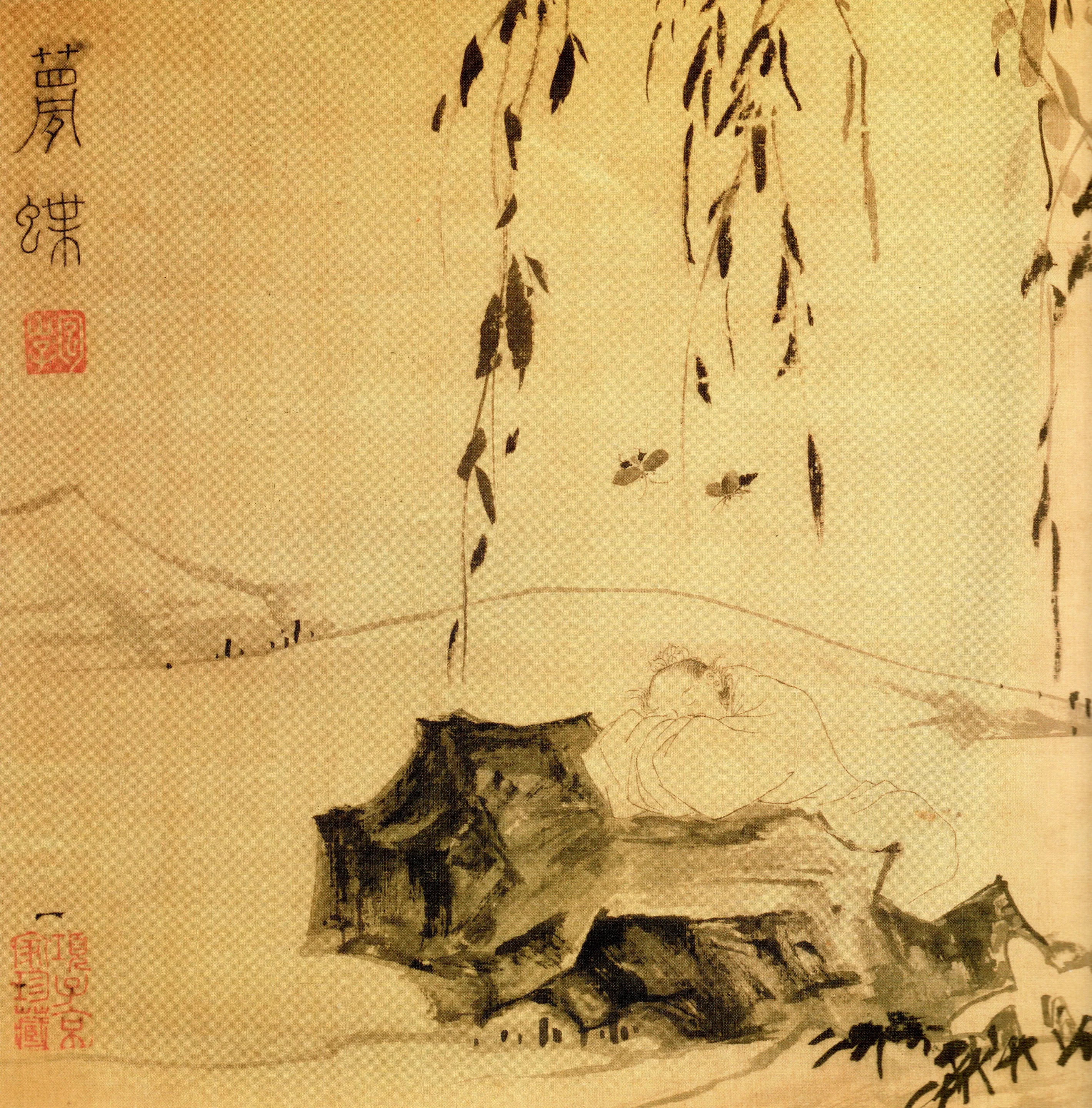
c. 369 to 286 BCE (approximate) · Meng, in the state of Song (present-day Henan or Anhui), China
Life
Zhuang Zhou lived in the warring states period and, by the account of Sima Qian, held a minor post as an official of a lacquer garden. He refused high office, it is said. He preferred, as he put it, to drag his tail in the mud like a living turtle rather than be honoured as a dead one in a temple. The book under his name, the Zhuangzi, has thirty-three chapters; the first seven, the Inner Chapters, are usually taken as closest to him.
What they saw
Zhuangzi saw that most of our trouble comes from fixed lines: this and that, right and wrong, me and not-me. He does not argue for a different line. He makes them wobble. Who is dreaming, the man or the butterfly? And who is right, when each side, in every quarrel, calls itself right? The Tao runs through all of it and takes no side.
His cook shows it in practice. The cook no longer sees the whole ox; he follows the natural gaps, and his knife meets no resistance. That is freedom in Zhuangzi's sense: moving with things, not against them, with nothing fixed in the way.
In their words
“Now I do not know whether I was then a man dreaming I was a butterfly, or whether I am now a butterfly dreaming I am a man.”
Zhuangzi, chapter 2, tr. Herbert Giles (1889)
“its edge is as if fresh from the whetstone.”
Zhuangzi, chapter 3 (the cook), tr. Herbert Giles (1889)
Where this path meets the others
His dream question is close to Gaudapada's, who compared waking to dream to show that both appear in the same awareness. His cook is close to the Gita. Both show what the Gita calls skill in action, done without attachment to its fruits. See Zen and Advaita, and the story The butterfly dream.
Follow the gaps, and the knife stays sharp.
Works
- The Zhuangzi (Inner Chapters and later chapters)4th to 3rd century BCE
Further reading
- Chuang Tzŭ: Mystic, Moralist, and Social Reformer, tr. Herbert A. Giles (1889)
- The Complete Works of Zhuangzi, tr. Burton Watson (1968; in copyright)
Next on your path
Sources
- Chuang Tzŭ: Mystic, Moralist, and Social Reformer, tr. Herbert A. Giles (London: Bernard Quaritch, 1889), chapters 2 and 3. Public domain.
- Sima Qian, Shiji, chapter 63 (lacquer garden post; the turtle story, also in Zhuangzi chapter 17); paraphrased.
- Dates c. 369 to 286 BCE are a common scholarly estimate.