Yoga-Kundalini Upanishad
In the words of Pranav Ashar
How we renderThe heart of the Yoga-Kundalini
In brief
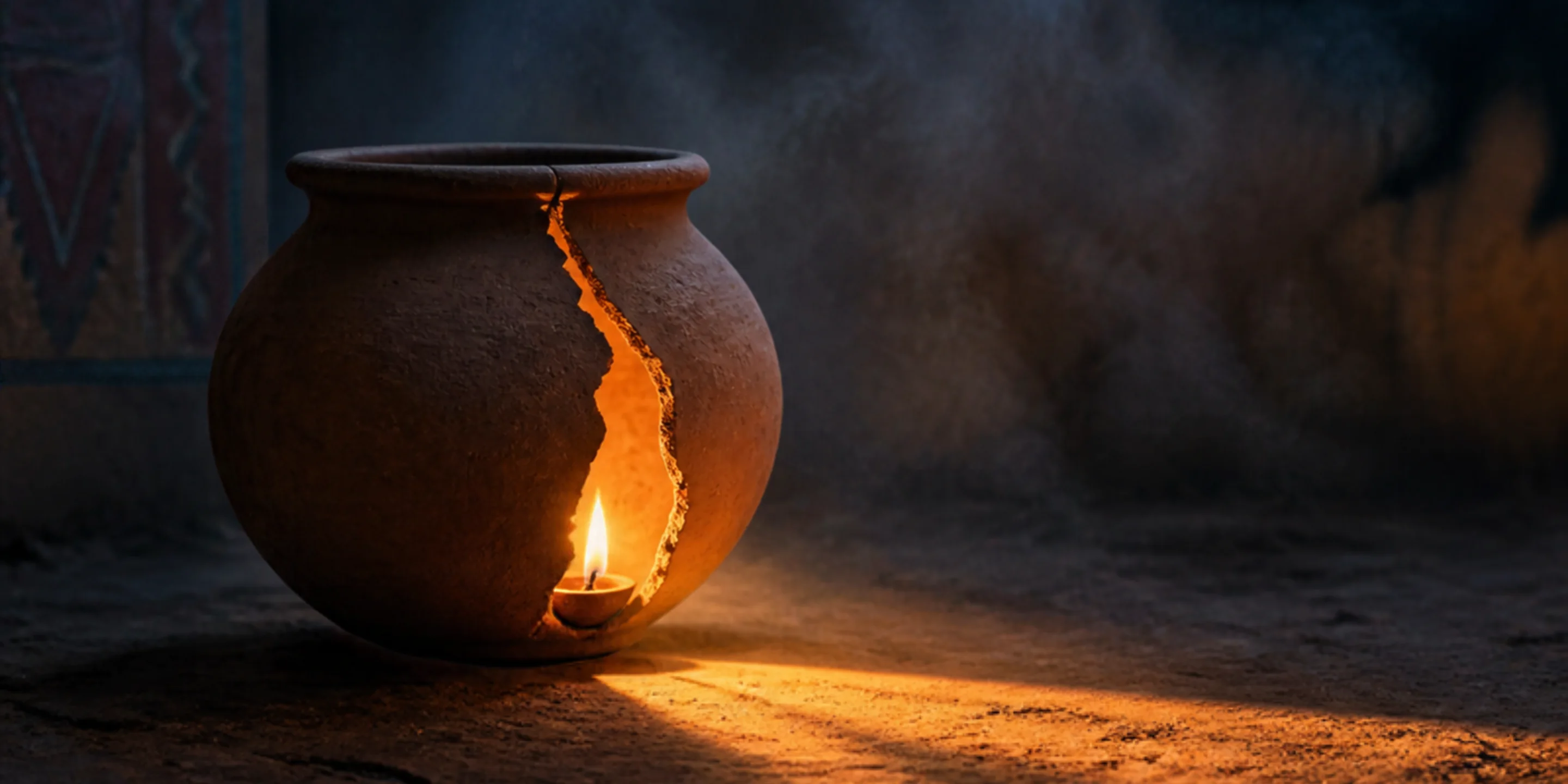
The mind has two causes, its stored tendencies and the breath; when either is destroyed, both are. So first master the breath: by measured food, posture and the rousing of the coiled power. The second chapter teaches khechari, the practice of turning the tongue back. The third chapter takes a different turn: the light of the Self is like a lamp in a pot, which shines out when the pot is broken by the teacher's word; one asks 'Who am I?', and the reflected self burns away like cotton in fire, leaving the Self alone.
- Two causes of the mind
- The coiled power and the three knots
- The ten obstacles
- The khechari practice
- The lamp in the pot
- Who am I?
Contents
- Opening
- 1.1
- 1.2
- 1.3
- 1.4
- 1.5
- 1.6
- 1.7
- 1.8
- 1.9
- 1.10
- 1.11
- 1.12
- 1.13
- 1.14
- 1.15
- 1.16
- 1.17
- 1.18
- 1.19
- 1.20
- 1.21
- 1.22
- 1.23
- 1.24
- 1.25
- 1.26
- 1.27
- 1.28
- 1.29
- 1.30
- 1.31
- 1.32
- 1.33
- 1.34
- 1.35
- 1.36
- 1.37
- 1.38
- 1.39
- 1.40
- 1.41
- 1.42
- 1.43
- 1.44
- 1.45
- 1.46
- 1.47
- 1.48
- 1.49
- 1.50
- 1.51
- 1.52
- 1.53
- 1.54
- 1.55
- 1.56
- 1.57
- 1.58
- 1.59
- 1.60
- 1.61
- 1.62
- 1.63
- 1.64
- 1.65
- 1.66
- 1.67
- 1.68
- 1.69
- 1.70
- 1.71
- 1.72
- 1.73
- 1.74
- 1.75
- 1.76
- 1.77
- 1.78
- 1.79
- 1.80
- 1.81
- 1.82
- 1.83
- 1.84
- 1.85
- 1.86
- 2.1
- 2.2
- 2.3
- 2.4
- 2.5
- 2.6
- 2.7
- 2.8
- 2.9
- 2.10
- 2.11
- 2.12
- 2.13
- 2.14
- 2.15
- 2.16
- 2.17
- 2.18
- 2.19
- 2.20
- 2.21
- 2.22
- 2.23
- 2.24
- 2.25
- 2.26
- 2.27
- 2.28
- 2.29
- 2.30
- 2.31
- 2.32
- 2.33
- 2.34
- 2.35
- 2.36
- 2.37
- 2.38
- 2.39
- 2.40
- 2.41
- 2.42
- 2.43
- 2.44
- 2.45
- 2.46
- 2.47
- 2.48
- 2.49
- 3.1
- 3.2
- 3.3
- 3.4
- 3.5
- 3.6
- 3.7
- 3.8
- 3.9
- 3.10
- 3.11
- 3.12
- 3.13
- 3.14
- 3.15
- 3.16
- 3.17
- 3.18
- 3.19
- 3.20
- 3.21
- 3.22
- 3.23
- 3.24
- 3.25
- 3.26
- 3.27
- 3.28
- 3.29
- 3.30
- 3.31
- 3.32
- 3.33
- 3.34
- 3.35
योगकुण्डल्युपनिषद्योगसिद्धिहृदासनम् । निर्विशेषब्रह्मतत्त्वं स्वमात्रमिति चिन्तये ॥
yogakuṇḍalyupaniṣadyogasiddhihṛdāsanam | nirviśeṣabrahmatattvaṃ svamātramiti cintaye ||
The seat in the heart of the accomplishment of yoga taught in the Yoga-Kundalini Upanishad, the truth of Brahman without distinctions: I reflect that it is only myself.
Note //
A dedicatory verse from the commentator's tradition, placed before the peace invocation; it is not part of the numbered text.
हरिः ॐ ॥ हेतुद्वयं हि चित्तस्य वासना च समीरणः । तयोर्विनष्ट एकस्मिंस्तद्द्वावपि विनश्यतः ॥ १॥
hariḥ oṃ || hetudvayaṃ hi cittasya vāsanā ca samīraṇaḥ | tayorvinaṣṭa ekasmiṃstaddvāvapi vinaśyataḥ || 1||
Hari Om. The mind has two causes: its , and the breath. When one of them is destroyed, both are destroyed.
Note //
The same teaching is in the Muktika Upanishad (2.27-29), from the Yoga Vasishtha. The text chooses the breath as the first handle; the third chapter returns to the other, the tendencies, through knowledge.
तयोरादौ समीरस्य जयं कुर्यान्नरः सदा । मिताहारश्चासनं च शक्तिचालस्तृतीयकः ॥ २॥
tayorādau samīrasya jayaṃ kuryānnaraḥ sadā | mitāhāraścāsanaṃ ca śakticālastṛtīyakaḥ || 2||
Of the two, one should first master the breath. Measured food, posture, and, third, the rousing of the power.
Note //
एतेषां लक्षणं वक्ष्ये शृणु गौतम सादरम् । सुस्निग्धमधुराहारश्चतुर्थांशविवर्जितः ॥ ३॥
eteṣāṃ lakṣaṇaṃ vakṣye śṛṇu gautama sādaram | susnigdhamadhurāhāraścaturthāṃśavivarjitaḥ || 3||
Listen carefully, Gautama, I will tell you their marks. Mild, sweet food, leaving a quarter of the stomach empty,
Note //
भुज्यते शिवसम्प्रीत्यै मिताहारः स उच्यते । आसनं द्विविधं प्रोक्तं पद्मं वज्रासनं तथा ॥ ४॥
bhujyate śivasamprītyai mitāhāraḥ sa ucyate | āsanaṃ dvividhaṃ proktaṃ padmaṃ vajrāsanaṃ tathā || 4||
eaten to please Shiva: that is called measured food. Posture is of two kinds: the lotus and the diamond seat.
Note //
ऊर्वोरुपरि चेद्धत्ते उभे पादतले यथा । पद्मासनं भवेदेतत्सर्वपापप्रणाशनम् ॥ ५॥
ūrvorupari ceddhatte ubhe pādatale yathā | padmāsanaṃ bhavedetatsarvapāpapraṇāśanam || 5||
When one places both soles on the thighs, that is the lotus posture, which destroys all wrongs.
Note //
वामाङ्घ्रिमूलकन्दाधो ह्यन्यं तदुपरि क्षिपेत् । समग्रीवशिरःकायो वज्रासनमितीरितम् ॥ ६॥
vāmāṅghrimūlakandādho hyanyaṃ tadupari kṣipet | samagrīvaśiraḥkāyo vajrāsanamitīritam || 6||
Placing the left heel below the bulb and the other above it, with neck, head and body in line: that is called the diamond seat.
Note //
कुण्डल्येव भवेच्छक्तिस्तां तु सञ्चालयेद्बुधः । स्वस्थानादाभ्रुवोर्मध्यं शक्तिचालनमुच्यते ॥ ७॥
kuṇḍalyeva bhavecchaktistāṃ tu sañcālayedbudhaḥ | svasthānādābhruvormadhyaṃ śakticālanamucyate || 7||
The power is the coiled one, kundalini. The wise should rouse her from her own place up to between the brows: that is called the rousing of the power.
Note //
तत्साधने द्वयं मुख्यं सरस्वत्यास्तु चालनम् । प्राणरोधमथाभ्यासादृज्वी कुण्डलिनी भवेत् ॥ ८॥
tatsādhane dvayaṃ mukhyaṃ sarasvatyāstu cālanam | prāṇarodhamathābhyāsādṛjvī kuṇḍalinī bhavet || 8||
Two things are chief in doing it: stirring the sarasvati channel, and holding the breath. By practice the coiled one becomes straight.
Note //
तयोरादौ सरस्वत्याश्चालनं कथयामि ते । अरुन्धत्येव कथिता पुराविद्भिः सरस्वती ॥ ९॥
tayorādau sarasvatyāścālanaṃ kathayāmi te | arundhatyeva kathitā purāvidbhiḥ sarasvatī || 9||
First I will tell you about stirring sarasvati. Those who know the ancient lore call sarasvati Arundhati.
Note //
यस्याः सञ्चालनेनैव स्वयं चलति कुण्डली । इडायां वहति प्राणे बद्ध्वा पद्मासनं दृढम् ॥ १०॥
yasyāḥ sañcālanenaiva svayaṃ calati kuṇḍalī | iḍāyāṃ vahati prāṇe baddhvā padmāsanaṃ dṛḍham || 10||
By stirring her the coiled one moves of herself. While the breath flows through the left channel, sitting firmly in the lotus posture,
Note //
द्वादशाङ्गुलदैर्घ्यं च अम्बरं चतुरङ्गुलम् । विस्तीर्य तेन तन्नाडीं वेष्टयित्वा ततः सुधीः ॥ ११॥
dvādaśāṅguladairghyaṃ ca ambaraṃ caturaṅgulam | vistīrya tena tannāḍīṃ veṣṭayitvā tataḥ sudhīḥ || 11||
spreading a cloth twelve finger-widths long and four wide, and wrapping that channel with it, the wise one
Note //
अङ्गुष्ठतर्जनीभ्यां तु हस्ताभ्यां धारयेद्दृढम् । स्वशक्त्या चालयेद्वामे दक्षिणेन पुनःपुनः ॥ १२॥
aṅguṣṭhatarjanībhyāṃ tu hastābhyāṃ dhārayeddṛḍham | svaśaktyā cālayedvāme dakṣiṇena punaḥpunaḥ || 12||
holds it firmly with thumbs and forefingers of both hands, and, with all his strength, moves it left and right, again and again,
Note //
The 'channel' wrapped here is understood as the tongue or the region of the navel; the practice is obscure. Pending review.
मुहूर्तद्वयपर्यन्तं निर्भयाच्चालयेत्सुधीः । ऊर्ध्वमाकर्षयेत्किञ्चित्सुषुम्नां कुण्डलीगताम् ॥ १३॥
muhūrtadvayaparyantaṃ nirbhayāccālayetsudhīḥ | ūrdhvamākarṣayetkiñcitsuṣumnāṃ kuṇḍalīgatām || 13||
for two muhurtas, fearlessly. He draws up a little the central channel in which the coiled one lies.
Note //
तेन कुण्डलिनी तस्याः सुषुम्नाया मुखं व्रजेत् । जहाति तस्मात्प्राणोऽयं सुषुम्नां व्रजति स्वतः ॥ १४॥
tena kuṇḍalinī tasyāḥ suṣumnāyā mukhaṃ vrajet | jahāti tasmātprāṇo'yaṃ suṣumnāṃ vrajati svataḥ || 14||
By this the coiled one goes to the mouth of the central channel; the breath leaves its old course and enters the central channel of itself.
Note //
तुन्दे तु तानं कुर्याच्च कण्ठसङ्कोचने कृते । सरस्वत्यां चालनेन वक्षसश्चोर्ध्वगो मरुत् ॥ १५॥
tunde tu tānaṃ kuryācca kaṇṭhasaṅkocane kṛte | sarasvatyāṃ cālanena vakṣasaścordhvago marut || 15||
Drawing in the belly, contracting the throat, by stirring sarasvati the breath rises above the chest.
Note //
सूर्येण रेचयेद्वायुं सरस्वत्यास्तु चालने । कण्ठसङ्कोचनं कृत्वा वक्षसश्चोर्ध्वगो मरुत् ॥ १६॥
sūryeṇa recayedvāyuṃ sarasvatyāstu cālane | kaṇṭhasaṅkocanaṃ kṛtvā vakṣasaścordhvago marut || 16||
While stirring sarasvati, let the breath out through the right; contracting the throat, the breath rises above the chest.
Note //
तस्मात्सञ्चालयेन्नित्यं शब्दगर्भां सरस्वतीम् । यस्याः सञ्चालनेनैव योगी रोगैः प्रमुच्यते ॥ १७॥
tasmātsañcālayennityaṃ śabdagarbhāṃ sarasvatīm | yasyāḥ sañcālanenaiva yogī rogaiḥ pramucyate || 17||
So one should always stir sarasvati, who holds sound in her womb. By stirring her alone the yogi is freed from disease.
Note //
गुल्मं जलोदरः प्लीहा ये चान्ये तुन्दमध्यगाः । सर्वे ते शक्तिचालेन रोगा नश्यन्ति निश्चयम् ॥ १८॥
gulmaṃ jalodaraḥ plīhā ye cānye tundamadhyagāḥ | sarve te śakticālena rogā naśyanti niścayam || 18||
Swellings, dropsy, spleen trouble, and all other diseases of the belly surely perish by the rousing of the power.
Note //
प्राणरोधमथेदानीं प्रवक्ष्यामि समासतः । प्राणश्च दहनो वायुरायामः कुम्भकः स्मृतः ॥ १९॥
prāṇarodhamathedānīṃ pravakṣyāmi samāsataḥ | prāṇaśca dahano vāyurāyāmaḥ kumbhakaḥ smṛtaḥ || 19||
Now I will tell you briefly about holding the breath. Prana is the breath that burns; its restraint is called holding.
Note //
स एव द्विविधः प्रोक्तः सहितः केवलस्तथा । यावत्केवलसिद्धिः स्यात्तावत्सहितमभ्यसेत् ॥ २०॥
sa eva dvividhaḥ proktaḥ sahitaḥ kevalastathā | yāvatkevalasiddhiḥ syāttāvatsahitamabhyaset || 20||
It is of two kinds, joined and pure. Until the pure is mastered, practise the joined.
Note //
'Joined' (sahita): with breathing in and out; 'pure' (kevala): the breath stops of itself.
सूर्योज्जायी शीतली च भस्त्री चैव चतुर्थिका । भेदैरेव समं कुम्भो यः स्यात्सहितकुम्भकः ॥ २१॥
sūryojjāyī śītalī ca bhastrī caiva caturthikā | bhedaireva samaṃ kumbho yaḥ syātsahitakumbhakaḥ || 21||
The sun-piercing, the victorious, the cooling, and fourth, the bellows: holding with these divisions is the joined holding.
Note //
पवित्रे निर्जने देशे शर्करादिविवर्जिते । धनुःप्रमाणपर्यन्ते शीताग्निजलवर्जिते ॥ २२॥
pavitre nirjane deśe śarkarādivivarjite | dhanuḥpramāṇaparyante śītāgnijalavarjite || 22||
In a clean, lonely place, free of gravel and the like, a bow's length on every side, away from cold, fire and water,
Note //
पवित्रे नात्युच्चनीचे ह्यासने सुखदे सुखे । बद्धपद्मासनं कृत्वा सरस्वत्यास्तु चालनम् ॥ २३॥
pavitre nātyuccanīce hyāsane sukhade sukhe | baddhapadmāsanaṃ kṛtvā sarasvatyāstu cālanam || 23||
on a clean seat, not too high or low, pleasant and comfortable, sitting in the bound lotus posture, one should stir sarasvati,
Note //
दक्षनाड्या समाकृष्य बहिष्ठं पवनं शनैः । यथेष्टं पूरयेद्वायुं रेचयेदिडया ततः ॥ २४॥
dakṣanāḍyā samākṛṣya bahiṣṭhaṃ pavanaṃ śanaiḥ | yatheṣṭaṃ pūrayedvāyuṃ recayediḍayā tataḥ || 24||
draw the outer air in slowly through the right channel, fill with breath as much as one likes, then let it out through the left.
Note //
कपालशोधने वापि रेचयेत्पवनं शनैः । चतुष्कं वातदोषं तु कृमिदोषं निहन्ति च ॥ २५॥
kapālaśodhane vāpi recayetpavanaṃ śanaiḥ | catuṣkaṃ vātadoṣaṃ tu kṛmidoṣaṃ nihanti ca || 25||
Or let the breath out slowly after it has cleansed the skull. It destroys the four disorders of wind and the trouble of worms.
Note //
पुनः पुनरिदं कार्यं सूर्यभेदमुदाहृतम् । मुखं संयम्य नाडिभ्यामाकृष्य पवनं शनैः ॥ २६॥
punaḥ punaridaṃ kāryaṃ sūryabhedamudāhṛtam | mukhaṃ saṃyamya nāḍibhyāmākṛṣya pavanaṃ śanaiḥ || 26||
This should be done again and again; it is called the sun-piercing. Closing the mouth, drawing the breath in slowly through both channels,
Note //
यथा लगति कण्ठात्तु हृदयावधि सस्वनम् । पूर्ववत्कुम्भयेत्प्राणं रेचयेदिडया ततः ॥ २७॥
yathā lagati kaṇṭhāttu hṛdayāvadhi sasvanam | pūrvavatkumbhayetprāṇaṃ recayediḍayā tataḥ || 27||
so that it is felt with a sound from the throat to the heart, hold the breath as before, then let it out through the left.
Note //
शीर्षोदितानलहरं गलश्लेष्महरं परम् । सर्वरोगहरं पुण्यं देहानलविवर्धनम् ॥ २८॥
śīrṣoditānalaharaṃ galaśleṣmaharaṃ param | sarvarogaharaṃ puṇyaṃ dehānalavivardhanam || 28||
It removes heat rising to the head, and phlegm in the throat; it removes all disease, it is pure, and it strengthens the body's fire.
Note //
नाडीजलोदरं धातुगतदोषविनाशनम् । गच्छतस्तिष्ठतः कार्यमुज्जाय्याख्यं तु कुम्भकम् ॥ २९॥
nāḍījalodaraṃ dhātugatadoṣavināśanam | gacchatastiṣṭhataḥ kāryamujjāyyākhyaṃ tu kumbhakam || 29||
It destroys dropsy of the channels and faults in the tissues. This holding, called the victorious, can be done walking or standing.
Note //
जिह्वया वायुमाकृष्य पूर्ववत्कुम्भकादनु । शनैस्तु घ्राणरन्ध्राभ्यां रेचयेदनिलं सुधीः ॥ ३०॥
jihvayā vāyumākṛṣya pūrvavatkumbhakādanu | śanaistu ghrāṇarandhrābhyāṃ recayedanilaṃ sudhīḥ || 30||
Drawing in air through the tongue, holding as before, the wise one lets the air out slowly through both nostrils.
Note //
गुल्मप्लीहादिकान्दोषान्क्षयं पित्तं ज्वरं तृषाम् । विषाणि शीतली नाम कुम्भकोऽयं निहन्ति च ॥ ३१॥
gulmaplīhādikāndoṣānkṣayaṃ pittaṃ jvaraṃ tṛṣām | viṣāṇi śītalī nāma kumbhako'yaṃ nihanti ca || 31||
This holding, called the cooling, destroys swellings, spleen trouble and the like, consumption, bile, fever, thirst and poisons.
Note //
ततः पद्मासनं बद्ध्वा समग्रीवोदरः सुधीः । मुखं संयम्य यत्नेन प्राणं घ्राणेन रेचयेत् ॥ ३२॥
tataḥ padmāsanaṃ baddhvā samagrīvodaraḥ sudhīḥ | mukhaṃ saṃyamya yatnena prāṇaṃ ghrāṇena recayet || 32||
Then, sitting in the bound lotus posture, neck and belly in line, closing the mouth with care, the wise one breathes out through the nose,
Note //
यथा लगति कण्ठात्तु कपाले सस्वनं ततः । वेगेन पूरयेत्किञ्चिद्धृत्पद्मावधि मारुतम् ॥ ३३॥
yathā lagati kaṇṭhāttu kapāle sasvanaṃ tataḥ | vegena pūrayetkiñciddhṛtpadmāvadhi mārutam || 33||
so that it is felt with a sound from the throat to the skull; then quickly draws in a little air down to the lotus of the heart.
Note //
पुनर्विरेचयेत्तद्वत्पूरयेच्च पुनः पुनः । यथैव लोहकाराणां भस्त्रा वेगेन चाल्यते ॥ ३४॥
punarvirecayettadvatpūrayecca punaḥ punaḥ | yathaiva lohakārāṇāṃ bhastrā vegena cālyate || 34||
Again he breathes out, and in, again and again, as the bellows of a smith are worked fast,
Note //
तथैव स्वशरीरस्थं चालयेत्पवनं शनैः । यथा श्रमो भवेद्देहे तथा सूर्येण पूरयेत् ॥ ३५॥
tathaiva svaśarīrasthaṃ cālayetpavanaṃ śanaiḥ | yathā śramo bhaveddehe tathā sūryeṇa pūrayet || 35||
so he moves the breath in his body. When the body grows tired, he fills it through the right,
Note //
यथोदरं भवेत्पूर्णं पवनेन तथा लघु । धारयन्नासिकामध्यं तर्जनीभ्यां विना दृढम् ॥ ३६॥
yathodaraṃ bhavetpūrṇaṃ pavanena tathā laghu | dhārayannāsikāmadhyaṃ tarjanībhyāṃ vinā dṛḍham || 36||
so that the belly is quickly filled with breath, holding the middle of the nose firmly, without the forefingers,
Note //
कुम्भकं पूर्ववत्कृत्वा रेचयेदिडयानिलम् । कण्ठोत्थितानलहरं शरीराग्निविवर्धनम् ॥ ३७॥
kumbhakaṃ pūrvavatkṛtvā recayediḍayānilam | kaṇṭhotthitānalaharaṃ śarīrāgnivivardhanam || 37||
holds as before, and lets the air out through the left. It removes the heat rising in the throat and strengthens the body's fire,
Note //
कुण्डलीबोधकं पुण्यं पापघ्नं शुभदं सुखम् । ब्रह्मनाडीमुखान्तस्थकफाद्यर्गलनाशनम् ॥ ३८॥
kuṇḍalībodhakaṃ puṇyaṃ pāpaghnaṃ śubhadaṃ sukham | brahmanāḍīmukhāntasthakaphādyargalanāśanam || 38||
wakes the coiled one, is pure, destroys wrong, brings good and ease, and removes the bolt of phlegm and the like at the mouth of the channel of Brahman.
Note //
गुणत्रयसमुद्भूतग्रन्थित्रयविभेदकम् । विशेषेणैव कर्तव्यं भस्त्राख्यं कुम्भकं त्विदम् ॥ ३९॥
guṇatrayasamudbhūtagranthitrayavibhedakam | viśeṣeṇaiva kartavyaṃ bhastrākhyaṃ kumbhakaṃ tvidam || 39||
It pierces the three knots born of the three qualities. This holding, called the bellows, should be practised above all.
Note //
The three knots (granthi) of Brahma, Vishnu and Rudra are the points where attention is tied to body, life and mind (see 1.67-68, 1.85-86).
चतुर्णामपि भेदानां कुम्भके समुपस्थिते । बन्धत्रयमिदं कार्यं योगिभिर्वीतकल्मषैः ॥ ४०॥
caturṇāmapi bhedānāṃ kumbhake samupasthite | bandhatrayamidaṃ kāryaṃ yogibhirvītakalmaṣaiḥ || 40||
When the holding in these four ways is mastered, yogis free of stain should make the three locks.
Note //
प्रथमो मूलबन्धस्तु द्वितीयोड्डीयणाभिधः । जालन्धरस्तृतीयस्तु तेषां लक्षणमुच्यते ॥ ४१॥
prathamo mūlabandhastu dvitīyoḍḍīyaṇābhidhaḥ | jālandharastṛtīyastu teṣāṃ lakṣaṇamucyate || 41||
The first is the root lock, the second is called the flying-up, the third is the net-holding lock. Their marks are told now.
Note //
अधोगतिमपानं वै ऊर्ध्वगं कुरुते बलात् । आकुञ्चनेन तं प्राहुर्मूलबन्धोऽयमुच्यते ॥ ४२॥
adhogatimapānaṃ vai ūrdhvagaṃ kurute balāt | ākuñcanena taṃ prāhurmūlabandho'yamucyate || 42||
Forcing the downward breath upward by contraction: this, they say, is called the root lock.
Note //
अपाने चोर्ध्वगे याते सम्प्राप्ते वह्निमण्डले । ततोऽनलशिखा दीर्घा वर्धते वायुनाऽऽहता ॥ ४३॥
apāne cordhvage yāte samprāpte vahnimaṇḍale | tato'nalaśikhā dīrghā vardhate vāyunā''hatā || 43||
When the downward breath has gone up and reached the circle of fire, the flame of the fire, fanned by the breath, grows long.
Note //
ततो यातौ वह्न्यपानौ प्राणमुष्णस्वरूपकम् । तेनात्यन्तप्रदीप्तेन ज्वलनो देहजस्तथा ॥ ४४॥
tato yātau vahnyapānau prāṇamuṣṇasvarūpakam | tenātyantapradīptena jvalano dehajastathā || 44||
Then fire and the downward breath reach the forward breath, which is hot by nature, and by it, blazing fiercely, the fire of the body
Note //
तेन कुण्डलिनी सुप्ता सन्तप्ता सम्प्रबुध्यते । दण्डाहतभुजङ्गीव निःश्वस्य ऋजुतां व्रजेत् ॥ ४५॥
tena kuṇḍalinī suptā santaptā samprabudhyate | daṇḍāhatabhujaṅgīva niḥśvasya ṛjutāṃ vrajet || 45||
heats the sleeping coiled one, and she wakes. Like a serpent struck with a stick, she hisses and straightens.
Note //
बिलप्रवेशतो यत्र ब्रह्मनाड्यन्तरं व्रजेत् । तस्मान्नित्यं मूलबन्धः कर्तव्यो योगिभिः सदा ॥ ४६॥
bilapraveśato yatra brahmanāḍyantaraṃ vrajet | tasmānnityaṃ mūlabandhaḥ kartavyo yogibhiḥ sadā || 46||
As if entering a hole, she goes into the channel of Brahman. So yogis should always practise the root lock.
Note //
कुम्भकान्ते रेचकादौ कर्तव्यस्तूड्डियाणकः । बन्धो येन सुषुम्नायां प्राणस्तूड्डीयते यतः ॥ ४७॥
kumbhakānte recakādau kartavyastūḍḍiyāṇakaḥ | bandho yena suṣumnāyāṃ prāṇastūḍḍīyate yataḥ || 47||
At the end of holding, as breathing out begins, make the flying-up lock: the lock by which the breath flies up in the central channel.
Note //
तस्मादुड्डीयणाख्योऽयं योगिभिः समुदाहृतः । सति वज्रासने पादौ कराभ्यां धारयेद्दृढम् ॥ ४८॥
tasmāduḍḍīyaṇākhyo'yaṃ yogibhiḥ samudāhṛtaḥ | sati vajrāsane pādau karābhyāṃ dhārayeddṛḍham || 48||
So yogis call it the flying-up lock. Sitting in the diamond seat, hold the feet firmly with the hands,
Note //
गुल्फदेशसमीपे च कन्दं तत्र प्रपीडयेत् । पश्चिमं तानमुदरे धारयेद्धृदये गले ॥ ४९॥
gulphadeśasamīpe ca kandaṃ tatra prapīḍayet | paścimaṃ tānamudare dhārayeddhṛdaye gale || 49||
press the bulb near the ankles, and hold the belly drawn back, at the heart and the throat.
Note //
शनैः शनैर्यदा प्राणस्तुन्दसन्धिं निगच्छति । तुन्ददोषं विनिर्धूय कर्तव्यं सततं शनैः ॥ ५०॥
śanaiḥ śanairyadā prāṇastundasandhiṃ nigacchati | tundadoṣaṃ vinirdhūya kartavyaṃ satataṃ śanaiḥ || 50||
When, little by little, the breath reaches the joint of the belly, it shakes out the faults of the belly. Do this always, slowly.
Note //
पूरकान्ते तु कर्तव्यो बन्धो जालन्धराभिधः । कण्ठसङ्कोचरूपोऽसौ वायुमार्गनिरोधकः ॥ ५१॥
pūrakānte tu kartavyo bandho jālandharābhidhaḥ | kaṇṭhasaṅkocarūpo'sau vāyumārganirodhakaḥ || 51||
At the end of breathing in, make the net-holding lock: it is the contracting of the throat, which closes the path of the breath.
Note //
अधस्तात्कुञ्चनेनाशु कण्ठसङ्कोचने कृते । मध्ये पश्चिमतानेन स्यात्प्राणो ब्रह्मनाडिगः ॥ ५२॥
adhastātkuñcanenāśu kaṇṭhasaṅkocane kṛte | madhye paścimatānena syātprāṇo brahmanāḍigaḥ || 52||
With the contraction below, the throat drawn in, and the belly drawn back in the middle, the breath enters the channel of Brahman.
Note //
पूर्वोक्तेन क्रमेणैव सम्यगासनमास्थितः । चालनं तु सरस्वत्याः कृत्वा प्राणं निरोधयेत् ॥ ५३॥
pūrvoktena krameṇaiva samyagāsanamāsthitaḥ | cālanaṃ tu sarasvatyāḥ kṛtvā prāṇaṃ nirodhayet || 53||
Seated properly in posture in the way already given, stir sarasvati and hold the breath.
Note //
प्रथमे दिवसे कार्यं कुम्भकानां चतुष्टयम् । प्रत्येकं दशसङ्ख्याकं द्वितीये पञ्चभिस्तथा ॥ ५४॥
prathame divase kāryaṃ kumbhakānāṃ catuṣṭayam | pratyekaṃ daśasaṅkhyākaṃ dvitīye pañcabhistathā || 54||
On the first day do the four holdings ten times each; on the second, five more;
Note //
विंशत्यलं तृतीयेऽह्नि पञ्चवृद्ध्या दिने दिने । कर्तव्यः कुम्भको नित्यं बन्धत्रयसमन्वितः ॥ ५५॥
viṃśatyalaṃ tṛtīye'hni pañcavṛddhyā dine dine | kartavyaḥ kumbhako nityaṃ bandhatrayasamanvitaḥ || 55||
on the third, twenty is enough; and so on, five more each day. The holding should be done daily with the three locks.
Note //
दिवा सुप्तिर्निशायां तु जागरादतिमैथुनात् । बहुसङ्क्रमणं नित्यं रोधान्मूत्रपुरीषयोः ॥ ५६॥
divā suptirniśāyāṃ tu jāgarādatimaithunāt | bahusaṅkramaṇaṃ nityaṃ rodhānmūtrapurīṣayoḥ || 56||
From sleeping by day and waking by night, from too much sex, from constant moving about, from holding back urine and faeces,
Note //
विषमाशनदोषाच्च प्रयासप्राणचिन्तनात् । शीघ्रमुत्पद्यते रोगः स्तम्भयेद्यदि संयमी ॥ ५७॥
viṣamāśanadoṣācca prayāsaprāṇacintanāt | śīghramutpadyate rogaḥ stambhayedyadi saṃyamī || 57||
from irregular eating, and from straining over the breath, disease quickly arises if the practitioner forces the breath.
Note //
योगाभ्यासेन मे रोग उत्पन्न इति कथ्यते । ततोऽभ्यासं त्यजेदेवं प्रथमं विघ्न उच्यते ॥ ५८॥
yogābhyāsena me roga utpanna iti kathyate | tato'bhyāsaṃ tyajedevaṃ prathamaṃ vighna ucyate || 58||
Then he says, 'My disease came from practising yoga,' and gives up the practice: this is called the first obstacle.
Note //
द्वितीयं संशयाख्यं च तृतीयं च प्रमत्तता । आलस्याख्यं चतुर्थं च निद्रारूपं तु पञ्चमम् ॥ ५९॥
dvitīyaṃ saṃśayākhyaṃ ca tṛtīyaṃ ca pramattatā | ālasyākhyaṃ caturthaṃ ca nidrārūpaṃ tu pañcamam || 59||
The second is doubt; the third, carelessness; the fourth, sloth; the fifth, sleep;
Note //
षष्ठं तु विरतिर्भ्रान्तिः सप्तमं परिकीर्तितम् । विषमं चाष्टमं चैव अनाख्यं नवमं स्मृतम् ॥ ६०॥
ṣaṣṭhaṃ tu viratirbhrāntiḥ saptamaṃ parikīrtitam | viṣamaṃ cāṣṭamaṃ caiva anākhyaṃ navamaṃ smṛtam || 60||
the sixth, losing interest; the seventh, confusion; the eighth, unevenness; the ninth, the nameless;
Note //
अलब्धिर्योगतत्त्वस्य दशमं प्रोच्यते बुधैः । इत्येतद्विघ्नदशकं विचारेण त्यजेद्बुधः ॥ ६१॥
alabdhiryogatattvasya daśamaṃ procyate budhaiḥ | ityetadvighnadaśakaṃ vicāreṇa tyajedbudhaḥ || 61||
and the tenth, say the wise, is not finding the truth of yoga. The wise should drop these ten obstacles by discernment.
Note //
'By discernment' (vicharena): the obstacles are overcome by inquiry, not by force.
प्राणाभ्यासस्ततः कार्यो नित्यं सत्त्वस्थया धिया । सुषुम्ना लीयते चित्तं तथा वायुः प्रधावति ॥ ६२॥
prāṇābhyāsastataḥ kāryo nityaṃ sattvasthayā dhiyā | suṣumnā līyate cittaṃ tathā vāyuḥ pradhāvati || 62||
Then practise the breath daily, with a mind steady in clarity. The mind dissolves in the central channel, and the breath rushes there too.
Note //
शुष्के मले तु योगी च स्याद्गतिश्चलिता ततः । अधोगतिमपानं वै ऊर्ध्वगं कुरुते बलात् ॥ ६३॥
śuṣke male tu yogī ca syādgatiścalitā tataḥ | adhogatimapānaṃ vai ūrdhvagaṃ kurute balāt || 63||
When the impurities are dried up, the yogi's breath begins to move. Forcing the downward breath upward
Note //
आकुञ्चनेन तं प्राहुर्मूलबन्धोऽयमुच्यते । अपानश्चोर्ध्वगो भूत्वा वह्निना सह गच्छति ॥ ६४॥
ākuñcanena taṃ prāhurmūlabandho'yamucyate | apānaścordhvago bhūtvā vahninā saha gacchati || 64||
by contraction is called the root lock. The downward breath, gone upward, goes with the fire
Note //
प्राणस्थानं ततो वह्निः प्राणापानौ च सत्वरम् । मिलित्वा कुण्डलीं याति प्रसुप्ता कुण्डलाकृतिः ॥ ६५॥
prāṇasthānaṃ tato vahniḥ prāṇāpānau ca satvaram | militvā kuṇḍalīṃ yāti prasuptā kuṇḍalākṛtiḥ || 65||
to the place of the forward breath. Then fire, in-breath and out-breath, quickly joined, go to the coiled one, asleep, coiled in a ring.
Note //
तेनाग्निना च सन्तप्ता पवनेनैव चालिता । प्रसार्य स्वशरीरं तु सुषुम्नावदनान्तरे ॥ ६६॥
tenāgninā ca santaptā pavanenaiva cālitā | prasārya svaśarīraṃ tu suṣumnāvadanāntare || 66||
Heated by that fire, stirred by the breath, she stretches out her body inside the mouth of the central channel,
Note //
ब्रह्मग्रन्थिं ततो भित्त्वा रजोगुणसमुद्भवम् । सुषुम्नावदने शीघ्रं विद्युल्लेखेव संस्फुरेत् ॥ ६७॥
brahmagranthiṃ tato bhittvā rajoguṇasamudbhavam | suṣumnāvadane śīghraṃ vidyullekheva saṃsphuret || 67||
pierces the knot of Brahma, born of the quality of activity, and flashes at once in the mouth of the central channel like a streak of lightning.
Note //
विष्णुग्रन्थिं प्रयात्युच्चैः सत्वरं हृदि संस्थिता । ऊर्ध्वं गच्छति यच्चास्ते रुद्रग्रन्थिं तदुद्भवम् ॥ ६८॥
viṣṇugranthiṃ prayātyuccaiḥ satvaraṃ hṛdi saṃsthitā | ūrdhvaṃ gacchati yaccāste rudragranthiṃ tadudbhavam || 68||
Quickly she rises to the knot of Vishnu in the heart; then she goes higher, to the knot of Rudra above it,
Note //
भ्रुवोर्मध्ये तु संभिद्य याति शीतांशुमण्डलम् । अनाहताख्यं यच्चक्रं दलैः षोडशभिर्युतम् ॥ ६९॥
bhruvormadhye tu saṃbhidya yāti śītāṃśumaṇḍalam | anāhatākhyaṃ yaccakraṃ dalaiḥ ṣoḍaśabhiryutam || 69||
pierces it between the brows, and goes to the circle of the moon, the wheel called unstruck, with sixteen petals.
Note //
Aiyar notes that the unstruck centre usually has twelve petals; the sixteen here may be the sixteen digits of the moon.
तत्र शीतांशुसञ्जातं द्रवं शोषयति स्वयम् । चलिते प्राणवेगेन रक्तं पीतं रवेर्ग्रहात् ॥ ७०॥
tatra śītāṃśusañjātaṃ dravaṃ śoṣayati svayam | calite prāṇavegena raktaṃ pītaṃ ravergrahāt || 70||
There she dries up of herself the fluid born of the moon. Stirred by the force of the breath, the blood turns to bile through the sun's hold.
Note //
Verses 1.70-1.76 describe the inner alchemy of the moon's nectar and the sun's heat; the Sanskrit is compressed and partly corrupt, and Aiyar calls the passage obscure. Pending review.
यातेन्दुचक्रं यत्रास्ते शुद्धश्लेष्मद्रवात्मकम् । तत्र सिक्तं ग्रसत्युष्णं कथं शीतस्वभावकम् ॥ ७१॥
yātenducakraṃ yatrāste śuddhaśleṣmadravātmakam | tatra siktaṃ grasatyuṣṇaṃ kathaṃ śītasvabhāvakam || 71||
It goes to the wheel of the moon, where there is pure, fluid phlegm. There, poured in, it is swallowed hot: how, when its nature is cold?
Note //
तथैव रभसा शुक्लं चन्द्ररूपं हि तप्यते । ऊर्ध्वं प्रवहति क्षुब्धा तदैवं भ्रमतेतराम् ॥ ७२॥
tathaiva rabhasā śuklaṃ candrarūpaṃ hi tapyate | ūrdhvaṃ pravahati kṣubdhā tadaivaṃ bhramatetarām || 72||
In the same way the white, the moon's form, is heated quickly; stirred, she flows upward and whirls all the more.
Note //
तस्यास्वादवशाच्चित्तं बहिष्ठं विषयेषु यत् । तदेव परमं भुक्त्वा स्वस्थः स्वात्मरतो युवा ॥ ७३॥
tasyāsvādavaśāccittaṃ bahiṣṭhaṃ viṣayeṣu yat | tadeva paramaṃ bhuktvā svasthaḥ svātmarato yuvā || 73||
Tasting this, the mind that was outside among objects enjoys the highest, and rests in itself, delighting in its own Self, young.
Note //
प्रकृत्यष्टकरूपं च स्थानं गच्छति कुण्डली । क्रोडीकृत्य शिवं याति क्रोडीकृत्य विलीयते ॥ ७४॥
prakṛtyaṣṭakarūpaṃ ca sthānaṃ gacchati kuṇḍalī | kroḍīkṛtya śivaṃ yāti kroḍīkṛtya vilīyate || 74||
The coiled one goes to the place of the eightfold nature, embraces Shiva, goes into him, and, embracing, dissolves.
Note //
इत्यधोर्ध्वरजः शुक्लं शिवे तदनु मारुतः । प्राणापानौ समौ याति सदा जातौ तथैव च ॥ ७५॥
ityadhordhvarajaḥ śuklaṃ śive tadanu mārutaḥ | prāṇāpānau samau yāti sadā jātau tathaiva ca || 75||
So the red below and the white above go to Shiva, and after them the breath; the in-breath and out-breath, born together, become even.
Note //
भूतेऽल्पे चाप्यनल्पे वा वाचके त्वतिवर्धते । धवयत्यखिला वाता अग्निमूषाहिरण्यवत् ॥ ७६॥
bhūte'lpe cāpyanalpe vā vācake tvativardhate | dhavayatyakhilā vātā agnimūṣāhiraṇyavat || 76||
In things small and great, in what speaks, it grows greatly; all the breaths purify it as gold is purified in the crucible.
Note //
The Sanskrit of this verse is corrupt; the rendering follows the general sense of purification and Aiyar's fragmentary text. Pending review.
आधिभौतिकदेहं तु आधिदैविकविग्रहे । देहोऽतिविमलं याति चातिवाहिकतामियात् ॥ ७७॥
ādhibhautikadehaṃ tu ādhidaivikavigrahe | deho'tivimalaṃ yāti cātivāhikatāmiyāt || 77||
The body of the elements passes into a body of light; the body becomes utterly pure and reaches the subtle, carrying form.
Note //
Ativahika: the subtle body that 'carries' the self; in the Yoga Vasishtha it is the body the knower recognises as mind-made. Pending review.
जाड्यभावविनिर्मुक्तममलं चिन्मयात्मकम् । तस्यातिवाहिकं मुख्यं सर्वेषां तु मदात्मकम् ॥ ७८॥
jāḍyabhāvavinirmuktamamalaṃ cinmayātmakam | tasyātivāhikaṃ mukhyaṃ sarveṣāṃ tu madātmakam || 78||
Free of all dullness, stainless, made of awareness: its subtle body is chief, the self of all, which is my Self.
Note //
जायाभवविनिर्मुक्तिः कालरूपस्य विभ्रमः । इति तं स्वस्वरूपा हि मती रज्जुभुजङ्गवत् ॥ ७९॥
jāyābhavavinirmuktiḥ kālarūpasya vibhramaḥ | iti taṃ svasvarūpā hi matī rajjubhujaṅgavat || 79||
Even 'freedom from wife and world' is a confusion of time. So the mind's notion is, for one's true nature, like a snake in a rope.
Note //
The idea of being freed from the world is itself part of the world-picture; to the Self it is like the snake seen in a rope. Aiyar: 'the idea of the release from wife and samsara is the delusion of time'.
मृषैवोदेति सकलं मृषैव प्रविलीयते । रौप्यबुद्धिः शुक्तिकायां स्त्रीपुंसोर्भ्रमतो यथा ॥ ८०॥
mṛṣaivodeti sakalaṃ mṛṣaiva pravilīyate | raupyabuddhiḥ śuktikāyāṃ strīpuṃsorbhramato yathā || 80||
All this rises falsely, and falsely it dissolves, like the notion of silver in mother-of-pearl, like the confusion of woman and man.
Note //
'Falsely' (mrisha): not real on its own; real only as appearance. 'The confusion of woman and man': the distinction of sex belongs to the body, not to the Self.
पिण्डब्रह्माण्डयोरैक्यं लिङ्गसूत्रात्मनोरपि । स्वापाव्याकृतयोरैक्यं स्वप्रकाशचिदात्मनोः ॥ ८१॥
piṇḍabrahmāṇḍayoraikyaṃ liṅgasūtrātmanorapi | svāpāvyākṛtayoraikyaṃ svaprakāśacidātmanoḥ || 81||
The body and the cosmos are one; the subtle body and the thread-self are one; deep sleep and the unmanifest are one; the self-luminous and the Self of awareness are one.
Note //
Each level of the individual is identified with the matching level of the cosmos: the gross body with the cosmic body, the subtle body with the cosmic thread (sutratman), sleep with the unmanifest, and the self-luminous light in each with the Self of all. This is the standard Advaita teaching of the identity of the individual and the cosmic.
शक्तिः कुण्डलिनी नाम बिसतन्तुनिभा शुभा । मूलकन्दं फणाग्रेण दृष्ट्वा कमलकन्दवत् ॥ ८२॥
śaktiḥ kuṇḍalinī nāma bisatantunibhā śubhā | mūlakandaṃ phaṇāgreṇa dṛṣṭvā kamalakandavat || 82||
The power named kundalini, fine as a lotus fibre, bright, biting the root-bulb with the tip of her hood, like the root of a lotus,
Note //
मुखेन पुच्छं संगृह्य ब्रह्मरन्ध्रसमन्विता । पद्मासनगतः स्वस्थो गुदमाकुञ्च्य साधकः ॥ ८३॥
mukhena pucchaṃ saṃgṛhya brahmarandhrasamanvitā | padmāsanagataḥ svastho gudamākuñcya sādhakaḥ || 83||
holding her tail in her mouth, joined to the opening of Brahman. The practitioner, seated at ease in the lotus posture, contracts the anus,
Note //
वायुमूर्ध्वगतं कुर्वन्कुम्भकाविष्टमानसः । वाय्वाघातवशादग्निः स्वाधिष्ठानगतो ज्वलन् ॥ ८४॥
vāyumūrdhvagataṃ kurvankumbhakāviṣṭamānasaḥ | vāyvāghātavaśādagniḥ svādhiṣṭhānagato jvalan || 84||
sends the breath upward, his mind absorbed in the holding; by the blows of the breath the fire in the self-seat blazes.
Note //
ज्वलनाघातपवनाघातैरुन्निद्रितोऽहिराट् । ब्रह्मग्रन्थिं ततो भित्त्वा विष्णुग्रन्थिं भिनत्त्यतः ॥ ८५॥
jvalanāghātapavanāghātairunnidrito'hirāṭ | brahmagranthiṃ tato bhittvā viṣṇugranthiṃ bhinattyataḥ || 85||
Woken by the blows of fire and breath, the queen of serpents pierces the knot of Brahma, and then the knot of Vishnu,
Note //
रुद्रग्रन्थिं च भित्त्वैव कमलानि भिनत्ति षट् । सहस्रकमले शक्तिः शिवेन सह मोदते ॥ ८६॥ सैवावस्था परा ज्ञेया सैव निर्वृतिकारिणी इति ॥
rudragranthiṃ ca bhittvaiva kamalāni bhinatti ṣaṭ | sahasrakamale śaktiḥ śivena saha modate || 86|| saivāvasthā parā jñeyā saiva nirvṛtikāriṇī iti ||
and the knot of Rudra, and pierces the six lotuses. In the thousand-petalled lotus the power delights with Shiva. That is the highest state; that alone brings peace.
Note //
The union of Shakti and Shiva is the yogic image of the end of duality: power and its ground are not two.
अथाहं सम्प्रवक्ष्यामि विद्यां खेचरिसंज्ञिकाम् । यथा विज्ञानवानस्या लोकेऽस्मिन्नजरोऽमरः ॥ १॥
athāhaṃ sampravakṣyāmi vidyāṃ khecarisaṃjñikām | yathā vijñānavānasyā loke'sminnajaro'maraḥ || 1||
Now I will teach you the knowledge called khechari, 'moving in space': whoever knows it is free in this world of age and death.
Note //
Chapter 2 records a physical practice of the hatha yoga tradition. It is rendered as the text gives it, as a record, not as instruction.
मृत्युव्याधिजराग्रस्तो दृष्ट्वा विद्यामिमां मुने । बुद्धिं दृढतरां कृत्वा खेचरीं तु समभ्यसेत् ॥ २॥
mṛtyuvyādhijarāgrasto dṛṣṭvā vidyāmimāṃ mune | buddhiṃ dṛḍhatarāṃ kṛtvā khecarīṃ tu samabhyaset || 2||
Gripped by death, disease and age, seeing this knowledge, sage, make your resolve firm and practise khechari.
Note //
जरामृत्युगदघ्नो यः खेचरीं वेत्ति भूतले । ग्रन्थतश्चार्थतश्चैव तदभ्यासप्रयोगतः ॥ ३॥
jarāmṛtyugadaghno yaḥ khecarīṃ vetti bhūtale | granthataścārthataścaiva tadabhyāsaprayogataḥ || 3||
Whoever on earth knows khechari, which ends age, death and sickness, from the text and from its meaning, and from doing the practice,
Note //
तं मुने सर्वभावेन गुरुं मत्वा समाश्रयेत् । दुर्लभा खेचरी विद्या तदभ्यासोऽपि दुर्लभः ॥ ४॥
taṃ mune sarvabhāvena guruṃ matvā samāśrayet | durlabhā khecarī vidyā tadabhyāso'pi durlabhaḥ || 4||
take him as your teacher, sage, and go to him with your whole being. The knowledge of khechari is hard to find, and its practice is hard too.
Note //
अभ्यासं मेलनं चैव युगपन्नैव सिध्यति । अभ्यासमात्रनिरता न विन्दन्ते ह मेलनम् ॥ ५॥
abhyāsaṃ melanaṃ caiva yugapannaiva sidhyati | abhyāsamātraniratā na vindante ha melanam || 5||
The practice and the joining do not come at the same time. Those devoted to practice alone do not find the joining.
Note //
Melana, 'the joining': the mantra that completes the practice, given only by the teacher. Aiyar calls it 'the key to this science', kept secret and given at initiation.
अभ्यासं लभते ब्रह्मञ्जन्मजन्मान्तरे क्वचित् । मेलनं तु जन्मनां शतान्तेऽपि न लभ्यते ॥ ६॥
abhyāsaṃ labhate brahmañjanmajanmāntare kvacit | melanaṃ tu janmanāṃ śatānte'pi na labhyate || 6||
The practice comes, Brahmin, in some birth, after many births; the joining is not found even at the end of a hundred.
Note //
अभ्यासं बहुजन्मान्ते कृत्वा तद्भावसाधितम् । मेलनं लभते कश्चिद्योगी जन्मान्तरे क्वचित् ॥ ७॥
abhyāsaṃ bahujanmānte kṛtvā tadbhāvasādhitam | melanaṃ labhate kaścidyogī janmāntare kvacit || 7||
Having practised through many births, ripened by that practice, some yogi, in some later birth, finds the joining.
Note //
यदा तु मेलनं योगी लभते गुरुवक्त्रतः । तदा तत्सिद्धिमाप्नोति यदुक्ता शास्त्रसन्ततौ ॥ ८॥
yadā tu melanaṃ yogī labhate guruvaktrataḥ | tadā tatsiddhimāpnoti yaduktā śāstrasantatau || 8||
When the yogi receives the joining from the teacher's own mouth, he gains the accomplishment told of in the line of the scriptures.
Note //
ग्रन्थतश्चार्थतश्चैव मेलनं लभते यदा । तदा शिवत्वमाप्नोति निर्मुक्तः सर्वसंसृतेः ॥ ९॥
granthataścārthataścaiva melanaṃ labhate yadā | tadā śivatvamāpnoti nirmuktaḥ sarvasaṃsṛteḥ || 9||
When he receives the joining from the text and from its meaning, he reaches the state of Shiva, free of all rebirth.
Note //
शास्त्रं विनापि संबोद्धुं गुरवोऽपि न शक्नुयुः । तस्मात्सुदुर्लभतरं लभ्यं शास्त्रमिदं मुने ॥ १०॥
śāstraṃ vināpi saṃboddhuṃ guravo'pi na śaknuyuḥ | tasmātsudurlabhataraṃ labhyaṃ śāstramidaṃ mune || 10||
Without the scripture even teachers cannot awaken it. So this scripture, sage, is very hard to come by.
Note //
यावन्न लभ्यते शास्त्रं तावद्गां पर्यटेद्यतिः । यदा संलभ्यते शास्त्रं तदा सिद्धिः करे स्थिता ॥ ११॥
yāvanna labhyate śāstraṃ tāvadgāṃ paryaṭedyatiḥ | yadā saṃlabhyate śāstraṃ tadā siddhiḥ kare sthitā || 11||
Until the scripture is found let the renunciant wander the earth. When the scripture is found, the accomplishment is in his hand.
Note //
न शास्त्रेण विना सिद्धिर्दृष्टा चैव जगत्त्रये । तस्मान्मेलनदातारं शास्त्रदातारमच्युतम् ॥ १२॥
na śāstreṇa vinā siddhirdṛṣṭā caiva jagattraye | tasmānmelanadātāraṃ śāstradātāramacyutam || 12||
Without the scripture no accomplishment is seen in the three worlds. So regard the one who gives the joining, the one who gives the scripture, as Vishnu,
Note //
तदभ्यासप्रदातारं शिवं मत्वा समाश्रयेत् । लब्ध्वा शास्त्रमिदं मह्यमन्येषां न प्रकाशयेत् ॥ १३॥
tadabhyāsapradātāraṃ śivaṃ matvā samāśrayet | labdhvā śāstramidaṃ mahyamanyeṣāṃ na prakāśayet || 13||
and the one who gives the practice as Shiva, and go to them for shelter. Having received this scripture from me, do not reveal it to others.
Note //
तस्मात्सर्वप्रयत्नेन गोपनीयं विजानता । यत्रास्ते च गुरुर्ब्रह्मन्दिव्ययोगप्रदायकः ॥ १४॥
tasmātsarvaprayatnena gopanīyaṃ vijānatā | yatrāste ca gururbrahmandivyayogapradāyakaḥ || 14||
So one who knows should guard it with every care. Where the teacher lives, Brahmin, who gives the divine yoga,
Note //
तत्र गत्वा च तेनोक्तविद्यां संगृह्य खेचरीम् । तेनोक्तः सम्यगभ्यासं कुर्यादादावतन्द्रितः ॥ १५॥
tatra gatvā ca tenoktavidyāṃ saṃgṛhya khecarīm | tenoktaḥ samyagabhyāsaṃ kuryādādāvatandritaḥ || 15||
go there, receive from him the knowledge of khechari, and, taught by him, practise well from the start, without slackening.
Note //
अनया विद्यया योगी खेचरीसिद्धिभाग्भवेत् । खेचर्या खेचरीं युञ्जन्खेचरीबीजपूरया ॥ १६॥
anayā vidyayā yogī khecarīsiddhibhāgbhavet | khecaryā khecarīṃ yuñjankhecarībījapūrayā || 16||
By this knowledge the yogi comes to the accomplishment of khechari, joining khechari with khechari through the full seed of khechari.
Note //
खेचराधिपतिर्भूत्वा खेचरेषु सदा वसेत् । खेचरावसथं वह्निमम्बुमण्डलभूषितम् ॥ १७॥
khecarādhipatirbhūtvā khecareṣu sadā vaset | khecarāvasathaṃ vahnimambumaṇḍalabhūṣitam || 17||
Becoming lord of those who move in space, he lives always among them. The dwelling of those who move in space, fire adorned with the circle of water,
Note //
आख्यातं खेचरीबीजं तेन योगः प्रसिध्यति । सोमांशनवकं वर्णं प्रतिलोमेन चोद्धरेत् ॥ १८॥
ākhyātaṃ khecarībījaṃ tena yogaḥ prasidhyati | somāṃśanavakaṃ varṇaṃ pratilomena coddharet || 18||
is called the seed of khechari; by it the yoga succeeds. Take the ninth letter of the moon's portion in reverse order;
Note //
Verses 2.17-2.20 encode the secret seed-syllables of khechari in a cipher of letters. They are not spelled out; they were meant to be given by the teacher, and Aiyar calls them 'very mystic'. The rendering follows the words only. Pending review.
तस्मात्त्र्यंशकमाख्यातमक्षरं चन्द्ररूपकम् । तस्मादप्यष्टमं वर्णं विलोमेन परं मुने ॥ १९॥
tasmāttryaṃśakamākhyātamakṣaraṃ candrarūpakam | tasmādapyaṣṭamaṃ varṇaṃ vilomena paraṃ mune || 19||
after it, the syllable said to have three parts, in the form of the moon; and after that, sage, the eighth letter, again in reverse.
Note //
तथा तत्परमं विद्धि तदादिरपि पञ्चमी । इन्दोश्च बहुभिन्ने च कूटोऽयं परिकीर्तितः ॥ २०॥
tathā tatparamaṃ viddhi tadādirapi pañcamī | indośca bahubhinne ca kūṭo'yaṃ parikīrtitaḥ || 20||
Know that as the highest, and its beginning as the fifth. This is called the peak of the many parts of the moon.
Note //
गुरूपदेशलभ्यं च सर्वयोगप्रसिद्धिदम् । यत्तस्य देहजा माया निरुद्धकरणाश्रया ॥ २१॥
gurūpadeśalabhyaṃ ca sarvayogaprasiddhidam | yattasya dehajā māyā niruddhakaraṇāśrayā || 21||
It is found through the teacher's instruction and brings every yoga to success. The bewilderment born of the body, which works through the senses,
Note //
Aiyar: 'that maya which is born in his body and which is the source of all vicious deeds', which suggests a reading निषिद्धकरणाश्रया ('the root of forbidden acts') for the edition's निरुद्धकरणाश्रया. The edition's reading is kept. Pending review.
स्वप्नेऽपि न लभेत्तस्य नित्यं द्वादशजप्यतः । य इमां पञ्च लक्षाणि जपेदपि सुयन्त्रितः ॥ २२॥
svapne'pi na labhettasya nityaṃ dvādaśajapyataḥ | ya imāṃ pañca lakṣāṇi japedapi suyantritaḥ || 22||
does not reach, even in dream, one who recites it twelve times every day. Whoever, well restrained, recites it five hundred thousand times,
Note //
तस्य श्रीखेचरीसिद्धिः स्वयमेव प्रवर्तते । नश्यन्ति सर्वविघ्नानि प्रसीदन्ति च देवताः ॥ २३॥
tasya śrīkhecarīsiddhiḥ svayameva pravartate | naśyanti sarvavighnāni prasīdanti ca devatāḥ || 23||
for him the blessed accomplishment of khechari comes about by itself. All obstacles vanish and the gods are pleased.
Note //
वलीपलितनाशश्च भविष्यति न संशयः । एवं लब्ध्वा महाविद्यामभ्यासं कारयेत्ततः ॥ २४॥
valīpalitanāśaśca bhaviṣyati na saṃśayaḥ | evaṃ labdhvā mahāvidyāmabhyāsaṃ kārayettataḥ || 24||
Wrinkles and grey hair will go, there is no doubt. Having received this great knowledge, then let him begin the practice.
Note //
अन्यथा क्लिश्यते ब्रह्मन्न सिद्धिः खेचरीपथे । यदभ्यासविधौ विद्यां न लभेद्यः सुधामयीम् ॥ २५॥
anyathā kliśyate brahmanna siddhiḥ khecarīpathe | yadabhyāsavidhau vidyāṃ na labhedyaḥ sudhāmayīm || 25||
Otherwise, Brahmin, he only suffers; there is no accomplishment on khechari's path. If in the course of practice one has not received this nectar-like knowledge,
Note //
ततः संमेलकादौ च लब्ध्वा विद्यां सदा जपेत् । नान्यथा रहितो ब्रह्मन्न किञ्चित्सिद्धिभाग्भवेत् ॥ २६॥
tataḥ saṃmelakādau ca labdhvā vidyāṃ sadā japet | nānyathā rahito brahmanna kiñcitsiddhibhāgbhavet || 26||
let him receive it at the start of the joining and recite it always. Without it, Brahmin, no one gains any accomplishment.
Note //
यदिदं लभ्यते शास्त्रं तदा विद्यां समाश्रयेत् । ततस्तदोदितां सिद्धिमाशु तां लभते मुनिः ॥ २७॥
yadidaṃ labhyate śāstraṃ tadā vidyāṃ samāśrayet | tatastadoditāṃ siddhimāśu tāṃ labhate muniḥ || 27||
When this scripture is found, let him rely on the knowledge. Then the sage soon gains the accomplishment it speaks of.
Note //
तालुमूलं समुत्कृष्य सप्तवासरमात्मवित् । स्वगुरूक्तप्रकारेण मलं सर्वं विशोधयेत् ॥ २८॥
tālumūlaṃ samutkṛṣya saptavāsaramātmavit | svagurūktaprakāreṇa malaṃ sarvaṃ viśodhayet || 28||
Drawing the tongue out from the root of the palate, for seven days the knower of the Self cleans away all impurity in the way his teacher has taught.
स्नुहिपत्रनिभं शस्त्रं सुतीक्ष्णं स्निग्धनिर्मलम् । समादाय ततस्तेन रोममात्रं समुच्छिनेत् ॥ २९॥
snuhipatranibhaṃ śastraṃ sutīkṣṇaṃ snigdhanirmalam | samādāya tatastena romamātraṃ samucchinet || 29||
Taking a blade shaped like a leaf of the snuhi plant, very sharp, oiled and clean, he cuts with it the width of a hair.
Note //
हित्वा सैन्धवपथ्याभ्यां चूर्णिताभ्यां प्रकर्षयेत् । पुनः सप्तदिने प्राप्ते रोममात्रं समुच्छिनेत् ॥ ३०॥
hitvā saindhavapathyābhyāṃ cūrṇitābhyāṃ prakarṣayet | punaḥ saptadine prāpte romamātraṃ samucchinet || 30||
Then he rubs the place with powdered rock salt and myrobalan. When seven more days have passed, he cuts the width of a hair again.
Note //
The edition reads हित्वा ('leaving'); the parallel verse in the Hatha Yoga Pradipika (3.34) begins ततः ('then'), and Aiyar translates accordingly. The edition's reading is kept; the rendering follows the sense.
एवं क्रमेण षण्मासं नित्योद्युक्तः समाचरेत् । षण्मासाद्रसनामूलं सिराबद्धं प्रणश्यति ॥ ३१॥
evaṃ krameṇa ṣaṇmāsaṃ nityodyuktaḥ samācaret | ṣaṇmāsādrasanāmūlaṃ sirābaddhaṃ praṇaśyati || 31||
Step by step, for six months, he keeps at it every day. After six months the root of the tongue, bound by its cord, is freed.
Note //
अथ वागीश्वरीधाम शिरो वस्त्रेण वेष्टयेत् । शनैरुत्कर्षयेद्योगी कालवेलाविधानवित् ॥ ३२॥
atha vāgīśvarīdhāma śiro vastreṇa veṣṭayet | śanairutkarṣayedyogī kālavelāvidhānavit || 32||
Then, wrapping the tip of the tongue, the seat of the goddess of speech, in a cloth, the yogi, knowing the right times, gently draws it out.
Note //
'The seat of the goddess of speech' (Vagishvari) is the tongue; its 'head' (shiras) is taken as its tip. Aiyar understands it differently. Pending review.
पुनः षण्मासमात्रेण नित्यं सङ्घर्षणान्मुने । भ्रूमध्यावधि चाप्येति तिर्यक्कर्णबिलावधिः ॥ ३३॥
punaḥ ṣaṇmāsamātreṇa nityaṃ saṅgharṣaṇānmune | bhrūmadhyāvadhi cāpyeti tiryakkarṇabilāvadhiḥ || 33||
After six more months of drawing it daily, sage, it reaches up to between the brows, and sideways to the openings of the ears,
Note //
अधश्च चुबुकं मूलं प्रयाति क्रमचारिता । पुनः संवत्सराणां तु तृतीयादेव लीलया ॥ ३४॥
adhaśca cubukaṃ mūlaṃ prayāti kramacāritā | punaḥ saṃvatsarāṇāṃ tu tṛtīyādeva līlayā || 34||
and down, step by step, to the root of the chin. Then, by the third year, with ease,
Note //
केशान्तमूर्ध्वं क्रमति तिर्यक् शाखावधिर्मुने । अधस्तात्कण्ठकूपान्तं पुनर्वर्षत्रयेण तु ॥ ३५॥
keśāntamūrdhvaṃ kramati tiryak śākhāvadhirmune | adhastātkaṇṭhakūpāntaṃ punarvarṣatrayeṇa tu || 35||
it reaches up to the hairline, sideways to the shakha, sage, and down to the hollow of the throat. In three more years
Note //
Shakha is unclear; Aiyar suggests some part below the skull.
ब्रह्मरन्ध्रं समावृत्य तिष्ठेदेव न संशयः । तिर्यक् चूलितलं याति अधः कण्ठबिलावधि ॥ ३६॥
brahmarandhraṃ samāvṛtya tiṣṭhedeva na saṃśayaḥ | tiryak cūlitalaṃ yāti adhaḥ kaṇṭhabilāvadhi || 36||
it covers the opening of Brahman and stays there, no doubt. Sideways it reaches the crown, and down to the hollow of the throat.
Note //
शनैः शनैर्मस्तकाच्च महावज्रकपाटभित् । पूर्वं बीजयुता विद्या ह्याख्याता यतिदुर्लभा ॥ ३७॥
śanaiḥ śanairmastakācca mahāvajrakapāṭabhit | pūrvaṃ bījayutā vidyā hyākhyātā yatidurlabhā || 37||
Slowly, slowly, from the head, it breaks open the great diamond door. The knowledge with its seed-syllables, rare even for renunciants, has been told before.
Note //
तस्याः षडङ्गं कुर्वीत तया षट्स्वरभिन्नया । कुर्यादेवं करन्यासं सर्वसिद्ध्यादिहेतवे ॥ ३८॥
tasyāḥ ṣaḍaṅgaṃ kurvīta tayā ṣaṭsvarabhinnayā | kuryādevaṃ karanyāsaṃ sarvasiddhyādihetave || 38||
With it, sounded with six different vowels, perform its six limbs, and so the placing on the hands, for every accomplishment.
Note //
Shadanga and karanyasa: the ritual placing of a mantra's parts on the body and the hands, a standard preliminary to mantra recitation.
शनैरेवं प्रकर्तव्यमभ्यासं युगपन्नहि । युगपद्वर्तते यस्य शरीरं विलयं व्रजेत् ॥ ३९॥
śanairevaṃ prakartavyamabhyāsaṃ yugapannahi | yugapadvartate yasya śarīraṃ vilayaṃ vrajet || 39||
The practice must be done slowly, not all at once. The body of one who does it all at once goes to ruin.
Note //
तस्माच्छनैः शनैः कार्यमभ्यासं मुनिपुङ्गव । यदा च बाह्यमार्गेण जिह्वा ब्रह्मबिलं व्रजेत् ॥ ४०॥
tasmācchanaiḥ śanaiḥ kāryamabhyāsaṃ munipuṅgava | yadā ca bāhyamārgeṇa jihvā brahmabilaṃ vrajet || 40||
So practise slowly, slowly, best of sages. When by the outer path the tongue reaches the opening of Brahman,
Note //
तदा ब्रह्मार्गलं ब्रह्मन्दुर्भेद्यं त्रिदशैरपि । अङ्गुल्यग्रेण संघृष्य जिह्वामात्रं निवेशयेत् ॥ ४१॥
tadā brahmārgalaṃ brahmandurbhedyaṃ tridaśairapi | aṅgulyagreṇa saṃghṛṣya jihvāmātraṃ niveśayet || 41||
then, Brahmin, rubbing with the fingertip the bolt of Brahman, which even the gods can hardly break, let him insert the tongue.
Note //
एवं वर्षत्रयं कृत्वा ब्रह्मद्वारं प्रविश्यति । ब्रह्मद्वारे प्रविष्टे तु सम्यङ्मथनमाचरेत् ॥ ४२॥
evaṃ varṣatrayaṃ kṛtvā brahmadvāraṃ praviśyati | brahmadvāre praviṣṭe tu samyaṅmathanamācaret || 42||
Doing this for three years, it enters the door of Brahman. When it has entered the door of Brahman, let him do the churning well.
Note //
प्रविश्यति is irregular for प्रविशति; kept as in the edition.
मथनेन विना केचित्साधयन्ति विपश्चितः । खेचरीमन्त्रसिद्धस्य सिध्यते मथनं विना ॥ ४३॥
mathanena vinā kecitsādhayanti vipaścitaḥ | khecarīmantrasiddhasya sidhyate mathanaṃ vinā || 43||
Some wise ones succeed without the churning. For one perfected in the khechari mantra it succeeds without churning.
Note //
जपं च मथनं चैव कृत्वा शीघ्रं फलं लभेत् । स्वर्णजां रौप्यजां वापि लोहजां वा शलाकिकाम् ॥ ४४॥
japaṃ ca mathanaṃ caiva kṛtvā śīghraṃ phalaṃ labhet | svarṇajāṃ raupyajāṃ vāpi lohajāṃ vā śalākikām || 44||
Doing both the recitation and the churning, one gains the fruit quickly. A small rod of gold, or of silver, or of iron,
Note //
नियोज्य नासिकारन्ध्रं दुग्धसिक्तेन तन्तुना । प्राणान्निरुध्य हृदये सुखमासनमात्मनः ॥ ४५॥
niyojya nāsikārandhraṃ dugdhasiktena tantunā | prāṇānnirudhya hṛdaye sukhamāsanamātmanaḥ || 45||
is fixed in the nostril with a thread soaked in milk. Holding the breath in the heart, seated at ease,
Note //
शनैः सुमथनं कुर्याद्भ्रूमध्ये न्यस्य चक्षुषी । षण्मासं मथनावस्था भावेनैव प्रजायते ॥ ४६॥
śanaiḥ sumathanaṃ kuryādbhrūmadhye nyasya cakṣuṣī | ṣaṇmāsaṃ mathanāvasthā bhāvenaiva prajāyate || 46||
he churns gently, eyes set between the brows. In six months the state of churning arises of itself.
Note //
यथा सुषुप्तिर्बालानां यथा भावस्तथा भवेत् । न सदा मथनं शस्तं मासे मासे समाचरेत् ॥ ४७॥
yathā suṣuptirbālānāṃ yathā bhāvastathā bhavet | na sadā mathanaṃ śastaṃ māse māse samācaret || 47||
Like the sleep of children: as the inner state is, so one becomes. Churning is not good all the time; do it once a month.
Note //
सदा रसनया योगी मार्गं न परिसंक्रमेत् । एवं द्वादशवर्षान्ते संसिद्धिर्भवति ध्रुवा ॥ ४८॥
sadā rasanayā yogī mārgaṃ na parisaṃkramet | evaṃ dvādaśavarṣānte saṃsiddhirbhavati dhruvā || 48||
The yogi should not always move the tongue along the path. So, at the end of twelve years, accomplishment is sure.
Note //
शरीरे सकलं विश्वं पश्यत्यात्माविभेदतः । ब्रह्माण्डोऽयं महामार्गो राजदन्तोर्ध्वकुण्डली ॥ ४९॥ इति॥
śarīre sakalaṃ viśvaṃ paśyatyātmāvibhedataḥ | brahmāṇḍo'yaṃ mahāmārgo rājadantordhvakuṇḍalī || 49|| iti||
He sees the whole universe in the body, as not different from the Self. This great path is the cosmos, the upward coil above the royal tooth.
Note //
The goal of the whole practice is stated here: to see the universe as not other than the Self. The last line is obscure; Aiyar reads 'this path of the urdhva-kundalini, O chief of kings, conquers the macrocosm'. Pending review.
मेलनमनुः । ह्रीं भं सं पं फं सं क्षम् । पद्मज उवाच । अमावास्या च प्रतिपत्पौर्णमासी च शङ्कर । अस्याः का वर्ण्यते संज्ञा एतदाख्याहि तत्त्वतः ॥ १॥
melanamanuḥ | hrīṃ bhaṃ saṃ paṃ phaṃ saṃ kṣam | padmaja uvāca | amāvāsyā ca pratipatpaurṇamāsī ca śaṅkara | asyāḥ kā varṇyate saṃjñā etadākhyāhi tattvataḥ || 1||
The mantra of joining: hrim bham sam pam pham sam ksham. Brahma, the lotus-born, said: Shankara, the new moon, the first day, the full moon: what do these names mean here? Tell me truly.
Note //
The edition places the mantra of joining (melana) at the head of chapter 3, as Aiyar does; Aiyar's printed syllables differ slightly. In yoga texts the days of the moon often name inner states of the breath and mind, and that is how Shiva answers. Pending review.
प्रतिपद्दिनतोऽकाले अमावास्या तथैव च । पौर्णमास्यां स्थिरीकुर्यात्स च पन्था हि नान्यथा ॥ २॥
pratipaddinato'kāle amāvāsyā tathaiva ca | paurṇamāsyāṃ sthirīkuryātsa ca panthā hi nānyathā || 2||
From the first day, and out of season, and at the new moon likewise, let him make it steady at the full moon: that is the path, and no other.
Note //
Obscure. Aiyar: 'in the first day of the lunar fortnight and during new moon days it should be made firm'. Pending review.
कामेन विषयाकाङ्क्षी विषयात्काममोहितः । द्वावेव सन्त्यजेन्नित्यं निरञ्जनमुपाश्रयेत् ॥ ३॥
kāmena viṣayākāṅkṣī viṣayātkāmamohitaḥ | dvāveva santyajennityaṃ nirañjanamupāśrayet || 3||
Through desire one longs for objects; through objects one is bewildered by desire. Let both go, always, and rest in the stainless.
Note //
अपरं सन्त्यजेत्सर्वं यदिच्छेदात्मनो हितम् । शक्तिमध्ये मनः कृत्वा मनः शक्तेश्च मध्यगम् ॥ ४॥
aparaṃ santyajetsarvaṃ yadicchedātmano hitam | śaktimadhye manaḥ kṛtvā manaḥ śakteśca madhyagam || 4||
Let everything else go if you want what is truly good for you. Place the mind within the power, and the power within the mind;
Note //
मनसा मन आलोक्य तत्त्यजेत्परमं पदम् । मन एव हि बिन्दुश्च उत्पत्तिस्थितिकारणम् ॥ ५॥
manasā mana ālokya tattyajetparamaṃ padam | mana eva hi binduśca utpattisthitikāraṇam || 5||
see the mind by the mind, and let even that go: that is the highest state. The mind alone is the point, the cause of rising and of staying.
Note //
तत्त्यजेत्परमं पदम् is read as 'let that go; that is the highest state': even the watching mind is dropped. Aiyar: 'then he leaves even the highest stage'. Interpretive.
मनसोत्पद्यते बिन्दुर्यथा क्षीरं घृतात्मकम् । न च बन्धनमध्यस्थं तद्वै कारणमानसम् ॥ ६॥
manasotpadyate binduryathā kṣīraṃ ghṛtātmakam | na ca bandhanamadhyasthaṃ tadvai kāraṇamānasam || 6||
From the mind the point arises, as milk holds its butter. The mind that is the cause is not the one caught in bondage.
Note //
The second line is obscure. Pending review.
चन्द्रार्कमध्यमा शक्तिर्यत्रस्था तत्र बन्धनम् । ज्ञात्वा सुषुम्नां तद्भेदं कृत्वा वायुं च मध्यगम् ॥ ७॥
candrārkamadhyamā śaktiryatrasthā tatra bandhanam | jñātvā suṣumnāṃ tadbhedaṃ kṛtvā vāyuṃ ca madhyagam || 7||
Where the power stands between moon and sun, there is the bond. Knowing the central channel, piercing it, and sending the breath into the middle,
Note //
स्थित्वासौ बैन्दवस्थाने घ्राणरन्ध्रे निरोधयेत् । वायुं बिन्दुं समाख्यातं सत्त्वं प्रकृतिमेव च ॥ ८॥
sthitvāsau baindavasthāne ghrāṇarandhre nirodhayet | vāyuṃ binduṃ samākhyātaṃ sattvaṃ prakṛtimeva ca || 8||
staying in the seat of the point, let him close the nostrils. The breath, the point, clarity and nature, as they are called:
Note //
षट् चक्राणि परिज्ञात्वा प्रविशेत्सुखमण्डलम् । मूलाधारं स्वाधिष्ठानं मणिपूरं तृतीयकम् ॥ ९॥
ṣaṭ cakrāṇi parijñātvā praviśetsukhamaṇḍalam | mūlādhāraṃ svādhiṣṭhānaṃ maṇipūraṃ tṛtīyakam || 9||
knowing these and the six centres, let him enter the sphere of happiness. The root support, the self-seat, the jewel city the third,
Note //
अनाहतं विशुद्धं च आज्ञाचक्रं च षष्ठकम् । आधारं गुदमित्युक्तं स्वाधिष्ठानं तु लैङ्गिकम् ॥ १०॥
anāhataṃ viśuddhaṃ ca ājñācakraṃ ca ṣaṣṭhakam | ādhāraṃ gudamityuktaṃ svādhiṣṭhānaṃ tu laiṅgikam || 10||
the unstruck, the pure, and the centre of command the sixth. The support is said to be at the anus, the self-seat at the genitals,
Note //
मणिपूरं नाभिदेशं हृदयस्थमनाहतम् । विशुद्धिः कण्ठमूले च आज्ञाचक्रं च मस्तकम् ॥ ११॥
maṇipūraṃ nābhideśaṃ hṛdayasthamanāhatam | viśuddhiḥ kaṇṭhamūle ca ājñācakraṃ ca mastakam || 11||
the jewel city at the navel, the unstruck in the heart, the pure at the root of the throat, and the centre of command in the head.
Note //
षट् चक्राणि परिज्ञात्वा प्रविशेत्सुखमण्डले । प्रविशेद्वायुमाकृष्य तयैवोर्ध्वं नियोजयेत् ॥ १२॥
ṣaṭ cakrāṇi parijñātvā praviśetsukhamaṇḍale | praviśedvāyumākṛṣya tayaivordhvaṃ niyojayet || 12||
Knowing the six centres, let him enter the sphere of happiness, drawing in the breath, and send it upward.
Note //
एवं समभ्यसेद्वायुं स ब्रह्माण्डमयो भवेत् । वायुं बिन्दुं तथा चक्रं चित्तं चैव समभ्यसेत् ॥ १३॥
evaṃ samabhyasedvāyuṃ sa brahmāṇḍamayo bhavet | vāyuṃ binduṃ tathā cakraṃ cittaṃ caiva samabhyaset || 13||
Whoever practises the breath like this becomes one with the cosmos. Let him practise with breath, point, centre and mind.
Note //
समाधिमेकेन समममृतं यान्ति योगिनः । यथाग्निर्दारुमध्यस्थो नोत्तिष्ठेन्मथनं विना ॥ १४॥
samādhimekena samamamṛtaṃ yānti yoginaḥ | yathāgnirdārumadhyastho nottiṣṭhenmathanaṃ vinā || 14||
By absorption alone yogis reach the deathless, the same everywhere. As fire in wood does not rise without the churning,
Note //
समममृतं is read as समम् अमृतम्, 'the deathless, the same everywhere'. Pending review.
विना चाभ्यासयोगेन ज्ञानदीपस्तथा न हि । घटमध्यगतो दीपो बाह्ये नैव प्रकाशते ॥ १५॥
vinā cābhyāsayogena jñānadīpastathā na hi | ghaṭamadhyagato dīpo bāhye naiva prakāśate || 15||
so without the yoga of practice the lamp of knowledge does not shine. A lamp inside a pot gives no light outside.
Note //
भिन्ने तस्मिन्घटे चैव दीपज्वाला च भासते । स्वकायं घटमित्युक्तं यथा दीपो हि तत्पदम् ॥ १६॥
bhinne tasminghaṭe caiva dīpajvālā ca bhāsate | svakāyaṃ ghaṭamityuktaṃ yathā dīpo hi tatpadam || 16||
When the pot is broken, the flame of the lamp shines out. One's own body is called the pot; the lamp in it is .
Note //
तत्पदम्, 'that state': the Self that 'That' (tat) points to in 'You are That'. The light was never inside the pot; it only seemed confined.
गुरुवाक्यसमाभिन्ने ब्रह्मज्ञानं स्फुटीभवेत् । कर्णधारं गुरुं प्राप्य कृत्वा सूक्ष्मं तरन्ति च ॥ १७॥
guruvākyasamābhinne brahmajñānaṃ sphuṭībhavet | karṇadhāraṃ guruṃ prāpya kṛtvā sūkṣmaṃ taranti ca || 17||
When the pot is broken open by the teacher's word, the knowledge of Brahman shines clear. Finding the teacher as helmsman, they cross over, made subtle,
Note //
The breaking is done by the teacher's word, not by the practice: the practice of chapters 1-2 prepares, the word reveals. This follows the Advaita view that knowledge comes from the teaching (shabda).
अभ्यासवासनाशक्त्या तरन्ति भवसागरम् । परायामङ्कुरीभूय पश्यन्त्यां द्विदलीकृता ॥ १८॥
abhyāsavāsanāśaktyā taranti bhavasāgaram | parāyāmaṅkurībhūya paśyantyāṃ dvidalīkṛtā || 18||
and by the strength of their practice and its imprints they cross the sea of becoming. Speech sprouts in the transcendent, puts out two leaves in the seeing,
Note //
The four levels of speech: para (transcendent), pashyanti (seeing), madhyama (middle), vaikhari (spoken). The edition's पश्यन्तां is corrected to the locative पश्यन्त्यां, matching परायाम् and मध्यमायाम्.
मध्यमायां मुकुलिता वैखर्यां विकसीकृता । पूर्वं यथोदिता या वाग्विलोमेनास्तगा भवेत् ॥ १९॥
madhyamāyāṃ mukulitā vaikharyāṃ vikasīkṛtā | pūrvaṃ yathoditā yā vāgvilomenāstagā bhavet || 19||
buds in the middle, and blossoms in the spoken. The speech that rose in this order sets again in reverse.
Note //
तस्या वाचः परो देवः कूटस्थो वाक्प्रबोधकः । सोऽहमस्मीति निश्चित्य यः सदा वर्तते पुमान् ॥ २०॥
tasyā vācaḥ paro devaḥ kūṭastho vākprabodhakaḥ | so'hamasmīti niścitya yaḥ sadā vartate pumān || 20||
Beyond that speech is the God, unchanging, who awakens speech. Whoever lives always certain 'I am He',
Note //
शब्दैरुच्चावचैर्नीचैर्भाषितोऽपि न लिप्यते । विश्वश्च तैजसश्चैव प्राज्ञश्चेति च ते त्रयः ॥ २१॥
śabdairuccāvacairnīcairbhāṣito'pi na lipyate | viśvaśca taijasaścaiva prājñaśceti ca te trayaḥ || 21||
though addressed with words high and low, is not stained by them. The waking self, the dreaming self, the sleeping self: these three;
Note //
विराड्ढिरण्यगर्भश्च ईश्वरश्चेति ते त्रयः । ब्रह्माण्डं चैव पिण्डाण्डं लोका भूरादयः क्रमात् ॥ २२॥
virāḍḍhiraṇyagarbhaśca īśvaraśceti te trayaḥ | brahmāṇḍaṃ caiva piṇḍāṇḍaṃ lokā bhūrādayaḥ kramāt || 22||
the cosmic body, the cosmic mind, the Lord: these three; the egg of the cosmos and the egg of the body, and the worlds from earth upward,
Note //
स्वस्वोपाधिलयादेव लीयन्ते प्रत्यगात्मनि । अण्डं ज्ञानाग्निना तप्तं लीयते कारणैः सह ॥ २३॥
svasvopādhilayādeva līyante pratyagātmani | aṇḍaṃ jñānāgninā taptaṃ līyate kāraṇaiḥ saha || 23||
as each one's limiting frame dissolves, dissolve into the inner Self. The egg, heated by the fire of knowledge, dissolves with its causes,
परमात्मनि लीनं तत्परं ब्रह्मैव जायते । ततः स्तिमितगम्भीरं न तेजो न तमस्ततम् ॥ २४॥
paramātmani līnaṃ tatparaṃ brahmaiva jāyate | tataḥ stimitagambhīraṃ na tejo na tamastatam || 24||
and, dissolved in the supreme Self, it is the supreme Brahman alone. Then, still and deep, neither light nor spreading darkness,
Note //
अनाख्यमनभिव्यक्तं सत्किञ्चिदवशिष्यते । ध्यात्वा मध्यस्थमात्मानं कलशान्तरदीपवत् ॥ २५॥
anākhyamanabhivyaktaṃ satkiñcidavaśiṣyate | dhyātvā madhyasthamātmānaṃ kalaśāntaradīpavat || 25||
nameless, unmanifest, something that is, alone remains. Meditating on the Self in the middle, like a lamp inside a jar,
Note //
अङ्गुष्ठमात्रमात्मानमधूमज्योतिरूपकम् । प्रकाशयन्तमन्तस्थं ध्यायेत्कूटस्थमव्ययम् ॥ २६॥
aṅguṣṭhamātramātmānamadhūmajyotirūpakam | prakāśayantamantasthaṃ dhyāyetkūṭasthamavyayam || 26||
the Self the size of a thumb, a light without smoke, shining from within, unchanging, undecaying: on that let him meditate.
Note //
'The size of a thumb' echoes the Katha Upanishad (2.1.12-13); the measure belongs to the heart where the Self is known, not to the Self.
विज्ञानात्मा तथा देहे जाग्रत्स्वप्नसुषुप्तितः । मायया मोहितः पश्चाद्बहुजन्मान्तरे पुनः ॥ २७॥
vijñānātmā tathā dehe jāgratsvapnasuṣuptitaḥ | māyayā mohitaḥ paścādbahujanmāntare punaḥ || 27||
The knowing self in the body, through waking, dream and deep sleep, is bewildered by maya. Then, after many births,
Note //
सत्कर्मपरिपाकात्तु स्वविकारं चिकीर्षति । कोऽहं कथमयं दोषः संसाराख्य उपागतः ॥ २८॥
satkarmaparipākāttu svavikāraṃ cikīrṣati | ko'haṃ kathamayaṃ doṣaḥ saṃsārākhya upāgataḥ || 28||
as good action ripens, it wants to undo its own distortion: 'Who am I? How has this fault called the round of becoming come upon me?
Note //
स्वविकारं चिकीर्षति is read with Aiyar as 'wishes to attain its own state', that is, to undo what has been added to it.
जाग्रत्स्वप्ने व्यवहरन्त्सुषुप्तौ क्व गतिर्मम । इति चिन्तापरो भूत्वा स्वभासा च विशेषतः ॥ २९॥
jāgratsvapne vyavaharantsuṣuptau kva gatirmama | iti cintāparo bhūtvā svabhāsā ca viśeṣataḥ || 29||
In waking and dream I act; in deep sleep, where do I go?' Absorbed in this question, and above all by its own light,
Note //
अज्ञानात्तु चिदाभासो बहिस्तापेन तापितः । दग्धं भवत्येव तदा तूलपिण्डमिवाग्निना ॥ ३०॥
ajñānāttu cidābhāso bahistāpena tāpitaḥ | dagdhaṃ bhavatyeva tadā tūlapiṇḍamivāgninā || 30||
the reflected light of awareness, born of not knowing, heated from outside, is burnt up, like a ball of cotton by fire.
Note //
Chidabhasa, 'the reflected light of awareness': the mind's borrowed consciousness that takes itself for the Self. It burns, not the Self.
दहरस्थः प्रत्यगात्मा नष्टे ज्ञाने ततः परम् । विततो व्याप्य विज्ञानं दहत्येव क्षणेन तु ॥ ३१॥
daharasthaḥ pratyagātmā naṣṭe jñāne tataḥ param | vitato vyāpya vijñānaṃ dahatyeva kṣaṇena tu || 31||
Then the inner Self in the small space of the heart, when that knowing has ended, spreads out, fills the intellect, and burns it in an instant.
Note //
नष्टे ज्ञाने ('when knowing is destroyed') is kept as in the edition and Aiyar ('when the worldly wisdom is destroyed'); a reading नष्टेऽज्ञाने ('when ignorance is destroyed') is possible. Pending review.
मनोमयज्ञानमयान्सम्यग्दग्ध्वा क्रमेण तु । घटस्थदीपवच्छश्वदन्तरेव प्रकाशते ॥ ३२॥
manomayajñānamayānsamyagdagdhvā krameṇa tu | ghaṭasthadīpavacchaśvadantareva prakāśate || 32||
Burning completely, in order, the sheaths of mind and intellect, it shines always within, like a lamp in a pot.
Note //
ध्यायन्नास्ते मुनिश्चैवमासुप्तेरामृतेस्तु यः । जीवन्मुक्तः स विज्ञेयः स धन्यः कृतकृत्यवान् ॥ ३३॥
dhyāyannāste muniścaivamāsupterāmṛtestu yaḥ | jīvanmuktaḥ sa vijñeyaḥ sa dhanyaḥ kṛtakṛtyavān || 33||
The sage who rests in this, until sleep and until death, is known as free while living. He is blessed; his work is done.
Note //
जीवन्मुक्तपदं त्यक्त्वा स्वदेहे कालसात्कृते । विशत्यदेहमुक्तत्वं पवनोऽस्पन्दतामिव ॥ ३४॥
jīvanmuktapadaṃ tyaktvā svadehe kālasātkṛte | viśatyadehamuktatvaṃ pavano'spandatāmiva || 34||
When time has taken his body, he leaves even the state of living freedom and enters freedom without a body, as moving air enters stillness.
Note //
अशब्दमस्पर्शमरूपमव्ययं तथारसं नित्यमगन्धवच्च यत् । अनाद्यनन्तं महतः परं ध्रुवं तदेव शिष्यत्यमलं निरामयम् ॥ ३५॥ इत्युपनिषत् ॥
aśabdamasparśamarūpamavyayaṃ tathārasaṃ nityamagandhavacca yat | anādyanantaṃ mahataḥ paraṃ dhruvaṃ tadeva śiṣyatyamalaṃ nirāmayam || 35|| ityupaniṣat ||
What has no sound, no touch, no form, does not decay, has no taste, is eternal, has no smell, without beginning, without end, beyond the great, unmoving: that alone remains, stainless, untouched by ill.
Note //
The verse is Katha Upanishad 1.3.15, quoted. What 'remains' was not produced by the practice; it is what was there before the power moved.
The renderings on this page are shared under CC BY-NC 4.0, in the words of Pranav Ashar.