Mantrika Upanishad
In the words of Pranav Ashar
How we renderThe heart of the Mantrika
In brief
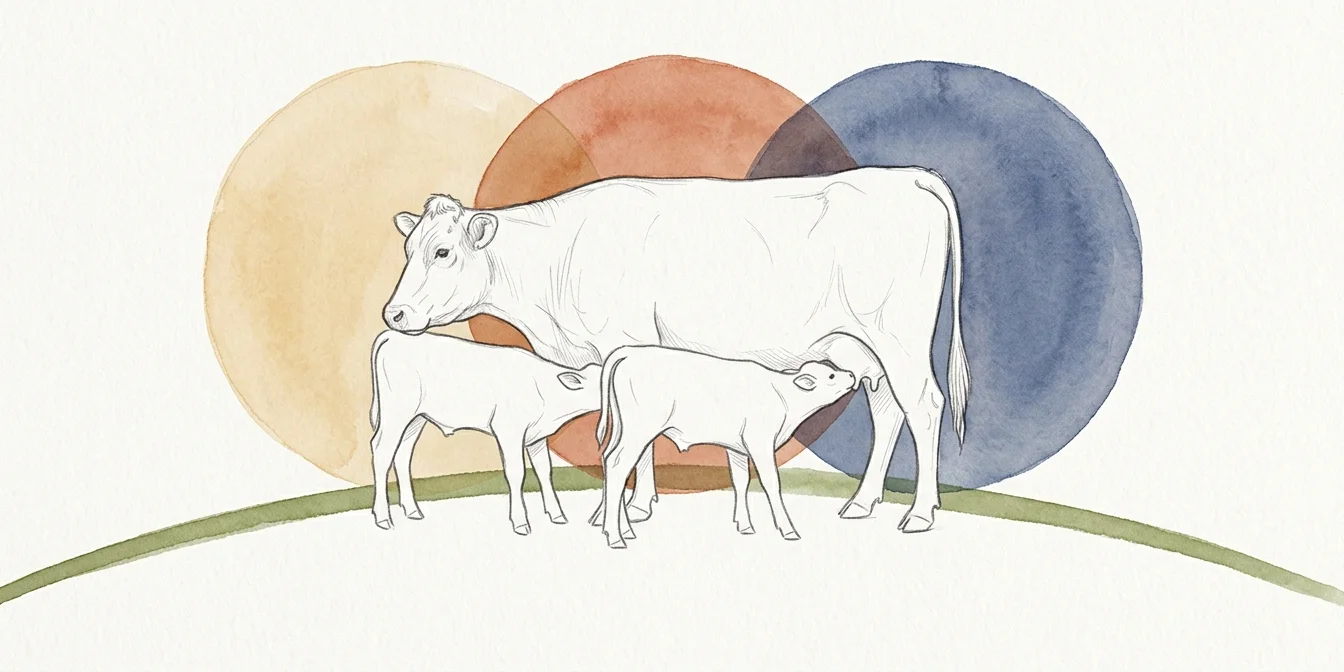
The Self is a pure swan, and those grounded in clarity see within the quality-less one hidden in the cave of the qualities. Nature is the unborn, many-coloured cow; the young creatures drink from her without knowing her, and the Lord alone drinks freely. Different schools count the Person as the twenty-sixth or twenty-seventh, call it manifest or unmanifest, dual or non-dual; the wise see from Brahma down to a blade of grass one bright, all-pervading reality. In it all things dissolve, like rivers in the sea; those who know Brahman as Brahman dissolve into it here and now.
- The hidden swan
- The cave of the qualities
- The cow of nature
- Many views, one seen
- Rivers into the sea
ॐ अष्टपादं शुचिं हंसं त्रिसूत्रमणुमव्ययम् । त्रिवर्त्मानं तेजसोऽहं सर्वतःपश्यन्न पश्यति ॥ १॥
oṃ aṣṭapādaṃ śuciṃ haṃsaṃ trisūtramaṇumavyayam | trivartmānaṃ tejaso'haṃ sarvataḥpaśyanna paśyati || 1||
Om. The swan, pure, eight-footed, three-threaded, subtle, imperishable, moving on three paths, made of light: one who looks everywhere does not see it.
Note //
The swan (haṃsa) is the Self. The numbers are traditional and their meaning is uncertain: 'eight-footed' may be the eightfold nature (Gita 7.4), 'three-threaded' the three qualities, 'three paths' the three states or the three worlds. The second line is difficult: the editions read 'tejaso 'haṃ', and sanskritdocuments.org notes a variant 'dvivartmānaṃ tejasaiddhaṃ', 'kindled with light'; the rendering takes the line as 'one who looks everywhere does not see it': the Self is not found by looking outward (Katha 2.1.1, Hume 4.1). Pending review.
भूतसंमोहने काले भिन्ने तमसि वैखरे । अन्तः पश्यन्ति सत्त्वस्था निर्गुणं गुणगह्वरे ॥ २॥
bhūtasaṃmohane kāle bhinne tamasi vaikhare | antaḥ paśyanti sattvasthā nirguṇaṃ guṇagahvare || 2||
At the time when beings are bewildered, when the darkness of outward speech is broken through, those who are see within the one without qualities, in the cave of the qualities.
Note //
'Outward speech' (vaikharī) is spoken language, the last and most outward level of speech; its 'darkness' broken through is read as the mind going beyond words. 'Grounded in clarity' (sattvastha): established in sattva, the quality of clarity. The quality-less is found nowhere else than in the 'cave of the qualities', the body and mind made of them. The sense of 'bhinne tamasi vaikhare' is pending review. Editions agree.
अशक्यः सोऽन्यथा द्रष्टुं ध्यायमानः कुमारकैः । विकारजननीमज्ञामष्टरूपामजां ध्रुवाम् ॥ ३॥
aśakyaḥ so'nyathā draṣṭuṃ dhyāyamānaḥ kumārakaiḥ | vikārajananīmajñāmaṣṭarūpāmajāṃ dhruvām || 3||
He cannot be seen in any other way by the young ones who meditate on him. The mother of all change, unknowing, of eight forms, , constant:
Note //
'The young ones' (kumāraka): individual creatures, as in verse 6. 'The unborn one' (ajā, also 'she-goat') is nature (prakṛti), as in Shvetashvatara 4.5; her 'eight forms' are the eight of Bhagavad Gita 7.4 (earth, water, fire, air, space, mind, intellect, I-claim). The sentence runs into verse 4. Editions agree.
ध्यायतेऽध्यासिता तेन तन्यते प्रेर्यते पुनः । सूयते पुरुषार्थं च तेनैवाधिष्ठितं जगत् ॥ ४॥
dhyāyate'dhyāsitā tena tanyate preryate punaḥ | sūyate puruṣārthaṃ ca tenaivādhiṣṭhitaṃ jagat || 4||
she, by him, is thought of; she is spread out, and set moving again; she gives birth for the sake of the Person. By him alone the world is .
Note //
Nature does nothing by herself; she moves in his presence, as in the settled sense of 'presence' for Ishwara's role. Editions agree.
गौरनाद्यन्तवती सा जनित्री भूतभाविनी । सितासिता च रक्ता च सर्वकामदुघा विभोः ॥ ५॥
gauranādyantavatī sā janitrī bhūtabhāvinī | sitāsitā ca raktā ca sarvakāmadughā vibhoḥ || 5||
She is the cow without beginning or end, the mother who brings beings forth, white, black and red, giving every wish of the all-pervading.
Note //
White, black and red are the three qualities (clarity, inertia and passion), as in Shvetashvatara 4.5. Editions: 'sarvakāmadughā' (Adyar) over 'sarvakāmadudhā' (sanskritdocuments.org and the Deccan College text).
पिबन्त्येनामविषयामविज्ञातां कुमारकाः । एकस्तु पिबते देवः स्वच्छन्दोऽत्र वशानुगः ॥ ६॥
pibantyenāmaviṣayāmavijñātāṃ kumārakāḥ | ekastu pibate devaḥ svacchando'tra vaśānugaḥ || 6||
The young ones drink from her, who is no object, and whom they do not know. But the one God drinks from her freely: here she follows his will.
Note //
'Her' is the unborn cow of verses 3-5, nature (prakṛti, also māyā), who brings forth everything and gives every wish. The 'young ones' are individual creatures, who enjoy her without knowing what she is; the Lord enjoys her freely, untouched. Compare Shvetashvatara 4.5: 'one unborn male lies with her and enjoys; another leaves her, having enjoyed her'. 'She follows his will' takes vaśānugaḥ with the Lord, 'having her under his control'; it may also mean 'he goes along with her'. Pending review.
ध्यानक्रियाभ्यां भगवान्भुङ्क्तेऽसौ प्रसहद्विभुः । सर्वसाधारणीं दोग्ध्रीं पीयमानां तु यज्वभिः ॥ ७॥
dhyānakriyābhyāṃ bhagavānbhuṅkte'sau prasahadvibhuḥ | sarvasādhāraṇīṃ dogdhrīṃ pīyamānāṃ tu yajvabhiḥ || 7||
By meditation and by action the blessed one, the mighty, all-pervading, enjoys her, the milker common to all, drunk from by those who sacrifice.
Note //
Editions: 'yajvabhiḥ' (Adyar) over the misprint 'yajvamiḥ'.
पश्यन्त्यस्यां महात्मानः सुवर्णं पिप्पलाशनम् । उदासीनं ध्रुवं हंसं स्नातकाध्वर्यवो जगुः ॥ ८॥
paśyantyasyāṃ mahātmānaḥ suvarṇaṃ pippalāśanam | udāsīnaṃ dhruvaṃ haṃsaṃ snātakādhvaryavo jaguḥ || 8||
In her the great souls see the golden one who eats the fig, and the swan, unmoved, looking on, constant: so the priests of the Yajur Veda have sung.
Note //
The two birds of Mundaka 3.1.1: one eats the sweet fig, the other only looks on; the 'swan', the witness, is the Self. 'Priests of the Yajur Veda' renders 'snātakādhvaryavaḥ'. Verses 8-15 go through the Vedas and schools, each naming the one in its own way. Editions agree.
शंसन्तमनुशंसन्ति बह्वृचाः शास्त्रकोविदाः । रथन्तरं बृहत्साम सप्तवैधैस्तु गीयते ॥ ९॥
śaṃsantamanuśaṃsanti bahvṛcāḥ śāstrakovidāḥ | rathantaraṃ bṛhatsāma saptavaidhaistu gīyate || 9||
The Rig Veda priests, skilled in the scriptures, praise him as the one who praises. He is sung as the Rathantara, the great Saman, in seven ways.
Note //
Rathantara and Brihat are the chief chants of the Sama Veda. 'In seven ways' renders 'saptavaidhaiḥ', which is obscure. Pending review. Editions agree.
मन्त्रोपनिषदं ब्रह्म पदक्रमसमन्वितम् । पठन्ति भार्गवा ह्येते ह्यथर्वाणो भृगूत्तमाः ॥ १०॥
mantropaniṣadaṃ brahma padakramasamanvitam | paṭhanti bhārgavā hyete hyatharvāṇo bhṛgūttamāḥ || 10||
The Bhargavas, the Atharvans, best of the Bhrigus, recite him as Brahman, the Upanishad of the mantras, word by word and in sequence.
Note //
The Atharva Veda tradition. 'Word by word and in sequence' (padakrama): the traditional ways of reciting the Veda. Editions agree.
सब्रह्मचारिवृत्तिश्च स्तम्भोऽथ फलितस्तथा । अनड्वान्रोहितोच्छिष्टः पश्यन्तो बहुविस्तरम् ॥ ११॥
sabrahmacārivṛttiśca stambho'tha phalitastathā | anaḍvānrohitocchiṣṭaḥ paśyanto bahuvistaram || 11||
As the life of the Vedic student, as the pillar, as the ripened one, as the ox, the red one, the remainder, they see him in great detail.
Note //
Each name is a hymn of the Atharva Veda in which the one is praised under a figure: the student (11.5), the pillar (Skambha, 10.7), the ox (4.11), the red sun (Rohita, book 13), the remainder of the sacrifice (Ucchishta, 11.7). Editions: 'anaḍvān rohito-' over 'anaḍvān nohito-' (Adyar); 'paśyanto' (sanskritdocuments.org) over 'paśyante' (Adyar).
कालः प्राणश्च भगवान्मृत्युः शर्वो महेश्वरः । उग्रो भवश्च रुद्रश्च ससुरः सासुरस्तथा ॥ १२॥
kālaḥ prāṇaśca bhagavānmṛtyuḥ śarvo maheśvaraḥ | ugro bhavaśca rudraśca sasuraḥ sāsurastathā || 12||
Time, breath, the blessed one, death, Sharva, the Great Lord, the fierce one, Bhava, Rudra, with the gods and with the demons,
Note //
The sentence runs into verse 13. 'Time' and 'breath' are also hymns of the Atharva Veda (19.53, 11.4). Editions agree.
प्रजापतिर्विराट् चैव पुरुषः सलिलमेव च । स्तूयते मन्त्रसंस्तुत्यैरथर्वविदितैर्विभुः ॥ १३॥
prajāpatirvirāṭ caiva puruṣaḥ salilameva ca | stūyate mantrasaṃstutyairatharvaviditairvibhuḥ || 13||
Prajapati, Viraj, the Person, the waters: so the all-pervading is praised in the hymns the Atharvans know.
Note //
Editions agree.
तं षड्विंशक इत्येते सप्तविंशं तथापरे । पुरुषं निर्गुणं साङ्ख्यमथर्वशिरसो विदुः ॥ १४॥
taṃ ṣaḍviṃśaka ityete saptaviṃśaṃ tathāpare | puruṣaṃ nirguṇaṃ sāṅkhyamatharvaśiraso viduḥ || 14||
Some call him the twenty-sixth, others the twenty-seventh; those of the Atharvashiras know him as the Person of the Samkhya, without qualities.
Note //
The Samkhya counts twenty-five principles; schools that add a Lord count him twenty-sixth, and some a twenty-seventh beyond. The schools differ in the count; the one counted is the same. Editions agree.
चतुर्विंशतिसंख्यातं व्यक्तमव्यक्तमेव च । अद्वैतं द्वैतमित्याहुस्त्रिधा तं पञ्चधा तथा ॥ १५॥
caturviṃśatisaṃkhyātaṃ vyaktamavyaktameva ca | advaitaṃ dvaitamityāhustridhā taṃ pañcadhā tathā || 15||
They call him the twenty-four, the manifest and the unmanifest, the non-dual and the dual, the threefold and the fivefold.
Note //
The list ends with 'non-dual and dual': both views are named as ways of speaking of the one, which the next verse says the wise see as one. Editions agree.
ब्रह्माद्यं स्थावरान्तं च पश्यन्ति ज्ञानचक्षुषः । तमेकमेव पश्यन्ति परिशुभ्रं विभुं द्विजाः ॥ १६॥
brahmādyaṃ sthāvarāntaṃ ca paśyanti jñānacakṣuṣaḥ | tamekameva paśyanti pariśubhraṃ vibhuṃ dvijāḥ || 16||
From Brahma down to what does not move, those with the eye of knowledge see: they see the one alone, bright, all-pervading.
Note //
The answer to verses 14-15, where the schools disagree on how to count the Person and whether it is dual or non-dual. Seen with the eye of knowledge, the whole range of beings, from the creator to a stone, is the one. Editions agree.
यस्मिन्सर्वमिदं प्रोतं ब्रह्म स्थावरजङ्गमम् । तस्मिन्नेव लयं यान्ति स्रवन्त्यः सागरे यथा ॥ १७॥
yasminsarvamidaṃ protaṃ brahma sthāvarajaṅgamam | tasminneva layaṃ yānti sravantyaḥ sāgare yathā || 17||
On which all this is strung, the moving and the unmoving, that is Brahman. In that alone they , as rivers flowing into the sea.
Note //
'Strung' (prota) is the image of a thread through beads or the warp of a cloth (Brihadaranyaka 3.8). Rivers into the sea is the image of Mundaka 3.2.8 and Prashna 6.5: they lose their names and forms, not their water. Editions agree.
यस्मिन्भावाः प्रलीयन्ते लीनाश्चाव्यक्ततां ययुः । पश्यन्ति व्यक्ततां भूयो जायन्ते बुद्बुदा इव ॥ १८॥
yasminbhāvāḥ pralīyante līnāścāvyaktatāṃ yayuḥ | paśyanti vyaktatāṃ bhūyo jāyante budbudā iva || 18||
In which all things , and, dissolved, become unmanifest; then they are seen manifest again, born like bubbles.
Note //
Bubbles rise in water and fall back into it without ever being anything but water: the world's appearing and disappearing changes nothing in Brahman. Editions agree.
क्षेत्रज्ञाधिष्ठितं चैव कारणैर्विद्यते पुनः । एवं स भगवान्देवं पश्यन्त्यन्ये पुनः पुनः ॥ १९॥
kṣetrajñādhiṣṭhitaṃ caiva kāraṇairvidyate punaḥ | evaṃ sa bhagavāndevaṃ paśyantyanye punaḥ punaḥ || 19||
by the knower of the field, it is found again through its causes. So others see that blessed god again and again.
ब्रह्म ब्रह्मेत्यथायान्ति ये विदुर्ब्राह्मणास्तथा । अत्रैव ते लयं यान्ति लीनाश्चाव्यक्तशालिनः ॥ लीनाश्चाव्यक्तशालिन इत्युपनिषत् ॥
brahma brahmetyathāyānti ye vidurbrāhmaṇāstathā | atraiva te layaṃ yānti līnāścāvyaktaśālinaḥ || līnāścāvyaktaśālina ityupaniṣat ||
Those who know Brahman as Brahman come to it. Here itself they , merged, resting in the unmanifest, merged, resting in the unmanifest. This is the Upanishad.
Note //
The last verse, unnumbered in the editions (here 20, after verse 19). 'Here itself' (atraiva): the knower's dissolution in Brahman happens in this life, not at a later time; compare Brihadaranyaka 4.4.6, 'being Brahman, he goes to Brahman'. 'Brāhmaṇas' is taken in its root sense, 'knowers of Brahman'. Editions agree.
No public-domain English translation exists for this text; the Sanskrit is shown.
The renderings on this page are shared under CC BY-NC 4.0, in the words of Pranav Ashar.